 Image
Image
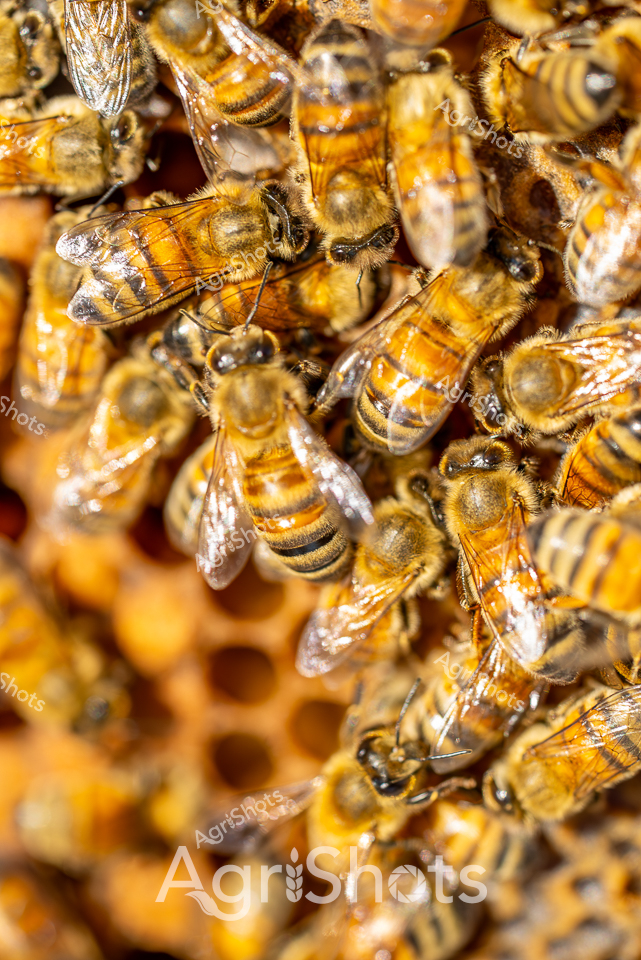
Honeybees cluster densely across a golden honeycomb, their amber and obsidian bodies gleaming with intricate textures of chitin and fine hairs. Each bee moves with purposeful precision, representing the extraordinary collective intelligence of the hive - a quintessential agricultural ecosystem thriving in Queensland's lush Lockyer Valley. Translucent amber-tinted wings overlap and shimmer, revealing the complex social structure of these pollinators critical to agricultural productivity. The honeycomb's hexagonal chambers form a pristine geometric backdrop, suggesting the remarkable engineering instincts of these tiny agricultural workers. Warm golden and amber tones dominate the image, capturing the vibrant energy of a spring day when bee colonies are most active in pollination and honey production. This intimate macro perspective celebrates the interconnected world of agricultural biodiversity, highlighting how these small creatures play a massive role in sustaining food systems across Australian farming landscapes.
 Image
Image
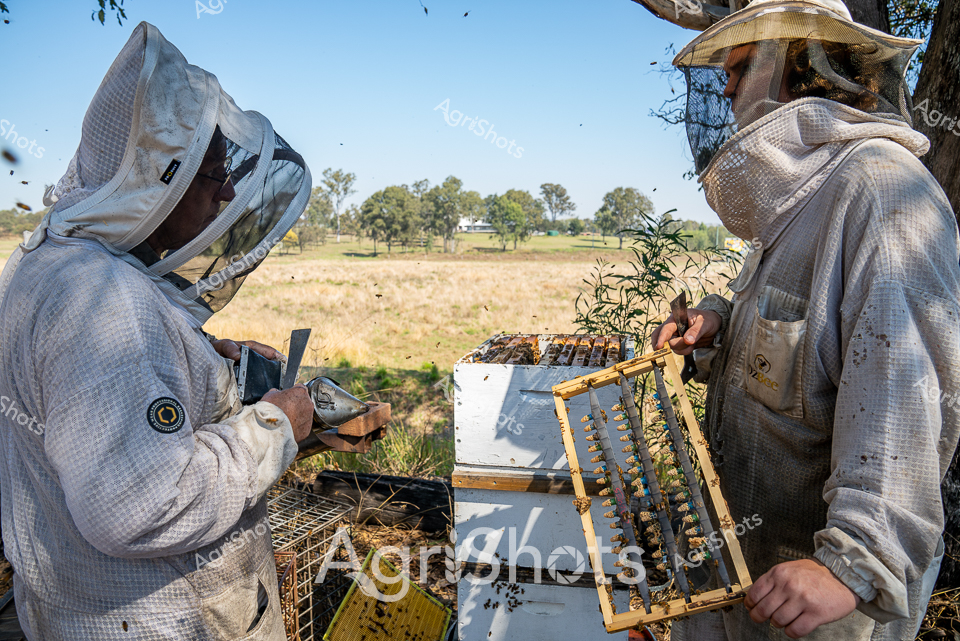
Beekeepers tend to their buzzing colonies on a sun-drenched property in Queensland's Lockyer Valley, their protective white mesh suits shimmering against the golden pastureland. One apiarist carefully manipulates a wooden frame laden with honeycomb, while his colleague prepares specialized tools for hive management. Scattered trees punctuate the wide rural landscape, creating a serene backdrop for this intricate work of honey production. Their mesh veils shield them from potential stings as dozens of bees swarm around the white wooden hive boxes, representing the delicate symbiosis between human agricultural practice and natural ecosystem. The textured light-colored protective suits contrast beautifully with the warm ochre tones of the grassland, capturing the precise, methodical nature of apiculture in the Australian agricultural landscape. Soft natural light highlights the detailed craftsmanship of the wooden hive frames and the careful movements of these skilled agricultural workers, embodying the precision and connection to land that defines rural Queensland's agricultural traditions.
 Image
Image
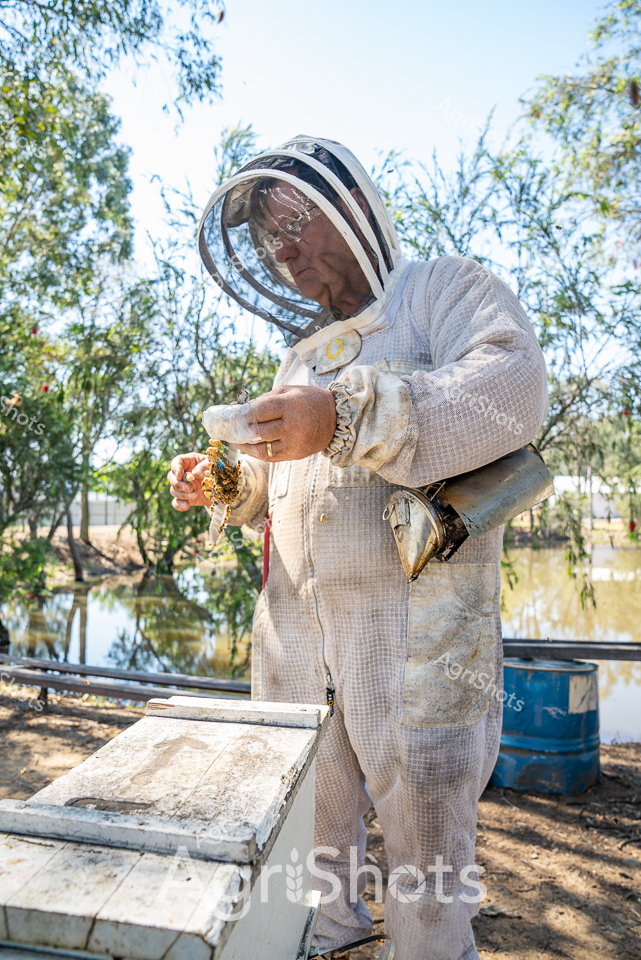
Shrouded in a pristine white mesh beekeeping suit, a skilled apiarist carefully tends to a honey-laden frame from a rural apiary nestled in Queensland's lush Lockyer Valley. Sunlight filters through surrounding eucalyptus trees, casting a soft glow on the scene during a serene spring morning. The beekeeper's protective gear - complete with a transparent helmet that allows clear visibility - speaks to the delicate precision required in managing these crucial pollinators. Weathered wooden hive boxes sit against a tranquil backdrop of trees and a distant water source, suggesting a well-established and thoughtfully positioned bee farm. Every careful movement reflects years of experience, as the beekeeper gently examines the honeycomb, likely assessing honey production, hive health, or preparing for harvest. The soft textures of the mesh suit contrast with the intricate geometric patterns of the honeycomb, capturing the harmonious relationship between human stewardship and nature's complex agricultural systems.
 Image
Image
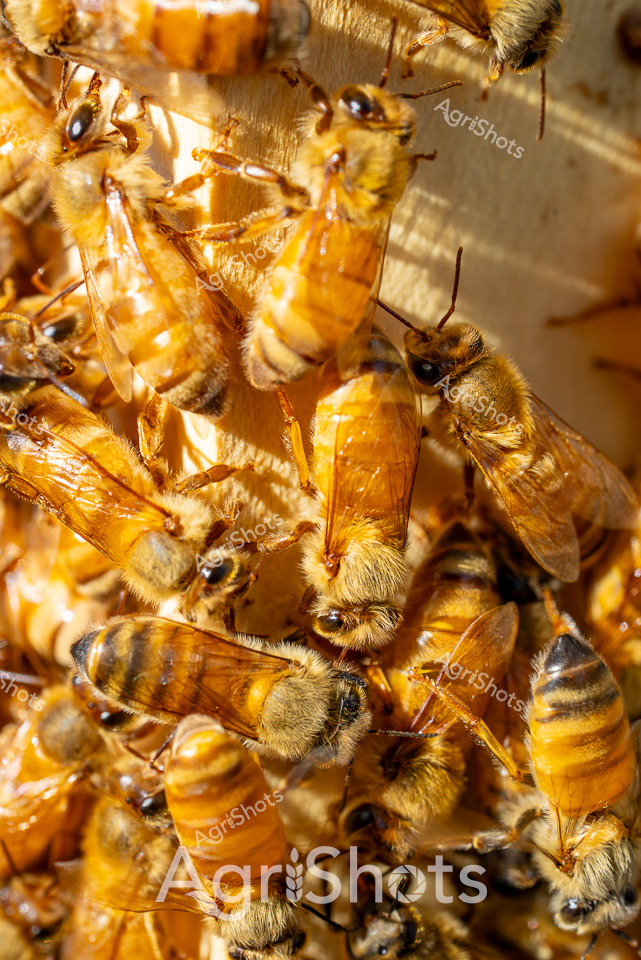
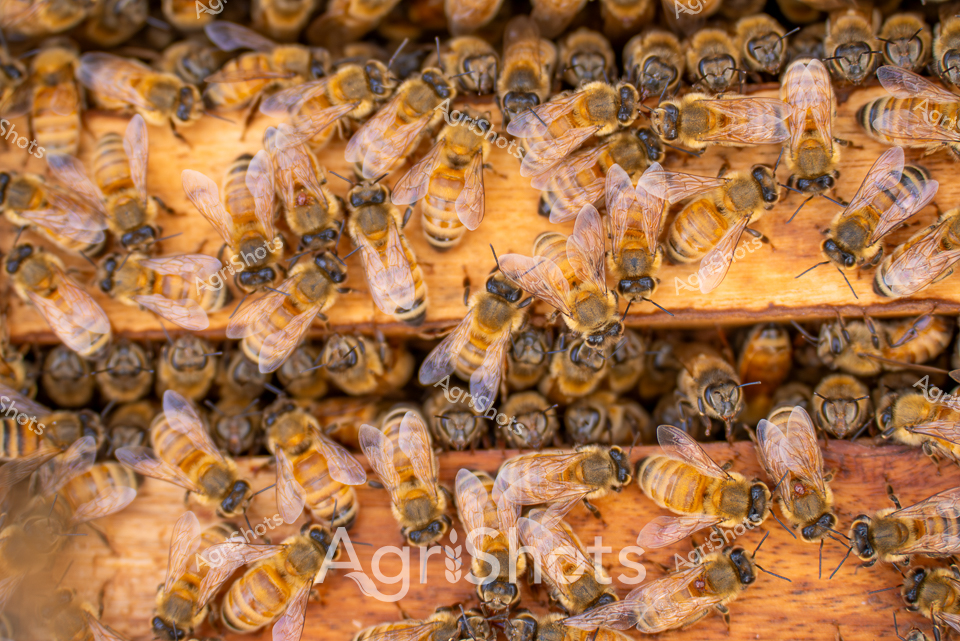
Golden guardians of the hive cluster together in a mesmerizing macro portrait, their amber-toned bodies gleaming with translucent wings and fuzzy textures. Each honeybee is meticulously positioned, creating a living tapestry of agricultural productivity characteristic of Queensland's renowned Lockyer Valley apiary operations. The intricate collective movement suggests a complex social organization, with worker bees tightly packed in golden-brown hues that reflect the warm spring sunlight. Delicate antennae and segmented bodies reveal the extraordinary biological engineering of these critical pollinators, fundamental to Australia's agricultural ecosystem. The close-up perspective highlights the remarkable detail of each bee - their chitin exoskeletons displaying subtle variations of amber, bronze, and deep ochre tones that speak to the robust health of this thriving colony. This image captures the essence of sustainable agricultural practices, showcasing the silent, industrious workforce that underpins crop production across rural Queensland.
 Image
Image
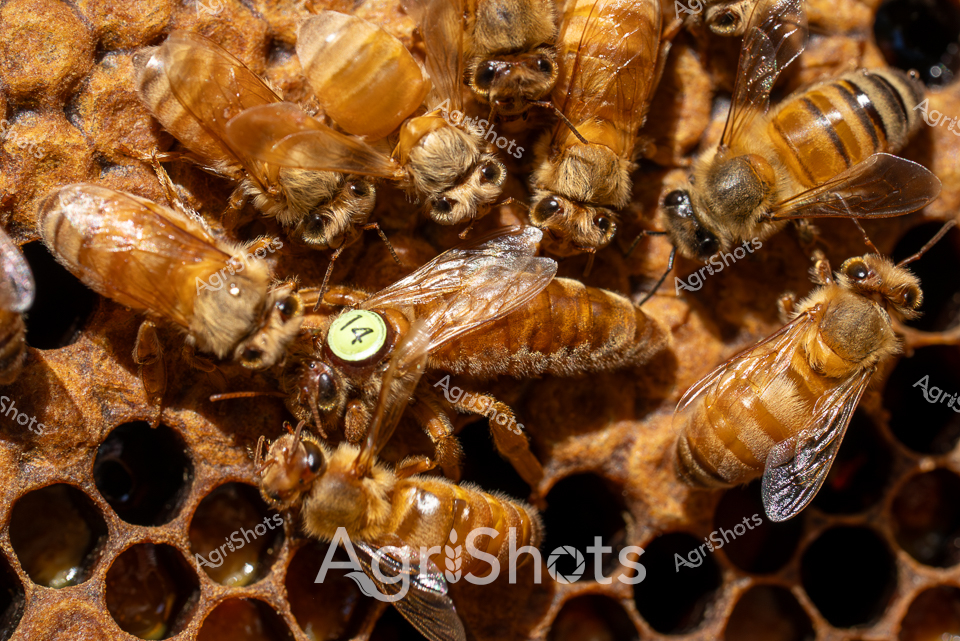
Golden honeybees swarm across a rich amber-hued honeycomb, their intricate social structure captured in stunning macro detail. At the center of the bustling hive, a marked queen bee (tagged with a small green numbered marker) moves deliberately among her workers, representing the precise scientific management of modern apiculture. The hexagonal wax cells create a complex architectural backdrop, some empty and shadowy, others filled with the warm golden tones of honey and bee bodies. Each bee displays remarkable textural detail - from their fuzzy thoraxes to translucent, veined wings - highlighting the extraordinary biological engineering of these critical pollinators. This close-up reveals the intricate world of a thriving bee colony in the Lockyer Valley region of Queensland, likely during the abundant flowering season of spring. The image speaks to the delicate complexity of bee colonies, where every individual plays a crucial role in the collective survival and productivity of the hive.
 Image
Image
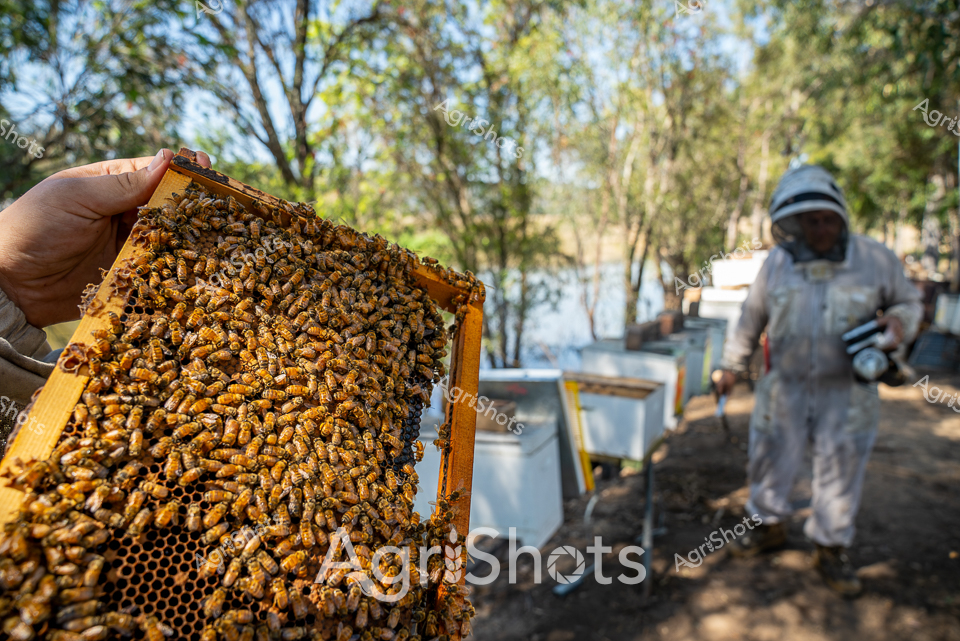
Honeybees swarm across a golden wooden frame, their amber bodies densely packed in intricate layers revealing the remarkable social structure of the hive. A beekeeper in pristine white protective gear stands among white bee boxes in a dappled woodland setting, likely in Queensland's fertile Lockyer Valley during the vibrant spring season. The close-up frame reveals the hexagonal wax honeycomb structure, with thousands of worker bees meticulously tending their complex colony, demonstrating the precision and collaborative nature of these extraordinary insects. Sunlight filters through surrounding eucalyptus trees, casting soft shadows and illuminating the rich textures of the hive and the beekeeper's protective suit. The scene captures the delicate balance of agricultural stewardship - a human carefully managing these critical pollinators whose work is essential to crop production and ecological health. This image exemplifies the intricate relationship between agricultural practice and natural systems, showcasing the meticulous care required in apiary management.
 Video
Video
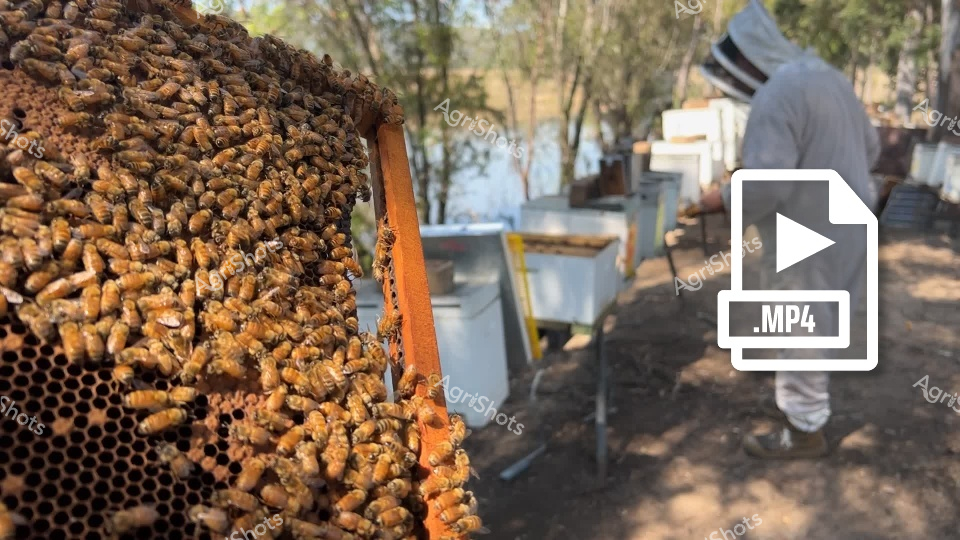
Honeybees cluster densely across a warm orange-tinted beehive frame, their golden-brown bodies packed tightly in intricate patterns against the hexagonal wax foundation. In the dappled sunlight of a Queensland spring morning, white-suited apiarists tend to multiple hive boxes positioned beneath softly swaying eucalyptus trees in the fertile Lockyer Valley. The scene captures the meticulous craft of professional beekeeping, with precise rows of white wooden hive containers suggesting a carefully managed agricultural operation. Soft shadows and filtered sunlight create a peaceful atmosphere, highlighting the delicate yet industrious nature of these critical pollinators. A figure in protective beekeeping attire stands quietly in the background, monitoring the colony's health and productivity amid the tranquil rural landscape. The close-up of the bee-covered frame reveals the remarkable density and organization of the colony, showcasing the sophisticated social structure of these remarkable insects.
 Image
Image
Golden sunlight bathes a bustling honeycomb, capturing the intricate world of honey production in Tasmania's winter apiary. Dense clusters of worker bees cover the wooden hive frames, their amber and bronze bodies creating a living tapestry of agricultural productivity. Translucent wings shimmer with delicate movement as the bees cluster tightly, maintaining critical hive temperature during the cooler seasonal months. Each bee appears meticulously positioned, representing the extraordinary collective organization of these remarkable pollinators essential to agricultural ecosystems. The warm wooden tones of the hive contrast beautifully with the bees' rich golden-brown coloration, highlighting the natural harmony of this sophisticated agricultural environment. This intimate close-up reveals the complex social structure and remarkable precision of honeybee colonies, fundamental to Tasmania's rich agricultural landscape and critical for crop pollination across the region.
 Image
Image
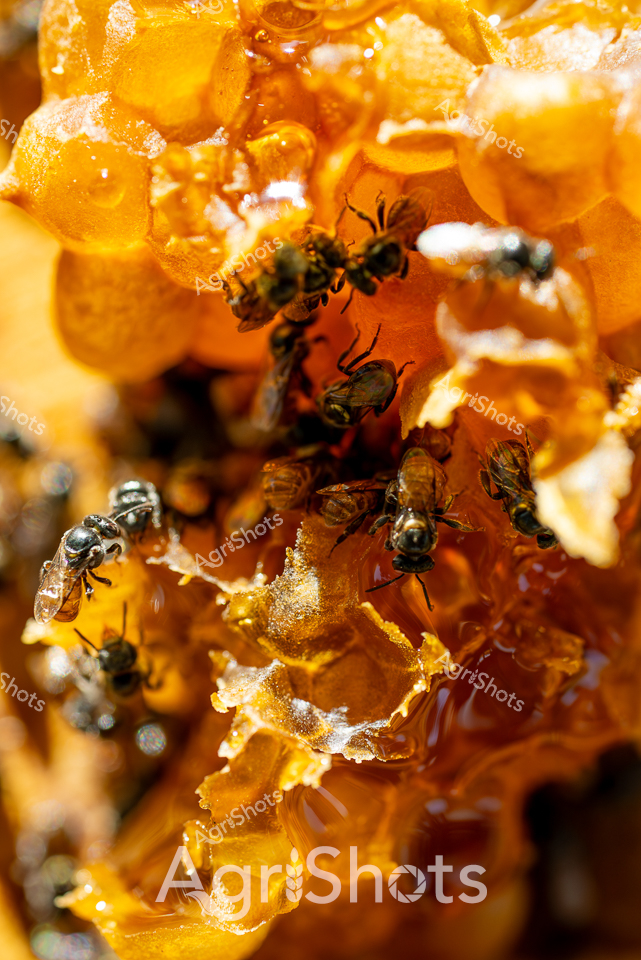
Honey-gold amber illuminates a macro world of industrious native Australian honeybees clustered across a honeycomb's glistening surface. Burnished golden cells pulse with organic texture, each bee meticulously working its segment of the hive structure, collecting and processing nectar. Delicate bee bodies move with precise choreography, their exoskeletons catching light against the rich, translucent honey background - a testament to the intricate symbiosis of these remarkable pollinators. The tight composition reveals the extraordinary detail of their collaborative labor, highlighting the Lockyer Valley's vibrant apiary ecosystem during the crisp winter months. Pollen-dusted workers navigate the waxy geometric landscape, their movements suggesting an almost architectural precision in honey production. This intimate portrait celebrates the unseen complexity of native bee colonies, showcasing their critical role in Queensland's agricultural biodiversity.
 Image
Image
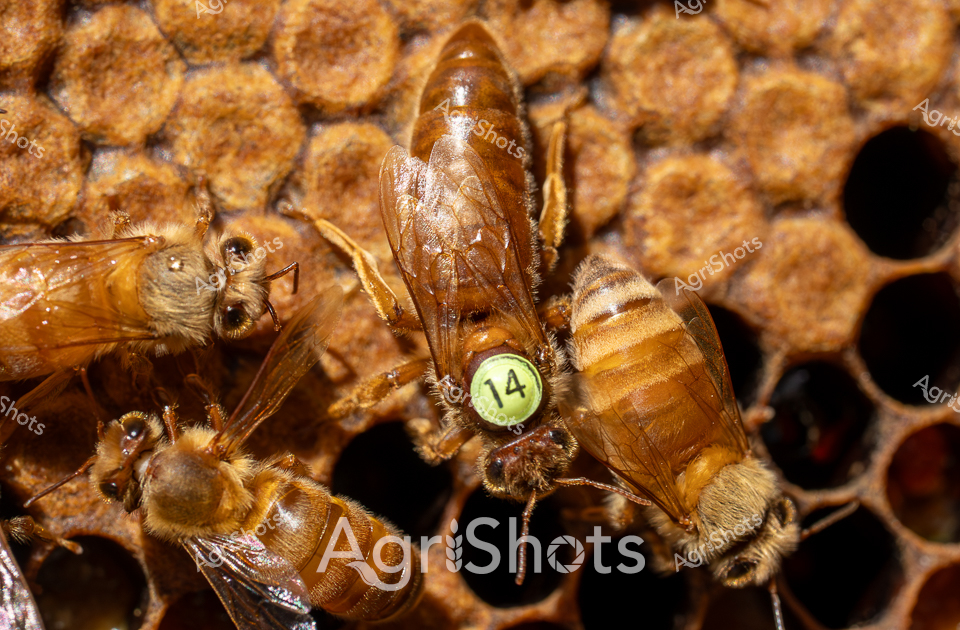
Nestled within the golden hexagonal chambers of a thriving beehive, a marked queen bee dominates the frame, her distinctive green tag numbered '14' signaling her importance to the colony's intricate social structure. Surrounded by diligent worker bees in rich amber and honey tones, she moves with purpose across the textured wax honeycomb. The close-up reveals the remarkable detail of these industrious insects - their translucent wings, fuzzy bodies, and the complex architectural marvel of the hive's cellular design. Captured in the vibrant light of a Lockyer Valley spring morning, this image pulses with the energy of agricultural renewal. The warm golden hues of the bees and honeycomb reflect the rich agricultural landscape of Queensland, where apiary plays a crucial role in crop pollination and honey production. Each bee moves with practiced precision, a testament to the sophisticated communication and collective intelligence of the colony. The queen's marked status speaks to modern beekeeping practices - a careful blend of scientific management and respect for the natural rhythms of these extraordinary creatures. Her presence symbolizes the heart of the hive, driving the complex ecosystem that supports both agricultural productivity and natural biodiversity.
 Image
Image
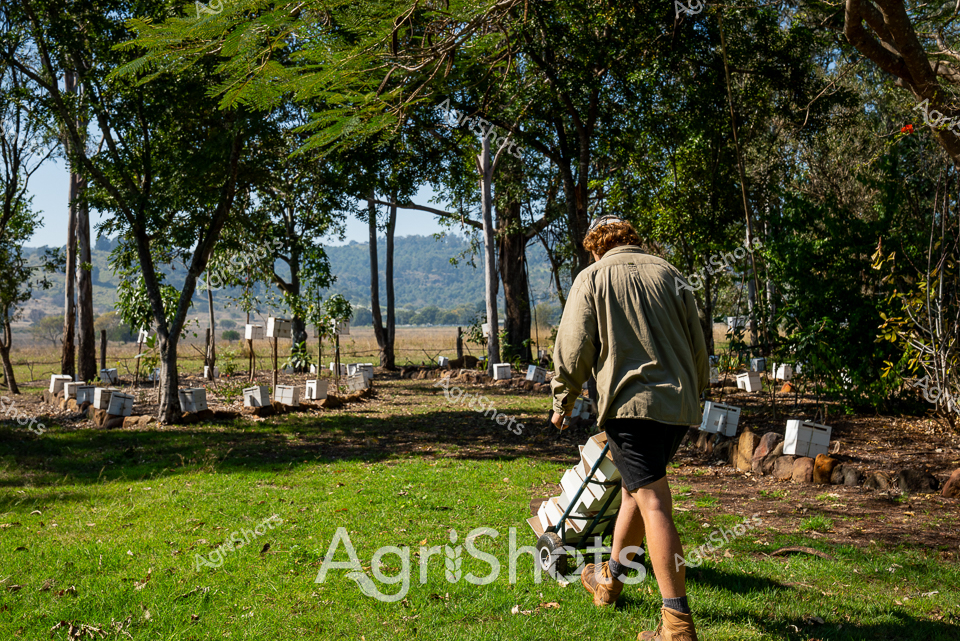
Nestled in the lush green landscape of Queensland's Lockyer Valley, a dedicated apiarist tends to a carefully arranged cluster of bee hives under the dappled shade of native trees. Wearing a khaki work shirt and dark shorts, the beekeeper moves purposefully between white rectangular hives, each strategically positioned to optimize the bees' foraging potential. The winter sunlight filters through the surrounding eucalyptus and paperbark trees, casting soft shadows across the verdant grass and creating a serene agricultural tableau. The apiary sits on a gently sloping site with distant mountains visible on the horizon, showcasing the quintessential Australian rural landscape. White hive boxes stand in neat rows, representing a critical node in the agricultural ecosystem - supporting pollination and honey production. The scene captures the meticulous care and scientific approach of modern beekeeping, where each hive is managed with precision and respect for the complex colony of native Australian bees. The image embodies the quiet dedication of agricultural workers who play a vital role in sustaining both local ecosystems and broader food production systems, highlighting the intricate relationship between human stewardship and natural agricultural processes.
 Image
Image
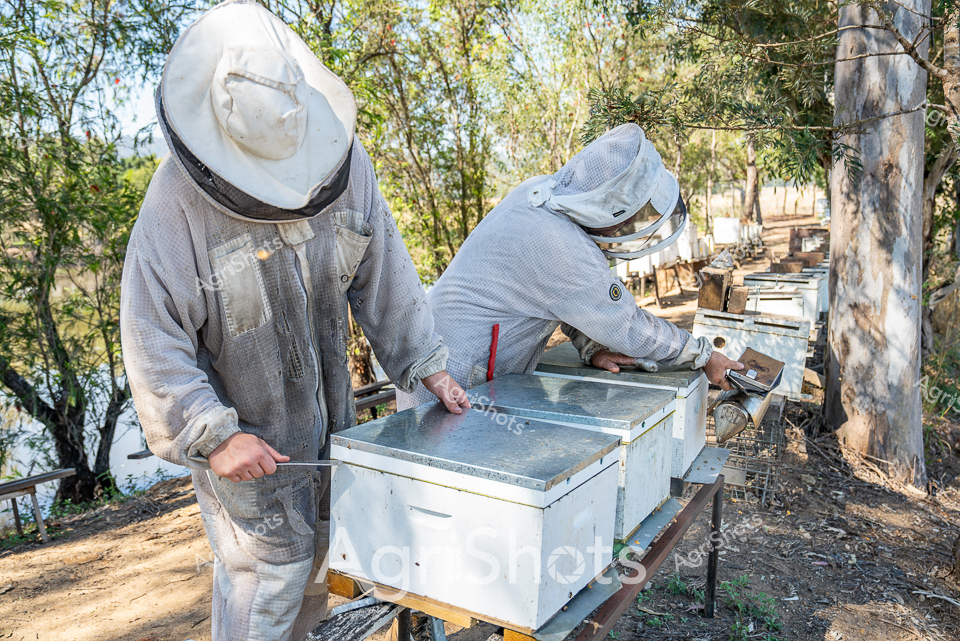
Beekeepers in silvery protective suits tend to their apiary nestled among the dappled light and soft greens of a Queensland spring morning. Surrounded by eucalyptus trees and filtered sunlight, two apiarists carefully inspect white-painted hive boxes mounted on metal stands in a tranquil woodland clearing. Their mesh-hooded suits - pale gray and textured like fine gauze - protect them as they methodically work, one standing observantly while the other leans intently over an open hive, likely checking honey production or evaluating the colony's health. The metallic gleam of the hive boxes contrasts beautifully with the natural woodland setting, suggesting a harmonious intersection of agricultural practice and natural ecosystem. Soft shadows and gentle vegetation create a serene backdrop to this meticulous agricultural craft, highlighting the precision and care required in sustainable beekeeping. The scene captures the quiet expertise of Queensland's agricultural workers, demonstrating the delicate balance between human intervention and natural process in modern apiculture.
 Image
Image
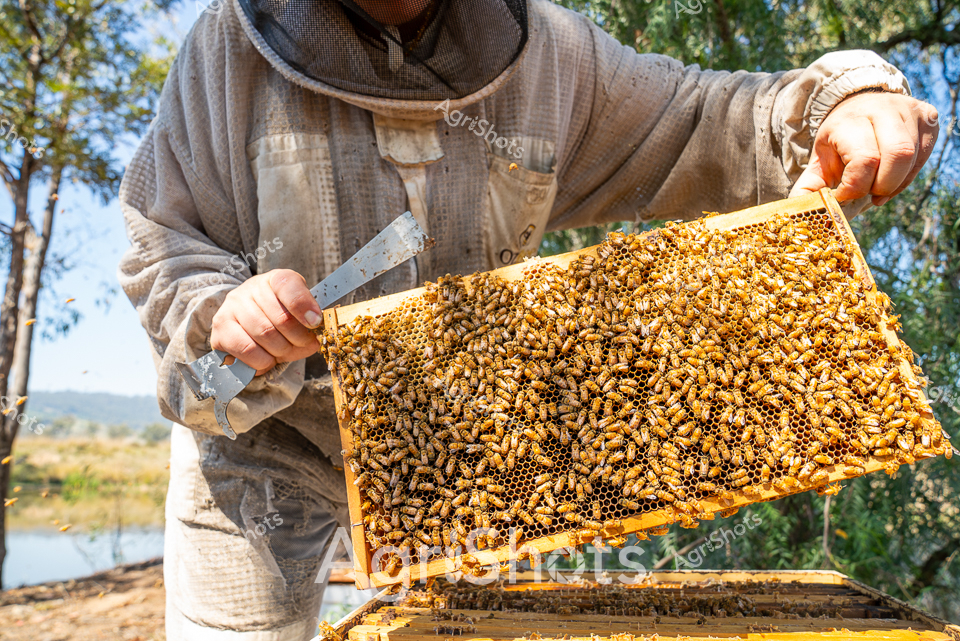
Honey harvest unfolds beneath the dappled light of early spring in Queensland's lush Lockyer Valley. A beekeeper in a protective mesh-hooded beige suit carefully extracts a golden honeycomb frame, densely populated with thousands of industrious worker bees. Sunlight illuminates the intricate hexagonal wax cells, revealing the rich amber and golden tones of stored honey and brood. The beekeeper's gloved hands manipulate the frame with practiced precision, using a metal tool to assess the hive's productivity against a backdrop of green trees and a distant landscape. Swarms of bees cluster across the wooden frame, their collective movement creating a living, buzzing tapestry of agricultural productivity. This intimate moment captures the delicate symbiosis between human stewardship and the remarkable organizational complexity of a honey bee colony, showcasing the essential role of apiculture in Australia's diverse agricultural landscape.
 Image
Image
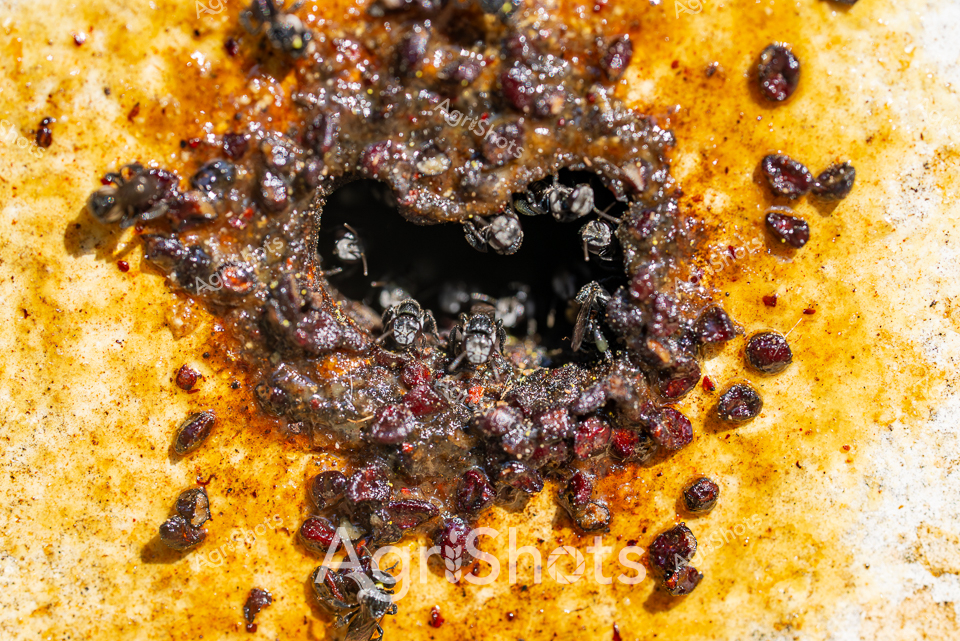
Stingless native Australian sugarbag bees cluster within their intricate hive entrance, creating an organic honeycomb portal against a rich golden-amber background. The tiny dark workers huddle tightly, their metallic bodies glinting with propolis and honey remnants, showcasing the complex social structure of these remarkable Tetragonula carbonaria species. Scattered dark reddish-brown honey droplets surround the hive opening, highlighting the meticulous environmental adaptation of these subtropical Queensland pollinators. Captured in the crisp light of a Lockyer Valley winter morning, the image reveals the microscopic architectural precision of these indigenous bee colonies, demonstrating their resilience in the challenging agricultural landscapes of southeast Queensland. The warm ochre tones contrast dramatically with the deep charcoal and metallic grey of the bee cluster, creating a mesmerizing biological tableau that speaks to the intricate world of Australian native stingless beekeeping. This close-up reveals the extraordinary communal behavior and environmental integration of these crucial agricultural symbiotes, fundamental to the ecological balance of Queensland's agricultural ecosystems.
 Image
Image
A dense, golden carpet of honeybees blankets a wooden honeycomb frame, their amber-hued bodies teeming across the hexagonal wax cells in a mesmerizing display of collective industry. Each bee moves with purposeful precision, their translucent wings catching the light and creating a shimmering texture across the hive surface. The close-up perspective reveals the intricate social structure of this bee colony, where thousands of individuals work in perfect synchronization to sustain their community. Captured during the cooler Tasmanian winter months, this image speaks to the resilience of these remarkable pollinators, who maintain their complex social networks even during the most challenging seasonal conditions. The rich amber and brown tones of the bees contrast beautifully with the warm wooden tones of the hive frame, creating a visual symphony that celebrates the essential role of bees in agricultural ecosystems. This photograph represents the delicate balance of agricultural life, where tiny creatures play an enormous role in sustaining broader ecological and food production systems.
 Image
Image
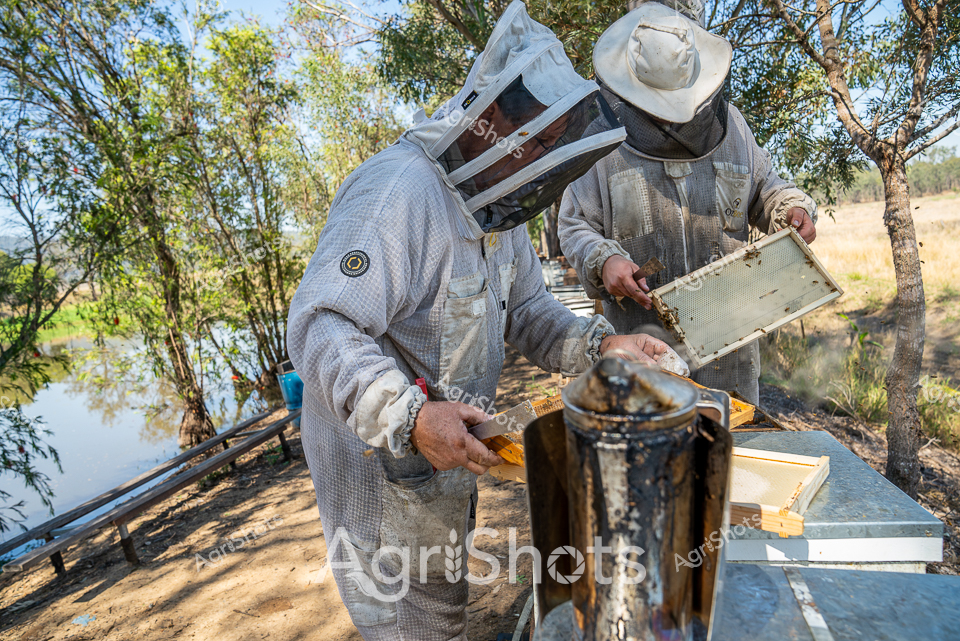
Honey harvest unfolds in the tranquil Lockyer Valley, where two beekeepers in protective grey mesh suits meticulously tend their apiary. Soft spring sunlight filters through surrounding eucalyptus trees, casting dappled light on the wooden hive boxes and sandy ground. One beekeeper carefully lifts a honeycomb frame, revealing the intricate work of their industrious bee colony, while the other prepares a smoker to calm the insects during the extraction process. Their specialized white mesh veils shield their faces, a critical safety measure when working closely with thousands of buzzing pollinators. The landscape reveals a serene waterway in the background, complementing the natural setting of this agricultural practice that is vital to Queensland's agricultural ecosystem. Rugged and precise, these beekeepers represent the careful stewardship required in sustainable honey production, their movements deliberate and respectful of the delicate balance between human intervention and natural bee behavior.
 Image
Image
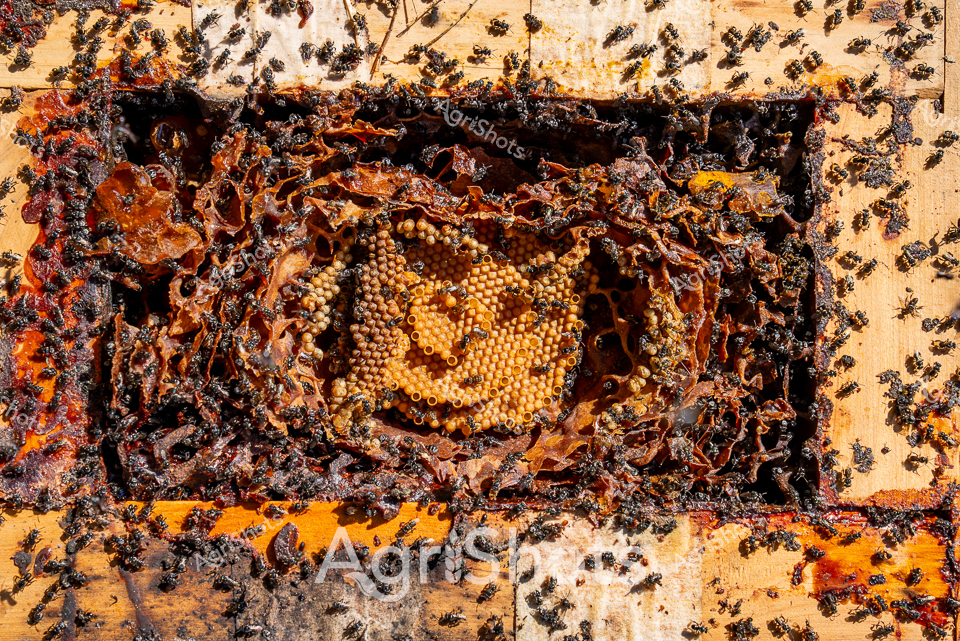
Honeycomb Harvest: Stingless Native Bee Colony Golden amber and charcoal textures reveal an extraordinary close-up of a native Australian stingless bee hive, captured in the winter light of Queensland's Lockyer Valley. The intricate honeycomb structure glows like burnished bronze, surrounded by intricate layers of propolis and wax, with hundreds of tiny dark native bee workers clustering across the wooden hive surface. Delicate hexagonal chambers pulse with the concentrated industry of Tetragonula carbonaria, Queensland's beloved native bee species, whose complex social structure and unique honey production represent an ancient agricultural tradition. Rich ochre and burnt sienna tones highlight the organic, almost sculptural quality of this microcosmic agricultural ecosystem, where each bee contributes to a remarkable collective endeavor. The dense, textured margins of the hive showcase the bees' remarkable architectural skills, building resilient structures that protect their queen and sustain their colony through the cooler winter months of subtropical Queensland.
 Image
Image
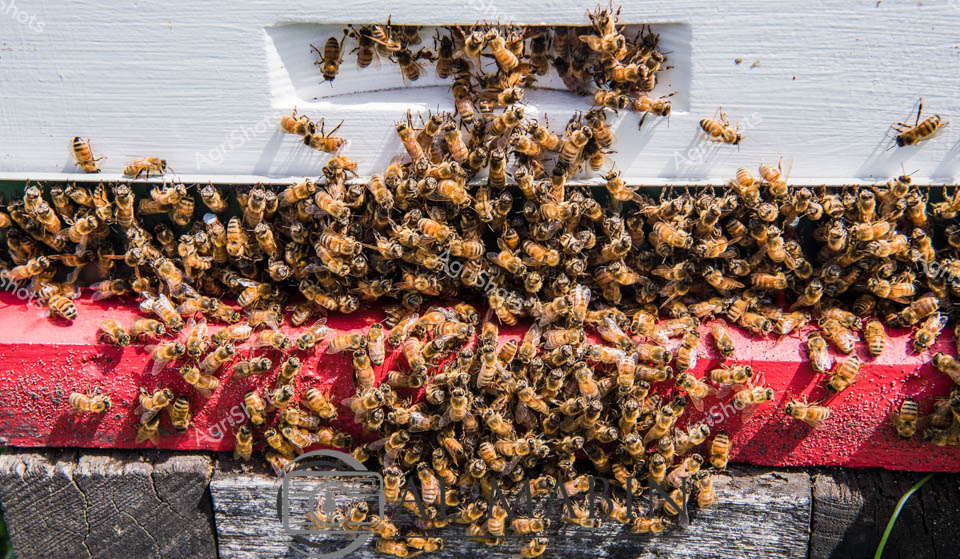
Honeybees swarm densely across the entrance and outer surfaces of a white-paneled beehive, their golden-brown bodies creating a living, buzzing tapestry. Set against a stark white background and rich red-painted base, the colony demonstrates remarkable collective behavior at the hive's entry points. Dozens of worker bees cluster tightly, some fanning their wings to regulate hive temperature and communicate with fellow workers, while others move in intricate patterns of constant communication and task coordination. The image captures the vibrant ecosystem of a thriving apiary, likely situated in Tasmania's lush Upper Mersey Valley region during spring pollination season. Textural details reveal the complex social structure of these incredible insects - each bee precisely positioned, moving with purposeful synchronicity across the wooden hive structure. Soft golden and amber tones of the bees contrast beautifully with the crisp white and passionate red of the hive, creating a dynamic visual representation of agricultural biodiversity and ecological interconnectedness. This photograph epitomizes the delicate, essential work of pollinators in sustainable agricultural systems, showcasing the remarkable organization and collective intelligence of a honeybee colony in its natural working environment.
 Image
Image
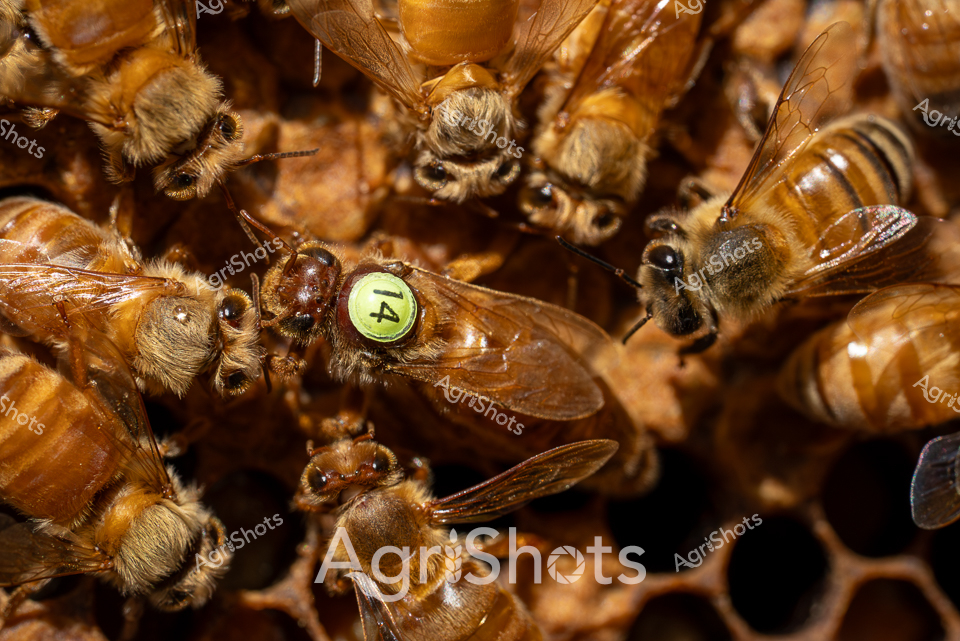
Nestled in the golden light of a crisp spring morning in Queensland's Lockyer Valley, a vibrant honey bee colony bustles with purposeful energy. A marked queen bee - distinguished by her bright green number tag (14) - moves intently through her densely packed hive, surrounded by hundreds of worker bees with their rich amber-brown exoskeletons and delicate translucent wings. The intricate honeycomb structure beneath provides a geometric backdrop to this complex social microcosm, where each bee plays a critical role in the colony's survival and honey production. Sunlight catches the bees' fuzzy bodies, highlighting their incredible textural details and the remarkable organization of their communal lifestyle. This close-up reveals the extraordinary precision of apiary management, where even the queen is systematically tracked and monitored to ensure optimal hive health and productivity. The image captures the intricate beauty of bee agriculture - a cornerstone of Australian agricultural biodiversity and food security.
 Video
Video
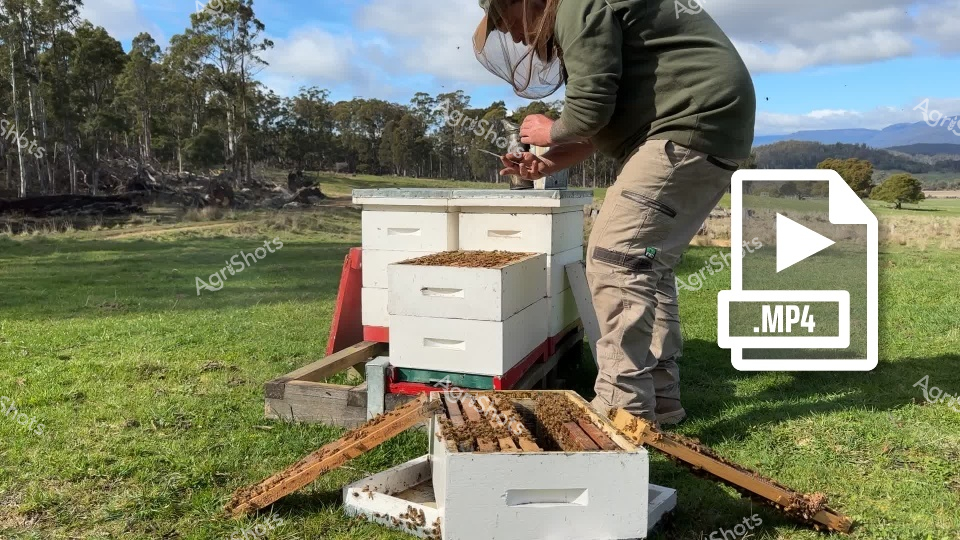
Expert apiarist tends to buzzing bee colonies on a crisp Tasmanian winter morning, surrounded by misty mountain ranges and silvery eucalyptus forests. Wearing olive green workwear and practical khaki cargo pants, the beekeeper carefully manages white wooden hive boxes mounted on a rustic red trailer, positioned on a verdant pasture. Intricate wooden hive frames are carefully extracted, revealing dense clusters of honeybees moving across their carefully constructed honeycomb structures. Mountain ranges softly blur in the background, creating a serene pastoral landscape that speaks to Tasmania's pristine agricultural environments. Delicate worker bees navigate entrance ramps to their multi-tiered white hive homes, representing the sophisticated and collaborative nature of these extraordinary pollinators. The scene captures the meticulous craft of apiculture, where human expertise and natural biological systems intersect with precision and respect.
 Image
Image
Honeybees cluster densely across a wooden hive frame, their golden-brown bodies packed intricately over the hexagonal wax honeycomb. Captured in crisp detail, this close-up reveals the extraordinary collective behavior of a thriving apiary in Tasmania's Upper Mersey Valley region. The bees shimmer in warm amber and brown tones, their segmented bodies creating a living tapestry that demonstrates the complex social structure of the hive. Sunlight highlights the intricate texture of their exoskeletons and the precise geometric patterns of the honeycomb, showcasing the remarkable natural engineering of these essential pollinators. This image captures a moment of intense biological activity during spring, when bee colonies are at their most vibrant and productive, representing a crucial element of agricultural ecosystems and honey production in Tasmania's rich agricultural landscape. The dense clustering of worker bees suggests a healthy, active colony engaged in critical tasks of honey production, brood rearing, and hive maintenance.
 Video
Video
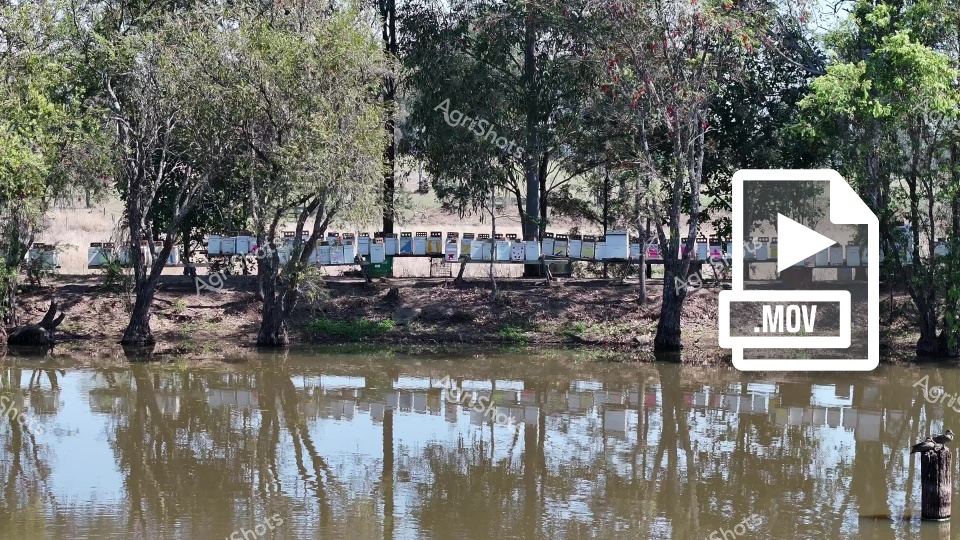
Silvery gum trees cast dappled shadows across a tranquil dam in Queensland's Lockyer Valley, their reflections rippling in the murky winter waters. A long row of white and blue bee hives nestles against the tree line, strategically positioned near water and native woodland to support optimal pollination conditions. The apiary site demonstrates sophisticated agricultural planning, with hives carefully spaced and oriented to maximize bee colony health and honey production. Soft greys and muted greens characterize the winter landscape, suggesting a quiet period of regeneration for both the landscape and the industrious bee colonies. Water levels appear steady, indicating reliable hydration for the surrounding ecosystem and supporting the critical symbiosis between landscape, water resources, and agricultural cultivation. The serene scene captures the sophisticated yet natural approach of modern agricultural practices in supporting biodiversity and sustainable food production.
 Image
Image
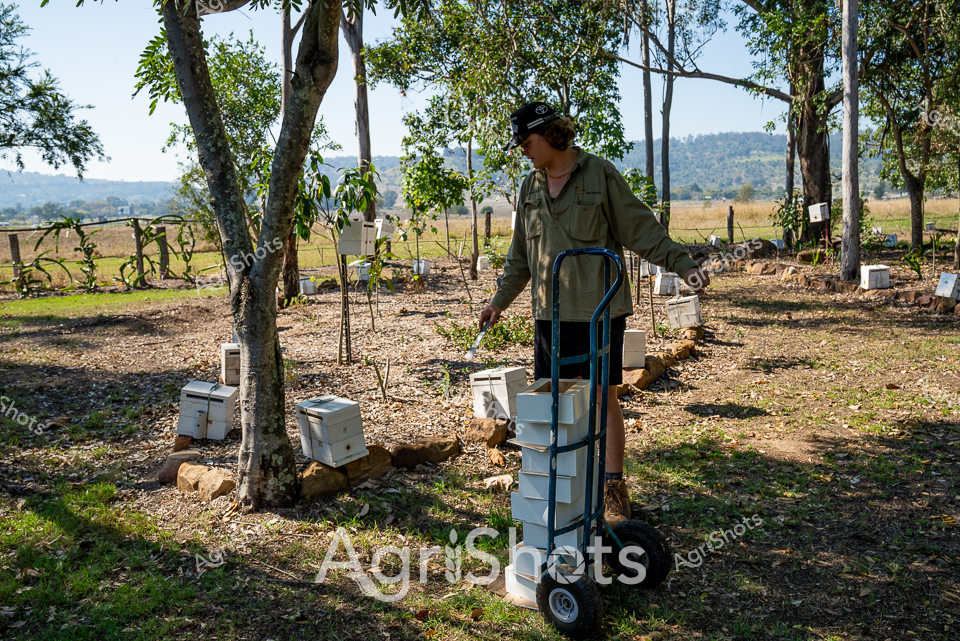
Apiarist tending native bee hives in the sun-dappled landscape of Queensland's Lockyer Valley, a verdant agricultural region renowned for its diverse farming. Dressed in a sage green work shirt, the beekeeper carefully manages a stack of white bee boxes mounted on a blue hand trolley, strategically positioned among mature trees with rolling hills visible in the background. The ground is scattered with dried leaves and small stones, creating a textured earth palette that contrasts with the lush green foliage. Winter sunlight filters through the branches, casting soft shadows across the carefully maintained apiary site, highlighting the meticulous care required in sustainable bee cultivation. The hand trolley allows efficient transportation of hive boxes, demonstrating the practical approach to managing these critical pollinators in the Australian agricultural ecosystem. This scene captures the quiet dedication of rural agricultural workers who play a vital role in maintaining biodiversity and supporting crop production through careful bee management.
 Image
Image
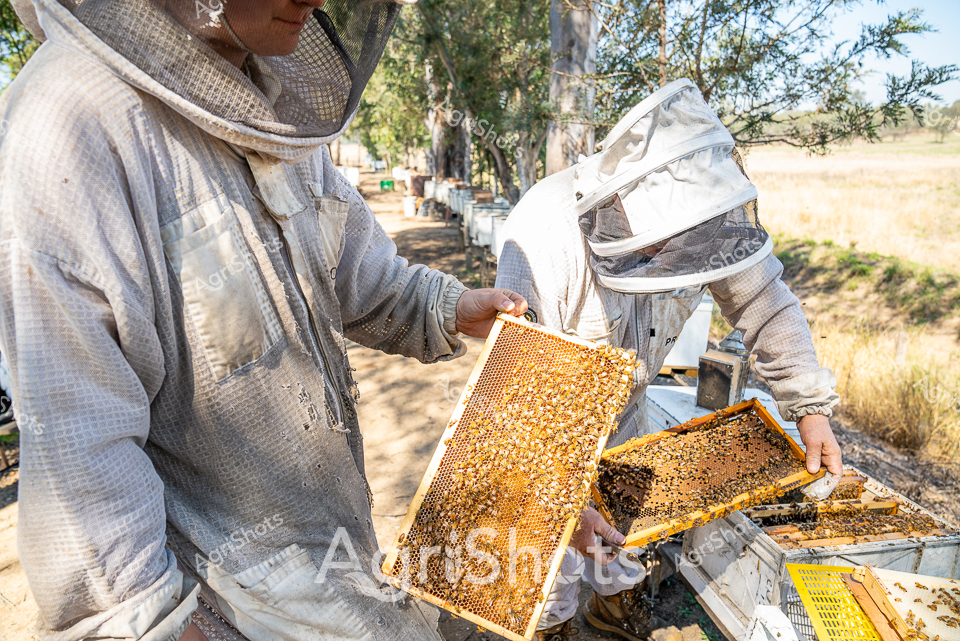
Beekeepers tend to a vibrant honey production site in Queensland's lush Lockyer Valley, their protective mesh veils and lightweight summer suits shielding them from potential stings. Sunlight filters through surrounding eucalyptus trees, casting dappled shadows across rows of pale wooden hive boxes nestled in golden grasslands. Skilled hands carefully lift honeycomb frames thick with golden-amber honey cells, revealing the intricate geometric patterns created by industrious worker bees. The light gauzy protective clothing in soft greys and whites contrasts beautifully with the rich amber and brown tones of the active hive, capturing the delicate yet precise work of apiary management during peak spring harvesting season. Each carefully extracted frame demonstrates the symbiotic relationship between human agricultural skill and the remarkable natural engineering of bee colonies. The scene radiates a sense of quiet concentration and deep respect for these essential pollinators and honey producers, fundamental to Australia's rich agricultural ecosystem.
 Image
Image
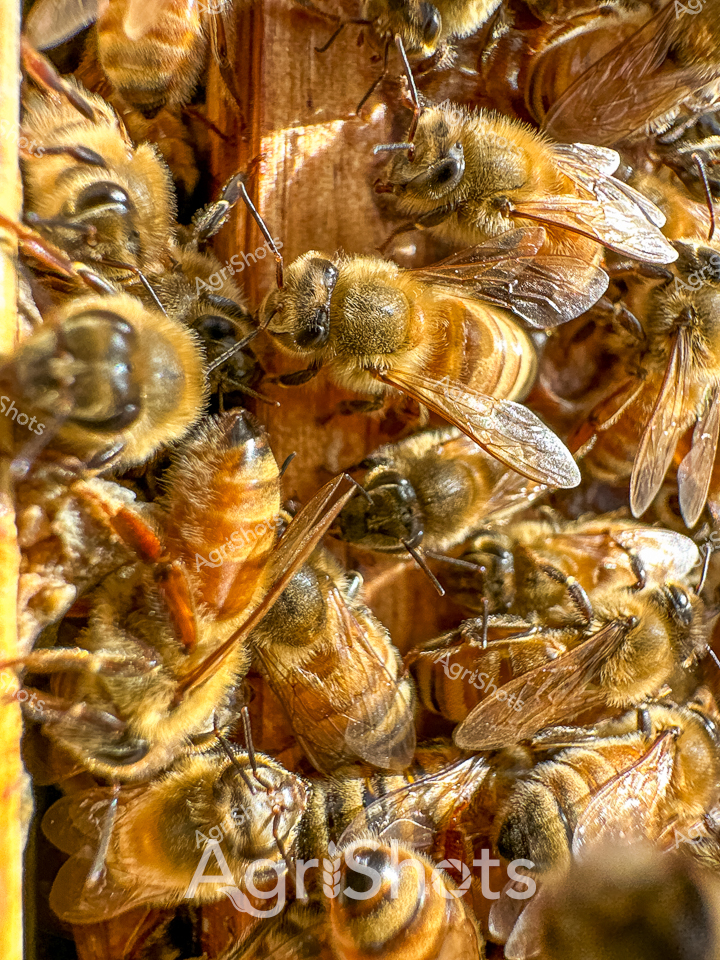
Honeybees cluster densely across a wooden hive frame, their golden-amber bodies creating a living tapestry of intricate movement and collective purpose. Each bee's delicate translucent wings and fuzzy thorax gleams in warm sunlight, revealing extraordinary textural details of their chitinous exoskeletons. The tight formation demonstrates the remarkable social behavior of these crucial pollinators, packed closely together in what appears to be a cool Tasmanian winter environment. Subtle variations of amber, bronze, and honey-brown tones create a rich visual landscape, highlighting the bees' remarkable adaptation and communal survival strategies. Every individual insect seems precisely positioned, yet the overall scene pulses with subtle organic energy - a microcosm of agricultural symbiosis central to Tasmania's robust agricultural ecosystem. The wooden hive frame provides a structured backdrop, emphasizing the systematic yet wildly complex nature of apiary management in southern Australian agricultural practices.
 Image
Image
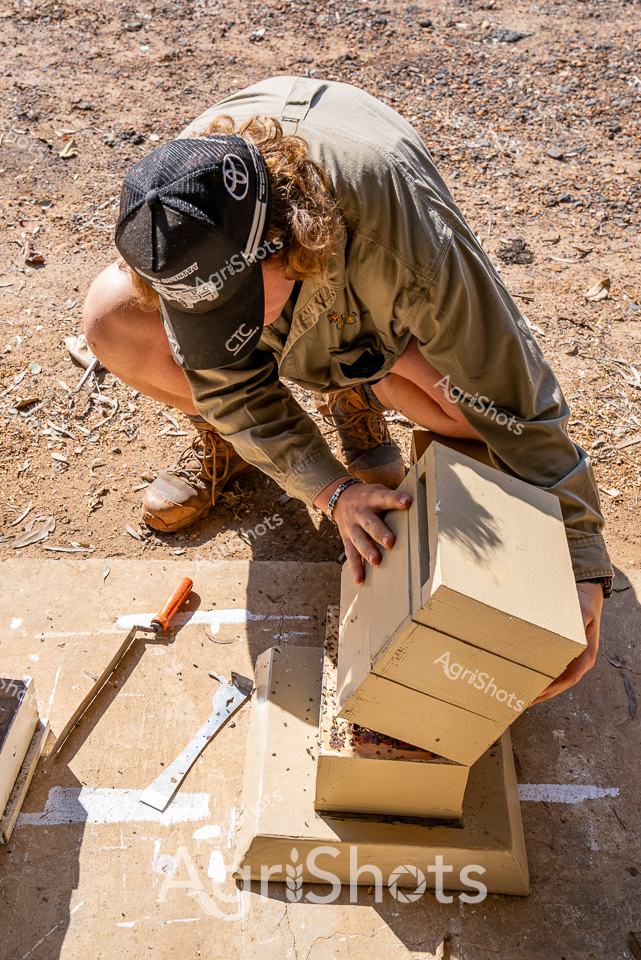
In the sun-baked terrain of Queensland's Lockyer Valley, a focused worker bends intently over stacked cardboard boxes, preparing equipment for native bee management. Wearing a khaki work shirt and a distinctive black cap, the individual carefully handles the containers on a dry, rocky ground scattered with small stones and debris. Precision tools—a ruler and another measuring implement—lie nearby, suggesting a methodical approach to apiary work. The harsh winter sunlight casts sharp shadows across the scene, highlighting the textural contrasts between the worker's rugged clothing, the sandy ground, and the clean lines of the storage boxes. This image captures the meticulous behind-the-scenes labor of Australian bee husbandry, where careful handling and preparation are critical to maintaining healthy native bee colonies. The scene embodies the quiet dedication of agricultural workers who play a vital role in supporting local ecosystems and agricultural productivity.
 Image
Image
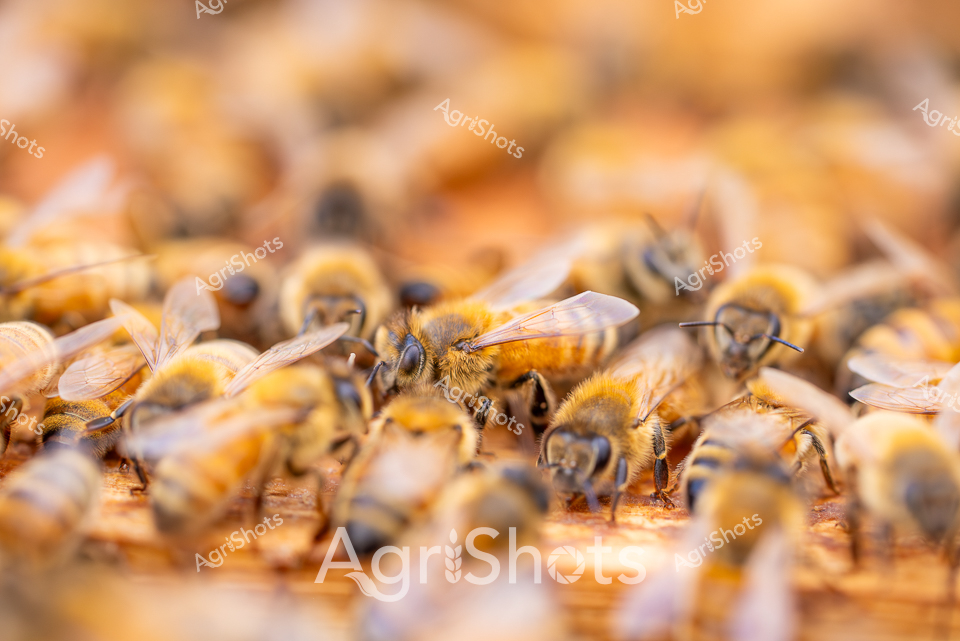
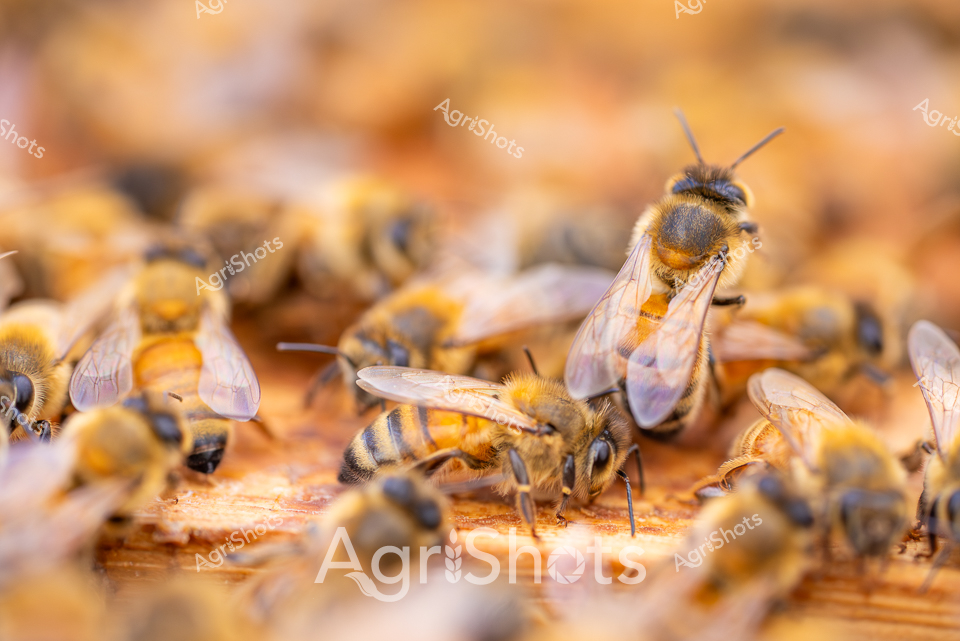
Golden sunlight bathes a dense cluster of honeybees, their amber-hued bodies packed tightly together in a mesmerizing agricultural tableau. Each bee displays intricate details - translucent wings, fuzzy thoraxes, and precise striped markings - revealing the remarkable complexity of these critical pollinators. This close-up captures the collective energy of a thriving apiary, likely situated in Tasmania's rich agricultural landscape during the cooler winter months when colony management becomes particularly crucial. The warm orange and yellow tones suggest the bees are clustered for warmth, a survival strategy that demonstrates their extraordinary social organization and resilience. Precise positioning and intimate proximity of the bees highlight their cooperative nature, with each individual contributing to the collective health and survival of the hive. The image encapsulates the delicate yet robust ecosystem of commercial beekeeping, a vital component of Australian agricultural production that supports crop pollination and honey production across the nation's diverse farming regions.
 Image
Image
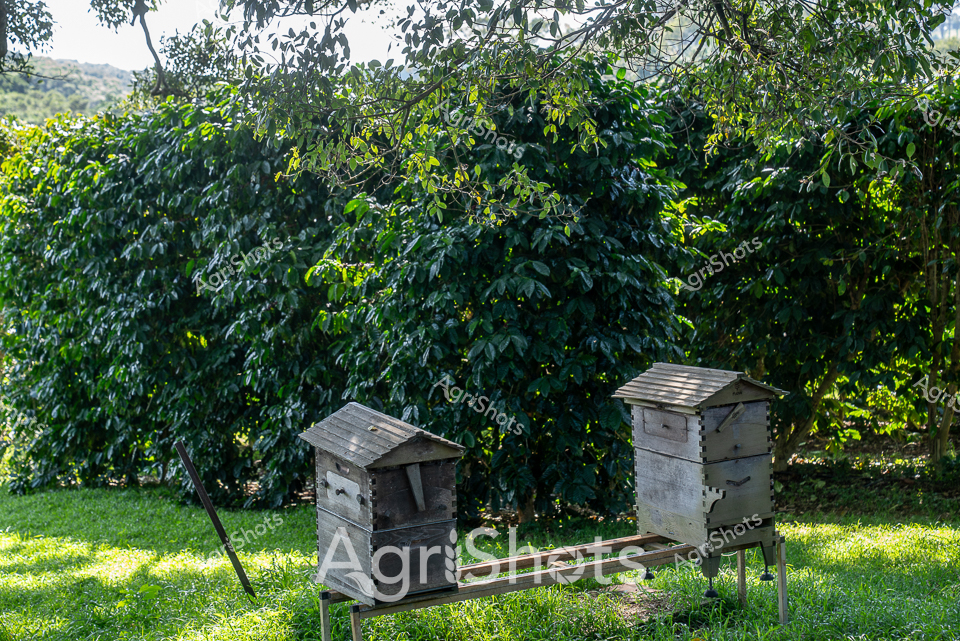
Nestled in the lush, verdant landscape of Queensland's Northern Rivers region, two weathered wooden bee hives stand sentinel beneath a canopy of dense, deep green foliage. Perched on sturdy metal stands on a vibrant emerald grass clearing, the traditional Langstroth-style hives suggest a thriving apiary operation among what appears to be a coffee plantation or native forest. Dappled sunlight filters through the surrounding trees, casting intricate shadows and highlighting the silvered timber of the hive boxes, which blend harmoniously with the natural environment. The scene captures the quiet industry of beekeeping, a crucial agricultural practice supporting both local ecosystems and broader agricultural productivity. These hives likely host native Australian bee species, potentially including the stingless native Tetragonula carbonaria, which are critical pollinators in subtropical landscapes. The verdant backdrop and soft lighting suggest a tranquil spring morning, when bees are most active and nectar flow is abundant. The composition speaks to the symbiotic relationship between agricultural practice and natural landscape, showcasing how careful husbandry can work in concert with native environments to produce honey, support crop pollination, and maintain biodiversity in Australia's rich agricultural regions.
 Image
Image
Beekeepers in crisp white protective suits carefully inspect a honeycomb frame teeming with thousands of industrious bees in a serene apiary nestled among native trees. Located in Queensland's fertile Lockyer Valley, the scene captures the delicate art of honey production during the vibrant spring season. Soft morning light filters through the surrounding eucalyptus, casting gentle shadows on the rows of white bee boxes lined up along a dusty path near a tranquil waterway. The apiarists move with practiced precision, their mesh-covered faces intent on examining the dense cluster of bees crawling across the golden-hued honeycomb, a living testament to the complex social structure of these remarkable insects. Specialized protective gear - including mesh-screened hats and lightweight, breathable suits marked with a professional insignia - speaks to the skilled and methodical nature of modern agricultural practice. This intimate portrait reveals the quiet expertise required in managing one of nature's most essential pollinators, capturing the symbiotic relationship between human stewardship and the intricate world of honeybees.
 Image
Image
Honeybees cluster densely across a warm golden surface, their translucent amber-tinted wings catching soft light. A remarkable macro perspective reveals the intricate texture of their fuzzy bodies, striped abdomens, and delicate antennae - highlighting the complex social structure of this thriving bee colony. Each worker bee moves with purposeful precision, their collective energy suggesting the vital agricultural ecosystem they represent. The warm ochre and burnt sienna tones evoke the rich amber of fresh honey, creating a sense of organic warmth against what seems to be a Tasmanian winter landscape. These industrious pollinators embody the critical role of apiary work in Australian agricultural production, their close proximity demonstrating the remarkable cooperative behavior that sustains entire ecosystems. The image captures a moment of collective purpose, where each individual bee contributes to the sophisticated functioning of the hive - a microcosm of agricultural productivity and natural harmony.
 Image
Image
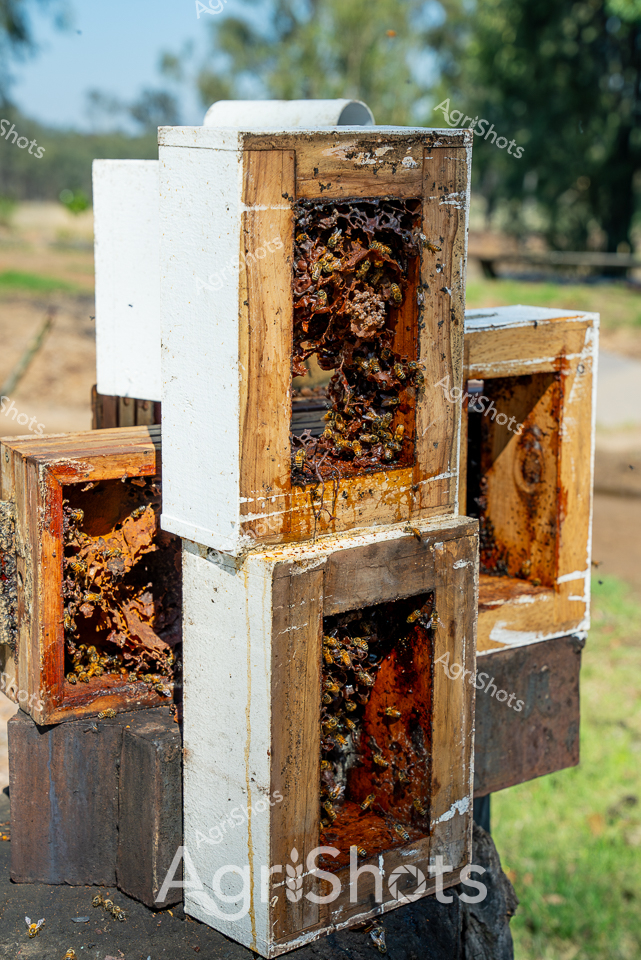
Stacked wooden bee hives reveal the intricate inner workings of a thriving native Australian apiary. Worn white and weathered timber boxes are carefully arranged, exposing honeycomb-filled chambers rich with golden-brown propolis and dense clusters of buzzing native stingless bees. The winter landscape of Queensland's Lockyer Valley stretches behind the hives, with muted green pastures and soft distant treelines creating a serene backdrop for this sustainable agricultural practice. Each hive box shows the complex organic textures of bee activity - layers of honey, wax, and bee colonies pressed into the wooden compartments, telling a story of meticulous beekeeping and the delicate ecosystem of native pollinators. Rust-toned stains and aged wood grain speak to the traditional methods of managing these important agricultural partners, highlighting the connection between careful cultivation and the natural rhythms of insect life. This intimate view into a native bee colony captures the quiet industry and remarkable architectural precision of these essential agricultural workers.
 Image
Image
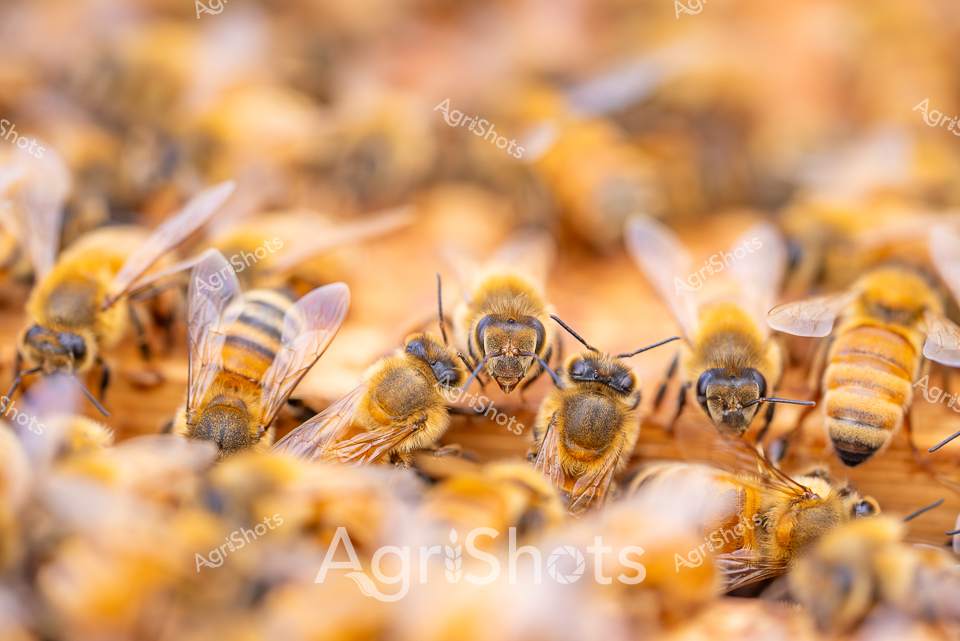
Golden honeybees cluster densely across the frame, their amber and black striped bodies creating a mesmerizing tapestry of collective activity. Soft amber and golden tones dominate the image, with delicate translucent wings catching the soft light and highlighting the intricate textures of these remarkable pollinators. Each bee appears meticulously positioned, suggesting the complex social structure of the hive - a microcosm of collaborative agricultural productivity typical of Tasmanian apiaries during the quieter winter months. Their fuzzy bodies are covered in fine golden hairs, creating a warm, textured surface that speaks to the robust health of this bee colony. The close-up perspective reveals extraordinary detail, from the nuanced segmentation of their bodies to the subtle variations in their golden-brown coloration, capturing the sophisticated organization of these critical agricultural workers. This image powerfully communicates the essential role of honeybees in Australia's agricultural ecosystem, particularly in Tasmania's renowned honey and pollination industries.
 Image
Image
Golden honeycomb glistens under warm light, revealing the intricate world of Australian native stingless bees. Rich amber and caramel tones blend across the fractured wax structure, with tiny black bees navigating the complex geometric landscape of their hive. Droplets of honey catch the light, creating a luminous sheen that highlights the remarkable natural architecture of this Queensland apiary, likely nestled in the fertile Lockyer Valley region. The close-up perspective transforms the honeycomb into a living landscape, where each cell tells a story of pollination, survival, and the delicate ecosystem of native Australian bee species. Captured during the crisp winter months, this image celebrates the remarkable productivity of these small but crucial agricultural workers, whose honey production is as much an art form as it is a vital agricultural process. The textured surface speaks to the raw, unprocessed beauty of natural honey production, showcasing the intricate relationship between insects and the agricultural landscape.
 Image
Image
Nestled in the lush Lockyer Valley, a serene apiary unfolds along a shadowy earthen path lined with mature eucalyptus trees. Rows of pristine white bee hives stand sentinel, their uniform wooden boxes creating a methodical arrangement against the natural backdrop of verdant foliage and dappled sunlight. A brilliant blue water barrel breaks the visual rhythm, suggesting careful water management for these critical pollinators. The scene captures the intricate relationship between agricultural practice and natural environment, with hives positioned strategically between woodland and what appears to be a seasonal waterway. Soft spring light filters through the tree canopy, casting intricate shadows across the packed earth walkway, highlighting the meticulous organization of this professional beekeeping operation. The tranquil setting speaks to the precision and harmony required in apiculture, where human intervention supports the delicate ecosystem of honeybee colonies essential to agricultural productivity.
 Image
Image
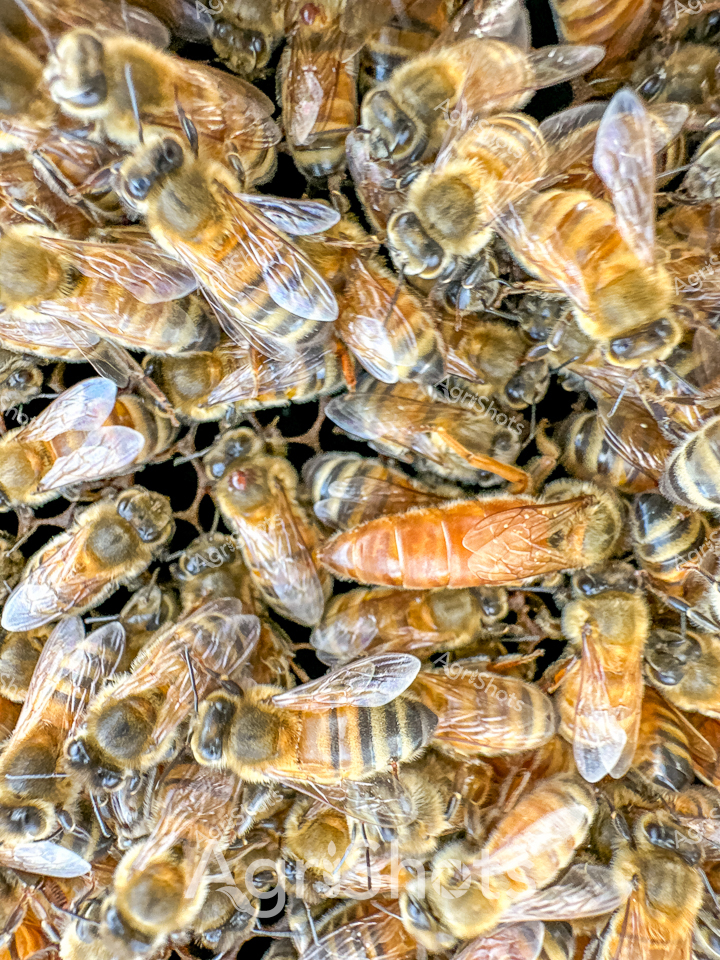
Amidst the dense cluster of honeybees, a golden-hued queen bee emerges, her elongated copper-orange body standing in stark contrast to the sea of worker bees surrounding her. The intricate image captures the remarkable social structure of a thriving apiary, with dozens of bees pressed closely together, their translucent wings catching the light and revealing delicate striped patterns across their bodies. Each bee is meticulously detailed, from their fuzzy thoraxes to their segmented abdomens, creating a mesmerizing tapestry of movement and collective purpose. The warm golden and amber tones suggest the rich interior of a hive, likely situated in the lush agricultural landscapes of Tasmania during the cooler winter months. This remarkable photograph provides an intimate glimpse into the complex world of bee colonies, showcasing the extraordinary density and collaborative nature of these crucial pollinators that play such a vital role in Australia's agricultural ecosystem. The queen's prominent position amid her industrious workers illustrates the remarkable organizational structure that enables these incredible insects to sustain their intricate community.
 Image
Image
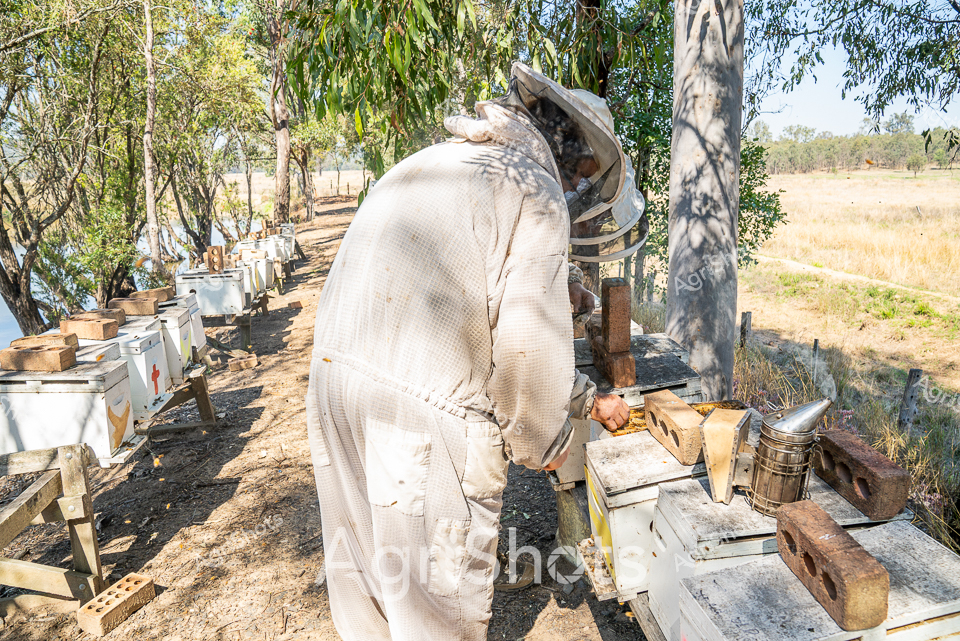
Nestled in the dappled light of a Queensland spring morning, an apiarist tends to a long row of white bee hives under the gentle shade of eucalyptus trees. Dressed in a full protective white suit and mesh hood, the beekeeper carefully works among the wooden hive boxes, surrounded by the golden grasslands and scattered woodland of the Lockyer Valley. Rustic wooden blocks and a gleaming metal smoker sit nearby, essential tools for managing these industrious pollinators. Sunlight filters through the leaves, casting intricate shadows across the sandy ground and highlighting the meticulous arrangement of the hive site. The scene captures the quiet concentration of agricultural work, where patience and respect for nature's delicate systems create a harmony between human intervention and the complex world of honeybees. This tranquil moment represents the heart of sustainable agricultural practice, where careful stewardship ensures the health of both the bee colonies and the broader ecosystem they support.
 Image
Image
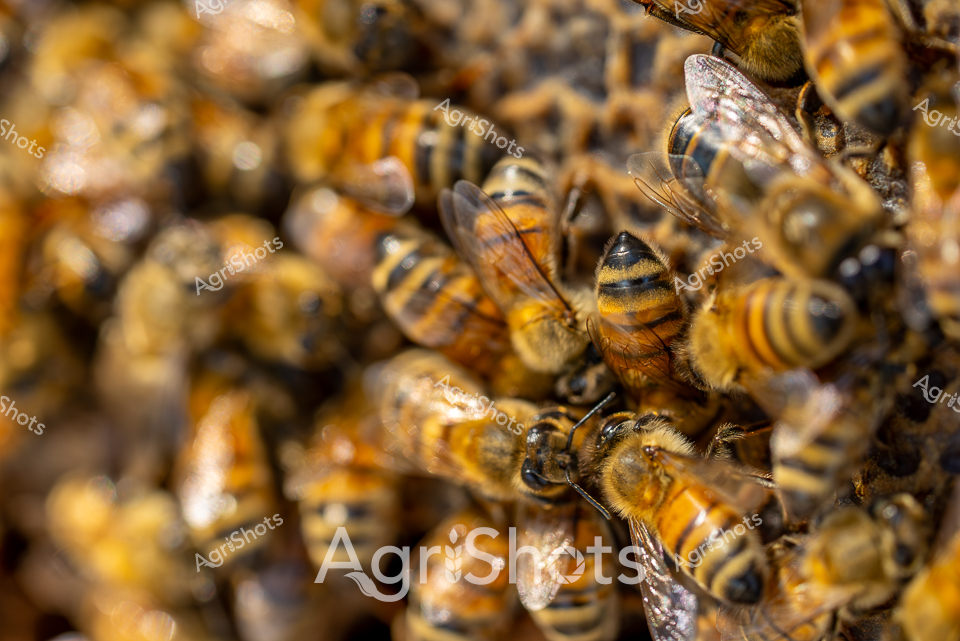
Honeybees cluster densely across the honeycomb, their golden-amber bodies striped with deep browns and blacks, creating a living tapestry of agricultural productivity. Intricate wings catch the light, revealing delicate translucent membranes against the warm, textured surface of the hive. This close-up reveals the extraordinary collective behavior of these essential pollinators, fundamental to agricultural ecosystems across Queensland's renowned Lockyer Valley. Each bee moves with purposeful precision, their bodies pressed closely together in a sophisticated social structure that speaks to the complex interconnectedness of agricultural life. The rich amber and ochre tones suggest a springtime scene, when bee colonies are most active and vital to crop production. This image captures the microscopic world of apiculture - a critical component of Australia's agricultural landscape, where these tiny workers play an enormous role in sustaining food production and ecological balance.
 Image
Image
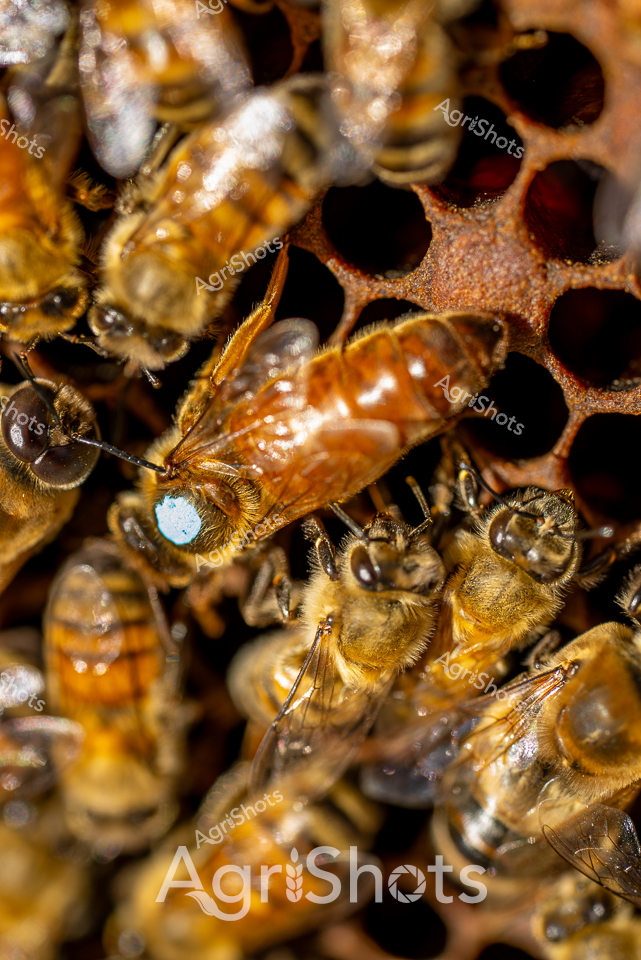
Amid the golden hexagonal chambers of a thriving beehive, a distinctive queen bee dominates the frame, her elongated amber body marked by a bright blue identifying tag. Surrounded by her industrious worker bees, she moves with regal purpose across the intricate honeycomb structure, its russet-colored wax cells creating a mesmerizing geometric backdrop. The close-up reveals the extraordinary detail of these remarkable social insects - their translucent wings, fuzzy golden-brown bodies, and intense collective focus capturing the complex microcosm of apiary life in Queensland's fertile Lockyer Valley. The image pulses with the energy of spring, when bee colonies are at their most active, nurturing new generations and preparing for the critical pollination season that sustains agricultural ecosystems. Each bee's exquisite texture and precise positioning speaks to the remarkable organization of the hive, where every individual plays a crucial role in the colony's survival and productivity. This intimate portrait celebrates the essential work of bees in Australian agricultural landscapes, highlighting their intricate social structures and vital contribution to crop production and environmental health.
 Image
Image
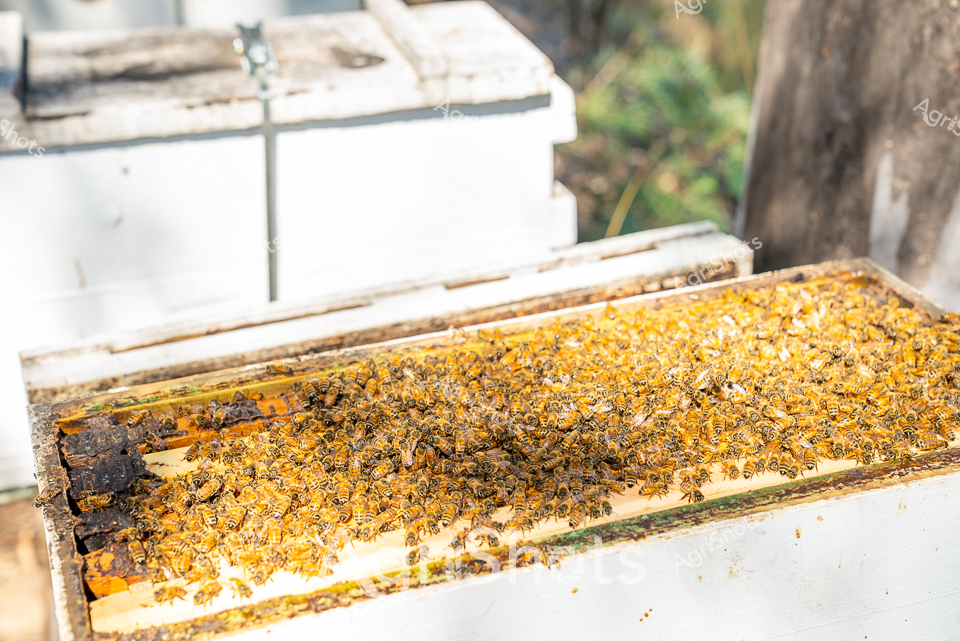
Honey-golden worker bees swarm densely across the wooden hive frame, their collective movement creating a living, breathing carpet of industrious insects. Nestled in the lush green backdrop of Queensland's Lockyer Valley, this apiary scene captures the vibrant energy of spring beekeeping. Stark white hive boxes stand sentinel in the background, providing a clean contrast to the rich amber and brown tones of the bee-covered frame. Soft natural light illuminates the intricate textures of the wooden hive, highlighting the bees' precise hexagonal workspaces and the glistening surfaces of honey-in-progress. The dense cluster of bees suggests a healthy, active colony at the peak of seasonal productivity, with hundreds of individuals moving in synchronized purpose. This image embodies the delicate symbiosis of agricultural stewardship - a testament to the careful management and respectful cultivation of these essential pollinators in the rich agricultural landscape of rural Queensland.
 Image
Image
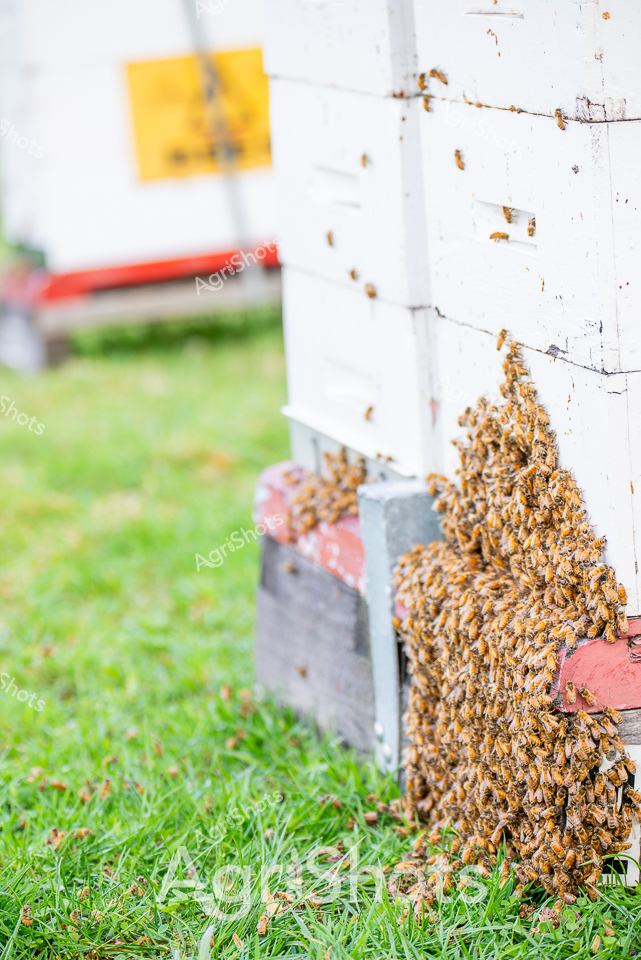
Honey-gold honeybees swarm densely across a white wooden beehive, creating a living, undulating mass against the crisp winter landscape of a Tasmanian apiary. Nestled on vibrant green grass with frost-tinged edges, the hive stands resolute, its white panels and pink-toned base providing stark contrast to the bustling colony clinging to its exterior. Clusters of worker bees congregate in tight, intricate formations, their collective movement suggesting a complex social choreography of survival and industry during the cold seasonal months. A blurred yellow sign in the background hints at the careful management and scientific precision of modern apiculture, while the meticulous arrangement of the hives speaks to the methodical approach of Tasmanian beekeepers. The scene captures the resilience of these remarkable insects, thriving even in the challenging winter environment, their golden bodies creating a living tapestry that symbolizes agricultural productivity and ecological interconnectedness. The image pulses with life, energy, and the quiet drama of agricultural practice in one of Australia's most renowned agricultural regions.
 Image
Image
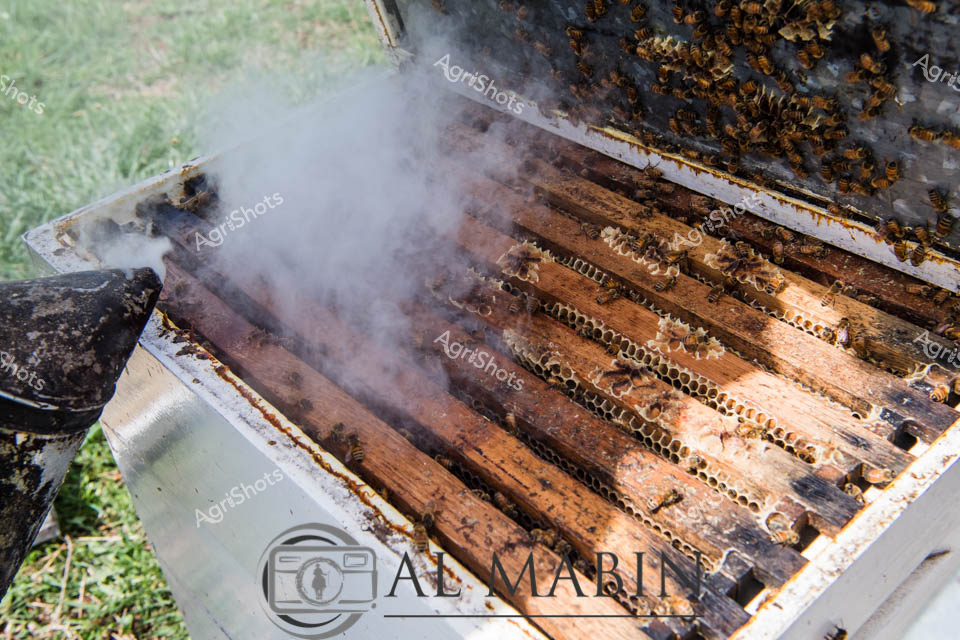
Smoke billows gently from a bee smoker, calming a bustling hive of honeybees in the lush Upper Mersey Valley region of Tasmania. Wooden frames reveal intricate honeycomb structures, golden with fresh honey and teeming with industrious bees moving across their carefully constructed chambers. The soft grey smoke drifts through the apiary, a traditional beekeeping technique that helps manage the colony during inspection, allowing the beekeeper to carefully assess the hive's health and honey production. Weathered wooden hive boxes sit against a backdrop of verdant green grass, capturing the essence of spring in Tasmania's rich agricultural landscape. Sunlight catches the hexagonal wax cells, highlighting the remarkable precision of these tiny pollinators as they work tirelessly within their carefully organized community. This intimate glimpse into apiculture reveals the delicate balance between human intervention and the remarkable natural systems of honeybee colonies.
 Image
Image
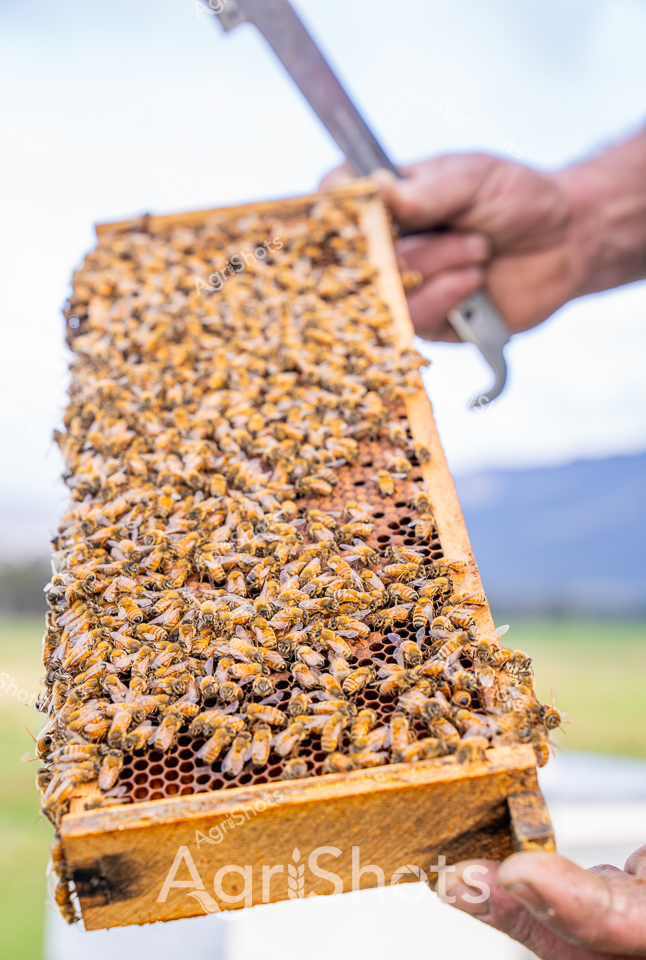
A dense colony of honeybees blankets a wooden hive frame, their golden-amber bodies clustered tightly across the honeycomb's intricate hexagonal structure. Weathered hands gently hold the frame, silhouetted against a soft, misty Tasmanian landscape of distant mountain ranges and muted green pastures. The bees appear industrious and healthy, their collective movement creating a living tapestry of pollinators vital to agricultural ecosystems. Soft winter light illuminates the frame, highlighting the rich amber and brown tones of the bees and the raw wooden hive, suggesting this is a carefully managed apiary during the cooler seasonal months. Each bee seems precisely positioned, reflecting the complex social organization of the hive and the meticulous care of the beekeeper. The image captures the delicate balance of agricultural stewardship - a quiet moment of interaction between human hands and the remarkable insect workforce that supports broader agricultural productivity.
 Image
Image
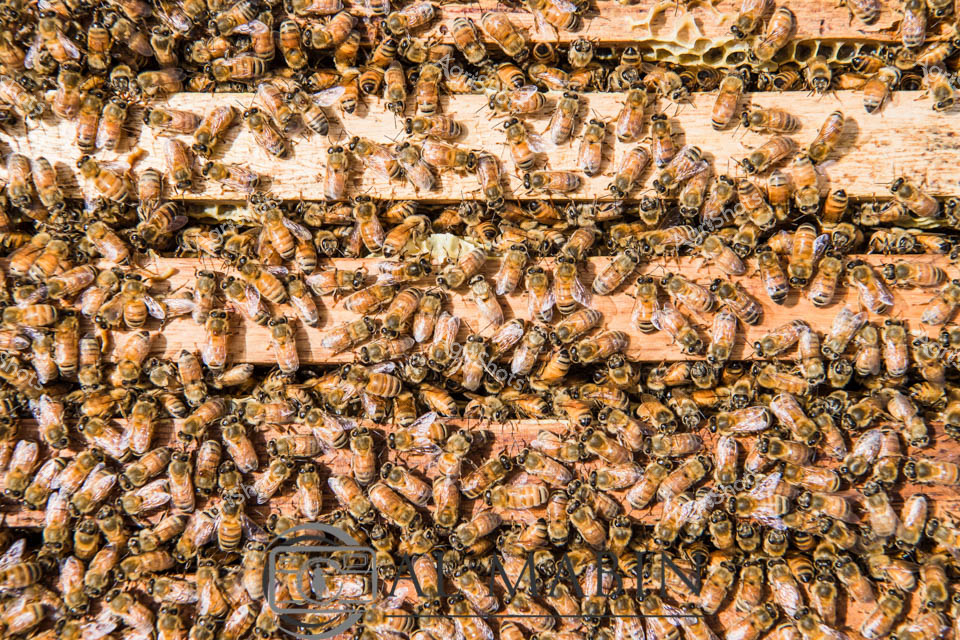
A dense, writhing mass of golden-brown honeybees covers the wooden frames of a beehive in Tasmania's Upper Mersey Valley. Thousands of industrious workers cluster tightly across the wooden surface, their bodies creating a living, breathing tapestry of pollination and honey production. Warm amber and brown tones dominate the image, reflecting the bees' natural coloration against the raw, textured wood of the hive boxes. Each bee moves with purposeful precision, representing the intricate social structure of the colony during the vibrant spring season when nectar flows abundantly and hive activity reaches its peak. The photograph captures the remarkable collective behavior of these critical agricultural workers, showcasing the intricate ecosystem of apiary management in Tasmania's rich agricultural landscape. A subtle watermark in the bottom left hints at the professional documentation of this remarkable natural scene, celebrating the essential role of bees in Australia's agricultural productivity.
 Image
Image
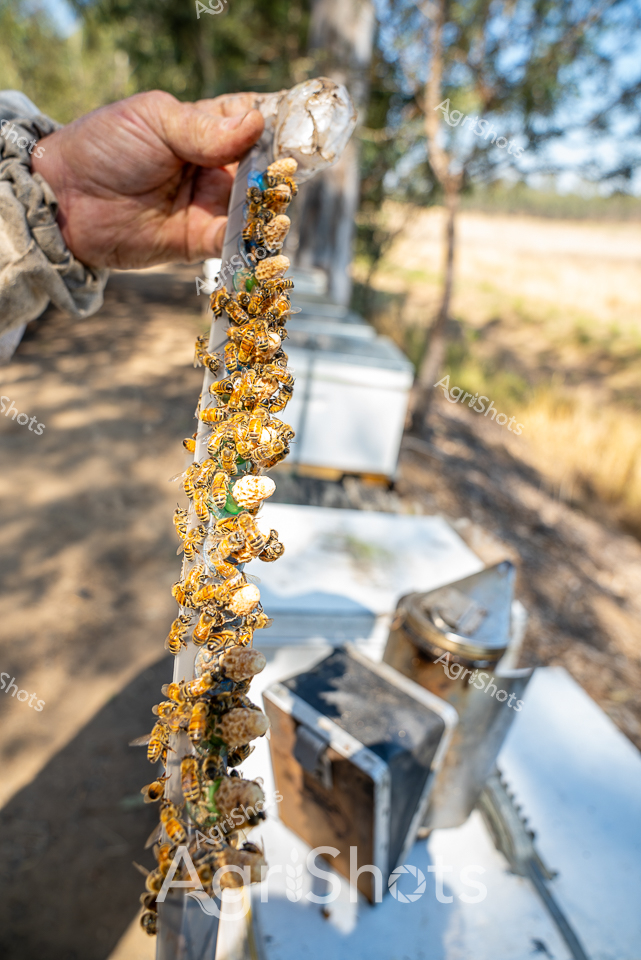
Burnished golden honey bees cluster densely along a vertical frame, their collective bodies creating a living, vibrant column against the soft-focused backdrop of a Queensland apiary. A weathered, work-worn hand grips the frame, revealing the intimate connection between beekeeper and hive during spring honey harvest in the Lockyer Valley. Gleaming white bee boxes stand sentinel in the background, their precision contrasting with the organic, pulsing mass of bees covering the frame's surface. Dappled sunlight filters through surrounding trees, casting a warm, gentle illumination on the scene of agricultural craftsmanship. Each bee appears precisely positioned, their yellow and black bodies creating a mesmerizing texture of movement and collective purpose. This image captures the delicate choreography of apiculture - a moment of careful extraction that represents generations of agricultural knowledge and the intricate symbiosis between human stewardship and the remarkable social structure of honeybees.
 Image
Image
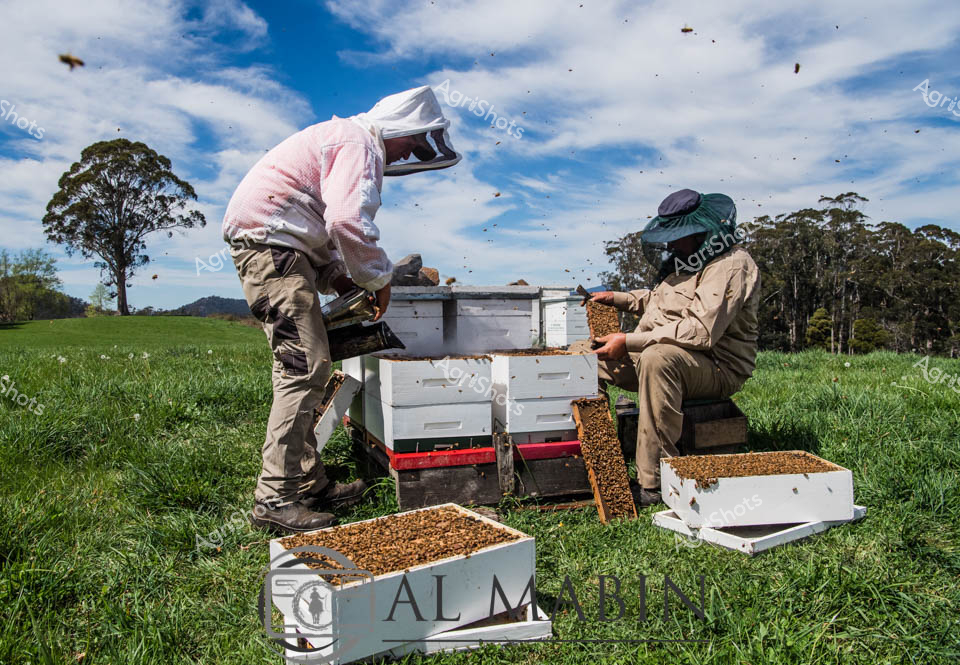
Clad in protective pale pink and khaki beekeeping suits, two apiarists tend to their honey bee colonies in the lush pastures of Tasmania's Upper Mersey Valley. Crisp blue skies and wispy clouds frame a verdant landscape dotted with eucalyptus trees, creating a pristine backdrop for delicate pollination work. Wooden hive boxes painted white and red stand open, revealing thousands of industrious bees crawling across honeycomb frames, their golden bodies swirling dynamically through the air. One beekeeper carefully manipulates a frame, examining the intricate hexagonal wax structures that represent weeks of collaborative insect labor, while the other prepares additional equipment. The scene pulses with agricultural vitality - a testament to the symbiotic relationship between humans and these essential pollinators, capturing the meticulous craft of sustainable honey production in Tasmania's fertile spring season. Swarms of bees drift around the workers, who move with practiced calm and precise movements, embodying generations of agricultural expertise.
 Image
Image
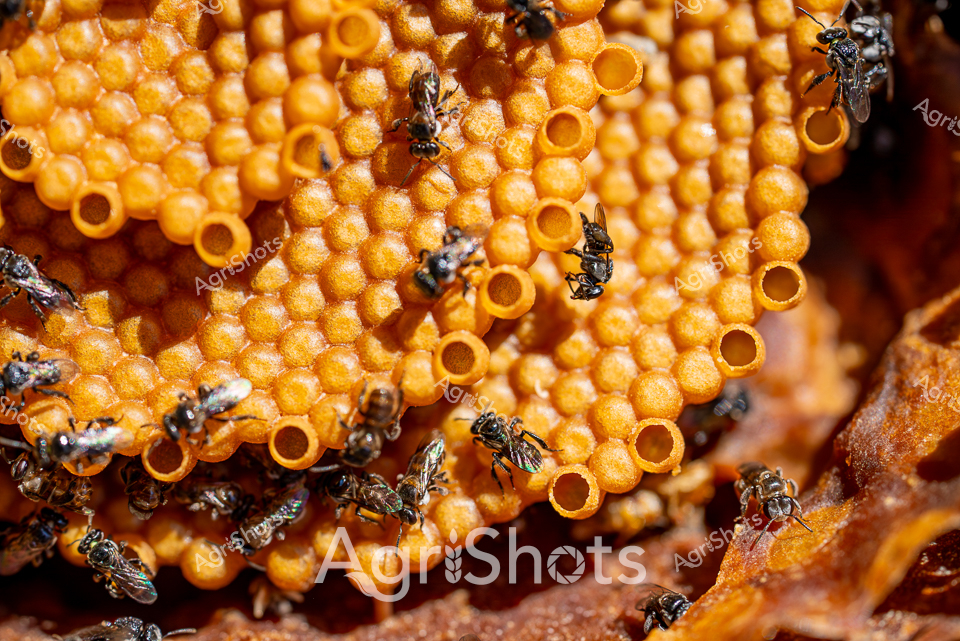
Honeycomb Architecture: Native Australian Stingless Bee Nursery Golden hexagonal chambers pulse with life as native Australian stingless bees tend their intricate brood structure. The luminous amber honeycomb glows with warm winter light, each perfectly symmetrical cell a precise nursery for developing larvae. Tiny black bees move meticulously across the surface, some entering and exiting the circular openings with ritualistic precision, while others cluster around the edges of the waxy architectural marvel. The rich ochre and burnt orange tones of the honeycomb contrast dramatically with the darker bodies of the bees, creating a mesmerizing tapestry of agricultural microcosm. This extraordinary close-up reveals the extraordinary engineering of Queensland's native bee species, capturing the delicate ecosystem of the Lockyer Valley's apiary environment with remarkable clarity and intimacy. Each cell represents a potential future worker, a testament to the complex social structure and remarkable reproductive strategy of these essential pollinators.
 Image
Image
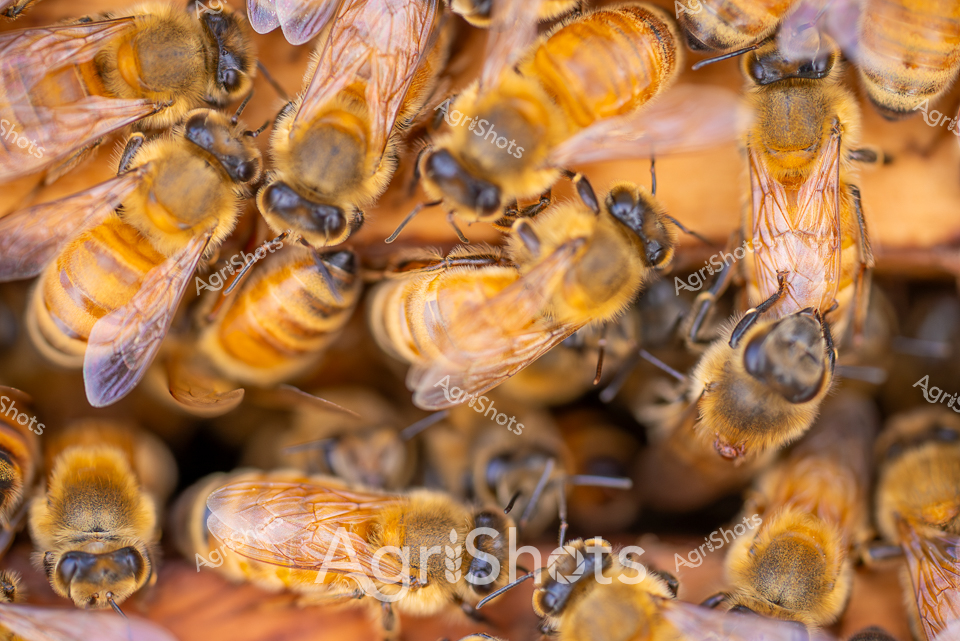
Honeybees cluster in a golden, amber-hued swarm across their densely populated hive frame. Translucent wings shimmer with delicate iridescence while fuzzy amber-brown bodies press tightly together, creating a living tapestry of intricate bee anatomy. Each insect's segmented body gleams with warm orange and brown tones, highlighting their remarkable textural details - from compound eyes to delicate antennae and fine body hair. This close-up reveals the extraordinary social complexity of a bee colony, where individual insects function as a unified collective, their bodies interlocking in a precise, rhythmic formation that suggests profound communication and collaborative survival. The warm color palette evokes the rich, organic environment of a Tasmanian apiary during the quiet winter months, when these industrious pollinators huddle closely to maintain critical colony warmth. The image captures the miraculous micro-universe of bee society, where each individual plays a crucial role in the complex, interconnected life of the hive.
 Image
Image
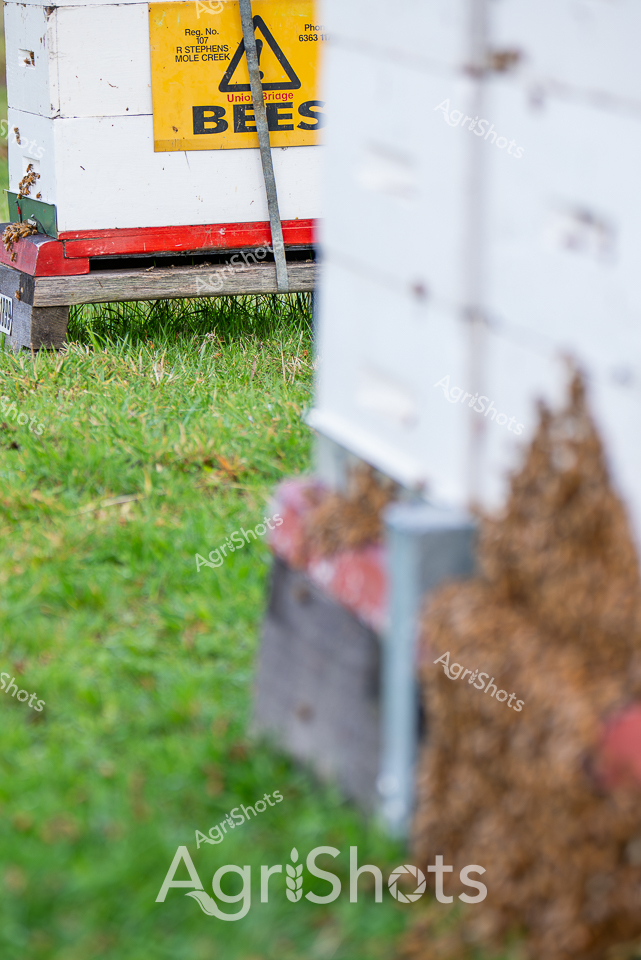
Nestled on a crisp Tasmanian winter morning, a vibrant yellow warning sign alerts observers to the industrious world of bee keeping at this Union Bridge apiary. Pristine white hive boxes stand sentinel against the dew-laden green grass, their red-trimmed lids hinting at the complex colony thriving within. The triangular caution sign, stark and bold, broadcasts the essential nature of these pollinators to agricultural ecosystems. Weathered wooden supports and metallic infrastructure suggest a well-established, professionally managed bee operation, typical of Tasmania's renowned agricultural precision. The soft focus of the surrounding landscape creates an intimate framing, drawing attention to the critical work of these small but mighty insects in sustaining regional food production. This scene captures the quiet dedication of apiarists who maintain these crucial agricultural partners, representing the delicate balance between human intervention and natural productivity that defines modern farming.
Well, you've ploughed through the whole field!
No more crops to harvest here, mate.
Try searching for something else in our library of 50,000+ royalty-free media: