 Image
Image
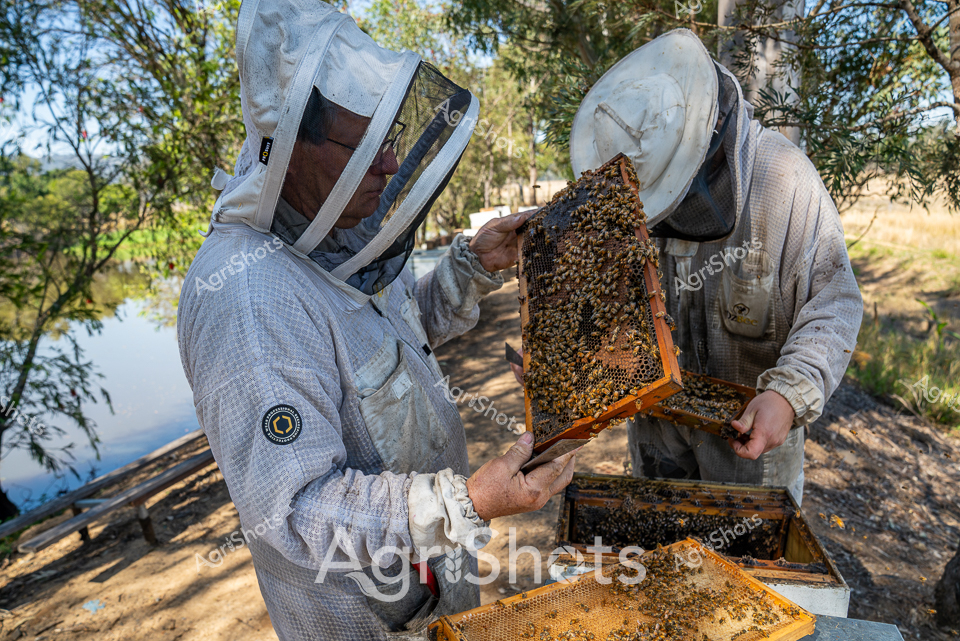
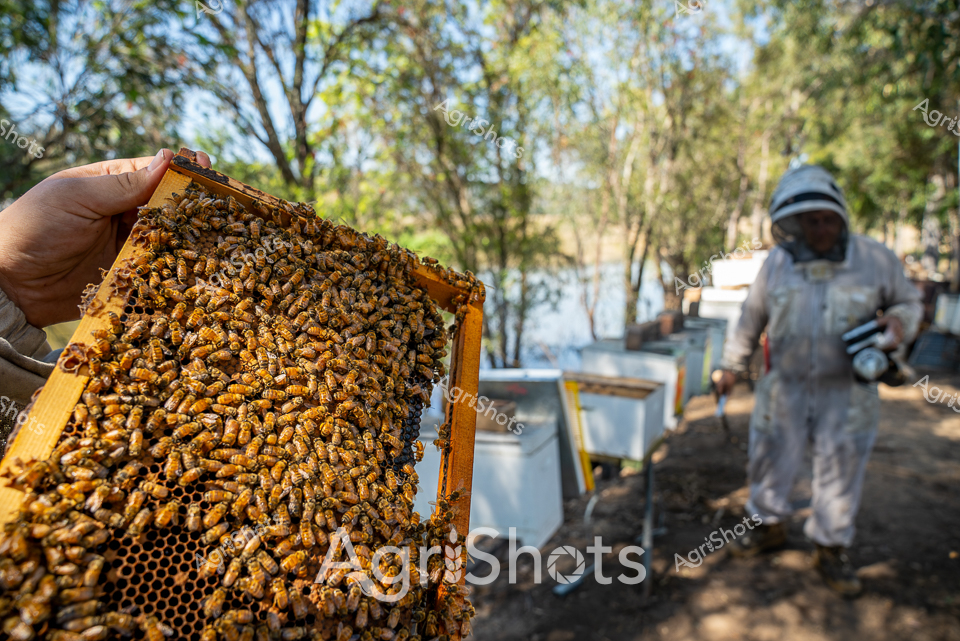
Apiarists in crisp, light grey protective suits examine a thriving honeycomb frame nestled amid the dappled sunlight of a Lockyer Valley orchard. Wearing full mesh veils that shield their faces, the beekeepers carefully handle the densely populated frame, revealing thousands of industrious honey bees clustered across the intricate wax cells. Surrounded by olive and fruit trees, with soft water and gentle shadows in the background, the scene captures the meticulous craft of professional honey production during the vibrant spring season in Queensland's renowned agricultural landscape. The textured, light-colored protective suits contrast beautifully with the warm golden tones of the wooden hive boxes and the rich amber and brown hues of the bee-covered honeycomb. One apiarist holds the frame delicately, allowing close examination of the complex bee colony, while the subtle waterside setting suggests this is a carefully managed, ecologically sensitive agricultural environment typical of the region's sophisticated farming practices. The image radiates a sense of calm expertise, showcasing the symbiotic relationship between skilled farmers and these essential pollinators, crucial to Australia's agricultural ecosystem and food production.
 Image
Image
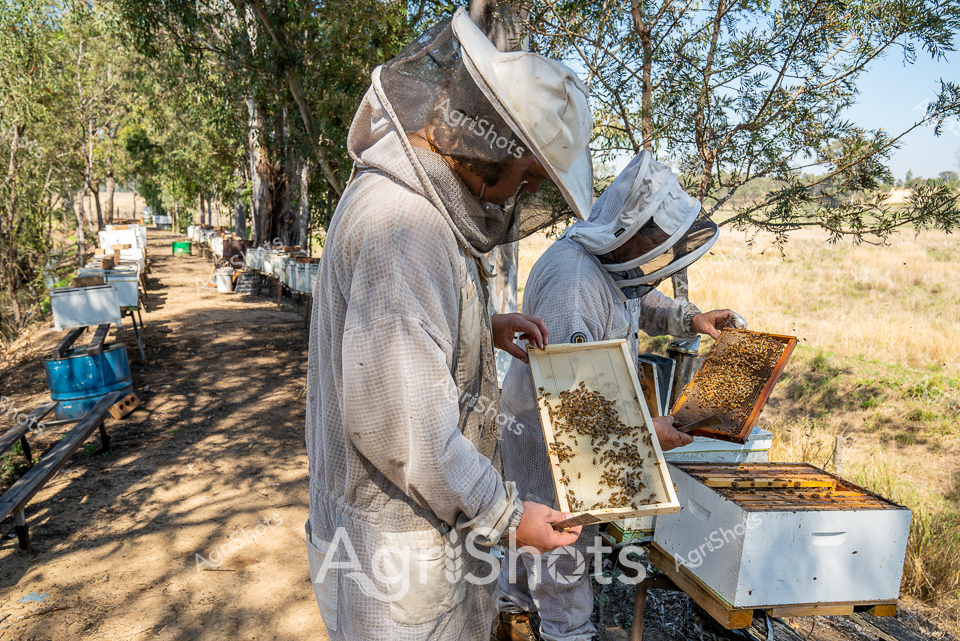
Beekeepers tend to a thriving apiary nestled among eucalyptus and native trees in Queensland's fertile Lockyer Valley. Dressed in protective white mesh suits and wide-brimmed veiled hats, the workers carefully inspect honey frames teeming with industrious bees. Sunlight filters through the surrounding woodland, casting dappled shadows on the neat rows of white and blue hive boxes positioned along a well-worn earth path. One beekeeper gently removes a frame, revealing a dense golden-brown honeycomb alive with movement, while his colleague stands ready to assist. The scene pulses with the quiet concentration of agricultural expertise, showcasing the intricate relationship between human stewardship and the complex world of bee colonies. Soft textures of mesh suits contrast with the metallic glint of hive tools and the organic patterns of the honeycombs, capturing a moment of careful observation in the heart of spring's abundant agricultural landscape.
 Image
Image
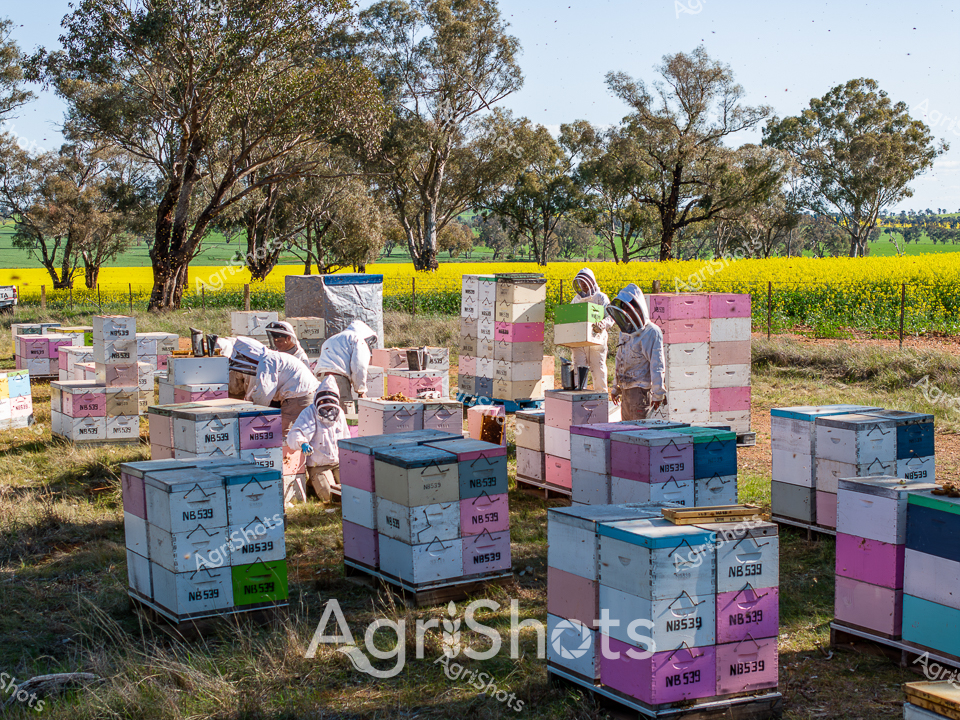
Vibrant yellow canola fields burst into bloom across the Riverina landscape, creating a stunning backdrop for a busy apiary operation. Stacked bee hives in a palette of pastel pinks, blues, and whites stand clustered beneath gnarled eucalyptus trees, with numbered labels identifying each hive colony. Beekeepers in protective white suits carefully tend to the hives, their movements deliberate and measured as they manage the crucial pollination process. The soft spring light filters through the trees, highlighting the intricate dance of bees moving between the colorful hive boxes and the brilliant golden canola field. This scene captures the delicate symbiosis of agricultural practice and natural ecosystem, where careful bee management supports crop production in the rich agricultural heartland of New South Wales. The ordered rows of hives, the wild beauty of the surrounding landscape, and the methodical work of the beekeepers tell a story of precision, care, and the essential role of pollinators in Australian agriculture.
 Video
Video
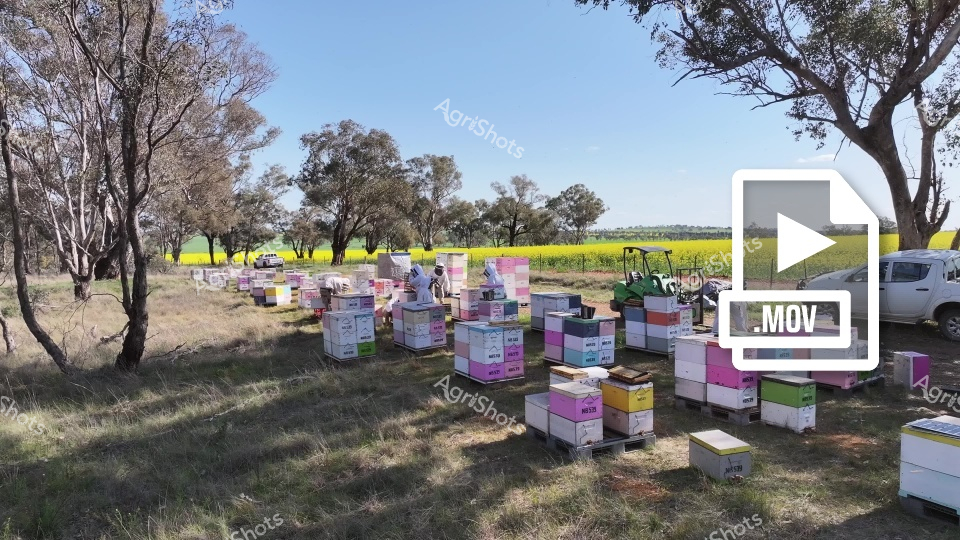
Honeybee hives nestle beneath gnarled eucalyptus trees, their colorful wooden boxes creating a vibrant mosaic against the dappled grassland and brilliant yellow canola fields of the Riverina. Soft spring light filters through the scattered trees, casting gentle shadows across the apiary site where rows of pink, yellow, green, and white hive boxes stand ready for pollination. A white utility vehicle and green agricultural equipment in the background suggest active farm management, highlighting the carefully orchestrated relationship between agriculture and these essential pollinators. The landscape breathes with productive potential - the blooming canola fields stretching to the horizon promise abundant nectar, while the strategically placed bee colonies ensure optimal crop fertilization. Each meticulously arranged hive represents a critical node in the agricultural ecosystem, bridging wild landscape and cultivated farmland. The scene captures the delicate choreography of agricultural practice, where human intervention and natural systems work in precise, harmonious collaboration.
 Video
Video
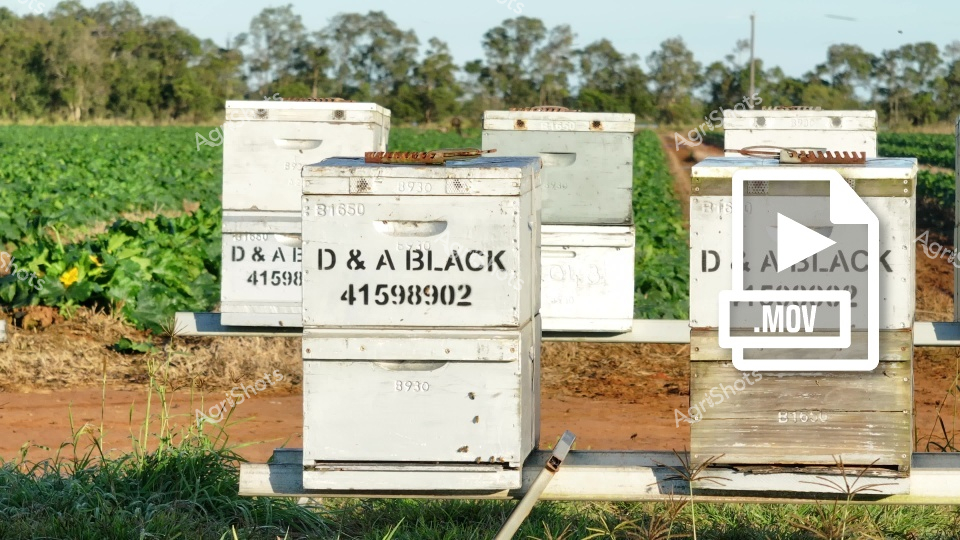
White apiary boxes stamped with "D & A BLACK" stand sentinel among lush green crops, revealing Queensland's sophisticated agricultural ecosystem. Robust wooden bee hives are strategically positioned along the field's edge, suggesting precision in pollination management for local horticultural production. Rich red-brown soil contrasts sharply with verdant vegetation, creating a quintessential Australian agricultural landscape backdrop of scattered eucalyptus trees and meticulously maintained farmland. The weathered white boxes, marked with numerical identifiers, demonstrate professional beekeeping practices in the Bundaberg region, where managed pollinators play a critical role in crop sustainability. Soft natural light bathes the scene, indicating early morning - an optimal time for bee activity and agricultural monitoring. A video overlay suggests dynamic documentation of this intricate agricultural process, capturing the intersection of technological tracking and natural biological systems that underpin modern farming practices.
 Image
Image
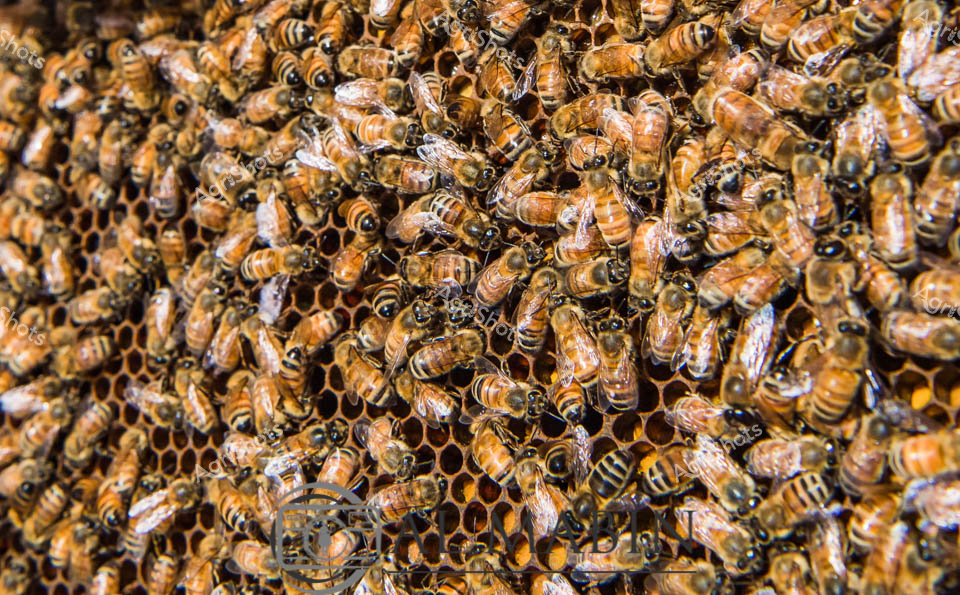
Thousands of honeybees cluster densely across the surface of a hive, their golden-amber bodies creating a living, undulating carpet of intricate movement. Captured in stunning macro detail, this image reveals the extraordinary collective behavior of a thriving bee colony in Tasmania's Upper Mersey Valley region. The bees press tightly together, their bodies forming a protective, breathing mass that speaks to the complex social structure of these remarkable pollinators. Warm amber and brown tones dominate the frame, highlighting the texture and interconnectedness of the swarm against what appears to be a structured hive background. Spring light seems to illuminate the scene, suggesting the peak of bee activity during pollination season. A subtle watermark in the corner hints at the professional documentation of this critical agricultural moment, showcasing the essential role of beekeeping in Tasmania's rich agricultural landscape.
 Image
Image
Honeybees cascade across the intricate hexagonal wax honeycomb, their amber and black striped bodies creating a living, vibrant tapestry of agricultural productivity. Each worker bee moves with purposeful precision, tending to the complex infrastructure of their communal hive - a testament to the sophisticated biological systems that underpin agricultural pollination in Tasmania's Upper Mersey Valley region. The dense cluster reveals multiple generations of bees in various stages of activity, from young workers cleaning cells to mature foragers returning with nectar and pollen, their bodies dusted with golden remnants of spring blossoms. Warm amber and bronze tones dominate the image, reflecting the rich biological diversity of this carefully managed apiary ecosystem, where each insect plays a critical role in sustaining agricultural production. The remarkable density of bees demonstrates the health and vitality of this colony, a crucial element in Tasmania's robust agricultural landscape and sustainable farming practices. This close-up reveals the extraordinary complexity of bee society - a microcosm of collaborative effort that directly supports crop production across the region.
 Image
Image
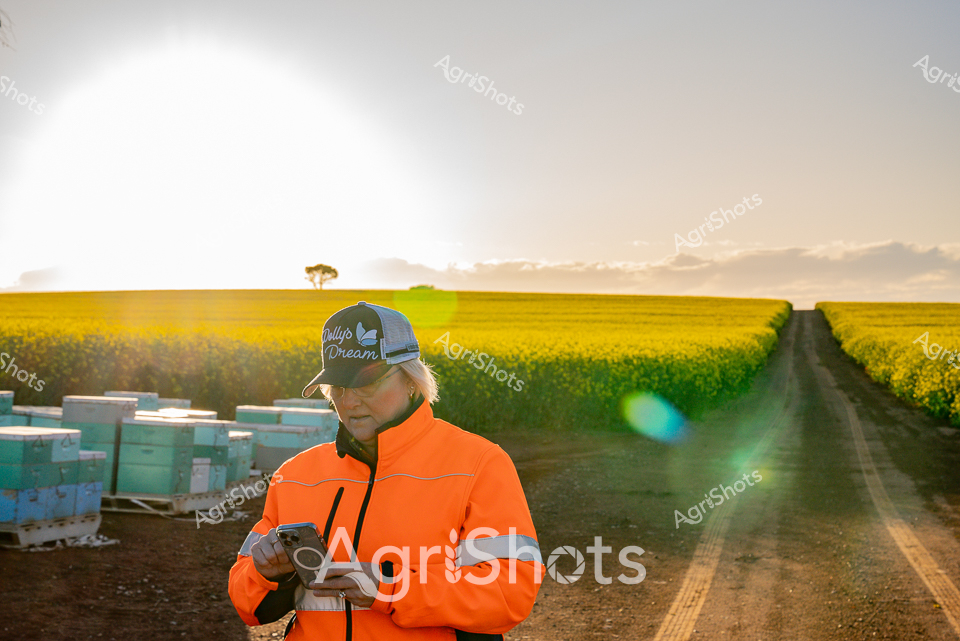
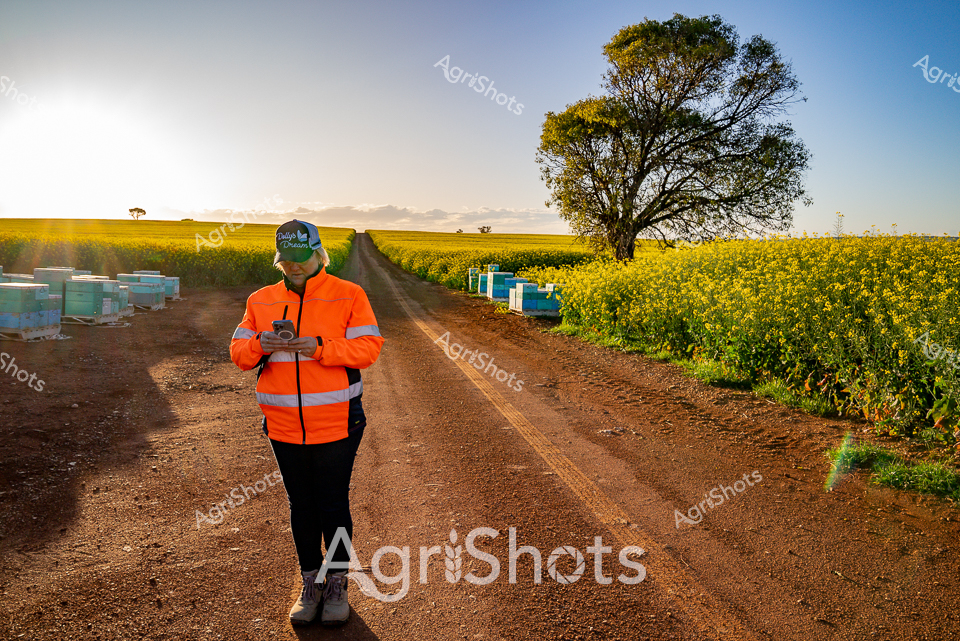
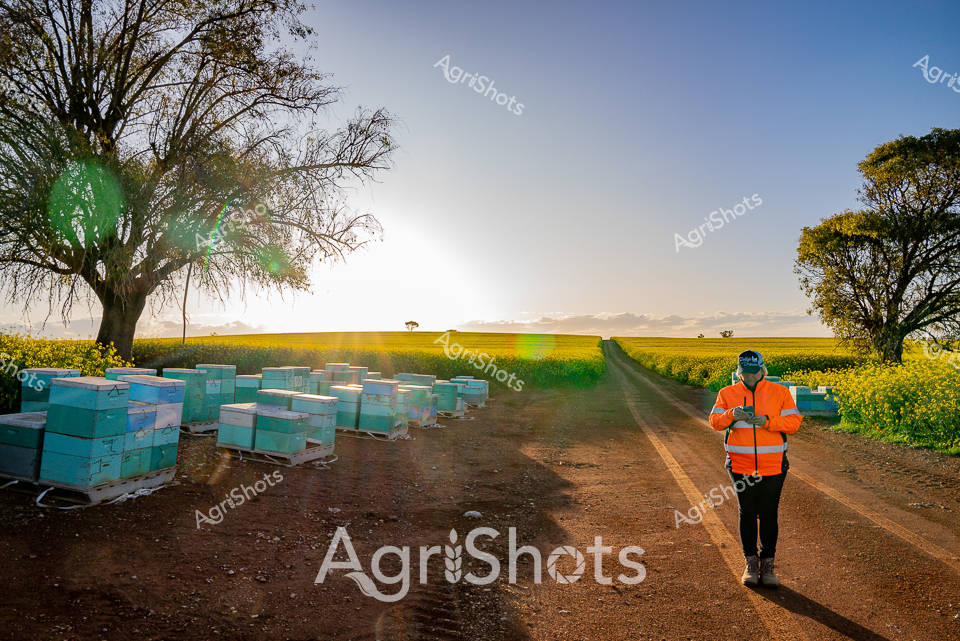
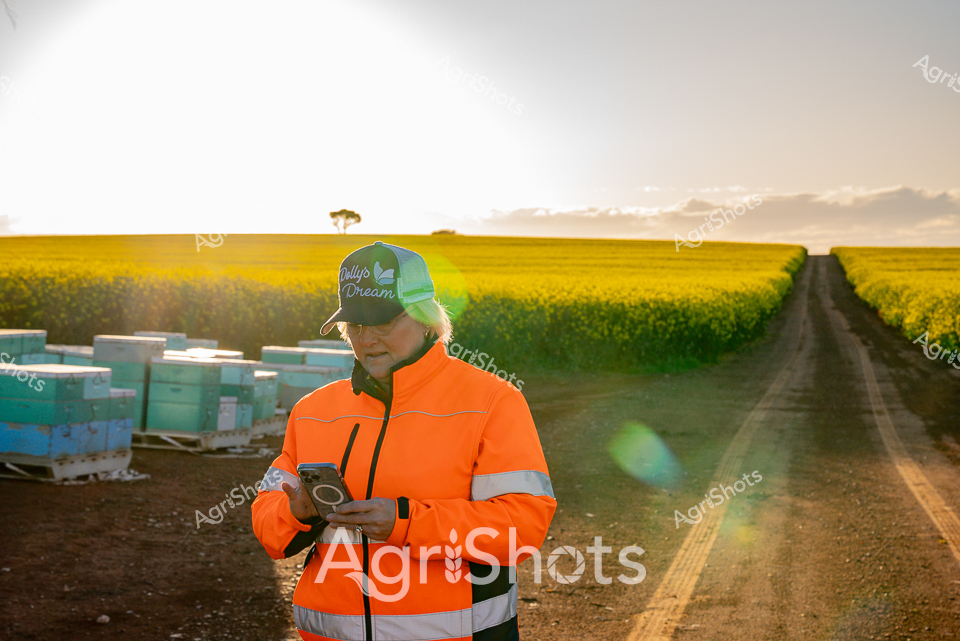
Bathed in the golden light of early morning, a worker in a vivid orange safety jacket stands amid a radiant canola field in full bloom. Turquoise bee hives cluster nearby, essential partners in the agricultural ecosystem, their busy inhabitants critical to pollination across the vast yellow landscape. The dirt track stretches toward the horizon, lined with brilliant yellow rapeseed crops that shimmer like a sunlit carpet, interrupted only by a lone distant tree silhouetted against the soft dawn sky. Wearing a "Dolly's Dream" cap, the agricultural worker carefully manages digital equipment, likely documenting crop conditions or tracking hive productivity during this pivotal spring season. The scene captures the intersection of modern agricultural technology, environmental stewardship, and the delicate balance of farming ecosystems. Soft lens flares and warm light emphasize the hope and potential of a new day in rural agricultural Australia, where precision, safety, and connection to the land are paramount.
 Image
Image
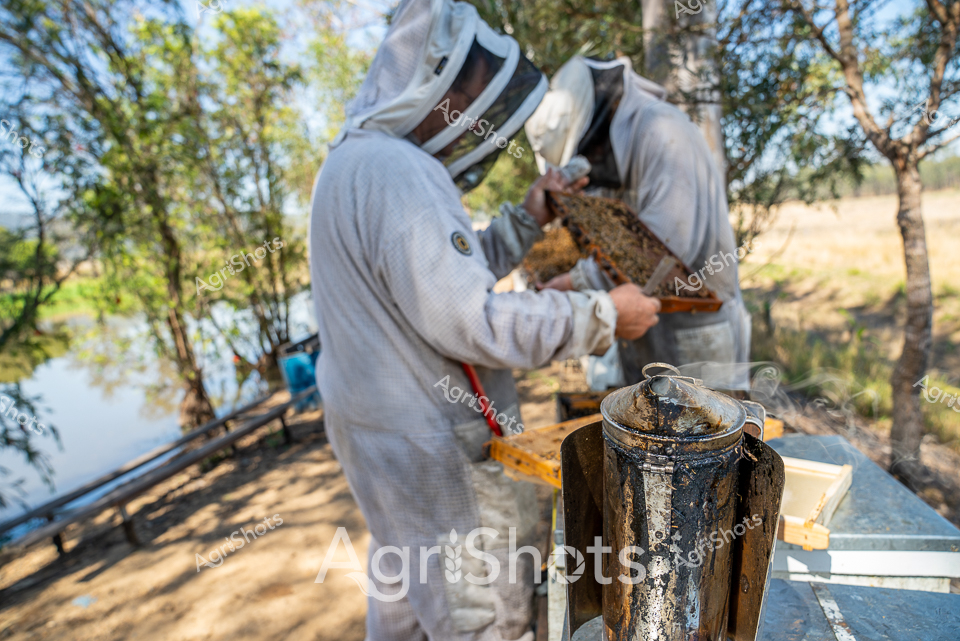
Nestled in the sun-dappled landscape of Queensland's Lockyer Valley, two beekeepers in pristine white protective suits meticulously inspect a honey-laden frame from a weathered bee hive. The smoker, blackened and well-used, sits prominently in the foreground, its wisps of calming smoke helping to manage the buzzing colony. Surrounded by soft green trees and with a tranquil water source nearby, the scene captures the delicate art of apiary work during the vibrant spring season. Careful hands gently handle the wooden frame, rich with honeycomb and the intricate work of industrious bees, demonstrating the symbiotic relationship between these dedicated apiarists and their precious pollinators. Soft natural light filters through the branches, casting gentle shadows and highlighting the textural details of the bee equipment and protective gear. This image embodies the quiet expertise and patient craft of Australian beekeeping - a vital agricultural practice that sustains both ecological balance and agricultural productivity in the region.
 Image
Image
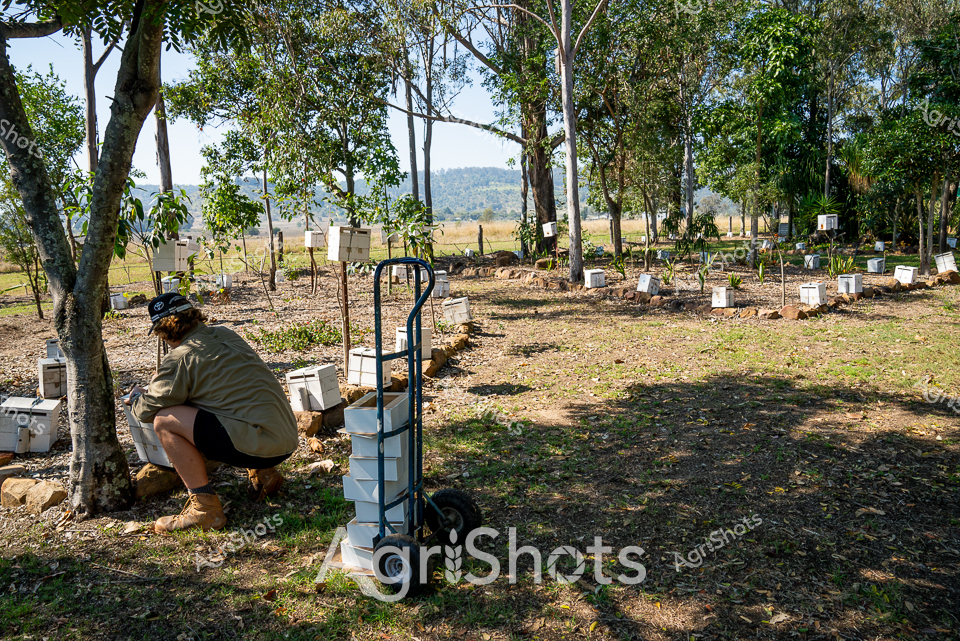
Australian Stingless Native Bee Apiary in the Lockyer Valley A dedicated apiarist carefully manages a carefully cultivated native bee sanctuary nestled among eucalyptus and wattle trees in Queensland's fertile Lockyer Valley. Winter sunlight filters through the sparse woodland, casting dappled shadows across rows of white box hives strategically positioned near native vegetation. The worker is crouched beside a hand trolley loaded with additional hive boxes, meticulously arranging and maintaining habitats for Australia's precious native stingless bee species. Robust work boots, a khaki shirt, and a practical cap indicate the careful, professional approach to this specialized agricultural practice. The ground is dry and scattered with rocks, reflecting the challenging environmental conditions these resilient bee colonies must navigate. Each white hive box represents a thriving microcosm of native bee culture, critical to local ecosystem health and supporting important pollination services for surrounding agricultural landscapes.
 Video
Video
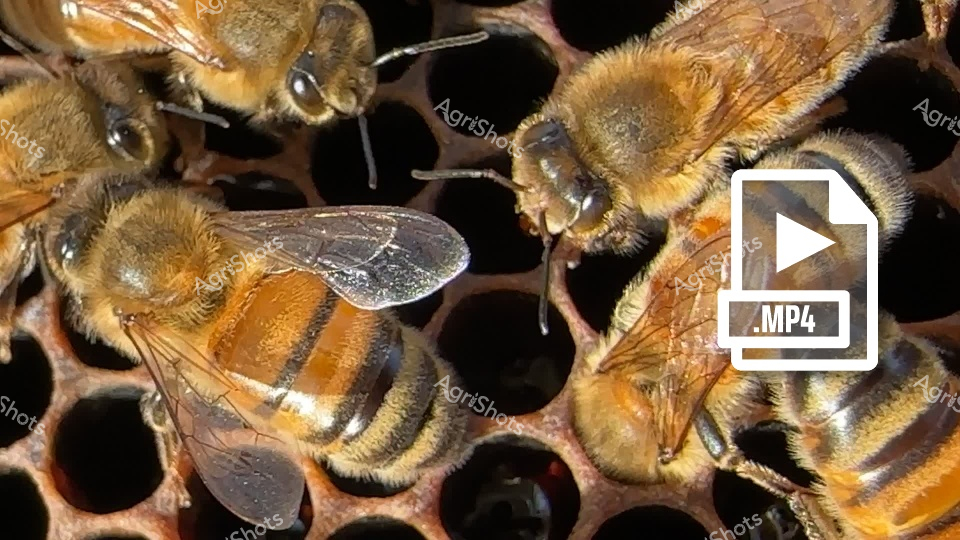
Honeybees cluster densely across a honeycomb, their golden-amber bodies radiating warmth against the dark hexagonal cells. Translucent wings catch the light, revealing delicate membrane structures while fuzzy thoraxes showcase intricate striped coloration typical of European honey bee species. Each bee appears meticulously positioned, suggesting complex hive communication and collaborative behavior essential to colony survival. The macro perspective highlights the extraordinary textural details - from the bees' microscopically feathered exoskeletons to the precise geometric precision of the wax honeycomb structure. This close-up illuminates the sophisticated social organization of these remarkable pollinators, critical to agricultural ecosystems across Tasmania's diverse farming landscapes. The MP4 watermark hints at documentary or scientific documentation, underscoring the image's potential value for agricultural research and apiary management studies.
 Image
Image
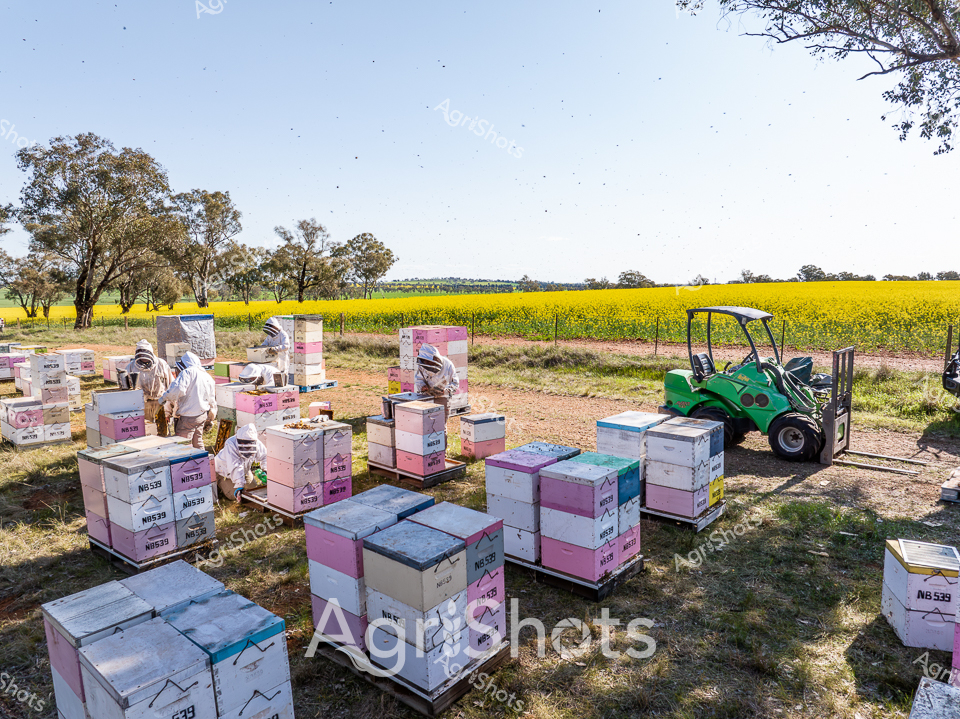
Beekeepers tend to a vibrant apiary nestled between golden canola fields and scattered gum trees in the heart of New South Wales' Riverina region during spring. Stacked in neat rows, pink, blue, and white bee boxes create a colorful mosaic against the dusty ground, while a green agricultural utility vehicle stands ready nearby. Fully suited in protective white beekeeping gear, workers carefully manage the hives, ensuring the crucial pollination process that will help transform the brilliant yellow canola crop surrounding them. The brilliant landscape captures the essence of agricultural symbiosis - honeybees working in harmony with farmers to support crop production under the expansive Australian sky. Sunlight bathes the scene, highlighting the intricate relationship between insects, farmland, and human agricultural practices. This image represents the delicate yet robust ecosystem of rural Australian agriculture, where careful management and natural processes intersect to produce food and sustain the landscape.
 Video
Video
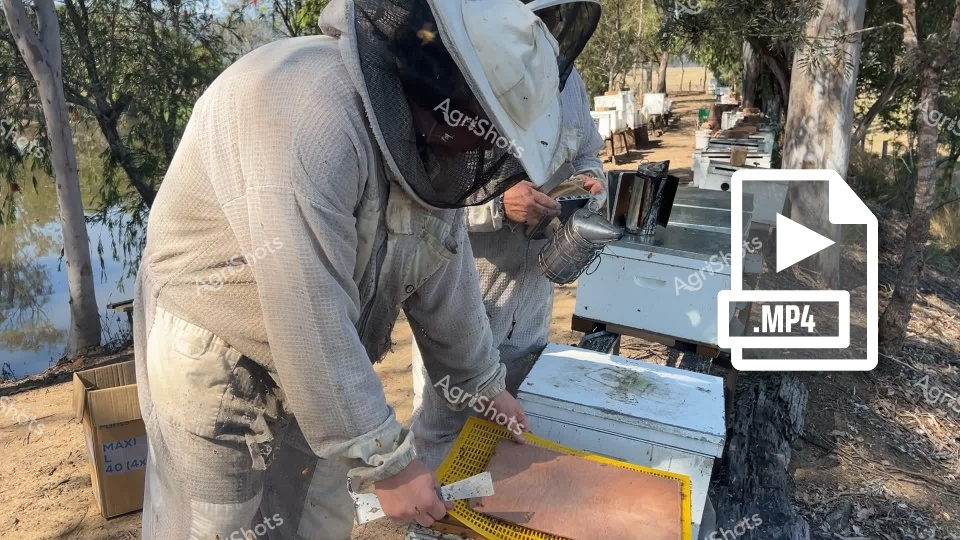
Draped in a full protective mesh beekeeping suit, a skilled apiarist carefully tends to a row of white bee hives nestled among gum trees in the Lockyer Valley. The pale mesh suit provides crucial protection against potential stings while allowing precise movements as the beekeeper manipulates a stainless steel smoker - an essential tool for calming the hive during inspection. Yellowed wooden platforms support the pristine white hive boxes, creating a structured arrangement against the natural bushland backdrop of sandy ground and scattered trees. Soft dappled sunlight filters through the surrounding eucalyptus, suggesting a mild spring morning perfect for hive maintenance. The meticulous approach of the beekeeper speaks to the delicate art of apiculture - a critical agricultural practice supporting crop pollination and honey production across Queensland's rich agricultural landscape. Each careful movement reflects years of practiced skill, connecting human expertise with the intricate world of bee colonies in this quintessential Australian rural setting.
 Image
Image
Golden canola fields stretch to the horizon, punctuated by a solitary gnarled tree and rows of blue and white bee hives. A worker in a high-visibility orange safety jacket and black cap walks the dirt track, carefully documenting or tracking something on a digital device. The early morning light bathes the landscape in soft golden tones, highlighting the vibrant yellow of the flowering canola and creating long shadows across the rural path. Bee pollination is critical to agricultural success, and this scene captures the intricate relationship between agricultural workers, pollinators, and crop production in rural New South Wales. The carefully arranged bee hives suggest a professional approach to agricultural management, with strategic placement to maximize crop pollination during the spring flowering season. This image embodies the precision, safety, and interconnectedness of modern agricultural practices, showcasing the essential behind-the-scenes work that supports Australia's agricultural productivity.
 Image
Image
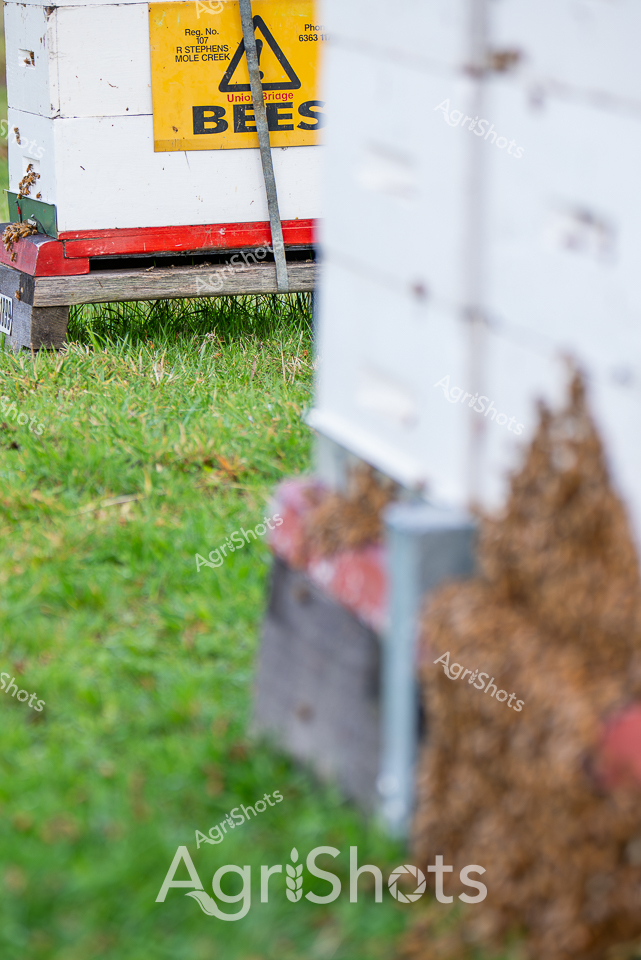
Nestled on a crisp Tasmanian winter morning, a vibrant yellow warning sign alerts observers to the industrious world of bee keeping at this Union Bridge apiary. Pristine white hive boxes stand sentinel against the dew-laden green grass, their red-trimmed lids hinting at the complex colony thriving within. The triangular caution sign, stark and bold, broadcasts the essential nature of these pollinators to agricultural ecosystems. Weathered wooden supports and metallic infrastructure suggest a well-established, professionally managed bee operation, typical of Tasmania's renowned agricultural precision. The soft focus of the surrounding landscape creates an intimate framing, drawing attention to the critical work of these small but mighty insects in sustaining regional food production. This scene captures the quiet dedication of apiarists who maintain these crucial agricultural partners, representing the delicate balance between human intervention and natural productivity that defines modern farming.
 Image
Image
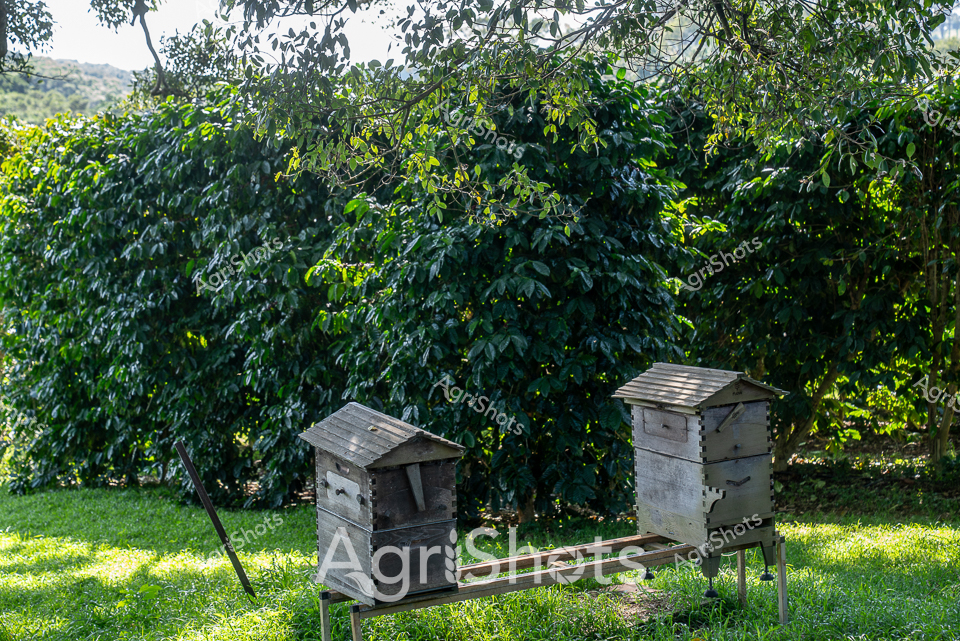
Nestled in the lush, verdant landscape of Queensland's Northern Rivers region, two weathered wooden bee hives stand sentinel beneath a canopy of dense, deep green foliage. Perched on sturdy metal stands on a vibrant emerald grass clearing, the traditional Langstroth-style hives suggest a thriving apiary operation among what appears to be a coffee plantation or native forest. Dappled sunlight filters through the surrounding trees, casting intricate shadows and highlighting the silvered timber of the hive boxes, which blend harmoniously with the natural environment. The scene captures the quiet industry of beekeeping, a crucial agricultural practice supporting both local ecosystems and broader agricultural productivity. These hives likely host native Australian bee species, potentially including the stingless native Tetragonula carbonaria, which are critical pollinators in subtropical landscapes. The verdant backdrop and soft lighting suggest a tranquil spring morning, when bees are most active and nectar flow is abundant. The composition speaks to the symbiotic relationship between agricultural practice and natural landscape, showcasing how careful husbandry can work in concert with native environments to produce honey, support crop pollination, and maintain biodiversity in Australia's rich agricultural regions.
 Image
Image
Honeybees swarm across a golden wooden frame, their amber bodies densely packed in intricate layers revealing the remarkable social structure of the hive. A beekeeper in pristine white protective gear stands among white bee boxes in a dappled woodland setting, likely in Queensland's fertile Lockyer Valley during the vibrant spring season. The close-up frame reveals the hexagonal wax honeycomb structure, with thousands of worker bees meticulously tending their complex colony, demonstrating the precision and collaborative nature of these extraordinary insects. Sunlight filters through surrounding eucalyptus trees, casting soft shadows and illuminating the rich textures of the hive and the beekeeper's protective suit. The scene captures the delicate balance of agricultural stewardship - a human carefully managing these critical pollinators whose work is essential to crop production and ecological health. This image exemplifies the intricate relationship between agricultural practice and natural systems, showcasing the meticulous care required in apiary management.
 Image
Image
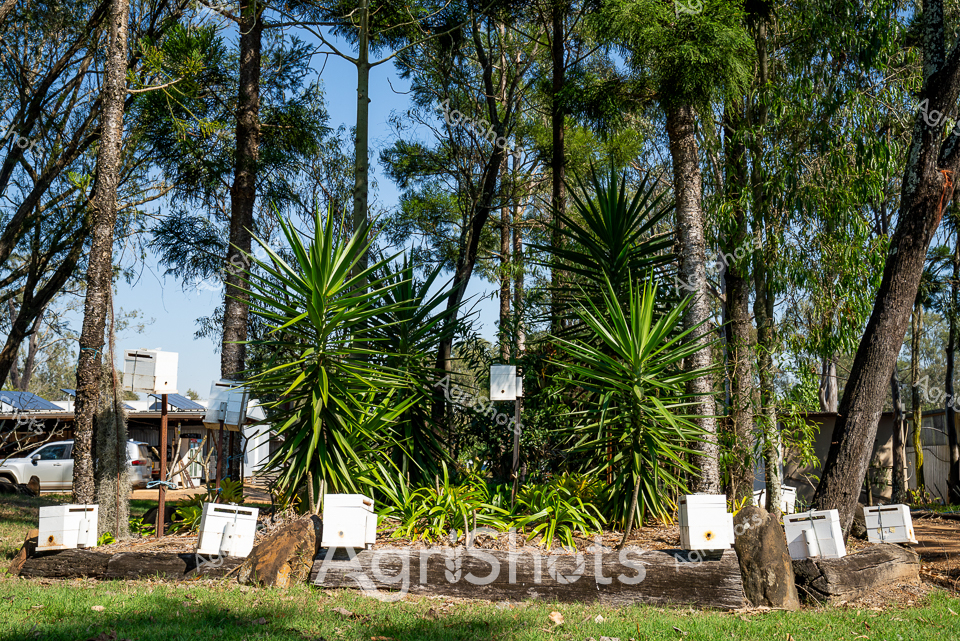
Nestled in the dappled sunlight of a Queensland winter morning, a meticulously arranged apiary reveals the intricate world of native Australian beekeeping. White wooden hive boxes stand sentinel among weathered logs and vibrant green yucca plants, their precise arrangement speaking to the careful management of a local bee colony. Tall eucalyptus trees frame the scene, creating a natural backdrop that reflects the pristine Lockyer Valley environment. These specialized hives, likely housing native stingless bee species like Tetragonula carbonaria, showcase the sophisticated approach to maintaining these crucial pollinators in their natural habitat. The soft winter light filters through the trees, illuminating the lush grass and creating a sense of tranquil productivity that is quintessentially Australian agricultural. The carefully maintained apiary represents a harmonious intersection of agricultural practice and environmental stewardship, highlighting the importance of bee conservation in Australia's delicate ecosystem.
 Image
Image
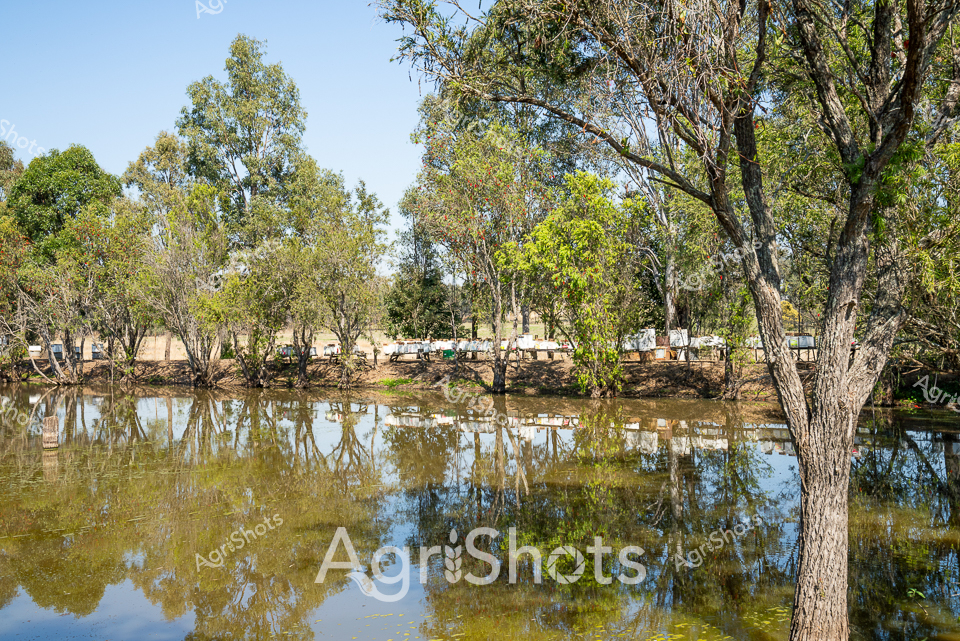
Tranquil winter light filters through a grove of eucalyptus trees along a serene waterway in Queensland's Lockyer Valley. Neat rows of white bee hives nestle against the tree line, positioned strategically near a reflective dam that mirrors the landscape with crystalline precision. The soft green and grey foliage of mature gum trees creates a sheltered microclimate, ideal for supporting a healthy apiary environment. Water levels hint at the seasonal rhythms of this agricultural landscape, with flooding providing natural nourishment to the surrounding ecosystem. The carefully placed hives suggest a professional approach to beekeeping, leveraging the rich biodiversity of the region to support honey production and crucial pollination services. This scene captures the delicate balance between agricultural practice and natural landscape - a quintessential Australian agricultural vista where human intervention works in harmony with the native environment.
 Image
Image
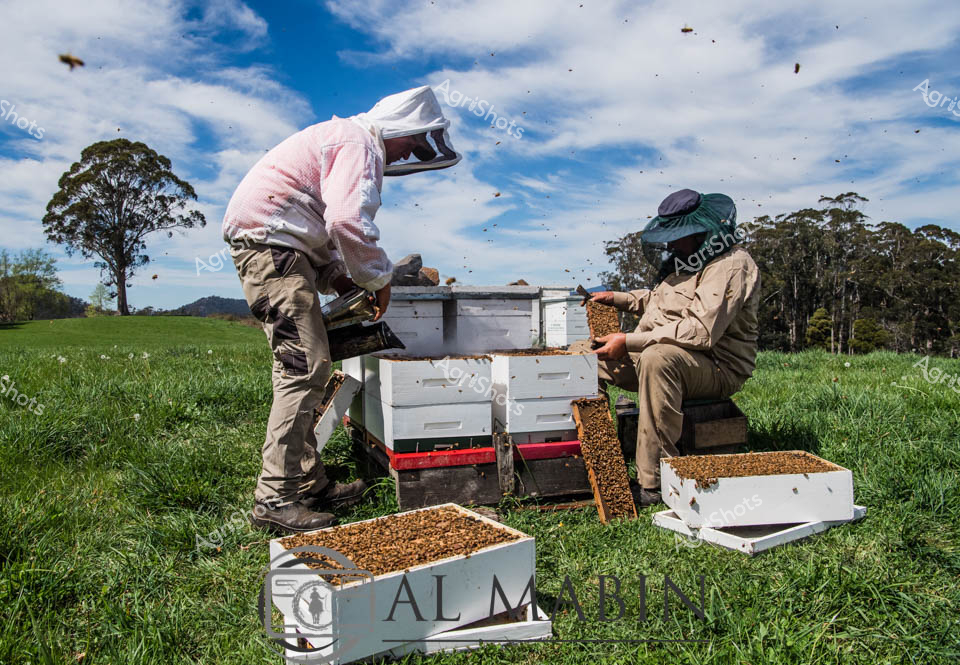
Clad in protective pale pink and khaki beekeeping suits, two apiarists tend to their honey bee colonies in the lush pastures of Tasmania's Upper Mersey Valley. Crisp blue skies and wispy clouds frame a verdant landscape dotted with eucalyptus trees, creating a pristine backdrop for delicate pollination work. Wooden hive boxes painted white and red stand open, revealing thousands of industrious bees crawling across honeycomb frames, their golden bodies swirling dynamically through the air. One beekeeper carefully manipulates a frame, examining the intricate hexagonal wax structures that represent weeks of collaborative insect labor, while the other prepares additional equipment. The scene pulses with agricultural vitality - a testament to the symbiotic relationship between humans and these essential pollinators, capturing the meticulous craft of sustainable honey production in Tasmania's fertile spring season. Swarms of bees drift around the workers, who move with practiced calm and precise movements, embodying generations of agricultural expertise.
 Image
Image
Golden canola fields stretch to the horizon, bathed in the soft light of dawn, as a lone agricultural worker in a high-visibility orange safety vest walks beside a collection of turquoise beehives. The dirt road cuts a stark path between vibrant yellow flowering crops, with ancient trees standing sentinel on either side, creating a quintessential Australian rural landscape. Carefully arranged stacks of bee boxes suggest a critical moment in agricultural pollination, where these industrious insects play a vital role in crop production. The early morning stillness speaks to the precision and dedication of modern farming practices, with the worker's solitary presence highlighting the individual commitment behind large-scale agricultural operations. Soft sunlight filters through the trees, casting long shadows and illuminating the rich textures of the earth and crops, capturing the essence of springtime agricultural work in rural New South Wales. The scene embodies the delicate balance between human intervention and natural processes, showcasing the intricate relationship between beekeeping and crop cultivation.
 Image
Image
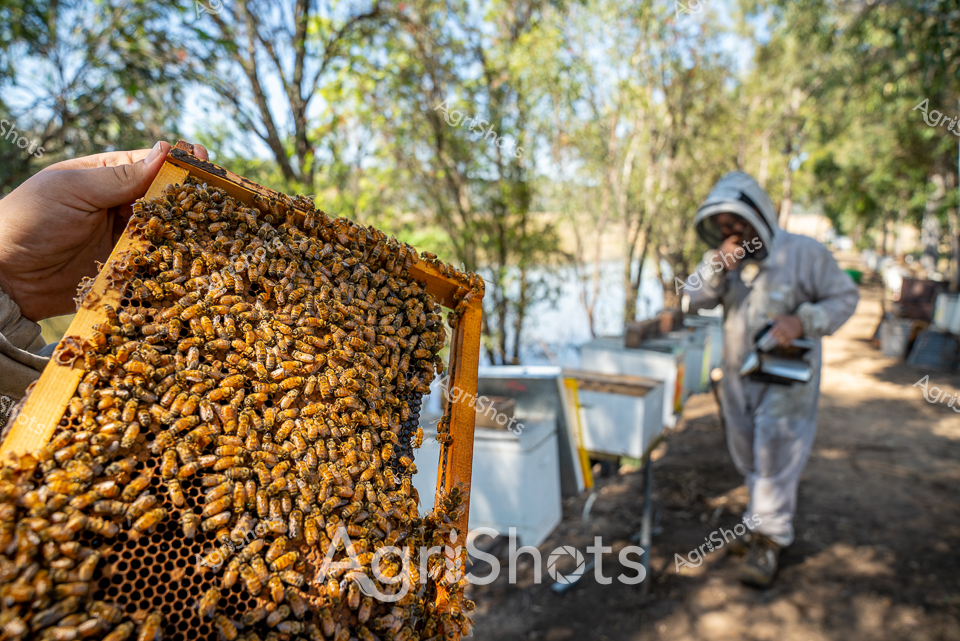
Golden honeycomb dripping with thousands of industrious honey bees fills the foreground, held carefully by a gloved hand against a sunlit backdrop of eucalyptus trees. A beekeeper in a protective white full-body suit stands among a row of white bee boxes, tending to the apiary nestled in the dappled woodland setting of Queensland's Lockyer Valley. The intricate honeycomb reveals a dense carpet of amber and golden-brown bees, their tiny bodies clustered tightly across the hexagonal wax structure, showcasing the remarkable social organization of these crucial pollinators. Soft morning light filters through the surrounding trees, casting gentle shadows and highlighting the soft textures of bee bodies and protective equipment. The scene pulses with the quiet, focused energy of agricultural work, capturing the delicate relationship between human stewardship and the complex world of bee colonies. This image celebrates the precision and care of professional beekeeping, revealing the hidden complexity of honey production in the lush Australian landscape.
 Image
Image
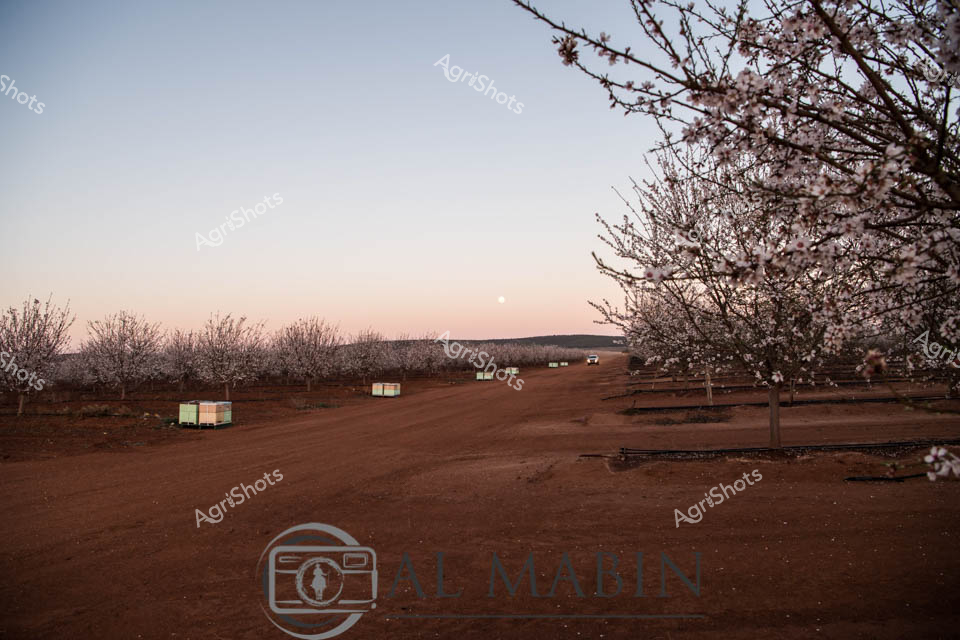
Soft pink blossoms burst across almond trees in a meticulously planted orchard, signaling the arrival of spring in rural New South Wales. The rich, rust-colored earth creates a warm contrast against the delicate flowering branches, while strategically placed pale wooden bee hives sit quietly in the foreground, essential partners in the pollination process. Dawn's gentle light bathes the landscape, casting a serene gradient across the sky and highlighting the neat rows of young almond trees stretching into the distant hills. Precision agriculture is evident in the orderly grove, with trees spaced methodically and the ground carefully maintained to support optimal nut production. These bee hives represent a critical link in Australia's agricultural ecosystem, supporting the vital symbiosis between pollinators and crop cultivation. The scene captures the quiet anticipation of a new growing season, where delicate blossoms promise a bountiful harvest of premium Australian almonds.
 Image
Image
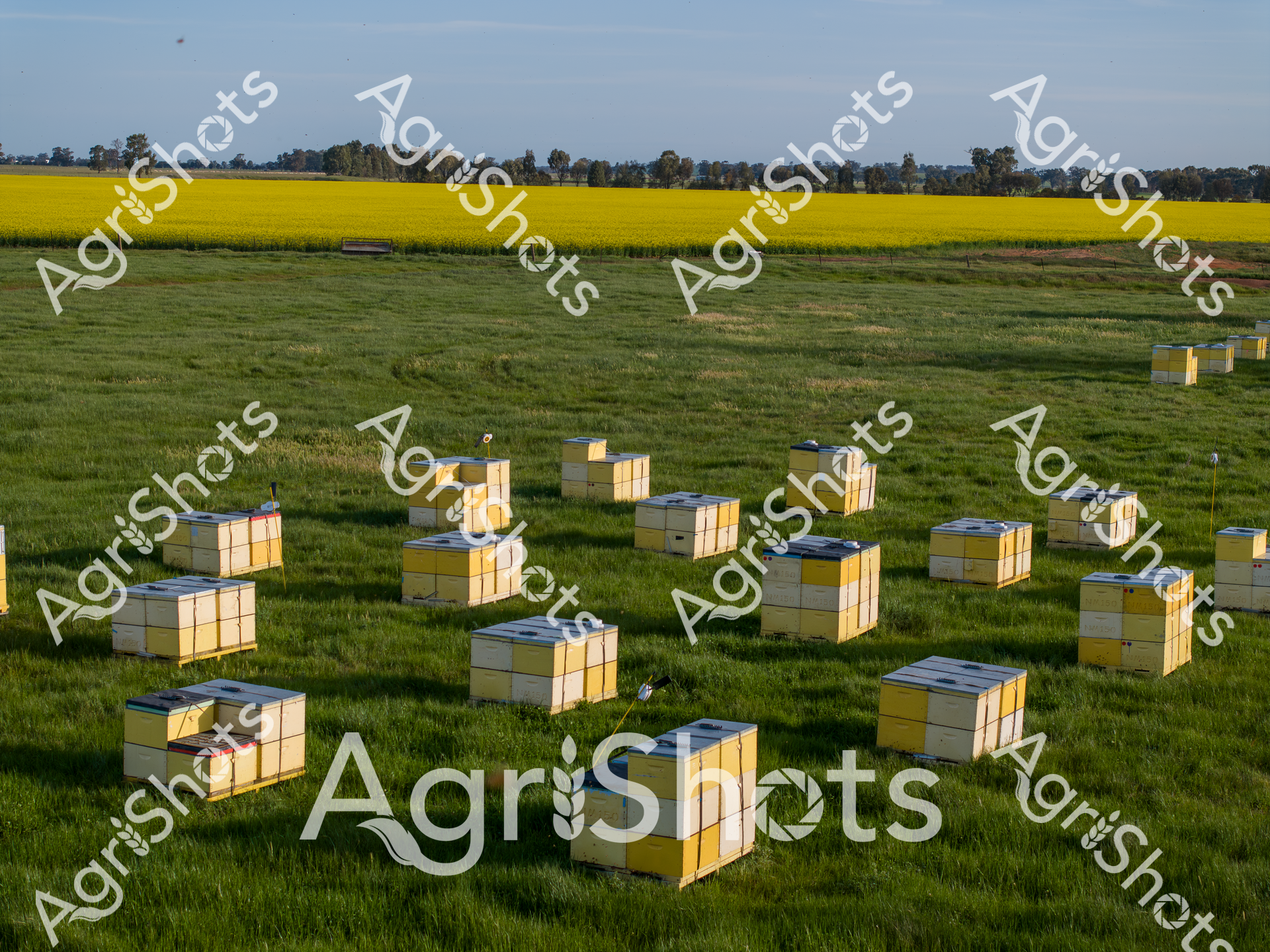
Golden canola fields burst with vibrant yellow against a soft blue sky, creating a stunning backdrop for a carefully arranged apiary in the heart of the New South Wales Riverina. Pristine white and yellow bee boxes are strategically positioned across a lush green pasture, their uniform design standing in sharp geometric contrast to the undulating grassland. The scene captures the critical symbiosis of agricultural production, with these pollinators strategically placed near the flowering canola crop to maximize cross-pollination and honey production. Soft morning light bathes the landscape, highlighting the crisp edges of the hives and the delicate yellow blooms stretching to the tree-lined horizon. Each bee box represents a carefully managed microcosm of agricultural innovation, showcasing the sophisticated approach to modern farming practices in this rich agricultural region. The meticulously arranged hives speak to the precision and care of local beekeepers, who play a vital role in supporting both crop production and honey industries.
 Image
Image
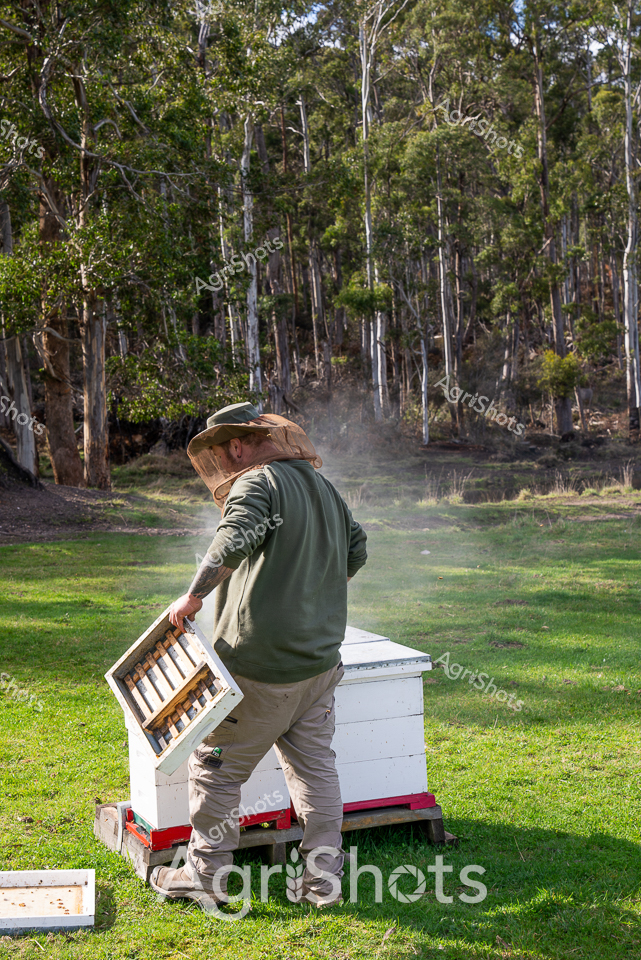
Apiarist tending to a white wooden beehive nestled in a lush Tasmanian forest clearing during the cool winter months. Wearing a sage green jacket and a protective hat, the beekeeper carefully manages the hive, lifting a frame to inspect the colony's health and honey production. Misty tendrils of smoke drift from a smoker, helping to calm the bees during the delicate inspection process. The surrounding landscape features a dense backdrop of silvery-barked trees, creating a serene and natural environment for beekeeping. Soft green grass carpets the ground, providing a clean working space for this essential agricultural practice. The scene captures the quiet concentration of a skilled apiarist working in harmony with nature, highlighting the critical role of bee cultivation in Tasmania's agricultural ecosystem.
 Image
Image
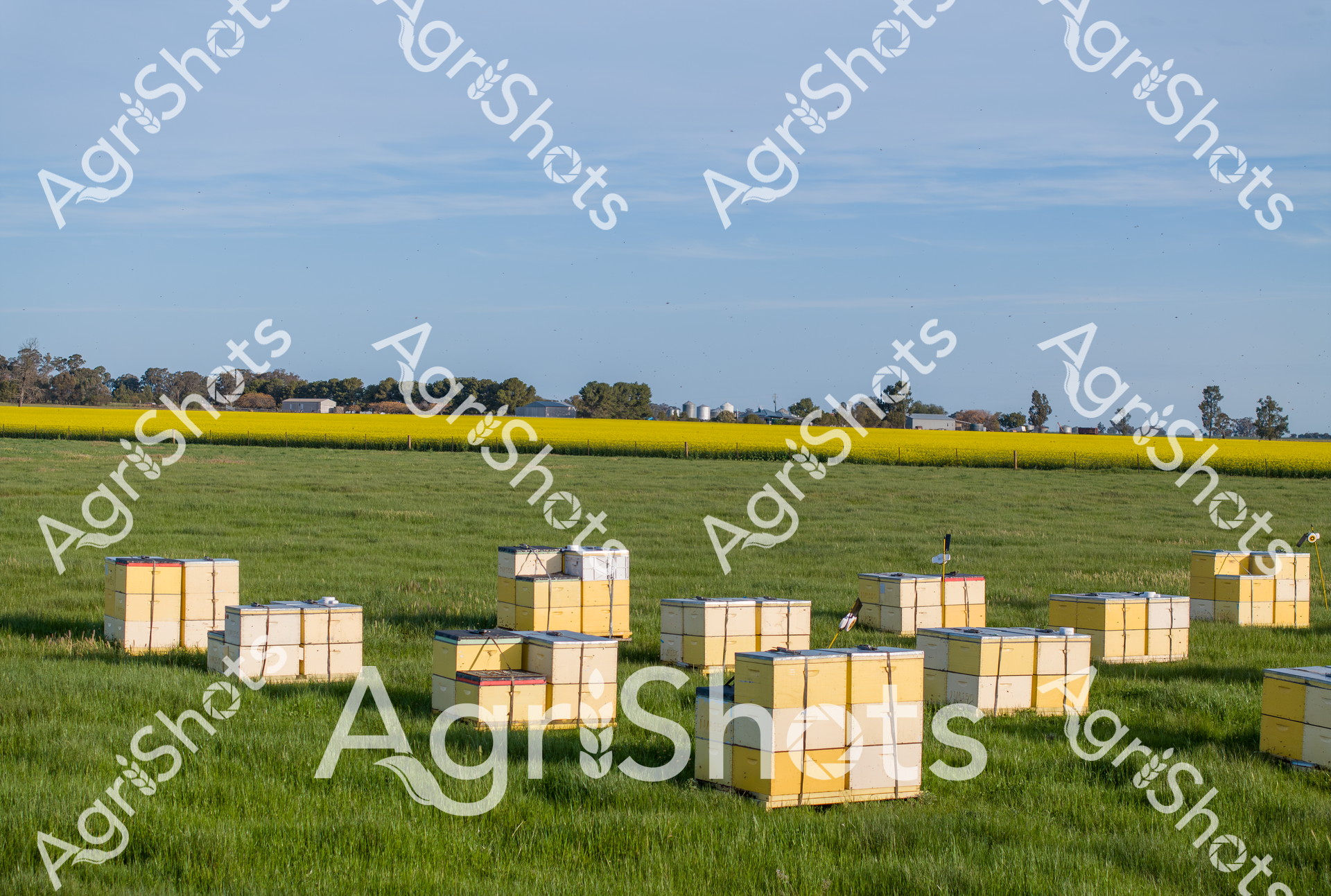
Rows of golden-hued beehives punctuate a lush green pasture, strategically positioned against a vibrant canola field blazing yellow in the background. The expansive Riverina landscape unfolds under a soft, pale blue spring sky, with distant tree lines and farm infrastructure creating a quintessential Australian agricultural panorama. These meticulously arranged wooden hive boxes, painted in warm cream and soft yellow tones, represent a critical node in the region's agricultural ecosystem, supporting both crop pollination and honey production. A few stray birds perch atop the hives, suggesting active bee colonies working diligently among the verdant grasses. The geometric arrangement of the hives reflects the precision and intentionality of modern agricultural practice, where every element serves a strategic purpose in crop and livestock management. The scene captures the harmonious intersection of apiculture and broad-acre cropping, showcasing the sophisticated interdependence of farming systems in this fertile Australian region.
 Image
Image
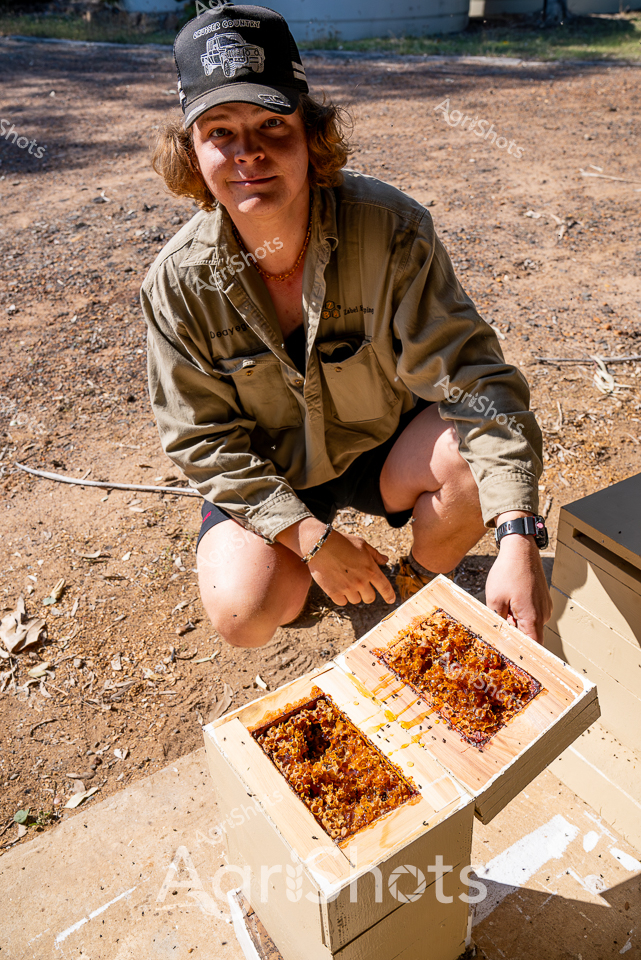
Crouched on the dusty ground of Queensland's Lockyer Valley, a beekeeper in a khaki work shirt and branded cap tends to native Australian bee hives. Two wooden honey frames sit open, revealing the rich golden-brown honeycomb within - a testament to the intricate work of local stingless bee species. The winter sunlight casts sharp shadows across the arid landscape, highlighting the textured surface of the ground and the careful positioning of the hives. This scene captures the precision and dedication of agricultural specialists working with native pollinators, showcasing the unique approach to apiary management in the Australian agricultural landscape. The beekeeper's attentive posture and specialized equipment demonstrate the careful science behind honey production and bee conservation. The image speaks to the resilience of both the bees and the agricultural workers who support these critical ecological partners.
 Video
Video
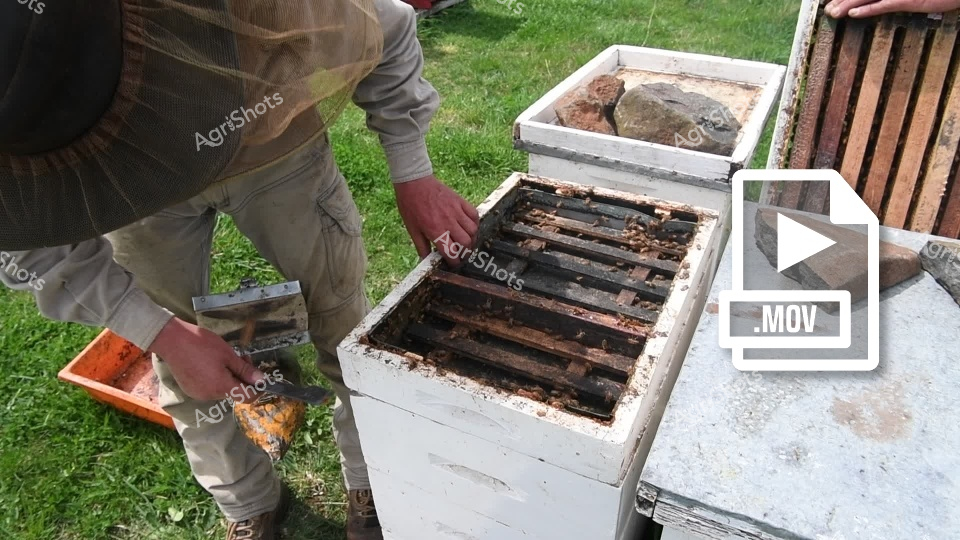
A beekeeper tends to a white wooden hive, carefully managing the delicate ecosystem of honeybees. Wooden frames are visible inside the open hive, covered with bees and honeycomb, suggesting an active and healthy colony. The individual is wearing protective clothing, with hands carefully manipulating the hive components on a lush green grass background. A large rock sits in an adjacent white container, possibly used as a weight or part of the hive management process. The scene captures the intricate work of apiculture, showcasing the careful attention and precision required in bee cultivation. Soft natural lighting and the verdant grass suggest a mild day, ideal for hive inspection and maintenance.MOV video icon indicate this is part of a professional agricultural documentation series, highlighting the importance of beekeeping in agricultural ecosystems.
 Image
Image
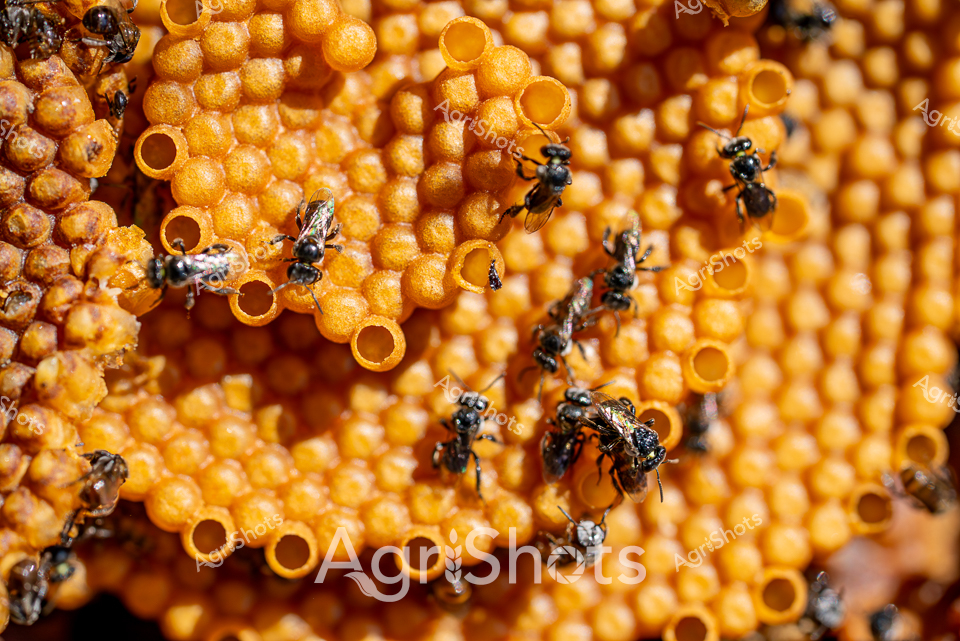
Stingless native Australian bees swarm across the intricate golden honeycomb of a thriving hive, capturing the complex microcosm of subtropical apiary life in Queensland's Lockyer Valley. Each hexagonal cell gleams a rich amber, punctuated by precise circular openings where worker bees emerge and enter, their metallic-toned bodies moving with purposeful synchronicity. The dense, textured surface of the honeycomb reveals the remarkable architectural precision of these tiny agricultural specialists, whose pollination work is critical to the region's diverse crop ecosystems. Winter's gentle light illuminates the hive's detailed structure, highlighting the warm ochre tones and the meticulous organization of this miniature agricultural community. These native stingless bees, unique to Australia's subtropical zones, represent a critical but often unseen workforce in agricultural production, their collective labor supporting the intricate balance of local farming environments. Each bee moves with collective intelligence, a living testament to the sophisticated biological systems that underpin Queensland's rich agricultural landscapes.
 Image
Image
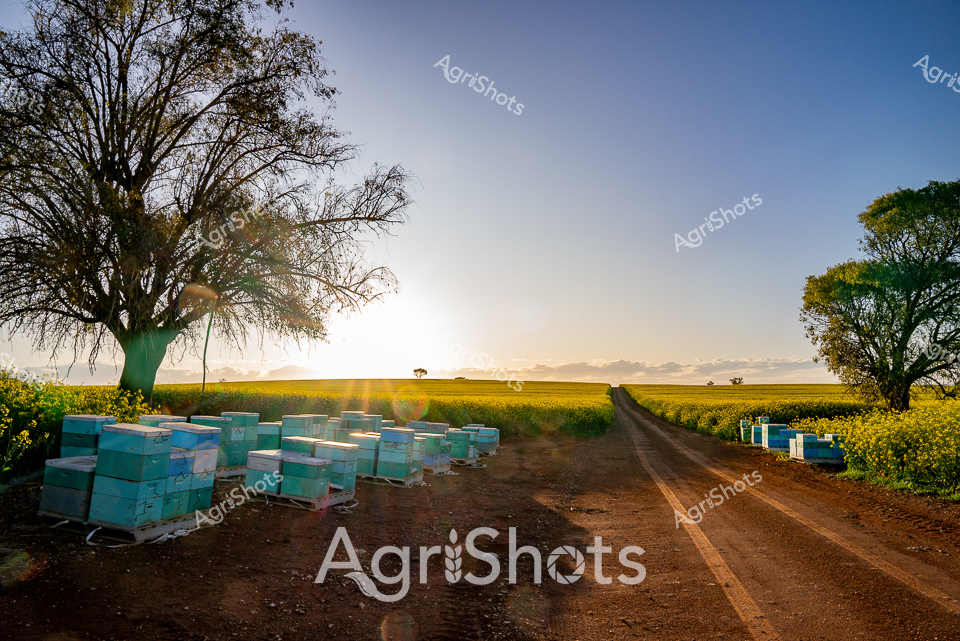
Golden canola fields stretch to the horizon, kissed by the soft light of dawn in rural New South Wales. Rows of turquoise and blue bee hives rest alongside a dusty dirt track, strategically placed among the vibrant yellow flowering crop to maximize pollination. Majestic gum trees frame the landscape, their silhouettes casting long shadows across the rich agricultural terrain during the early morning hours. The meticulously organized hive boxes represent a critical partnership between agriculture and nature, where honeybees play a vital role in crop production and ecosystem health. Sunlight filters through the branches, creating a luminous glow that highlights the textural contrast between the rough earth, the smooth wooden hive boxes, and the lush carpet of flowering canola. This scene captures the essence of Australian agricultural innovation - a delicate balance of careful cultivation, natural process, and the silent, essential work of pollinators transforming the landscape.
 Video
Video
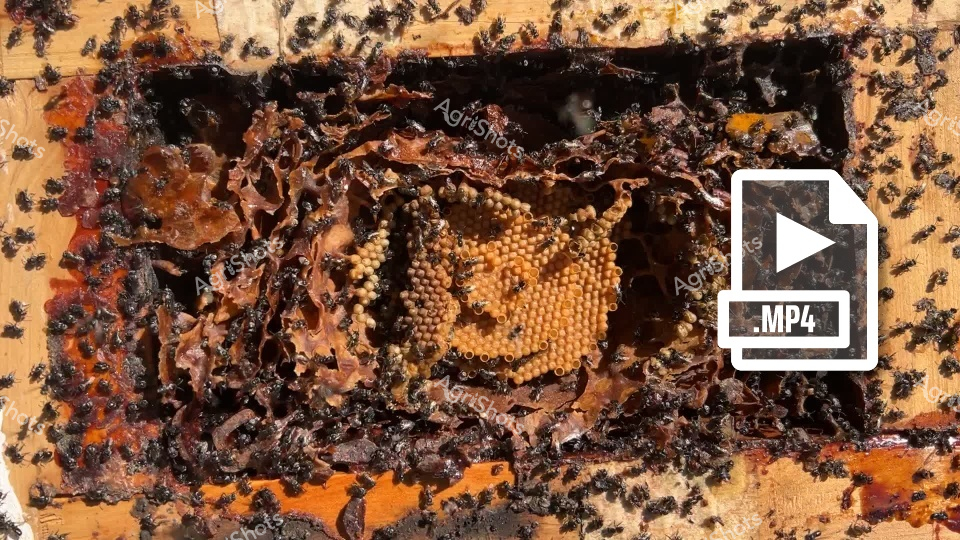
Intricate honeycomb architecture emerges from a weathered wooden hive frame, revealing the complex society of native Australian stingless bees. Clusters of tiny dark Tetragonula carbonaria bees swarm across the golden-orange wooden surface, their collective movement a testament to the sophisticated social structure of these remarkable indigenous pollinators. The honeycomb's hexagonal chambers pulse with amber-hued honey, showcasing the intricate building skills of these miniature architects native to Queensland's subtropical regions. Burnt sienna and deep charcoal tones frame the central honeycomb structure, suggesting the rugged environmental conditions of the Lockyer Valley where these resilient bee colonies thrive during the cooler winter months. Delicate layers of propolis and wax create organic, textured borders around the central nest, highlighting the bees' extraordinary capacity to construct and protect their communal home. The .MP4 watermark hints at the dynamic, living nature of this agricultural microcosm - a vibrant snapshot of Australia's unique native bee ecosystem in action.
 Video
Video
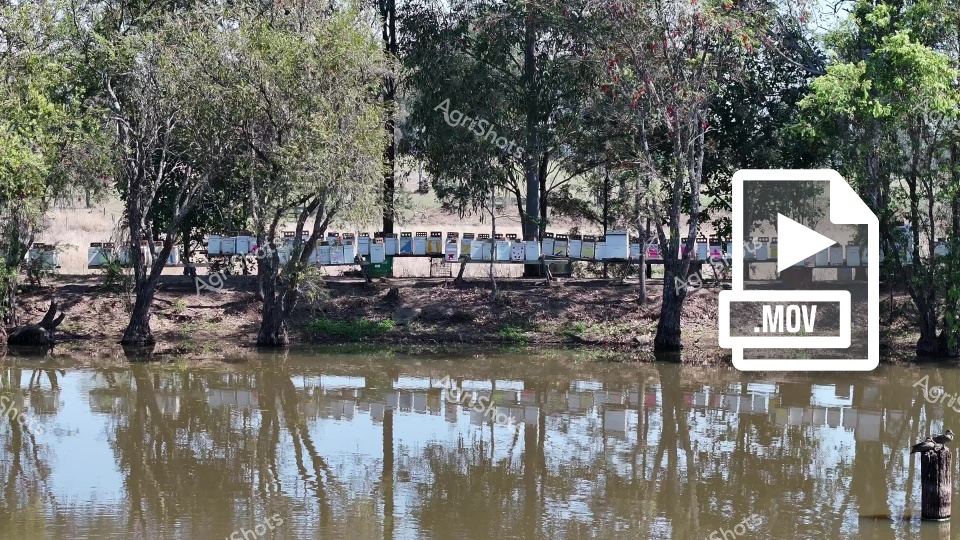
Silvery gum trees cast dappled shadows across a tranquil dam in Queensland's Lockyer Valley, their reflections rippling in the murky winter waters. A long row of white and blue bee hives nestles against the tree line, strategically positioned near water and native woodland to support optimal pollination conditions. The apiary site demonstrates sophisticated agricultural planning, with hives carefully spaced and oriented to maximize bee colony health and honey production. Soft greys and muted greens characterize the winter landscape, suggesting a quiet period of regeneration for both the landscape and the industrious bee colonies. Water levels appear steady, indicating reliable hydration for the surrounding ecosystem and supporting the critical symbiosis between landscape, water resources, and agricultural cultivation. The serene scene captures the sophisticated yet natural approach of modern agricultural practices in supporting biodiversity and sustainable food production.
 Video
Video
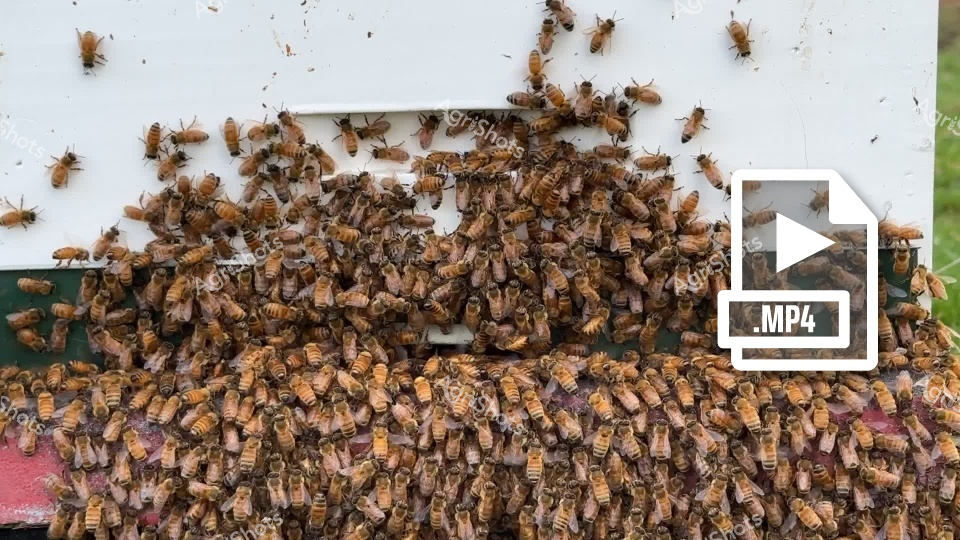
Dense swarms of honeybees cluster intensely across the white and green surface of a commercial beehive, their golden-brown bodies creating a living, undulating carpet. Hundreds of worker bees move with purposeful energy, communicating and maintaining their complex social structure at the entrance and across the hive's exterior. The tight grouping suggests a moment of collective activity - perhaps preparing for migration, responding to environmental shifts, or regulating hive temperature during the cool Tasmanian winter. Soft green background hints at a pastoral agricultural landscape, typical of Tasmania's rich apiary regions. The raw video MP4 tag indicates this is a dynamic, unedited capture of bee colony behavior, offering an unfiltered glimpse into the intricate world of these critical pollinators. Precise, methodical bee movements create a mesmerizing texture of amber and brown tones, highlighting the sophisticated organization of this critical agricultural ecosystem.
 Image
Image
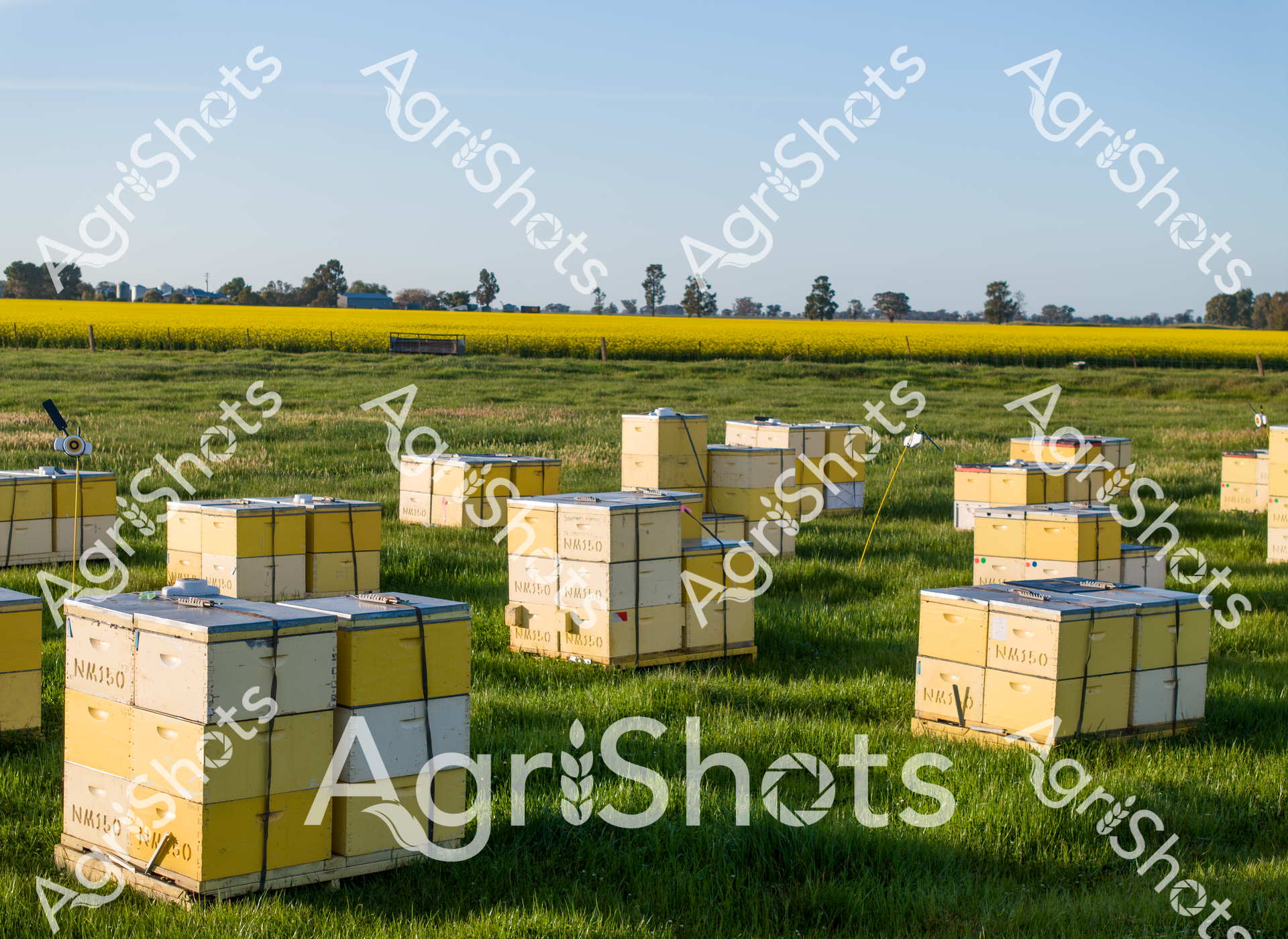
Stacked golden beehives populate a vibrant green pasture, strategically positioned against a brilliant yellow canola field in full bloom. The neat rows of wooden hive boxes, marked with "NKI80" identifiers, create a geometric pattern across the lush grassland, capturing the essence of agricultural precision in the Riverina region of New South Wales. Soft morning light bathes the scene, highlighting the pale yellow and white tones of the hives and the luminous canola field stretching to the distant treeline. Each carefully positioned hive represents a critical node in agricultural pollination, where industrious bees will soon traverse the surrounding flowering crops, supporting the intricate ecosystem of this productive agricultural landscape. The meticulously organized apiary demonstrates the sophisticated approach of modern agricultural practices, where bee management is a crucial element of sustainable farming. In the background, scattered trees and farm infrastructure provide context to this expansive, richly textured agricultural vista that speaks to the interconnected nature of crop cultivation and pollination.
 Video
Video
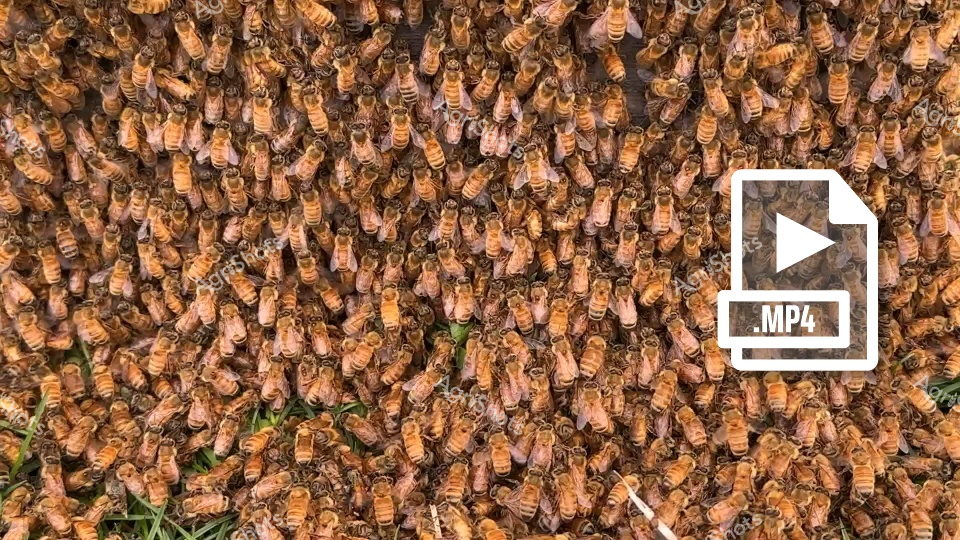
A dense, living carpet of honeybees clusters tightly together, their golden-amber bodies creating a mesmerizing texture of collective survival. Thousands of worker bees huddle in an intricate mass, their hexagonal bodies overlapping in a remarkable display of thermal regulation during the cool Tasmanian winter. Hints of green grass peek through the edges of the swarm, suggesting a momentary break in their protective formation. The rich amber and brown tones of the bees create a living mosaic, each individual insect contributing to the survival of the entire colony through their cooperative heat-sharing behavior. A video file icon suggests this extraordinary moment of natural engineering has been captured in motion, ready to reveal the complex social dynamics of these remarkable pollinators. The tight clustering represents a critical survival strategy, with bees maintaining a crucial core temperature to protect their queen and ensure the hive's survival during the cold seasonal months.
 Video
Video
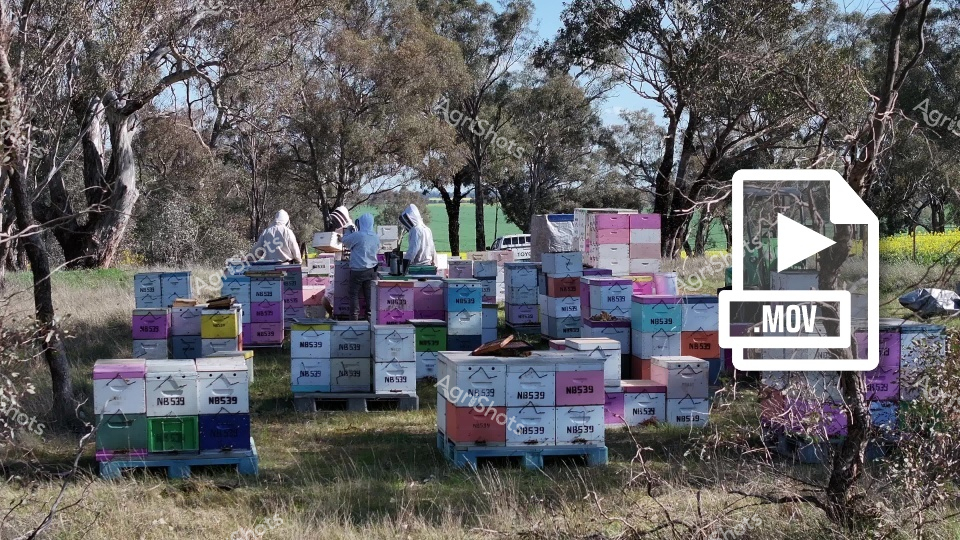
Stacked with precision across rustic blue and pink pallets, rows of apiary boxes nestle beneath weathered gum trees in a lush Riverina spring landscape. Beekeepers in crisp white protective suits move carefully among the hives, their silhouettes blending with the soft morning light filtering through the surrounding woodland. Each apiary box bears a distinctive code - NB539 - marking this as a professional, meticulously managed pollination operation. In the background, a vibrant canola field blazes with golden-yellow flowers, promising rich nectar for the industrious bee colonies. The scene captures the delicate symbiosis of agricultural practice and natural ecosystem, where human intervention supports critical pollination processes essential to crop production. Soft grasses, scattered trees, and the methodical arrangement of bee boxes create a sense of quiet industry and rural harmony characteristic of Australian agricultural landscapes.
 Image
Image
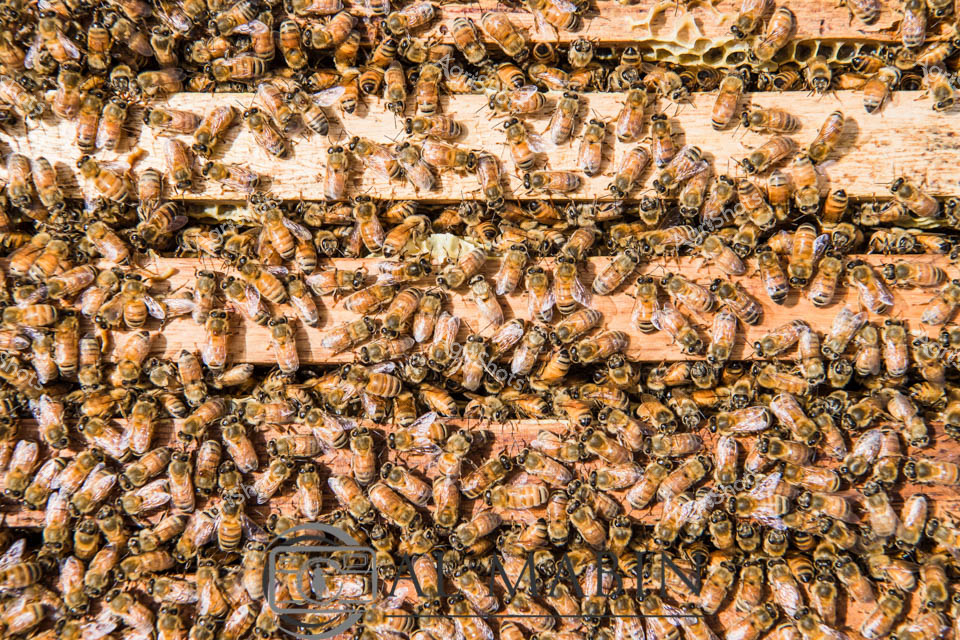
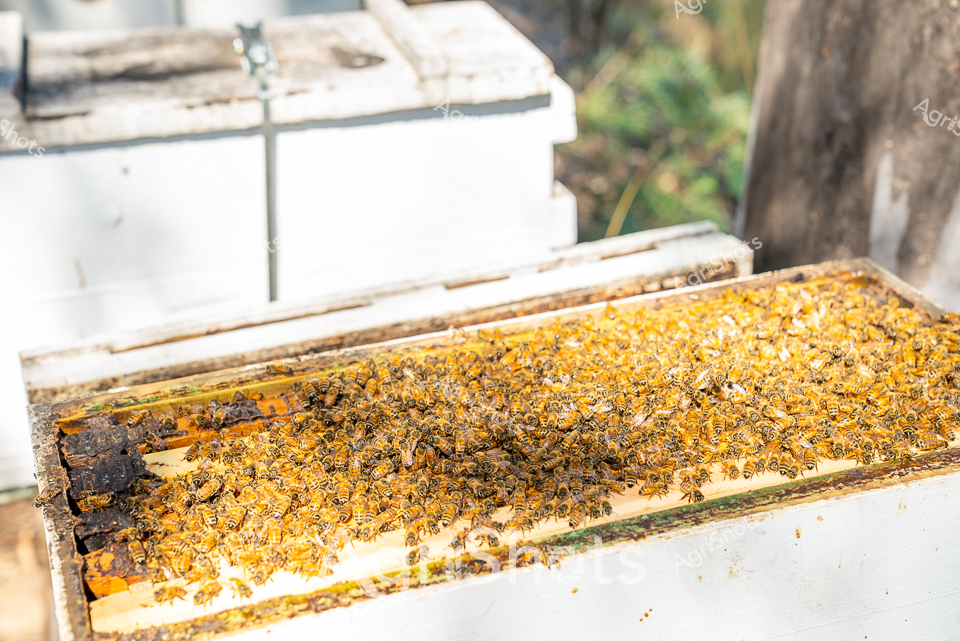
A dense, writhing mass of golden-brown honeybees covers the wooden frames of a beehive in Tasmania's Upper Mersey Valley. Thousands of industrious workers cluster tightly across the wooden surface, their bodies creating a living, breathing tapestry of pollination and honey production. Warm amber and brown tones dominate the image, reflecting the bees' natural coloration against the raw, textured wood of the hive boxes. Each bee moves with purposeful precision, representing the intricate social structure of the colony during the vibrant spring season when nectar flows abundantly and hive activity reaches its peak. The photograph captures the remarkable collective behavior of these critical agricultural workers, showcasing the intricate ecosystem of apiary management in Tasmania's rich agricultural landscape. A subtle watermark in the bottom left hints at the professional documentation of this remarkable natural scene, celebrating the essential role of bees in Australia's agricultural productivity.
 Image
Image
Honey-golden worker bees swarm densely across the wooden hive frame, their collective movement creating a living, breathing carpet of industrious insects. Nestled in the lush green backdrop of Queensland's Lockyer Valley, this apiary scene captures the vibrant energy of spring beekeeping. Stark white hive boxes stand sentinel in the background, providing a clean contrast to the rich amber and brown tones of the bee-covered frame. Soft natural light illuminates the intricate textures of the wooden hive, highlighting the bees' precise hexagonal workspaces and the glistening surfaces of honey-in-progress. The dense cluster of bees suggests a healthy, active colony at the peak of seasonal productivity, with hundreds of individuals moving in synchronized purpose. This image embodies the delicate symbiosis of agricultural stewardship - a testament to the careful management and respectful cultivation of these essential pollinators in the rich agricultural landscape of rural Queensland.
 Image
Image
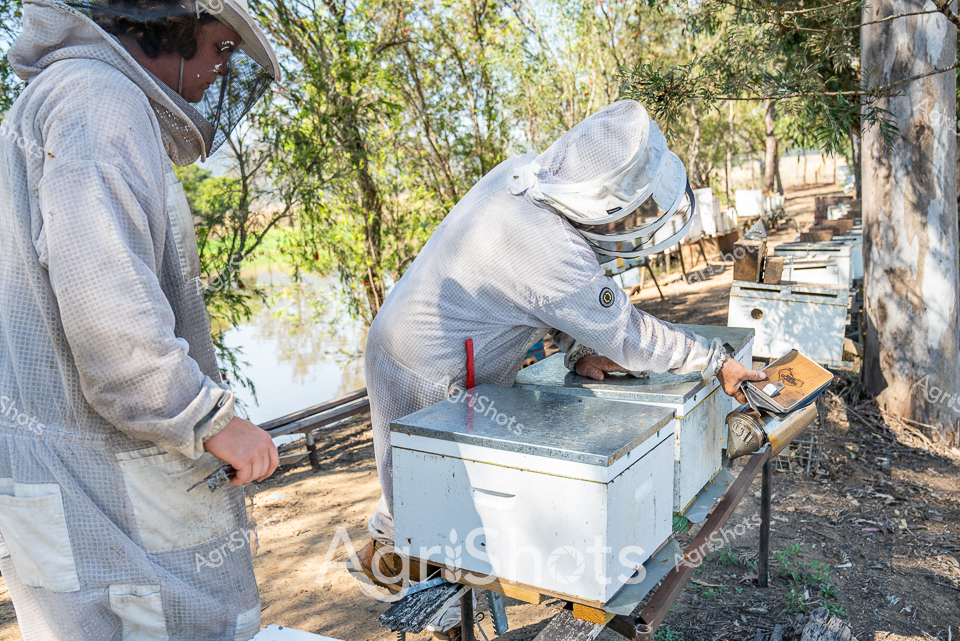
Beekeepers in crisp white protective suits work methodically among sunlit gum trees, tending to a row of white wooden bee hives in the fertile Lockyer Valley. One carefully lifts the hive lid, revealing the intricate inner workings of the colony, while his colleague stands nearby, ready to assist in the delicate process of honey production and hive management. Dappled light filters through the surrounding eucalyptus trees, casting soft shadows on the dusty ground and highlighting the meticulous nature of apiary work. The gleaming white protective gear contrasts sharply with the natural woodland setting, symbolizing the careful interface between human agricultural practice and the complex world of bee colonies. Metallic tools and the structured hive boxes speak to the precision required in beekeeping, while the relaxed postures of the workers suggest years of experienced handling. This scene captures the essence of sustainable agricultural practice in rural Queensland, where traditional farming skills meet modern conservation efforts.
 Video
Video
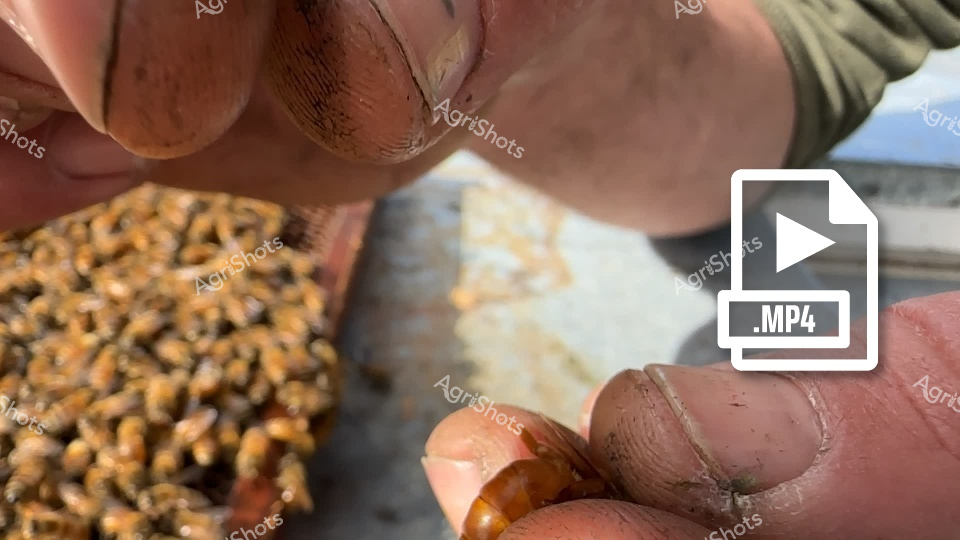
Queen bee identification in a Tasmanian winter apiary. Weathered, calloused hands delicately cradle a golden-amber honey bee, examining her distinctive markings and body structure against a backdrop of wooden hive frames and scattered bee larvae. The close-up reveals intricate details of the queen's elongated abdomen, marking her as the critical reproductive center of the colony. Soft, muted winter light filters across the scene, highlighting the rich amber and brown tones of the honeycomb and worker bees surrounding the focal point. A raw, unedited MP4 video icon suggests this moment captures an authentic, unscripted interaction between a skilled apiarist and the intricate world of bee husbandry. The image speaks to the meticulous care and deep understanding required in sustainable beekeeping, particularly in the challenging winter months of Tasmania's agricultural landscape.
 Image
Image
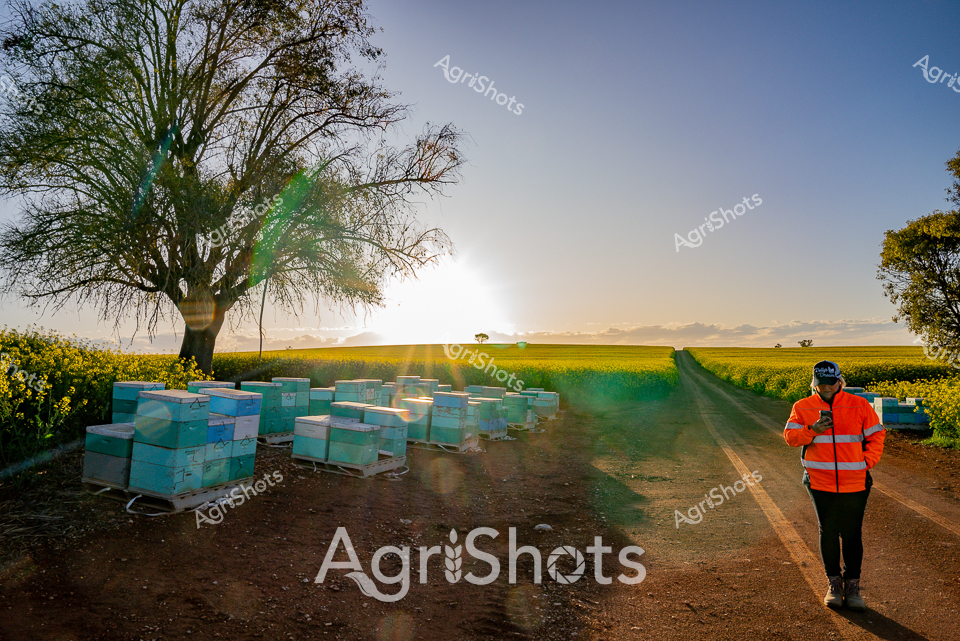
Golden sunrise bathes a rural landscape in soft light, illuminating rows of turquoise and blue bee hives nestled beside a vibrant canola field in full golden bloom. A worker in a high-visibility orange safety jacket walks along the dirt track, signaling the agricultural importance of both the flowering crop and the critical pollination work of honeybees. Mature trees frame the scene, their branches casting long shadows across the path as the early morning sunlight streams through, creating a sense of quiet industry and purpose. The meticulously arranged bee hives suggest professional apiary management, strategically positioned to maximize pollination of the surrounding agricultural land. This image captures the intricate relationship between agricultural production, environmental stewardship, and the essential role of pollinators in crop cultivation. The luminous spring landscape represents the harmony of careful farming practices, worker safety, and the natural rhythms of agricultural ecosystems.
 Image
Image
Golden canola fields stretch to the horizon, vibrant yellow blooms catching the soft dawn light of an early spring morning in rural New South Wales. A worker in high-visibility orange safety gear stands amid a cluster of blue and white bee hives, a crucial element of agricultural pollination. Wearing a branded cap and carefully operating a handheld device, the worker represents the modern intersection of technology and traditional farming practices. The dirt track leading through the canola plantation creates a perfect symmetrical line, dividing the brilliant yellow crop fields and highlighting the expansive agricultural landscape. Bee hives strategically positioned at the field's edge demonstrate the critical role of pollinators in crop production, with each blue box representing a mobile ecosystem supporting agricultural productivity. The scene captures the precision, safety consciousness, and technological sophistication of contemporary Australian agricultural work, illuminated by the golden warmth of early morning light.
 Image
Image
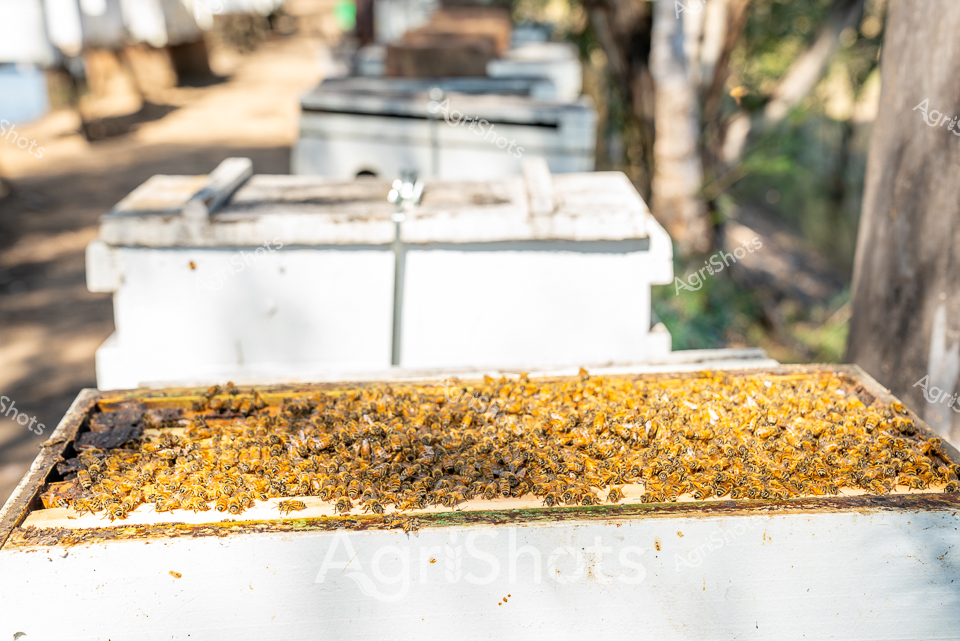
Golden swarms blanket a weathered apiary frame, hundreds of honeybees densely clustered across the wooden surface in the soft dappled light of a Queensland spring morning. White rectangular hive boxes stand sentinel in the background, nestled beneath leafy trees in the fertile Lockyer Valley, a region renowned for its agricultural diversity. The bees move with purposeful energy, their amber and black bodies creating a living, breathing mosaic of collective activity - a testament to the intricate social structure of these remarkable pollinators. Sunlight filters through the surrounding foliage, casting gentle shadows across the apiary and highlighting the rich golden-brown tones of the honeycomb and bee clusters. This scene captures the delicate ecosystem of commercial beekeeping, where careful management and respect for natural processes yield not just honey, but crucial agricultural pollination services. The image speaks to the quiet dedication of apiarists who maintain these vital insects, integral to both local crop production and broader environmental health.
 Image
Image
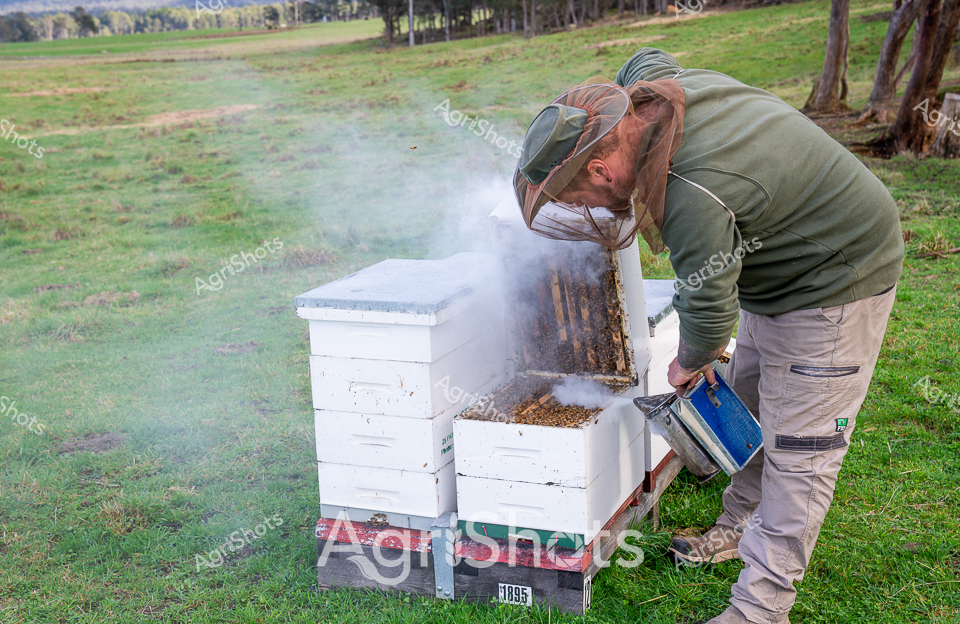
Smoke billows softly around pristine white bee boxes as a beekeeper tends to his apiary on a misty Tasmanian pasture. Wearing protective mesh headgear and an olive green sweater, the apiarist carefully manages the hive, using a blue smoker to calm the honeybees during inspection. The landscape surrounds him with soft winter grasslands and distant tree lines, creating a serene agricultural tableau typical of Tasmania's rich beekeeping traditions. Precise and methodical, he leans over the stacked wooden hive boxes, revealing the intricate world of bee colony management against the muted green and grey tones of the rural setting. Delicate wisps of smoke drift across the scene, a time-honored technique used to pacify the bees and allow safe hive maintenance. This image captures the quiet concentration and deep connection between a skilled beekeeper and his industrious charges, highlighting the essential role of apiculture in Australia's agricultural landscape.
 Image
Image
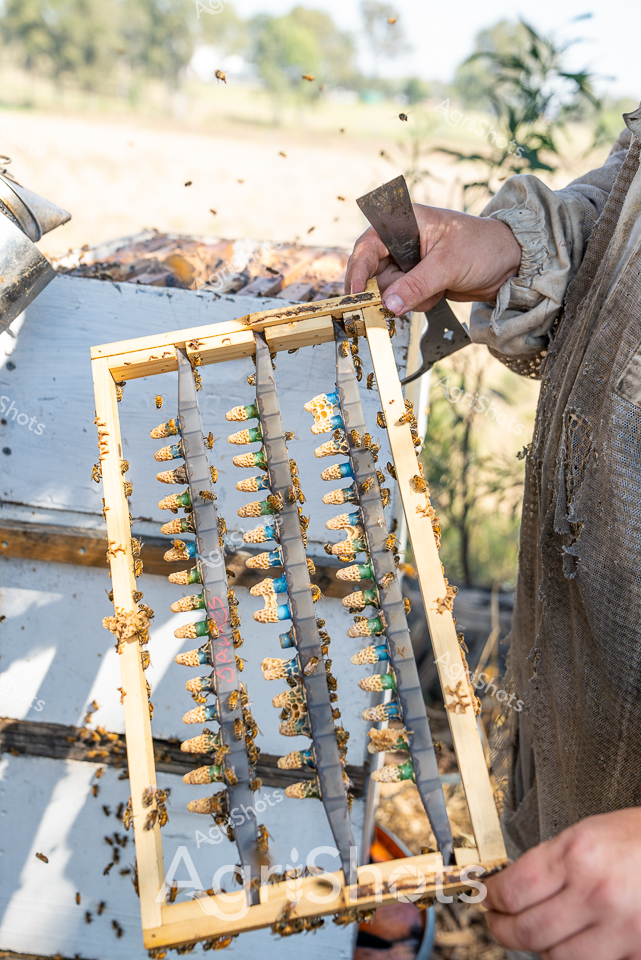
Honeycomb frame alive with golden-hued worker bees, meticulously arranged in precise rows across wooden slats. A weathered, gloved hand gently manipulates the frame against the soft, sun-drenched backdrop of the Lockyer Valley's spring landscape. Delicate bees crawl across the honeycomb, their intricate movements creating a living tapestry of agricultural productivity. Blurred trees and open farmland provide a serene context for this intimate moment of apiary management, highlighting the careful choreography between beekeeper and hive. Soft natural light illuminates the scene, casting gentle shadows and emphasizing the rich textures of the wooden frame and the bees' golden bodies. This image captures the essence of sustainable agricultural practice - a nuanced dance of human intervention and natural complexity, showcasing the critical role of pollinators in Queensland's agricultural ecosystem.
 Image
Image
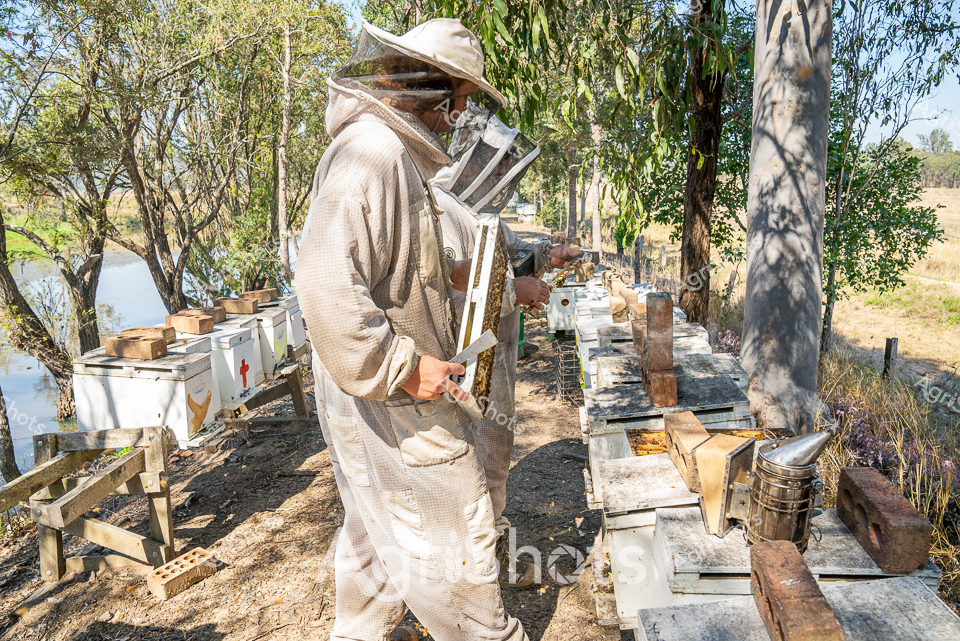
A beekeeper tends to a thriving apiary nestled alongside a tranquil waterway in Queensland's lush Lockyer Valley. Dressed in a full protective suit and mesh veil, the apiarist carefully inspects a honeycomb frame, surrounded by neat rows of white and wooden beehives. Dappled sunlight filters through the eucalyptus and river red gum trees, casting intricate shadows on the rich earth beneath. The scene captures the meticulous craft of honey production during the vibrant spring season, when bee colonies are at their most active. Specialized equipment like a stainless steel smoker sits nearby, used to calm the bees during hive management. This serene landscape represents the essential role of beekeepers in agricultural ecosystems, highlighting the delicate balance between human intervention and the remarkable natural processes of pollination and honey production.
 Video
Video
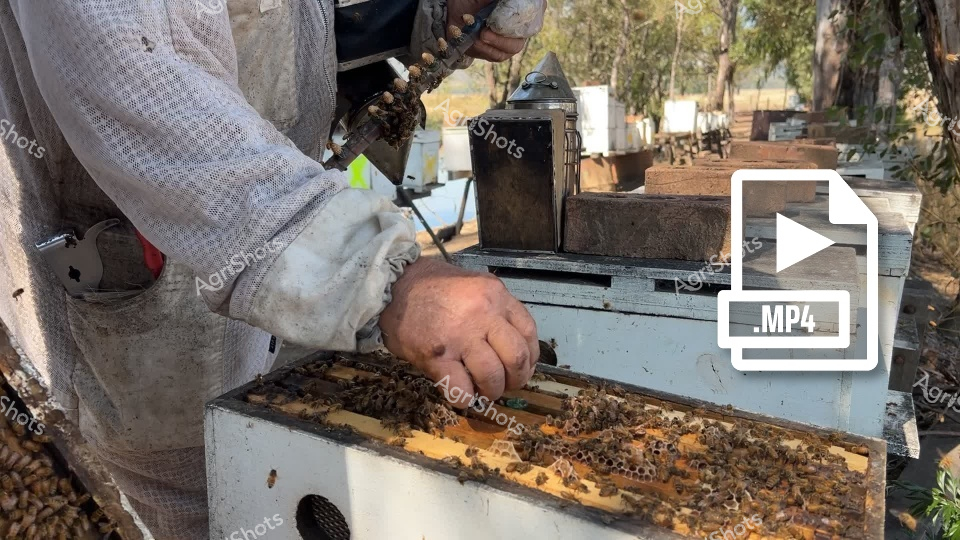
Beekeeping in the Sunlit Orchard A skilled apiarist tends to a vibrant bee colony in the dappled morning light of a Queensland orchard. Wearing protective white mesh gear, the beekeeper carefully manages a honeycomb frame crowded with industrious worker bees, their golden-brown bodies clustered across the wooden surface. The soft, natural background of trees suggests a peaceful spring day in the Lockyer Valley, a region renowned for its agricultural diversity. Specialized beekeeping equipment, including a classic metal smoker visible on the workbench, helps calm the colony during inspection. The intricate texture of the hive frame reveals layers of honeycomb, showcasing the remarkable architectural skills of the bee community. This intimate moment captures the delicate art of sustainable apiculture, where human expertise and natural precision work in harmonious collaboration.
 Image
Image
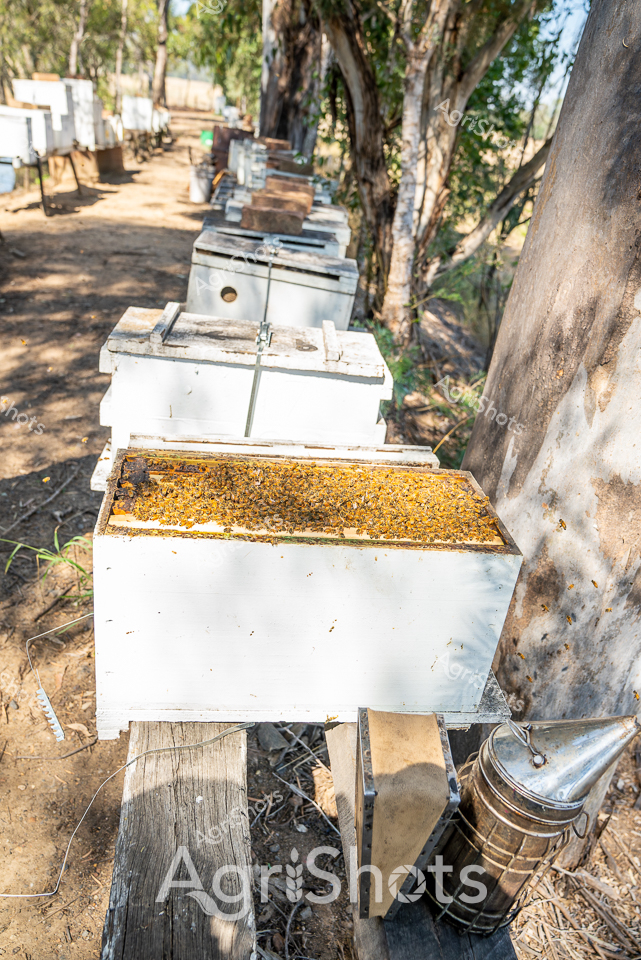
Pristine white bee hives line a dappled sunlit path beneath mature eucalyptus trees, capturing the essence of a thriving apiary in Queensland's fertile Lockyer Valley. Golden pollen dusts the open hive frames, revealing the industrious nature of the honeybee colonies nestled in these carefully maintained wooden boxes. A classic stainless steel smoker rests on a weathered wooden support, a vital tool for beekeepers managing these delicate agricultural ecosystems. The soft earth tones and filtered light suggest a mild spring morning, when bees are most active and nectar flows are abundant. Rows of uniform hives demonstrate the systematic approach of modern apiculture, each box meticulously positioned to optimize bee movement and honey production. This serene scene represents the critical role of pollinators in Australian agricultural landscapes, showcasing the intricate relationship between careful husbandry and the natural rhythms of insect colonies.
Well, you've ploughed through the whole field!
No more crops to harvest here, mate.
Try searching for something else in our library of 50,000+ royalty-free media: