 Image
Image
Rural Resilience: Bore Water Infrastructure A seasoned station worker stands resolute against the stark expanses of an arid pastoral landscape, managing critical water infrastructure. Dressed in classic rural workwear - sturdy blue chambray shirt, well-worn denim jeans, and a protective wide-brimmed hat - he grips a large-diameter black poly pipe, symbolizing the lifeline of water management in Australia's challenging dryland environments. The backdrop reveals a sparse grassland stretching to a cloudless azure horizon, typical of inland New South Wales stations where water resources are meticulously engineered and monitored. The scene captures the essence of agricultural adaptation, with the curved pipe suggesting recent installation or maintenance of a bore water system. Dry, compacted earth beneath his feet underscores the harsh conditions farmers and graziers negotiate daily. His posture - slightly leaning, hands positioned confidently on the pipe - communicates decades of practical knowledge and the physical resilience required to maintain remote agricultural operations. This image embodies the unsung heroism of rural infrastructure workers, whose technical skills and determination transform marginal landscapes into productive agricultural systems through strategic water management.
 Image
Image
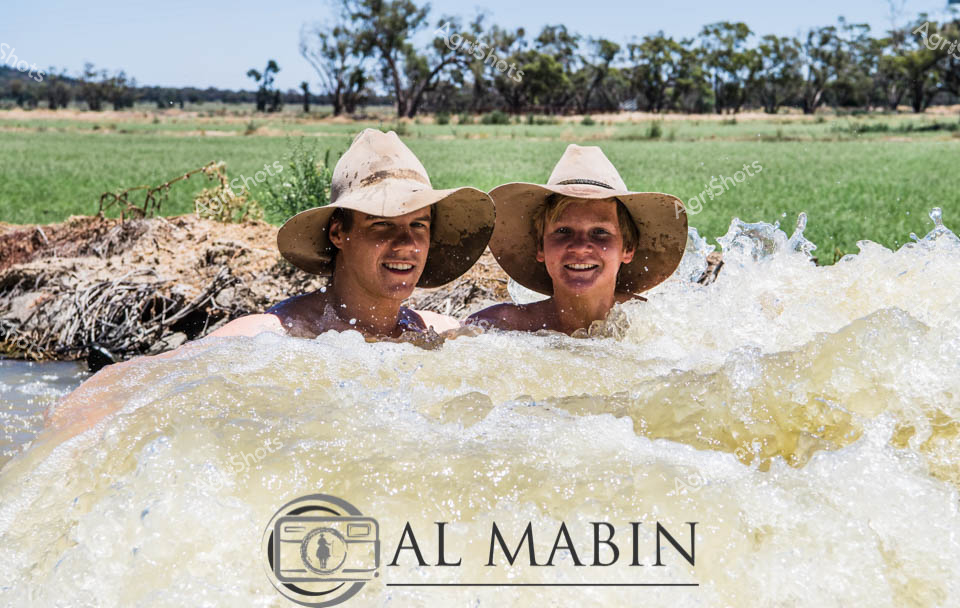
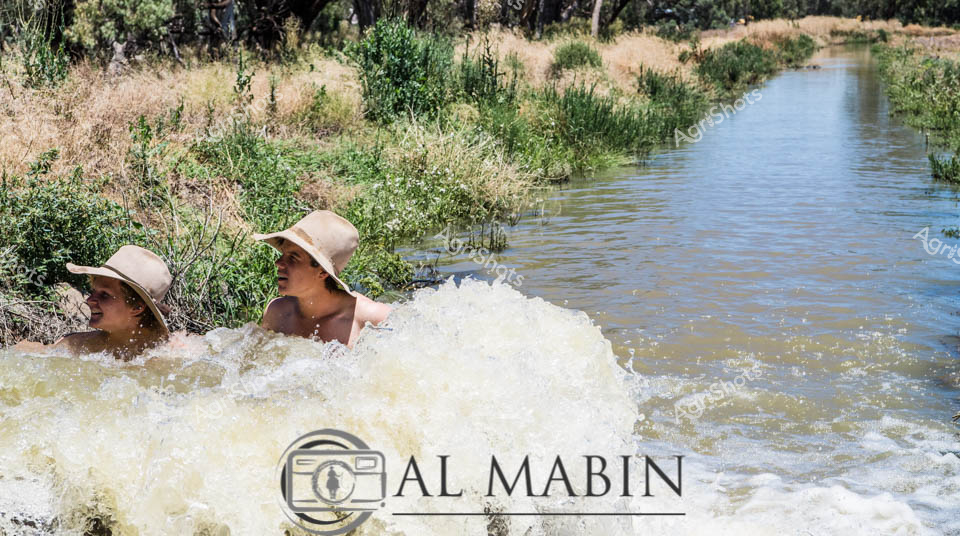
Two farm workers beat the intense Australian summer heat with infectious joy, submerged in a churning irrigation channel beside a lush green jojoba crop in rural New South Wales. Wide-brimmed agricultural sun hats shield their faces as they laugh and splash in the turbulent water, creating dramatic white foam and spray against the verdant field backdrop. The landscape reveals a classic expansive Australian agricultural setting - sparse eucalyptus trees scattered across the horizon, dry earth transitioning to irrigated green cultivation. Their playful moment captures the camaraderie and resilience of rural workers managing challenging environmental conditions, using water resources creatively to cool down during peak harvest season. The vibrant green crop and turbulent water create a dynamic visual contrast, symbolizing the critical role of water management in Australian agricultural productivity. Al Mabin's photographic signature suggests this image is part of a professional documentation of agricultural life and landscape in the region.
 Image
Image
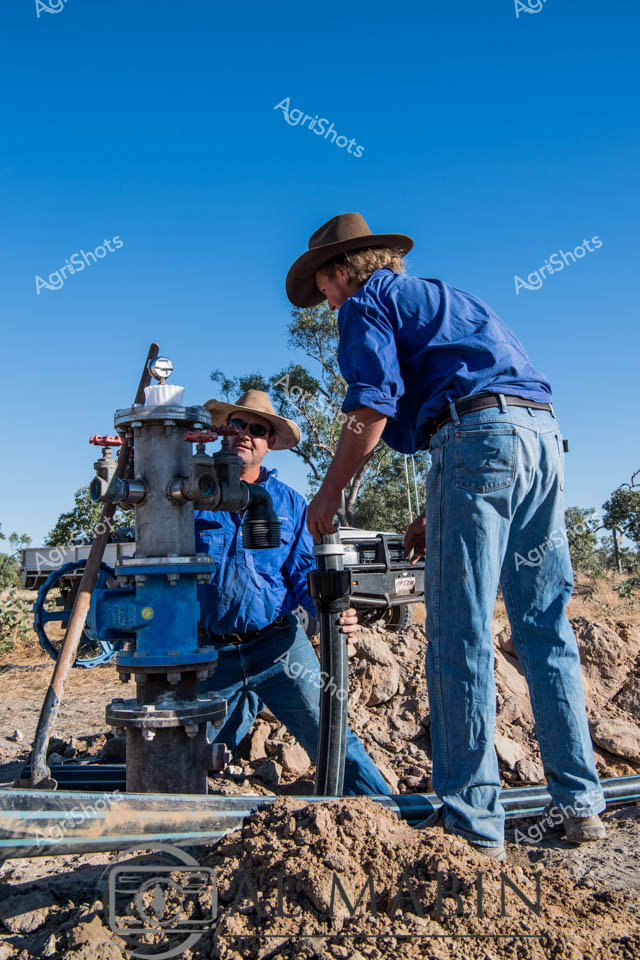
Remote Queensland Station Water Infrastructure Maintenance Rugged station workers wrestle with a critical water infrastructure component under a vast, cloudless azure sky. Dressed in characteristic blue work shirts and wide-brimmed akubra hats, these seasoned rural professionals carefully inspect and adjust a substantial bore water pump mounted amid rocky, sun-baked terrain. One worker crouches closely examining the industrial blue metallic pump mechanism, while his colleague stands attentively, ready to assist or provide guidance. The machinery - a robust industrial water pump with multiple pipe connections - represents the lifeline of agricultural operations in this unforgiving landscape. Surrounding rocky ground and scattered native vegetation highlight the challenging environment where reliable water infrastructure is crucial for pastoral survival. Their deliberate, expert movements suggest years of experience managing critical station resources, understanding that every mechanical adjustment could mean the difference between thriving and struggling livestock operations. The scene epitomizes the resilience and technical skill of Australian rural workers, who maintain complex systems in isolated locations where self-sufficiency isn't just a virtue - it's a necessity. Their coordinated effort captures the essence of outback station management: practical knowledge, teamwork, and unwavering dedication to keeping critical infrastructure operational.
 Image
Image
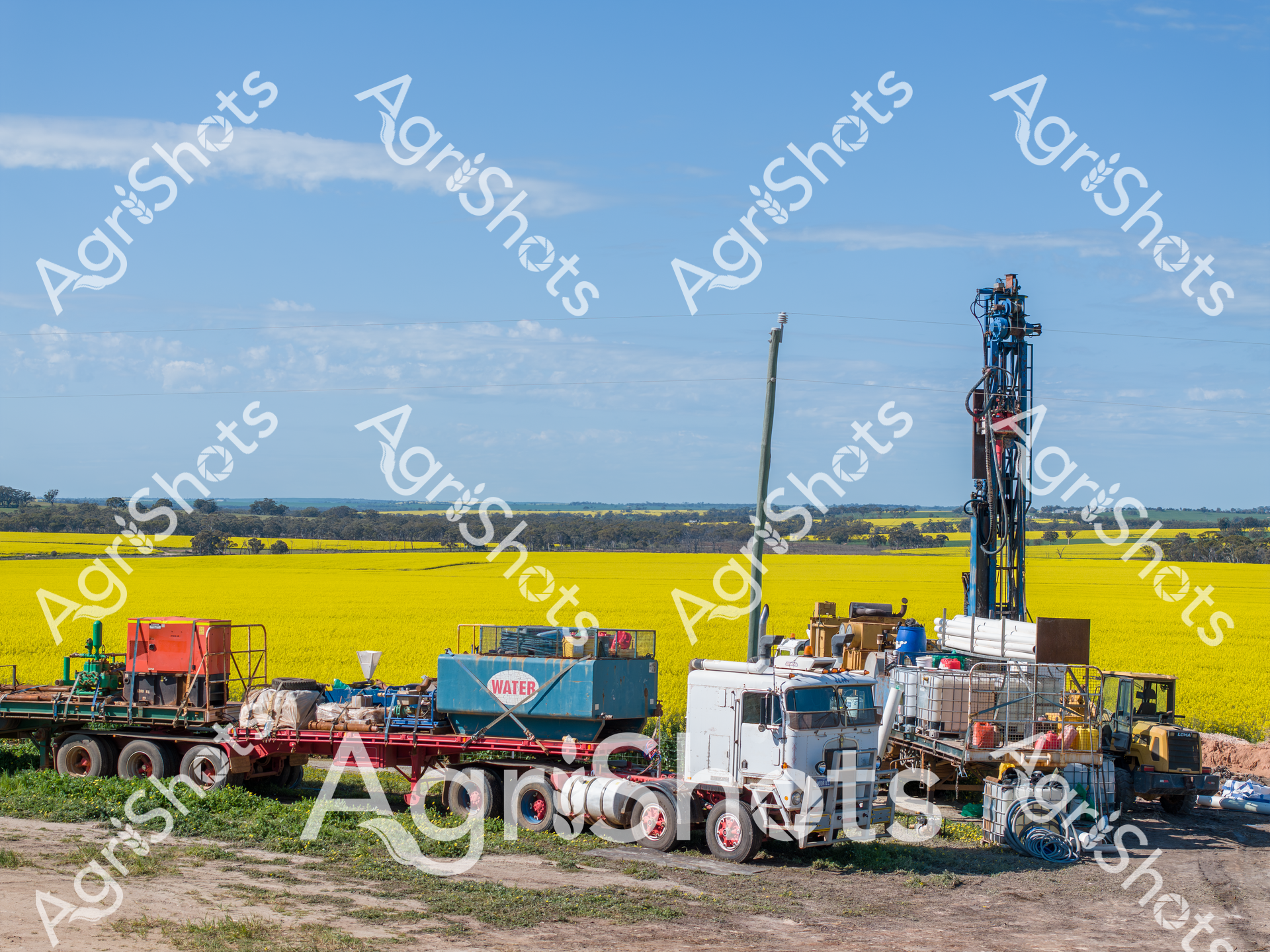
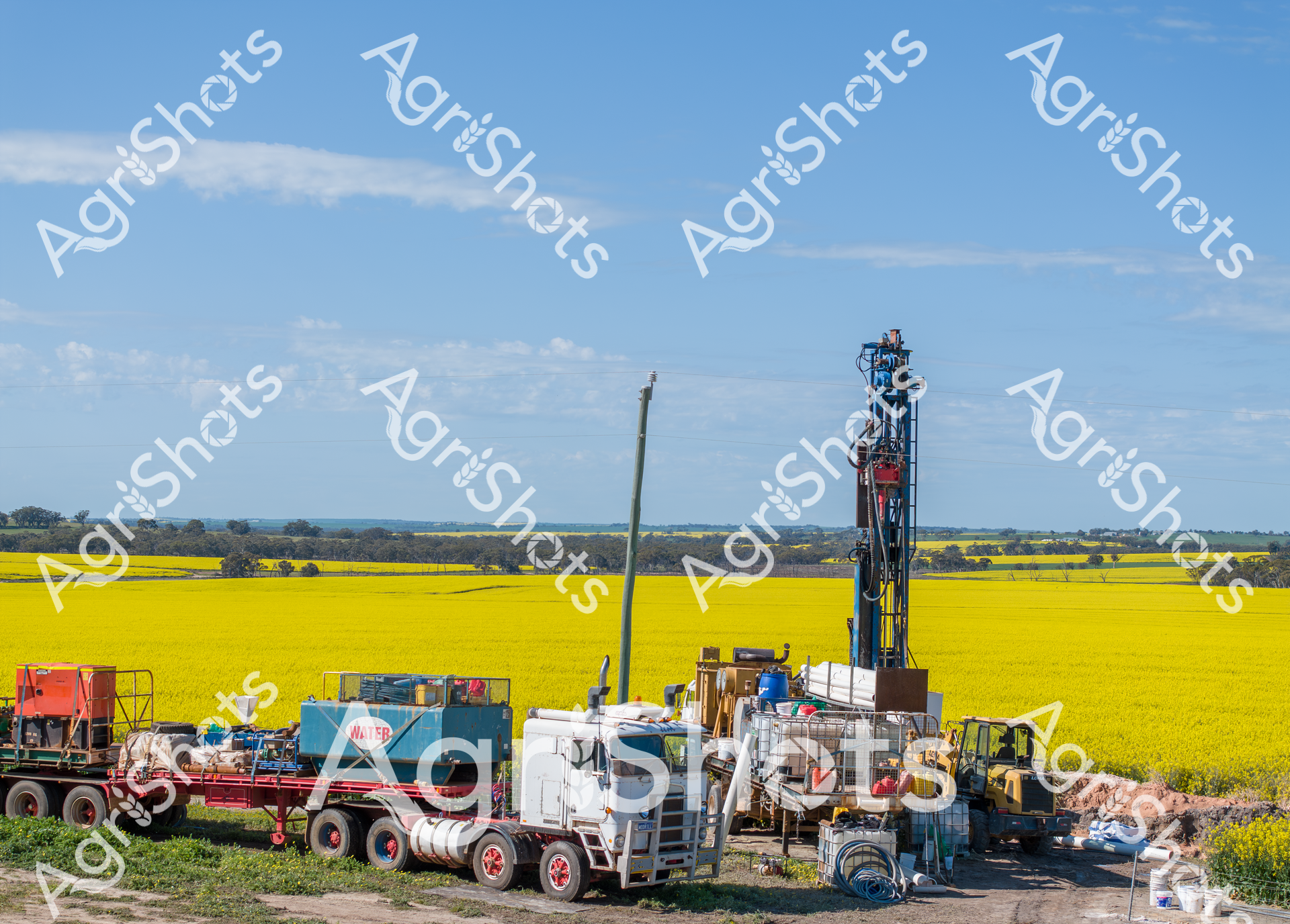
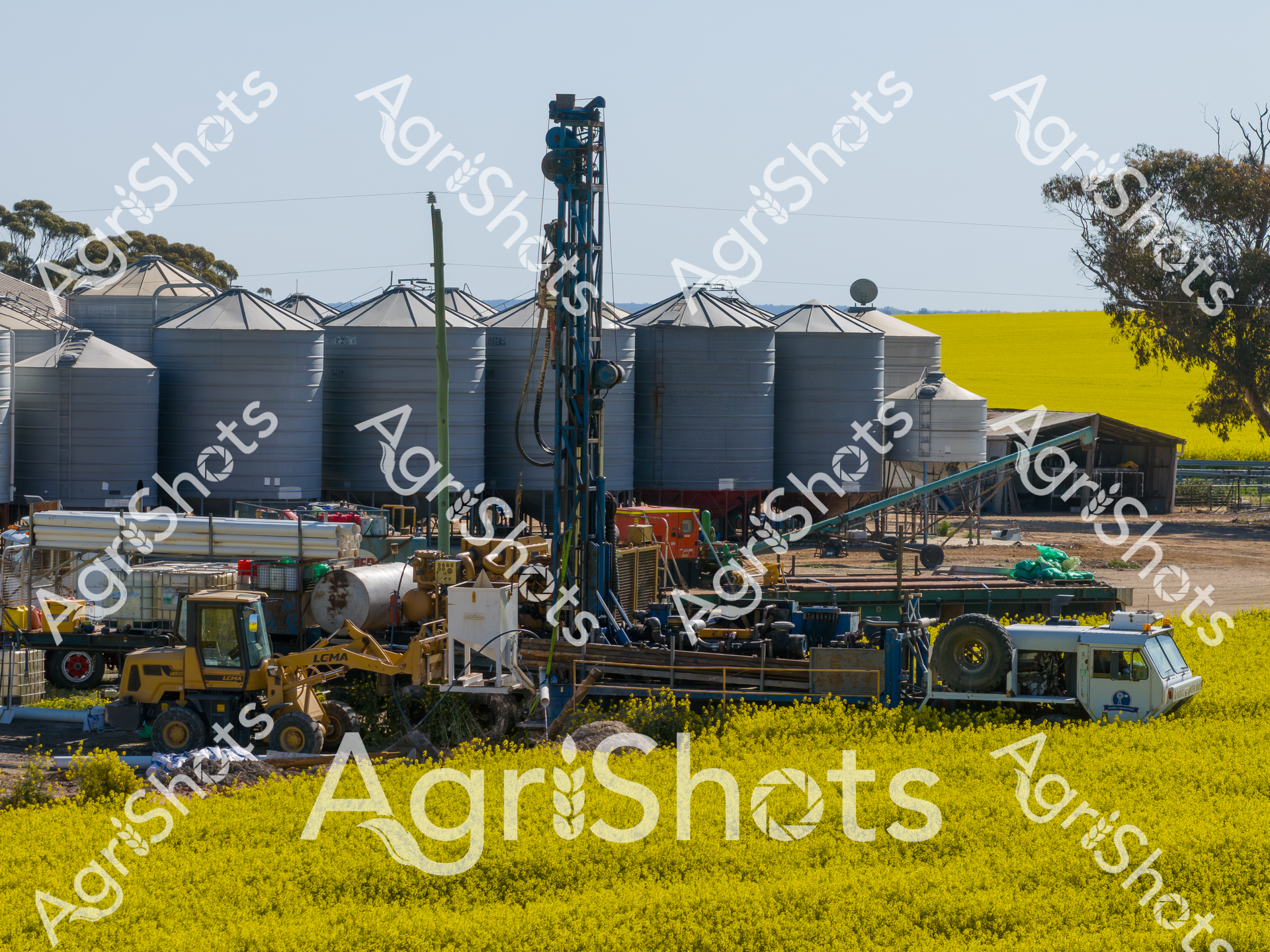
A water bore drilling operation unfolds against the vibrant yellow backdrop of a flowering canola field in Western Australia's Wheatbelt region. Robust industrial machinery stands ready, with a white truck supporting a tall blue drilling rig that punctures the expansive golden landscape. A blue water tank mounted on a flatbed trailer indicates the critical importance of water resource management in this agricultural setting. The scene captures the intricate intersection of technological intervention and agricultural productivity, with precise machinery positioned amidst the brilliant spring-flowering canola crop that stretches to the distant tree-lined horizon. Crisp blue skies and carefully positioned drilling equipment showcase the methodical approach to water exploration in this demanding agricultural environment. The composition reflects the resilience and technological sophistication of rural Australian agricultural practices, where water access is paramount to crop and livestock sustainability.
 Image
Image
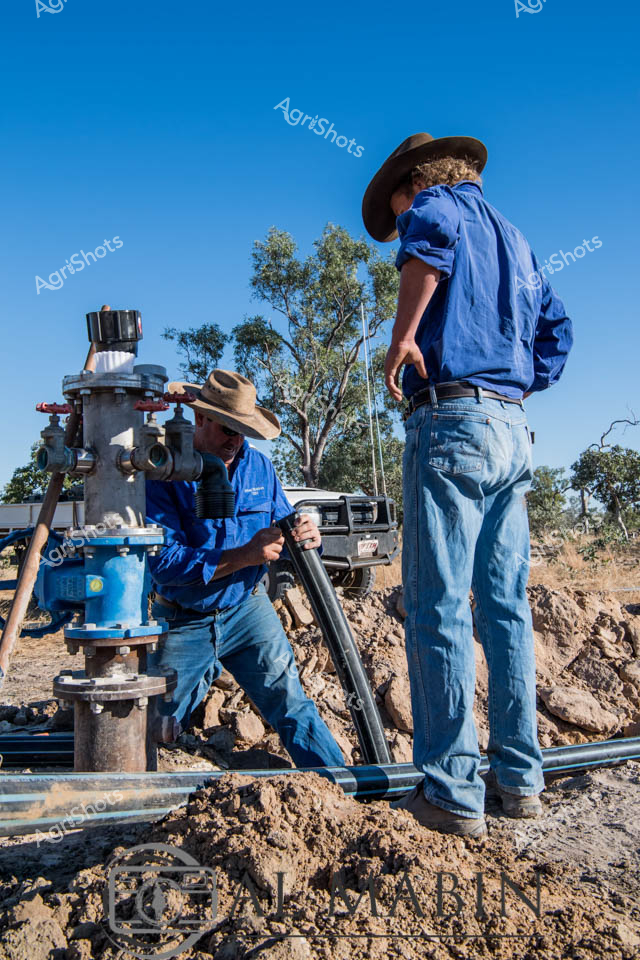
Remote Queensland bore maintenance under brilliant azure skies: two station workers in classic blue workshirts and wide-brimmed sun hats carefully inspect and manage critical water infrastructure. One worker crouches intently near a substantial blue industrial pump mechanism, manipulating a black poly pipe section, while his colleague stands observing the technical work. The rocky, ruddy earth surrounding the installation speaks to the harsh, unforgiving landscape of the outback, with sparse eucalyptus trees offering minimal shade against the intense midday sunlight. Their sturdy denim work pants, practical boots, and focused postures reveal generations of agricultural expertise - understanding that reliable water supply is the lifeblood of remote cattle stations. This scene captures the essential, unglamorous yet crucial work of maintaining rural water systems, where precision and resilience are as important as the heavy-duty equipment itself. The image radiates a sense of quiet competence, typical of skilled station hands who keep isolated properties functioning through meticulous attention to infrastructure.
 Image
Image
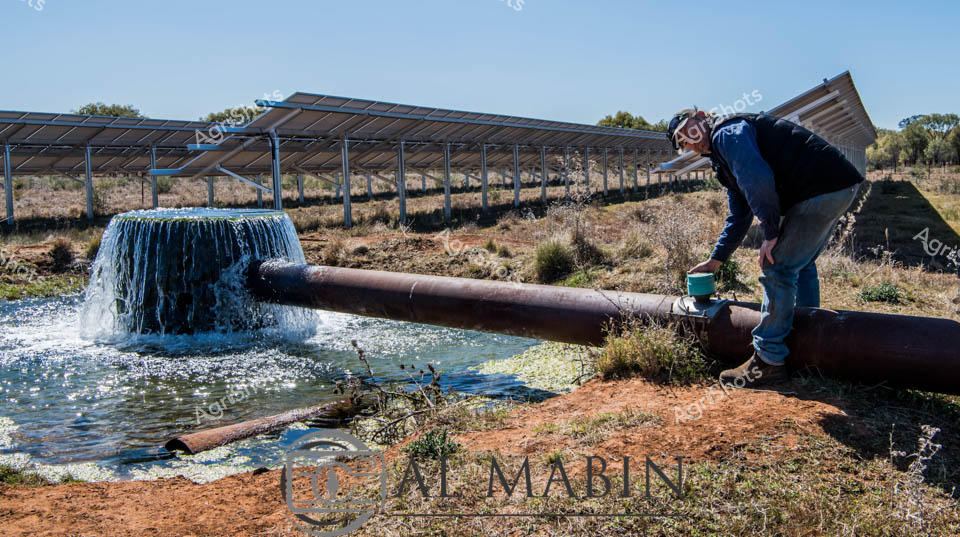
Beneath the expansive blue sky of rural New South Wales, a critical moment of agricultural water management unfolds. A robust steel pipeline channels water from a bore, creating a cascading fountain where the pipe meets the collection point, spraying liquid in a mesmerizing arc against the dusty, vegetation-scattered landscape. In the background, a series of sleek solar panels stand sentinel, representing the innovative technological intersection of renewable energy and irrigation systems. A farmer dressed in practical workwear carefully monitors the water flow, bending to adjust equipment with practiced expertise. The rusty earth, scattered grasses, and metallic infrastructure create a textural tableau that speaks to the challenging yet ingenious nature of Australian agricultural practices. This scene captures the essence of modern farming - a delicate balance of natural resources, technological intervention, and human skill working in concert to sustain agricultural productivity in a demanding landscape.
 Image
Image
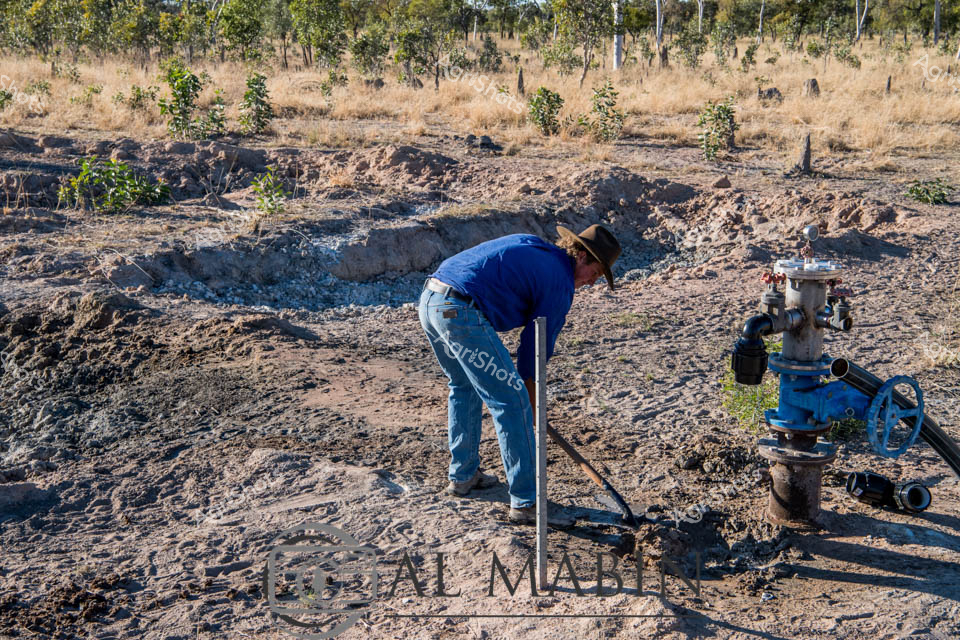
A station hand in a crisp blue work shirt and wide-brimmed hat bends intently over a weathered bore pump in a sun-drenched Queensland pastoral landscape. Dry golden grasses and scattered eucalyptus trees frame the rugged terrain, highlighting the challenging environment of remote agricultural operations. The blue industrial pump stands as a critical piece of infrastructure, connected to a network of poly pipes that deliver precious water across the arid station grounds. Disturbed earth and carefully dug trenches surrounding the pump reveal the manual labor required to maintain water supply systems in this unforgiving landscape. The worker's careful posture suggests meticulous attention to mechanical details, a hallmark of skilled station maintenance. Harsh sunlight casts sharp shadows across the dusty ground, emphasizing the stark beauty of rural Queensland's working landscapes and the essential role of water infrastructure in sustaining agricultural production.
 Image
Image
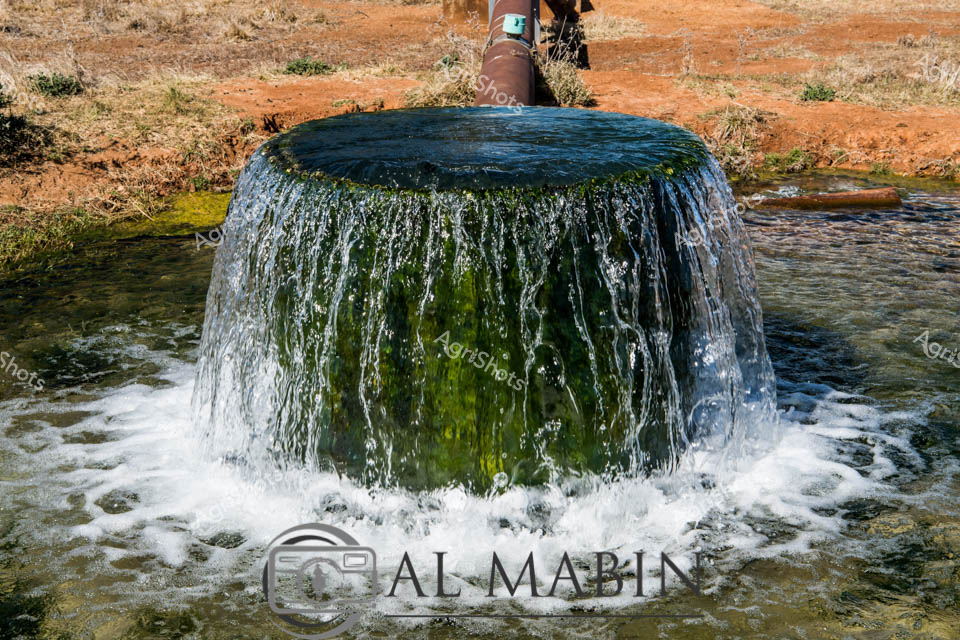
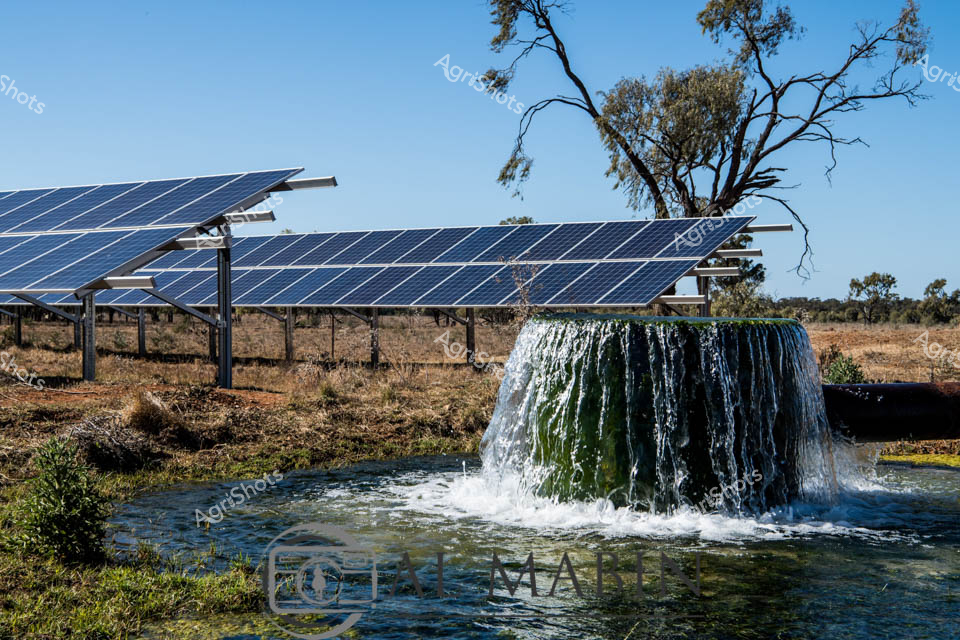
Artesian water surges from a bore head, cascading in a mesmerizing cylindrical fountain against the rusty-red earth of an arid agricultural landscape. The powerful stream erupts from a moss-green wellhead, creating a dramatic vertical column of water that splashes and disperses in delicate white streams around its base. Intricate solar technology is visible near the bore, highlighting the innovative water management techniques used in contemporary Australian agricultural systems. The surrounding terrain speaks of drought-resistant farming - dry grasses and ochre soil frame the water source, revealing the challenging environmental conditions of rural New South Wales. Mossy green algae clings to the bore's exterior, indicating consistent water flow and the vital role of groundwater in sustaining agricultural operations. This image captures the resilience of Australian farmers, who harness advanced technologies and natural resources to cultivate life in harsh, unforgiving landscapes.
 Image
Image
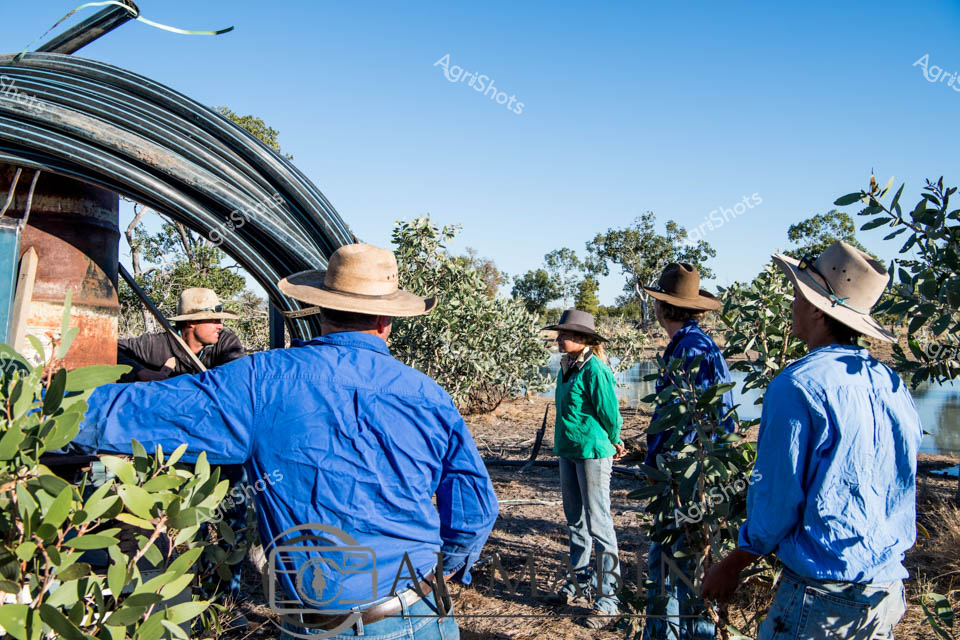
Queensland cattle station workers cluster around a water infrastructure setup, their blue workshirts and wide-brimmed akubra hats creating a uniform silhouette against the sparse, sun-drenched landscape. A curved metal bore structure arches overhead, with black poly pipes suggesting a complex water reticulation system for remote pastoral operations. The workers, positioned amid sparse grey-green eucalyptus and native scrub, appear focused on equipment maintenance or operational discussions, their body language suggesting collaborative problem-solving in a challenging agricultural environment. Bright mid-morning sunlight casts sharp shadows, highlighting the rugged terrain and highlighting the practical, hard-wearing nature of station work. A green-shirted worker provides a visual counterpoint to the predominantly blue workplace attire, breaking the visual monotony of the arid backdrop. The scene captures the essence of Australian agricultural resilience - workers managing critical water infrastructure in a landscape that demands constant attention and technical skill. The waterline infrastructure, poly pipes, and strategic positioning of the workers communicate the precision and planning required in remote cattle station management, where water supply can mean the difference between survival and loss in harsh pastoral conditions.
 Image
Image
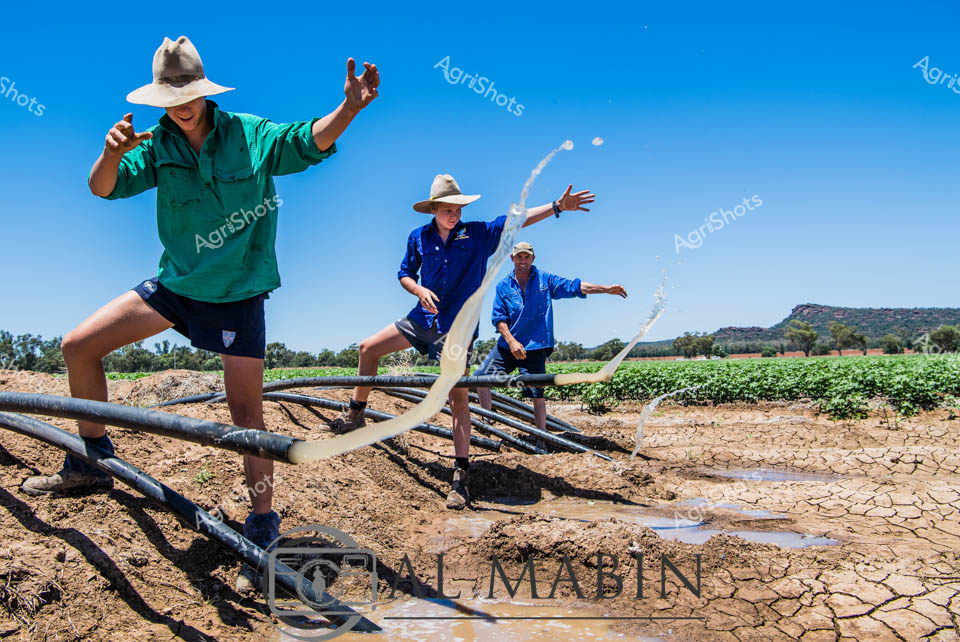
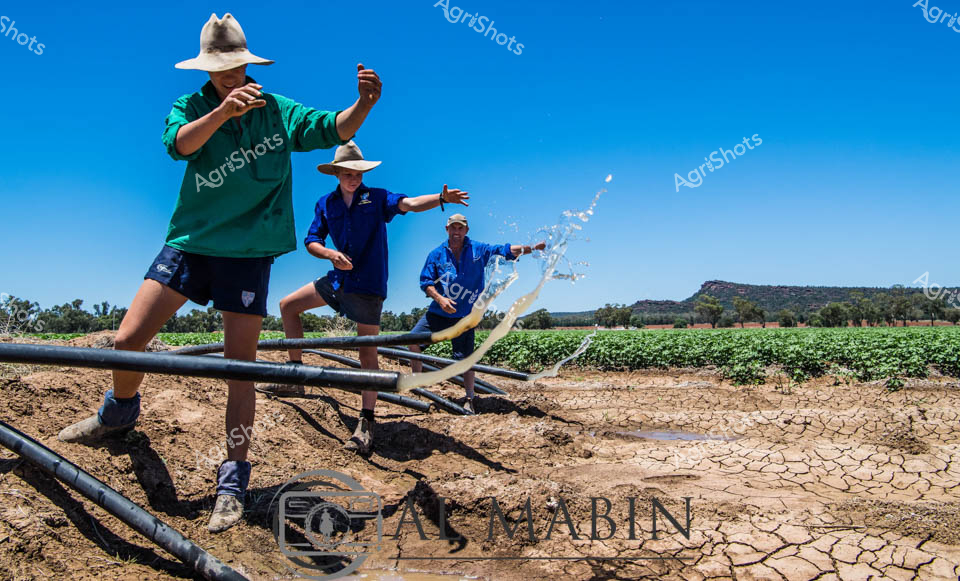
Rural irrigation specialists choreograph water's dynamic flow across a parched jojoba plantation in rural New South Wales. Three farm workers, dressed in vibrant blue and green work shirts and wide-brimmed sun hats, skillfully manipulate black poly pipe siphons to distribute precious water across cracked, sun-baked earth. The bright azure sky frames their expert movements as water arcs dramatically from the irrigation pipes, creating elegant liquid trajectories that nourish neat rows of green jojoba bushes stretching across the arid landscape. Their synchronized gestures reveal years of practiced skill, moving with the fluid precision of agricultural dancers managing scarce water resources. The rugged terrain and distant rocky outcrops underscore the challenging environment where these dedicated workers sustain productive agricultural land through intelligent water management techniques. Their dynamic postures capture the resilience and technical mastery required to cultivate crops in Australia's demanding agricultural heartlands.
 Image
Image
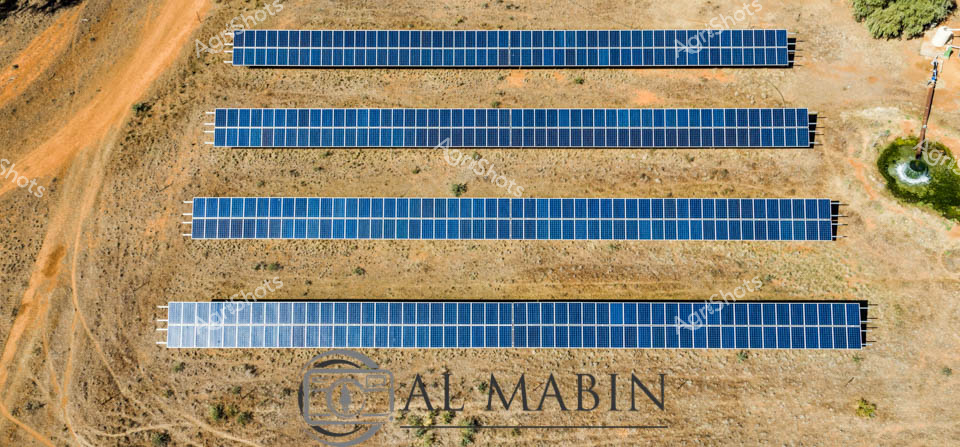
Sun-drenched arid landscape reveals a precision solar array at the Al Mabin agricultural facility, showcasing cutting-edge renewable energy infrastructure for sustainable farming. Four long, meticulously aligned solar panel rows stretch across a rusty ochre earth, their brilliant blue photovoltaic surfaces capturing intense Australian sunlight with geometric perfection. The installation demonstrates sophisticated agricultural technology adaptation, transforming marginal dryland terrain into a strategic energy generation platform. Weathered ground surrounding the panels suggests this is a working agricultural property, where innovative solar infrastructure integrates seamlessly with traditional farming practices. The Al Mabin branding subtly anchors the image, signaling a progressive approach to rural resource management in challenging environmental conditions. This aerial perspective illuminates how contemporary agricultural enterprises are leveraging solar technology to enhance operational resilience and reduce carbon footprint in regional Australian landscapes.
 Image
Image
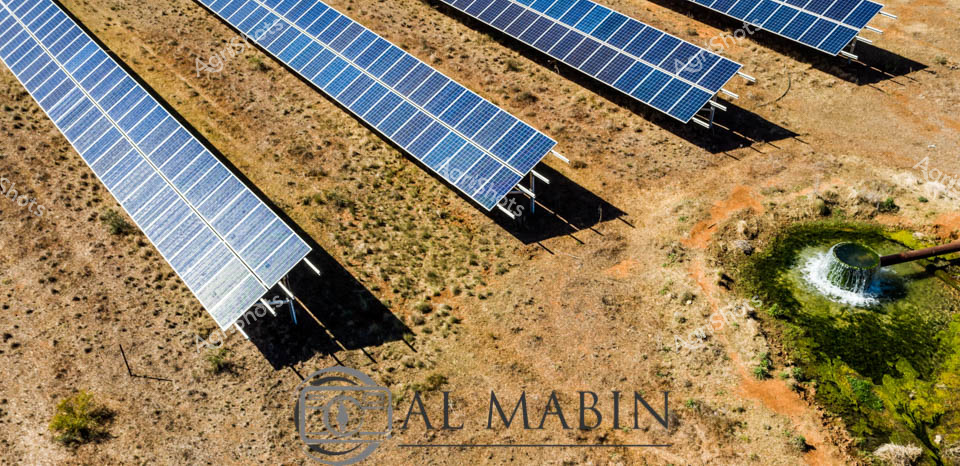
Aerial view of Al Mabin's innovative solar irrigation system nestled in an arid Australian landscape, where cutting-edge renewable energy meets agricultural resilience. Sleek blue solar panels are strategically positioned at precise angles across the sun-baked earth, casting sharp geometric shadows on the dusty terrain. A verdant green irrigation bore emerges in the bottom right corner, creating a striking contrast against the ochre and rust-colored ground, symbolizing the transformation of harsh dryland into productive agricultural space. The solar array captures abundant sunlight, powering water extraction and crop irrigation systems that enable farming in challenging environmental conditions. This technological intervention represents the intersection of sustainable energy and agricultural innovation, showcasing how Australian farmers are adapting to climate challenges through smart, resource-efficient solutions. The Al Mabin branding subtly anchors the image, highlighting the enterprise driving this progressive approach to agricultural technology in rural New South Wales.
 Image
Image
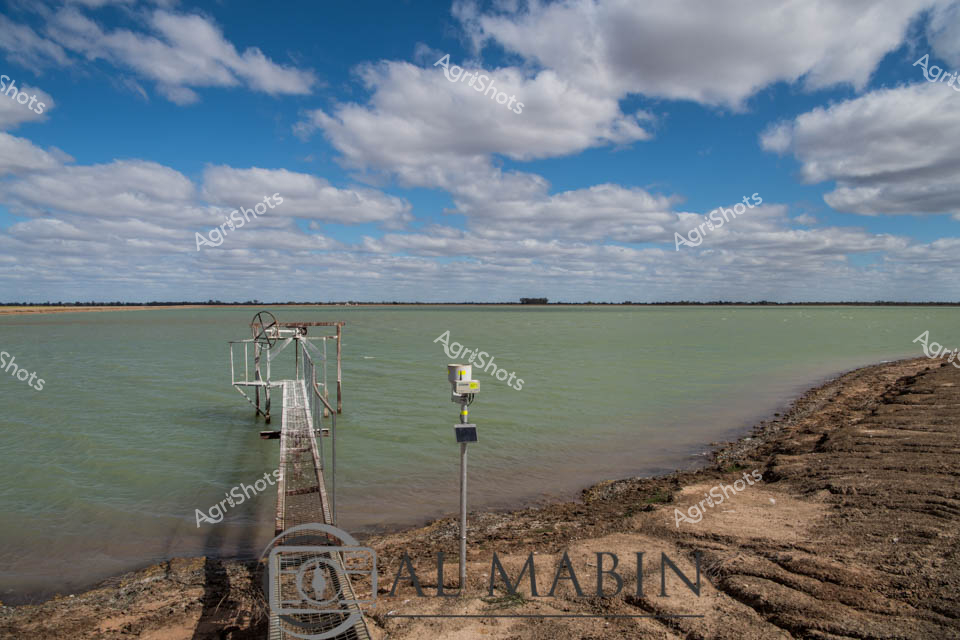
Piercing the pale green waters of a vast rural dam, a weathered steel pump station stands sentinel against an expansive sky of billowing cumulus clouds. The metal walkway, rusted and angular, extends like a mechanical lifeline across the tranquil water surface, connecting the shoreline to a central monitoring station. A modern telemetry sensor stands alongside, collecting critical data about water levels and flow - a silent guardian of agricultural productivity in this remote Australian landscape. The dam's shoreline reveals the raw texture of compacted earth, its edges sculpted by seasonal water fluctuations, telling a story of persistent drought and careful water management. This infrastructure represents the lifeblood of agricultural sustainability in New South Wales, where every megalitre of water is precious and precisely tracked. The scene captures the intersection of engineering and natural environment - a testament to human adaptation in a challenging agricultural ecosystem, where irrigation systems transform arid landscapes into productive farmland.
 Image
Image
Beneath an endless azure sky, agricultural workers tend to a jojoba plantation in rural New South Wales, orchestrating a precise irrigation ballet. Three workers wearing wide-brimmed sun hats - one in a verdant green shirt, two in deep blue - manipulate water flow through black poly pipes across parched, cracked earth. A dramatic arc of water erupts from the siphon, spraying life-giving moisture onto neat rows of low-growing jojoba shrubs that stretch towards distant rocky hills. The landscape speaks of resilience - dry, challenging terrain transformed through human skill and technological intervention into a productive agricultural landscape. Sun-bronzed workers move with practiced coordination, their body language revealing generations of farming knowledge and an intimate understanding of water management in an arid environment. The scene captures the essence of Australian agricultural innovation: turning marginal land into a productive crop through strategic irrigation and unwavering determination.
 Image
Image
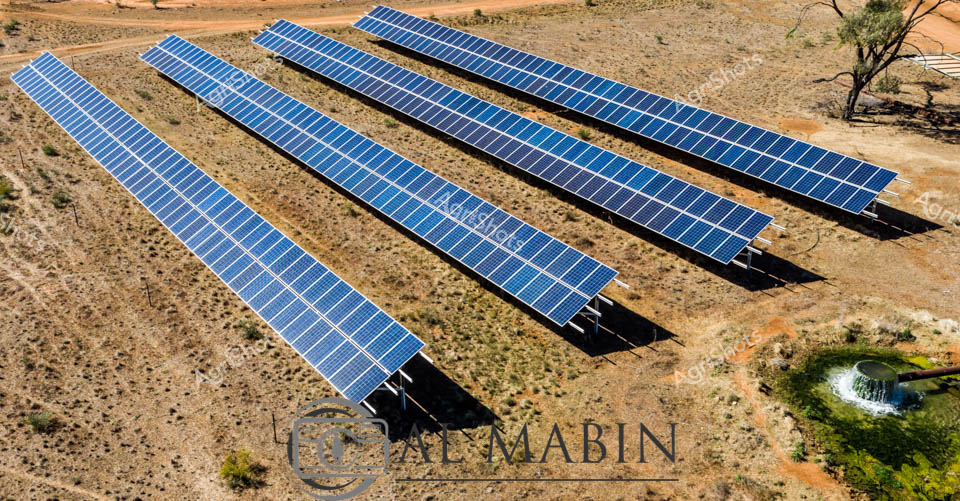
Solar Innovation in the Arid Rangelands Precision solar infrastructure rises from the rust-red earth of inland Australia, with six meticulously aligned photovoltaic arrays casting sharp geometric shadows across parched grassland. These gleaming blue panels - arranged in parallel rows with engineering precision - represent cutting-edge agricultural technology transforming marginal landscapes into productive energy zones. Adjacent to the solar installation, a circular water reservoir suggests sophisticated water management strategies typical of progressive rural enterprises. The surrounding terrain speaks of resilience - sparse vegetation, weathered soil, and a lone tree indicating the harsh environmental conditions where agricultural innovation thrives. The Al Mabin watermark signals this as a professional agricultural documentation, capturing the intersection of renewable energy and agricultural sustainability in contemporary Australian rural landscapes. The scene embodies technological adaptation, where solar infrastructure becomes an integral part of agricultural infrastructure, generating clean energy while coexisting with traditional land use practices.
 Image
Image
Nestled in the vast, parched landscape of rural New South Wales, an irrigation pump station stands sentinel beside a small dam, its weathered concrete structures emerging from the rich, brown earth. A robust water pump, painted in vibrant turquoise, sits sheltered beneath a white protective canopy, ready to channel precious water through rusted pipes across the meticulously furrowed agricultural terrain. The expansive paddock stretches to the horizon, its neat parallel lines of tilled soil testament to precision farming techniques that sustain agriculture in this challenging environment. Fluffy clouds drift across a pale blue sky, casting soft shadows on the undulating ground, while a large water storage tank sits nearby, its deep rust-red color contrasting against the earthy landscape. This scene captures the essence of Australian agricultural resilience - a sophisticated water management system that transforms arid ground into productive farmland, highlighting the critical role of irrigation in supporting crop production in one of the world's most challenging agricultural regions.
 Image
Image
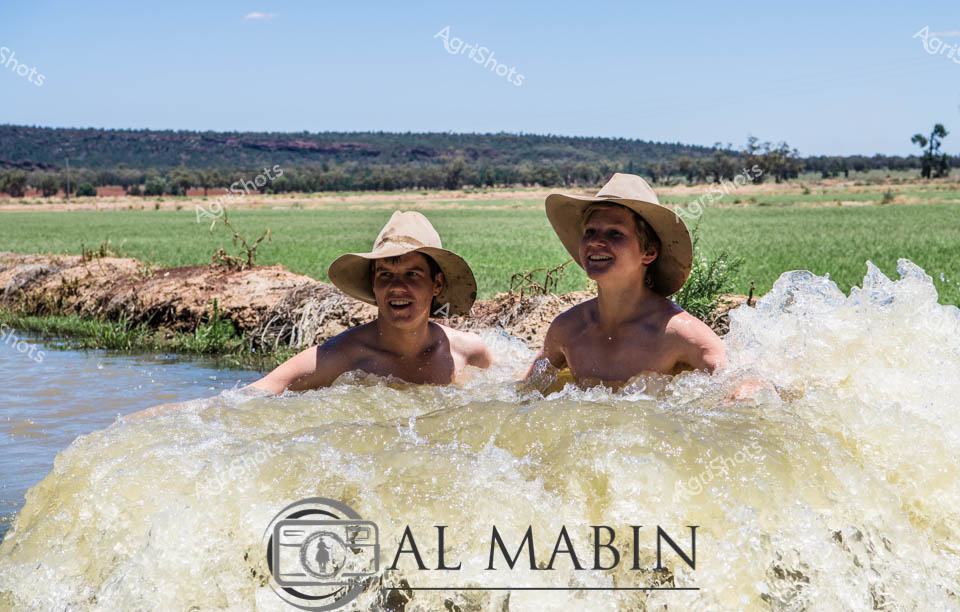
Two agricultural workers seek respite from the intense Australian outback heat, immersing themselves in a dynamic irrigation channel amidst a verdant jojoba crop field. Wearing wide-brimmed sun hats and bare-chested, they laugh and splash in the turbulent water, creating dramatic splashes that capture the energy of rural farm life. The surrounding landscape reveals a classic NSW agricultural terrain - green cultivated fields in the foreground transitioning to rugged bushland and distant hillsides under a clear blue sky. The water's churning movement suggests this is likely a bore-fed irrigation channel, critical for sustaining crops in this arid region. Their joyful expressions and physical interaction with the water convey the hard work and camaraderie inherent in agricultural labor, highlighting the human connection to the land. The Al Mabin watermark indicates this is a professional agricultural photography capture, documenting the lived experience of Australian farm workers.
 Image
Image
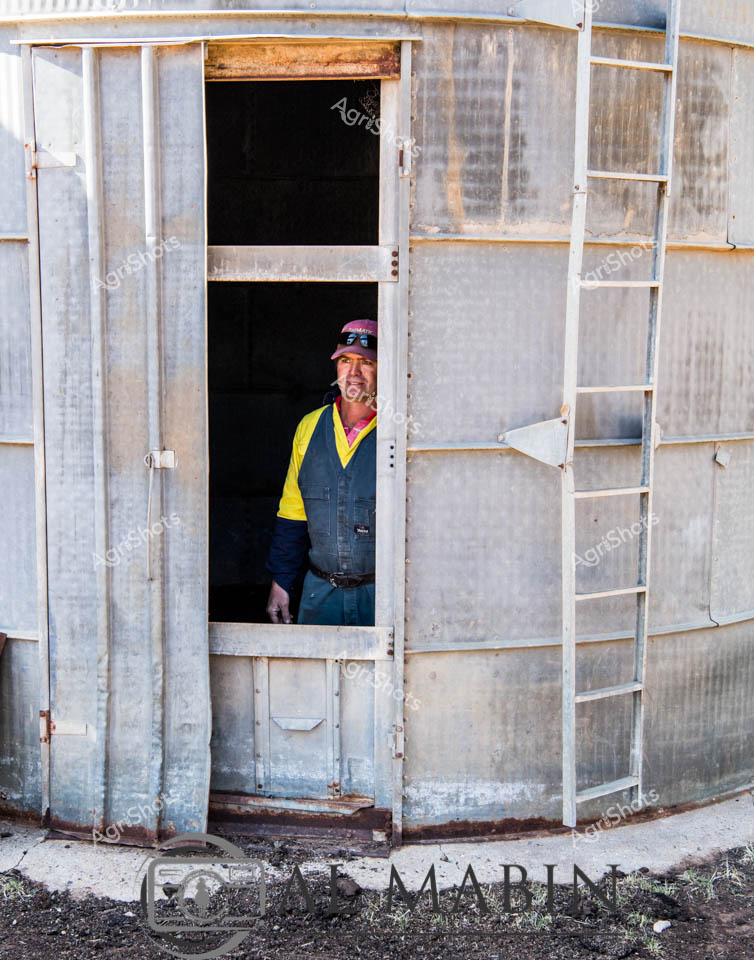
A seasoned agricultural worker stands within the weathered frame of an industrial-grade water storage tank, his sturdy presence embodying the resilience of rural infrastructure. Dressed in a high-visibility yellow shirt, navy vest, and a protective cap, he peers out from the tank's doorway, framed by corrugated metal panels that bear the patina of years of outdoor service. The metallic structure, likely a critical water source for irrigation in the arid landscapes of New South Wales, features a robust ladder ascending its exterior, hinting at routine maintenance and monitoring. Soft, diffused light illuminates the scene, casting subtle shadows that accentuate the texture of the tank's galvanized surface and the surrounding dusty ground. His contemplative stance suggests a moment of quiet observation, a testament to the careful stewardship required in agricultural operations where every resource is precious. The image captures the unsung heroes of Australian farming - the workers who maintain the critical infrastructure that sustains agricultural productivity in challenging environments.
 Image
Image
Cool creek waters offer respite for agricultural workers during an intense summer day in regional New South Wales. Two individuals wearing wide-brimmed sun hats wade through a turbulent irrigation channel, surrounded by lush green grasses and dry golden vegetation typical of Australian rural landscapes. The rushing water creates dramatic white foam, suggesting significant water flow from local bore irrigation systems supporting crop cultivation. Their postures communicate both physical labor and momentary relief, capturing the challenging yet resilient spirit of agricultural workers managing agricultural landscapes under demanding climatic conditions. The verdant riverbank demonstrates the critical role of water management in sustaining agricultural productivity in arid and semi-arid regions. Al Mabin's photographic watermark indicates this is a professional documentation of agricultural life, highlighting the human dimension of farming practices in New South Wales.
 Image
Image
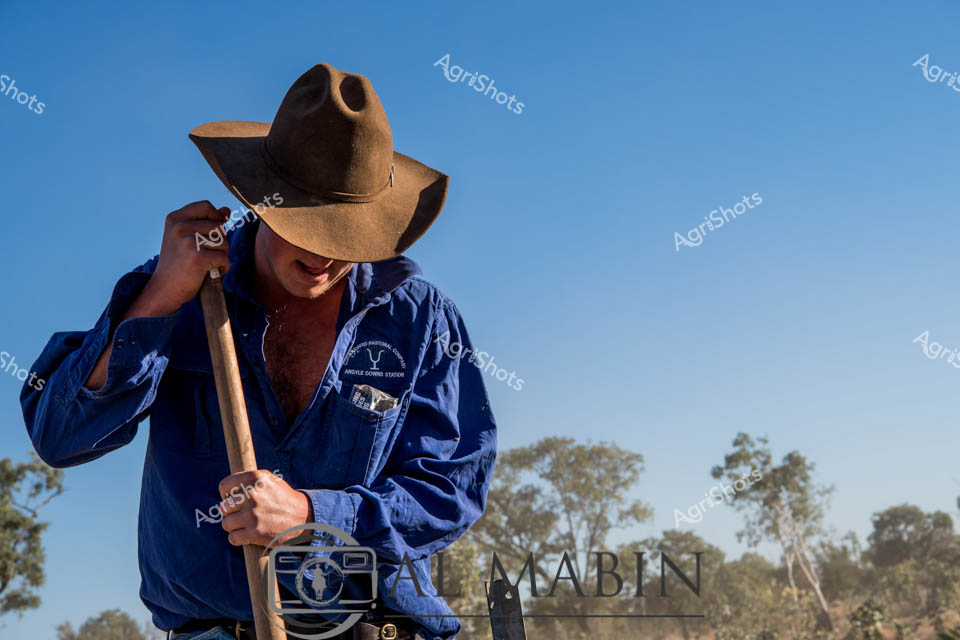
Australian rural landscape captured under a brilliant blue midday sky, featuring a station hand prepared for essential water infrastructure maintenance. Wearing a classic wide-brimmed outback hat and a deep blue work shirt with a station logo, the worker grips a long-handled tool, embodying the resilient spirit of remote agricultural workers. The rugged pastoral backdrop of sparse eucalyptus trees and open terrain speaks to the challenging environment of Queensland's inland stations, where water management is critical to livestock survival. His posture suggests readiness and purpose - a solitary figure representing generations of agricultural workers who maintain the lifeline of Australia's agricultural heartland. The composition highlights the stark beauty of rural working life, where individual effort and preparedness are key to sustaining agricultural operations in harsh, expansive landscapes. The image resonates with the quiet determination of those who keep remote stations operational, managing water resources with skill and dedication.
 Image
Image
A powerful bore drilling operation unfolds amid the golden canola fields of Western Australia's Wheatbelt region during a vibrant spring morning. A robust truck-mounted drilling rig stands positioned at the edge of a brilliant yellow flowering canola crop, its tall blue and white tower rising against the expansive blue sky and distant tree-lined horizon. Heavy industrial equipment - including a red truck trailer and specialized drilling machinery - are carefully positioned on the field's edge, highlighting the precision and technical expertise required for water resource exploration. The luminous yellow canola field stretches across the landscape, creating a stunning contrast with the industrial equipment and emphasizing the agricultural infrastructure necessary for sustainable farming in this challenging environment. Crisp, clear sunlight bathes the scene, revealing every intricate detail of the machinery and the lush crop, capturing a moment of agricultural innovation and resource management in the Australian rural landscape.
 Video
Video
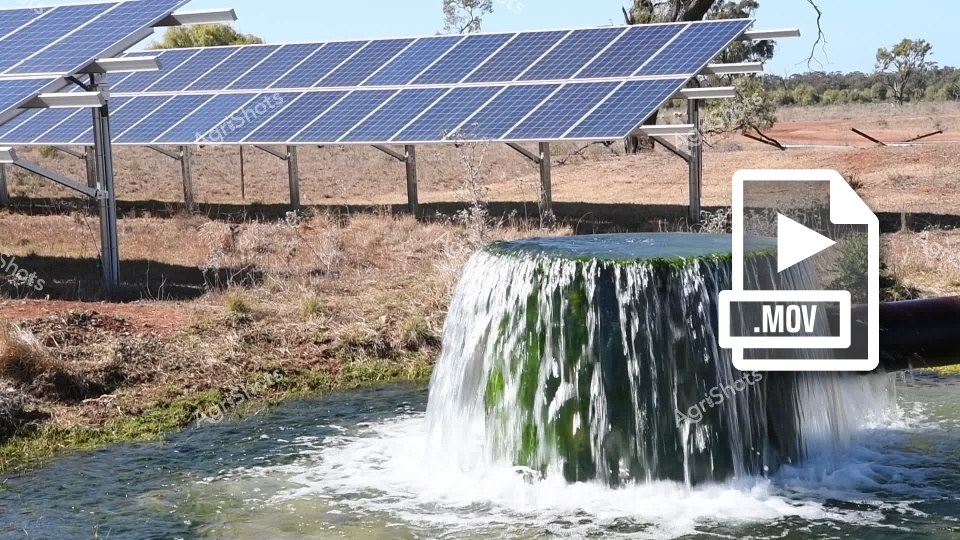
Under the bright Australian sun, a serene scene unfolds at an innovative solar farm nestled in the heart of the outback. A cascade of crystal-clear water flows from a large, circular fountain, creating a stunning contrast against the rich, ochre soil and lush greenery surrounding it. Towering above, rows of gleaming solar panels reflect the azure sky, embodying the harmony between technology and nature as they harness the sun's energy to power the region. The gentle sound of water creates a refreshing ambiance, inviting local wildlife to flourish nearby. The juxtaposition of the shimmering solar panels and the vibrant green foliage adds a dynamic texture to the landscape. The scene captures a moment of calm, underlining the region's commitment to sustainable practices in agriculture. This visual narrative speaks of progress and innovation, highlighting the balance between resource management and ecological stewardship. The atmosphere is one of optimism and harmony, where agricultural ingenuity meets the natural beauty of rural Australia. Tags: Solar Farm, Outback, Sustainable Agriculture, Water Management, Renewable Energy, Rural Innovation, Australia.
 Image
Image
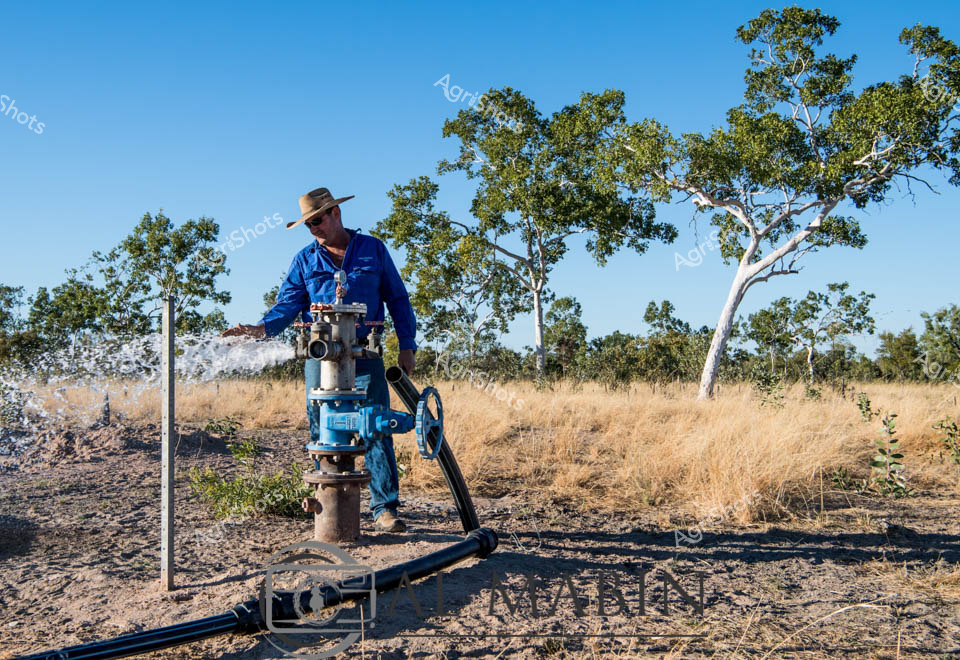
In the arid expanses of a Queensland cattle station, a station hand in a vivid blue work shirt and wide-brimmed hat operates a robust water bore pump. Surrounded by silvery-green eucalyptus trees and dry golden grasslands under a crystalline azure sky, he carefully manages the water infrastructure critical to rural survival. The industrial blue pump connects to black poly pipes, releasing a sparkling jet of water that will likely feed stock troughs across the parched landscape. Weathered earth and sparse native vegetation speak to the challenging environment of outback Queensland, where water management is an art form of survival and agricultural sustainability. The scene captures the quiet determination of rural workers who maintain essential infrastructure in some of Australia's most demanding agricultural terrains. Every movement and mechanism represents generations of knowledge about surviving and thriving in harsh, beautiful landscapes where water is more precious than gold.
 Image
Image
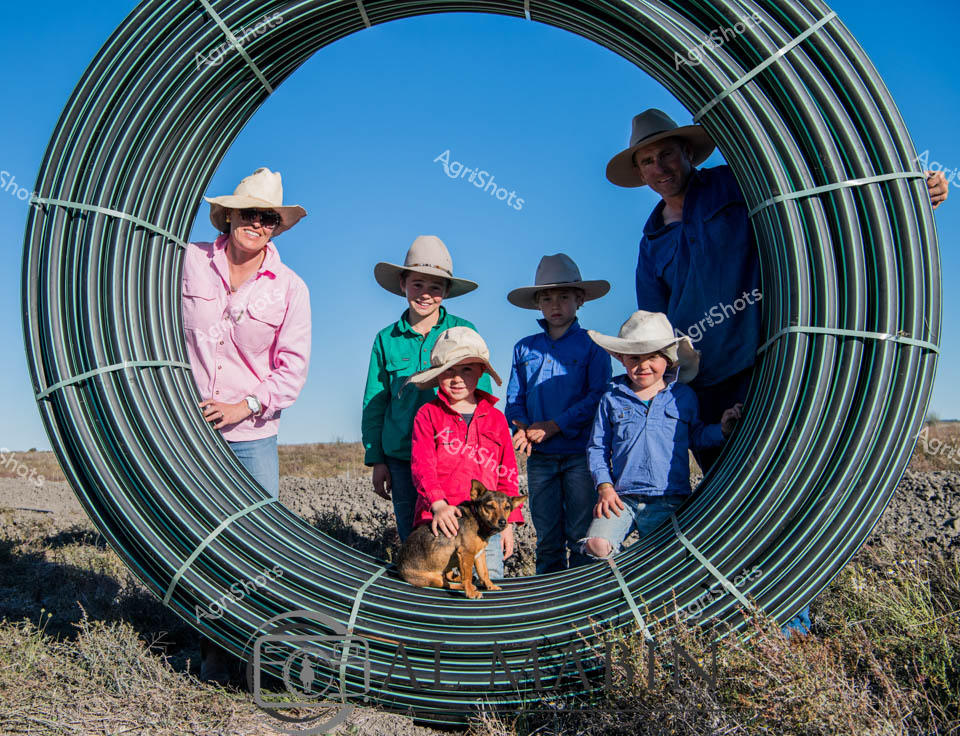
Rural resilience radiates from this quintessential Australian farming family portrait, framed ingeniously within a massive green poly pipe. Set against a stark, expansive pastoral landscape under a brilliant blue sky, five generations stand united in their agricultural heritage, each wearing classic wide-brimmed stockman's hats and working station attire. A young child in a vibrant red shirt sits center stage, accompanied by a loyal working dog, symbolizing the next generation of rural custodians. Their clothing - pink, green, blue, and navy shirts - reflects the practical, hardwearing style of outback farming families, while the enormous coiled irrigation pipe represents the critical infrastructure that sustains life in arid regions. The rocky ground and sparse vegetation underscore the challenging environment these resilient farmers navigate daily, with water management and infrastructure like this bore pipe being essential to survival. This image captures the spirit of Australian agricultural communities: multi-generational, connected to the land, and equipped with the pragmatic skills and equipment needed to thrive in harsh conditions.
 Image
Image
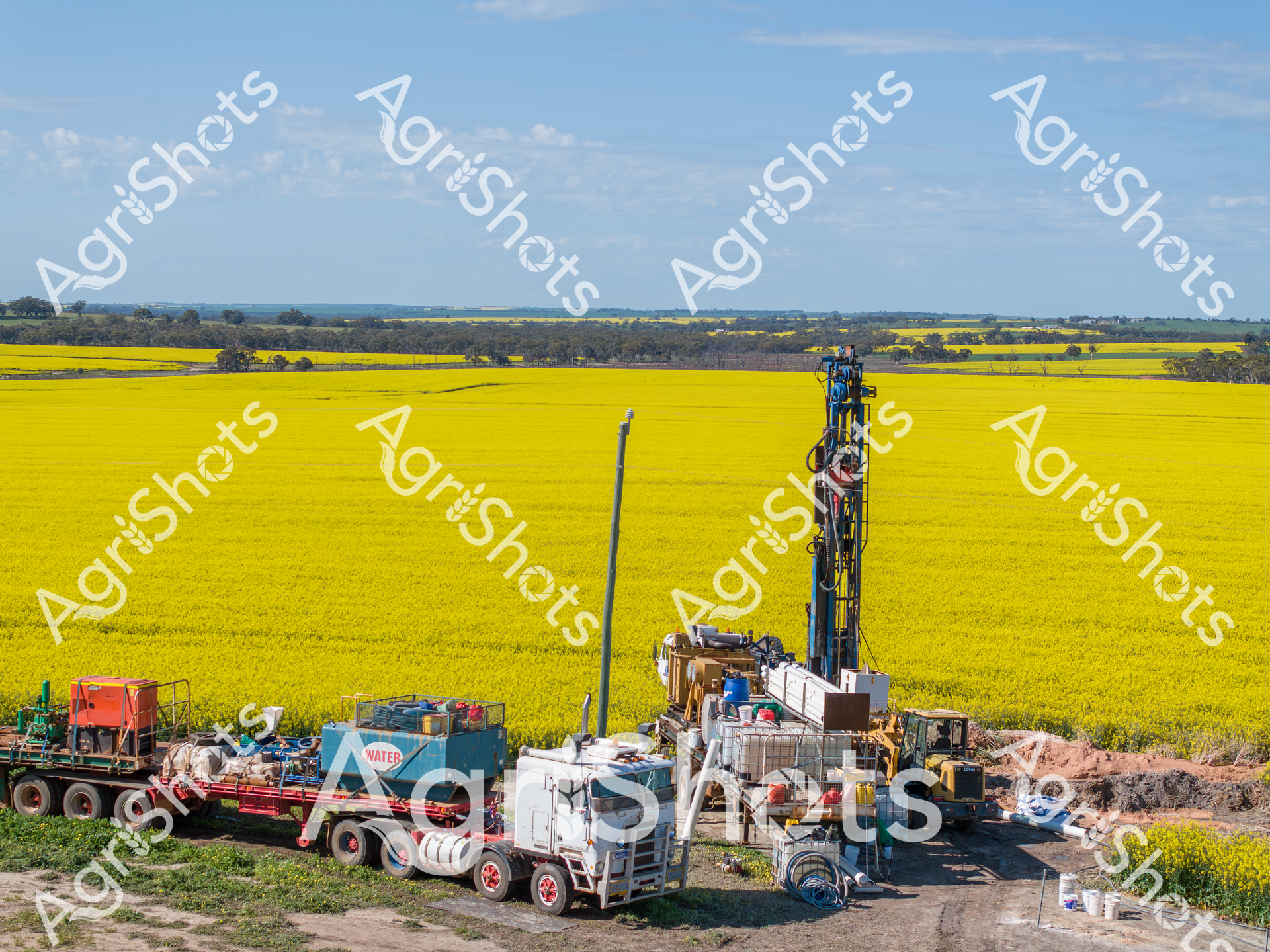
A water bore drilling operation unfolds in the heart of Western Australia's golden canola-covered Wheatbelt region during a vibrant spring morning. A robust drilling rig stands prominently against a brilliant backdrop of luminous yellow canola fields, their flowering crop stretching to the distant horizon like a sunlit carpet. Surrounding the drilling site, an array of specialized equipment including water trucks, transport vehicles, and utility trailers are strategically positioned, highlighting the sophisticated infrastructure required for rural resource exploration. The machinery's colors - crisp whites, industrial reds, and robust blues - contrast dramatically with the intense yellow of the blooming canola fields and the soft blue of the cloudscattered sky. Hydraulic drilling equipment reaches skyward, its mechanical precision a testament to the technical complexity of accessing underground water resources in this arid agricultural landscape. This scene captures the essence of modern agricultural resilience: strategic water resource development amidst the stunning natural beauty of a flowering crop landscape, where technological innovation meets agricultural necessity. The meticulously organized drilling site represents a critical moment of infrastructure development, ensuring water sustainability for farming operations in the challenging Western Australian agricultural environment.
 Image
Image
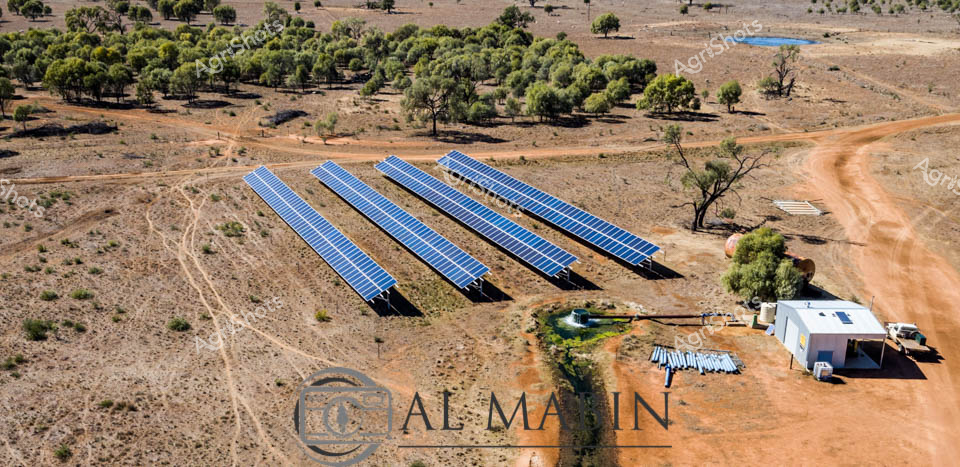
Remote Solar-Powered Irrigation System: Arid Landscape Transformation Gleaming azure solar panels rise from the dusty ochre earth, a testament to innovative agricultural technology in the harsh Australian outback. Strategically aligned in precise rows, these photovoltaic arrays harness the intense sunlight to power a bore water pumping station, enabling life-giving irrigation in a challenging rural landscape. Sparse eucalyptus trees punctuate the surrounding rocky terrain, their deep green canopies offering subtle contrast to the sun-bleached ground. A compact white infrastructure building stands nearby, housing critical pumping and control equipment, connected to a small green oasis of irrigated ground. The rich earthy palette of russet and amber speaks to the resilience of agricultural practices in marginal lands, where advanced renewable energy solutions can transform seemingly inhospitable environments into productive agricultural zones. This image captures the intersection of sustainable technology and traditional farming practices, showcasing how innovative solar solutions are revolutionizing water management in regional Australia.
 Image
Image
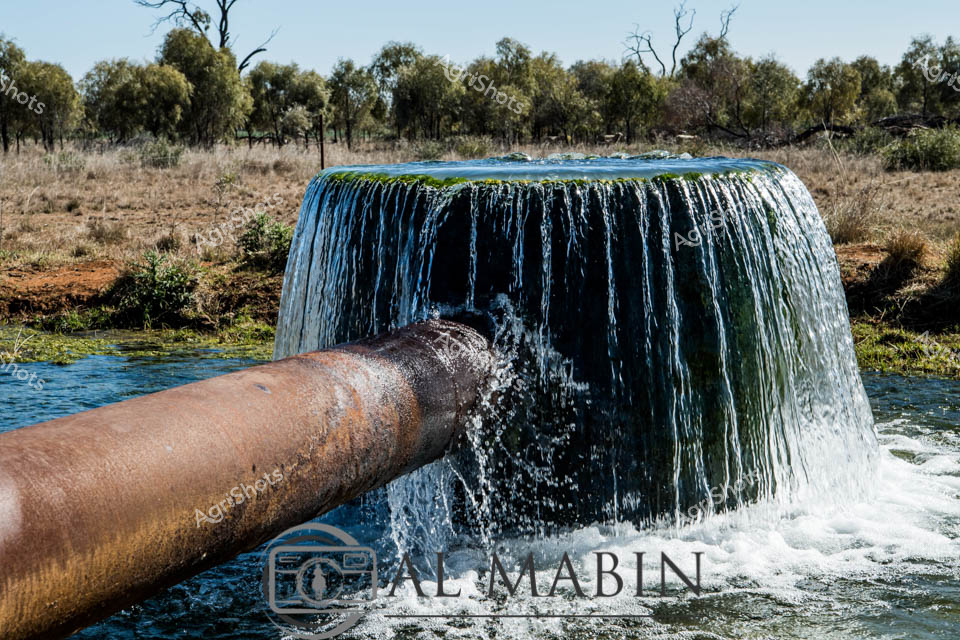
Cascading water creates a mesmerizing cylindrical overflow from an agricultural irrigation bore, transforming the arid landscape of rural New South Wales. The rusted metallic pipe channels water with precision, forming an elegant vertical curtain that glistens with blue-green hues against the dry grassland backdrop. Moss-rimmed edges softly frame the water's descent, highlighting the critical role of water management technologies in sustaining agricultural productivity in challenging environments. Sunlight catches the water's movement, creating a shimmering effect that emphasizes the life-giving properties of this carefully engineered water distribution system. The surrounding terrain - a mix of burnt ochre soil, sparse vegetation, and weathered grasses - underscores the harsh agricultural conditions that demand innovative water infrastructure. This image captures the intersection of technology and agriculture, revealing how sophisticated irrigation solutions enable farming in marginal landscapes, turning potential drought into opportunities for cultivation.
 Image
Image
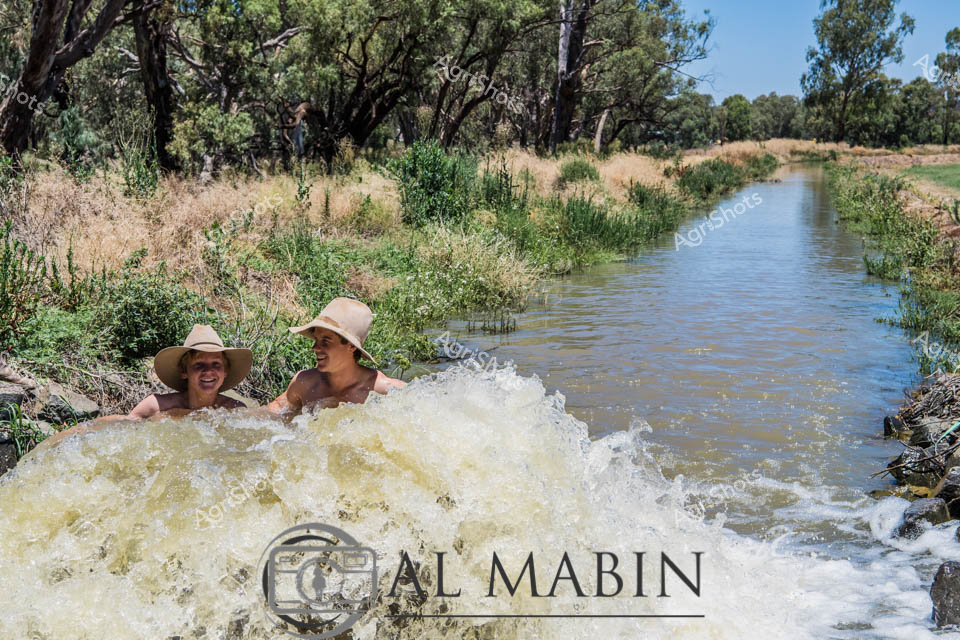
Two agricultural workers seek relief from the summer heat, plunging into a swift-flowing irrigation channel surrounded by sun-drenched grasslands and eucalyptus trees. Wearing wide-brimmed hats for sun protection, they laugh and splash in the murky water, their joy evident against the backdrop of a typical Australian rural landscape. The irrigation channel, vital for crop sustainability in this arid region, cuts a straight line through dense grasses and scattered woodland, highlighting the critical role of water management in agricultural productivity. Dry golden grasses contrast with the vibrant green vegetation near the water's edge, capturing the harsh yet beautiful environment of rural New South Wales. The intense blue sky and brilliant sunlight emphasize the midday heat, while the workers' playful moment provides a human connection to the challenging agricultural landscape. The watermark "AL MABIN" suggests this is a professional agricultural documentary photograph capturing the lived experience of farming communities.
 Image
Image
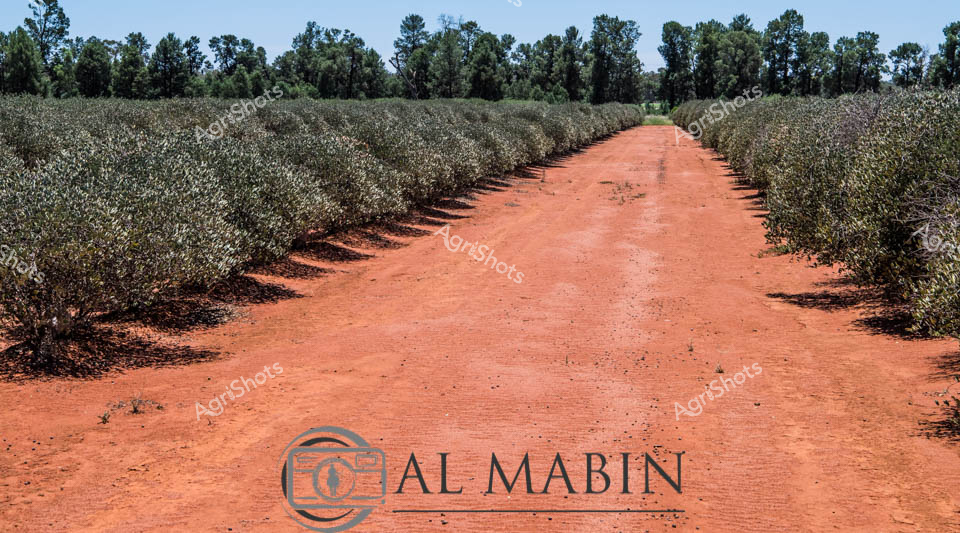
Sun-drenched red earth carves a stark path through dense rows of silvery-green jojoba shrubs, creating a striking agricultural landscape typical of inland New South Wales. The meticulously planted jojoba plantation stretches uniformly on both sides of the rich terracotta-colored dirt road, with mature bushes forming precise, geometric lines against a backdrop of towering eucalyptus and pine trees. This arid-adapted crop, renowned for its drought-resistant qualities and valuable oil production, demonstrates the innovative agricultural practices of Australian farmers adapting to challenging environmental conditions. The vibrant contrast between the rusty red soil and the muted grey-green foliage highlights the resilience of carefully cultivated agricultural systems in semi-arid regions. Al Mabin's watermark, discretely placed, signifies this professional agricultural documentation, capturing the essence of contemporary rural production in the Australian landscape. The image speaks to the precision, patience, and strategic planning required in sustainable crop management, where every row and pathway represents calculated agricultural expertise.
 Image
Image
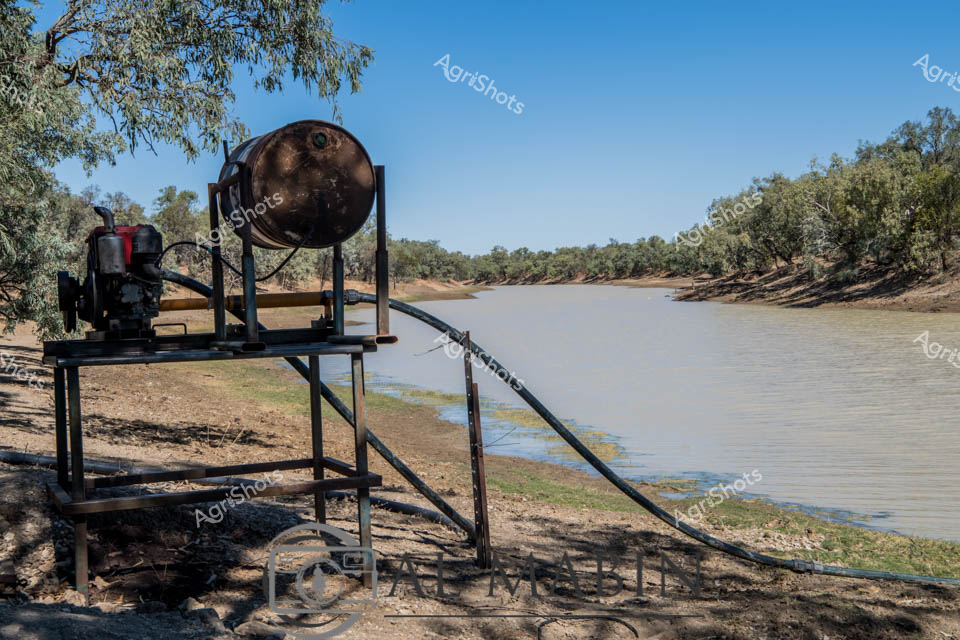
Remote Queensland cattle station waterline pump installation beside a languid river bend. Rugged steel water pump mounted on a robust metal frame, positioned near the banked edge of a muddy inland waterway lined with silvery eucalyptus trees. A large cylindrical water tank sits atop the elevated platform, connected by industrial piping that suggests reliable water extraction for livestock and station operations. The harsh Australian pastoral landscape reveals a dusty foreground transitioning to scrubland and river vegetation, capturing the resilient infrastructure required to sustain agricultural production in challenging arid environments. Weathered equipment and sun-bleached surroundings communicate the unforgiving yet beautiful nature of outback station life, where water management is critical to survival. The clear azure sky and muted earth tones underscore the stark, functional aesthetic of rural infrastructure designed to endure extreme conditions.
 Image
Image
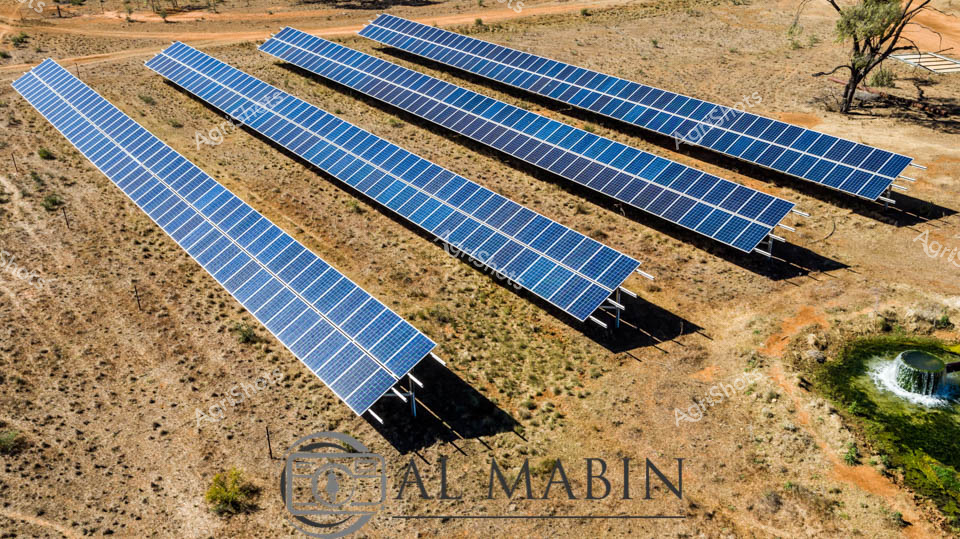
Solar Sanctuary: Arid Innovation Gleaming azure solar panels rise from the rust-red earth of an unforgiving Australian outback landscape, angled precisely to capture the relentless desert sunlight. Six long arrays stand sentinel across a sparse, rocky terrain, their metallic blue surfaces creating a stark geometric contrast against the muted browns and ochres of the surrounding landscape. A small water source - likely a critical bore or irrigation point - bubbles softly in the bottom right, highlighting the precious nature of water and energy in this challenging environment. The Al Mabin watermark suggests this is a carefully documented moment of agricultural technological adaptation, showcasing how remote Australian farmers are embracing renewable energy solutions to power irrigation and farming operations. Sparse vegetation and a lone tree underscore the harsh conditions, while the solar installation represents resilience and forward-thinking agricultural innovation. Each solar panel row is meticulously aligned, their uniform blue panels capturing solar energy that will likely power water pumps, farm infrastructure, or feed into regional electricity grids. This image speaks to the intersection of sustainable technology and traditional agricultural landscapes, a testament to Australian farmers' ability to harness cutting-edge solutions in some of the world's most demanding environments.
 Image
Image
Solar-powered irrigation transforms arid pastoral landscape in central New South Wales, where innovative renewable energy meets agricultural resilience. Sleek, angled solar panels dominate the foreground, their deep blue photovoltaic surfaces catching brilliant sunlight against a stark, golden-brown grassland backdrop. A remarkable water feature emerges dramatically beneath the solar array - a cascading bore water outlet creating a lush green-edged waterfall that tumbles into a circular pool, symbolizing the critical connection between sustainable energy and water management in dryland farming. Sparse, wind-sculpted eucalyptus trees punctuate the horizon, their silvery branches a testament to the harsh environmental conditions these agricultural technologies are designed to overcome. The crisp azure sky and meticulously arranged solar infrastructure represent a progressive approach to agricultural sustainability, where cutting-edge technology harmonizes with the challenging Australian rural environment. This scene encapsulates the ingenuity of modern farming - transforming marginal lands through intelligent use of solar energy and precise water resources.
 Image
Image
A vibrant scene of agricultural infrastructure emerges against a brilliant canola field in full golden bloom across Western Australia's Wheatbelt region. Massive steel grain silos stand sentinel in the background, their metallic grey surfaces contrasting sharply with the brilliant yellow flowering crop surrounding industrial drilling equipment. A water bore drilling rig dominates the foreground, positioned amid the lush canola, representing the critical infrastructure of rural water resource management. Specialized yellow and white machinery - including a front-end loader and specialized drilling vehicle - are strategically positioned around the site, suggesting active groundwater exploration operations. The landscape captures a quintessential moment of agricultural preparedness, where water access and crop potential intersect under a clear, expansive sky. The scene epitomizes the technical resilience and strategic planning integral to Australian agricultural productivity, with sophisticated equipment nestled within the stunning natural beauty of a spring farming landscape.
 Image
Image
A weary station hand pauses mid-task, leaning on a wooden implement under the unforgiving Queensland sun. Clad in a deep blue work shirt and a classic wide-brimmed stockman's hat, the worker catches a moment of respite in a rugged, rocky landscape dotted with sparse trees. The dry, dusty terrain speaks to the harsh conditions of remote Australian pastoral country, where every task requires intense physical labor and resilience. His posture suggests a brief moment of recuperation during what is likely a grueling day of maintenance work on a remote cattle station. The interplay of harsh sunlight and the worker's weathered appearance captures the raw essence of rural Australian agricultural life - a world of endurance, hard work, and connection to the unforgiving landscape. The image embodies the spirit of station hands who keep the agricultural backbone of Queensland running through their daily dedication and strength.
 Image
Image
Rusted irrigation pipeline cascades into a mesmerizing waterfall, transforming the arid landscape of inland New South Wales. The robust metal pipe channels groundwater from a deep bore, creating a spectacular circular overflow that glistens with blue-green intensity against the dry pastoral backdrop. Sparse eucalyptus trees and weathered grasslands frame the scene, capturing the quintessential resilience of Australian agricultural infrastructure. Moss-tinged edges of the water's descent highlight the moisture's precious nature in this sun-bleached environment, where every drop represents survival and productivity. The waterfall's perfect circular shape suggests precision engineering, a testament to sophisticated irrigation technology that sustains agriculture in challenging outback conditions. This image encapsulates the delicate balance between technological intervention and natural landscape, revealing how strategic water management transforms seemingly inhospitable terrain into productive agricultural zones.
Well, you've ploughed through the whole field!
No more crops to harvest here, mate.
Try searching for something else in our library of 50,000+ royalty-free media: