 Video
Video
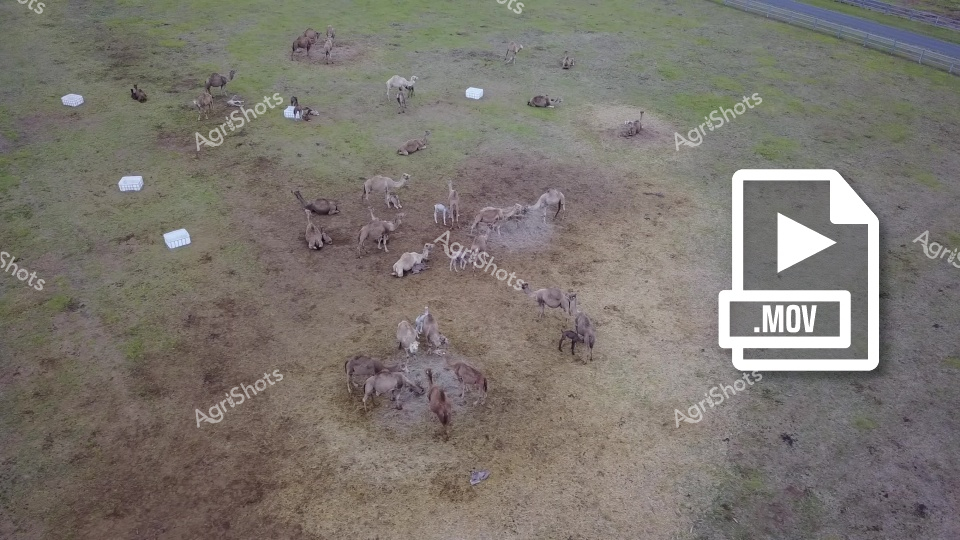
In a wide, open pasture, a diverse herd of cattle grazes contentedly under a mild, overcast sky, showcasing the rich tapestry of Australian livestock. The animals’ coats range from deep brown and black to lighter hues of tan and cream, creating a striking contrast against the pale, earthy ground that bears the marks of recent rains. Patches of lush green grass and scattered hay bales provide nourishment, while the distant sounds of rustling leaves whisper the gentle presence of the breeze. The scene is alive with the tranquil hum of nature, punctuated by the occasional low moo of the cattle, immersed in their grazing patterns. A dirt track runs parallel to the pasture, hinting at the pathway of farm vehicles that might come to assist in the daily activities of the ranch. The atmosphere is one of serene productivity, encapsulating the essence of rural life in Australia. The scattered hay bales, weathered yet functional, reflect the hardworking spirit of the local farming community. This pastoral vista not only emphasizes the beauty of the land but also the harmonious coexistence of livestock and environment.
 Video
Video
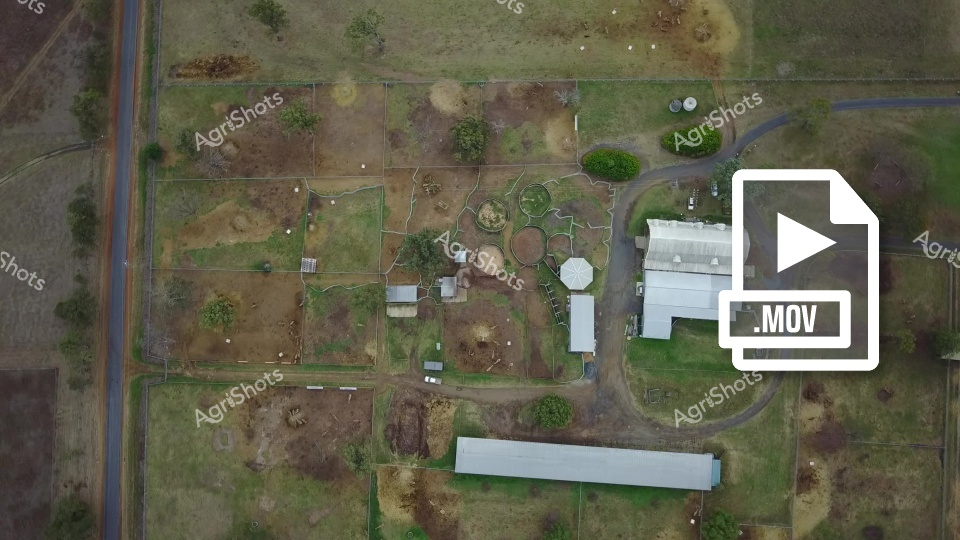
Aerial view of a sprawling rural property showcases the meticulous layout of an Australian farm. The landscape is a patchwork of cultivated plots and grazing areas, accentuated by rich earthy tones and lush greens reflecting the late afternoon sun. The textures of bare soil and neatly arranged rows of crops symbolize the diligent efforts of farmers nurturing the land. Strategically placed structures, including a well-maintained homestead and agricultural sheds, evoke a sense of community and purpose in this vibrant hub of rural life. In one corner, a small herd of cattle grazes, their distinctive markings providing a striking visual contrast against the surrounding fields. The scene resonates with the warmth of a bustling farm day, where every element contributes to a harmonious agricultural atmosphere. Shadowy paths weave through the landscape, indicating the movement of farm equipment or livestock, while the gentle sway of nearby trees hints at a soft breeze, adding to the tranquil yet industrious mood of the farm. This snapshot of agricultural life encapsulates the essence of rural resilience and resourcefulness, marking a significant chapter in the ongoing story of Australian farming.
 Image
Image
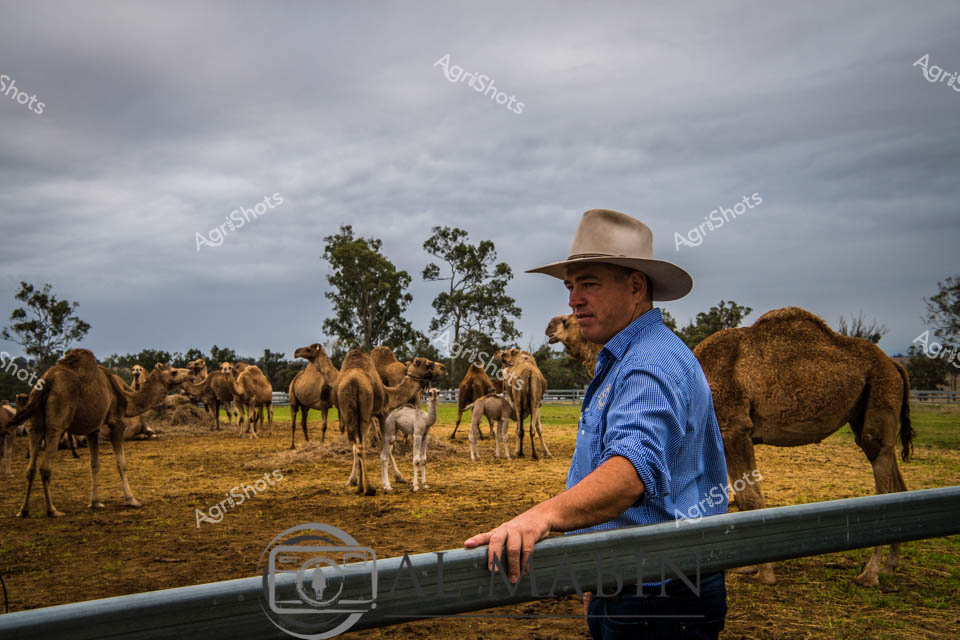
Australian camel dairy: A weathered stockman in a crisp blue checked shirt and classic wide-brimmed cattle hat surveys a small herd of dromedary camels clustered on a golden straw-covered paddock. Overcast grey skies cast a muted light across the rural Queensland landscape, with scattered eucalyptus trees punctuating the distant horizon. The camels - a mix of rich brown and lighter sandy-colored animals - stand quietly, some young calves nestled among the adults, representing an emerging agricultural specialty in the region. The stockman leans casually against a steel livestock fence, his stance suggesting years of patient animal handling and deep agricultural knowledge. This scene captures the innovative spirit of Australian farming, where traditional livestock management meets novel agricultural approaches, showcasing the adaptability and entrepreneurial nature of rural producers exploring alternative dairy and livestock markets.
 Video
Video
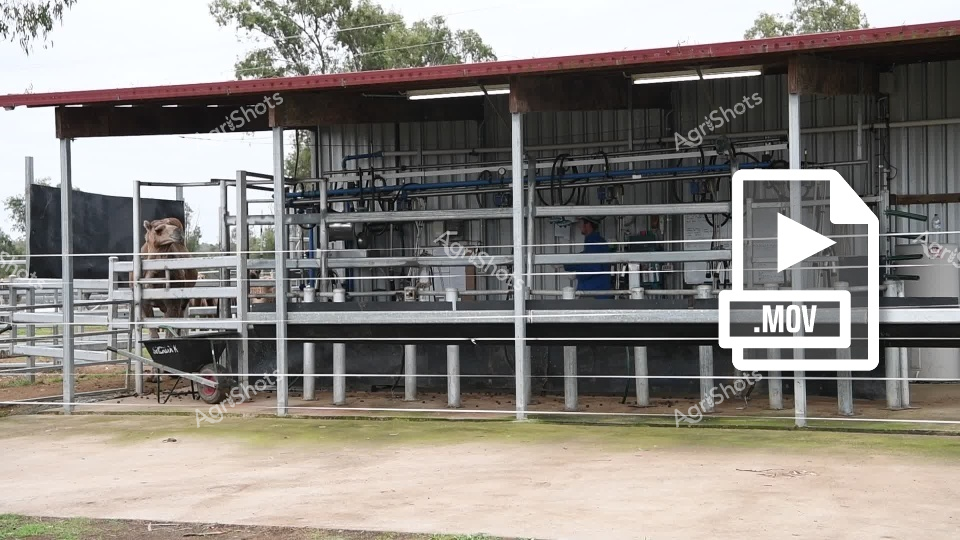
In a bustling dairy operation set against the backdrop of a mild afternoon sun, a modern milking shed stands ready for action. The sleek metallic structure gleams under the warm light, showcasing advanced milking equipment designed for efficiency and comfort. Soft shadows dance across the smooth concrete floor as a dairy cow, marked by its distinctive white patches, gazes curiously from its pen, waiting for its turn. Inside, a dedicated farm worker in a blue jumpsuit prepares for milking, demonstrating the precision and care central to modern dairy farming. The rhythmic sounds of machinery and the gentle lowing of cows create a tranquil yet industrious atmosphere. Vibrant green pastures stretch beyond the milking shed, lush from recent rainfall, while gum trees frame the scene, quintessentially Australian. The air is rich with the earthy scent of hay and the unmistakable essence of farm life. Nearby, subtly branded equipment hints at the long-standing tradition of excellence in dairy farming, capturing the essence of rural community and innovation in agriculture. This scene embodies the harmonious blend of technology and nature, where dedicated individuals work to ensure quality dairy products flow from farm to table.
 Video
Video
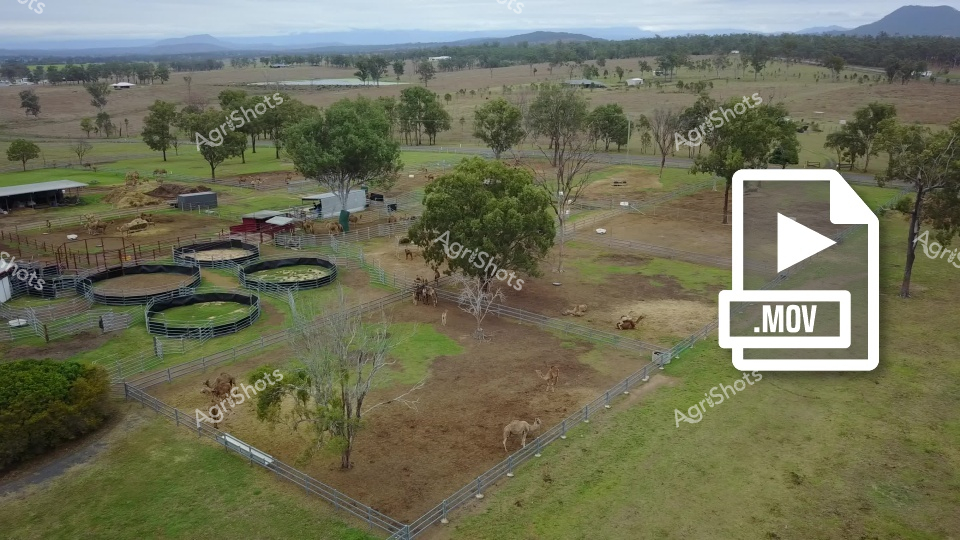
Nestled within the heart of the Australian countryside, a sprawling livestock farm showcases a harmonious blend of earth tones and expansive, open space. The muted grays of a cloudy sky above cast a soft light over the rugged landscape, accentuating the rich browns of the paddocks where grazing cattle roam. Circular cattle pens, constructed of weathered timber and secured with sturdy fencing, form a focal point, while scattered trees provide shade, their leaves whispering in the gentle breeze. As the day unfolds, farm workers clad in practical attire—durable boots, plaid shirts, and wide-brimmed hats—tend to their responsibilities with focused diligence. Cattle, some bearing distinct white patches contrasting their brown coats, mill contentedly around the pens, embodying the essence of rural life. The atmosphere is filled with a sense of purpose and tranquility, reflecting the timeless bond between land, livestock, and those who nurture them. Signs of agricultural life are subtle yet present, hinting at the rich heritage of this farming community without overwhelming the serene landscape.
 Image
Image
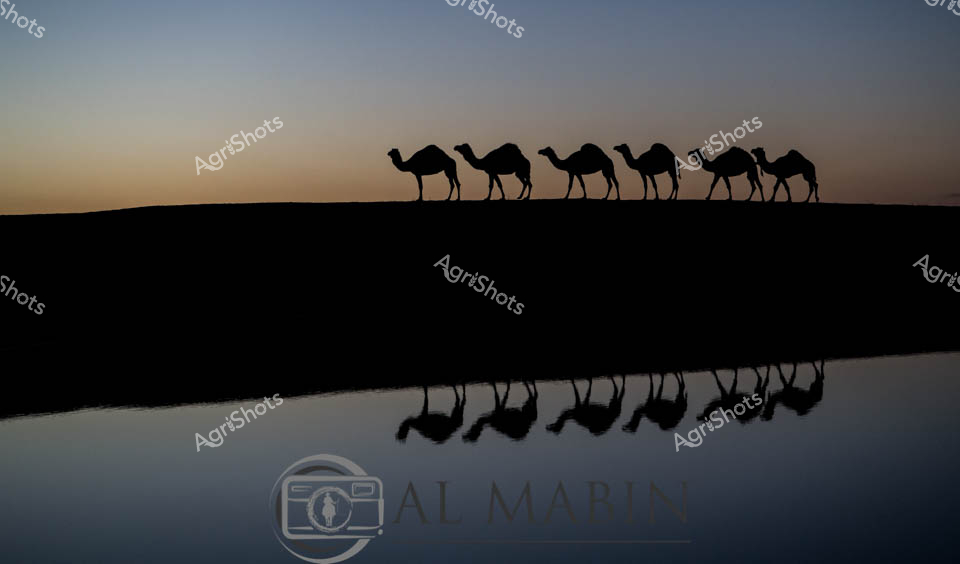
Desert Caravan at Golden Hour A line of graceful dromedary camels traverses a silhouetted horizon, their distinctive humped profiles perfectly aligned against a vibrant amber and gold sunrise. Six camels walk in elegant procession along a dark landmass, their elongated shadows mirrored precisely in the still waters below, creating a mesmerizing symmetrical composition. The scene captures the timeless tranquility of desert transport, evoking ancient trade routes and pastoral landscapes that resonate deeply with agricultural traditions. Rich ochre and deep bronze tones saturate the sky, casting a warm luminescence that transforms the camels into powerful, sculptural forms against the landscape. Each camel moves with measured, rhythmic steps, suggesting a well-practiced journey across arid terrain. The perfect reflection in the foreground water creates a dream-like quality, blurring the boundary between reality and imagination, while the watermark of "Al Mabin" suggests this is a carefully crafted photographic moment capturing the essence of pastoral life.
 Image
Image
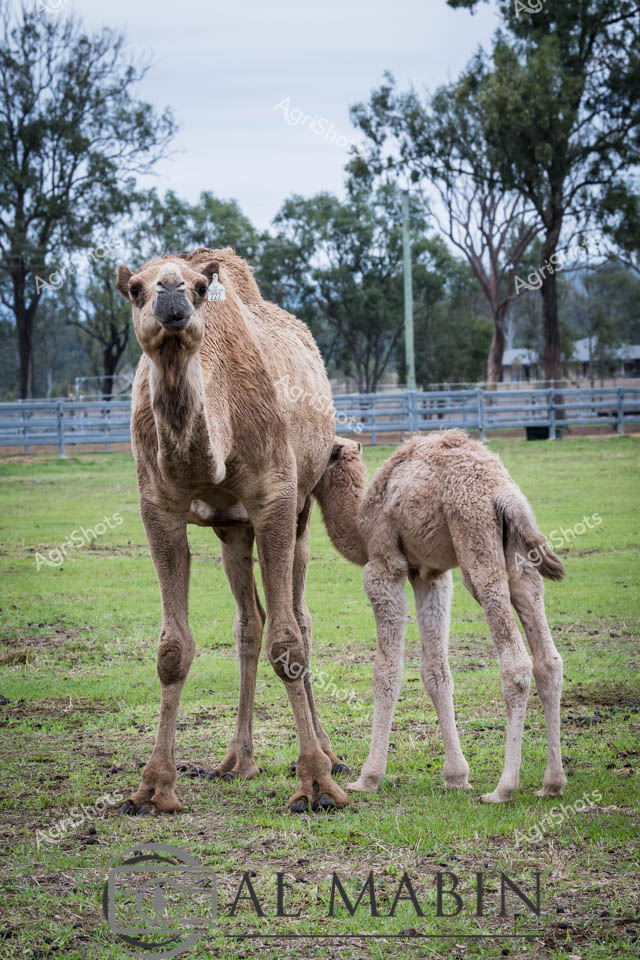
Towering against a misty Queensland pastoral landscape, a majestic dromedary camel and her young calf stand together in a gently fenced paddock surrounded by eucalyptus trees. The adult camel, with her rich tan-colored coat and distinctive sturdy build, dominates the foreground, her lean muscular legs anchoring her solidly on the dampened green pasture. Her younger companion, slightly smaller and with a lighter, more mottled fleece, stands close by - a testament to the strong maternal bonds of these remarkable desert-adapted creatures. The soft grey-green background suggests early morning light, with distant paddock fencing and sparse trees creating a quintessential Australian rural setting that speaks to the diverse agricultural landscapes of Queensland. The camels appear calm and alert, their distinctive facial features and powerful physiques highlighting their adaptation to harsh environments. Their presence in this lush grassland represents the expanding diversity of Australian livestock farming, where traditional and exotic animal breeds contribute to the rich agricultural tapestry of the region. The image captures a moment of quiet connection between mother and offspring, embodying the resilience and gentle nature of these extraordinary animals.
 Image
Image
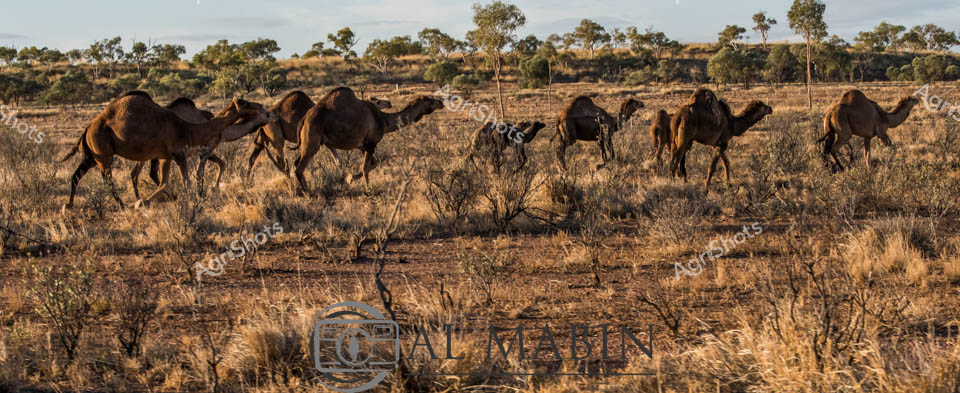
Feral camels roam the vast, arid landscape of a remote Queensland pastoral station, their sandy-brown coats blending seamlessly with the sun-scorched earth and sparse saltbush. Hardy and resilient, these descendants of Afghan camel handlers' imported dromedaries traverse the rocky, undulating terrain with a languid grace, their silhouettes casting long shadows in the golden late afternoon light. Scattered eucalyptus trees punctuate the horizon, providing sparse shade in the unforgiving Australian outback, while dry grasses and low shrubs crackle beneath their padded feet. The herd moves with a collective purpose, each animal maintaining a respectful distance yet moving in loose synchronization across the expansive station country. This scene captures the raw, untamed spirit of Australia's inland territories - a landscape where introduced species have become an integral part of the ecological narrative, roaming freely across thousands of hectares of rugged, unforgiving terrain. The image speaks to the adaptability of both the animals and the landscape, a testament to survival in one of the world's most challenging environments.
 Image
Image
Camel dairy innovation transforms the arid pastoral landscape at this cutting-edge milking facility. A rich brown dromedary camel stands restrained in a precision-engineered steel milking station, her elegant neck arched against the industrial metal framework. Gleaming stainless steel milking equipment and collection vessels indicate a professional, hygienic dairy operation, while the rural Queensland backdrop of distant eucalyptus trees and paddock fencing suggests a progressive agricultural enterprise. The milking platform's robust design allows careful extraction of nutrient-rich camel milk, representing an emerging agricultural sector adapting traditional livestock practices to novel market demands. Soft ambient light filters through the shed's metal roof, casting subtle shadows across the concrete floor and highlighting the camel's warm-toned fur against the cool metallic infrastructure. This scene captures the intersection of traditional pastoral agriculture and contemporary dairy technology, showcasing Australia's innovative approach to diversifying livestock production.
 Image
Image
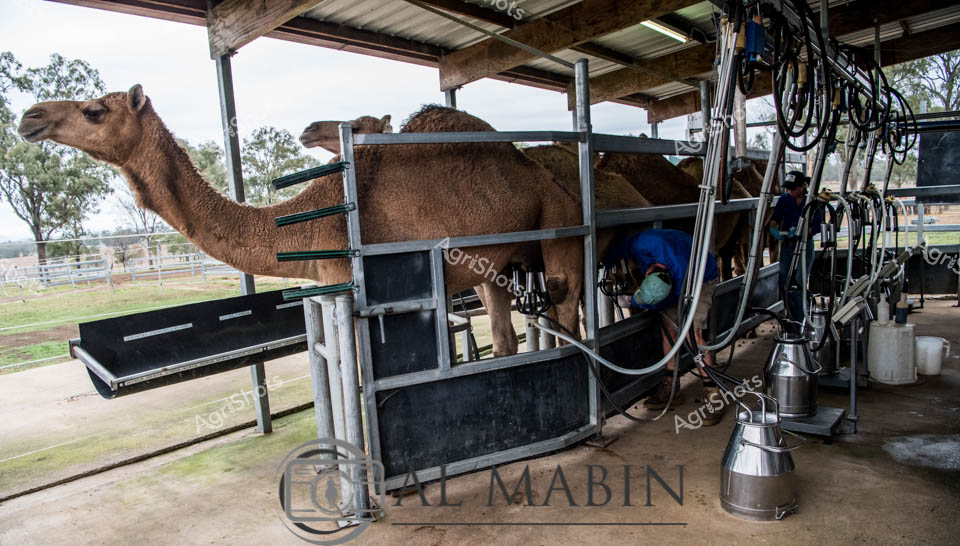
Camel dairy milking platform captures the innovative spirit of Queensland's agricultural frontier. Sturdy metal milking infrastructure restrains three woolly camels, their robust frames filling the robust steel holding pens with earthy brown textures. Precision dairy equipment - gleaming silver milking machines and intricate hanging tubes - stand ready to harvest nutritious camel milk, highlighting the specialized technical infrastructure required for this emerging agricultural sector. Filtered natural light streams through the open-sided milking shed, revealing a rural landscape of scattered gum trees and open paddocks beyond, emphasizing the connection between sophisticated agricultural practice and expansive Australian pastoral settings. The meticulously organized milking station suggests a professional, methodical approach to camel dairy production, representing a cutting-edge segment of Australian agricultural diversification. The Al Mabin watermark indicates this is a professional agricultural documentation, capturing the technical and environmental nuances of contemporary camel milk production in Queensland's innovative farming landscape.
 Image
Image
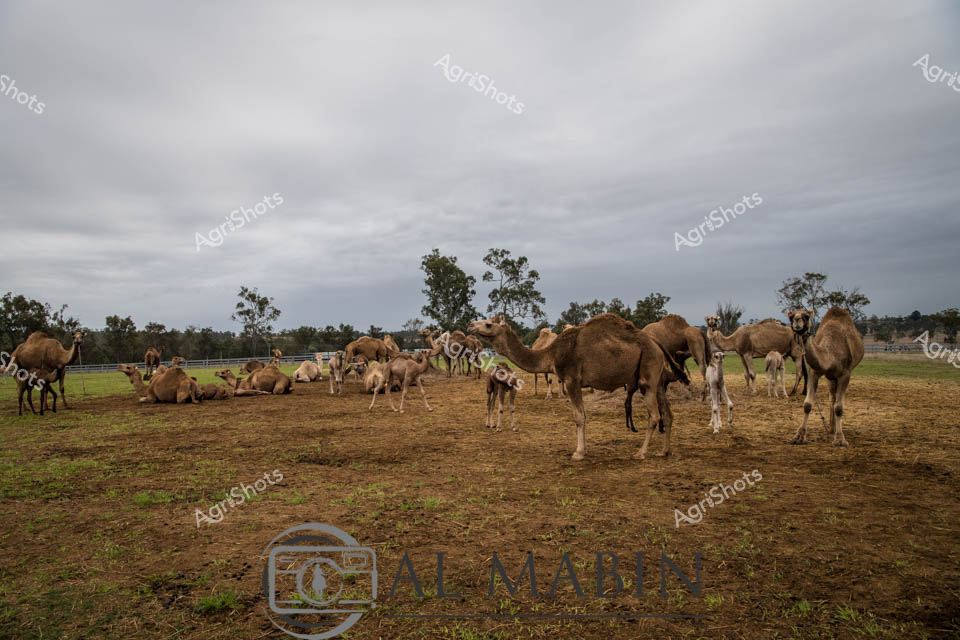
Dromedary camels cluster across a rain-dampened pastoral paddock under a slate-grey Queensland sky. A herd of tawny-brown and beige camels, some standing and others resting, occupy a fenced enclosure with sparse grass and worn earth, surrounded by scattered eucalyptus trees. The landscape suggests early morning or late afternoon, with soft overcast light casting a subdued atmosphere over the agricultural scene. These robust dromedaries, with their distinctive humps and long legs, represent a unique livestock breed increasingly important in Australian agricultural diversification. The watermarked "Al Mabins" branding in the corner hints at a professional agricultural documentation project capturing the nuanced world of alternative livestock farming. The camels display varying postures - some alert and standing, others settled comfortably on the ground - indicating a calm, managed herd environment typical of professional pastoral management in regional Queensland.
 Image
Image
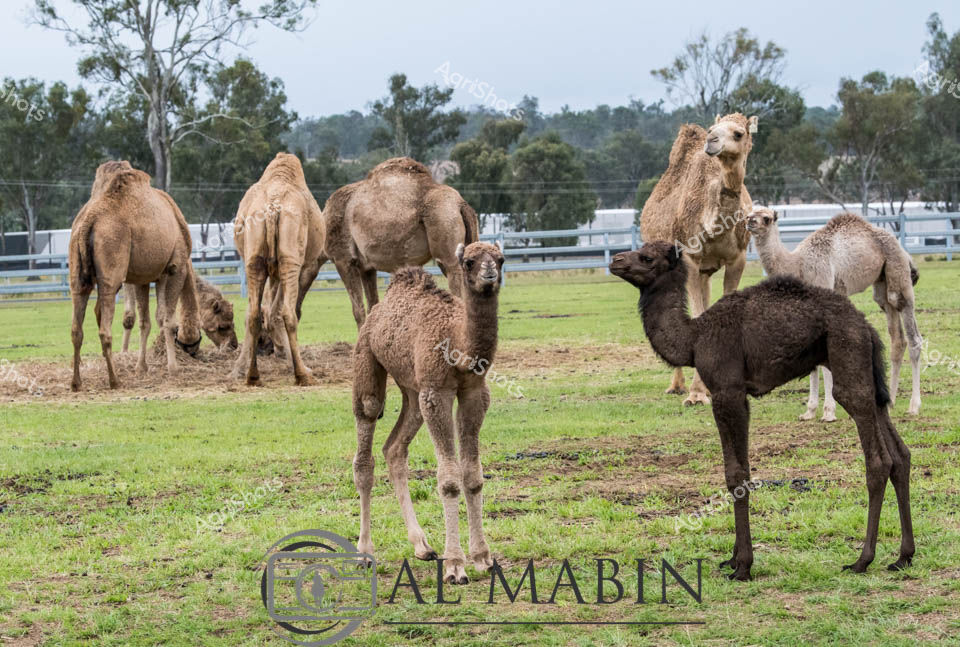
Australian Dromedary Camel Herd at Pastoral Station A diverse group of dromedary camels occupies a verdant paddock, showcasing the robust genetic diversity of this introduced livestock species in the Australian agricultural landscape. Rich caramel, chocolate, and ash-gray coat colors mark these resilient animals, ranging from young calves to mature adults, standing against a softly textured grassland with eucalyptus woodland in the background. Multiple generations cluster together, demonstrating the herd's social structure, with gangly younger camels positioned near more substantial adult specimens. The fenced pastoral setting suggests a managed breeding program, typical of Queensland's expansive agricultural enterprises that have successfully integrated these Middle Eastern imports into broad-acre farming systems. Ranging in age and coloration, the camels display characteristic long legs, pronounced humps, and alert expressions, embodying the adaptability that has made them valuable assets in Australia's challenging inland territories. The watermarked image, credited to Gal Mabin, captures the nuanced beauty of these remarkable introduced livestock against a quintessential Australian rural backdrop.
 Image
Image
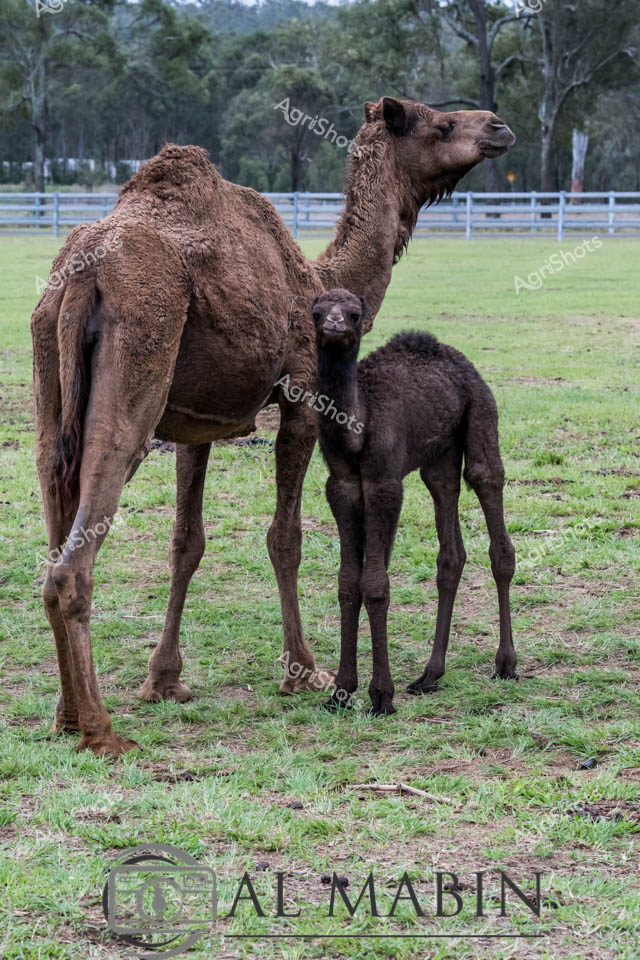
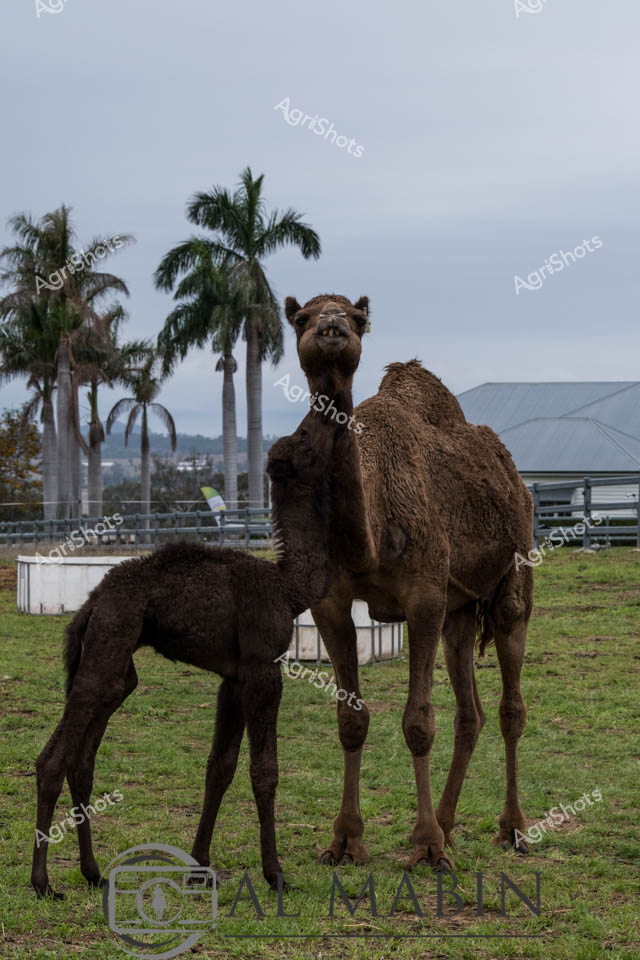
Dromedary camels stand quietly in a verdant paddock, a mature female and her dark-coated young calf nestled together beneath overcast Queensland skies. The adult camel's rich brown fleece contrasts beautifully with the soft green pasture, surrounded by a white post-and-rail fence and distant eucalyptus trees typical of rural Australian landscapes. Muscular and serene, the mother camel towers protectively over her younger companion, her long neck arched with a sense of calm vigilance. The calf, still developing its full coat, displays the gangly proportions of youth, its legs slender and uncertain against the textured ground. This scene captures the quiet intimacy of pastoral animal husbandry, highlighting the specialized agricultural diversity of Queensland's livestock breeding programs. The watermarked image, attributed to Al Mabin, speaks to the professional documentation of Australia's unique agricultural heritage, showcasing the robust and adaptable nature of dromedary camels in managed pastoral environments.
 Image
Image
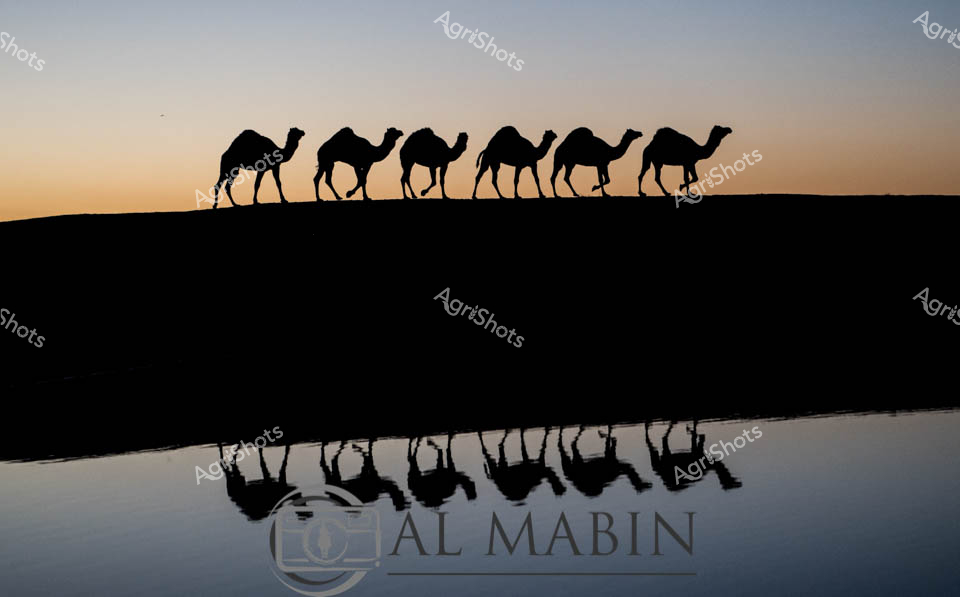
Desert Drovers at Dawn: A mesmerizing silhouette of six camels traversing a stark horizon, their distinctive humped profiles perfectly aligned against a gradient sunrise sky transitioning from pale gold to soft blue. The animals cast long, mirror-like reflections in the still water below, creating a symmetrical composition that captures the timeless rhythm of desert transport and pastoral movement. These resilient dromedary camels, essential livestock in arid agricultural landscapes, stand in quiet solidarity, representing centuries of survival and transportation across challenging terrain. The crisp, clean lines of their forms contrast beautifully with the luminous background, suggesting early morning movement—perhaps preparing for a day of herding, trading, or traversing remote pastoral regions. The image evokes a sense of serene endurance, highlighting the critical role of these animals in agricultural communities where traditional livestock management remains integral to survival. The watermark "AL MABIN" suggests this powerful scene was captured by a skilled agricultural photographer documenting the nuanced beauty of livestock and landscape.
 Image
Image
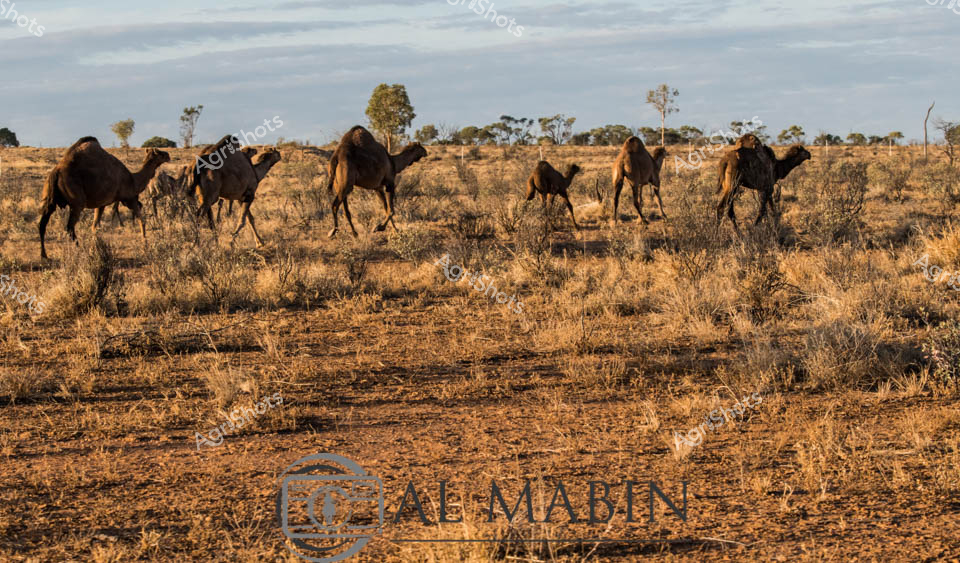
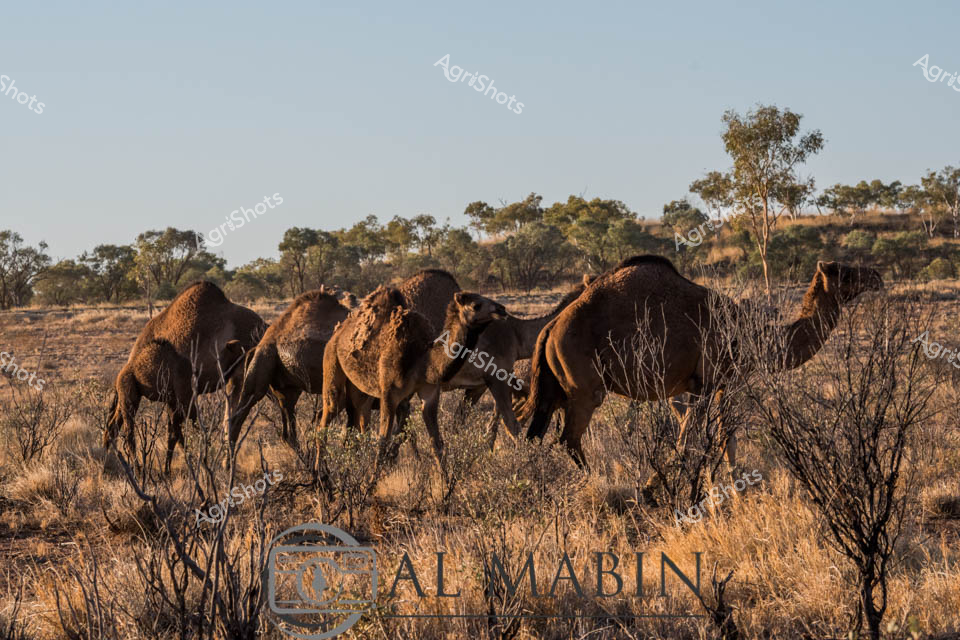
Feral camels roam the arid landscape of a remote Queensland cattle station, their rich brown coats blending with the sun-scorched golden grasslands and scattered scrub. The herd moves with a deliberate, unhurried gait across the dusty terrain, silhouetted against a pale, overcast sky that stretches endlessly across the horizon. These resilient dromedary camels, descendants of imported working animals from the 19th century, now form significant wild populations across Australia's interior, representing a unique aspect of the continent's agricultural and ecological history. Sparse eucalyptus trees punctuate the background, their weathered forms a testament to the harsh environmental conditions of the outback. The Al Maben watermark in the foreground hints at the professional documentation of this quintessential Australian pastoral scene, capturing the intersection of introduced species and challenging landscape that defines much of the continent's agricultural narrative. The muted earth tones and expansive landscape speak to the raw beauty and endurance of Australia's agricultural environments.
 Image
Image
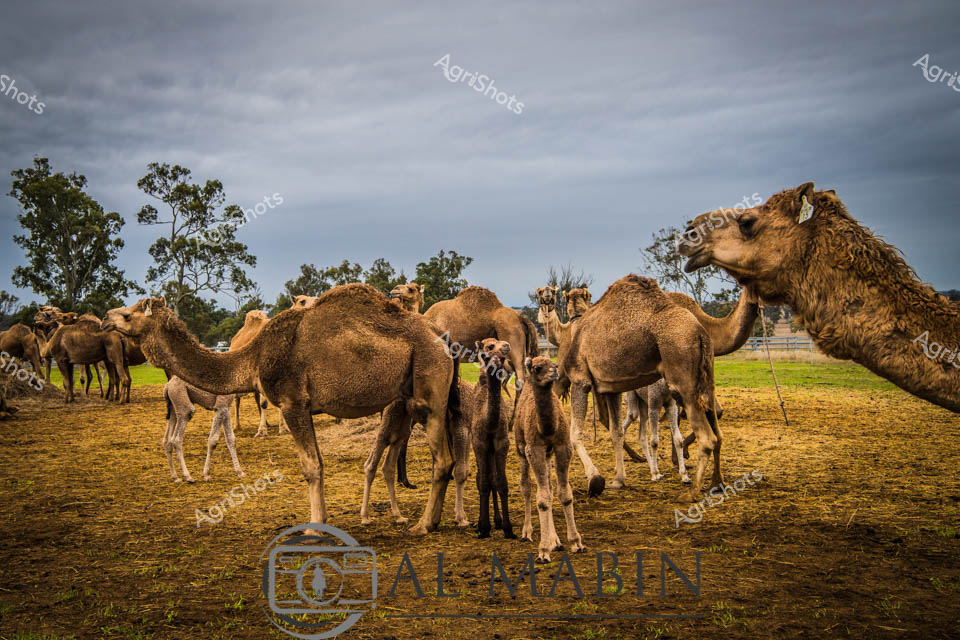
A herd of dromedary camels clusters in a verdant pastoral landscape under brooding, steel-grey skies. Mature camels with rich, textured brown coats stand alongside several younger calves, their lanky legs contrasting with the soft golden grassland. The scene captures the robust vitality of camel farming in Queensland, where these resilient animals thrive in agricultural settings far from their traditional desert habitats. Soft green paddock grasses provide a vibrant counterpoint to the camels' earthy brown tones, while scattered eucalyptus trees frame the background, suggesting a typical Australian rural environment. Several calves huddle close to their mothers, displaying the herd's tight social structure and nurturing dynamics. The overcast sky lends a moody, atmospheric quality to the image, highlighting the rugged endurance of these remarkable livestock in the challenging Australian agricultural landscape.
 Image
Image
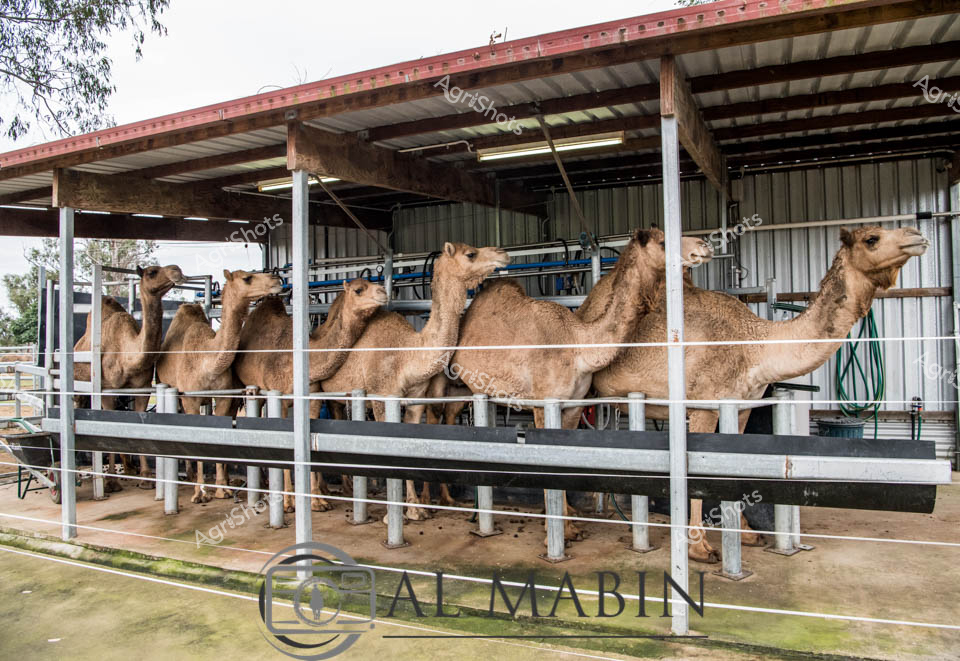
Camel dairy in Queensland: a precision-engineered milking shed hosts a line of sandy-beige dromedary camels, standing perfectly aligned along a steel railings system. Stainless steel infrastructure and corrugated metal sheeting create a clinical, industrial environment for this specialized agricultural operation. Each camel stands patient and steady, their elegant long necks arched and heads held high, reflecting the disciplined nature of modern pastoral production. Filtered natural light streams through the open-sided shelter, highlighting the animals' rich tan-colored coats and muscular physiques. The facility appears meticulously maintained, with clean concrete flooring and carefully positioned equipment suggesting a high-tech approach to camel milk production. This image captures the intersection of traditional pastoral animal husbandry and contemporary agricultural innovation, revealing Australia's diverse and adaptive farming practices.
 Image
Image
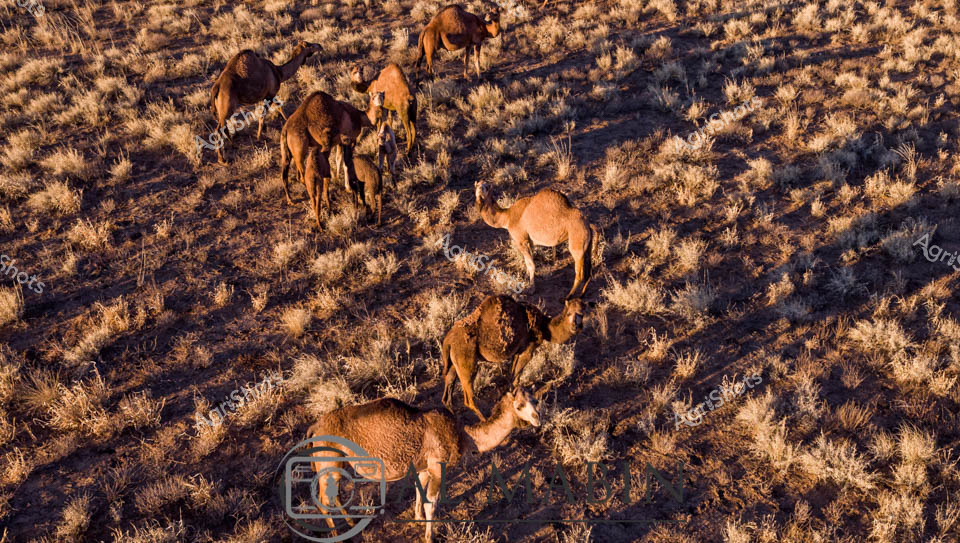
Golden light bathes a mob of camels grazing across the sun-scorched Mitchell grasslands of an expansive Queensland pastoral station. The golden-brown camels blend seamlessly with the dry scrubland, their lean bodies casting long shadows across the sparse, tussocked landscape during the golden hour of early morning or late afternoon. Each camel moves independently yet collectively, browsing the sparse vegetation with practiced efficiency, demonstrating the remarkable adaptation of these introduced desert specialists to Australia's arid interior. Their varied shades of tan, russet, and burnished copper reflect the intense warmth of the landscape, highlighting the resilience of both animal and environment in this unforgiving terrain. The aerial perspective reveals the rhythmic scatter of the herd, moving with a deliberate and unhurried grace across the undulating ground, embodying the timeless relationship between livestock and the vast Australian rangelands. This scene captures the raw beauty of pastoral Australia - a landscape where survival is an art form, and where introduced species like camels have become an integral part of the continental ecosystem.
 Image
Image
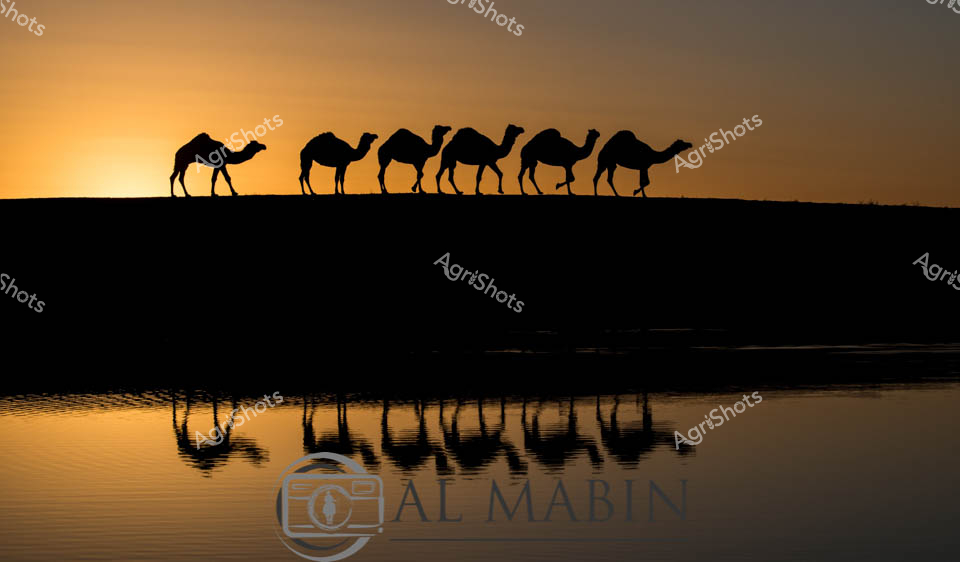
Desert Caravan at Golden Hour: A stunning silhouette of six camels traversing a narrow land bridge, perfectly reflected in the still water below during a breathtaking sunrise. The soft golden light bathes the scene in warm amber tones, creating a mesmerizing symmetry between the animals' profiles and their mirrored images. Each camel stands with distinctive dromedary humps, revealing their traditional role as transport and trade companions across arid landscapes. The precision of their alignment suggests a well-practiced caravan, moving with disciplined coordination across the tranquil horizon. Captured with exceptional clarity, the image evokes the timeless rhythm of desert travel, where landscape and animal move in harmonious silent communication. The watermark of "Al Mabin" suggests this is a carefully crafted photographic moment, celebrating the iconic connection between livestock and landscape in challenging environmental conditions.
 Image
Image
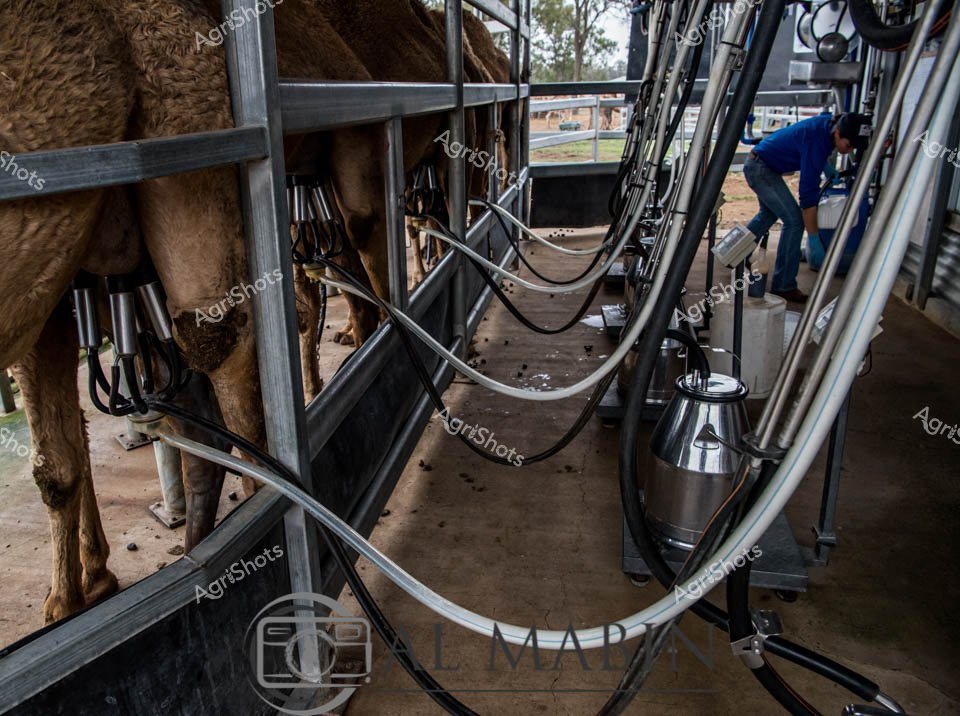
In the heart of a Queensland dairy shed, a gleaming milking station stands ready with its intricate network of stainless steel pipes and mechanical milking clusters. A dairy cow is secured within a precisely engineered metal framework, her rich brown coat contrasting against the cool industrial infrastructure of modern agricultural technology. Silver milk collection containers hang strategically, connected by curved tubes that form an elegant mechanical choreography around the animal's udders. In the background, a farm worker in a blue shirt moves with practiced efficiency, engaged in the rhythmic routine of morning milking. The concrete floor bears subtle traces of the day's work - small droplets and scattered debris - while natural light filters through, revealing the crisp, functional design of this contemporary dairy infrastructure. This scene captures the precise intersection of animal husbandry and technological precision, where generations of farming knowledge merge with cutting-edge equipment to produce Australia's essential dairy products.
 Image
Image
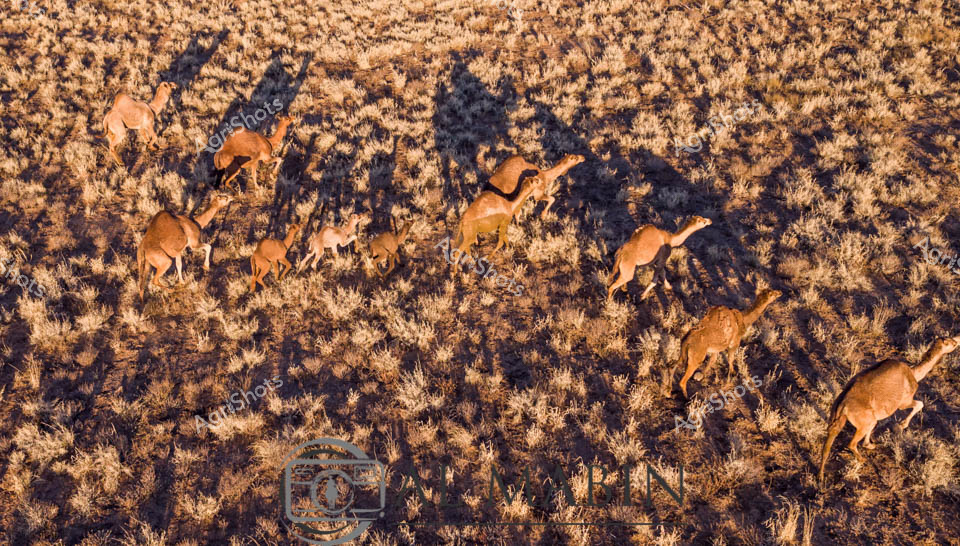
Burnished bronze bodies against weathered saltbush, a mob of feral camels traverses the arid inland landscape at dawn. Aerial perspective reveals their sinuous movement across the mottled golden-brown scrubland, casting long shadows in the early morning light. Each camel moves with purposeful stride, their lean frames adapted perfectly to this harsh desert terrain typical of Queensland's expansive pastoral regions. The herd's uniform tan coloration blends seamlessly with the sun-bleached vegetation, a masterful camouflage evolved through generations of survival in Australia's unforgiving interior. Intricate textural details emerge - the sparse, twisted shrubs creating a complex tapestry beneath the moving animals, their shadows elongating and shifting with each deliberate step. This striking composition captures the raw beauty of Australia's remote pastoral ecosystems, where introduced species like camels have become an integral part of the landscape, embodying the resilience and adaptability characteristic of the continent's wildlife and agricultural heritage.
 Image
Image
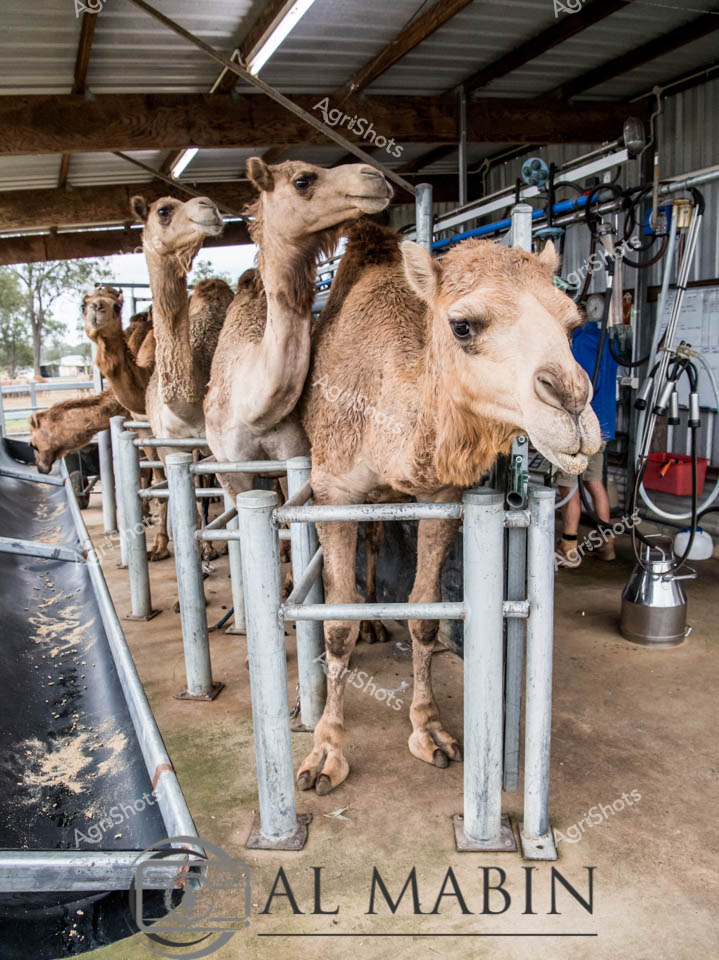
Al Mabin's compelling agricultural portrait captures the unexpected – a line of camels precisely positioned in a Queensland dairy milking shed, their sandy-colored coats contrasting against gleaming metal infrastructure. These dromedary dairy animals stand patient and upright within steel restraining frames, their long necks arched and heads held alertly, revealing the sophisticated livestock management techniques emerging in Australia's diversifying agricultural landscape. Specialized milking equipment stands ready, suggesting a professional operation that challenges traditional perceptions of milk production. Soft ambient light filters through the metal-clad shed, highlighting the camels' textured fur and muscular frames, while the orderly arrangement speaks to meticulous animal handling and innovative farming practices. The watermarked "AgriShots" branding and "Al Mabin" signature underscore this as a professionally documented moment of agricultural innovation, showcasing how Australian farmers are exploring alternative livestock breeds and dairy production methods. This image transforms an industrial setting into a testament of agricultural adaptation, where traditional dairy practices meet unconventional livestock solutions.
 Image
Image
Dromedary camels stand resolute on a misty Queensland pasture, their rich brown coats textured like weathered leather against the soft green grass. A mature camel towers protectively beside her dark-coated young calf, both positioned near a rural dairy infrastructure with elegant palm trees punctuating the overcast background. The adult camel's distinctive humped silhouette and alert posture suggest a sense of calm vigilance, while the younger animal's slender frame indicates recent birth and early development. Soft grey light diffuses across the landscape, creating a muted palette that highlights the animals' robust forms and the agricultural setting's tranquil atmosphere. Industrial agricultural elements - a glimpse of a shed, fencing, and water infrastructure - frame the scene, suggesting these dromedaries are part of a carefully managed livestock operation. The watermarked image captures a moment of quiet connection between mother and offspring, embodying the subtle rhythms of pastoral agricultural life in tropical Queensland.
 Image
Image
A mesmerizing silhouette of dromedary camels traverses a stark horizon at dawn, their iconic humped profiles perfectly mirrored in the still waters below. Six camels stand in precise formation, creating a symmetrical composition that speaks to the disciplined movement of livestock across arid Australian landscapes. The gradient sky transitions from deep midnight blues to warm amber tones, signaling the early morning light characteristic of outback regions like New South Wales. This ethereal scene captures the timeless relationship between desert-adapted animals and the harsh, beautiful environments they inhabit. The camels' silhouettes are crisp and defined, highlighting their muscular frames and distinctive shapes against the luminous background. The perfect reflection creates an almost dreamlike quality, transforming a simple livestock movement into a powerful artistic statement about the resilience and grace of agricultural life in challenging terrains.
 Video
Video
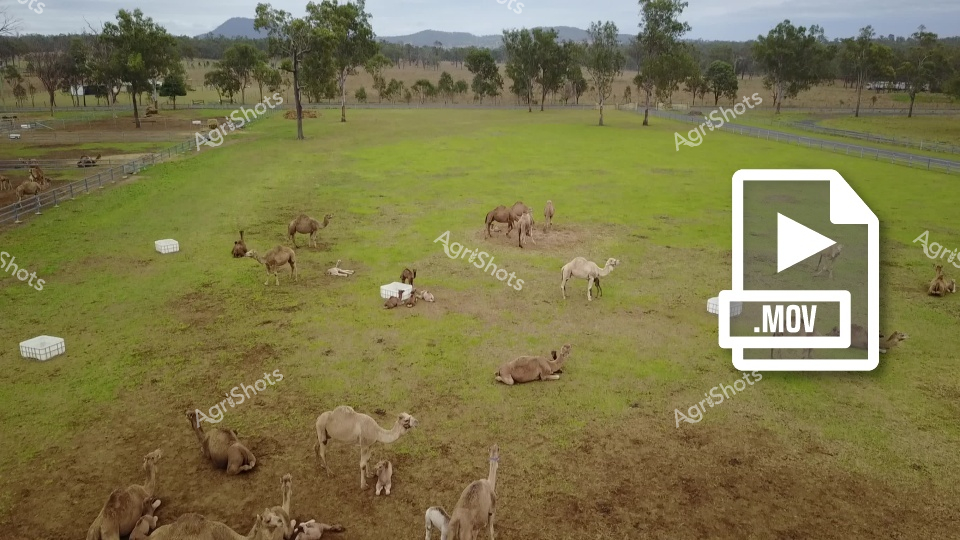
A sprawling expanse of lush green pasture stretches across a tranquil Australian landscape, dotted with groups of grazing camels. The gentle rolling hills in the background, capped with soft mist, breathe a serene atmosphere into the scene. Overcast skies cast a diffused light, providing a muted color palette that highlights the sandy beige of the camels’ coats against the vibrant green grass. Farmers in sturdy work boots and faded denim jeans navigate the space, tending to the camels with care and purpose. Their light-coloured shirts contrast sharply with the verdant surroundings, embodying the hardworking spirit of rural life. The camels, both standing and reclining, display a variety of unique markings, adding visual interest to the tranquil scene. This moment captures an important aspect of Australian livestock farming, showcasing the serene coexistence of people and animals in a picturesque rural setting. The overall mood is one of calm and diligence, where the timeless relationship between farmer and livestock underscores the agricultural vibrancy of the region. Nearby, weathered fencing and hay bales punctuate the pasture, embellishing the scene with rustic charm.
 Image
Image
Wild camels roam the sun-drenched arid landscape of a Queensland pastoral station, their rich mahogany and chestnut-colored hides blending seamlessly with the golden grasslands and sparse eucalyptus woodland. The harsh, drought-hardened terrain stretches beneath a pale blue morning sky, capturing these feral dromedaries in their natural Australian outback environment. Muscular and hardy, the small herd moves with a deliberate, unhurried gait through the sparse scrubland, their distinctive humps silhouetted against the sparse vegetation and rocky ground. Each camel displays the robust adaptation that has enabled these introduced species to thrive in Australia's challenging central desert regions, where they have become a significant feral population. The warm, amber-toned light accentuates their textured coats and powerful physiques, highlighting the rugged beauty of these remarkable animals that have become an unexpected part of Australia's agricultural and ecological landscape. The scene embodies the raw, unforgiving nature of the continent's interior, where survival requires resilience and strength.
 Image
Image
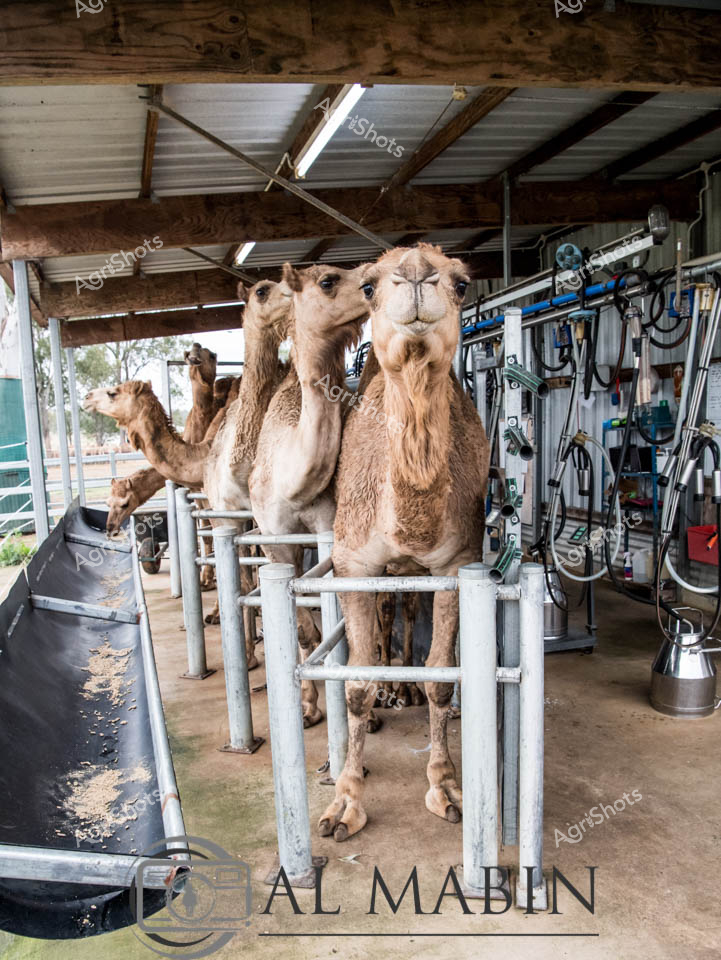
Dromedary camels stand patient and alert in a precision-engineered milking shed, their sandy-hued coats contrasting against gleaming stainless steel dairy equipment. Restrained by white metal gates, these remarkable animals demonstrate Australia's innovative agricultural diversification, representing a growing camel dairy sector pioneering unique milk production in arid landscapes. Robust metal milking infrastructure frames the scene, with industrial lighting casting crisp shadows across the concrete floor, revealing scattered feed and sophisticated mechanical milking apparatus. The camels' distinctive humps and serene expressions communicate a sense of calm professionalism, embodying the sophisticated agricultural techniques transforming traditional pastoral practices. Sophisticated climate-controlled infrastructure suggests this is a professional Queensland operation, likely situated in a semi-arid region where camels represent an increasingly valuable agricultural resource. The Al Mabin watermark - signaling professional agricultural photography - anchors the bottom of this compelling portrait of contemporary Australian agricultural innovation.
 Video
Video
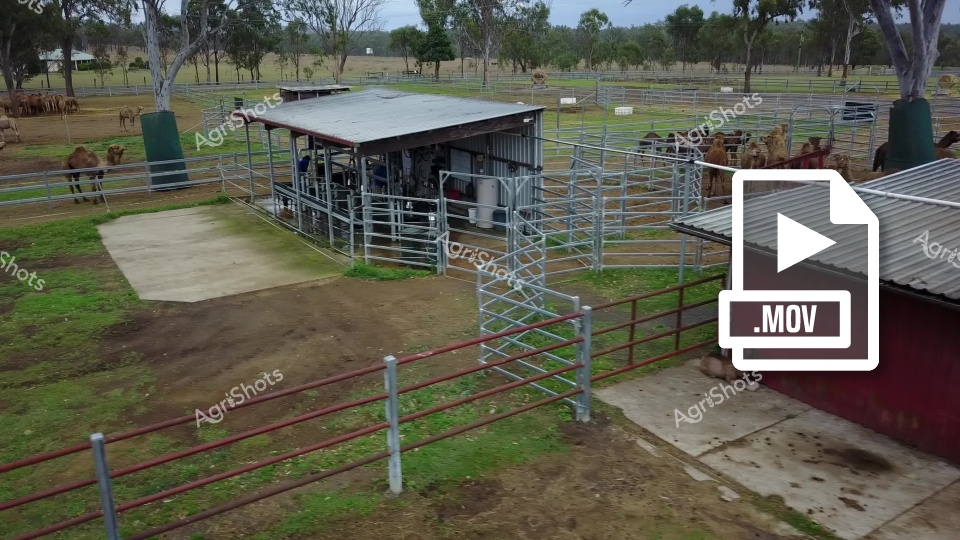
A well-organized cattle yard features robust steel pens and a modern cattle crush, poised for an efficient livestock handling session. The setting is rugged yet functional, with dirt underfoot and a sturdy shelter that protects workers from the overcast sky, hinting at possible rain. This rural scene captures the essence of Australian pastoral life, where seasoned farmhands, dressed in practical work attire and sturdy boots, diligently manage the cattle as they move calmly through the yard. Strong, earthy colors dominate the scene—deep browns of the ground contrast with the metallic greys of the equipment and the muted greens of the surrounding trees, which provide a natural atmosphere. The subdued mood reflects the seriousness of livestock management, yet the air carries a subtle buzz of activity as cattle shuffle in the pens, showcasing their shiny, well-groomed coats. Fencing lines provide structure to the area, with a red barn in the background enhancing the rustic charm of the farm, a symbol of resilience in Australia's agricultural practices. This environment exemplifies the harmony between traditional methods and modern equipment, emphasizing the pride and dedication of those who work tirelessly within the agricultural sector.
 Image
Image
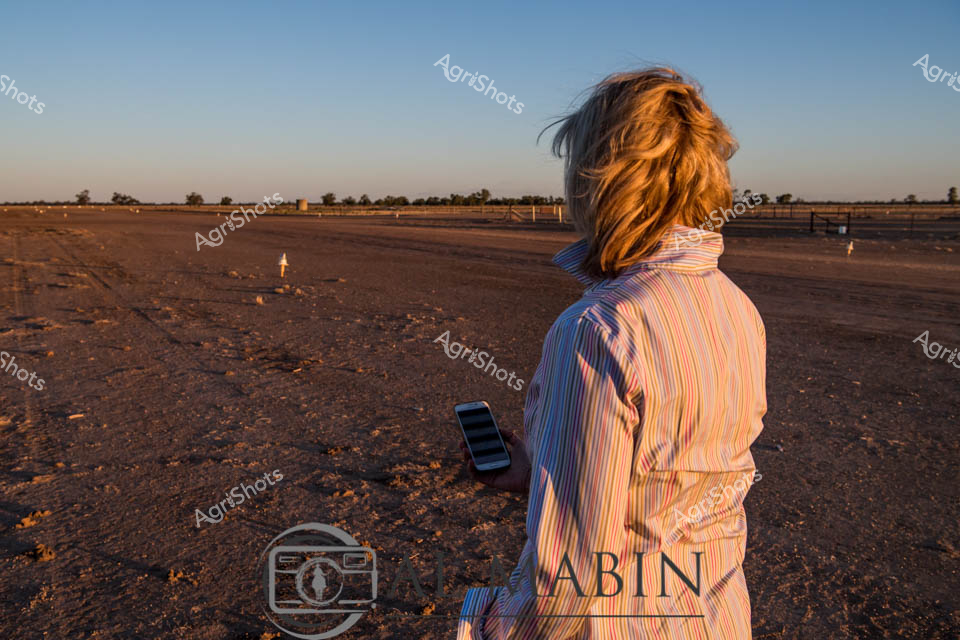
Golden dawn breaks over a parched western New South Wales paddock, casting warm amber light across cracked earth and distant fence lines. A rural worker stands in a striped pastel shirt, hair catching the first rays of sunrise, holding a mobile phone as she surveys the arid landscape. The dusty ground stretches toward a flat horizon punctuated by sparse trees and livestock infrastructure, suggesting this is a challenging agricultural terrain typical of Australia's inland regions. Soft morning light transforms the harsh terrain, highlighting textures of weathered soil and creating a contemplative atmosphere of quiet determination. The scene captures the solitary essence of agricultural work - a moment of connection between human and landscape, technology and traditional farming environment. The image speaks to the resilience of rural workers navigating technological and environmental challenges in one of Australia's most unforgiving agricultural zones.
 Video
Video
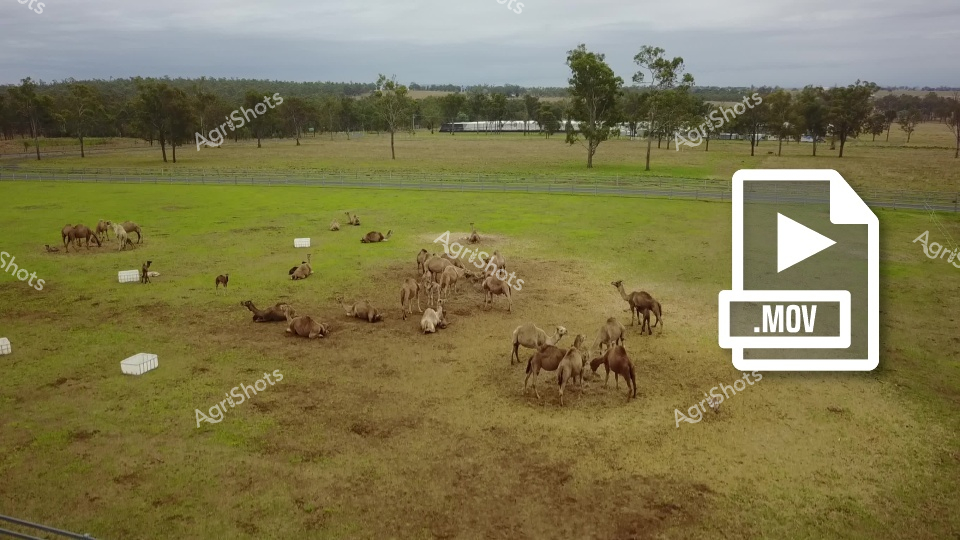
A serene morning unfolds over a sprawling pastoral landscape where a herd of Australian camels grazes peacefully on the verdant grasslands. The muted hues of early dawn cast a gentle, diffused light, accentuating the subtle browns and tans of the camels' coats as they mingle in a relaxed group. Distant gum trees frame the backdrop, their leaves softly rustling in a light breeze, enhancing the tranquil atmosphere of the rural setting. Near the herd, scattered feeding troughs provide nutritious sustenance, their white plastic contrasting sharply with the rich green of the grass and earthy tones of the camels. The scene evokes a sense of calm and order in nature, beautifully highlighting the unique role of these remarkable animals within the Australian agricultural landscape. Soft, overcast skies suggest the promise of a mild day ahead, contributing to the overall mood of quietude and harmony in this rural tableau. The visual dynamics of the landscape, coupled with the expressive postures of the camels, reflect the seamless blend of agriculture and wildlife, showcasing Australia’s diverse farming practices.
 Image
Image
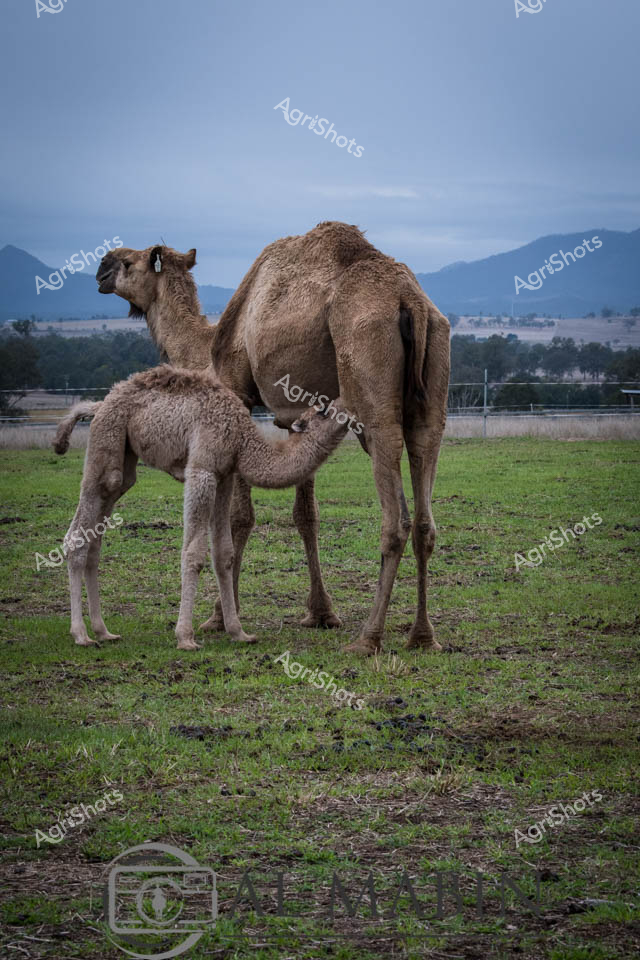
Bathed in the soft, misty light of an early morning, a tender moment unfolds between a dromedary camel and her young calf in a lush Queensland pasture. The mature camel stands stoically, her rich tan-brown fur textured and thick, while her offspring nestles close, nursing with the innocent dependency of youth. Mountain ranges blur softly in the background, creating a muted blue-grey horizon that frames the pastoral scene, highlighting the verdant green grasslands where the pair graze. The baby camel, slightly lighter in coloration, displays the gangly proportions of youth, its legs still gaining strength and coordination. This intimate portrait captures the nurturing bond between mother and offspring, a universal narrative of care and sustenance played out against the quintessential Australian rural landscape. The fence line and distant agricultural infrastructure suggest this is a managed agricultural environment, likely a specialized camel dairy or research facility exploring alternative livestock breeding. The image embodies the quiet resilience of Australian agricultural practices, showcasing how diverse livestock can thrive in challenging environments, with the misty mountains and green pastures serving as a testament to the adaptability of both animal and landscape.
 Video
Video
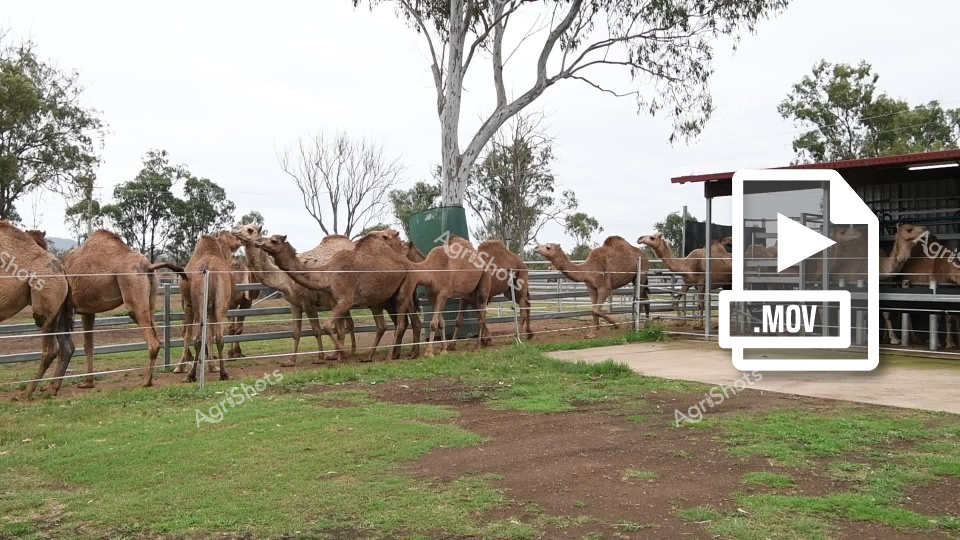
A striking scene unfolds at a bustling stockyard where a herd of camels, representing unique Australian livestock, stands gracefully within a fenced area. Their light beige and sandy-colored coats complement the earthy tones of the surrounding landscape, enhanced by the stark green of eucalyptus trees that sway gently in the mild afternoon breeze. An overcast sky blankets the scene, casting a soft light that accentuates the camels' distinctive personality and features, from their expressive eyes to their gentle demeanor. Farm workers in practical, earth-toned clothing stand nearby, engaged in monitoring the animals, emphasizing the strong human-animal connection that is central to rural life. The sturdy wooden fencing and a nearby shelter contribute to the community atmosphere, hinting at the importance of livestock management in Australian agriculture. The overall mood is calm yet industrious, with a sense of patience and care permeating the air as these resilient creatures await their next journey, embodying the heart of rural livestock farming in Australia.
 Image
Image
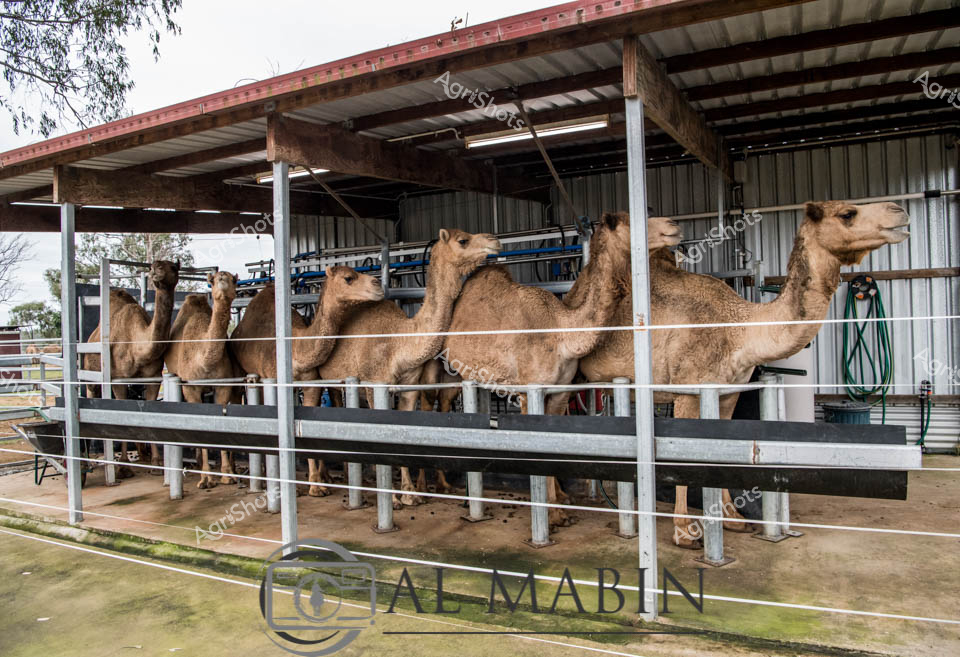
Dromedary camels stand in neat alignment within a robust metal-framed milking shed, their sandy-tan coats contrasting against the cool industrial grey of the steel infrastructure. Precision-engineered railings and platforms demonstrate a sophisticated approach to camel dairy production, revealing Australia's innovative agricultural techniques. The shed's corrugated iron roof provides shelter from the harsh regional climate, while strategic lighting and metal framework suggest a modern, efficient operation. Each camel appears calm and professionally positioned, indicating careful livestock management and training. A green hose hangs nearby, hinting at the systematic cleaning and maintenance protocols essential in contemporary agricultural facilities. The watermarked "Al Mabin" branding signals this as a professional documentation of emerging agricultural diversification, capturing the intersection of traditional livestock farming and cutting-edge production methods in regional Queensland.
 Video
Video
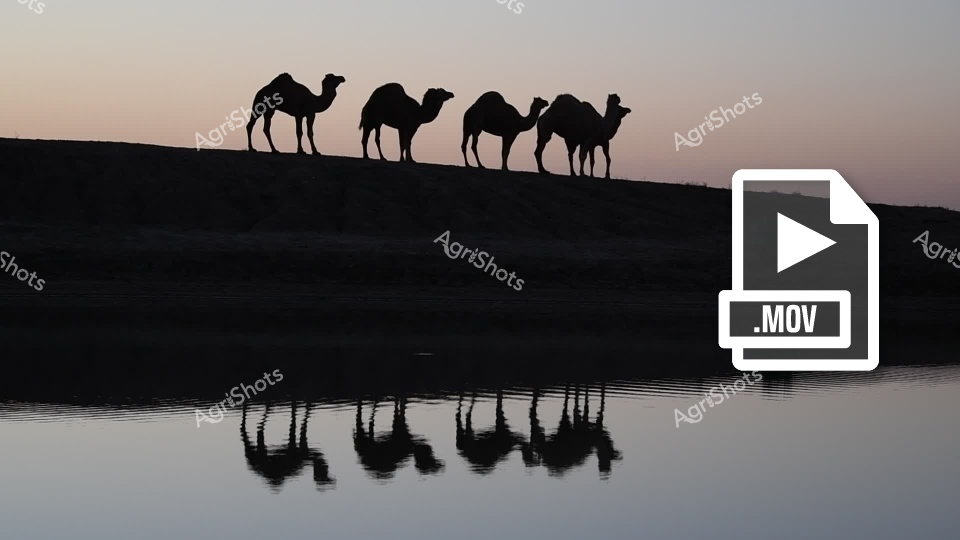
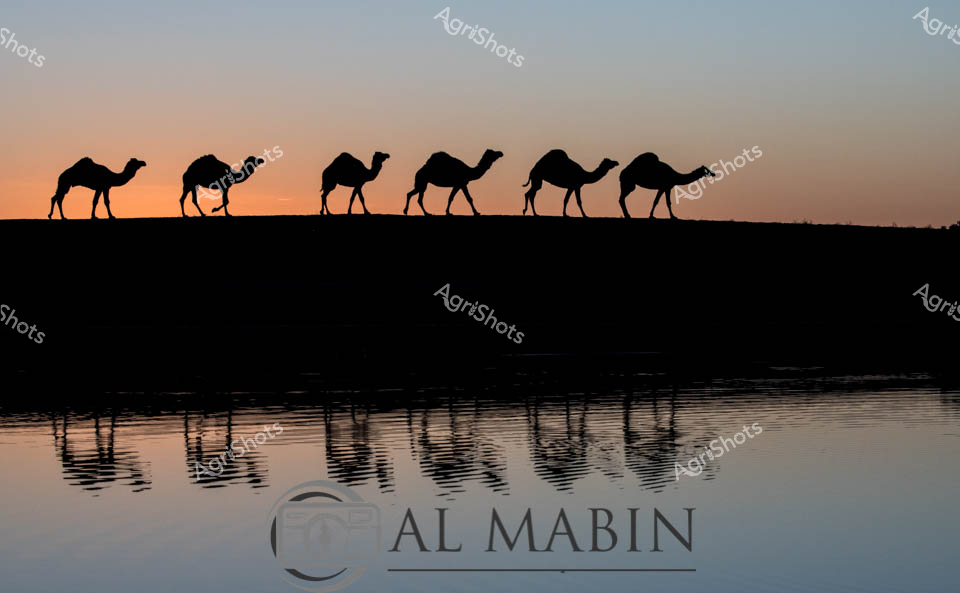
A timeless desert caravan traverses a stark silhouetted landscape at twilight, five dromedary camels moving in elegant synchronization across a darkened horizon. Their distinctive humped profiles are perfectly reflected in the still, mirror-like water below, creating a mesmerizing symmetry between land and liquid surface. The soft gradient of the sky transitions from deep charcoal to pale rose and amber, suggesting the magical moments just after sunset or before sunrise. Each camel maintains an identical stance - head held high, legs precisely positioned - lending the scene a sense of ritualistic movement and ancient desert travel. The precise alignment and reflection create an almost geometric composition, transforming these magnificent animals into living sculptures against the luminous background. The .
 Image
Image
Silhouetted against a luminous dawn sky, a camel caravan traverses a narrow desert horizon, their elegant forms casting perfect mirror reflections in the still waters below. Six dromedary camels move in unhurried synchronization, their distinctive humped profiles creating a rhythmic line against the gradient of soft orange and pale blue. The scene evokes the timeless pastoral traditions of arid landscapes, where these resilient animals have been critical to transportation and trade for millennia. Each camel moves with a distinctive gait, some slightly offset, suggesting a caravan in gentle motion across a remote wilderness. The "Al Mabin" watermark hints at professional documentation of agricultural and pastoral life, capturing the essential connection between animals, landscape, and human survival. The symmetry between the silhouetted animals and their reflections creates a mesmerizing visual poem of balance and movement, quintessentially representing the stark beauty of agricultural life in challenging environments.
 Image
Image
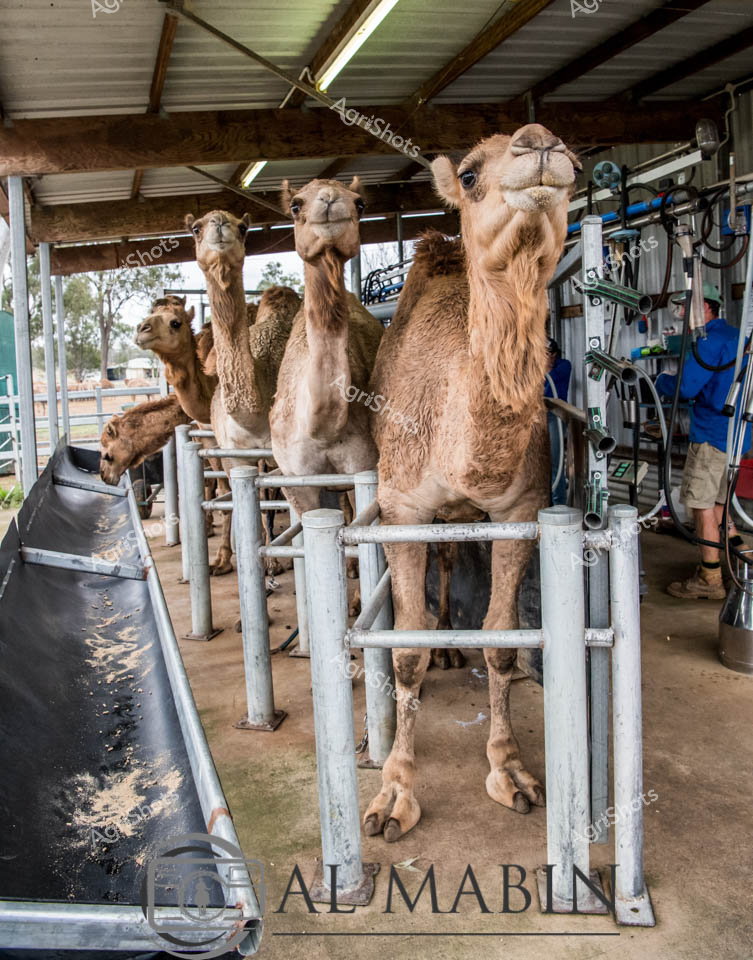
Lined up in gleaming white metal milking stalls, a row of dromedary camels stand ready for their daily milking routine at a specialized camel dairy facility. The camels, with their distinctive sandy-brown coats and elegantly curved necks, appear calm and accustomed to the precise agricultural process. Fluorescent lighting illuminates the metal-clad milking shed, with equipment and infrastructure typical of a modern Australian livestock production environment. Each camel is positioned carefully in an individual stall, their long legs braced and heads held high with a characteristic mixture of patience and mild curiosity. The concrete floor and industrial setting contrast with the ancient, desert-adapted animals, showcasing Queensland's innovative approach to diverse agricultural enterprises. The watermarked "AgriShots" branding and "ALMABINĀ" text underscore this as a professional documentation of emerging agricultural technology and livestock management techniques.
 Image
Image
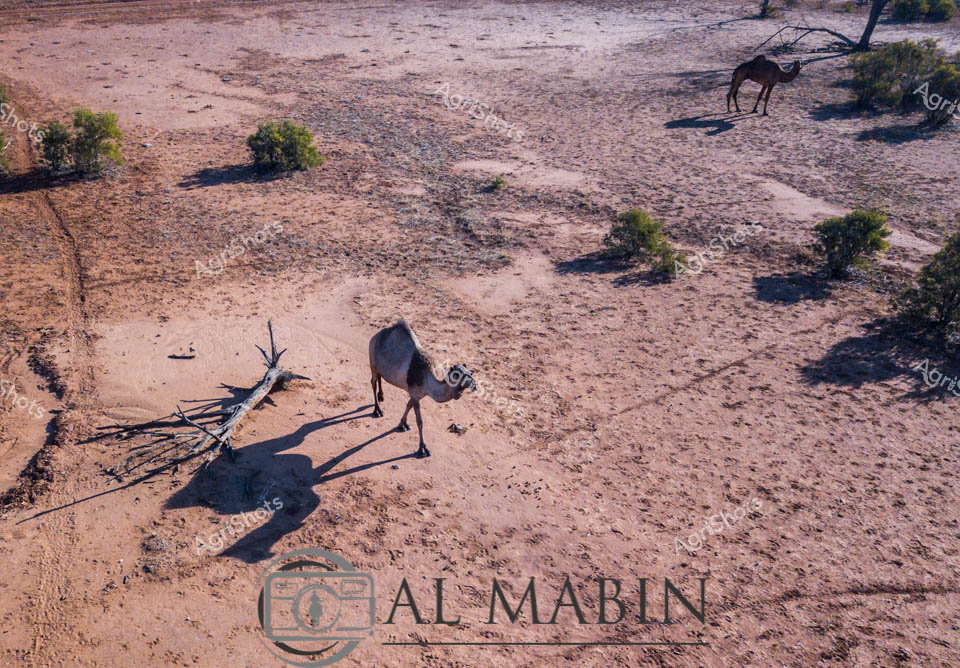
Arid Outback Solitude: Droving Camels under Merciless Sunlight Russet earth stretches toward a distant horizon, punctuated by sparse saltbush and weathered branches bleached by relentless Queensland sun. A solitary camel stands motionless in the mid-morning light, casting a long shadow across the cracked, ochre landscape of a remote pastoral station. The animal's lean silhouette embodies the resilience required to survive in this unforgiving terrain, where every patch of vegetation represents a precious resource. Soft blue-green shrubs provide minimal contrast against the burnt sienna ground, highlighting the monochromatic palette of Australia's inland wilderness. The scene captures the essence of outback livestock management - isolation, endurance, and the delicate balance between animal and environment. A watermark from Al Mabin Photography frames the bottom of the image, signaling the professional documentation of this quintessential Australian agricultural tableau.
 Image
Image
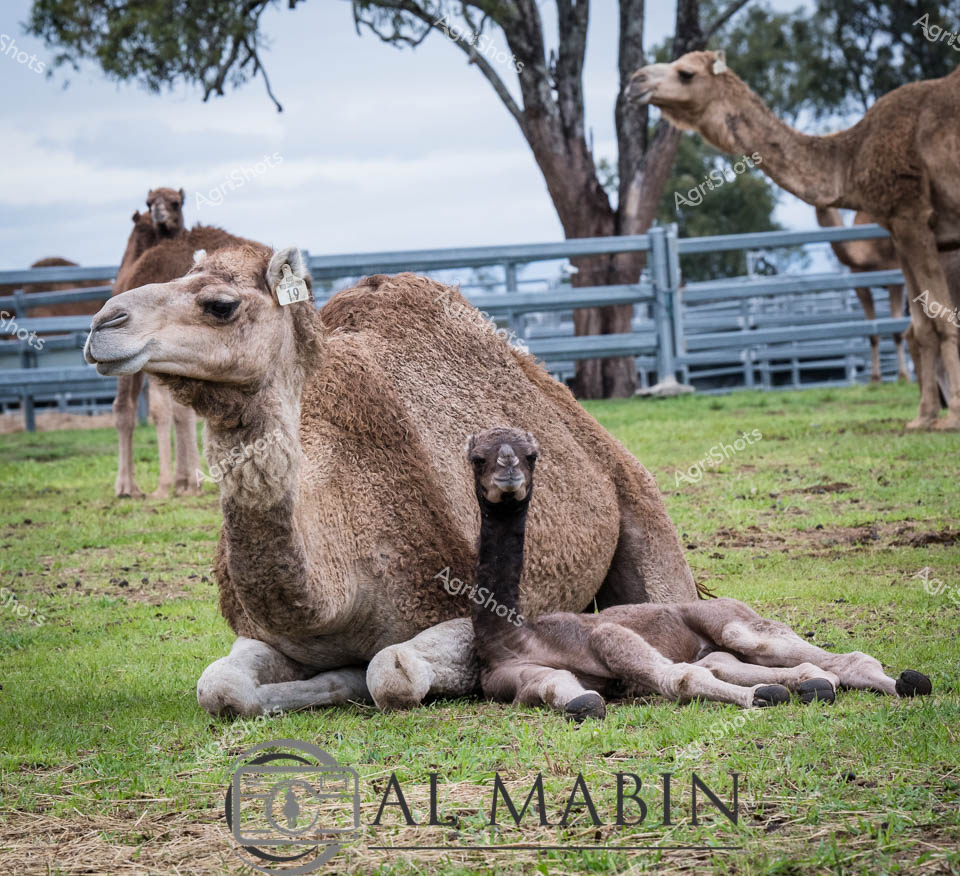
Droving into Motherhood: A Pastoral Camel Portrait A serene pastoral scene captures the tender moment of a camel mother nestled on lush green pasture, her newborn calf tucked closely beside her. The robust dromedary, adorned with a numbered ear tag, rests in a fenced paddock framed by weathered gum trees under a soft, overcast Queensland sky. Her rich brown, textured fleece contrasts beautifully with the verdant grass, while her young offspring's gangly limbs speak to the vulnerability of new life on the station. In the background, other camels graze quietly, suggesting this is part of a carefully managed breeding herd - a testament to the growing significance of camels in Australian agricultural diversification. The image radiates a sense of quiet nurture, capturing the maternal strength and resilience that defines life on the land, where every new generation represents hope and continuity for pastoral enterprises.
 Image
Image
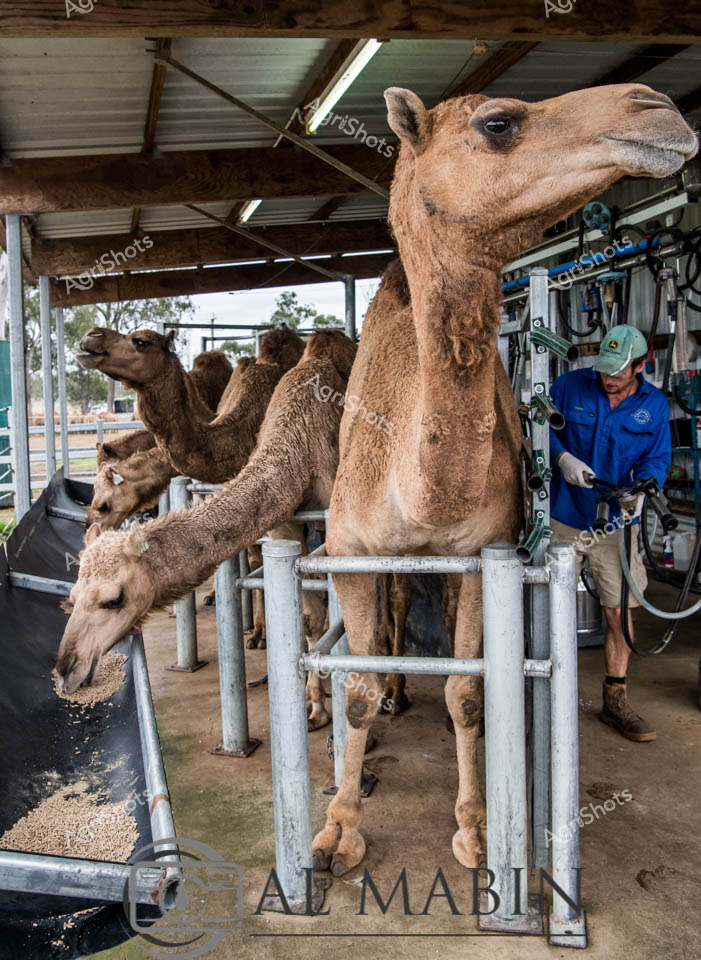
Dromedary camels stand patiently in a robust steel milking station, their sandy-colored coats contrasting against the industrial blue-grey metallic infrastructure of a Queensland dairy shed. Each camel is secured within precise galvanized steel framing, positioned to be milked with professional efficiency by a worker in blue attire and a light green cap. Grains scatter across a feeding trough, providing sustenance while the milking process unfolds, highlighting the sophisticated agricultural techniques adapted for these remarkable desert-originated livestock. The overhead metal roof and structured milking equipment demonstrate modern Australian agricultural innovation, transforming traditional camel husbandry into a scientifically managed production environment. Intricate mechanical milking equipment stands ready, emphasizing the technical precision required in specialized dairy operations. The scene captures the intersection of traditional animal husbandry and contemporary agricultural technology, showcasing Queensland's pioneering approach to diverse livestock management.
 Image
Image
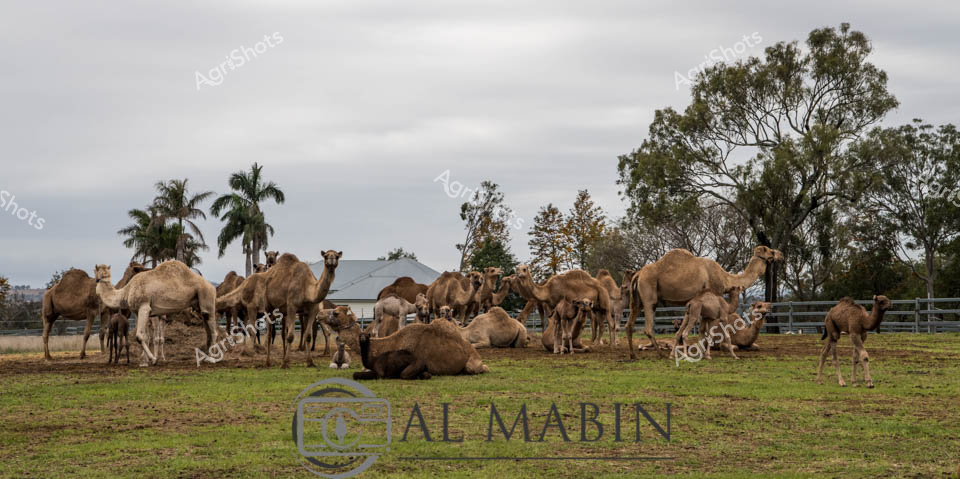
A herd of dromedary camels clusters in a pastoral Queensland landscape, their sandy-hued coats blending with the muted green pasture. Beneath overcast skies, these resilient desert dwellers occupy a fenced paddock near a corrugated iron dairy shed, palm trees and eucalyptus framing the background. Some camels stand alert while others rest heavily on the ground, showcasing the calm complexity of this unique agricultural setting. The Al Mabin watermark suggests this is a professionally captured agricultural scene, highlighting the surprising diversity of Queensland's livestock environments. These camels, likely part of a specialized breeding or dairy program, represent an intriguing niche of Australian agricultural innovation - transforming animals traditionally associated with arid landscapes into productive agricultural assets. The soft gray light and verdant ground create a contemplative atmosphere, inviting viewers to consider the adaptability of both landscape and livestock.
Well, you've ploughed through the whole field!
No more crops to harvest here, mate.
Try searching for something else in our library of 50,000+ royalty-free media: