 Video
Video
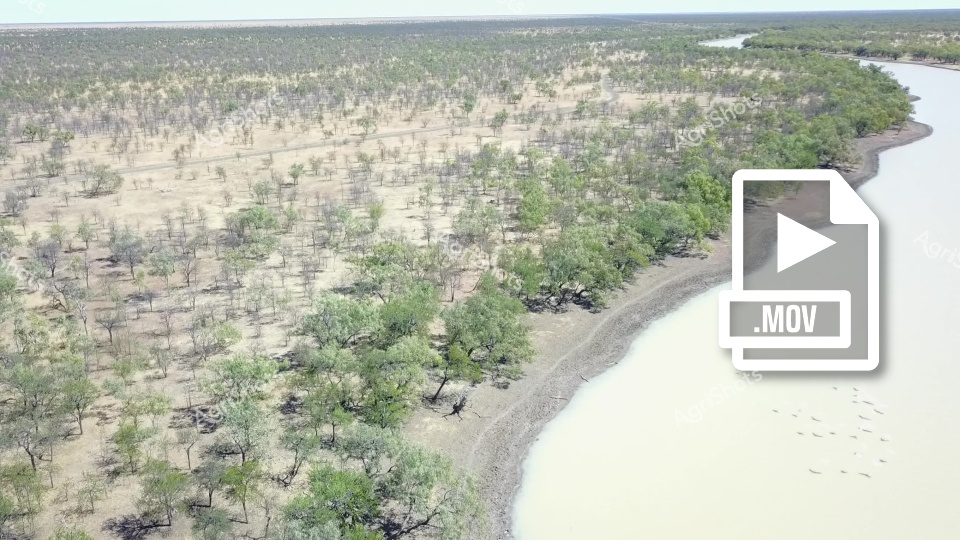
Aerial survey of a drought-impacted riverside landscape in northern Australia, revealing sparse woodland and eroded riverbank. Stunted eucalyptus trees with silvery-green foliage punctuate a pale, weathered terrain, creating a mosaic of resilient vegetation against parched ground. The river's edge appears carved and fractured, with sediment banks indicating significant water level fluctuations. Scattered trees demonstrate remarkable adaptation, clustered more densely near the water source, their muted green canopies contrasting against the bleached surrounding landscape. The .MOV file icon suggests this is a video documentation of environmental conditions, likely captured for agricultural or ecological monitoring purposes. The panoramic view exposes the harsh ecological dynamics of an arid Australian riverine ecosystem, where vegetation survival depends on precise water access and ecological resilience.
 Video
Video
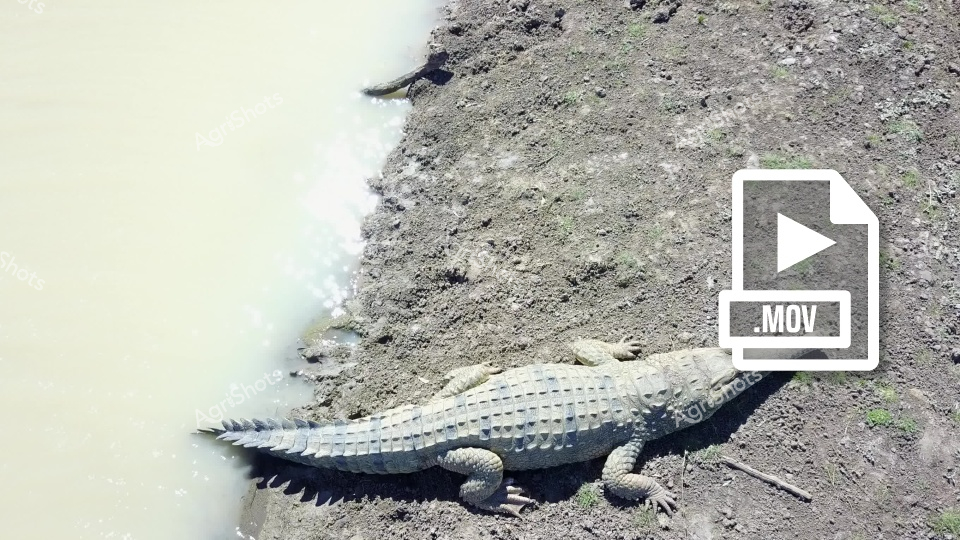
A massive saltwater crocodile rests motionless on a muddy riverbank, its armored scales gleaming in the harsh midday light. The prehistoric predator stretches nearly four meters long, blending perfectly with the rocky, sparse terrain of what appears to be a northern Australian waterway. Its muscular body exhibits intricate scaled textures, each segment of its tough hide designed for survival in challenging tropical environments. Murky water laps at the shore, creating a stark contrast between the steely gray-green of the reptile and the pale sediment surrounding it. The scene captures the raw, primordial essence of Australia's remote wilderness, where ancient creatures like this crocodile have remained virtually unchanged for millions of years. A digital video file marker in the corner suggests this moment has been captured for scientific or documentary purposes, highlighting the ongoing fascination with these remarkable apex predators of the northern coastlines.
 Video
Video
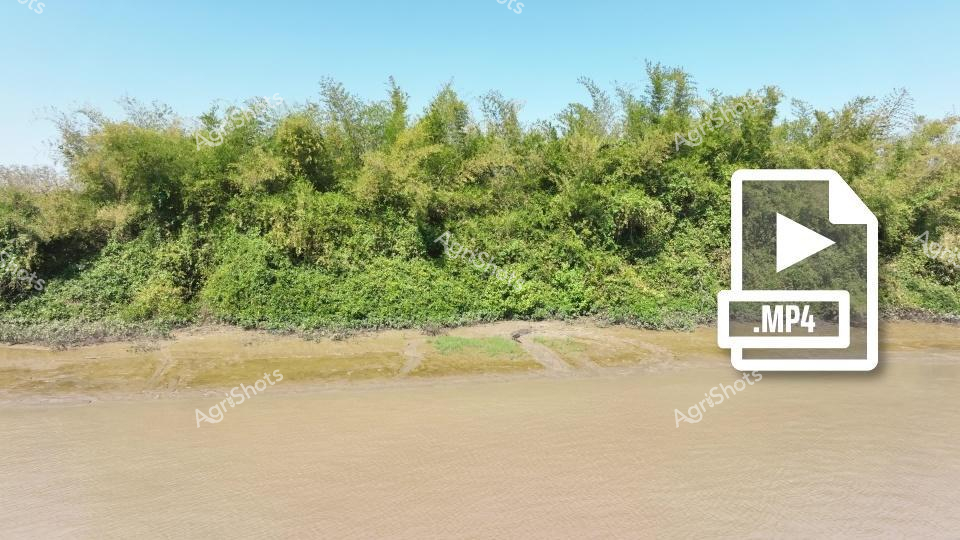
Turbid waters of a Northern Territory waterway reveal a lush, verdant riverbank ecosystem teeming with potential. Dense green shrubs and trees crowd the shoreline, creating a vibrant green wall against a pale blue sky, suggesting the tropical climate of Australia's top end. The murky brown water hints at the rich sedimentary landscape, potentially a prime habitat for estuarine crocodiles that lurk just beneath the surface. A hint of grassland breaks the green barrier, indicating a transitional zone between water and dense vegetation - a critical interface in this challenging agricultural frontier. The MP4 video icon suggests this is a dynamic scene, ready to capture the raw, unfiltered essence of this remote Australian landscape. The watermark "AgriShots" underscores the professional documentation of this rugged, untamed environment, highlighting the unique agricultural and ecological narratives of Australia's northern regions.
 Image
Image
Weathered timber posts rise from the tranquil waters of a remote Queensland river, marking the boundary between parched earth and liquid lifeline. Gnarled river gums lean artfully along the shoreline, their silvered branches telling stories of countless dry seasons and fleeting moments of abundance. The landscape speaks of resilience - a classic Australian pastoral scene where water means survival for vast cattle stations stretching across arid landscapes. Sunlight bathes the rocky riverbank in warm tones of ochre and umber, highlighting the rugged texture of drought-stressed ground and the skeletal remnants of ancient flood markers. In the distance, a meandering waterway cuts through dense riverside vegetation, promising hidden depths and potential crocodile habitat typical of northern Queensland's wild river systems. This image captures the raw essence of beef country - a terrain of harsh beauty where pastoral management is a delicate dance between agricultural survival and untamed natural environment.
 Image
Image
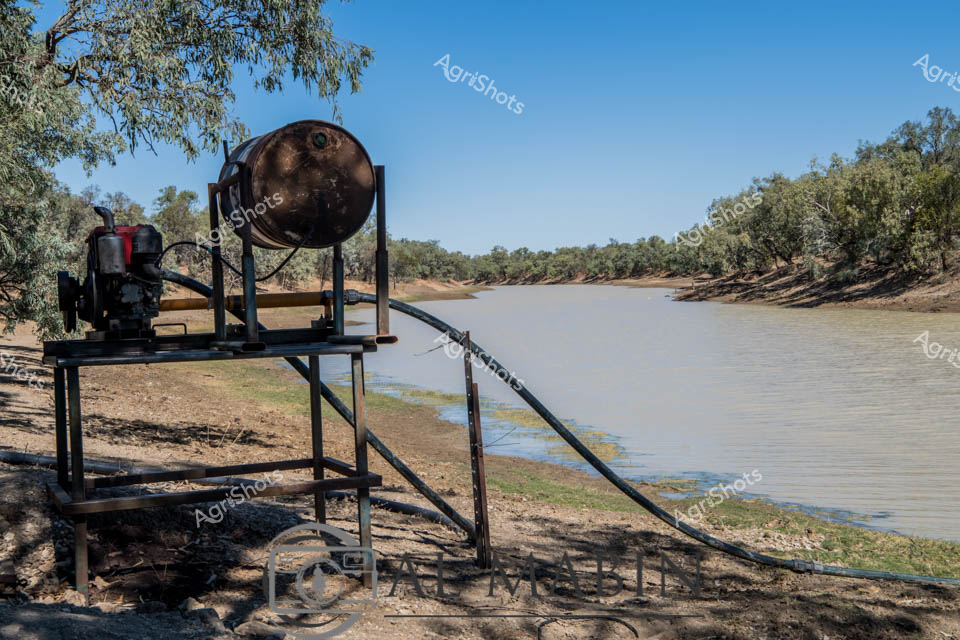
Remote Queensland cattle station waterline pump installation beside a languid river bend. Rugged steel water pump mounted on a robust metal frame, positioned near the banked edge of a muddy inland waterway lined with silvery eucalyptus trees. A large cylindrical water tank sits atop the elevated platform, connected by industrial piping that suggests reliable water extraction for livestock and station operations. The harsh Australian pastoral landscape reveals a dusty foreground transitioning to scrubland and river vegetation, capturing the resilient infrastructure required to sustain agricultural production in challenging arid environments. Weathered equipment and sun-bleached surroundings communicate the unforgiving yet beautiful nature of outback station life, where water management is critical to survival. The clear azure sky and muted earth tones underscore the stark, functional aesthetic of rural infrastructure designed to endure extreme conditions.
 Image
Image
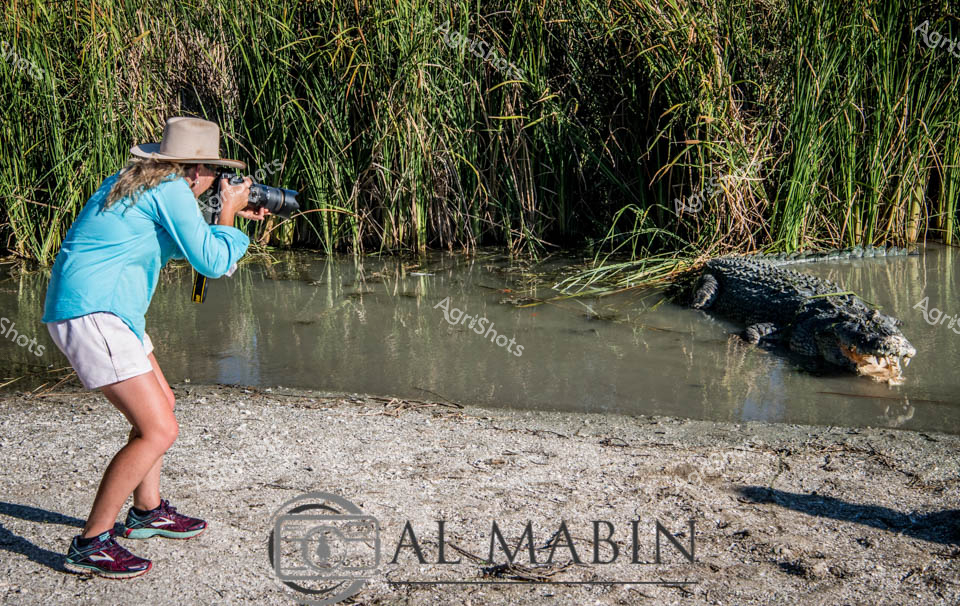
Wildlife Photography in the Queensland Wetlands A photographer in a bright blue long-sleeved shirt and safari hat captures an extraordinary moment in a lush wetland environment. Positioned carefully on a sandy bank, the photographer uses a professional camera to document a large saltwater crocodile partially submerged in murky water surrounded by dense reed-like grasses. The scene radiates tension and scientific precision, with the photographer maintaining a calculated distance from the powerful reptile. Vibrant purple-toned athletic shoes ground the photographer's stance, suggesting both preparedness and professional field research techniques common in Queensland's rich ecological landscapes. Soft natural light filters through the tall grasses, creating intricate shadows and highlighting the textural contrasts between water, vegetation, and the crocodile's scaled skin. The watermarked "Cal Mabin" branding suggests this is a professional wildlife documentation effort, likely focused on capturing the raw beauty and environmental significance of Queensland's unique aquatic ecosystems.
 Image
Image
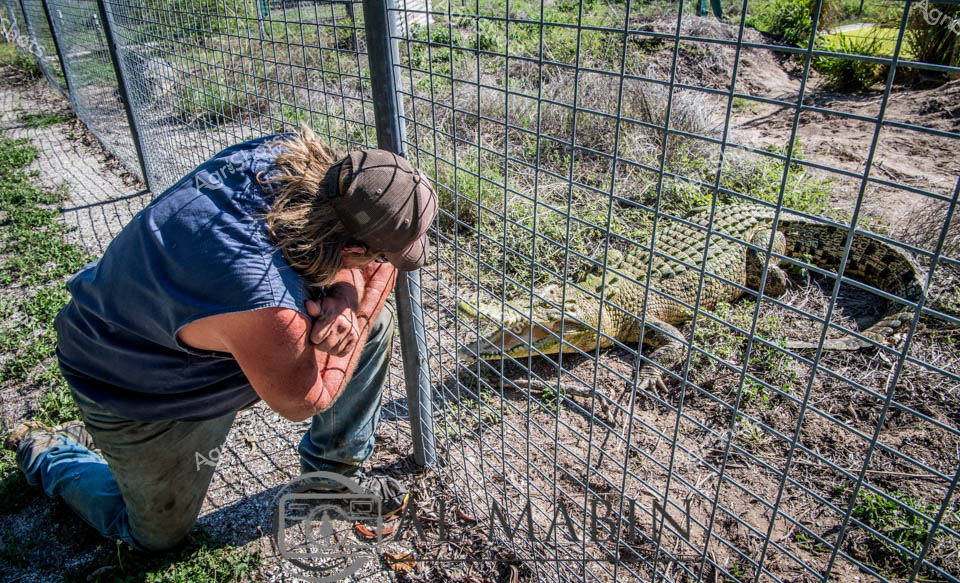
A wildlife caretaker crouches intently beside a wire enclosure, studying a large saltwater crocodile nestled within a sandy, vegetation-bordered habitat. The scene captures an intimate moment of professional observation, with the caretaker wearing a navy blue shirt, olive green pants, and a brown cap, leaning close to the robust wire mesh barrier. The crocodile, a prehistoric marvel of Australia's northern landscapes, rests partially camouflaged against the earthen ground, its scaled skin blending with the textured substrate. Harsh midday sunlight casts sharp shadows, highlighting the rugged terrain and the intricate wire fencing that separates human from prehistoric predator. The environment suggests a wildlife conservation facility, likely in tropical Queensland, where these magnificent reptiles are studied, protected, and understood. The caretaker's posture - hunched, focused, almost reverential - speaks to the deep respect and scientific curiosity that defines modern wildlife management and conservation efforts.
 Image
Image
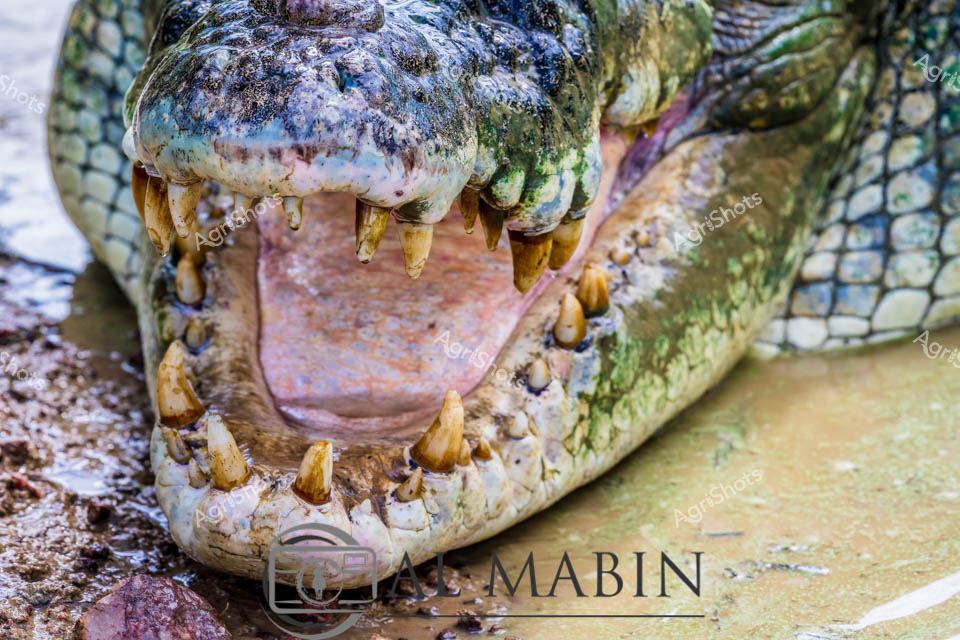
Prehistoric power emerges in this extraordinary close-up of a saltwater crocodile, showcasing the raw predatory magnificence of Australia's northern wilderness. Massive yellowed teeth protrude from a scaled jaw, revealing the prehistoric armor and lethal precision of one of the world's most formidable apex predators. The creature's textured skin displays a complex palette of muted greens, blues, and earthy tones, with algae-like patinas blending into its natural camouflage. Moisture glistens across the reptile's mouth, highlighting the rugged terrain of its scaled landscape and the muscular power coiled within its prehistoric form. This intimate portrait captures the primordial essence of the saltwater crocodile, a living fossil that has survived virtually unchanged for millions of years, embodying the untamed spirit of Australia's remote northern territories. The image speaks to the delicate balance of survival, where every scale, every tooth represents millennia of evolutionary perfection.
 Video
Video
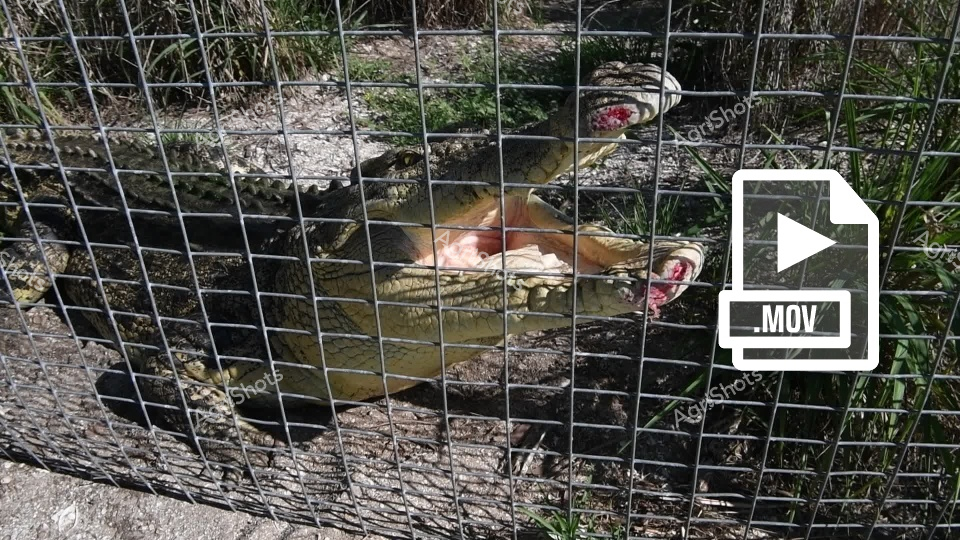
This video footage captures a powerful scene of a predator in captivity, likely a crocodile or large reptile, contained within a metal wire mesh enclosure. The clip reveals the animal with its mouth open, displaying sharp teeth and a pinkish-red interior, suggesting a moment of aggression or feeding behavior. The surrounding environment appears to be a rocky, vegetated area with some grasses and stones visible through the wire mesh. The reptile's scaly, textured skin blends with the earthy tones of its confined space, creating a sense of tension and wildness despite the restrictive enclosure. The wire mesh grid creates a stark geometric pattern that contrasts with the organic, prehistoric-looking creature within, highlighting the boundary between human control and natural predatory instinct. The lighting suggests an outdoor setting, possibly in a wildlife sanctuary or research facility, with natural shadows and vegetation creating a backdrop that hints at the animal's native habitat. The video clip promises to offer viewers an up-close, intense view of this powerful reptilian predator, capturing a moment of raw, contained wildlife behavior.
 Image
Image
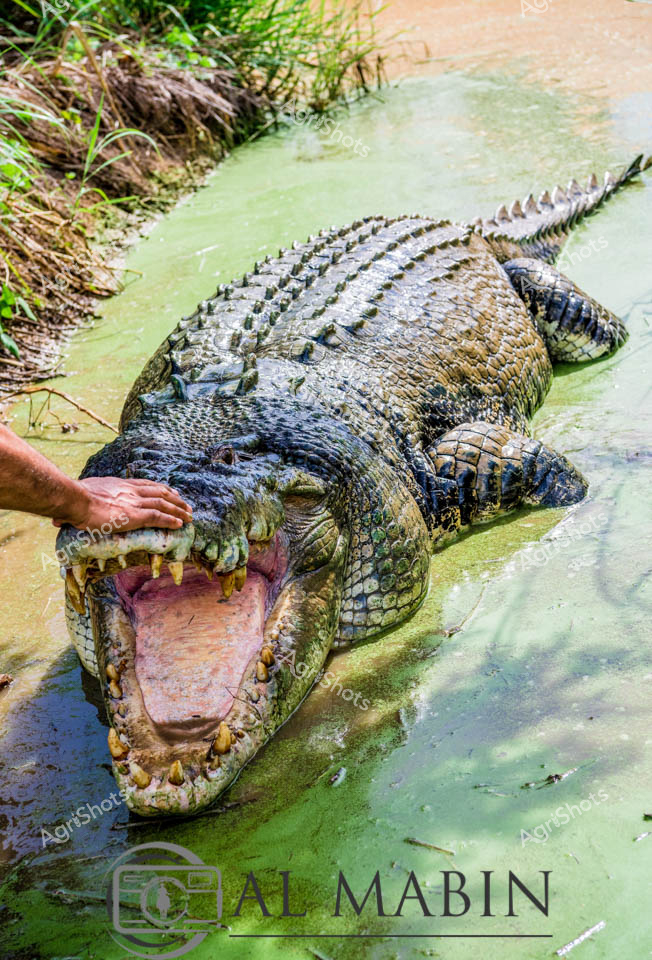
A massive saltwater crocodile sprawls menacingly in a murky green waterway, its powerful prehistoric form a testament to the raw wildlife of Australia's Northern Territory. Rows of razor-sharp teeth gleam as its enormous jaws are held wide open, revealing a pink interior that contrasts dramatically with its armored, scale-covered skin. A hand - likely belonging to an experienced wildlife handler or researcher - rests carefully near the creature's head, suggesting a moment of controlled interaction that highlights the delicate relationship between humans and these apex predators. The reptile's textured hide ranges from dark charcoal to lighter gray-brown, with intricate patterns of scales and bony protrusions running along its back and sides. Lush vegetation frames the waterway, creating a naturalistic backdrop that speaks to the complex ecosystem of tropical northern Australia. The image captures the prehistoric power and prehistoric beauty of one of the world's most formidable predators, embodying the untamed wilderness of the Territory's aquatic landscapes.
 Image
Image
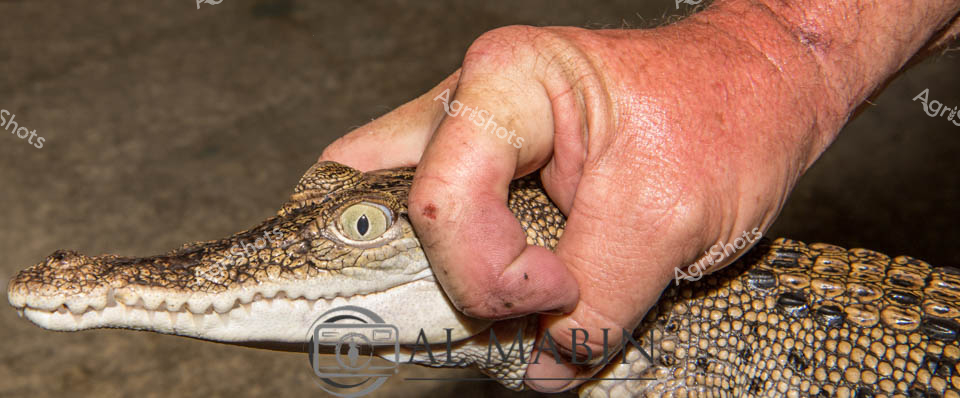
A weathered hand grips the powerful jaw of a young saltwater crocodile, revealing the intricate textural landscape of scaled reptilian skin against sun-reddened human flesh. The crocodile's remarkable eye - a golden, vertically-slit pupil surrounded by delicate scales - gazes with prehistoric intensity, showcasing the remarkable prehistoric predator that is central to Queensland's northern ecosystems. Intricate scales cascade across the crocodile's body in a mosaic of golden-browns and cream, each scale a testament to the species' remarkable evolutionary adaptation. This close-quarter interaction speaks to the complex relationship between humans and wildlife in Australia's challenging tropical environments, where crocodile management and conservation demand intimate knowledge and respect. The blurred background suggests a controlled setting, likely a research facility or wildlife management site where scientific observation and species preservation intersect. The image captures a moment of careful restraint and scientific curiosity, highlighting the raw power and prehistoric beauty of one of Australia's most iconic predatory species.
 Image
Image
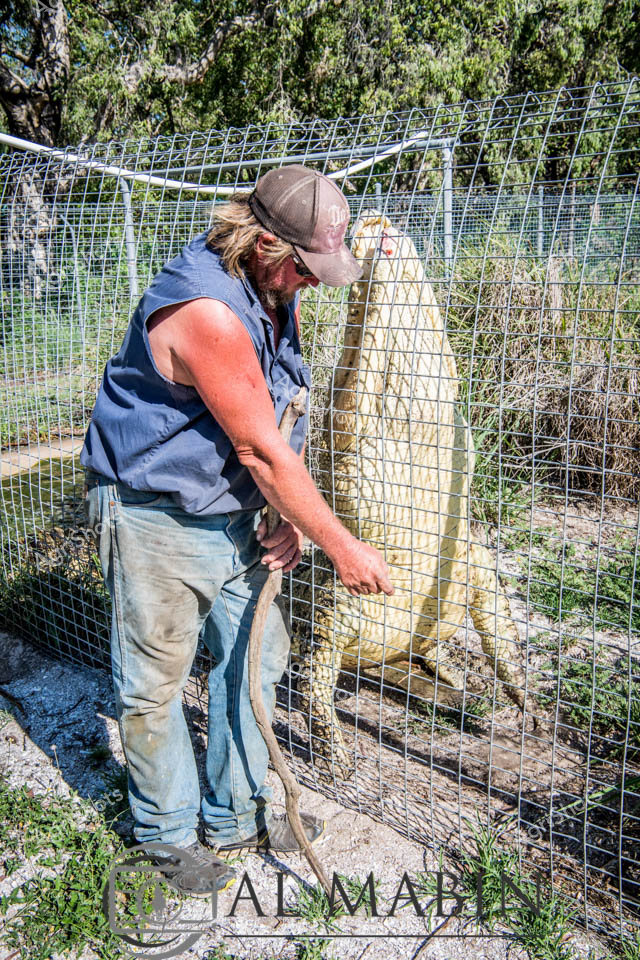
Saltwater crocodile handler carefully manages a large prehistoric predator within a sturdy wire mesh enclosure. Wearing rugged work attire - faded blue sleeveless shirt, worn denim pants, and a protective cap - the handler maintains a cautious yet controlled proximity to the formidable reptile. The wire cage appears situated in a tropical Queensland landscape, surrounded by dense greenery and dappled sunlight filtering through native vegetation. Muscular and weathered, the handler grips a long tool, likely used for managing and redirecting the crocodile's movements, demonstrating the specialized skills required in wildlife management and conservation. The crocodile, a pale golden-yellow color, represents one of Australia's most iconic and dangerous native species, highlighting the critical work of professional wildlife handlers in protecting both human and animal populations. The raw intensity of the interaction speaks to the delicate balance between human intervention and respecting the natural power of these ancient creatures.
 Video
Video
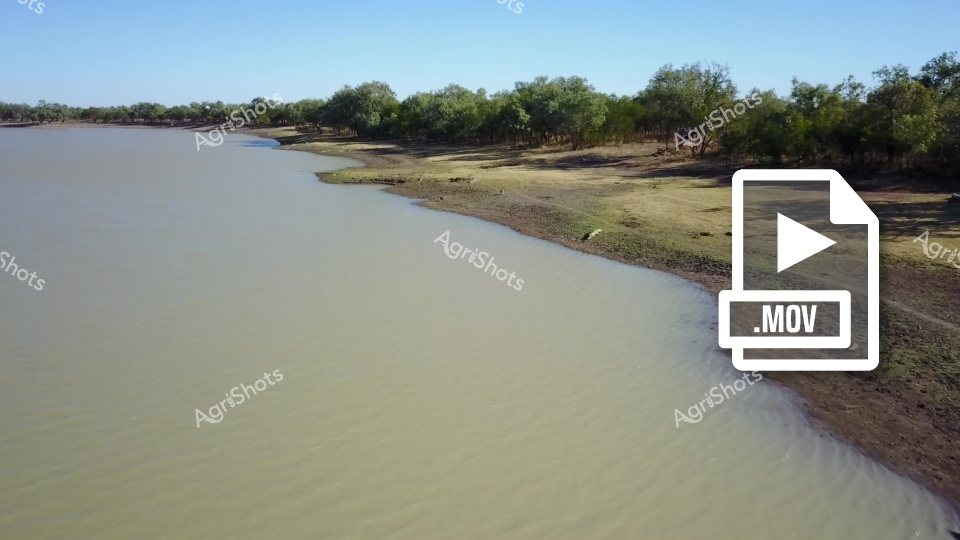
A languid river meanders through a rural landscape, its murky waters reflecting the clear blue sky and surrounded by scattered eucalyptus trees. The riverbank reveals exposed earth with patches of grass, indicating potential seasonal water level fluctuations typical of Australian inland waterways. Soft shadows cast by the trees stretch across the gently sloping terrain, creating a serene agricultural scene that speaks to the rhythms of rural hydrology and landscape. The .MOV file icon suggests this is a video capture, likely documenting the environmental conditions of a farming region. The muted earth tones of brown, green, and blue create a calm, expansive atmosphere characteristic of Australian riverine environments. This scene captures the subtle interplay between water resources and agricultural landscape, a critical element of rural ecosystem management.
 Image
Image
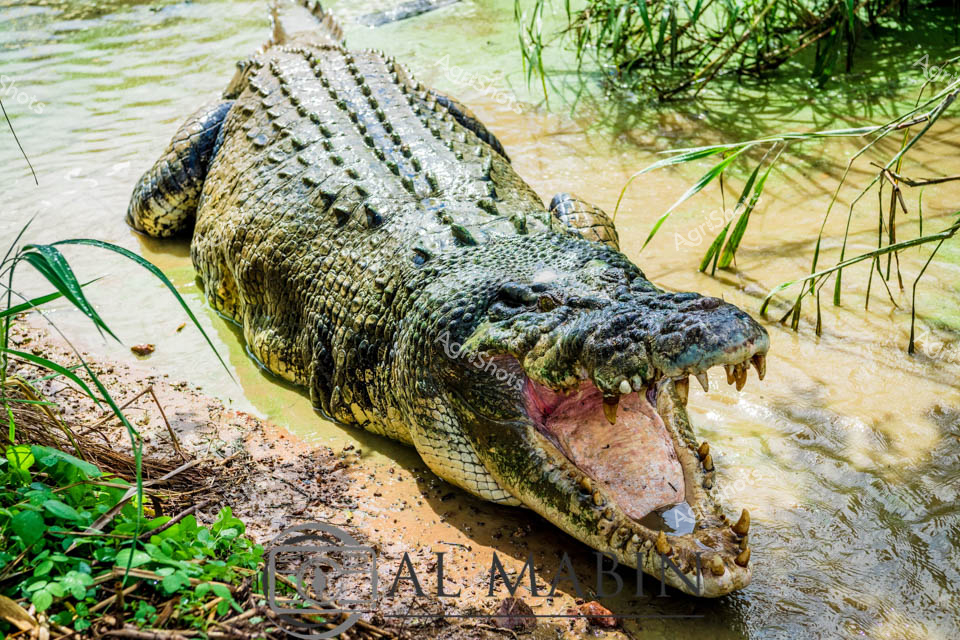
Saltwater Crocodile basking on the muddy bank of a tropical waterway, mouth agape to regulate body temperature. The massive reptile's armored skin displays a complex mosaic of olive-green and gray scales, with prominent ridged sections along its powerful spine. Sharp, yellowed teeth gleam against the pink interior of its open mouth, highlighting the prehistoric predator's formidable hunting capabilities. Lush green grasses and sedges frame the scene, typical of Northern Territory wetland ecosystems where these apex predators reign supreme. The crocodile's muscular body seamlessly blends with the muddy shoreline, a master of camouflage in its natural habitat. This image captures the raw, primordial essence of one of Australia's most iconic and feared wildlife species, embodying the untamed wilderness of the tropical north.
 Image
Image
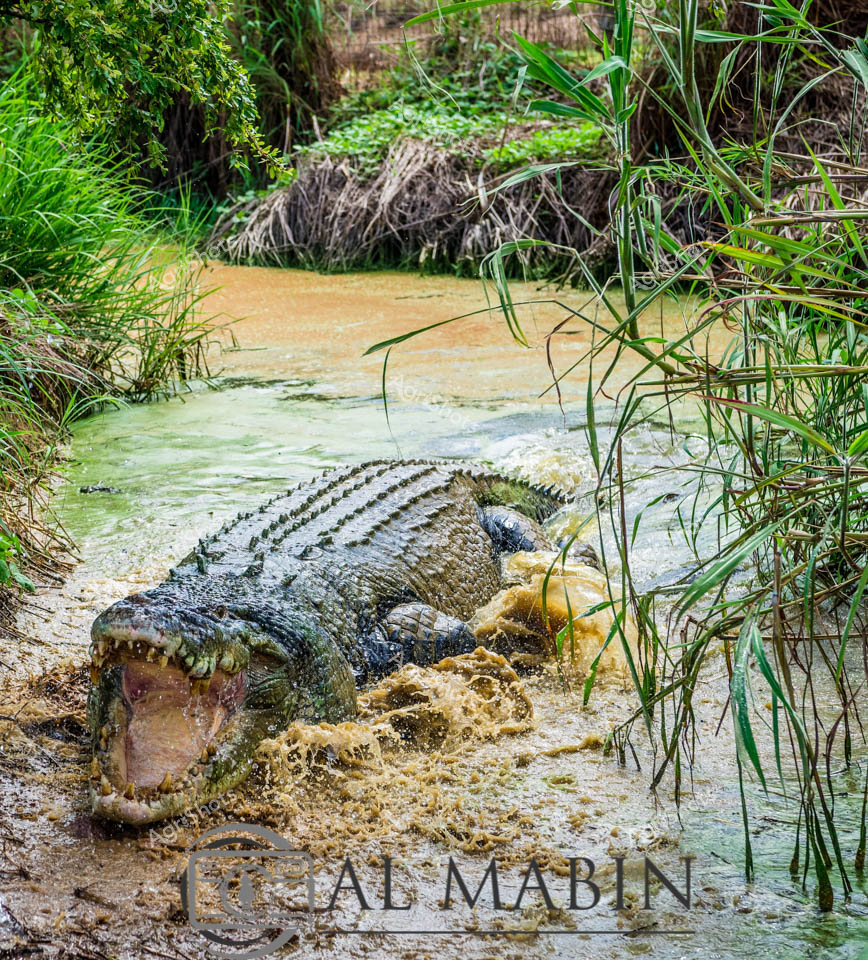
Saltwater crocodile lunges through murky wetlands, sending muddy water cascading around its muscular scaled body. The prehistoric predator dominates this rich tropical ecosystem, its powerful jaws agape amid dense green reeds and tangled riverside vegetation. Characteristic of Australia's northern waterways, this apex reptilian hunter represents the raw ecological intensity of the Northern Territory's remote wilderness landscapes. Intricate textural details reveal the crocodile's armored skin - a living fossil of prehistoric design, perfectly adapted to these humid, lush waterborne environments. Filtered sunlight penetrates the dense foliage, creating a dynamic interplay of golden-green tones that highlight the creature's prehistoric magnificence. The "Cal Mabin" watermark subtly indicates the professional wildlife documentation capturing this primal moment of natural drama.
 Image
Image
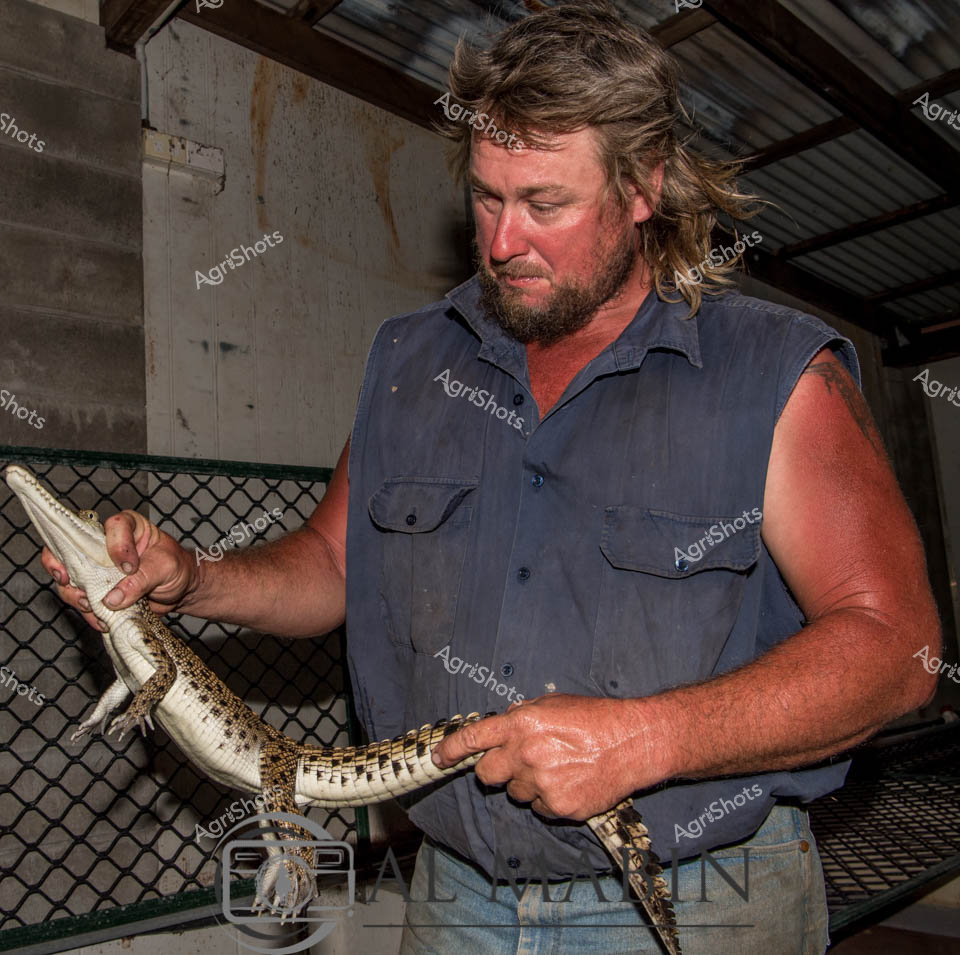
In the shadowy confines of a wire-mesh enclosure, a seasoned wildlife handler delicately manages a young saltwater crocodile, showcasing the raw intensity of Queensland's reptile management. Wearing a sleeveless blue work shirt and faded denim, the weathered handler grips the prehistoric predator with practiced calm, his muscular, sun-bronzed arms revealing years of experience in handling these powerful creatures. The crocodile, a juvenile with pristine white and mottled golden-brown scales, lies tensioned between strong hands, its powerful jaw and prehistoric anatomy a testament to millions of years of evolutionary perfection. Corrugated metal sheeting forms the backdrop, creating a utilitarian environment that speaks to the professional approach of wildlife conservation and research stations across northern Australia. The scene captures a moment of controlled interaction, where human expertise meets the untamed potential of one of the world's most formidable predators, highlighting the delicate balance of respect and technical skill required in managing these remarkable animals.
 Image
Image
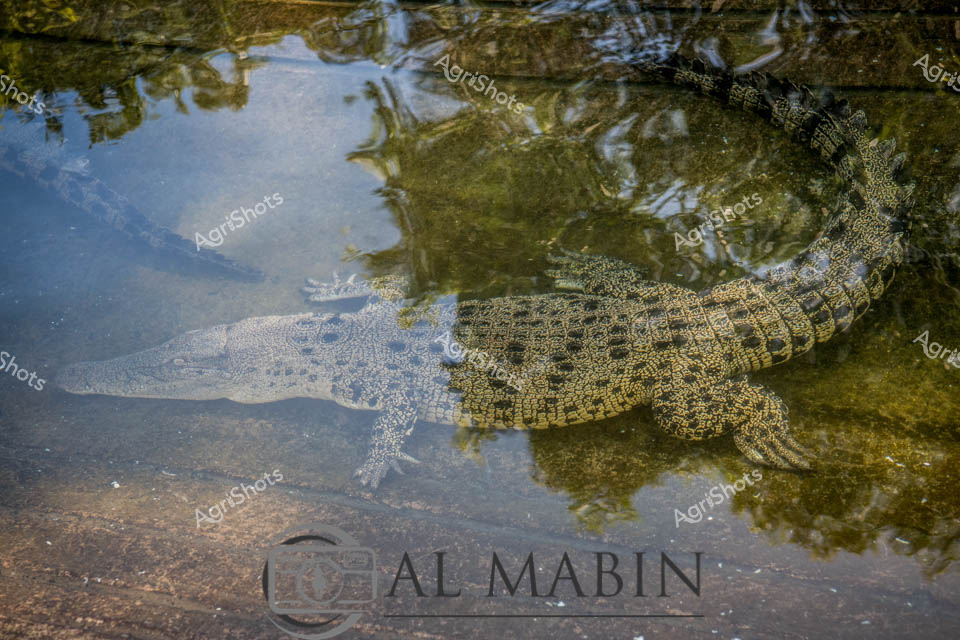
Basking in the murky shallows of a Queensland waterway, a prehistoric predator rests in dappled light. The saltwater crocodile's textured, olive-green scales blend seamlessly with the algae-tinged water, its muscular form a testament to millions of years of evolutionary perfection. Reflections of overhanging vegetation ripple across the water's surface, creating a camouflage that speaks to the crocodile's masterful adaptation to its environment. The reptile's prehistoric silhouette stretches across the frame, partially submerged, with its powerful tail and robust body revealing the raw power of one of Australia's most iconic apex predators. Subtle variations in the creature's scale pattern - from muted greens to deeper olive tones - highlight the intricate natural armor that has made these animals survivors since the age of dinosaurs. The Al Mabin watermark subtly anchors this powerful natural portrait, capturing the wild essence of Queensland's remarkable wildlife ecosystem.
 Image
Image
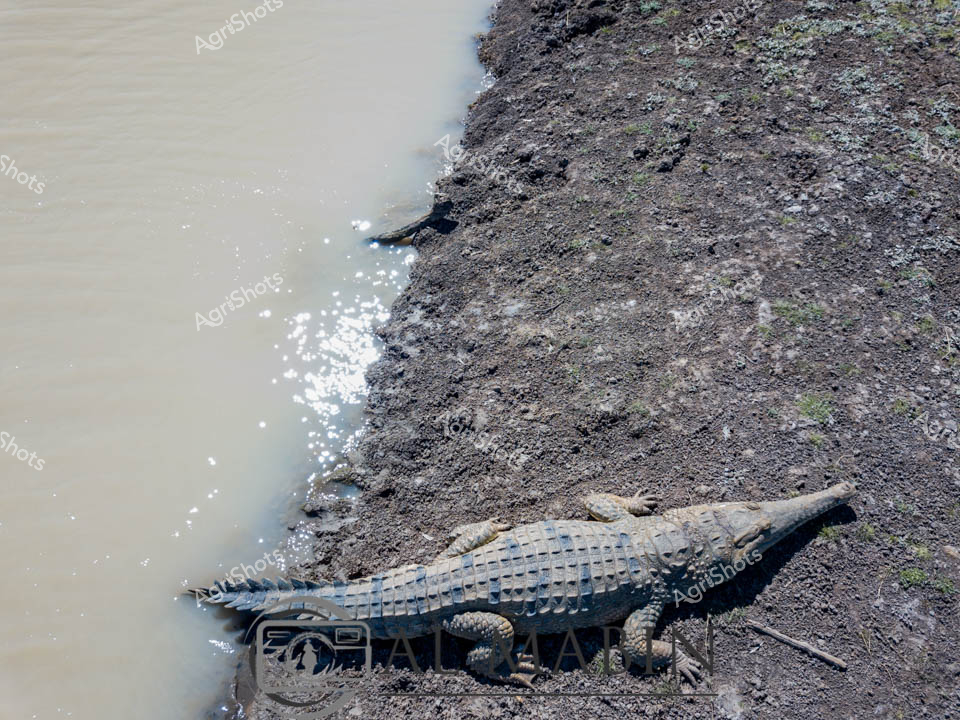
Saltwater crocodile basking on the muddy bank of a remote Queensland river, its scaled hide blending seamlessly with the rugged terrain. The prehistoric predator stretches out along the water's edge, muscles taut beneath its armored skin, soaking up the warmth of the harsh Australian sun. Turbid waters lap against the shoreline, creating a sparkling contrast between the murky river and the dark, textured ground. This powerful reptile embodies the untamed wilderness of northern Australia's rural landscapes, a living testament to the raw, unforgiving nature of outback waterways. Specks of vegetation cling to the rocky shoreline, hinting at the resilient ecosystem that thrives in these challenging conditions. The scene captures the primal essence of Queensland's remote waterways, where wildlife and landscape merge in a delicate, dangerous balance.
 Image
Image
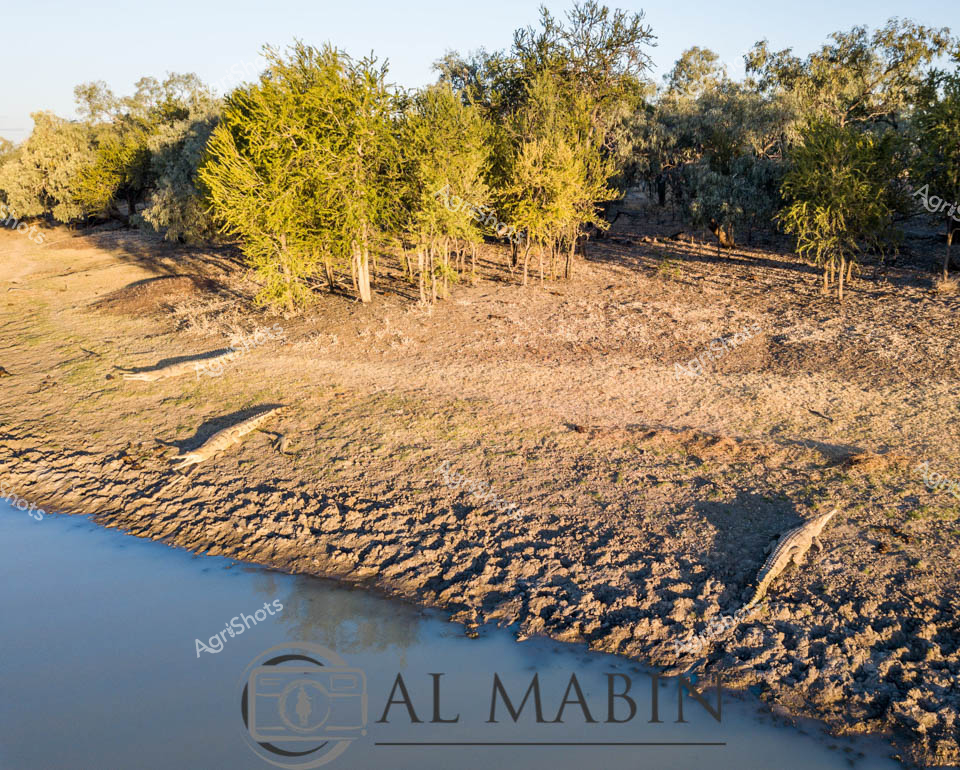
Aerial view of a drought-parched riverbank on a remote Queensland cattle station, captured in the golden light of early morning. Cracked, sun-baked earth stretches between a murky blue waterway and a sparse grove of eucalyptus and acacia trees, their yellow-green foliage casting long shadows across the barren landscape. The waterline reveals the harsh impact of prolonged dry conditions, with eroded, textured banks telling a story of water scarcity and environmental challenge. Sparse vegetation clings to life, a testament to the resilience of Australia's inland ecosystems during difficult seasons. Weathered tree trunks and scattered roots break the monotony of the dusty ground, creating a stark contrast between the blue water and the ochre earth. This powerful image encapsulates the delicate balance of survival in Australia's unforgiving rural landscapes, where water is the most precious resource.
 Video
Video
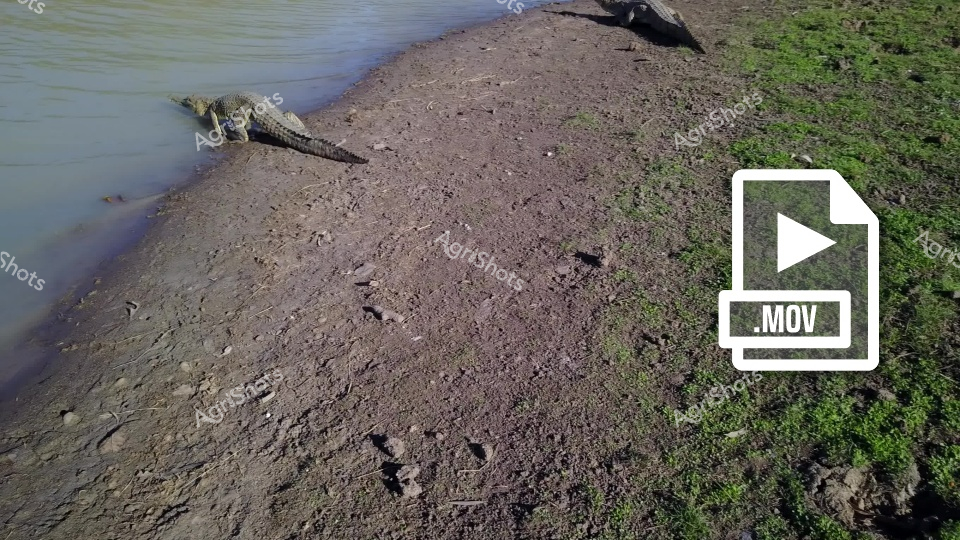
MOV) capturing a crocodile along a muddy riverbank. Two crocodiles are positioned near the water's edge, with one partially submerged and another on the shoreline. The riverbank consists of a mix of brown, wet clay-like soil and patches of green vegetation on the right side. The water appears murky and greenish, typical of tropical or subtropical river environments. The reptiles blend remarkably well with the terrain, demonstrating their natural camouflage abilities. The scene suggests a natural habitat, likely in northern Australia such as the Northern Territory or Queensland, where crocodiles are prevalent in river systems.
 Image
Image
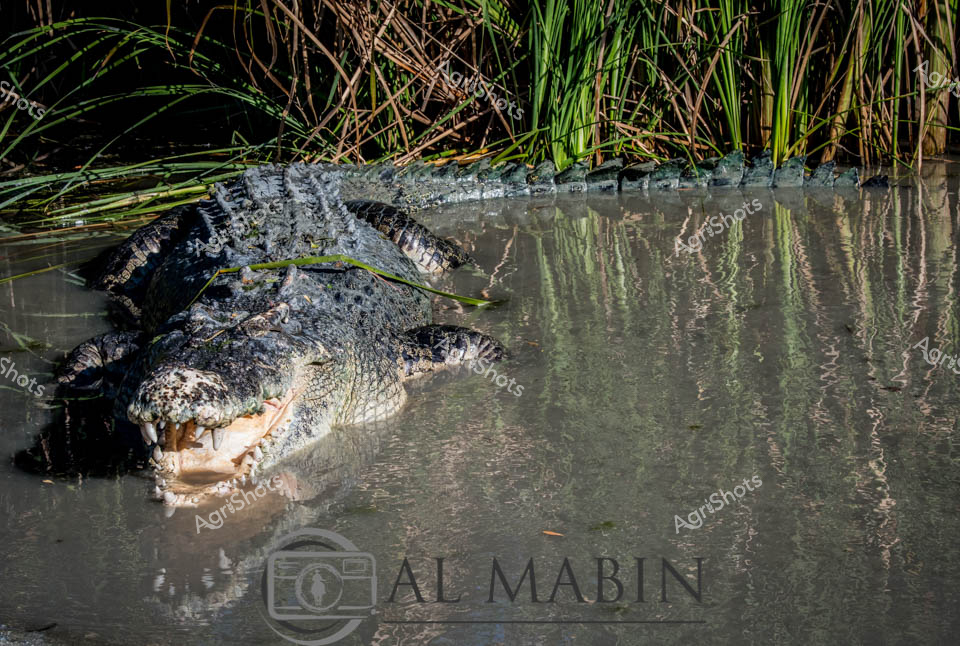
Saltwater crocodile rests in a tranquil Queensland wetland, its prehistoric form draped across murky waters bordered by dense reeds and grasses. The massive reptile's armored skin - a complex tapestry of grays, greens, and charcoal - blends seamlessly with the shadowy aquatic environment. Powerful jaws slightly agape reveal rows of razor-sharp teeth, a primal reminder of this apex predator's hunting prowess. Rippling reflections of surrounding vegetation create an almost painterly effect around the crocodile's muscular form, highlighting the intricate relationship between wildlife and their delicate ecosystem. Soft green reed stalks punctuate the background, creating a natural frame that emphasizes the crocodile's prehistoric magnificence. This image captures the raw, untamed essence of Queensland's northern wilderness, where ancient creatures continue to inhabit landscapes largely unchanged for millennia.
 Video
Video
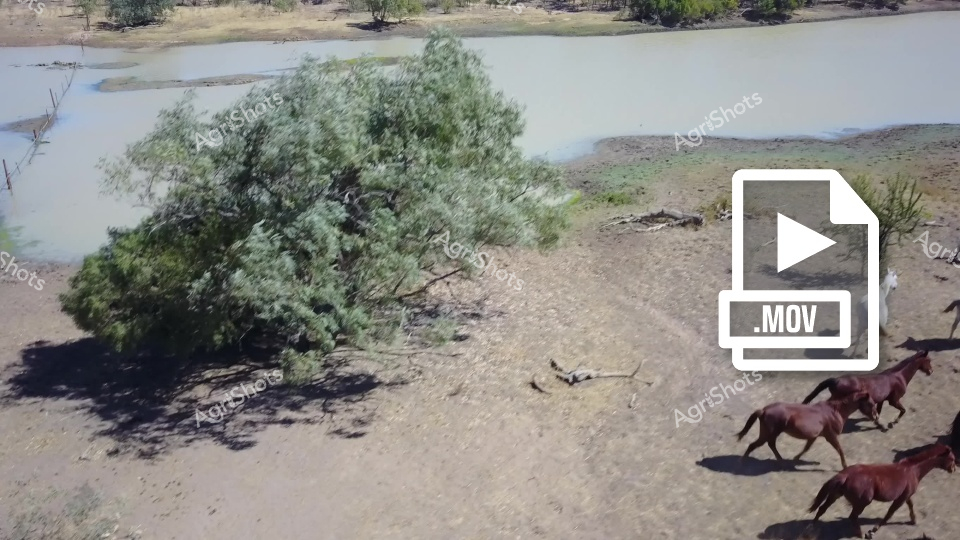
Dusty paddock under a pale winter sky reveals three chestnut horses wandering near a gnarled eucalyptus tree beside a shallow waterhole. The landscape speaks of arid conditions, with rocky ground and sparse vegetation casting sharp shadows across the parched earth. One horse moves with purposeful stride while the others follow, their muscular forms creating a sense of quiet movement against the bleached terrain. A large tree provides the only significant green element, its silvery-green foliage offering minimal shade in the stark rural setting. The waterhole reflects a muted blue-grey, suggesting limited water resources typical of drought-affected regions. This scene captures the resilience of livestock navigating challenging agricultural conditions in remote Australian pastoral country.
 Image
Image
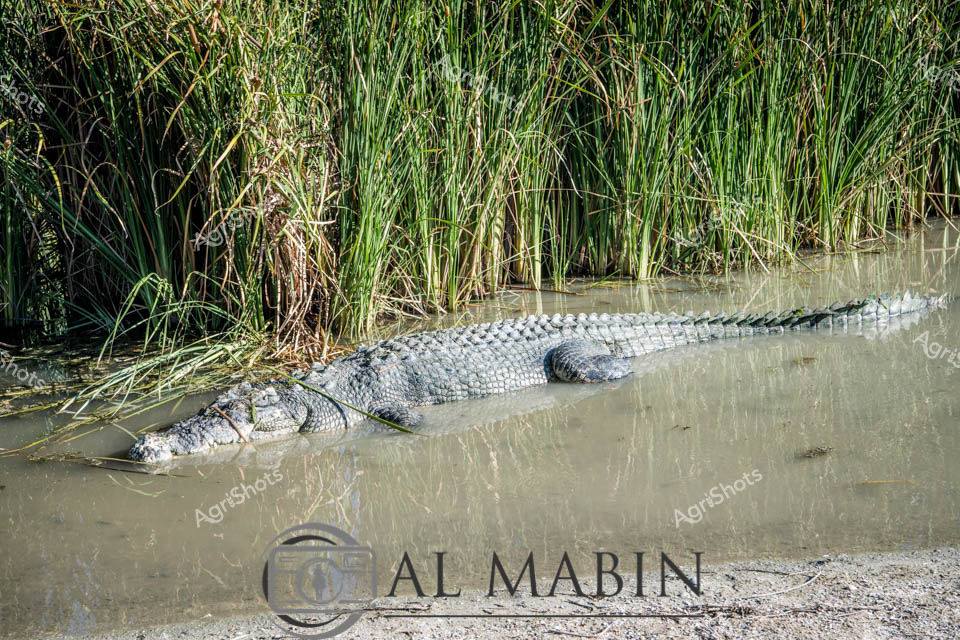
Saltwater crocodile basking in a tranquil Queensland wetland, its armored prehistoric body perfectly camouflaged against the murky shallow waters and dense reed banks. The massive reptile stretches almost the full width of the waterway, its scaled skin a mottled gray-green that blends seamlessly with the surrounding papyrus and river grasses. Sharp ridges along its spine and powerful muscular form reveal the apex predator's prehistoric lineage, a living fossil unchanged for millions of years. Soft afternoon light filters through the reeds, casting subtle reflections on the water's surface and highlighting the creature's remarkable adaptation to this rich subtropical ecosystem. The waterway appears calm and primordial, a snapshot of wild Queensland wilderness where these ancient hunters remain masters of their domain. The Al Mabin watermark in the corner suggests this is a professionally captured moment of wildlife documentation, showcasing the raw beauty of Australia's northern aquatic landscapes.
 Image
Image
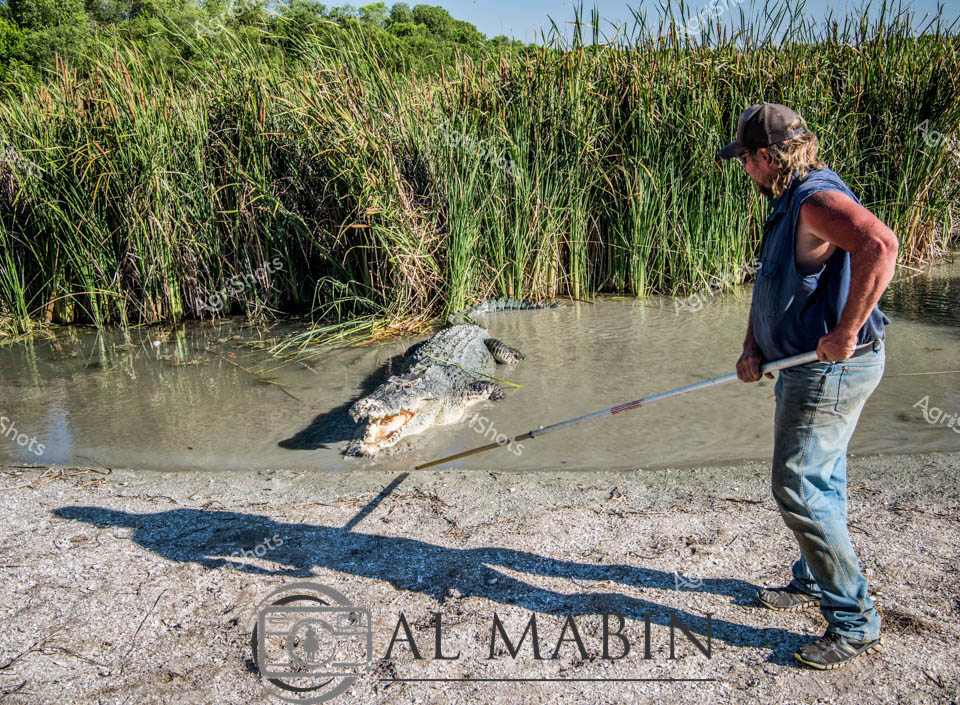
Saltwater Crocodile Management in Queensland Wetlands A seasoned wildlife handler stands poised beside a murky waterway, wielding a long restraining pole near a massive saltwater crocodile. Dense reeds and tall grasses frame the water's edge, creating a quintessential Queensland wetland landscape. The crocodile, a prehistoric predator of immense power, rests partially submerged in the muddy shallows, its scaled hide a mottled gray-green that blends seamlessly with the surrounding aquatic environment. The handler, dressed in well-worn blue work attire and a cap, demonstrates the careful management required in regions where human settlements interface with dangerous wildlife. His measured stance and professional equipment highlight the delicate balance between conservation, safety, and respecting these ancient creatures' habitat. The harsh sunlight casts a long shadow, emphasizing the potential danger and raw intensity of crocodile management in Australia's northern territories.
 Video
Video
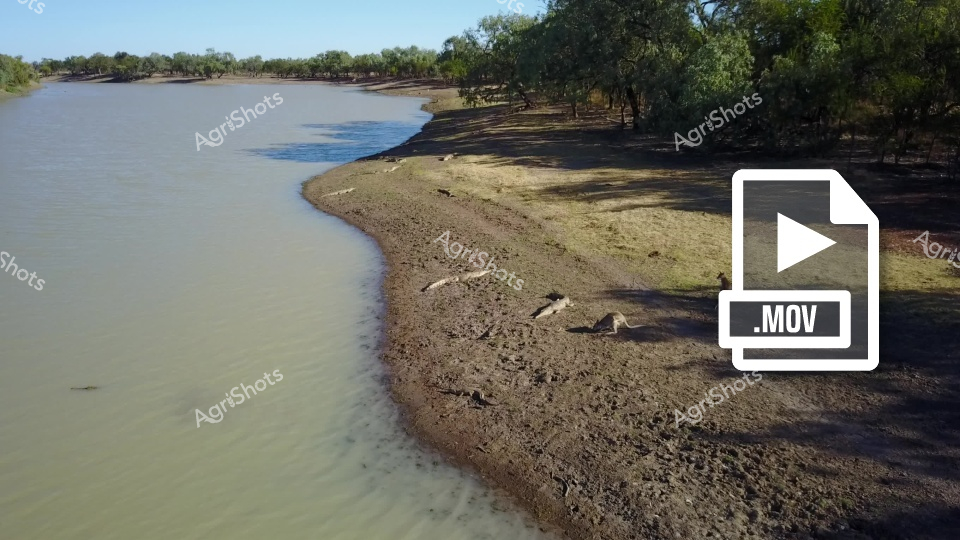
Parched riverbank reveals the harsh realities of drought along an inland waterway, with muddy shorelines and sparse vegetation marking the water's receding edge. Gnarled river red gums and sparse woodland punctuate the landscape, casting long shadows across the dry, cracked earth. A series of wildlife - likely kangaroos - rest on the exposed riverbed, seeking respite in the shade and proximity to the diminishing water source. The .MOV video file tag suggests this is a dynamic scene capturing the living landscape of an Australian river system during an extended dry period. Muted browns, greys, and dusty greens dominate the color palette, emphasizing the arid conditions. The scene powerfully illustrates the environmental challenges faced by rural and agricultural communities during prolonged drought conditions.
 Image
Image
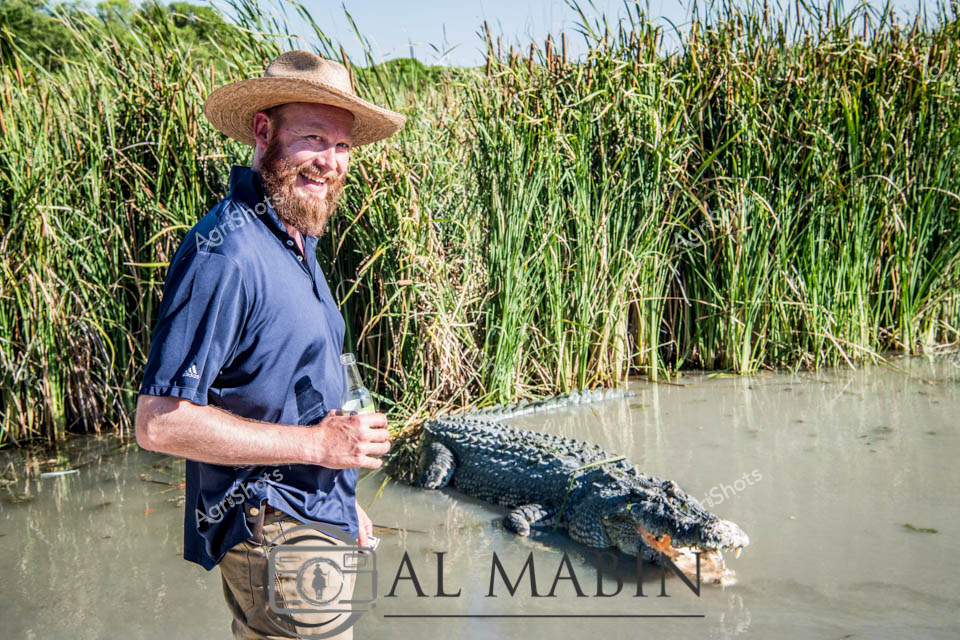
Agricultural wildlife management in the wetlands of Queensland showcases a seasoned professional navigating challenging environmental conditions. A skilled wildlife handler stands confidently in a lush reed-filled waterway, wearing a classic broad-brimmed straw hat and a navy blue polo shirt, holding a beverage while maintaining proximity to a large saltwater crocodile. The reptile rests partially submerged in the murky water, its prehistoric scaled skin displaying a dark gray-green coloration that blends seamlessly with the surrounding aquatic vegetation. Tall grasses and reeds create a dense natural backdrop, highlighting the intricate ecosystem management required in northern Australian agricultural landscapes. The scene captures the delicate balance between human interaction and wildlife conservation, demonstrating the unique skill sets demanded of rural professionals working in complex environmental settings. The watermarked image suggests professional documentation of critical wildlife management practices integral to agricultural and ecological sustainability in Queensland's challenging tropical environments.
 Video
Video
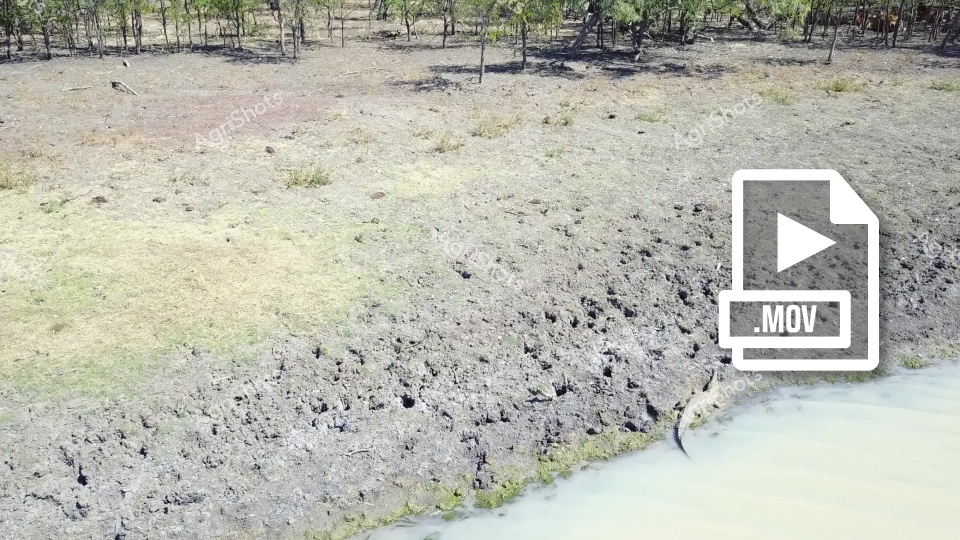
Drought-ravaged landscape reveals the harsh reality of water scarcity in an arid Australian agricultural region. A parched earth stretches between sparse trees, with cracked clay soil dominating the foreground and a muddy water edge visible along the bottom of the image. Sparse vegetation clings to life, with patches of pale grasses and stunted trees casting long shadows across the barren ground. The landscape speaks to the challenging environmental conditions facing rural Australian farmers, with the ground's texture revealing deep fissures and a complete lack of moisture. A .MOV video file icon overlays the scene, suggesting this is a recorded documentation of the drought's impact on the land. The image is rich with the earthy tones of survival - browns, greys, and muted greens that tell a story of environmental stress and agricultural resilience. Scattered trees provide the only vertical relief in an otherwise flat and unforgiving terrain, their shadows stretching across the cracked earth like silent witnesses to the ongoing environmental challenge.
 Image
Image
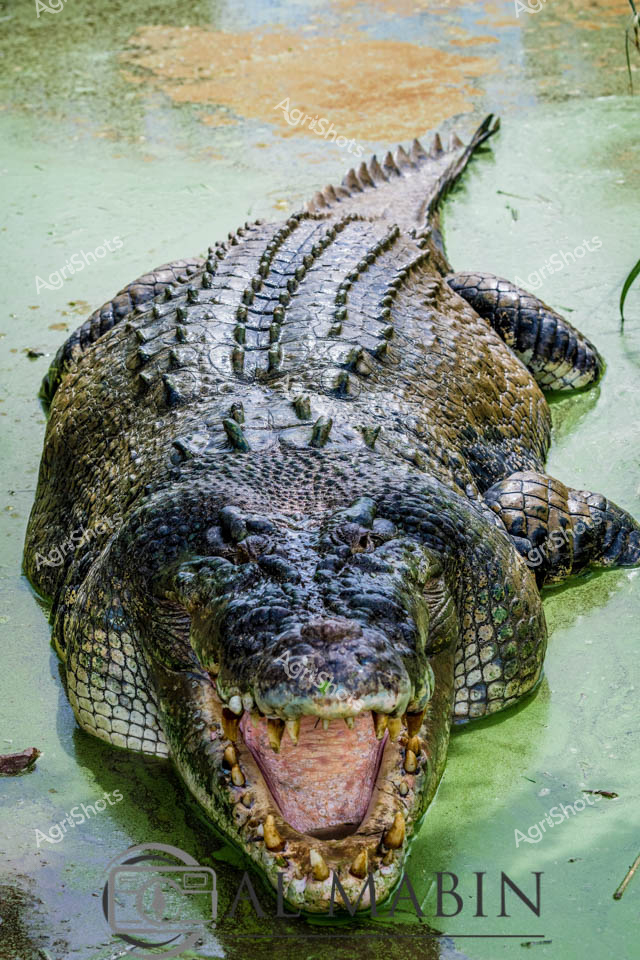
Saltwater crocodile basks in a murky billabong, mouth agape to regulate body temperature. The prehistoric predator's armored hide gleams with a complex mosaic of olive, charcoal, and bronze scales, each ridge and bump telling a story of survival in Australia's unforgiving northern landscapes. Powerful muscles ripple beneath its thick skin, a testament to millions of years of evolutionary perfection as an apex predator. Razor-sharp teeth protrude from its open jaw, casting an intimidating silhouette against the algae-green waters typical of tropical wetlands. This ancient reptile embodies the raw, untamed essence of the Northern Territory's wilderness - a living fossil that has outlived countless species and continues to command absolute respect in its aquatic domain. The image captures the crocodile's primordial power, a reminder of the wild heart that beats beneath Australia's agricultural landscapes.
 Video
Video
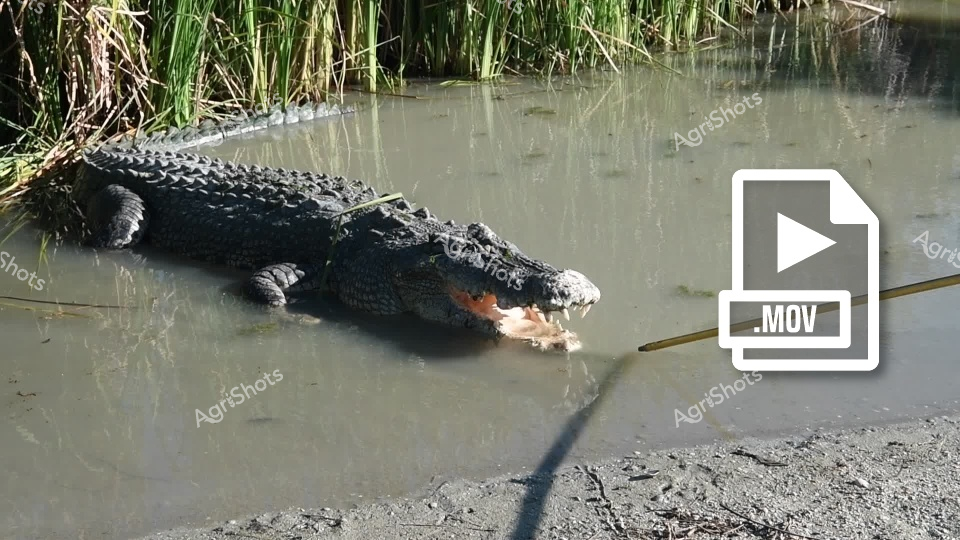
This gripping wildlife footage captures a large saltwater crocodile in a murky wetland environment, showcasing a dramatic predatory moment. The video clip features the massive reptile partially submerged in muddy water, with lush green reeds and grasses surrounding its habitat. An intense scene unfolds as the crocodile appears to be consuming prey, with its powerful jaws gripping what looks like a small animal or fish. The creature's rough, armored skin and distinctive scaled texture are clearly visible, highlighting the prehistoric appearance of this apex predator. Murky green and brown tones dominate the scene, creating a primal and atmospheric view of the crocodile in its natural wetland ecosystem. The video provides a raw, unfiltered glimpse into the survival dynamics of these ancient reptiles in their native Australian waterway habitat.
 Image
Image
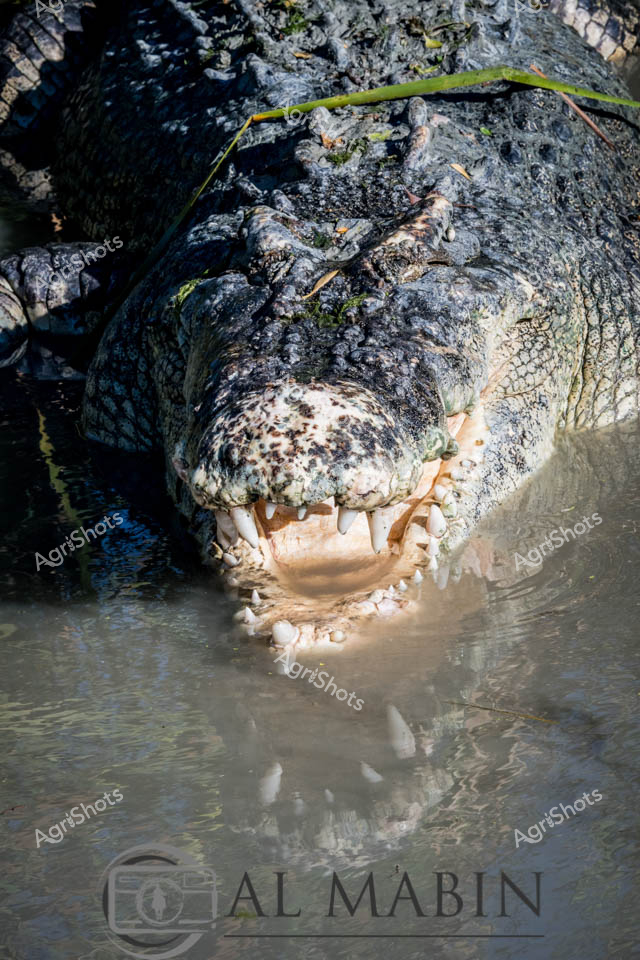
Saltwater crocodile basking in a murky waterway, its prehistoric form a testament to survival. The massive reptile's scaled hide, mottled in shades of gray and charcoal, emerges partially from the water, revealing a formidable jaw lined with razor-sharp teeth. A delicate green frond drapes across its armored back, creating a stark contrast between the brutal predator and the fragile vegetation. Sunlight catches the creature's textured skin, highlighting the intricate patterns of its evolutionary armor. The crocodile's partially open mouth suggests a moment of quiet menace, a reminder of the apex predators that inhabit Queensland's northern waterways. This powerful image captures the raw, primordial essence of one of Australia's most iconic wildlife species, embodying the untamed wilderness of tropical Queensland.
 Image
Image
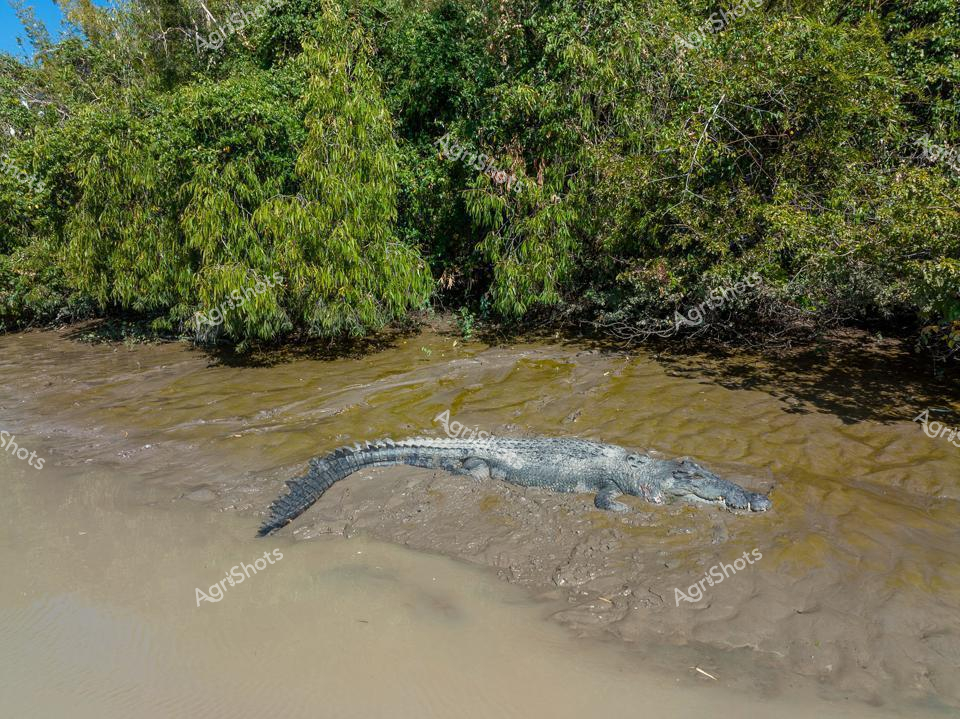
Saltwater crocodile basking on a muddy riverbank in the Northern Territory, its prehistoric form a testament to the raw wilderness of Australia's tropical north. The massive reptile sprawls languidly across the shoreline, its armored gray-green skin blending seamlessly with the murky waters and dense riverside vegetation. Weeping paperbark trees and lush green foliage frame the scene, creating a primordial backdrop that speaks to the untamed ecosystems of the Top End. Sunlight filters through the canopy, casting dappled shadows across the water's surface and highlighting the crocodile's powerful, muscular body. This powerful predator embodies the delicate balance of life in Australia's remote waterways - a living fossil perfectly adapted to its environment, representing both the danger and beauty of the region's unique wildlife. The turbid river reflects the surrounding landscape, creating a naturalistic tableau that captures the essence of Australia's northern wilderness.
 Video
Video
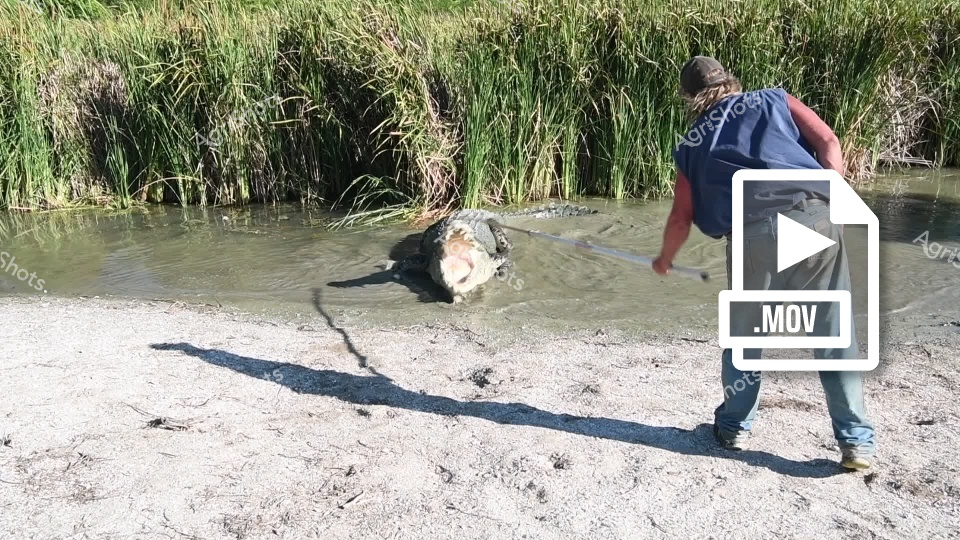
This gripping wildlife footage captures a dramatic encounter between a human and a massive crocodile in a lush wetland environment. The video clip shows a person standing near a large reptile partially submerged in murky shallow water, surrounded by dense reeds and grasses. The crocodile appears to be large and prehistoric-looking, with its scaly back prominently visible above the water's surface, creating a tense and potentially dangerous scene. The setting looks like a tropical or subtropical marshland, with tall green grasses creating a thick border around a muddy water channel. The ground is a light sandy color, providing a stark contrast to the vibrant green vegetation and the dark, menacing form of the crocodile. The person in the frame seems to be positioned at a careful distance, suggesting this might be a wildlife research or documentary scenario. The footage brilliantly captures the raw, primal nature of a crocodile in its natural habitat, highlighting the creature's prehistoric appearance and the inherent tension of human proximity to such a powerful predator. Shadows stretch across the ground, indicating the scene is likely captured during early morning or late afternoon light, which adds depth and drama to the composition. A .MOV video file icon suggests this is professional wildlife or nature documentary footage, likely documenting crocodile behavior in a natural wetland ecosystem.
 Image
Image
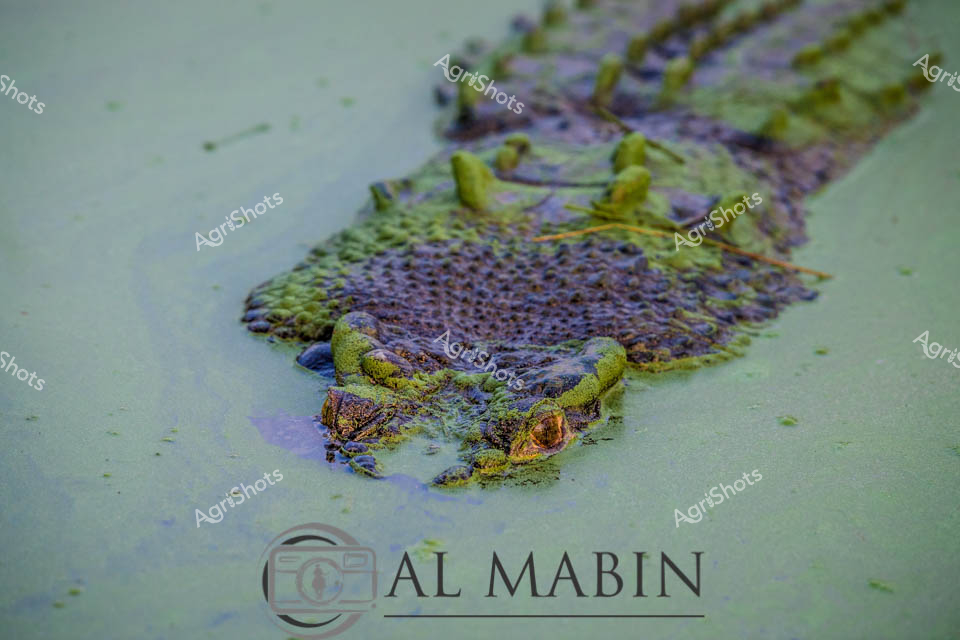
Camouflaged in murky green waters, a saltwater crocodile rests with prehistoric precision, its textured scales encrusted with algae and aquatic vegetation. Piercing golden-amber eyes emerge just above the waterline, scanning the surroundings with predatory patience characteristic of Australia's northern wilderness. The reptile's armored skin blends seamlessly with the dull olive-green environment, a masterful demonstration of natural camouflage in the Northern Territory's complex ecosystem. Minute details reveal the crocodile's incredible adaptation - moss-like growths clinging to its rugged exterior, creating a living tapestry that breaks up its massive silhouette. This magnificent apex predator represents the raw, untamed wildlife of Australia's tropical landscapes, a living fossil that has survived virtually unchanged for millions of years. The close-up perspective highlights the intricate scale patterns and remarkable survival strategies of one of the world's most successful prehistoric hunters, perfectly positioned in its watery domain.
 Image
Image
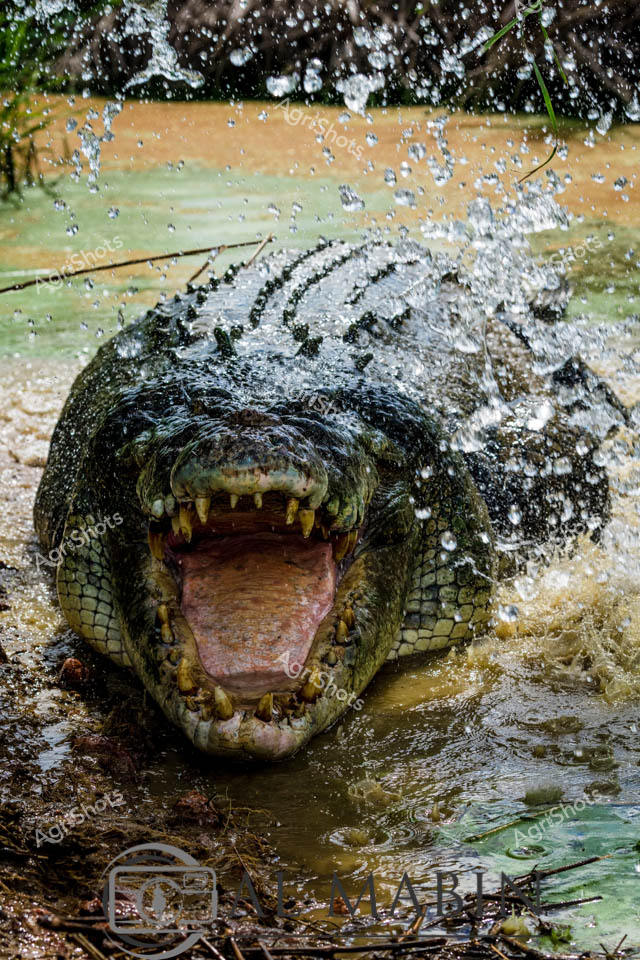
Salt-Water Predator: Territorial Display in Northern Territory Wetlands A massive saltwater crocodile erupts from murky shallows, its prehistoric form unleashing a thunderous display of raw power. Razor-sharp yellowed teeth gleam against a pink-tinged interior mouth, wide open in a primal threat posture that reveals generations of evolutionary perfection. Water droplets explode around its armored, scaled body, creating a dynamic spray that highlights every muscular contour of this apex predator. The reptile's skin - a mottled pattern of dark greens and grays - blends seamlessly with the surrounding wetland environment, a camouflage honed through millennia of survival in Australia's unforgiving northern landscapes. Murky green and tan waters surround the crocodile, with hints of vegetation and sediment creating a textured backdrop that speaks to the rich ecosystem of the Northern Territory's waterways. This moment captures the primordial essence of one of Australia's most formidable wildlife inhabitants, a living reminder of the raw, unfiltered nature that defines the continent's most remote and challenging territories.
 Image
Image
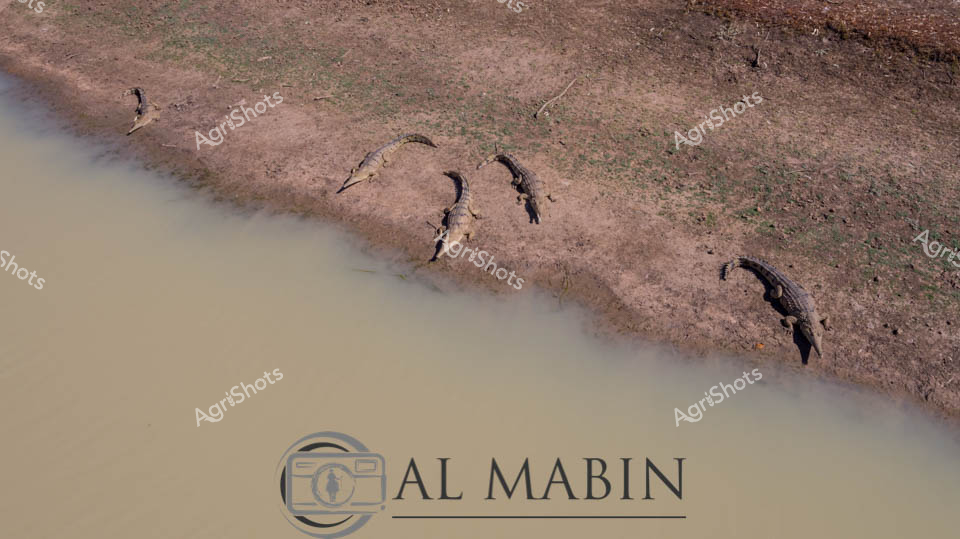
Aerial survey of estuarine predators basking along a muddy riverbank in remote Queensland. Powerful saltwater crocodiles cluster near the waterline, their muscular bodies casting shadows on the russet-brown earth and murky ochre waters. Each prehistoric reptile sprawls with calculated stillness, perfectly adapted to this harsh tropical landscape. Their scaled skin blends seamlessly with the dusty terrain, a camouflage testament to evolutionary mastery. The overhead perspective reveals the creatures' strategic positioning - some partially submerged, others stretched along the bank's irregular contour, creating a living tableau of prehistoric survival. Al Mabin's watermark suggests this compelling documentation of Australia's apex riverside predators, captured with a keen eye for ecological narrative and natural drama.
 Video
Video
A prehistoric predator basks in the midday sun along a riverbank, its scaled form perfectly adapted to the semi-aquatic landscape. The long-snouted reptile, resembling an ancient crocodilian species, stretches across patches of moss-green vegetation and exposed earth near the water's edge. Its textured skin blends seamlessly with the mottled ground, a testament to evolutionary camouflage perfected over millions of years. Nearby, similar reptilian forms rest motionless, their prehistoric silhouettes creating a primordial scene of survival and stillness. The shoreline environment tells a story of adaptation - patches of sparse grass interrupt the bare ground, suggesting a dynamic ecosystem where water meets land. The reptile's positioning captures a moment of thermal regulation, maximizing sun exposure to raise its body temperature. The .MOV file icon suggests this is a video capture, potentially documenting wildlife behavior in a remote Australian waterway. The scene speaks to the raw, uninterrupted rhythms of nature - a moment of peaceful existence for these ancient creatures in their natural habitat.
 Image
Image
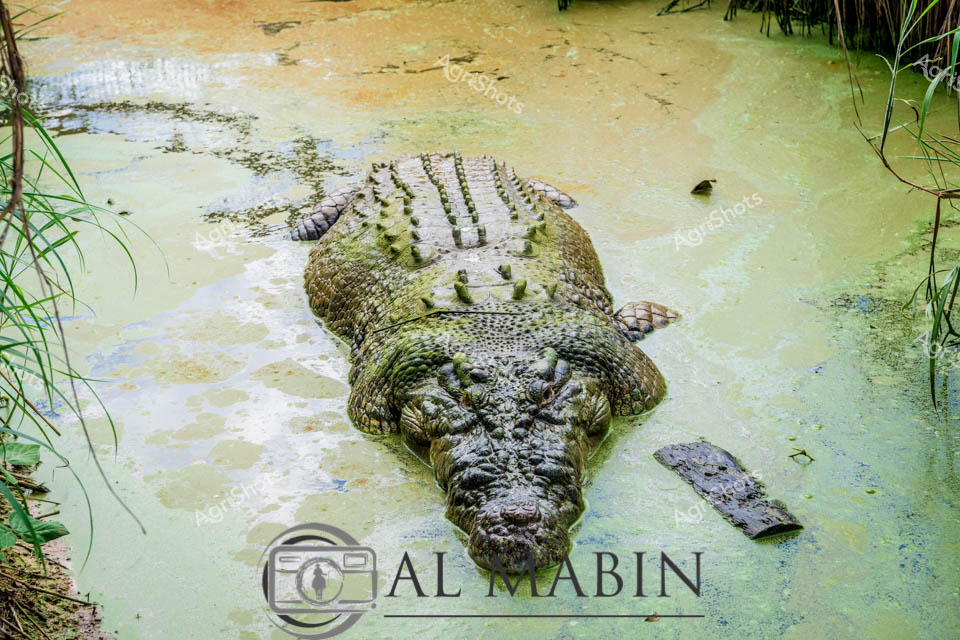
Saltwater crocodile resting in a murky billabong, its muscular scaled body perfectly camouflaged against the olive-green and muddy waters of the Northern Territory wetlands. The prehistoric predator lies motionless, its armored back bristling with sharp dorsal ridges, blending seamlessly with the surrounding aquatic vegetation and sandy banks. Reeds and grasses frame the scene, creating a primordial landscape that speaks to the raw wilderness of Australia's tropical north. Every detail of the crocodile's skin tells a story of survival - from its robust, textured hide to its powerful jaw structure, evolved over millions of years to dominate this complex ecosystem. The waterway appears still and silent, but the presence of this apex predator suggests an underlying tension and ancient hunting prowess. A watermark from photographer Al Mabin captures this remarkable moment of natural stillness, highlighting the remarkable biodiversity of Australia's northern wilderness.
 Image
Image
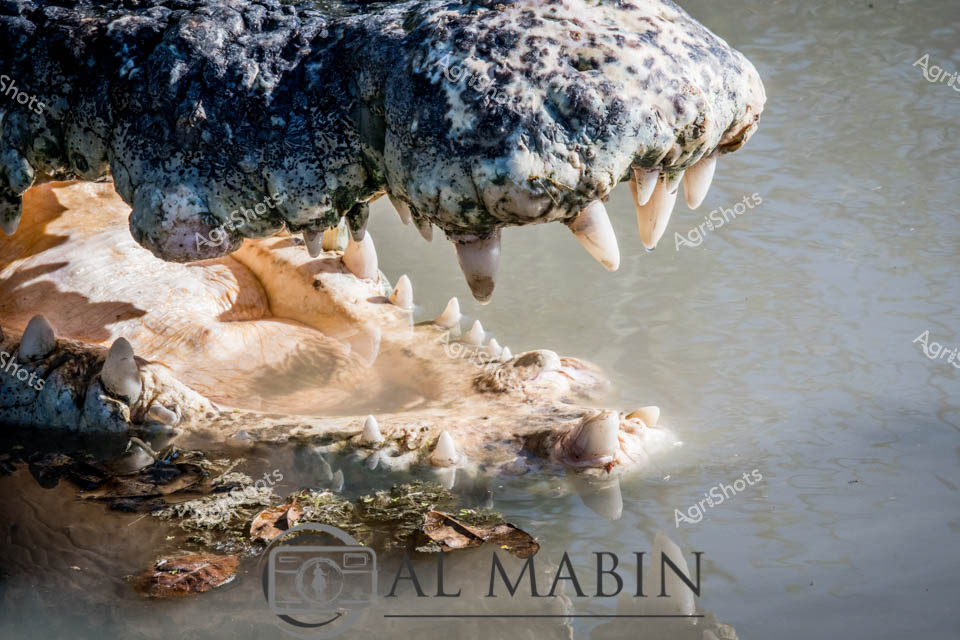
Razor-sharp teeth gleam in the harsh Queensland sunlight as a massive saltwater crocodile rests partially submerged, its prehistoric form a testament to prehistoric predatory perfection. The creature's scaled hide displays a mottled pattern of deep charcoal and weathered stone grays, blending seamlessly with the murky water and scattered leaf debris. Powerful jaws hang slightly open, revealing rows of ivory-white, dagger-like teeth that speak to millions of years of evolutionary hunting design. The textured, armored skin tells a story of survival, with each bump and scale a chronicle of life in the unforgiving waterways of northern Australia. Water laps gently around the crocodile's massive form, creating a deceptively peaceful scene that masks the raw, primordial power of this apex predator. This image captures the raw essence of Queensland's wild ecosystem, a living relic that embodies the untamed spirit of Australia's most challenging landscapes.
 Image
Image
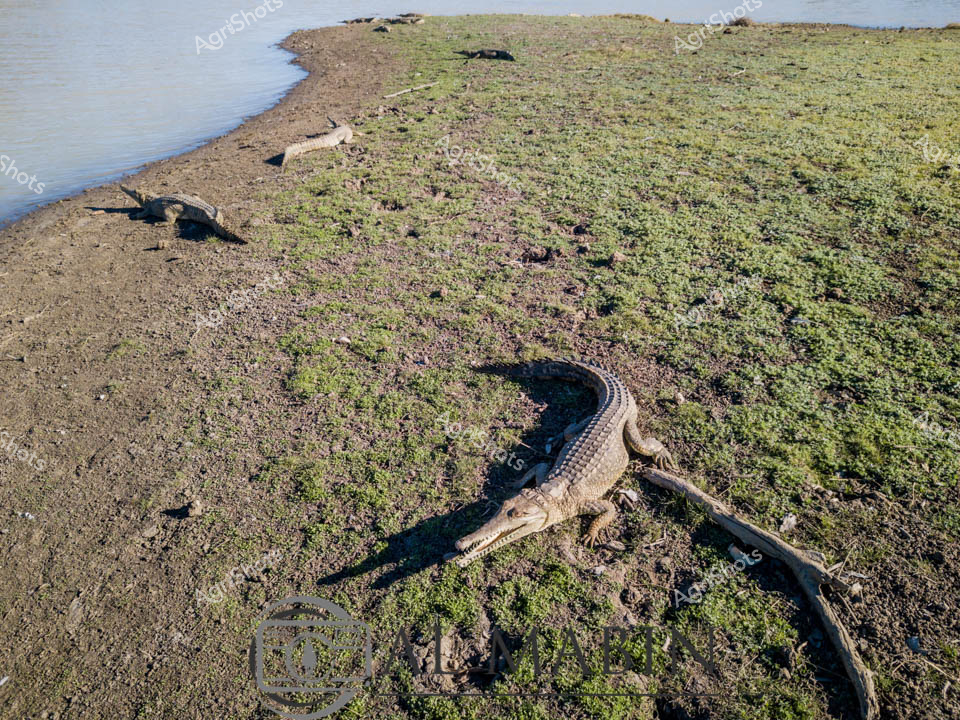
Saltwater crocodiles bask on the exposed riverbank of a remote Queensland station, their scaled bodies casting long shadows across the sun-drenched landscape. Two prehistoric predators sprawl languidly on the rocky, moss-covered ground, their muscular forms blending with the mottled earth and sparse vegetation. The rugged shoreline stretches into the distance, revealing the harsh yet pristine environment of northern Australia's wilderness. Harsh midday sunlight illuminates every textural detail of the reptiles' armored skin, highlighting their prehistoric presence in this untamed ecosystem. The water's edge provides a critical habitat interface where these apex predators regulate their body temperature and survey their territorial domain. This aerial perspective captures the raw, unfiltered essence of Queensland's wild stations - a landscape where ancient creatures continue to reign supreme in their undisturbed natural habitat.
 Image
Image
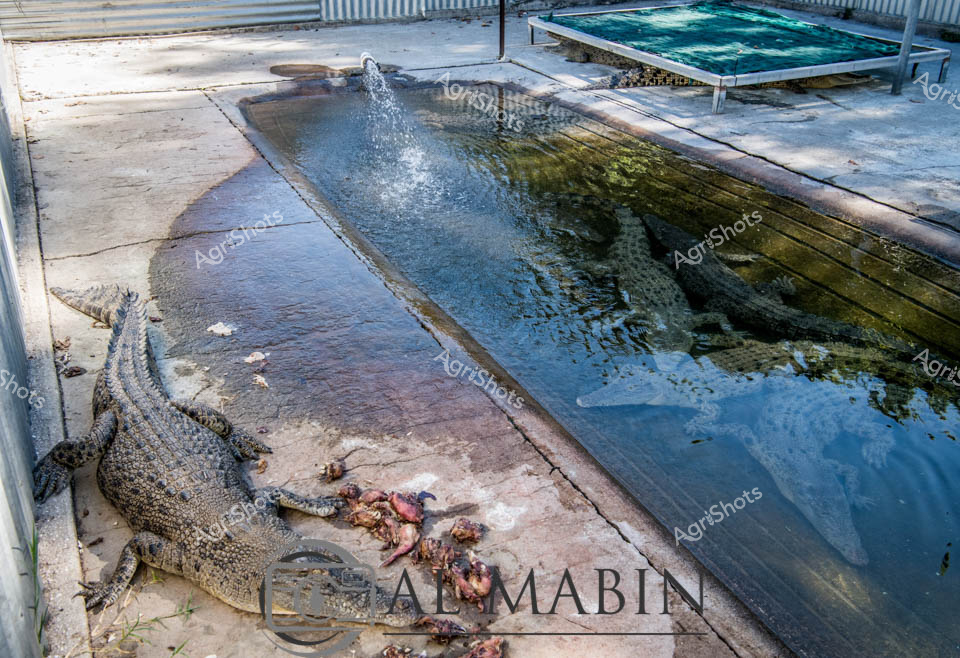
Saltwater crocodile rests beside a water feature at an agricultural research facility in Queensland, muscular predator sprawled on concrete near a feeding trough with raw meat remnants. A powerful fountain jets water into the pool, creating dynamic rippling reflections across the textured concrete surfaces. The crocodile's armored, scaled skin displays intricate prehistoric textures, its powerful body positioned between the feeding area and the deep green water reservoir. Crisp architectural elements frame the scene - corrugated metal walls, precise concrete borders, and a structured pool demonstrate a controlled, scientific environment for studying these apex predators. The image captures the raw intensity of one of Australia's most formidable reptilian species within a carefully managed agricultural research setting, highlighting the intersection of scientific observation and natural power. The watermark "ALMABINS" suggests this is part of a specialized agricultural and wildlife documentation collection, showcasing Queensland's unique ecological research capabilities.
 Image
Image
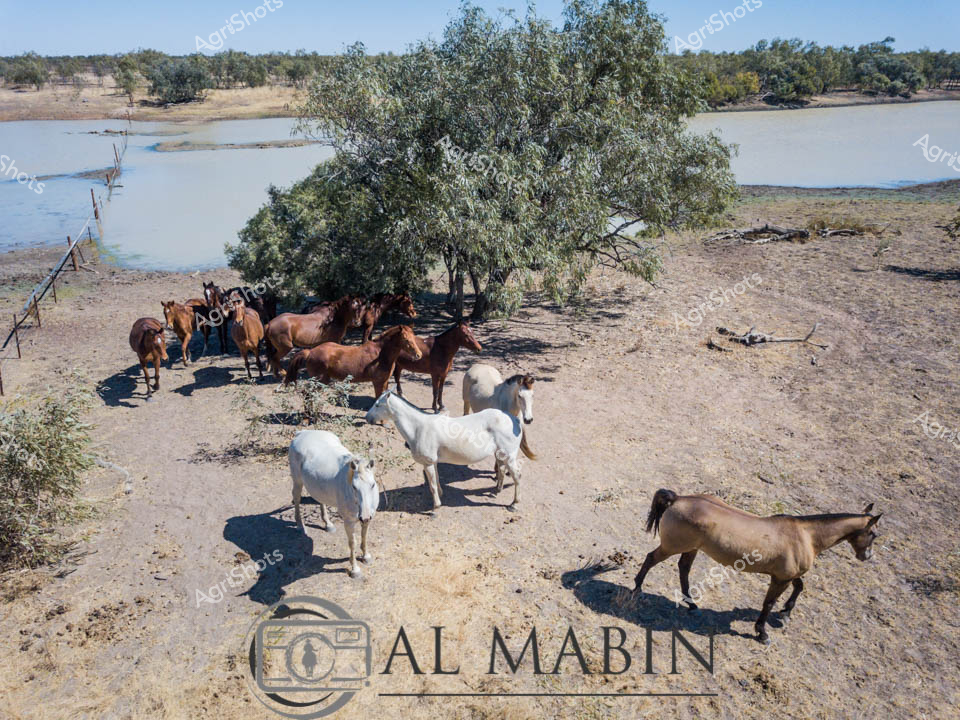
Under the sprawling canopy of a river red gum, a diverse herd of livestock clusters near a waterhole on a remote Queensland cattle station. Sturdy bay and chestnut horses intermingle with white and light-colored goats, creating a striking palette against the parched earth and blue water beyond. The sun-drenched landscape reveals a classic Australian pastoral scene - dry, expansive terrain with scattered eucalyptus trees and a subtle wire fence line marking the boundaries. Shadows cast by the animals stretch long across the cracked ground, highlighting the harsh midday light typical of inland Australia. These resilient animals seek refuge beneath the tree's protective branches, a critical respite in the unforgiving station environment where water access can mean survival. The image captures the raw essence of agricultural life in the outback - a delicate balance of livestock, landscape, and the constant challenge of managing resources in an arid climate.
 Image
Image
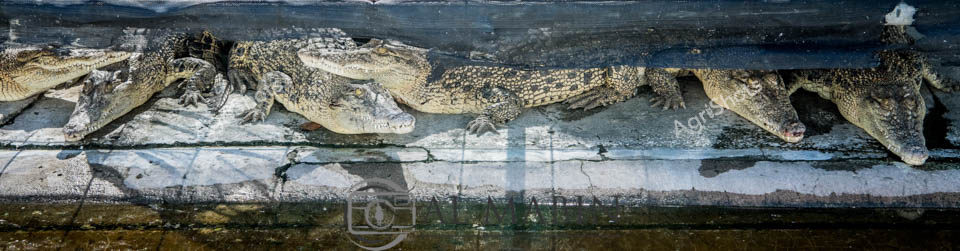
Sprawled across a weathered concrete bank, a congregation of saltwater crocodiles bask in the muted light of an overcast Queensland day. Their armored, mottled skin—a complex tapestry of olive, tan, and charcoal—reflects the rugged texture of their environment. Powerful bodies press against each other, creating a prehistoric tableau of prehistoric predators in repose, their scaled forms blending and overlapping in a mesmerizing composition of prehistoric precision. The reptiles' characteristic ridged backs and muscular forms suggest immense potential energy, even in their seemingly languid state. Hints of water and stone frame the scene, with a subtle reflective surface beneath the crocodiles adding depth and a sense of primordial stillness. This image captures the raw, prehistoric essence of Queensland's apex aquatic predators, revealing the complex social dynamics and remarkable adaptation of these ancient creatures in their native habitat.
 Image
Image
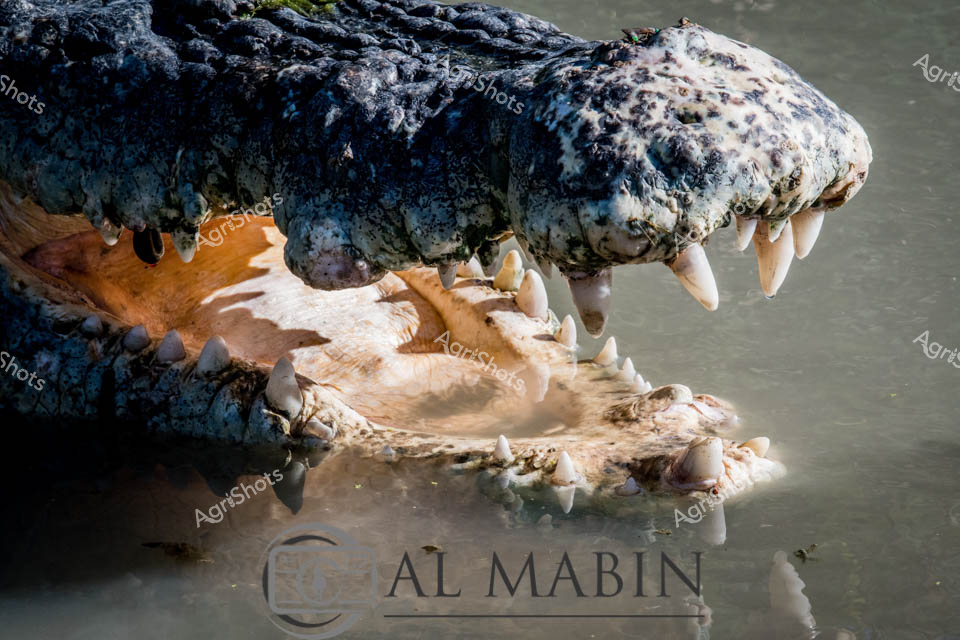
Primordial predator emerges from murky waters, revealing prehistoric power and precision. Razor-sharp ivory teeth line the massive reptilian jaw, a testament to millions of years of evolutionary perfection. Textured scales in mottled slate-gray and pale granite cascade across the crocodile's formidable skull, each ridge and bump telling a story of survival in Australia's northern waterways. The creature's mouth gapes open, displaying an intricate landscape of bone-white dentition against a soft, almost golden inner mouth membrane, capturing the raw, unfiltered intensity of an apex predator. Captured in crisp detail, this image speaks to the untamed wilderness of Queensland's tropical regions, where these ancient hunters have ruled for countless millennia. The waterline reflects the crocodile's muscular form, highlighting the prehistoric drama of survival in Australia's most challenging ecological environments.
 Video
Video
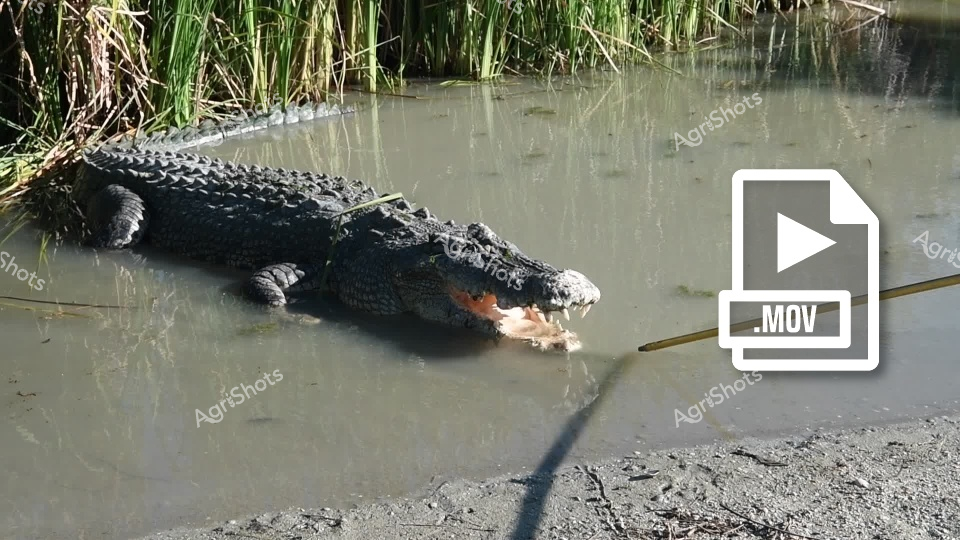
This captivating wildlife footage captures a large saltwater crocodile in a murky water environment, likely in a tropical or subtropical Australian wetland setting. The powerful reptile is seen with its massive jaws clamped around prey, demonstrating the raw predatory behavior characteristic of these ancient creatures. Muddy, reed-lined waters surround the crocodile, creating a textured backdrop that highlights the reptile's prehistoric appearance - its scaled, armored skin displaying intricate patterns of grays and dark greens against the murky water surface. The video clip showcases the crocodile's dominant presence in its natural habitat, with dense reed vegetation framing the scene and providing a sense of the dense, humid ecosystem. Partially submerged, the crocodile's powerful body reveals the incredible adaptive features that have made these predators such successful survivors through millions of years of evolution. The muddy shoreline and still water suggest this is likely a billabong, river system, or coastal wetland typical of northern Australian regions like the Northern Territory or Queensland. The moment captured is primal and intense - revealing the raw survival instincts of one of Australia's most formidable apex predators in its natural environment. The crocodile's powerful grip and immense size demonstrate why these creatures are considered living dinosaurs, perfectly adapted to their challenging aquatic ecosystem.
 Image
Image
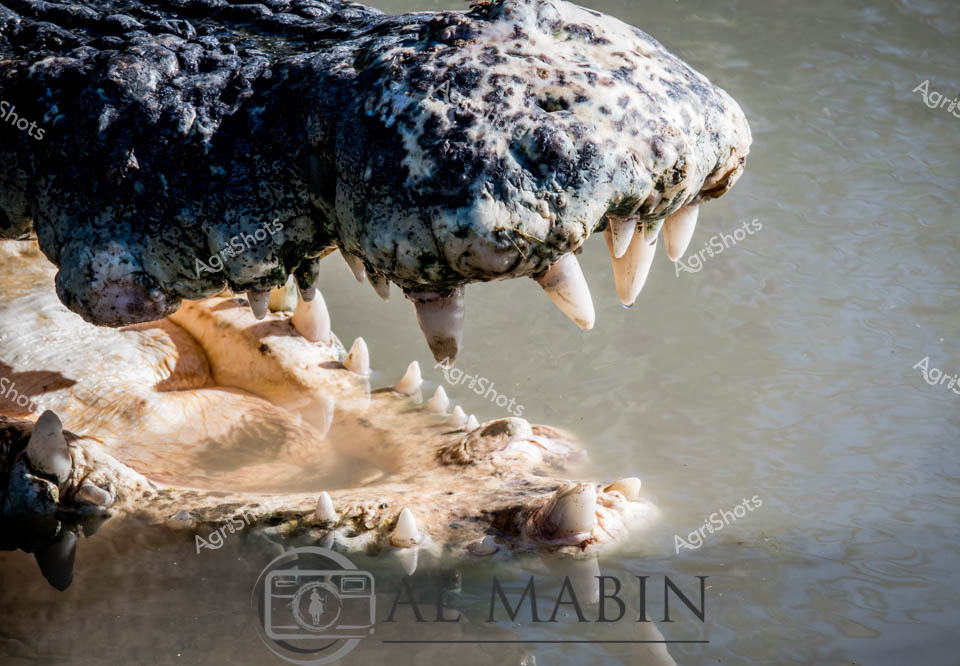
Saltwater crocodile jaws emerge from murky waters, revealing a prehistoric predator's formidable dentition. Massive, scaled head displays a mottled texture of charcoal and pale gray, with razor-sharp ivory teeth interlocking in a powerful display of natural weaponry. The reptile's weathered snout and muscular jaw represent the apex predator of northern Queensland's tropical waterways, a living fossil perfectly adapted to its aquatic environment. Translucent water ripples around the creature's armored form, suggesting the subtle movement of a patient hunter poised in its natural habitat. The intricate pattern of scales and the brutal precision of the teeth speak to millions of years of evolutionary refinement, capturing the raw, uncompromising survival mechanism of one of Australia's most iconic reptilian species. This close-up reveals the primal intensity of a saltwater crocodile, a keystone species of Queensland's complex river ecosystems.
 Video
Video
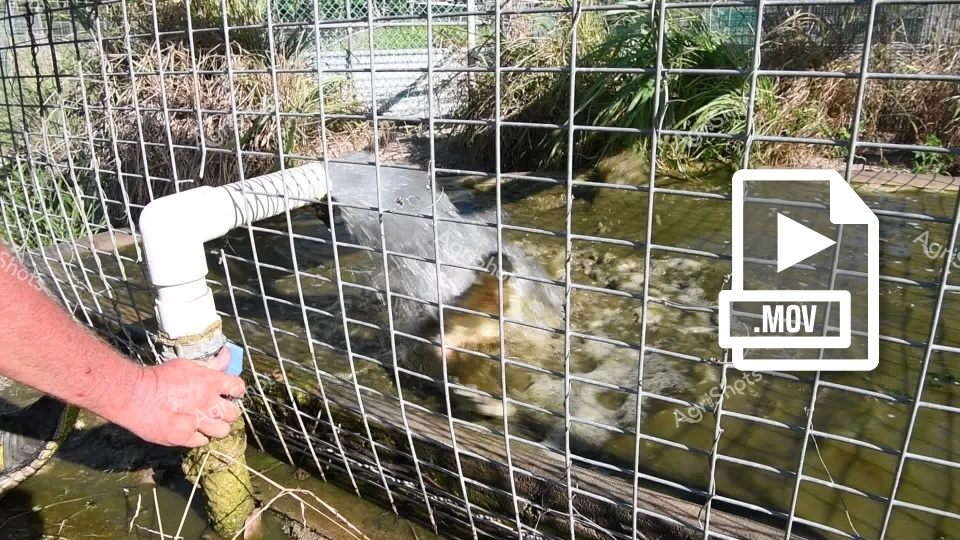
This engaging video footage captures a unique water management scene, likely on an Australian agricultural property. The clip features a metal wire cage enclosure surrounding what appears to be a small water channel or drainage system, with lush green grasses and vegetation visible in the background. A gloved hand is shown manipulating a white PVC pipe connection, suggesting some form of water flow control or maintenance activity. The verdant green and brown tones of the vegetation contrast with the metallic wire mesh and white piping, creating an industrial yet natural visual environment. The scene hints at the careful water management practices essential in Australian agricultural settings, where precise water distribution and conservation are critical for farming operations. A .MOV video icon suggests this is part of a professional agricultural documentation series capturing the technical details of rural infrastructure maintenance.
 Image
Image
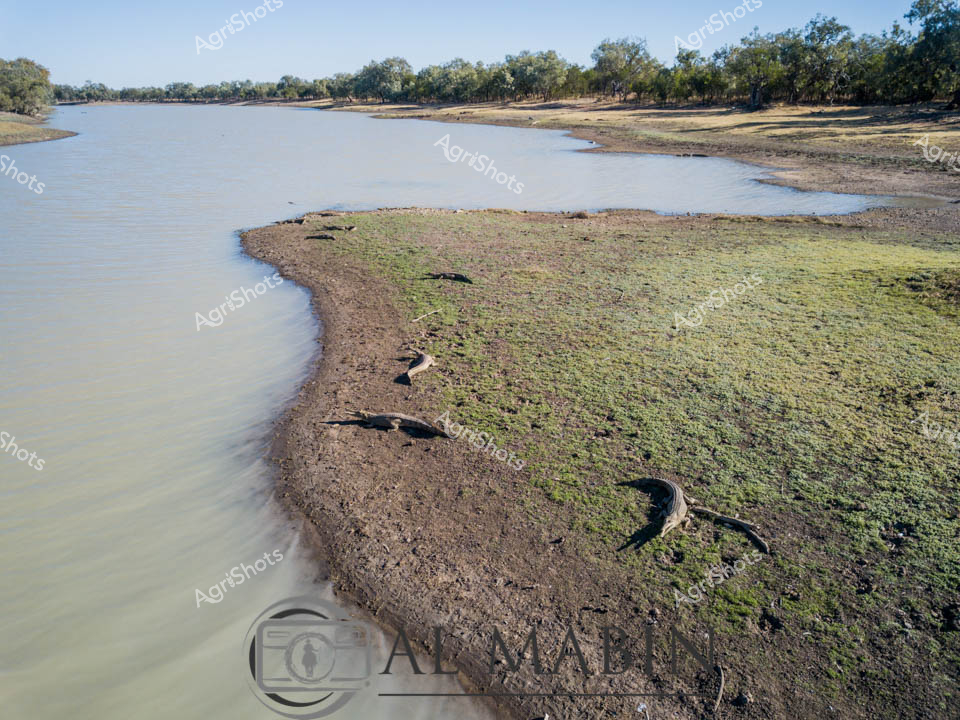
A powerful landscape of rural Queensland captures the stark beauty of an inland waterway, where several saltwater crocodiles rest along the muddy riverbank. Weathered river gums line the distant shoreline, their silvery-green foliage casting muted shadows across the sun-bleached terrain. The river flows with a languid, muddy complexity, revealing the challenging environmental conditions of the Australian outback. Patches of sparse green vegetation contrast against the brown earth, highlighting the resilient ecosystem of this remote station landscape. Prehistoric predators lie motionless on the riverbank, their scaled bodies blending seamlessly with the rocky terrain - a testament to the wild, uncompromising nature of Queensland's remote waterways. The aerial perspective reveals the intricate relationship between water, land, and wildlife in this unforgiving but magnificent agricultural frontier.
 Video
Video
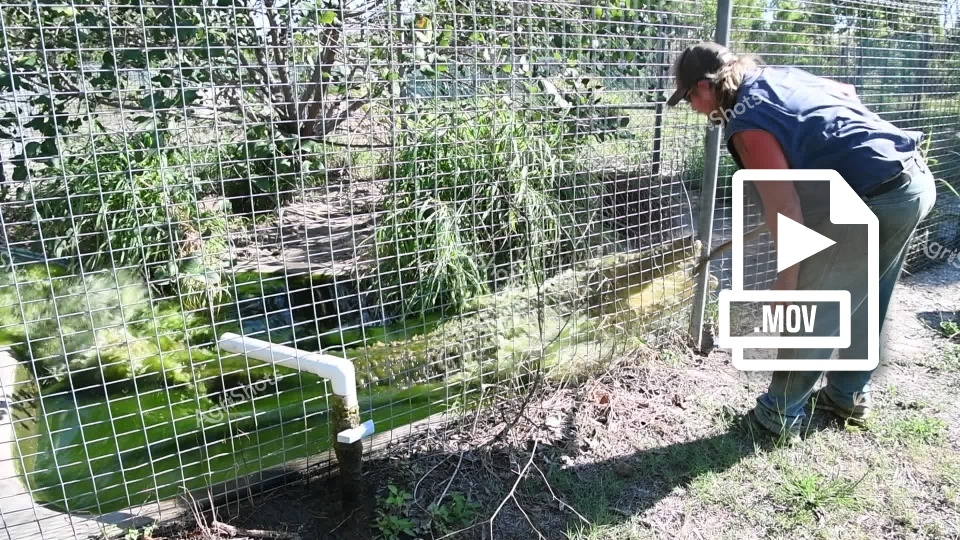
This agricultural video footage captures an engaging scene of a worker meticulously maintaining an enclosed garden or agricultural enclosure. The clip shows a person in a blue top and cap carefully working along a wire mesh fence, surrounded by lush green vegetation and native plants. White PVC piping is integrated into the fencing structure, suggesting this is likely a specialized growing environment, potentially for native plant cultivation or a controlled agricultural experiment. The video reveals a carefully constructed wire mesh enclosure with dense greenery growing inside, indicating a protected cultivation space. Sunlight filters through the mesh, creating dappled light effects on the ground and plants. The worker appears to be performing maintenance, possibly adjusting the fence, checking plant growth, or preparing the enclosed area for cultivation. The ground surface shows a mix of mulched earth and grass, with carefully managed vegetation surrounding the wire mesh structure. The clip suggests a professional, methodical approach to plant management, potentially in a research, conservation, or specialized agricultural setting. The verdant background and careful enclosure hint at a controlled environment designed to protect and nurture specific plant species.
Well, you've ploughed through the whole field!
No more crops to harvest here, mate.
Try searching for something else in our library of 50,000+ royalty-free media: