 Video
Video
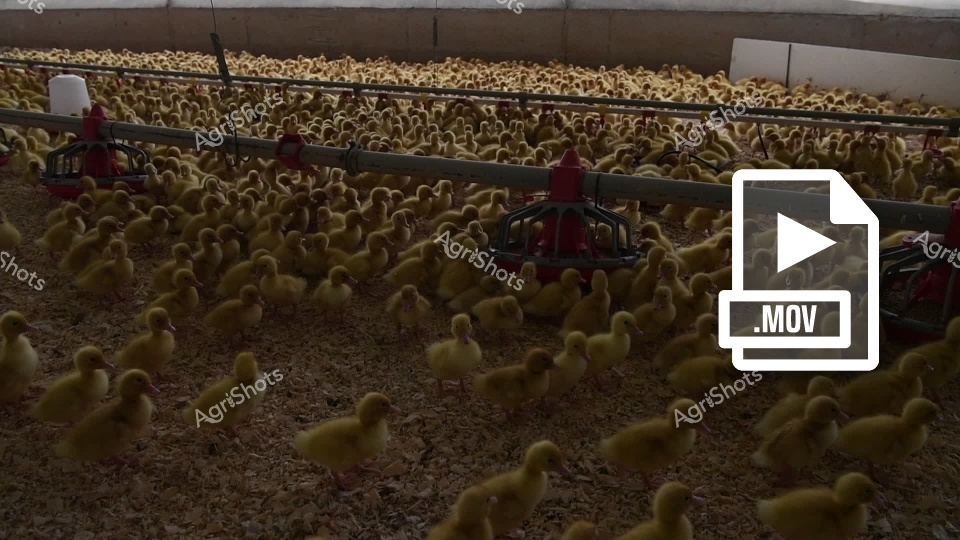
A vast poultry farm bustles with thousands of golden-yellow ducklings, densely packed across a climate-controlled indoor facility. Delicate yellow downy feathers cover the young birds, creating a living carpet that stretches across the expansive barn floor. Automated feeding and watering systems with red mechanisms stand strategically throughout the space, ensuring uniform distribution of resources to the massive flock. Red vertical supports and metal horizontal barriers create a structured environment that maximizes space and allows systematic management of these young waterfowl. The floor is covered with a soft, textured bedding material that provides insulation and comfort for the young ducklings, highlighting the precision of modern agricultural breeding practices.MOV video icon suggest this is a professional documentation of large-scale duck farming, capturing the intricate process of raising poultry for commercial production.
 Image
Image
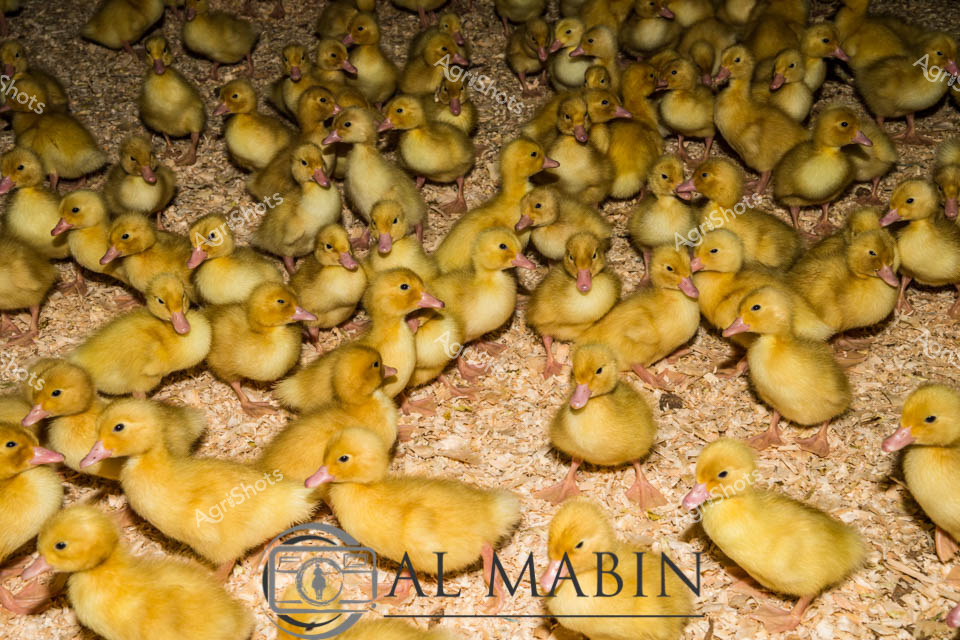
Fluffy buttercup-yellow ducklings huddle tightly across a wood shavings-covered brooding floor, their soft downy feathers creating a uniform sea of golden warmth. Dozens of newly hatched Pekin ducks cluster together, their delicate pink beaks and bright curious eyes revealing their young age. This intensive poultry farming scene captures the early stages of commercial duck production, likely in a controlled agricultural facility in New South Wales. The uniform coloration and dense grouping demonstrate careful breeding and management practices typical of modern Australian agricultural systems. Each duckling appears healthy and robust, representing the precise environmental control and systematic approach of contemporary duck rearing. The Focal Mabin watermark in the corner signals this as a professional agricultural documentation, capturing the intricate early lifecycle of these commercial livestock.
 Image
Image
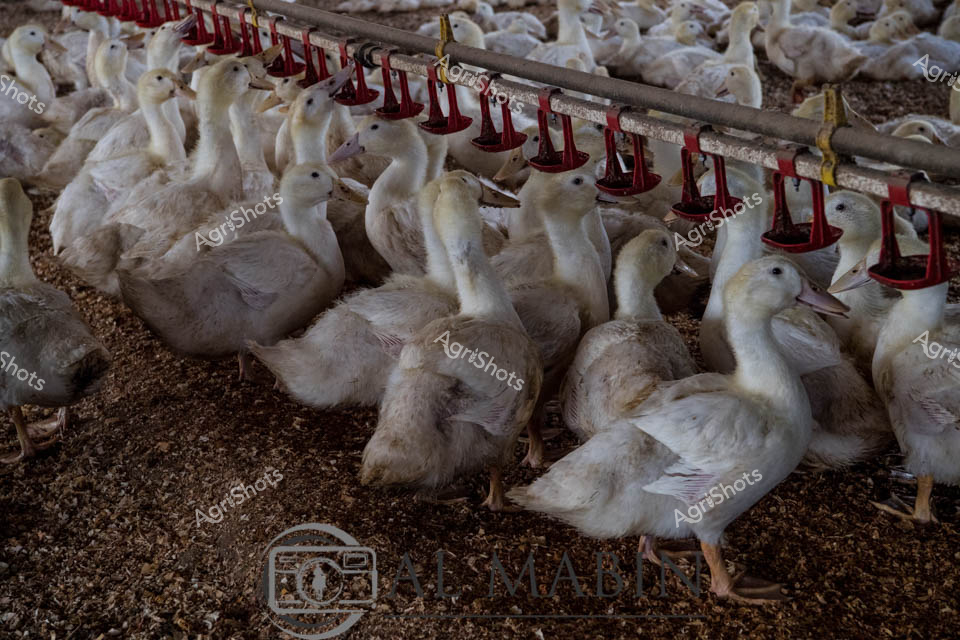
White Peking ducks huddle densely across a dimly lit poultry shed in regional New South Wales, their plump bodies clustered on a textured ground of fine granular feed and organic matter. Uniform red-topped feeding stations hang from a steel overhead rail, providing structured access points across the crowded enclosure. The birds display the characteristic creamy-white feathering of the Peking breed, their compact forms suggesting optimal growth conditions in this intensive farming environment. Soft shadows and muted earth tones create a sense of controlled agricultural precision, highlighting the systematic approach to modern duck production. Each bird appears healthy and well-maintained, representing a carefully managed livestock operation typical of Australian agricultural practices. The image captures the industrial efficiency of contemporary poultry farming, where design and animal husbandry converge to maximize production in a compact, controlled setting.
 Image
Image
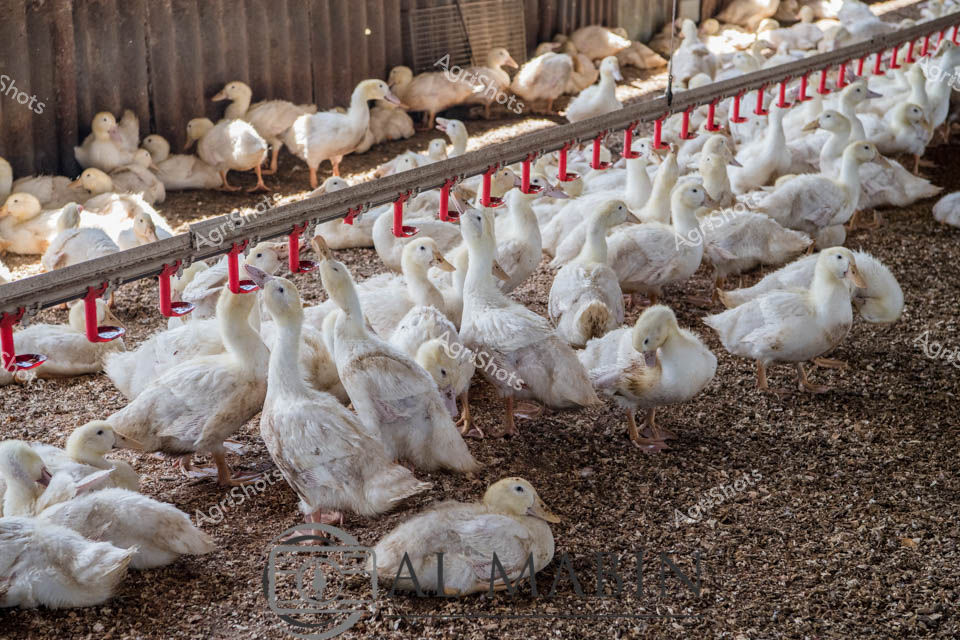
Pristine white Peking ducks cluster densely across the expansive indoor rearing shed, their soft feathered bodies contrasting against the dark gravel floor. Uniform red feeding lines trace elegant geometric patterns along the shed's wooden walls, providing systematic nutrition to the tightly-packed flock. These prized waterfowl, bred for premium meat production, represent a critical segment of Australia's sophisticated poultry agricultural sector, with this controlled environment optimizing growth and health conditions. Soft natural light filters through the shed's structured interior, highlighting the ducks' immaculate plumage and creating subtle shadows across their clustered forms. Each bird appears robust and well-developed, reflecting meticulous breeding and management practices characteristic of modern intensive agricultural systems in New South Wales. The image captures the precise, engineered approach of contemporary duck farming - a testament to agricultural efficiency where every environmental detail is carefully calibrated to support optimal livestock development.
 Image
Image
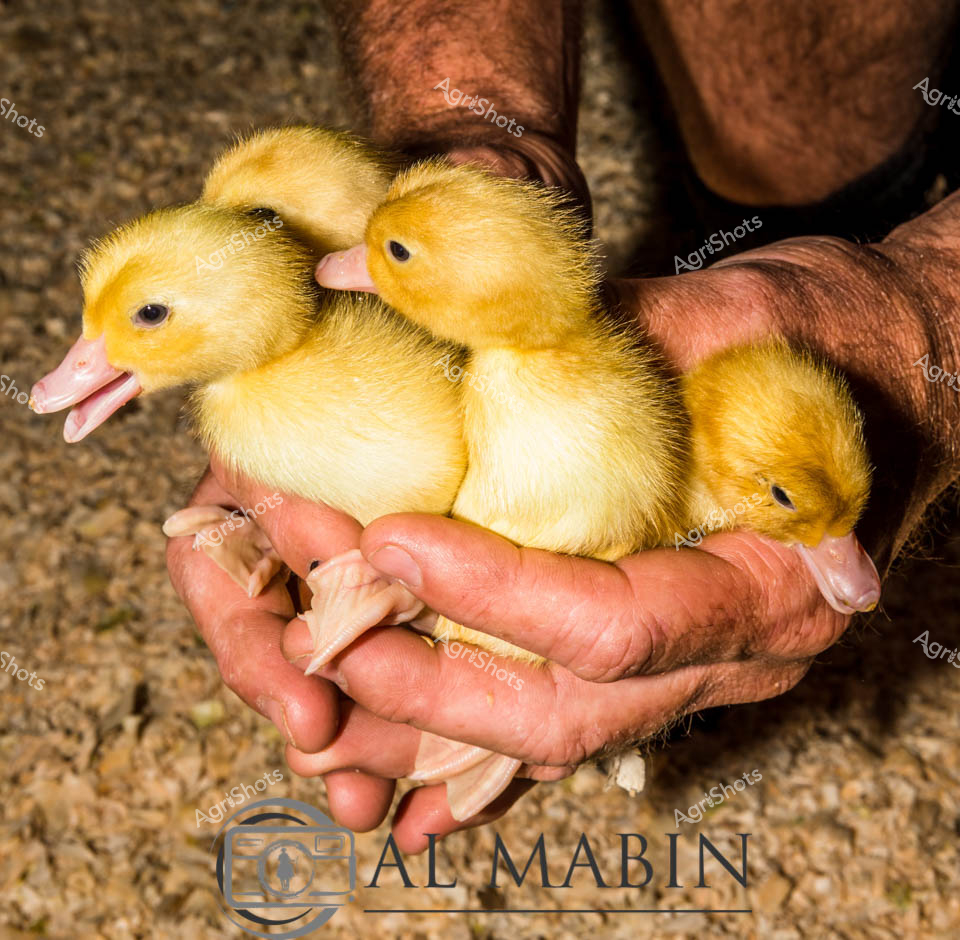
Nestled in weathered, sun-weathered hands, three golden ducklings huddle together, their downy feathers glowing like soft sunlight against the rough, earthy background. These young poultry represent the delicate beginnings of intensive farming in rural New South Wales, where each tiny creature is cradled with precision and care. Their plump, vibrant yellow bodies contrast beautifully with the reddened, work-worn palms supporting them, telling a story of nurture and agricultural dedication. Soft pink beaks and deep blue-black eyes reveal their youth, while their perfectly uniform coloration speaks to careful breeding practices in modern Australian poultry production. The intimate close-up captures the moment of gentle handling, showcasing the direct connection between farmer and livestock that defines agricultural stewardship. Every textural detail - from the ducklings' fluffy exterior to the lined, experienced hands holding them - communicates the meticulous attention required in raising these future farm animals.
 Image
Image
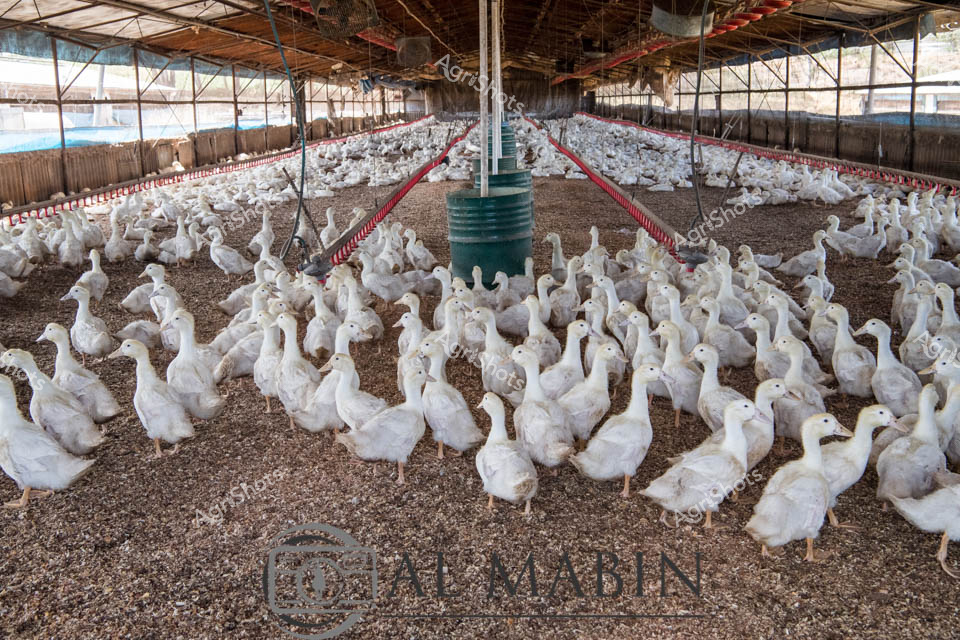
Industrial-scale Peking duck production unfolds within a sprawling steel-framed shed, where hundreds of pristine white ducks cluster across a textured ground of fine gravel and organic matter. The uniform flock spreads across the controlled environment, anchored by a central green feeding mechanism suspended from the corrugated roof structure. Precise red boundary markers define movement corridors, creating geometric patterns among the densely packed birds. These plump, pale ducks represent a carefully managed agricultural asset, bred for efficient protein production in a meticulously controlled New South Wales intensive farming system. Soft ambient light filters through the shed's translucent roof panels, casting gentle shadows and highlighting the birds' smooth feathered forms against the neutral brown ground. The scene epitomizes modern agricultural efficiency - a calculated, systematic approach to poultry farming that balances animal husbandry with commercial food production imperatives.
 Image
Image
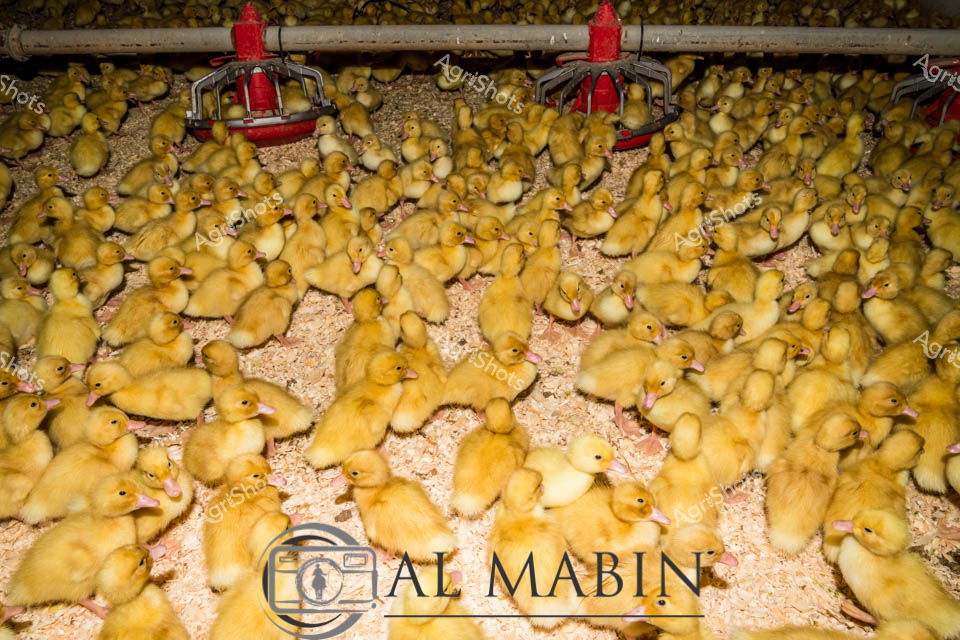
A golden sea of downy ducklings floods the brooding floor, their soft yellow plumage creating a living carpet across wood shavings beneath industrial red feeding mechanisms. Hundreds of day-old ducklings huddle closely, their tiny beaks and bright eyes representing the early stages of intensive poultry production in rural New South Wales. Precision agricultural equipment - suspended feeders with distinctive red caps - frame the scene, ensuring uniform access to nutrition for this tightly managed flock. The uniform coloration and dense clustering reveal the carefully controlled environment of modern commercial duck farming, where every square centimetre is optimized for efficient growth and development. Warm lighting bathes the young birds, highlighting their delicate feathering and suggesting the carefully regulated temperature essential for their survival and rapid maturation. The Cal Mabin watermark subtly indicates the professional documentation of this critical agricultural process, capturing the intersection of biological life and industrial agricultural systems.
 Video
Video
In a bustling poultry house, rows of plump white ducks paddle peacefully along the soft, straw-covered floor, their downy feathers glistening under the warm artificial lighting. The environment is rich with the earthy scent of bedding, and the faint sound of quacking fills the air, creating a lively atmosphere. A meticulously arranged feeding line snakes through the center of the barn, its vibrant red troughs starkly contrasting against the neutral tones of the wooden structure. Farm workers in crisp, blue overalls bustle around, ensuring each duck has access to fresh feed and water, showcasing the dedicated care that goes into raising these animals. The scene captures a vital moment in poultry farming, emphasizing the importance of efficient feeding practices in raising healthy livestock. The overall mood is one of industrious harmony, highlighting the synergy between farm workers and their feathered charges in this central Australian agricultural operation. The presence of a subtle, branded signage across the feeding line suggests quality and professionalism in the farming practices employed here.
 Image
Image
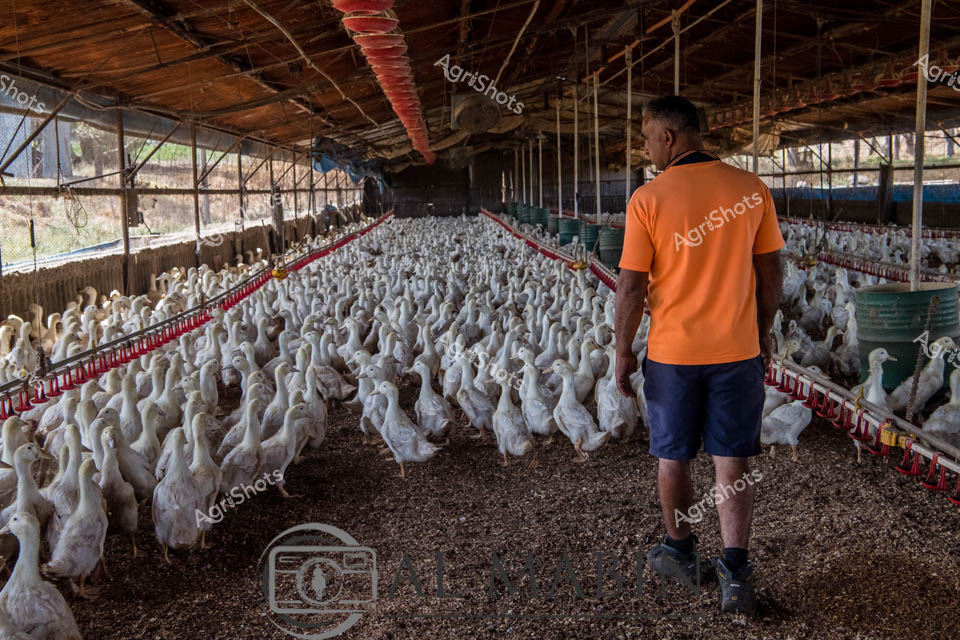
Pristine white Peking ducks fill every inch of this expansive poultry shed, their plump bodies creating a dense, feathered landscape under the wooden-trussed roof. A farmer in a bright orange shirt stands sentinel among the flock, surveying the meticulously organized rows of young birds stretching across the extensive indoor farming facility. The floor is covered in a textured layer of feed and bedding, creating a rich brown base that contrasts sharply with the uniform white of the ducks and the vivid orange of the worker's shirt. Overhead, a red ventilation tube runs the length of the shed, providing critical climate control for the densely populated space. The image captures the precision of modern agricultural practices, where every square metre is carefully managed to maximize production. Rows of green feeders line the edges of the pen, highlighting the systematic approach to livestock management typical of contemporary Australian duck farming operations.
 Image
Image
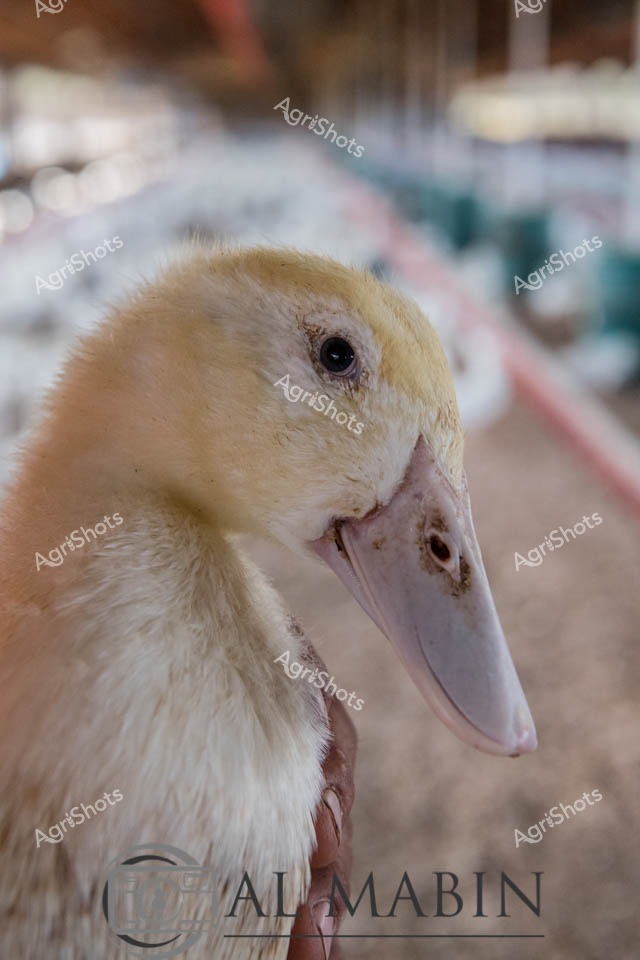
A pristine Peking duck sits alert in an intensive farming environment, its creamy pale feathers gleaming against a blurred background of industrial poultry housing. The bird's distinctive profile reveals the characteristic pale beak and soft, downy plumage that makes this breed prized in commercial duck production. Every detail of its anatomy speaks to generations of selective breeding - the compact body, smooth feather texture, and keen eye reflecting the precision of modern agricultural practices in New South Wales. The soft focus background suggests a controlled, clean indoor environment typical of contemporary poultry facilities, where temperature, nutrition, and biosecurity are meticulously managed. This close-up portrait captures the essence of Australian duck farming, highlighting the care and genetic refinement that goes into producing high-quality poultry for domestic and export markets. The duck's serene yet attentive posture demonstrates the calm temperament that makes Peking ducks ideal for commercial production, embodying the intersection of animal husbandry, agricultural science, and food production that characterizes modern Australian farming.
 Image
Image
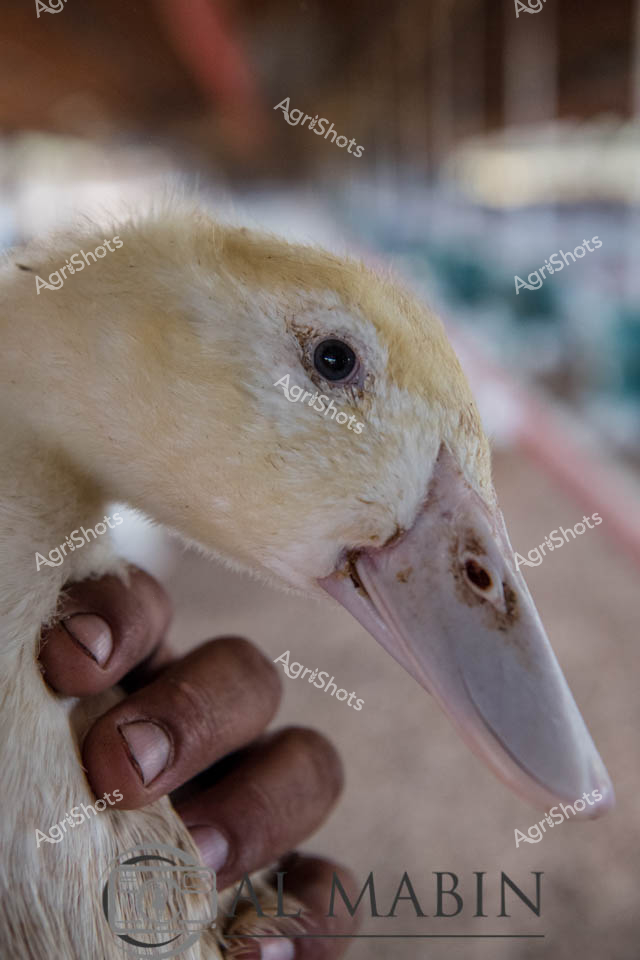
Alabaster feathers gleam under soft light as a farm worker's weathered hand cradles a Peking duck, revealing the intimate connection between human and livestock in modern poultry farming. The duck's luminous eye peers intently, its distinctive white plumage and elongated bill characteristic of this prized breed developed in China but now a staple of Australian agricultural production. Delicate details emerge in this close-up portrait - the subtle texture of downy feathers, the warm brown skin of the hand, the precise positioning that speaks to generations of careful animal husbandry practiced across New South Wales' intensive farming operations. The image captures the precise moment of handling that defines professional poultry management, where gentle expertise meets biological precision. Soft background tones suggest an indoor farming environment, likely a climate-controlled shed designed to optimize duck development and welfare. Every curve and contour tells a story of agricultural craft, where each bird represents both a living creature and a carefully managed agricultural asset. This portrait embodies the nuanced relationship between agricultural workers and their livestock, showcasing the meticulous care fundamental to Australia's thriving poultry industry.
 Image
Image
Fluffy buttercup-yellow Pekin ducklings huddle tightly together on a bed of wood shavings, their soft downy feathers creating a vibrant mosaic of golden hues. Each tiny duckling displays bright, alert eyes and delicate pink bills, showcasing the early stages of intensive poultry farming in rural New South Wales. The densely packed group represents the precision and efficiency of modern agricultural breeding techniques, with uniform coloration and size indicating careful genetic selection and controlled environment management. Soft ambient lighting highlights the remarkable uniformity of these young birds, their collective body heat and proximity reflecting natural instincts adapted to commercial production settings. Wood shavings provide insulation and absorption, creating a clean, temperature-controlled microenvironment crucial for duckling survival and growth. The AgriShots watermark subtly indicates this is a professional agricultural documentation, capturing the sophisticated infrastructure behind Australia's poultry industry. These Pekin ducklings embody the intersection of biological potential and agricultural science, representing a critical stage in livestock production that transforms genetic promise into commercial protein resources. Their synchronized presence speaks to the meticulous care and technological innovation driving modern Australian agricultural practices.
 Image
Image
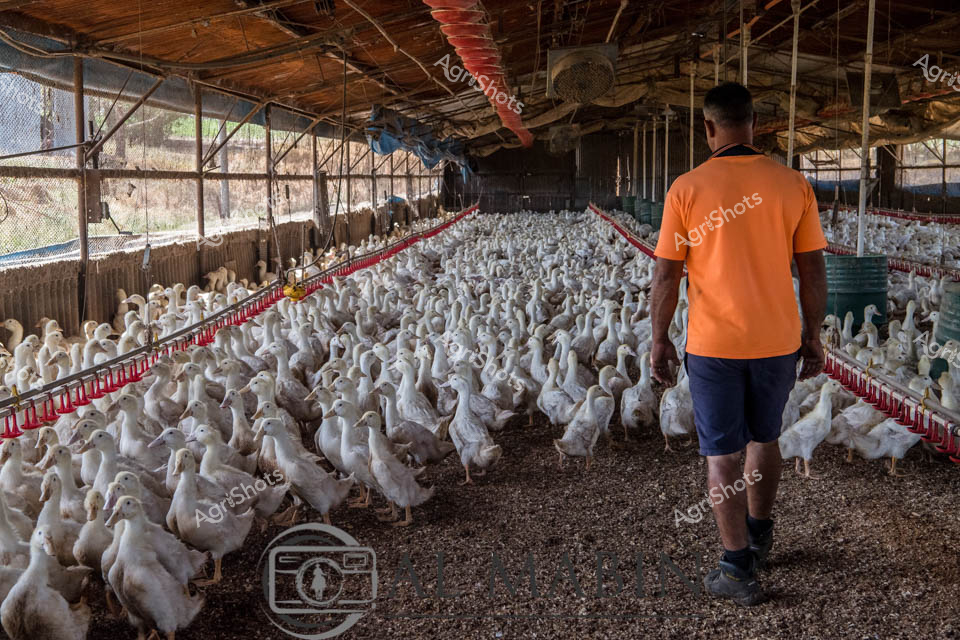
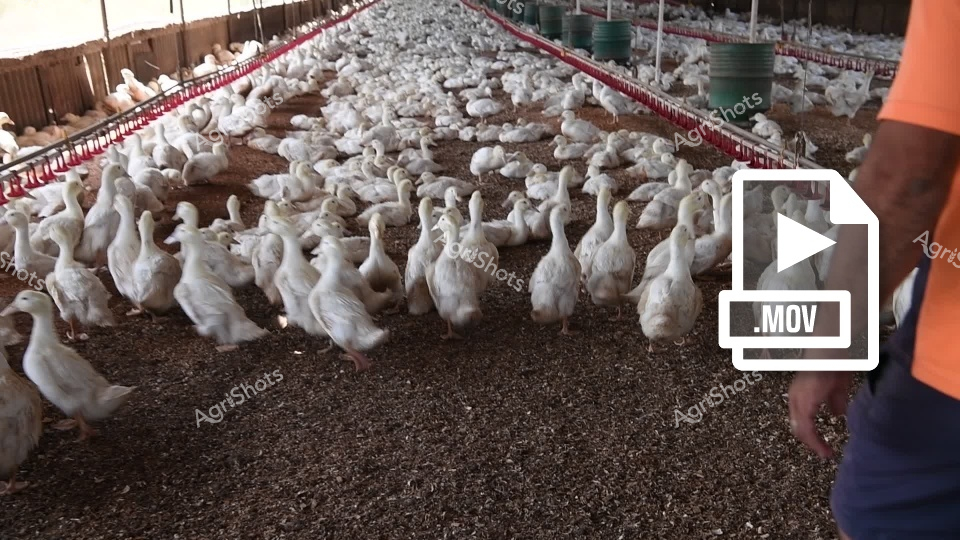
White Peking ducks crowd a densely packed industrial poultry shed in rural New South Wales, their pale feathered bodies creating a sea of pale plumage across the floor. A farm worker in a vibrant orange shirt stands with his back to the camera, surveying the flock amid the structured metal feeding lines and wire mesh walls. Soft natural light filters through side ventilation panels, highlighting the textured ground of compacted soil and feathers. Hundreds of ducks move almost as a single organism, their uniform coloration broken only by the red accents of feeding troughs and structural elements. The shed's wooden-beamed ceiling and rustic infrastructure speak to generations of agricultural practice, while the precise, organized nature of the space represents modern intensive farming techniques. This scene captures the systematic efficiency of contemporary Australian poultry production, where carefully managed environments support large-scale protein cultivation.
 Image
Image
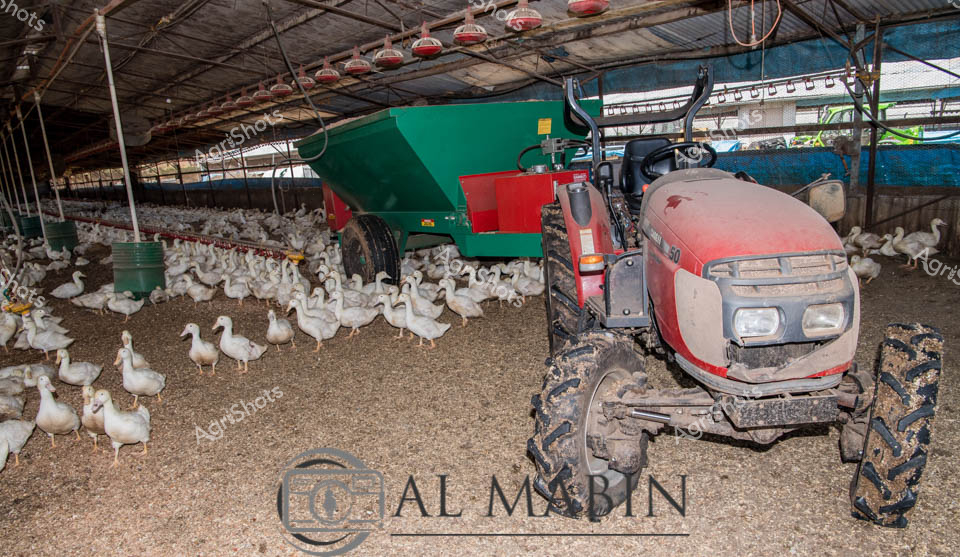
Alabaster-feathered Peking ducks cluster across the expansive shed floor, their compact bodies creating a living carpet against rich brown litter beneath a corrugated iron roof. A robust red and grey Case tractor stands ready alongside a forest-green feed distribution trailer, positioned centrally in this high-efficiency poultry production environment. Crimson heat lamps hang methodically overhead, casting a warm glow across the controlled indoor farming space, designed to optimize duck growth and welfare. Precision agricultural equipment demonstrates the sophisticated approach of modern NSW intensive duck farming, where mechanical systems seamlessly integrate with carefully managed livestock populations. The scene captures the industrial rhythm of contemporary agricultural production - clean, organized, and engineered for maximum productivity. Muddy tractor tires and carefully maintained infrastructure speak to the technical expertise required in large-scale poultry management, representing a critical sector of Australian agricultural innovation.
 Video
Video
A bustling duck farm comes to life with a dynamic scene inside a spacious barn, filled with the harmonious clucking of ducks of various sizes. The barn, illuminated by natural light filtering through the open rafters, creates a warm atmosphere that emphasizes the earthy tones of the wood and the soft, expressive features of the white ducks moving playfully across the straw-covered ground. Farmers in vibrant orange shirts, emblazoned with the farm's logo, engage in critical tasks, ensuring the ducks have access to feed and water, while maintaining an organized and clean environment. Clusters of ducks gather near a red feeding line, contrasting sharply with the brown and tan hues of the bedding material beneath their webbed feet. The subtle sound of rustling and gentle quacking fills the air, creating a lively yet calm ambience that reflects the dedication of farm life. Dust motes dance in the beams of light, enhancing the rustic charm of this thriving agricultural setting. Every detail, from the vibrant clothing of the workers to the soft textures of the ducks’ feathers, adds to the vivid narrative of modern poultry farming in a nurturing environment.
 Image
Image
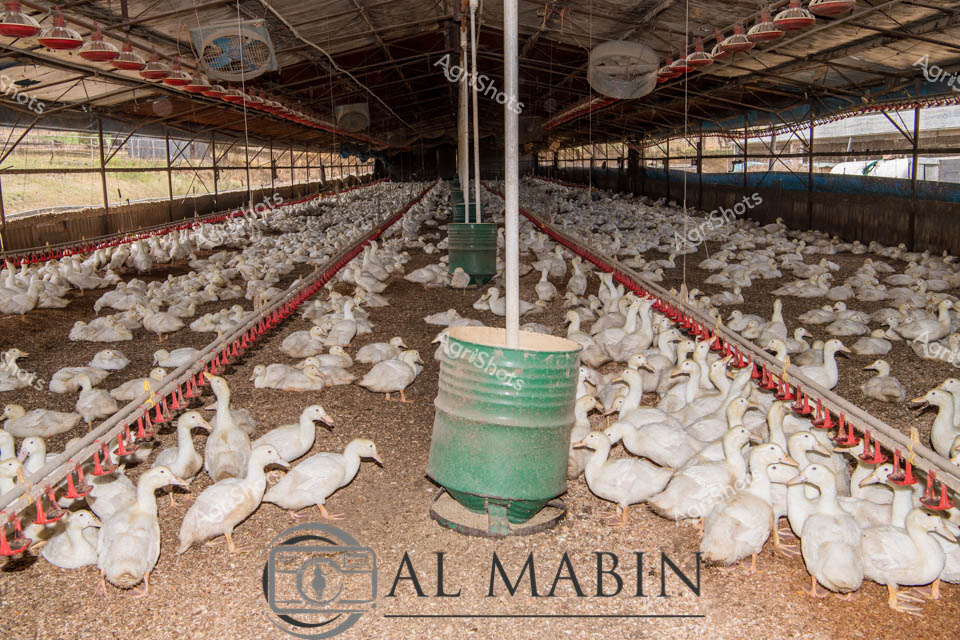
Packed tightly across a sprawling industrial shed, hundreds of white Peking ducks blanket the floor in a dense, feathered carpet. Overhead, industrial red heat lamps cast a warm glow across the controlled environment, while large industrial fans circulate air between the metal-framed structure's translucent roof panels. A central green industrial barrel stands as a focal point, surrounded by rows of pristine white waterfowl clustered along red feeding troughs. The precise geometric lines of the shed, combined with the uniform coloration of the ducks, create a striking visual rhythm of agricultural efficiency. These ducks represent a meticulously managed protein production system, typical of modern intensive farming practices in rural New South Wales. The image captures the industrial scale of contemporary poultry production, where carefully controlled conditions optimize growth and output in a carefully engineered agricultural environment.
 Image
Image
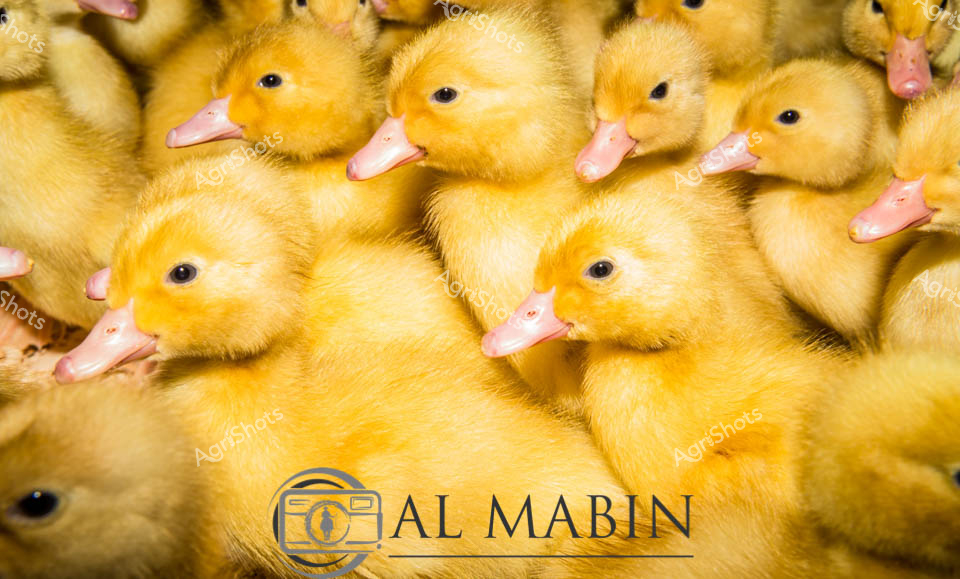
Fluffy golden ducklings huddle tightly together, their soft downy feathers creating a vibrant yellow carpet of new life. Each tiny duckling bears a distinctive pink beak, their bright black eyes alert and focused, representing the early stages of intensive poultry production in rural New South Wales. The uniform coloration and dense clustering suggest a carefully managed breeding environment, typical of modern agricultural practices in Australian duck farming. The Al Mabin watermark hints at professional agricultural documentation, capturing the precision and scale of contemporary poultry production. These day-old ducklings embody the potential of agricultural innovation, their collective presence a testament to the systematic and efficient approach of NSW's livestock industries. The image radiates warmth and potential, showcasing the delicate beginnings of what will become a critical component of Australia's agricultural supply chain.
 Image
Image
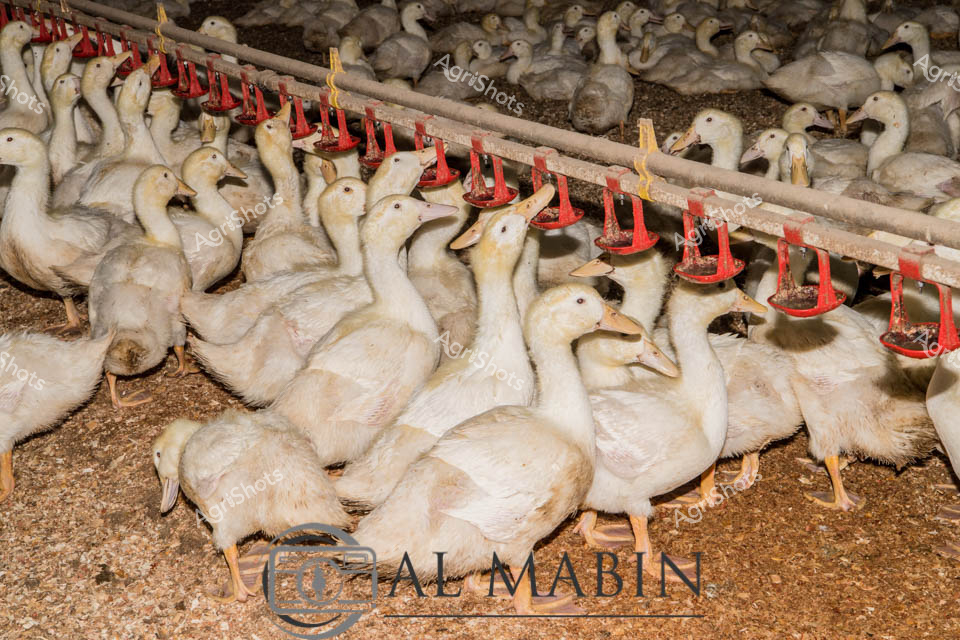
A dense flock of pristine white Peking ducks cluster tightly within a climate-controlled industrial farming shed, their downy feathers creating a sea of pale cream and ivory. Uniform red feeding mechanisms line a steel overhead rail, allowing precise distribution of feed across the crowded environment. The birds stand closely packed on a textured ground of sawdust or wood shavings, their plump bodies reflecting the intensive agricultural approach typical of modern poultry production in New South Wales. Each duck appears uniform in size and coloration, demonstrating the careful genetic selection and standardized breeding techniques of commercial duck farming. The image captures the industrialized efficiency of contemporary agricultural systems, where large numbers of birds are raised in controlled conditions to maximize protein production. The watermarked "Agri Shots" and "Cal Mabin" logos underscore the professional documentation of this agricultural process, highlighting the technical and economic dimensions of Australian livestock management.
 Image
Image
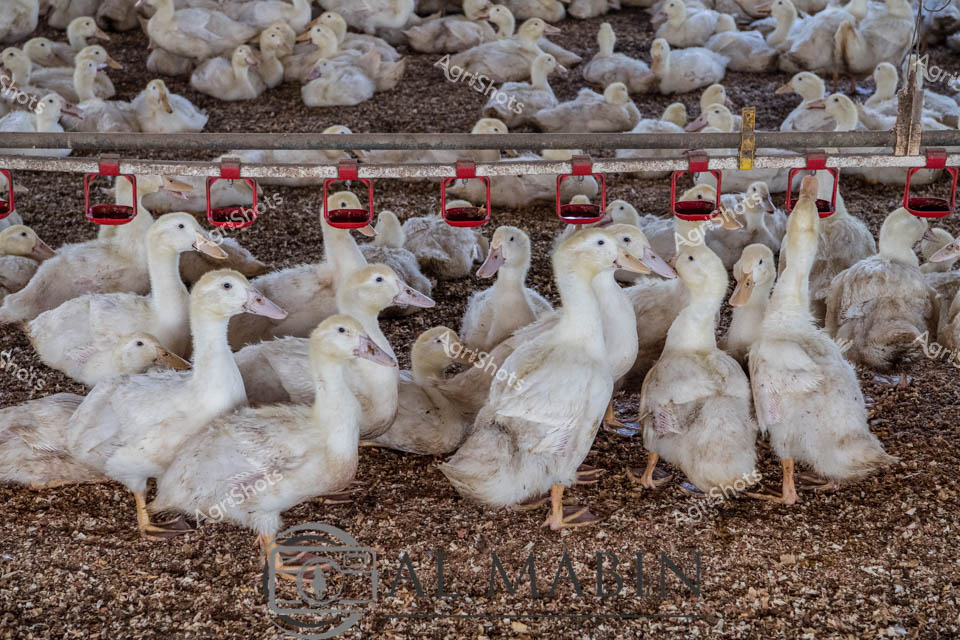
Pristine white Peking ducks cluster densely across a carefully managed indoor farming environment, their soft plumage contrasting against the textured brown ground. Uniform red feeding stations line the metal barrier, providing systematic access to nutrition for the young birds. The ducks, bred for meat production, showcase the precision of modern Australian poultry agriculture - each bird uniform in size and coloration, demonstrating selective breeding and controlled growth conditions typical of intensive farming practices in New South Wales. Hundreds of young ducks huddle together, their pale bodies creating a living landscape of agricultural productivity. Precise environmental controls are evident in the uniform spacing, controlled feeding mechanisms, and carefully maintained indoor environment. The scene captures the industrialized nature of contemporary meat production, where efficiency and consistency are paramount to meeting market demands. The image represents a critical segment of Australia's agricultural supply chain, highlighting the technological sophistication of contemporary poultry farming. Soft natural lighting illuminates the clean, structured environment, emphasizing the meticulous care and scientific approach underlying modern livestock management.
 Image
Image
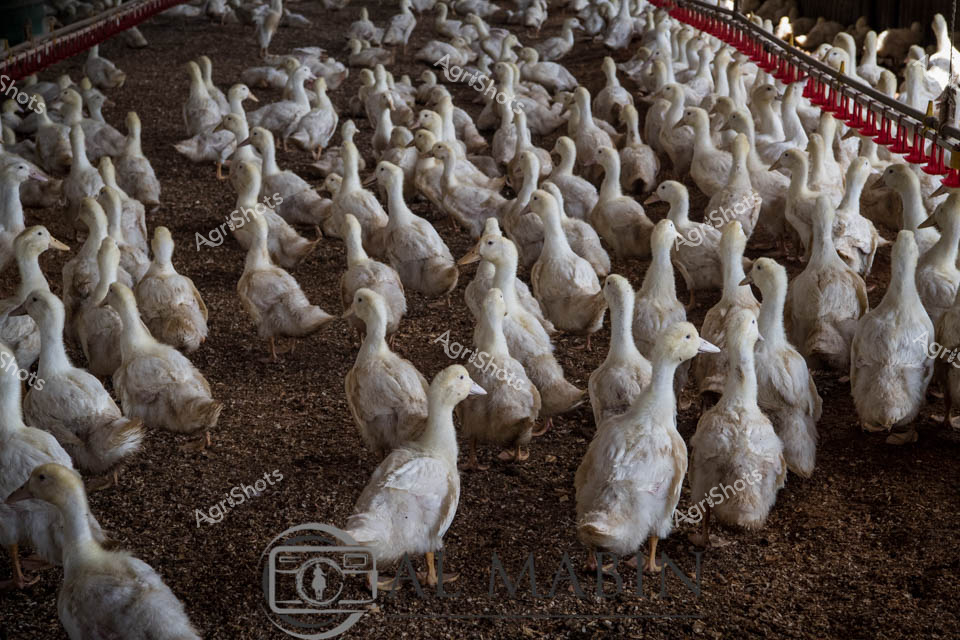
White Peking ducks densely populate a carefully managed indoor farming environment, their plump bodies creating a sea of creamy feathers against a dark, granular floor. Red feeding rails line the edges of the enclosure, indicating a highly systematic approach to poultry production typical of modern agricultural practices in New South Wales. These uniform ducks, bred for meat production, demonstrate the precision of commercial duck farming - each bird looking remarkably similar in size, coloration, and posture. The tightly packed space reveals an intensive farming methodology, where every square meter is optimized for maximum livestock density and efficiency. Soft ambient lighting highlights the gentle curves and downy texture of the ducks' feathers, creating a surprisingly peaceful atmosphere despite the industrial setting. The image captures the sophisticated infrastructure of Australian agricultural production, where technological systems and biological organisms intersect to create a highly controlled food production environment.
 Image
Image
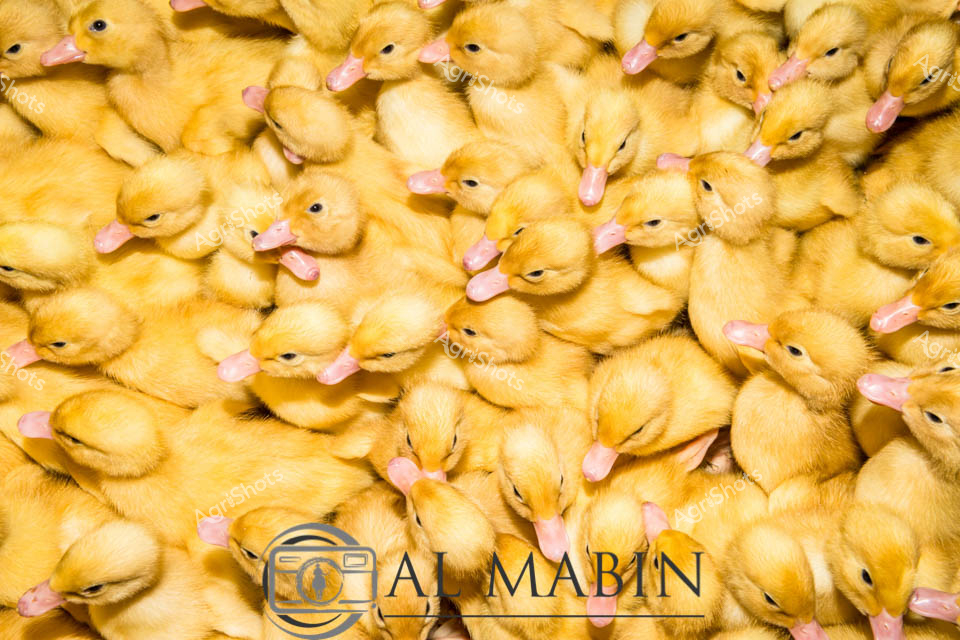
Fluffy buttercup-yellow ducklings crowd together in a dense, writhing mass of downy feathers and pink bills. Newly hatched and tightly packed, these young Pekin ducks represent the early stages of intensive poultry farming in regional New South Wales. The uniform golden coloration and compact clustering reveal the precision of modern agricultural breeding techniques, where uniformity and rapid growth are key economic drivers. Each delicate duckling sits pressed against its siblings, their soft bodies creating a living carpet of potential protein production. The Al Mabin watermark subtly indicates the professional agricultural documentation of this critical stage in poultry lifecycle management. This image captures the industrial efficiency of contemporary duck farming, where hundreds of identical chicks represent a carefully managed agricultural commodity.
 Image
Image
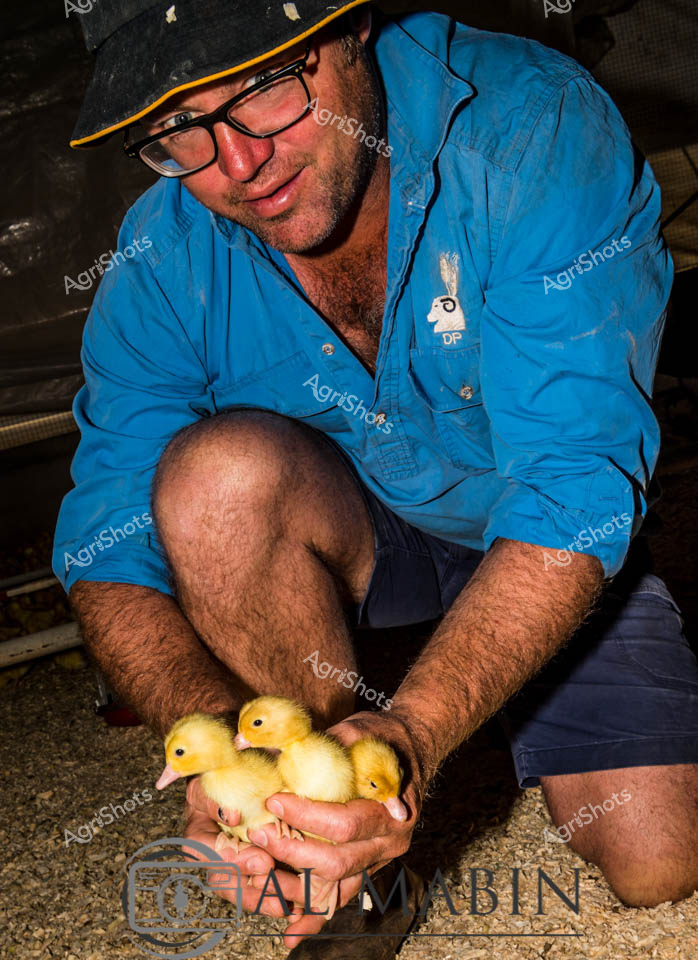
A dedicated farm worker cradles a cluster of vibrant yellow ducklings in his calloused hands, showcasing the delicate care integral to modern poultry farming. Dressed in a bright blue work shirt with a distinctive logo and wearing a black cap and glasses, the worker demonstrates a gentle touch as he supports the tiny chicks against the textured ground of what appears to be an intensive farming environment. The warm lighting and close-up perspective highlight the intimate connection between farm workers and livestock, revealing the nuanced skill required in contemporary agricultural practices. His weathered hands and compassionate expression tell a story of experience and dedication, capturing the essence of Australian rural work. The ducklings' pristine yellow down contrasts beautifully with the worker's rugged appearance, symbolizing the delicate beginnings of a carefully managed agricultural process. This image encapsulates the careful nurturing and professional approach of modern poultry farming in rural New South Wales.
 Image
Image
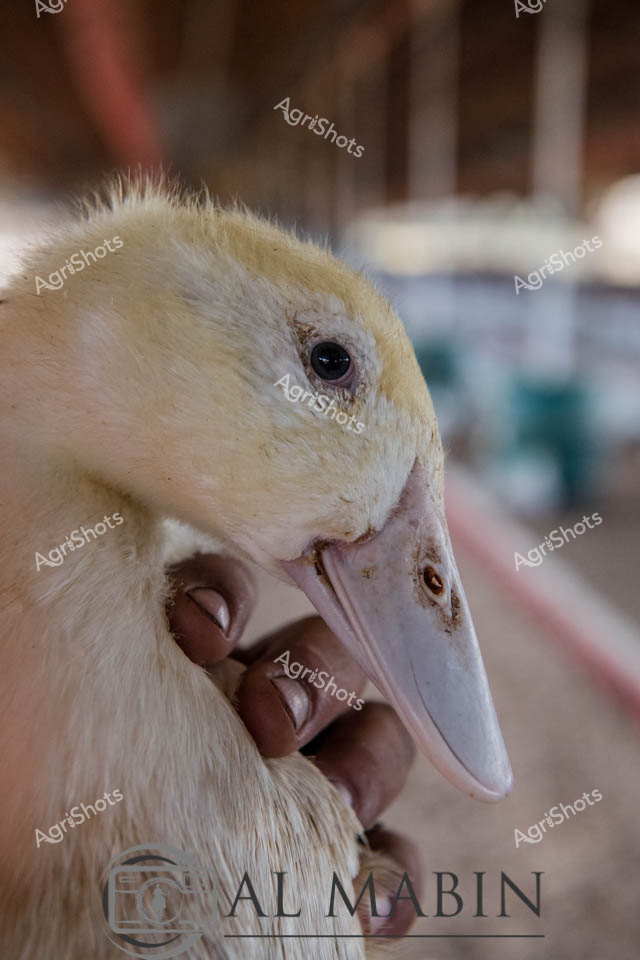
Soft golden-cream feathers catch the muted light of an interior poultry facility, revealing the distinctive profile of a Peking duck. The bird's pale plumage contrasts with the blurred industrial background, highlighting its pristine white beak and deep, observant eye. Delicate feather textures reveal the careful breeding and meticulous care characteristic of modern intensive duck farming in New South Wales. A human hand gently cradles the duck's neck, suggesting the careful handling and close management essential in commercial poultry production. The intimate close-up captures the precise moment of interaction between farmer and livestock, demonstrating the nuanced relationship between agricultural workers and their animals. This image embodies the professional precision of contemporary Australian duck farming, where animal welfare and productive efficiency converge in a single, eloquent moment.
 Image
Image
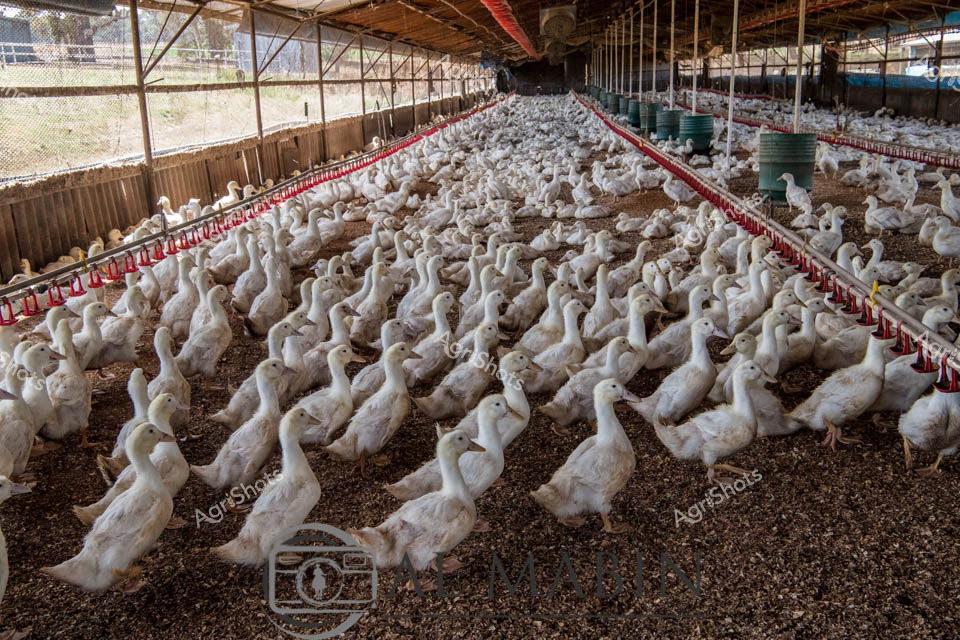
White Peking ducks blanket the floor of a long, industrial-style shed in regional New South Wales, their pale feathered bodies creating a living carpet across the brown earth substrate. Red-painted feeding and watering infrastructure lines the edges of the densely populated poultry house, creating structured pathways amid the sea of birds. Overhead, galvanized steel trusses and wire mesh provide ventilation and structural support, typical of modern intensive farming facilities designed for efficient meat production. The ducks appear uniform in size and color - a testament to carefully managed breeding and growth protocols in commercial duck farming. Soft natural light filters through the side walls, highlighting the birds' crisp white plumage and creating subtle shadows across the packed shed floor. This image captures the industrialized precision of contemporary Australian poultry production, where generations of agricultural expertise converge to deliver consistent, high-quality protein for domestic and export markets.
 Video
Video
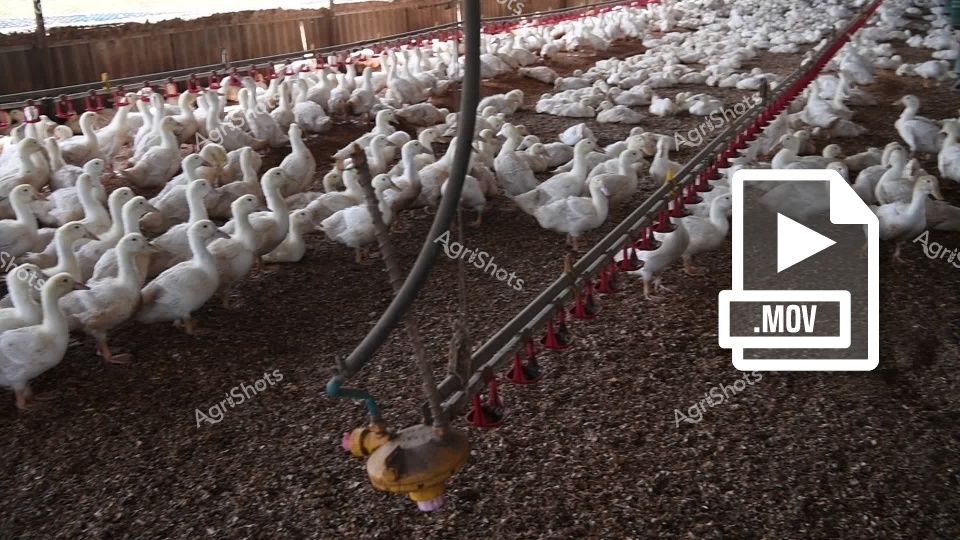
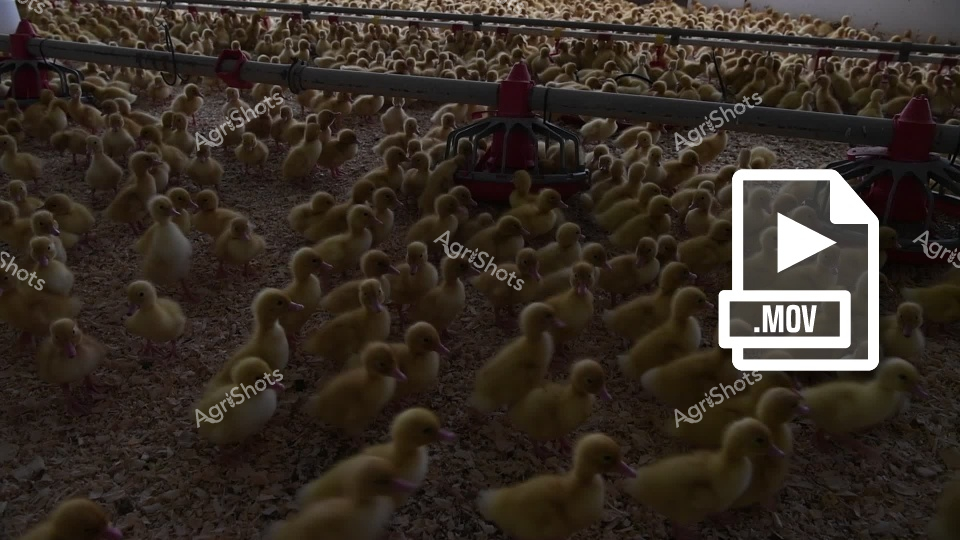
A vast poultry brooding facility captures hundreds of soft, downy ducklings clustering across a climate-controlled shed. Pale yellow chicks huddle densely across the floor, their fuzzy feathers creating a uniform golden carpet punctuated by red feeding and watering equipment. Industrial metal railings and precise environmental controls frame the scene, revealing modern agricultural techniques for raising young waterfowl. The uniform age and size of the ducklings suggests a carefully managed breeding program, with each tiny bird positioned within a carefully regulated microclimate. Overhead lighting casts a warm glow, accentuating the delicate texture of the young birds' feathers and highlighting the systematic approach of contemporary commercial duck farming.MOV video file icon indicate this is a professional documentation of agricultural production techniques, capturing the early stages of poultry development with scientific precision.
 Image
Image
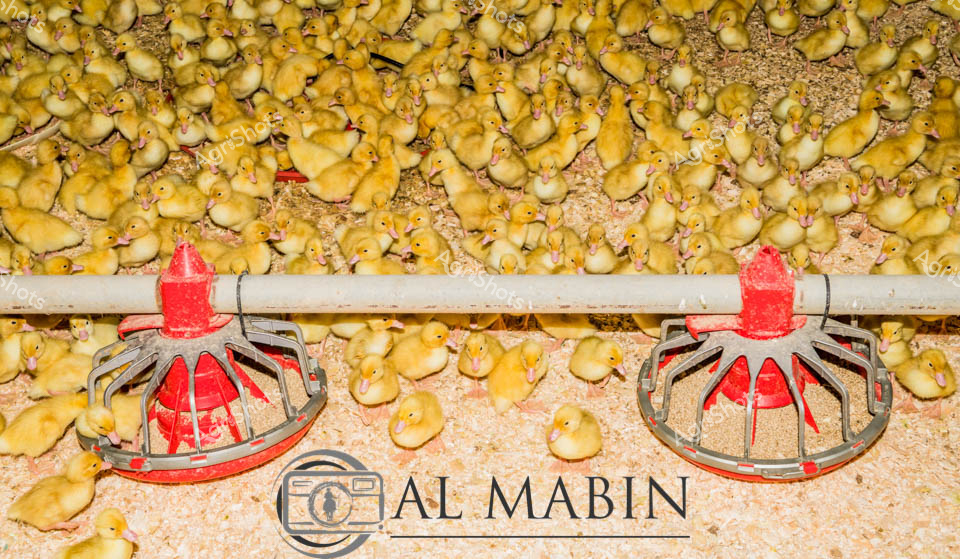
Industrial-scale poultry production unfolds in a densely packed brooder house, where hundreds of soft yellow ducklings cluster around precision feeding equipment. Scarlet-capped feed dispensers stand mounted on a central pipe, radiating mechanical symmetry amid the living carpet of downy chicks. The Al Mabin watermark signals this as a professional agricultural documentation, capturing the systematic organization of modern duck farming in New South Wales. Fine sawdust or wood shavings cover the floor, providing insulation and absorption, while the uniform golden-yellow coloration of the ducklings suggests a carefully managed breeding program. Each tiny bird sits or moves with the instinctive clustering behavior typical of newly hatched waterfowl, creating a mesmerizing texture of movement and stillness. The controlled environment—with its regulated temperature, automated feed distribution, and precise animal management—represents the intersection of agricultural science and animal husbandry, transforming duck rearing into an efficient, scalable production process.
 Image
Image
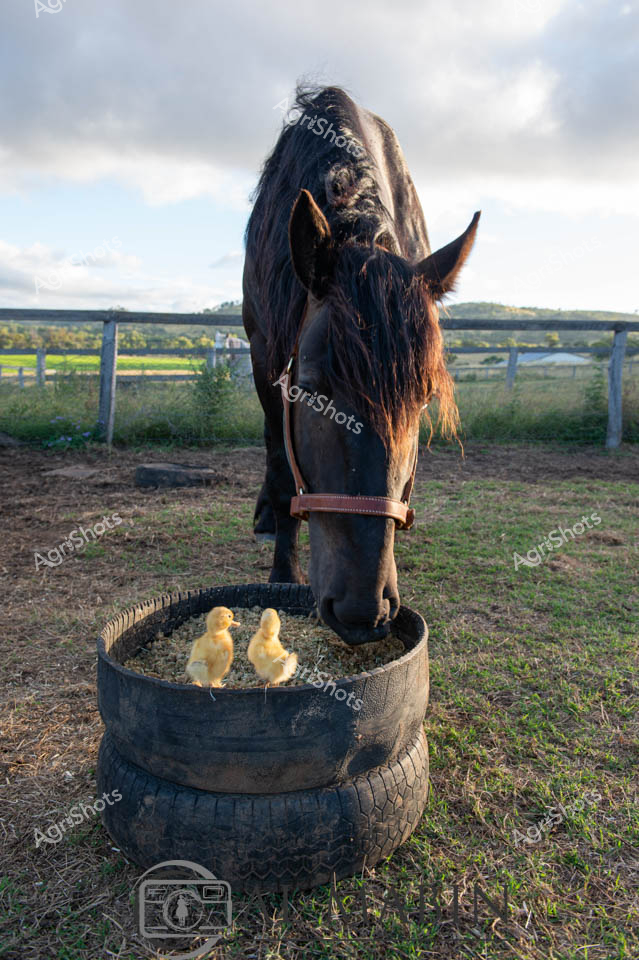
A majestic dark-coated horse peers down at two fluffy yellow ducklings nestled together in a recycled tire feeder on a quiet rural paddock. Queensland's soft pastoral landscape stretches behind them, with weathered wooden fence posts and misty grey-blue skies creating a serene agricultural backdrop. The horse, wearing a classic leather halter, stands protectively over the tiny chicks, creating an unexpected and charming farmyard tableau that speaks to the interconnected nature of rural life. Worn tire treads form an impromptu circular feed container, highlighting the resourceful and sustainable spirit of Australian farming. Soft green grass and trampled earth beneath the animals suggest an early morning scene, with soft light filtering across the landscape. The intimate moment captures the gentle coexistence of different farm animals, showcasing the nurturing environment of a working agricultural property.
 Image
Image
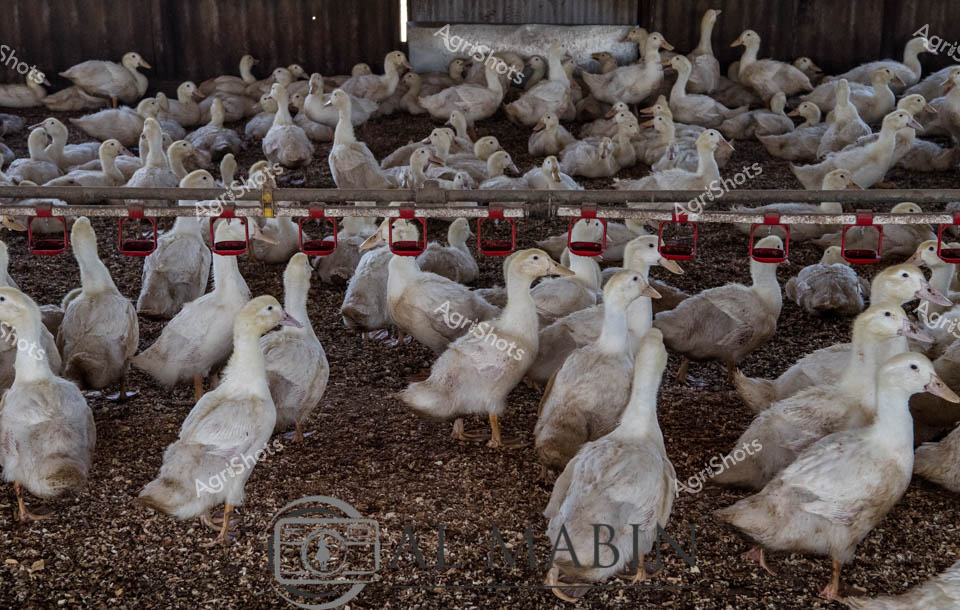
Pristine white Peking ducks crowd the expansive indoor rearing shed, their plump bodies clustered across a textured floor of fine gravel and feed. Uniform red-handled feeders line the central walkway, providing systematic nutrition to the densely packed flock. The uniform coloration of the ducks speaks to careful breeding and controlled agricultural conditions typical of modern intensive poultry production in New South Wales. Soft ambient light filters through the wooden barn structure, casting gentle shadows across the sea of feathered bodies and creating a methodical, efficient atmosphere of contemporary agricultural practice. Each duck appears robust and well-maintained, reflecting the precision of Australian agricultural techniques in livestock management. The image captures the systematic, scientific approach to commercial duck farming, where every element of the environment is carefully controlled to optimize growth and productivity.
 Image
Image
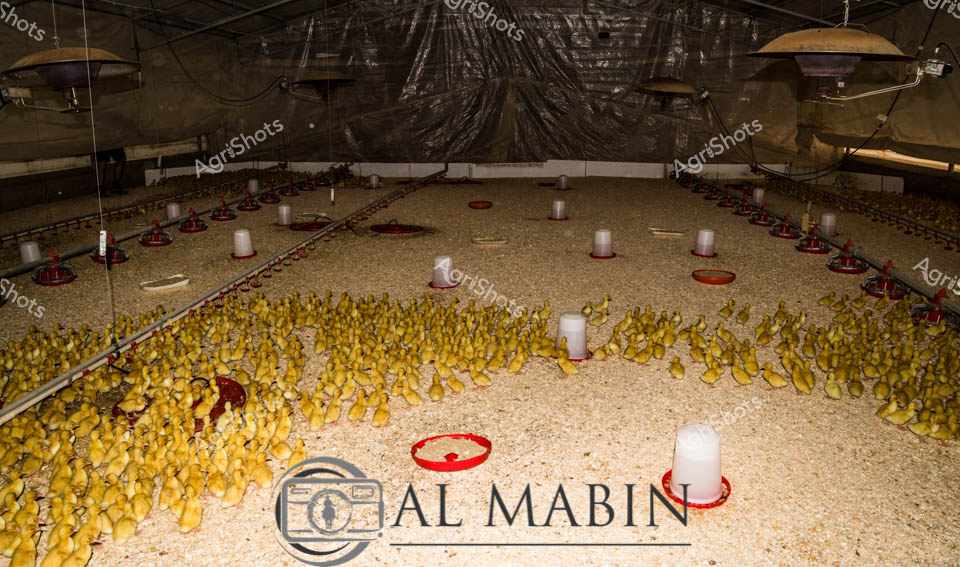
Yellow-feathered ducklings huddle together across the expansive floor of an Al Mabin intensive farming facility, their uniform golden plumage creating a vibrant carpet against the textured sawdust bedding. Precision-engineered red and white feeders and water dispensers are systematically positioned throughout the climate-controlled shed, ensuring optimal growth conditions for the young poultry. Overhead heating lamps cast a warm glow, maintaining the precise temperature critical for these vulnerable newborns during their early development stages. The structured layout reveals the scientific approach of modern agricultural practices, where every element is carefully designed to support efficient and controlled livestock rearing. Industrial-grade black plastic sheeting lines the walls, creating a sealed environment that protects the vulnerable ducklings from external contaminants and temperature fluctuations. The Al Mabin branding prominently displayed signifies a professional, technologically advanced approach to commercial duck farming, typical of progressive agricultural operations in New South Wales.
 Image
Image
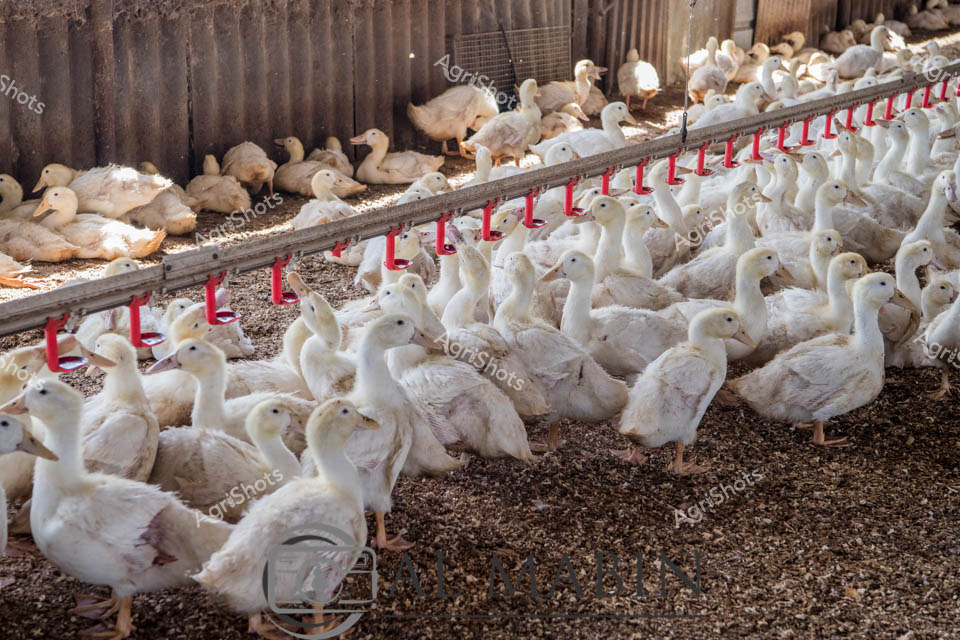
White Peking ducks crowd a meticulously organized industrial poultry shed in rural New South Wales, showcasing the precision of modern intensive farming practices. Pristine white birds cluster densely across a gravel floor, their uniformity broken only by the rhythmic red clips of feeding and watering infrastructure running along metal barriers. Soft natural light filters through the shed's side panels, casting subtle shadows that highlight the plump, uniform bodies of these commercially bred ducks. The tightly controlled environment speaks to the sophisticated agricultural techniques used in Australian poultry production, where every element is carefully managed to optimize growth and efficiency. Clustered in generations - from smaller juvenile birds to full-sized adults - the flock demonstrates the systematic approach of contemporary duck farming. The scene captures the intersection of animal husbandry, agricultural technology, and food production, revealing the industrial backbone of Australia's protein supply chain.
 Image
Image
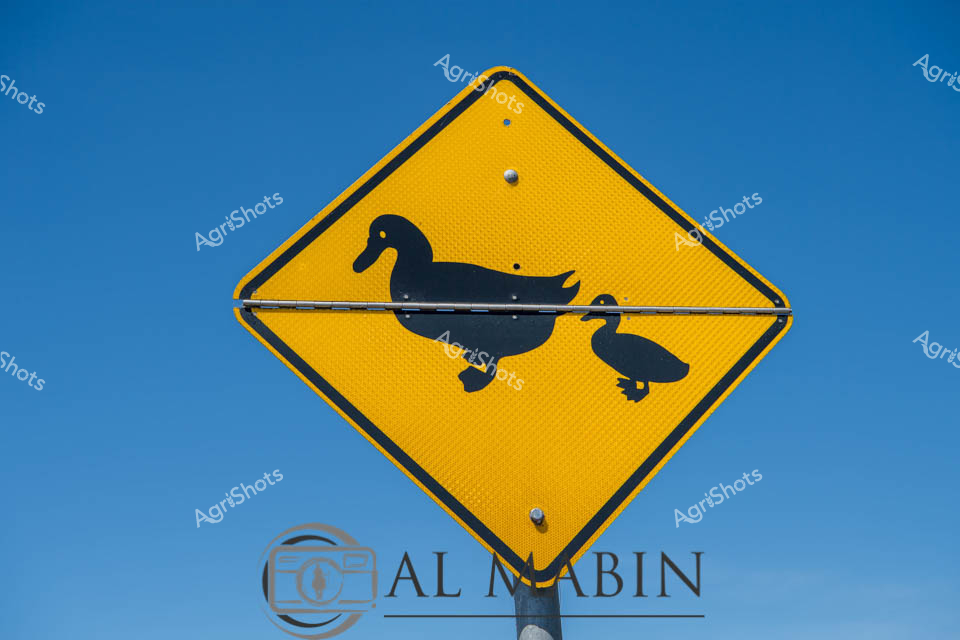
A bright yellow diamond-shaped warning sign stands stark against an azure sky, alerting motorists to the potential presence of waterfowl crossing the roadway. The graphic silhouette depicts two ducks - one larger and one smaller - rendered in a bold black design that captures their distinctive avian profile with elegant simplicity. Mounted on a metal pole with silvery bolts, the sign represents a crucial safety marker commonly found on rural roads in New South Wales, where agricultural landscapes frequently intersect with wildlife habitats. The high-contrast yellow and black color palette ensures maximum visibility, reflecting standard Australian road signage protocols designed to protect both animal populations and vehicle travelers. Mounted beneath a cloudless sky, the sign symbolizes the delicate coexistence between agricultural infrastructure and natural ecosystems, a nuanced representation of Australia's complex rural environment. The crisp, clean lines of the sign and its pristine condition suggest careful municipal maintenance and a proactive approach to rural road safety.
Well, you've ploughed through the whole field!
No more crops to harvest here, mate.
Try searching for something else in our library of 50,000+ royalty-free media: