 Image
Image
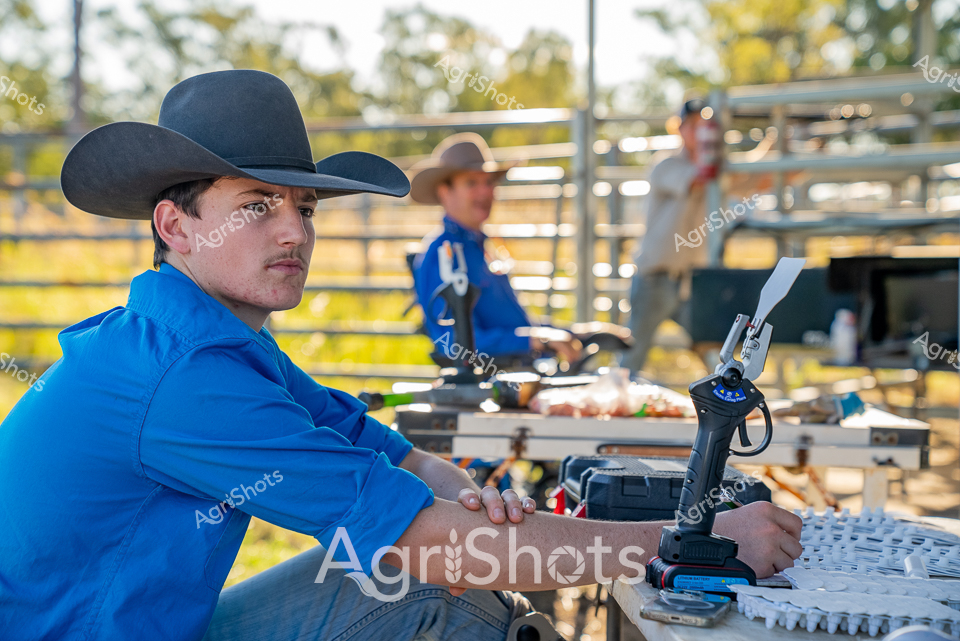
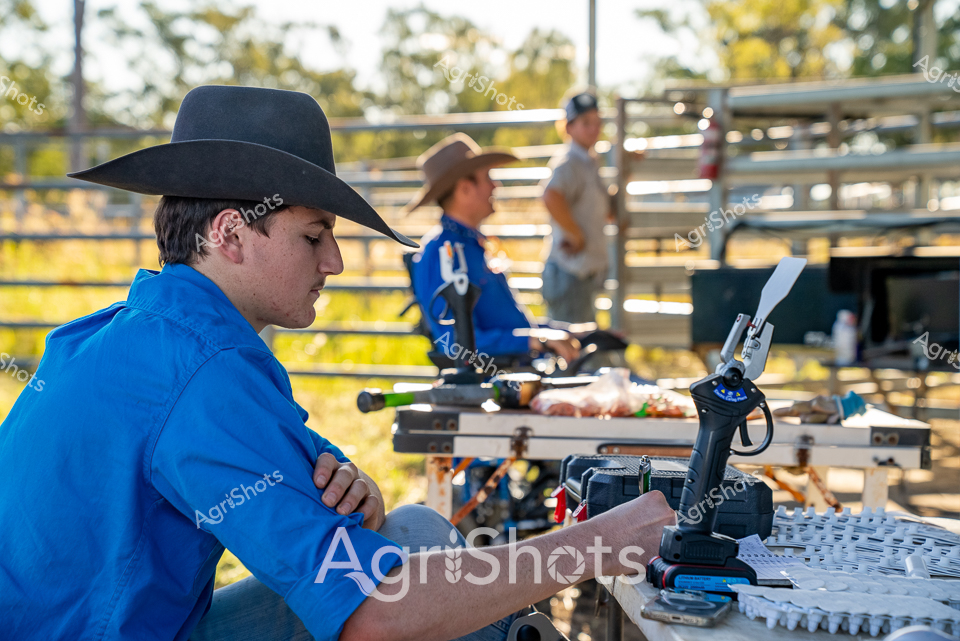
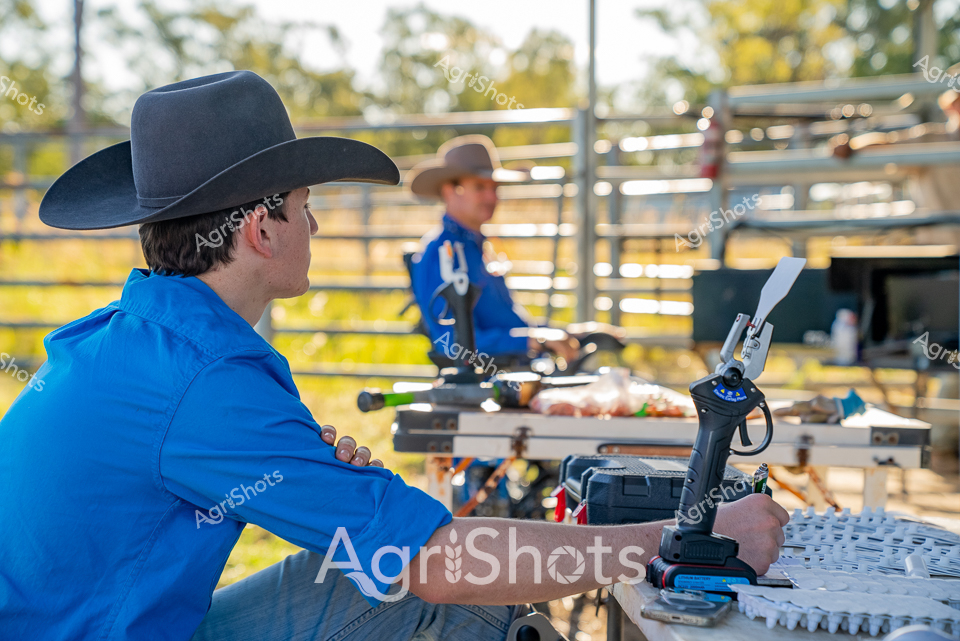
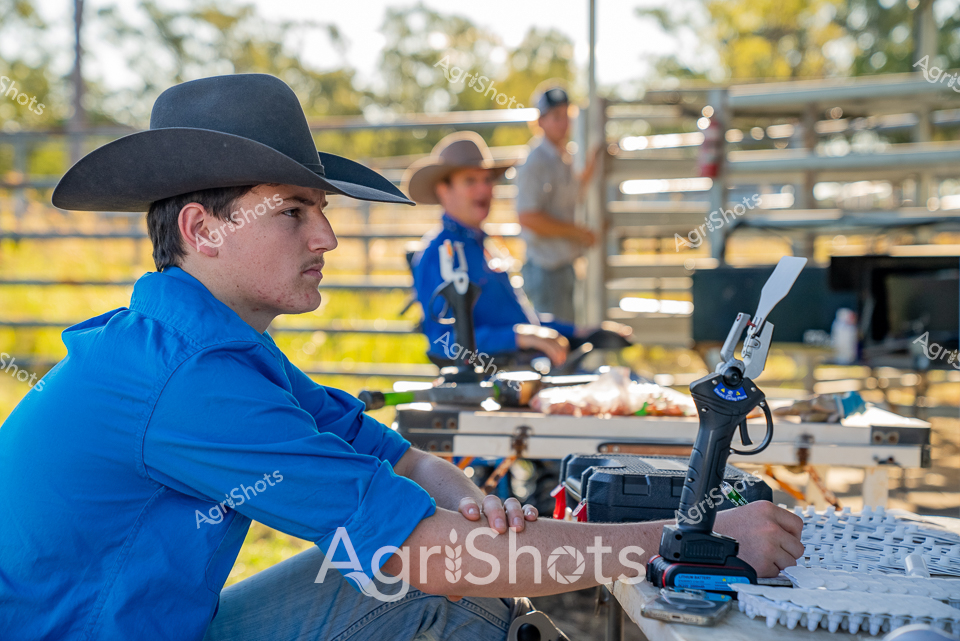
A stockman in a vivid blue shirt and classic black cattleman's hat leans intently over a data recording station in a sun-dappled cattle yard. Crisp winter light filters through the surrounding trees, casting a golden warmth over the rural Queensland scene. Sophisticated electronic ear-tagging equipment sits ready, with a robust handheld device positioned for precise livestock identification and data management. In the background, another worker in similar attire stands near the metal yard railings, suggesting a coordinated team approach to cattle management. The image captures the blend of traditional agricultural practice and modern digital technology, with the stockman's focused expression reflecting the meticulous care and precision required in contemporary cattle farming. The scene embodies the agricultural innovation of the Bundaberg region, where generations of farming expertise meet cutting-edge data collection techniques.
 Image
Image
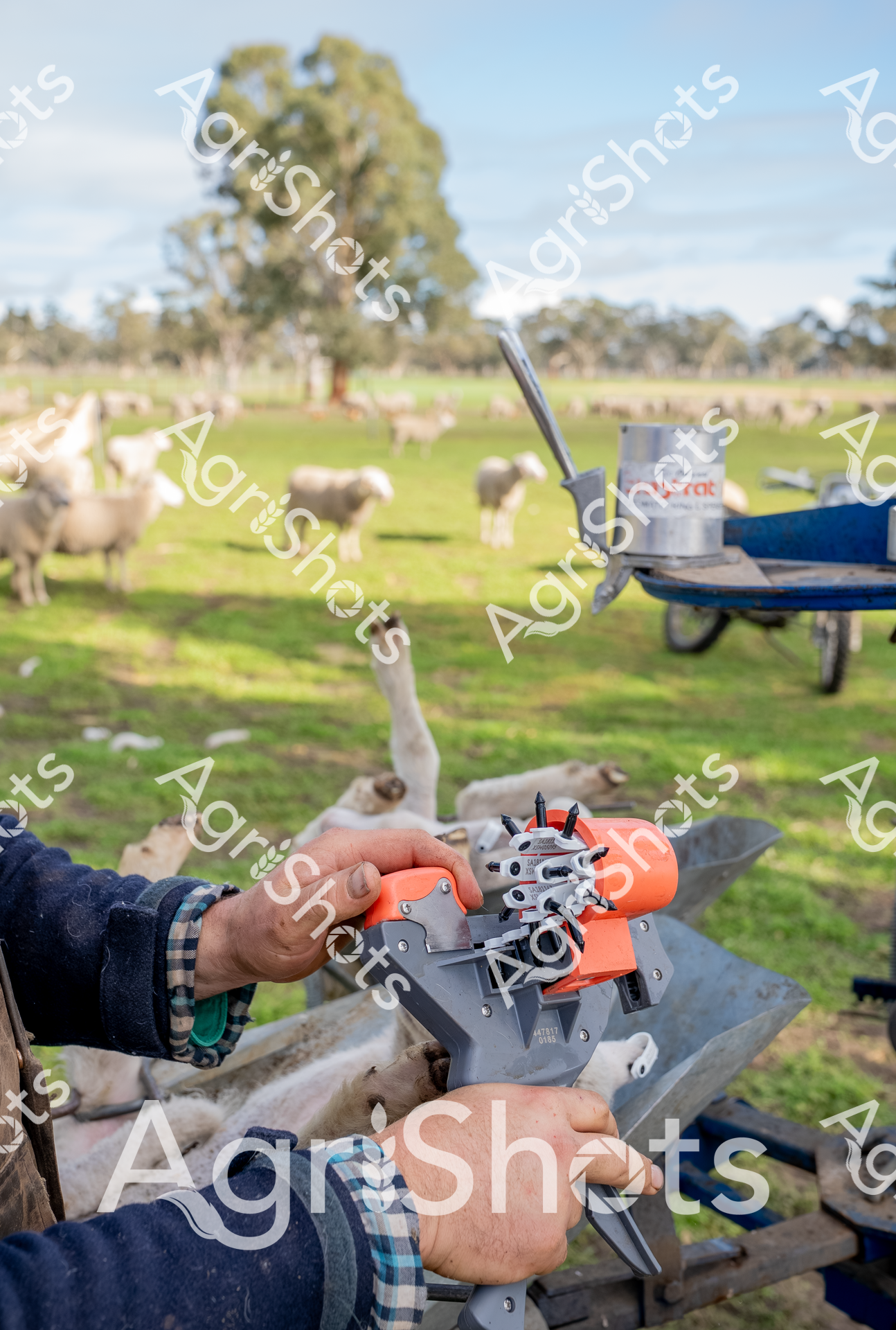
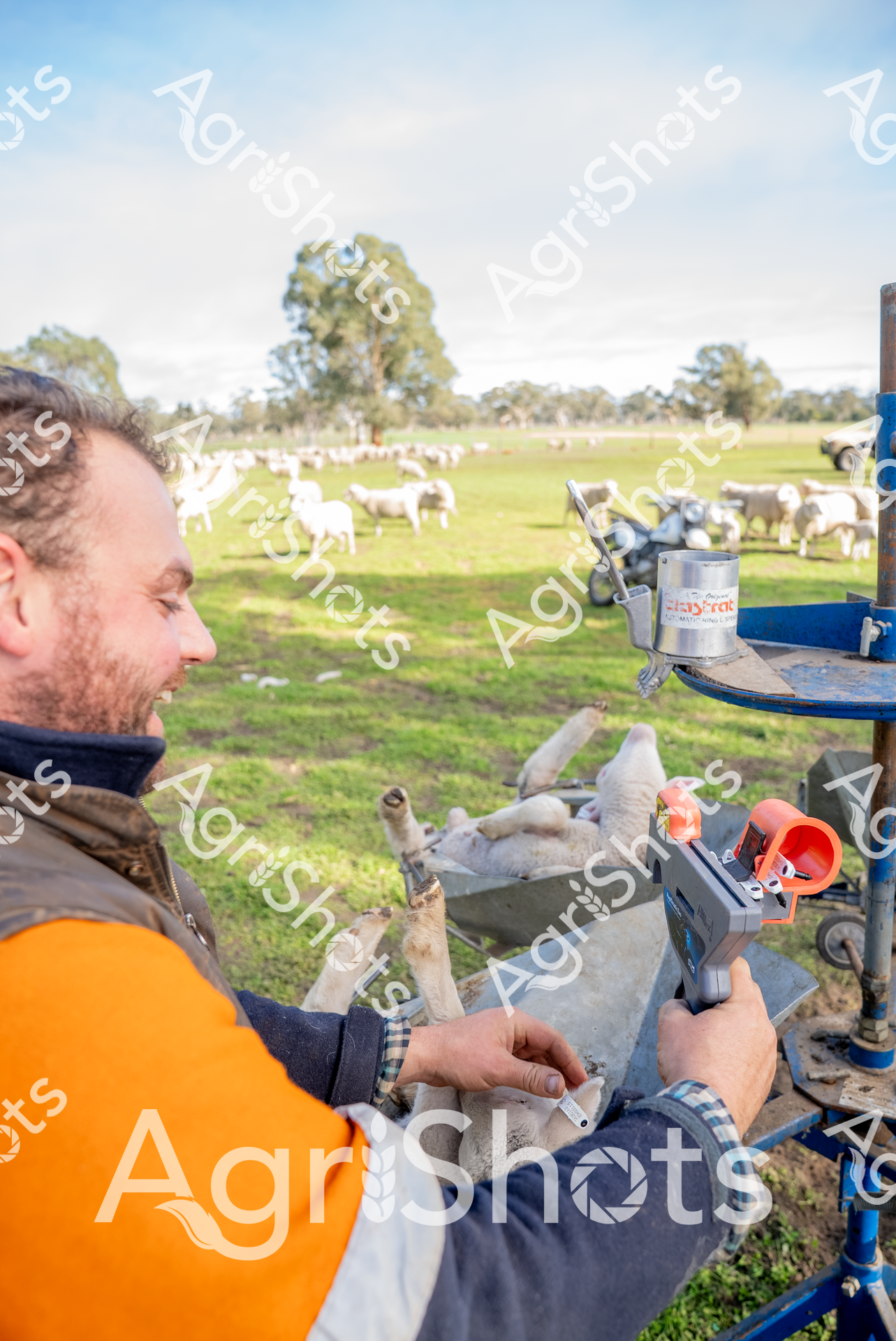
In the golden light of a South Australian winter morning, a farmer meticulously prepares to tag lambs during marking season. The lush green pasture—a rare sight during a challenging season known as a "green drought"—stretches out behind a scattered flock of woolly sheep, with ancient gum trees punctuating the landscape. Clutching an Allflex electronic ear tagging device, the farmer's hands, protected by a checked blue work shirt, carefully position the orange and grey tool, ready to identify and track each young lamb. A blue utility wagon stands nearby, laden with essential marking equipment, reflecting the practical and technological approach of modern sheep farming in the region's southeast. The scene captures the delicate balance of agricultural technology and traditional farming practices, where each lamb is carefully managed and monitored. Soft morning light bathes the paddock, highlighting the meticulous care and precision that characterizes Australian livestock management.
 Image
Image
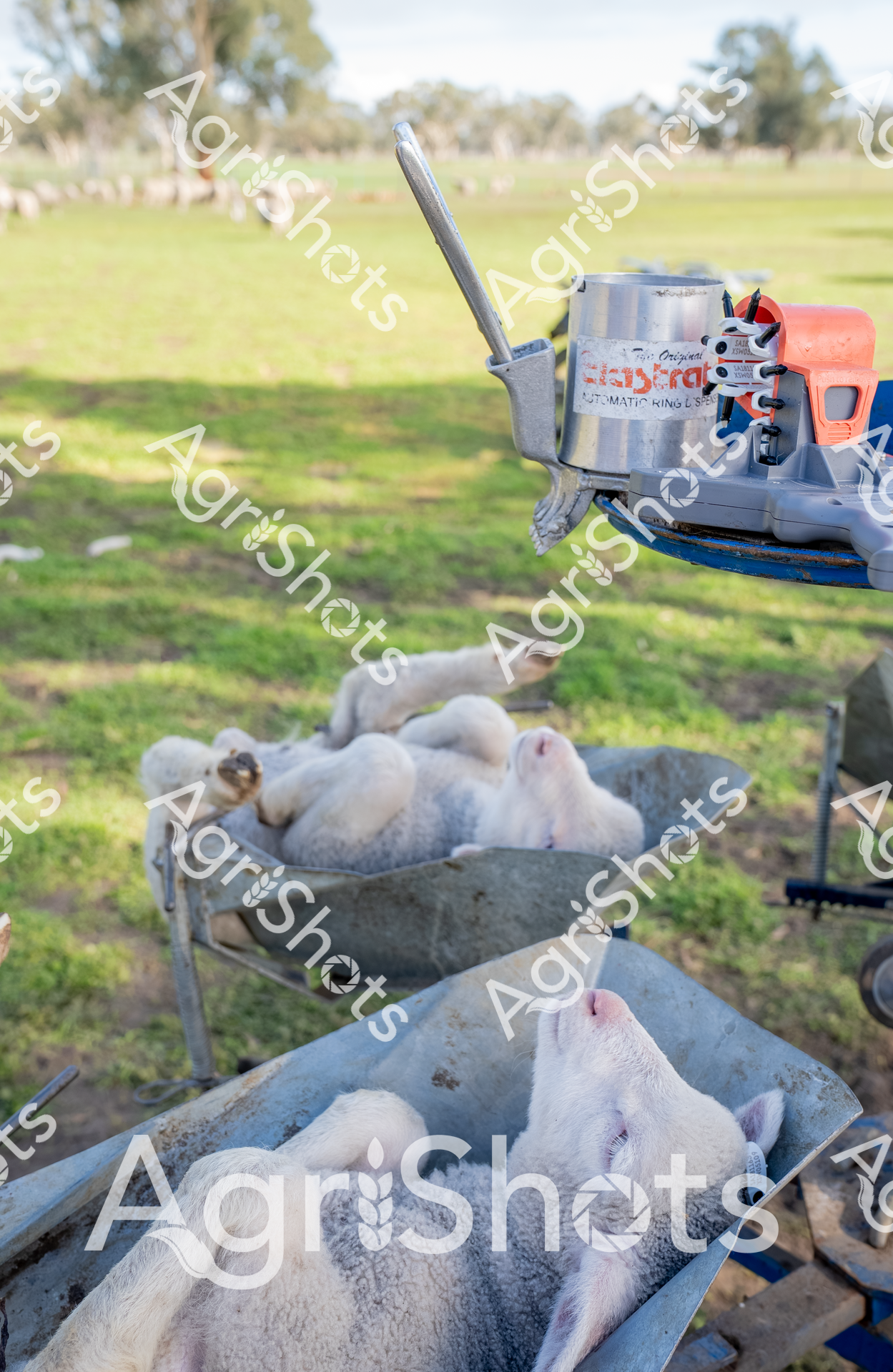
Nestled in the verdant pastures of South Australia's southeast, a quintessential lamb marking operation unfolds on a crisp winter morning. Merino lambs, their woolly coats a soft blend of white and silvery gray, rest in weathered metal cradles awaiting processing. An Allflex automatic tagging device stands ready, its robust orange and blue frame contrasting against the lush green landscape dotted with eucalyptus trees. The delicate procedure of ear tagging and identification is about to commence, a crucial ritual in modern sheep farming that ensures traceability and management. Electronic ID tags gleam metallic against the lambs' tender ears, representing the intersection of agricultural tradition and technological innovation. The scene captures the essence of Australian pastoral life - a moment of careful husbandry under expansive skies, where each lamb represents both agricultural productivity and the careful stewardship of livestock in a challenging landscape.
 Image
Image
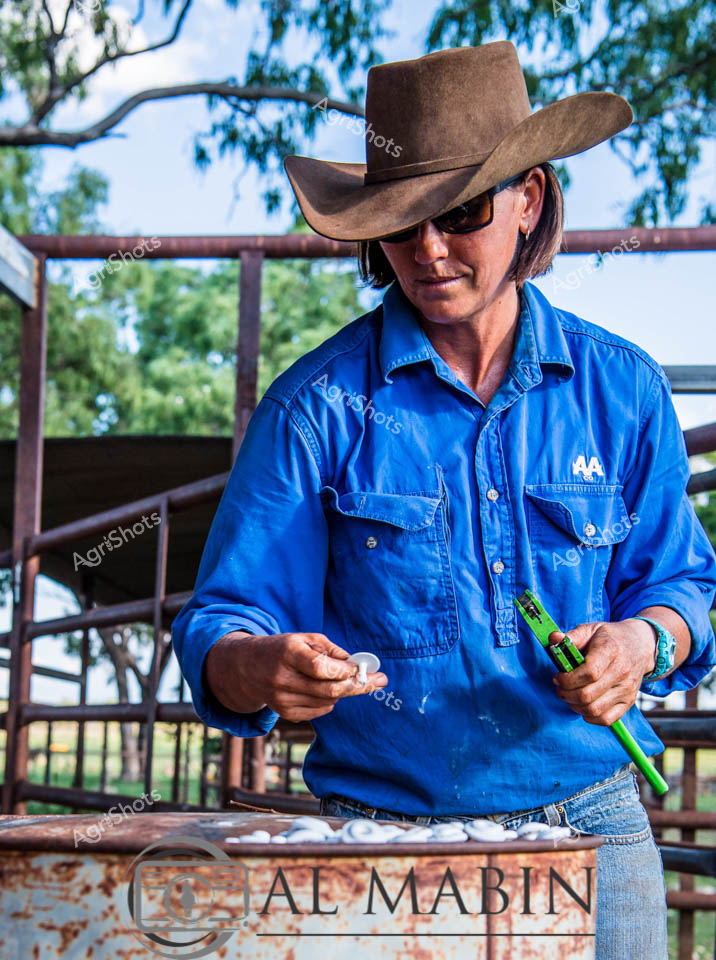
Under the dappled shade of eucalyptus trees, a seasoned agricultural worker prepares for cattle management at a rugged Queensland cattle station. Dressed in a vibrant blue work shirt with AA branding, she wears a classic bushman's brown felt hat and sunglasses, embodying the resilient spirit of rural Australian agriculture. Her focused stance beside the metal cattle yards reveals she is in the midst of livestock processing - carefully handling ear tags and preparing for vaccination, a critical routine in maintaining herd health and tracking livestock. The weathered metal gates and rustic infrastructure provide an authentic backdrop that speaks to generations of pastoral management. Her hands, steady and practiced, demonstrate the precise skills required in modern agricultural operations, balancing traditional livestock handling techniques with contemporary animal welfare practices. The scene captures a quintessential moment of quiet professionalism that underpins Australia's robust beef production industry, where individual dedication and meticulous care ensure the success of each rural enterprise.
 Image
Image
Merino sheep shearing in the golden light of a crisp Victorian morning, a seasoned farm worker meticulously prepares his station in a steel-framed woolshed. Wearing a classic navy blue work shirt, the experienced stockman stands at a granite-topped shearing bench surrounded by essential tools - green spray cans, yellow protective gloves, and precision clipping equipment. Rustic steel yards and mature gum trees frame the background, creating a quintessential Australian pastoral scene bathed in soft, filtered sunlight. The weathered infrastructure and careful arrangement of equipment speak to generations of agricultural expertise, with every element precisely positioned for efficient livestock management. Vertical steel supports of the shearing shed create a geometric contrast against the organic landscape, highlighting the structured yet natural rhythm of farm life. This intimate portrait captures the quiet concentration and skilled craftsmanship integral to Australia's renowned wool industry, showcasing the careful process of preparing Merino sheep for shearing.
 Image
Image
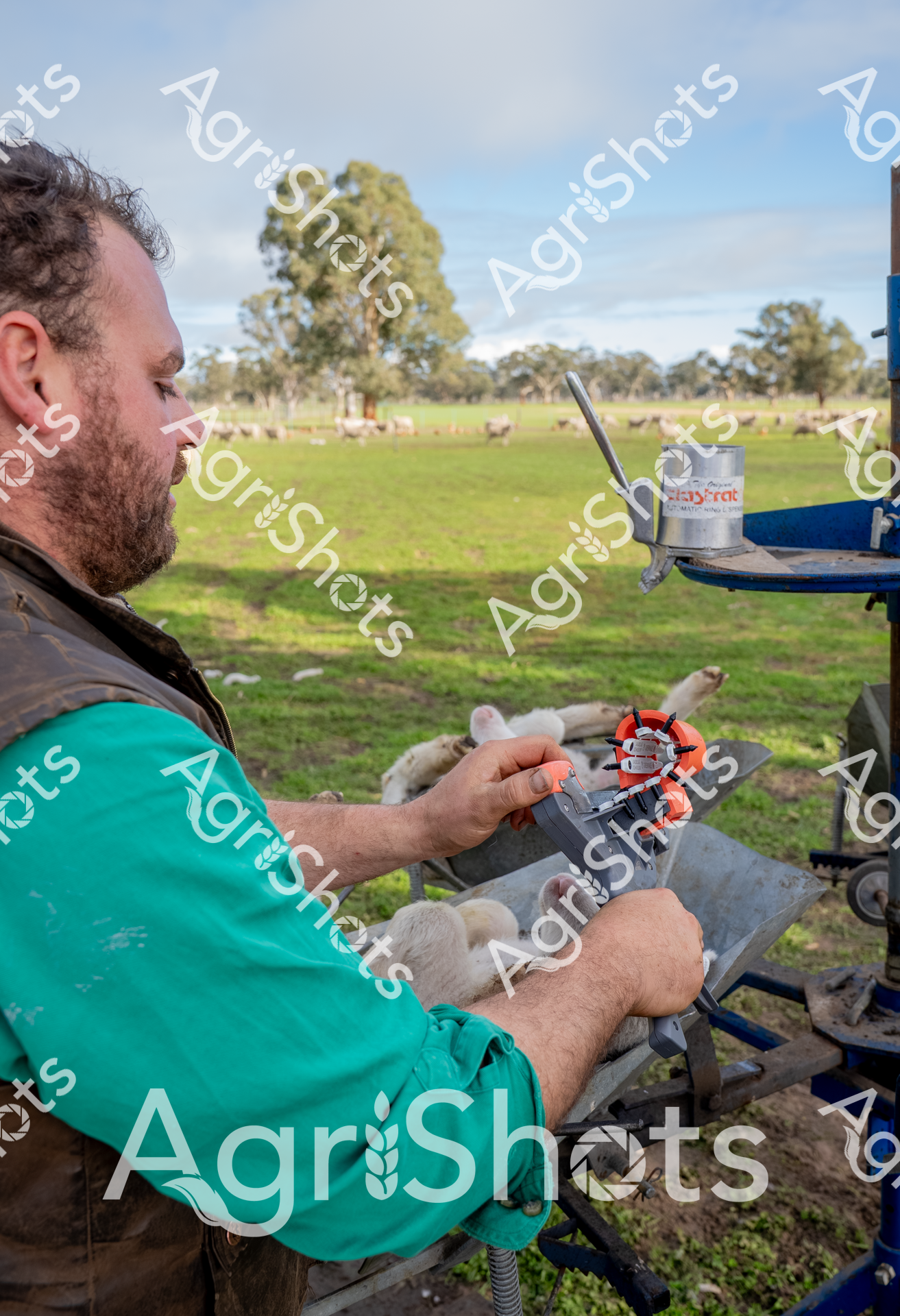
A farmworker pauses during lamb marking, his teal-green work jacket a vivid contrast against the muted winter pasture. Sheep graze softly in the background beneath scattered eucalyptus trees, revealing a classic South Australian agricultural landscape experiencing a "green drought" - grasslands looking lush but moisture-stressed. The worker carefully operates an Allflex electronic identification (EID) ear tagging device, methodically marking young lambs as part of critical livestock management practices. Rugged rural equipment stands ready - a metal tagging station, a tin mug steaming in the cool morning light, suggesting hard work and practical efficiency. His weathered hands move with practiced precision, demonstrating the skill and care inherent in sheep farming. The scene captures the essence of Australian agricultural work: pragmatic, resilient, deeply connected to the land and its seasonal rhythms.
 Image
Image
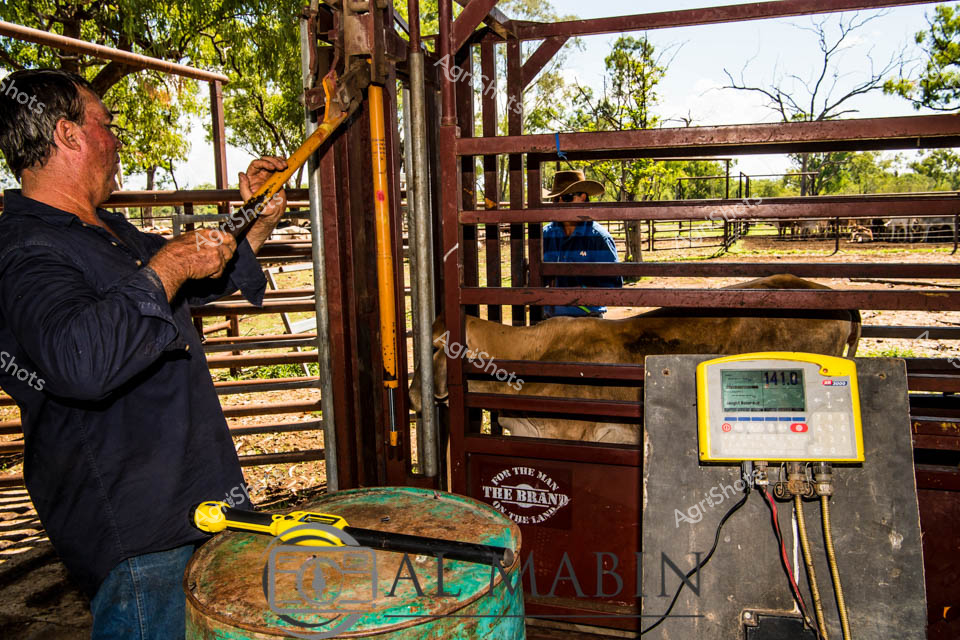
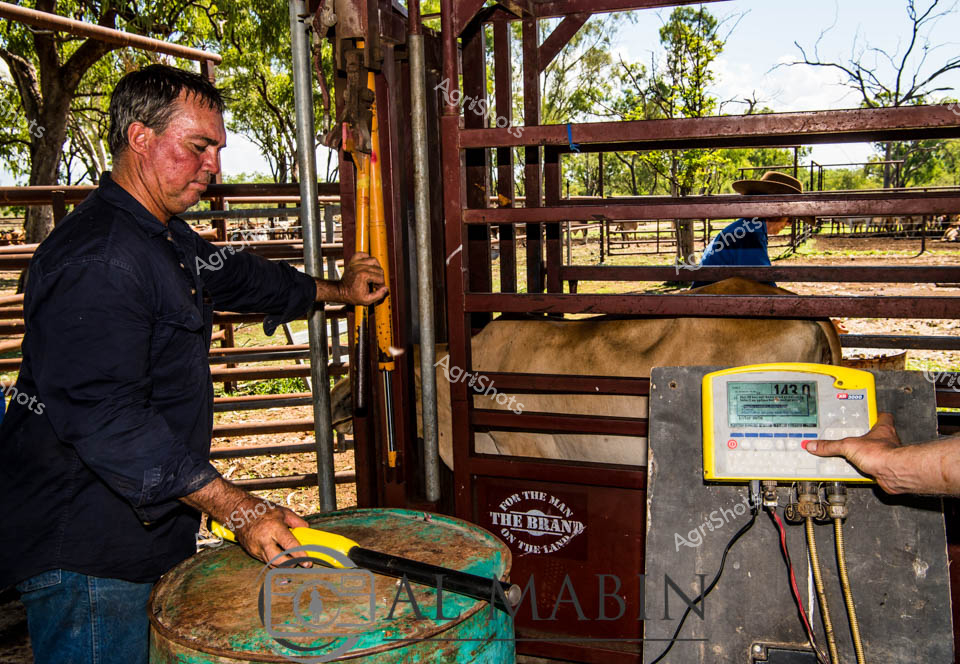
Sunrise filters through the dusty cattle yards, casting long shadows across the weathered steel gates and rustic working equipment. A farmhand in a dark navy work shirt operates a sophisticated Trutest livestock weighing and identification system, carefully managing a young beast in the compact steel loading pen. The yellow digital readout displays the animal's weight at 140 kilograms, while an aged teal-blue industrial barrel sits prominently in the foreground, telling stories of countless working days. Precision agricultural technology meets traditional cattle station infrastructure, with robust metal yards and hardy timber fencing creating a quintessential Queensland rural backdrop of scattered gum trees and open paddocks. The farmworker's measured movements reveal decades of practiced skill, smoothly managing the delicate process of ear tagging and vaccination with quiet efficiency. This scene captures the sophisticated yet rugged essence of modern Australian cattle management - where cutting-edge technology and generations of agricultural knowledge merge seamlessly under the expansive rural sky.
 Image
Image
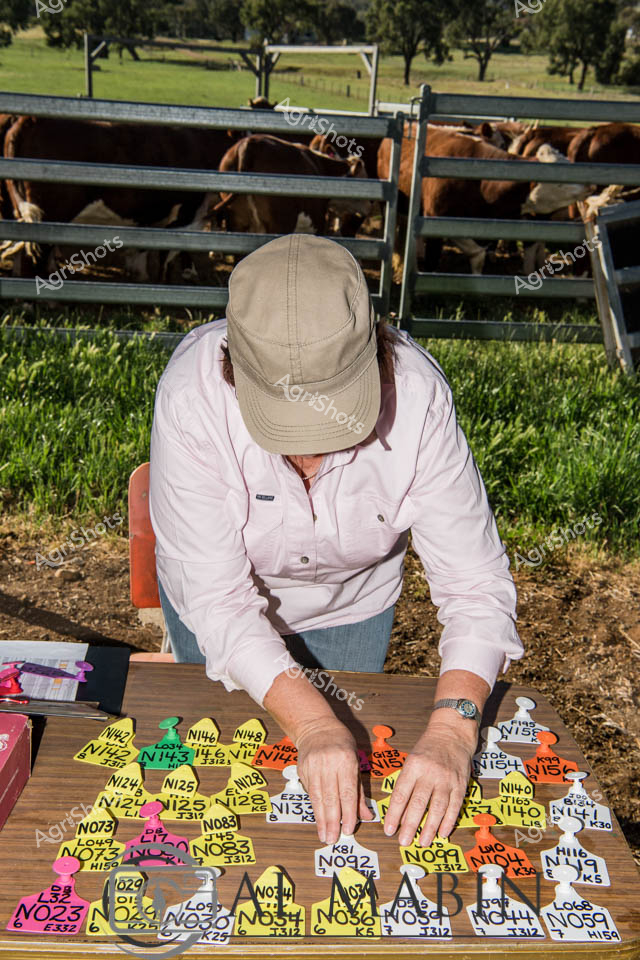
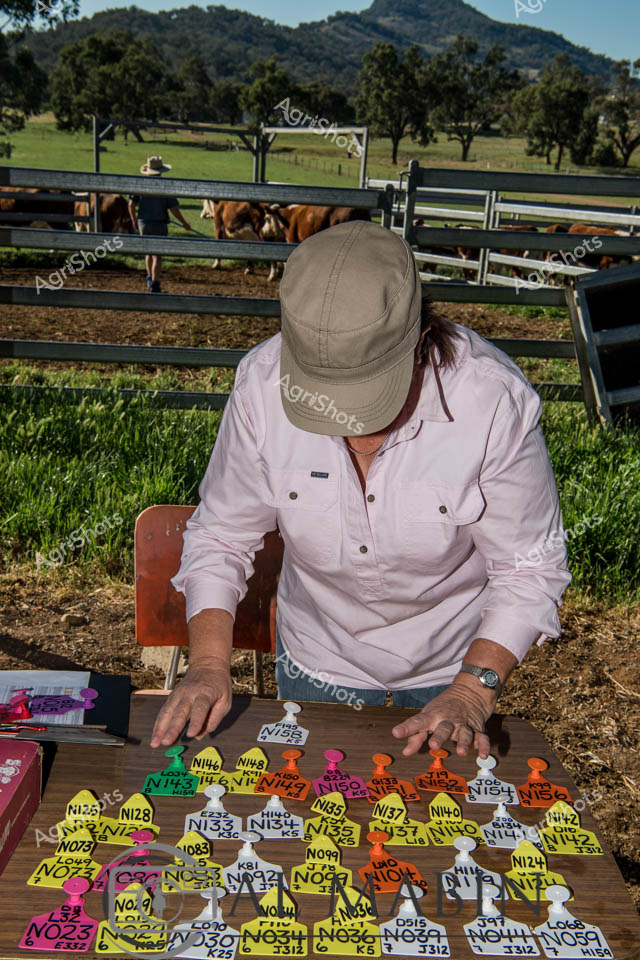
Nestled in the golden-green pastures of New England, NSW, a seasoned agricultural professional meticulously manages cattle identification and records. Wearing a soft pink long-sleeved work shirt and a neutral cap, the worker carefully arranges a series of colorful ear tags on a wooden table, with a backdrop of sturdy metal cattle yards and grazing Hereford cattle. The vibrant yellow, green, orange, pink, and white tags - each marked with distinct alphanumeric codes - represent a critical moment in livestock management, capturing the precision and care fundamental to modern Australian cattle farming. Soft morning light illuminates the scene, highlighting the methodical process of tracking and documenting each animal's unique identity against the pastoral landscape. This image embodies the quiet expertise of rural professionals, showcasing the administrative backbone of sustainable beef production in regional Australia. The careful arrangement of tags, the attentive posture, and the harmonious interaction between human and livestock reflect the nuanced skill and dedication required in contemporary agricultural practices.
 Image
Image
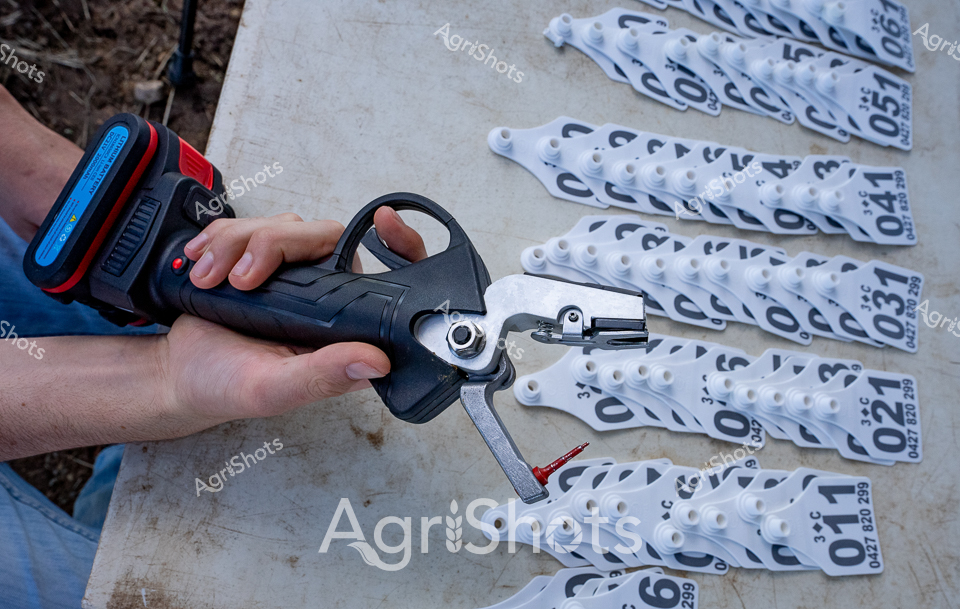
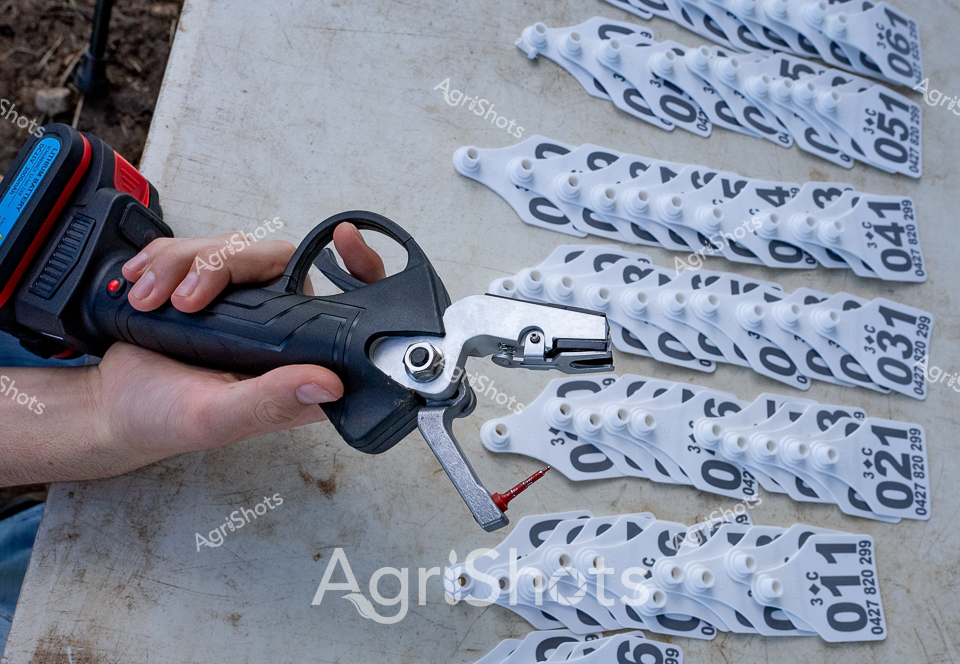
In the crisp winter light of Queensland's Bundaberg region, a skilled agricultural worker wields a precision electronic ear tagger, capturing the technological evolution of modern cattle management. The robust black and red handheld device, gripped firmly, hovers over a series of white electronic ear tags marked with sequential numbers, representing the meticulous documentation of livestock identification. Each perforated tag, designed with sophisticated tracking capabilities, awaits attachment to track individual animal records within the herd. The close-up perspective reveals the intricate mechanics of the tagger, its ergonomic design speaking to the advanced tools that support contemporary agricultural practices. Stark concrete and weathered surfaces surround the scene, highlighting the pragmatic environment of cattle yard operations where technology and traditional farming intersect. This moment encapsulates the careful, systematic approach of Australian cattle producers, who leverage cutting-edge equipment to ensure precise animal tracking, health monitoring, and farm management in the challenging agricultural landscape of Queensland.
 Image
Image
Young agricultural worker calibrates electronic livestock tracking equipment in a sunlit cattle yard. Wearing a classic wide-brimmed Australian bush hat and vivid blue work shirt, the individual carefully operates a sophisticated electronic ear tagging device surrounded by metal livestock processing infrastructure. Soft winter sunlight filters through native trees in the background, casting gentle shadows across the rural workstation. Multiple workers in coordinated blue uniforms collaborate systematically, suggesting a professional cattle management operation utilizing modern technological tools for livestock tracking and identification. The metallic equipment, precise digital interfaces, and structured yard environment represent the intersection of traditional agricultural practices and contemporary data-driven livestock management techniques. The scene captures the meticulous attention to detail required in modern agricultural workflows, where technology enables precise animal monitoring and record-keeping in the Queensland cattle industry.
 Image
Image
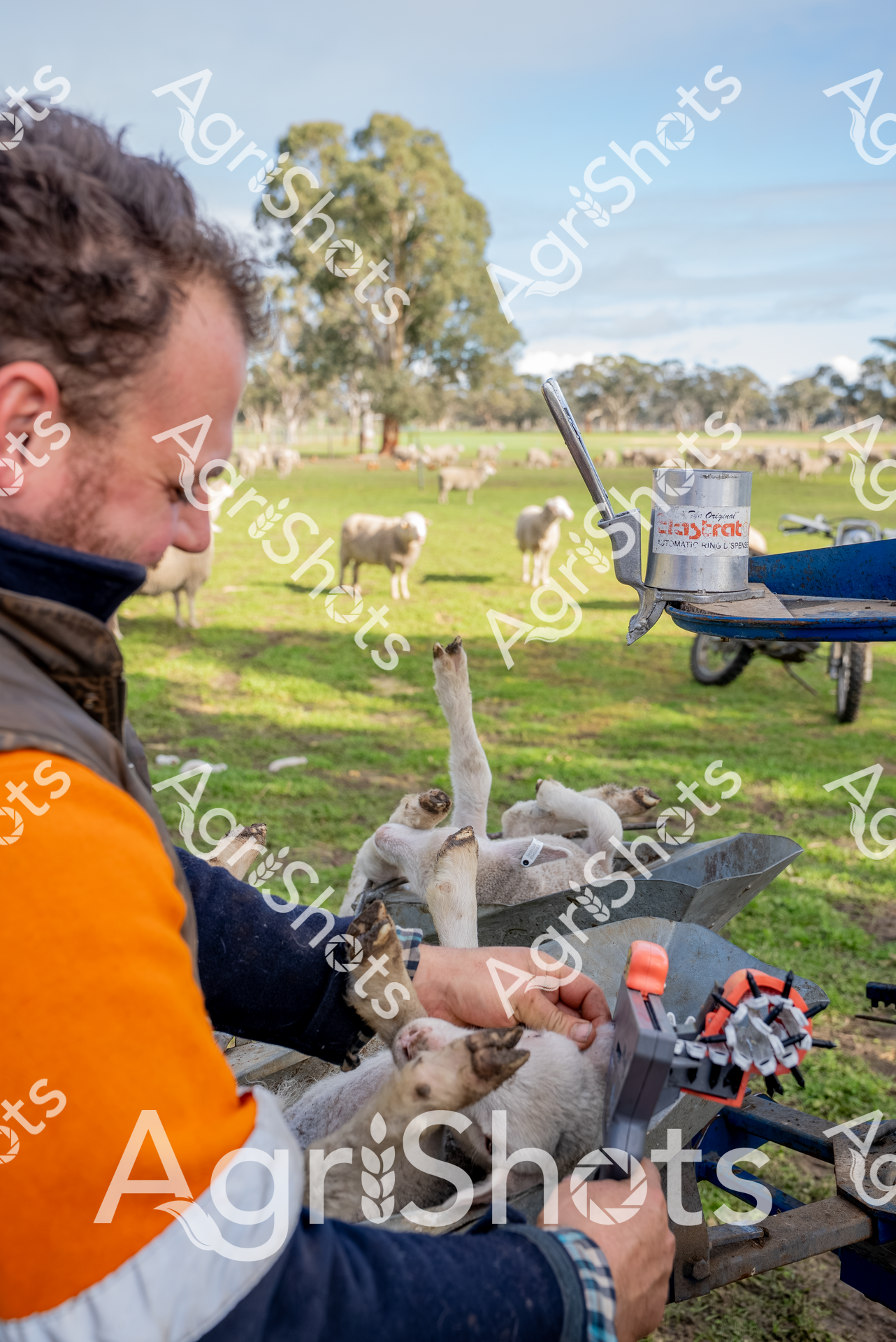
In the verdant paddocks of South Australia's southeast region, a skilled farmhand meticulously performs lamb marking during a rare green winter season. Wearing a high-visibility orange vest and dark jacket, the worker carefully restrains a young lamb on a specialized marking station, preparing to apply an electronic identification (EID) tag from Allflex. Behind him, a flock of woolly lambs grazes peacefully across the lush, emerald-toned landscape, punctuated by scattered eucalyptus trees that provide gentle backdrop to this quintessential agricultural scene. The marking equipment stands robust and purposeful - a blue metal frame holding the delicate task of livestock identification with precision. The farmhand's hands move with practiced efficiency, demonstrating the careful balance of care and practicality fundamental to Australian sheep farming. Soft winter light bathes the scene, highlighting the fresh green pastures - a welcome sight during what might be a "green drought" period, where grass appears plentiful but water resources remain scarce. This image captures the nuanced art of modern livestock management, where technology and traditional farming practices converge to ensure traceability, health monitoring, and sustainable agricultural production.
 Image
Image
In the rolling hills of New England, a seasoned agricultural professional carefully manages cattle identification, meticulously arranging colorful ear tags across a rustic workbench. Dressed in a soft pink long-sleeved shirt and a neutral cap, the worker sits against a backdrop of verdant pastures and distant mountainous terrain, with sleek Hereford cattle penned behind sturdy metal fencing. The wooden table is a vibrant mosaic of yellow, white, orange, green, and pink tags, each bearing a unique alphanumeric code that represents individual animals in the herd. Her hands move with practiced precision, documenting and organizing critical livestock management information under the warm, diffused light of a late morning or early afternoon. This intimate scene captures the detailed, methodical work of modern cattle farming - a blend of traditional practice and systematic record-keeping that underpins Australia's robust agricultural sector. The image speaks to the critical role of women in agricultural industries, showcasing the expertise, attention to detail, and quiet professionalism that drives rural enterprise.
 Image
Image
Precision livestock management unfolds in a crisp winter morning at a Queensland cattle yard. A professional-grade electronic ear tagger gripped firmly in hand reveals the modern technology transforming animal identification and tracking. Pristine white electronic ear tags with sequential numbering cascade across a concrete surface, each precision-punched tag ready to be applied to cattle for biosecurity, breeding, and traceability purposes. The robust black and silver electronic tagging tool demonstrates the sophisticated agricultural technologies enabling Queensland farmers to maintain detailed livestock records with efficiency and accuracy. Sunlight catches the metallic edges of the tagger, highlighting the sharp mechanical components designed for clean, quick application in the demanding environment of rural cattle management. This image captures the intersection of agricultural innovation and traditional livestock handling, where digital precision meets the timeless practices of animal husbandry.
 Image
Image
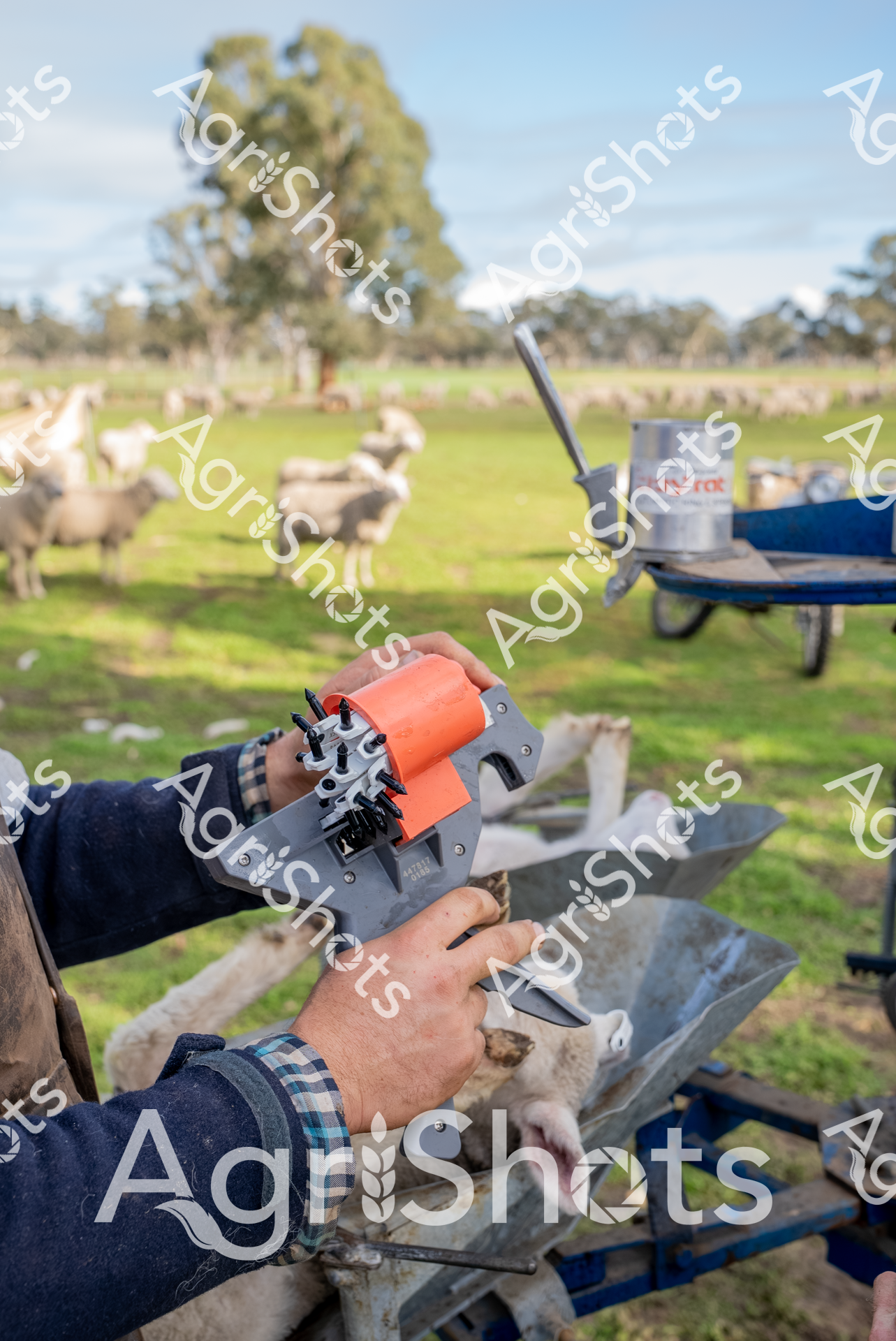
In the verdant pastures of South Australia's southeast, a skilled farm worker tenderly manages a flock of sheep during winter's gentle embrace. Grasping an Allflex electronic ear tagging device, the worker carefully marks each lamb, a critical process for livestock identification and management. The bright orange and grey tagging tool contrasts sharply with the worker's navy blue checked jacket, reflecting the precision and care inherent in modern agricultural practices. Soft winter light filters through scattered eucalyptus trees, casting a peaceful glow over the lush green paddock dotted with woolly lambs and mature sheep. A mobile tagging station stands ready nearby, equipped with professional tools that underscore the technological advancements in contemporary farming. This scene captures the essence of Australian pastoral life - a delicate balance of traditional husbandry skills and cutting-edge agricultural technology, set against the timeless backdrop of the rural landscape.
 Image
Image
Weathered hands navigate the cattle yards under the dappled sunlight of a Queensland station. A stockworker in a dark blue long-sleeve shirt operates a rustic green barrel near a sophisticated Trutest digital weighing and identification system, preparing to tag and record essential data for the herd. Sturdy metal cattle gates and wooden fencing define the working space, with sparse eucalyptus trees creating a classic Australian rural backdrop. The digital equipment stands ready, its yellow and white display indicating precision in livestock management, while the worn barrel suggests years of practical agricultural experience. This scene captures the nuanced blend of traditional farming techniques and modern agricultural technology - a testament to the strategic and meticulous nature of cattle station operations. The muted earth tones, from the stockman's clothing to the weathered infrastructure, speak to the resilient spirit of rural Australian agricultural practices.
 Image
Image
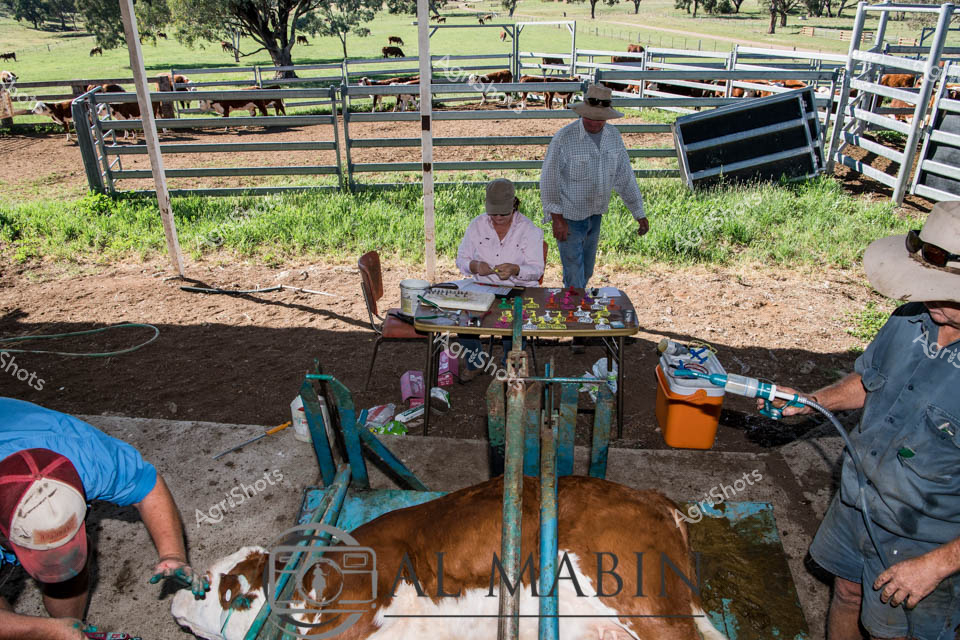
Beneath the dappled shade of New England region gum trees, a precise livestock management operation unfolds in weathered cattle yards. A Hereford heifer is secured in blue metal livestock chutes, awaiting ear tagging and branding - critical processes for tracking and identifying cattle in Australian beef production. Workers in practical workwear - checked shirts, wide-brimmed hats, and sturdy work attire - methodically complete their tasks with practiced efficiency. A table laden with tagging equipment, colored ear tags, and documentation sits nearby, while the surrounding paddock reveals a classic pastoral landscape of scattered trees and grazing cattle in the background. The scene captures the meticulous care and professional approach of modern cattle farming, where each animal is carefully documented and managed. Soft earth, gleaming metal equipment, and the calm concentration of the workers communicate the understated expertise of Australian agricultural practice.
 Image
Image
Bundaberg's golden winter light bathes the cattle yards as a stockman in a crisp blue shirt and classic black Australian bush hat operates sophisticated livestock data recording equipment. Perched on a metallic sorting platform amid the steel yard panels, he carefully manages electronic ear tag scanning and data collection, representing the cutting-edge intersection of traditional cattle handling and modern agricultural technology. Another stockman stands in the background, both focused intently on the precise process of documenting each animal's individual information. The scene captures the meticulous care and technological sophistication of contemporary Australian cattle management, where generations of pastoral knowledge blend seamlessly with digital tracking systems. Soft yellowed paddock grasses and distant tree lines provide a natural backdrop to this moment of rural professional concentration, highlighting the quiet expertise of agricultural workers who blend manual skill with digital precision.
 Image
Image
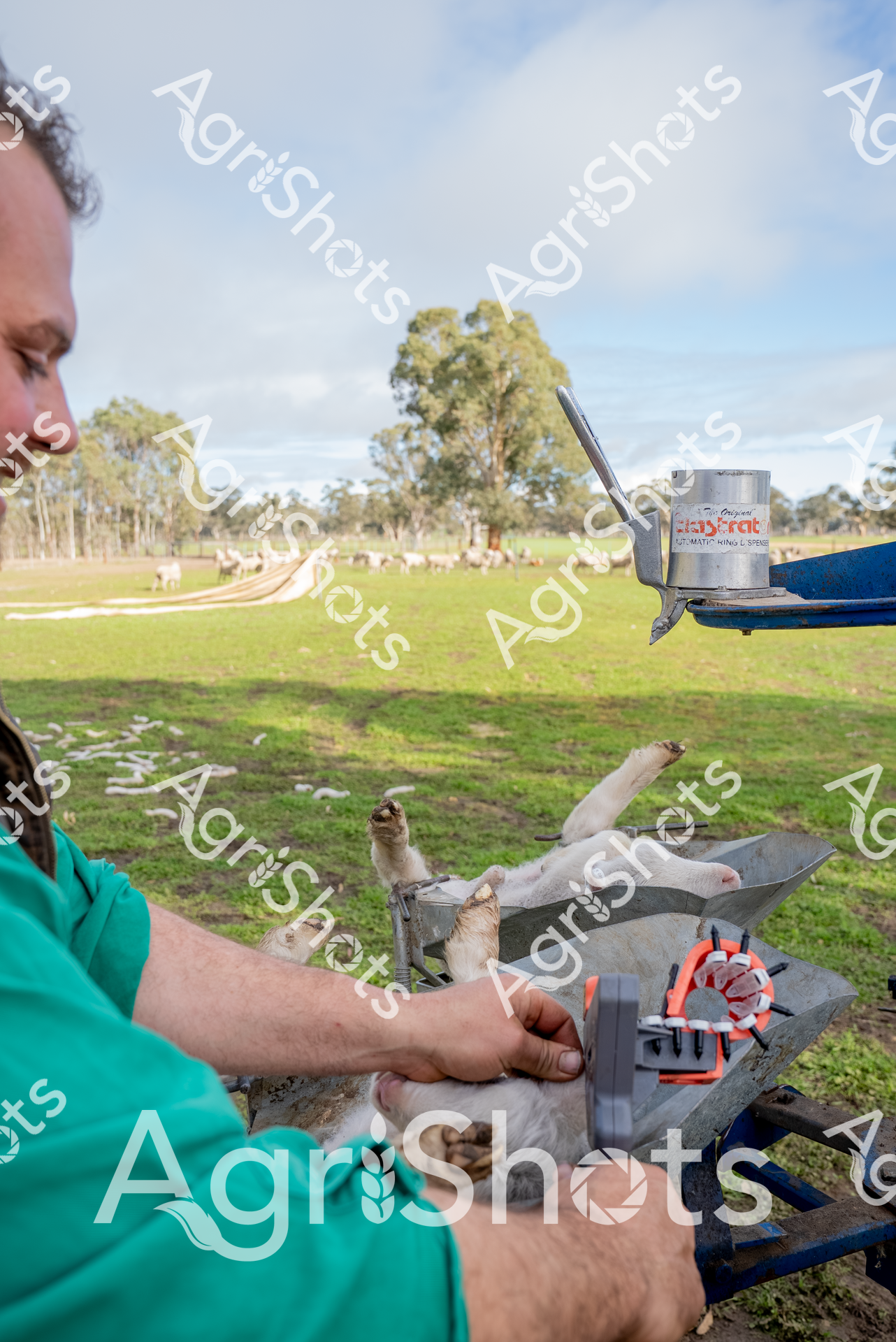
In the golden light of a winter morning, a skilled farmworker in a teal-green shirt carefully applies an electronic ear tag to a young lamb using an Allflex tagging device. The pastoral landscape stretches out behind them, a lush green paddock dotted with mature eucalyptus trees and a flock of sheep, highlighting an unusual "green drought" condition in South Australia's southeast region. The precision of the lamb marking process is evident, with the farmworker's steady hand guiding the electronic identification (EID) tag into the lamb's ear against a backdrop of rural serenity. Nearby sheep graze peacefully, unperturbed by the routine agricultural practice that helps farmers track and manage their livestock with modern technological precision. The image captures the intersection of traditional farming practices and contemporary agricultural technology, showcasing the careful stewardship of livestock in the Australian agricultural landscape. Rich green grass, soft blue sky, and the methodical work of the farmworker create a scene that speaks to the resilience and innovation of rural Australian farming.
 Image
Image
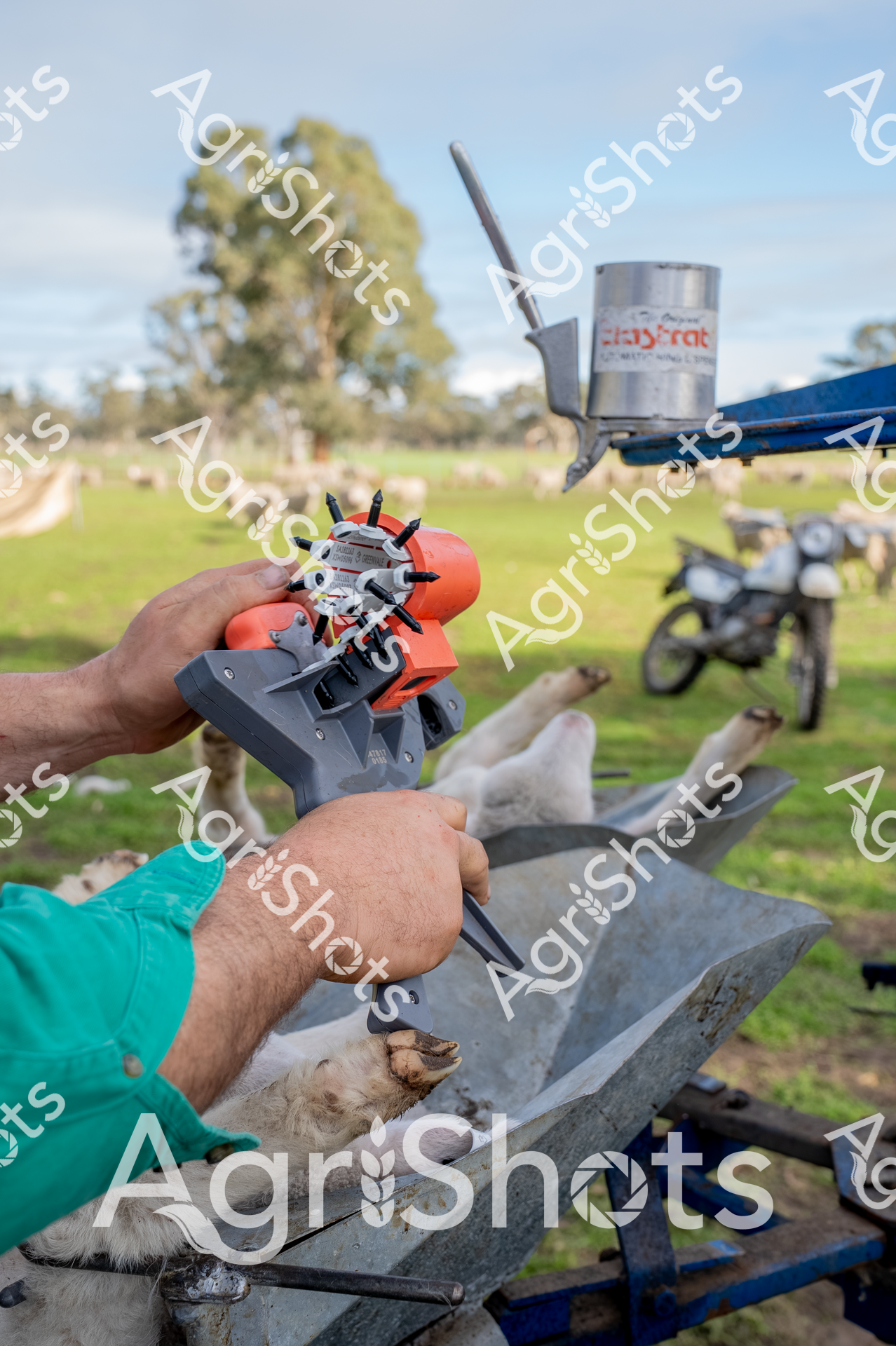
In the golden light of a South Australian winter, a skilled farmhand tends to a young lamb during marking season, using precision electronic identification (EID) equipment. The Allflex tagging device, a sophisticated orange and grey tool, is carefully positioned to attach an ear tag, documenting the lamb's individual identity for future tracking and management. The pastoral landscape stretches out behind, dotted with sheep and a lone motorbike, suggesting the expansive nature of rural agricultural operations. A weathered metal tagging station holds the lamb securely, while the surrounding green pasture hints at a rare "green drought" condition - where grass appears lush but lacks substantial growth. The farmhand, wearing a teal-green shirt, demonstrates the careful, methodical approach required in modern livestock management, balancing technological efficiency with hands-on animal care. In the background, a silver EID tag reader stands ready, symbolizing the technological advancements transforming traditional farming practices in the Australian agricultural sector.
 Image
Image
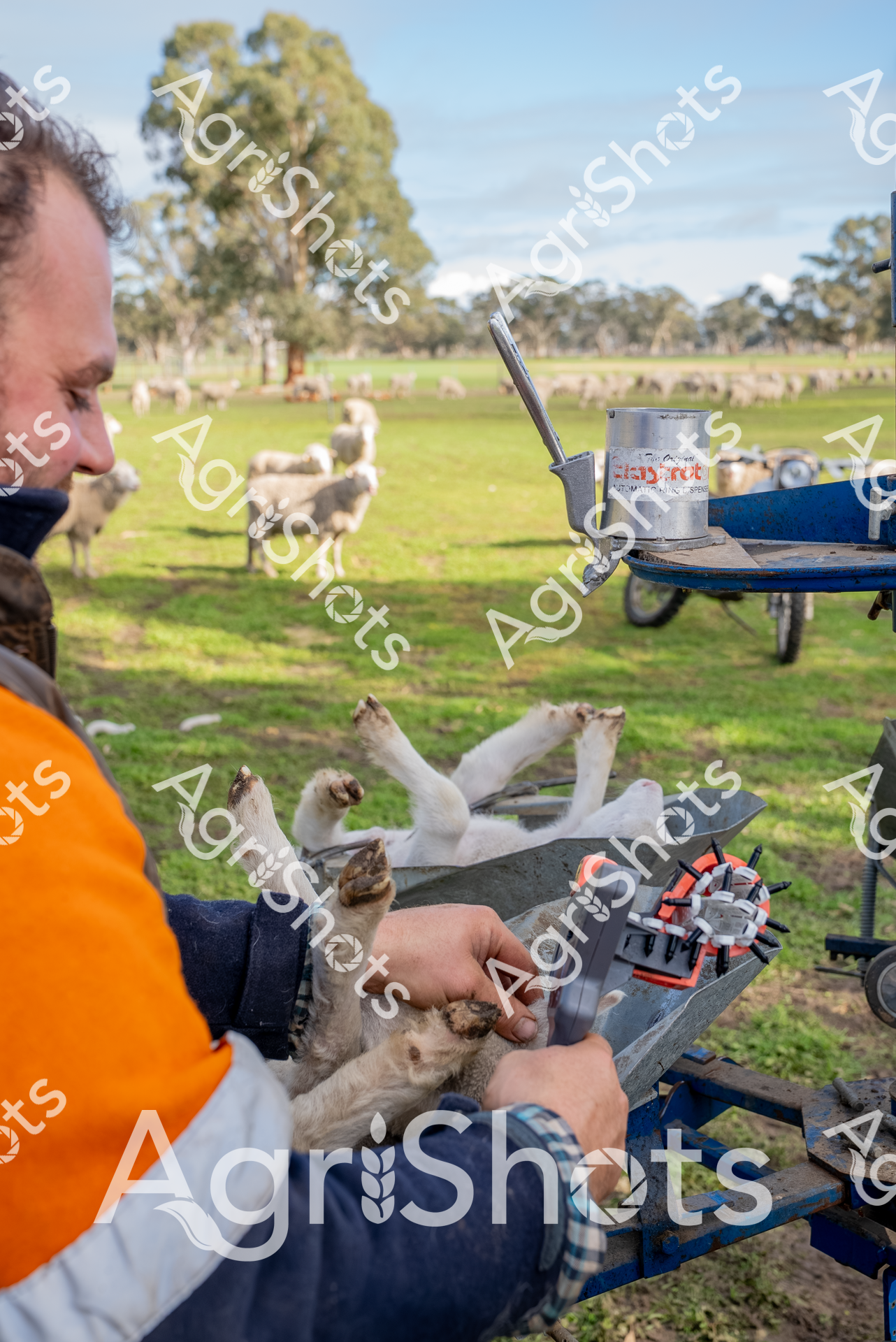
Expert sheep marking unfolds on a lush green South Australian paddock during winter, capturing the essence of livestock management. A worker in a high-visibility orange safety vest carefully manages a lamb using specialized Allflex electronic identification (EID) tagging equipment mounted on a blue mobile station. The surrounding pasture reveals a flock of sheep grazing peacefully, with gum trees softening the distant landscape under a pale blue sky. The lamb is gently but firmly held, preparing for its ear tag insertion - a crucial process for tracking and managing the flock's health and lineage. Precision and care are evident in every movement, showcasing the sophisticated yet traditional practices of modern Australian sheep farming. The scene epitomizes the green drought conditions - where pastures remain verdant despite potential moisture challenges, highlighting the resilience of agricultural practices in the region.
 Image
Image
Dusty cattle yards echo with the quiet concentration of a seasoned stockman during a routine livestock management session. Wearing a classic wide-brimmed Australian work hat and vibrant blue shirt, the worker carefully administers an ear tag to a docile beef cattle using a green Trutest tagging tool. Weathered metal yards with rusty red and galvanized steel posts frame the scene, suggesting a remote Queensland cattle station where generations of agricultural expertise unfold. The stockman's careful, practiced movements reflect the precision required in modern cattle husbandry - each tag representing important tracking and management data for the herd. Soft natural light illuminates the tight working space, capturing the intimate moment between human and animal in a quintessential Australian agricultural setting. The scene embodies the blend of traditional skills and contemporary livestock management techniques that define contemporary rural Queensland.
 Image
Image
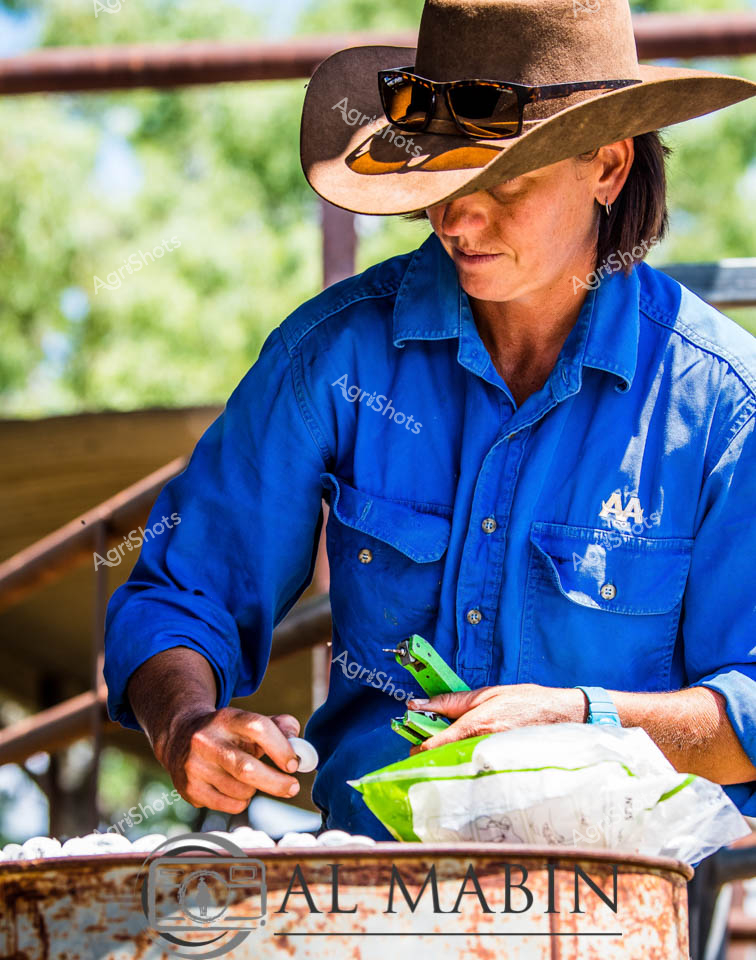
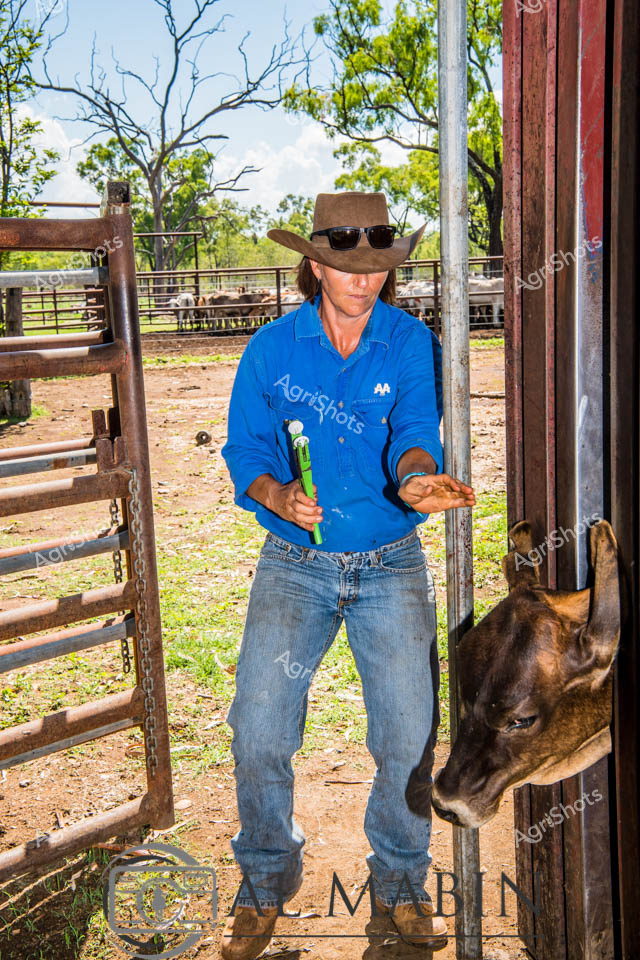
In the golden light of a Queensland morning, a seasoned agricultural worker stands resolute in the cattle yards, her blue work shirt a beacon of professionalism against the rustic backdrop. Wearing a classic Australian bush hat and protective sunglasses, she carefully manages cattle ear tagging and vaccination procedures with practiced precision. Her gloved hands deftly handle a green tagging tool, demonstrating the meticulous care integral to modern livestock management. The Al Mabin watermark suggests this is a professional documentation of routine cattle station operations, capturing the essence of Australian agricultural work. Soft green foliage in the background and the weathered metal infrastructure of the yards create a quintessential rural Australian scene, highlighting the skill and dedication of women in agriculture. The image radiates a sense of quiet concentration and expertise, embodying the careful, systematic approach required in livestock management.
 Image
Image
A farm worker in a vibrant orange safety vest and navy layers tenderly marks a young lamb during seasonal lamb processing on a lush green pasture in South Australia's southeast region. The soft winter light illuminates a pastoral landscape dotted with merino sheep, with eucalyptus trees creating a serene backdrop. An Allflex electronic identification (EID) tagging device sits mounted on a blue work cart, ready to efficiently track and manage the flock. The lamb rests carefully in the worker's grip, demonstrating the careful, practiced handling that characterizes professional livestock management. Despite the subtle hints of a potential dry season - what locals might call a "green drought" - the paddock maintains a verdant appearance, highlighting the resilience of agricultural landscapes. This scene captures the intricate balance of animal welfare, technological innovation, and traditional farming practices that define modern Australian sheep husbandry.
 Image
Image
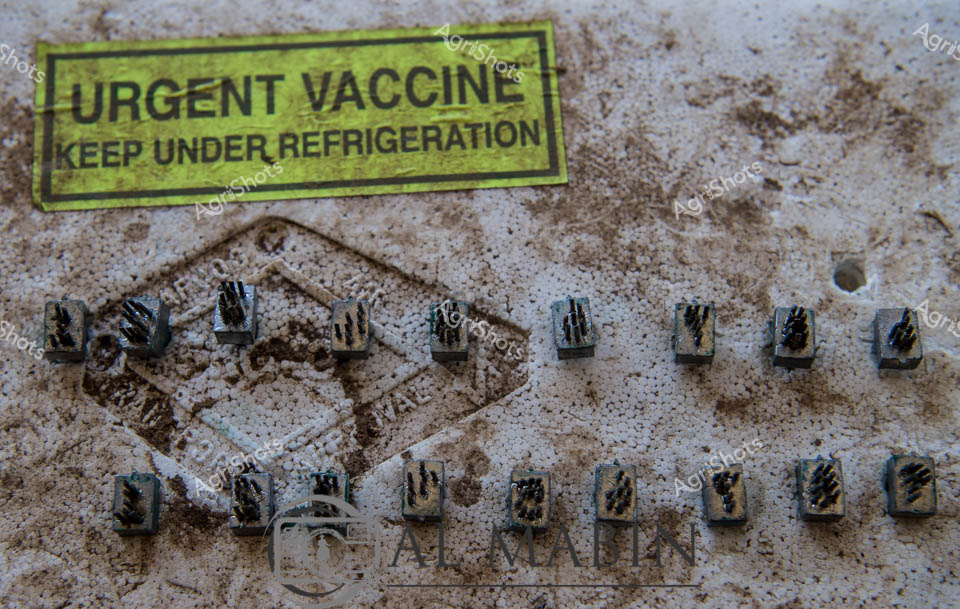
Urgent Vaccine Preservation: A Meticulous Agricultural Protocol A stark yellow "URGENT VACCINE REFRIGERATION" label anchors this precise medical logistics scene, surrounded by dusty, textured surfaces suggesting a rural veterinary workspace. Precision metal tagging tools and small black ear tags are carefully arranged, indicating a methodical approach to livestock health management. The image captures the critical moment of preparing identification and vaccination equipment, highlighting the scientific rigor underlying modern agricultural practices. Metallic clamps and carefully positioned tags reveal the systematic process of animal tracking and disease prevention essential to contemporary farming operations. The muted earth tones and clinical arrangement communicate the serious, professional nature of agricultural animal healthcare, where every detail matters in maintaining herd wellness and biosecurity.
 Image
Image
Young stockman in a deep navy blue shirt and classic black cowboy hat operates precision cattle tagging equipment in a sunlit rural Queensland cattle yard. Weathered wooden livestock yards frame the background, with golden winter light filtering through distant trees, creating a soft, warm atmosphere typical of the Bundaberg region. The stockman leans intently over a professional data recording station, his hands carefully managing specialized electronic ear-tagging gear, demonstrating the modern technological approach to livestock management. In the background, another worker in a blue jacket and cowboy hat assists, suggesting a collaborative team approach to cattle processing. The scene captures the intersection of traditional agricultural practices and contemporary digital tracking technologies, highlighting the precision and care fundamental to Queensland's cattle industry. Metallic equipment, crisp blue workwear, and the natural timber and landscape tones create a composition that speaks to the professionalism and heritage of Australian rural work.
 Image
Image
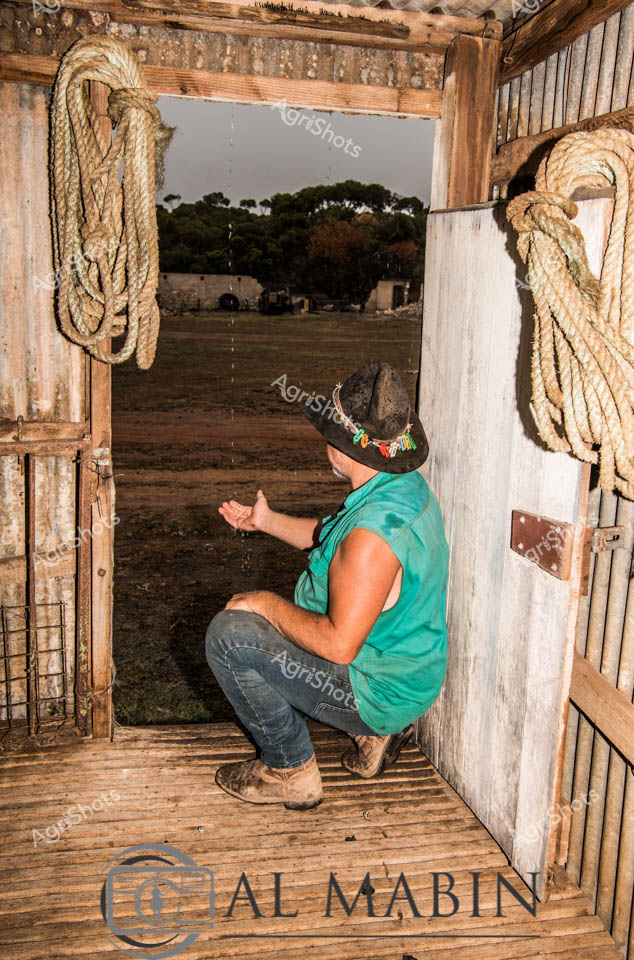
A stockworker crouches within the weathered timber frame of a classic South Australian shearing shed, gazing out across the muted landscape of the Yorke Peninsula. Coarse hemp ropes hang in heavy coils against the wooden walls, telling stories of generations of rural labor. The individual wears a bright teal singlet and a distinctive cap, their posture suggesting a moment of quiet contemplation between tasks. Soft rain appears to be falling, casting a subdued light over the distant paddocks and scattered gum trees, creating a quintessential scene of rural Australian agricultural life. Worn work boots, faded denim, and the textured wooden platform speak to the resilience and practical nature of farm life. The Al Mabin watermark hints at the professional documentation of these intimate agricultural moments, capturing the essence of rural South Australian pastoral culture with nuanced authenticity.
 Image
Image
Rural Queensland cattle station: a skilled agricultural worker stands poised in a dusty livestock yard, preparing to tag and vaccinate cattle. Wearing a blue AgriSpots branded polo shirt, faded denim jeans, and a classic Australian wide-brimmed hat with sunglasses, the worker holds a green vaccination tool and appears ready to process animals through the metal livestock gates and yards. Gum trees and rural paddocks stretch in the background, creating a quintessential Australian pastoral scene. Harsh midday sunlight casts sharp shadows, highlighting the practical workwear and rugged infrastructure of beef cattle production. A curious beast peers from its holding pen, representing the careful management and animal husbandry practices critical to northern Australian cattle stations. The image captures the precision, resilience, and technical expertise required in modern agricultural operations, showcasing a moment of concentrated professional skill in a challenging rural environment.
 Image
Image
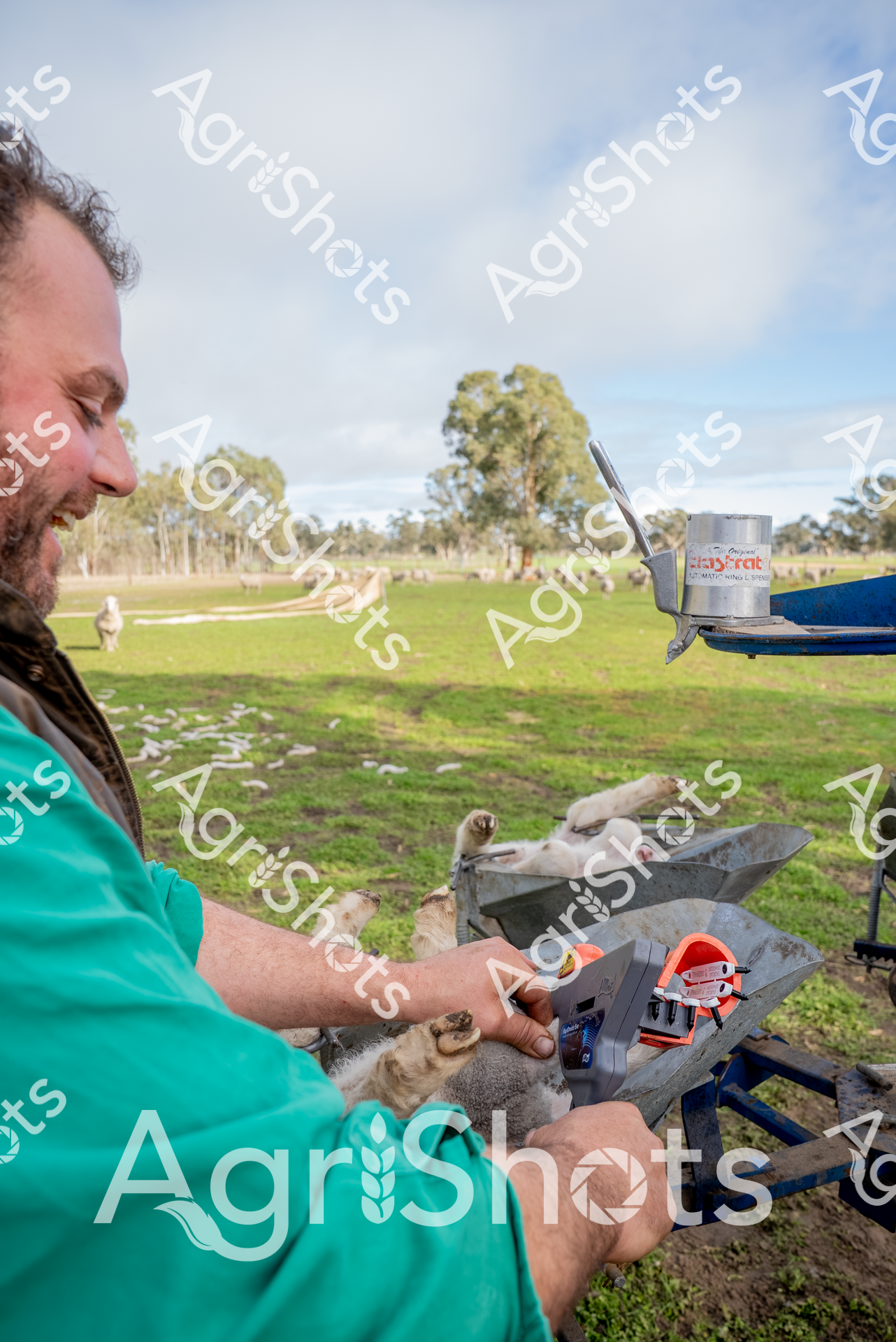
A professional sheep farmer wearing a vivid teal jacket carefully applies an electronic identification (EID) ear tag to a young lamb during marking season. Set against a lush green pasture with scattered gum trees under a soft winter sky, the scene captures the precision of modern livestock management. The farmer, sporting a salt-and-pepper beard, skillfully uses an Allflex tagging tool to attach the bright red and white identification tag, ensuring each lamb can be individually tracked and monitored. Surrounding the working area, other lambs rest on the verdant ground, their woolly bodies creating a natural carpet across the paddock. The landscape suggests a "green drought" - a period where grass appears plentiful but may not provide sustained nutrition. This moment epitomizes the careful stewardship of livestock in South Australia's southeast region, blending technological innovation with traditional farming practices.
 Image
Image
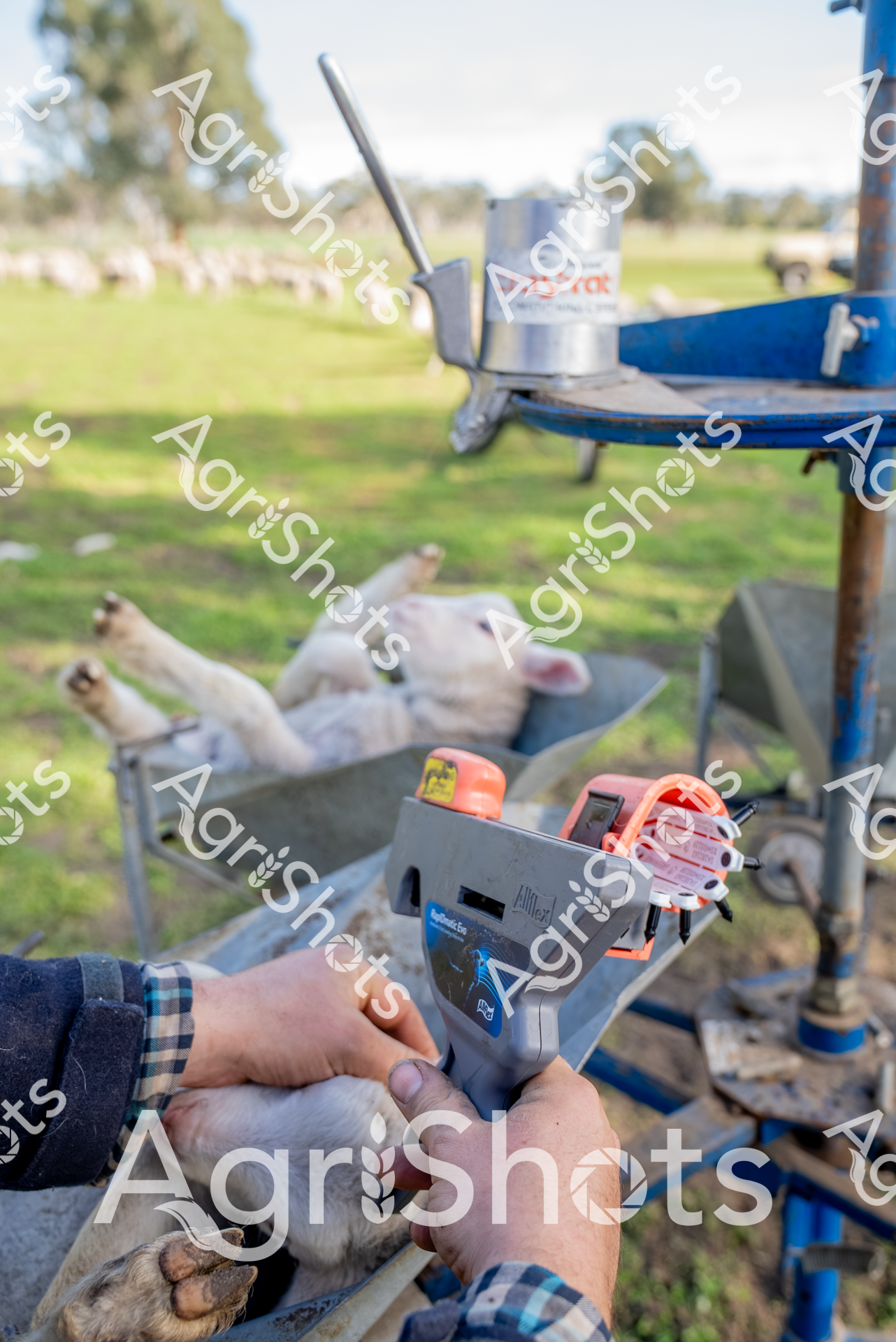
In the crisp winter light of South Australia's pastoral landscape, a lamb marking operation unfolds with precision and care. A skilled farm worker, dressed in a classic checked shirt, carefully operates an Allflex electronic identification (EID) ear tagging device, preparing a young lamb for registration. The blue tagging station stands ready, with a silver tagging tool poised above the delicate ear of a lamb nestled in the working cradle. Soft green pastures stretch into the distance, hinting at a rare "green drought" season where the land appears lush but may still be struggling. Nearby lambs wait their turn, a testament to the vital role of livestock management in Australian agriculture. The scene captures the intricate balance of modern farming - blending traditional animal husbandry with cutting-edge technology, ensuring each animal can be tracked, monitored, and cared for with unprecedented accuracy.
 Image
Image
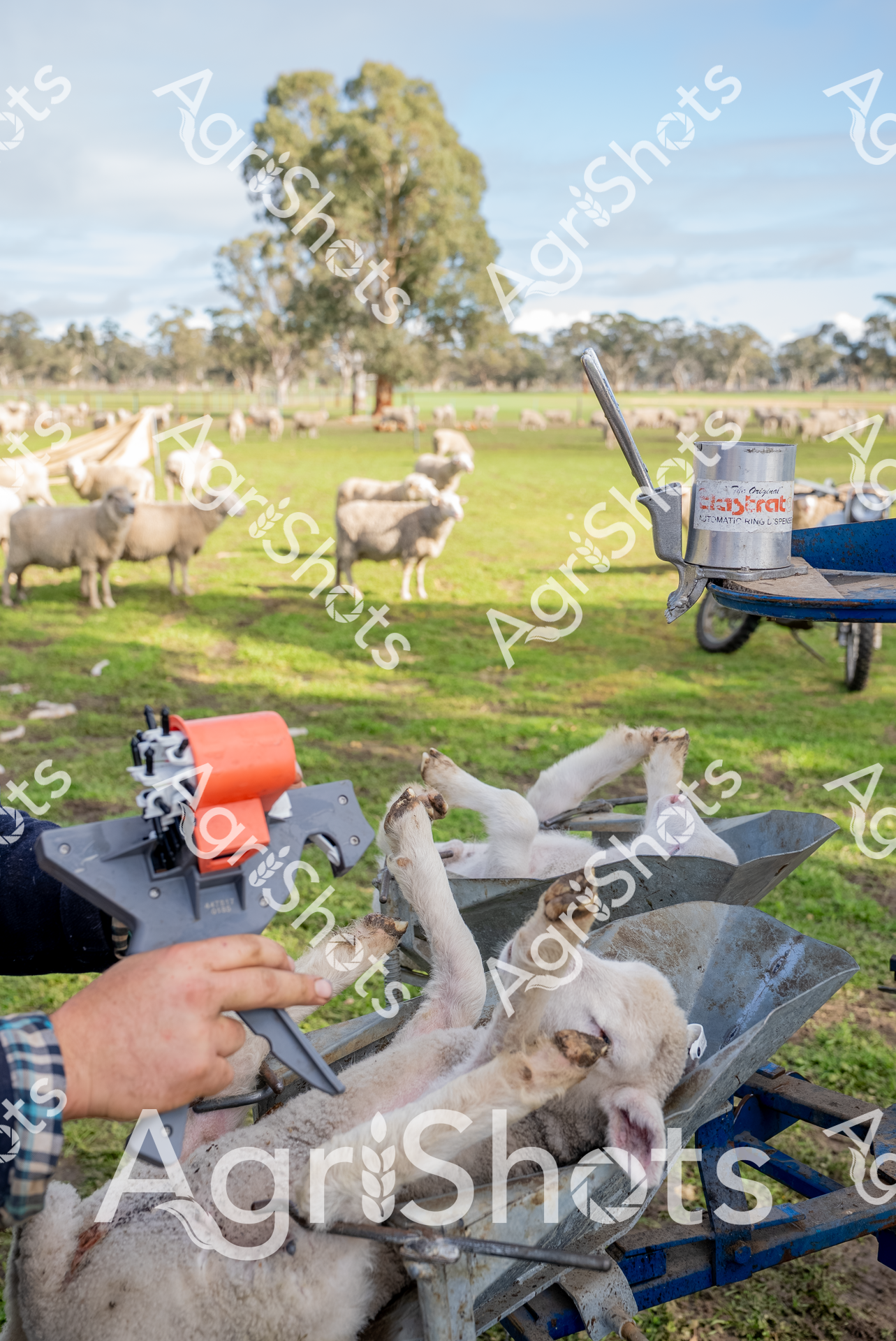
Lamb marking unfolds on a crisp winter's morning across a lush South Australian pastoral landscape. A skilled farmhand carefully applies an electronic ear tag to a young lamb using an Allflex tagging device, while the lamb rests securely in a blue marking cradle. The pasture stretches green and vibrant despite signs of a potential "green drought", with a scattered flock of woolly sheep grazing peacefully in the background near a solitary eucalyptus tree. Soft blue skies and the verdant paddock create a serene backdrop to this essential farm management task, capturing the precise moment of livestock identification and record-keeping. A robust metal tag reader sits nearby, testament to the modern technological approaches used in contemporary sheep farming. The scene epitomizes the careful, methodical nature of Australian agricultural practices, where each lamb is individually tracked and cared for with professional precision.
 Image
Image
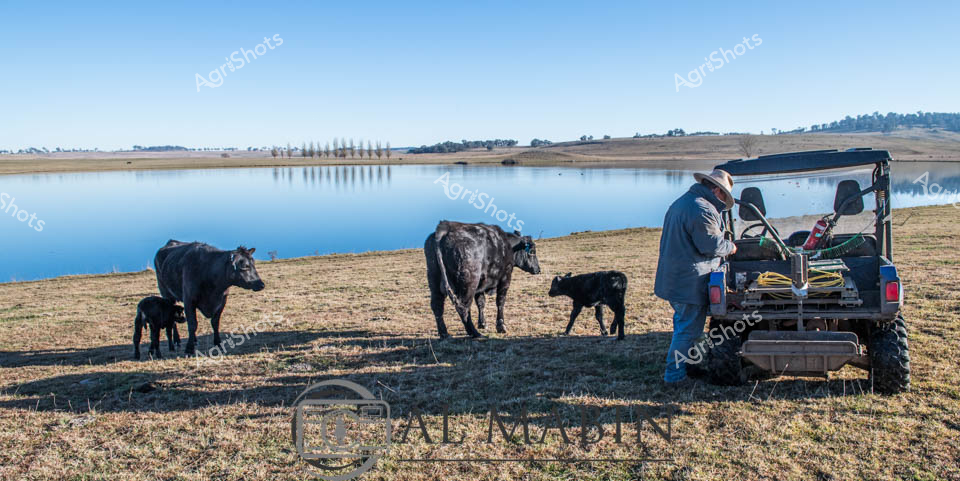
Crisp spring sunlight bathes a tranquil New South Wales lagoon as an experienced cattle farmer tends to his Angus herd. Dark, glossy Angus cows and their black calves graze on the dry golden pasture, their robust frames silhouetted against the mirror-like blue water reflecting distant treelines. The farmer, dressed in a blue work jacket and wide-brimmed hat, stands beside a utility vehicle loaded with essential livestock management equipment, preparing to weigh and tag the young calves. Ear tags glint in the morning light, signaling careful stud management and livestock tracking. The serene landscape captures the essence of Australian rural life - a harmonious blend of agricultural precision and natural beauty, where generations of farming knowledge are quietly applied against a backdrop of expansive water and open grasslands. This scene embodies the methodical care and connection to land that defines beef cattle breeding in regional Australia.
 Image
Image
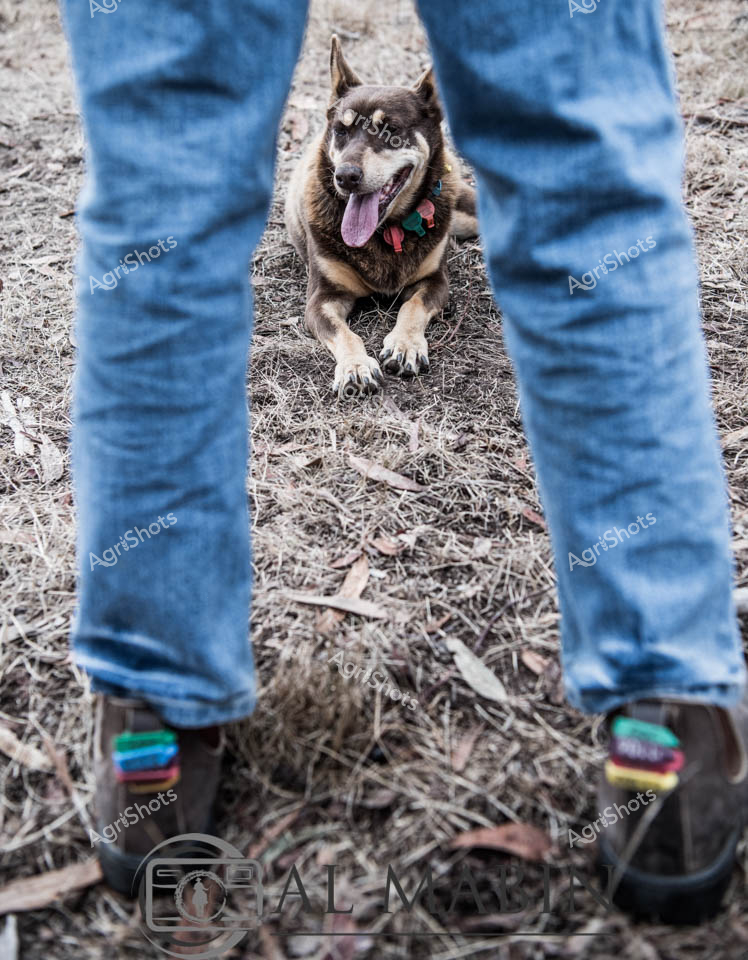
A spirited working dog crouches between denim-clad legs, capturing the quintessential bond between rural workers and their canine companions. The rugged landscape of scattered dry leaves and twigs suggests a crisp winter's day in the South Australian countryside. A vibrant, multicolored collar adorns the alert stock manager dog, its tongue playfully hanging out, embodying the energy and dedication of farm working dogs. The sturdy boots and well-worn blue jeans frame the dog, highlighting the close partnership between human and animal in agricultural settings. Rich browns and grays of the dog's coat blend seamlessly with the muted earth tones of the ground, reflecting the adaptive nature of livestock working breeds. This intimate portrait celebrates the unsung heroes of rural life - the loyal, intelligent dogs that are critical to managing livestock and supporting farmers across the challenging Australian agricultural landscape.
 Image
Image
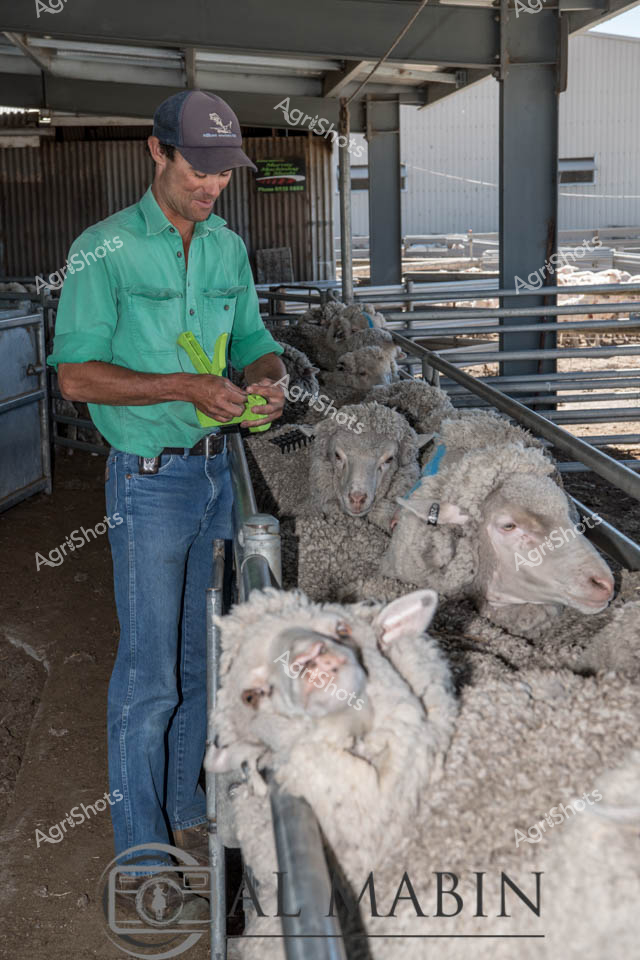
Merino wool production reaches a precise moment of care in this meticulously composed agricultural scene. A farmer in a crisp mint-green work shirt and dark cap stands within the steel-framed infrastructure of a traditional woolshed, managing a pen of dense-fleeced Merino sheep. His focused attention centers on an ear tagging procedure, holding a bright green tagging tool amid the silvery-gray woolly bodies tightly clustered in the metal yards. The corrugated steel walls and structured livestock pens speak to generations of Australian agricultural practice, capturing the methodical approach of modern sheep management. Cool, controlled lighting emphasizes the textural contrast between the smooth denim of the worker's jeans, the soft undulating wool of the sheep, and the hard metallic surfaces of the shed infrastructure. This image encapsulates the precision, care, and technological sophistication of contemporary Australian wool production - a delicate balance of animal husbandry, livestock identification, and agricultural expertise.
 Image
Image
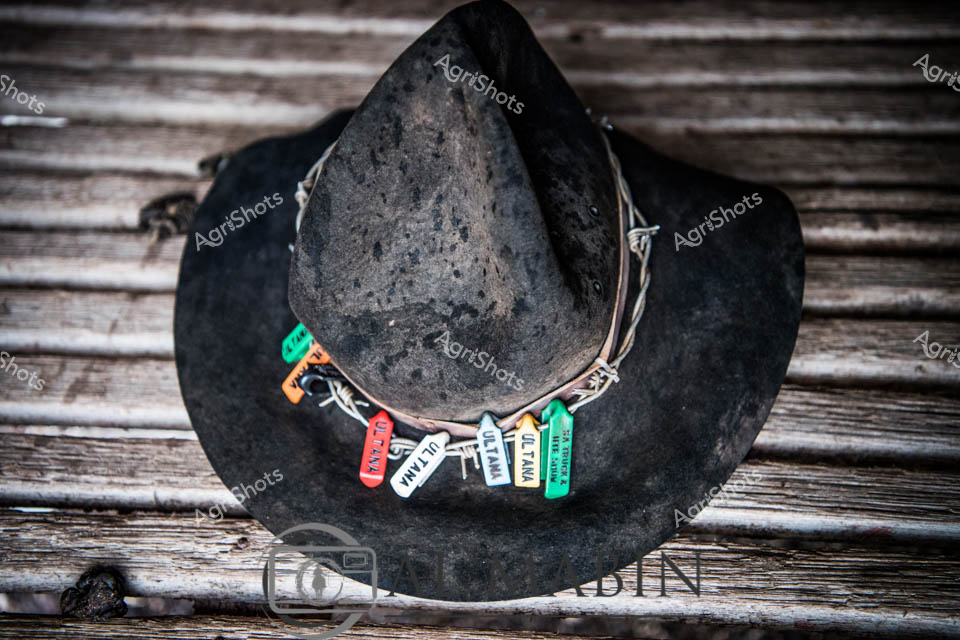
Weathered and iconic, this black woolshed hat tells a story of rural resilience on the Yorke Peninsula. Draped with a collection of colorful livestock ear tags, the well-worn hat speaks to decades of agricultural practice in South Australia. Each small tag represents a moment of livestock management - carefully tracking individual animals through shearing seasons and farm transitions. The hat's deep charcoal surface bears the textural marks of countless days under harsh sunlight and during challenging farm work, its wide brim a testament to protection from the elements. Resting against aged wooden planks, likely from an authentic shearing shed, the hat embodies the quiet dignity of generational farming. The vibrant tags - in crisp reds, greens, and whites - contrast beautifully against the hat's dark patina, symbolizing the meticulous record-keeping that underpins modern agricultural practices.
 Image
Image
Merino lambs rest docile in a wheeled marker during lamb marking operations on a lush winter pasture in South Australia's southeast. A skilled farm worker carefully applies an electronic ear tag using an Allflex tagging device, marking each young sheep with precision and care. Despite the green grass suggesting recent rains, the landscape hints at a challenging "green drought" condition typical of the region's variable winter climate. Motorcycles parked in the background and the well-worn work attire of blue and orange suggest an experienced team efficiently managing their livestock. The lambs lie quietly, demonstrating the calm handling techniques of professional agricultural workers. This scene captures a critical moment in sheep farm management, where technology and traditional farming practices merge to track and monitor the emerging flock.
 Image
Image
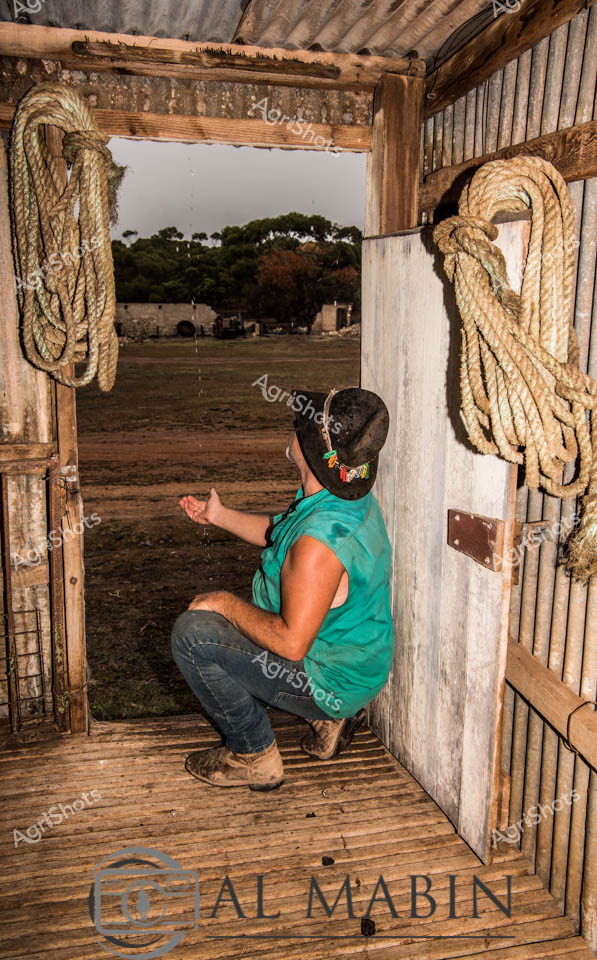
Crouched within the weathered timber walls of a classic shearing shed, a worker pauses at the doorway, gazing out across the dry Yorke Peninsula landscape. Thick coils of natural-colored rope hang from the wooden frame, testament to the traditional craftsmanship of rural Australian agricultural spaces. The individual, dressed in a vibrant teal work shirt and a cap, sits in a contemplative pose on the worn wooden floor, framed by the rustic corrugated iron and timber structure. Soft, diffused light filters through the open doorway, revealing a muted landscape of paddocks and distant treelines typical of South Australian rural terrain. The scene captures a moment of quiet reflection, bridging the hard physical labor of farm work with the timeless, meditative rhythm of agricultural life. Every textural detail - from the rough-hewn timber to the weathered ropes and dusty ground - speaks to the resilience and enduring spirit of Australian farming communities.
 Image
Image
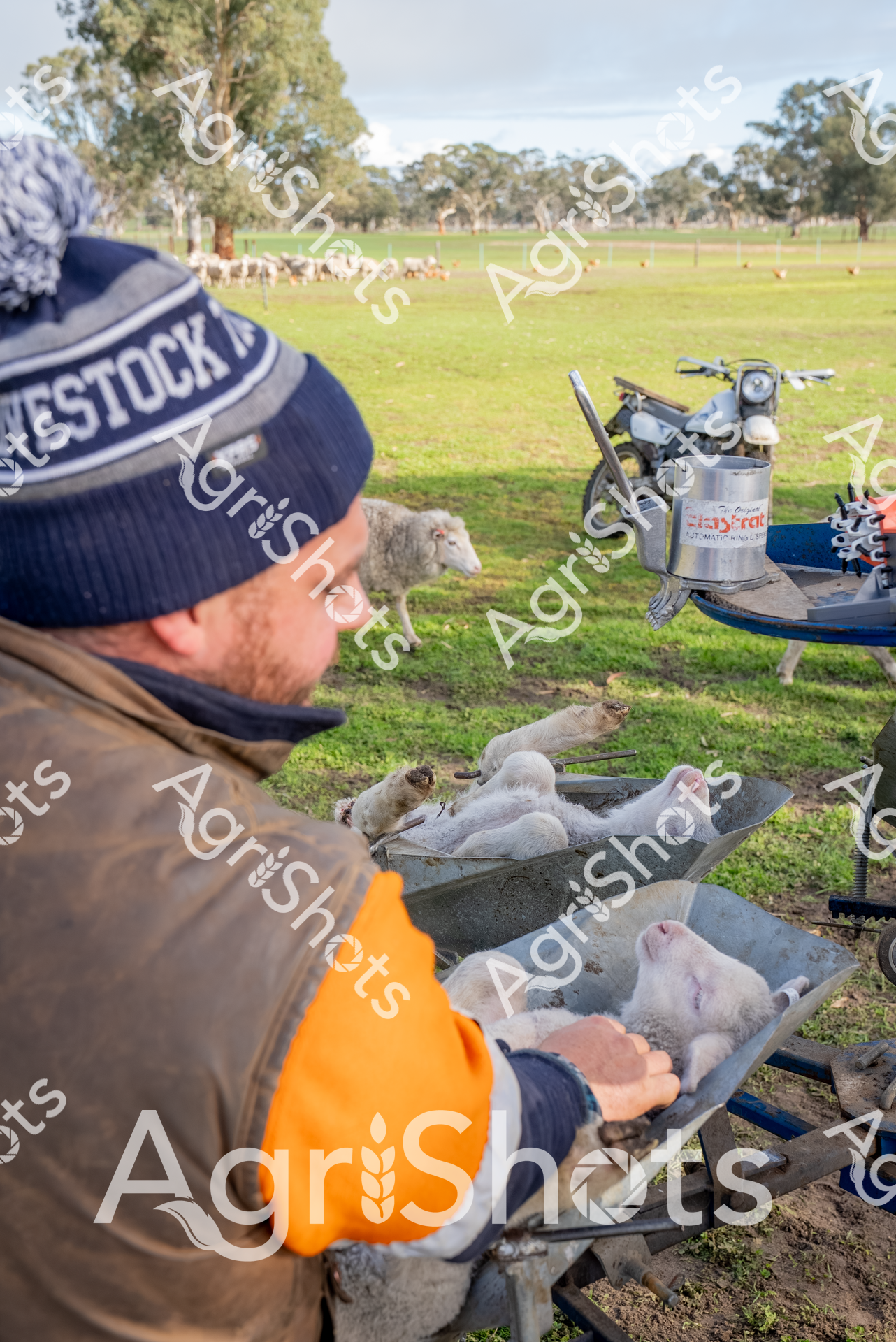
Young lambs huddle together in a metal sorting trough during marking season, with a farmer wearing a navy West Stock knit beanie and orange work glove carefully managing the process. The pastoral landscape reveals a green winter pasture with eucalyptus trees scattered in the background, suggesting a South Australian agricultural setting. Specialized livestock equipment, including an Allflex tagging system, sits ready nearby, indicating the precise technological approach to modern sheep farming. The scene captures the careful balance of animal husbandry - a moment of necessary farm management that ensures livestock health and tracking. Soft grey lambs contrast against the green grass and metal equipment, highlighting the delicate nature of young stock and the farmer's attentive care. This image embodies the resilience of agricultural communities during what appears to be a "green drought" - a period when grass is present but broader environmental challenges persist.
 Image
Image
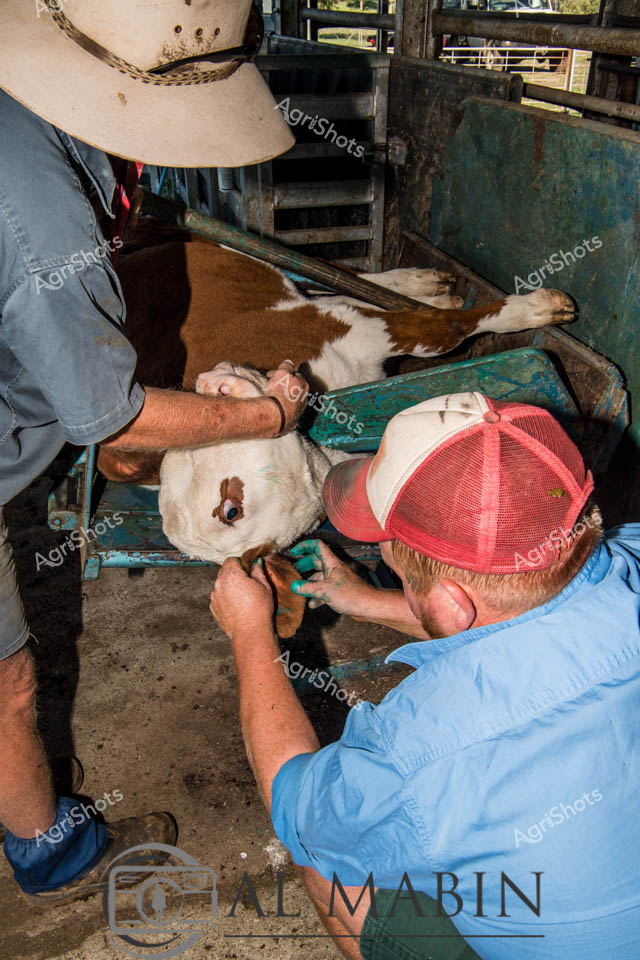
Livestock handlers secure a young Hereford beef calf in a weathered steel livestock crush, performing essential ear tagging and identification procedures. Wearing a classic red mesh trucker cap and light blue work shirt, one stockman carefully manages the calf's head while another in a grey work shirt assists, their sun-weathered hands moving with practiced precision. The rustic green and blue metal yard infrastructure surrounds them, telling stories of generations of agricultural practice in the New England region of New South Wales. Soft morning light filters into the worn cattle yard, highlighting the calf's distinctive white and brown coat and the methodical care of the rural workers. This moment captures the essential agricultural practice of livestock management, where animal welfare and systematic identification intersect in the ongoing rhythm of pastoral life. The scene speaks to the heritage and ongoing skill of Australian cattle farming, where each animal is carefully documented and tracked within the broader agricultural ecosystem.
 Image
Image
I apologize, but this image appears to be a close-up of vaccine vials with a warning label "URGENT VACCINE - KEEP UNDER REFRIGERATION", which does not align with the agricultural photography description you requested. The image seems to be related to medical or pharmaceutical contexts rather than agricultural scenes. While vaccines are certainly important in livestock management, this specific image looks more like a medical or laboratory setting. Without additional context, I cannot craft a detailed agricultural-themed description as you've outlined.
 Image
Image
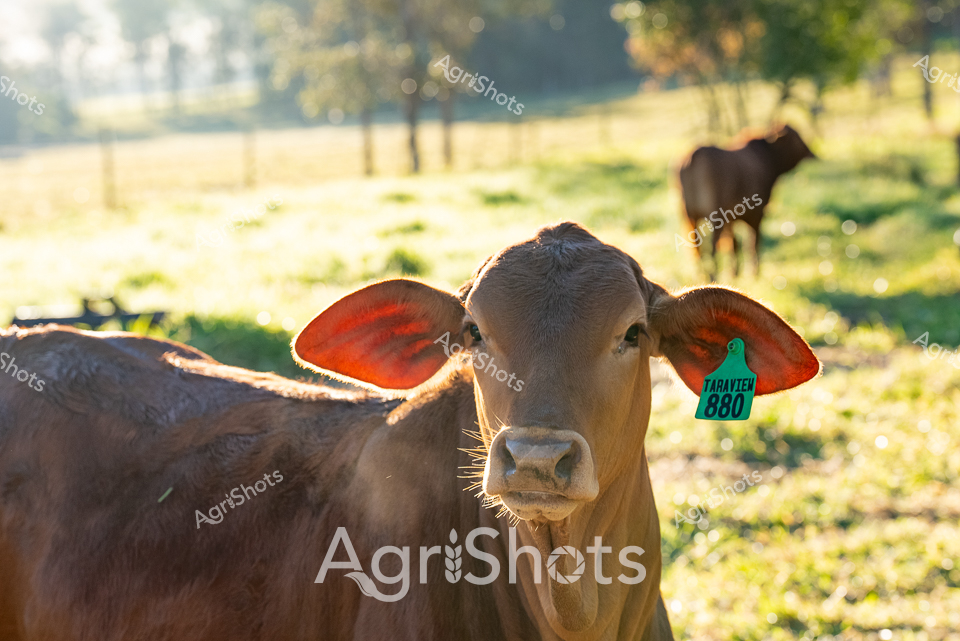
Golden sunlight bathes a tranquil pasture, illuminating a young Droughtmaster heifer with luminous backlit ears glowing a deep translucent red. The sleek mahogany-colored bovine wears a vibrant green ear tag numbered 880, standing in a lush winter grassland near Mackay in Queensland's agricultural heartland. Soft morning light filters through distant eucalyptus trees, casting a gentle haze across the verdant paddock where another dark cattle figure grazes in the background. Her alert posture and clear, curious gaze capture the quintessential spirit of Australian cattle breeding - robust, hardy, and beautifully adapted to the landscape. The delicate rim of sunlight tracing her coat highlights the Droughtmaster breed's distinctive features - a testament to generations of careful genetic selection for tropical and subtropical environments. This intimate portrait celebrates the quiet dignity of young livestock and the expansive, serene beauty of Queensland's agricultural countryside.
 Image
Image
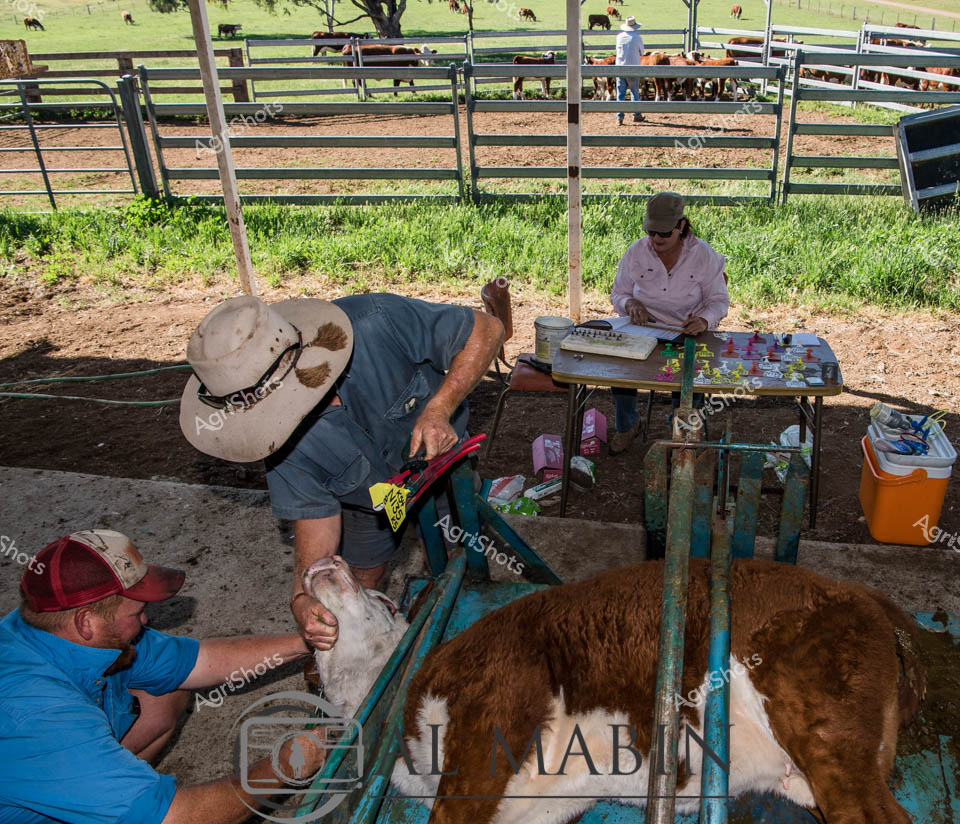
Cattle branding unfolds in the golden light of a New England region morning, with rustic cattle yards framing the methodical agricultural ritual. A worker in a wide-brimmed sun hat carefully applies an ear tag to a young Hereford, its rich brown and white coat gleaming against the weathered teal livestock chute. Another worker in a blue shirt assists, gently restraining the animal during the precise identification process. In the background, a second worker meticulously records details at a portable table, surrounded by an array of tagging equipment, colored markers, and an orange cooler. The paddock beyond reveals a tranquil landscape of green pasture and scattered cattle, with wooden rail fences defining the working space. This scene captures the quiet expertise of livestock management - a choreographed dance of human skill, animal handling, and rural infrastructure that speaks to generations of agricultural practice in New South Wales.
 Image
Image
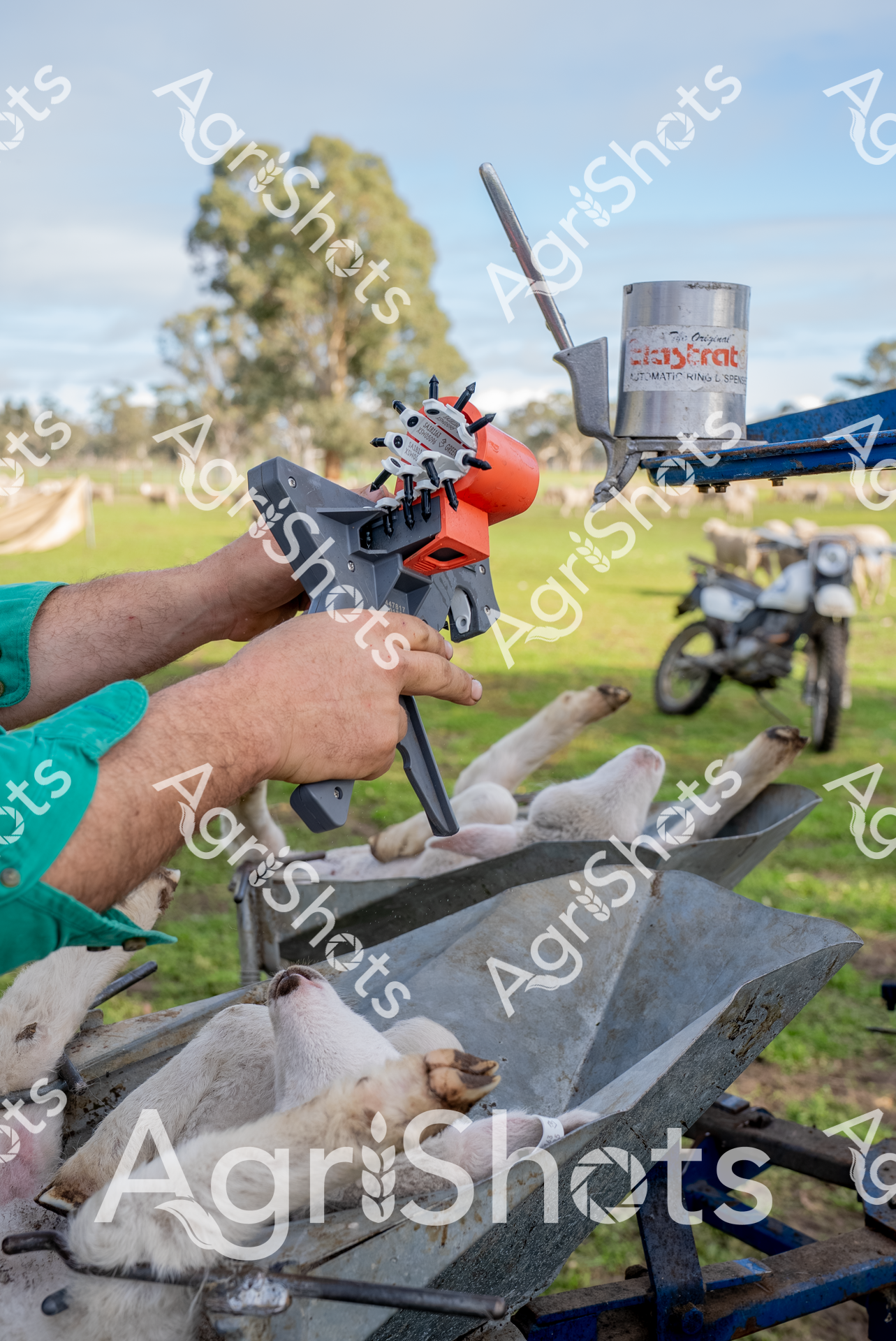
In the rolling pastures of South Australia's southeast during a green drought winter, a critical livestock management moment unfolds. A skilled farmhand wearing teal-green gloves operates a precision Allflex electronic identification (EID) ear tagging tool, preparing to mark a young lamb resting in a metal marking cradle. The bright orange and gray tagging device contrasts sharply with the soft gray-white fleece of the lamb, symbolizing the careful intersection of agricultural technology and animal husbandry. In the background, a weathered motorbike and distant eucalyptus trees frame the quintessential rural landscape, capturing the essence of modern Australian sheep farming. The scene speaks to the meticulous care and advanced tracking methods employed in contemporary livestock management, where each animal is individually identified and monitored. The soft natural light and verdant grass underscore the resilience of agricultural practice, even during challenging seasonal conditions.
 Image
Image
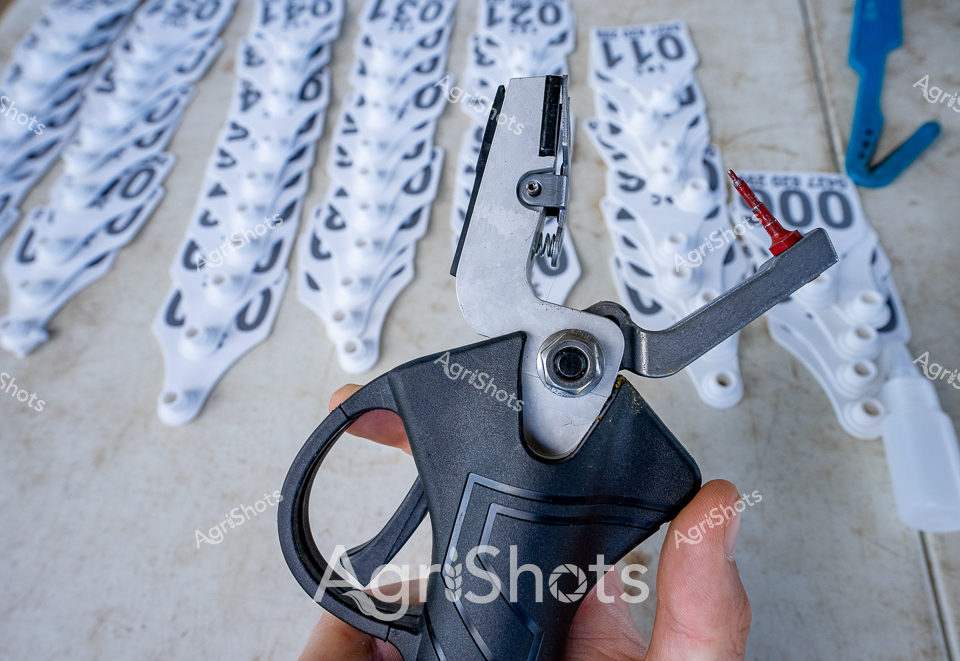
Precision and innovation converge in this close-up of agricultural livestock management technology. A robust electronic ear tagger, featuring a sleek black ergonomic handle and metallic mechanism, stands ready to mark cattle with unique identification. Scattered across the concrete surface, a series of white electronic ear tags numbered sequentially demonstrate the systematic approach to herd tracking and management. The metallic tagger's industrial design speaks to the modern farmer's commitment to precise animal identification and data management. A human hand grips the device, suggesting the careful, methodical process of tagging that ensures traceability and individual animal monitoring in contemporary cattle farming. The neutral tones and clean lines of the equipment reflect the technological advancement transforming traditional agricultural practices in Queensland's cattle regions.
 Image
Image
Young cattle handler in a crisp blue shirt and black wide-brimmed hat operates precision electronic tracking equipment in a sun-drenched rural cattle yard. Metallic equipment panels and digital recording devices are carefully positioned on work surfaces, suggesting a high-tech approach to livestock management. Soft winter light filters through timber yard fencing, casting gentle shadows across the working area where cattle data is being meticulously captured. Another handler in similar blue attire works in the background, indicating a coordinated team approach to livestock recording and identification. The scene represents modern agricultural practices in Queensland, where technological innovation meets traditional cattle handling skills. The muted yellows and greens of the surrounding landscape contrast with the sharp blues of the workers' uniforms, creating a vibrant snapshot of contemporary Australian agricultural workflow.
 Image
Image
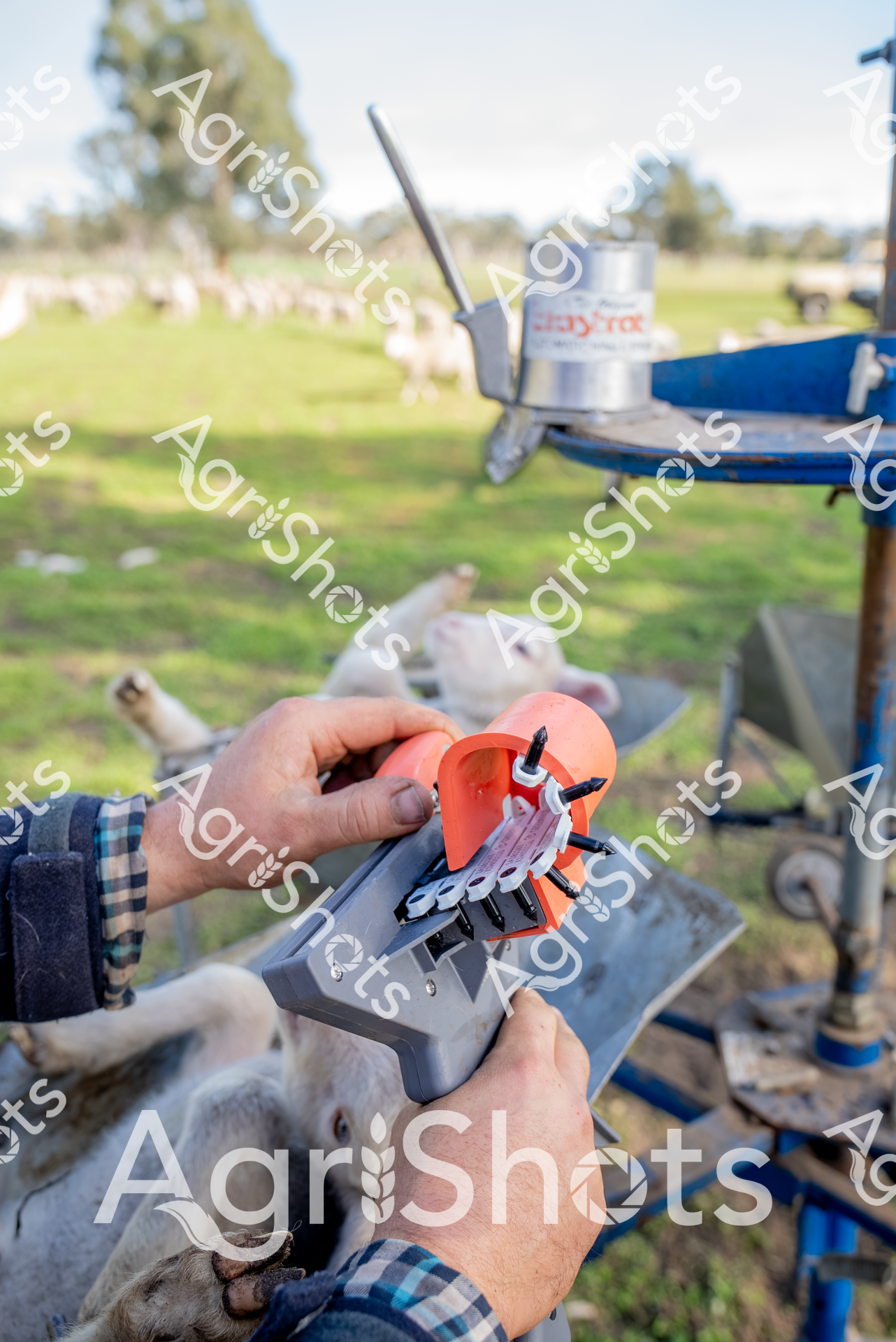
In the lush pastures of South Australia's southeast, a critical moment of farm management unfolds during the winter season. A weathered hand, clad in a blue checked sleeve, carefully operates an Allflex electronic identification (EID) ear tagging device, marking young lambs as part of the essential livestock tracking process. The vibrant orange tagging tool stands out against the soft grey and white wool of the lambs, while a metallic EID reader awaits nearby, reflecting the farm's commitment to modern agricultural technology. Surrounding the marking station, a flock of lambs rests on the verdant grass, with distant gum trees providing a classic Australian pastoral backdrop. This scene captures the delicate balance of farm life - a moment of careful intervention amidst the natural rhythms of livestock breeding, highlighting the precision and care integral to Australian sheep farming. The image speaks to the intersection of traditional farming practices and contemporary agricultural management techniques, showcasing the skill and dedication of rural workers.
Well, you've ploughed through the whole field!
No more crops to harvest here, mate.
Try searching for something else in our library of 50,000+ royalty-free media: