 Image
Image
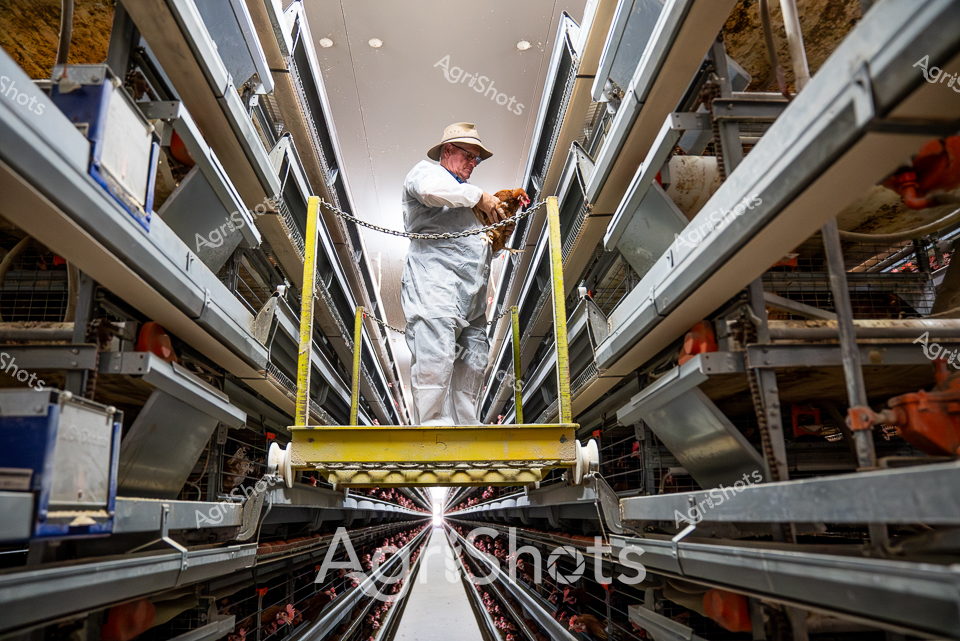
A worker in pristine white overalls and a wide-brimmed sun hat navigates a sophisticated multi-tier laying hen facility, carefully moving along a yellow safety platform suspended between precisely engineered stainless steel racking. The meticulously organized infrastructure reveals rows of nesting areas housing productive chickens, representing the pinnacle of modern egg production technology. Bright overhead lighting illuminates the immaculate biosecurity environment, highlighting the careful management and scientific precision of contemporary intensive agricultural practices. Yellow safety chains and barriers frame the worker's methodical movements, emphasizing strict protocols designed to protect both animal health and production efficiency. This image captures the sophisticated intersection of agricultural engineering, animal husbandry, and industrial design typical of advanced poultry farming in New South Wales. The controlled, sterile environment speaks to Australia's commitment to high-quality agricultural standards and technological innovation in food production.
 Image
Image
Free-range white Leghorn layer hens crowd the floor of a modern poultry shed, with a farm worker in a high-visibility orange and black polo shirt carefully collecting eggs. Wearing black rubber boots and navigating through the densely populated chicken pen, the worker uses a long-handled basket to efficiently gather fresh eggs from the morning's laying cycle. Overhead lighting casts a warm glow across the shed, highlighting the crisp white feathers of the chickens and the metallic feed and water equipment surrounding them. The neat, organized layout of the chicken housing demonstrates contemporary Australian agricultural practices in egg production, with careful attention to animal welfare and productivity. Multiple feeding stations and a carefully maintained walkway allow the worker to move systematically through the flock, representing the precision and care inherent in modern intensive farming techniques. The image captures the essential intersection of human management and animal husbandry in Tasmania's agricultural landscape, showcasing the professional approach to large-scale egg production.
 Image
Image
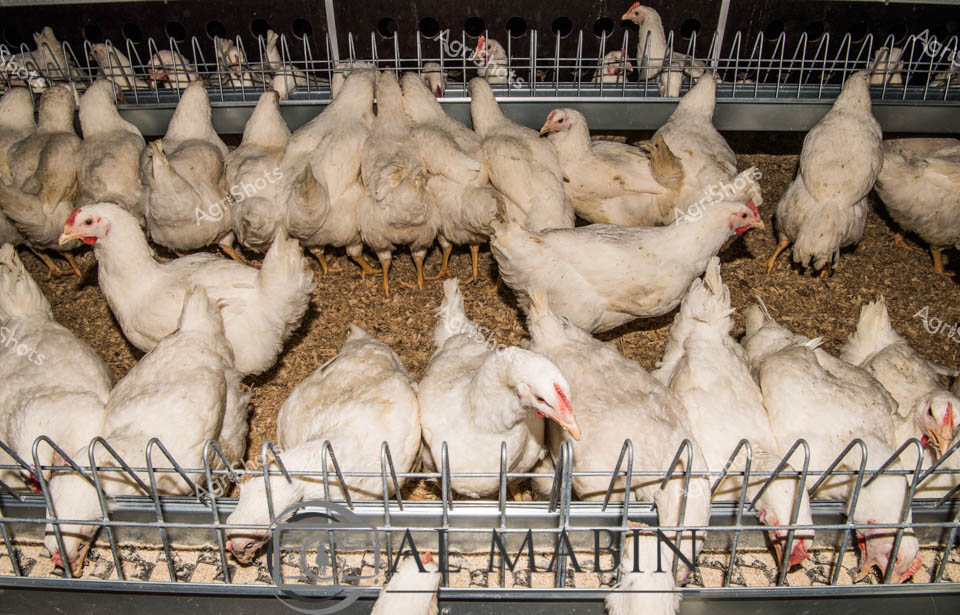
White Leghorn broiler chickens crowd a multi-tiered battery cage system, densely packed across metal wire enclosures lined with bedding material. The industrial poultry shed reveals a tightly controlled agricultural environment, designed for efficient meat production with uniform white feathered birds standing shoulder-to-shoulder. Fluorescent lighting casts a clinical illumination across the uniform flock, highlighting their plump bodies and bright red combs against the neutral palette of beige and gray. Wire partitions segment the space, creating standardized living units that maximize spatial efficiency and streamline livestock management. The chickens' clustered postures reflect the confined conditions of intensive farming, their movements restricted yet synchronized in a choreographed landscape of industrial agriculture. A watermark from the agricultural stock photography service overlays the image, signaling this as a professional documentation of contemporary livestock production techniques.
 Image
Image
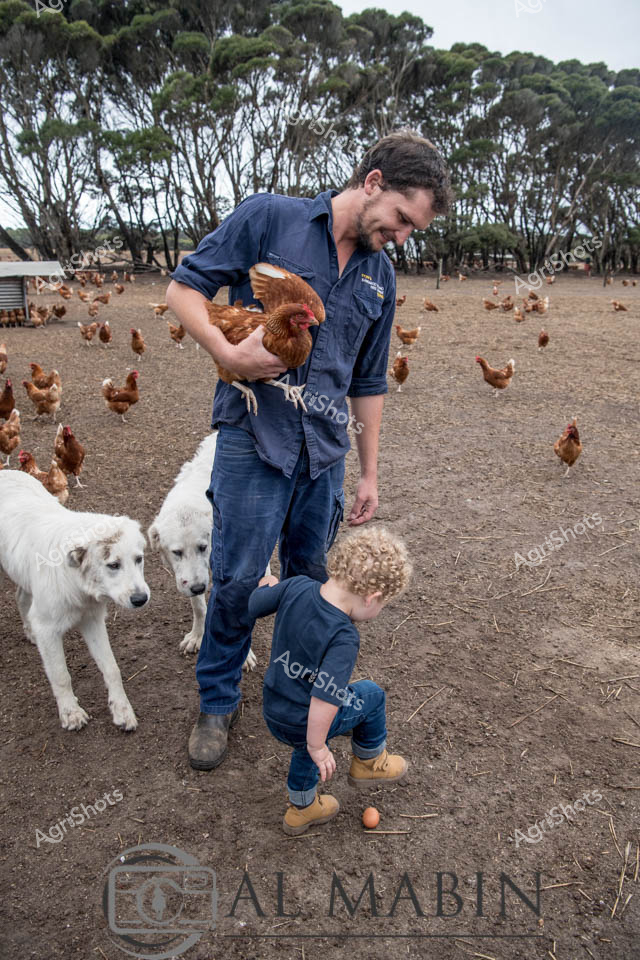
Free-range farm life unfolds on Kangaroo Island, South Australia, as a farmer tenderly cradles a rich auburn-feathered hen while his young curly-haired child gathers a freshly laid egg from the dusty earth. Two pristine white farm dogs stand nearby, alert and protective amidst a sprawling flock of russet and golden chickens scattered across the bare paddock. Dressed in classic blue work attire, the farmer shares a gentle moment of connection with both livestock and offspring, embodying the nurturing spirit of sustainable agricultural practice. The landscape speaks of rural resilience - sparse trees line the background, creating a windswept tableau that captures the raw beauty of South Australian agricultural terrain. Weathered ground and free-ranging poultry illustrate the commitment to ethical, open-range farming methods, where chickens roam freely and interact naturally with farm workers and guardian animals. This scene represents more than just egg production; it's a portrait of generational farming knowledge, where children learn agricultural rhythms from an early age and animals are respected as integral members of the farm ecosystem.
 Image
Image
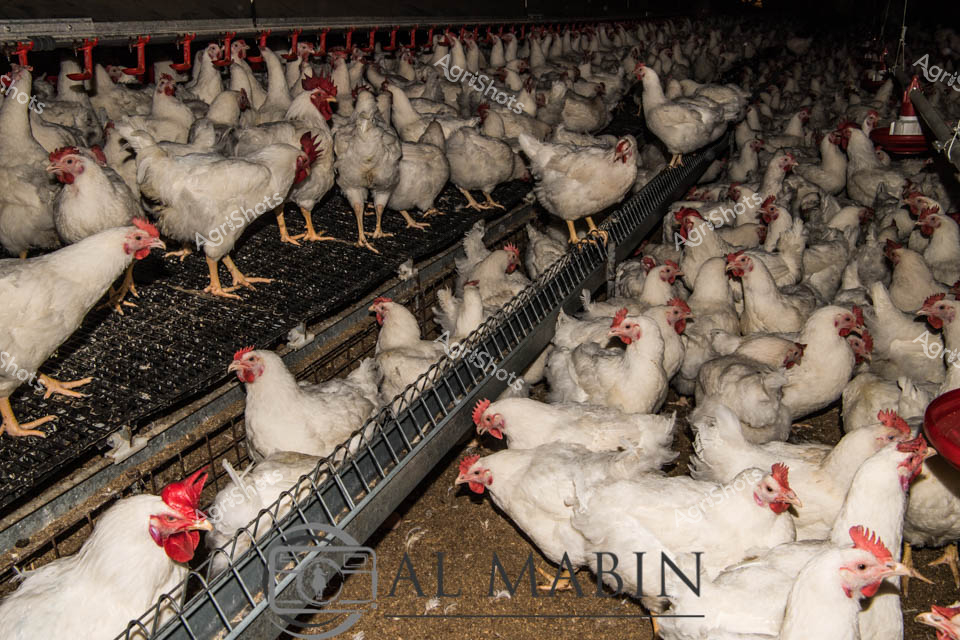
White leghorn chickens densely populate a modern industrial chicken coop, packed tightly across multiple levels of metal wire flooring and feeding platforms. Pristine white feathered birds with bright red combs cluster around silver-gray metal feeding troughs, their bodies pressed closely together in a uniform mass. The controlled environment suggests intensive egg production, with precise grid-like infrastructure supporting maximum livestock density. Overhead red feeding mechanisms and structured metallic barriers create geometric lines that contrast against the soft, rounded forms of the chickens. The lighting appears even and clinical, highlighting the uniform coloration of the birds and the systematic agricultural approach to poultry farming. This image captures the industrial scale of contemporary egg production, revealing the engineered efficiency of modern agricultural practices where livestock are treated as a carefully managed production resource.
 Image
Image
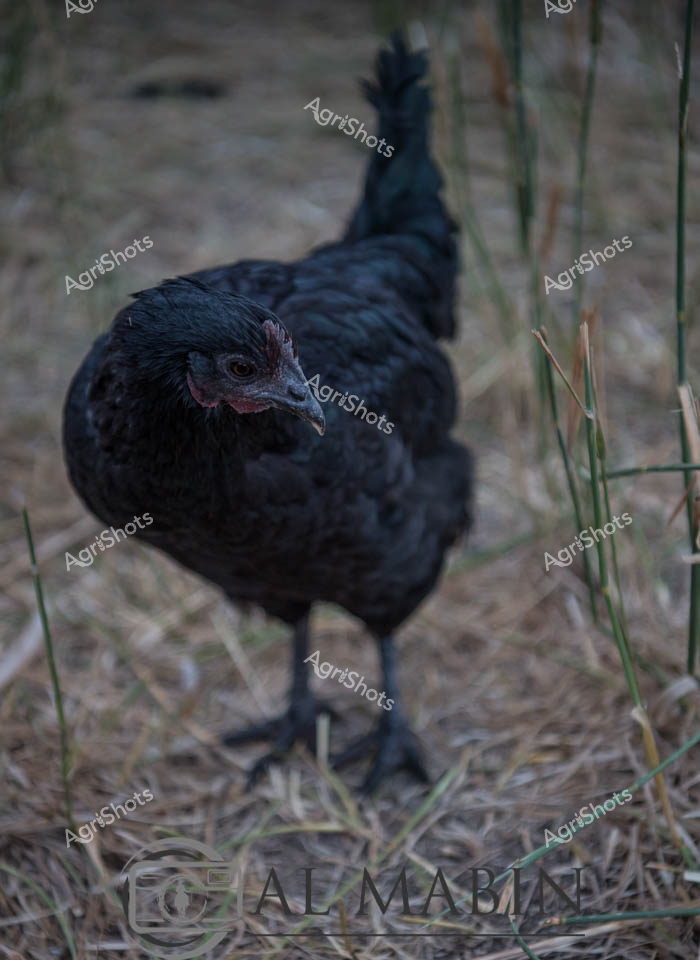
A midnight-black Australorp hen stands resolute among sparse grass and straw, her deep ebony plumage absorbing the soft light of what appears to be an early morning farmyard setting. Her compact, muscular form exemplifies the robust breed standard that has made Australorps renowned across Australian poultry farming - prized for exceptional egg-laying capabilities and remarkable hardiness in varied climate conditions. The bird's keen eye and alert posture suggest a watchful presence, her glossy feathers revealing the meticulous care typical of professional free-range poultry management. Delicate grass stems provide subtle texture around her feet, highlighting the natural ground environment that supports ethical agricultural practices. Her rich coal-black coloration is characteristic of the breed, a testament to generations of selective breeding that have made Australorps a cornerstone of Australian egg production. This image captures the quiet dignity of a bird that represents not just a livestock asset, but a critical component of sustainable agricultural ecosystems, embodying the resilience and productivity of rural Australian farming traditions.
 Video
Video
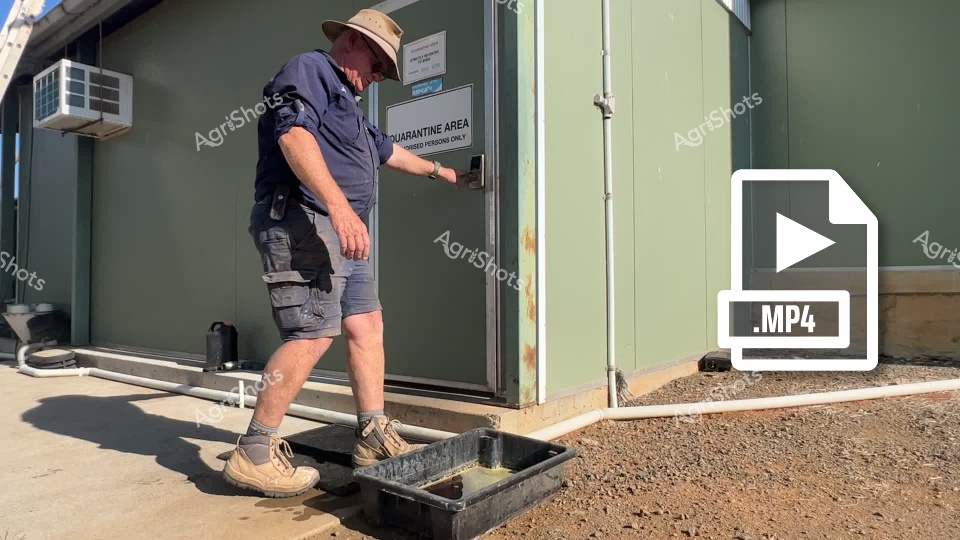
Biosecurity protocols come to life at a quarantine facility, where a farm worker in navy blue shirt and khaki shorts meticulously steps into a disinfection tray before entering a restricted green metal building. The stark midday sunlight casts sharp shadows across the dusty ground, highlighting the critical importance of preventing potential disease transmission in agricultural settings. Wearing protective work boots and a wide-brimmed sun hat, the worker demonstrates the careful hygiene practices essential to modern farming operations. The "Quarantine Area" sign signals the serious approach to animal and crop health management, with the small disinfection station representing a crucial first line of defense against potential biological risks. The scene captures the blend of practical safety measures and professional diligence that characterize contemporary Australian agricultural practices, where every step is calculated to protect valuable livestock and crops. This moment illustrates the unseen but critical work of biosecurity professionals who safeguard our food production systems with methodical precision.
 Image
Image
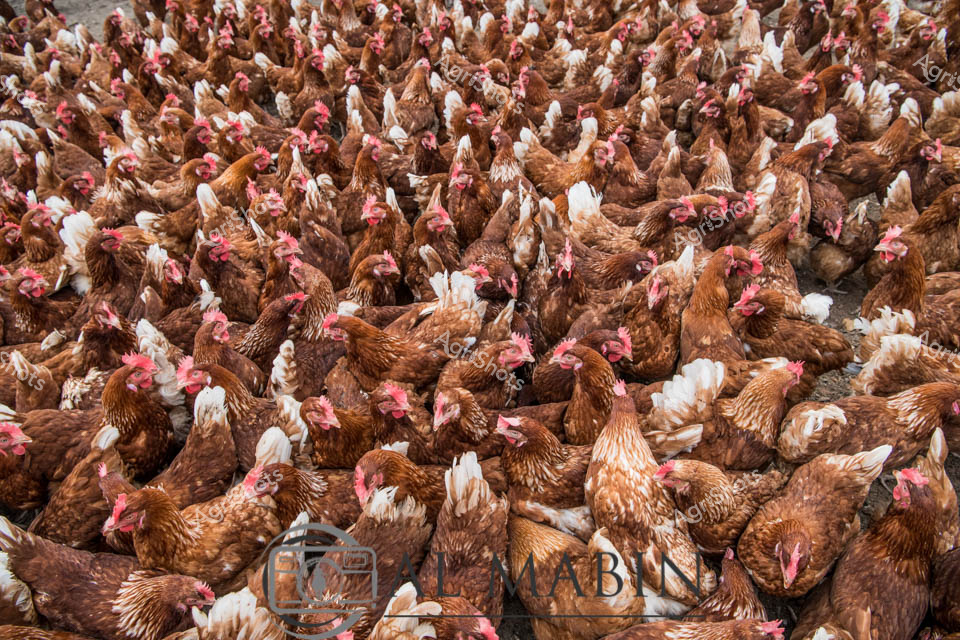
Rhode Island Red hens cluster densely across the frame, their rich mahogany and white feathers creating a textured mosaic of agricultural productivity. Packed tightly in what appears to be an indoor intensive farming environment, the chickens represent a typical commercial egg-production scenario common across Victoria's poultry sectors. Their distinctive reddish-brown plumage and prominent pink combs showcase the classic characteristics of this robust breed, renowned for consistent egg laying and adaptability to Australian farming conditions. The ground beneath them is barely visible, illustrating the high-density nature of contemporary large-scale poultry operations. Each bird seems alert yet constrained, their collective presence speaking to the industrialized approach of modern agricultural systems. The watermarked logo in the corner suggests this is a professional documentation of contemporary farming practice, capturing the economic realities of egg production in a single compelling frame.
 Video
Video
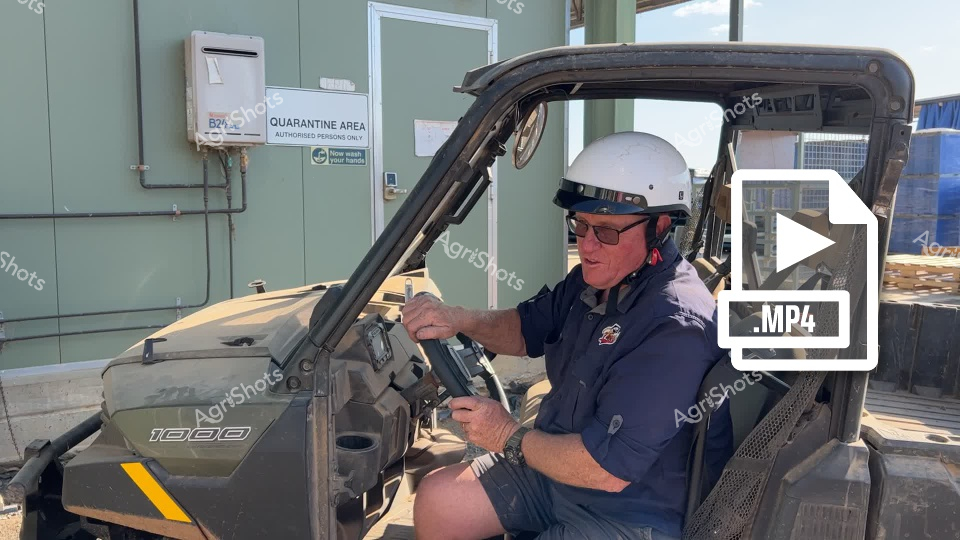
Quarantine protocol unfolds at an agricultural facility, where a safety-conscious operator sits at the controls of a robust utility vehicle. Wearing a crisp white safety helmet and protective eyewear, the experienced worker is positioned beside a green building marked with a clear "QUARANTINE AREA" sign, highlighting the critical biosecurity measures in modern agricultural operations. The sturdy olive-green utility vehicle, model 1000, stands ready with its open cabin, suggesting immediate preparedness for specialized farm tasks. Intense focus radiates from the operator, whose navy uniform and professional demeanor underscore the precision required in contemporary agricultural management. Metallic infrastructure and controlled access points reinforce the structured environment, where every detail speaks to rigorous standards of animal and crop protection. The bright, clear daylight and clean lines of the facility convey a sense of methodical efficiency typical of advanced Australian agricultural practices.
 Video
Video
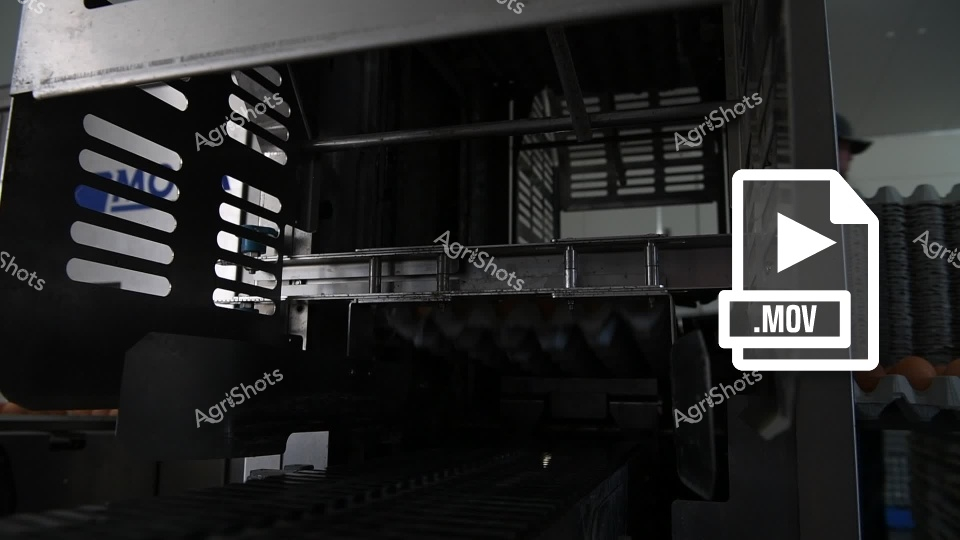
A state-of-the-art egg processing line unfolds within a modern agricultural facility, showcasing the efficiency of today’s food production technology. The machinery, clad in stainless steel with a sleek matte finish, reflects the sterile environment, ensuring food safety and hygiene. The scene is illuminated by bright overhead lights, highlighting the intricate conveyor system that transports freshly laid eggs from their cartons into the automated processing unit. Inside the facility, workers, clad in light blue uniforms and hairnets, oversee the operation, ensuring that each egg is carefully inspected before packaging. The rhythmic sound of machinery blends with the soft chatter of the employees, creating an atmosphere of productivity and teamwork. The overall mood is one of accomplishment, as the processing line is busy during the early morning hours, with sunlight streaming through large windows, adding a warm glow to the cool-toned machinery. Visible signage in the background emphasizes quality control standards and safety protocols, reinforcing the commitment to high-quality food production. The scene captures a pivotal moment in the agricultural supply chain, where technology and human diligence converge to deliver fresh, wholesome eggs to consumers.
 Image
Image
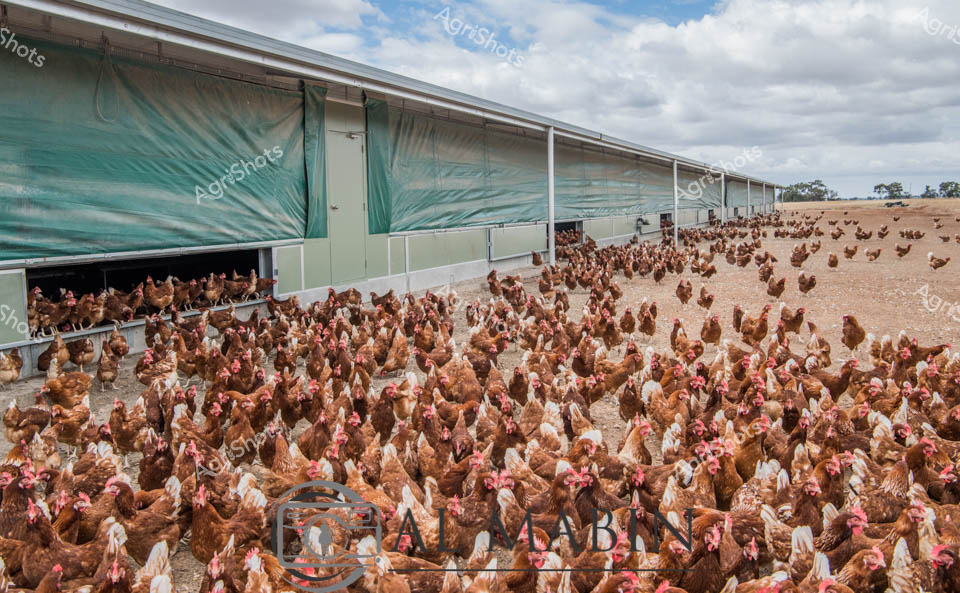
Free-range Isa Brown laying hens populate a spacious outdoor paddock adjacent to a modern agricultural shed, capturing the essence of contemporary egg production in rural Victoria. Hundreds of russet-feathered chickens with vibrant red combs mill across a dusty, sun-baked terrain, their rich brown plumage creating a dynamic textural landscape against the pale earth. The expansive steel-framed shed features translucent green screening, allowing natural ventilation and filtered light for the poultry environment. Cloudy skies provide a soft, diffused backdrop to this industrial-scale agricultural scene, highlighting the scale and systematic approach of commercial free-range egg farming. These Isa Brown hens, known for their exceptional egg-laying productivity, represent a significant segment of Australia's protein production infrastructure, demonstrating the intersection of animal welfare considerations and large-scale agricultural efficiency. The image powerfully communicates the controlled yet relatively open living conditions of modern egg-producing chickens, showcasing an important aspect of Australian agricultural practice.
 Image
Image
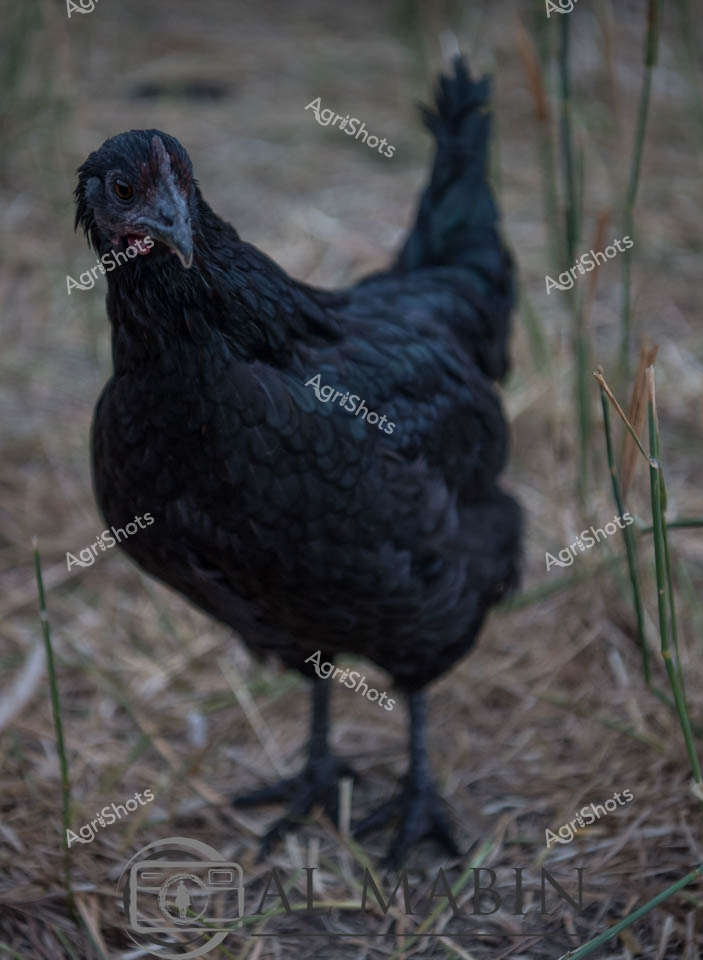
Midnight plumage gleaming with an obsidian sheen, a robust Black Australorp hen stands sentinel in her weathered grassland domain. Her sleek feathers contrast against the muted browns and greens of the sparse paddock, highlighting the breed's classic agricultural heritage. Perfectly adapted to Victoria's variable rural landscapes, this hen represents the pinnacle of Australian poultry breeding - hardy, productive, and exquisitely structured. Her keen dark eye surveys the surrounding dry grass and sparse vegetation, embodying the resilient spirit of free-range farming practices. The textural details of her rich black plumage demonstrate the genetic refinement of this iconic egg-laying breed, developed to thrive in challenging Australian agricultural environments. Her confident posture speaks to generations of careful selection, representing not just a chicken, but a living testament to Australian agricultural innovation and sustainable farming traditions.
 Image
Image
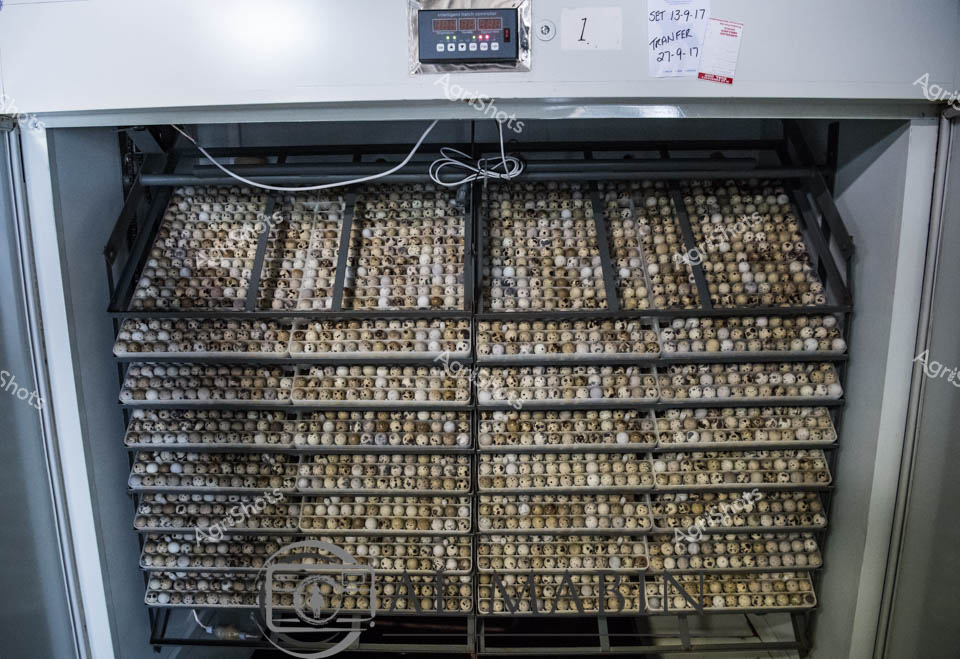
Climate-controlled precision defines this industrial quail egg incubation chamber, meticulously organized across multiple stacked trays. Hundreds of delicate, speckled ivory and tan quail eggs nestle uniformly in precise grid formations, each carefully positioned for optimal hatching conditions. The digital control panel above monitors temperature and humidity with scientific accuracy, representing the pinnacle of modern avian agricultural technology. Soft ambient lighting highlights the subtle color variations of the eggs, from pale cream to warm beige, creating a textural landscape of potential life. This sterile, methodical environment exemplifies Queensland's advanced poultry breeding techniques, where every egg represents a calculated investment in sustainable agricultural production. The uniform arrangement speaks to the precision and care inherent in contemporary egg production, transforming what was once a natural process into a carefully engineered system of biological optimization.
 Image
Image
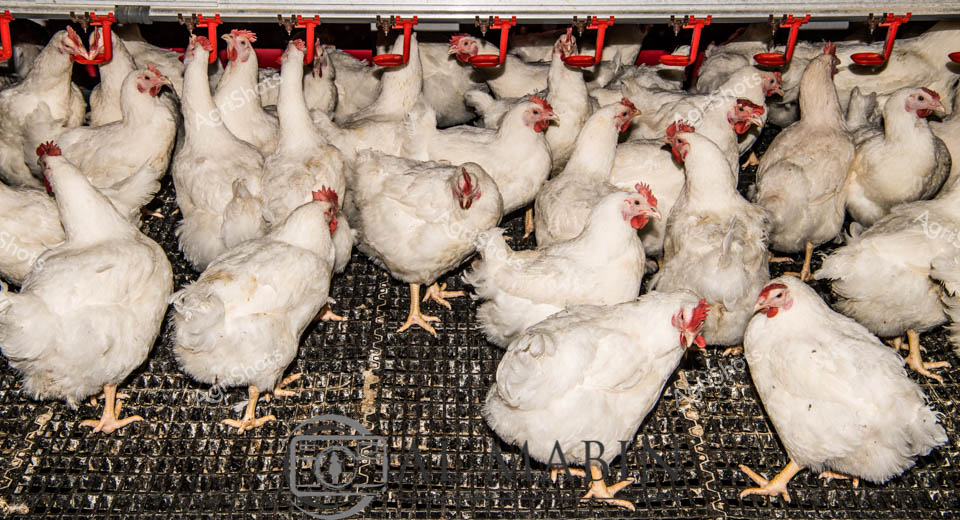
Pristine white broiler chickens huddle tightly on a perforated metal grid, suspended beneath industrial red feed dispensers. The uniform flock reveals the precision of modern intensive poultry production, with each bird displaying identical plump forms and bright red combs. Densely packed and motionless, these commercial meat birds represent the industrialized approach to protein farming prevalent in contemporary agricultural systems. The monochromatic palette of pure white feathers against the dark grid creates a stark visual commentary on agricultural efficiency, where uniformity and maximum yield are the primary objectives. Each chicken stands identically positioned, their yellow legs and pale bodies creating a rhythmic, almost geometric composition that speaks to the systematic nature of large-scale poultry farming. The overhead red feed dispensers provide a sharp chromatic contrast, highlighting the mechanized infrastructure that supports this concentrated livestock environment.
 Image
Image
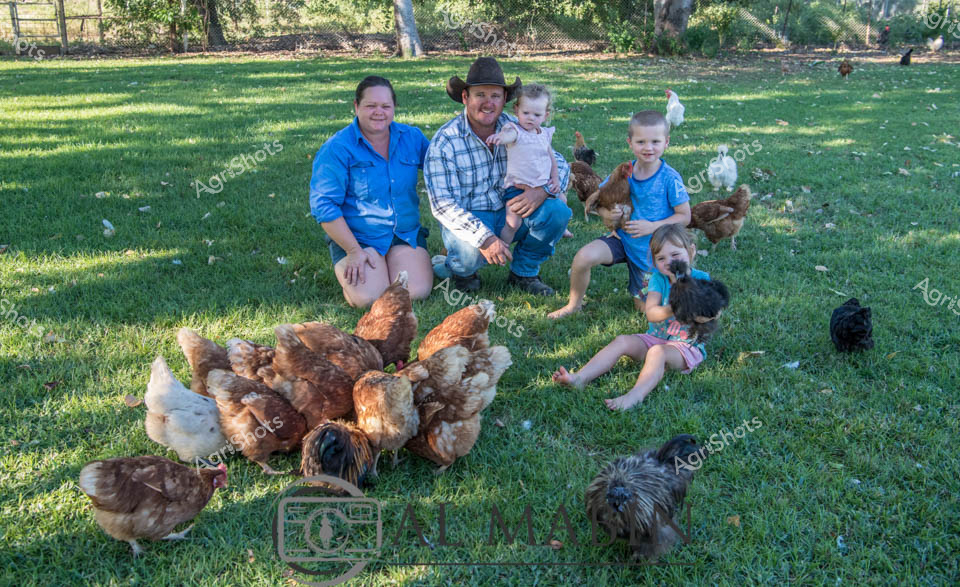
Rural family life unfolds on a lush green pastoral property in Western Australia's Kimberley region, with a vibrant scene of free-range chicken husbandry. A family dressed in blue work shirts and casual ranch attire sits comfortably among a flock of diverse chickens - russet-brown, white, and black hens scattered across the sunlit grass. The adult wearing a classic wide-brimmed bush hat cradles a small child, while other children interact playfully with the poultry, embodying the relaxed and interconnected lifestyle of agricultural communities. The chickens, representing multiple breeds, demonstrate the family's commitment to sustainable, free-range egg production. Mature hens of varying plumage congregate closely, suggesting a well-managed and healthy flock. The verdant lawn and surrounding native trees create a picturesque backdrop that speaks to the spaciousness and natural beauty of West Australian rural landscapes. This image captures the essence of generational farming knowledge, with children learning animal husbandry skills from an early age. The scene radiates a sense of harmony between family, livestock, and landscape - a quintessential representation of Australian agricultural life in the Kimberley region.
 Image
Image
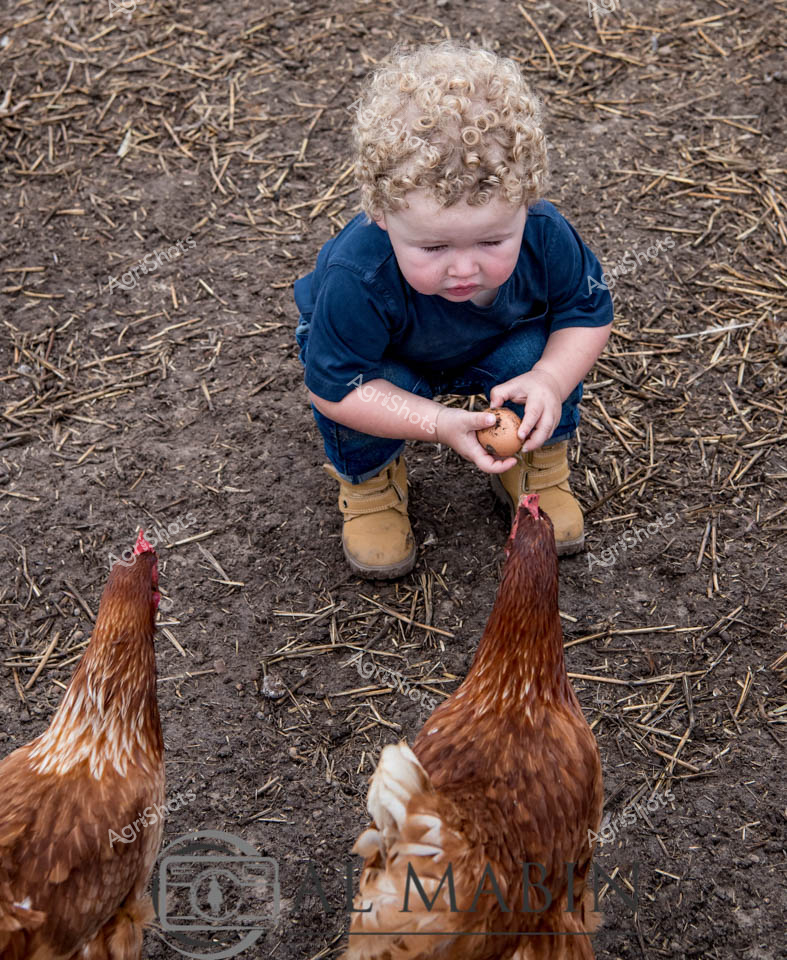
A young child with tousled blonde curls crouches intently among russet-feathered free-range chickens on a richly textured ground of straw and earth. Dressed in a deep navy top and sturdy tan work boots, the small farmer carefully examines an egg, surrounded by two attentive hens with warm reddish-brown plumage. The scene captures the essence of rural childhood on Kangaroo Island, South Australia - a moment of connection between a young learner and the farm's livestock, showcasing the next generation's early agricultural education. The ground is a complex tapestry of dried straw and rich soil, creating a natural backdrop that speaks to the free-range farming environment. Soft natural light highlights the child's concentrated expression and the chickens' glossy feathers, creating an intimate portrait of farm life that celebrates the symbiotic relationship between young farmers and their poultry. This image embodies the spirit of sustainable, hands-on agriculture - a child learning about egg collection, animal care, and the rhythms of farm life from the earliest age, perfectly capturing the generational continuity of rural Australian farming communities.
 Image
Image
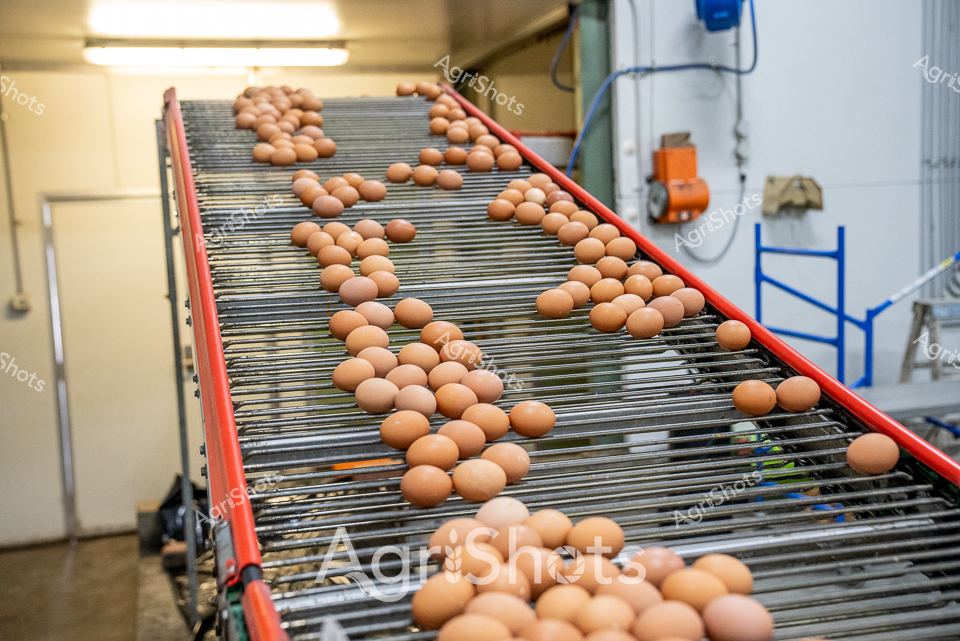
Fresh brown eggs cascade across a precision sorting conveyor in a pristine egg processing facility, revealing the meticulous world of modern Australian agricultural production. Chrome-steel rollers support neat rows of uniform brown eggs, each carefully transported through a climate-controlled environment with industrial precision. Soft warm lighting illuminates the stainless steel machinery, highlighting the rich terracotta and caramel tones of the freshly collected eggs. The conveyor system, painted in bold red frames, represents cutting-edge agricultural technology that ensures food safety and efficient distribution. Industrial blue scaffolding and electrical conduits frame the background, suggesting a purpose-built facility designed for high-volume egg handling and quality control. This image captures the seamless intersection of agricultural science, automation, and food production - a testament to the sophisticated techniques employed by contemporary Australian egg farmers to deliver fresh, high-quality produce to markets nationwide.
 Image
Image
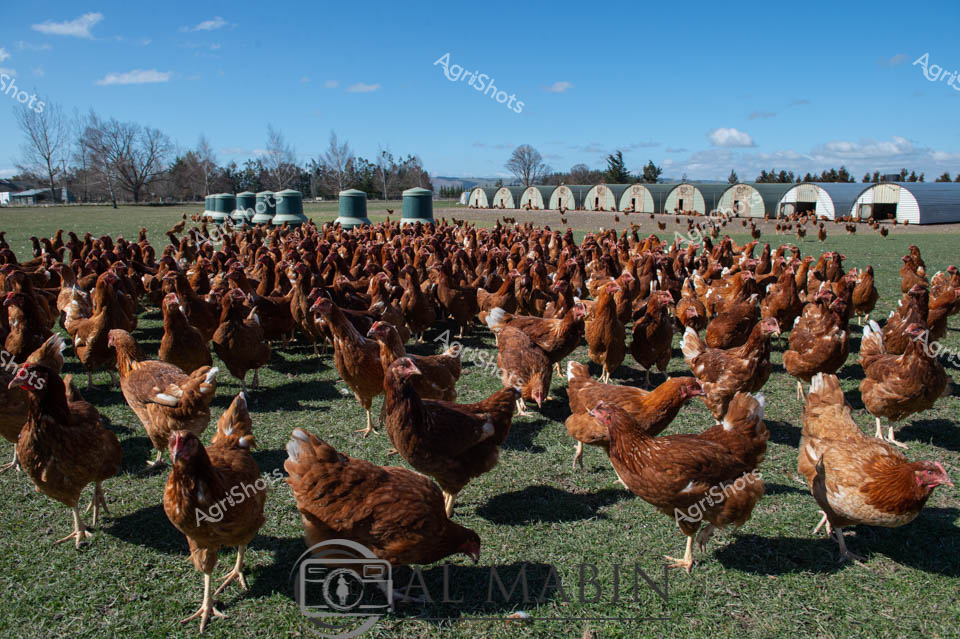
Free-range layer hens populate a lush pasture, their rich mahogany and auburn feathers contrasting against the verdant green grass under a crisp blue sky. Dozens of chickens roam freely across the open field, with white agricultural shelters and cylindrical feed stations arrayed in the background, suggesting a modern, spacious poultry operation. The scene captures the essence of ethical egg production, where birds have ample outdoor access and natural movement, characteristic of progressive farming practices in New South Wales. Soft cloud formations and bare winter trees frame the landscape, indicating a cool season where the chickens' robust health and vibrant plumage shine against the sparse rural environment. The uniformity of the birds' coloration and their relaxed, scattered distribution speak to careful breeding and animal welfare standards. This image embodies the balance between agricultural productivity and animal welfare, showcasing a contemporary approach to sustainable poultry farming that prioritizes both economic efficiency and humane livestock management.
 Image
Image
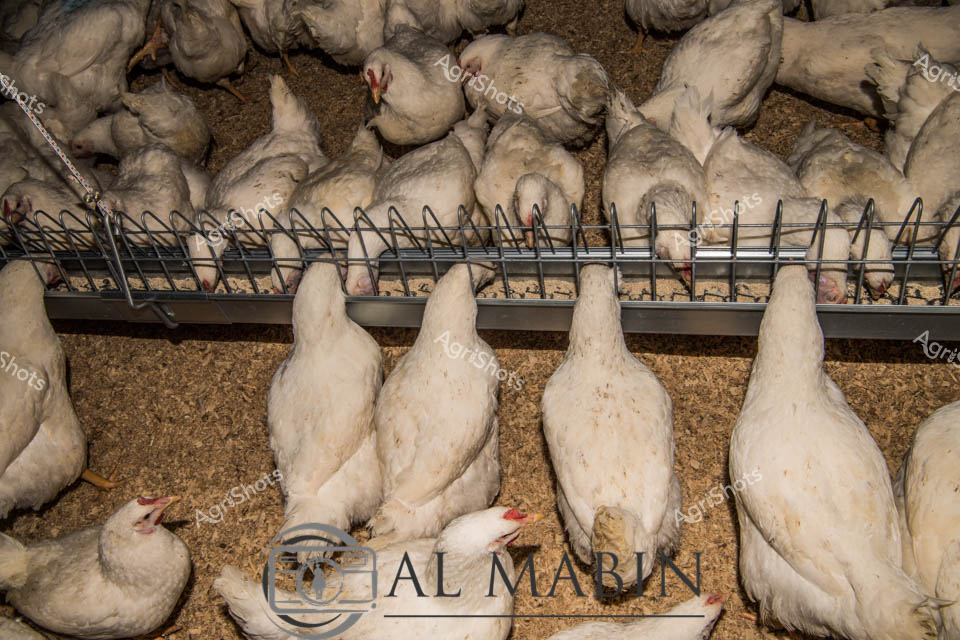
White broiler chickens crowd densely in a commercial poultry shed, their plump bodies pressed against metal feed troughs with protective wire barriers. The birds appear uniform in color - a pale, creamy white - nestled on a sandy-brown substrate of wood shavings or agricultural bedding material. Multiple rows of chickens occupy the frame, some standing closely aligned at the feeding station while others rest in clustered groups, demonstrating the intensive farming methodology typical of modern egg and meat production. The metal feeding infrastructure suggests precision agricultural engineering, with carefully designed barriers controlling chicken access and movement. A watermark for "AL MARIN" is visible, indicating this is a professional agricultural documentation of poultry production conditions. The chickens' uniform appearance reflects selective breeding for maximum protein production, a hallmark of contemporary agricultural practices. The tightly packed environment communicates efficiency and industrial-scale food production, with every square centimeter of space strategically utilized. Muted beige and white tones dominate the image, creating a sense of systematic order and controlled agricultural environment typical of Tasmania's sophisticated farming sectors.
 Image
Image
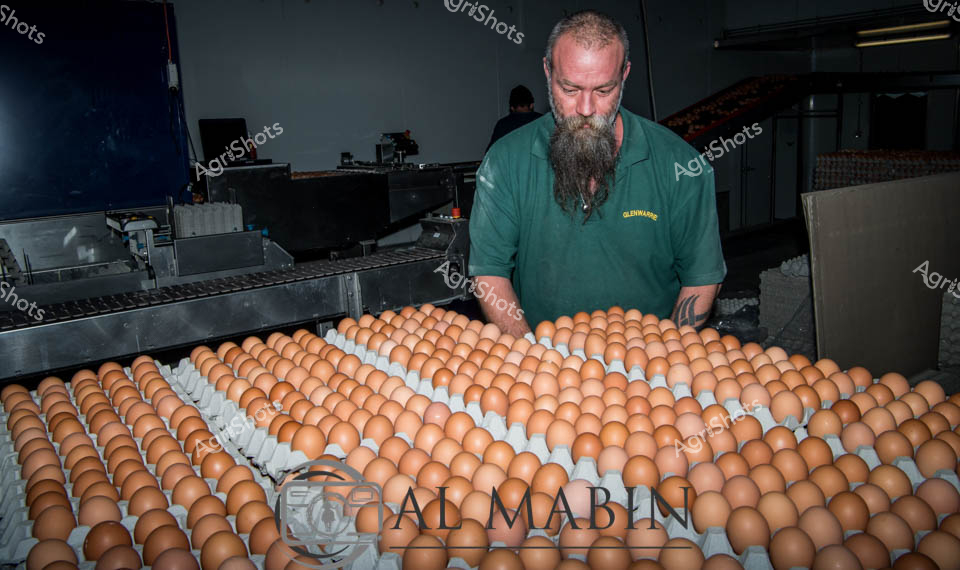
In a meticulously organized egg processing facility, a seasoned agricultural worker carefully inspects hundreds of freshly laid brown eggs. Wearing a forest green polo shirt with company branding, the bearded worker stands amid rows of perfectly aligned eggs nestled in white cardboard trays. The industrial setting reveals a sophisticated sorting and grading conveyor system, highlighting the precision of modern poultry production. Warm brown and cream-colored eggs create a textural landscape, demonstrating the scale and efficiency of contemporary egg farming in Australia. Soft industrial lighting and the worker's focused demeanor underscore the methodical nature of agricultural processing, where each egg represents a carefully managed product. The image captures the intersection of traditional farming skill and technological innovation, revealing the unseen complexity behind a daily staple of Australian breakfast tables.
 Image
Image
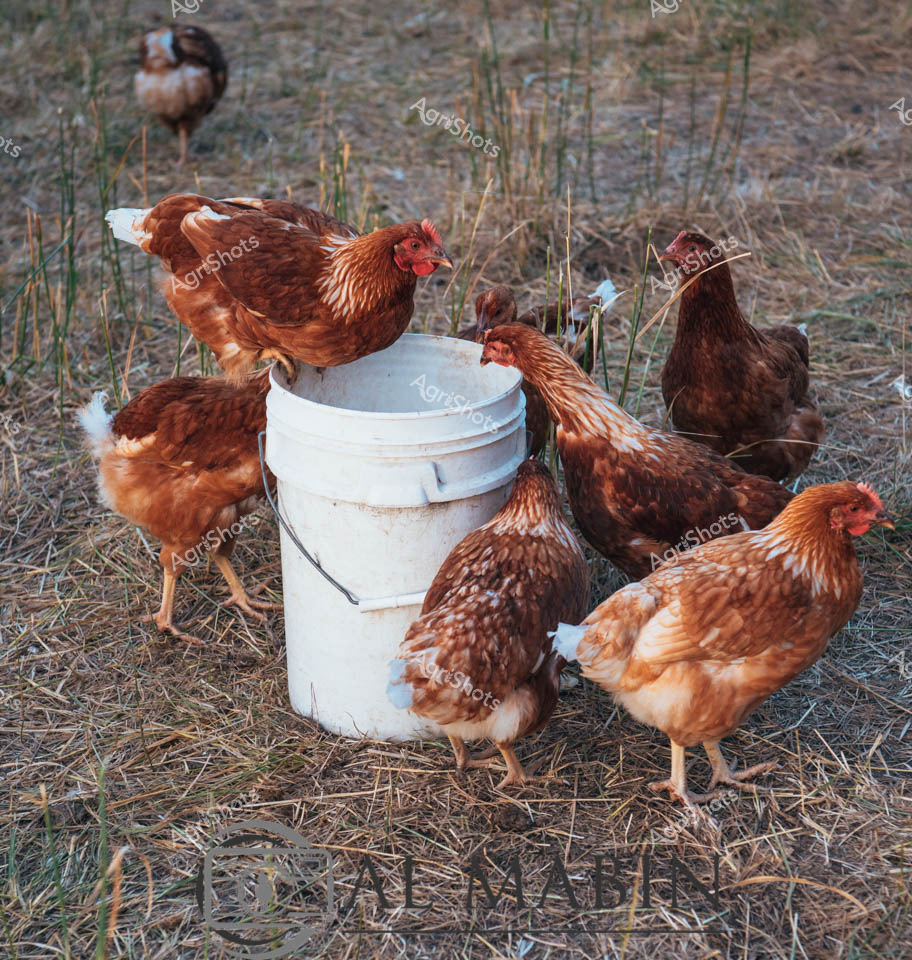
Red Rhode Island hens cluster around a weathered white bucket in a dry paddock of sparse winter grasses. The free-range flock displays rich russet and golden-brown plumage, their feathers textured with subtle variations of amber and chestnut tones. Scattered straw and thin grass stems create a muted landscape backdrop, suggesting a cool morning in late autumn or early winter across a Victorian rural smallholding. These robust laying hens represent a classic Australian small-scale poultry operation, demonstrating the versatility of Rhode Island Red breeds in diverse farming environments. Each bird displays the breed's characteristic compact body and vibrant red comb, indicating good health and productive potential. The scene captures the quiet industry of farm livestock, with chickens naturally gravitating toward potential feed or water sources, embodying the understated productivity of rural agricultural practice.
 Image
Image
Free-range prosperity spreads across a rustic Kangaroo Island paddock, where dozens of rich auburn and rust-colored chickens roam a meticulously managed agricultural landscape. Nestled against a backdrop of silvery-grey eucalyptus trees, a robust mobile chicken shelter with a corrugated metal roof provides sanctuary and feeding station for the flock. The earthy brown ground, scattered with organic debris, offers natural foraging terrain, embodying the essence of ethical free-range egg production in South Australian agriculture. Each chicken moves with purposeful independence, their red combs vibrant against the muted landscape, symbolizing the health and vigor of this sustainable farming approach. The Al Mabin watermark subtly underscores the professional documentation of this quintessential Australian agricultural scene, capturing the harmonious relationship between livestock, landscape, and careful husbandry. This image celebrates the expansive, natural environment that defines modern free-range poultry farming, where animal welfare and ecological sensitivity converge.
 Image
Image
Free-range poultry farming pulses with life in this expansive Victorian grassland scene. A vibrant red-jacketed farm worker sits serenely amidst a diverse flock of chickens - a mix of rich brown, white, and black feathered breeds scattered across a dry, tussock-filled paddock. Rolling blue-green hills form a distant backdrop, suggesting late summer or early autumn, with sparse vegetation indicating a potentially challenging growing season. White buckets and the wide dispersal of chickens reveal a managed yet naturalistic approach to free-range egg production, highlighting the agricultural philosophy of allowing livestock extensive movement and natural behaviors. The scene captures the quiet intimacy between farm worker and flock, demonstrating the care and attention required in sustainable poultry management. Soft light and open landscape emphasize the connection between agricultural practice and the natural environment, embodying the essence of ethical, spacious livestock farming in rural Victoria.
 Video
Video
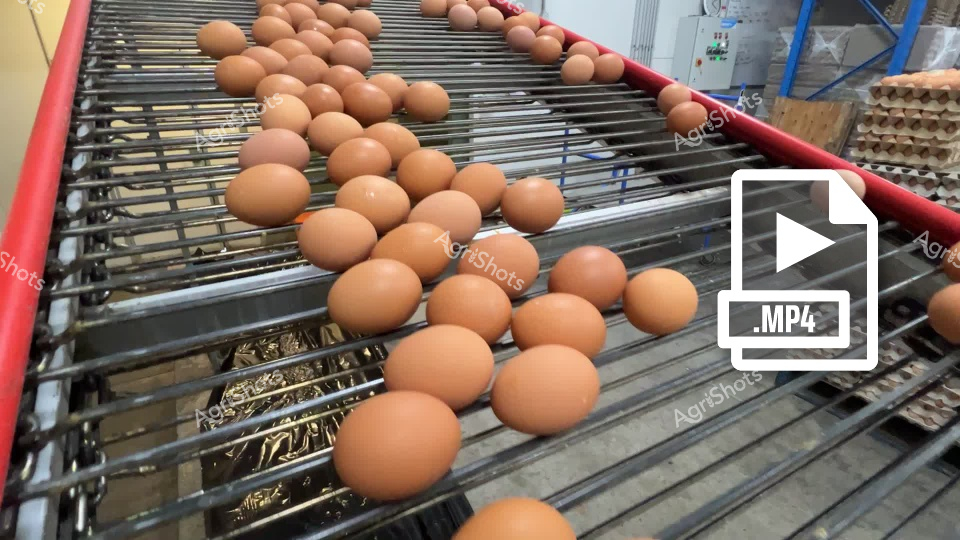
Brown eggs cascade across a stainless steel sorting and grading conveyor, their warm terracotta tones creating a mesmerizing geometric pattern against the industrial metallic grid. This precision agricultural setting reveals the meticulous process of egg production, likely situated in a modern egg processing facility in regional New South Wales. Each egg is uniformly sized and carefully positioned, demonstrating the sophisticated automation of contemporary poultry farming. The conveyor's sleek metal rollers and red side guides frame the rhythmic arrangement of eggs, highlighting the intersection of agricultural tradition and technological innovation. Soft ambient lighting illuminates the eggs' smooth, delicate shells, casting subtle shadows that emphasize their organic curves against the rigid mechanical infrastructure. The MP4 watermark suggests this is a raw video capture, providing an unfiltered glimpse into the systematic and hygienic world of large-scale egg production.
 Video
Video
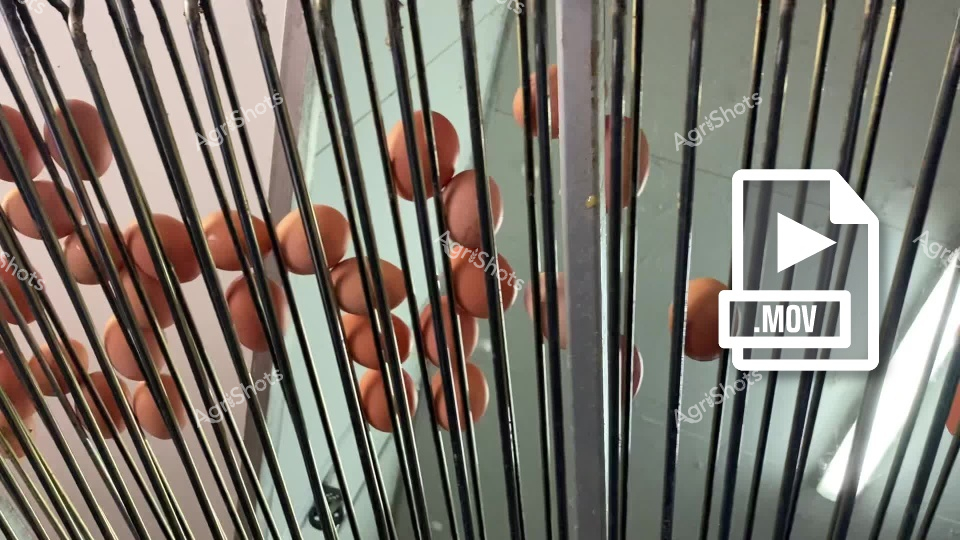
Based on the thumbnail and agricultural video collection guidelines, here's a detailed description: This video footage captures an intriguing perspective of eggs nestled within a structured metallic enclosure, with vertical bars creating a geometric visual pattern. The clip appears to focus on egg production or storage, revealing multiple brown eggs carefully positioned behind parallel metal bars. The precise arrangement suggests a controlled agricultural environment, potentially a specialized egg production facility or sorting area. Rich terracotta-colored eggs contrast beautifully against the silvery-grey metallic infrastructure, creating a visually compelling composition that highlights the systematic nature of modern poultry farming. The strategic framing suggests this is a professional agricultural documentation, likely exploring egg handling, storage, or quality assessment processes in an Australian farming context. The scene evokes a sense of agricultural precision and methodical production, where each egg is carefully managed and monitored. Soft, diffused lighting enhances the textural details of the eggs and metal bars, providing viewers with an intimate glimpse into the behind-the-scenes operations of egg production.
 Image
Image
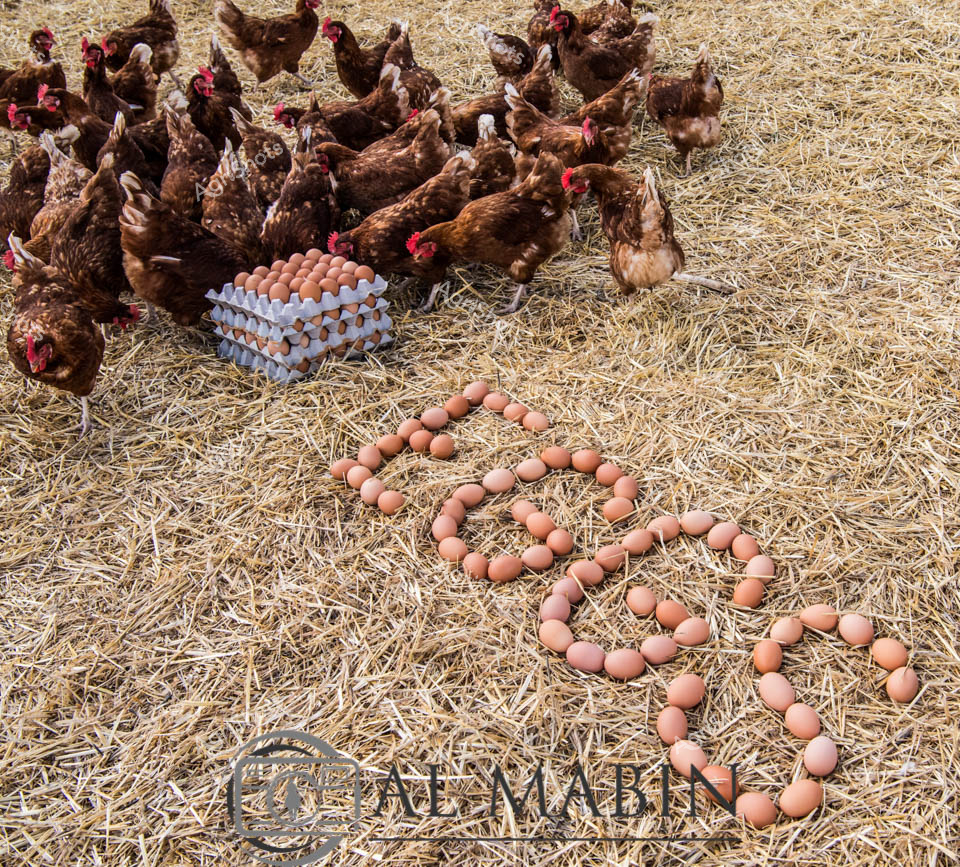
Free-range brown chickens populate a sun-drenched straw-covered enclosure, surrounded by stacks of fresh farm eggs meticulously arranged. Warm terracotta and russet tones of the hens contrast beautifully against the golden wheat-colored bedding, creating a vibrant agricultural tableau. A clever composition arranges brown eggs into the word "EGGS", highlighting the productive bounty of this poultry operation. Sturdy commercial laying hens with rich brown plumage and distinctive red combs mill about, representing a typical South Australian free-range chicken farming environment. Pristine white egg cartons in the background underscore the commercial scale of egg production, revealing the systematic approach to agricultural enterprise. The scene captures the essence of modern sustainable farming - productive, organized, and connected to natural rhythms of animal husbandry.
 Image
Image
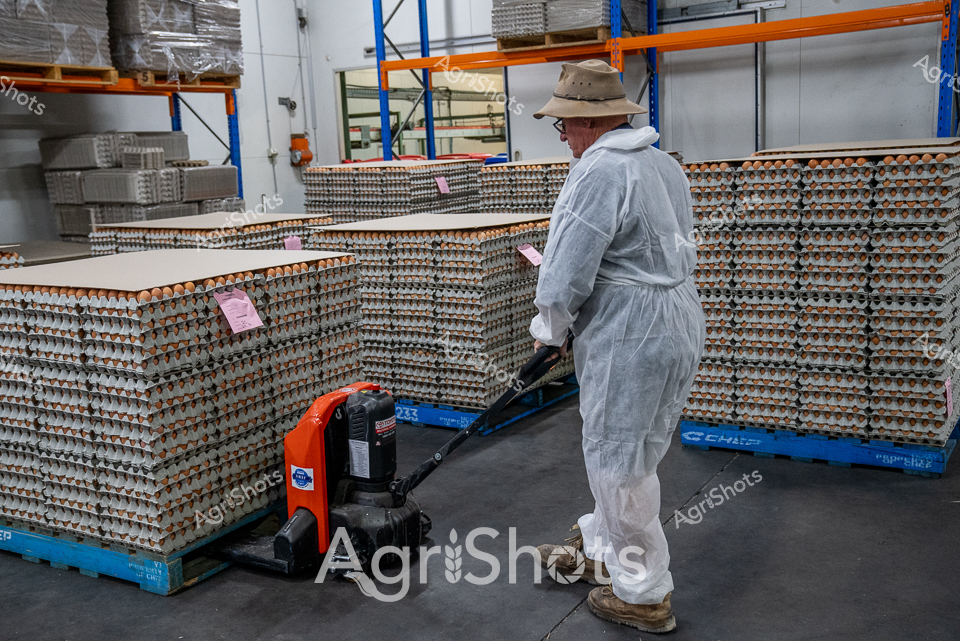
In a meticulously organized egg processing warehouse, a worker in a crisp white protective coverall and wide-brimmed sun hat operates an electric pallet jack alongside massive stacks of egg cartons. Rows of blue shipping pallets are densely packed with uniform grey egg trays, creating an impressive geometric landscape of agricultural production. The orange and black electric pallet jack stands ready, symbolizing the mechanized efficiency of modern egg distribution. Bright blue industrial shelving and storage racks line the walls, suggesting a state-of-the-art biosecurity-controlled facility typical of New South Wales' advanced intensive farming sector. Soft pink inspection tags are carefully placed on select pallet stacks, indicating quality control and traceability protocols essential to Australian food safety standards. The scene captures the precise, hygienic environment of large-scale egg production - a testament to the technological sophistication and stringent standards of contemporary agricultural supply chain management.
 Image
Image
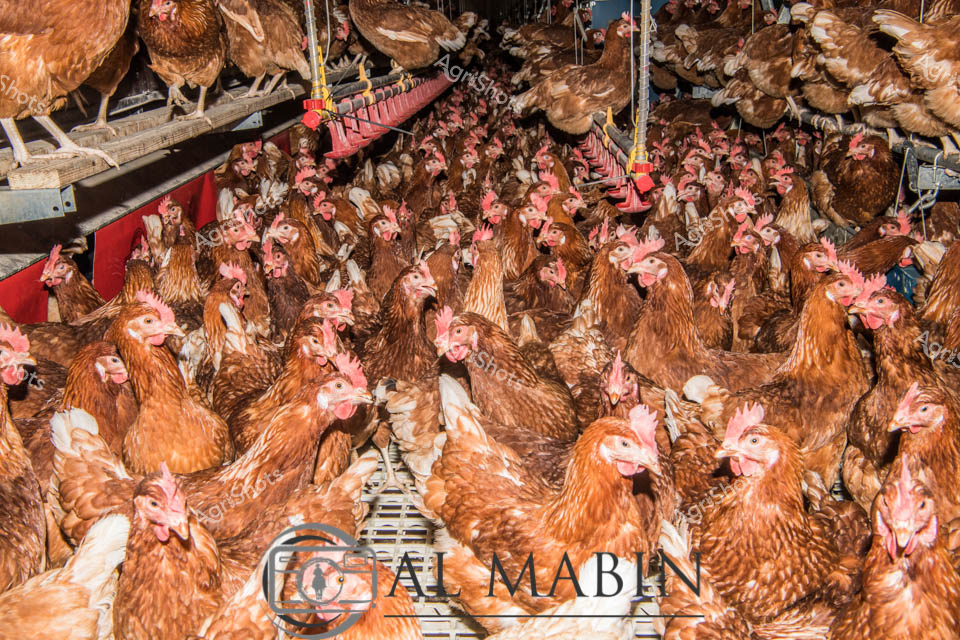
Battery-caged laying hens crowd tightly within a mechanized industrial poultry facility, their golden-brown feathered bodies packed densely across multiple levels of wire platforms. Bright red feeding troughs run through the center of the confined space, providing controlled access to feed for the large flock of commercial egg-laying chickens. Metallic infrastructure supports the complex vertical housing system, with systematic rows of hanging water dispensers and structured metal framing defining the industrial agricultural environment. The chickens, predominantly rich auburn and chestnut-colored Rhode Island Red or similar hybrid breeds, demonstrate the high-density production model common in large-scale egg production facilities. Harsh overhead lighting accentuates the tightly packed birds, revealing their uniform appearance and the systematic nature of modern agricultural livestock management. The watermarked logo of "Al Mablin" suggests this is a professional agricultural stock photography documentation of contemporary poultry farming practices, capturing the industrial scale and technological precision of egg production infrastructure.
 Image
Image
White Leghorn laying hens cluster densely in uniform battery cage systems, representing contemporary commercial egg production techniques. Pristine white feathered birds with vibrant red combs are tightly packed across multiple wire-framed levels, demonstrating intensive agricultural practices common in Tasmania's poultry industry. Straw bedding covers the cage floor, and the metallic infrastructure reveals precise engineering designed for maximum efficiency in egg harvesting. The uniform coloration of the chickens and the systematic arrangement of their containment emphasize industrial-scale agricultural methodologies. Silver-gray metal structures create geometric patterns, contrasting sharply with the organic forms of the clustered birds. Al Mabin's photographic watermark suggests professional documentation of agricultural infrastructure, capturing the clinical and systematic approach to modern egg production.
 Image
Image
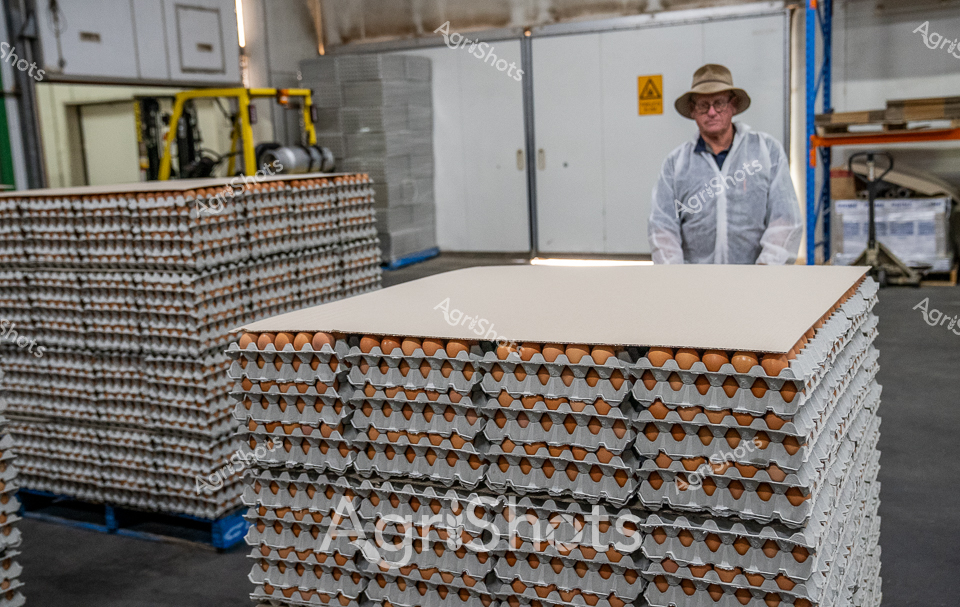
In a pristine egg processing facility, a seasoned worker in a crisp white protective coat and wide-brimmed hat stands amidst towering stacks of meticulously arranged egg trays. Rows of pristine gray cardboard egg containers stretch across the industrial space, each precisely layered and packed with uniform brown and white eggs, showcasing the precision of modern agricultural production. A yellow forklift and biosecurity warning sign punctuate the background, underscoring the technical and safety-conscious environment of contemporary egg farming. The worker's experienced demeanor and protective attire reflect the stringent hygiene and quality control standards of Australian intensive farming practices. Soft industrial lighting illuminates the clean, organized workspace, highlighting the smooth textures of the egg trays and the systematic approach to food production. This image captures the intersection of agricultural expertise, technological efficiency, and rigorous food safety protocols in a New South Wales egg processing facility.
 Image
Image
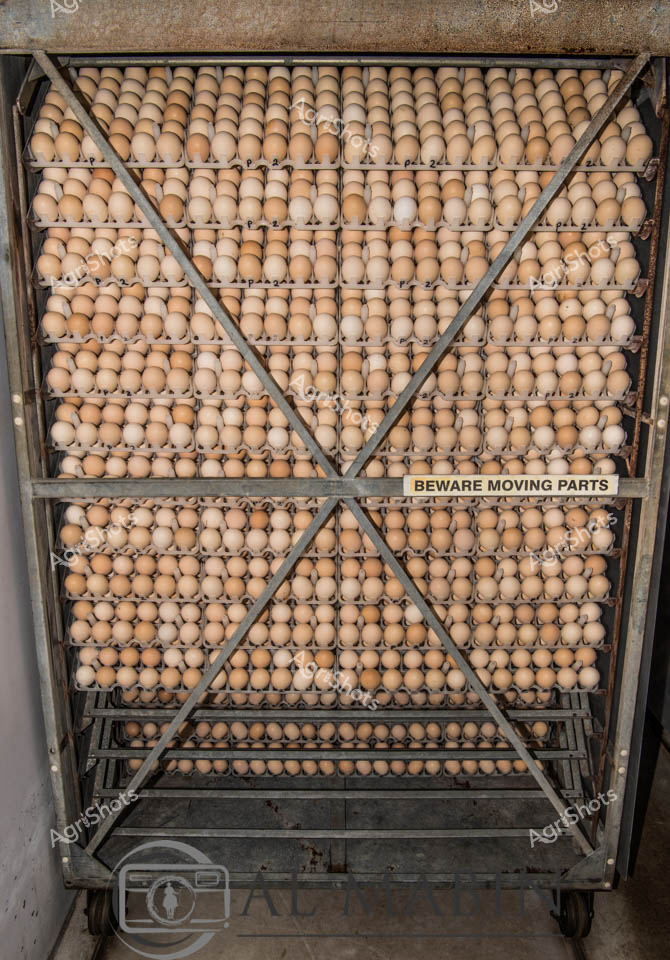
Rows of pristine, uniform brown eggs fill every compartment of an industrial steel egg rack, meticulously organized in precise grid-like formations. A stark "BEWARE MOVING PARTS" warning sign interrupts the geometric precision of the metal framework, highlighting the mechanical nature of modern egg production. The eggs range in subtle shades from pale cream to rich terracotta, their smooth, oval forms creating a mesmerizing texture of agricultural uniformity. This mobile rack represents the efficiency of contemporary poultry farming, where precise environmental control and systematic sorting maximize production potential. The industrial grey metal frame and carefully arranged eggs speak to Tasmania's sophisticated agricultural sector, demonstrating the state's commitment to large-scale, methodical food production. Each egg sits perfectly positioned, a testament to the precision of automated agricultural systems that ensure consistent quality and output in commercial egg processing.
 Image
Image
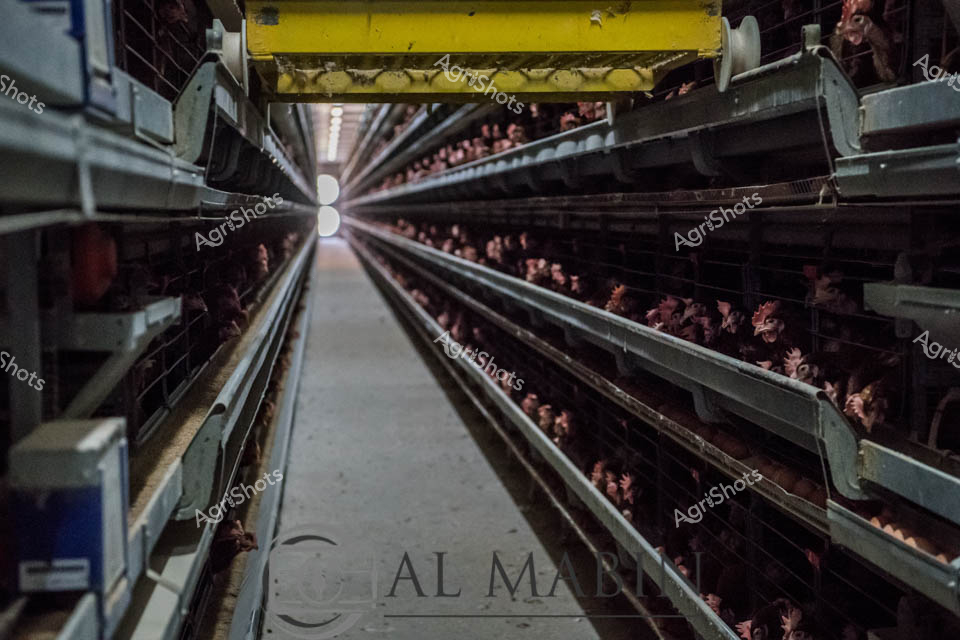
Battery hen facility interior: rows of uniform metal cages stretch into a vanishing point, densely populated with reddish-brown laying hens. Harsh overhead lighting casts a clinical yellow glow across the tight, mechanized production space, highlighting the uniform grey infrastructure and tightly confined poultry. Each precisely engineered shelf contains multiple birds, their feathered bodies pressed close together in a systematic grid of industrial agricultural efficiency. The narrow central walkway provides access for farm workers, allowing monitoring and maintenance of this high-density egg production environment. Metallic surfaces and structured lines create a sense of clinical precision, revealing the industrial scale of contemporary egg production in Australian agricultural systems. The confined space represents a standardized approach to livestock management, where efficiency and maximum output are the primary design considerations.
 Image
Image
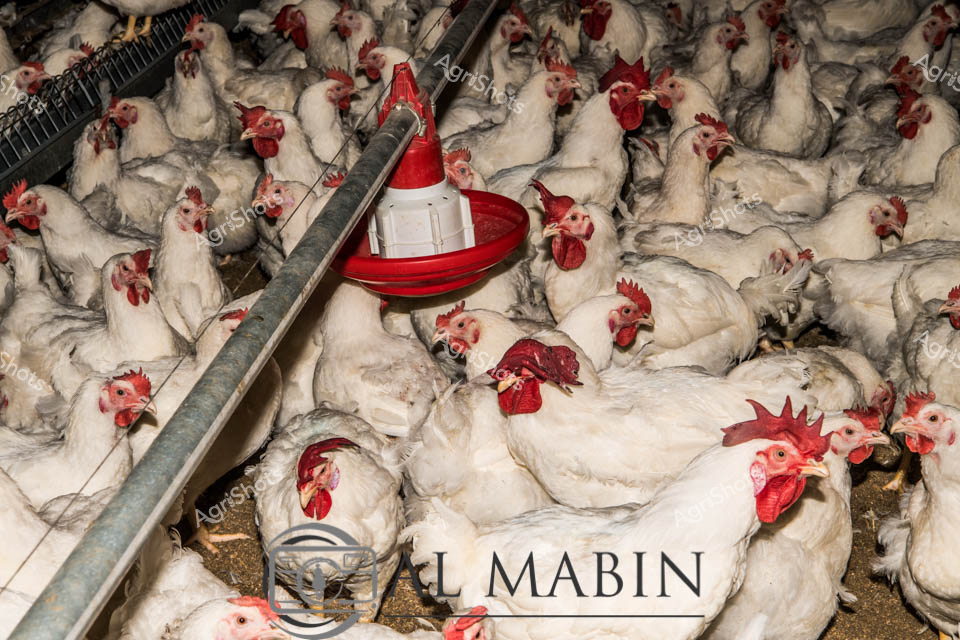
White Leghorn chickens densely populate an industrial-scale indoor poultry facility, showcasing modern intensive farming techniques. A red and white automatic feeder stands amid the tightly packed flock, highlighting precision agricultural equipment design. The chickens - uniform in their bright white feathering and vivid red combs - create a stark visual landscape of controlled agricultural production. Metal structural elements like feeding rails and infrastructure frame the scene, emphasizing the systematic approach to livestock management. Al Mabin's watermark indicates this professional agricultural documentation, capturing the industrial scale and technological sophistication of contemporary egg production environments. The chickens appear calm but closely confined, representing the efficiency-driven model of contemporary Australian poultry farming.
 Image
Image
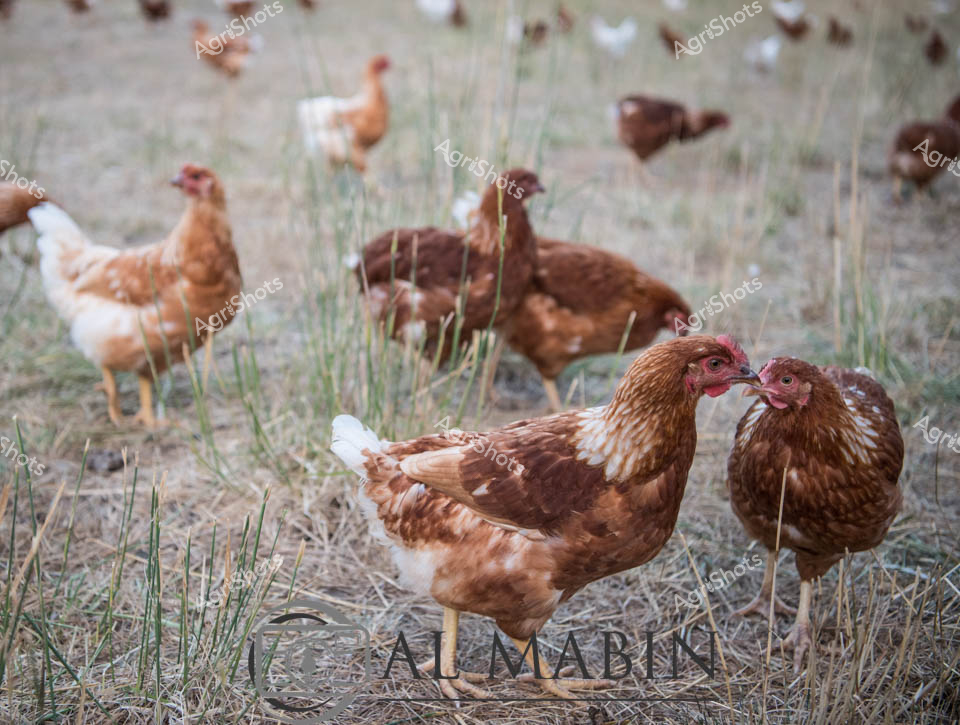
Free-range heritage chickens roam a windswept pasture in rural Victoria, their russet and golden feathers blending with the weathered grasslands. Brown and amber-toned hens with rich plumage move deliberately through sparse native grasses, their lean bodies demonstrating the robust health of pasture-raised poultry. Soft morning light casts subtle shadows across the dry landscape, highlighting the natural foraging behavior of these chickens as they explore and interact. The flock displays varied colorations - from deep mahogany to lighter golden-brown - representing the genetic diversity of traditional chicken breeds adapted to Australian agricultural conditions. Their muscular frames and alert postures suggest these are productive layers, perfectly suited to free-range egg production in the challenging Victorian landscape. The scattered vegetation and open terrain capture the essence of sustainable, low-intensity farming practices that prioritize animal welfare and natural behavioral patterns.
 Video
Video
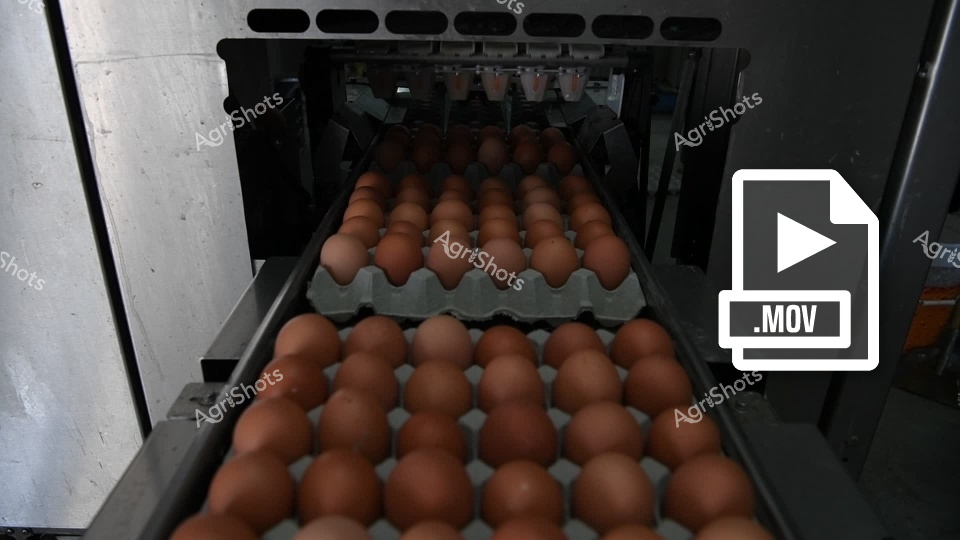
A state-of-the-art egg processing facility comes to life with rows of freshly laid, brown eggs traveling down a conveyor belt. These eggs, carefully nestled in gray cardboard trays, catch the light in a sleek, industrial setting, showcasing their smooth, unblemished surfaces. The gentle hum of machinery surrounds the scene, underscoring the efficient process of sorting and packaging. With the faint glimmer of stainless steel and an organized layout, the environment exudes a sense of precision and hygiene, essential for food safety. In this bustling atmosphere, workers don navy-blue uniforms and safety gear, navigating the space with purpose while monitoring the machinery. The interior is illuminated by bright overhead lights, highlighting the rich, warm hues of the eggs against the cool, metallic tones of the equipment. This setting resonates with professionalism, indicating that these eggs are destined for markets focused on fresh produce. The mood conveys a blend of industriousness and dedication to quality, showcasing the intricate connections within the agricultural supply chain.
 Image
Image
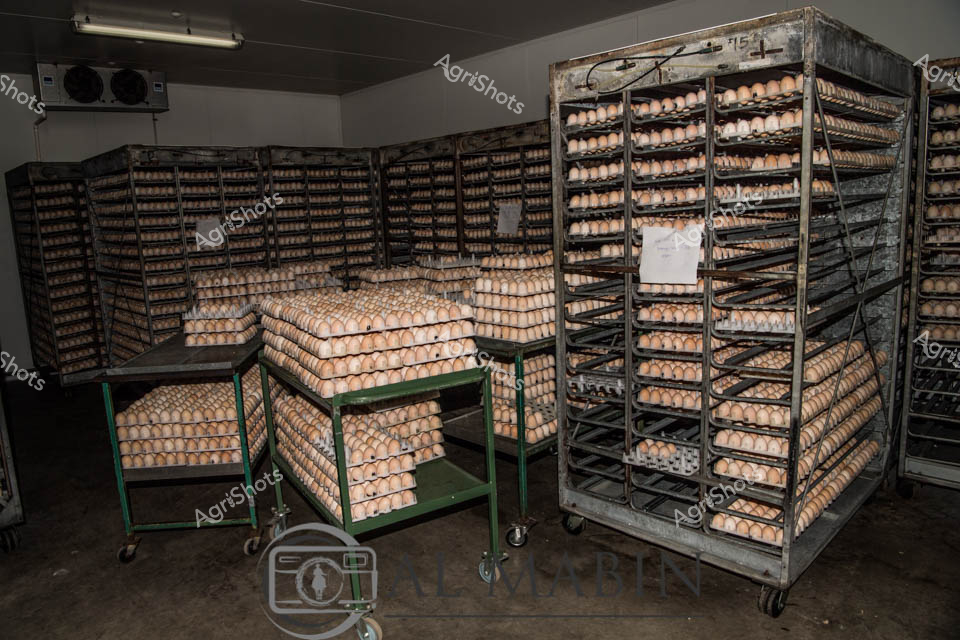
Pristine rows of freshly harvested eggs cascade across industrial shelving in this controlled agricultural storage environment. Meticulously arranged trays of cream and brown eggs fill multiple mobile racks, highlighting the precision of modern egg production techniques. A cool, temperature-regulated room with industrial cooling units overhead preserves the delicate produce, showcasing the sophisticated infrastructure of contemporary poultry farming. The worn metal shelving and green mobile trolleys suggest a well-established, functional facility dedicated to egg collection and distribution. Soft neutral tones of the eggs contrast against the utilitarian grey and green metal infrastructure, creating a visual representation of Tasmania's efficient agricultural supply chain. This image captures the critical transition point between farm production and food distribution, revealing the systematic approach to large-scale egg management in Australian agricultural operations.
 Image
Image
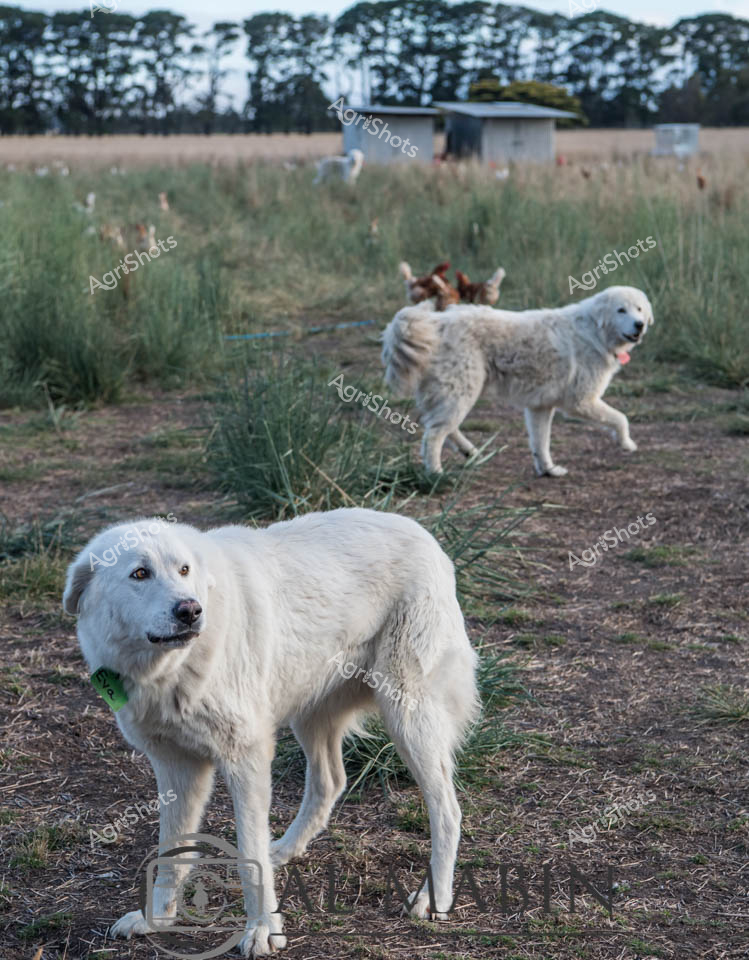
Maremma sheepdogs patrol a windswept paddock near a rustic chook shelter in rural Victoria, their thick cream-colored coats blending with the wintry grasslands. These vigilant livestock guardian dogs, bred to protect poultry and sheep, move with purposeful grace across the weathered ground, their keen eyes scanning the landscape for potential threats. The expansive pasture, dotted with tussock grasses and scattered with skeletal trees in the background, speaks to the open agricultural terrain of southern Australia. A small shed - likely housing nest boxes or serving as a chicken coop - anchors the distant horizon, while the dogs maintain their watchful positions. The scene captures the essence of free-range farming, where Maremmas serve as critical protectors of vulnerable livestock, their thick winter coats providing both camouflage and warmth in the crisp country environment. This image embodies the collaborative relationship between working dogs and agricultural production, highlighting the sophisticated strategies employed in modern pastoral management.
 Video
Video
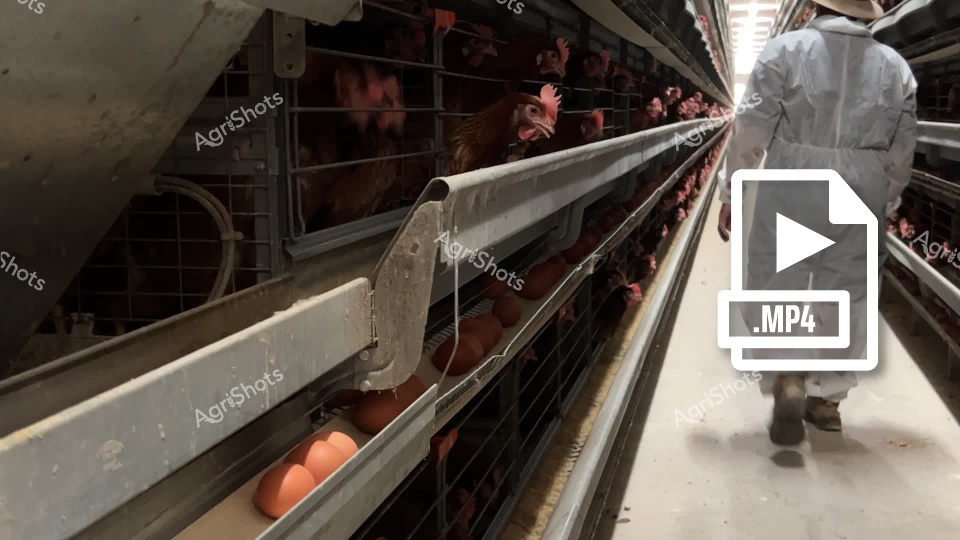
Commercial Layer Hen Facility: Automated Egg Production Stark white protective coveralls move through a densely populated industrial poultry facility, where rows of metal battery cages stretch into precise vanishing lines. Leghorn and Rhode Island Red hens crowd the wire enclosures, their russet and white feathers pressed against metallic barriers as fresh eggs roll smoothly down carefully angled collection channels. Biosecurity protocols are evident in the worker's full-body protective gear, designed to prevent potential disease transmission in this highly controlled agricultural environment. Soft orange and brown eggs accumulate in the collection tray, a testament to the facility's efficient egg production system. Mechanical ventilation fans and structured lighting create a regulated atmosphere that maximizes hen productivity and ensures consistent egg quality. This represents the pinnacle of modern agricultural engineering - a streamlined, scientific approach to large-scale protein production that typifies contemporary Australian agricultural infrastructure.
 Image
Image
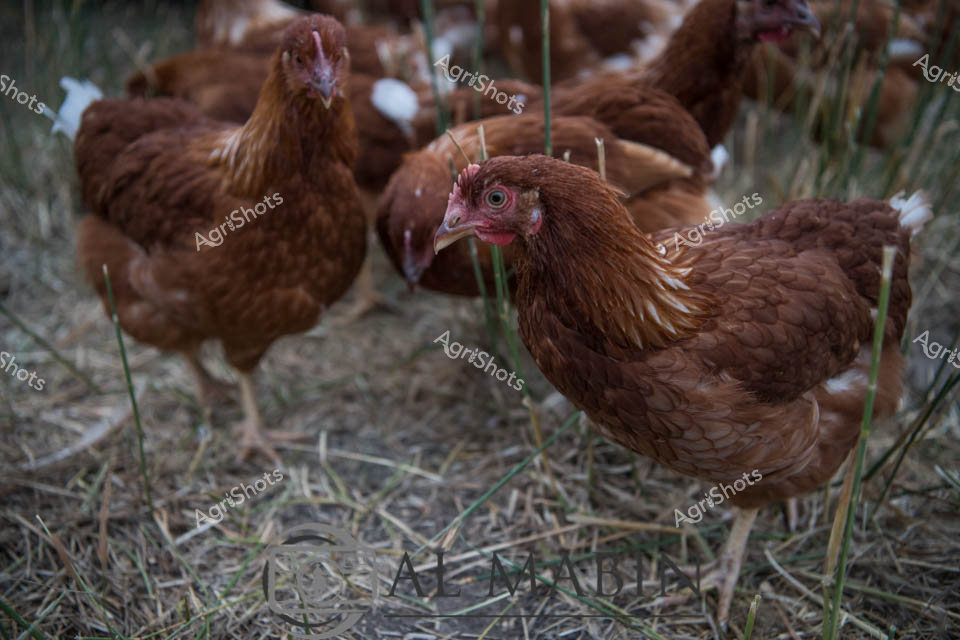
Rhode Island Red hens scratch and peck across a weathered straw and grass paddock, their rich mahogany-bronze feathers gleaming with warm copper undertones. These robust free-range layers demonstrate the quintessential characteristics of their breed - compact bodies, bright red combs, and alert postures that speak to their reputation as hardy, productive poultry. Soft afternoon light filters across the enclosure, casting subtle shadows through sparse grass blades and highlighting the textured plumage of these resilient birds. Each hen displays the genetic excellence prized by Victorian poultry farmers: strong muscular frames, bright eyes, and the dense feather coverage that enables outdoor survival in variable agricultural conditions. The tight grouping suggests a well-managed flock, typical of sustainable small-scale egg production operations found throughout rural Victoria's diverse agricultural landscapes. Their rich brown coloration blends seamlessly with the natural earth tones of their environment, embodying the connection between livestock, land, and responsible farming practices.
 Image
Image
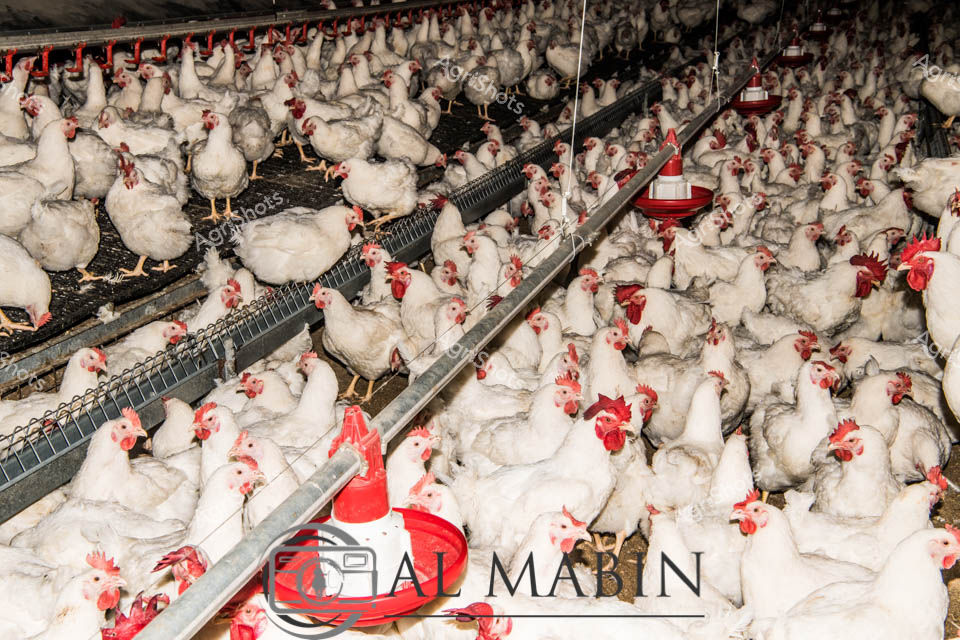
White Leghorn broiler chickens densely packed inside a mechanized industrial poultry shed, demonstrating contemporary intensive agricultural production techniques. Uniform white feathered birds cluster tightly across metal grid flooring, surrounding bright red automated feeding stations suspended from overhead rails. Stark fluorescent lighting illuminates the tightly controlled environment, revealing precise agricultural engineering with metal feeding mechanisms and structured bird containment zones. The chickens appear uniform in size and coloration, a testament to selective breeding and standardized agricultural practices. Red combs provide the only significant color contrast against the monochromatic white feathered population, highlighting the systematic approach to protein production. The image captures the industrial scale of modern chicken farming, where efficiency and standardization dominate the agricultural landscape, reflecting Tasmania's significant role in Australian poultry production.
 Video
Video
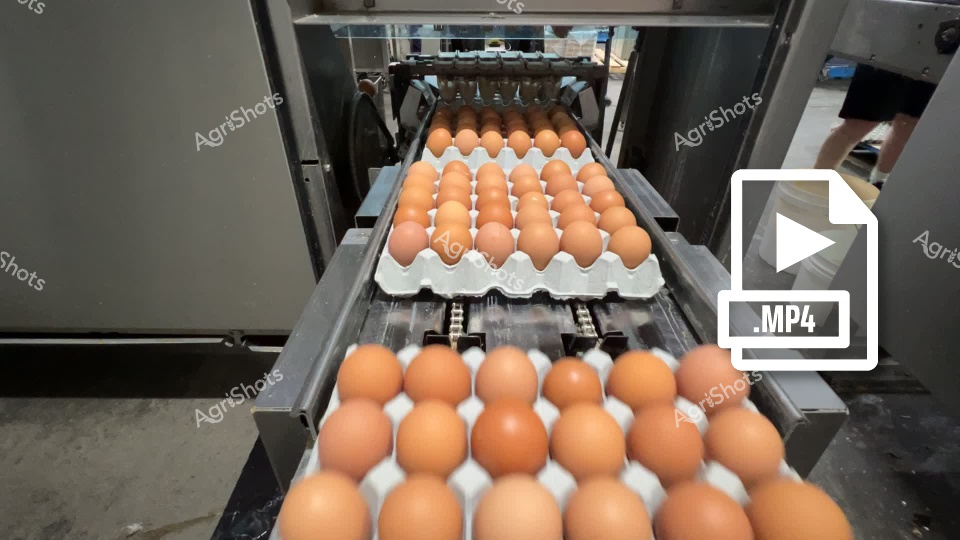
Precision egg sorting cascades through an industrial grading machine, revealing the mechanized heart of Australia's poultry production. Warm terracotta and soft caramel-toned eggs tumble methodically across stainless steel conveyor belts, each tray meticulously aligned in geometrically perfect rows. This high-efficiency processing line represents the pinnacle of agricultural technology, transforming fresh farm produce into market-ready inventory with clinical accuracy. Industrial lighting bathes the machinery in a stark, clinical glow, highlighting the smooth mechanical movements and pristine engineering of the egg sorting equipment. The rhythmic transportation of eggs speaks to the sophisticated agricultural systems of New South Wales, where technological innovation meets agricultural tradition. Every carefully positioned egg represents a moment of agricultural precision - a testament to the state's commitment to high-quality food production and advanced farming techniques.
 Image
Image
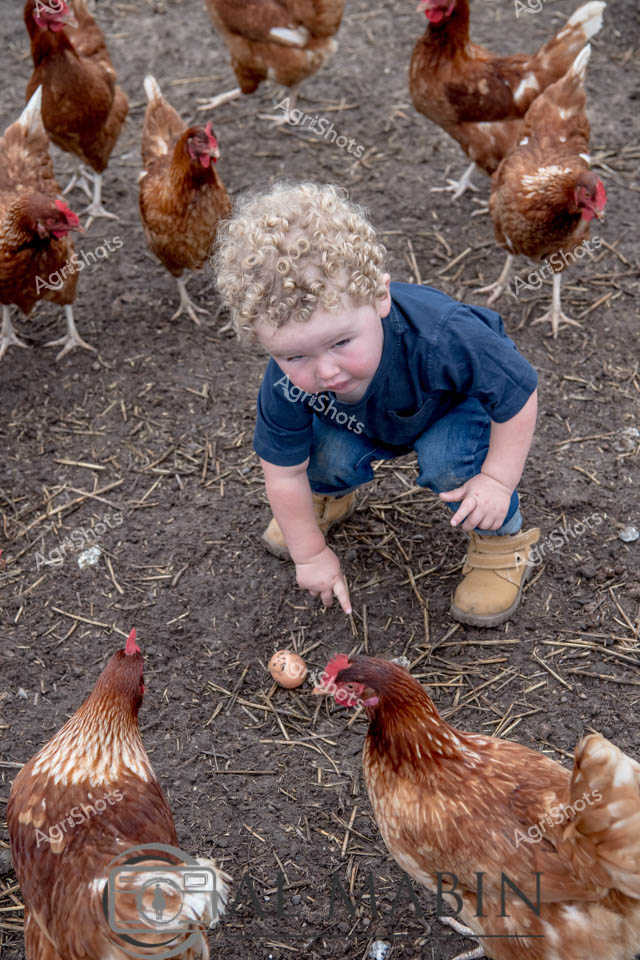
Young Curly-Haired Explorer Discovers Farm Life A tousle-headed toddler with bouncy blonde curls crouches among a flock of rusty-brown free-range chickens on a dusty farm yard. Wearing a deep blue shirt and sturdy tan work boots, the child points with curiosity at an egg nestled on the ground, surrounded by clucking hens with vibrant red combs. The scene captures the pure wonder of rural childhood, where farm animals become playmates and every moment is an adventure of discovery. Scattered straw and packed earth create a textured backdrop, highlighting the natural, unstructured environment of small-scale poultry farming. The chickens move casually around the child, suggesting a calm, integrated relationship between the young human and the livestock. This intimate moment encapsulates the essence of Australian agricultural life - a connection to the land, animals, and the simple joys of growing up in a farming community.
 Image
Image
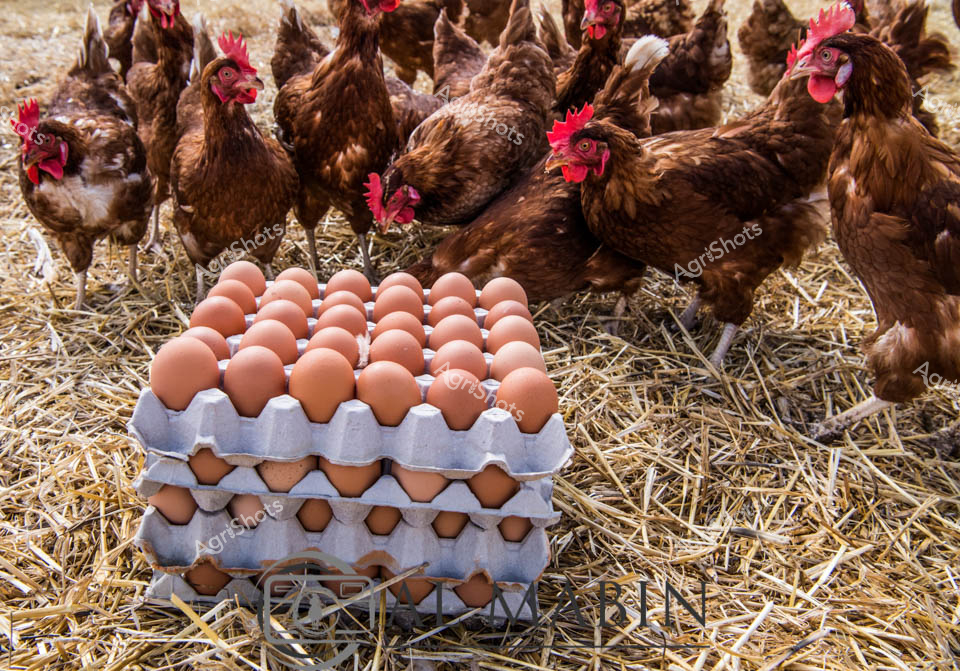
Brown Rhode Island Red hens cluster across a bed of golden straw, their vibrant crimson combs standing out against rich mahogany feathers. Stacked egg cartons dominate the foreground, filled with uniform rows of perfect brown eggs - a testament to the productivity of this free-range poultry operation. The densely packed chickens represent a robust flock, typical of South Australian intensive farming practices, where efficient egg production meets animal welfare standards. Soft straw provides natural bedding, creating a textural landscape of dried golden strands that cushions and insulates the chickens' environment. Each hen appears healthy and alert, with sleek feathers and bright, intelligent eyes scanning their immediate surroundings. The composition powerfully illustrates the connection between livestock, agricultural productivity, and the essential food supply chain that sustains rural communities.
 Image
Image
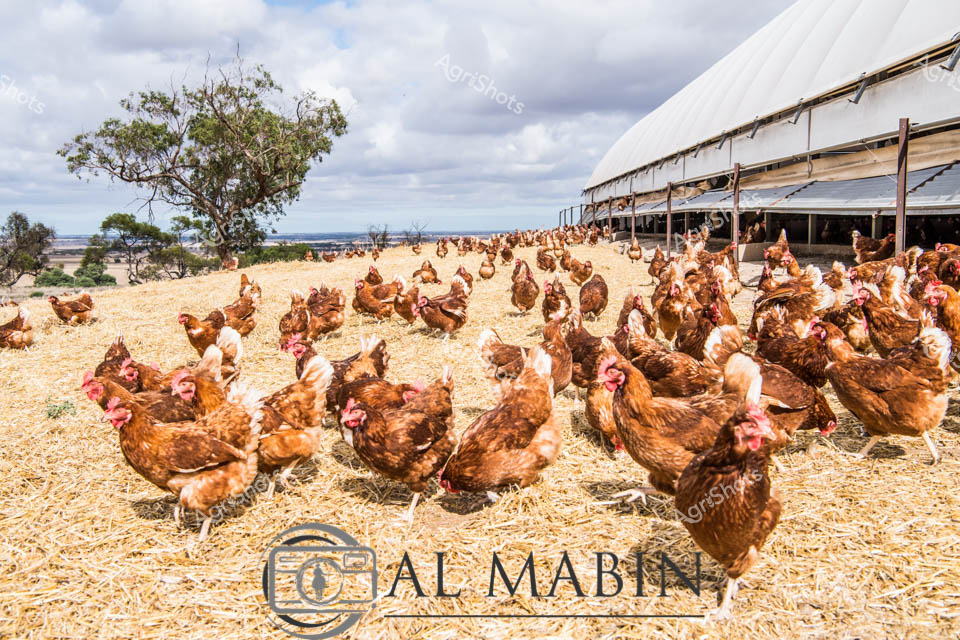
Free-range layer hens populate a sun-drenched paddock adjacent to a expansive steel-clad shed, embodying the agricultural landscape of rural South Australia. Russet-feathered chickens with vibrant red combs roam across a golden straw-covered ground, their plumage gleaming in the soft, cloud-diffused daylight. The scene captures the balance between structured agricultural infrastructure and natural animal behavior, with the large white shed providing shelter and the surrounding eucalyptus tree and distant horizon offering a quintessential Australian pastoral backdrop. Dozens of hens move freely, pecking and scratching at the ground, demonstrating the free-range farming methodology that prioritizes animal welfare and natural behaviors. The rich brown and amber tones of the chickens contrast beautifully with the pale straw underfoot and the muted grey-blue sky, creating a textural and chromatic landscape that speaks to the nuanced practices of modern Australian poultry production. The Al Mabin photography watermark anchors the image, signaling this as a professional documentation of contemporary agricultural practice, highlighting the intersection of farming, animal husbandry, and environmental consciousness in the Australian agricultural sector.
 Image
Image
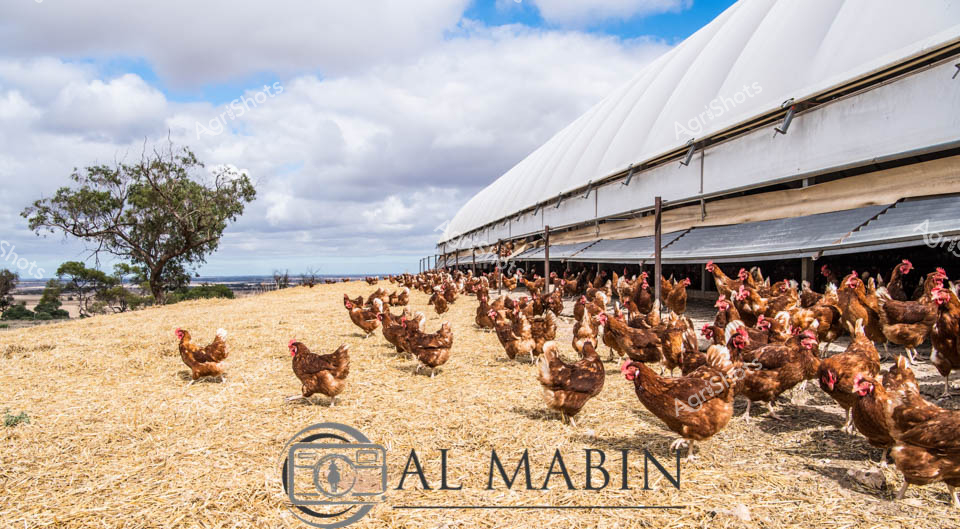
Free-range production meets modern agricultural efficiency in this expansive South Australian chicken farm. Russet-feathered hens populate a straw-covered outdoor range adjacent to a large white-clad poultry shed, with a weathered eucalyptus tree standing sentinel in the distant landscape. The birds move casually across the golden straw ground, their rich brown and reddish plumage creating a vibrant contrast against the pale ground and cloudy blue-grey sky. Al Mabin's watermarked logo suggests this is a professional agricultural documentation, capturing the intersection of animal welfare and commercial farming practices. The scene represents a contemporary approach to egg production, where chickens are granted outdoor access while still maintained within a structured farming environment. Soft cloud formations and the open horizontal landscape communicate the spaciousness of this agricultural setting, highlighting the balance between controlled production and natural animal behavior.
 Image
Image
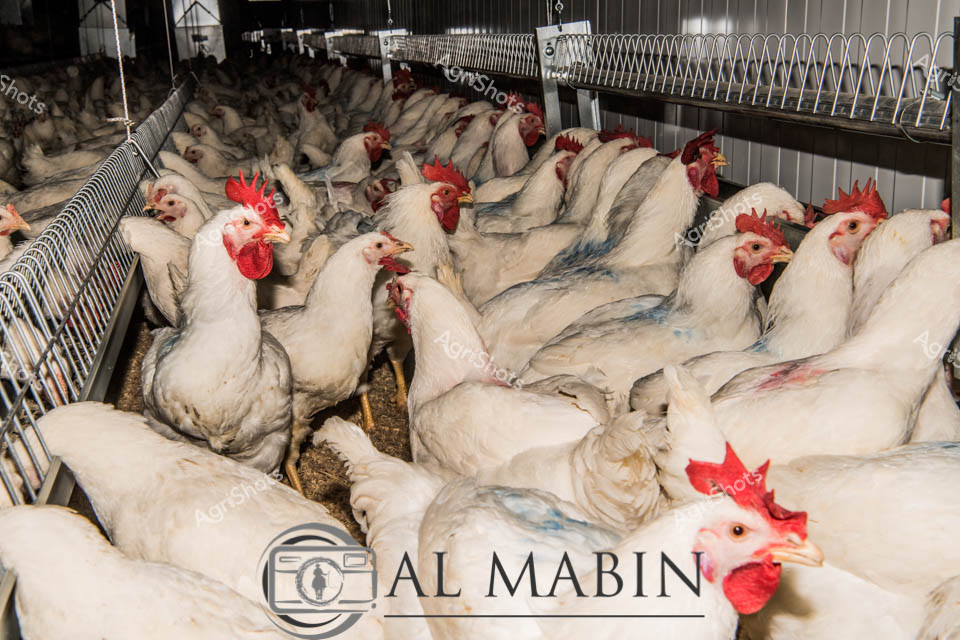
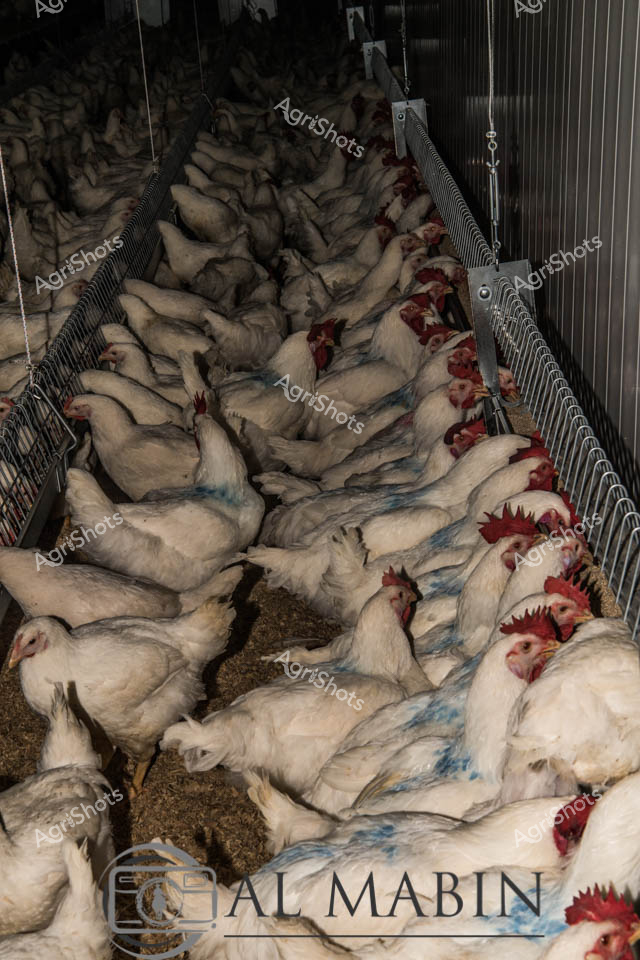
Battery-caged white leghorn chickens crowd densely in narrow wire enclosures, their pale feathered bodies pressed tightly together on a substrate of straw and wood shavings. Rows of suspended metal cages create uniform, linear compartments housing dozens of hens, each marked with occasional blue staining - likely from handling or health monitoring. Their bright red combs stand in stark contrast to their uniform white plumage, revealing these are mature laying hens in an industrial egg production facility. The cramped, systematic arrangement emphasizes the mechanized nature of modern poultry farming, where efficiency and maximum output are prioritized over individual animal comfort. Overhead lighting casts a uniform, clinical illumination that accentuates the regimented and controlled environment. The watermark "AL MABIN" suggests this is a professional agricultural documentation, capturing the contemporary reality of large-scale chicken farming techniques used in Tasmania's agricultural sector.
 Image
Image
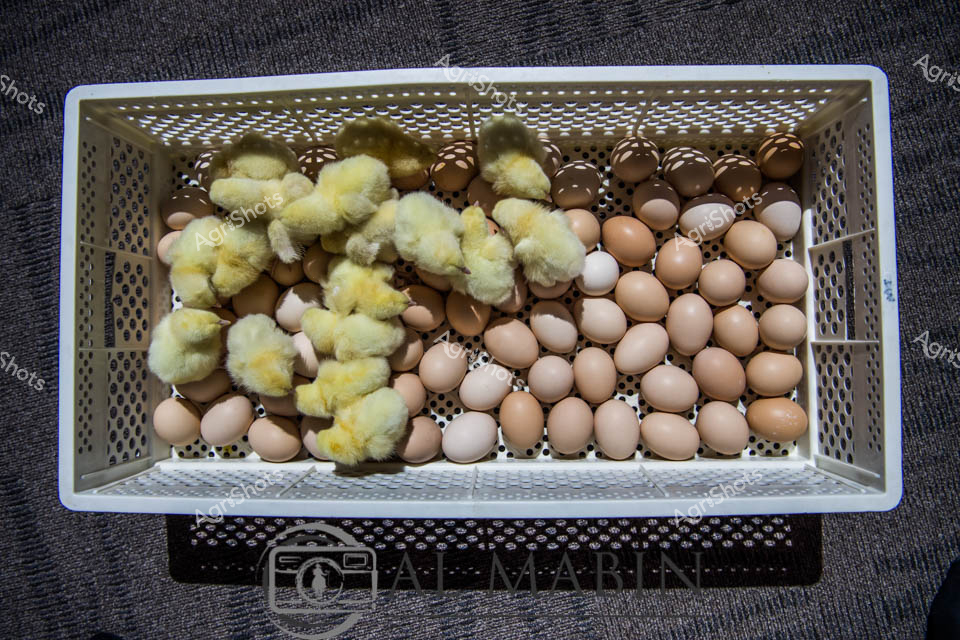
Freshly hatched yellow chicks huddle together, their downy feathers soft and vibrant, nestled alongside rows of uniform brown eggs in a perforated white plastic tray. The agricultural scene captures a pivotal moment in poultry production, where new life emerges alongside potential future generations. Meticulously arranged, the eggs display the precision of modern intensive farming practices, with each pale brown shell carefully positioned in a grid-like formation. The young chicks, still warming themselves and recovering from the hatching process, contrast beautifully with the smooth, unbroken eggs surrounding them. This image represents the cyclical nature of agricultural production, showcasing the delicate transition from embryo to newly emerged chick in a controlled, efficient farming environment. The crisp white tray and the subtle color gradations from soft yellow to warm brown create a compelling visual narrative of agricultural reproduction and systematic livestock management.
 Video
Video
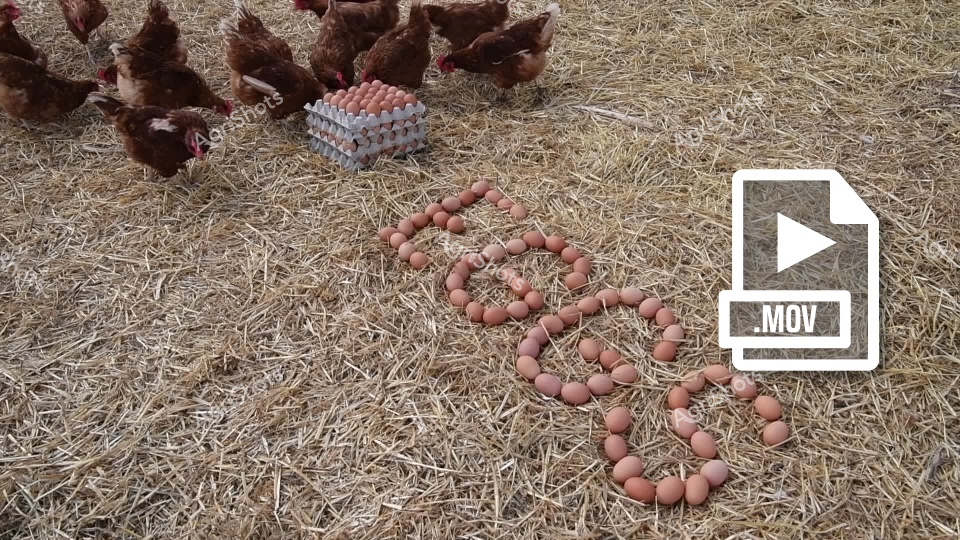
This compelling video footage captures a rustic chicken farm scene, showcasing a flock of rich mahogany-colored hens scattered across a straw-covered ground. The clip features multiple egg cartons and an artfully arranged collection of brown eggs spelling out what appears to be "MOV" on the straw-strewn farmyard floor. Stacks of gray egg trays sit nearby, highlighting the productive nature of this free-range poultry operation. The warm brown tones of the chickens contrast beautifully with the golden-tan straw bedding, creating a textured and authentic agricultural landscape. The video seems to be documenting the daily egg collection process, with the hens wandering casually around their production area, demonstrating the natural environment of a working farm. The scene captures the essence of sustainable, small-scale egg production, with the carefully arranged eggs and clustered chickens telling a story of agricultural productivity and rural life.
Well, you've ploughed through the whole field!
No more crops to harvest here, mate.
Try searching for something else in our library of 50,000+ royalty-free media: