 Image
Image
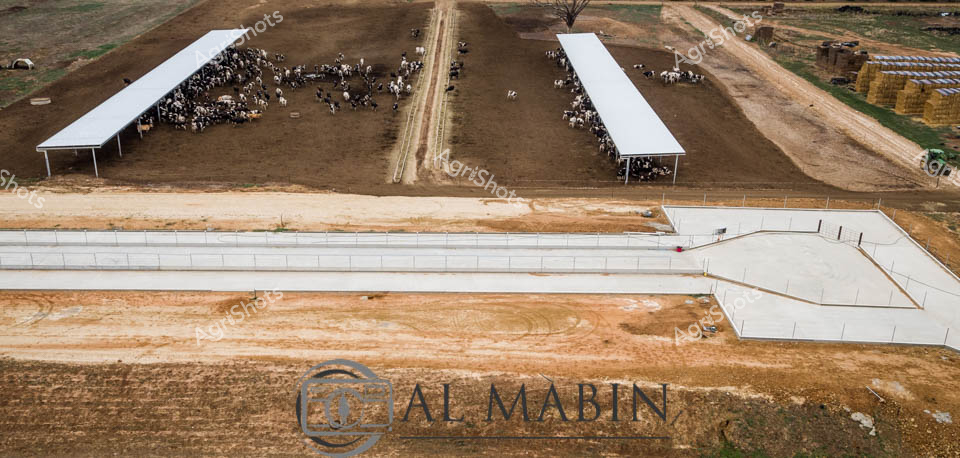
Aerial view of a modern dairy feedlot at Al Mabin agricultural facility, revealing a precisely engineered livestock management system. Two expansive white-roofed shelters house a dense herd of black and white dairy cattle, strategically positioned over a meticulously constructed dirt and concrete feeding complex. The crisp white structures contrast sharply with the earthy ochre tones of the surrounding landscape, creating a geometric agricultural tableau that speaks to contemporary farming precision. Concrete feeding lanes and holding areas provide structured pathways for efficient cattle management, with hay bales and agricultural infrastructure visible in the peripheral zones. The overhead perspective captures the scale and systematic approach of large-scale dairy operations, highlighting the intersection of animal husbandry and industrial design. Cool tones of white and tan dominate the scene, reflecting the harsh Australian agricultural landscape and the sophisticated infrastructure required to maintain productive livestock in challenging environmental conditions.
 Image
Image
Aerial view of a comprehensive dairy farming operation nestled in the golden-brown rural landscape of Victoria's Goulburn Region. Precision-engineered white-roofed sheds stretch across the dusty earth, housing a herd of dairy cattle on a carefully designed feed pad. Massive concrete walkways connect different zones of the agricultural complex, with strategic storage areas for hay bales and agricultural supplies visible. A green agricultural vehicle sits near processing equipment and silver storage tanks, highlighting the mechanized nature of modern dairy production. The landscape reveals a patchwork of cultivated fields - some bare, others with hints of green vegetation - demonstrating the intricate infrastructure required for large-scale livestock management. Silvery-white cattle cluster beneath long sheltering structures, protected from the harsh Australian sun, embodying the meticulous care and advanced agricultural techniques that define contemporary dairy farming in regional Victoria.
 Image
Image
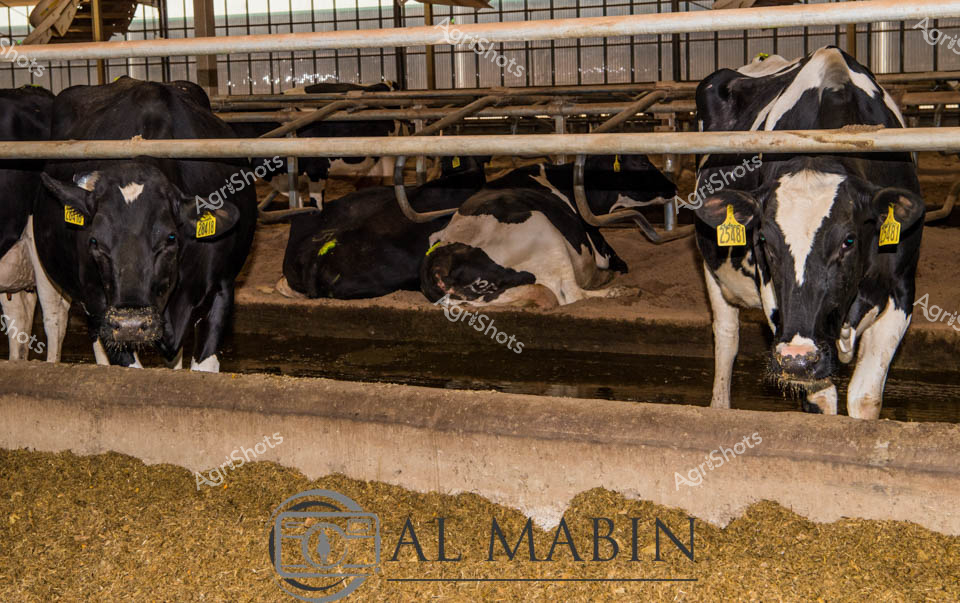
Holstein dairy cows rest and feed within a purpose-built concrete feed pad, their distinctive black and white coats contrasting against the golden silage spread across the base of their enclosure. Yellow ear tags mark each animal, indicating careful herd management and tracking. The robust steel infrastructure of the covered shed provides shelter and structured feeding space, with metal rails separating individual feeding zones. One cow reclines comfortably on a sandy bedding area while others stand alert, demonstrating the calm efficiency of modern agricultural livestock management. The Al Mabin watermark suggests this compelling agricultural scene captures the precision and care inherent in contemporary dairy farming practices in New South Wales. Layers of textures - smooth concrete, rough silage, sleek bovine coats - create a rich visual narrative of agricultural infrastructure and animal husbandry.
 Image
Image
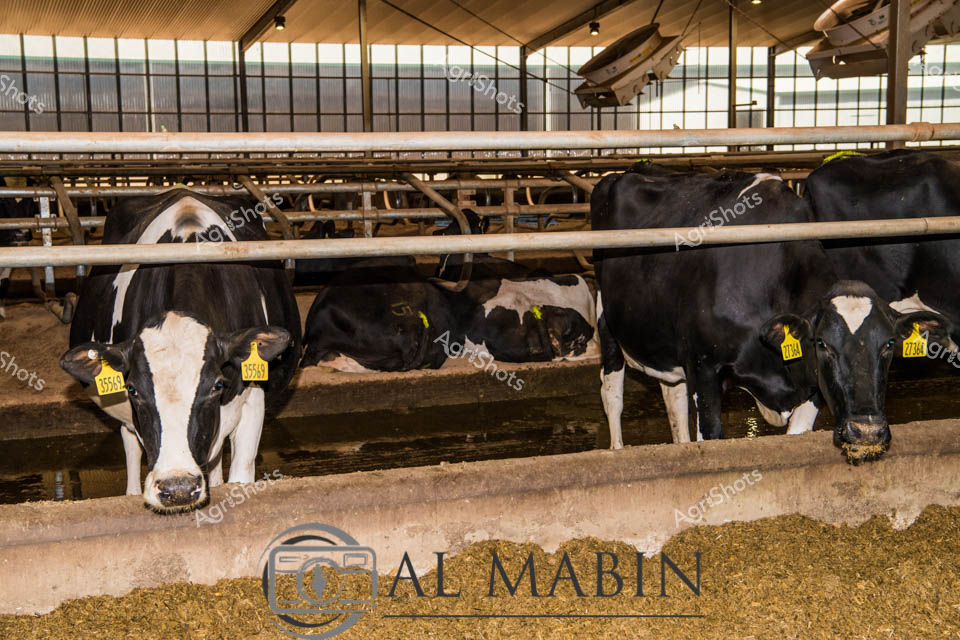
Holstein dairy cows stand attentively in a precisely engineered feed pad, their black and white coats creating a striking contrast against the golden silage bedding and industrial shed structure. Numbered yellow ear tags identify each animal, reflecting modern agricultural management practices that track individual cow performance. The controlled environment - with its robust metal framing, structured feeding trough, and carefully distributed feed - represents the pinnacle of contemporary dairy farming efficiency in regional New South Wales. Soft indirect light filters through the translucent shed walls, creating a calm, methodical atmosphere where these high-productivity cattle can access nutrient-rich silage with minimal stress. The precise alignment of the cows, their muscular frames and distinct Holstein markings, speaks to generations of selective breeding focused on maximizing milk production. This image captures the sophisticated intersection of animal husbandry, agricultural engineering, and scientific nutrition that defines modern Australian dairy operations.
 Image
Image
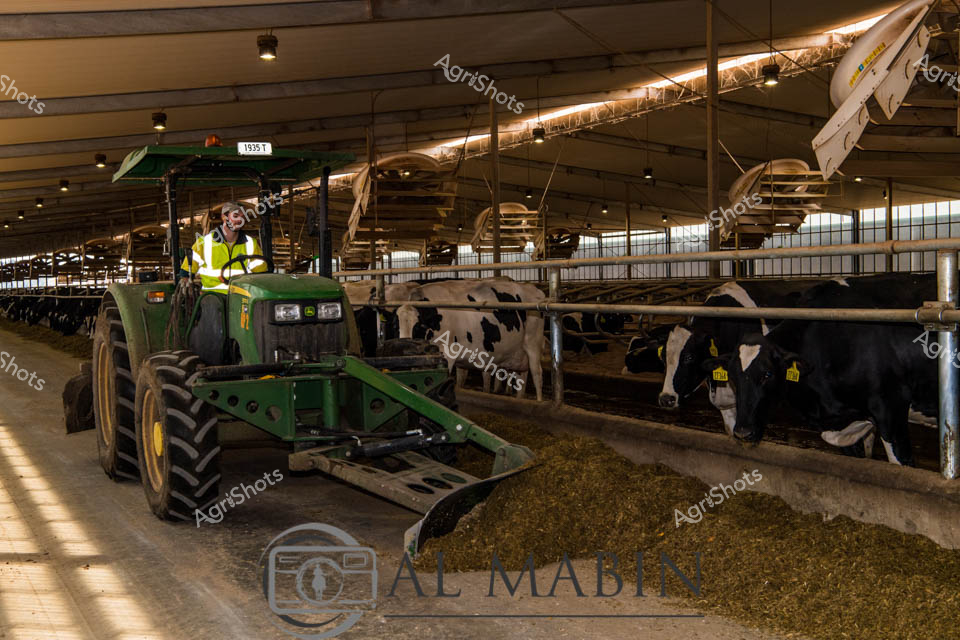
Inside a meticulously organized dairy shed, a green John Deere tractor equipped with a front blade moves silage along a concrete feed pad lined with Holstein dairy cows. The operator, wearing a high-visibility safety vest, carefully distributes fresh feed to the black and white cattle standing in neat rows behind metal barriers. Golden morning light streams through the shed's windows, illuminating the rich golden-brown texture of the silage spread across the concrete surface. The cows, each marked with a yellow identification tag, stand attentively as the tractor methodically prepares their morning meal, representing the precision and modern technology of contemporary Australian dairy farming. The industrial interior showcases a blend of agricultural efficiency - clean concrete surfaces, structured feeding lanes, and sophisticated machinery working in harmony with the calm, productive dairy herd. This scene captures the essence of New South Wales' sophisticated dairy industry, where advanced agricultural practices meet animal care and nutrition.
 Image
Image
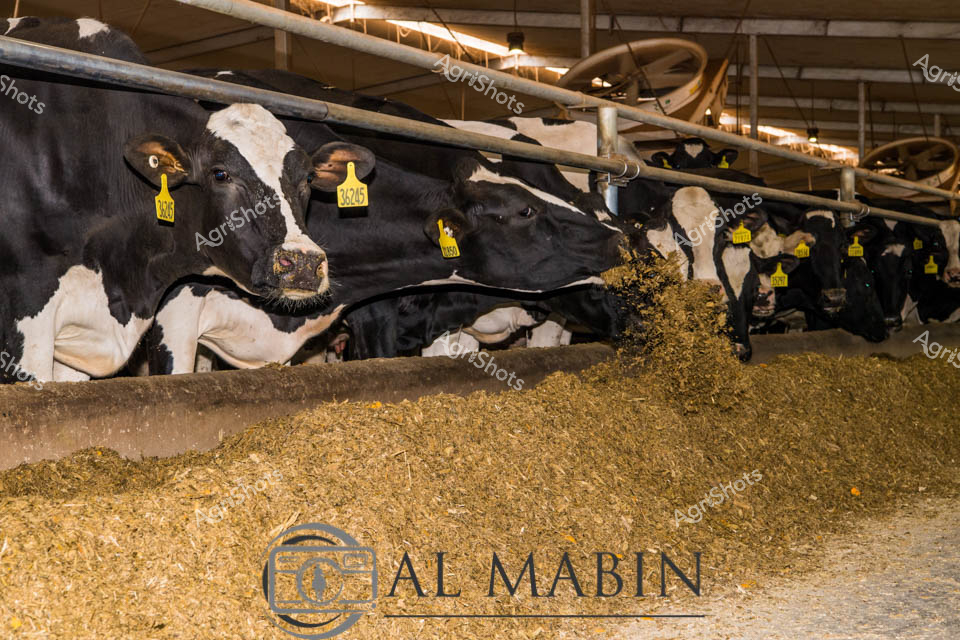
Holstein dairy cows line up methodically along a feed barrier, their distinctive black and white coats gleaming under the soft industrial shed lighting. Numbered yellow ear tags mark each animal, signaling professional herd management at this modern agricultural facility. Golden silage spreads across the feed pad, with cows eagerly consuming the fermented crop mix, their muscular bodies positioned precisely within the steel infrastructure. Overhead mechanical systems and structural beams suggest a purpose-built environment designed for efficient livestock nutrition and care. The Al Mabin watermark indicates this compelling scene captures the precision and daily rhythms of contemporary Australian dairy production. Rich textures of straw, metal, and bovine hide create a sensory portrait of agricultural sophistication, highlighting the technological and biological choreography of large-scale livestock management.
 Image
Image
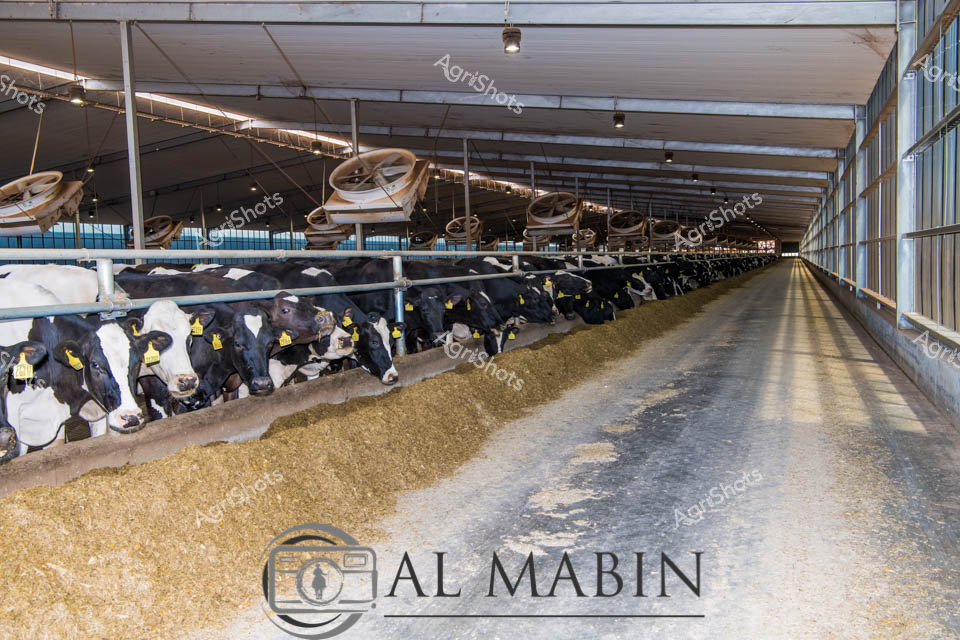
Holstein dairy cows line the gleaming concrete feed pad within a meticulously engineered agricultural shelter, their distinctive black and white coats creating a rhythmic visual pattern against the golden silage spread before them. Large industrial fans hang overhead, promising consistent climate control for the herd, while natural light streams through expansive side windows, illuminating the pristine working environment. Yellow identification tags punctuate each animal's ear, marking them as carefully managed livestock in a sophisticated modern dairy operation. The long, clean central pathway allows for efficient movement and monitoring, representing the precision of contemporary Australian agricultural practice. Soft hay provides nutritional feed along the extensive trough, with each cow positioned systematically, demonstrating the calculated efficiency of large-scale livestock management. This scene embodies the intersection of animal husbandry and technological innovation, showcasing how New South Wales dairy operations maintain world-class agricultural standards through strategic infrastructure and expert animal care.
 Image
Image
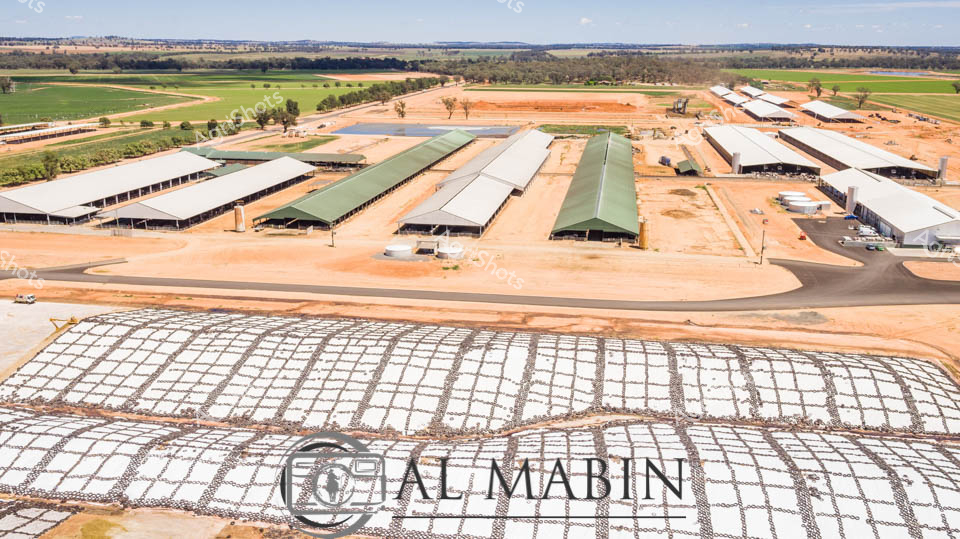
Al Mabin's aerial photograph reveals the expansive infrastructure of a modern agricultural facility, likely a large-scale dairy operation in regional New South Wales. Stark terracotta-colored earth surrounds a complex of substantial green and white corrugated iron sheds, strategically positioned to maximize efficiency and livestock management. The meticulously planned layout showcases multiple elongated shelters with open-sided designs, typical of contemporary Australian agricultural architecture that prioritizes animal comfort and climate adaptability. In the foreground, an intricately patterned concrete feed pad stretches across the landscape, its geometric grid providing a structured surface for cattle feeding and movement. The surrounding pastoral landscape hints at a broad, undulating terrain with distant tree lines and cultivated green paddocks, representing the quintessential Australian agricultural hinterland. The facility's crisp, organized design speaks to sophisticated farming practices, where precision engineering meets agricultural productivity. Neat access roads and carefully maintained infrastructure suggest a high-tech approach to rural production, embodying the progressive spirit of contemporary Australian agricultural enterprises. The image captures the intersection of technological innovation and traditional farming landscape, revealing the complex systems that underpin modern food production.
 Image
Image
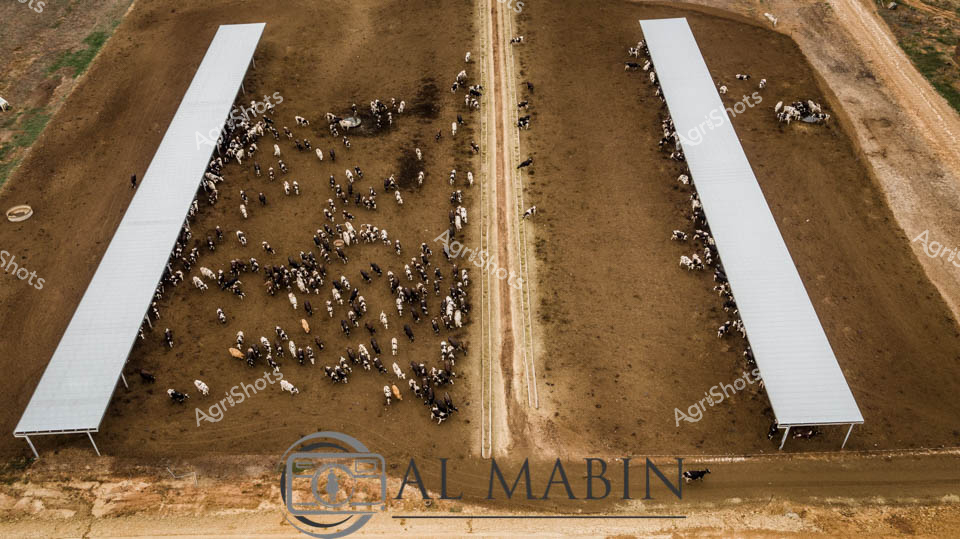
Aerial view of a meticulously designed dairy cattle feeding facility nestled in the arid agricultural landscape of regional Victoria. Two long, gleaming white shelters frame a central dirt feeding area where a dense cluster of Holstein and Friesian dairy cows gather, their black and white coats creating a stark contrast against the ochre-colored ground. The strategic V-shaped layout allows efficient feed distribution and cattle movement, with a central concrete lane bisecting the paddock and providing structured access for farm workers and machinery. Precise agricultural engineering is evident in the geometrically aligned structures, revealing a modern approach to livestock management that prioritizes animal welfare and operational efficiency. The harsh, sun-baked terrain suggests this is a mid-summer scene, where these carefully managed feeding zones become critical for maintaining cattle nutrition and comfort during challenging environmental conditions. The watermarked branding of "EAL MABIN" in the foreground indicates this is a professional agricultural documentation, capturing the sophisticated infrastructure of contemporary Australian dairy farming.
 Image
Image
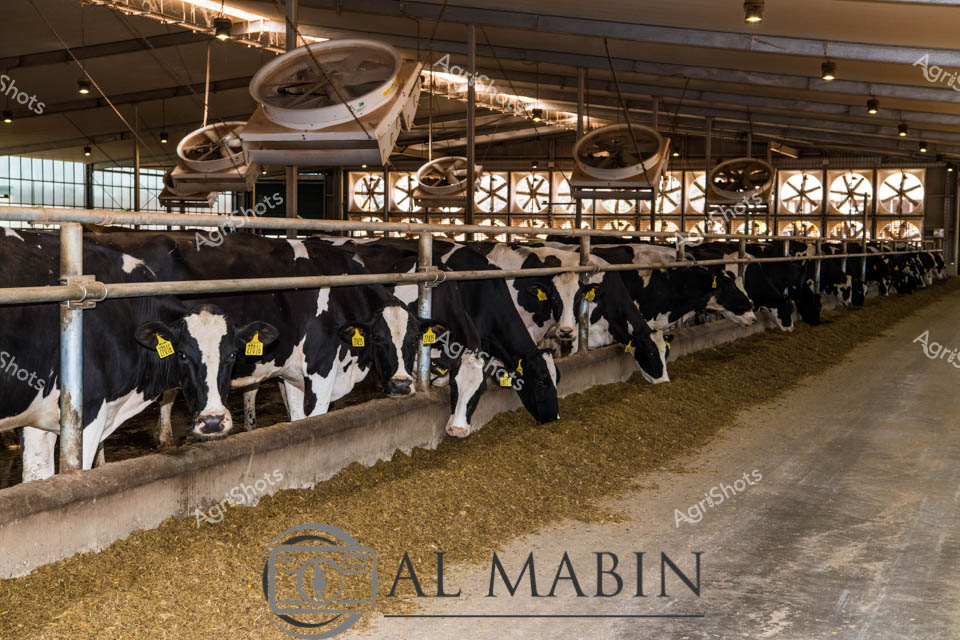
Holstein dairy cows line up along a gleaming white concrete feed pad, their distinctive black and white coats creating a rhythmic pattern beneath industrial overhead fans. Golden morning light streams through high windows, illuminating rows of large ventilation wheels that manage the climate of this modern dairy facility. Each cow wears a yellow identification tag, standing in meticulous alignment as they consume freshly laid silage - a nutritious mixed feed spread across their feeding area. The expansive shed represents precision agricultural engineering, with clean concrete walkways, strategic ventilation, and carefully designed infrastructure that supports optimal animal nutrition and comfort. Al Mabin's watermark suggests this is a professionally documented scene from a high-performance dairy operation, likely in New South Wales, showcasing the sophisticated environment of contemporary Australian livestock management. The controlled, methodical atmosphere speaks to the scientific approach of modern dairy farming, where animal welfare and production efficiency converge in a harmonious agricultural landscape.
 Image
Image
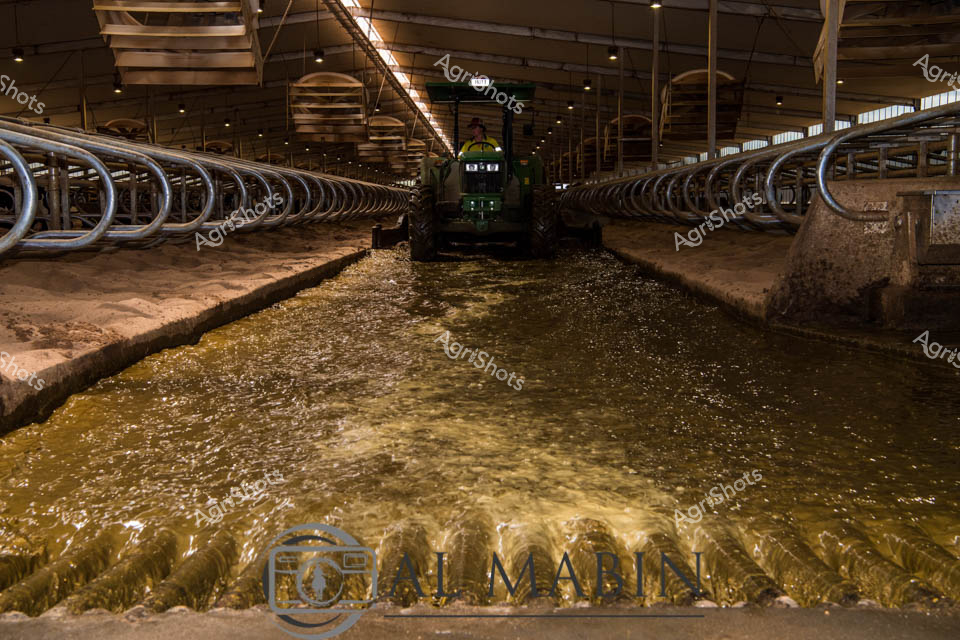
Illuminated by overhead lighting, a John Deere tractor glides through a concrete feed pad, creating rippling waves of water or liquid feed between curved metal feed barriers. The industrial dairy infrastructure showcases precision agricultural engineering, with gleaming metallic structures creating symmetrical channels designed for efficient cattle feeding and management. Warm golden-brown tones reflect off the liquid surface, highlighting the carefully engineered environment typical of modern large-scale dairy operations. The nocturnal setting emphasizes the continuous nature of agricultural work, where feeding and animal care continue beyond daylight hours. Structured and methodical, the feed pad represents the technological advancement of Australian dairy farming, where animal nutrition and operational efficiency converge in a meticulously designed space. The waterway between feed barriers ensures even distribution of nutrients, demonstrating the sophisticated approach to livestock management in contemporary agricultural systems.
 Image
Image
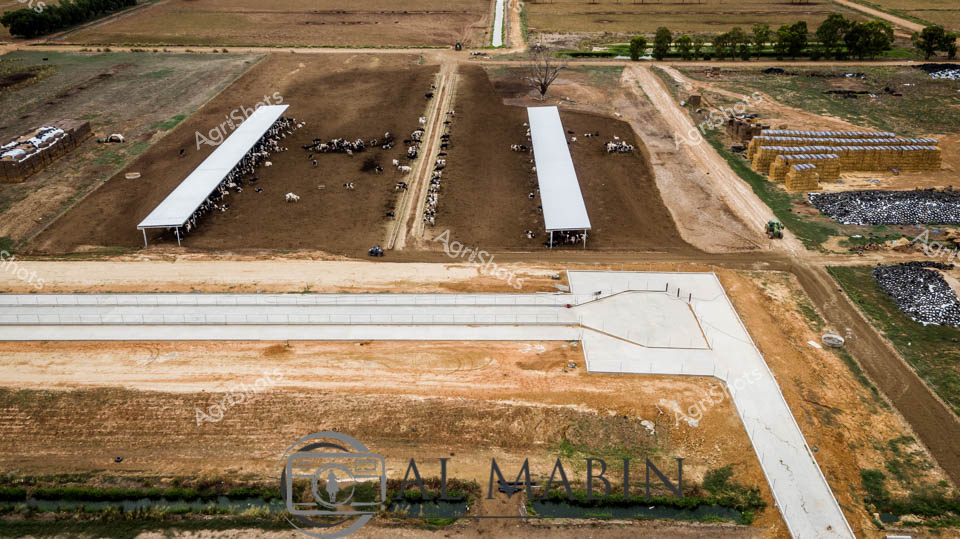
Aerial perspective of an expansive dairy feedlot in the Goulburn region of Victoria, revealing a meticulously organized agricultural infrastructure. Two long white sheltered feeding platforms extend across carefully graded dirt paddocks, providing shade and structured feeding spaces for a herd of dairy cattle. Compact groups of black and white dairy cows cluster near the shelters, strategically positioned to access feed and protection from the harsh Australian rural landscape. The surrounding terrain displays a patchwork of earthy browns and dusty ochres, with geometric concrete pathways defining the agricultural workspace and ensuring efficient movement and management. Straw bales and additional agricultural storage areas line the perimeter, highlighting the comprehensive planning of this modern farming operation. The Al Marin branding watermark subtly indicates the professional documentation of this sophisticated dairy farming environment, capturing the precise engineering and systematic approach of contemporary Australian agricultural practices.
Well, you've ploughed through the whole field!
No more crops to harvest here, mate.
Try searching for something else in our library of 50,000+ royalty-free media: