 Image
Image
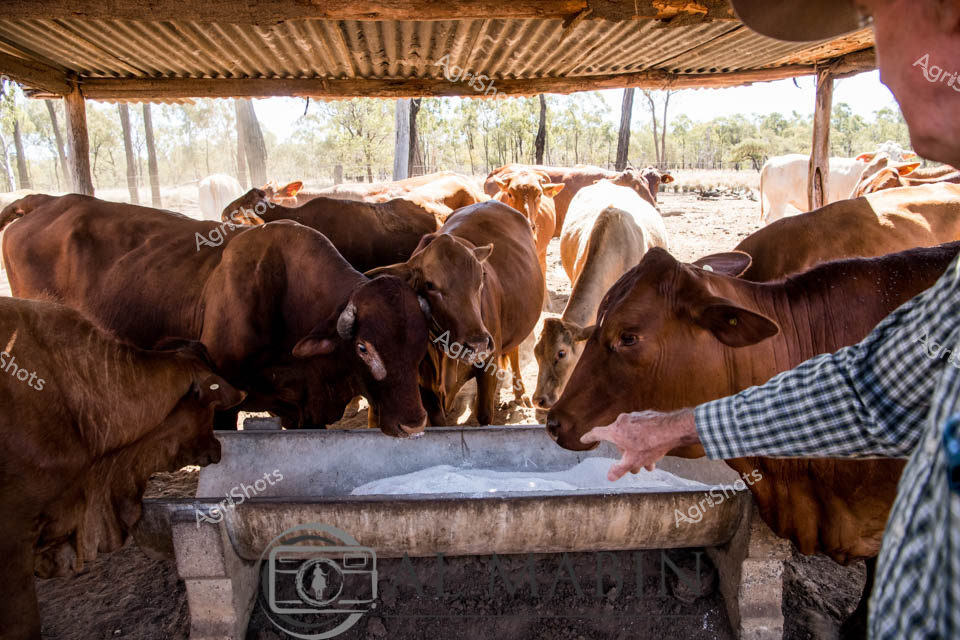
Dusty sunlight filters through a rustic corrugated iron shelter on a Queensland cattle station, where a herd of rich mahogany and cream-colored beef cattle cluster around a concrete mineral supplement trough. A weathered farm worker's hand in a blue and white gingham sleeve reaches out, guiding the livestock's attention to the nutritional lick block - an essential practice for maintaining cattle health in the arid pastoral landscape. Slender gum trees stand sentinel in the background, casting long shadows across the parched earth, highlighting the harsh yet resilient environment of outback cattle farming. The cattle - likely Brahman or Brahman-cross breeds renowned for their heat tolerance - press closely together, their muscular bodies gleaming with varying shades of burnt sienna and tan, demonstrating the robust genetics developed for surviving in challenging Australian agricultural conditions. This intimate scene captures the daily rhythm of station life, where careful animal husbandry and strategic nutritional management are critical to sustainable beef production in one of the world's most demanding agricultural terrains.
 Image
Image
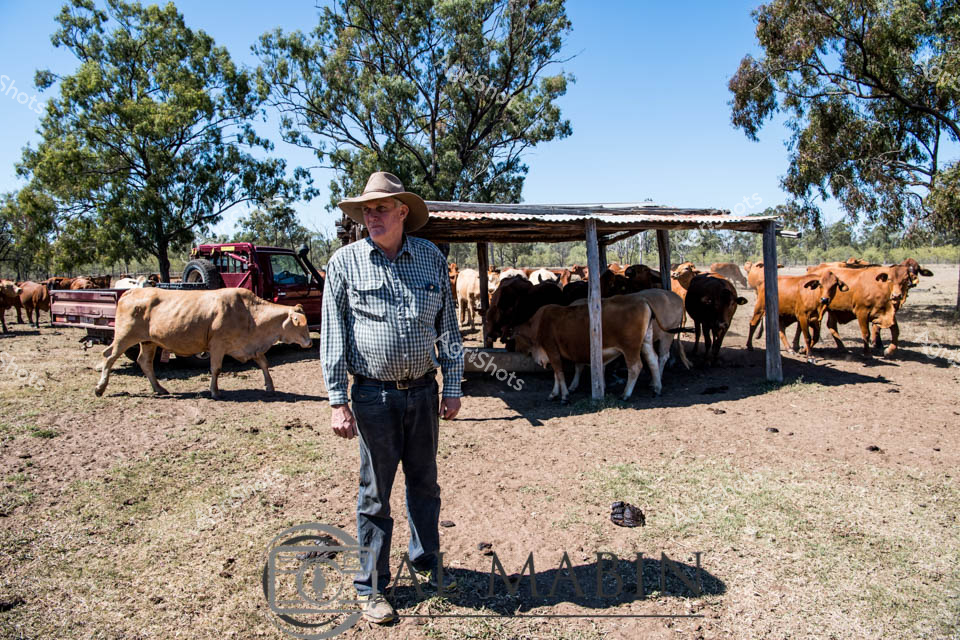
Bathed in brilliant Queensland sunlight, an experienced cattle station manager stands amid a herd of robust beef cattle, embodying the resilience of rural Australian agriculture. Wearing a classic checked work shirt, wide-brimmed sun hat, and practical dark jeans, he surveys his livestock gathered around a corrugated iron shelter in a dry, eucalyptus-lined paddock. The cattle - a mix of rich chestnut and deep brown colors - represent a carefully managed beef herd, with some sheltering from the midday heat under the rustic lean-to structure. A weathered red utility vehicle sits in the background, a quintessential piece of station equipment that speaks to the demanding yet essential work of managing large-scale cattle operations in central Queensland. The landscape is quintessentially Australian - sparse grassland, scattered gum trees, and a cloudless blue sky suggesting the harsh but productive environment of outback cattle country. This image captures the essence of Australian agricultural enterprise: resilience, practical innovation, and a deep connection to the land.
 Image
Image
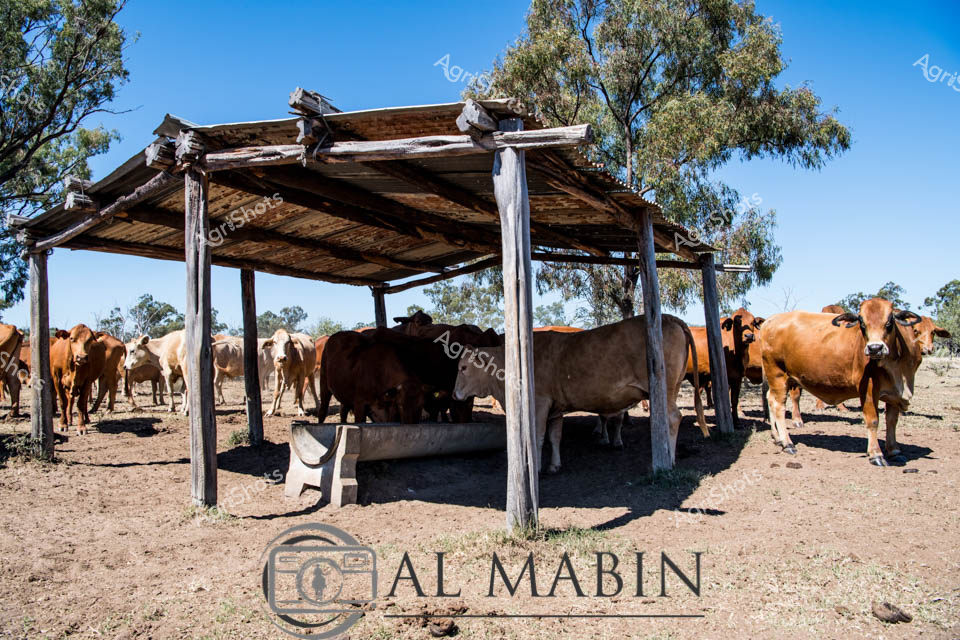
Brahman and Santa Gertrudis crossbred cattle cluster beneath a rustic timber shelter on a sun-drenched Queensland cattle station, seeking respite from the intense midday heat. The rough-hewn wooden structure, constructed from weathered posts and corrugated iron, provides essential shade across the dusty, sparse ground. A large mineral supplement block sits centrally, drawing the herd closer as they rotate through the sheltered feeding area. Rich chestnut and warm tan hides contrast against the bleached earth and silvery eucalyptus trees scattered across the background, capturing the stark beauty of northern Australian pastoral landscapes. These robust cattle, adapted to harsh tropical conditions, represent the resilient bloodlines that have shaped Australia's beef industry, standing testament to generations of agricultural innovation and survival in challenging environments. The clear azure sky and harsh sunlight underscore the challenging climatic conditions that define cattle production in remote Queensland stations.
 Image
Image
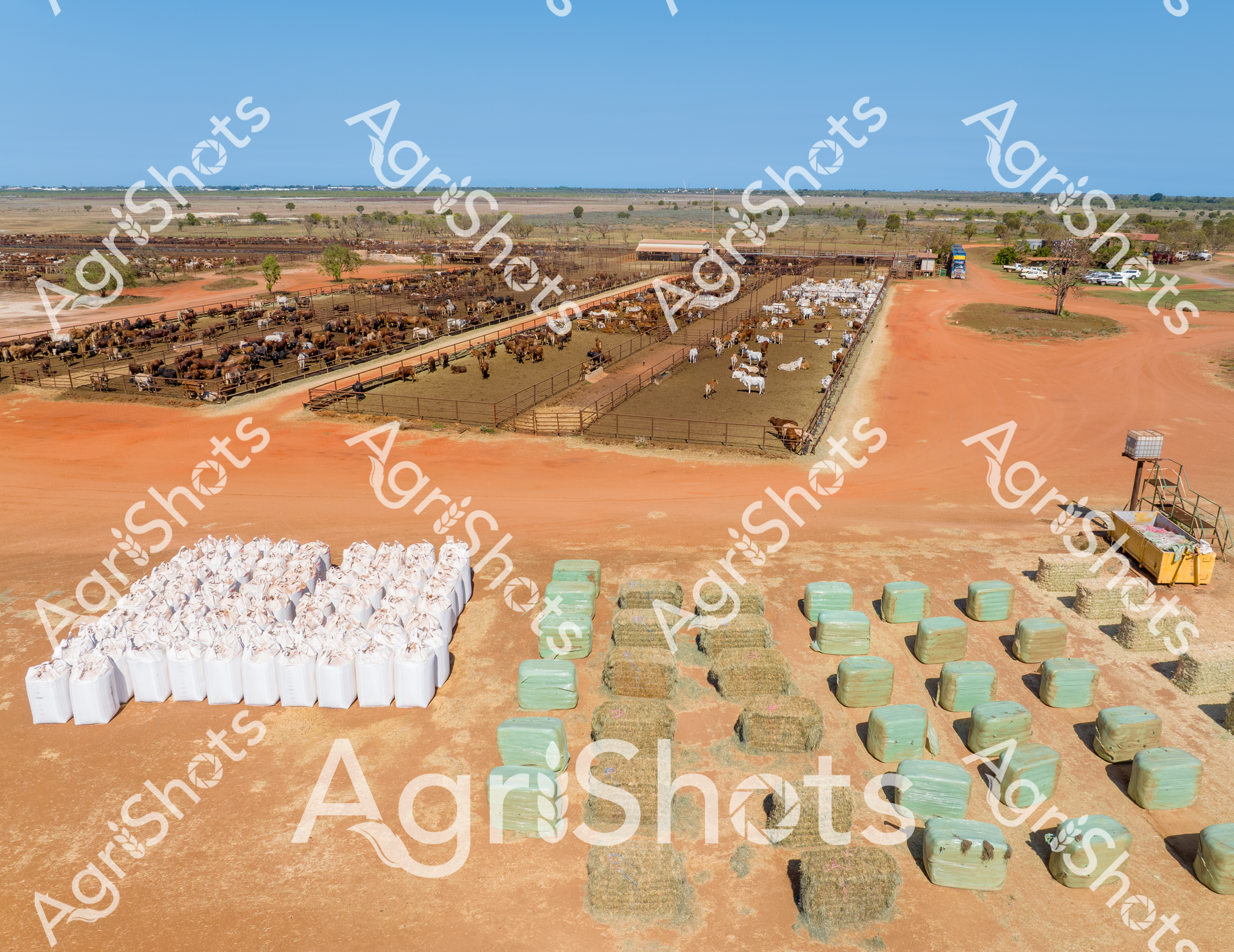
An aerial view of a sprawling cattle export yard in the Kimberley region of Western Australia reveals the intricate infrastructure of pastoral agriculture. Rust-red earth stretches beneath fenced paddocks housing herds of cattle - dark brown and white animals carefully segregated into different enclosures. Brilliant blue spring skies backdrop the meticulously organized facility, with white bulk bags of mineral supplements and green-wrapped hay bales strategically positioned near the livestock pens. The yard demonstrates the precision of modern station management, with carefully arranged feeding and sorting areas, a water tower standing sentinel, and multiple holding yards that speak to the complex logistics of cattle export operations. The landscape is quintessentially Australian - vast, arid, and structured, showing how agricultural expertise transforms challenging terrain into a productive livestock management system. The geometric patterns of fences, hay bales, and supplement bags create a compelling visual rhythm that highlights the intersection of natural environment and agricultural innovation.
 Image
Image
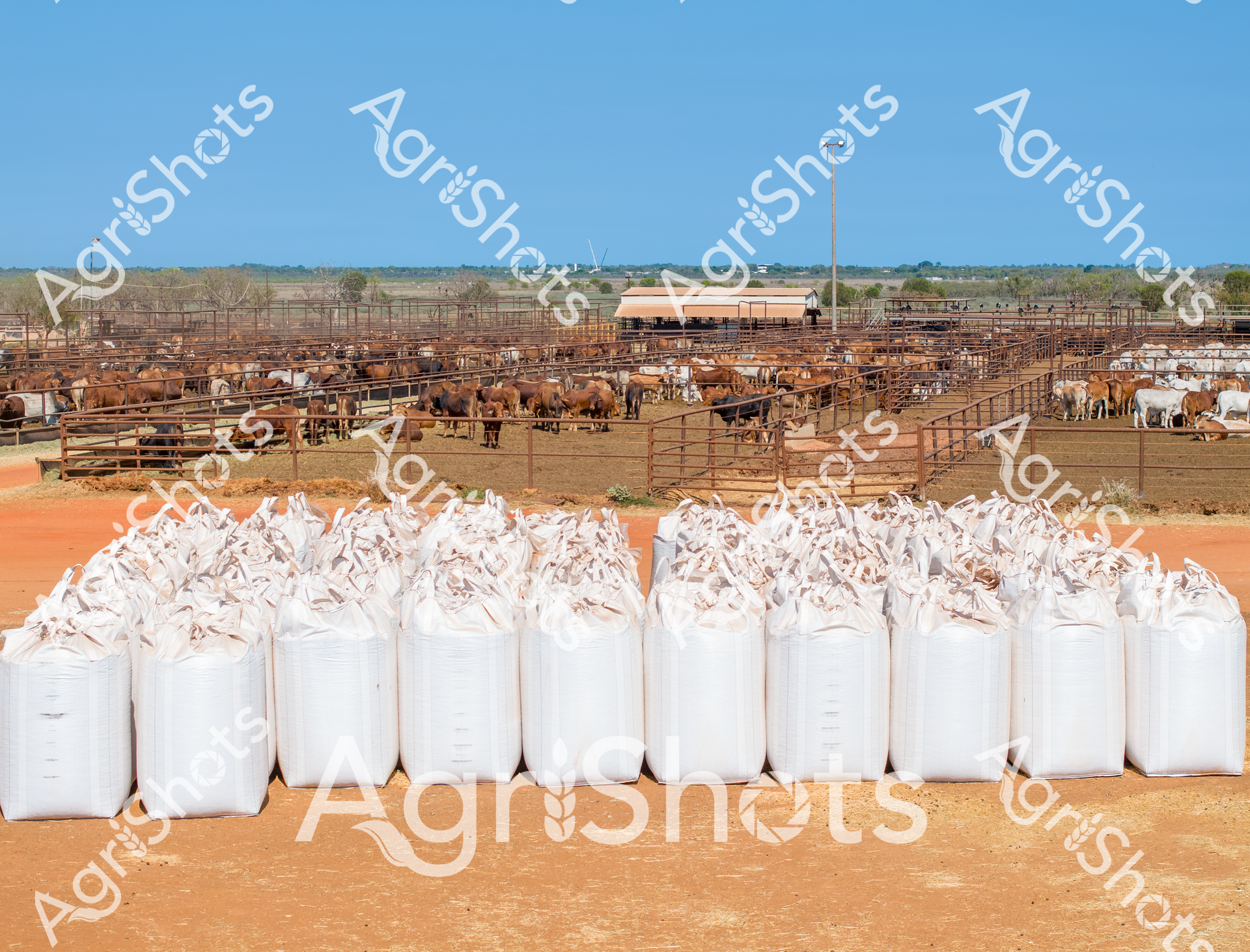
Pristine white bulk bags of cattle supplement line up like sentinels against the rich ochre earth of a Kimberley cattle station. Behind them, expansive livestock yards overflow with muscular beef cattle - a mix of rich browns, whites, and roan colors - standing within meticulously constructed metal pen systems. The brilliant azure sky and sparse vegetation speak to the harsh yet magnificent Western Australian landscape, capturing the resilience of pastoral agriculture in one of Australia's most remote regions. These carefully prepared supplement bags represent critical nutritional support for cattle during the challenging dry season, ensuring livestock health and station productivity. The orderly arrangement of feed bags contrasts beautifully with the organic movement of cattle, highlighting the sophisticated agricultural management required to operate successfully in this unforgiving environment. A distant shed and the sprawling paddocks underscore the vast scale of station operations, where every element - from precise feed supplementation to strategic cattle management - is crucial to survival and success.
 Image
Image
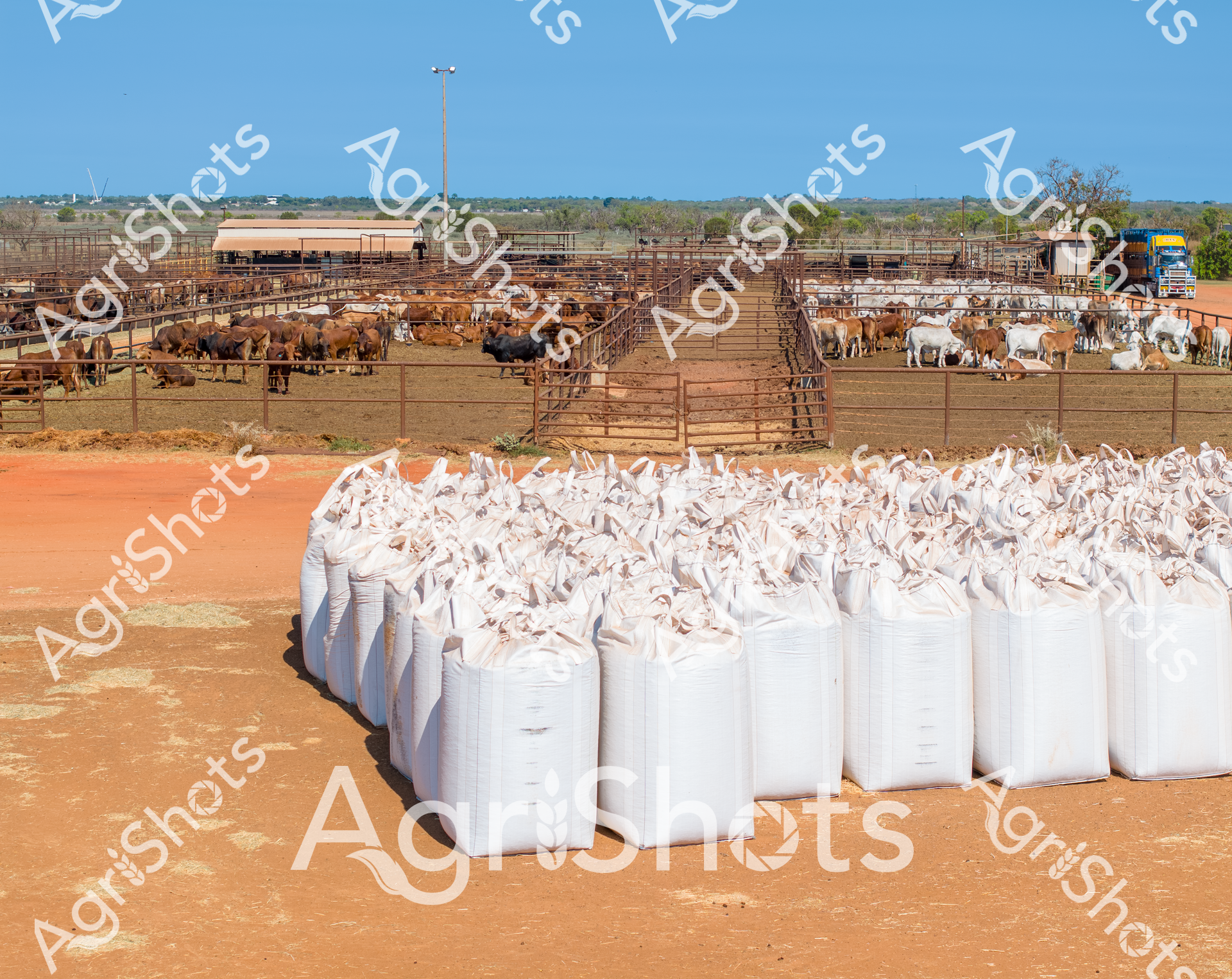
Gleaming white bulk bags stand in neat rows against the rich ochre earth of a Kimberley cattle station, capturing the precision of agricultural logistics. In the expansive background, multiple livestock yards teem with a diverse herd of cattle - rich browns, deep blacks, and lighter-toned animals packed within robust steel fencing. The brilliant azure sky and distant scrubland frame a quintessential Western Australian pastoral scene, revealing the scale and complexity of cattle production in the region. These oversized bags, likely containing critical nutritional supplements or feed additives, demonstrate the meticulous management required in remote station operations. Rows of cattle pens stretch across the landscape, housing mixed breeds adapted to the harsh northern Australian environment. The reddish ground, characteristic of the Kimberley's distinctive soil, provides a stark contrast to the pristine white bags, symbolizing the intersection of rugged landscape and sophisticated agricultural practice. The scene captures the essence of contemporary pastoral enterprise - strategic feed management, systematic livestock handling, and the expansive, uncompromising beauty of Australia's agricultural heartland. Every element speaks to careful planning, resource management, and the sophisticated systems underpinning one of the nation's most iconic industries.
 Image
Image
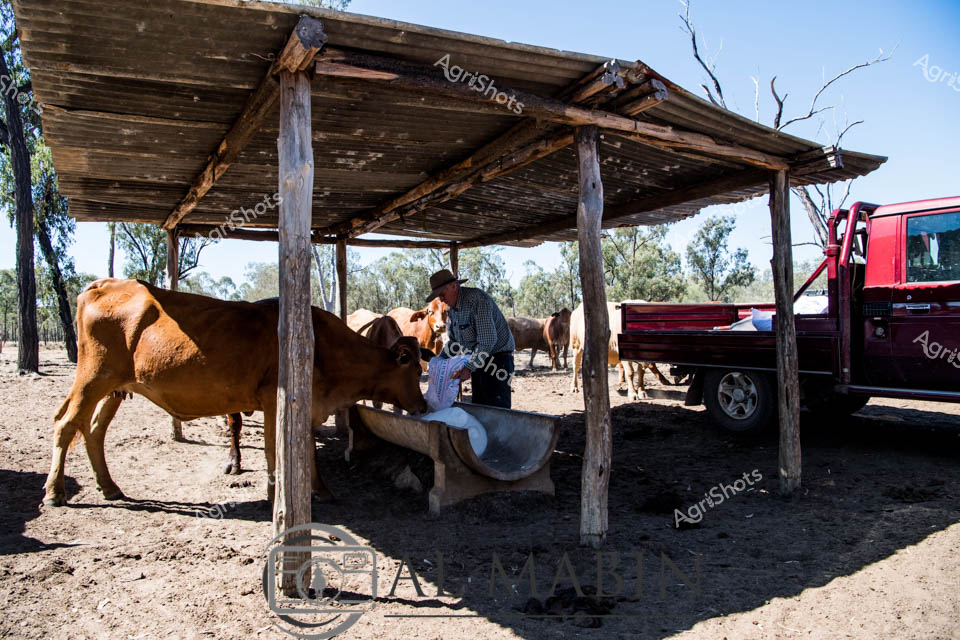
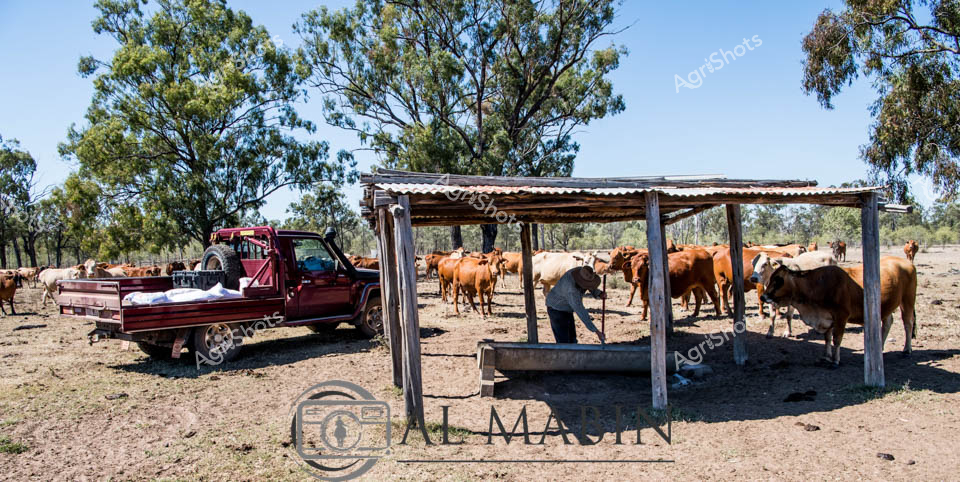
Dusty red earth and weathered timber define this quintessential Queensland cattle station scene. A rugged wooden shelter provides shade for cattle, with a rich reddish-brown beast standing close to a worker preparing a mineral supplement lick. The sparse landscape of scattered eucalyptus trees speaks to the harsh agricultural environment, while a deep maroon utility truck sits nearby, ready for ranch work. An experienced stockhand in a classic checked shirt carefully manages the cattle supplement, likely a critical nutritional intervention during the dry season. The ground is parched and compact, highlighting the challenging conditions of outback cattle farming, where strategic supplementation can make the difference between thriving and surviving herds. Robust infrastructure like this simple but functional shelter demonstrates the ingenuity of Australian agricultural workers adapting to demanding rural landscapes.
 Image
Image
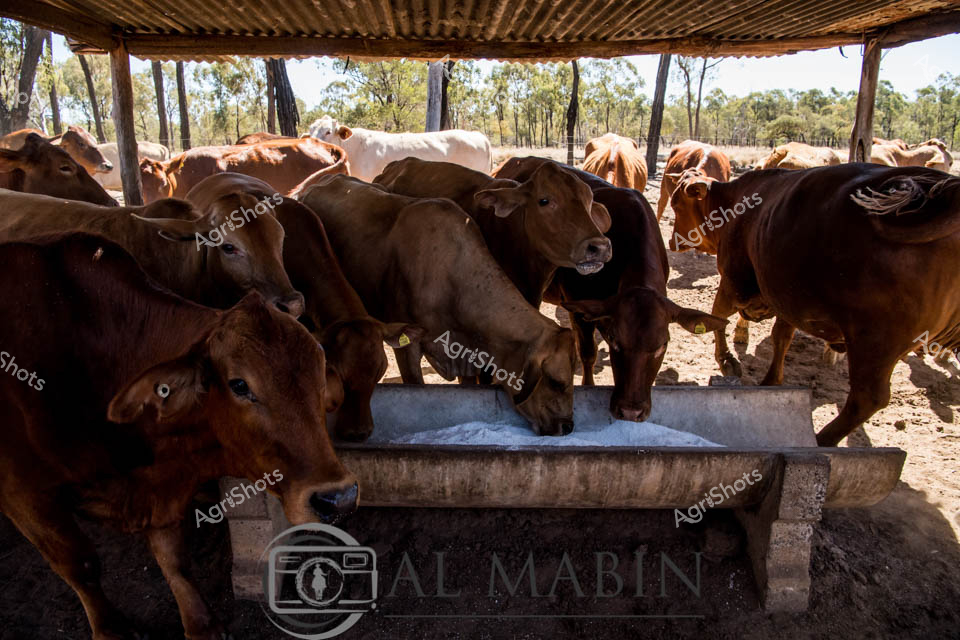
Brahman-cross cattle cluster around a concrete feed trough under a rustic tin shelter, their rich chestnut and chocolate-brown coats gleaming in the harsh midday Queensland sun. The dry woodland landscape of sparse eucalyptus trees stretches behind them, revealing the classic environment of a remote Australian cattle station. These robust animals lean intently into the mineral supplement trough, their muscular bodies pressed close together as they eagerly consume essential nutrients that sustain them through the challenging dry season. Each beast displays the distinctive characteristics of Brahman-cross breeding - thick, loose skin and prominent humps that enable superior heat and insect resistance crucial for northern Australian pastoral conditions. The ground is packed hard and dusty, contrasting with the metallic feed trough and weathered timber posts of the sheltered feeding area. This scene captures the pragmatic resilience of cattle farming in Australia's challenging northern pastoral zones, where careful supplementary feeding ensures livestock health in unforgiving environmental conditions.
 Image
Image
Brahman-cross cattle cluster beneath a rustic timber-framed shelter, eagerly consuming mineral supplement from a weathered concrete feed trough. The arid Queensland pastoral landscape stretches behind them, golden grasslands and sparse eucalyptus trees defining the classic station environment. Rich russet and chocolate-brown coats gleam in the harsh midday sunlight, with a few white-flecked animals standing out among the herd. These resilient beef cattle, typical of northern Australian agricultural regions, demonstrate the daily nutritional management crucial to maintaining livestock health in challenging dry season conditions. Yellow ear tags punctuate their earthy coloration, a subtle marker of systematic livestock tracking and management. The tight grouping around the supplementary feed trough reveals the animals' collective instinct and the critical role of strategic feeding in maintaining cattle condition during sparse grazing periods, embodying the resourceful spirit of Queensland's pastoral enterprises.
 Image
Image
Dusty red earth and weathered timber define this quintessential Queensland cattle station scene. A maroon utility vehicle sits adjacent to a rustic open-sided shelter, where several rust-colored beef cattle cluster around a supplementary feed station. The harsh midday sunlight casts sharp shadows across the sparse, dry paddock, highlighting the rugged eucalyptus trees scattered across the background. A station worker tends to the cattle, moving with practiced efficiency beneath the corrugated iron roof that provides critical shade in the unforgiving outback environment. The rich auburn coats of the cattle contrast beautifully against the pale, parched ground, capturing the resilience of Australian pastoral life. This image encapsulates the daily rhythm of cattle management - sustenance, shelter, and the intricate dance between human intervention and natural landscape that defines modern agricultural practice in rural Queensland.
Well, you've ploughed through the whole field!
No more crops to harvest here, mate.
Try searching for something else in our library of 50,000+ royalty-free media: