 Image
Image
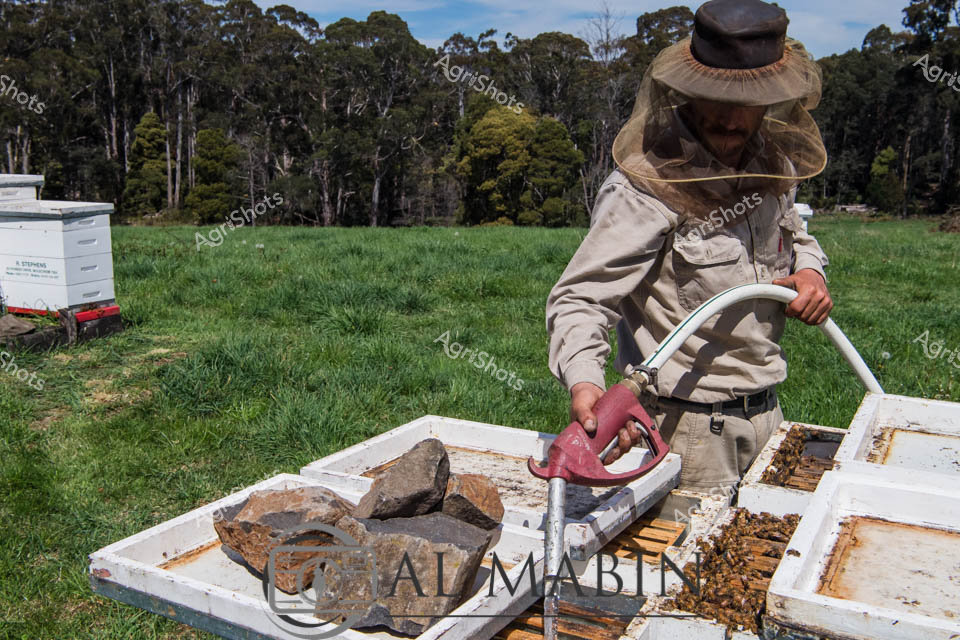
Draped in protective mesh and khaki workwear, a dedicated apiarist carefully tends to honey bee hives nestled in the lush grasslands of Tasmania's Upper Mersey Valley. The verdant pasture stretches between stands of eucalyptus and native forest, creating an idyllic backdrop for this essential agricultural practice. Rocks are strategically placed on the white hive boxes, likely to secure them against potential wind or disturbance, while the beekeeper manages the delicate ecosystem of these critical pollinators. Soft morning light illuminates the scene, suggesting early spring - a crucial time for bee colony management and honey production. The intricate work requires precision and calm, with the beekeeper's protective gear highlighting the careful balance between human intervention and natural bee behavior. This image captures the heart of sustainable agricultural practice, showcasing Tasmania's rich agricultural heritage and the vital role of bees in ecosystem health and food production.
 Video
Video
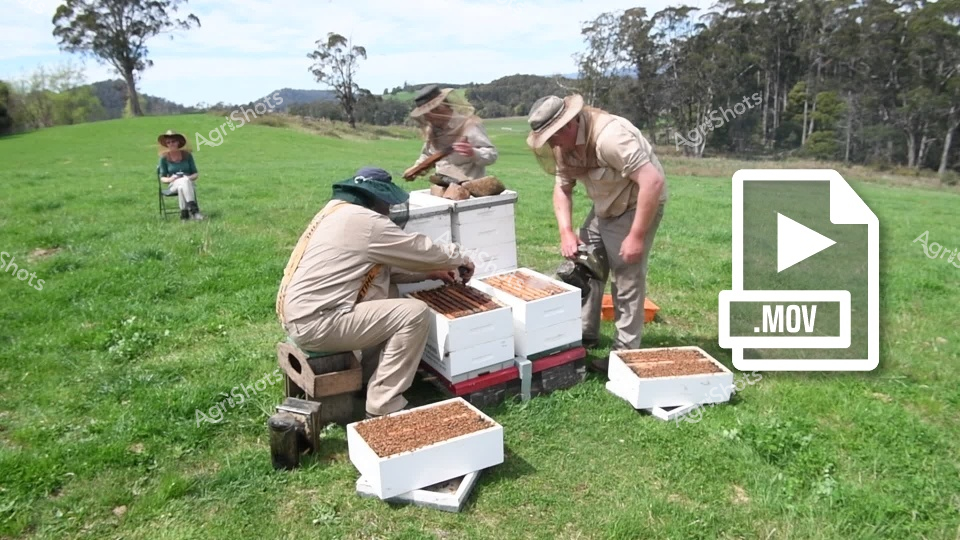
Beekeepers in khaki field uniforms meticulously manage a series of white honey production hives across a lush green pasture. Multiple workers carefully inspect and manipulate bee frames, demonstrating professional apiary management techniques in a verdant rural Australian landscape. Neat stacks of white wooden hive boxes are systematically arranged on the grass, with additional empty frames positioned nearby, suggesting an organized approach to honey production. The surrounding environment features rolling green grasslands and distant eucalyptus woodland, creating a serene agricultural backdrop that highlights the precision of modern beekeeping practices. Soft natural lighting and the careful positioning of the workers indicate this is likely a morning activity during spring or early summer, when bee colonies are most active. The .MOV video file icon suggests this scene is part of a professional agricultural documentation project capturing contemporary farming methods.
 Image
Image
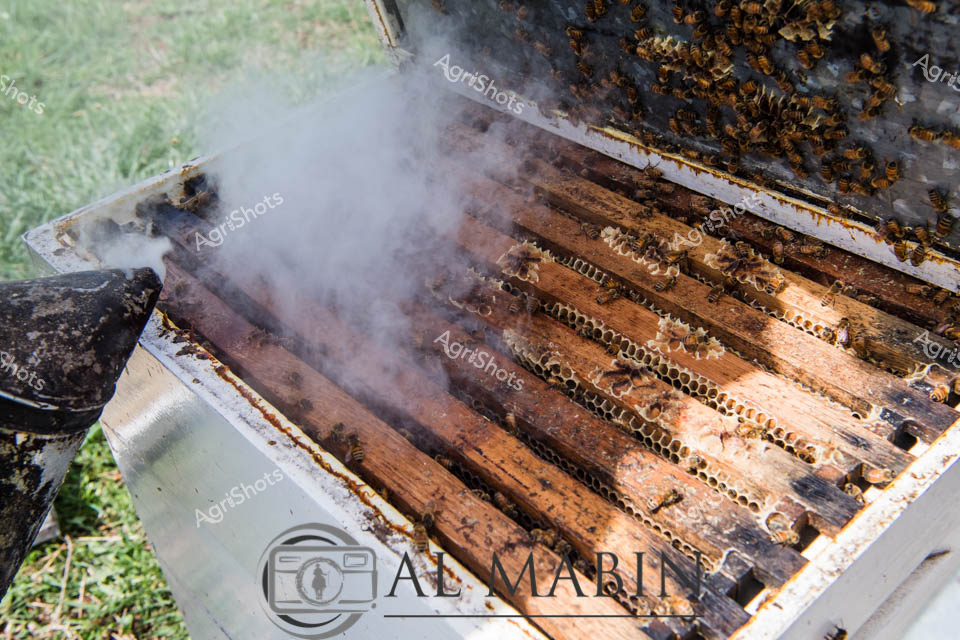
Smoke billows gently from a bee smoker, calming a bustling hive of honeybees in the lush Upper Mersey Valley region of Tasmania. Wooden frames reveal intricate honeycomb structures, golden with fresh honey and teeming with industrious bees moving across their carefully constructed chambers. The soft grey smoke drifts through the apiary, a traditional beekeeping technique that helps manage the colony during inspection, allowing the beekeeper to carefully assess the hive's health and honey production. Weathered wooden hive boxes sit against a backdrop of verdant green grass, capturing the essence of spring in Tasmania's rich agricultural landscape. Sunlight catches the hexagonal wax cells, highlighting the remarkable precision of these tiny pollinators as they work tirelessly within their carefully organized community. This intimate glimpse into apiculture reveals the delicate balance between human intervention and the remarkable natural systems of honeybee colonies.
 Image
Image
Honeybees cluster densely across golden honeycomb cells, their amber-brown bodies creating a living, breathing tapestry of agricultural vitality. A weathered hand enters the frame, gently touching the hive surface - a testament to the intimate relationship between beekeeper and colony. This close-up reveals the intricate hexagonal wax structure of the hive, punctuated by hundreds of industrious worker bees moving with synchronized purpose. Captured in the soft light of a Tasmanian spring morning, likely in the Upper Mersey Valley region, the image speaks to the delicate art of apiculture and pollination. The warm ochre tones of the honeycomb contrast beautifully with the soft pale skin of the hand, highlighting the symbiotic connection between human stewardship and natural productivity. Each bee appears meticulously detailed, their translucent wings and robust bodies demonstrating the health and vigor of this carefully managed agricultural ecosystem.
 Image
Image
A dense cluster of honeybees swarm across their intricate wax honeycomb, with dozens of worker bees densely packed across the hexagonal cells. A weathered, sun-tanned finger enters the frame, suggesting an experienced beekeeper's careful intervention during hive management. The bees display a rich golden-amber coloration, their bodies moving with collective purpose across the pale wooden hive structure. This close-up reveals the extraordinary complexity of bee colony life, capturing the precise, collaborative movements of these critical agricultural pollinators. The image appears to be taken in the lush agricultural landscape of Tasmania's Upper Mersey Valley, likely during spring when bee activity peaks and pollination becomes crucial for regional crop production. The detailed macro perspective offers an intimate glimpse into the remarkable world of apiculture, highlighting the delicate relationship between human agricultural practice and these essential insects.
 Image
Image
Honeybees cluster densely across a wooden hive frame, their golden-brown bodies packed intricately over the hexagonal wax honeycomb. Captured in crisp detail, this close-up reveals the extraordinary collective behavior of a thriving apiary in Tasmania's Upper Mersey Valley region. The bees shimmer in warm amber and brown tones, their segmented bodies creating a living tapestry that demonstrates the complex social structure of the hive. Sunlight highlights the intricate texture of their exoskeletons and the precise geometric patterns of the honeycomb, showcasing the remarkable natural engineering of these essential pollinators. This image captures a moment of intense biological activity during spring, when bee colonies are at their most vibrant and productive, representing a crucial element of agricultural ecosystems and honey production in Tasmania's rich agricultural landscape. The dense clustering of worker bees suggests a healthy, active colony engaged in critical tasks of honey production, brood rearing, and hive maintenance.
 Image
Image
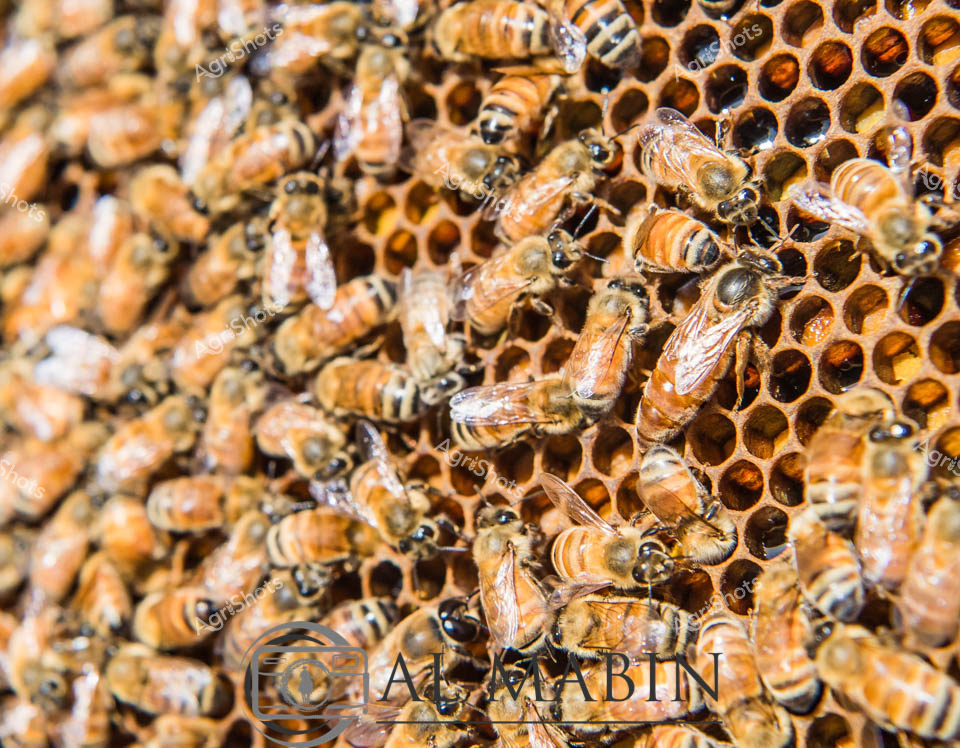
Close-up of an active honeycomb, teeming with golden-hued worker bees meticulously moving across the intricate hexagonal wax cells. The rich amber and bronze tones of the bees contrast beautifully against the deep amber and umber shades of the honeycomb, capturing the complex social structure and precise organization of the hive. Dense clusters of bees traverse the frame, some appearing to tend to larvae, others managing honey production, reflecting the extraordinary collaborative nature of these remarkable pollinators. This remarkable scene, likely photographed in the lush Upper Mersey Valley region of Tasmania during early spring, illustrates the critical agricultural role of honey production and bee populations in sustaining ecosystem biodiversity. The remarkable detail reveals the bees' translucent wings, segmented bodies, and intricate movement patterns, offering an intimate glimpse into the sophisticated microcosm of apiary life. The watermarked image suggests professional documentation of Tasmania's vibrant agricultural heritage and the essential environmental contribution of honeybee colonies.
 Image
Image
Smoke billows through a bustling apiary, calming a dense colony of honeybees clustered across wooden hive frames. Golden-brown worker bees carpet the interior of the hive, their intricate movements revealing the complex social structure of this thriving pollination hub. Located in Tasmania's Upper Mersey Valley region, this spring scene captures the delicate agricultural art of beekeeping, where careful smoke application allows beekeepers to inspect and manage their precious colonies. The weathered wooden hive frames contrast with the vibrant, alive texture of thousands of bees moving in synchronized patterns, highlighting the precision and organic beauty of apiary management. Soft gray smoke diffuses gentle light across the hive, creating an almost ethereal atmosphere that speaks to the symbiotic relationship between human stewardship and natural agricultural processes. This intimate glimpse into a working Tasmanian apiary represents the critical role of bees in agricultural ecosystems and food production.
 Video
Video
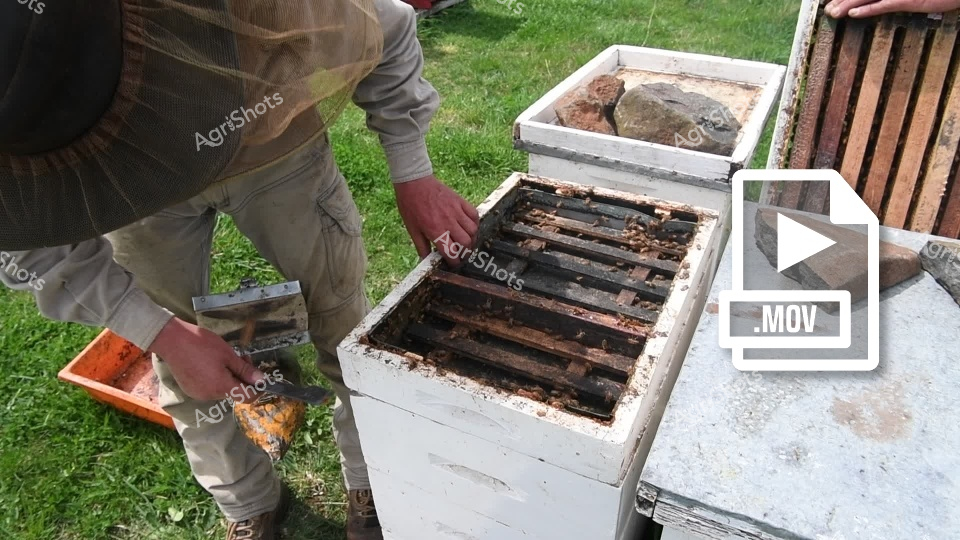
A beekeeper tends to a white wooden hive, carefully managing the delicate ecosystem of honeybees. Wooden frames are visible inside the open hive, covered with bees and honeycomb, suggesting an active and healthy colony. The individual is wearing protective clothing, with hands carefully manipulating the hive components on a lush green grass background. A large rock sits in an adjacent white container, possibly used as a weight or part of the hive management process. The scene captures the intricate work of apiculture, showcasing the careful attention and precision required in bee cultivation. Soft natural lighting and the verdant grass suggest a mild day, ideal for hive inspection and maintenance.MOV video icon indicate this is part of a professional agricultural documentation series, highlighting the importance of beekeeping in agricultural ecosystems.
 Image
Image
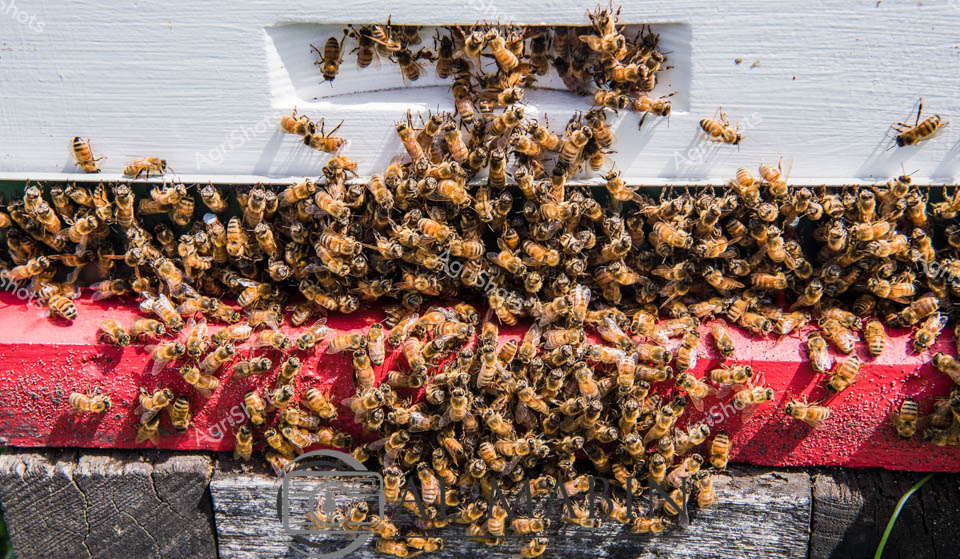
Honeybees swarm densely across the entrance and outer surfaces of a white-paneled beehive, their golden-brown bodies creating a living, buzzing tapestry. Set against a stark white background and rich red-painted base, the colony demonstrates remarkable collective behavior at the hive's entry points. Dozens of worker bees cluster tightly, some fanning their wings to regulate hive temperature and communicate with fellow workers, while others move in intricate patterns of constant communication and task coordination. The image captures the vibrant ecosystem of a thriving apiary, likely situated in Tasmania's lush Upper Mersey Valley region during spring pollination season. Textural details reveal the complex social structure of these incredible insects - each bee precisely positioned, moving with purposeful synchronicity across the wooden hive structure. Soft golden and amber tones of the bees contrast beautifully with the crisp white and passionate red of the hive, creating a dynamic visual representation of agricultural biodiversity and ecological interconnectedness. This photograph epitomizes the delicate, essential work of pollinators in sustainable agricultural systems, showcasing the remarkable organization and collective intelligence of a honeybee colony in its natural working environment.
 Video
Video
A dense, buzzing colony of honeybees covers an entire beekeeping frame, their golden-brown bodies tightly clustered across the wooden surface. The intricate pattern of thousands of worker bees creates a living carpet, each bee meticulously positioned in a complex, organic arrangement that speaks to the sophisticated social structure of the hive. Captured from above, the scene reveals the remarkable density and organization of these pollinators, their bodies creating a rich, textured mosaic against the weathered wooden frame. A .MOV video file icon suggests this is a dynamic, motion-captured moment of bee colony life, highlighting the agricultural importance of these critical insects in Australian farming ecosystems. The surrounding hint of green grass indicates an outdoor apiary setting, where these industrious creatures play a vital role in crop pollination and honey production. The image captures the remarkable collective behavior of honeybees, showcasing their incredible ability to work together as a single, living superorganism.
 Image
Image
Thousands of honeybees cluster densely across the surface of a hive, their golden-amber bodies creating a living, undulating carpet of intricate movement. Captured in stunning macro detail, this image reveals the extraordinary collective behavior of a thriving bee colony in Tasmania's Upper Mersey Valley region. The bees press tightly together, their bodies forming a protective, breathing mass that speaks to the complex social structure of these remarkable pollinators. Warm amber and brown tones dominate the frame, highlighting the texture and interconnectedness of the swarm against what appears to be a structured hive background. Spring light seems to illuminate the scene, suggesting the peak of bee activity during pollination season. A subtle watermark in the corner hints at the professional documentation of this critical agricultural moment, showcasing the essential role of beekeeping in Tasmania's rich agricultural landscape.
 Image
Image
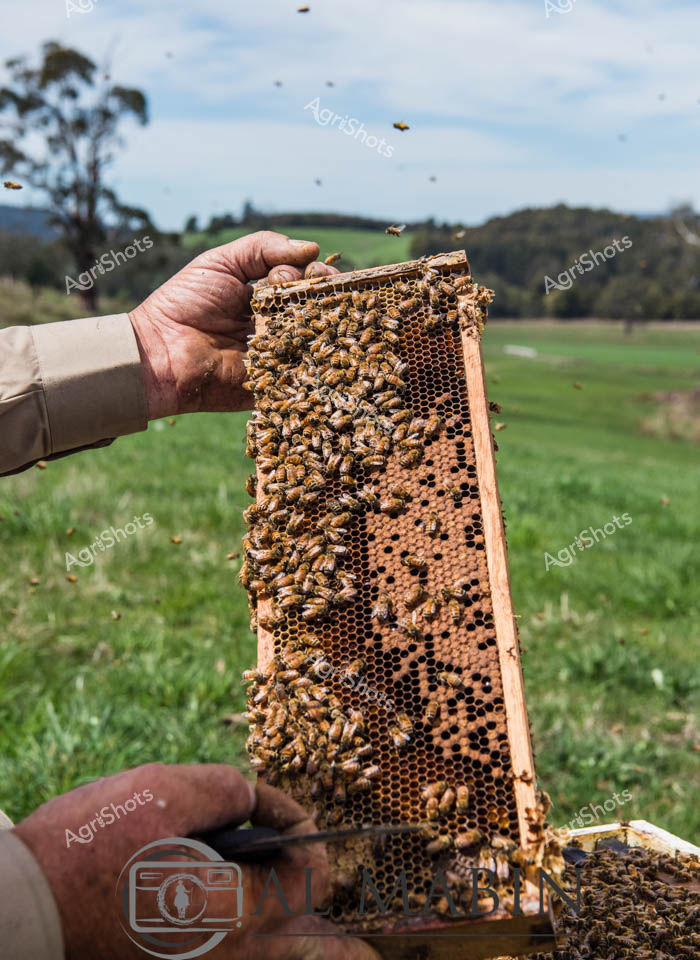
Golden honeycomb frames teem with industrious worker bees, their amber bodies clustered densely across the wooden hive frame held firmly by weathered agricultural hands. Set against the verdant pastures and distant eucalyptus trees of Tasmania's Upper Mersey Valley, this snapshot captures the intricate world of apiary farming during the vibrant pollination season of spring. Airborne bees dart around the frame, creating a dynamic halo of movement against the soft blue sky and lush green landscape. The textured honeycomb reveals different stages of honey production, with cells ranging from golden-brown to deeper amber, showcasing the remarkable organizational skills of these critical agricultural workers. Each bee contributes to the complex ecosystem, moving with purposeful precision across the hexagonal wax structure that represents weeks of collective labor. This intimate view of beekeeping reveals the delicate relationship between agricultural practice and natural biological systems, highlighting the essential role of pollinators in sustaining agricultural productivity.
 Image
Image
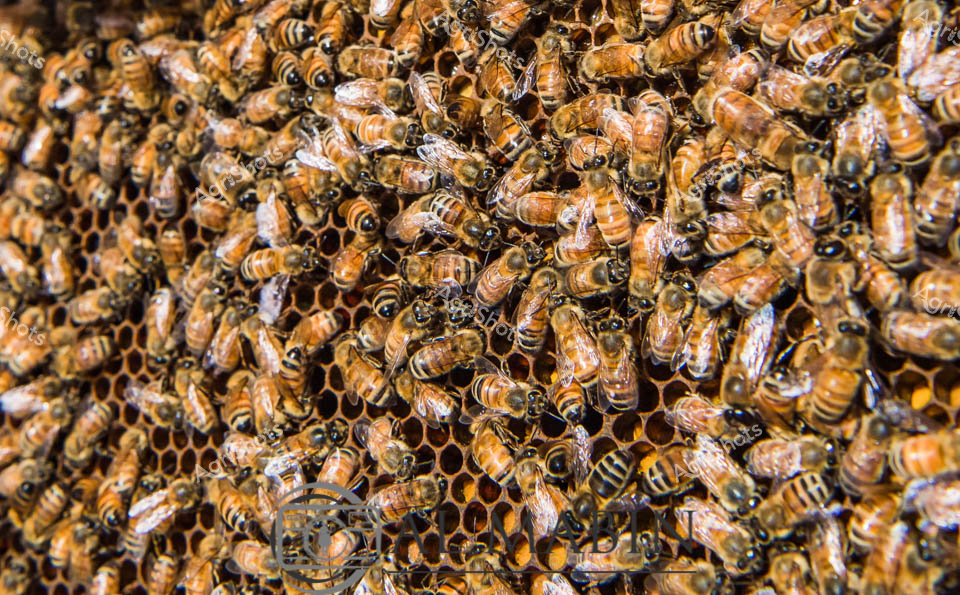
Honeybees cascade across the intricate hexagonal wax honeycomb, their amber and black striped bodies creating a living, vibrant tapestry of agricultural productivity. Each worker bee moves with purposeful precision, tending to the complex infrastructure of their communal hive - a testament to the sophisticated biological systems that underpin agricultural pollination in Tasmania's Upper Mersey Valley region. The dense cluster reveals multiple generations of bees in various stages of activity, from young workers cleaning cells to mature foragers returning with nectar and pollen, their bodies dusted with golden remnants of spring blossoms. Warm amber and bronze tones dominate the image, reflecting the rich biological diversity of this carefully managed apiary ecosystem, where each insect plays a critical role in sustaining agricultural production. The remarkable density of bees demonstrates the health and vitality of this colony, a crucial element in Tasmania's robust agricultural landscape and sustainable farming practices. This close-up reveals the extraordinary complexity of bee society - a microcosm of collaborative effort that directly supports crop production across the region.
 Image
Image
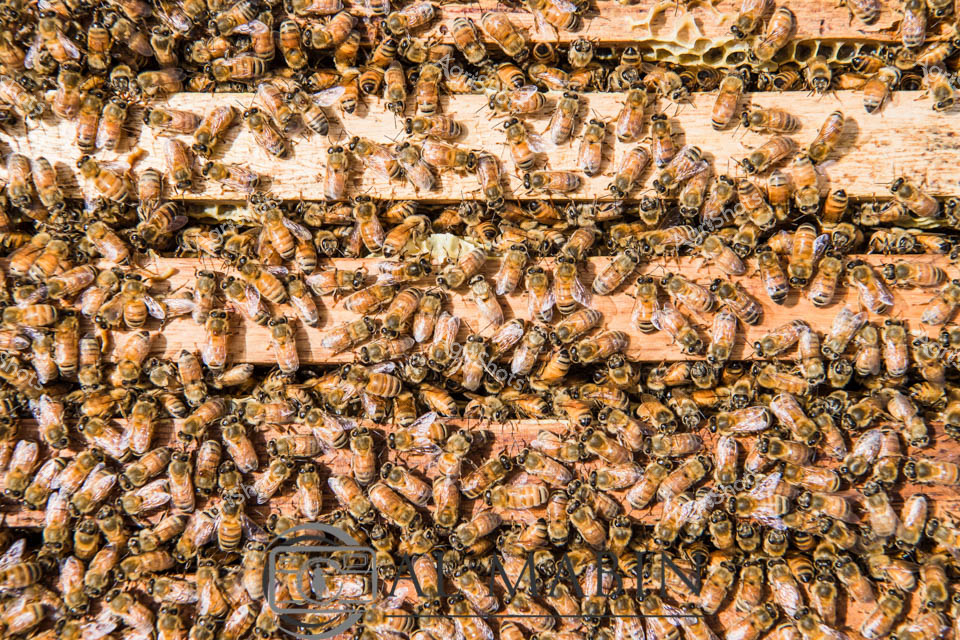
A dense, writhing mass of golden-brown honeybees covers the wooden frames of a beehive in Tasmania's Upper Mersey Valley. Thousands of industrious workers cluster tightly across the wooden surface, their bodies creating a living, breathing tapestry of pollination and honey production. Warm amber and brown tones dominate the image, reflecting the bees' natural coloration against the raw, textured wood of the hive boxes. Each bee moves with purposeful precision, representing the intricate social structure of the colony during the vibrant spring season when nectar flows abundantly and hive activity reaches its peak. The photograph captures the remarkable collective behavior of these critical agricultural workers, showcasing the intricate ecosystem of apiary management in Tasmania's rich agricultural landscape. A subtle watermark in the bottom left hints at the professional documentation of this remarkable natural scene, celebrating the essential role of bees in Australia's agricultural productivity.
 Image
Image
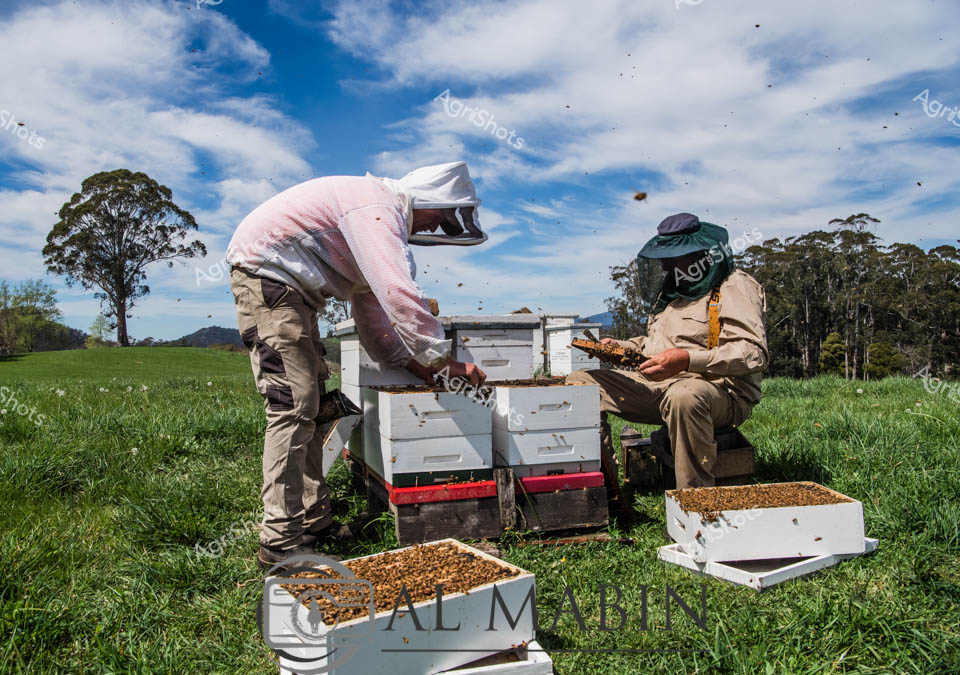
In the lush green pastures of Tasmania's Upper Mersey Valley, two apiarists tend to their buzzing bee colonies on a crisp spring morning. Dressed in protective gear - one in a soft pink jacket and the other in earthy khaki - they carefully manage their white and red-trimmed hive boxes scattered across the verdant landscape. Delicate swarms of bees drift around the workers, who methodically inspect and manage the honey production, with trays of golden honeycomb visible in the foreground. Towering eucalyptus trees frame the distant horizon, creating a quintessential Tasmanian agricultural scene that speaks to the critical role of pollinators in the region's farming ecosystem. The brilliant blue sky with wispy clouds provides a perfect backdrop to this intricate dance of agricultural stewardship, capturing the meticulous care and symbiotic relationship between humans and these essential insects. Each careful movement reflects generations of beekeeping knowledge, preserving an agricultural tradition vital to Tasmania's rich biological diversity.
 Image
Image
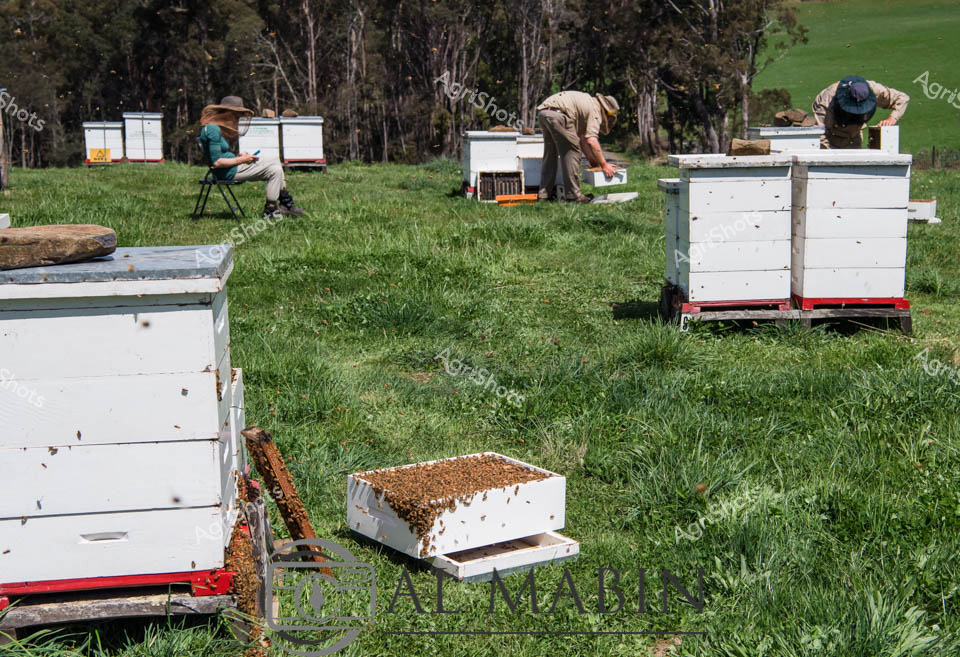
Honey harvesters tend to their industrious colonies in a lush pasture of the Upper Mersey Valley, Tasmania. White wooden beehives stand sentinel across the verdant grassland, with worker apiarists carefully managing the delicate ecosystem of each hive. Bees swarm around one open hive box, their golden bodies clustered densely against the white wooden frame, revealing the intricate process of honey production. Dressed in protective khaki and beige clothing, the beekeepers methodically inspect and maintain their hives, their movements deliberate and practiced against the backdrop of dense eucalyptus forest and emerald green paddocks. Soft spring light bathes the scene, highlighting the rustic red and white bases of the hives and the gentle undulations of the Tasmanian rural landscape. This intimate portrait captures the essential symbiosis between humans and bees, showcasing the meticulous craft of apiculture in one of Australia's most pristine agricultural regions.
 Image
Image
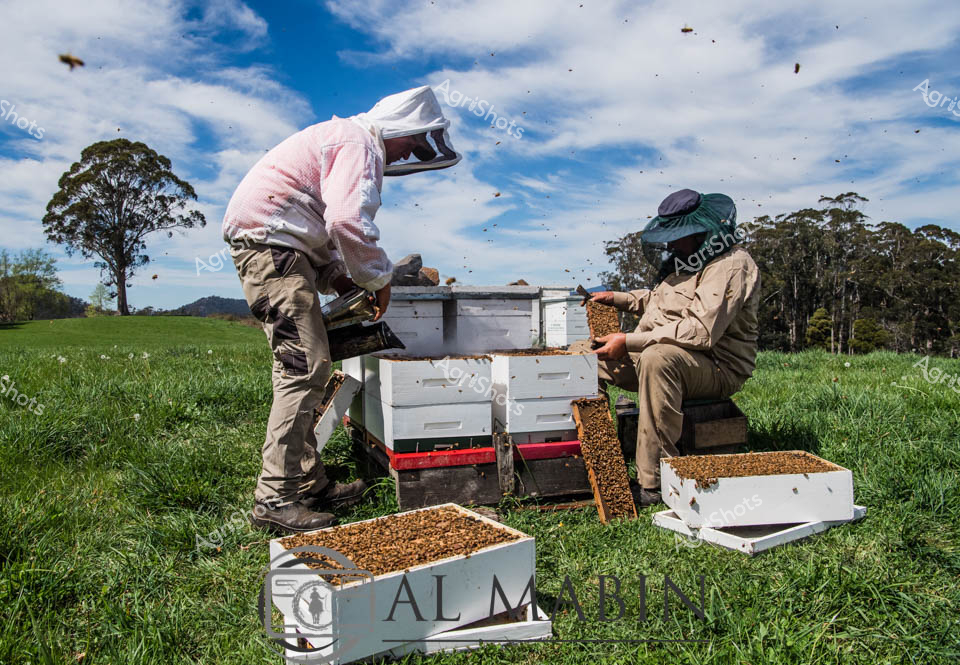
Clad in protective pale pink and khaki beekeeping suits, two apiarists tend to their honey bee colonies in the lush pastures of Tasmania's Upper Mersey Valley. Crisp blue skies and wispy clouds frame a verdant landscape dotted with eucalyptus trees, creating a pristine backdrop for delicate pollination work. Wooden hive boxes painted white and red stand open, revealing thousands of industrious bees crawling across honeycomb frames, their golden bodies swirling dynamically through the air. One beekeeper carefully manipulates a frame, examining the intricate hexagonal wax structures that represent weeks of collaborative insect labor, while the other prepares additional equipment. The scene pulses with agricultural vitality - a testament to the symbiotic relationship between humans and these essential pollinators, capturing the meticulous craft of sustainable honey production in Tasmania's fertile spring season. Swarms of bees drift around the workers, who move with practiced calm and precise movements, embodying generations of agricultural expertise.
 Image
Image
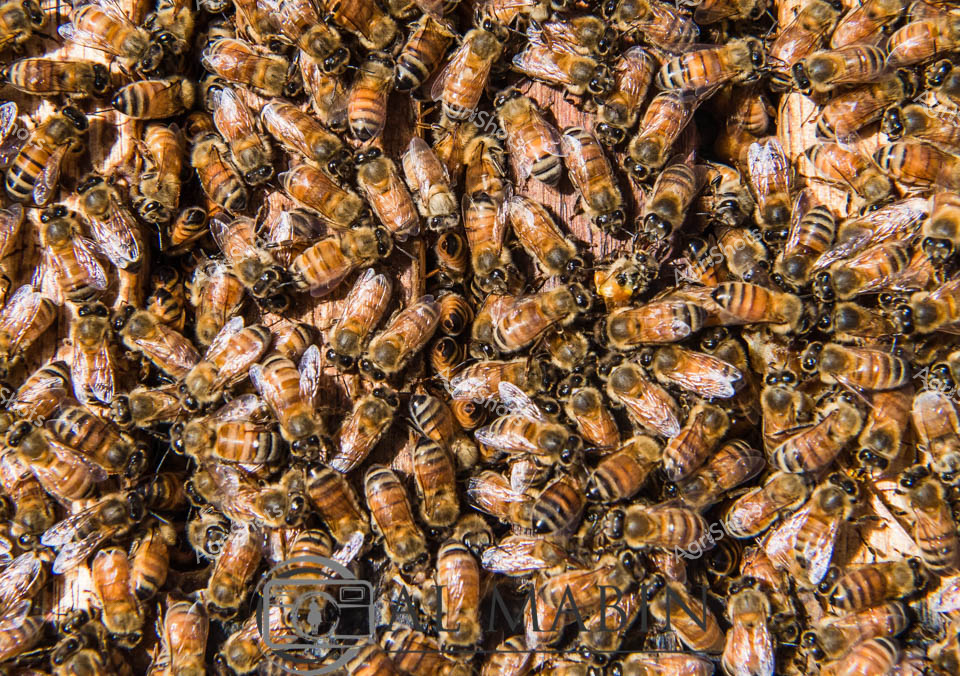
Honeybees cluster densely across the wooden surface of a thriving apiary, their golden-amber bodies forming an intricate living tapestry characteristic of Tasmania's Upper Mersey Valley region. Each bee displays meticulous detail - translucent wings, striped abdomens, and a rich warmth of color ranging from deep ochre to light bronze, revealing the robust health of this pollination enterprise. The extraordinary macro perspective highlights the complex social structure of the colony, with hundreds of worker bees tightly packed, communicating and maintaining the critical microclimate of their shared environment. This spring scene captures the essential agricultural symbiosis between humans and insects, where careful beekeeping supports both honey production and broader ecosystem health across Tasmania's agricultural landscapes. The remarkable density and uniformity of the bee congregation demonstrates the precision and collective intelligence that makes these small creatures such extraordinary agricultural partners. Each insect represents a vital thread in the delicate agricultural ecosystem of the region, contributing to crop pollination and the production of high-quality Tasmanian honey.
 Video
Video
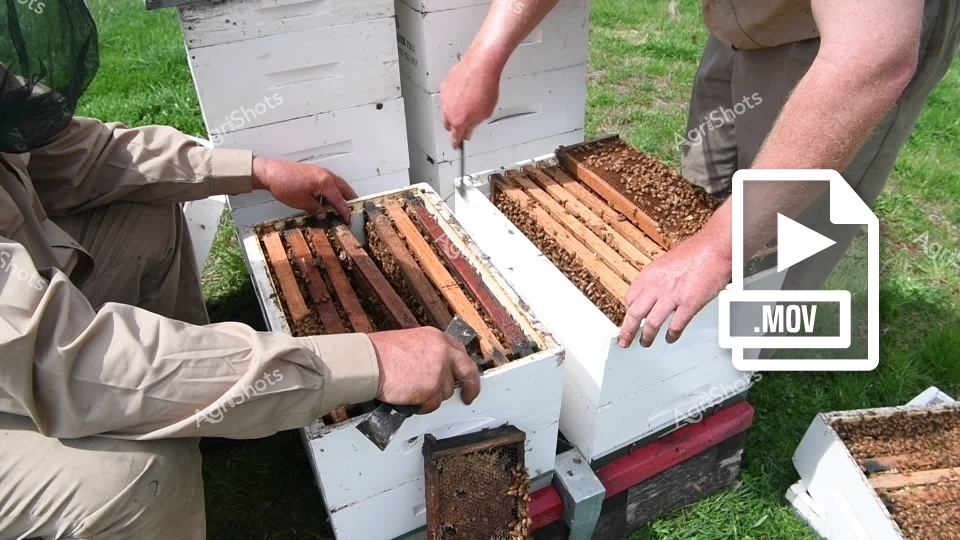
A dedicated team of apiarists carefully tends to multiple white beehive boxes, meticulously extracting honeycomb frames in a lush green grassland setting. Their khaki-colored protective clothing suggests a professional approach to honey production, with precise and careful hands manipulating the wooden frames laden with golden-brown honeycomb. Each hive box stands crisp and white against the verdant grass background, representing a carefully managed agricultural ecosystem. The .MOV video icon indicates this is a dynamic documentation of commercial beekeeping practices, capturing the intricate process of honey harvesting. Sunlight illuminates the scene, highlighting the textural details of the wooden frames and the busy work of managing these critical pollinators. The image encapsulates the meticulous craft of sustainable apiculture, where human skill and natural processes intersect to produce one of agriculture's most delicate commodities.
 Image
Image
Honey Harvest in the Upper Mersey Valley A weathered hand carefully lifts a honey-laden frame teeming with thousands of industrious honeybees in the lush green pastures of Tasmania's Upper Mersey Valley. The wooden frame is almost completely obscured by a dense carpet of golden-brown bees, their bodies clustered together in an intricate living mosaic that speaks to the remarkable social structure of these crucial pollinators. Soft morning light filters through a misty background of distant trees, suggesting early spring when bee colonies are at their most active. Each bee moves with purposeful precision, a testament to the sophisticated communication and collective effort that defines their species. The intimate connection between the beekeeper's experienced hand and the vibrant bee colony captures the delicate symbiosis of apiary management - a critical agricultural practice that supports both local ecosystems and broader agricultural productivity. This moment of harvest represents the culmination of months of careful hive management, where human skill and natural wonder converge in the production of pure, golden honey.
 Image
Image
Honeybees swarm across a pristine white hive box in a lush green pasture of Tasmania's Upper Mersey Valley. A beekeeper in a light-colored protective suit and mesh veil leans intently over the hive, carefully monitoring the dense colony of golden-brown worker bees. The intricate mosaic of bee bodies covers the hive's surface, revealing the complex social structure and industrious nature of these critical pollinators. Soft natural light suggests a mild spring morning, ideal for apiary management and honey production. The delicate mesh of the protective veil contrasts with the rugged texture of the beekeeper's heavy canvas suit, highlighting the careful balance between human intervention and natural bee behavior. This intimate scene captures the essential agricultural practice of beekeeping, where skilled farmers nurture these remarkable insects that play a crucial role in local ecosystem health and agricultural productivity.
Well, you've ploughed through the whole field!
No more crops to harvest here, mate.
Try searching for something else in our library of 50,000+ royalty-free media: