 Image
Image
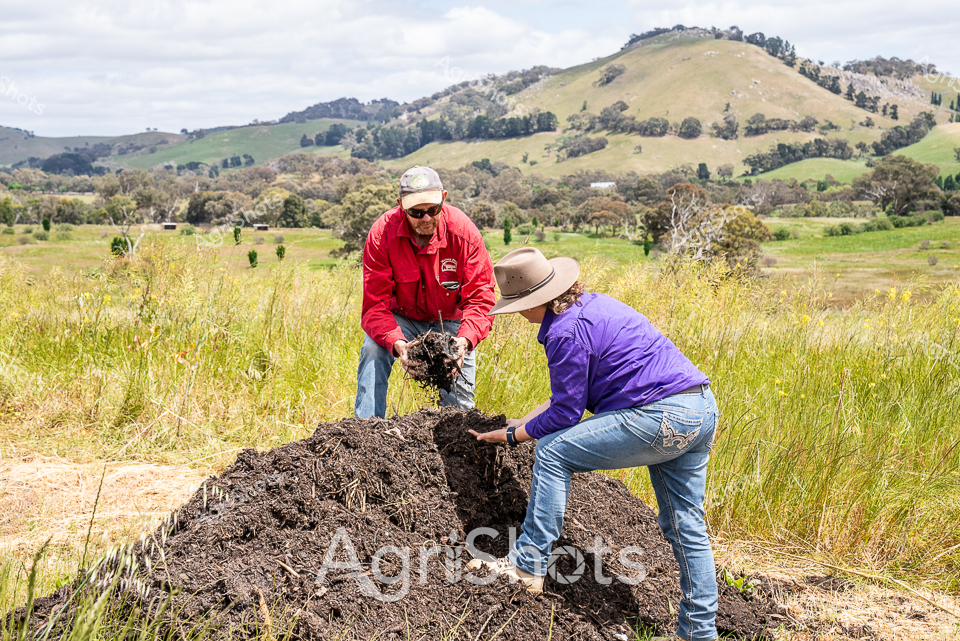
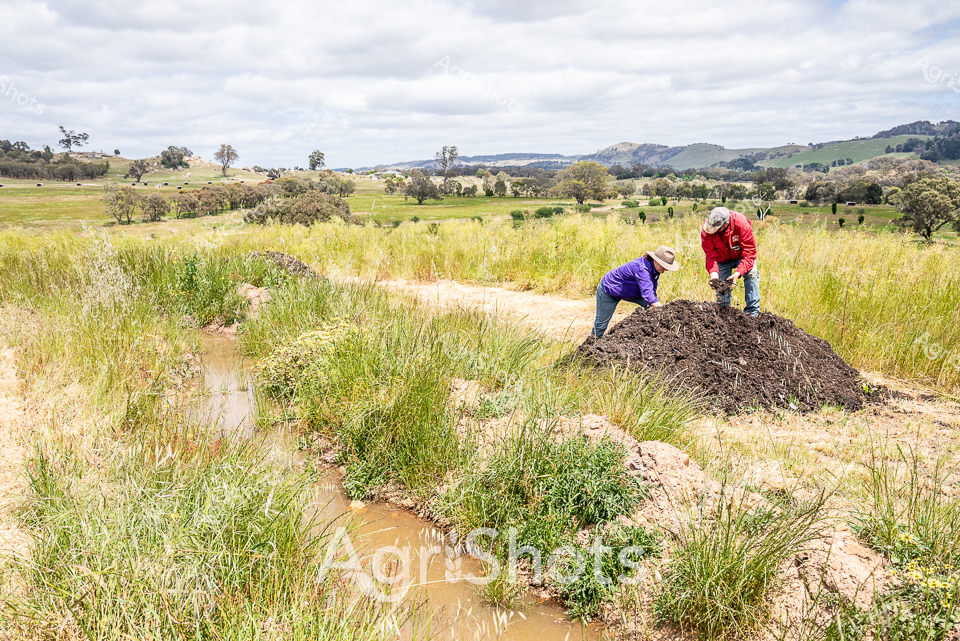
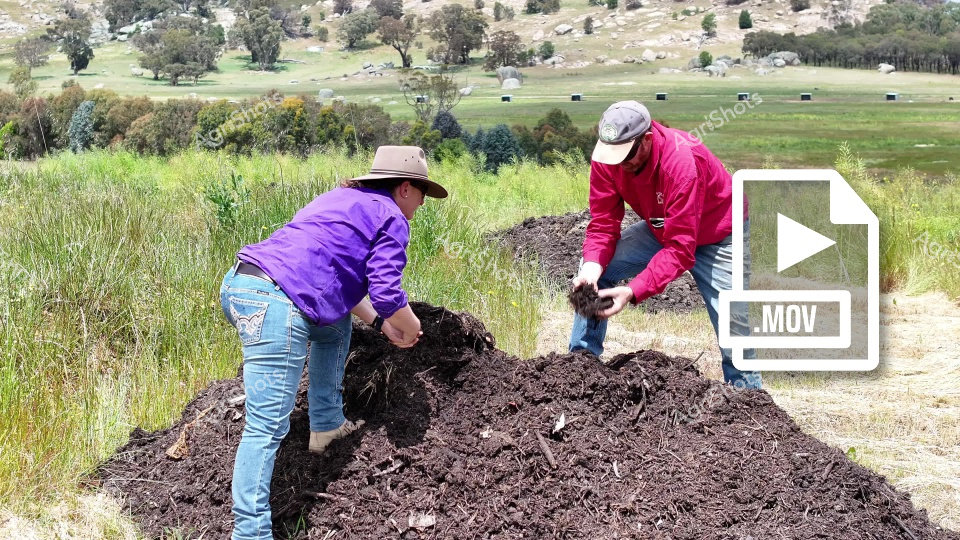
Amid the undulating golden grasslands and wooded hills of rural Victoria, two agricultural workers examine a rich, dark compost heap during a regenerative farming project. Wearing a vibrant red jacket and cap, one worker carefully handles dark organic matter, while another in a purple long-sleeved top bends to inspect the composting material. The expansive pastoral landscape stretches behind them, with soft green hills, scattered eucalyptus trees, and a muted grey sky suggesting early morning or late autumn conditions. This scene captures the essence of sustainable agricultural practices, highlighting hands-on soil management and waste recycling techniques. The workers' careful examination of the compost demonstrates a commitment to soil health, biodiversity, and environmentally conscious farming methods. The textural contrast between the dark, nutrient-rich compost and the surrounding grassland underscores the transformative potential of organic waste recycling in agricultural systems. The watermarked "AgriShots" text on the image suggests this is a professional documentation of innovative farming techniques, potentially showcasing women's critical roles in contemporary agricultural research and land management. The composition powerfully communicates regenerative agriculture's blend of scientific approach and hands-on ecological stewardship.
 Image
Image
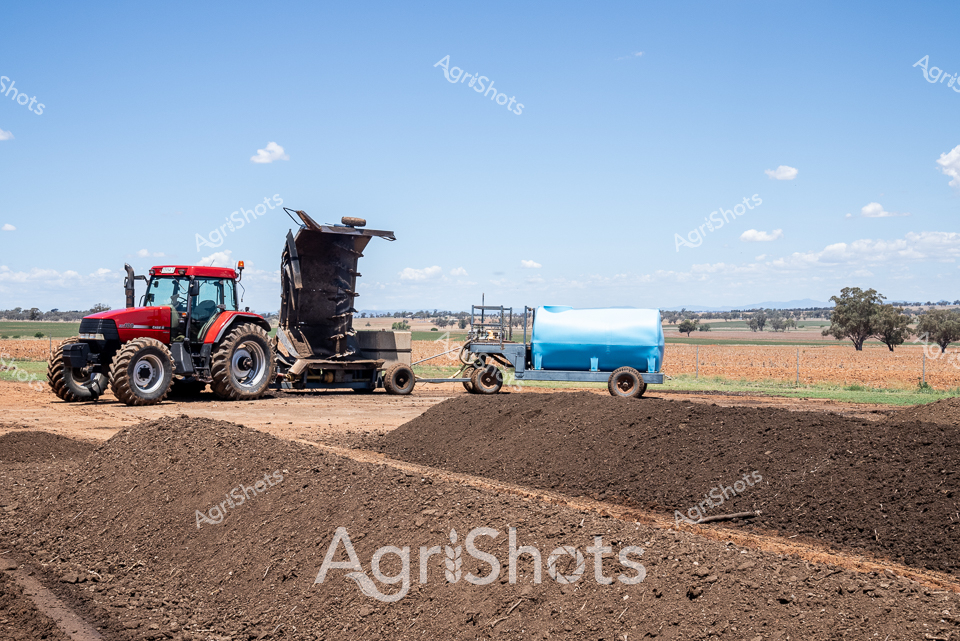
Burnished rich brown earth mounds stretch across a sunbaked paddock under a crystalline blue sky, where a robust red Case tractor stands ready for soil regeneration work. A specialized mulching and composting implement connects to the tractor, preparing organic matter for strategic distribution across the agricultural landscape. The blue water tank nearby suggests precision irrigation and nutrient management techniques integral to modern sustainable farming practices in rural New South Wales. Sparse eucalyptus trees punctuate the distant horizon, their silvery-green foliage contrasting against the terracotta-hued soil and providing subtle context to this agricultural scene. The composting operation represents a critical approach to waste reduction and soil health, transforming organic materials into nutrient-rich amendments that will support future crop cycles. Careful layering of dark, textured compost materials indicates a meticulous approach to regenerative farming practices that prioritize soil biodiversity and ecosystem renewal. The expansive agricultural vista captures the essence of Australian broadacre farming - a delicate balance of technological innovation, environmental stewardship, and traditional rural methodologies working in harmonious intersection.
 Video
Video
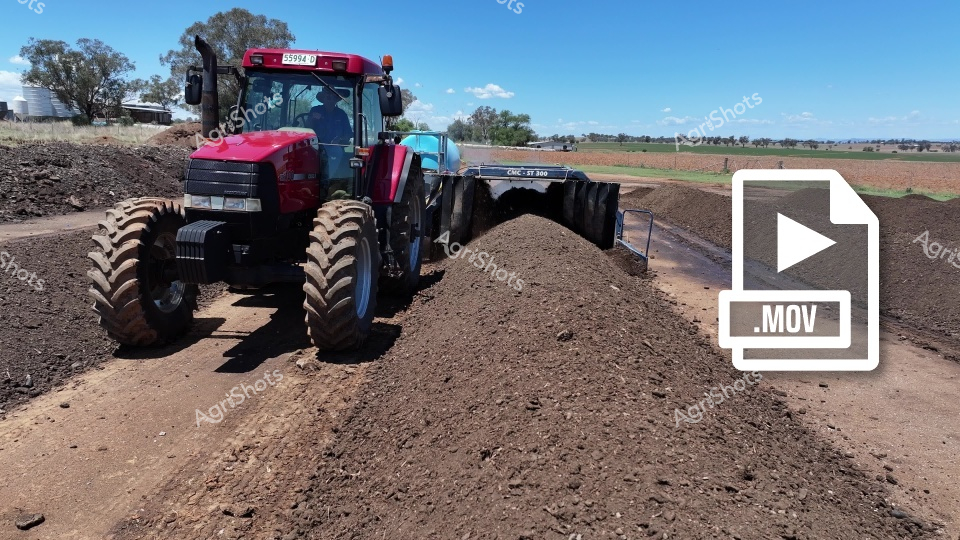
A robust Case IH agricultural tractor stands sentinel amid expansive soil enrichment operations in the golden rural landscapes of central New South Wales. The vibrant magenta and red machinery towers over substantial mounds of rich, dark organic compost, highlighting the critical agricultural process of soil regeneration and nutrient recycling. Massive aggressive-treaded wheels anchor the tractor's position, suggesting the heavy-duty nature of sustainable farming practices in this sun-drenched environment. Rolling agricultural fields stretch across the distant horizon, punctuated by scattered eucalyptus trees, under a crisp blue sky that speaks to the classic Australian rural panorama. The composting process captured here represents a sophisticated approach to waste reduction and soil health, transforming agricultural byproducts into valuable organic matter that will ultimately support future crop growth. This scene embodies the progressive spirit of modern Australian agricultural techniques, where technology and ecological understanding merge to create more sustainable farming ecosystems.
 Image
Image
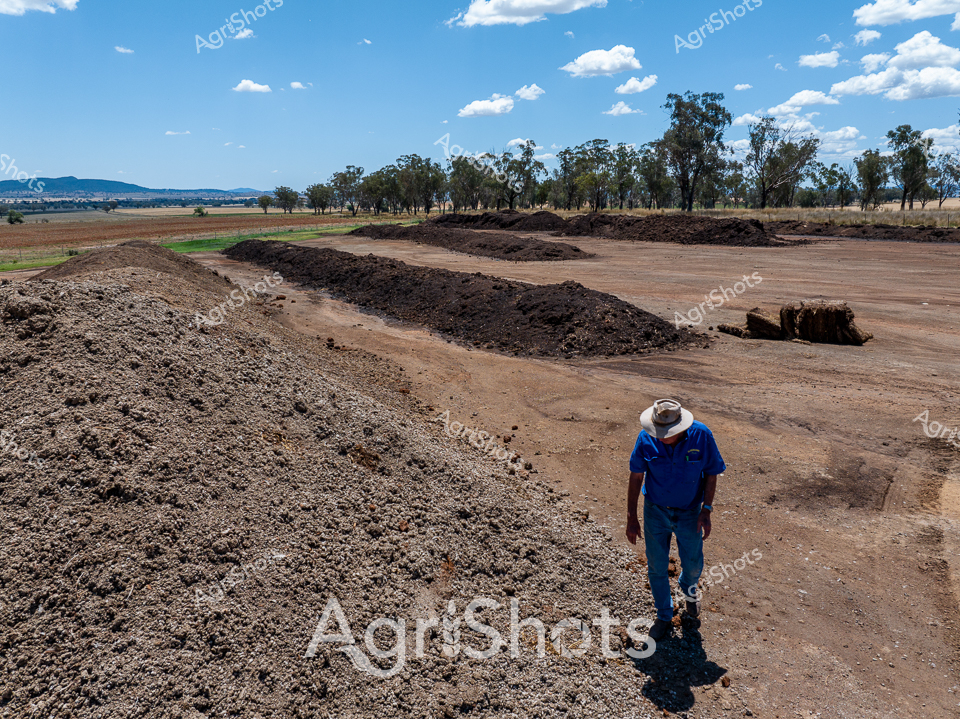
Under the expansive blue skies of rural New South Wales, a farmer surveys a large composting operation, his blue workshirt and wide-brimmed hat a testament to the practical resilience of Australian agricultural workers. Massive mounds of rich, dark organic matter stretch across the dusty earth, representing an innovative approach to regenerative farming and sustainable waste reduction. The landscape is a study in earthy textures - deep brown compost heaps contrasting against the dry, packed ground, with a line of eucalyptus trees marking the distant horizon. This composting site reveals the critical process of transforming agricultural and organic waste into nutrient-rich fertiliser, a key strategy in maintaining soil health and supporting sustainable farming practices. The scene captures the scale and methodical nature of modern agricultural recycling, where waste is not discarded but carefully processed to return vital nutrients to the land. The midday sunlight casts sharp shadows, highlighting the contours of the compost mounds and emphasizing the meticulous work of managing organic resources in a challenging agricultural environment.
 Image
Image
Dust billows around a vibrant green Claas tractor as it methodically turns a massive compost heap on a misty Victorian rural landscape. The machine's front loader carefully manipulates dark, rich organic matter, demonstrating cutting-edge regenerative farming techniques that transform green waste and agricultural byproducts into nutrient-dense soil amendments. Soft morning light filters through a backdrop of eucalyptus trees, casting a golden haze across the pasture and highlighting the intricate process of sustainable agricultural waste recycling. The composting operation represents a critical approach to soil health, biodiversity, and environmental stewardship, capturing the innovative spirit of modern Australian agriculture. Delicate grasses frame the foreground, contrasting with the deep black and rich brown tones of the decomposing organic material being carefully managed by the skilled machine operator. This scene embodies the intersection of technology, environmental consciousness, and agricultural productivity that defines contemporary farming practices in Victoria.
 Image
Image
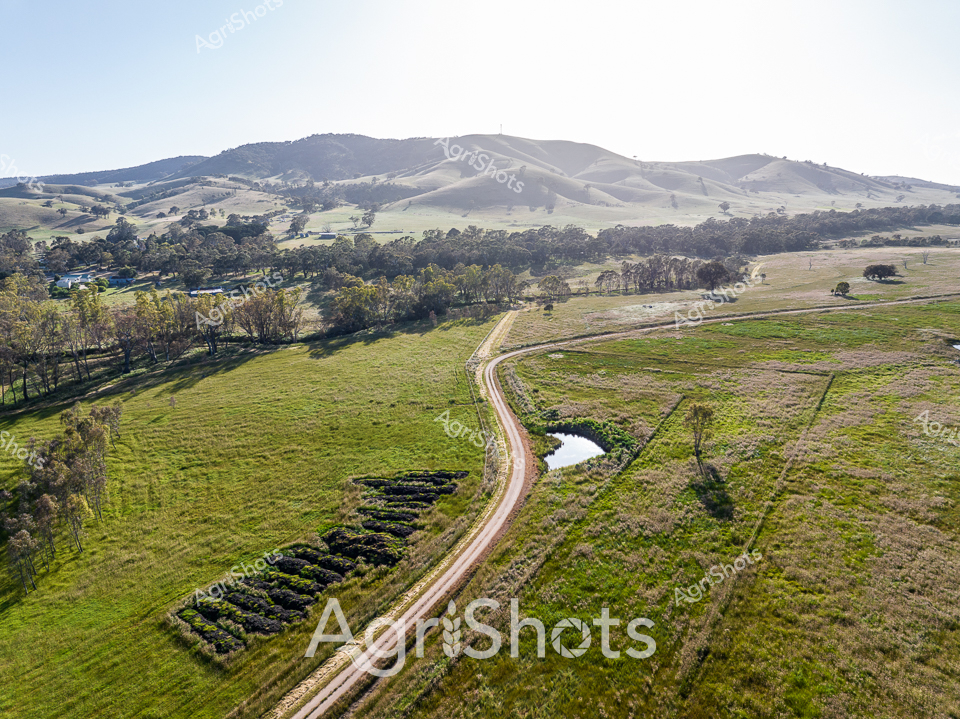
Undulating hills of muted green and golden hues stretch across this expansive Victorian agricultural landscape, capturing the essence of regenerative farming practices. A sinuous dirt track winds through verdant pastures, revealing carefully managed sections of dark composting zones - likely processing green waste and organic matter to enrich soil biodiversity. A small dam nestled beside the road provides essential water resources, reflecting the strategic water management crucial to sustainable farming in this region. Scattered eucalyptus trees create natural boundaries and windbreaks, their silvery-green foliage providing contrast against the rolling mountain ranges in the background. The soft morning light casts long shadows across the paddocks, highlighting the gentle contours of the terrain and emphasizing the intricate relationship between land, agricultural practice, and natural ecosystem. This aerial perspective showcases the sophisticated approach to land stewardship, where every element - from composting zones to water resources - plays a critical role in maintaining a balanced, productive agricultural environment.
 Image
Image
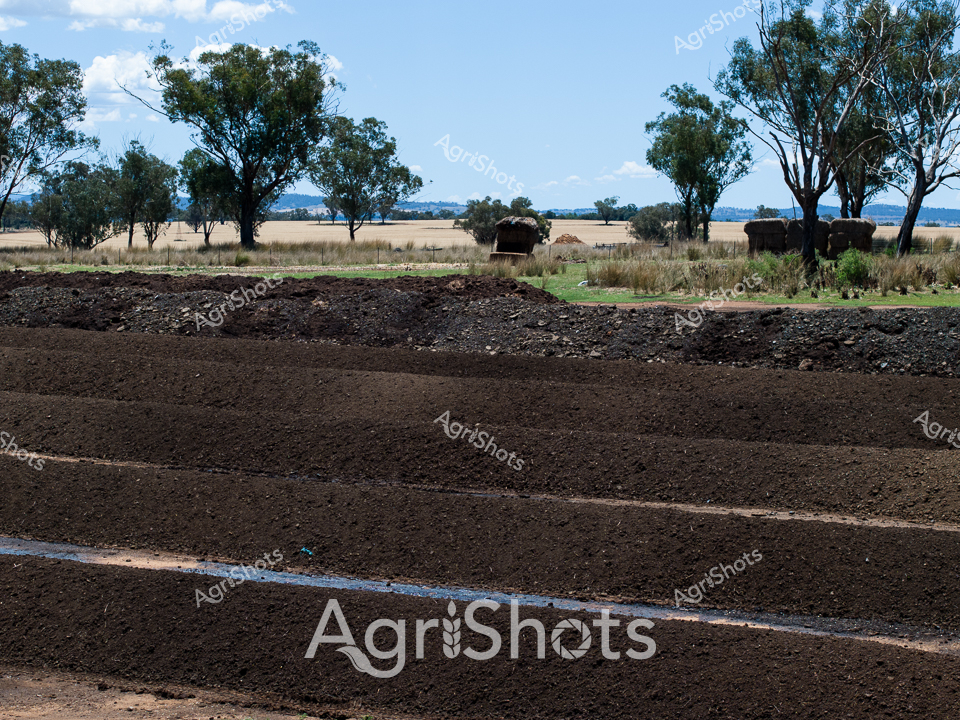
Dark, rich soil mounds terrace the foreground in precise, leveled rows, revealing an innovative composting and soil regeneration site in rural New South Wales. Eucalyptus trees frame the distant horizon, casting gentle shadows across the golden grasslands and creating a quintessential Australian agricultural landscape. These carefully constructed soil beds suggest an advanced regenerative farming approach, where organic matter is systematically processed to restore soil health, enhance biodiversity, and reduce agricultural waste. The deep chocolate-brown soil texture indicates high organic content, likely derived from carefully managed agricultural and livestock waste streams. Neat irrigation channels run between the soil rows, demonstrating a methodical and scientific approach to sustainable land management. The expansive, open landscape speaks to the innovative spirit of Australian farmers who are pioneering ecological farming techniques that balance productivity with environmental stewardship.
 Image
Image
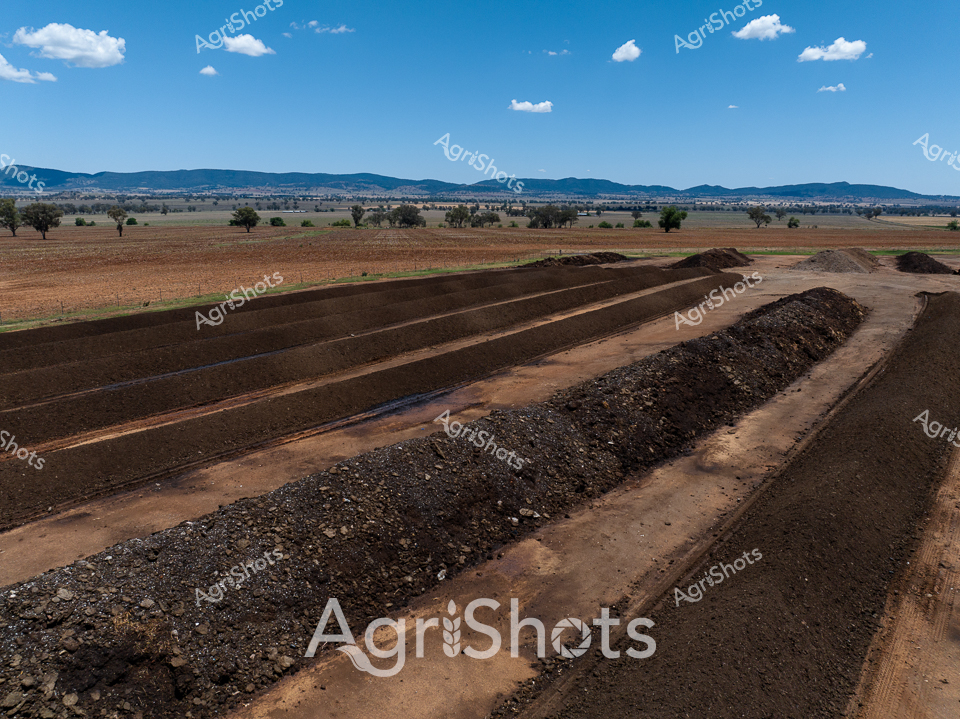
Expansive windrows of dark, rich compost stretch across the foreground, their carefully constructed mounds rising and falling like agricultural waves against a backdrop of rolling rural New South Wales farmland. These meticulously managed organic waste piles represent cutting-edge regenerative farming techniques, transforming agricultural and organic waste into nutrient-dense fertiliser through controlled decomposition. Neat rows of mature trees punctuate the distant landscape, their silhouettes standing sentinel over verdant fields and blue-hued mountain ranges that fade softly into the horizon. Each compost windrow demonstrates precision agricultural engineering - strategically positioned to maximize microbial activity, moisture retention, and organic matter transformation. The earthy brown tones of the decomposing material contrast beautifully with the pale dirt paths and the vibrant green margins, highlighting the sophisticated process of converting waste into valuable soil enrichment. This scene epitomizes contemporary sustainable agricultural practices, where waste reduction, recycling, and soil health converge in a harmonious landscape of environmental stewardship.
 Image
Image
Under the expansive blue skies of New South Wales, a robust Case IH tractor in vibrant red stands against a backdrop of rolling blue mountain ranges and scattered eucalyptus trees. The agricultural machine is paired with a blue composting implement, methodically turning and processing dark, rich organic matter into long, uniform windrows across the fertile paddock. This scene captures the essence of regenerative farming practices, where agricultural waste and organic materials are transformed into nutrient-rich soil amendments, supporting sustainable land management. The rugged landscape reveals a typical Australian agricultural setting - undulating terrain with scattered trees, golden grasslands, and distant mountain silhouettes creating a timeless pastoral tableau. The tractor's massive wheel treads and the precision of the composting equipment highlight the sophisticated technology modern farmers employ to enhance soil health and productivity. Rich brown compost mounds contrast beautifully with the bright red tractor and deep blue sky, creating a visual testament to the intricate cycles of agricultural renewal. This image embodies the progressive spirit of Australian farming - where innovation, environmental stewardship, and productive land management converge in a single, powerful moment.
 Image
Image
Rows of meticulously arranged organic compost stretch across a sun-drenched rural landscape in New South Wales, revealing the innovative techniques of regenerative farming. Dark, rich soil amendments are carefully layered in long parallel mounds, capturing the intricate process of transforming agricultural waste into nutrient-dense fertiliser. The surrounding panorama showcases a classic Australian agricultural vista - gently undulating fields punctuated by scattered eucalyptus trees, with distant blue mountain ranges creating a stunning backdrop under a crisp, cloud-spotted sky. This expansive composting operation demonstrates sophisticated waste reduction and soil restoration strategies, where organic materials are systematically transformed to enhance biodiversity and agricultural productivity. The earthy browns and deep charcoal tones of the compost beds contrast beautifully with the terracotta-hued soil and verdant green patches, illustrating the dynamic cycle of nutrient recycling. The precise geometry of the compost rows speaks to the methodical approach of modern sustainable farming practices, where every element of agricultural production is considered with scientific precision and environmental consciousness. The scene captures the essence of regenerative agriculture - a harmonious blend of technological innovation and natural ecological processes, showcasing how Australian farmers are pioneering sustainable land management techniques.
 Image
Image
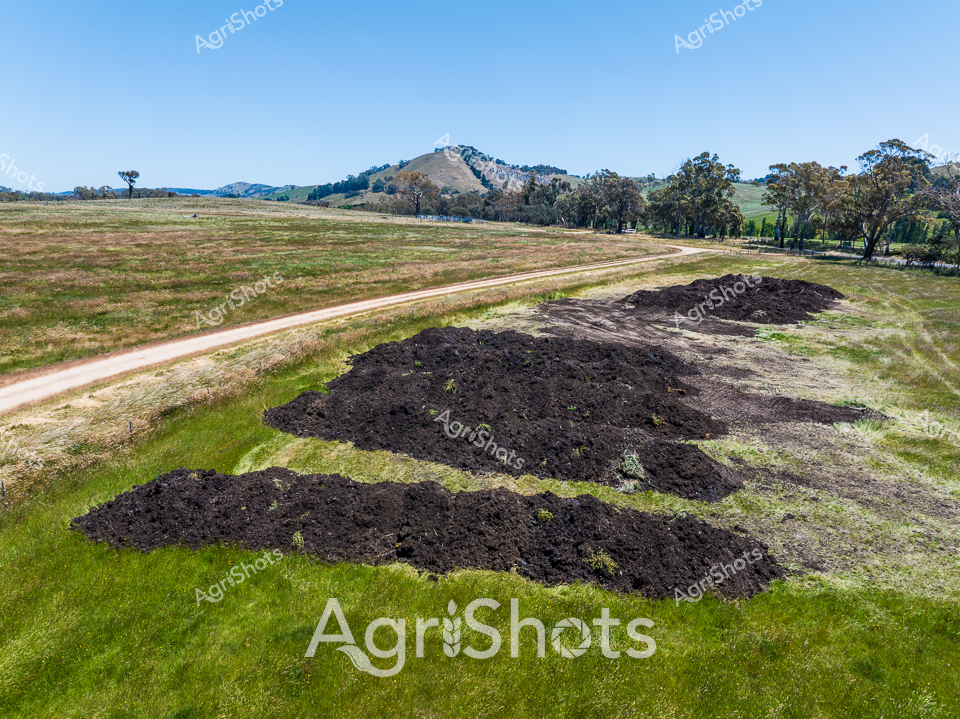
Dark, rich compost mounds rise from the verdant pastureland, their deep charcoal hues contrasting against the soft greens and golden grasses of a classic Victorian rural landscape. These carefully arranged organic matter heaps represent the cutting edge of regenerative agricultural practices, transforming green waste and organic materials into nutrient-rich soil amendments that will revitalize the surrounding farmland. Rolling hills and scattered eucalyptus trees frame the background, creating a quintessential Australian pastoral scene that speaks to sustainable farming methodologies. The composting site demonstrates a sophisticated approach to waste reduction and soil health, with multiple mounds strategically positioned to maximize decomposition and nutrient cycling. Sunlight bathes the landscape, highlighting the textural differences between the dark, crumbly compost and the surrounding grasslands - a visual testament to the agricultural innovation happening in this tranquil corner of Victoria. The dirt track running alongside the compost mounds suggests this is an active agricultural site dedicated to ecological farming principles.
 Image
Image
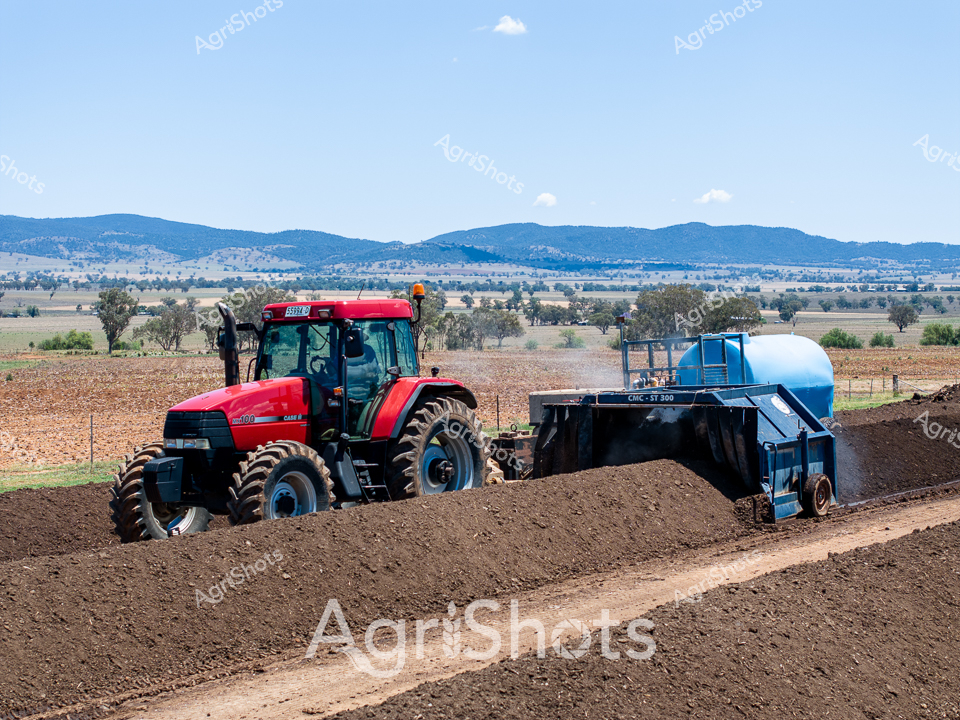
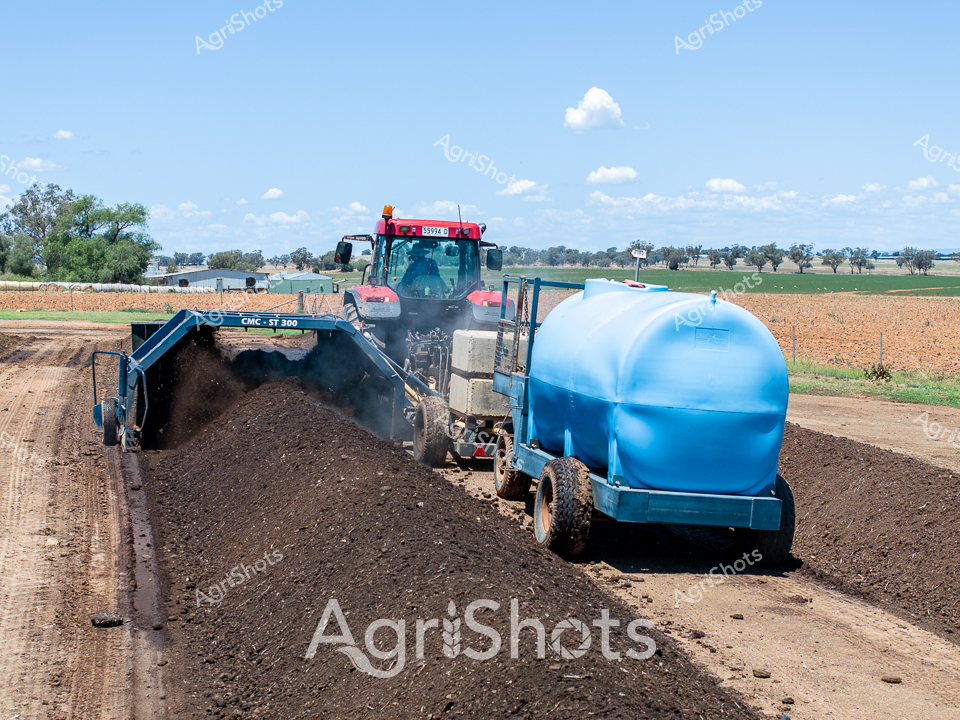
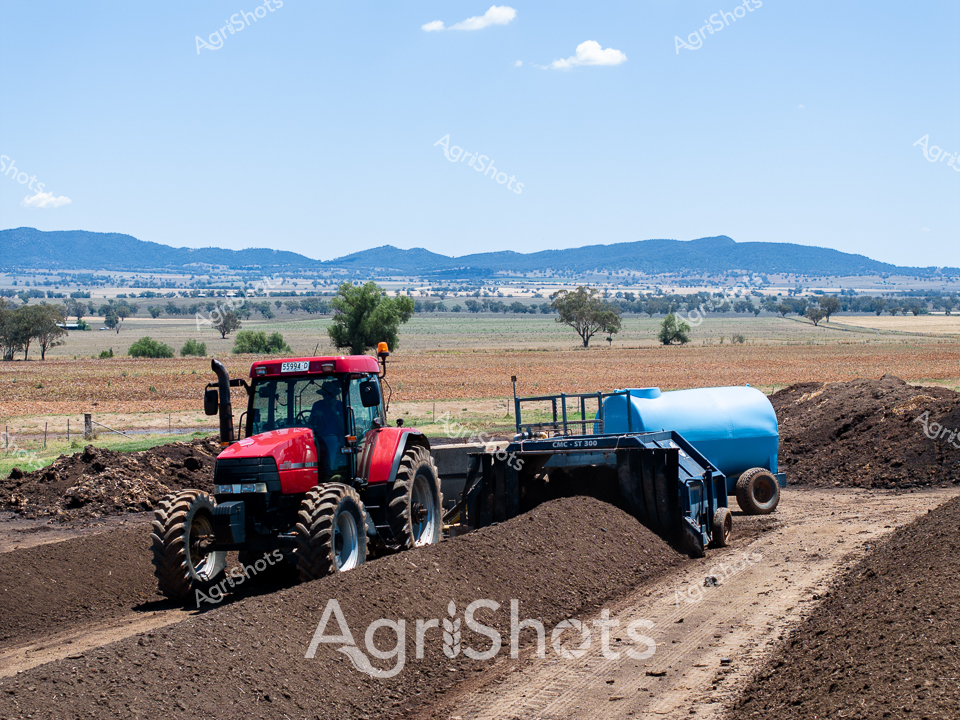
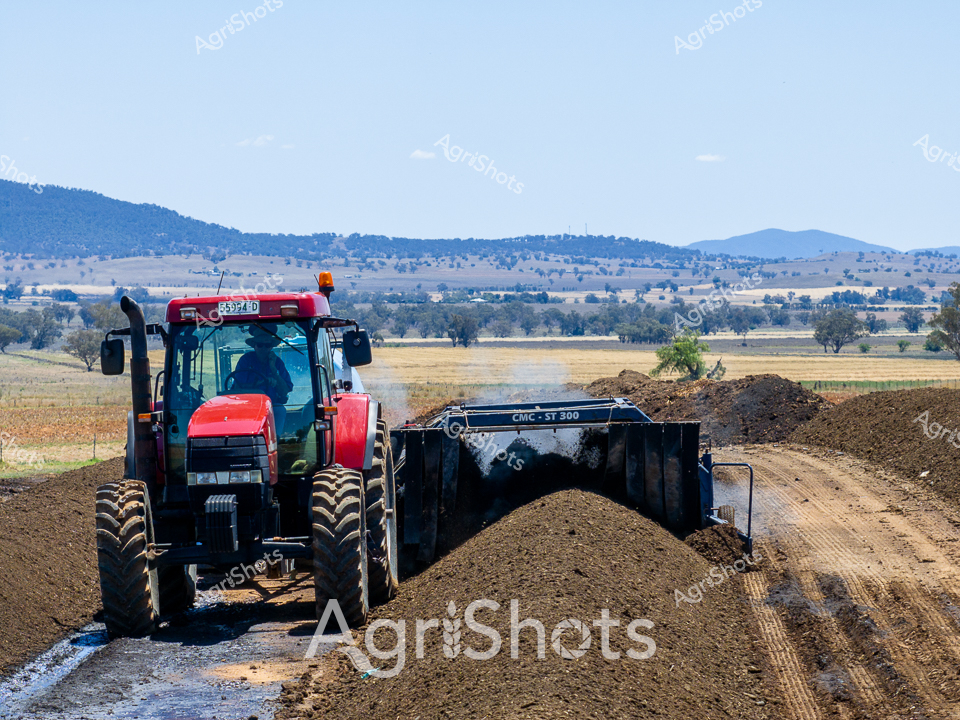
In the golden light of a crisp rural morning, a vibrant red Case tractor navigates a rich, dark soil preparation site, hauling sophisticated agricultural machinery across the expansive farmlands of New South Wales. The blue water tank gleams against the earthy landscape, while a CMC ST-300 composting machine transforms organic waste into nutrient-dense soil amendment, representing cutting-edge regenerative farming techniques. Billowing dust clouds rise around the machinery, capturing the dynamic process of sustainable land management and waste recycling. Scattered eucalyptus trees punctuate the distant horizon, framing a classic Australian agricultural panorama of carefully cultivated paddocks and open grasslands. The sophisticated equipment demonstrates modern farming's commitment to soil health, biodiversity, and ecological balance, transforming agricultural waste into valuable resources through precision technology. This scene embodies the innovative spirit of contemporary Australian agriculture - where traditional farming practices meet advanced environmental stewardship.
 Image
Image
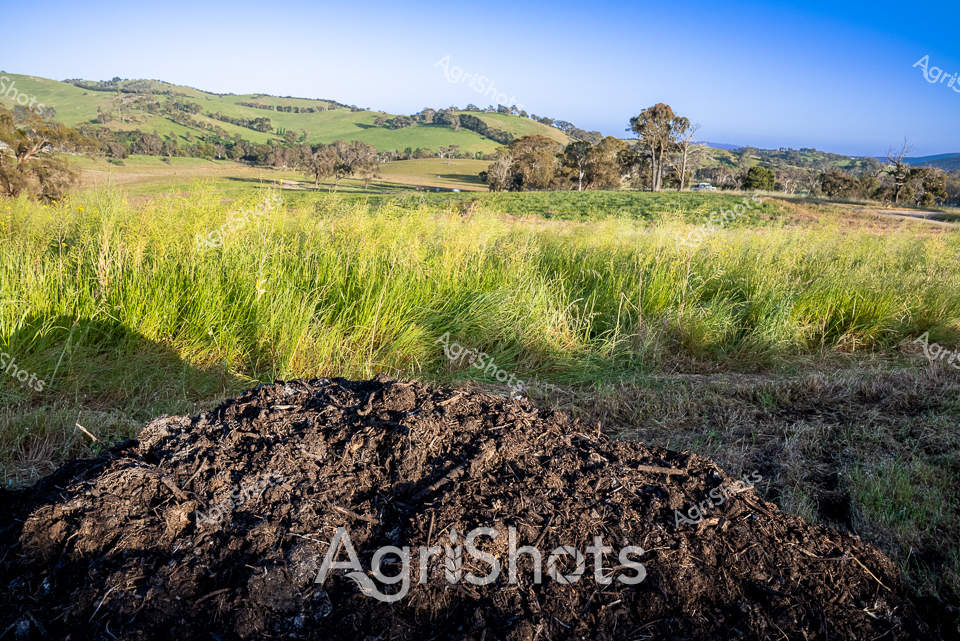
Dark, rich compost mounds dominate the foreground of this expansive Victorian pastoral landscape, representing the heart of regenerative agricultural practices. Nutrient-dense organic matter - a complex mix of decomposing green waste, potentially including animal manure and plant residues - sits as a fertile testament to sustainable farming methodologies. The compost pile rests against a sweeping backdrop of undulating green pastures, dotted with mature eucalyptus trees and gently rolling hills stretching toward a clear blue horizon, capturing the quintessential Australian rural ecosystem. Sunlight bathes the scene, highlighting the textural contrast between the deep, dark browns of the decomposing organic material and the vibrant yellow-green grasses swaying in what appears to be a mild spring or early summer morning. This image encapsulates the principles of regenerative agriculture - recycling nutrients, building soil health, and working in harmony with the natural landscape. The carefully managed compost represents a critical component of ecological farming, transforming waste into a valuable resource that will nurture future crops and support biodiversity. The landscape speaks to Victoria's rich agricultural heritage, showcasing how modern farmers are embracing sustainable practices that restore and enhance natural ecological systems.
 Image
Image
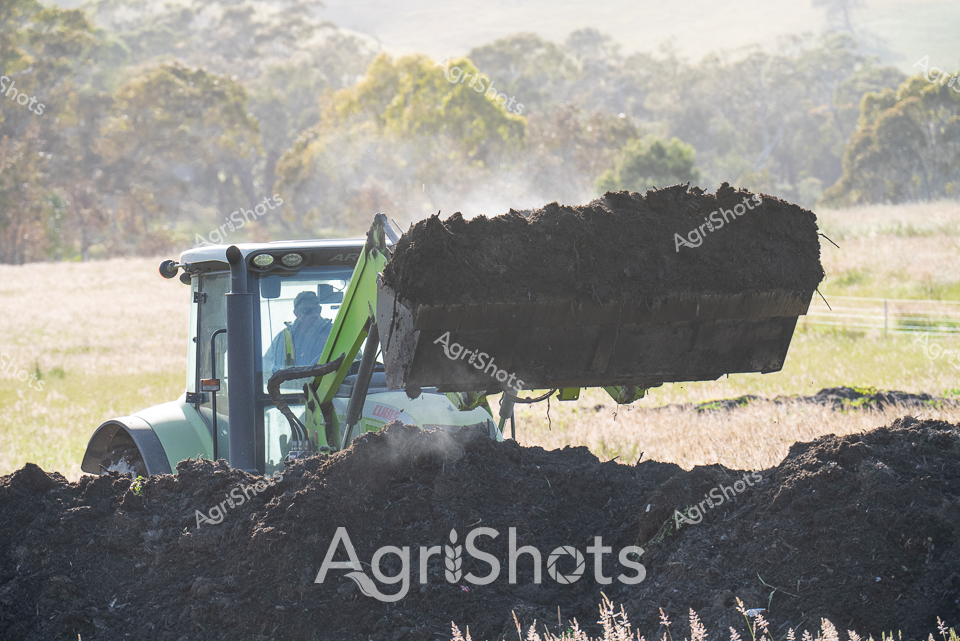
Composting Takes Flight: A Regenerative Farming Portrait A lime-green agricultural machine emerges through misty morning light, methodically turning dark, rich compost on a Victorian farmscape. The powerful tractor, silhouetted against soft eucalyptus woodland in the background, carries a massive bucket laden with organic material - likely a combination of green waste, agricultural residues, and nutrient-dense manure. Steam rises from the decomposing heap, suggesting active biological transformation and the intense microbial activity breaking down complex organic matter. The operator, barely visible through the machine's cab, guides the equipment with precision, engaging in a critical process of soil regeneration and sustainable farming practice. Textured mounds of composting material - deep charcoal and earth-brown in color - create a dramatic landscape of renewal, highlighting the intricate relationship between agricultural waste management and ecological restoration. This scene captures the essence of modern regenerative agriculture: transforming waste into valuable resources, rebuilding soil health, and creating a more sustainable future for farming.
 Image
Image
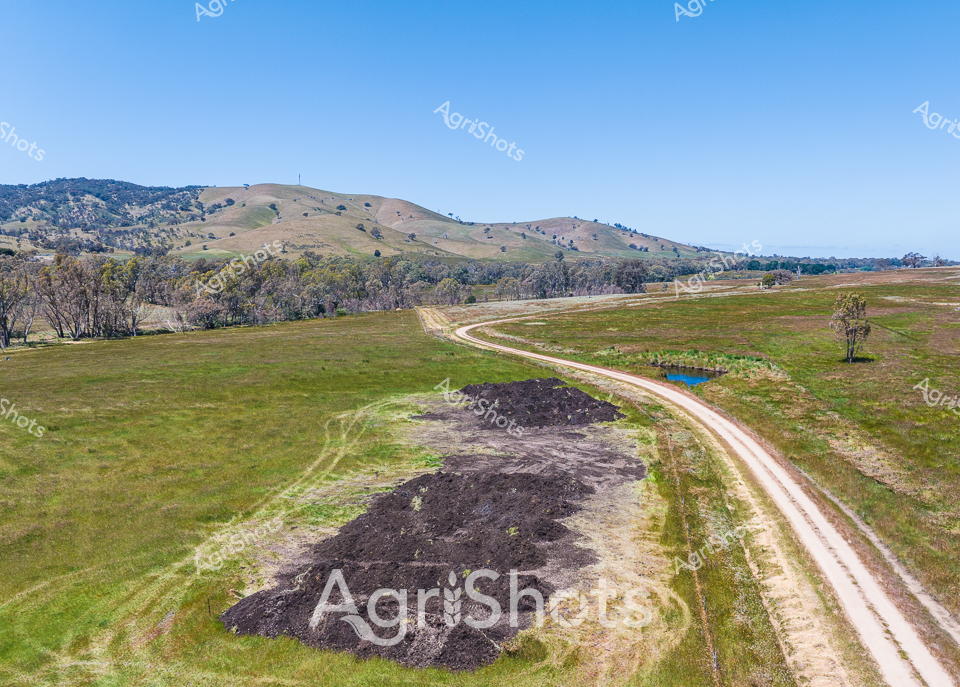
A sweeping rural vista unfolds across the rolling Victorian landscape, where a carefully positioned mound of dark, rich organic compost contrasts against the verdant pastureland. The winding dirt track meanders through the expansive grasslands, leading the eye towards distant undulating hills dotted with sparse trees and remnant bushland. This scene captures the essence of regenerative agricultural practices, with the substantial compost heap representing a critical approach to sustainable land management and soil health restoration. The rich, dark biomass—likely a mixture of green waste, manure, and other organic materials—sits purposefully beside the farm track, ready to be distributed and reinvigorate the surrounding grasslands. A small blue dam glimmers in the middle distance, providing water resources for the property, while the clear blue sky and gently rolling terrain speak to the resilience and careful stewardship of Australian agricultural landscapes. The image embodies the principles of waste reduction, biodiversity enhancement, and the cyclical nature of organic farming systems.
 Image
Image
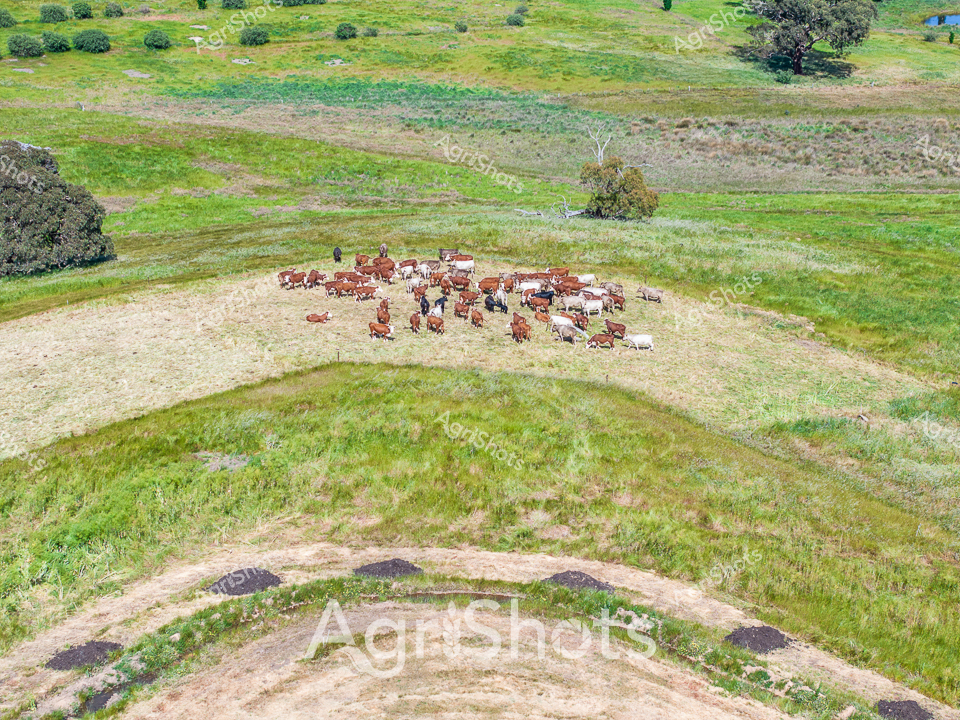
Aerial vista of a verdant pastoral landscape near Heathcote, Victoria, revealing a carefully managed cattle herd clustered on a carefully demarcated grazing paddock. Rich brown and white Hereford cattle congregate tightly, representing a regenerative agriculture approach to strip grazing - a sustainable livestock management technique that promotes soil health and biodiversity. The surrounding grasslands undulate in soft green hues, punctuated by scattered eucalyptus trees and subtle terrain variations, suggesting a carefully curated agricultural ecosystem. The cattle huddle demonstrates strategic livestock positioning, maximizing pasture utilization while minimizing environmental impact. Varying shades of reddish-brown and white coats create a textural mosaic against the pale golden ground, highlighting the intentional design of this regenerative farming practice. Subtle earth tones and strategic grazing patterns reveal a sophisticated approach to land management that balances animal husbandry with ecological preservation. This expansive agricultural tableau captures the essence of contemporary Australian rural practice - where innovative farming techniques meet traditional landscape stewardship, transforming grasslands into dynamic, productive ecosystems through intelligent, sustainable methodologies.
 Image
Image
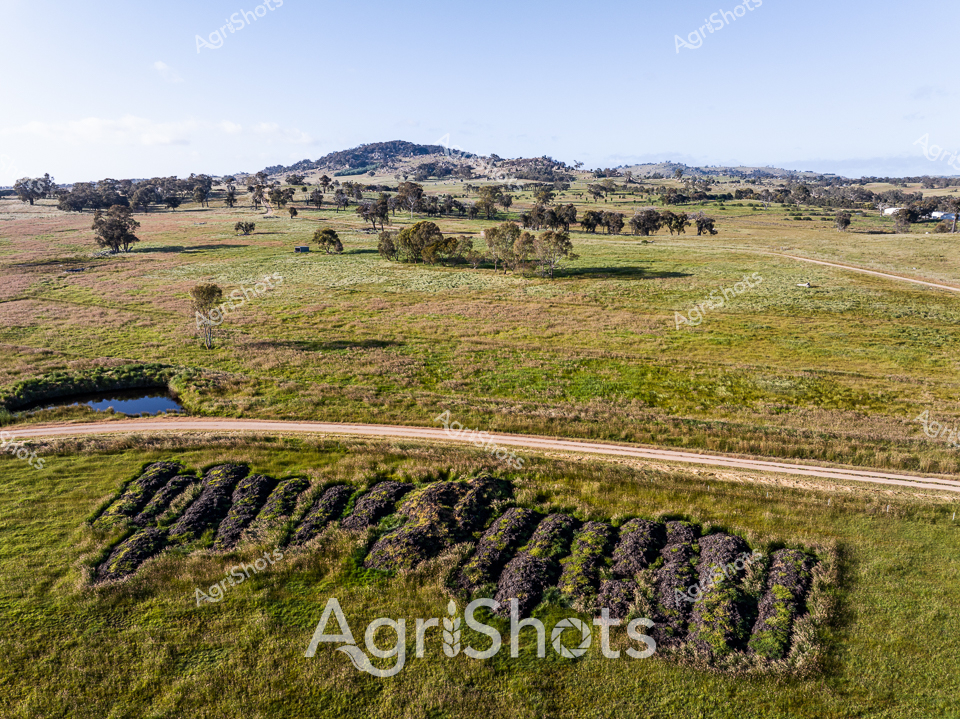
Rolling hills of central Victoria unfurl beneath a clear azure sky, revealing a meticulously crafted regenerative agricultural landscape. In the foreground, a carefully constructed compost mound demonstrates sustainable farming practices, its dark, organic material structured in precise windrows that capture the essence of waste recycling and soil rejuvenation. Native eucalyptus trees dot the undulating pastures, providing natural shelter and contributing to the rich biodiversity of the ecosystem. The earthen dirt track winds through the grasslands, connecting different zones of this agricultural terrain, while a small dam reflects the surrounding greenery, highlighting the integrated water management typical of modern sustainable farming. The landscape speaks to a holistic approach to agriculture - one that prioritizes soil health, carbon sequestration, and ecological balance, transforming green waste and organic matter into a living, breathing agricultural system. This vista represents the future of farming: a harmonious blend of productivity, environmental stewardship, and intelligent land management.
 Image
Image
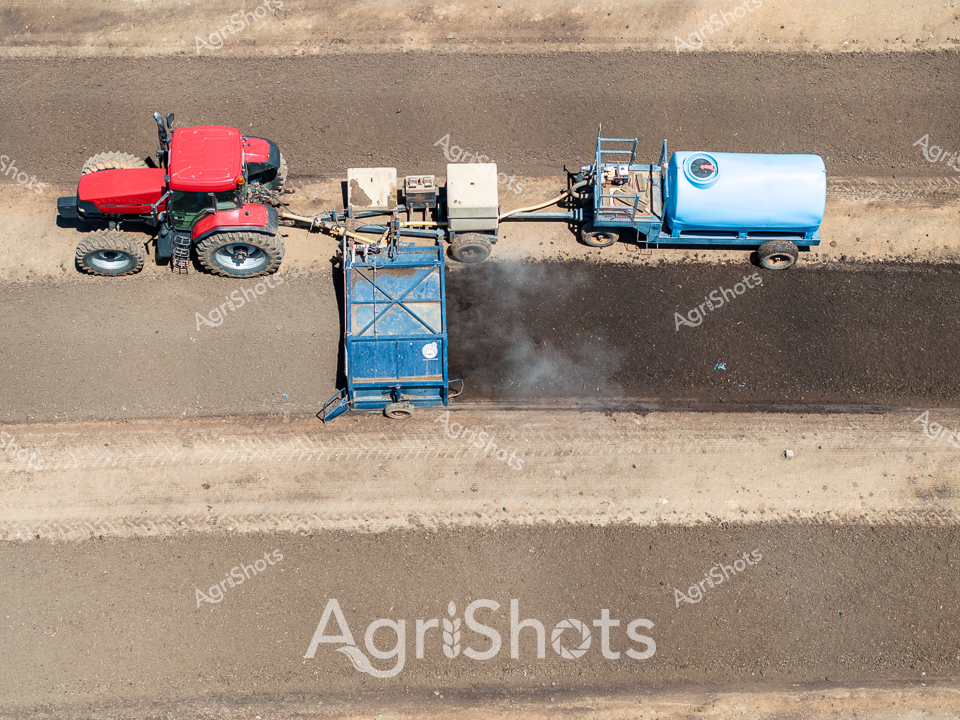
Aerial view of a cutting-edge agricultural recycling operation unfolds across a dusty rural landscape. A bold red Case tractor connects seamlessly to a robust blue processing station, transforming organic waste into valuable soil amendment. Billowing smoke signals the active composting process, where agricultural byproducts are being mechanically converted into nutrient-rich fertilizer. The blue water tanker stands ready to support the operation, highlighting the intricate choreography of modern regenerative farming techniques. Precision machinery moves deliberately across carefully prepared earth, creating a striking geometric pattern of browns and blues against the arid paddock. This scene captures the innovative spirit of Australian agricultural sustainability, where technology and ecological understanding merge to create more efficient, environmentally conscious farming practices.
 Video
Video
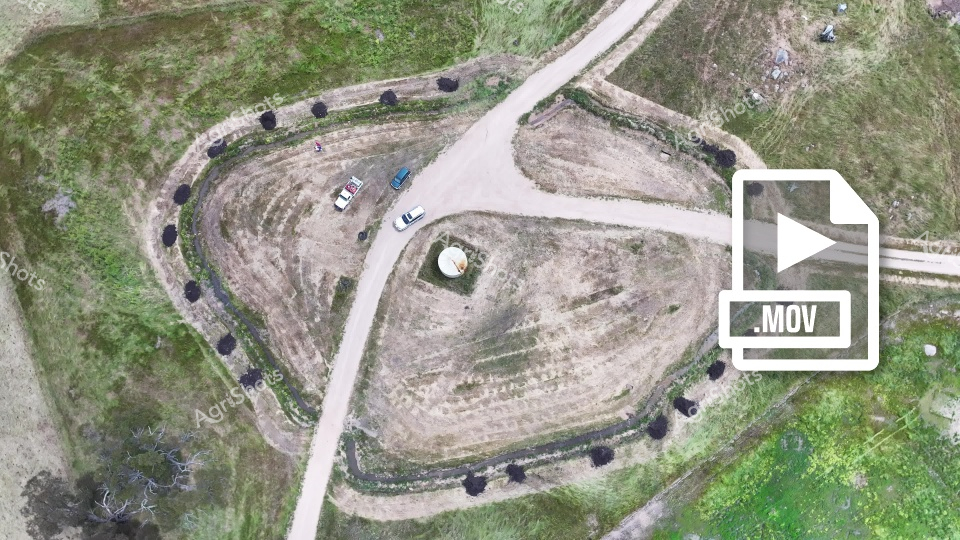
Aerial view of an innovative agricultural waste management site, showcasing a circular composting facility nestled in the verdant Victorian landscape. Dark organic piles ring the central processing area, creating a rhythmic pattern of decomposition and renewal against the muted earth tones. Two vehicles - a white and a blue utility - are positioned near a central collection point, suggesting active management and strategic workflow in this sustainable farming operation. The carefully designed circular layout maximizes space efficiency and demonstrates precision in modern regenerative agricultural practices, with carefully delineated pathways separating different stages of organic matter transformation. Lush green vegetation surrounds the site, highlighting the symbiotic relationship between waste recycling and environmental stewardship. This bird's-eye perspective reveals the sophisticated infrastructure behind contemporary sustainable farming, where every element of agricultural production is considered a potential resource for soil health and ecological balance.
 Image
Image
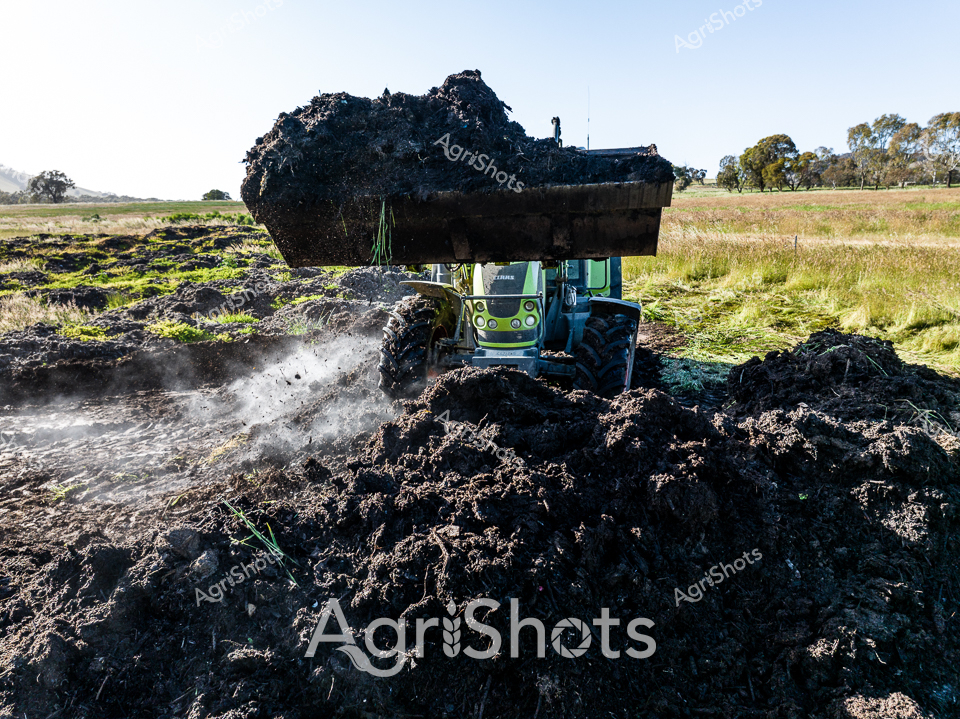
Organic matter cascades from a vibrant green Claas tractor, steam rising from dark, nutrient-rich compost piles in a golden Victorian grassland. The machine stands resolute amidst mounds of decomposing green waste and agricultural residue, embodying the principles of regenerative farming and sustainable land management. Rich, dark soil tells a story of ecological renewal, with moss-tinged edges and billowing steam indicating active biological transformation. Surrounding paddocks stretch out in soft, undulating plains punctuated by scattered eucalyptus trees, capturing the quintessential Australian agricultural landscape. This scene represents a critical intersection of waste reduction, soil health, and advanced agricultural practices, where technology and natural processes collaborate to restore and nourish the earth. The composting operation demonstrates a sophisticated approach to recycling organic materials, turning potential waste into valuable fertiliser that will support future crop growth and maintain biodiversity.
 Image
Image
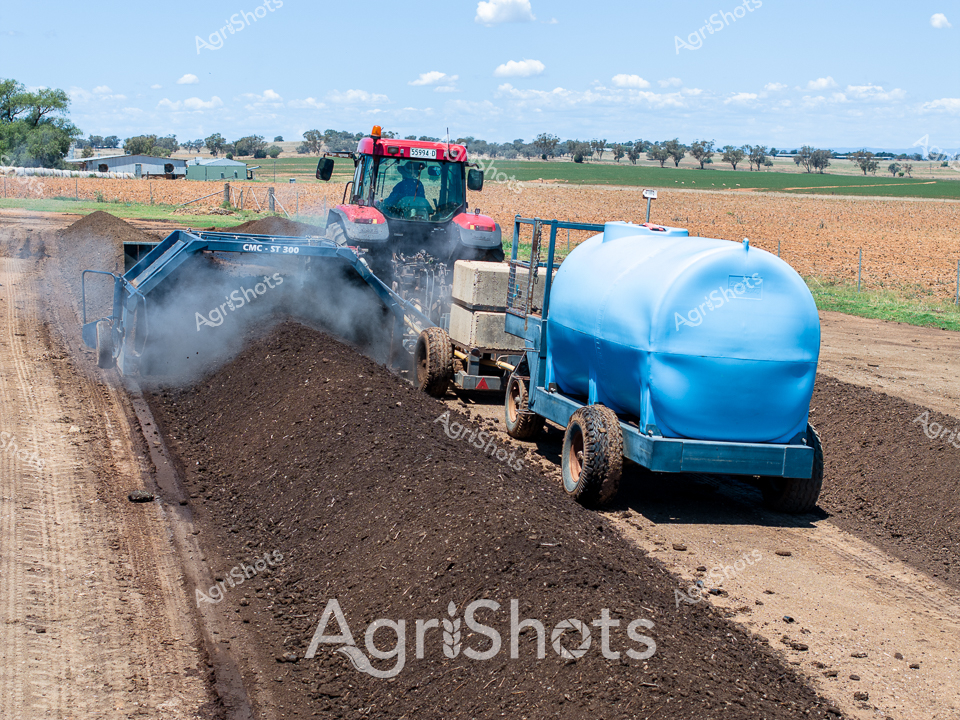
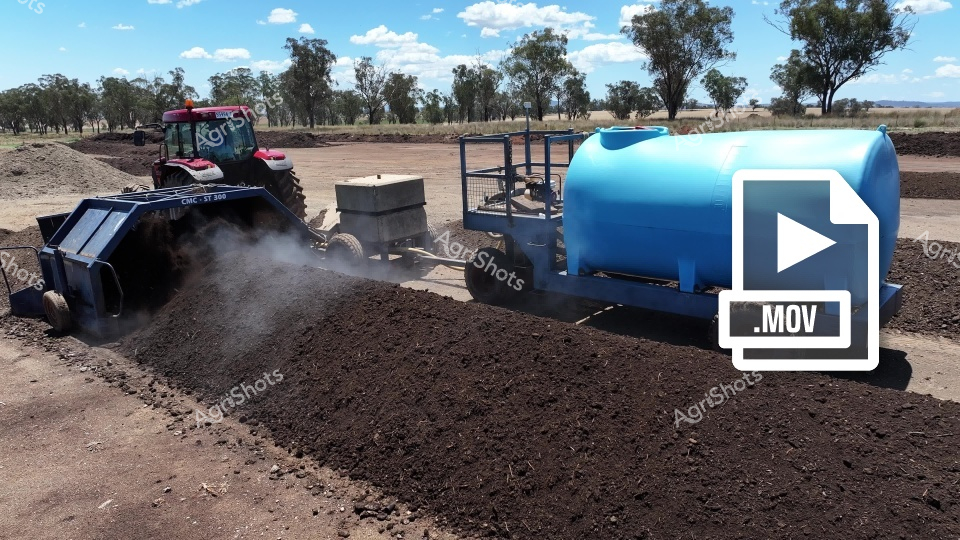
Billowing dust rises from a Case tractor meticulously working a rich, dark soil amendment windrow under the expansive blue skies of rural New South Wales. The deep burgundy tractor pulls specialized composting equipment, carefully turning organic matter into a refined soil enrichment blend, showcasing cutting-edge regenerative agricultural techniques. A substantial blue water tank mounted on a trailer stands ready to support the composting process, highlighting the precision and technological integration of modern sustainable farming practices. The landscape unfolds in a patchwork of earthy browns and verdant greens, with scattered eucalyptus trees marking the distant horizon, creating a quintessential Australian agricultural scene. Sophisticated machinery transforms agricultural waste into valuable organic fertilizer, demonstrating a sophisticated approach to soil health, nutrient recycling, and environmental stewardship. The crisp, clear day and methodical operation capture the intersection of innovation, environmental consciousness, and traditional farming wisdom that defines contemporary Australian agricultural excellence.
 Image
Image
In the golden light of a crisp New South Wales morning, a robust Case tractor in vibrant red stands amid carefully sculpted mounds of rich, dark compost. Rolling blue mountains frame the distant landscape, while scattered eucalyptus trees punctuate the expansive agricultural terrain. The powerful machinery is engaged in a critical regenerative farming process, carefully managing organic waste and preparing nutrient-dense soil amendments that will support future crop cycles. A large blue tank accompanies the tractor, suggesting sophisticated fertilizer or water management techniques integral to modern sustainable agriculture. The scene captures the intricate dance between advanced agricultural technology and natural landscape - rows of carefully managed earth revealing the precision and environmental consciousness of contemporary farming practices. This image embodies the essence of Australian agricultural innovation: transforming waste into valuable resources, nurturing the land with intelligent, systemic approaches that respect both productivity and ecological balance.
 Image
Image
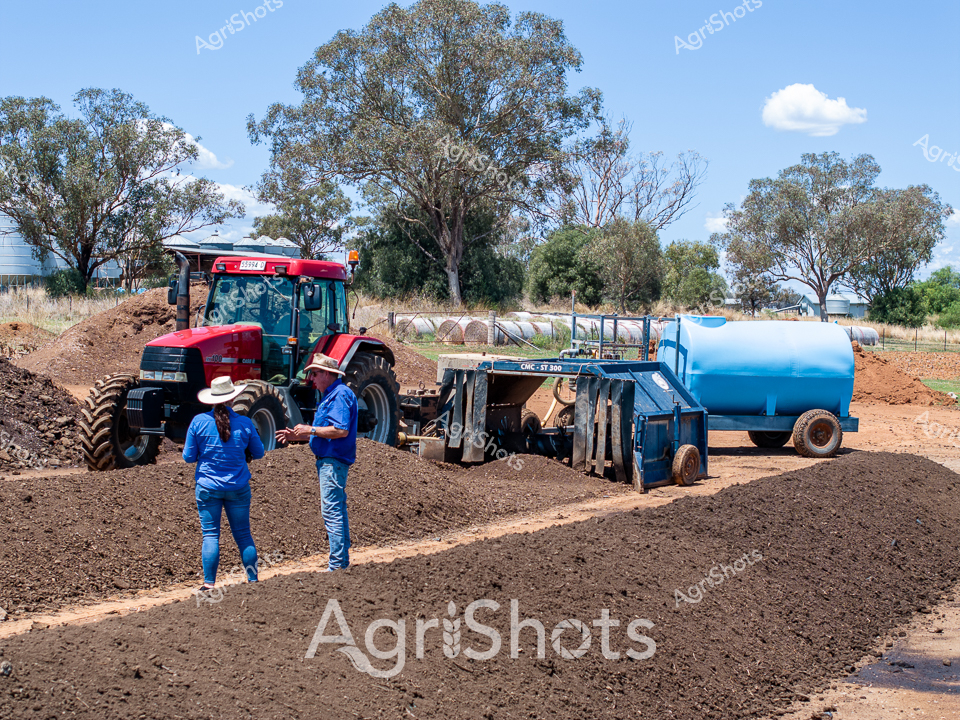
In the golden light of a crisp New South Wales morning, a red Case tractor stands sentinel amid carefully cultivated mounds of rich, dark compost. Two farm workers in coordinated blue workwear and sun-protective hats move purposefully around the agricultural workspace, engaging with a blue water tank and processing equipment. The landscape is quintessentially Australian - eucalyptus trees framing the background, creating a textured green-gray canopy against a clear azure sky. This scene represents the cutting edge of regenerative farming, where organic waste transforms into valuable soil nutrition through meticulous composting techniques. The machinery and careful arrangement of soil mounds speak to a sophisticated approach to sustainable agriculture, recycling organic matter to enhance soil biodiversity and reduce agricultural waste. The image captures the intersection of technology, environmental stewardship, and practical agricultural innovation, showcasing how modern farmers are reimagining resource management and soil health.
 Video
Video
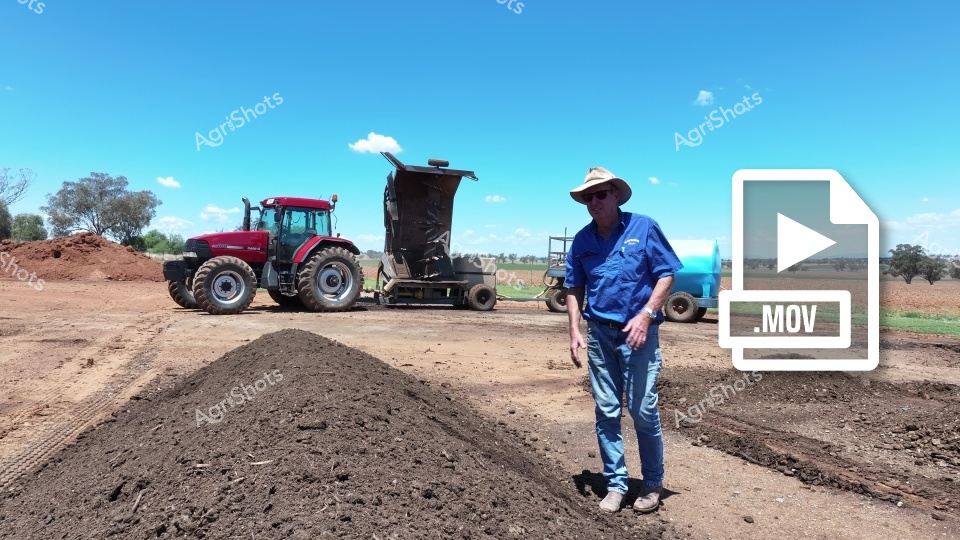
Beneath a brilliant azure sky in the Heathcote region of New South Wales, a farmer stands amid mounds of rich, dark organic compost material. A robust red Case tractor with an attached mulching trailer dominates the dusty rural landscape, representing cutting-edge regenerative agricultural practices. The scene captures the intricate process of transforming agricultural waste into valuable soil nutrition, with carefully managed heaps of decomposing matter positioned strategically across the work site. The farmer, dressed in a classic blue work shirt, wide-brimmed sun hat, and sturdy denim, embodies the practical expertise of modern sustainable farming. His confident stance alongside the equipment suggests a deep understanding of soil health and waste recycling techniques. The blue water tank in the background hints at the careful water management critical in this arid Australian environment. This image eloquently illustrates the intersection of technological innovation and ecological consciousness in contemporary agricultural systems. The carefully arranged compost piles, the powerful machinery, and the expansive rural setting tell a story of resourcefulness, environmental stewardship, and the sophisticated science behind regenerative farming practices.
 Video
Video
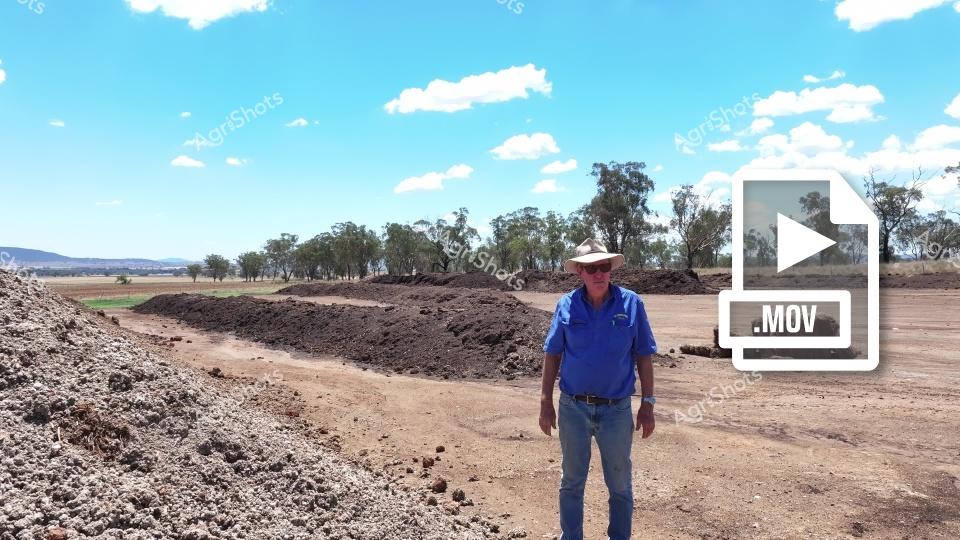
Rural Regenerative Agriculture: Soil Management in Central Victoria A seasoned agricultural worker stands amid an expansive composting and soil rehabilitation project in the rugged Heathcote region of central New South Wales. Wearing a classic blue work shirt, wide-brimmed sun protection, and well-worn denim, the individual surveys large mounds of organic matter and soil amendments, representing critical regenerative farming practices. Massive piles of dark, rich compost stretch across the dusty paddock, demonstrating an intensive approach to nutrient recycling and land restoration. The surrounding landscape reveals classic Australian rural terrain - scattered eucalyptus trees, distant mountain ranges, and an impossibly bright blue sky punctuated with soft white clouds. This scene captures the essence of modern sustainable agriculture, where waste reduction, soil health, and biodiversity are paramount. The carefully managed organic materials will be transformed into vital fertilizer, supporting the region's agricultural productivity and environmental resilience.
 Image
Image
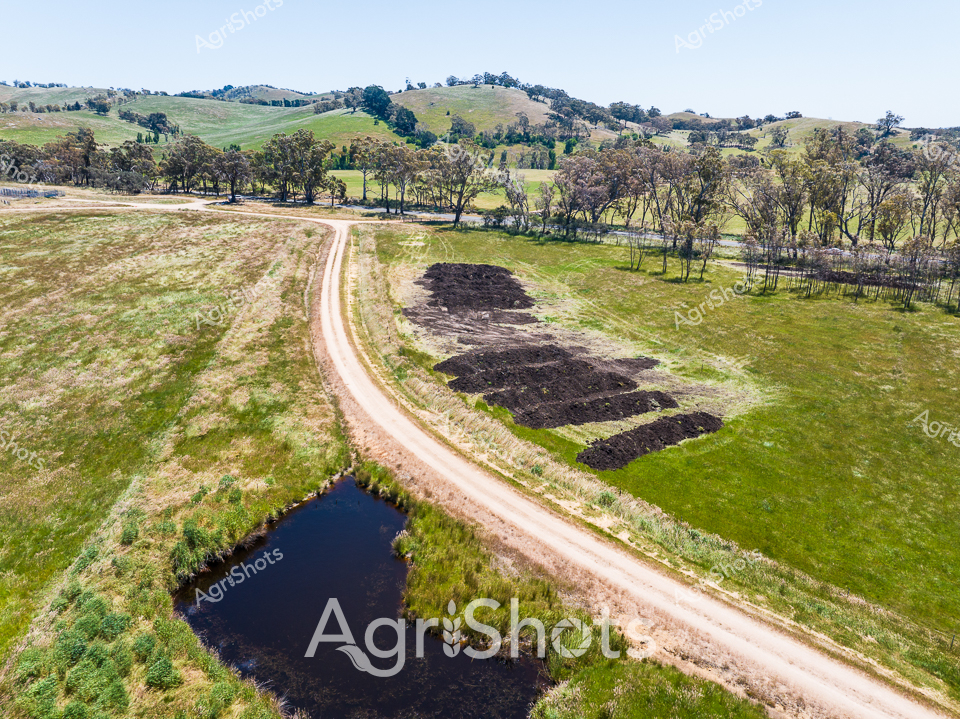
Rolling pastoral landscapes unfurl across this aerial view of a Victorian agricultural property, showcasing innovative land management and regenerative farming practices. Dark, rich compost mounds stretch across the verdant grasslands, representing a critical approach to sustainable soil enrichment and waste recycling. A dusty rural access road winds through the property, creating a striking linear contrast against the undulating green and brown terrain, while a small dam provides essential water resources for the surrounding ecosystem. Scattered eucalyptus trees frame the scene, their silvery-green foliage punctuating the gently sloping hills in the background, typical of the Australian rural landscape. The composition reveals a thoughtful intersection of agricultural productivity and environmental stewardship, with carefully managed organic matter plots strategically positioned to improve soil health and support regenerative farming techniques. The crisp, clear light suggests an early morning perspective, capturing the raw beauty of agricultural landscapes where human intervention and natural systems work in harmonious collaboration.
 Image
Image
Rural Composting in the Victorian Grasslands Two agricultural workers collaborate on a rich, dark compost heap nestled amid golden grasslands and scattered eucalyptus trees. The undulating pastoral landscape of Victoria stretches into distant green hills under a soft, clouded sky, representing regenerative farming practices. Wearing protective purple and red outerwear, the workers carefully manage organic matter, transforming agricultural waste into nutrient-rich soil amendment. A small meandering creek winds through native grasses, highlighting the interconnected ecosystem of this agricultural setting. The scene captures the essence of sustainable land management, where careful composting represents a critical strategy for soil health, carbon sequestration, and ecological restoration. Soft textures of grasses, dark richness of the compost, and the careful movements of the workers communicate a methodical approach to agricultural sustainability.
 Video
Video
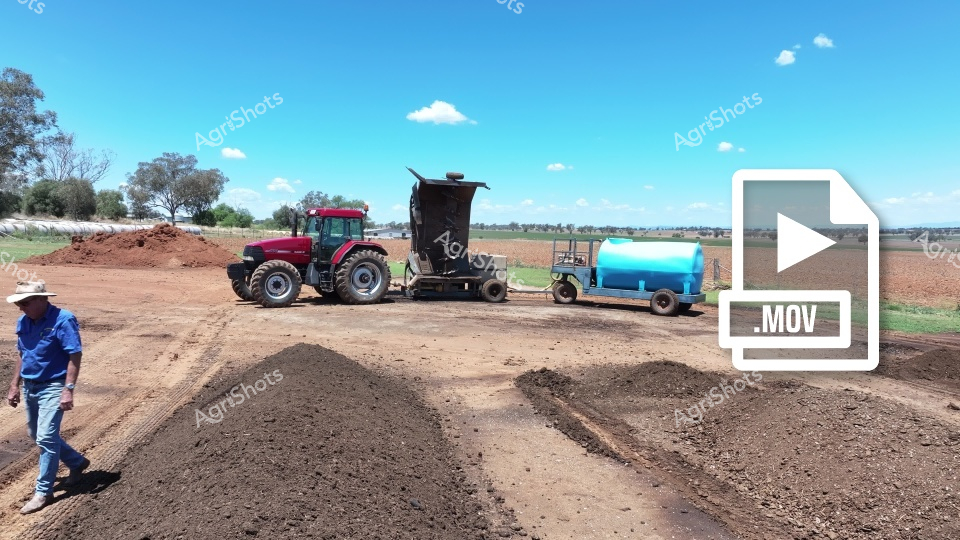
Rural composting and soil management unfold on a sun-drenched agricultural site in regional New South Wales. A robust red Case tractor sits alongside mounds of rich, dark organic compost material, with a blue water tanker trailer connected and ready for agricultural processing. The expansive landscape features scattered eucalyptus trees and distant farmlands under a brilliant azure sky punctuated by delicate white clouds. A worker in a blue shirt and wide-brimmed hat moves purposefully across the dirt terrain, suggesting active management of regenerative farming practices. Neat piles of composted material demonstrate careful soil amendment techniques, highlighting the intricate process of recycling organic waste into valuable agricultural nutrients. The scene captures the essence of modern sustainable farming - transforming waste into resource through methodical, technologically supported environmental stewardship, with heavy machinery and human expertise working in concert to improve soil biodiversity and agricultural productivity.
 Image
Image
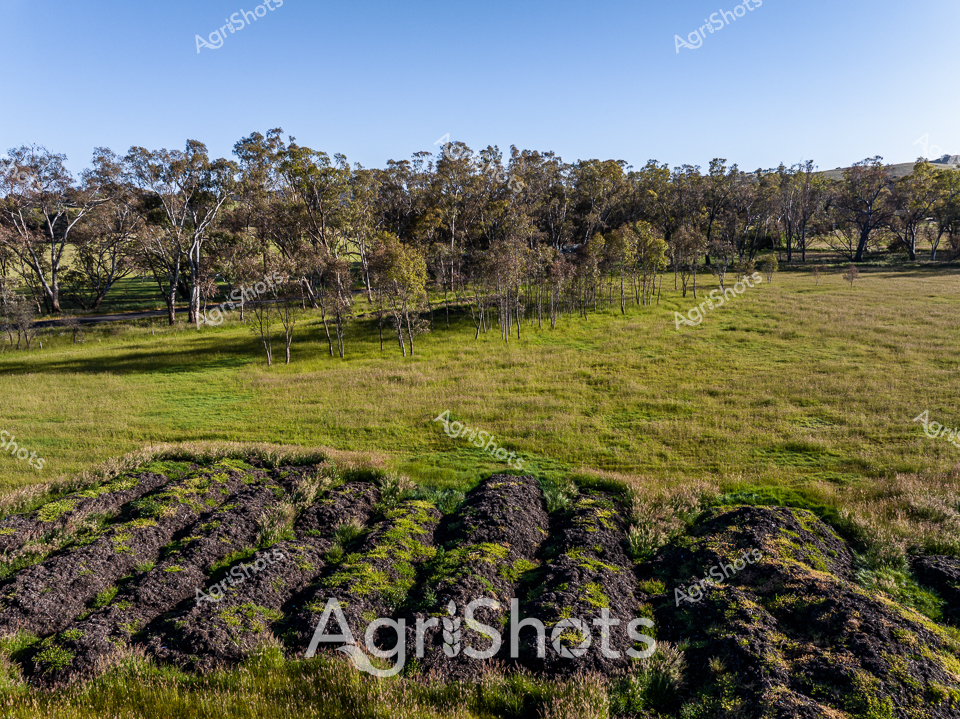
Weathered eucalyptus trees frame a sweeping pastoral landscape in central Victoria, where innovative agricultural practices transform organic waste into rich, living soil. In the foreground, meticulously arranged compost mounds reveal a tapestry of dark, nutrient-dense material interwoven with emerging green shoots - a testament to regenerative farming's commitment to soil health and carbon sequestration. The undulating green pasture stretches toward a backdrop of mature woodland, capturing the golden light of early morning and highlighting the interconnected ecosystem of sustainable agriculture. These carefully cultivated compost heaps represent more than waste management; they are living laboratories of biological renewal, where green waste is alchemically converted into powerful fertiliser that will nurture future crops and restore landscape vitality. The scene embodies the principles of circular agriculture - transforming what might be considered waste into a valuable resource that rebuilds soil structure, enhances biodiversity, and supports ecological resilience. This vista eloquently demonstrates how thoughtful land management can turn environmental challenges into opportunities for regeneration and sustainable food production.
 Image
Image
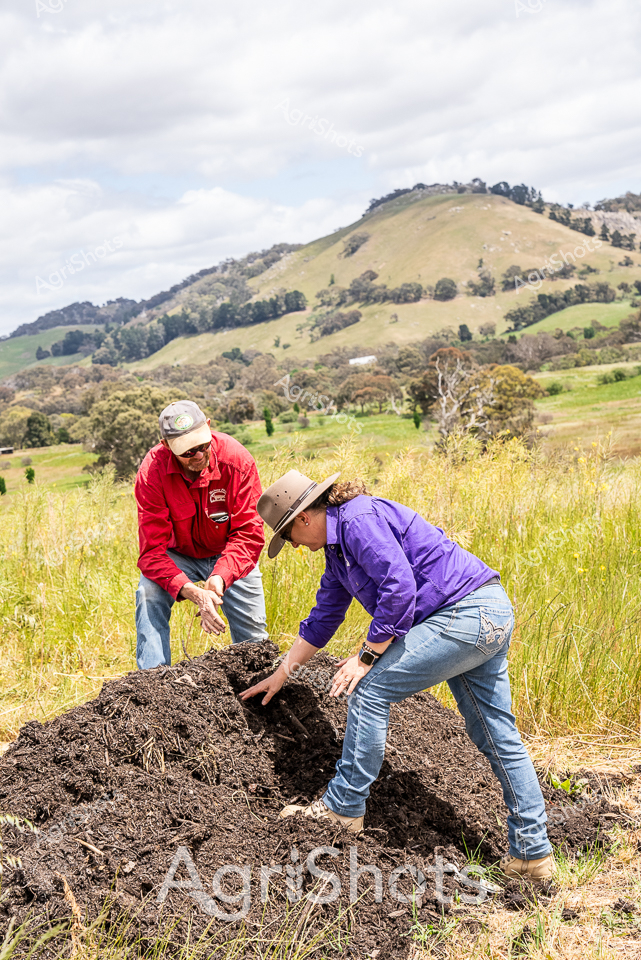
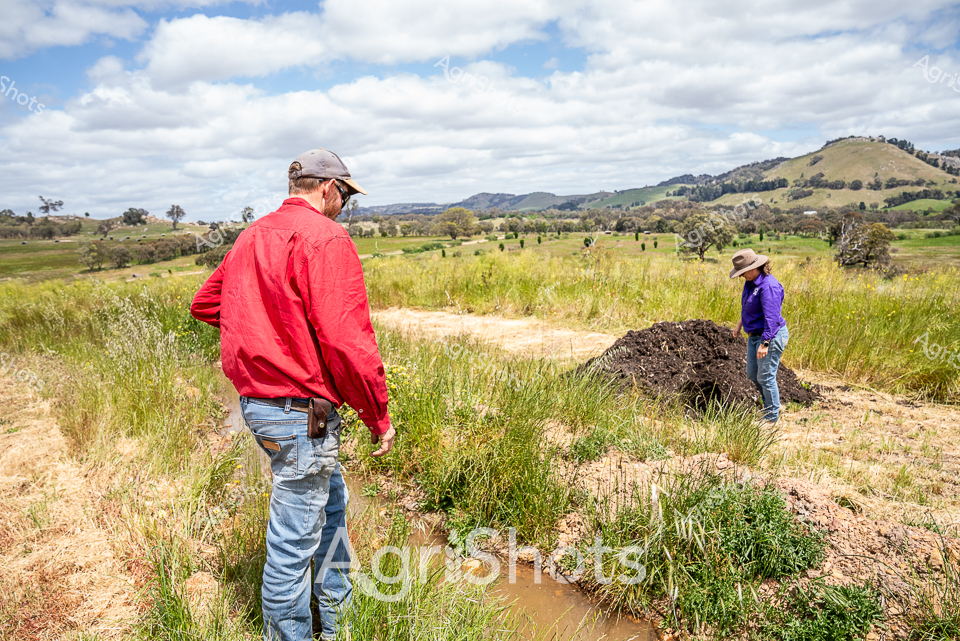
Amid the undulating golden grasslands of Victoria, two agricultural workers collaborate on a critical regenerative farming practice. Dressed in vibrant red and purple jackets, they carefully examine a substantial mound of rich, dark compost, their hands working methodically to assess the organic matter's composition and quality. Rolling hills dotted with eucalyptus trees and patches of woodland create a quintessential Australian rural backdrop, with soft grey clouds suggesting a mild, temperate day. The scene captures the essence of modern sustainable agriculture - a hands-on approach to soil health and ecosystem management. One worker leans forward, her purple jacket contrasting against the earthy brown of the compost pile, while her colleague in a bright red jacket provides guidance and support. Their careful inspection represents the meticulous science behind regenerative farming techniques, highlighting the critical role of organic waste recycling and soil restoration in contemporary agricultural practices. The landscape speaks to the broader narrative of Australian agricultural innovation - transforming green waste and organic materials into valuable soil nutrients, demonstrating a commitment to environmental stewardship and sustainable land management. This image embodies the progressive spirit of women in agriculture, showcasing their expertise and hands-on engagement with cutting-edge farming methodologies.
 Image
Image
Regenerative Composting Landscape in Rural New South Wales Undulating mounds of rich, dark compost rise like earthen waves across a meticulously prepared agricultural site, capturing the essence of sustainable farming practices. The raw organic material—a blend of agricultural waste, manure, and plant residues—transforms into nutrient-dense soil amendments, promising renewed fertility for the surrounding farmlands. Rolling hills and scattered eucalyptus trees frame the distant landscape, creating a quintessential Australian rural backdrop of muted greens and soft blues. Each carefully constructed compost windrow represents a critical step in regenerative agriculture, where waste becomes a valuable resource and soil health is paramount. The textured browns of the decomposing material contrast sharply with the dusty earth paths between the rows, highlighting the meticulous process of organic matter recycling. This scene embodies the innovative spirit of modern Australian agriculture—turning waste into wealth, rebuilding soil ecosystems, and creating sustainable solutions for food production in a challenging environment.
 Image
Image
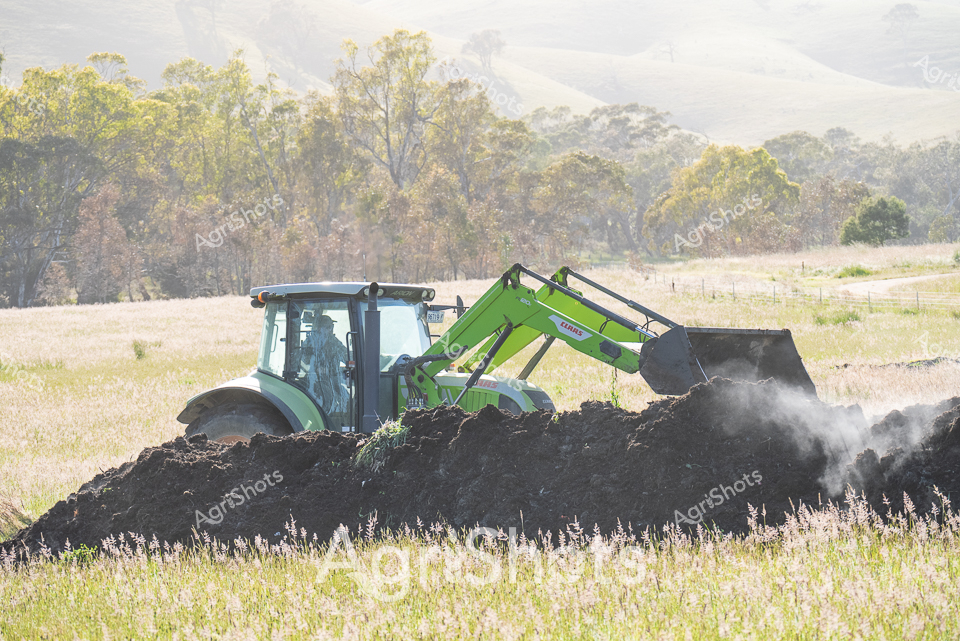
In the verdant farmlands of Victoria, a vibrant green Claas tractor navigates through a misty morning landscape, methodically turning a massive pile of rich, dark compost. Steam rises from the decomposing organic matter, signaling the active biological processes transforming agricultural waste into nutrient-dense soil amendment. The powerful front-end loader effortlessly manipulates the steaming heap, demonstrating the precision of modern regenerative farming techniques that prioritize soil health and sustainability. Surrounding grasslands shimmer with early morning dew, while a backdrop of eucalyptus trees creates a soft, muted green and grey palette that speaks to the Australian agricultural ecosystem. The composting operation represents a critical step in circular farming practices, recycling green waste and manure into valuable fertiliser that will nurture future crops. This scene captures the intersection of advanced agricultural technology and ecological mindfulness, where mechanical efficiency meets natural biological cycles. The tractor's lime-green hydraulic loader stands in sharp contrast to the dark, rich compost, symbolizing the innovative approach to waste reduction and soil regeneration that is transforming contemporary agricultural practices across Victoria's diverse farming regions.
 Image
Image
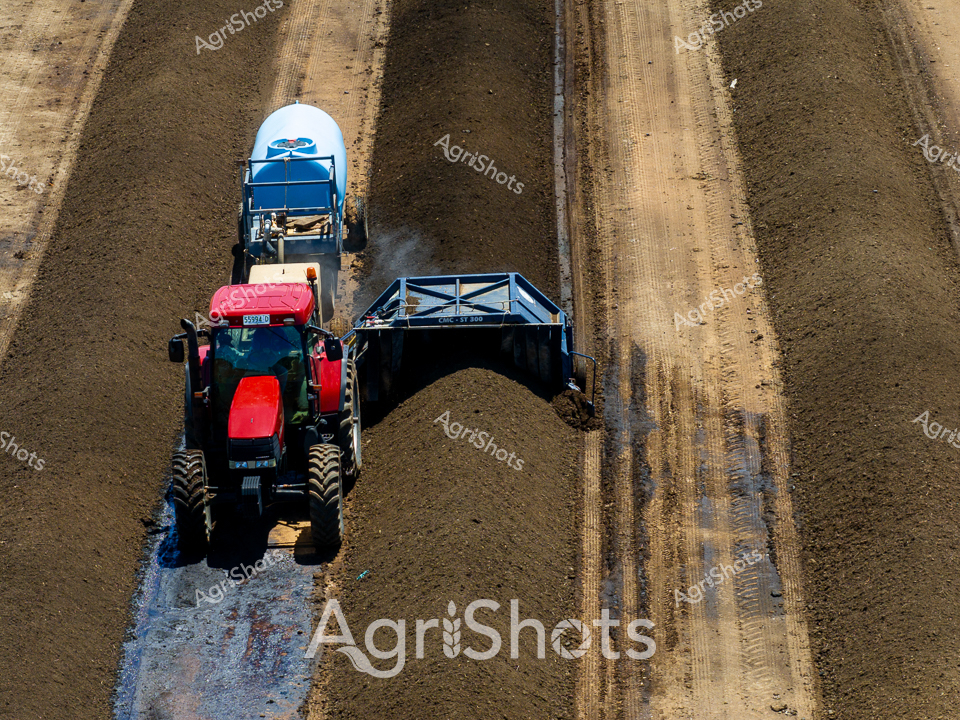
Aerial view of agricultural precision at work: a vibrant red Case tractor navigates a meticulously prepared agricultural field, pulling a dark blue trailer loaded with organic composting material. The rich brown earth is sculpted into carefully graded rows, revealing the systematic approach of modern regenerative farming practices. A white-topped tank mounted on the tractor suggests advanced fertiliser distribution technology, highlighting the intricate process of soil nutrition management. The machinery moves with deliberate purpose across the landscape, kicking up fine dust that speaks to the dry conditions typical of New South Wales agricultural regions. Precision engineering meets environmental stewardship, as the equipment transforms organic waste into potential nutrient source, embodying the principles of sustainable agricultural innovation. The geometric lines of the field and machinery create a striking visual rhythm, demonstrating how technology and natural processes intersect in contemporary farming.
 Image
Image
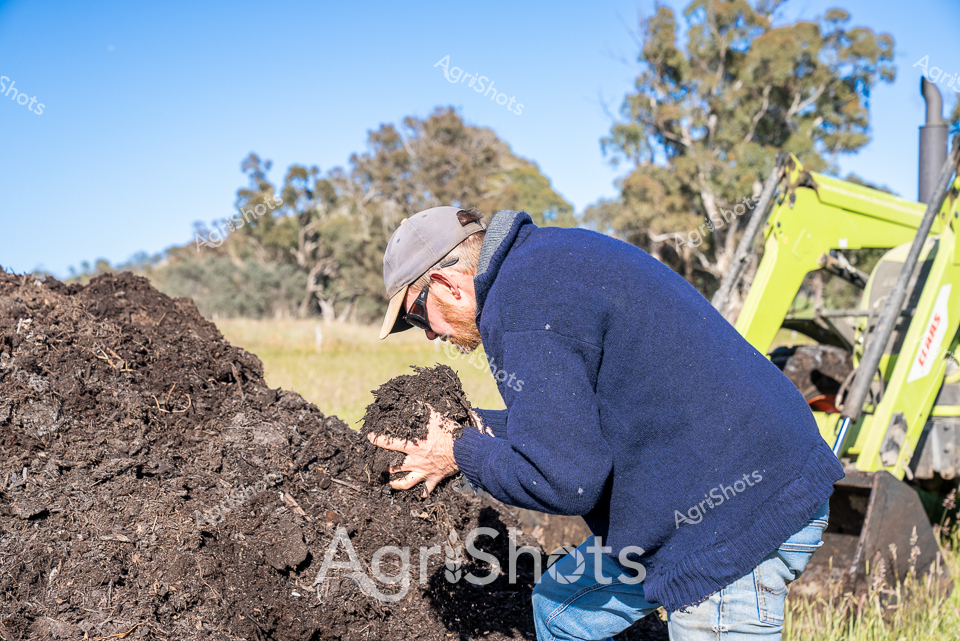
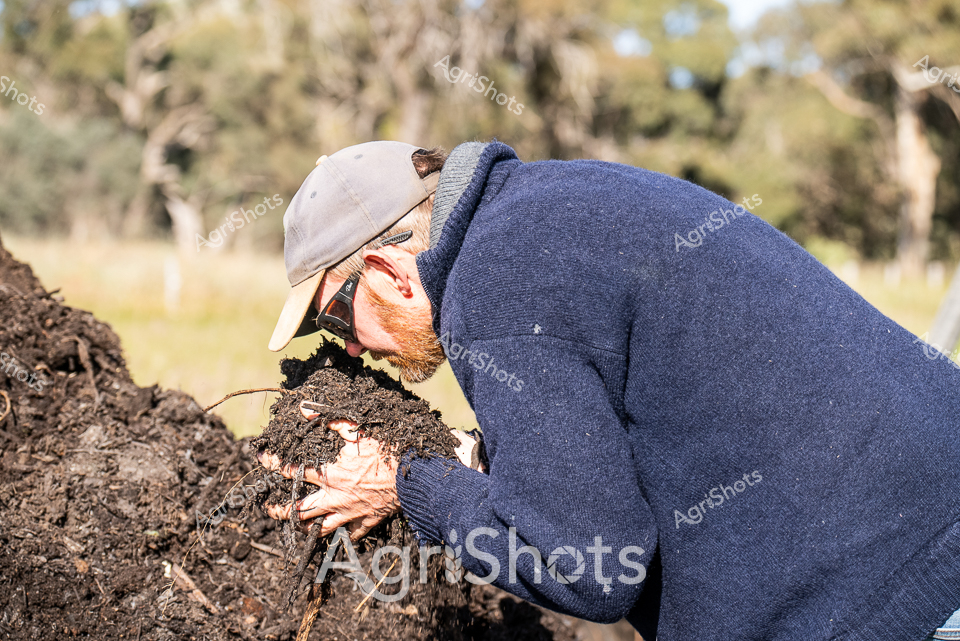
A seasoned farmer in a navy blue jumper and grey cap carefully examines dark, rich compost material on a rural Victorian property. His weathered hands gently cradle a handful of nutrient-dense organic matter, revealing the intricate textures of decomposed green waste and agricultural residue. A vibrant lime-green tractor sits in the background, hinting at the modern machinery supporting regenerative farming practices. The landscape unfolds with eucalyptus trees scattered across a gently undulating paddock, bathed in soft natural light that suggests early morning or late afternoon. This moment captures the essence of sustainable agricultural techniques, where waste becomes a valuable resource for soil health and future crop productivity. The scene embodies a holistic approach to farming - recycling, rebuilding soil biodiversity, and maintaining a deep connection between the farmer and the land.
 Image
Image
Nestled in the rolling pastoral landscape of Victoria, a dedicated farmer tends to a substantial compost heap, embodying the principles of regenerative agriculture. Wearing a purple long-sleeved top and classic blue denim, with a wide-brimmed sun hat protecting against the soft midday light, the worker carefully manages organic matter that will enrich the surrounding grasslands. Verdant hills and scattered eucalyptus trees create a quintessential Australian agricultural backdrop, highlighting the interconnected relationship between land management and sustainable farming practices. The rich, dark compost pile stands in stark contrast to the pale grasses and green-gold landscape, representing a critical component of soil health and biodiversity. This scene captures the essence of modern ecological farming - transforming agricultural waste into valuable nutrients, supporting both crop productivity and environmental resilience. The careful attention to composting reflects a commitment to waste reduction, soil regeneration, and sustainable land stewardship typical of progressive Australian agricultural approaches. The image radiates a sense of purposeful calm, showcasing the quiet expertise of women in agriculture who are instrumental in driving innovative, environmentally conscious farming methods across rural Victoria.
 Image
Image
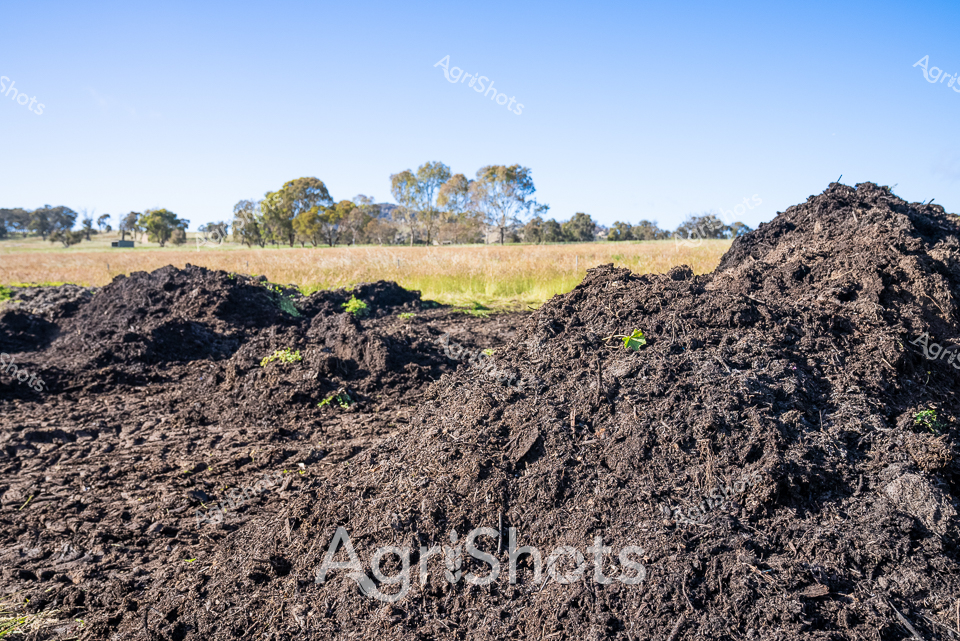
Dark, rich compost heaps dominate the foreground, their deep charcoal-brown surfaces revealing complex textures and occasional hints of bright green emerging seedlings. Rolling golden pastureland stretches behind, punctuated by scattered eucalyptus trees under a clear azure sky - quintessential Victorian agricultural landscape. These substantial organic matter mounds represent a critical regenerative farming technique, transforming green waste and agricultural byproducts into nutrient-dense soil amendments. The carefully constructed compost piles demonstrate sophisticated waste reduction and recycling practices, with meticulously layered organic materials slowly decomposing to create vital fertiliser for future crops. Sunlight illuminates the scene, casting subtle shadows across the undulating heaps and highlighting the rich biological processes at work. This image captures the essence of sustainable agricultural practices, where waste becomes a valuable resource and ecological cycles are carefully managed to support ongoing land productivity.
 Image
Image
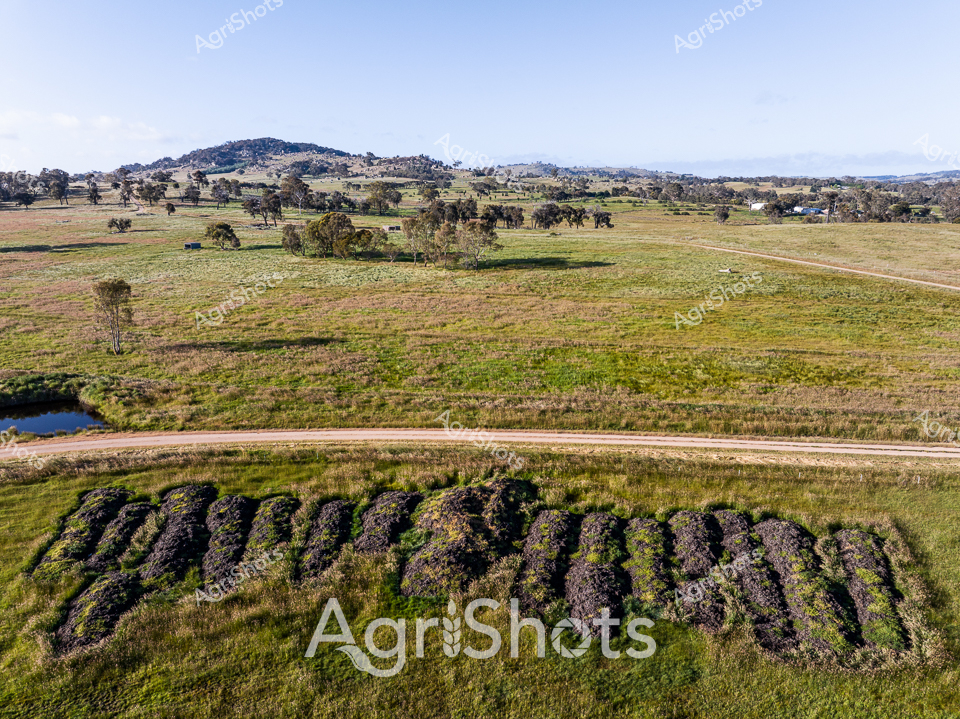
Mossy black mounds of composting organic matter rise from the verdant pastures of rural Victoria, creating a sculptural landscape against the rolling hills and scattered eucalyptus trees. These carefully constructed compost rows represent a cutting-edge regenerative agriculture technique, transforming green waste and agricultural byproducts into rich, living soil amendment. Sunlight casts long shadows across the undulating grasslands, highlighting the textural contrast between the dark, moss-covered compost heaps and the surrounding golden-green pastures. In the distance, a sparse woodland of mature trees dots the landscape, punctuating the gently rolling terrain typical of central Victoria's agricultural regions. A dusty dirt road winds through the scene, connecting distant farmsteads and hinting at the interconnected nature of sustainable farming practices. These strategically managed compost mounds demonstrate an innovative approach to soil health, biodiversity, and waste reduction, embodying the progressive spirit of modern Australian agricultural sustainability.
 Image
Image
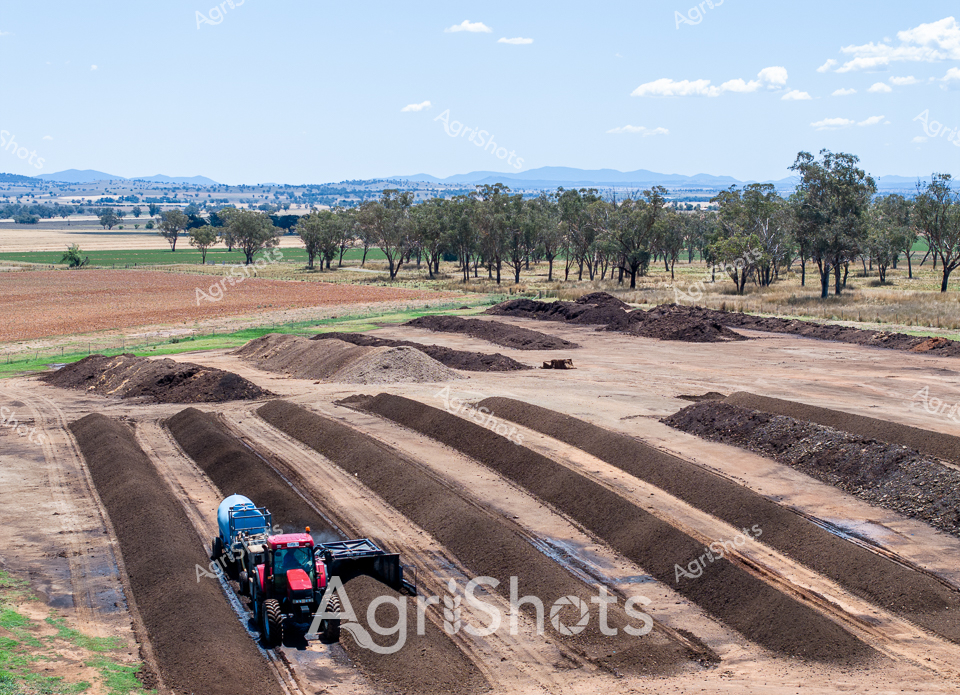
Sprawling across a classic New South Wales rural landscape, a vibrant blue and red tractor meticulously works to create carefully sculpted composting windrows. Rolling hills and eucalyptus trees frame the distant horizon, creating a quintessential Australian agricultural backdrop of golden-brown earth and soft blue skies. The composting operation demonstrates modern regenerative farming techniques, with rich dark organic matter carefully arranged in long parallel mounds, transforming agricultural and organic waste into nutrient-dense soil enhancer. Precision is evident in the methodical arrangement of the windrows, each carefully formed to optimize decomposition and microbial activity, representing an innovative approach to sustainable land management. The machinery moves deliberately through the prepared ground, turning and aerating the organic material that will eventually return vital nutrients to the agricultural ecosystem. This scene captures the intersection of technological innovation and ecological stewardship, showcasing how contemporary farmers are reimagining waste management and soil health in the Australian agricultural landscape.
 Video
Video
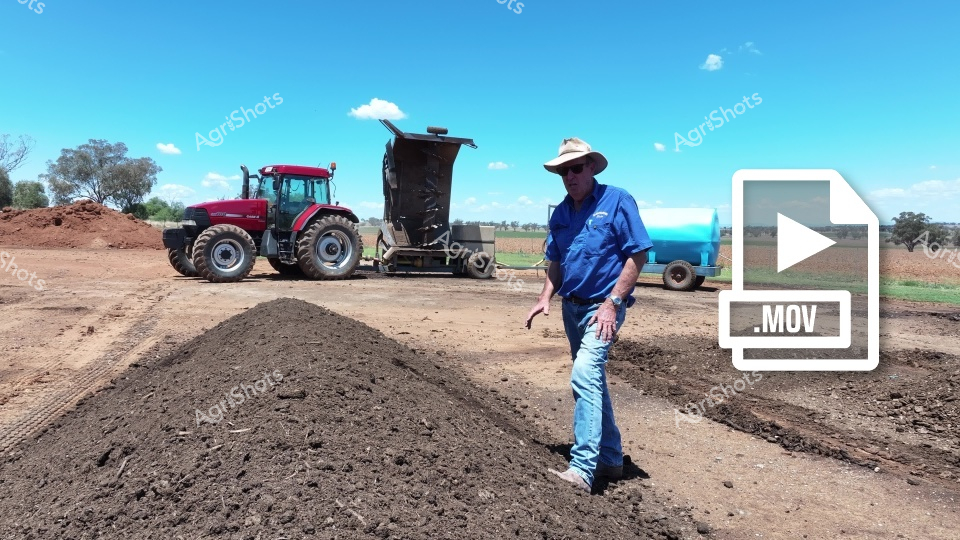
Beneath a crystalline blue sky in the Heathcote region of New South Wales, an agricultural expert stands amid mounds of rich, dark organic compost. A robust red Case tractor anchors the background, alongside a blue water tank, signaling an intensive yet sustainable farming approach. The worker, dressed in a classic blue workshirt, wide-brimmed sun hat, and denim jeans, surveys the composting site with an experienced gaze - embodying the careful management of agricultural waste and soil regeneration. Massive piles of decomposing organic matter demonstrate a sophisticated recycling process, transforming agricultural and potentially livestock waste into nutrient-rich soil amendments. The textural contrast between the deep brown compost heaps, rust-red soil, and verdant distant paddocks illustrates the intricate ecological systems of regenerative farming. A large composting machine stands ready, its dark mechanical form highlighting the technological interventions that support sustainable agricultural practices. The scene captures the sophisticated intersection of traditional farming wisdom and modern environmental stewardship, where waste reduction, soil health, and biodiversity converge in a single, purposeful landscape. The .MOV video icon suggests this is a dynamic, process-driven documentation of agricultural innovation.
 Image
Image
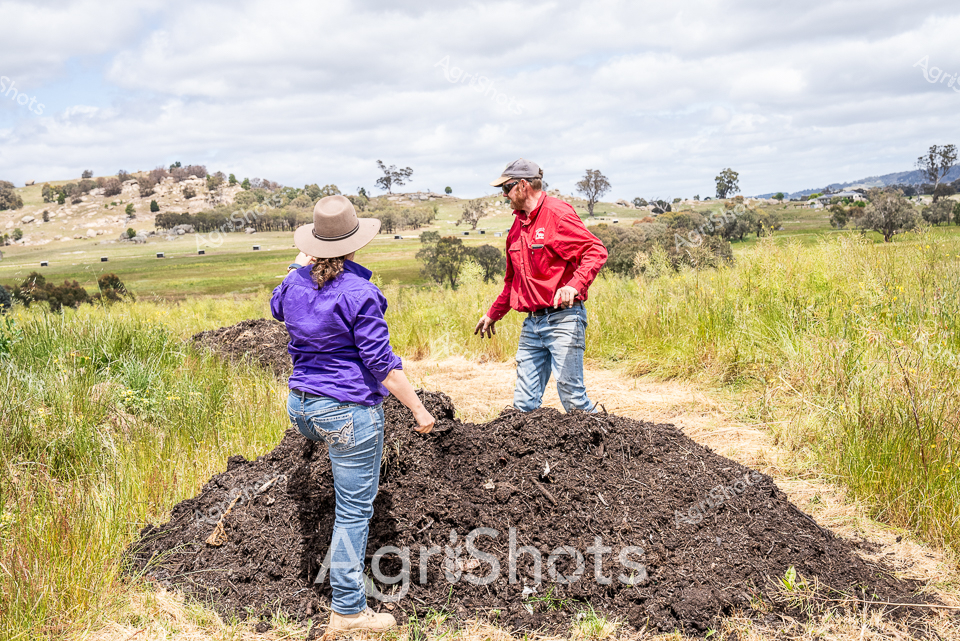
A vibrant scene of regenerative agricultural practice unfolds across a gently rolling Victorian pastoral landscape. Two agricultural professionals examine a substantial mound of rich, dark compost - a crucial element of sustainable farming techniques. Wearing a wide-brimmed beige hat and purple jacket, one worker carefully inspects the organic matter, while a colleague in a bright red shirt and cap observes from nearby. The surrounding grassland stretches out in textured waves of golden and green, punctuated by scattered eucalyptus trees and distant rocky outcrops that speak to the rugged Australian rural terrain. The compost heap - a dark, crumbly testament to waste recycling and soil regeneration - dominates the foreground, representing innovative approaches to agricultural sustainability. Soft, overcast skies create a muted backdrop that highlights the earthy tones of the soil and the vibrant work clothing. This image captures the essence of modern agricultural practice, where environmental stewardship and productive farming intersect, showcasing the critical work of those who are reimagining sustainable land management in the Australian agricultural sector. The scene embodies the spirit of regenerative agriculture - rebuilding soil health, recycling organic waste, and creating productive ecosystems that support both farming and environmental conservation.
 Video
Video
Rural Agricultural Composting: Soil Regeneration in Central Victoria Two farm workers stride confidently along precisely formed composting windrows, their blue workwear contrasting against rich dark brown organic matter. The expansive agricultural landscape of central Victoria unfolds beneath a brilliantly clear blue sky, with fluffy white clouds drifting above scattered eucalyptus trees. Heavy machinery—likely a Case tractor—sits nearby, instrumental in creating these meticulously constructed compost beds designed for regenerative farming practices. These carefully engineered soil amendment rows represent cutting-edge sustainable agricultural techniques, transforming agricultural waste into nutrient-rich fertilizer that will enhance soil biodiversity and crop productivity. The scene captures the methodical approach of modern Australian farming, where technological precision meets ecological consciousness, turning organic materials into valuable resources for future cultivation. The clean lines of the windrows, the careful spacing, and the workers' purposeful movement demonstrate a sophisticated approach to soil health and sustainable land management in the Heathcote region of New South Wales.
 Video
Video
Rural composting expertise unfolds across a verdant pasture landscape in Victoria, with two agricultural workers carefully managing an expansive organic matter pile. Wearing protective work attire - one in a vibrant purple jacket and the other in a bold red top - they methodically handle rich, dark composting material against a backdrop of rolling grasslands and scattered eucalyptus trees. Their wide-brimmed hats shield them from the bright daylight, suggesting this is a mid-morning agricultural activity during what appears to be late spring or early summer. The composting site represents a critical element of regenerative farming practices, with the workers actively turning and aerating the decomposing organic material that will ultimately restore soil nutrients and support sustainable land management. Textural contrasts abound - the deep brown, crumbly compost heap against the lush green grasses and distant tree-dotted landscape creates a visually compelling scene of agricultural renewal and ecological stewardship. Their deliberate, collaborative movements highlight the precision and care integral to modern sustainable agricultural techniques, embodying the innovative spirit of contemporary Australian farming communities committed to environmental regeneration and responsible land use.
 Image
Image
Weathered hands cradle dark, rich soil in a quiet moment of agricultural intimacy. An experienced farmer in a navy blue sweater and light cap leans intently into a mound of composting organic matter, examining the intricate ecosystem of decomposing material. The backdrop suggests a Victorian farmland - soft green pastures and scattered gum trees creating a gentle, diffused landscape. This scene captures the essence of regenerative farming practices, where soil health is viewed as a living, breathing resource rather than merely a growing medium. The deep brown of the compost contrasts beautifully with the blue knit sweater, symbolizing the connection between human stewardship and natural cycles of renewal. Every handful of this carefully managed organic waste represents potential - future nutrients, improved soil structure, and sustainable agricultural resilience.
 Video
Video
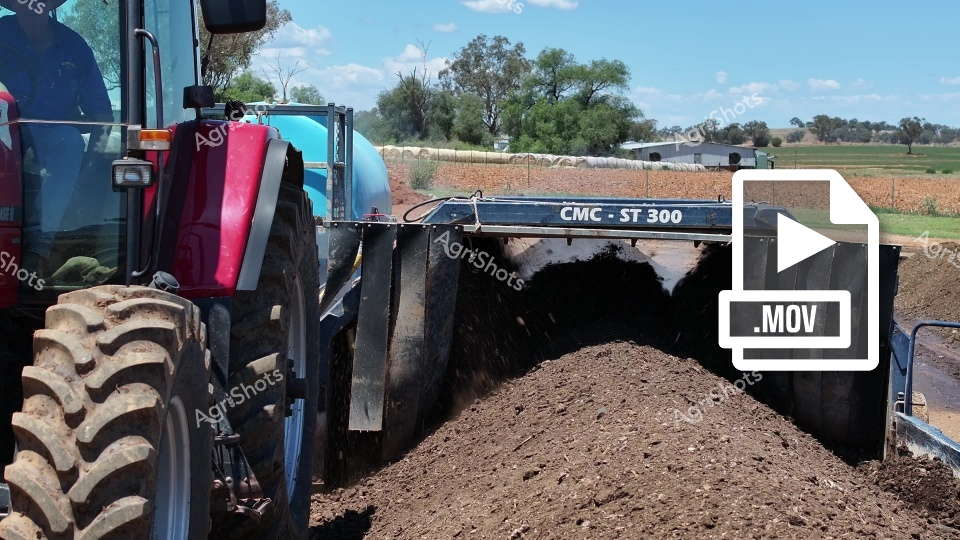
A robust Case tractor in vibrant magenta and blue stands ready beside a CMC ST 300 compost turner, processing rich, dark organic matter under the expansive blue skies of rural New South Wales. The rugged agricultural machinery transforms agricultural waste into nutrient-dense soil amendment, representing cutting-edge regenerative farming techniques in the Heathcote region. Massive ribbed tractor tyres grip the dusty ground, suggesting the heavy-duty capabilities required for sustainable land management. The landscape unfolds with scattered eucalyptus trees and distant paddocks, capturing the quintessential Australian agricultural panorama where innovative waste recycling meets traditional farming practices. Sunlight streams across the scene, highlighting the textural contrast between the gleaming machinery and the deep brown, crumbly compost being systematically turned and processed. This image embodies the progressive spirit of Australian agricultural sustainability, where technology and ecological consciousness converge to renew and enrich the land.
 Video
Video
Dark, rich compost tumbles from a red Case tractor in the golden afternoon light of a central New South Wales paddock. Industrial composting equipment transforms organic agricultural waste into nutrient-dense soil amendments, showcasing regenerative farming practices. A large blue water tank stands adjacent to the machinery, supporting the precise environmental management required in dryland agricultural systems. Scattered eucalyptus trees punctuate the dusty rural landscape, creating a quintessential Australian agricultural backdrop of sparse, resilient vegetation. Steam rises from the freshly turned compost heap, indicating active biological decomposition processes that return valuable nutrients to the soil ecosystem. This scene embodies sustainable farming techniques that optimize waste reduction, soil health, and carbon sequestration in challenging agricultural environments.
 Image
Image
A powerful Case IH tractor rumbles through the undulating agricultural landscape of rural New South Wales, pulling a large GMC ST 900 trailer laden with rich, dark compost. The vibrant red machinery stands in stark contrast to the earthy brown tones of the composting piles, highlighting the essential work of soil regeneration and organic waste recycling. Scattered gum trees dot the golden-hued paddocks, with blue mountain ranges rising softly in the background, creating a quintessential Australian farming vista. The tractor methodically spreads nutrient-dense organic matter, transforming agricultural waste into valuable fertilizer that will rejuvenate and sustain the surrounding farmland. Wisps of dust and organic material trail behind the machinery, testament to the dynamic process of sustainable agricultural practices. This scene captures the intricate balance of modern farming - where technology, environmental consciousness, and traditional land management techniques converge to support productive and resilient agricultural ecosystems.
 Image
Image
Rural Regenerative Agriculture: Soil Health Assessment A vibrant rural landscape unfolds across the undulating Victorian countryside, where agricultural innovation meets traditional land management. Two farmers stand amid golden grasses and scattered eucalyptus trees, examining a substantial mound of rich, dark compost—a testament to regenerative farming practices. The individual in a bright red jacket observes from a distance, while another in a purple top studies the organic matter pile, representing a collaborative approach to sustainable agricultural development. A small watercourse winds through the foreground, highlighting the careful water management integral to this ecosystem. Rolling hills in the background create a classic Australian pastoral scene, with scattered trees and gentle terrain revealing the complex topography of the region. Cloudy skies suggest a mild day, typical of agricultural regions in Victoria, where environmental stewardship and productive land use intersect. The scene embodies the contemporary agricultural ethos of soil regeneration, waste recycling, and holistic land management. The carefully managed compost heap represents a critical component of sustainable farming—transforming organic waste into valuable soil nutrition, enhancing biodiversity, and reducing environmental impact.
 Video
Video
Rural composting transforms agricultural waste into rich, life-giving soil beneath the winter-bleached pastures of Victoria. A powerful green tractor churns dark, steaming organic matter, sending plumes of earthy vapor rising across the windswept grasslands. Mounds of decomposing material—a complex blend of green waste, manure, and agricultural remnants—create an intricate landscape of texture and deep charcoal hues, representing cutting-edge regenerative farming techniques. The dense black compost heaps contrast dramatically with the pale, frost-touched grasses and distant fence lines, embodying the cyclical renewal at the heart of sustainable agricultural practices. Steam and dust billow around the machinery, suggesting the dynamic, transformative processes of breaking down waste into nutrient-rich soil amendment. This scene captures the innovative spirit of modern Australian farming—where technology, environmental consciousness, and traditional land management converge to rebuild and nourish the earth.
Well, you've ploughed through the whole field!
No more crops to harvest here, mate.
Try searching for something else in our library of 50,000+ royalty-free media: