 Image
Image
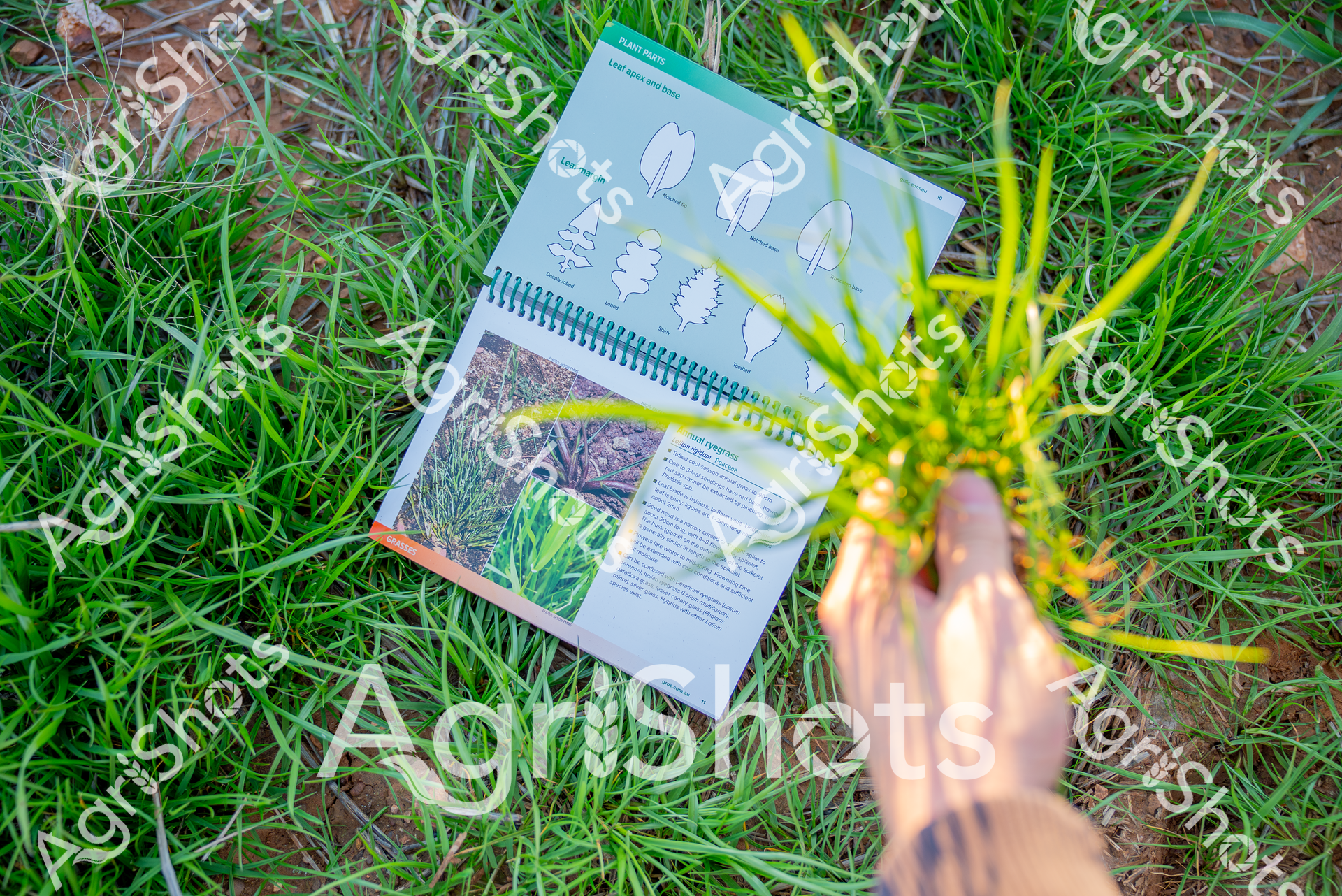
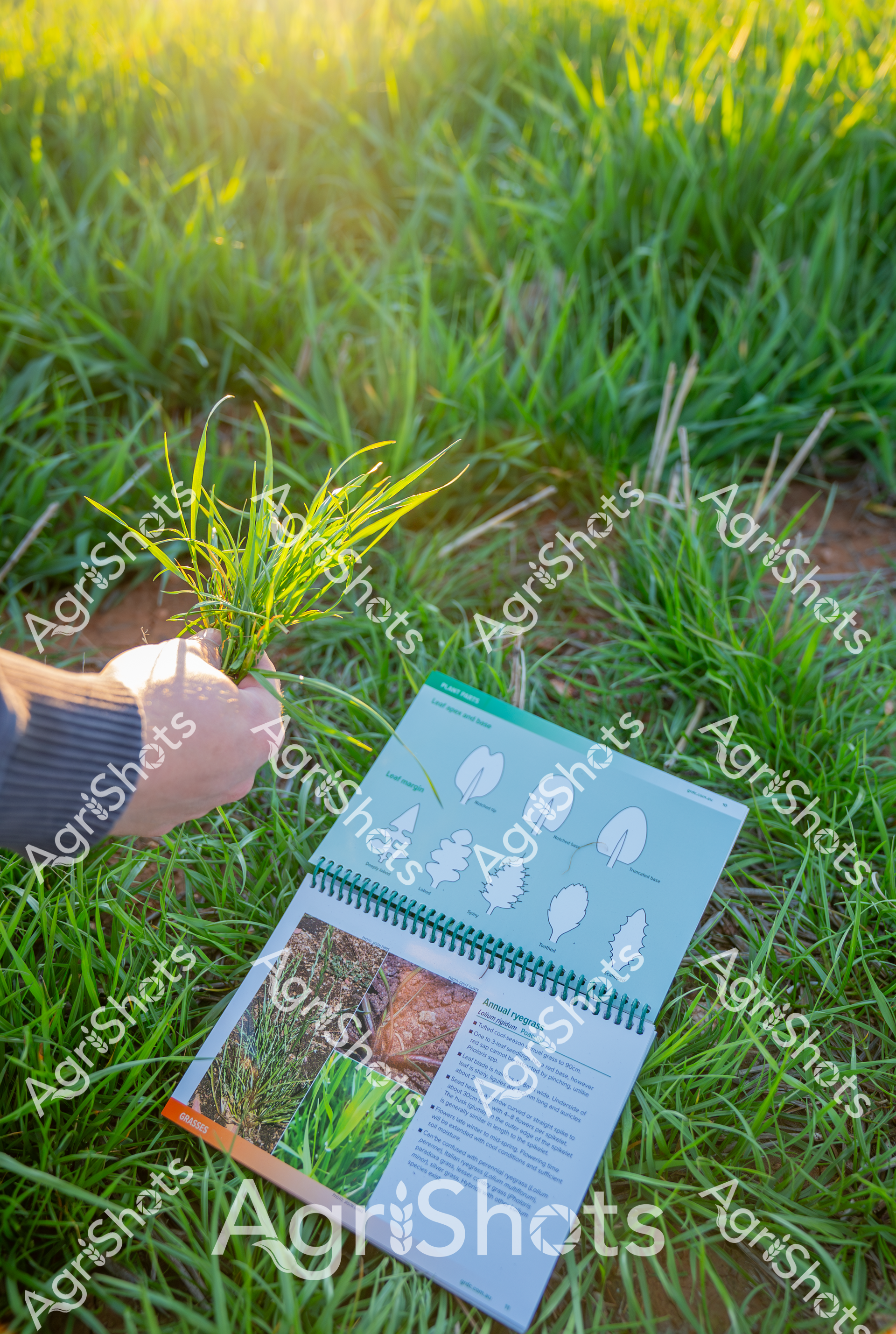
Nestled in vibrant green grass, an educational field guide for plant identification lies open, revealing detailed botanical sketches of leaf shapes and forms. The document appears to be a scientific resource focused on understanding plant morphology, with carefully illustrated leaf types displayed on the upper section of the page. A portion of a plant is partially visible in the foreground, suggesting an immersive outdoor learning environment where botanical study meets natural landscape. The crisp blue-green tones of the guidebook contrast beautifully with the lush, verdant grass surrounding it, creating a sense of scientific exploration and connection with the natural world. The image captures the essence of agricultural and botanical research, highlighting the meticulous process of plant identification and classification. Soft grass blades frame the document, emphasizing the practical, hands-on approach to understanding plant life in its native environment.
 Image
Image
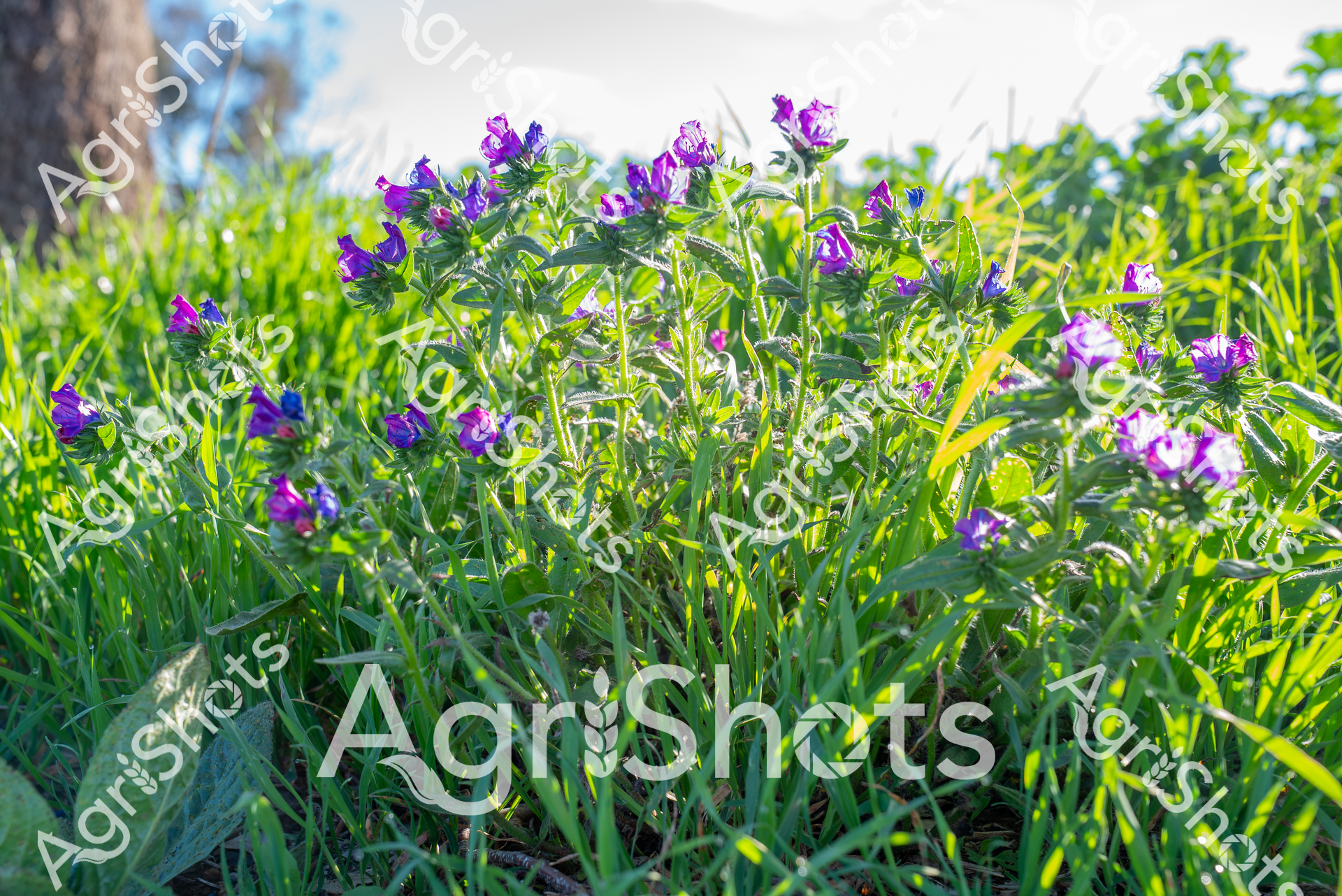
Vibrant purple Patterson's Curse (Echium plantagineum) blooms burst from a lush green grassy landscape, creating a striking botanical scene in the New South Wales Riverina region. The invasive flowering plant, also known as Salvation Jane, dominates the foreground with clusters of deep purple-blue blossoms nestled among bright green grass stems. Soft sunlight illuminates the dense vegetation, highlighting the rich contrast between the vivid purple flowers and the verdant background. Each delicate flower cluster stands proudly amid the grassland, representing both the beauty and ecological challenge of this widespread agricultural weed. The image captures the dynamic nature of Australian rural landscapes, where introduced plant species can create both visual drama and environmental complexity. The dense growth suggests recent rainfall and fertile conditions in this agricultural setting.
 Image
Image
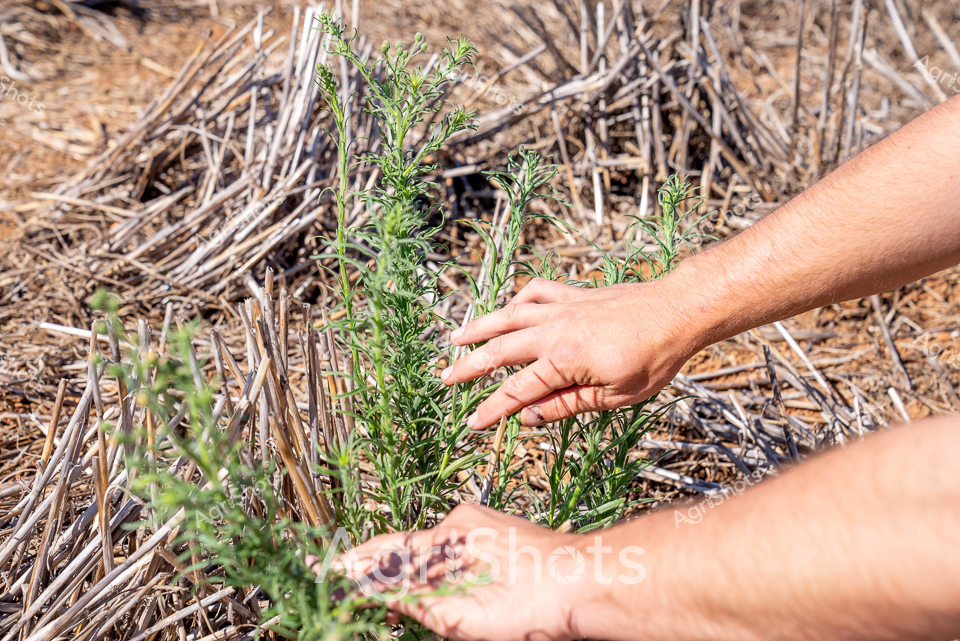
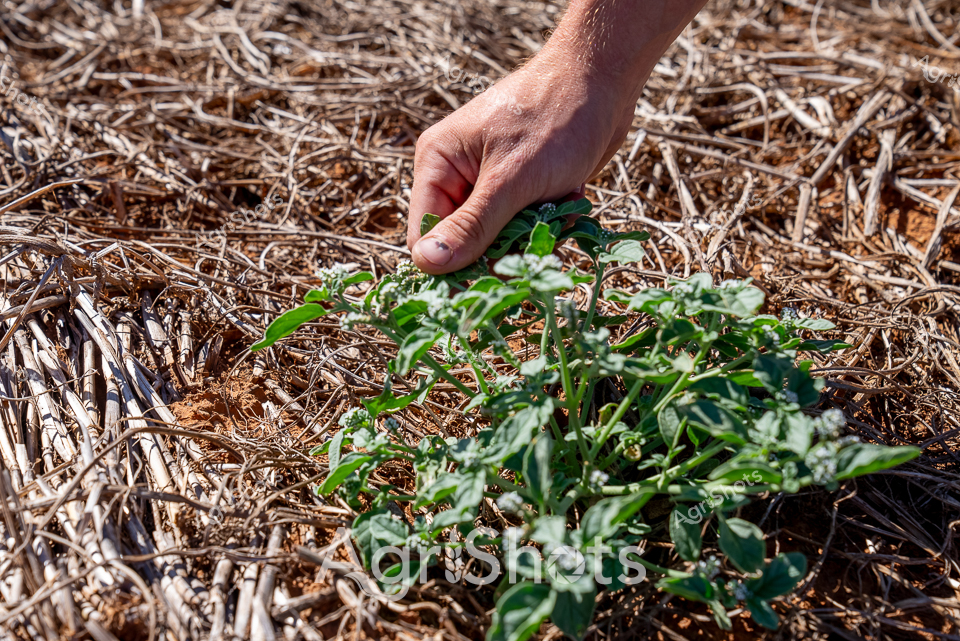
Autumn unfolds across the Riverina's golden stubble-strewn landscape, where hands carefully inspect a cluster of emerging fleabane weeds among the wheat or barley stubble. Weathered dry crop remnants create a complex textural backdrop of silvered and tawny stalks, contrasting with the vibrant green botanical intruders. A farmer's sun-bronzed hand reaches deliberately among the plant stems, likely assessing weed density and potential agricultural management strategies critical to sustainable cropping practices. The scene captures a moment of precise agricultural observation, where careful monitoring of emerging vegetation determines future field interventions. Stubble retention - visible in the intricate matrix of broken crop stalks - represents modern conservation farming techniques prevalent throughout New South Wales' broadacre agricultural zones. Soft autumnal light illuminates the delicate weed structures, highlighting the nuanced relationship between intentional crop management and opportunistic plant growth. This image eloquently portrays the continuous vigilance required in dryland farming systems, where every emerging plant represents a potential challenge or opportunity within the broader ecological management framework of contemporary Australian agriculture.
 Image
Image
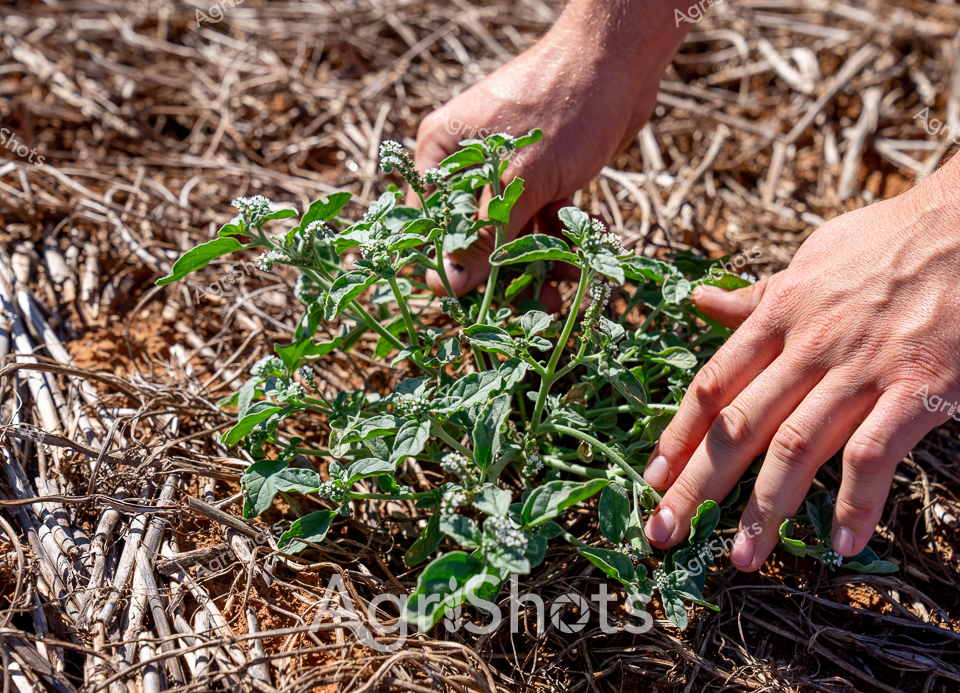
Delicate white flower clusters crown vibrant green foliage as careful hands gently inspect a young weed nestled among the golden-brown stubble of a post-harvest field. The rich, textured landscape of dry crop remnants spreads across the frame, telling a story of the Riverina's agricultural precision. Fingers probe and examine the plant's growth, revealing the meticulous attention farmers give to managing emerging vegetation between cropping cycles. Sunlight catches the edges of dried stalks, creating a warm palette of wheat and umber tones that contrast sharply with the plant's lush green leaves. This intimate moment captures the constant vigilance of agricultural management, where every emerging plant is assessed for its potential impact on future crop health. The close-up perspective invites viewers into the intricate world of agricultural stewardship, highlighting the careful balance between cultivation and control in the Australian farming landscape.
 Image
Image
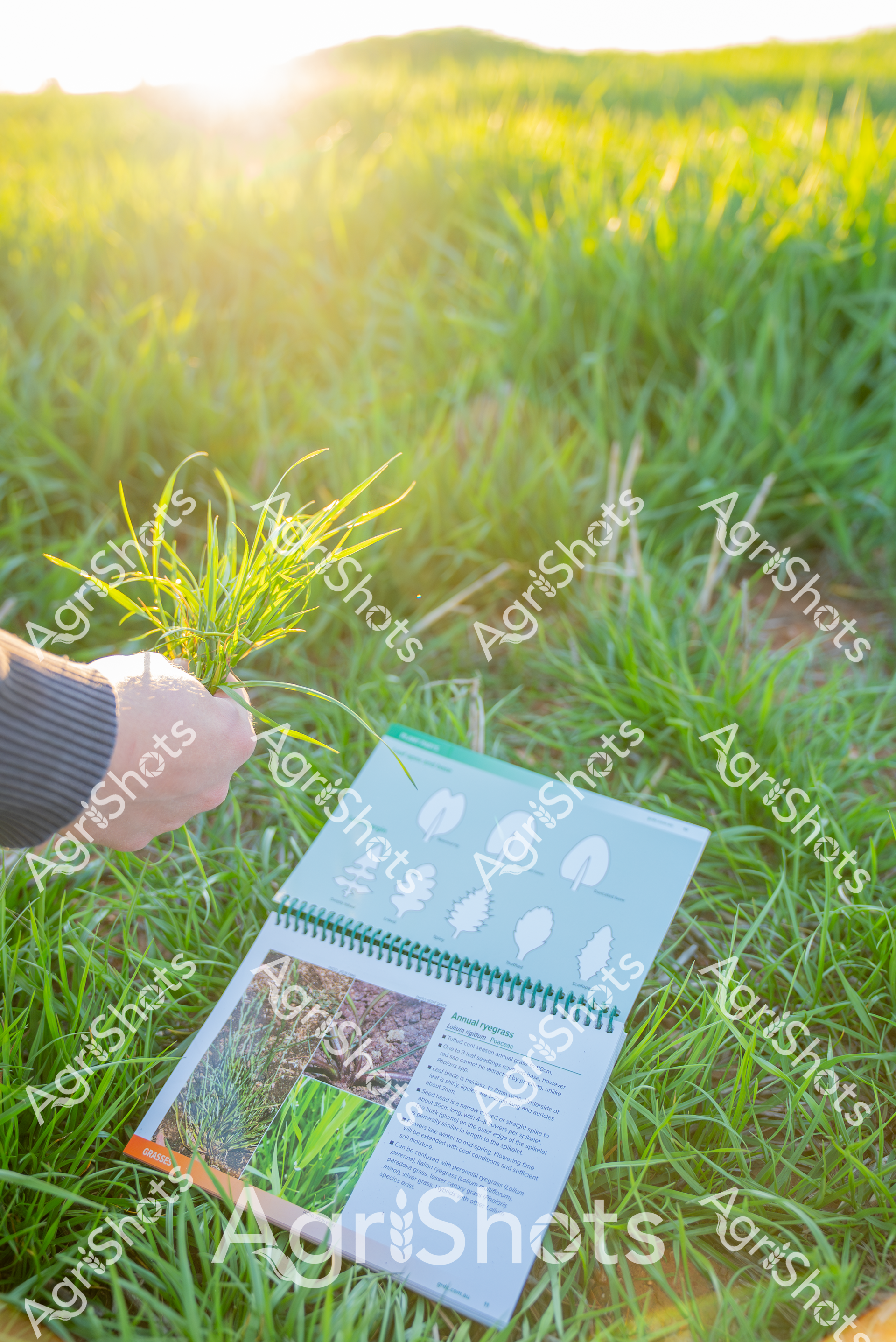
A vibrant agricultural research moment captures the intricate study of ryegrass in the lush Riverina grasslands of New South Wales. A gloved hand gently holds a tuft of green and yellow grass, carefully comparing it against an informative field guide with botanical leaf illustrations. Golden sunlight bathes the verdant landscape, creating a soft, warm glow that highlights the delicate grass stems and the meticulously detailed identification manual. The scene represents the precision and careful observation essential in agricultural weed management, showcasing the intersection of scientific investigation and natural beauty. Crisp green grasses stretch across the background, creating a rich, textured environment that speaks to the complexity of rural ecosystem research. This image embodies the meticulous approach of agricultural scientists in understanding and managing grassland vegetation.
 Image
Image
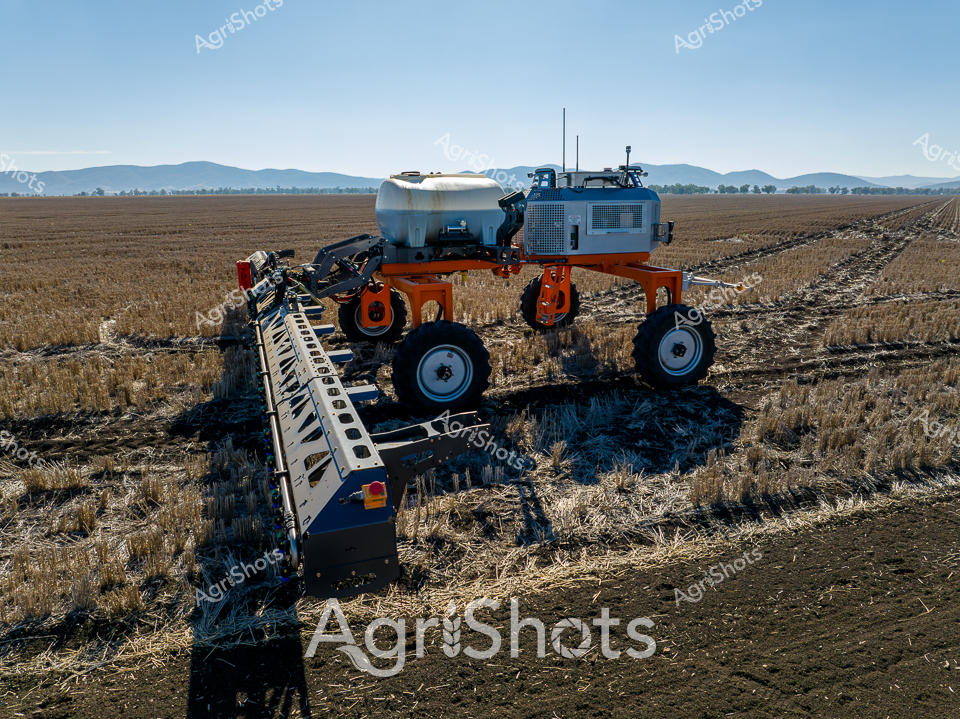
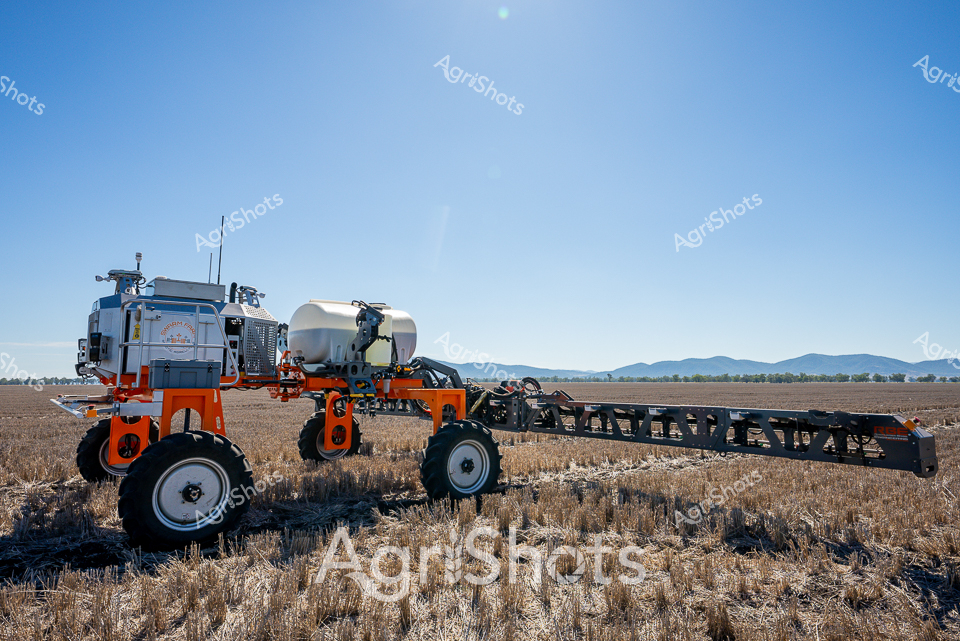
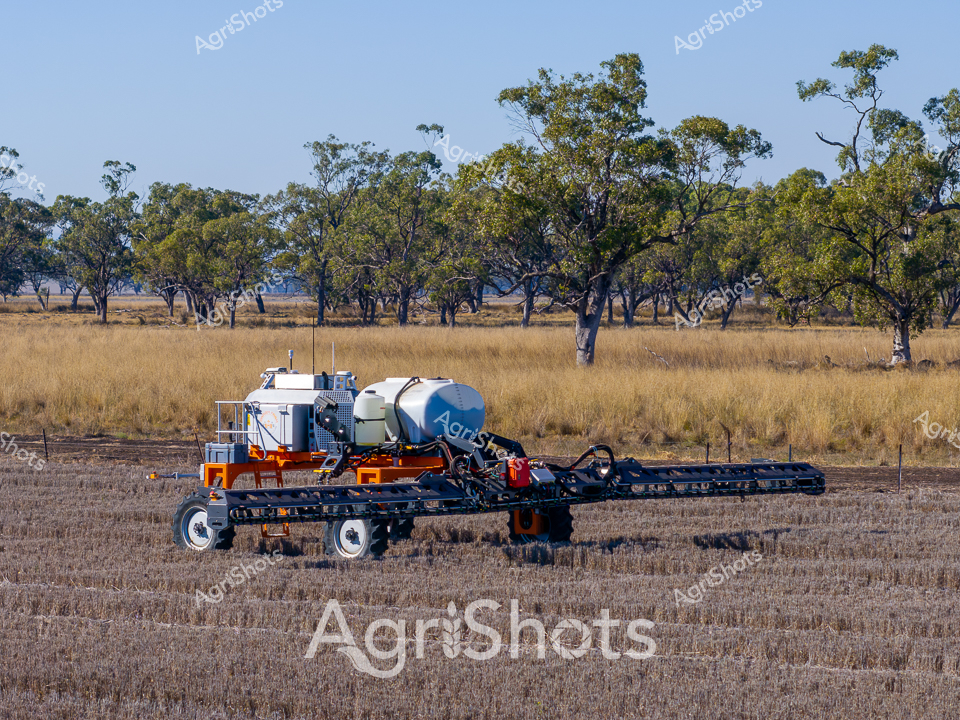
Under crisp autumn light across the Liverpool Plains of New South Wales, an advanced autonomous camera sprayer navigates through golden wheat stubble, representing the cutting edge of agricultural precision technology. The sleek orange and blue robotic sprayer moves with calculated purpose, its extended boom mounted with sophisticated sensing equipment designed to target individual weeds with surgical accuracy. A white water tank mounted on the vehicle suggests its primary function of selective chemical application, minimizing environmental impact and reducing overall agricultural chemical usage. Distant blue mountain ranges frame the landscape, providing a stark contrast to the meticulously managed agricultural terrain, where every pass of this intelligent machine represents a fusion of robotics, data analysis, and sustainable farming practices. The ground beneath tells a story of recent harvest - flattened wheat stubble and carefully tilled soil indicating the transition between crop cycles. This image captures the nuanced evolution of Australian agricultural technology, where swarm robotics and intelligent systems are transforming traditional farming methodologies with unprecedented efficiency and ecological sensitivity.
 Image
Image
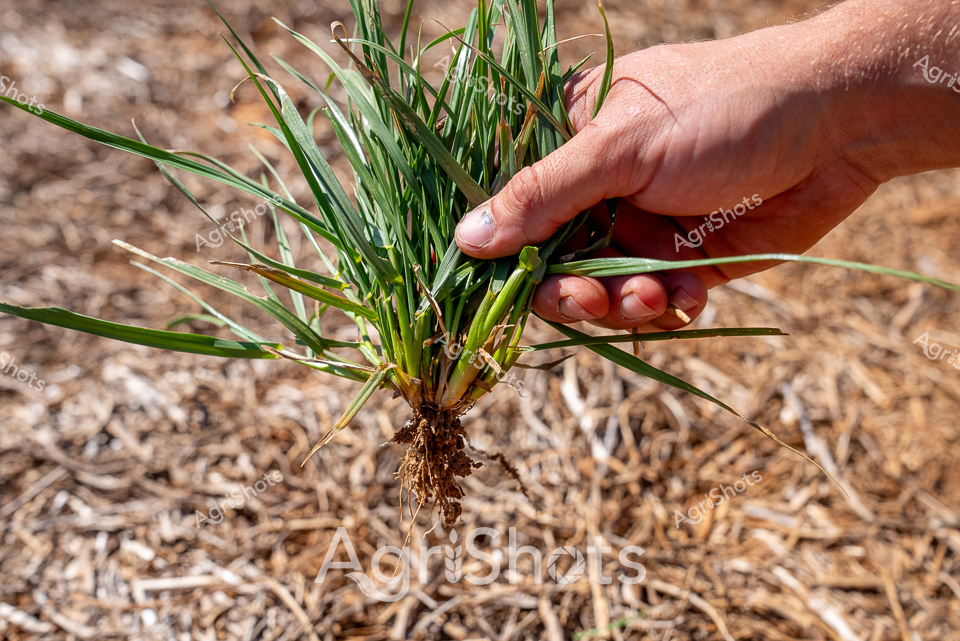
A weathered hand gently cradles a tussock of native grass, revealing the intricate root system against a backdrop of dry, textured stubble. The vibrant green blades contrast sharply with the parched earth, capturing the harsh resilience of agricultural landscapes in the Riverina region of New South Wales. This close-up reveals the delicate ecosystem of a paddock during the challenging transition between summer and autumn, where every plant tells a story of survival. The slender grass - potentially a ryegrass or hairy panic variety - demonstrates the complex relationship between farmers and unwanted vegetation. Roots exposed, the plant becomes a living specimen of the ongoing battle with weeds and managing ground cover in drought-affected regions. The intimate framing emphasizes the tactile connection between human intervention and natural growth, with each weathered finger telling its own story of agricultural expertise. The muted browns and rich earth tones speak to the cyclical nature of farming, where seemingly insignificant plants can dramatically impact crop health and soil management. This image captures a moment of careful assessment, a testament to the nuanced knowledge required in Australian agricultural practice.
 Image
Image
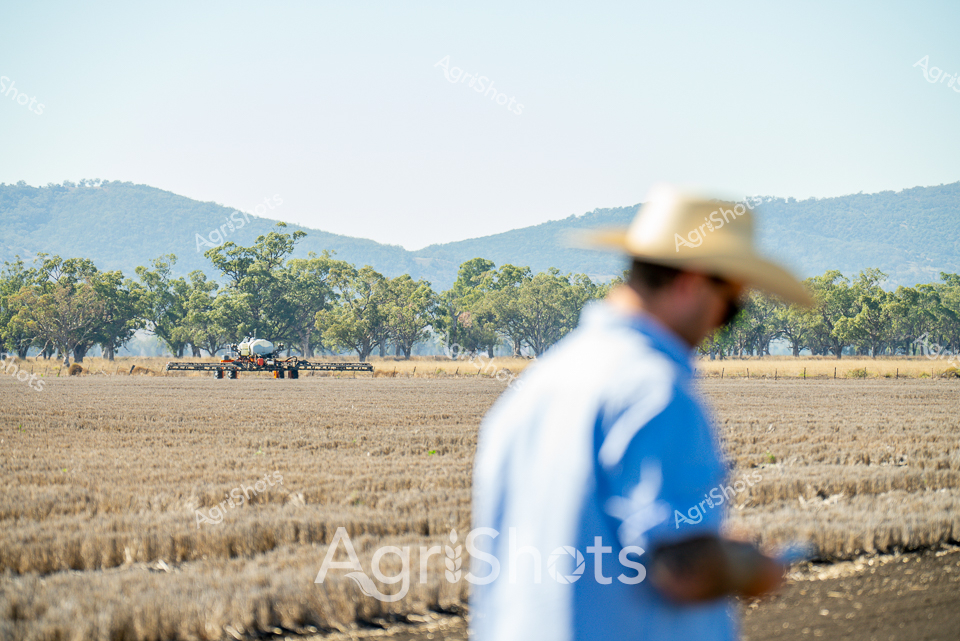
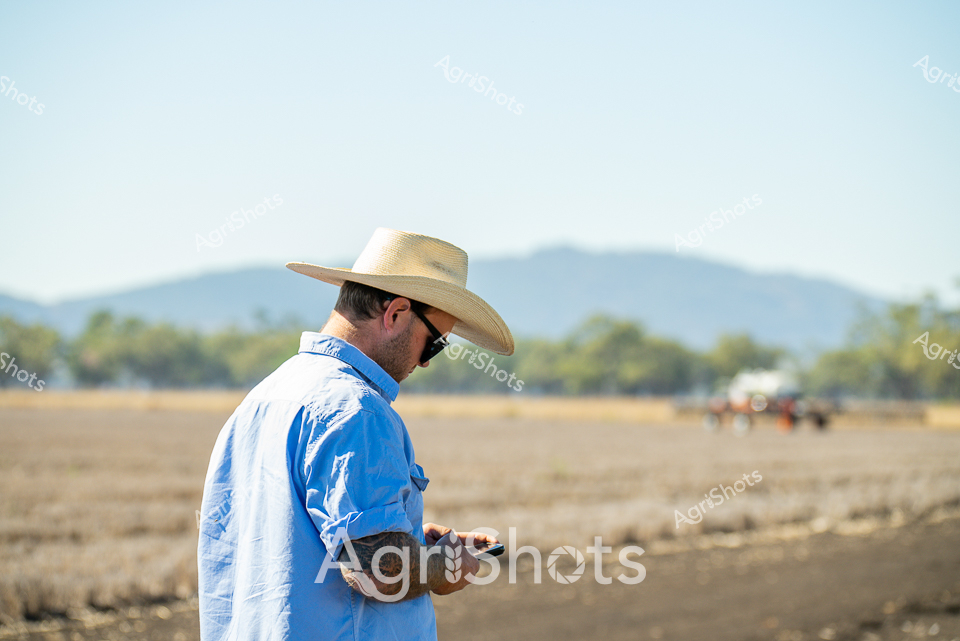
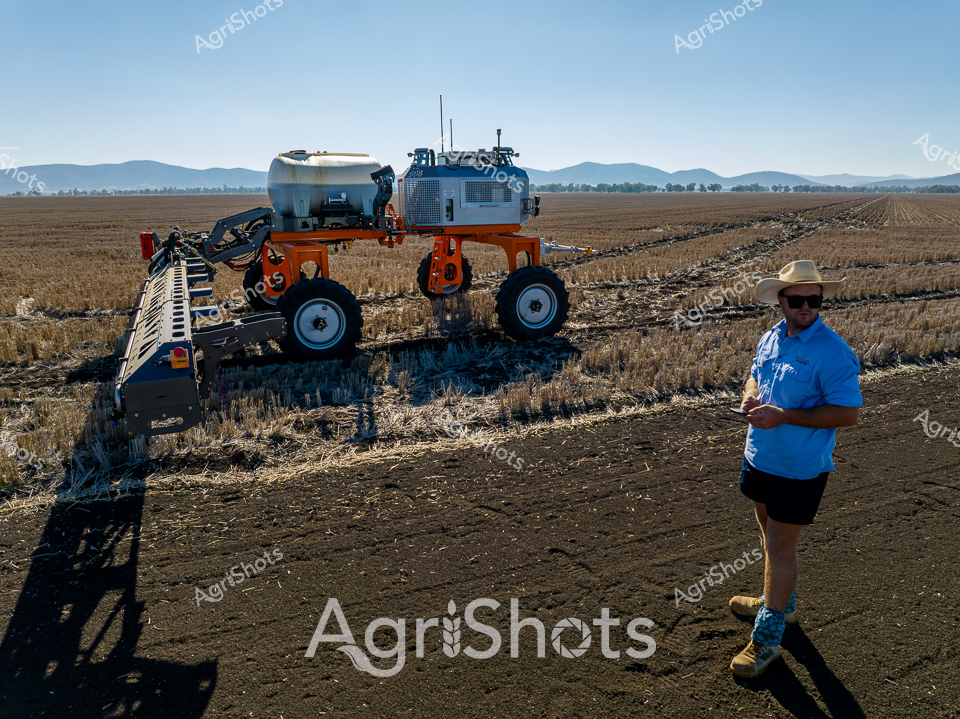
Sun-drenched Liverpool Plains unfurl across the foreground, a golden-brown stubble field stretching beneath distant blue-green mountain ranges. A precision agricultural sprayer moves methodically across the harvested paddock, its booms extended in a calculated pattern of weed management technology. In the foreground, a farmer in a crisp blue shirt and wide-brimmed sun protection stands sentinel, his posture reflecting generations of agricultural expertise and modern technological engagement. The scene captures the intersection of traditional farming and cutting-edge agricultural innovation - a Weedseeker spray rig navigating the post-harvest landscape with robotic precision, while the farmer monitors operations, likely via smartphone. Soft autumn light bathes the scene, highlighting the textured stubble and creating a sense of quiet concentration amid the vast agricultural landscape. This image encapsulates the contemporary Australian agricultural experience: technology-driven, environmentally conscious, and deeply connected to the rhythmic cycles of rural production.
 Image
Image
In the golden light of an autumn morning, a farmer surveys the Liverpool Plains landscape, his weathered straw hat casting a shadow over his sunglasses. Dressed in a crisp blue work shirt, he stands amid the stubble-covered field, intently focused on his iPhone while a sophisticated spray rig operates in the distant background. The terrain stretches out beneath soft, rolling mountains, with the remnants of the recent harvest creating a textured, straw-colored canvas beneath his feet. Modern agricultural technology is at work here - the spray rig represents cutting-edge weed management techniques, potentially using swarm robotics and precision targeting with the WeedSeeker system. This scene captures the essence of contemporary Australian agricultural innovation: a lone farmer leveraging technology to manage vast, challenging landscapes, blending traditional rural attire with high-tech agricultural solutions. The soft blues of his shirt contrast beautifully with the warm, dry tones of the post-harvest field, embodying the resilience and technological sophistication of modern farming in New South Wales.
 Image
Image
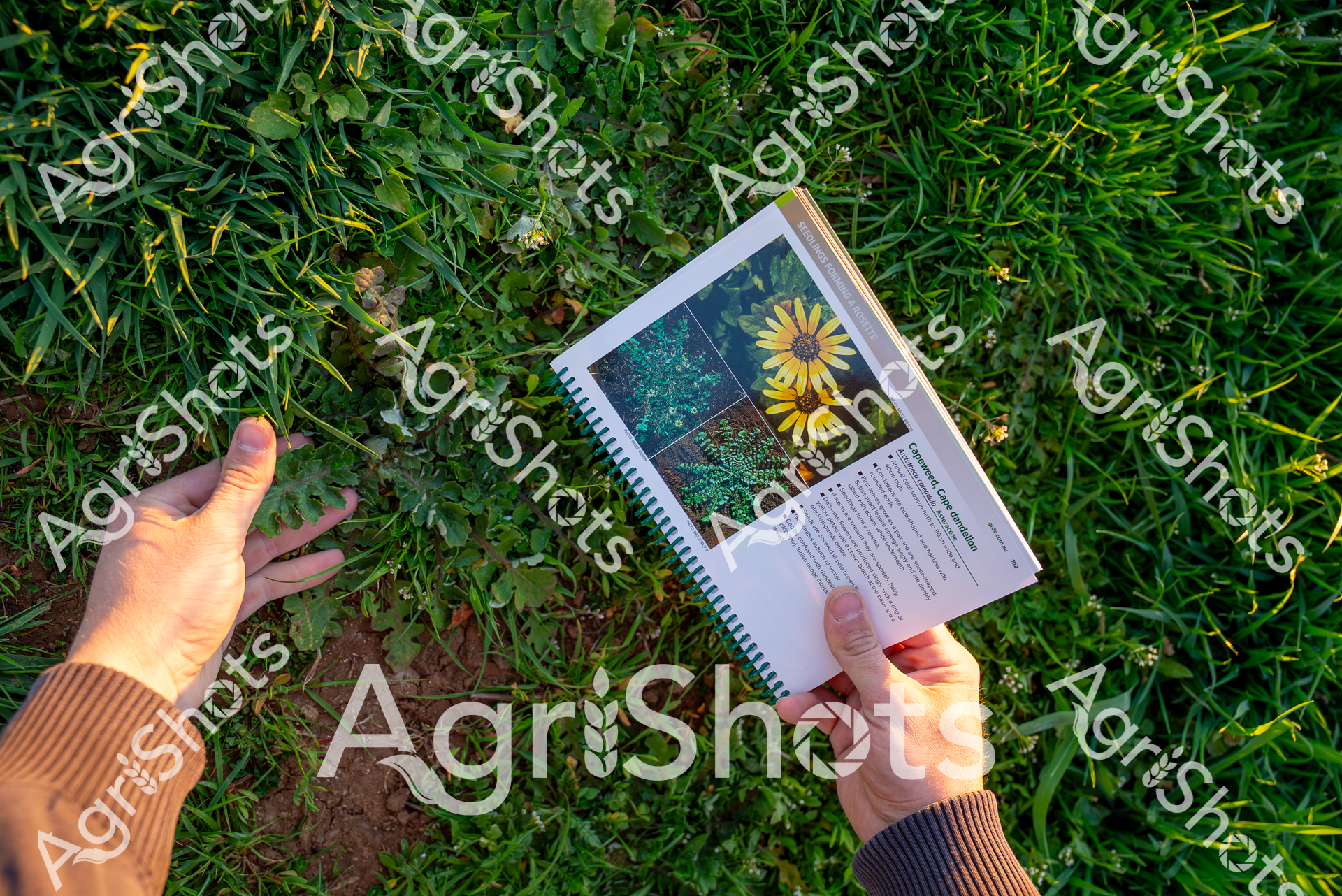
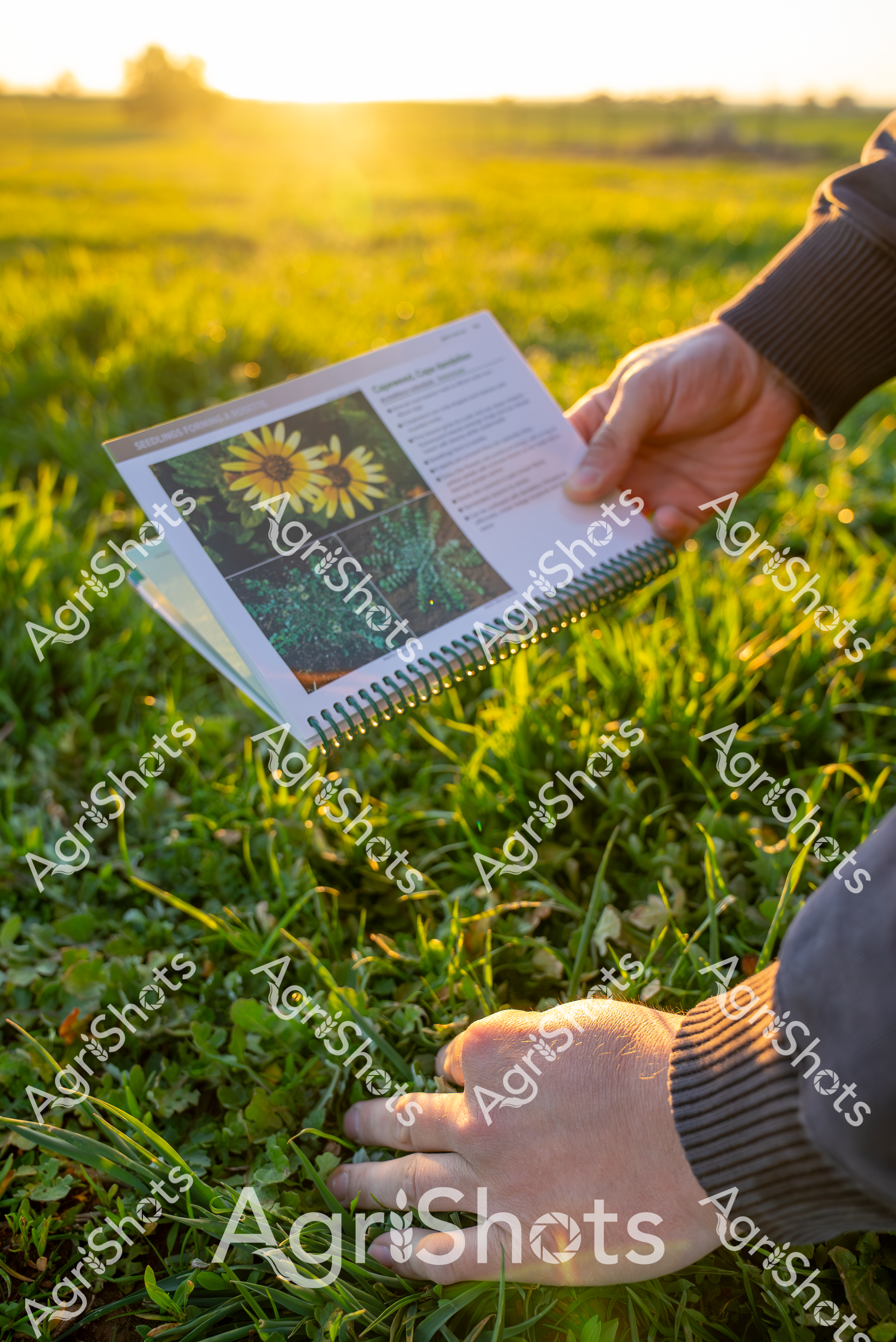
A detailed field guide lies open among lush green grass, revealing a vibrant yellow sunflower and botanical details. Hands hold the informative publication against a verdant backdrop of grasses and small flowering weeds, suggesting a botanical research or agricultural study moment. The image captures the intimate connection between scientific documentation and the natural environment, with the spiralbound book providing a window into plant identification and ecological understanding. Soft, warm-toned hands cradle the guide, highlighting the hands-on approach to botanical field research. The rich green grass provides a textural, living background that complements the book's scientific imagery, creating a sense of immediate, tactile learning about local flora. The composition speaks to the careful, observant nature of agricultural and botanical research, where understanding the smallest details of plant life is crucial to land management and ecological knowledge.
 Image
Image
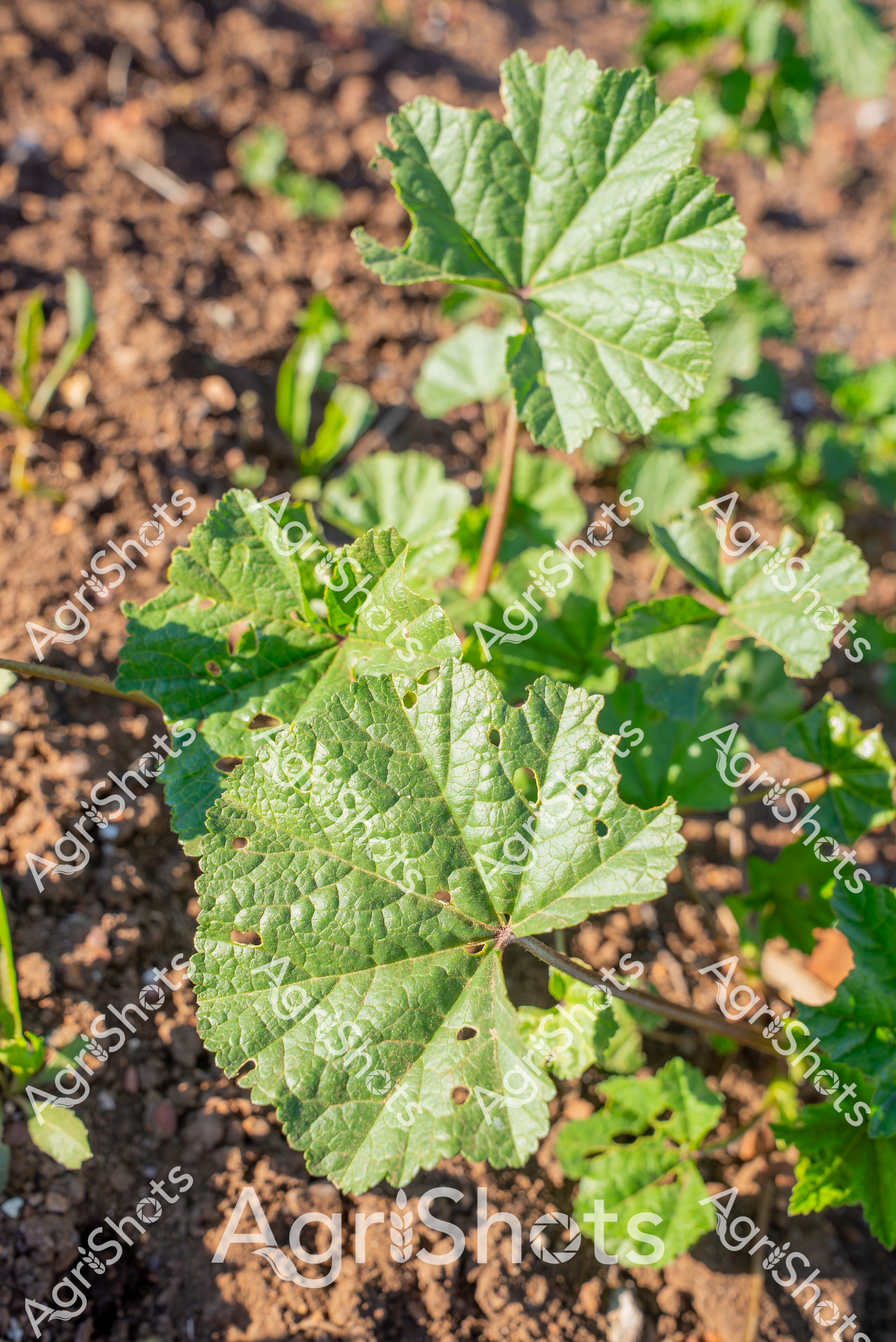
Based on the image and agricultural context, here's a detailed description: Vibrant green leaves of a young plant emerge from rich, dark soil, revealing the intricate details of a weed species in the Riverina region of New South Wales. The serrated, lobed leaves display a complex network of veins, suggesting a robust plant adapting to the challenging agricultural landscape. Sunlight catches the leaf surfaces, highlighting their textured edges and creating a gradient of green hues from bright lime to deeper forest tones. The surrounding granular soil provides a warm, textured backdrop that emphasizes the plant's fresh growth and potential impact on crop management. This close-up offers an intimate view of vegetation dynamics in Australian agricultural environments, where understanding and managing plant species is crucial for successful farming practices. The description focuses on the botanical details, agricultural context, and visual characteristics of the plant, matching the tags of Marshmellow, New South Wales, Weeds, and Images while providing an engaging agricultural perspective.
 Image
Image
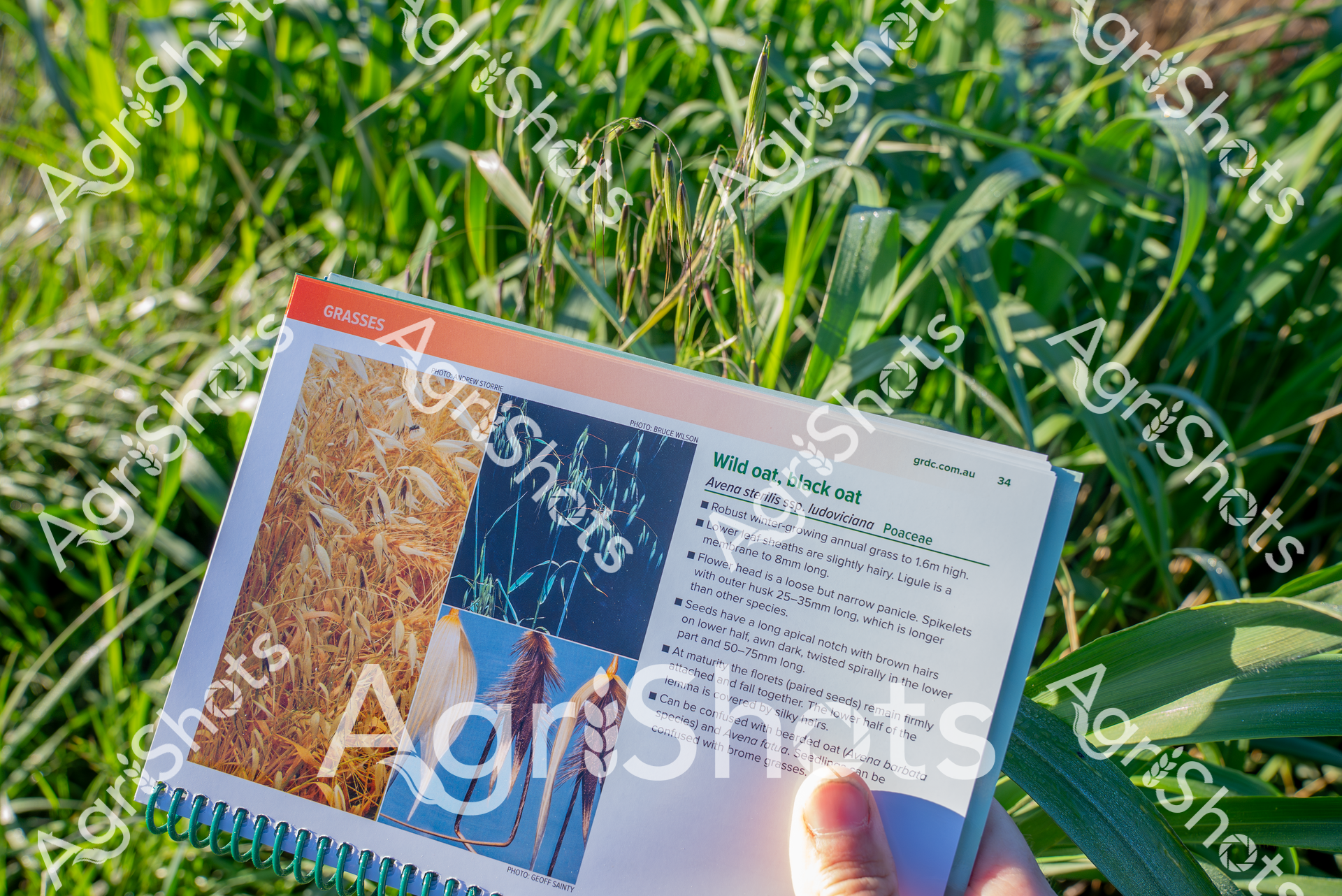
A detailed botanical reference page reveals the intricate details of wild oat and black oat grass species, carefully positioned against a lush green grass backdrop. The informative field guide page, part of a grasses identification series, displays rich photographic images of golden-hued and deep blue-green grass varieties, highlighting the subtle botanical variations of these annual grasses. Delicate grass stems and seed heads surround the identification card, creating a natural context that emphasizes the scientific documentation of native grass species. The image captures the meticulous research approach of agricultural and botanical documentation, with crisp text detailing the characteristics of Avena species - including growth patterns, height ranges, and distinctive features of spikelets and seed structures. A human hand gently holds the reference card, suggesting a moment of careful study and botanical investigation in the field. The vibrant green background of living grass creates a perfect natural frame for this educational botanical resource, showcasing the intricate world of grass species in their native environment.
 Image
Image
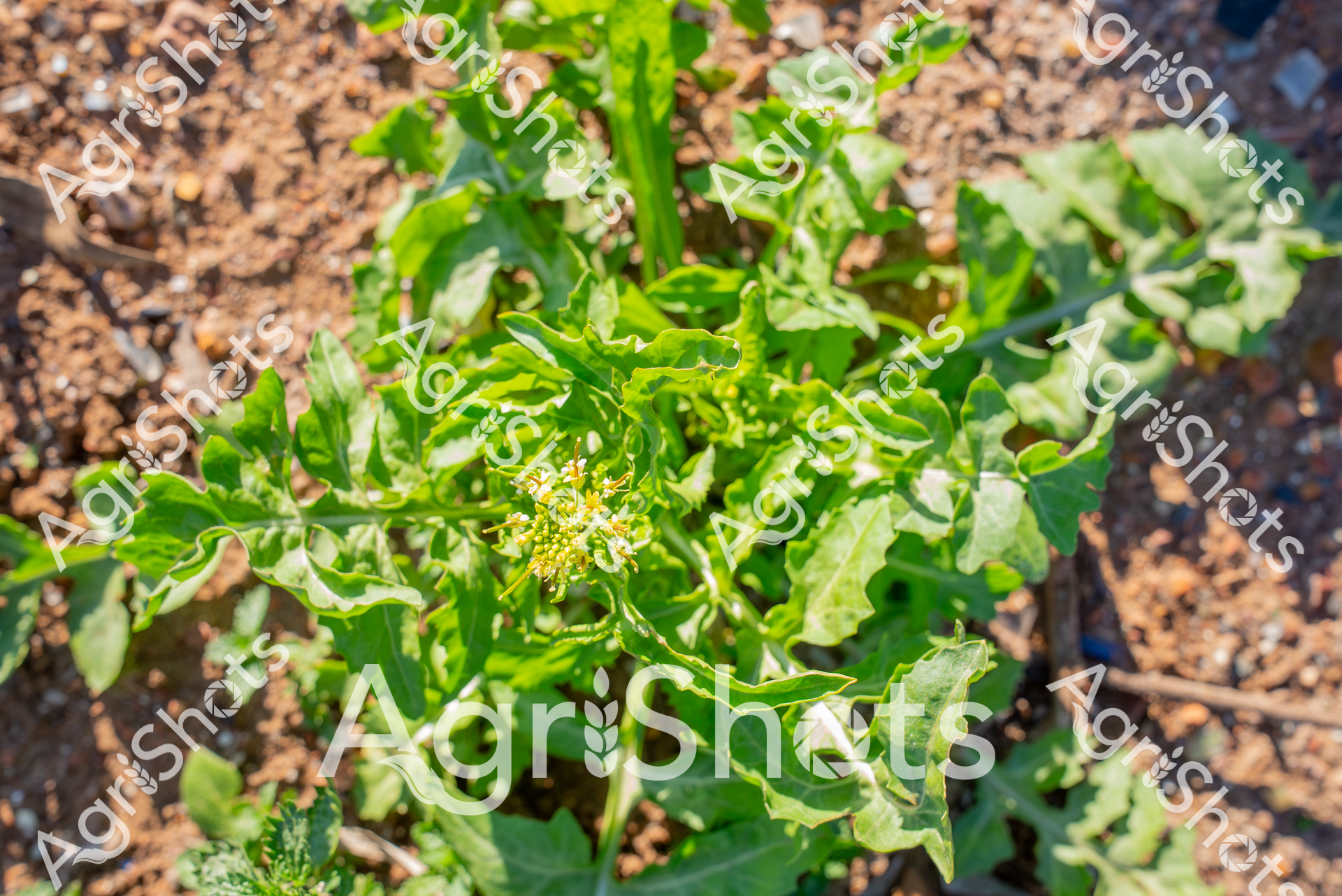
A vibrant cluster of bright green charlock (wild mustard) weeds emerges from dry, granular soil in the Riverina region of New South Wales. The plant's jagged-edged leaves curl and twist around a delicate yellow-green flower cluster, displaying the characteristic growth pattern of this invasive agricultural species. Contrasting textures are evident - the soft, waxy green leaves against the rough, brown soil particles create a stark visual landscape typical of challenging growing conditions. The dense foliage suggests the plant's robust nature, thriving even in seemingly inhospitable environments. This image captures the persistent and resilient character of charlock, a weed that can rapidly colonize agricultural landscapes and compete with cultivated crops for nutrients and space. The description focuses on the plant's botanical characteristics, environment, and agricultural significance, matching the image tags and domain knowledge about Australian agricultural landscapes and crop challenges.
 Image
Image
Cutting-edge agricultural technology transforms the harvest landscape of the Liverpool Plains, with an autonomous robotic sprayer navigating stubble-covered fields under a crystalline blue autumn sky. This sophisticated AgTech marvel, dressed in vibrant orange and grey, represents the pinnacle of precision farming innovation - a self-guided camera sprayer equipped with advanced weed detection capabilities. Mounted on large, carefully engineered wheels, the machine traverses the dry, golden crop remnants with mechanical grace, its extended boom promising targeted chemical application with minimal environmental impact. The surrounding terrain reveals the classic undulating topography of New South Wales' agricultural heartland, with distant blue-tinged mountain ranges providing a serene backdrop to this technological intervention. Swarm robotics technology enables the sprayer to navigate complex field conditions, identifying and treating specific weed populations with unprecedented accuracy. Its sleek design speaks to a new era of farming - where efficiency, sustainability, and technological intelligence converge to optimize agricultural productivity. This image captures a transformative moment in Australian agricultural practice, where cutting-edge engineering meets traditional farming landscapes, promising smarter, more responsive crop management for the future.
 Image
Image
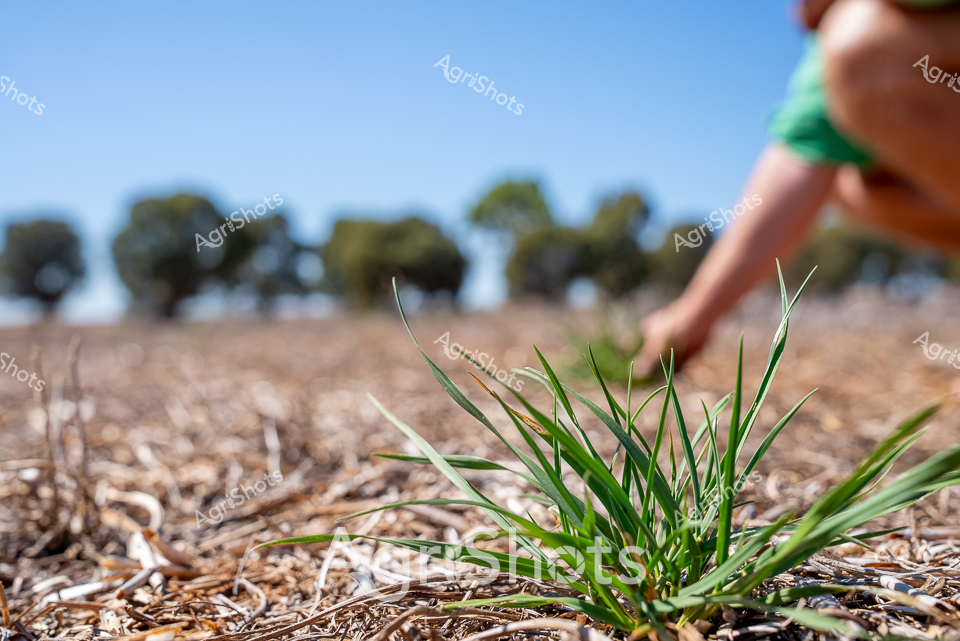
Young green grass shoots emerge defiantly through a sparse, dry crop stubble field, capturing the resilient spirit of Australian agricultural landscapes. The foreground reveals intricate details of fresh ryegrass pushing through weathered wheat or barley remnants, with a blurred agricultural worker's hand visible in the background. Expansive golden-brown stubble stretches across the terrain, punctuated by scattered trees on the distant horizon under a pristine azure sky - hallmarks of the Riverina region in New South Wales. This image eloquently captures the transitional moment between harvest and potential new crop cultivation, with the vibrant green grass symbolizing agricultural renewal and persistence. The textural contrast between the delicate grass blades and the rough, desiccated crop residue creates a compelling visual narrative of regeneration and agricultural cycle. The composition suggests late summer or early autumn, a critical period of land preparation and strategic crop management in Australian broadacre farming.
 Image
Image
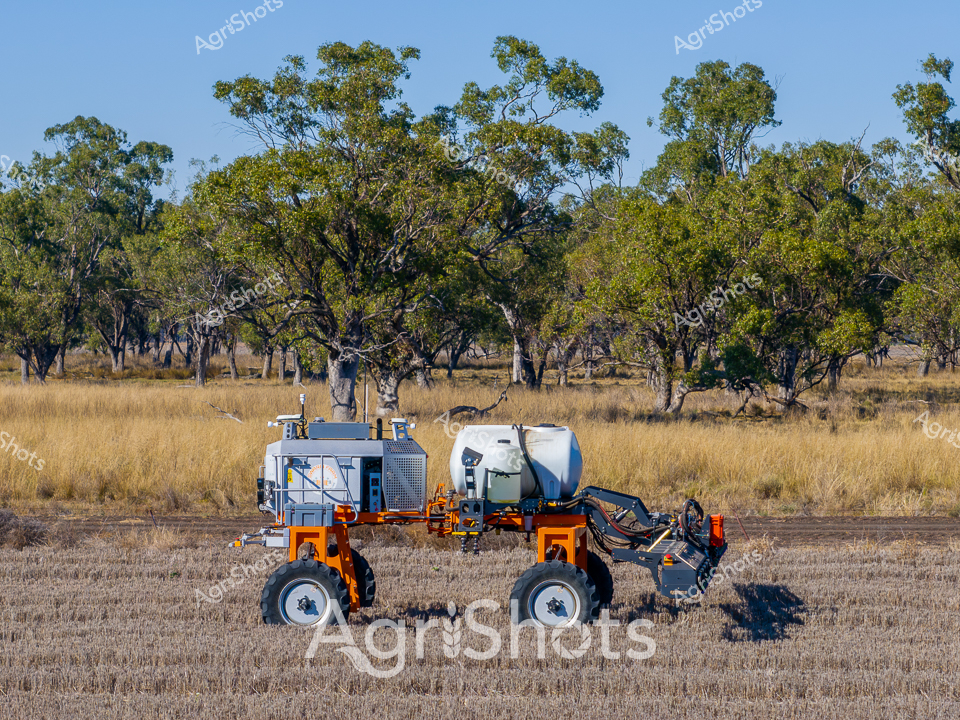
Autonomous agricultural innovation emerges against a classic Liverpool Plains landscape, where golden grasslands meet silvery eucalyptus woodlands under a crystalline azure sky. This cutting-edge camera sprayer - a sophisticated robotic agricultural implement - stands poised in a harvested stubble field, its striking orange and grey mechanical frame a testament to modern precision farming technologies. The advanced Weedseeker system represents the pinnacle of targeted agricultural intervention, using intelligent sensor arrays to detect and treat specific weed populations with unprecedented efficiency and minimal environmental impact. Swarm robotics technology transforms traditional broad-acre farming practices, allowing for microscopic precision in crop management. The machine's sophisticated design enables it to navigate through post-harvest terrain, identifying and treating weeds with surgical accuracy, drastically reducing chemical usage and environmental disruption. Its high-clearance chassis and intelligent guidance systems represent a quantum leap in agricultural machinery, bridging traditional farming wisdom with next-generation technological solutions. The surrounding landscape - characteristic of New South Wales' Liverpool Plains - speaks to generations of agricultural stewardship, with weathered gum trees standing as silent witnesses to ongoing agricultural evolution. This scene captures a powerful moment of technological transformation in one of Australia's most productive agricultural regions.
 Image
Image
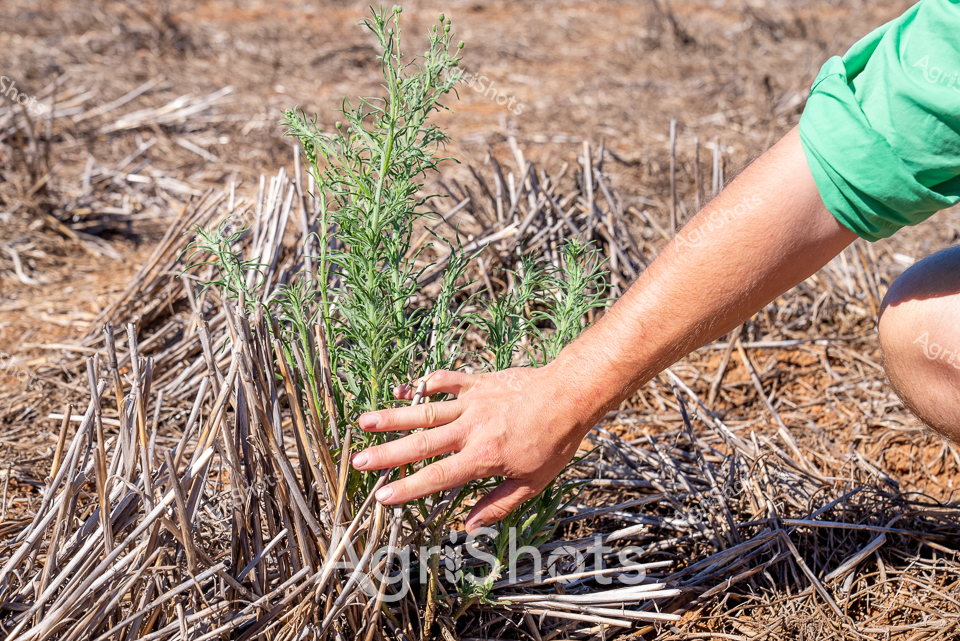
A weathered agricultural hand reaches into a dry, stubble-strewn field, grasping a vibrant green fleabane weed emerging amid the golden-brown remnants of a recent harvest. The scene captures the intricate dance of crop management in the Riverina region of New South Wales, where summer transitions into autumn and farmers battle invasive plant species. Dried wheat or barley stubble creates a textured carpet across the ground, its pale, brittle stalks a testament to the recently completed grain harvest. The green sleeve of the worker suggests careful, deliberate intervention - likely a strategic approach to weed control known as brown manure, where weeds are terminated before they can set seed, protecting the productivity of the agricultural landscape. Soft earth tones dominate the image, broken by the fresh green of the fleabane and the worker's bright clothing, symbolizing the constant human effort to maintain balance in dryland farming systems. This moment encapsulates the meticulous care and ongoing challenge of agricultural land management in the Australian grain belt.
 Image
Image
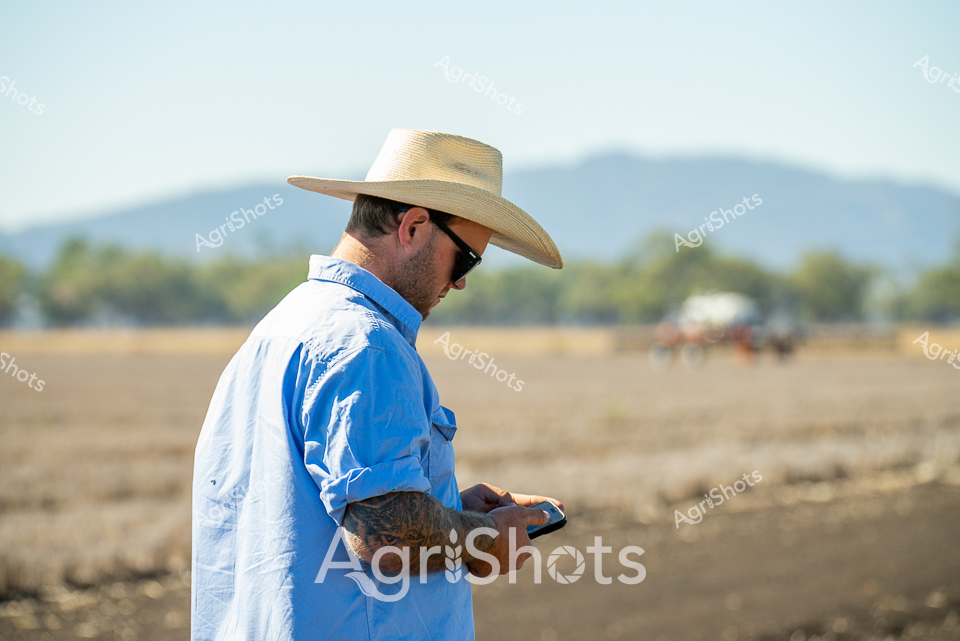
A sun-drenched Liverpool Plains paddock stretches beneath distant blue mountains, capturing a quintessential moment of modern agricultural technology. A farmer in a crisp blue workshirt and wide-brimmed straw hat stands amid golden harvest stubble, his posture intent as he navigates agricultural data through his smartphone. Advanced precision agriculture technology is at work - a distant spray rig hints at targeted weed management using sophisticated mapping and sensing equipment. The landscape speaks of autumn's dry palette, with bleached ground and muted agricultural terrain reflecting the challenging environmental conditions of inland New South Wales. Swarm robotics and digital farming techniques are transforming traditional agricultural practices, with this scene embodying the intersection of generational farming knowledge and cutting-edge technological innovation. The farmer's stance - slightly turned, focused on his device - symbolizes the modern agricultural professional who balances hands-on field expertise with data-driven decision-making.
 Image
Image
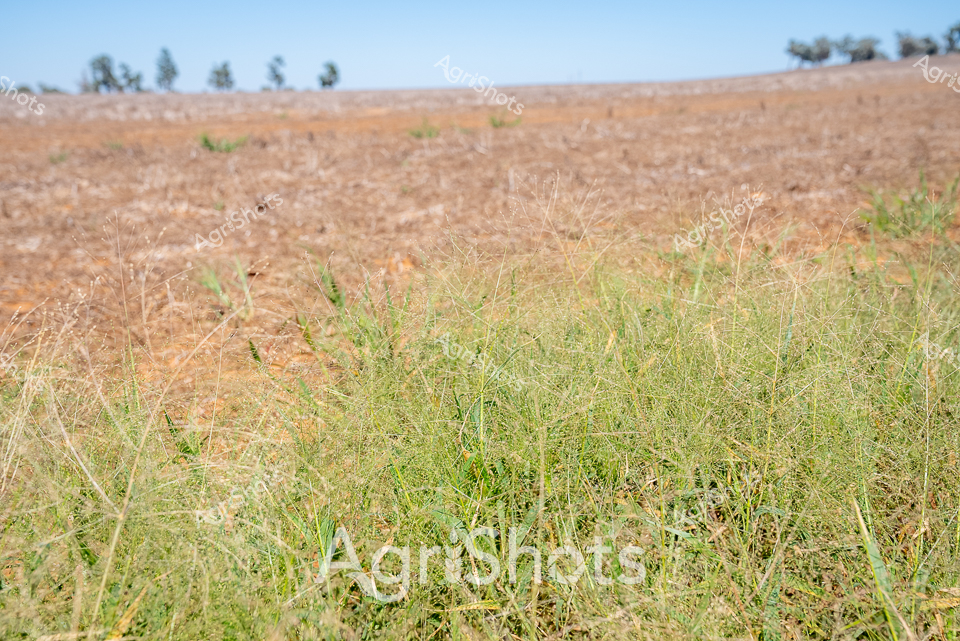
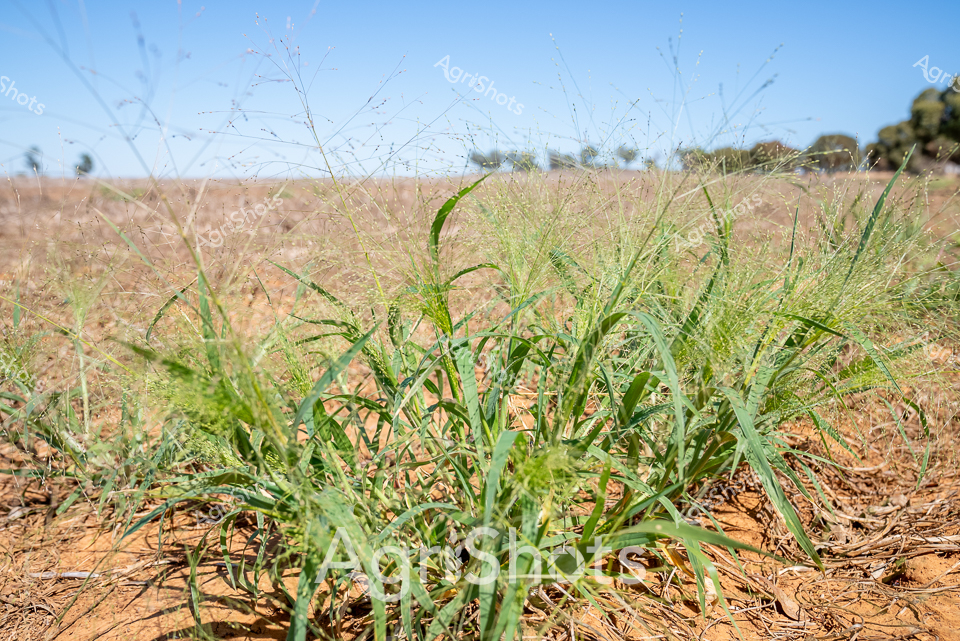
Hairy Panic grass emerges from dusty, sun-baked agricultural stubble in the heart of New South Wales' Riverina region. Delicate, wispy grass stems dance across a parched landscape, their pale green and straw-colored hues contrasting against the rich terracotta soil. Sparse eucalyptus trees punctuate the distant horizon under an expansive, crystalline blue sky, signaling the harsh conditions of an Australian summer or early autumn. The ground tells a story of recent harvest and agricultural challenge - sparse vegetation struggling through compacted earth, highlighting the resilience required in dryland farming. Wind-swept and weathered, this paddock represents the stark beauty of agricultural landscapes, where every blade of grass and patch of soil carries the narrative of survival and agricultural persistence. The image captures the raw, unfiltered essence of rural Australian agricultural terrain, where farmers battle challenging environmental conditions with unwavering determination.
 Image
Image
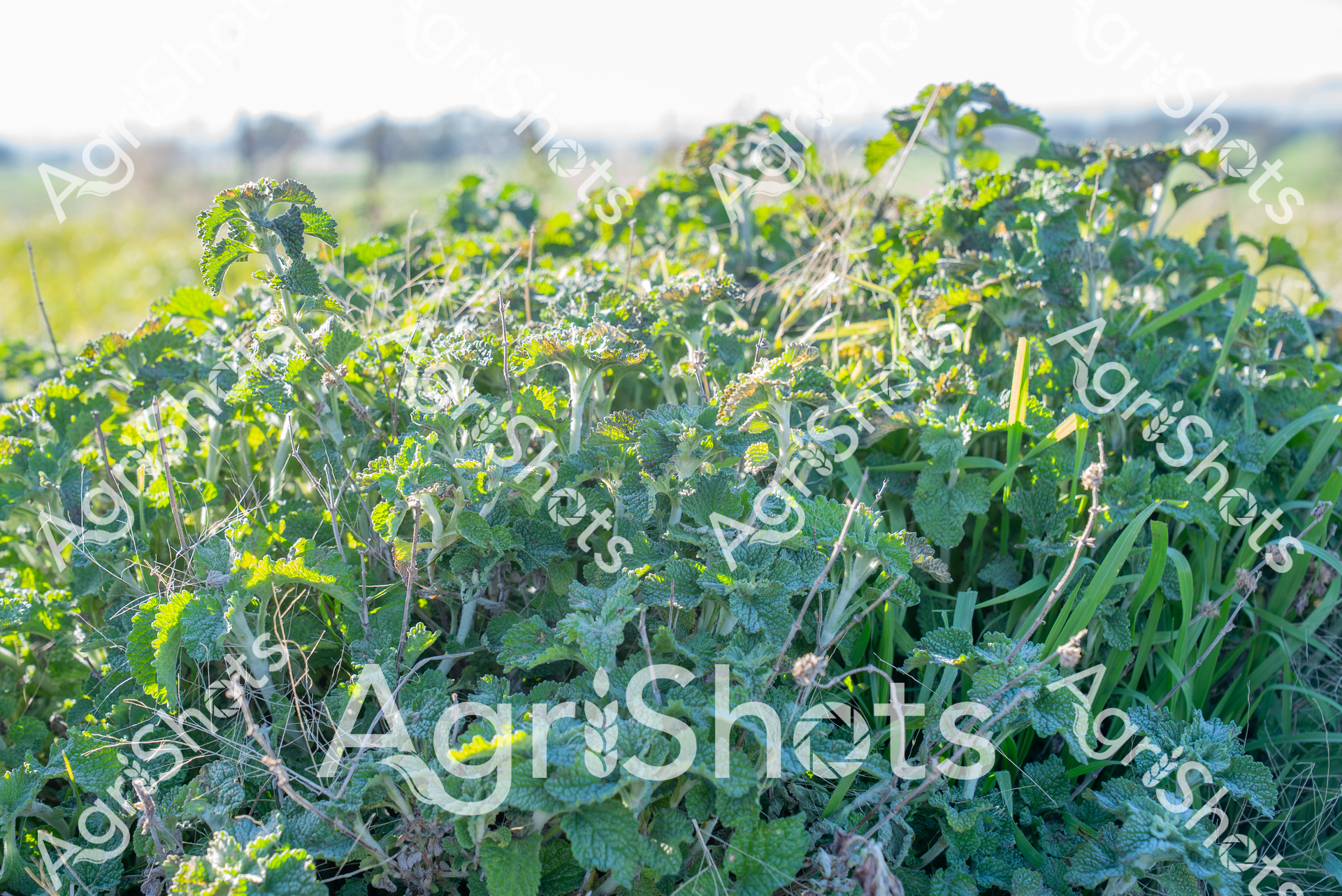
A lush patch of Paterson's Curse (Echium plantagineum) spreads across a rural landscape in New South Wales' Riverina region. The invasive flowering plant dominates the foreground, its dense green leaves and small yellow-green buds creating a textured carpet of vegetation. Slender grass shoots intermingle with the weed, highlighting the plant's aggressive growth pattern in agricultural pastures. Soft, muted background tones suggest early morning light, with distant trees and farmland blending into a hazy horizon. The vibrant green foliage contrasts sharply with the surrounding landscape, illustrating the persistent challenge of managing invasive plant species in Australian agricultural environments. This image captures the ecological complexity of rural landscapes, where introduced species can quickly overtake native vegetation.
 Image
Image
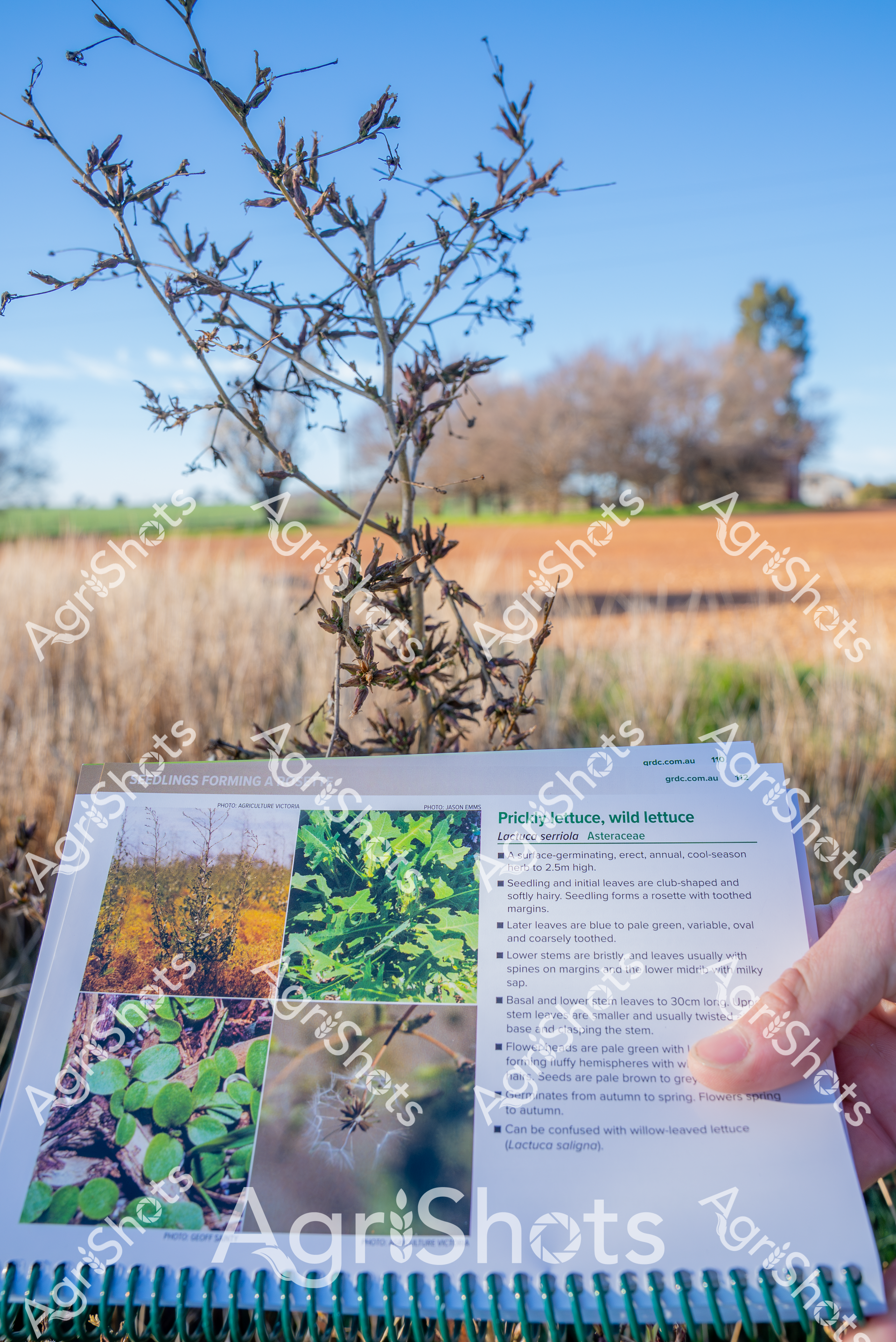
A detailed agricultural research reference showcases the invasive "Prickly Lettuce" (Lactuca serriola) in its natural habitat. The delicate, sparse branching of the wild lettuce plant stands stark against a soft blue sky and golden dry grassland backdrop, capturing the plant's distinctive structural characteristics. Botanical documentation images on the reference page reveal the plant's progression - from seedling to mature form - with detailed annotations describing its growth stages, leaf morphology, and ecological attributes. A researcher's hand carefully holds the informative guide, highlighting the scientific approach to understanding and managing this agricultural weed species. The crisp, clear documentation illustrates the plant's intricate details, from its spiny stems to its pale green leaf structures, providing a comprehensive botanical study of this cool-season annual plant found in the Australian agricultural landscape.
 Image
Image
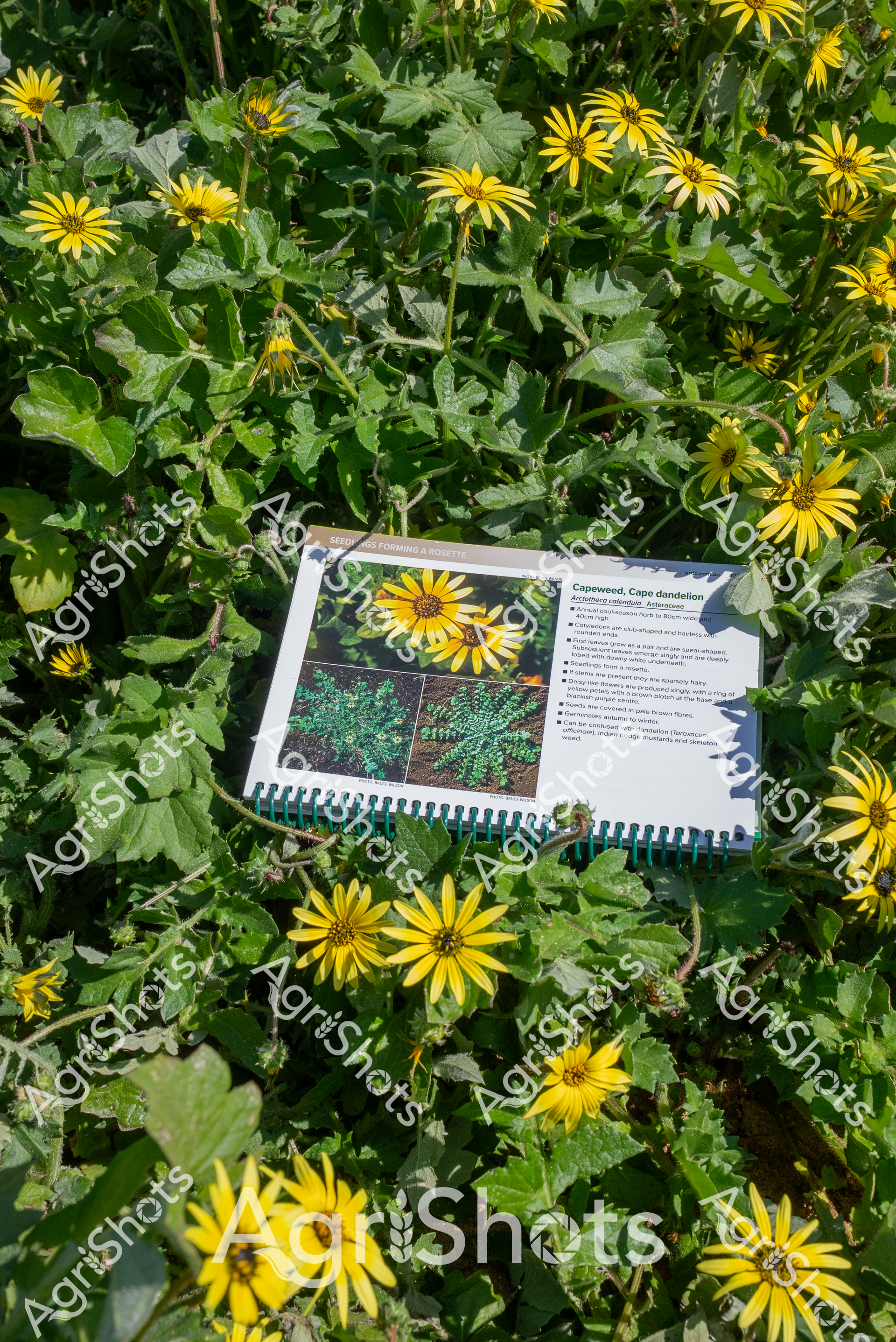
Brilliant agricultural documentation captures a vibrant botanical specimen study of Capeweed (Cape dandelion) in Western Australia's wheatbelt region. Brilliant yellow daisy-like flowers with dark centers burst from lush green serrated leaves, creating a dense ground cover against a verdant backdrop. The informative field guide - spiral-bound and professionally designed - sits nestled among the living plants, providing scientific details about the species' botanical characteristics and growth patterns. This botanical documentation showcases the intricate relationship between agricultural research and native plant species, highlighting the importance of understanding vegetation in rural landscapes. The bright sunlight illuminates the scene, casting crisp shadows and emphasizing the vivid yellow and green color palette typical of Australian grassland ecosystems. The image represents a meticulous scientific approach to botanical documentation, blending natural beauty with systematic agricultural research.
 Image
Image
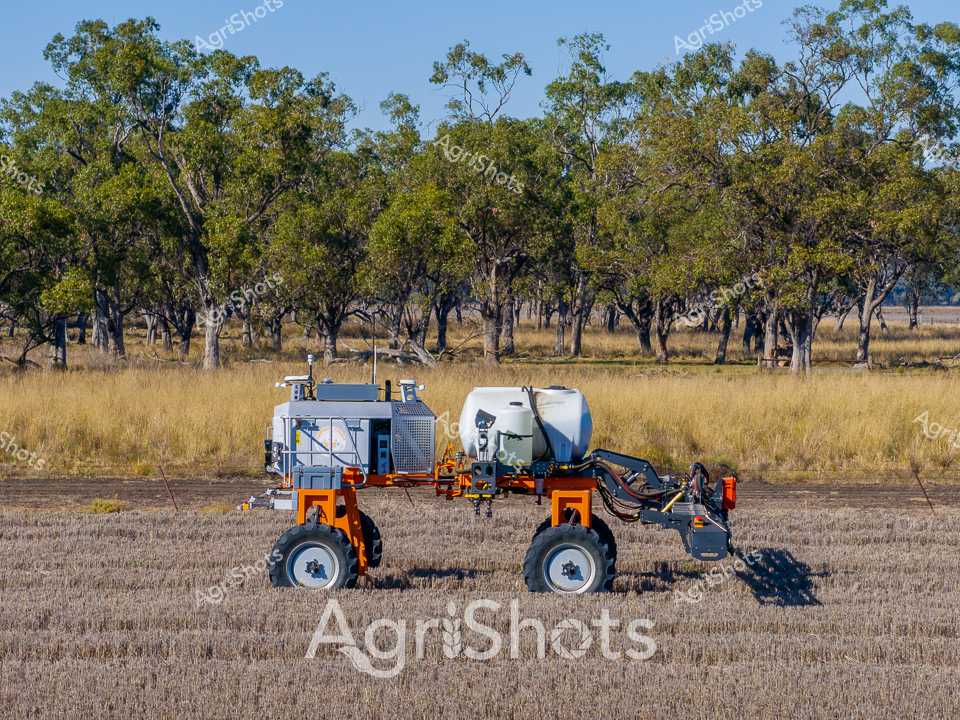
In the golden light of an autumn morning, a cutting-edge robotic agricultural sprayer traverses the stubble-covered fields of the Liverpool Plains in New South Wales. This advanced precision agriculture machine, with its distinctive orange and grey frame, stands poised amidst a backdrop of weathered eucalyptus trees, representing the pinnacle of agricultural technology. The Weedseeker system carefully navigates the dry, textured landscape, using sophisticated sensors to target specific areas for weed control with remarkable efficiency and minimal chemical usage. Its high-clearance design and articulated chassis allow for precise movement across the uneven post-harvest terrain, showcasing the marriage of robotics and agricultural science. The surrounding landscape of scattered gum trees and sun-bleached grasslands tells a story of resilience and innovation in Australian farming, where technology is transforming traditional agricultural practices. This autonomous sprayer embodies the future of sustainable farming - intelligent, targeted, and environmentally conscious.
 Image
Image
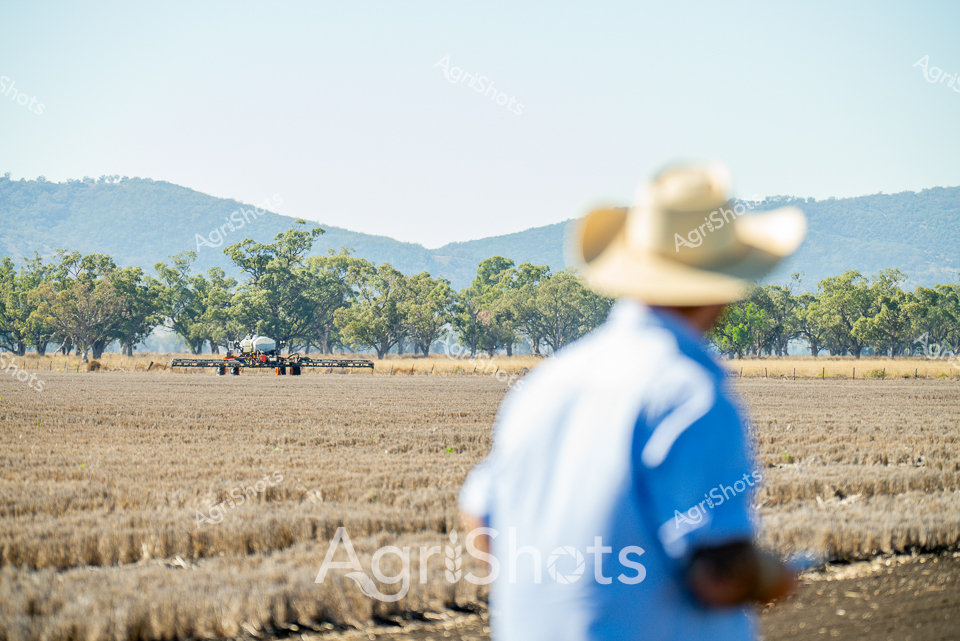
An agricultural worker surveys the golden stubble-covered paddock of the Liverpool Plains, his wide-brimmed hat casting a soft shadow across his blue and white shirt. In the mid-distance, a precision agricultural sprayer moves methodically across the harvested field, its long boom arms extended to apply targeted treatments using advanced weed detection technology. Rows of mature eucalyptus trees line the horizon, their green canopies contrasting against the soft blue mountain ranges beyond, creating a quintessential Australian rural landscape. The late autumn scene captures the intersection of traditional farming practices and cutting-edge agricultural innovation, with the robotic sprayer navigating the dry, textured field with calculated efficiency. Soft morning light bathes the landscape, highlighting the intricate details of the stubble-covered ground and the strategic movements of the agricultural machinery. This image embodies the sophisticated approach of modern Australian farming - technologically advanced yet deeply connected to the natural rhythms of the land.
 Image
Image
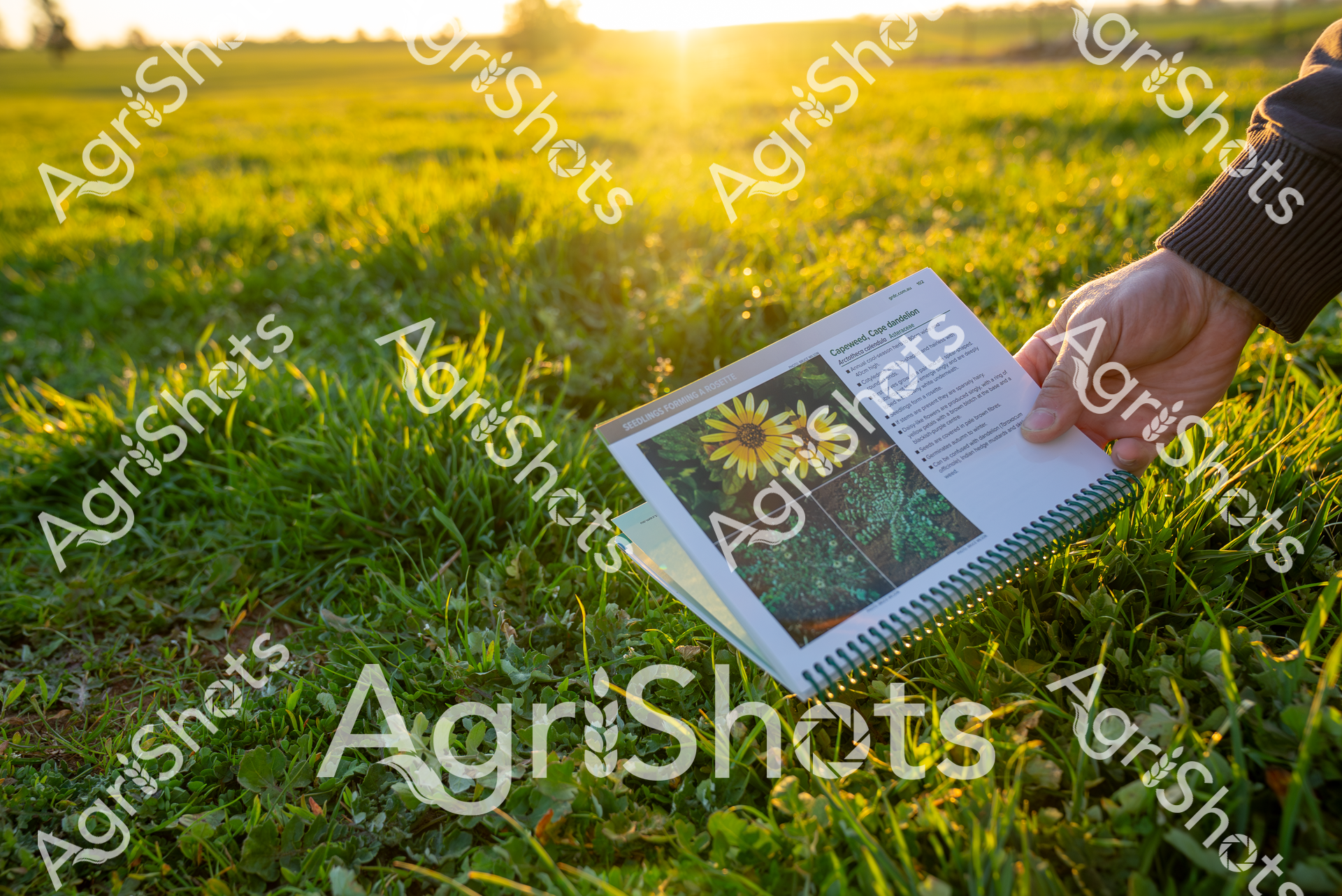
A golden morning light bathes a lush green pasture, illuminating an open field guide focused on capeweed identification. The spiral-bound research manual, open to a detailed botanical page featuring a sunflower-like yellow flower, rests softly on verdant grass. Warm sunlight streams across the landscape, creating a soft, glowing atmosphere that highlights the intricate details of agricultural botanical research. A hand delicately holds the field guide, suggesting careful study and scientific curiosity about local plant species. The scene captures the essence of agricultural research and environmental understanding, blending scholarly documentation with the natural beauty of a rural landscape at dawn. Dew-kissed grass and the warm, low-angle sunlight create a sense of quiet exploration and scientific discovery in the early morning hours.
 Image
Image
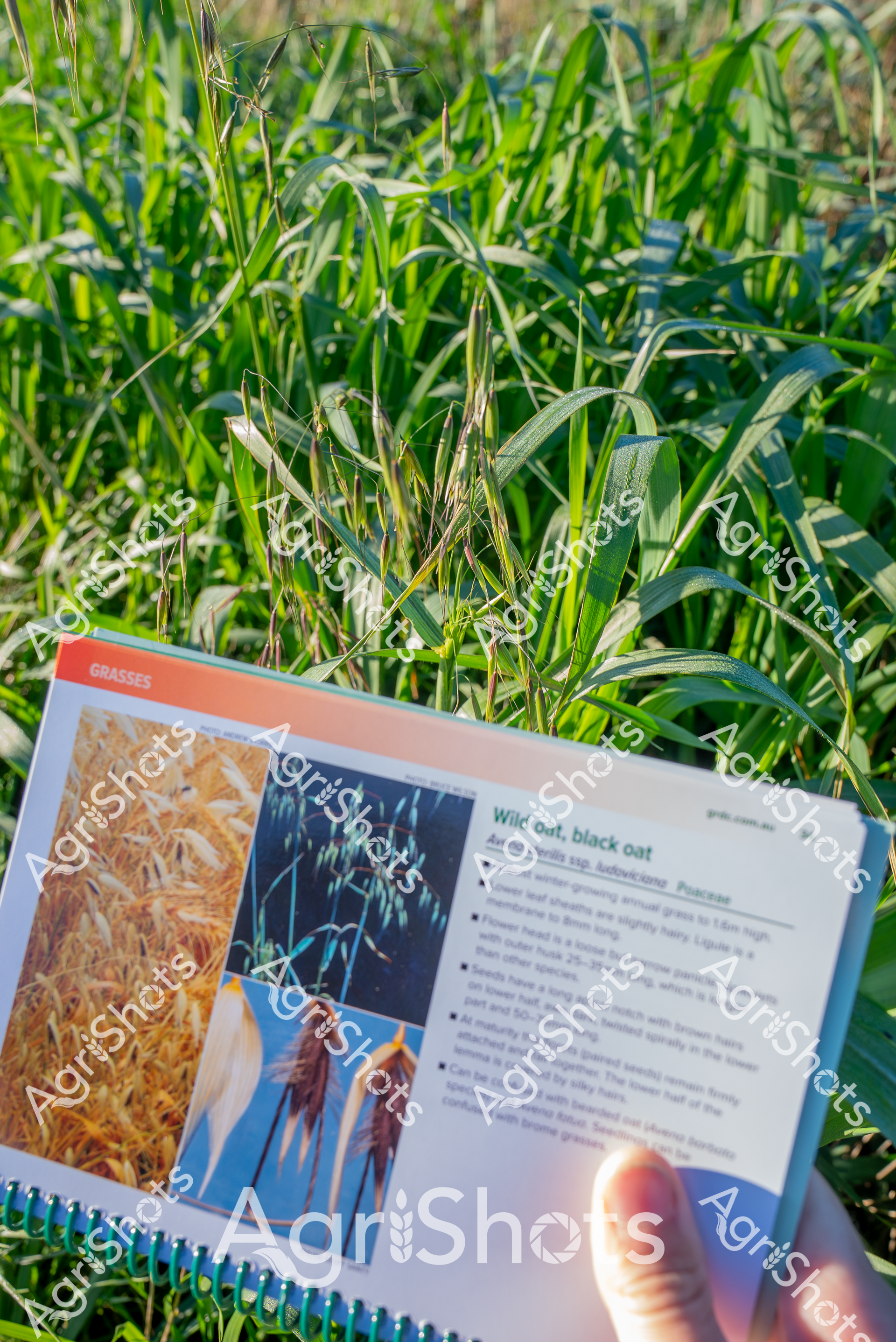
A vibrant botanical reference card for Wild Red Black Oat is carefully held against a lush backdrop of green grass blades, capturing the intricate details of grass species identification. The informational card displays multiple images showing the grass in different stages - from golden dry stalks to rich green growth - providing a comprehensive visual guide for agricultural researchers and farmers. Delicate grass stems wave gently in the background, creating a dynamic green environment that perfectly complements the scientific documentation. The close-up perspective highlights the precision of agricultural botanical study, with the detailed card offering insights into the characteristics, growth patterns, and agricultural significance of this specific grass variety. Sunlight filters through the grass, creating a luminous green landscape that emphasizes the living nature of the subject and the importance of understanding grass species in agricultural ecosystems.
 Image
Image
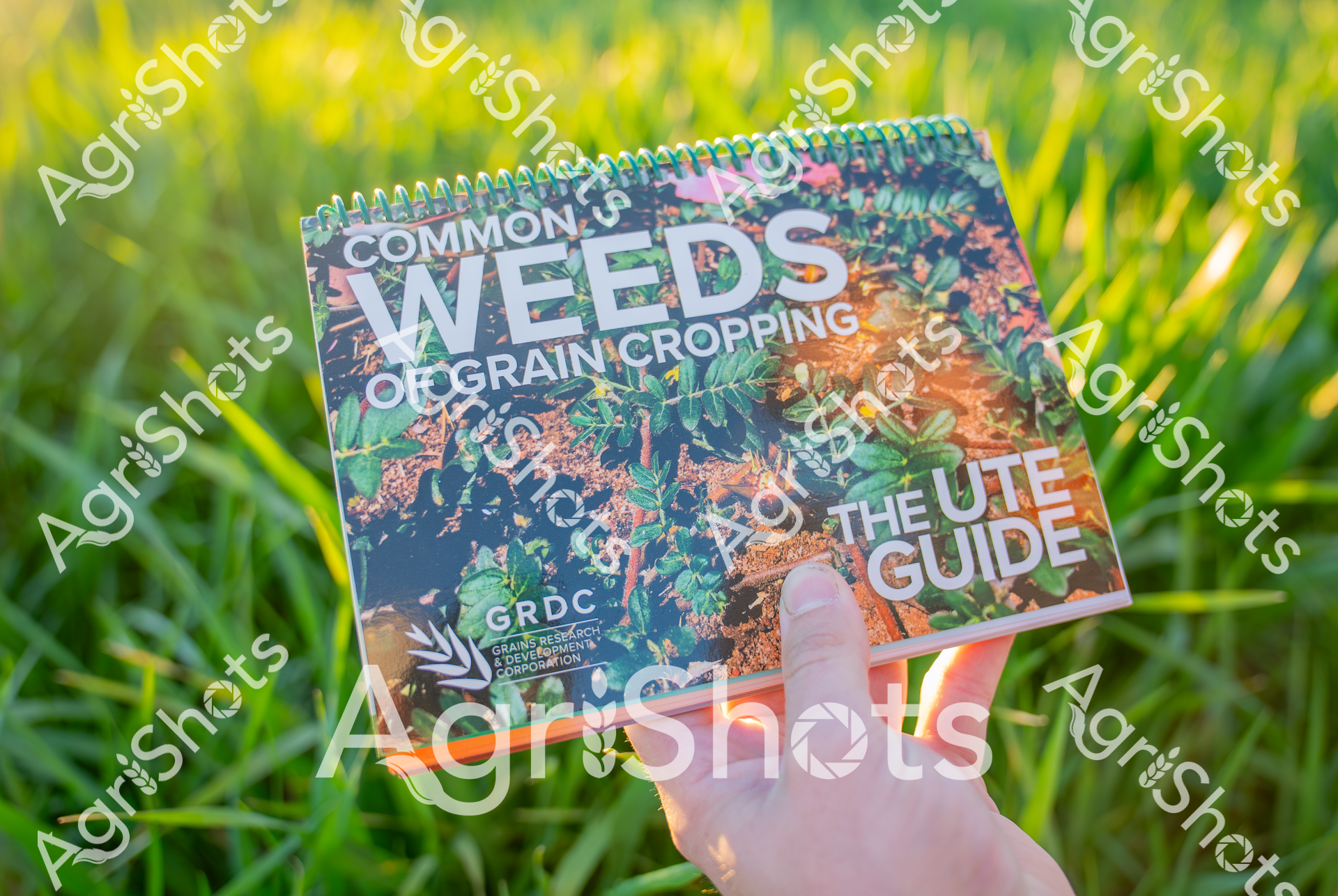
A detailed agricultural reference guide rests among vibrant green grass, showcasing the "Common Weeds of Grain Cropping" publication by the Grains Research and Development Corporation (GRDC). The guidebook's colorful cover features intricate botanical illustrations of various weed species, highlighting the complex world of agricultural plant identification. Soft, golden sunlight filters through the surrounding grass, creating a luminous backdrop that emphasizes the importance of understanding and managing plant ecosystems in grain production. The carefully designed guide represents a critical resource for farmers and agricultural professionals seeking to understand and control unwanted plant growth in crop environments. A single hand holds the book, suggesting the personal connection between agricultural knowledge and practical field management.
 Image
Image
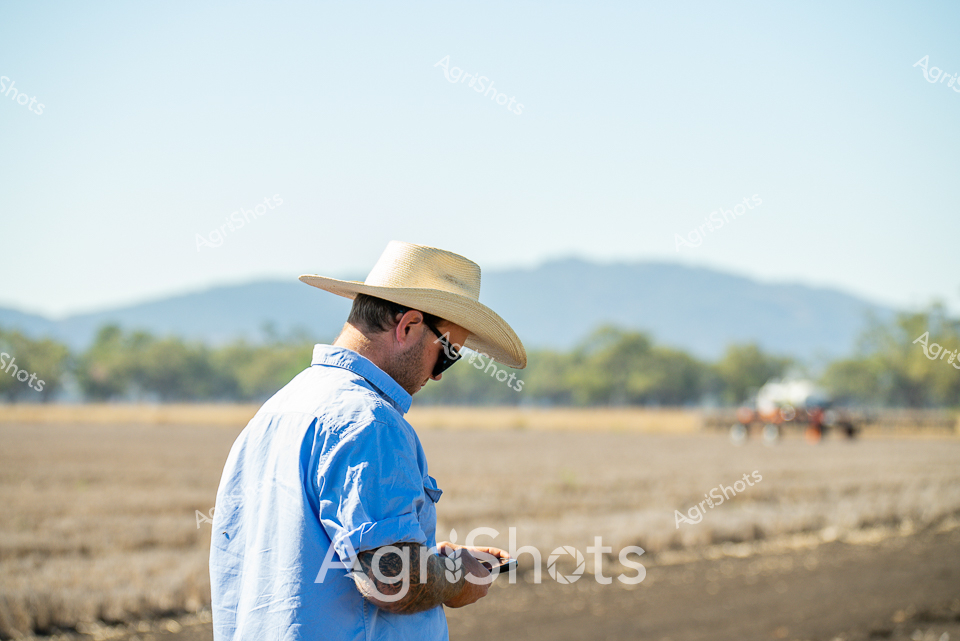
A farmer surveys a golden stubble paddock in the Liverpool Plains region of New South Wales, his bright blue work shirt contrasting against the dry autumn landscape. Wearing a classic wide-brimmed straw hat for sun protection, he stands amid the harvested field with precision agricultural technology close at hand. Mountains rise softly in the distant background, creating a quintessential Australian rural panorama that speaks to generations of agricultural innovation. The scene captures a moment of careful observation, with advanced agricultural tools like a smartphone and precision spray equipment suggesting the modern farmer's blend of traditional knowledge and cutting-edge technology. The muted browns of the stubble field and the crisp blue sky create a sense of spaciousness and potential, reflecting the resilience and strategic thinking required in contemporary farming. Every element - from the farmer's protective clothing to the technological devices - tells a story of adaptation and careful land management in the challenging Australian agricultural landscape.
 Image
Image
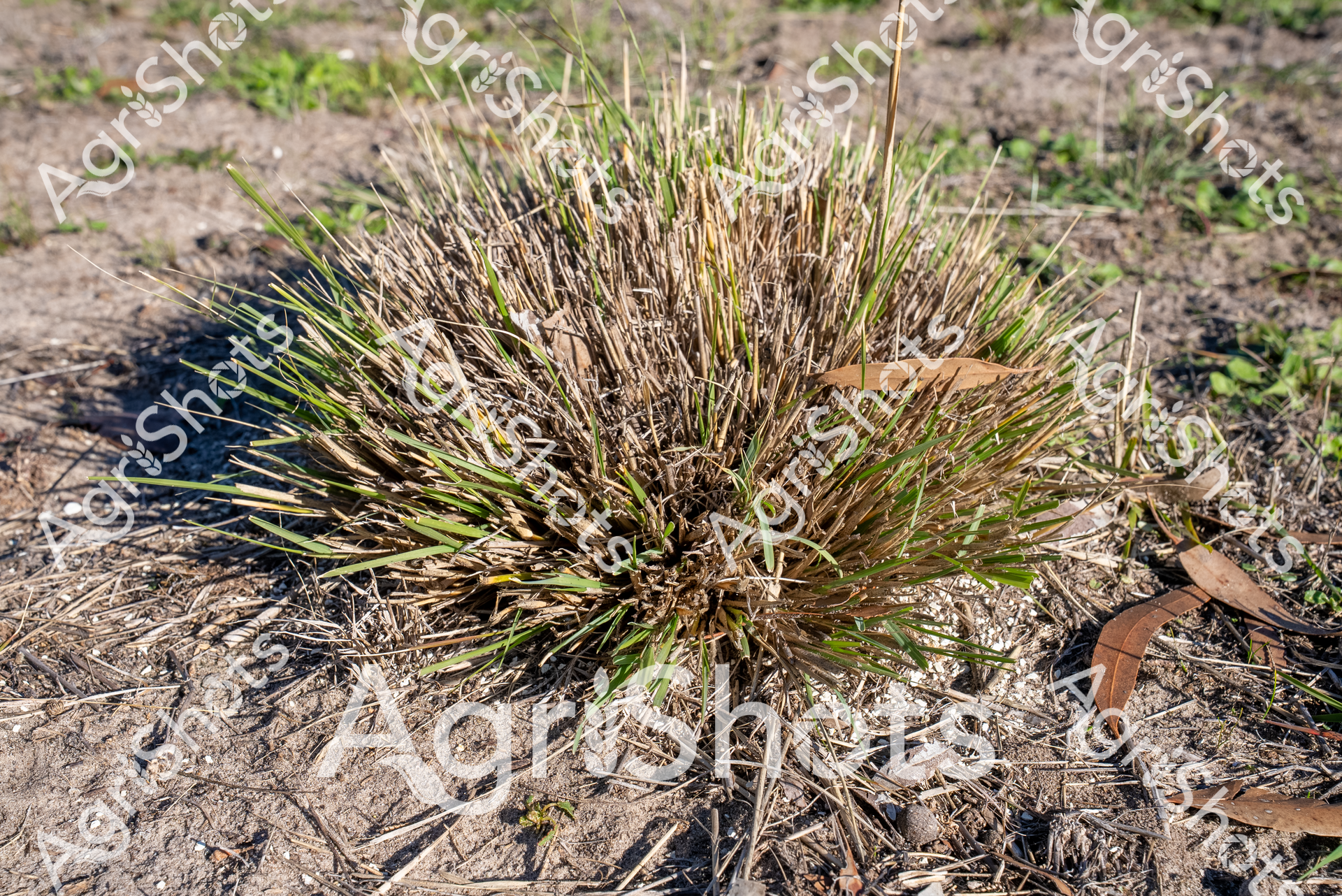
Tussocked and weathered, a clump of South African Love Grass (Eragrostis curvula) stands resilient against a parched landscape, embodying the harsh reality of drought in South Australia's southeastern region. The grass's intricate structure reveals a complex network of dried and living blades - browns and muted greens intertwining in a testament to survival. Sprawling across a barren, cracked earth surface, the invasive grass species demonstrates remarkable adaptability, its dense bunched form a stark marker of challenging agricultural conditions. Winter's subdued light casts subtle shadows, emphasizing the grass's textural complexity and the unforgiving nature of the surrounding terrain. This single clump represents the ongoing battle farmers face with introduced species that can rapidly colonize stressed landscapes, challenging native ecosystems and agricultural productivity. The image captures a moment of botanical resilience, where survival means weathering extreme environmental pressures with stoic determination.
 Image
Image
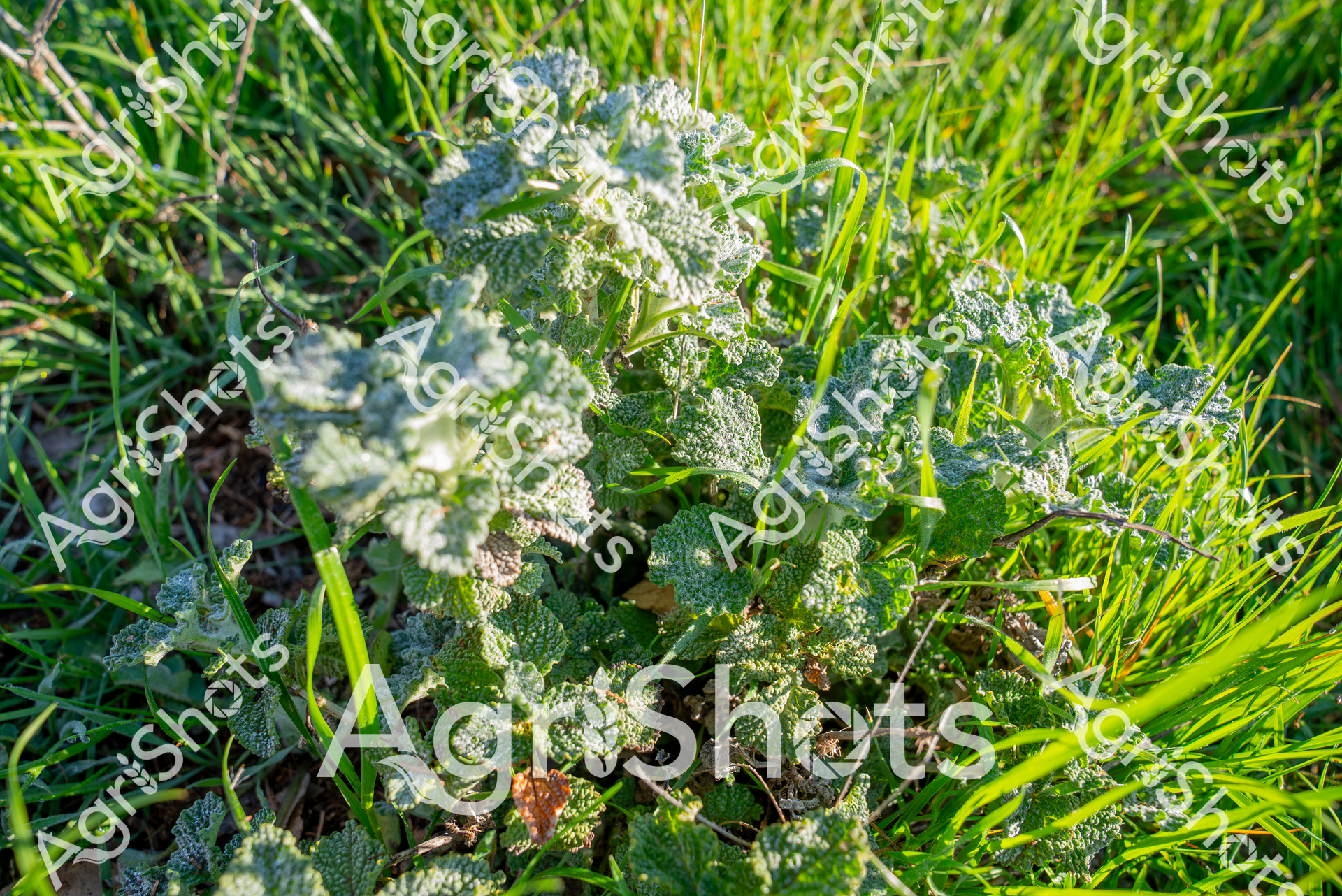
A dense cluster of horehound - a distinctive invasive weed with silvery-green, crinkled leaves - sprawls across a lush green grass paddock. The plant's textured, frosty-looking foliage creates an intricate pattern of pale and deep green, highlighting the weed's robust growth among the surrounding grass. Characteristic of the Riverina region's pastures, this image captures the persistent nature of introduced plant species that challenge agricultural landscapes. The horehound's intricate leaf structure stands out against the vibrant green grass, demonstrating the complex botanical interactions in New South Wales agricultural environments. Sunlight filters through the leaves, creating a soft, detailed texture that emphasizes the plant's unique morphology and its ability to establish itself in diverse grassland ecosystems.
 Image
Image
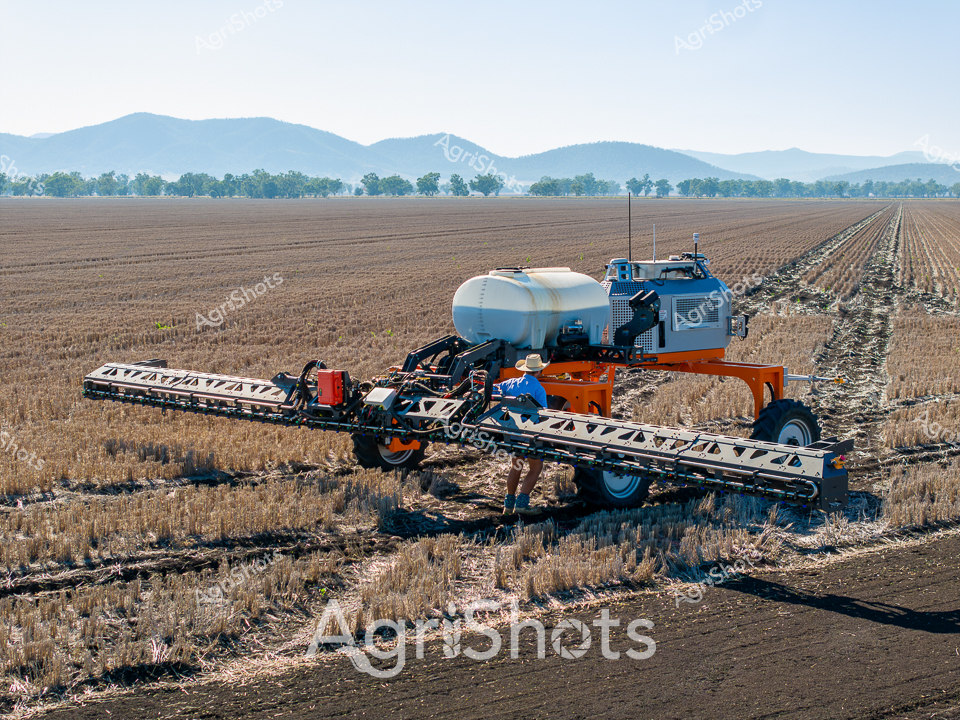
Cutting-edge agricultural technology traverses the golden stubble-strewn fields of the Liverpool Plains, with a precision camera sprayer navigating the post-harvest landscape. The advanced robotic spray rig, adorned in striking blue, orange, and white, demonstrates the pinnacle of modern weed management techniques, featuring an expansive boom fitted with intelligent Weedseeker technology. Softly undulating mountains create a serene backdrop to this mechanized marvel, which carefully targets individual weeds with surgical accuracy, minimizing chemical usage and environmental impact. The autumn landscape reveals meticulously ordered crop rows, with dry wheat stubble creating a textured canvas of browns and tans, highlighting the precision of contemporary agricultural practices. This sophisticated autonomous system represents a new era of farming - where technology, sustainability, and efficiency converge to optimize agricultural productivity in the challenging Australian rural environment. The scene captures the intersection of high-tech innovation and traditional farming landscapes, showcasing how Australian agricultural technology is leading global advancements in precision agriculture.
 Image
Image
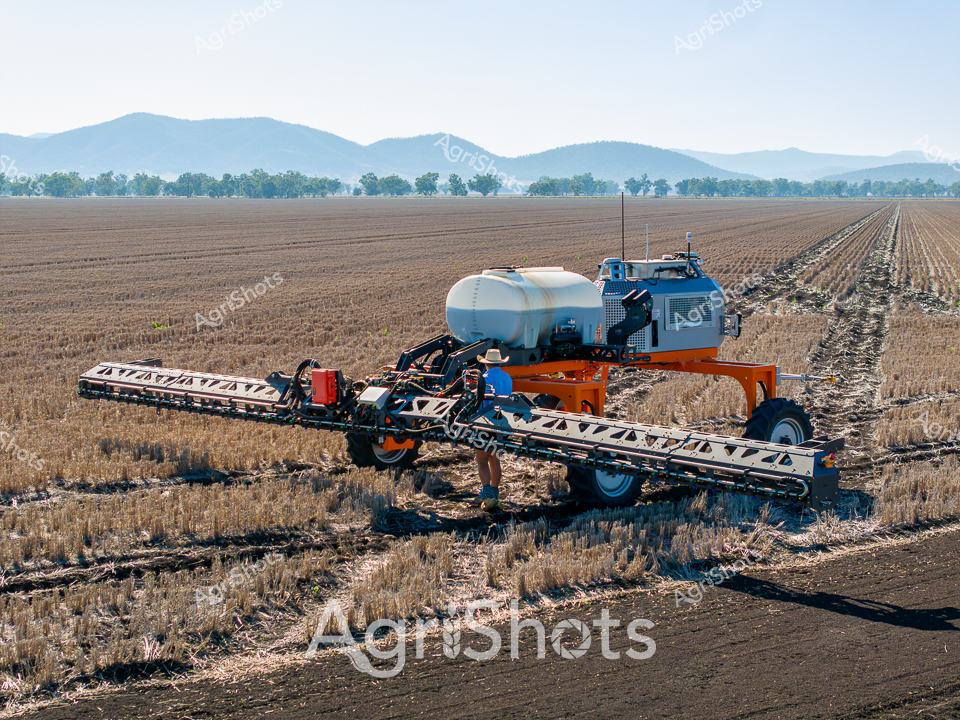
A cutting-edge agricultural sprayer navigates through a golden wheat stubble field on the Liverpool Plains, its precision technology gleaming in the soft autumn light. The robotic machine, painted in vivid blue and orange, features an expansive boom with multiple spray nozzles, mounted on a sophisticated chassis designed for targeted agricultural treatment. Misty blue mountains rise softly in the background, framing the expansive cultivated landscape with its geometric rows of harvested crop remnants. This advanced Weedseeker technology represents the pinnacle of modern agricultural innovation, using sensor-driven swarm robotics to precisely target and treat specific areas, minimizing chemical usage and maximizing efficiency. The machine's large white water tank suggests its capability for comprehensive field management, while the intricate mechanical design speaks to the sophisticated engineering behind contemporary Australian agricultural practices. The scene captures the intersection of technology and traditional farming, showcasing how precision agriculture is transforming rural landscapes across New South Wales.
 Image
Image
These are green leaves of a weed plant, likely a broadleaf variety, showing clear signs of insect damage across the foliage. The serrated, lobed leaves have a distinctive bright green coloration with visible textural veining, emerging from dark, crumbly soil with a rich brown tone. Multiple leaf clusters are visible, suggesting the plant is in an early growth stage, with small holes punctuating the leaf surfaces indicating recent pest activity. The close-up perspective reveals intricate leaf structures with pronounced ridges and edges, highlighting the plant's natural botanical details against the granular earth background. The lighting appears bright and direct, suggesting this is a daytime agricultural or field observation, potentially documenting weed growth and potential crop management challenges in the Riverina region of New South Wales.
 Image
Image
In the golden light of an autumn morning, a cutting-edge agricultural spraying machine traverses the dry stubble of a Liverpool Plains paddock. The sophisticated camera spray rig, adorned in vibrant orange and white, represents the pinnacle of precision agricultural technology, equipped with advanced Weedseeker sensors that enable targeted chemical application. Scattered eucalyptus trees frame the landscape, their silvery-green foliage contrasting against the tawny grasslands and clear blue sky, creating a quintessential Australian rural vista. This intelligent machine demonstrates swarm robotics principles, methodically navigating the harvested field with mechanical precision, minimizing chemical usage and maximizing agricultural efficiency. The large water tank mounted on the rig hints at its capability to cover extensive areas with minimal environmental impact, showcasing how modern farming integrates sophisticated technology with traditional agricultural landscapes. The scene captures the innovative spirit of Australian agricultural practices, where technological advancement meets the timeless beauty of the rural environment.
 Image
Image
A golden morning illuminates a study of native flora, with an open reference book resting on lush green grass. Sunlight streams across the landscape, highlighting the intricate details of a sunflower illustration on the open page. Hands gently hold the botanical guide, suggesting careful examination of plant species typical of Australian agricultural landscapes. The image captures the essence of botanical research, with soft, warm light creating a contemplative mood among the verdant ground cover. Delicate grass blades and clover intermingle, reflecting the rich biodiversity of rural grasslands, while the golden hour emphasizes the natural beauty of agricultural study and observation.
 Image
Image
A cutting-edge autonomous agricultural sprayer navigates through a golden wheat stubble field, its sleek orange and grey frame striking against the backdrop of classic Australian eucalyptus woodland. This advanced robotic machine—part of the latest swarm robotics agricultural technology—methodically traverses the post-harvest landscape, equipped with precision spray capabilities that minimize chemical usage and maximize efficiency. The Liverpool Plains region's characteristic dry autumn terrain provides a perfect testing ground, with weathered grass stalks and scattered gum trees creating a quintessential rural NSW scene. The Weedseeker camera system mounted on the rig allows for targeted chemical application, representing a revolutionary approach to land management that dramatically reduces environmental impact and operational costs. Sophisticated sensors and GPS guidance enable the machine to navigate with remarkable accuracy, demonstrating how modern agricultural technology is transforming traditional farming practices. The crisp blue sky and muted earth tones of the landscape underscore the harmony between innovative engineering and Australia's timeless agricultural environments.
 Image
Image
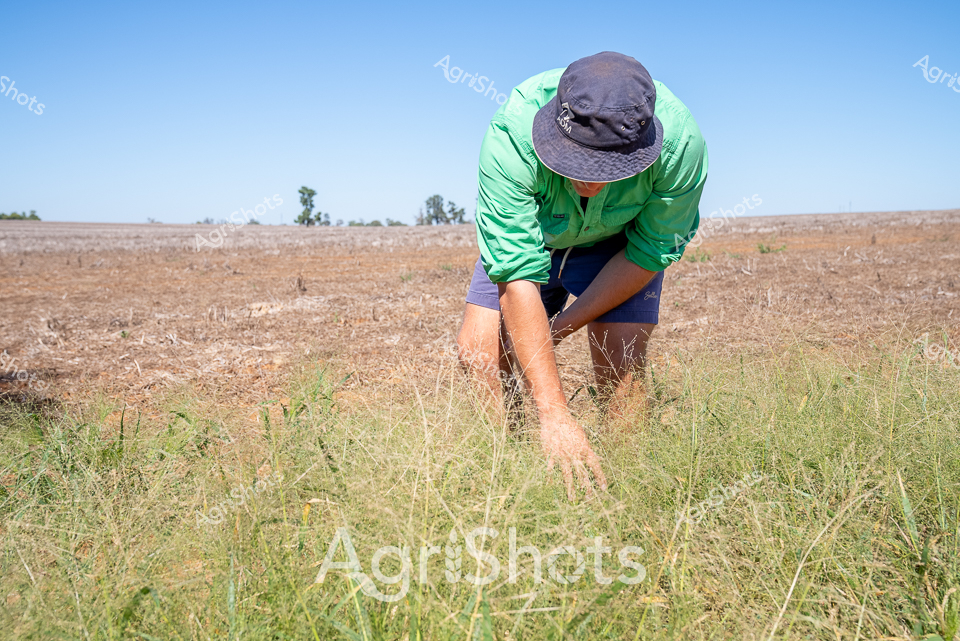
Sunlight blazes across the parched Riverina landscape as an agricultural worker bends intently in a field of scattered grasses and dry stubble. Wearing a bright green long-sleeved shirt and a dark protective sun hat, the worker carefully examines the ground, reaching down among the sparse vegetation with a focused gesture. The surrounding terrain tells a story of challenging growing conditions - a mix of yellowed grasses, bare earth, and scattered sparse vegetation stretching toward a distant treeline under an expansive blue sky. This image captures the meticulous work of crop management, potentially investigating the invasive "hairy panic" grass that can challenge agricultural productivity in drought-affected regions of New South Wales. The worker's bent posture speaks to the demanding, hands-on nature of agricultural work, where every patch of ground requires careful assessment and intervention. The stark landscape and the worker's concentrated action embody the resilience and detailed attention required in Australian dryland farming.
 Image
Image
Wild summer pasture sprawls across the parched Riverina landscape, where dense clusters of hairy panic grass emerge from cracked, sun-baked earth. Delicate, pale green grass stalks with feathery seed heads rise against a crystalline blue sky, creating a textural tapestry of agricultural resilience. The ground surrounding the grass clumps is a rich terracotta brown, indicating the intense dry conditions characteristic of New South Wales agricultural regions during peak summer months. Thin, wispy grass tendrils sway subtly, hinting at the lightest breeze moving across this unforgiving terrain. The stubble and wild grasses represent both a challenge and an opportunity in dryland farming - a testament to the adaptive vegetation that survives in marginal cropping environments. This raw, unfiltered landscape captures the stark beauty of Australian rural ecosystems, where native grasses persist despite harsh climatic pressures.
 Image
Image
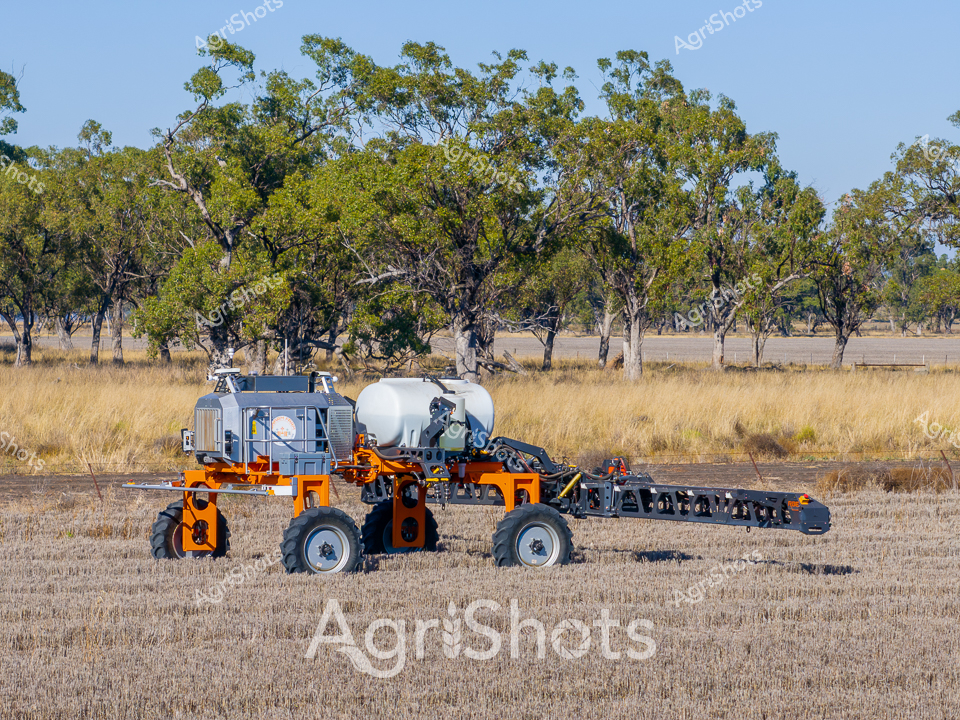
A cutting-edge robotic agricultural sprayer traverses a golden wheat stubble field in the Liverpool Plains region of New South Wales during early autumn. The advanced precision agriculture machine, painted in striking orange and grey, features sophisticated weed detection technology that allows targeted chemical application, minimizing environmental impact and reducing herbicide usage. Towering eucalyptus trees line the distant horizon, creating a classic Australian rural landscape backdrop of weathered grasslands and sparse woodland. This WeedSeeker autonomous spray rig represents the pinnacle of agricultural innovation, using sensors and intelligent systems to precisely identify and treat specific weed patches across the harvested field, demonstrating how modern farming increasingly relies on smart technology to improve efficiency and sustainability. The machine's robust wheels and articulated design allow it to navigate uneven terrain with remarkable stability, while its compact yet powerful structure embodies the intersection of agricultural tradition and technological progress characteristic of contemporary Australian farming practices.
 Image
Image
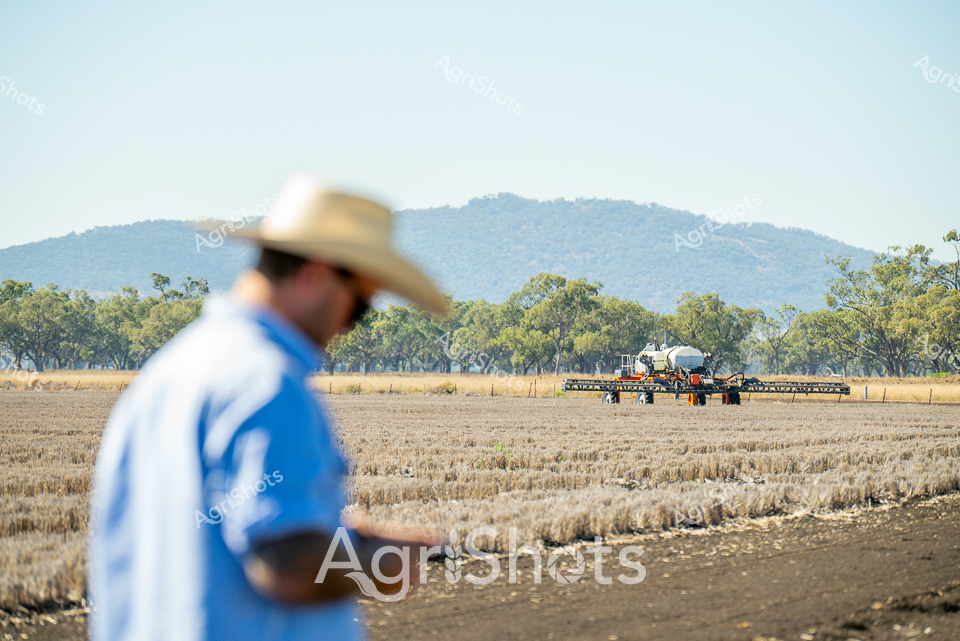
Dusty golden stubble stretches across the Liverpool Plains landscape, where precision agricultural technology transforms post-harvest fieldwork. A sophisticated camera-equipped spray rig moves methodically across the harvested paddock, its long boom carefully targeting specific areas with targeted herbicide application. In the foreground, a farmer wearing a broad-brimmed sun hat and blue work shirt observes the operation, representing the modern intersection of technological innovation and traditional agricultural expertise. Distant blue mountains frame the scene, surrounded by a classic Australian rural woodland of scattered eucalyptus trees, their muted greens contrasting with the pale wheat-colored ground. The advanced spraying equipment - likely a WeedSeeker system - demonstrates cutting-edge swarm robotics technology, allowing precise weed management that minimizes chemical usage and environmental impact. The crisp autumn light reveals meticulous land management, where every pass of the machinery represents calculated efficiency. This image captures the essence of contemporary Australian agricultural practice: intelligent, responsive, and deeply connected to the landscape, where technology serves the fundamental human endeavor of cultivating the earth.
 Image
Image
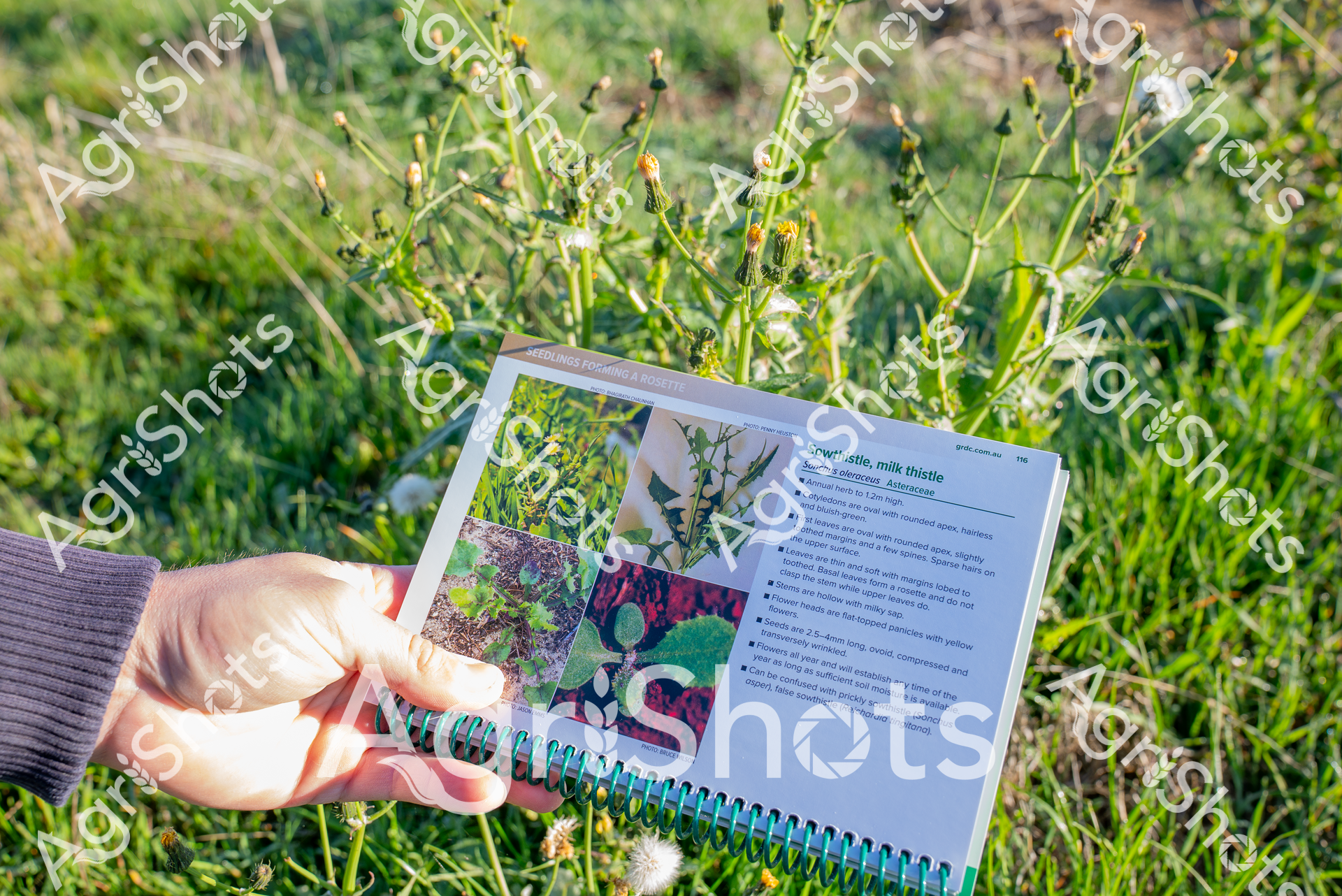
A detailed botanical reference page for sowthistle (milk thistle) emerges against a lush, verdant background of wild grasses and flowering weeds. A human hand, partially obscured and wearing a dark sleeve, carefully holds an informative field guide open to a page displaying multiple photographic images of the plant in various growth stages. The surrounding environment is rich with vibrant green vegetation, with slender stems and yellow budding flowers creating a natural backdrop that mirrors the botanical subject of the reference material. The image captures the meticulous process of botanical identification, showcasing the intricate details of plant classification and field research. Delicate yellow flower buds and feathery green stems sway gently in what appears to be a late spring or early summer setting, with soft sunlight illuminating the scene. The close-up perspective creates an intimate connection between the scientific documentation and the living botanical environment, highlighting the precision of agricultural and botanical documentation. The field guide provides comprehensive details about the sowthistle's characteristics, including its growth patterns, flower descriptions, and ecological context - a testament to the rigorous approach to understanding agricultural and wild plant species in the Australian landscape.
 Image
Image
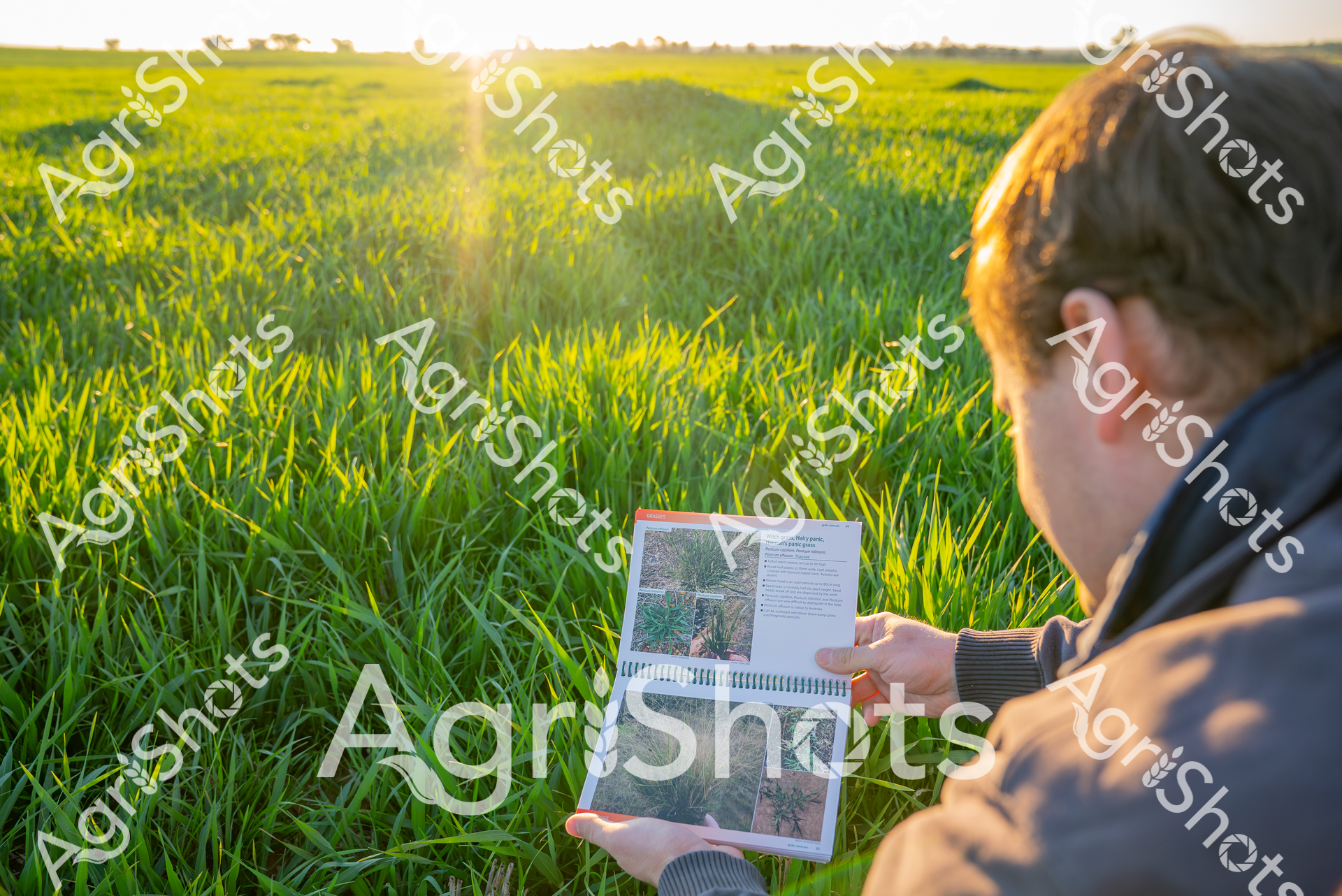
A lone agricultural researcher studies a reference guide amid vibrant green ryegrass fields during golden hour, sunlight streaming across the lush pasture. Holding an open informational book, the researcher carefully examines plant details, surrounded by the verdant landscape of New South Wales' Riverina region. The soft warm light illuminates the young grass, creating a luminous green texture that stretches toward the distant horizon. Soft shadows and backlighting highlight the intricate details of the agricultural documentation and the emerging crop, capturing a moment of scientific observation in the heart of Australian agricultural research. The scene represents the meticulous process of crop monitoring, weed identification, and agricultural investigation during the early growing season.
 Image
Image
Cutting-edge agricultural robotics transform the golden stubble-strewn fields of the Liverpool Plains, as an autonomous spray rig calibrates its precision weeding mission across the rich, dark earth. The high-tech orange and blue machine stands poised against a backdrop of distant blue mountain ranges, representing the next generation of intelligent farming technology. A farmer in a crisp blue shirt and wide-brimmed hat observes the robotic sprayer, highlighting the emerging synergy between human expertise and autonomous agricultural systems. The WeedSeeker technology promises targeted, efficient crop management, minimizing chemical usage and maximizing field productivity in this quintessential New South Wales agricultural landscape. Crisp morning light casts long shadows across the harvested paddock, revealing the intricate technological marvel that will navigate the stubble with millimeter precision. This scene captures the innovative spirit of modern Australian agriculture - where advanced robotics, human skill, and expansive rural terrain converge to redefine farming practices.
 Image
Image
Based on the image tags and visual details, this appears to be a close-up of horehound, a weedy plant found in the Riverina region of New South Wales. The plant's distinctive leaves are covered in a white, fuzzy coating that gives them a mottled green and silvery-white appearance. Intricate leaf structures with deeply serrated edges create a complex, textured surface that stands out against the green grass in the background. The dense clustering of the horehound plants suggests a robust infestation in a grassy area, typical of challenging agricultural landscapes. The image captures the invasive nature of this plant, with its woolly, grayish-green leaves spreading across the ground, demonstrating the ongoing battle farmers face with persistent weed species in rural Australian environments.
 Image
Image
Summer's harsh embrace descends on the Riverina's cropping landscape, where a weathered hand gently investigates a cluster of resilient green weeds emerging through golden stubble. Dry wheat stalks blanket the ground in a intricate mat of weathered browns and tans, testament to the recent harvest and the unforgiving Australian agricultural cycle. The vibrant green plant stands in stark contrast - a defiant splash of life amidst the parched, post-harvest terrain, symbolizing nature's persistent regenerative power. A single, sun-tanned finger probes the weed's foliage, likely assessing its potential threat to future crop potential or soil health. This intimate moment captures the meticulous care and constant vigilance required of farmers managing their land through challenging seasonal conditions. The image epitomizes the nuanced relationship between human intervention and natural growth in the broad-acre farming systems of New South Wales, where every plant and every touch carries economic and ecological significance.
 Image
Image
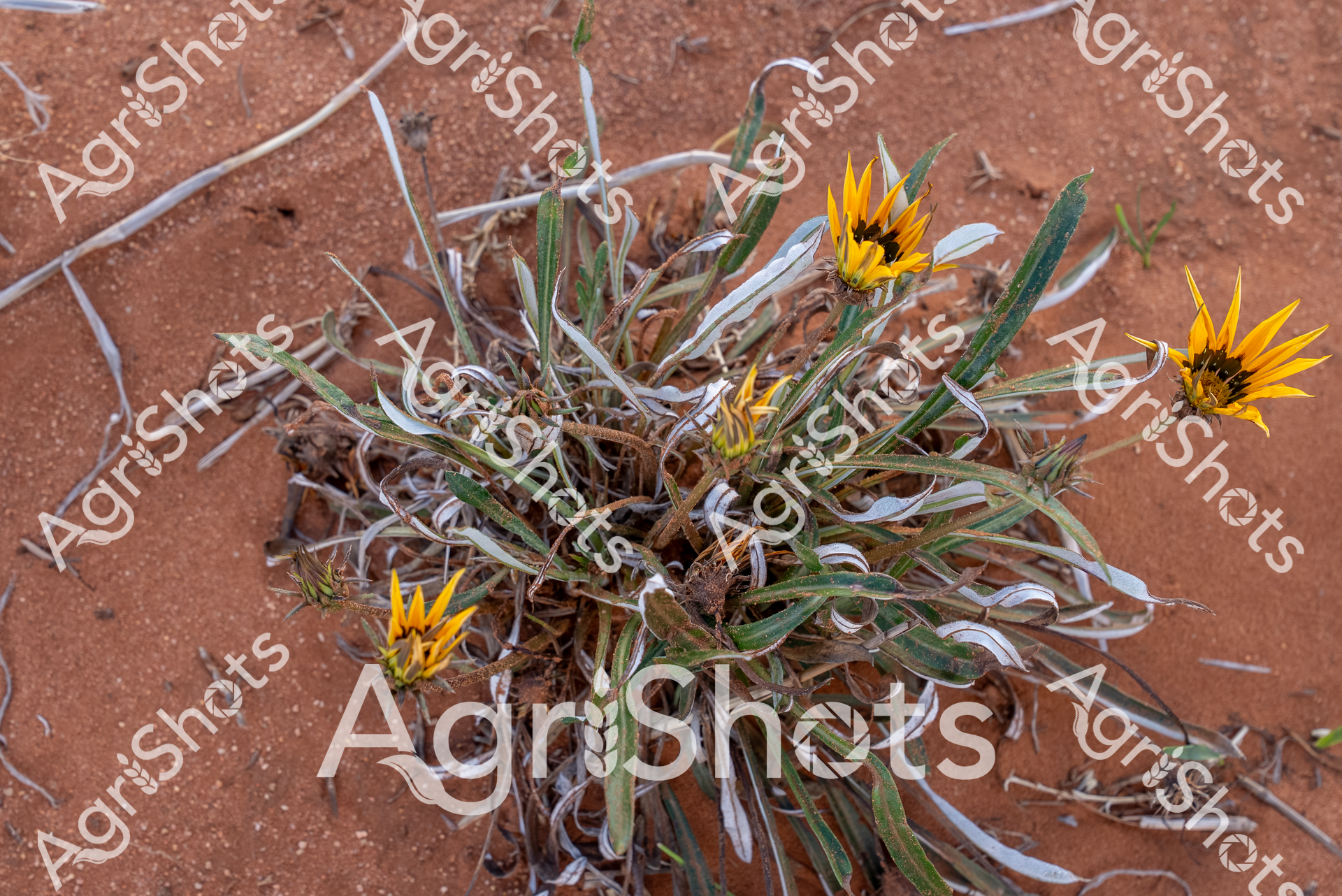
In the harsh arid landscape of South Australia, a resilient cluster of gazanias blooms defiantly against a backdrop of sandy, drought-stressed terrain. The yellow-petaled flowers burst with vibrant color amid sparse, twisted green leaves and silvery-white stems, creating a stark contrast against the reddish-brown earth. This small botanical tableau captures the tenacious spirit of plant life surviving in challenging agricultural conditions, illustrating nature's remarkable ability to persist even in the most unforgiving environments.
 Image
Image
A detailed botanical field guide rests among lush green ryegrass, capturing the intricate world of agricultural weed identification. Slender green grass blades with vibrant yellow-green highlights surround the blue identification manual, which displays delicate leaf silhouettes and botanical details. A gloved hand carefully holds a tuft of fresh ryegrass, highlighting the precision and scientific approach to understanding pasture ecosystems in the Riverina region of New South Wales. The soft sunlight filtering through the grass creates a luminous backdrop, emphasizing the natural textures and subtle color variations of the grassland environment. This image represents the meticulous research and agricultural expertise required to manage pasture health, showcasing the intersection of scientific investigation and practical farming knowledge. The identification manual's carefully illustrated leaf shapes and detailed information suggest a comprehensive approach to understanding plant species, critical for maintaining optimal agricultural landscapes and managing potential invasive grasses in Australian farming systems.
 Image
Image
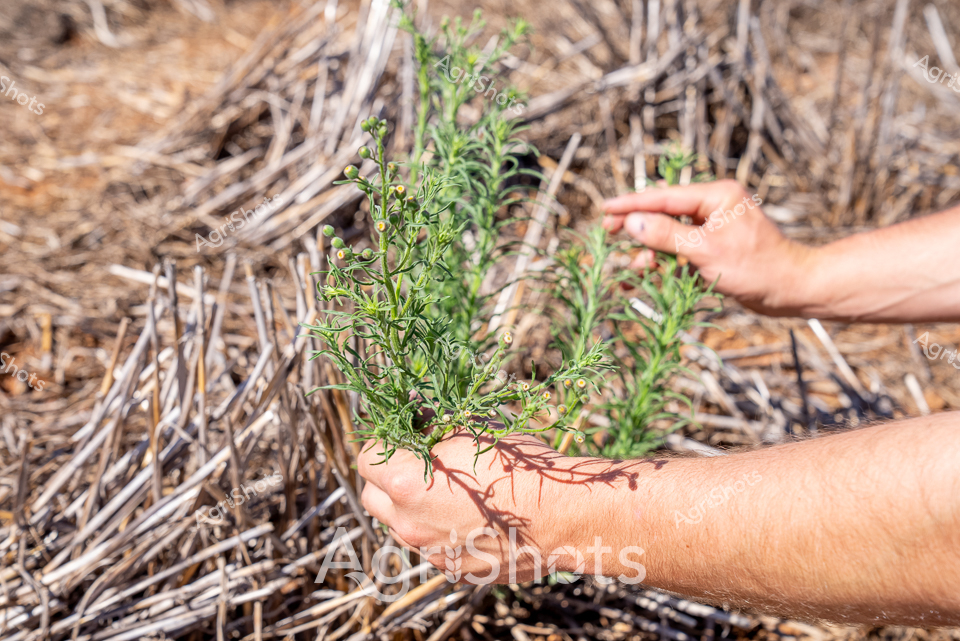
Dusty stubble from a recent harvest blankets the ground of a Riverina district paddock in late summer, where calloused hands gently examine a cluster of green fleabane emerging between wheat stubble. The delicate weed rises with intricate, feathery leaves and a network of fine roots, demonstrating the persistent botanical life that springs from agricultural soil. Autumn's approaching light casts soft shadows across the brown, dry ground, highlighting the contrast between the brittle crop remnants and the vibrant green plant. A farmer's weathered hand, tanned and lined from seasons of outdoor work, carefully assesses the fleabane's growth - likely considering its impact on crop rotation and soil management strategies. This moment captures the nuanced relationship between agricultural land management and the resilient plant life that challenges and enriches cropping systems. The image speaks to the constant vigilance and ecological understanding required in modern broadacre farming across New South Wales.
Well, you've ploughed through the whole field!
No more crops to harvest here, mate.
Try searching for something else in our library of 50,000+ royalty-free media: