 Image
Image
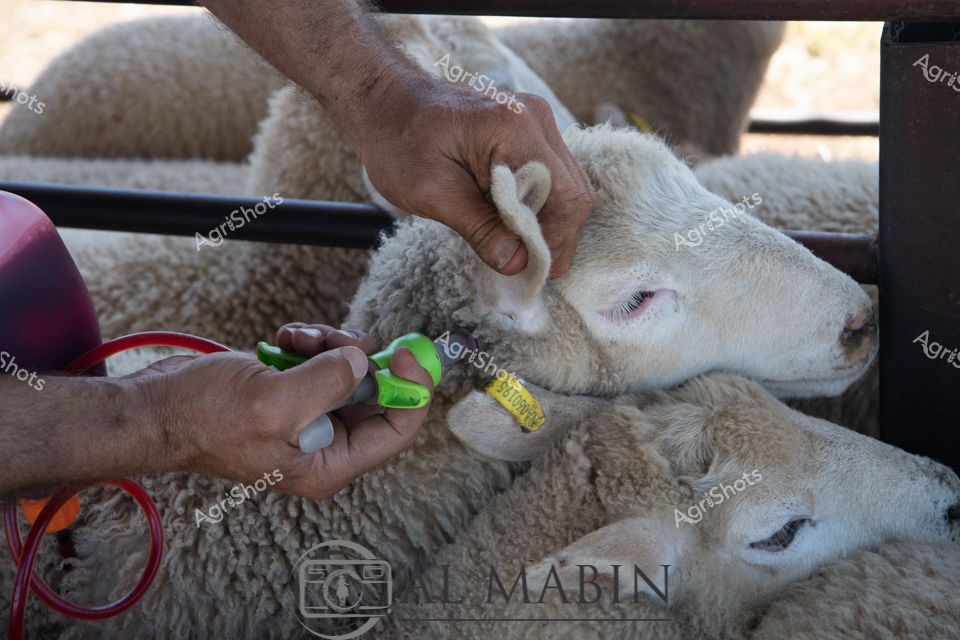
Lamb Health Management in Rural NSW Skilled hands deliver critical care in a sheep yard, administering vaccination to a young lamb. A weathered farm worker gently restrains the woolly white lamb, using precise technique to ensure accurate medical treatment. The bright green and yellow vaccination tool stands in sharp contrast to the soft, creamy fleece of the surrounding sheep. Multiple lambs huddle together, their dense, curled wool creating a textural landscape of soft greys and whites. A yellow ear tag identifies this lamb within the flock, a standard practice for livestock tracking and management. The scene captures the meticulous animal husbandry essential to Australian sheep farming - a blend of compassionate handling and professional healthcare that ensures the wellbeing of valuable livestock.
 Image
Image
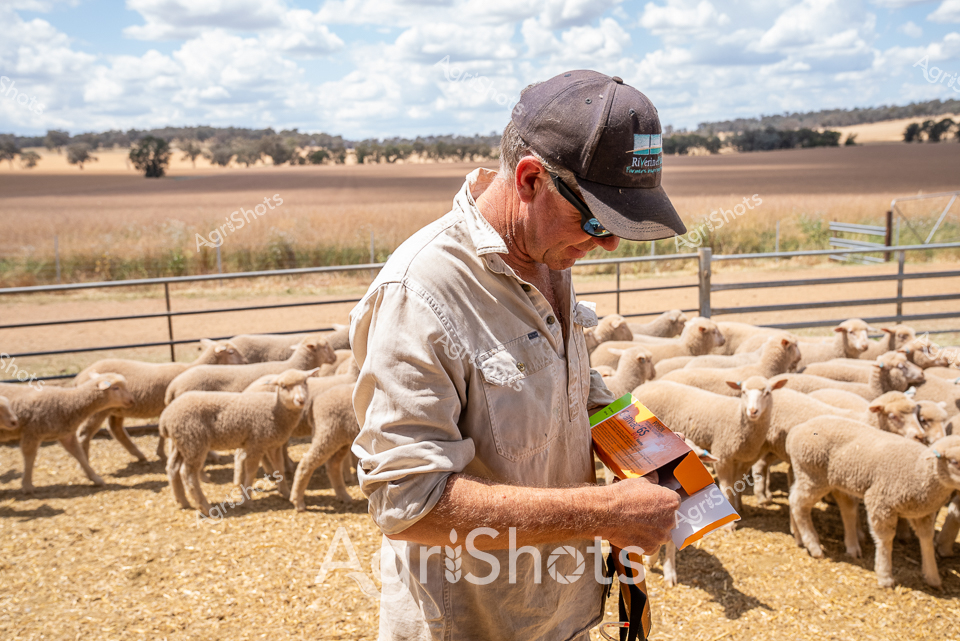
Rural Merino Lamb Vaccination: A seasoned farmer stands amid a densely packed yard of young lambs, carefully preparing a vaccination dose in an expansive, golden paddocked landscape of rural Victoria. Wearing a light khaki work shirt and a branded cap, the farmer concentrates on administering essential healthcare to his flock, surrounded by rolling fields and scattered eucalyptus trees under a dramatic clouded sky. The lambs, clustered tightly within sturdy metal yard panels, represent the next generation of a carefully managed agricultural enterprise, their woolly bodies creating a textural carpet of cream and tan against the dry earth. His measured movements reflect decades of agricultural expertise, preparing medication with practiced precision to ensure the health and productivity of his livestock. The scene captures the quiet dedication of Australian farmers - guardians of a challenging and noble profession that demands intimate knowledge of animal husbandry and unwavering commitment to rural production. Soft shadows and diffused sunlight emphasize the seasonal rhythms of sheep farming, where every action is purposeful and connected to the broader cycles of agricultural life.
 Image
Image
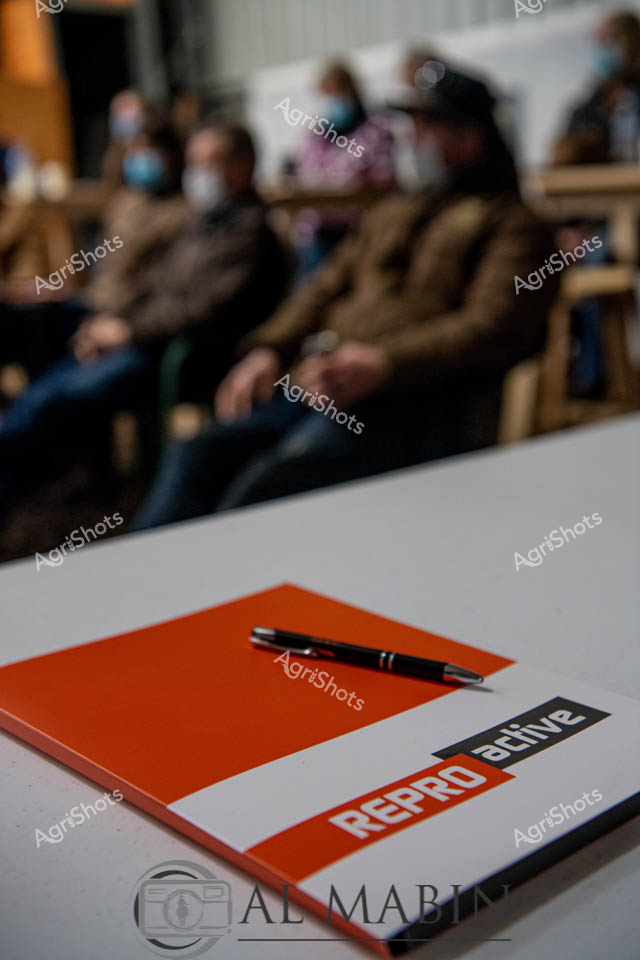
Repro Active orange folder and black pen rest on a white surface in the foreground, signaling a professional agricultural meeting or presentation. Blurred figures sit in wooden chairs wearing neutral-toned clothing, with some wearing masks, suggesting a contemporary rural industry gathering during a pandemic period. The AgriShots watermark and Al Mabiat photography branding frame the scene, indicating a professional documentation of an agricultural event. Soft focus and muted background tones create an atmosphere of focused discussion, likely related to cattle management, stud breeding, or veterinary practices. The carefully composed image captures the essence of modern agricultural professional engagement - structured, attentive, and prepared. The orange folder's bold "Repro Active" branding hints at reproductive technologies or management strategies critical to contemporary livestock production.
 Image
Image
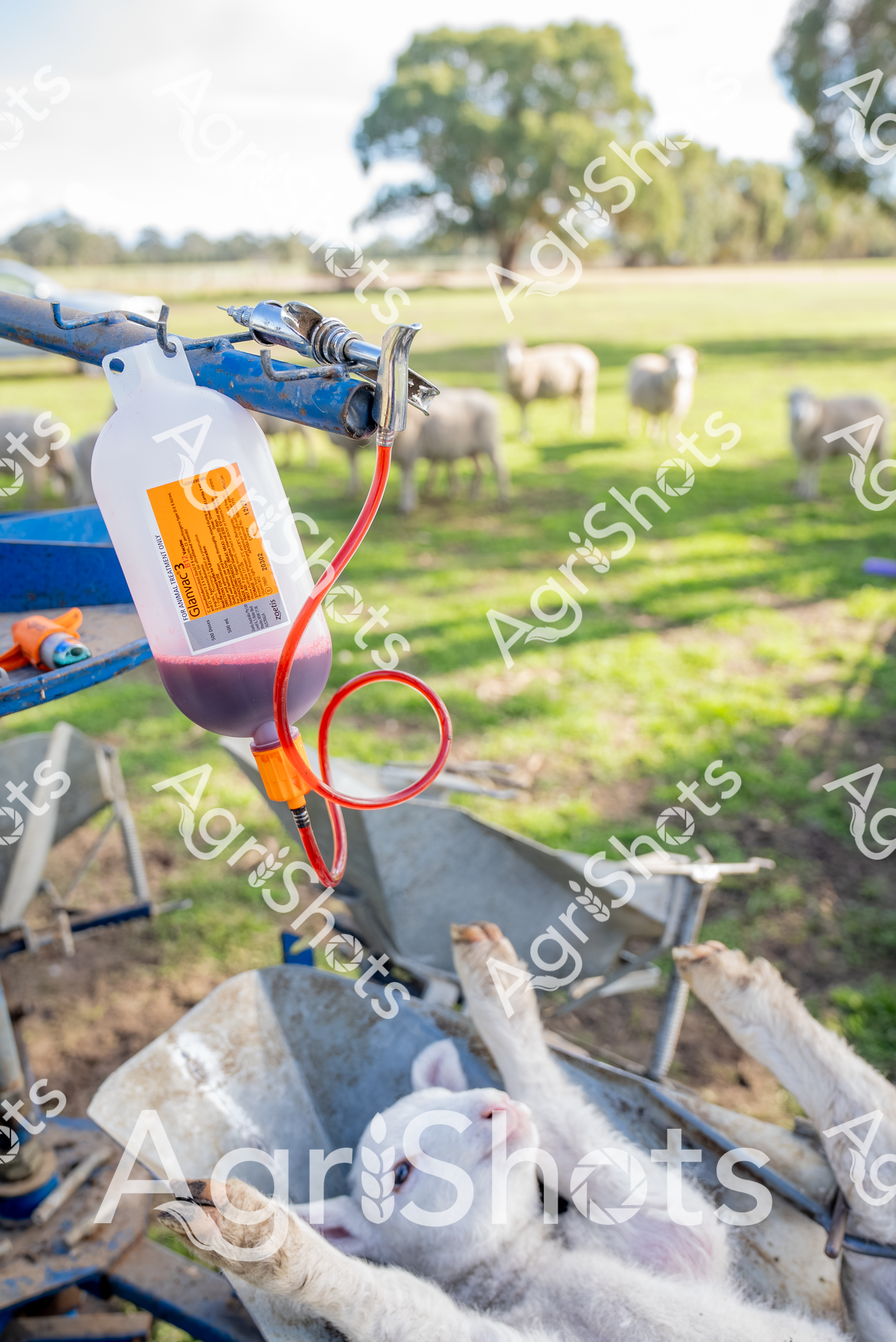
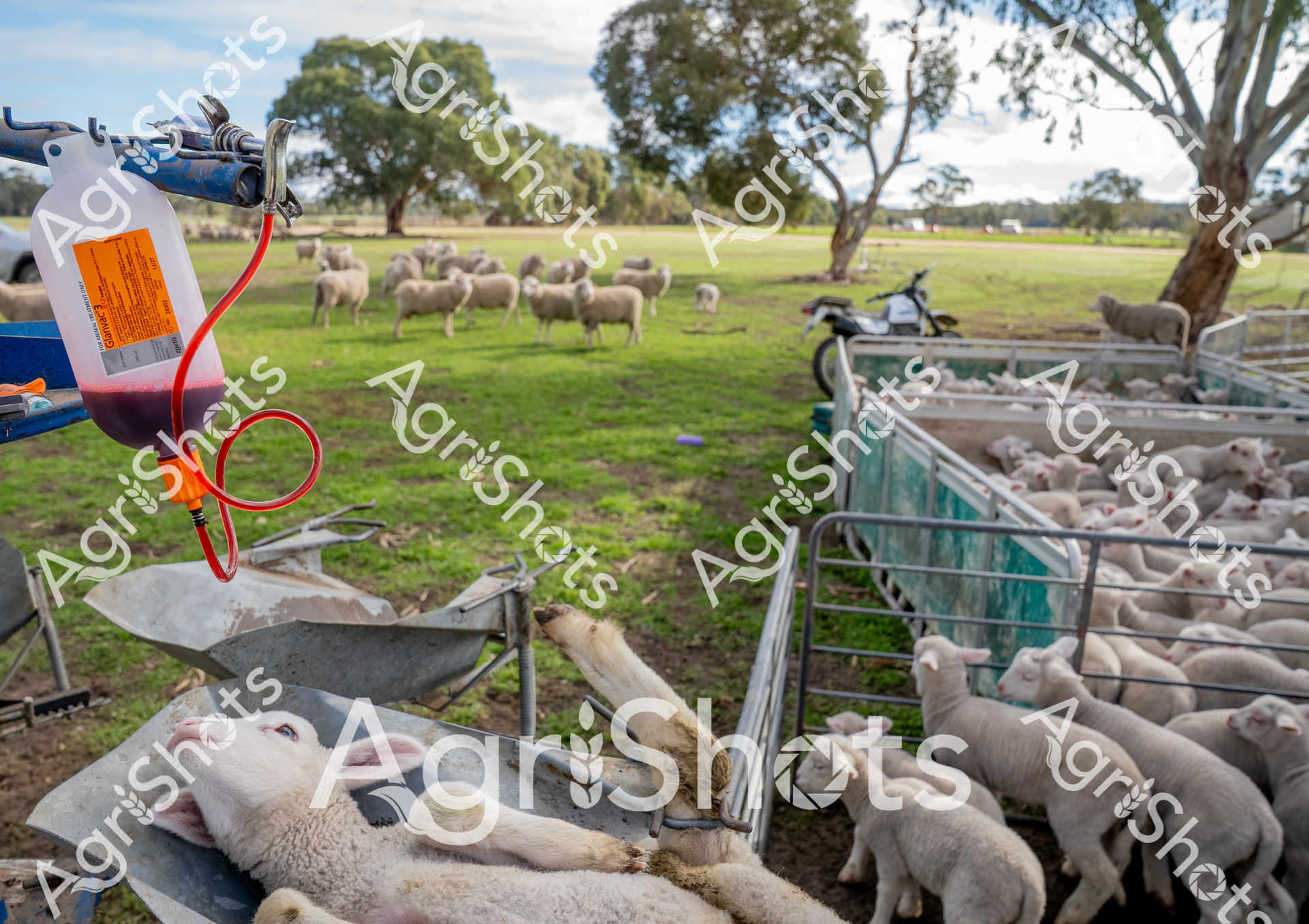
Rural South Australian winter pasture comes alive with agricultural precision during lamb marking season. A blue livestock handling frame supports a young lamb, with a Zoetis Glanvac vaccination bottle hanging from an IV line, preparing to administer crucial animal health protection. The surrounding paddock displays a soft green "drought" landscape - grasslands that are sparse yet verdant, with mature eucalyptus trees softening the background and a small flock of sheep grazing peacefully. Crimson and red tubing connects the medical equipment, creating a stark visual contrast against the blue metallic frame and white vaccine container with its distinctive orange information label. The lamb rests in the handling cradle, representing a critical moment of preventative care that ensures the flock's ongoing health and the farmer's agricultural investment. This image captures the meticulous and compassionate approach of modern Australian livestock management, where animal welfare and strategic healthcare intersect on the windswept plains of rural South Australia.
 Image
Image
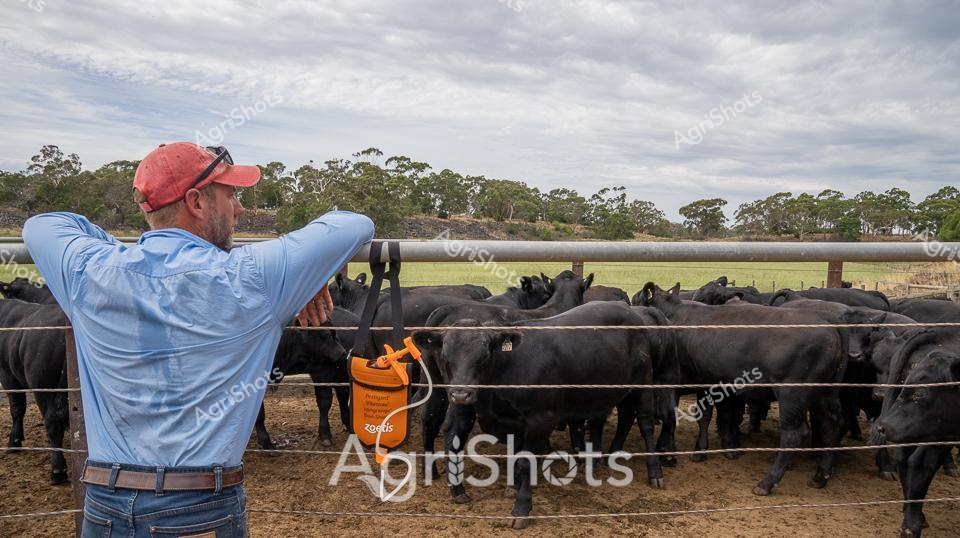
Backed by a tranquil eucalyptus-dotted landscape under a steel-grey winter sky, a seasoned cattleman surveys a densely packed yard of sleek Black Angus cattle. Wearing a light blue long-sleeved shirt and a red cap, he stands at the fence with an orange Zoetis vaccination pack, preparing to administer essential animal health treatments. The robust herd clusters tightly within sturdy metal yard rails, their midnight-black coats creating a striking contrast against the pale dusty ground and muted green pastures beyond. This quintessential Victorian cattle management scene captures the methodical precision of modern Australian beef production - a moment of careful livestock stewardship where animal welfare and agricultural expertise intersect. The overcast conditions and crisp rural setting emphasize the no-nonsense approach of professional cattle managers, highlighting the critical behind-the-scenes work that sustains Australia's renowned beef industry. Every element speaks to the calculated care and professional approach required in contemporary agricultural practice.
 Image
Image
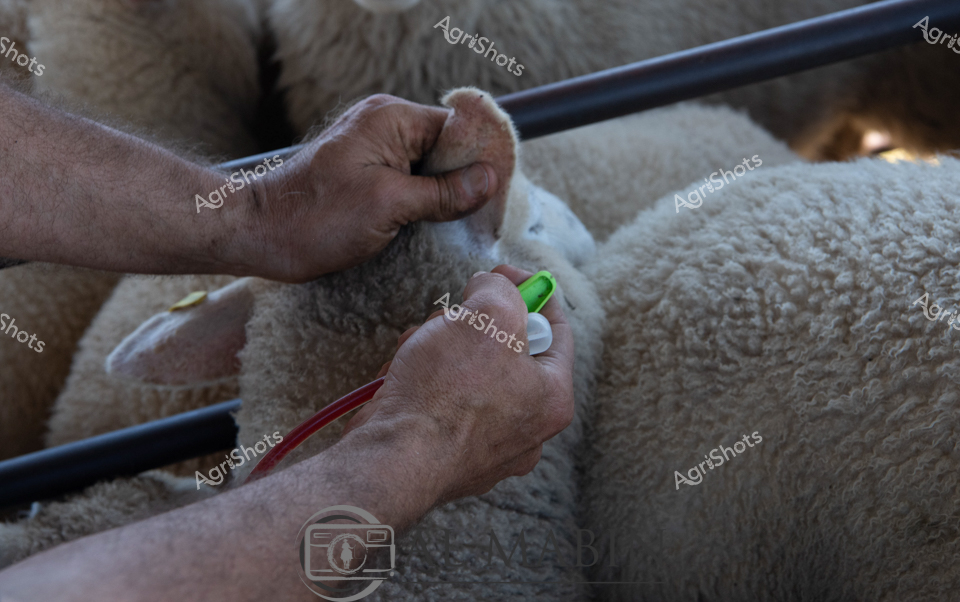
Rural hands skilled in livestock management carefully administer a vaccination to a young lamb, nestled among a flock of woolly merino sheep in a traditional farm yard. The close-up perspective reveals weathered, work-hardened hands gripping the animal with practiced gentleness, one hand holding the lamb steady while the other prepares to deliver a critical health intervention. A green and white vaccine applicator contrasts against the soft cream and grey tones of the sheep's dense fleece, highlighting the precision of modern agricultural animal care techniques. This moment captures the essential relationship between farmers and their livestock, where individual animal welfare directly impacts the productivity and health of the entire flock. The tight framing and muted colors suggest early morning light, a typical time for routine farm management tasks during lamb weaning season. The scene embodies the quiet expertise of Australian agricultural workers, whose daily interactions with their animals reflect generations of farming knowledge and contemporary veterinary practice.
 Image
Image
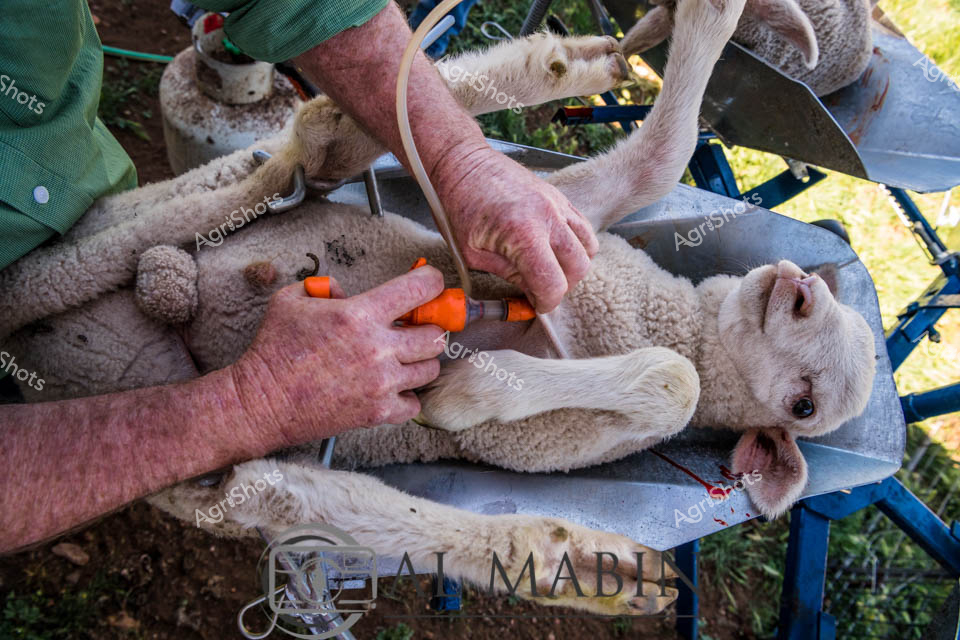
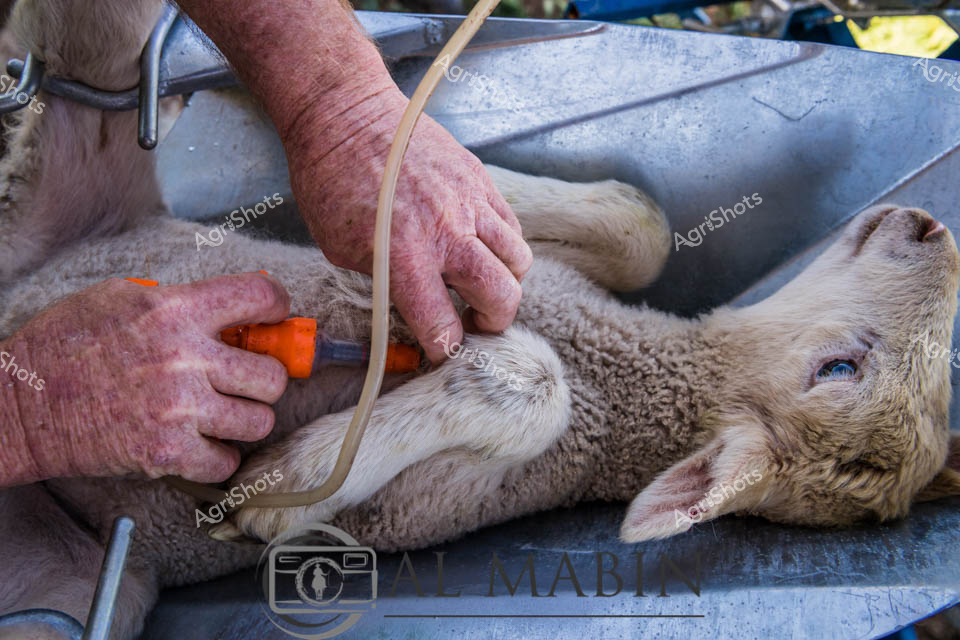
Merino lamb receives essential healthcare during annual marking season, secured on a blue metal cradle in a sunlit sheep yard. Weathered, experienced hands carefully administer a vaccine, using an orange syringe to protect the young animal's future health. The lamb's dense, creamy white fleece contrasts against the metal equipment, while surrounding lambs wait their turn in the pastoral setting. Robust green farm attire and the meticulously organized agricultural environment speak to generations of strategic livestock management in rural New South Wales. Precise veterinary procedures like this ensure the wellbeing and productivity of Australia's critical sheep industry, representing centuries of agricultural expertise. The scene captures the careful balance between animal welfare and agricultural efficiency, with soft natural light highlighting the delicate yet resilient nature of farm life.
 Image
Image
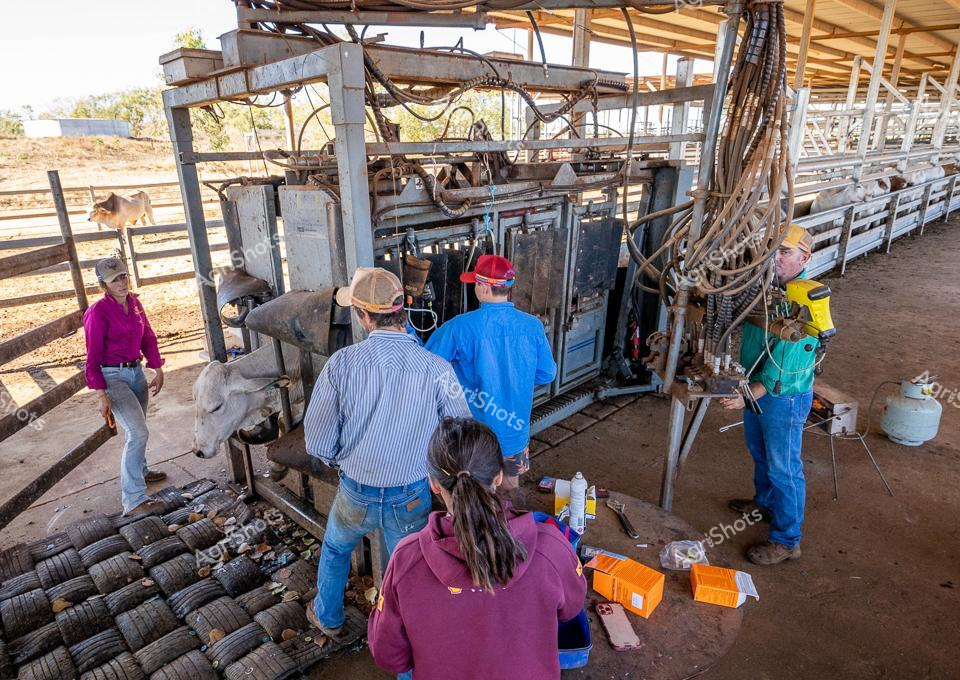
Brahman cattle gather in the weathered steel yards of a Northern Territory cattle station, awaiting their routine health checks and processing. A team of experienced stockworkers move with practiced efficiency around the robust metal cattle crush, dressed in practical workwear - blue shirts, yellow safety vests, and sturdy jeans that speak to the harsh pastoral environment. The morning light casts long shadows across the dusty ground, highlighting the intricate network of metal gates, hydraulic equipment, and well-worn rubber mats that form the backbone of modern cattle management. Propane tanks and veterinary supplies stand ready, indicating an upcoming animal health intervention, likely vaccinations or induction procedures typical of large-scale cattle operations. The workers' body language suggests a calm, methodical approach, with each team member positioned strategically around the sophisticated Catagra cattle handling equipment. In the background, the expansive cattle yards and glimpse of open landscape underscore the scale of Australian pastoral agriculture - a testament to the skill, technology, and dedication required to manage livestock in challenging tropical environments. The scene captures the intersection of animal husbandry, workplace safety, and agricultural innovation, with the distinctive pale Brahman cattle central to this quintessential Northern Territory station workflow.
 Image
Image
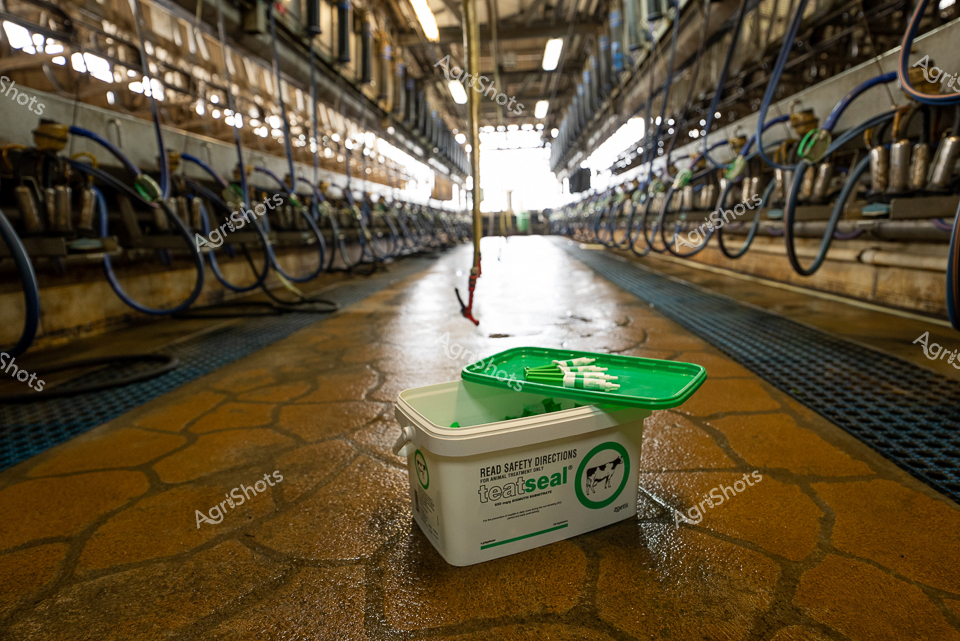
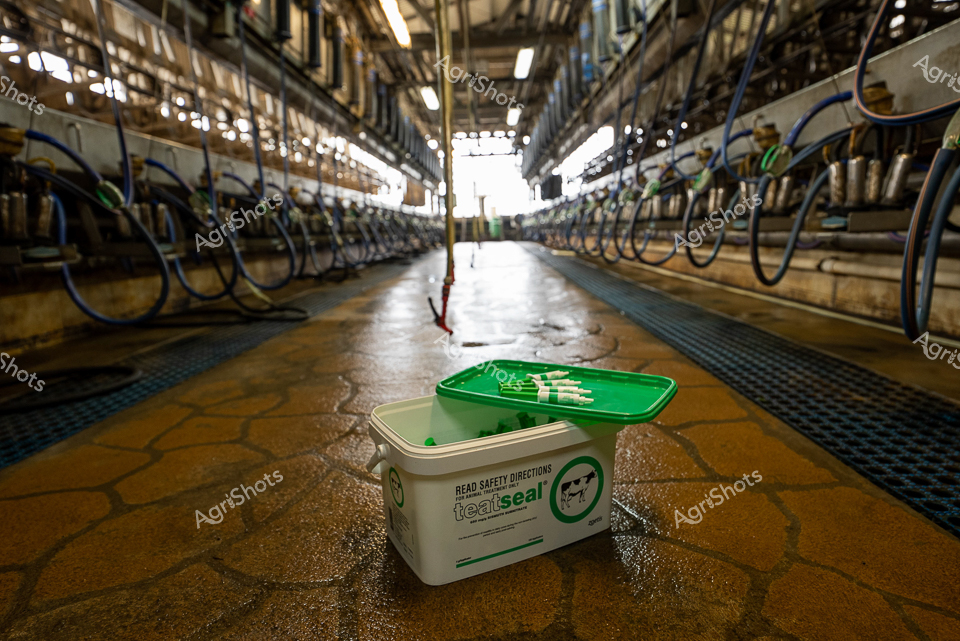
Pristine light filters through the expansive dairy shed, illuminating a gleaming concrete floor and rows of milking equipment. A Teat Seal container sits prominently in the foreground, its bright green and white packaging a beacon of livestock health management. Blue milking clusters hang suspended in perfectly symmetrical lines, suggesting the precision and technological sophistication of modern Australian dairy farming. The textured concrete floor, worn smooth by countless hooves and boots, tells stories of generations of agricultural practice. The Teat Seal product represents a critical intervention in dairy cow care, protecting udder health during dry periods and ensuring the continued productivity of the herd. This image captures the intersection of agricultural science, animal welfare, and the meticulously maintained infrastructure that underpins Australia's world-class dairy industry - a testament to the careful, systematic approach of contemporary rural production.
 Image
Image
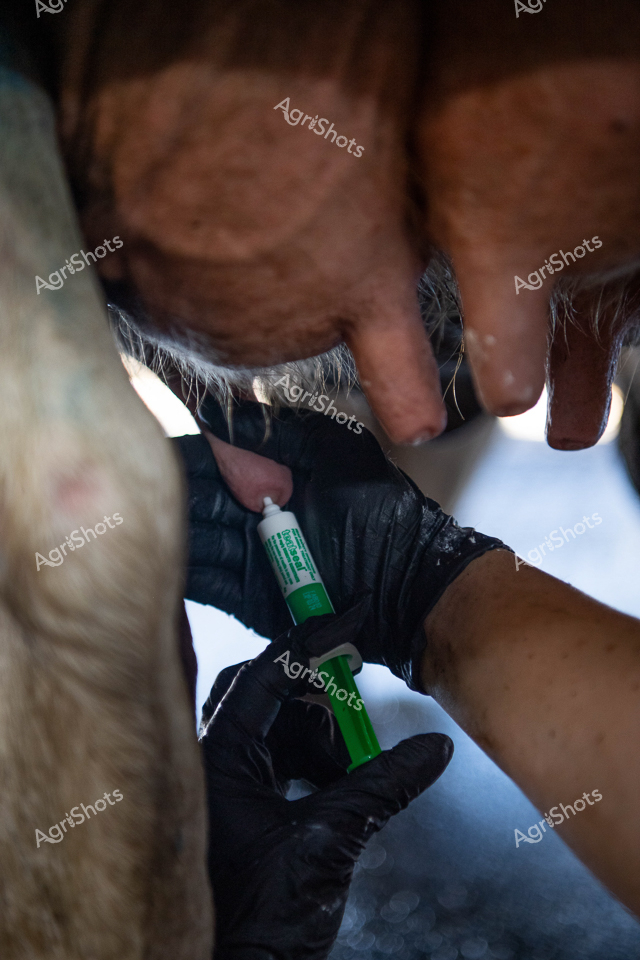
Precise veterinary care unfolds in an intimate dairy farm moment. Gloved hands skillfully apply a green-and-white teat seal injection to a dairy cow, a critical preventative health procedure performed during the drying off period before calving. The close-up reveals the meticulous technique, with black protective gloves handling the medical implement against the soft, pale hide of the bovine. White hair edges frame the udder, highlighting the delicate precision required in livestock management. This routine intervention protects the cow's mammary health, preventing potential bacterial infections during the non-lactating phase and ensuring optimal conditions for the next calving cycle. The image captures the quiet professionalism of modern agricultural animal care, where scientific intervention and compassionate husbandry intersect to maintain herd wellness.
 Image
Image
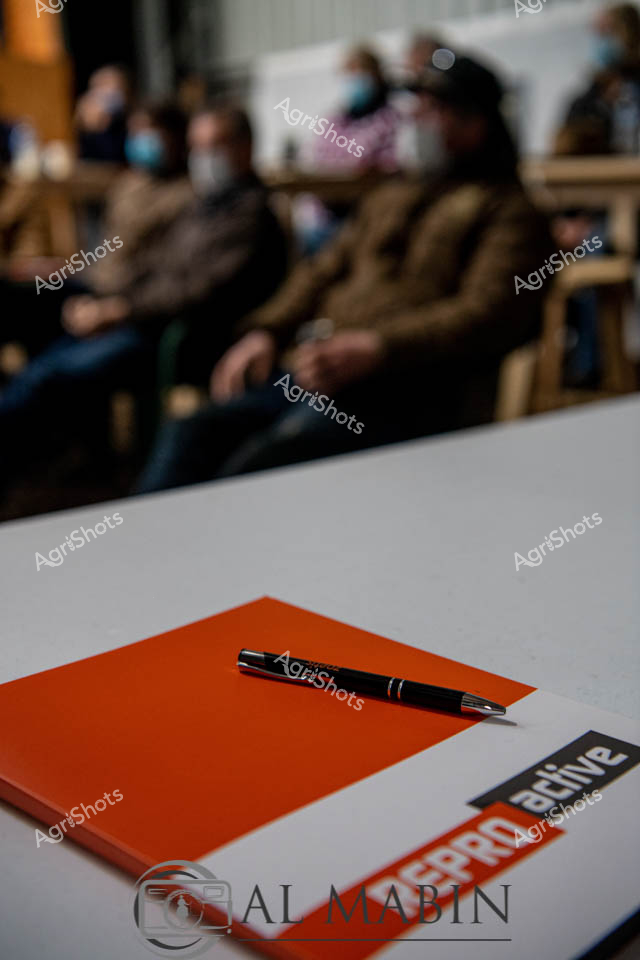
A bright orange notebook lies open on a crisp white surface, accompanied by a sleek black pen - artifacts of a professional agricultural meeting or field day. In the blurred background, attendees sit attentively, many wearing earthy brown jackets and protective face coverings, suggesting a recent pandemic-era agricultural event in rural New South Wales. The sharp focus on the notebook and pen in the foreground contrasts with the softened human figures, creating a sense of anticipation and concentration. The carefully composed image, watermarked with "AgriShots" and bearing the AgriShots brand, speaks to the meticulous documentation and knowledge-sharing central to modern agricultural practices. A subtle AgriShots watermark and what appears to be a corporate logo anchor the scene, indicating this is a professional documentation of an important industry gathering. The composition suggests preparation, learning, and the collaborative spirit of Australian agricultural professionals sharing critical information about livestock management, crop strategies, or technological advancements in farming.
 Image
Image
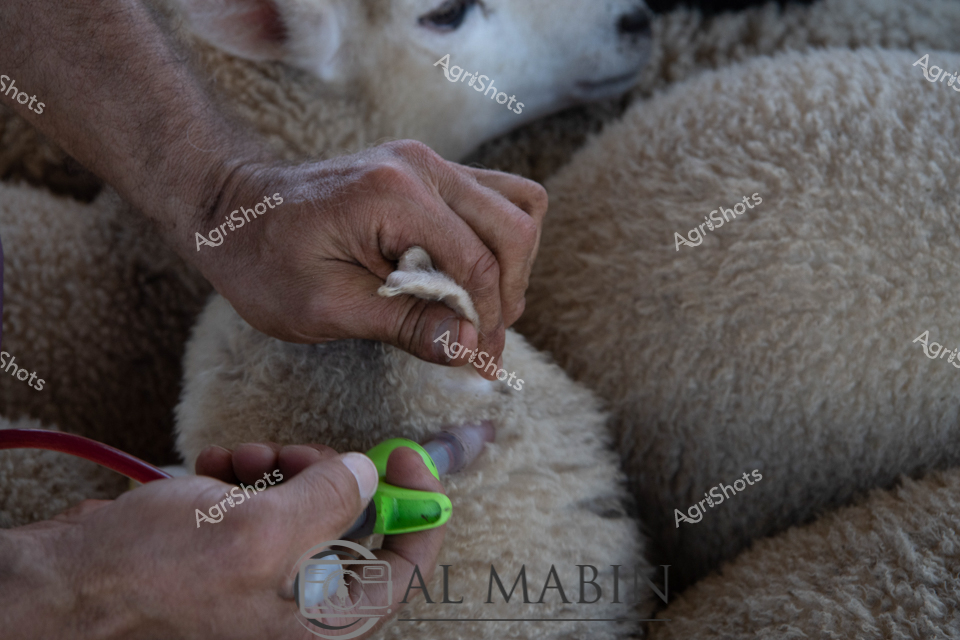
Skilled hands methodically vaccinate a young lamb amid a dense flock of woolly merinos, capturing a critical moment of livestock health management on an Australian pastoral property. A weathered hand firmly restrains the lamb while another administers medication using a bright green applicator, demonstrating the precise care fundamental to successful sheep husbandry. The soft, cream-colored fleece of the tightly packed sheep creates a textural backdrop that highlights the intimate interaction between farmer and animal. This scene represents the meticulous work of rural professionals ensuring the wellbeing and productivity of their livestock, a hallmark of Australian agricultural practice. The close-up perspective reveals the technical expertise required in managing young stock, with each careful movement reflecting generations of agricultural knowledge. The subdued tones and focused activity evoke the quiet concentration of essential farm work, where every action contributes to the sustainability of the agricultural enterprise.
 Image
Image
In the cool, dawn-lit interior of a modern dairy shed, a container of Teatseal sits poised on the textured concrete floor, symbolizing the meticulous hygiene and health protocols of contemporary Australian dairy farming. Gleaming stainless steel milking stations stretch in precise parallel lines, creating a symmetrical industrial landscape bathed in soft overhead lighting. The green and white Teatseal container represents a critical step in dairy cow management - protecting udder health during the critical drying off period between lactation cycles. Precision agricultural technology surrounds the product, with blue milk transfer lines and carefully engineered milking equipment highlighting the scientific approach to livestock care. The shed's expansive architecture speaks to the scale of modern dairy production, where animal welfare and product quality are paramount. This image captures the intersection of veterinary science, agricultural innovation, and the dedicated craft of dairy farming - a testament to the sophisticated practices that underpin Australia's world-class agricultural sector.
 Image
Image
Milking shed precision unfolds across a weathered concrete floor, where stainless steel milking clusters hang suspended in neat rows. Green-and-white Teat Seal containers sit strategically positioned, representing critical animal health management in modern dairy operations. The blue hydraulic tubes and metallic milk collection points create a rhythmic industrial landscape, speaking to the systematic approach of contemporary Australian dairy farming. Soft amber light bathes the worn floor, highlighting the textured surface and suggesting early morning or late afternoon workflow - prime times for dairy herd management. These Teat Seal products, manufactured by Zoetis, represent a sophisticated approach to preventing potential mammary infections during dairy cow dry periods, a critical intervention in maintaining livestock health and milk production quality. The image captures the intersection of agricultural science, technological precision, and generations of farming expertise, embodying the meticulous care inherent in New South Wales dairy operations.
 Image
Image
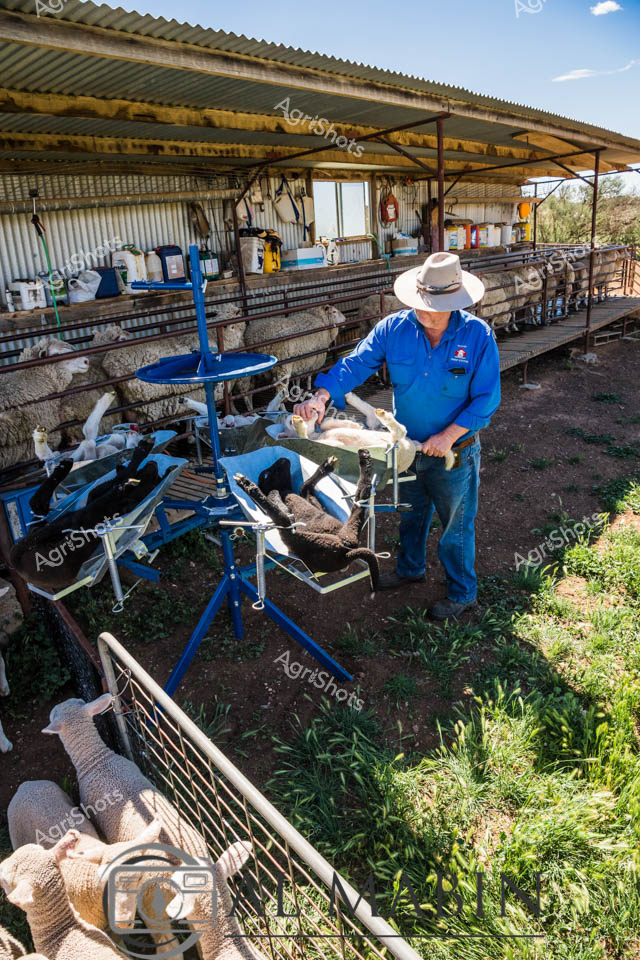
Sheep mustering and lamb marking unfold in a classic Australian rural shed, capturing the essential rhythms of pastoral life. A worker in a bright blue shirt and wide-brimmed sun hat carefully tends to a lamb on a robust blue marking station, surrounded by corrugated iron infrastructure and pastoral grasslands. Metallic blue equipment contrasts with the warm earth tones, highlighting the precision of modern agricultural practices. Nearby sheep wait patiently in sturdy metal gates, their woolly forms suggesting robust merino genetics typical of New South Wales livestock breeding. The corrugated shed roof filters soft midday sunlight, creating a sense of functional efficiency and generations of farming knowledge embodied in this single moment. Agricultural supplies and equipment line the shed's interior, testament to the careful management and animal health protocols integral to successful sheep production.
 Image
Image
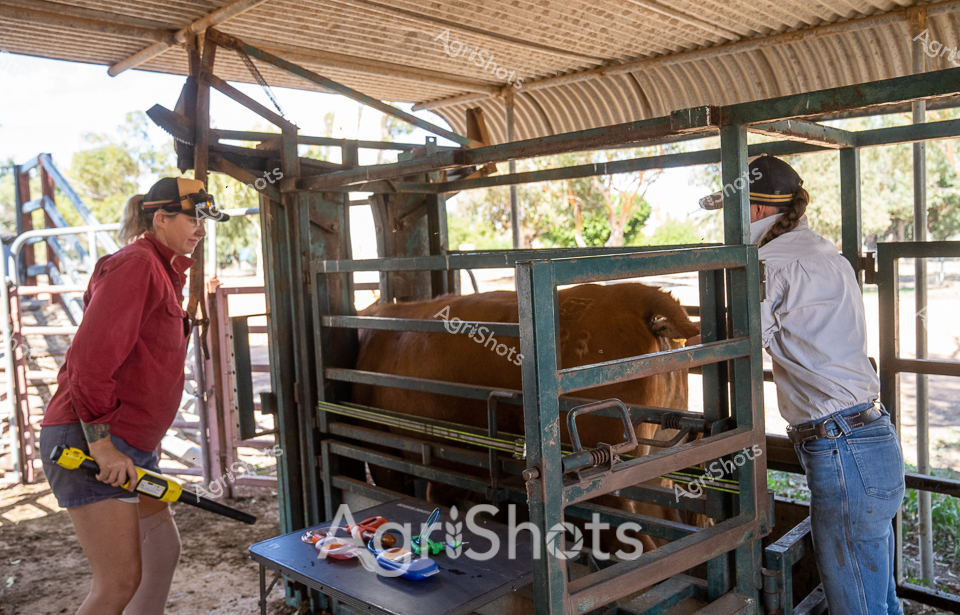
Rural veterinary care unfolds in this meticulously captured agricultural moment at a Western Australian cattle yard. A seasoned livestock handler in a crisp white shirt and a younger colleague in a vibrant red jacket prepare to administer vaccination to a sturdy beef cattle restrained within a robust Warwick cattle crush. The metallic blue-green yards provide a structured, secure environment for precise animal health management, with sunlight filtering through the corrugated roof and surrounding tree foliage creating a soft, diffused light. The scene pulses with professional concentration - one handler carefully manages medical supplies while the other monitors the animal's positioning, their coordinated movements reflecting years of collective agricultural expertise. A selection of veterinary equipment and vaccination materials sits ready on a side table, highlighting the methodical approach to livestock management. The cattle, a rich chestnut brown, stands quietly within the sturdy metal frame, testament to the calm and skilled handling typical of modern Australian agricultural practices. This image powerfully represents women's significant roles in agricultural science and animal husbandry, showcasing technical skill, compassion, and the critical work of maintaining herd health in rural Western Australia.
 Image
Image
Weathered hands steady a young lamb during critical husbandry practices in a corrugated steel sheep yard, typical of rural New South Wales livestock management. The delicate procedure of lamb marking involves precise veterinary care, with an orange-handled vaccination being carefully administered to the woolly merino lamb. Pale, sun-weathered hands move with practiced skill, holding the lamb securely on the metallic processing surface, demonstrating generations of agricultural expertise. Soft cream and tan wool covers the lamb's body, contrasting against the silvery blue metallic yard infrastructure, capturing the raw authenticity of Australian farm life. This intimate moment reveals the careful attention and professional animal health practices essential to successful sheep farming in the harsh Australian agricultural landscape. The scene speaks to the quiet professionalism of farmers who balance animal welfare with necessary agricultural management techniques.
 Image
Image
Merino lambs cluster in green pastures during a crisp winter morning in South Australia's southeast region, capturing the essence of a rural livestock operation during a subtle "green drought" condition. A veterinary intervention is underway, with a Glanvac vaccination protocol being administered to young lambs during marking season. A single lamb rests on a metal tray, connected to a red-and-blue medical line from a labeled pharmaceutical container, while other lambs await their health treatment in adjacent metal gates and pens. Eucalyptus trees frame the expansive paddock, casting soft shadows across the lush but deceptively sparse grassland, highlighting the nuanced agricultural landscape. The scene embodies the careful management of livestock health, with professional-grade animal care equipment highlighting the sophisticated approach to sheep farming in this challenging environmental context. The muted greens, soft whites of the lamb fleeces, and industrial blues of the medical equipment create a compelling visual narrative of agricultural practice and animal welfare.
 Image
Image
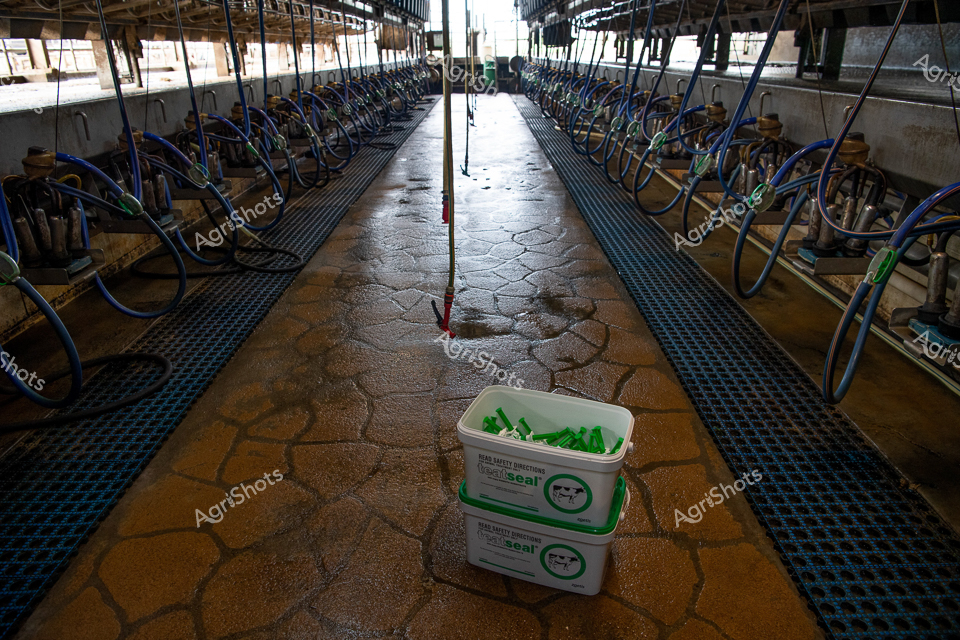
A pristine dairy shed interior emerges in soft, diffused light, revealing a meticulously organized milking station with gleaming blue milk transfer lines and precise stainless steel infrastructure. Stacked containers of Teat Seal - a critical bovine health product - rest on the textured concrete floor, signaling preparation for a critical phase of dairy cow management. The symmetrical rows of milking stations stretch into the background, their blue pneumatic connections hanging ready, creating a linear perspective that emphasizes agricultural precision and systematic workflow. Weathered concrete floors tell a story of countless milking cycles, with subtle cracking and discoloration reflecting years of dedicated agricultural labor. The muted ochre tones of the floor contrast beautifully with the clinical blue equipment, representing the intersection of traditional farming practices and modern agricultural science. This scene captures a moment of quiet preparation in a dairy operation, where animal health, technological efficiency, and generational farming expertise converge in a single, purposeful environment.
 Image
Image
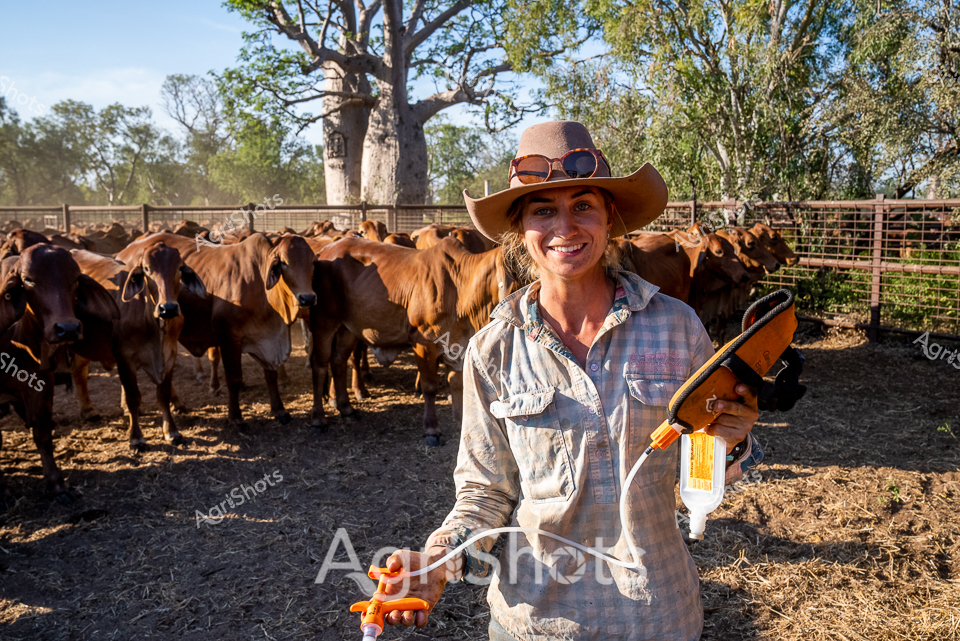
Burnished copper Brahman cattle crowd the dusty cattle yards, their muscular frames testament to the resilience of northern Australian livestock. A confident agricultural worker stands amid the herd, wearing a classic wide-brimmed stockman's hat and rolled-sleeve checked shirt, embodying the spirit of rural Western Australia's Kimberley region. Her hands grip veterinary equipment - an orange and yellow vaccination tool suggesting routine animal health management at this remote station. The backdrop reveals a classic pastoral landscape, with a massive boab tree silhouetted against a clear blue sky, while weathered steel yard fencing defines the working space. Sunlight catches the fine details of the cattle's sleek coats, highlighting their distinctive humps and adaptations to harsh tropical conditions. Her relaxed, confident smile communicates the pride and expertise of contemporary agricultural professionals, showcasing the critical role of women in modern farming operations.
 Image
Image
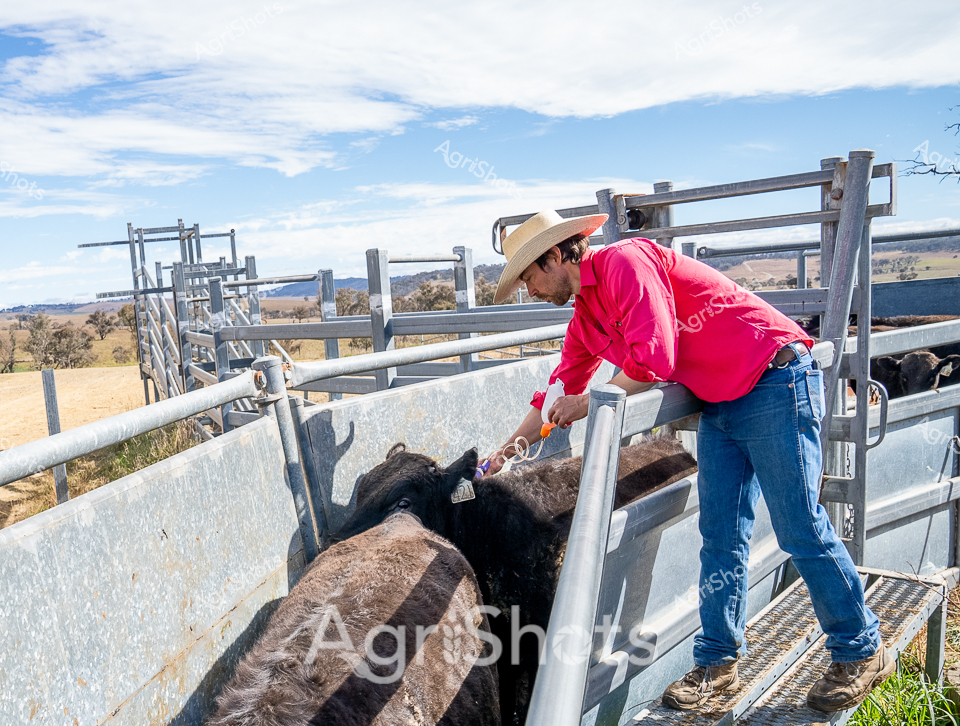
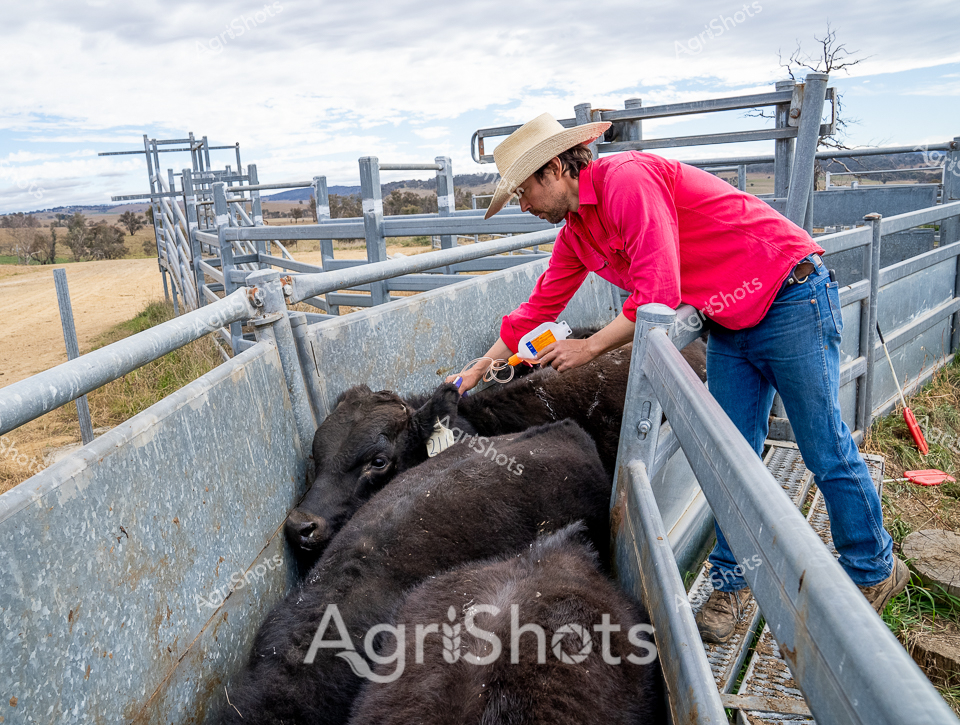
Rural vaccination day unfolds across a golden grassland paddock under a soft blue sky with wispy clouds. A stockman in a bright pink long-sleeved shirt and wide-brimmed sun hat carefully administers a veterinary treatment to a black Wagyu bull within a sturdy steel livestock handling race. Meticulously designed metal gates and walkways constrain the powerful animal, allowing safe and precise animal health management. The robust bovine stands within the galvanized steel infrastructure, representing the careful genetic and health maintenance of a professional cattle breeding operation. Dry golden pastures and scattered eucalyptus trees in the background highlight the classic Australian agricultural landscape of what appears to be a New South Wales grazing property. The scene captures the essential intersection of modern agricultural practice, animal welfare, and the timeless rhythms of rural livestock management.
 Image
Image
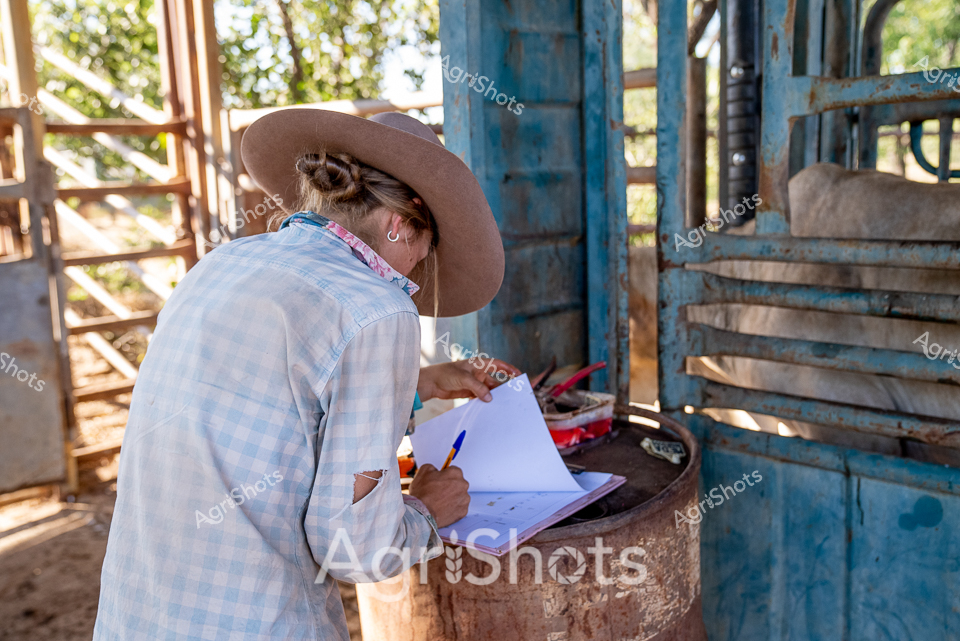
Rural Cattle Management in the Kimberley A station worker in a soft blue checked shirt and wide-brimmed hat stands within the weathered blue metal gates of a cattle yard, carefully documenting livestock health records. The rugged Kimberley landscape filters soft sunlight through timber yards and metal infrastructure, capturing a quintessential moment of agricultural documentation. Poised over a rustic metal drum serving as a makeshift workstation, the worker meticulously completes paperwork, likely recording vaccination details or animal health observations. The scene epitomizes the precise and methodical approach of modern cattle station management, where detailed record-keeping is as crucial as physical livestock handling. Worn metal gates, sun-bleached timber, and the blue-toned environment suggest a typical Western Australian pastoral setting, where attention to animal health occurs in challenging, remote environments. This image captures the quiet professionalism of agricultural workers who maintain Australia's vital livestock industries through careful, unglamorous daily tasks.
 Image
Image
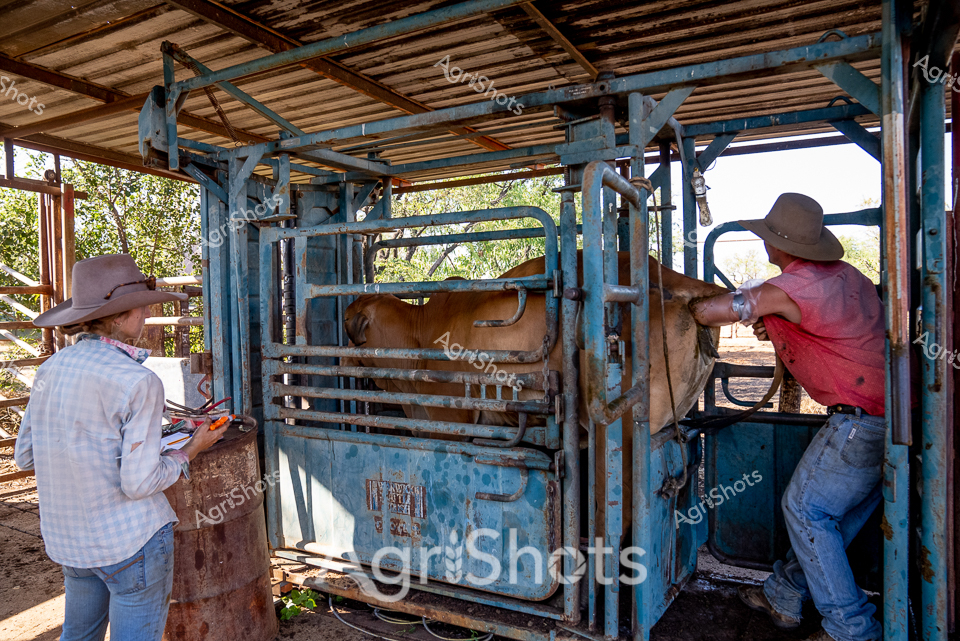
Weathered blue steel cattle yards frame a quintessential northern Australian livestock management scene in the rugged Kimberley region of Western Australia. A seasoned station worker in a wide-brimmed hat and faded red shirt carefully manages a sturdy Brahman cattle beast within a robust hydraulic cattle crush, preparing for routine animal health procedures like vaccination. Another worker in a pale checked shirt stands nearby, clipboard in hand, documenting the process with practiced efficiency. The metallic blue equipment, dulled by years of tropical sun and dust, stands in sharp contrast to the soft green vegetation glimpsed through the yards' framework. The scene captures the disciplined routine of cattle station work - methodical, pragmatic, and deeply connected to the landscape. Harsh sunlight and the utilitarian design of the crush emphasize the practical nature of livestock management in one of Australia's most challenging agricultural environments.
 Video
Video
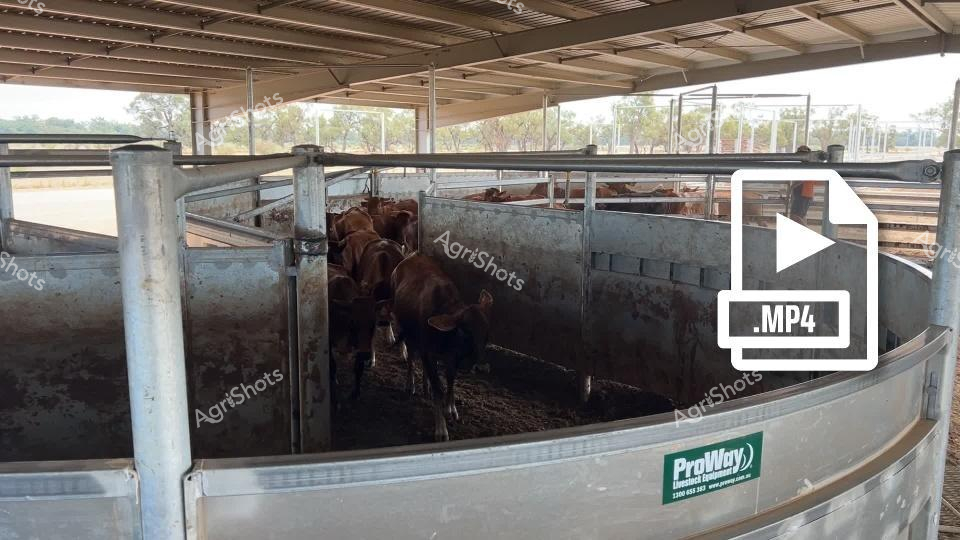
Muscled beef cattle huddle tightly in a curved steel holding pen under a galvanized roof shelter, awaiting routine health management at a modern rural processing facility. The ProWay livestock handling system frames the scene, its robust curved paneling guiding the dark red Angus or Droughtmaster cattle into a controlled vaccination zone. Bright midday sunlight filters through the surrounding paddock's gum trees, casting soft shadows across the meticulously designed agricultural infrastructure. Industrial-grade metal gates and panels create a precise, controlled environment that minimizes stress during critical animal health procedures. The cattle's rich chestnut-brown coats contrast against the silvery metallic infrastructure, highlighting the sophisticated intersection of animal husbandry and engineering. This methodical approach represents contemporary Australian beef production - where animal welfare, precision technology, and efficient management converge to maintain high standards of livestock care.
 Image
Image
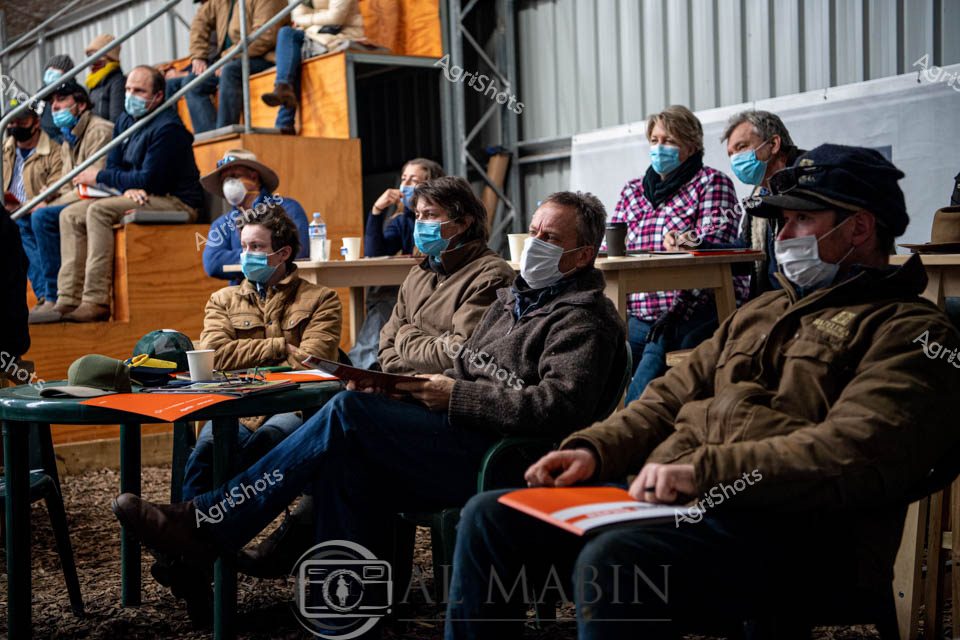
Rural farming professionals gather for an essential agricultural workshop, their attentive postures reflecting the serious purpose of the meeting. Dressed in practical earth-toned jackets and layers, participants wear protective face masks, indicating a COVID-era agricultural training session. The interior of what appears to be a metal-sided agricultural shed provides a utilitarian backdrop, with wooden bleachers and folding tables creating an improvised conference space. Muddy ground and industrial steel framing suggest this is a working agricultural environment, likely associated with livestock management or veterinary protocols. Orange document folders punctuate the scene, highlighting the structured nature of the gathering and suggesting technical information exchange about cattle management, potentially related to vaccination or breeding strategies. The muted color palette of browns, greys, and olive tones, combined with the focused body language of the attendees, conveys a sense of professional concentration and collaborative problem-solving typical of modern Australian agricultural communities.
 Image
Image
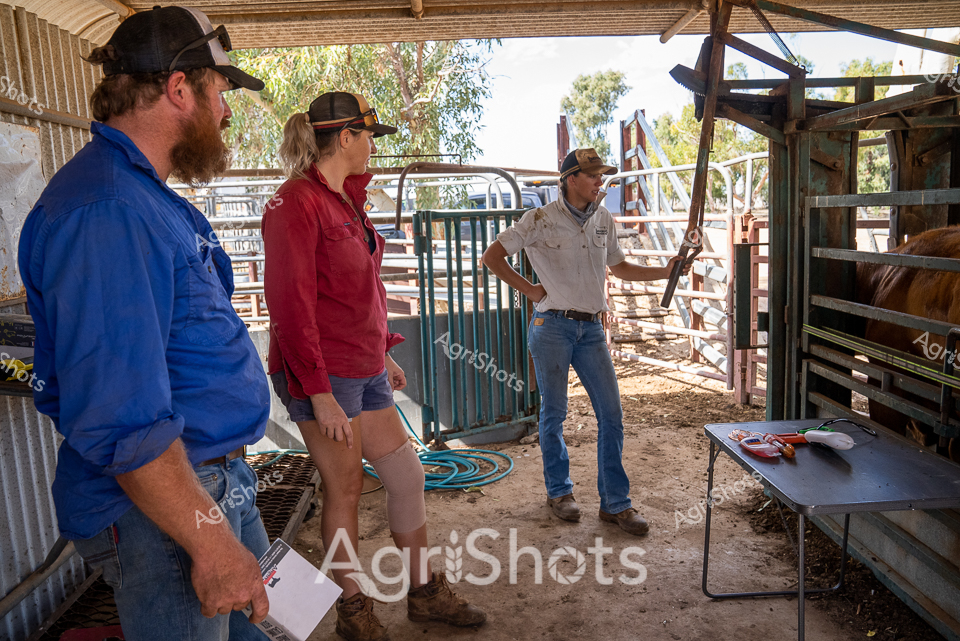
Cattle vaccination preparations unfold in a rustic Western Australian livestock yard, where three agricultural workers stand amid weathered metal cattle gates and a portable processing station. A blue-shirted worker clutches papers, while a colleague in a red shirt and baseball cap observes the proceedings. A third worker in a light shirt stands near a sturdy cattle crush, the essential equipment for safely restraining animals during veterinary procedures. The corrugated iron shelter provides welcome shade from the harsh Australian midday sun, filtering soft light across the dusty yard. Coiled blue hydraulic lines and medical supplies rest on a portable table, signaling the methodical approach to animal health management. Worn boots, practical work attire, and focused body language communicate the professional expertise of these rural agricultural workers. The scene captures the precise choreography of livestock management - a quintessential moment of agricultural practice where animal welfare, technical skill, and rural expertise converge. Utilitarian infrastructure, strategic equipment positioning, and the calm concentration of the workers illustrate the sophisticated approach to modern cattle husbandry in the expansive agricultural landscapes of Western Australia.
 Image
Image
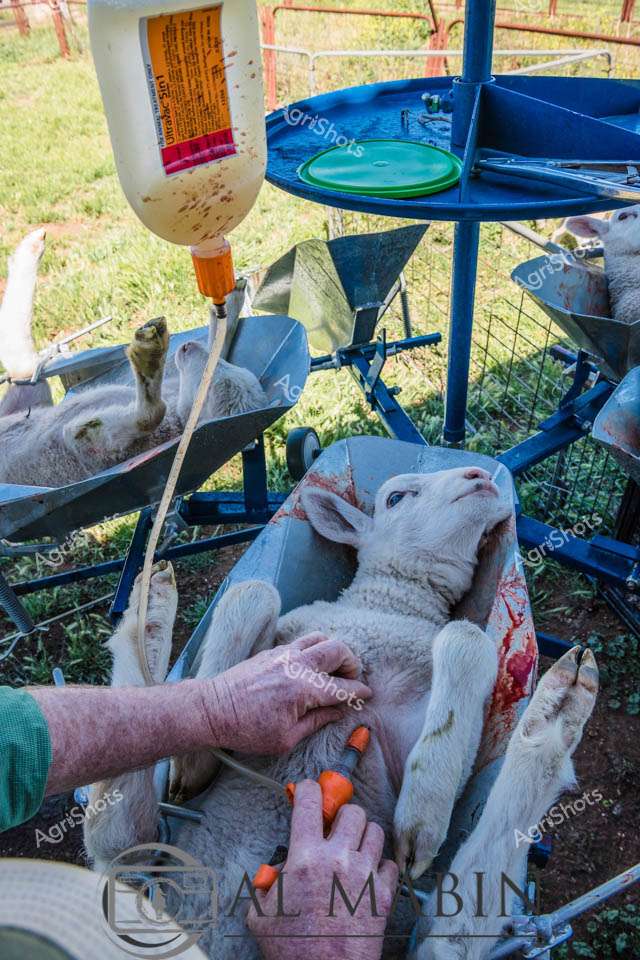
Lamb marking season pulses with quiet intensity on this New South Wales sheep station. A young lamb rests in a blue metal cradle, its white woolly coat splattered with crimson markings, while skilled hands administer vaccination and health treatments. A large white bottle with orange-labeled pharmaceuticals hangs overhead, delivering precise medical care. Weathered, work-tanned hands - protected by green gloves - carefully manage the delicate process, supporting the lamb's body during this critical agricultural routine. The surrounding sheep yards, with blue metal equipment and wire mesh fencing, create a functional backdrop of pastoral infrastructure against a soft green grass landscape. This intimate moment captures the methodical care central to successful livestock management, where animal welfare and agricultural practice intersect with generations of farming expertise.
 Image
Image
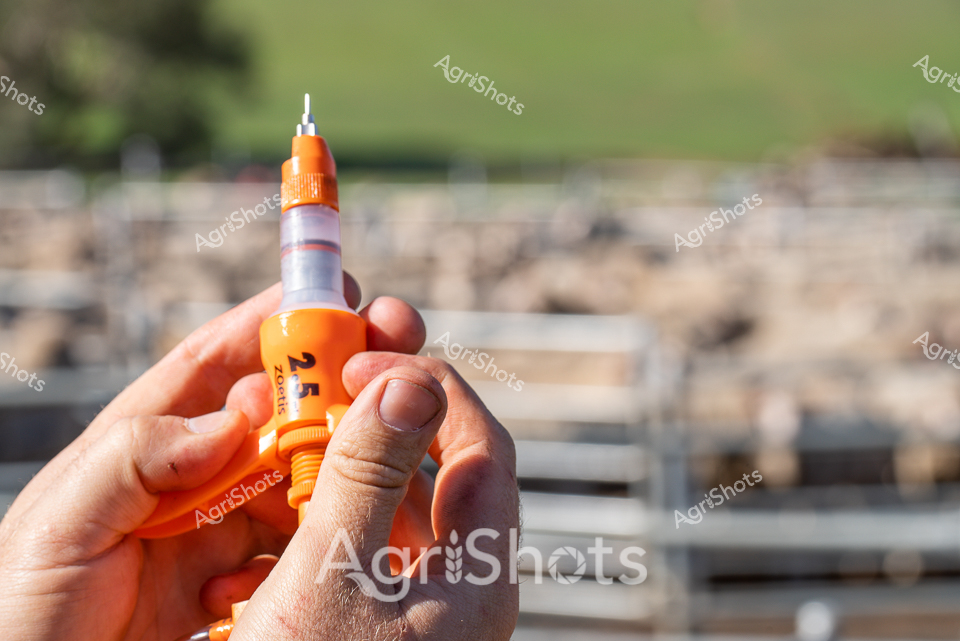
An experienced farm hand prepares to administer a routine livestock vaccination in the stark, sun-drenched sheep yards of Western Australia. Gripping a bright orange Zoetis veterinary syringe, the weathered hand demonstrates the precision and care essential in maintaining flock health among these prized Merino sheep. The blurred wooden yards and rocky ground behind speak to the rugged pastoral landscape, where every intervention can mean the difference between a thriving and struggling flock. The syringe's vivid orange contrasts against the tanned, work-hardened skin, symbolizing the critical intersection of modern agricultural technology and traditional farming practice. Sharp morning light catches the clean needle and translucent vaccine reservoir, highlighting the meticulous approach to animal health management in Australian agriculture. This moment captures the quiet expertise of rural workers who understand that preventative care is the backbone of successful livestock production.
 Image
Image
A seasoned cattle station worker stands resolute in the rustic livestock yards of Western Australia's rugged Kimberley region, preparing to administer vaccinations to Brahman cattle. Wearing a classic wide-brimmed stockman's hat and a soft blue checked workshirt, she carefully handles a Zoetis veterinary treatment, her professional demeanor reflecting years of agricultural expertise. Dappled sunlight filters through the weathered timber yards, casting intricate shadows on the blue-tinted metal gates and worn wooden infrastructure. The scene captures the quiet concentration of rural animal health management, with a notebook and tools resting on a nearby barrel, suggesting meticulous record-keeping and systematic care. Her side profile embodies the strength and precision of women in agriculture, representing the critical behind-the-scenes work that sustains Australia's vital cattle industry. The warm, dusty environment and practical working attire speak to the resilience and skill required in managing livestock in one of Australia's most challenging agricultural landscapes.
 Image
Image
Merino lambs huddle tightly in rustic wooden yards beneath a pale winter sky, awaiting their annual health treatment. A vigilant working dog stands alert, wearing a distinctive red muzzle, positioned near several purple containers of Startect sheep drench. The dusty paddock landscape stretches out in muted browns and greens, typical of a New South Wales agricultural setting during the cooler months. Modern livestock management is on display, with precision animal health products from Zoetis ready to protect the flock's wellbeing. The brown working dog's muscular stance and keen focus highlight the essential partnership between farmers and their canine helpers in managing sheep operations. This scene captures the meticulous care and professional approach of contemporary Australian sheep farming, where animal health, systematic processing, and skilled animal handling converge in a single moment of rural productivity.
 Image
Image
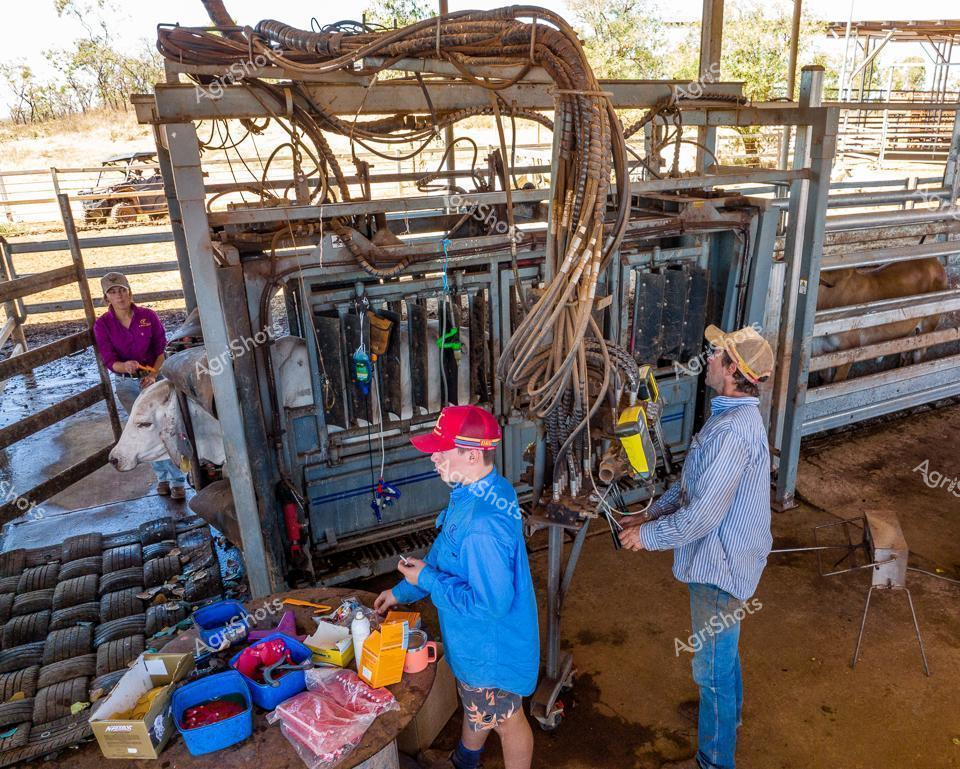
Northern Territory cattle station during mid-morning processing, with a sophisticated hydraulic cattle crush handling a pristine white Brahman breed. Three agricultural workers collaborate efficiently around the robust metal machinery, managing animal health procedures with practiced precision. A blue-shirted worker in a red cap manages equipment and supplies at the workstation, while a colleague in a striped shirt operates technical controls, and a woman in a purple shirt monitors the animal's movement. Tangled industrial cables and hydraulic lines drape across the steel frame, highlighting the complex mechanical infrastructure required for modern livestock management. Rugged outback landscape filters through the cattle yards, with dry vegetation and clear sunlight emphasizing the harsh yet systematic environment of large-scale cattle production. The scene captures the intersection of animal husbandry, technical innovation, and human expertise characteristic of Australia's northern pastoral industries.
 Image
Image
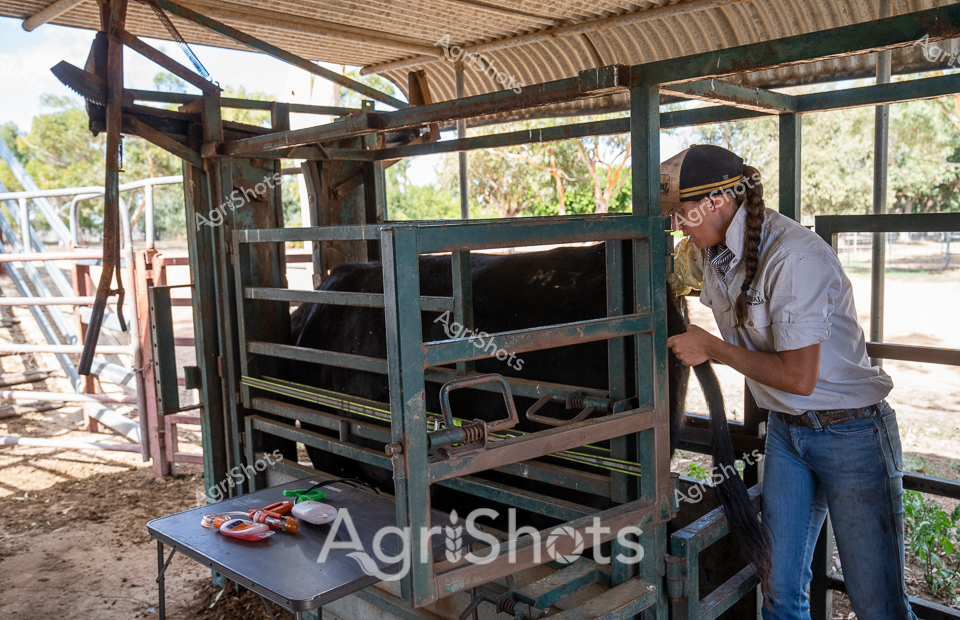
A skilled livestock professional conducts pregnancy testing in a robust steel cattle crush at a Western Australian cattle yard. Wearing a white work shirt, jeans, and a cap, she carefully manages a black bovine within the sturdy green metal restraining gate. Sunlight filters through the corrugated iron roof, casting soft shadows across the dusty ground and surrounding eucalyptus trees. Veterinary equipment and colored markers sit ready on a nearby table, suggesting a methodical approach to herd management and reproductive health. The metal infrastructure, weathered by years of rural service, tells a story of agricultural resilience and precision. This scene captures the essential work of modern agricultural practice - a blend of scientific expertise, animal welfare, and the ongoing cycle of cattle breeding in the expansive Australian pastoral landscape.
 Image
Image
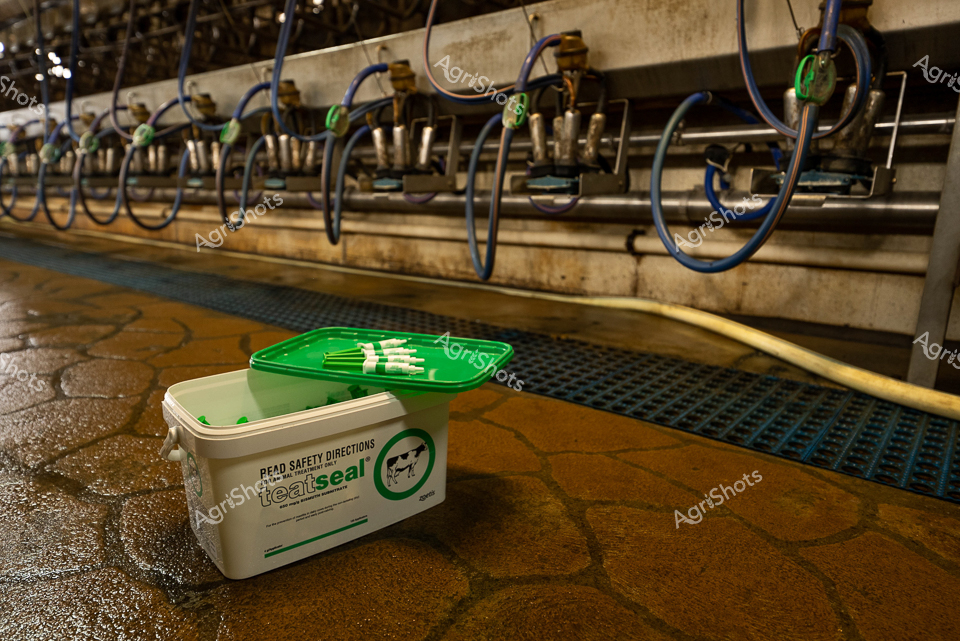
In the intimate space of a dairy shed, a container of Teatseal rests on the textured concrete floor, its green and white branding a beacon of animal health management. Blue milk cluster lines hang meticulously from a gleaming stainless steel milking rail, suggesting a modern, hygienic dairy operation typical of New South Wales agricultural practices. The green-capped Teatseal product represents a critical step in livestock care, used to prevent potential mammary infections during the crucial drying-off period for dairy cows between lactation cycles. Precision and careful animal husbandry are embodied in this single moment - a snapshot of agricultural science meeting traditional farming practice. The muted golden-brown floor and industrial metallic infrastructure create a stark, functional environment where every element serves a purpose in maintaining dairy herd health and productivity. This image captures the sophisticated, methodical approach of contemporary Australian dairy farming, where animal welfare and technological innovation intersect.
 Image
Image
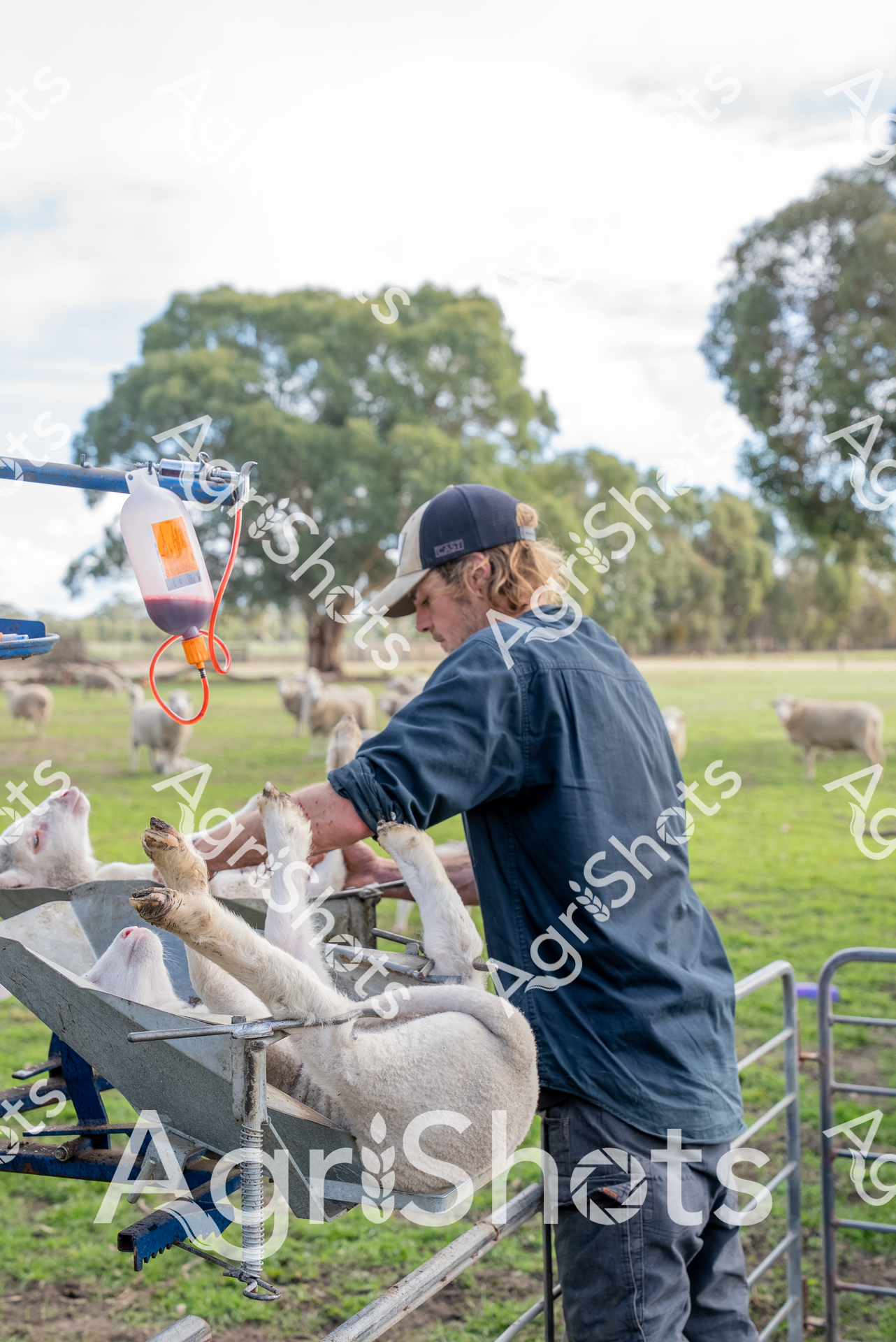
Agricultural workers methodically prepare lambs for marking in a lush pasture of South Australia's southeast region during winter. A skilled farm worker in a navy blue jacket and cap carefully restrains young lambs in a metal marking cradle, with an IV bag containing Glanvac livestock vaccine suspended overhead. The pastoral landscape reveals soft green grasslands dotted with mature eucalyptus trees, creating a serene backdrop to this essential farm management practice. White lambs are precisely positioned in the specialized metal cradle, their delicate limbs secured while the worker administers critical animal health interventions. An overcast sky suggests cool seasonal conditions typical of a South Australian winter, with soft diffused light highlighting the green pasture and the methodical agricultural work in progress. The scene captures the careful, professional approach to livestock care, demonstrating the intersection of animal welfare, agricultural technology, and traditional farming practices.
 Image
Image
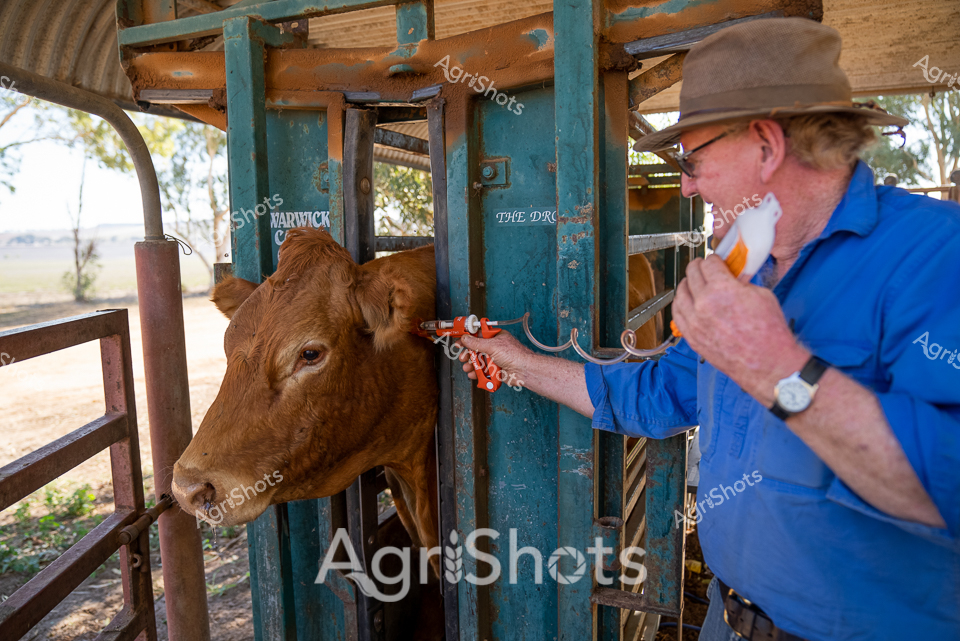
Warwick cattle yards echo with the methodical rhythm of livestock management under the dappled light of a crisp rural morning. A seasoned farmer in a vibrant blue work shirt and weathered brown hat carefully administers a veterinary treatment to a young reddish-brown beef cow, gently restraining her in the robust teal-colored cattle crush. The metallic gates of the crush, branded with subtle markings, provide precise control and safety during this critical animal health procedure. Soft eucalyptus trees frame the background, suggesting a classic Western Australian pastoral landscape where generations of agricultural expertise converge. The farmer's practiced hands and calm demeanor reflect decades of understanding cattle welfare, showcasing the nuanced skill required in modern agricultural practices. Every detail - from the precise positioning of the vaccination equipment to the quiet trust between the farmer and the animal - speaks to the sophisticated, compassionate approach of contemporary Australian livestock management.
 Video
Video
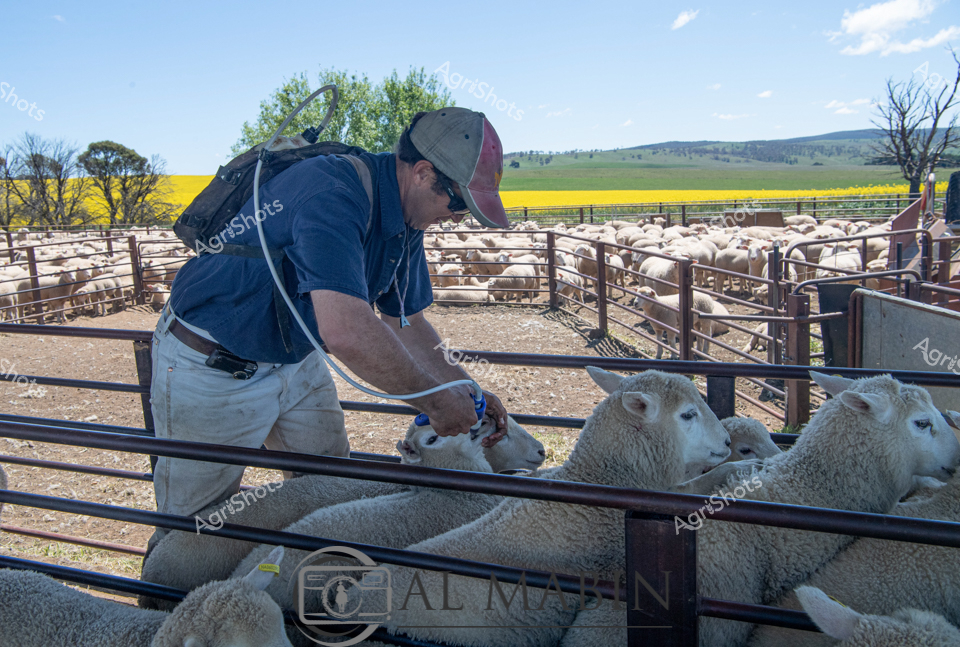
Merino lambs crowd the dusty yards under a brilliant blue sky, their woolly frames packed tightly together as a vaccination program unfolds. Sunlight bathes the paddock, with golden canola fields and scattered gum trees marking the distant horizon of this quintessential New South Wales livestock management scene. In the foreground, a red and green vaccination device stands ready, highlighting the critical health interventions essential to Australia's thriving sheep industry. The lambs - dense with soft, creamy fleece - represent the next generation of prime wool and meat production, carefully monitored and nurtured through strategic weaning and health protocols. Rustic fence lines and compact livestock yards contain the flock, demonstrating the precision and care of modern agricultural practices. This raw, unfiltered moment captures the heart of Australian sheep farming - a delicate balance of animal husbandry, technological intervention, and the timeless rhythms of rural life beneath an expansive southern sky.
 Image
Image
Merino lambs cluster tightly in steel yard panels under a brilliant spring sky, with golden canola fields stretching across the rolling hills of New South Wales. A skilled livestock worker in a navy blue shirt and cap carefully administers animal health treatment, leaning over the fence to drench or vaccinate the young sheep. His precise movements reflect years of agricultural expertise, managing the flock's wellbeing with professional care. The stark concrete feed yard contrasts sharply with the vibrant yellow canola crop in the background, creating a quintessential Australian agricultural landscape that speaks to the meticulous nature of modern sheep farming. Clean, robust steel infrastructure and the worker's focused approach highlight the technical and compassionate side of livestock management. This scene captures the intersection of agricultural science, animal husbandry, and the breathtaking natural beauty of rural Australia, where careful management ensures the health and productivity of valuable Merino flocks.
 Image
Image
Rural vaccination day unfolds in the rolling paddocks of New South Wales, where a stockman in a vibrant pink long-sleeved shirt and wide-brimmed stockman's hat carefully administers health treatment to black Wagyu cattle. The galvanized steel cattle yards provide a structured containment space, their metallic gray rails creating a geometric contrast against the muted golden grasslands and soft clouded sky. A seasoned agricultural worker leans into the narrow race, precisely handling a veterinary tool to deliver essential animal health intervention, showcasing the meticulous care fundamental to premium beef production. The dark, glossy Wagyu cattle—renowned for their exceptional marbling and genetic quality—stand closely packed, their muscular bodies a testament to careful breeding and management. This moment captures the intersection of modern agricultural science, traditional farming practices, and the ongoing commitment to maintaining high-quality livestock health in Australian beef production. The crisp, clear lighting and carefully composed scene reflect the professional approach of contemporary stud cattle management, where every animal receives individual attention and precision care.
 Image
Image
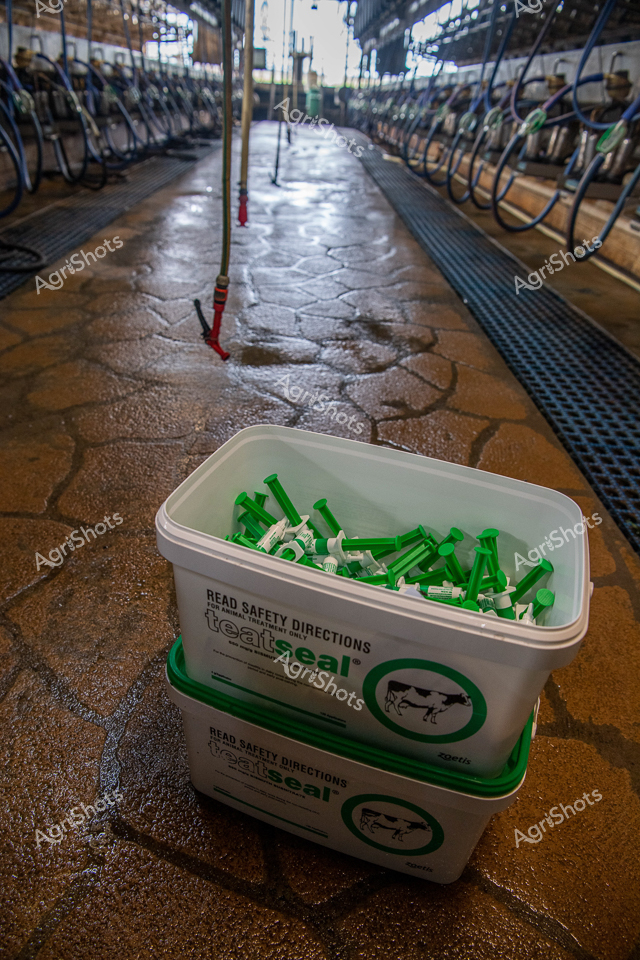
In the stark, industrial interior of a dairy milking shed, a pristine white container filled with green-capped syringes sits prominently on the textured concrete floor. Rows of milking stalls stretch into the background, with metal railings and blue hoses indicating a modern, hygienic dairy facility. The syringes appear to be teat seal applicators, a critical animal health product used in the drying off process for dairy cows between lactation cycles. The smooth plastic container, branded with livestock imagery, represents a precise and professional approach to cattle management, highlighting the advanced veterinary practices of contemporary Australian dairy farming. Soft ambient light illuminates the metallic surfaces and wet stone floor, creating a sense of clinical efficiency and agricultural precision. These carefully prepared syringes symbolize the meticulous care and technological sophistication embedded in New South Wales dairy production, where animal health and productivity are paramount.
 Image
Image
Brahman cattle processing unfolds in the golden light of a dry season morning at a Northern Territory cattle station. A robust hydraulic cattle crush stands at the center of a weathered steel yard, surrounded by a team of agricultural workers in a choreographed dance of animal husbandry. Worn rubber mats cushion the ground, while industrial equipment and medical supplies suggest a precise animal health intervention is underway. A pale Brahman beast waits patiently, its distinctive humped silhouette a testament to the breed's adaptability to harsh Australian landscapes. Workers dressed in practical station attire - blue shirts, jeans, and broad-brimmed hats - move with practiced efficiency, their yellow and blue safety gear highlighting the professional approach to livestock management. The scene captures the intersection of traditional pastoral skill and modern agricultural technology, where generations of cattle station expertise meet contemporary animal welfare practices under the vast, open skies of the Territory.
 Image
Image
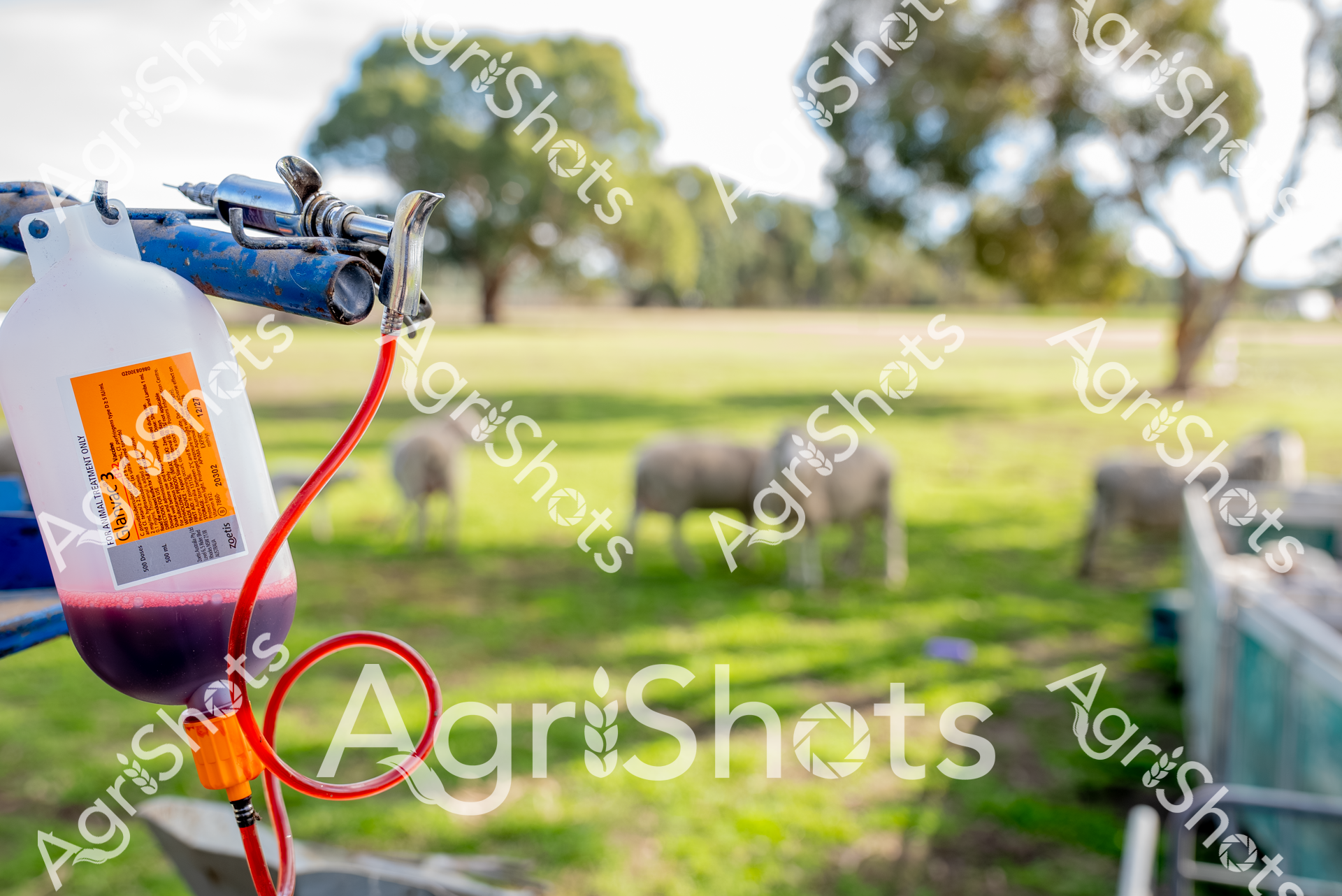
A critical moment in sheep husbandry unfolds across a lush winter pasture in South Australia's southeast region. A white veterinary container of Glanvac vaccine hangs from a blue marking cradle, its red tube poised to deliver essential immunization to young lambs. Soft winter sunlight bathes the verdant paddock, highlighting the paradoxical "green drought" landscape where rich grass belies underlying agricultural challenges. Woolly sheep graze peacefully in the background, their forms softly blurred against the landscape, while the foreground focuses on the precise agricultural intervention about to take place. The orange-labeled vaccine container represents a crucial step in animal health management, protecting the flock from potential diseases during the vulnerable lamb marking season. This scene captures the delicate balance of pastoral care - technological intervention meeting natural landscape, showcasing the meticulous work of Australian sheep farmers in maintaining flock health and productivity.
 Image
Image
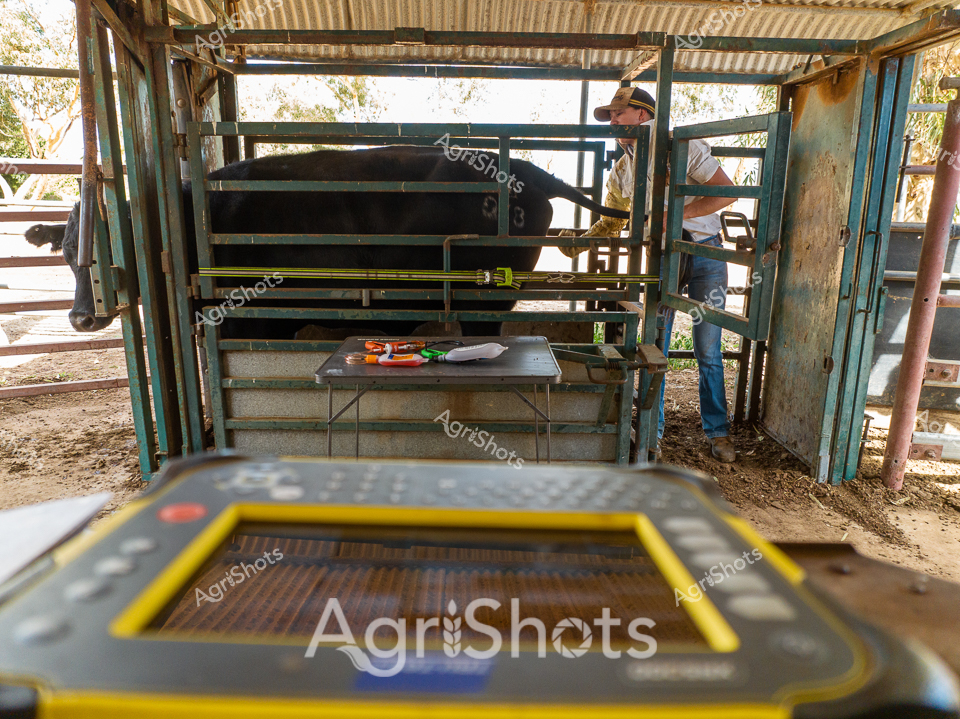
In the dusty confines of a rustic cattle yard, a focused agricultural worker stands beside a robust Tru-Test cattle crush, preparing to conduct essential livestock health procedures. The metallic green and blue framework of the restraining chute provides a sturdy backdrop for this moment of precision animal management, with corrugated iron sheeting filtering soft natural light from above. Specialized electronic equipment sits ready on a nearby table, suggesting advanced pregnancy testing or vaccination protocols are about to be performed. The individual, dressed in practical farm attire, carefully positions themselves to safely interact with the dark-coated beef cattle, embodying the skilled expertise of modern agricultural practice in Western Australia. Weathered equipment and the close-quarters setting tell a story of generations of farming knowledge, where technology and traditional livestock handling techniques converge. This scene captures the quiet intensity of rural agricultural work - a testament to the meticulous care and professional approach required in contemporary cattle management.
 Image
Image
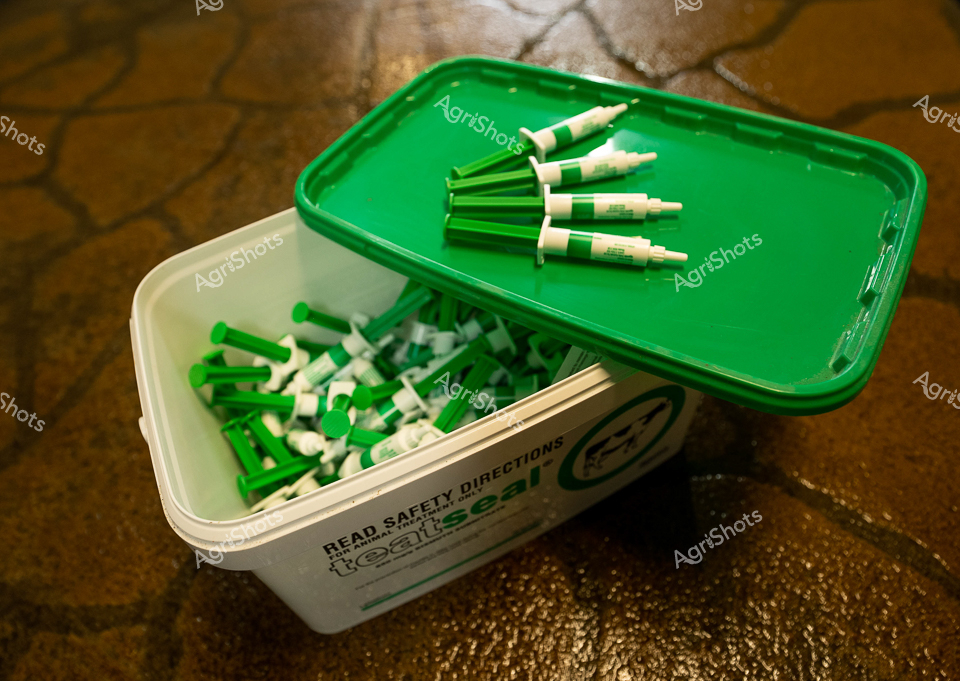
Precision agricultural veterinary care unfolds in this meticulously organized image, showcasing a collection of green and white veterinary syringes and teat sealers used in dairy cow management. A sturdy green storage container sits atop a white container, both filled with carefully arranged injection devices designed for crucial livestock health interventions. The uniform green and white color palette speaks to professional agricultural supply standards, with each syringe positioned with clinical accuracy. These specialized tools represent a critical moment in dairy farm management - the careful preparation for treating and protecting dairy cow udder health, likely during a seasonal drying-off procedure. The watermarked image, branded with "AgriShots", suggests this is a professional documentation of modern agricultural veterinary practice, highlighting the sophisticated technological approaches used in contemporary Australian dairy farming. The textured surface beneath the containers hints at the robust, practical environments where such critical animal health procedures are conducted.
 Image
Image
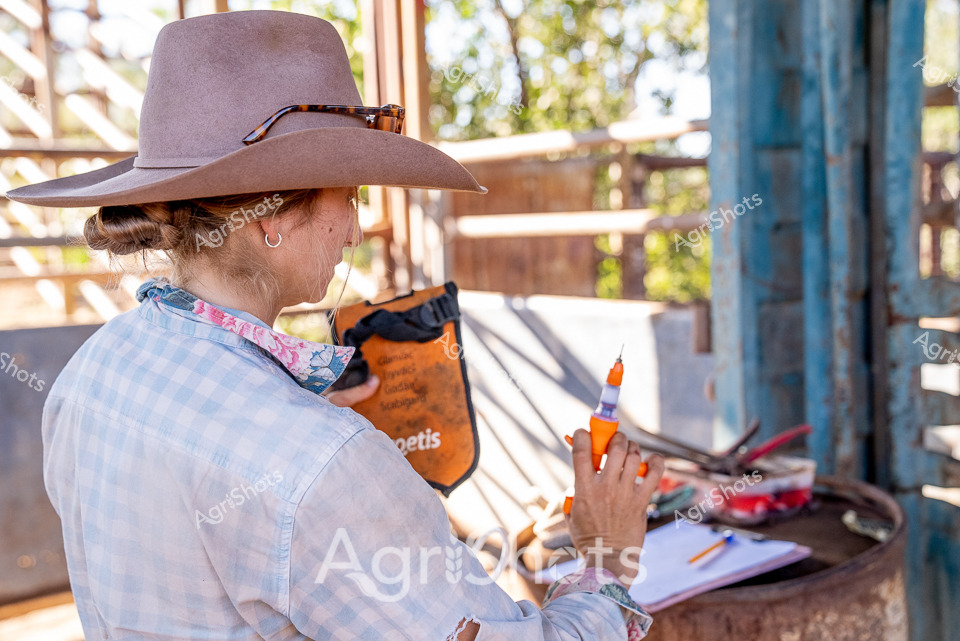
Framed by weathered blue yards and dappled morning sunlight, a station worker wearing a classic wide-brimmed Australian bush hat carefully prepares for cattle vaccination. Her pale blue checked shirt and floral scarf speak to the practical yet personal style of rural agricultural workers. Holding an orange Zoetis vaccine container, she stands focused at the cattle crush, surrounded by the rugged infrastructure of a Kimberley region cattle station. The scene captures the precise, methodical nature of animal health management in Western Australia's challenging pastoral landscape. Soft shadows and the worn timber of the yards suggest early dry season conditions, when careful livestock management is critical to station operations. This image epitomizes the skilled, dedicated women who play pivotal roles in Australia's expansive cattle industry, combining technical expertise with deep agricultural knowledge.
 Image
Image
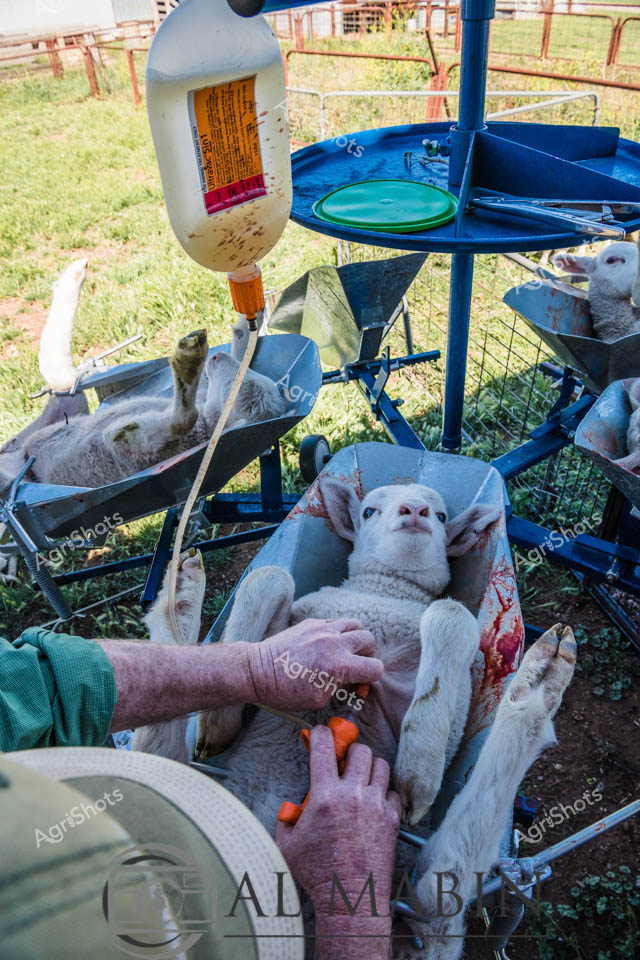
Lamb Marking and Care in Rural New South Wales Soft morning light bathes the pastoral scene of a lamb marking station, where careful agricultural practices unfold. A young lamb rests in a blue metal marking cradle, its woolly body positioned for essential health procedures. Weathered hands wearing green work gloves gently manage the lamb, preparing for vaccination and identification. An intravenous drip hangs nearby, delivering critical nutritional support or medication, with a white bottle suspended from a metal frame. The surrounding sheep yards feature galvanized metal fencing and green paddock grasses, suggesting a typical sheep farming environment in rural Australia. This intimate moment captures the meticulous care and hands-on management central to successful livestock husbandry, where each lamb receives individual attention to ensure health and welfare during an important developmental stage.
 Image
Image
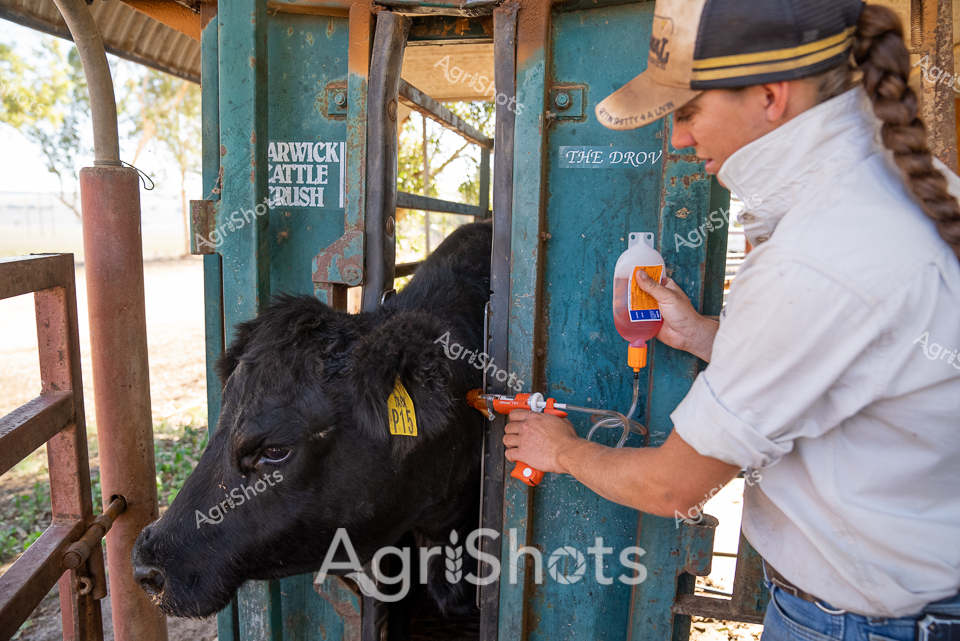
Warwick Cattle Crush captures a critical moment of livestock management in the golden light of a rural morning. A sleek black beef cow stands restrained in a teal-blue steel cattle crush, her yellow ear tag identifying her within the herd. A skilled agricultural worker, wearing a white shirt and cap, carefully administers a vaccination, her hands steady and precise with the orange-handled syringe and medication bottle. The crush, branded with "Warwick Cattle Crush" markings, provides a secure environment for essential animal health procedures, highlighting the meticulous care and professional approach of modern agricultural practice. Dappled sunlight filters through nearby trees, casting soft shadows on the rustic metal infrastructure of the cattle yards. This scene embodies the intersection of animal welfare, veterinary science, and the dedicated expertise of contemporary farming professionals in Western Australia.
 Image
Image
Inside a pristine dairy facility, precision meets animal care through a carefully arranged milking station. Green and white Teatseal buckets stand ready, filled with syringes prepared for a critical pre-drying off procedure for dairy cows. The industrial milking parlor gleams with blue-tubed milking equipment suspended above a textured, wet concrete floor, highlighting the hygienic environment of modern Australian dairy production. These specialized veterinary supplies represent a key moment in cattle management - preparing cows for their non-lactating period between calving cycles. The metallic milking cluster units hang suspended, waiting to complete the day's milking routine, while the green-capped syringes promise careful preventative healthcare for the herd. This scene captures the intersection of agricultural technology, animal welfare, and systematic farm management, embodying the meticulous approach of contemporary dairy farming in regional New South Wales.
 Image
Image
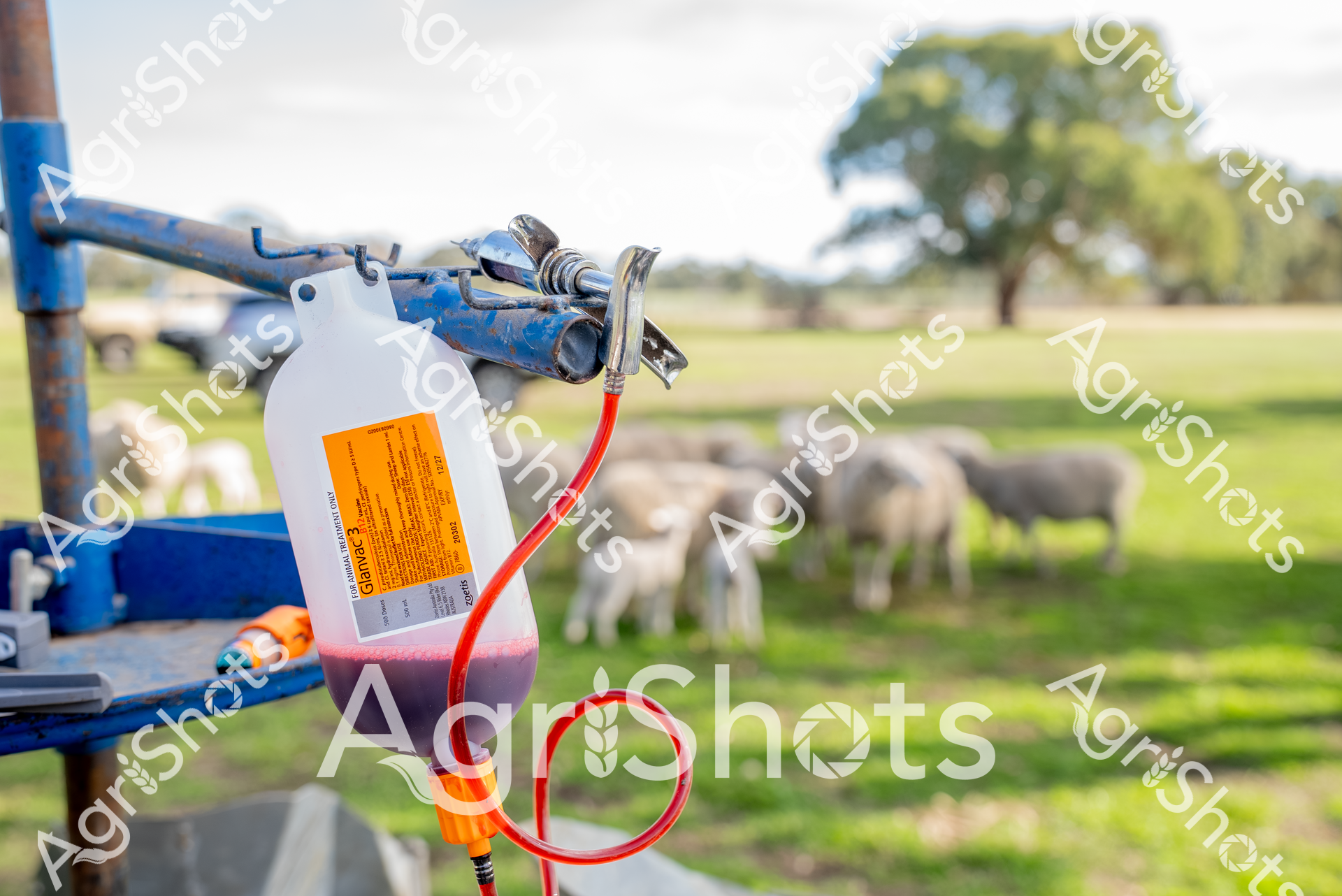
Rural vitality pulses through this pastoral scene of livestock management during a green winter in South Australia's southeast region. A blue livestock handling frame stands ready, with a Glanvac vaccine bag hanging precisely, its orange and white label signaling critical animal health intervention. A red administration tube connects the vaccine, poised to protect a flock of young lambs grazing softly in the blurred background across a lush pasture. Soft winter sunlight filters through scattered gum trees, creating a diffused green landscape that belies the potential environmental challenges of a "green drought" - where grasslands appear verdant but underlying moisture conditions remain precarious. The weathered blue metal of the livestock frame tells a story of repeated use, of generations of careful stock managering and agricultural resilience. This moment captures the intricate dance of modern sheep farming - technical precision meeting pastoral tradition, ensuring the health and survival of the next generation of livestock.
Well, you've ploughed through the whole field!
No more crops to harvest here, mate.
Try searching for something else in our library of 50,000+ royalty-free media: