 Image
Image
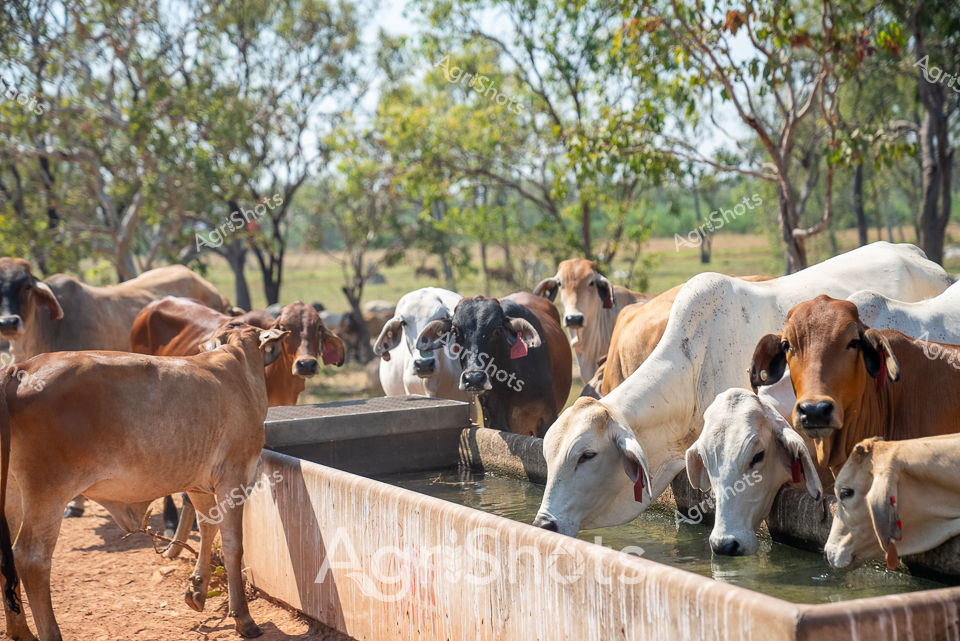
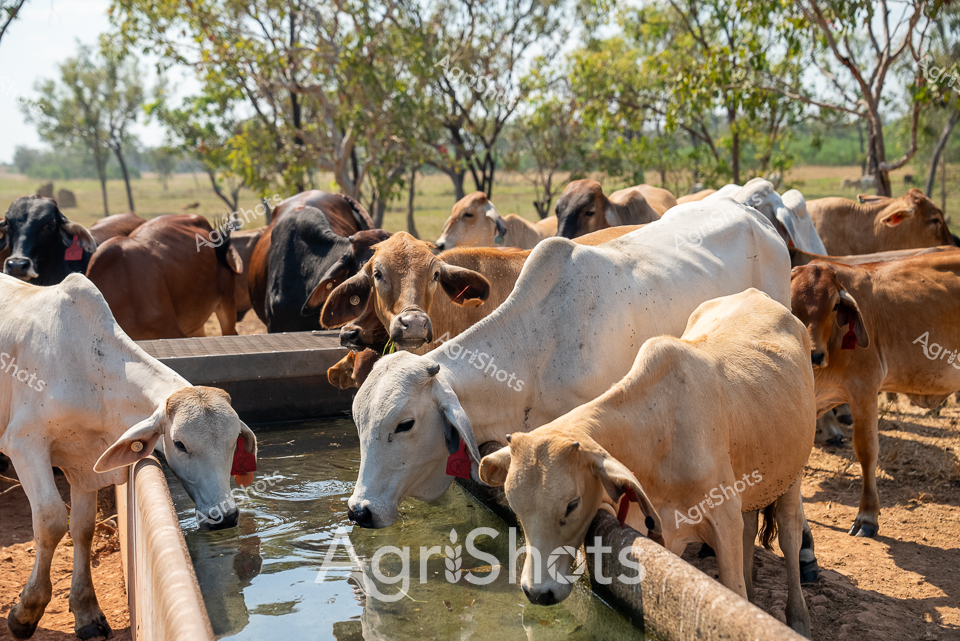
Brahman cattle crowd a concrete water trough in the dappled sunlight of an Adelaide River region paddock, their diverse coat colors ranging from rich russet and deep chocolate to pristine white. Lean, muscular bodies with distinctive humps and pendulous ears reflect the breed's adaptation to the harsh Northern Territory climate, each animal standing resolutely in the dry landscape surrounded by scattered eucalyptus trees. Some cattle submerge their heads deeply into the water trough, drinking methodically while others stand watchfully, their varied markings and coloration creating a living canvas of pastoral resilience. The red earth underfoot contrasts sharply with the muted greens of the woodland background, capturing the quintessential Australian pastoral scene of livestock sustenance during the autumn dry season. These robust Brahman cattle, renowned for their heat tolerance and insect resistance, represent the cornerstone of northern Australian cattle farming - hardy animals thriving in challenging environmental conditions. The water trough itself becomes a critical lifeline, a testament to careful stock management in one of Australia's most demanding agricultural landscapes.
 Video
Video
Under the wide-open skies of the Adelaide River region in the Northern Territory, a young agricultural worker pauses during a morning cattle run, drinking deeply from a large water bottle. Dressed in a vibrant blue jacket and a striped cap, she sits in an open-sided utility vehicle, surrounded by lush green pastures where Brahman cattle graze peacefully in the background. The landscape speaks of the resilience of rural Australian agriculture - a verdant paddock stretching beneath a soft blue sky with wispy clouds, capturing the essence of early autumn in the Top End. Her posture reflects the quiet determination of women in agriculture, taking a moment to hydrate during the demanding work of cattle management. The vehicle's interior frames the scene, with the steering wheel and roll cage providing a sense of the rugged equipment used in northern Australian cattle stations. This image embodies the raw, unfiltered spirit of agricultural work - a candid moment of renewal amidst the vast, challenging landscape of the Northern Territory.
 Video
Video
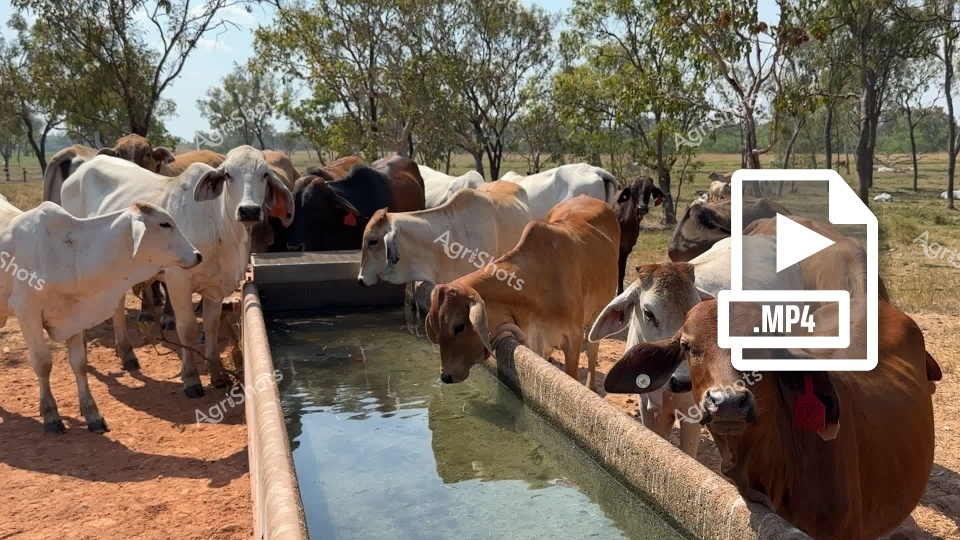
Brahman cattle congregate around a concrete water trough in the sun-drenched paddocks of the Adelaide River region during the dry season. Muscular white and rich reddish-brown cattle with distinctive large, pendulous ears crowd together, jostling for access to the precious water resource. The sparse woodland landscape of scattered eucalyptus trees provides minimal shade across the dusty, ochre-colored earth, highlighting the critical importance of this water source for livestock survival. Sleek coats gleaming in the harsh midday light, these hardy Brahman breeds - renowned for their heat and tick resistance - demonstrate the resilience required to thrive in Northern Territory's unforgiving agricultural environments. A raw, unedited video capture reveals the daily rhythms of pastoral life, where water management is essential to cattle health and station productivity. The scene epitomizes the challenging yet vital agricultural practices that sustain livestock farming across Australia's demanding tropical grasslands.
 Image
Image
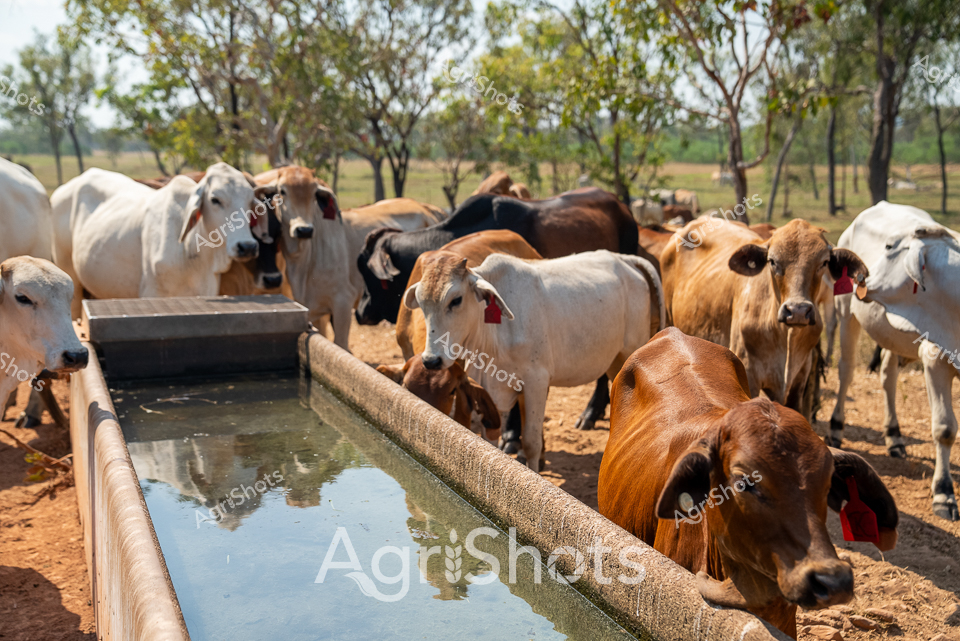
Brahman cattle crowd around a weathered concrete water trough in a sparse Northern Territory paddock during the dry autumn season. Rich terracotta and alabaster-colored beasts press close, their distinctive large ears and loose skin adapted to the harsh tropical climate. Sparse gum trees dot the background, casting dappled shade on the parched earth, while the reflective water trough provides critical hydration for the herd. Rust-red and white cattle intermingle, some bearing identification tags, their muscular bodies testament to the resilience of this breed developed to thrive in Australia's challenging pastoral landscapes. The scene captures the essence of cattle management in the Adelaide River region - a delicate balance of survival and agricultural stewardship under the unforgiving northern sun. Each animal's positioning around the water source tells a story of survival, hierarchy, and the fundamental importance of water in this arid ecosystem.
 Image
Image
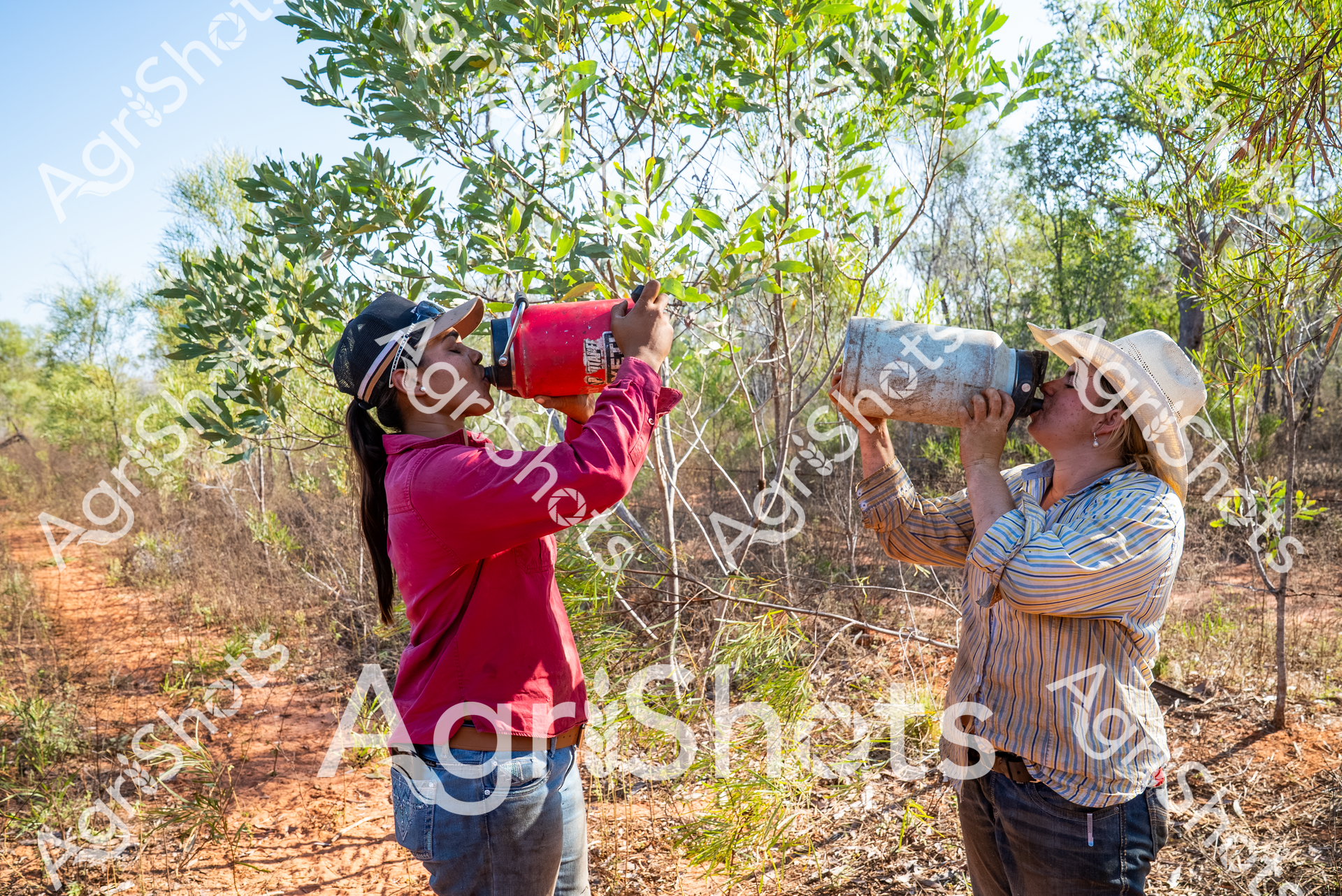
Two agricultural workers rehydrate during a challenging day in Western Australia's Kimberley region. Standing amid sparse bushland with reddish earth and green scrub vegetation, they drink deeply from large water bottles - one in a vibrant pink top and the other wearing a striped shirt. The harsh spring landscape surrounds them, with thin trees and dry ground suggesting the demanding environmental conditions of a remote station. Their postures - heads tilted back, bottles raised - capture a critical moment of essential water intake during intense outdoor work. The scene epitomizes the resilience of women working in agriculture, highlighting the physical demands of managing rural landscapes in one of Australia's most challenging agricultural environments.
 Image
Image
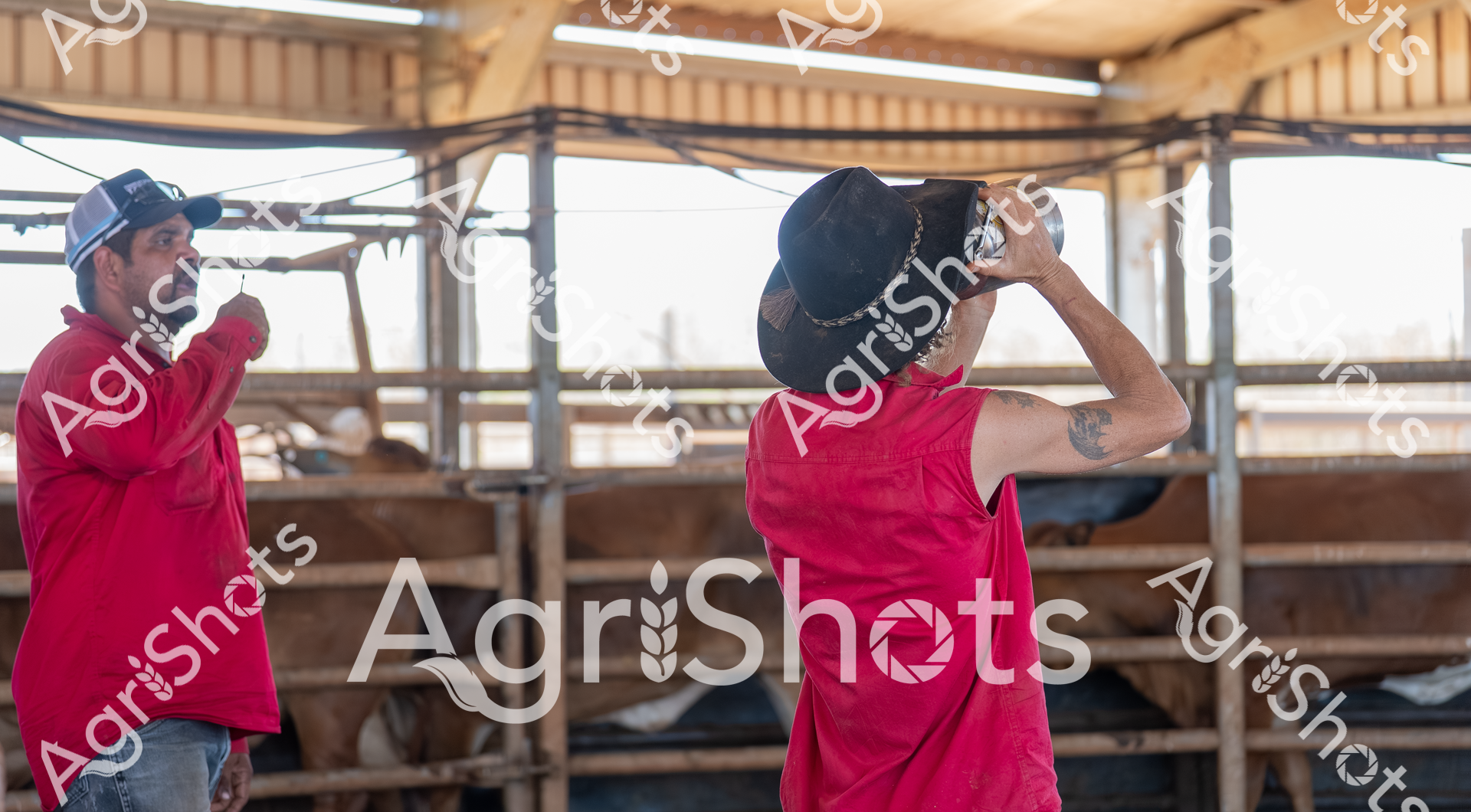
Two workers in vibrant red shirts stand within a robust cattle yard structure, capturing the essence of livestock management in Western Australia's rugged Kimberley region. One worker, wearing a cap, appears to be drinking water, tilting a container to rehydrate during what seems to be a warm spring day. The other worker is positioned nearby, suggesting a collaborative work environment typical of remote station operations. The metallic infrastructure of the yards creates a grid-like backdrop, with overhead structural beams and fencing defining the industrial agricultural space. Weathered wooden elements and the open-air design reflect the practical, no-nonsense approach to cattle handling in this challenging landscape. The scene embodies the resilience and teamwork required in Australia's extensive cattle farming industry, where hydration and careful management are critical under the harsh regional conditions.
 Image
Image
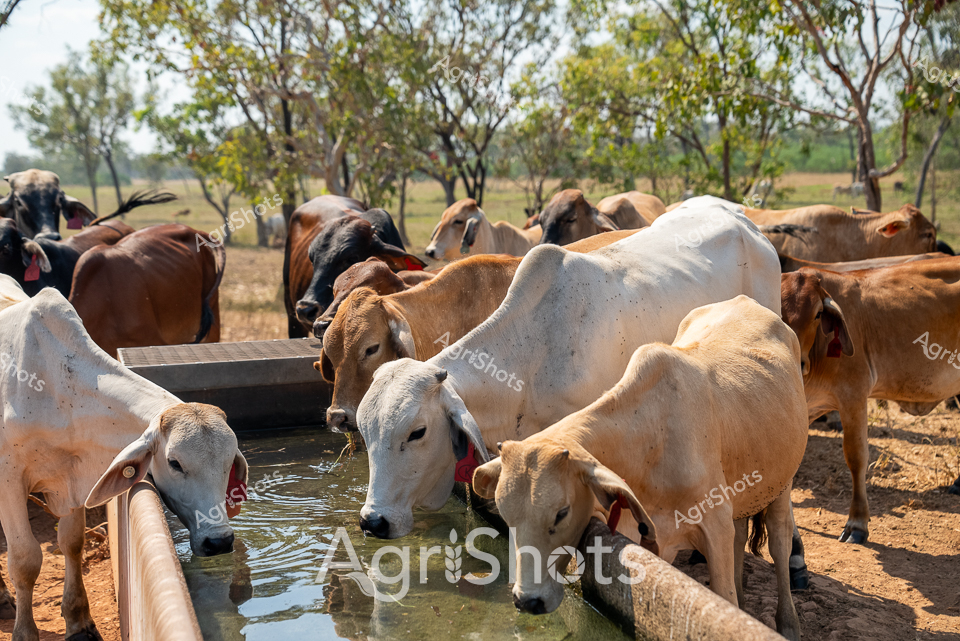
Brahman cattle congregate around a rugged water trough in the sun-drenched Adelaide River region of Northern Territory's expansive pastoral landscape. The robust herd, characterized by their distinctive white to light grey coats and prominent humps, cluster tightly around the water source during the dry autumn season. Sparse eucalyptus trees punctuate the dusty background, casting dappled shadows across the parched paddock, highlighting the critical importance of reliable water infrastructure in this unforgiving tropical environment. Varying shades of brown, white, and ash-grey cattle press close, their muscular bodies reflecting generations of adaptation to Australia's challenging northern rangelands. Some animals drink deeply, submerging their broad muzzles into the clear water, while others stand watchfully, their loose skin and pronounced humps testament to the Brahman breed's heat-tolerance and resilience. The wooden trough, weathered and functional, represents the essential lifeline for these livestock in a landscape where water management determines survival. The scene captures the quiet intensity of cattle husbandry - a delicate balance of animal welfare, agricultural pragmatism, and the enduring spirit of Northern Territory pastoral enterprise.
 Video
Video
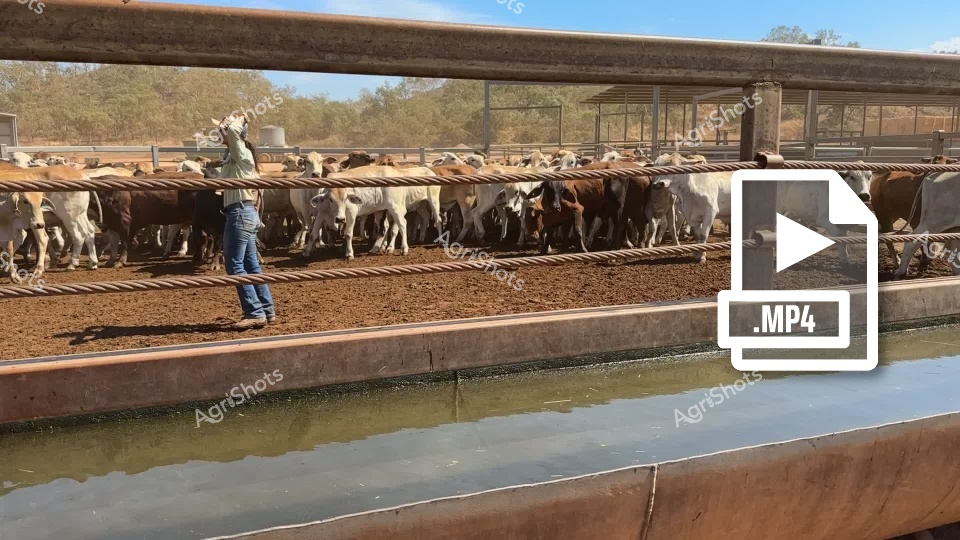
In the sun-drenched cattle yards of the Adelaide River Region, a solitary figure stands watchful among a dense herd of Brahman cattle. The russet and white-coated animals crowd the narrow concrete feedlot, their muscular bodies creating a living tapestry of agricultural productivity. Muted earth tones dominate the landscape - dusty browns of the ground, soft greys of the metal infrastructure, and the pale blue of an autumn sky filtering through sparse trees in the background. A water trough reflects the scene, creating a mirror-like surface that adds depth and tranquility to the bustling livestock environment. The individual, dressed in classic rural workwear of jeans and a light-colored hat, moves with practiced ease among the cattle, embodying the quiet expertise of Northern Territory pastoral workers. This raw video snapshot captures the essence of Australia's live export industry - a carefully managed, precision-driven agricultural operation that represents decades of breeding, husbandry, and economic strategy.
 Image
Image
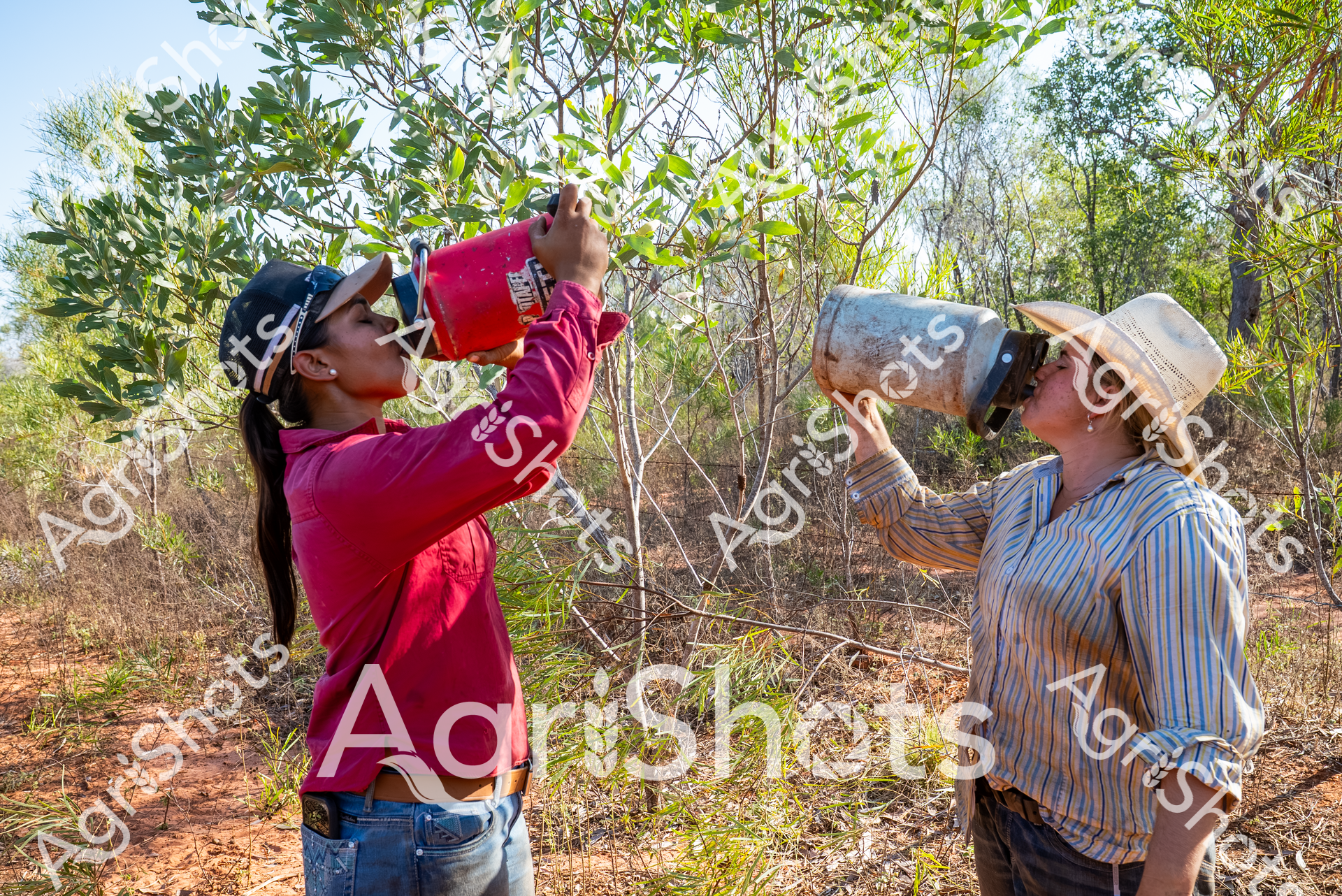
In the sun-drenched Kimberley region of Western Australia, two agricultural workers pause for critical rehydration during a demanding field day. A woman in a vibrant pink long-sleeved shirt tilts back a bright red water bottle, drinking deeply under the dappled shade of native scrubland trees. Beside her, another worker in a blue and white striped shirt and a wide-brimmed hat also takes a long drink from a weathered white container, their postures reflecting the essential need for water in this challenging landscape. The surrounding environment is quintessentially Australian - sparse, hardy vegetation with green leaves contrasting against reddish soil, suggesting the rugged conditions of a remote station during springtime. Their clothing and hydration gear speak to the practical necessities of agricultural work in Western Australia's harsh terrain, where staying refreshed is as crucial as the work itself. Their synchronized drinking moment captures the camaraderie and survival skills required in rural agricultural settings, where teamwork and preparedness are key to managing demanding outdoor labor. The image embodies the resilience of women in agriculture, facing challenging environmental conditions with practical determination.
 Video
Video
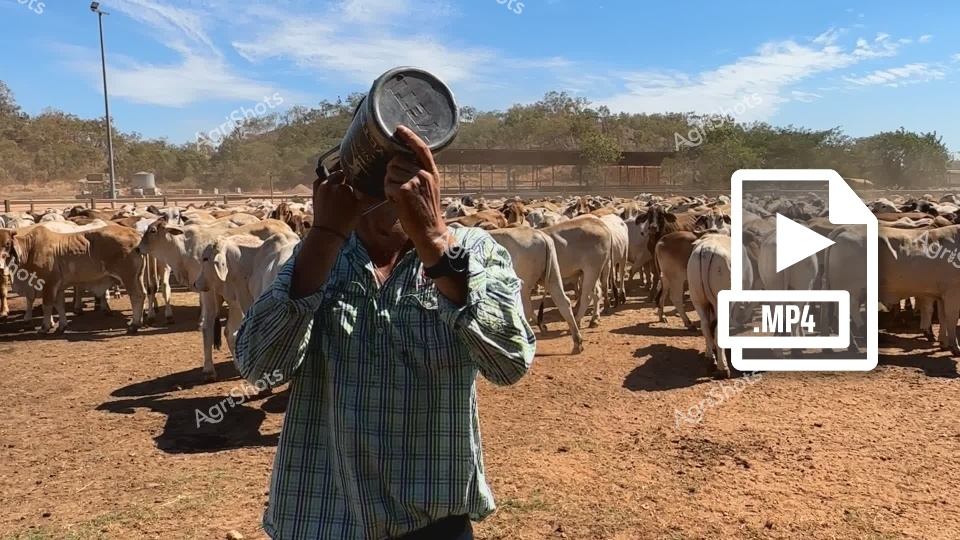
Dusty sunlight bathes a rugged cattle yard in Australia's Northern Territory, where a lean stockman stands amid a herd of hardy Brahman cattle. His plaid blue-green shirt ripples with slight movement as he tilts a metal water container to his lips, seeking relief from the parched autumn landscape. Behind him, a sea of pale grey and white Brahman cattle - distinguished by their distinctive humps and loose skin - crowd the packed earth yard, their muscular bodies creating a living tapestry of resilience against the sparse, golden bushland backdrop. The scene pulses with an authentic rhythm of rural agricultural life, capturing the unrelenting intensity of livestock management in one of Australia's most challenging agricultural environments. Wispy clouds streak the cerulean sky, casting soft shadows across the dry ground, while a distant fence line and scattered trees provide the only vertical interruption to the expansive horizontal plane. This raw, unfiltered moment speaks to the daily challenges and quiet determination of Northern Territory cattlemen, who navigate extreme conditions with stoic professionalism.
 Image
Image
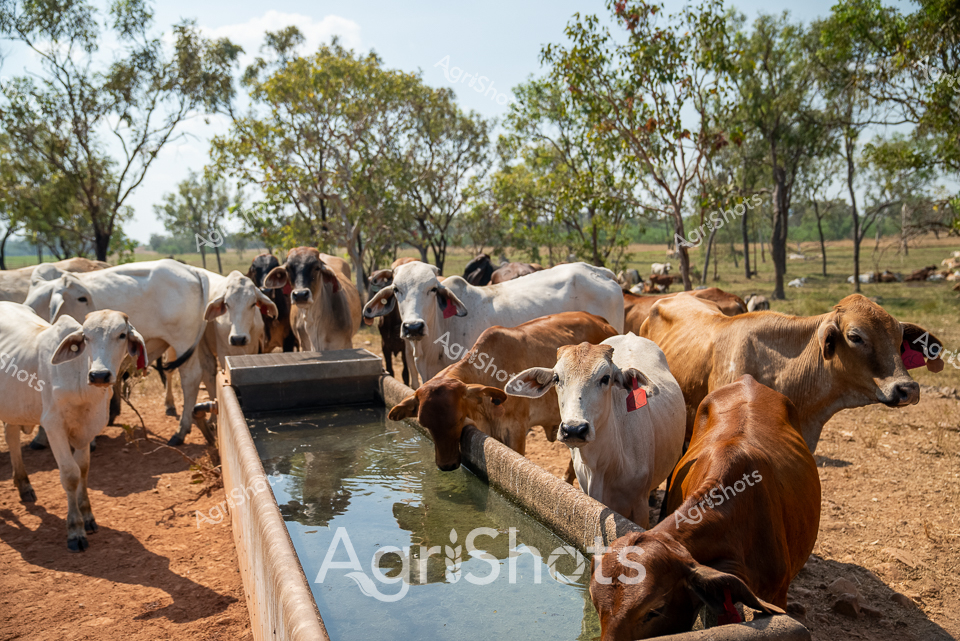
A dusty paddock near the Adelaide River comes alive with the robust energy of a Brahman cattle herd gathering at a concrete water trough. Burnished bronze and pale cream-colored cattle cluster around the water's edge, their distinctive humped shoulders and loose skin reflecting adaptations to the harsh Northern Territory climate. Rich terracotta earth contrasts against the silvery-green foliage of scattered eucalyptus trees, creating a quintessential Australian pastoral landscape under the soft light of an autumn morning. The cattle, marked with numbered ear tags, display the hallmarks of this hardy breed - muscular frames, alert expressions, and a calm collective presence as they hydrate in the dry season landscape. Metallic water gleams in the trough, a critical lifeline for these resilient animals surviving in one of Australia's most challenging agricultural environments. The scene captures the essential rhythm of cattle management in the Top End - survival, sustenance, and the symbiotic relationship between land, livestock, and human stewardship.
 Image
Image
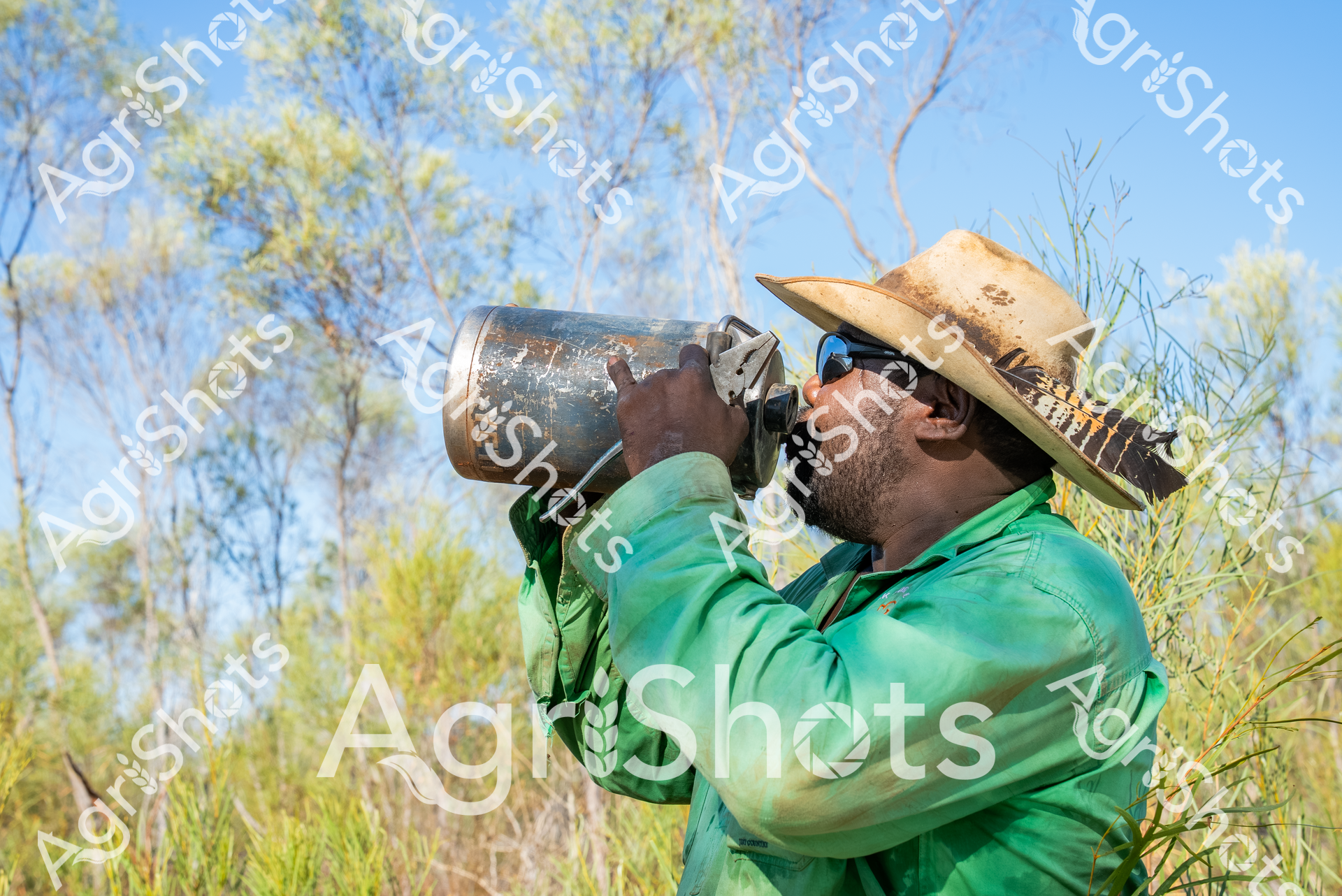
In the sun-drenched Kimberley region of Western Australia, a station worker pauses for critical rehydration during the vibrant spring season. Wearing a weathered wide-brimmed hat and reflective sunglasses, the worker drinks deeply from a large metal water bottle, likely a Yeti, against a backdrop of silvery-green eucalyptus trees and sparse grasslands. His bright green work shirt stands out vividly against the pale blue sky and golden-green landscape, capturing the intensity of rural labor under the harsh Australian sun. The scene epitomizes the essential practice of staying hydrated during demanding outdoor work, with the rugged landscape and the worker's focused posture telling a story of resilience and adaptation in remote agricultural settings. The act of drinking becomes a moment of survival and renewal in this challenging environment, where proper hydration is as crucial as any other tool of agricultural work.
 Image
Image
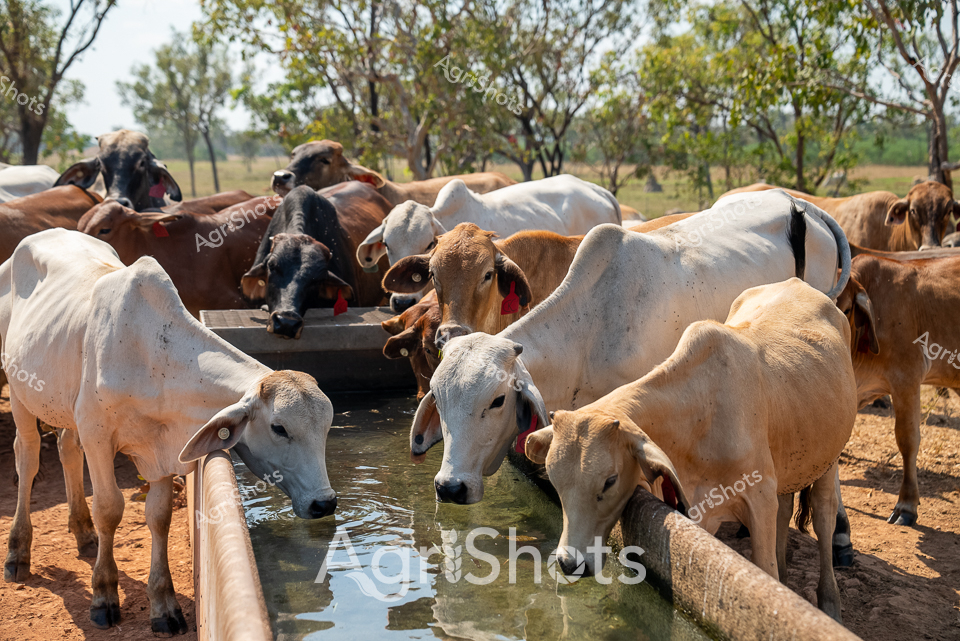
Brahman cattle cluster around a concrete water trough, their lean muscular bodies reflecting the robust pastoral landscapes of the Adelaide River region in Australia's Northern Territory. Pure white and rich tan-colored animals dominate the frame, with distinctive large ears and loose skin characteristic of the heat-tolerant Brahman breed. Sparse eucalyptus trees punctuate the background, suggesting an early autumn morning with soft golden light filtering through sparse woodland. The cattle press close, some with deep red ear tags, drinking methodically from the communal water source - a critical infrastructure for livestock survival in this harsh subtropical environment. Dry red earth surrounds the trough, creating a stark contrast with the reflective water and the cattle's varied coat colors. This scene captures the resilience of both the animals and the agricultural infrastructure that sustains cattle farming in Australia's challenging northern landscapes, where water management is key to successful pastoral operations.
 Video
Video
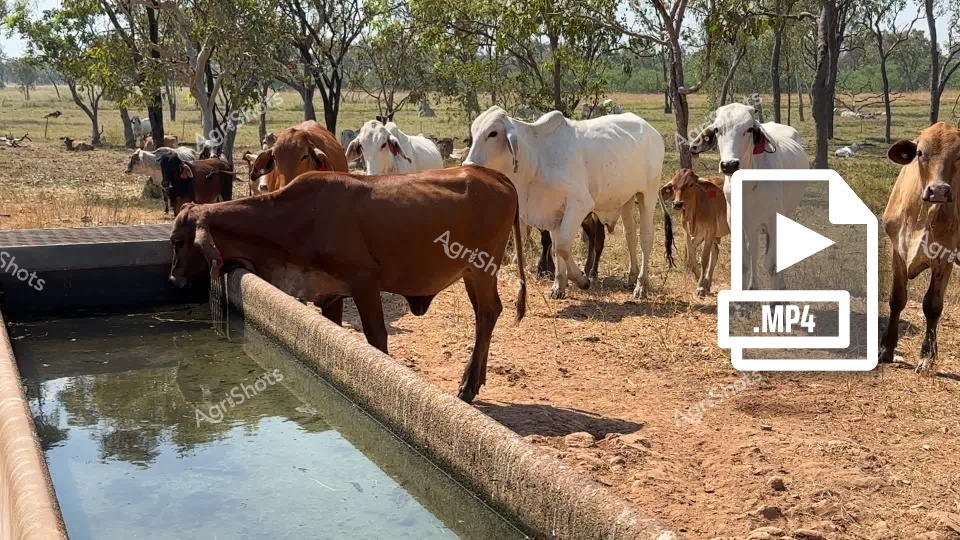
Brahman cattle gather at a concrete water trough in the rugged Adelaide River landscape, their varied coat colors ranging from rich mahogany to pristine white standing out against the sparse, dry woodland setting. Scattered gum trees cast dappled shadows on the parched earth, revealing the height of the dry season in Australia's Northern Territory. A deep russet-colored beast leans into the trough, drinking deeply, while younger calves and other herd members wait their turn in the sun-baked paddock. The robust Brahman breed, renowned for its heat and drought tolerance, demonstrates its adaptability in this quintessential Top End pastoral scene, where survival depends on accessing critical water sources. Water reflects the pale sky, creating a mirror-like surface that contrasts with the textured, hard-packed ground surrounding the trough. This raw video frame captures the resilience of both landscape and livestock, a testament to the harsh yet beautiful agricultural environments of northern Australia.
 Image
Image
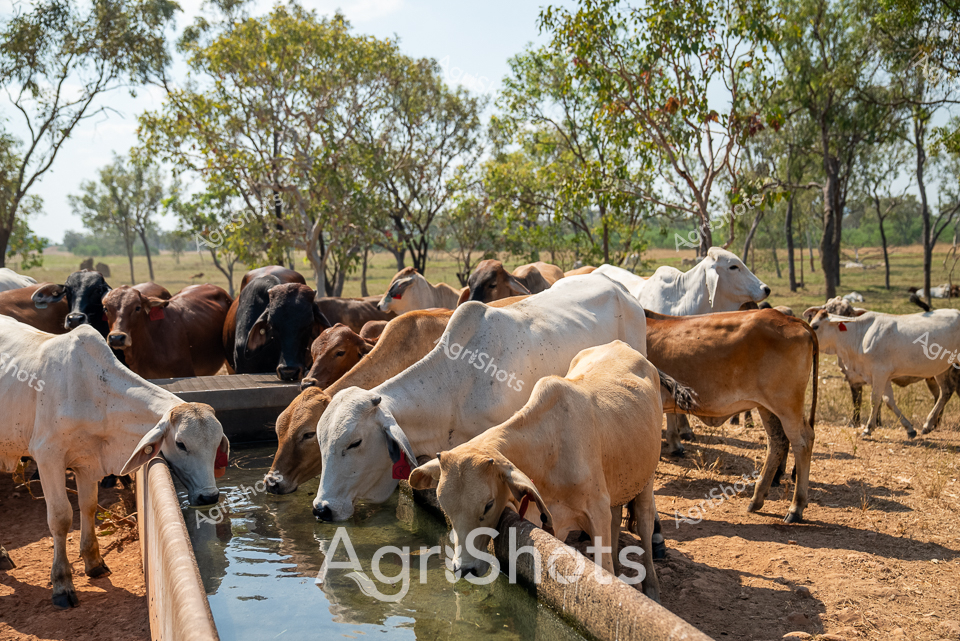
Burnished by the soft autumn light of the Northern Territory, a herd of Brahman cattle clusters around a water trough in the Adelaide River region. Muscular white and russet-colored beasts press close, their distinctive humped shoulders and loose skin testifying to their heat-tolerant breed. The sparse woodland behind them - a patchwork of slender gum trees and sun-bleached ground - speaks to the challenging pastoral landscapes of Australia's north. Cattle dip their heads to drink, creating ripples in the concrete trough, their movements languid in the midday heat. The rich palette of the scene ranges from the pale dusty earth to the varied tones of the cattle - cream, chocolate, and copper - set against the muted greens of the surrounding woodland. This image captures the resilience of both landscape and livestock, a quintessential moment of pastoral life where water means survival in an unforgiving environment.
 Image
Image
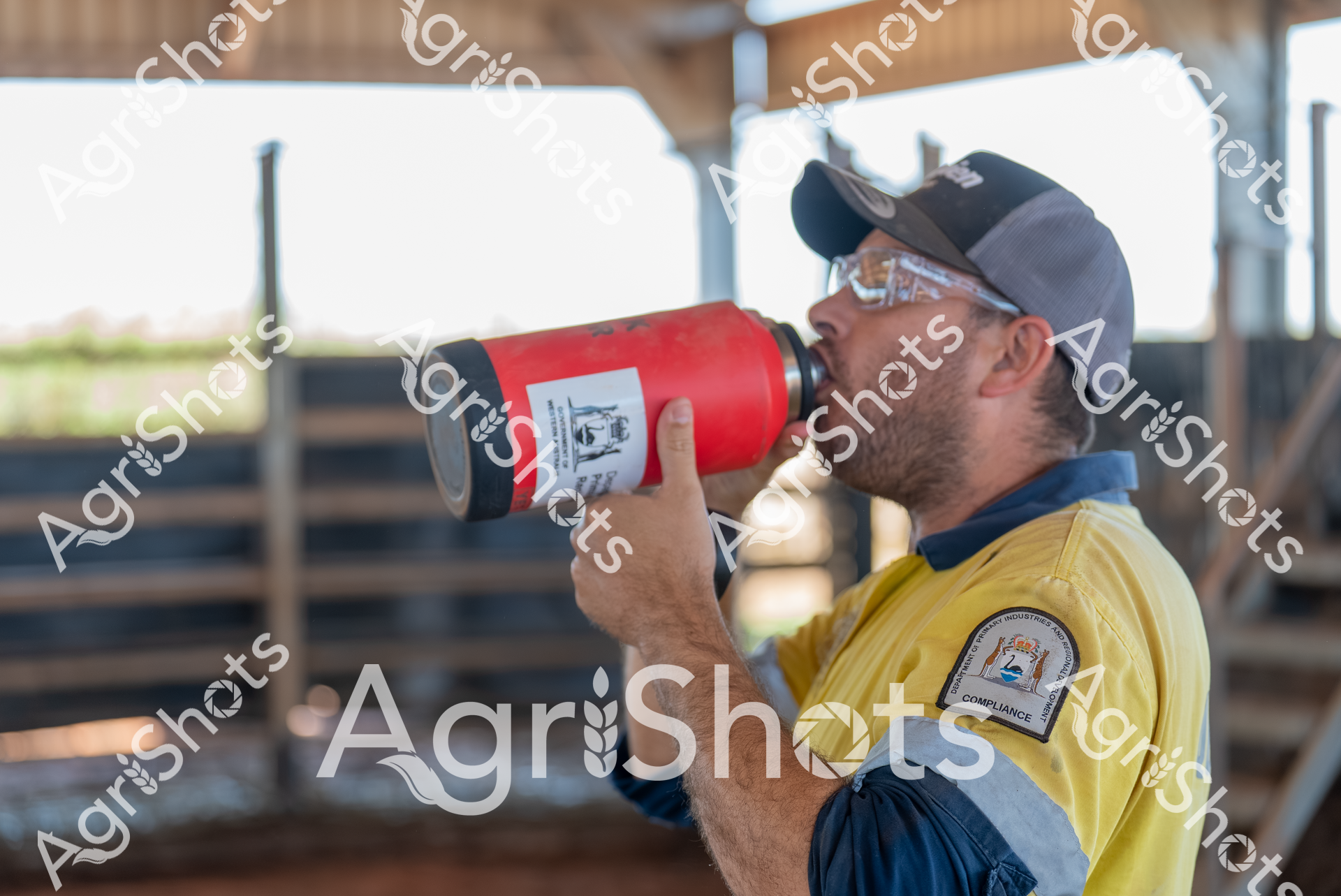
A livestock handler wearing protective safety eyewear and a yellow compliance shirt drinks from a bright red water bottle inside a rural cattle yard. The individual, dressed in a navy and yellow work uniform with a compliance patch, stands within a sturdy metal infrastructure of stock yards typical of Western Australia's Kimberley region. Sunlight filters through the structural framework, casting soft shadows and highlighting the hydration process essential in the hot, arid spring environment of a remote cattle station. The worker's careful rehydration demonstrates the critical importance of maintaining personal well-being during demanding agricultural work in challenging outdoor conditions. His cap and protective gear underscore the professional approach to workplace safety in livestock management, while the industrial setting of the yards provides a rugged backdrop to this moment of essential self-care.
 Video
Video
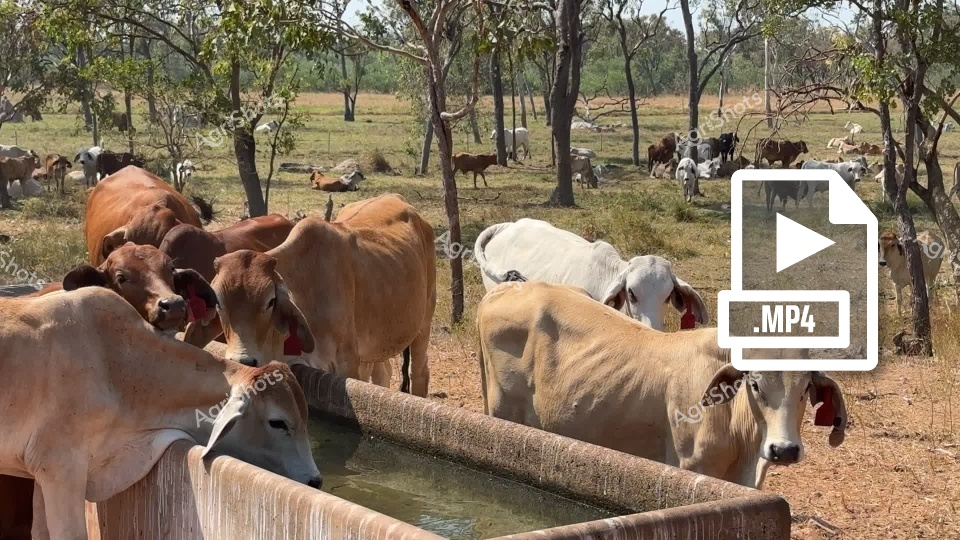
Brahman cattle cluster around a weathered concrete water trough in a sparse Northern Territory woodland, their lean muscular frames reflecting the resilient pastoral landscape of Australia's Top End. Rich terracotta and cream-colored cattle with distinctive humped shoulders huddle near the water source, surrounded by scattered eucalyptus trees and sun-bleached grasslands. The late autumn light filters through sparse branches, casting dappled shadows across the dry paddock where multiple herds graze and recuperate. These hardy Brahman breeds, renowned for their heat and tick resistance, demonstrate the quintessential adaptability of cattle engineered for challenging Australian agricultural environments. The raw, unfiltered MP4 video tag suggests an authentic documentary-style capture of daily pastoral life, revealing the fundamental rhythms of water, sustenance, and survival in one of Australia's most demanding agricultural regions. Sparse ground vegetation and weathered trees frame a scene of quiet bovine resilience, embodying the uncompromising spirit of Northern Territory cattle farming.
 Image
Image
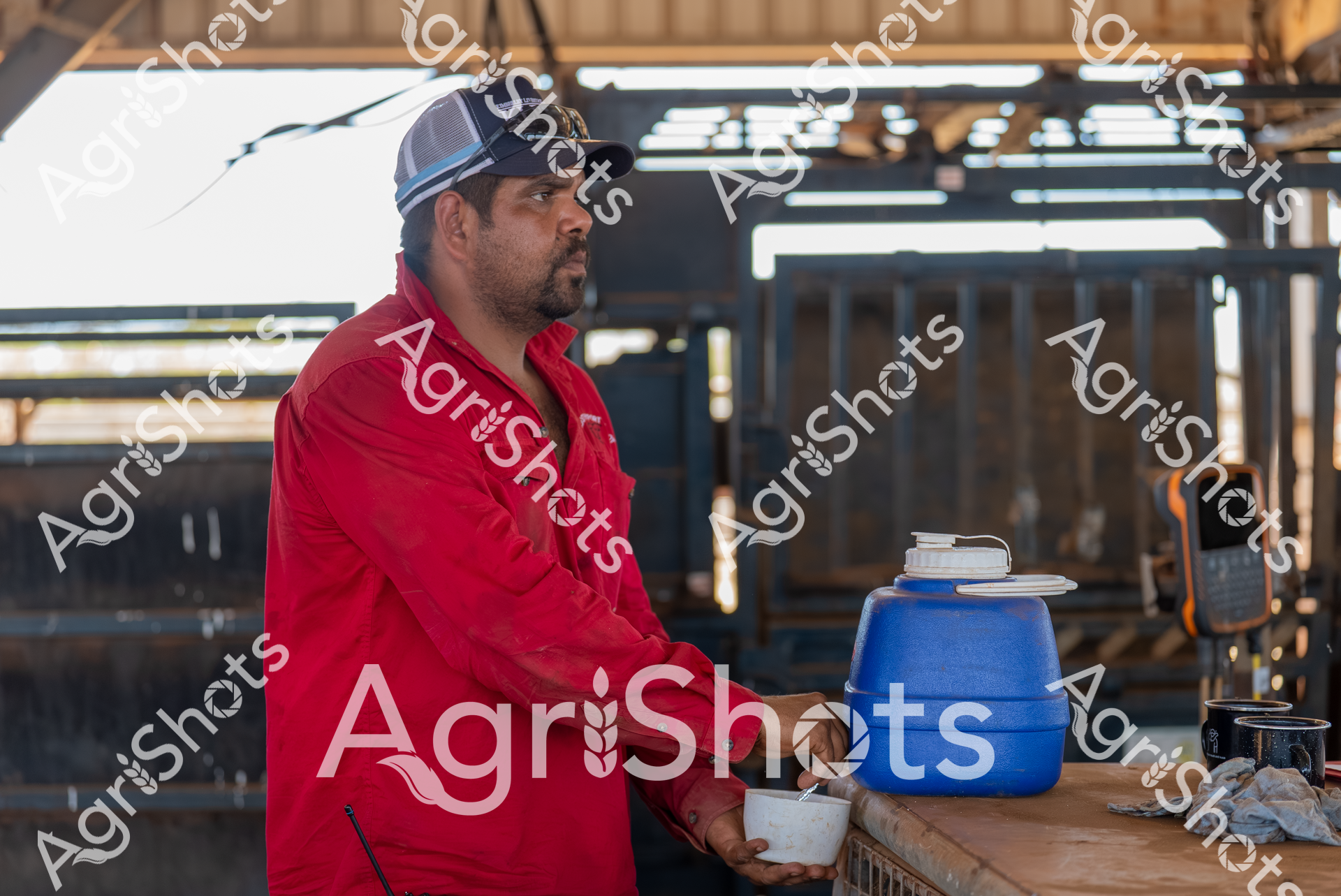
In the rugged livestock yards of Western Australia's Kimberley region, a worker in a vibrant red long-sleeved shirt and navy trucker cap pauses during a spring day. He stands near a large blue water container, carefully pouring liquid into a white cup, capturing a moment of essential hydration in a harsh pastoral environment. The surrounding infrastructure of metal cattle yards creates a geometric backdrop of steel fencing and structural elements, with soft natural light filtering through the shed's roof. His posture suggests a deliberate, methodical approach to station work - a quintessential scene of agricultural labor that highlights the day-to-day resilience required in remote cattle country. The image conveys the quiet intensity of rural work, where every action is purposeful and connected to the broader rhythms of agricultural life in Western Australia's expansive landscape.
 Image
Image
A worker in a bright red jacket and cap stands in a cattle yard, focusing intently on a blue water container. The setting appears to be a rural livestock facility in Western Australia's rugged Kimberley region during springtime. The environment suggests a remote station where hydration and animal care are critical, with industrial steel fencing and structural elements visible in the background. The individual's posture indicates careful attention to an important task, likely preparing water or managing livestock provisions. Muted industrial tones of gray, blue, and red create a stark visual palette that speaks to the practical, no-nonsense nature of agricultural work in challenging rural landscapes.
 Image
Image
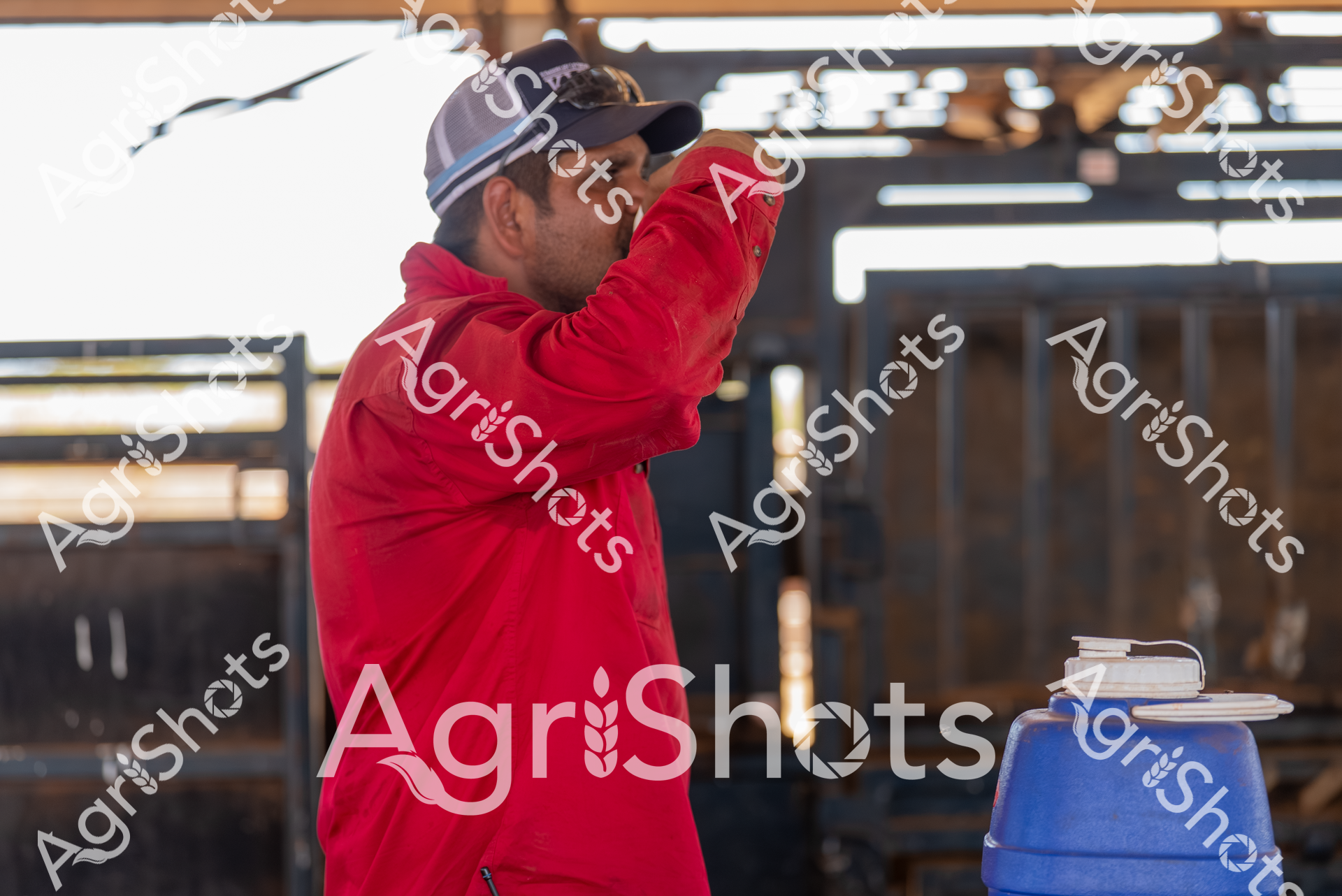
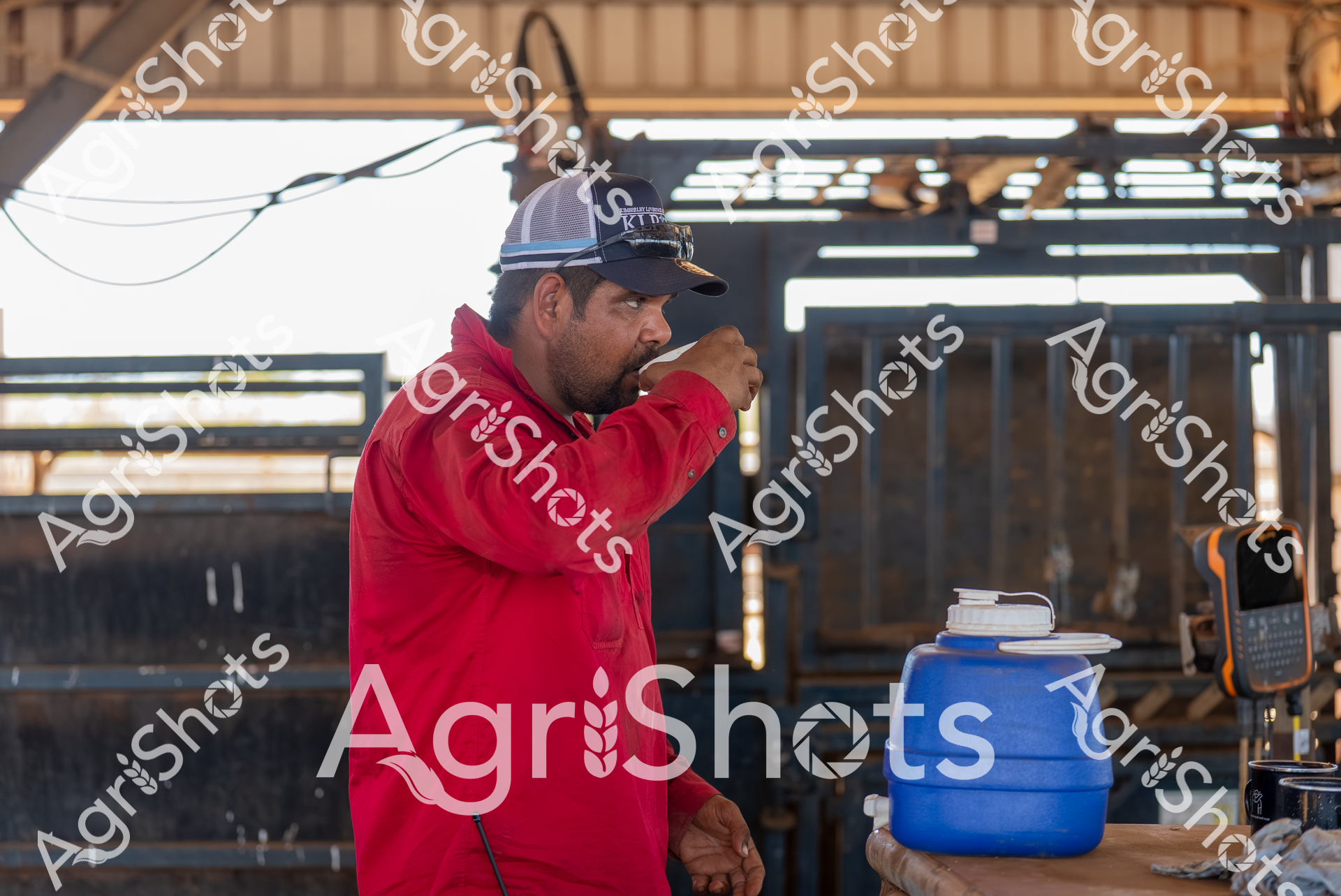
A rugged agricultural worker in a vibrant red jacket and a dark cap stands within a livestock handling facility, taking a moment to rehydrate. The industrial steel-framed yard, typical of the Kimberley region in Western Australia, provides a robust backdrop of metallic structures and filtered sunlight. The worker, positioned near a blue water container, pauses to drink, his posture suggesting a brief respite from the demanding physical labor of station work during the spring season. His attire - a mesh-backed cap and protective workwear - reflects the practical, hardwearing clothing essential for rural agricultural environments. The image captures the quiet intensity of remote station life, where hydration and brief moments of rest are crucial in the challenging Western Australian landscape.
 Image
Image
Brahman cattle cluster around a water trough in the sparse woodland landscape of Adelaide River, Northern Territory. Rich autumn sunlight filters through scattered eucalyptus trees, illuminating the herd's diverse coat colors - from pristine white to deep mahogany and jet black. These heat-tolerant cattle, distinguished by their distinctive large humps and loose skin, drink deeply from the concrete trough, their muscular bodies pressed close together in the dry paddock. Red identification tags punctuate their ears, a practical marker of station management in this rugged pastoral environment. The scene captures the resilience of Australia's northern cattle industry, where careful water management is crucial for livestock survival in challenging seasonal conditions. Dusty earth, sparse ground vegetation, and the clustered movements of the cattle evoke the disciplined rhythm of remote cattle station life.
 Video
Video
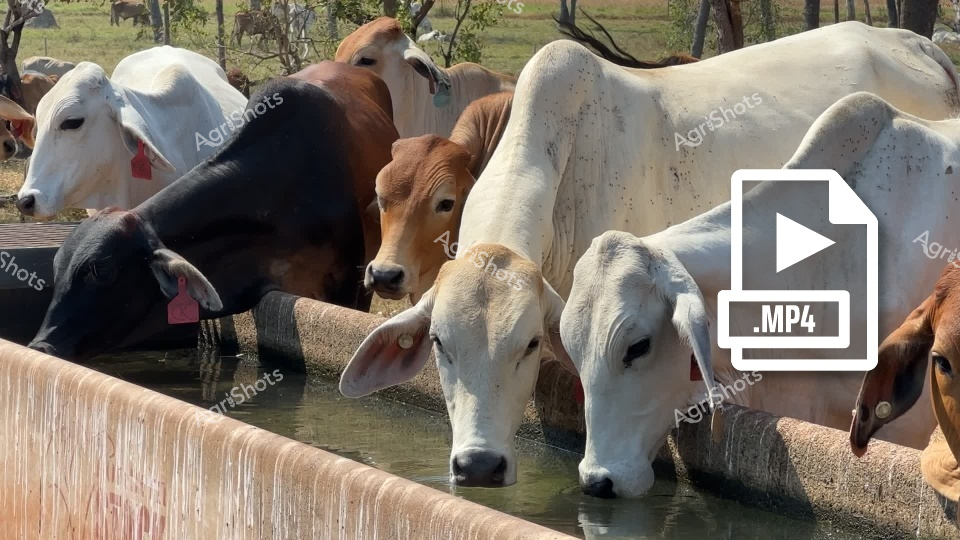
Brahman cattle cluster around a robust concrete water trough, their distinctive coats gleaming under the soft autumn light of Australia's Northern Territory. Sleek white, rich chocolate brown, and deep black bovines press close, drinking deeply from the well-maintained rural water infrastructure. The pale animals, characteristic of the heat-tolerant Brahman breed, display their large, pendulous ears and loose skin - perfect adaptations for the harsh tropical climate of the Adelaide River region. Soft morning sunlight filters through scattered trees, casting dappled shadows across the dusty paddock as the cattle refresh themselves. Each animal wears a numbered ear tag, signaling careful livestock management and tracking. The scene captures the quiet rhythm of pastoral life - these resilient cattle pausing to hydrate, their muscular bodies a testament to generations of selective breeding perfectly suited to Australia's challenging northern landscapes.
 Image
Image
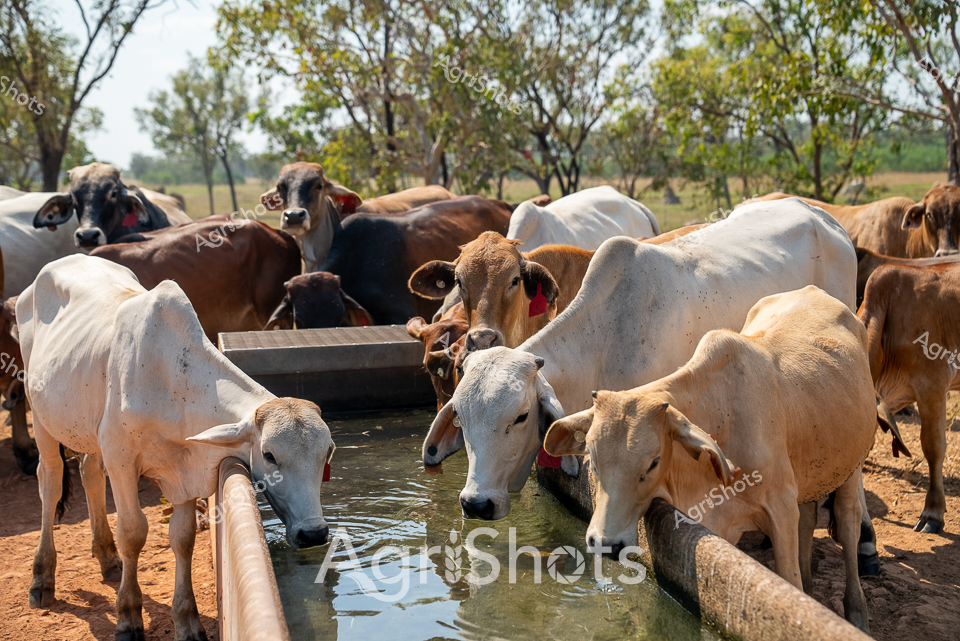
Brahman cattle cluster around a weathered water trough in the dappled light of an autumn morning on an expansive Northern Territory cattle station near the Adelaide River. The herd - a mix of pure white, rich chocolate brown, and mottled tan animals - stands patient and purposeful, their distinctive large ears and loose skin adapting perfectly to the region's challenging tropical climate. Sleek muscular bodies press close as they drink deeply, their red ear tags providing a sharp contrast against their hide colors. Sparse gum trees create a soft backdrop of muted greens and greys, filtering sunlight across the rusty earth and highlighting the cattle's robust forms. This quintessential Top End scene captures the resilience of both landscape and livestock, where access to reliable water defines survival in the harsh but beautiful Australian pastoral environment. The trough represents a critical lifeline, transforming an arid paddock into a sustainable grazing ecosystem through careful water management and strategic stock selection.
 Image
Image
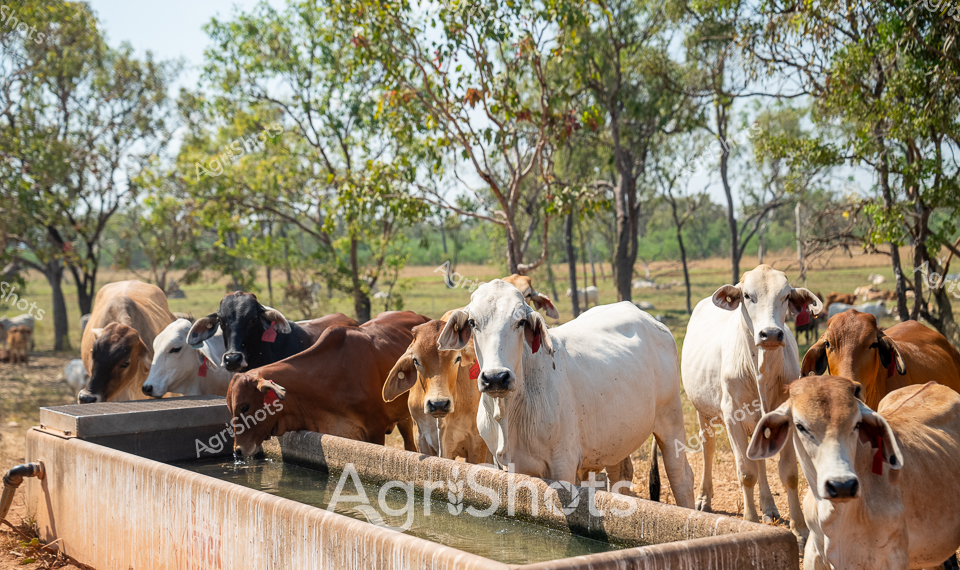
Brahman cattle cluster around a sturdy concrete water trough nestled in a sparse woodland landscape, capturing the essence of northern Australian pastoral life. Rich amber and white-coated bovines crowd together, their distinctive large ears and loose skin characteristic of the heat-tolerant Brahman breed, perfectly adapted to the challenging Northern Territory environment. Soft autumn light filters through scattered eucalyptus trees, casting dappled shadows across the dusty paddock as the herd refreshes themselves, their varied coat colors ranging from deep russet to pristine white. The weathered water trough stands as a critical lifeline in this arid landscape, surrounded by sparse grassland and mature trees that provide intermittent shade. Each animal displays a distinctive red ear tag, a standard identifier in professional cattle management, highlighting the systematic approach of modern Australian agricultural practices. The scene epitomizes the resilience of both livestock and farmers in the unforgiving yet beautiful expanses of Australia's northern agricultural regions.
 Image
Image
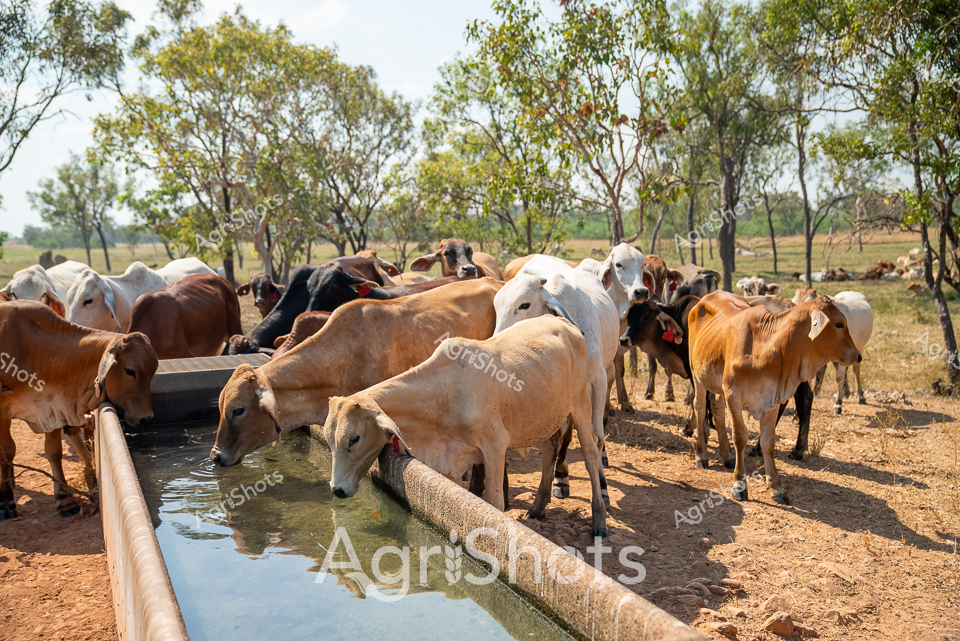
Brahman cattle cluster around a concrete water trough in the sun-drenched paddocks of the Adelaide River region, Northern Territory. The lean, muscular cattle - a mix of sandy, white, and russet-brown coats - drink deeply from the stone trough, their bodies casting long shadows on the parched earth. Sparse eucalyptus trees provide minimal shade, their pale green foliage a subtle contrast against the dry landscape of early autumn. These hardy Brahman cattle, renowned for their heat and pest resistance, represent the resilience of Northern Territory livestock farming, adapted to survive in challenging tropical conditions. The herd's varied coat colors showcase the genetic diversity crucial to pastoral success, with each animal standing as a testament to generations of careful breeding and management. The scene captures the fundamental rhythm of station life - water, sustenance, and survival in one of Australia's most unforgiving agricultural environments.
Well, you've ploughed through the whole field!
No more crops to harvest here, mate.
Try searching for something else in our library of 50,000+ royalty-free media: