 Image
Image
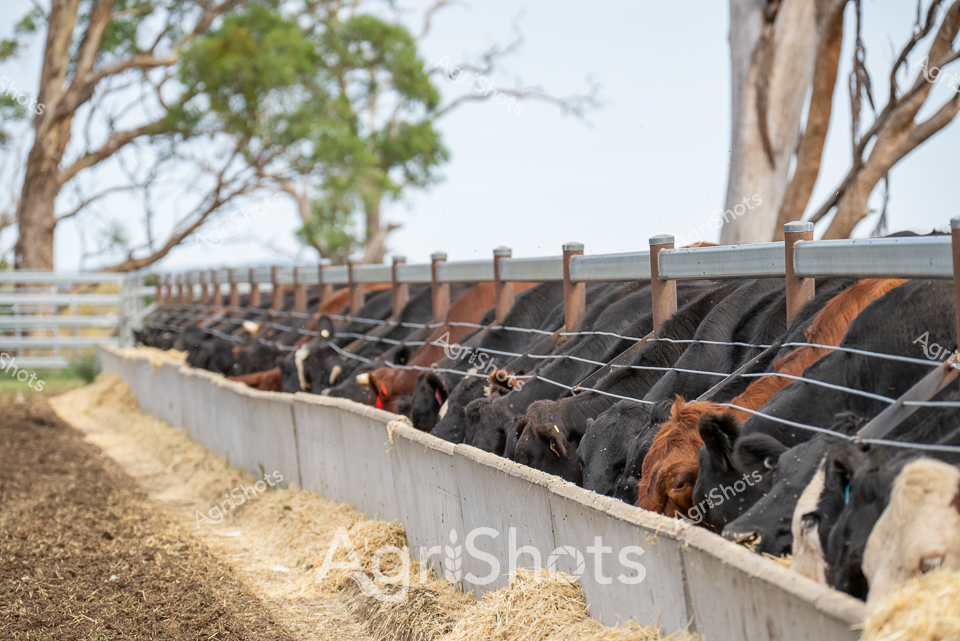
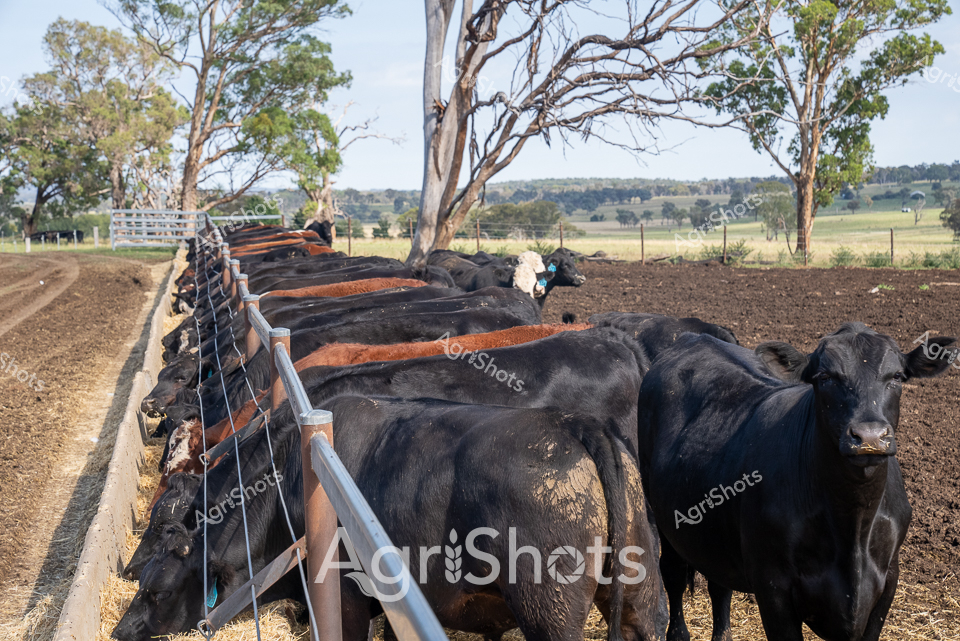
Sleek black and rich chestnut-coated beef cattle line a concrete feed bunker under towering eucalyptus trees, creating a quintessential New England agricultural landscape in New South Wales. The precisely engineered feeding station features sturdy metal rails supporting a long concrete trough filled with golden hay, allowing each animal controlled access to nutrition. Mature cattle stand shoulder-to-shoulder, their muscular frames representing carefully bred livestock optimized for meat production. Soft summer or autumn light filters through sparse tree branches, casting gentle shadows across the dry, packed earthen ground alongside the feeding area. The metallic infrastructure, organic natural elements, and carefully managed livestock represent the sophisticated intersection of agricultural science and pastoral tradition characteristic of Australian cattle farming. This methodical, efficient feeding system demonstrates the region's commitment to advanced livestock management techniques, balancing animal welfare with productive agricultural practices.
 Image
Image
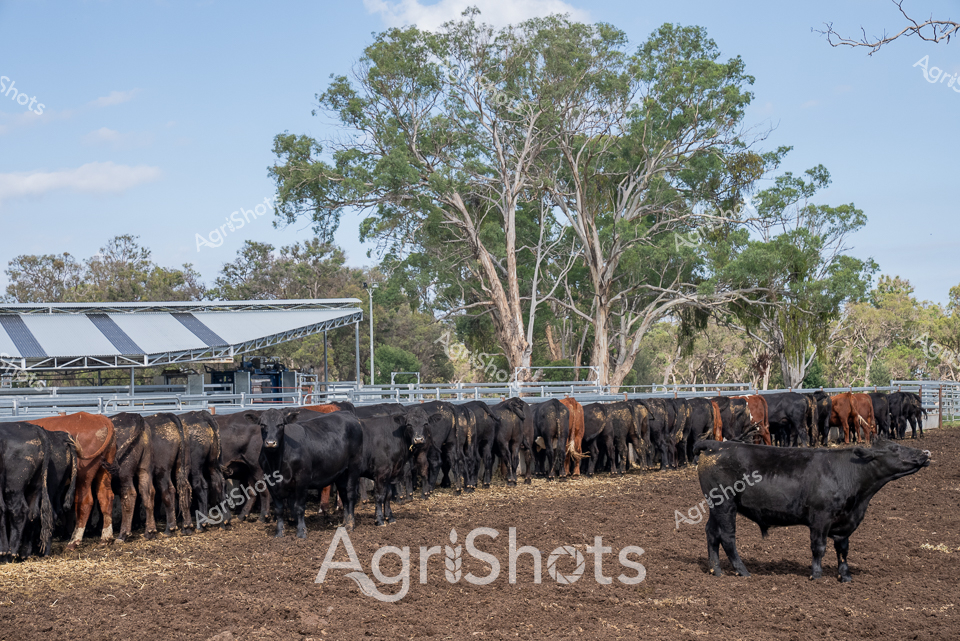
Sleek black and chestnut-red Angus cattle congregate in a sun-drenched feedlot, their muscular frames packed tightly within white-railed holding pens. Towering eucalyptus trees provide a backdrop of muted greens and silvery bark, casting dappled shade across the dusty ground of this New England region cattle station in northern New South Wales. The steel-framed feed shed stands ready, its corrugated roof offering shelter and suggesting the methodical rhythms of modern livestock management. One lone black beast stands apart, a sentinel surveying the herd, while the others cluster close, their coats gleaming with health and indicating premium beef genetics. The compact earthen yard speaks to careful agricultural practice - a carefully balanced ecosystem of nutrition, shelter, and animal husbandry that epitomizes Australian cattle farming. Summer's bright light and the dry, compact ground reveal the resilience of both livestock and farmers in this challenging agricultural landscape.
 Image
Image
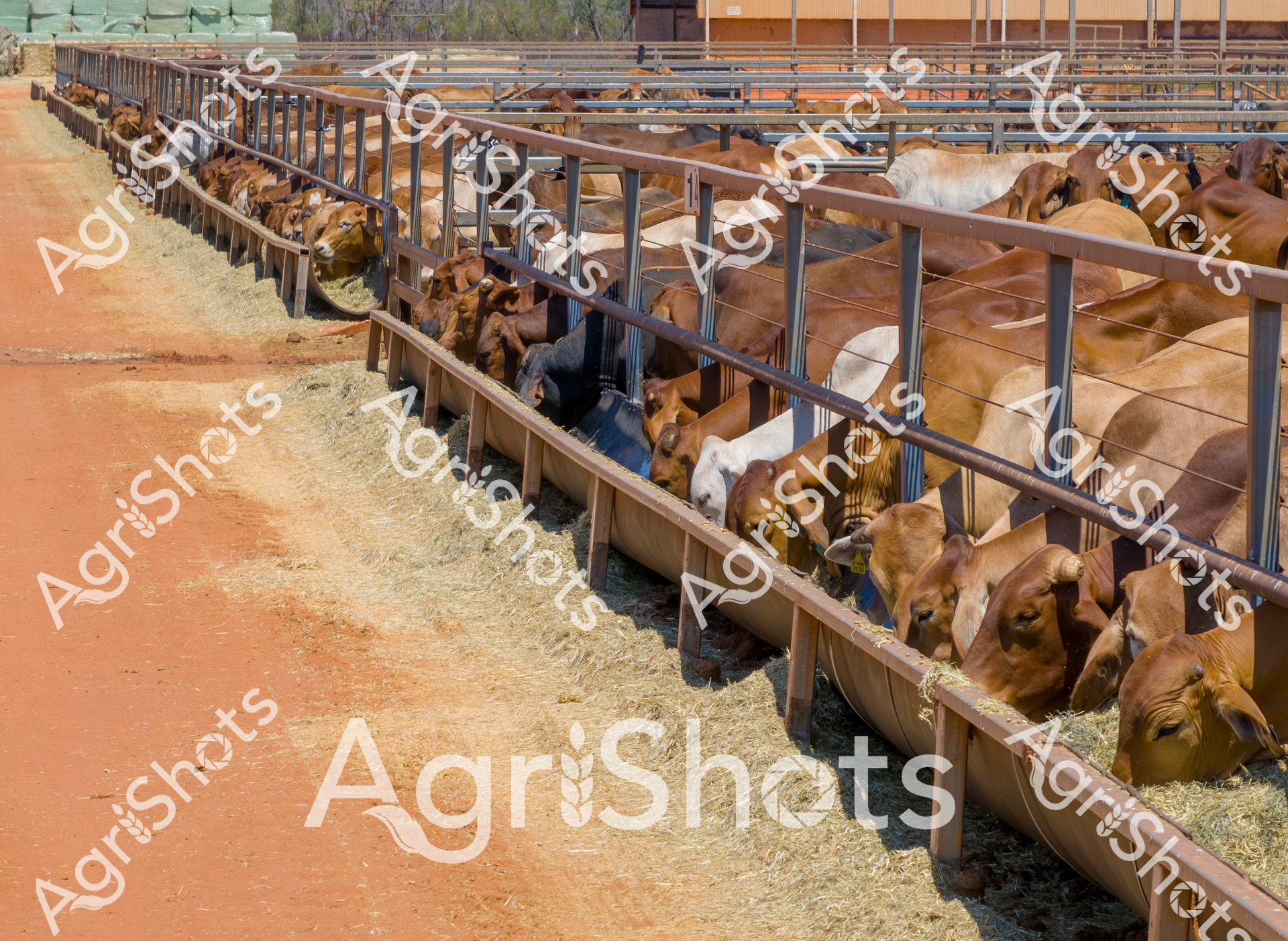
Brahman and Santa Gertrudis cattle cluster densely along a rust-colored feed bunker, their warm copper and cream hides creating a living tapestry of pastoral productivity. Meticulously arranged metal railings define precise feeding lanes within an expansive export yard, typical of the Kimberley region's robust cattle infrastructure. Soft morning light bathes the packed earthen ground, highlighting golden hay scattered before the animals, who lean forward with synchronized intent to graze. The orderly steel infrastructure contrasts beautifully with the organic forms of the livestock, representing the sophisticated agricultural systems of Western Australia's northern pastoral zones. Each beast appears calm and well-conditioned, reflecting the professional management of this export-focused cattle station during the fertile spring season. The scene captures the disciplined efficiency of Australian beef production - a testament to generations of agricultural expertise in transforming challenging landscapes into world-class livestock operations.
 Image
Image
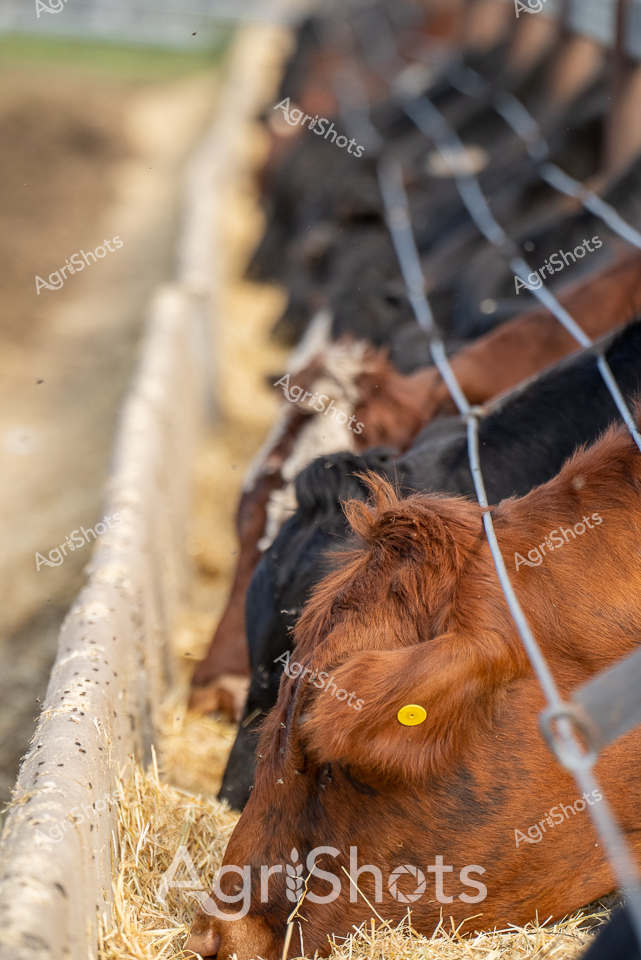
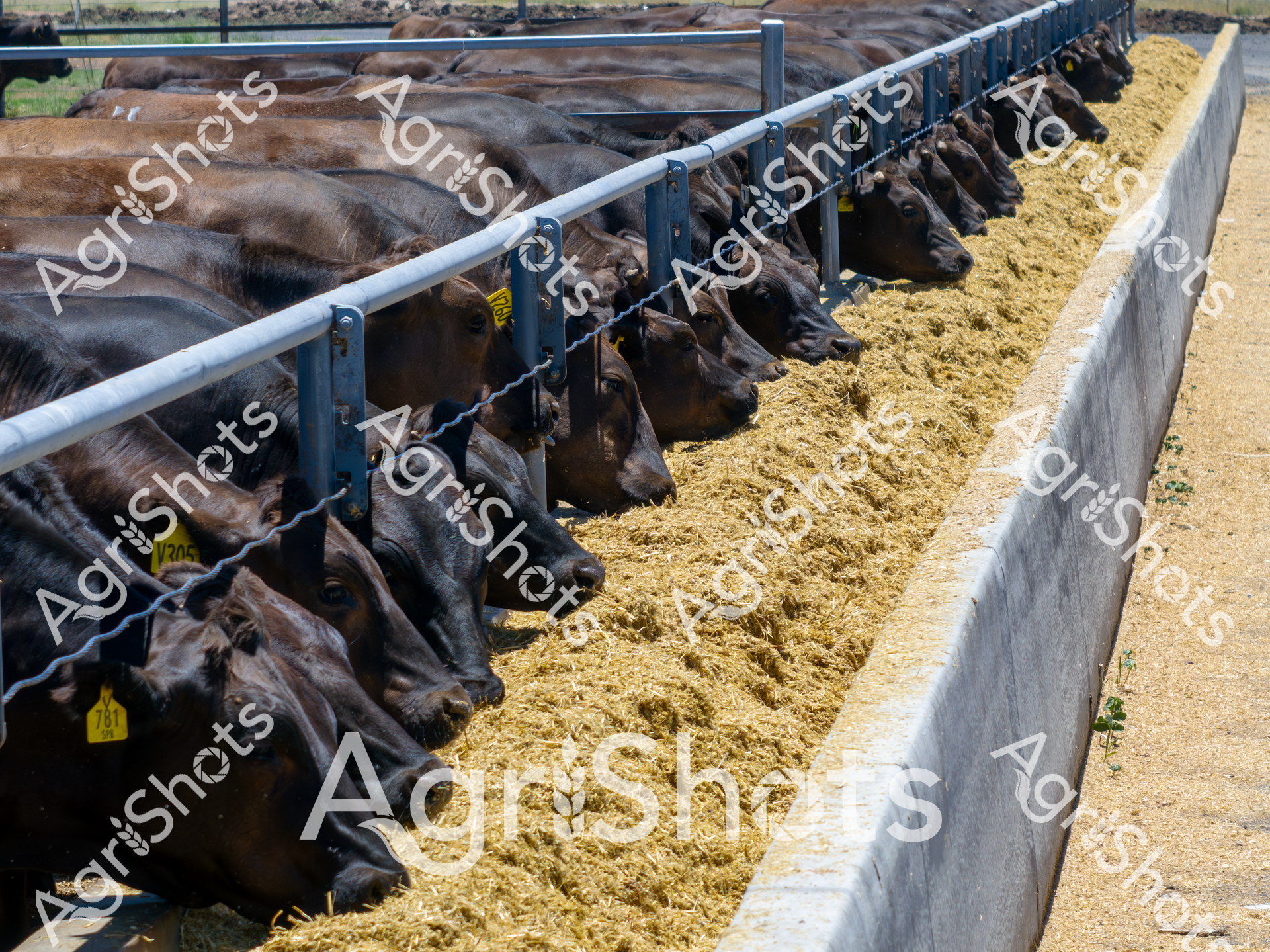
Russet-coated beef cattle cluster along a concrete feed bunker, their muscular frames lined up methodically behind a wire fence. Golden straw provides a soft bedding beneath their hooves, creating a textural contrast with the weathered concrete and steel infrastructure. A bright yellow ear tag punctuates the rich auburn coat of the nearest animal, signaling careful livestock management in this meticulously organized feedlot. The scene captures the systematic precision of modern cattle production, where each animal is tracked and nurtured with scientific efficiency. Soft afternoon sunlight casts gentle shadows across the enclosure, highlighting the varied tones of black, brown, and rust-colored cattle breeds typical of New South Wales' New England agricultural region. This snapshot encapsulates the quiet industry of Australian beef production - a delicate balance of animal husbandry, nutritional science, and rural expertise.
 Image
Image
In the scorching summer heat of Queensland's Goondiwindi region, a meticulously organized feedlot showcases the precision of modern cattle management. Rows of robust beef cattle - a mix of rich chocolate-brown, black, and creamy white coat colors - stand shoulder to shoulder along a concrete feed bunker, their muscular frames testament to careful nutrition and breeding. Yellow ear tags punctuate their hides, marking each animal with agricultural efficiency. The long, structured feeding lane is lined with fresh golden hay, providing a stark contrast against the dusty paddock and distant eucalyptus tree line. Overhead shade structures offer some respite from the intense Australian sun, highlighting the sophisticated infrastructure of contemporary livestock production. These cattle, likely a blend of Angus, Brahman, and crossbred varieties, represent the pinnacle of beef production in one of Australia's most productive agricultural landscapes, where careful animal husbandry meets advanced farming technologies.
 Image
Image
Sleek black Angus and rich red Murray Grey cattle stand shoulder to shoulder in a meticulously organized feedlot, their muscular frames lined up precisely along a hay-strewn paddock. Overhead, a expansive steel-framed shelter with alternating white and grey panels provides critical shade and protection, typical of advanced agricultural infrastructure in New South Wales' New England region. The late summer or early autumn landscape surrounds the yard, with weathered eucalyptus trees creating a classic Australian rural backdrop of muted greens and greys. Pristine metal cattle yards with robust fencing contain the herd, demonstrating modern livestock management techniques that maximize animal comfort and operational efficiency. Each beast displays a robust condition, their coats gleaming with health, reflecting the careful nutritional management of this professional feedlot operation. The scene epitomizes contemporary Australian beef production - a precise, well-engineered environment where animal husbandry meets agricultural technology, showcasing the sophisticated approach of regional livestock farmers.
 Image
Image
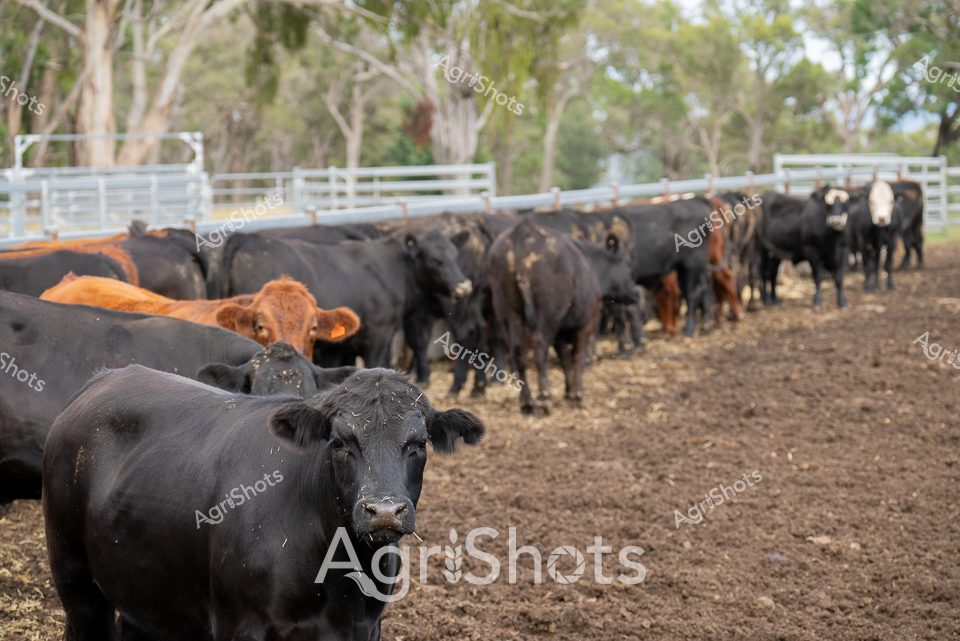
Black Angus and Droughtmaster cattle stand quietly in a dusty cattle yard, their muscular frames lined up along a feed bunker amid the golden-brown landscape of New England, New South Wales. Late summer sunlight filters through the surrounding eucalyptus trees, casting dappled shadows across the compact feedlot. Predominantly black cattle dominate the scene, with a few rich russet-colored animals providing striking contrast against their darker companions. The compacted earth beneath their hooves tells a story of persistent drought conditions, while the white rail fencing and carefully designed feeding infrastructure speak to modern agricultural management practices. A sleek black bovine in the foreground turns slightly, revealing the intense, calm gaze characteristic of well-managed stock, embodying the resilience of Australian cattle breeding and pastoral farming. The scene captures the essence of contemporary beef production - a carefully orchestrated environment where nutrition, animal welfare, and agricultural efficiency converge under the challenging conditions of the New England tablelands.
 Image
Image
Dusty autumn light filters through the steel framing of a Northern Territory feedlot, casting soft shadows across a row of pristine Brahman cattle. These elegant, pale grey animals stand shoulder-to-shoulder along a feed bunker, their distinctive loose skin and large ears characteristic of this heat-tolerant breed perfectly adapted to the harsh Adelaide River region. Straw and fresh green hay create a textured bedding where the cattle rest, their muscular bodies aligned parallel to the steel feeding rail. Each animal displays the breed's classic silvery-white coloration, with subtle variations in shade and the telltale soft folds of skin that help them regulate temperature in tropical climates. The scene captures the methodical precision of modern cattle management - a carefully controlled environment designed to optimize nutrition and livestock health. Muted metallic greys of the feeding infrastructure contrast beautifully with the organic golden and green tones of the feed, representing the sophisticated intersection of agricultural science and natural livestock rearing.
 Image
Image
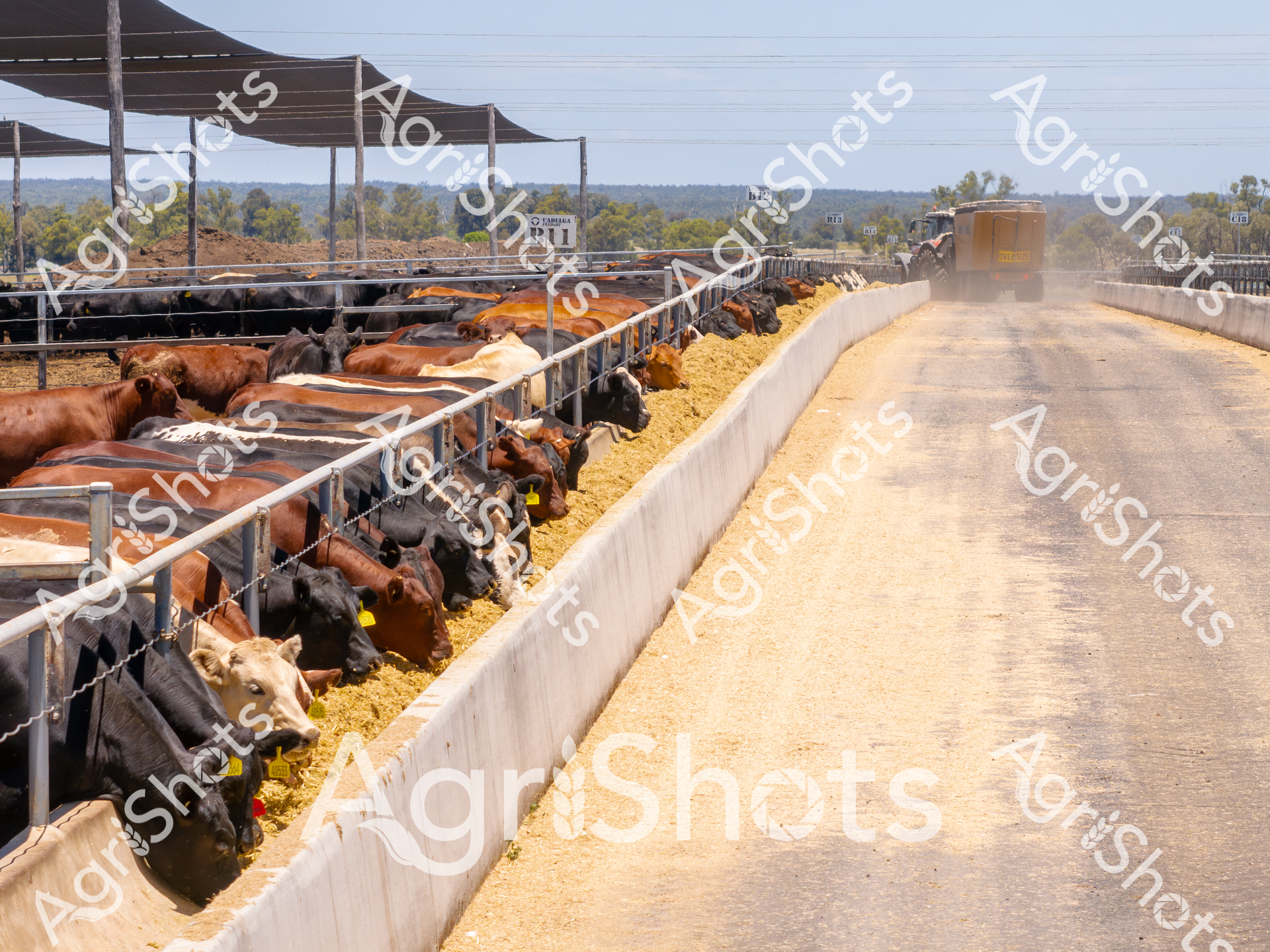
A procession of robust beef cattle - rich mahogany, coal-black, and creamy white - line a concrete feed bunker at a modern Queensland feedlot. Shade structures stretch overhead, protecting the herd from the intense summer sun, while a yellow dust cloud trails behind a feed truck distributing fresh golden grain along the linear trough. The cattle, each wearing a distinctive yellow identification tag, lean forward intently to access the nutritious mixed feed, their muscular bodies a testament to the precision of modern agricultural management. The landscape beyond reveals a quintessential Australian rural backdrop of sparse eucalyptus woodland and expansive horizons, capturing the intersection of intensive livestock production and the broad, sun-bleached environment of the Goondiwindi region. Sleek metal railings define the feeding zone, creating a systematic approach to cattle nutrition that maximizes growth and efficiency. The scene radiates a sense of calculated agricultural expertise - each animal carefully positioned, each movement purposeful, reflecting the sophisticated approach of contemporary Australian beef production.
 Image
Image
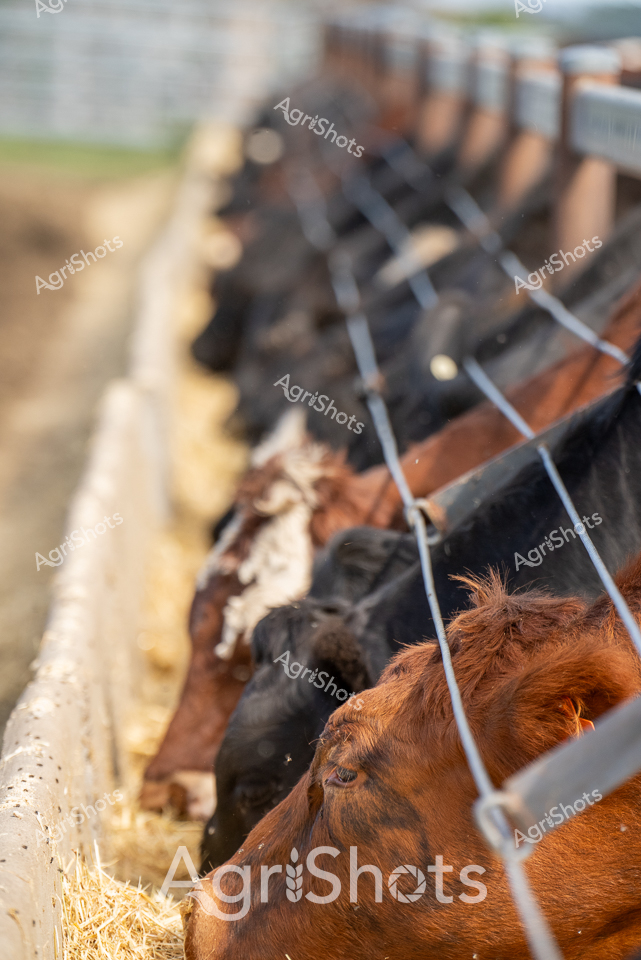
Black and chestnut beef cattle stand shoulder-to-shoulder along a concrete feed bunker, their muscular bodies aligned in a disciplined row. Straw bedding lines the concrete feeding area, providing a golden contrast to the rich browns and deep blacks of the cattle's coats. The tight, orderly composition suggests a professionally managed feedlot, typical of intensive cattle farming practices in New South Wales' New England region. Wire fencing runs parallel to the animals, creating geometric lines that emphasize the systematic approach to livestock management. The depth of field blurs the background, highlighting the animals' textured coats and the precision of their positioning. This scene captures the industrial yet purposeful nature of modern Australian beef production, where animal nutrition and efficient feeding strategies are critical to agricultural success.
 Image
Image
Black Angus cattle stand shoulder-to-shoulder along a concrete feed bunker, their sleek dark coats contrasting against golden straw bedding in a quintessential Queensland feedlot scene. Precise metal barriers divide the densely packed animals, each marked with a distinctive yellow ear tag, highlighting the systematic management of modern beef production. The summer sunlight casts sharp shadows across the feeding area, emphasizing the uniform alignment of the cattle as they consume their carefully prepared mixed feed. Rows of muscular bodies demonstrate the genetic consistency of this high-performance beef herd, typical of the Goondiwindi region's renowned cattle industry. Concrete walls and galvanized steel railings frame the feed lane, reflecting the engineered precision of contemporary agricultural infrastructure. This image captures the industrial scale and methodical approach of Australian beef farming, where animal nutrition and management represent the pinnacle of agricultural science and economic strategy.
 Image
Image
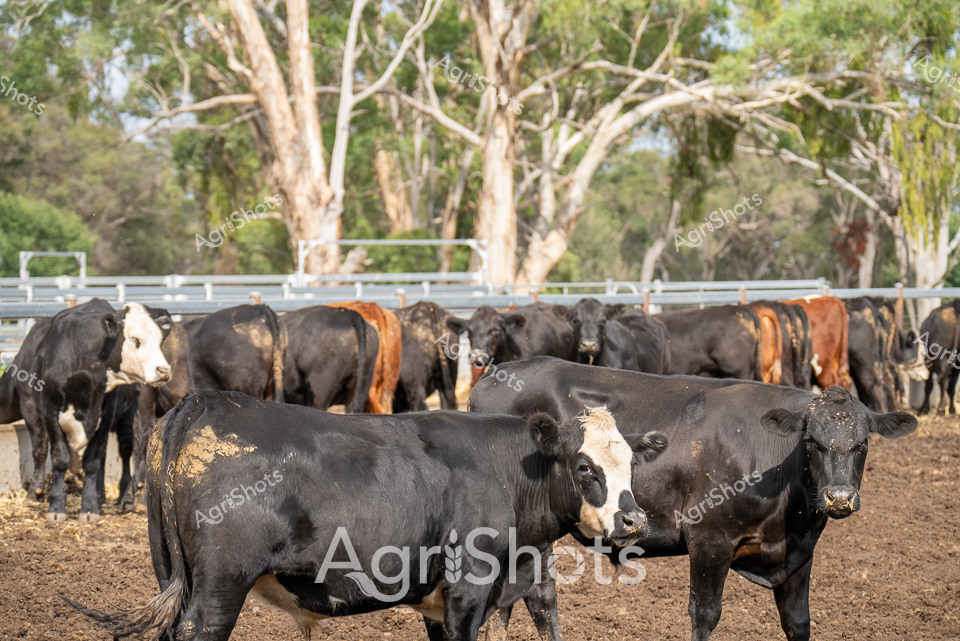
Black Angus and crossbred cattle cluster in a dusty feedlot nestled among silvery eucalyptus trees, capturing the essence of New England agricultural landscape in late summer. Muscular black bovines with occasional rust-colored individuals stand closely packed within sturdy metal yard panels, their coats gleaming with subtle variations of charcoal and deep brown. The ground is compact and dry, reflecting the harsh seasonal conditions of inland New South Wales, with pale tree trunks providing a stark backdrop of muted greens and grays. These robust beef cattle represent a critical segment of Australian agricultural production, standing testament to the resilience of livestock farming in challenging environmental conditions. The careful management of the feed bunker and precise yard design demonstrate sophisticated modern agricultural practices, balancing animal welfare with efficient production. Rich textures of hide, metal infrastructure, and weathered landscape merge to create a compelling portrait of contemporary pastoral enterprise.
 Image
Image
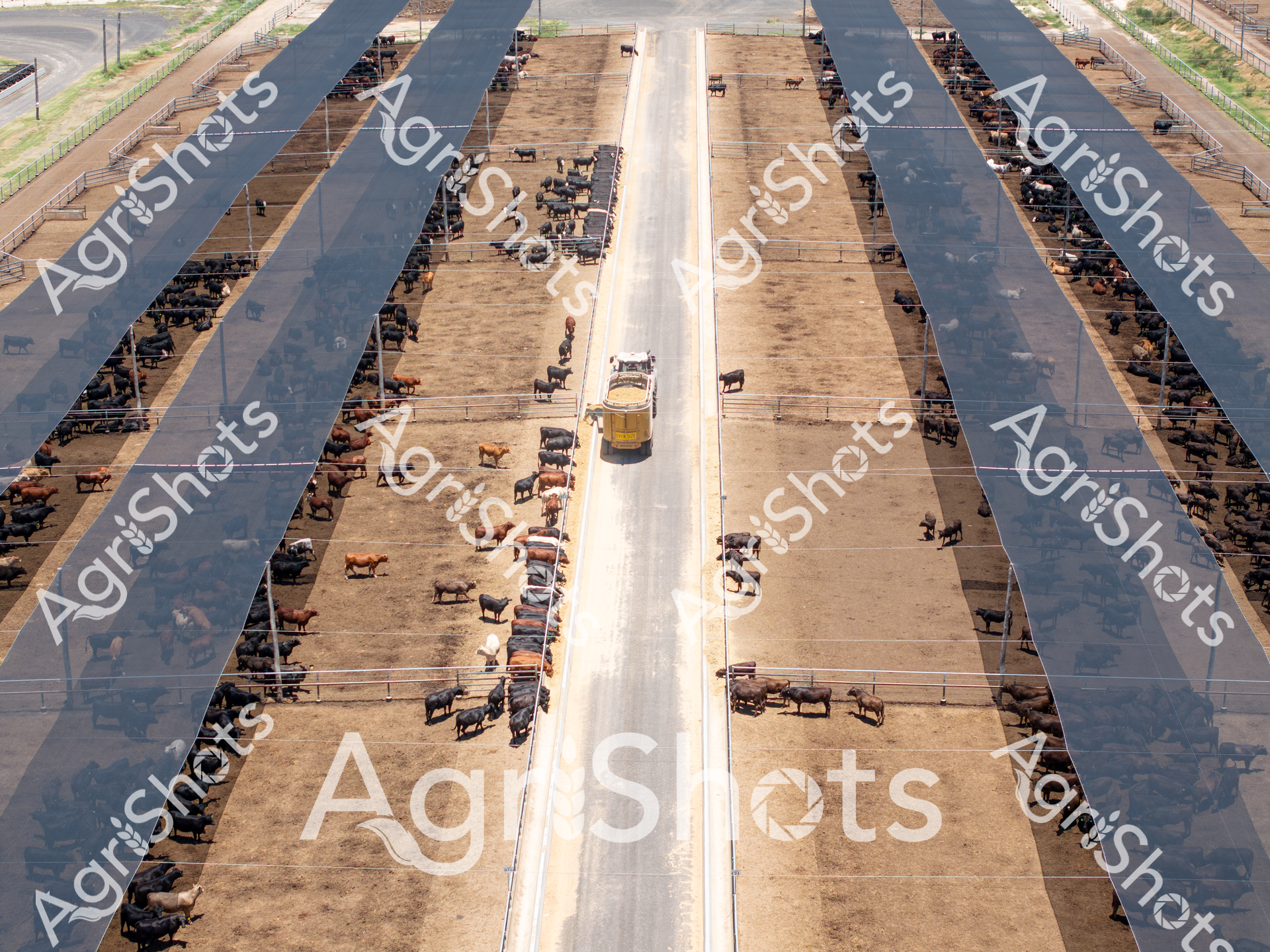
Aerial panorama of a meticulously organized cattle feedlot in Queensland's Goondiwindi region, revealing the precision of modern agricultural livestock management. Rows of black and brown cattle populate carefully partitioned feeding pens, separated by a central concrete lane where a yellow feed truck methodically distributes nutrition. The expansive facility demonstrates industrial-scale beef production, with disciplined pen layouts bounded by white fencing and strategically positioned shade sails providing respite from the intense summer heat. Dusty earthen surfaces contrast with the crisp white infrastructure, creating a geometric landscape of agricultural efficiency where each animal has designated space for feeding and movement. The birds-eye perspective captures the scale and systematic approach of contemporary cattle farming, highlighting how technological and design innovations optimize livestock care and meat production in the Australian agricultural sector.
 Image
Image
Black Angus cattle stand shoulder-to-shoulder in a meticulously organized feed bunker, their sleek dark hides gleaming under the harsh Queensland summer sunlight. Yellow ear tags identify each animal, marking them as part of a carefully managed herd in the Goondiwindi region's intensive livestock operation. The concrete feed trough stretches uniformly, filled with golden, freshly distributed hay that provides a stark contrast against the deep black coats of the cattle. Sturdy blue-gray metal feeding barriers control the animals' positioning, ensuring efficient and orderly access to nutrition. Each beast is positioned with precision, heads lowered in synchronized feeding, demonstrating the sophisticated agricultural practices of modern Australian beef production. The image captures the industrial efficiency of contemporary cattle farming - a testament to Queensland's significant role in Australia's livestock industry, where scientific management meets agricultural tradition.
 Image
Image
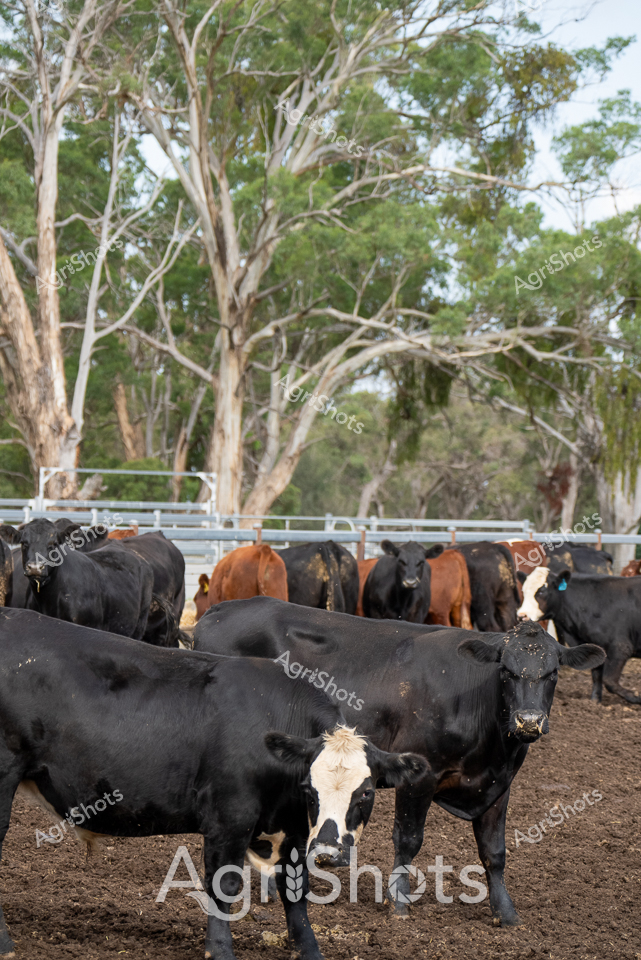
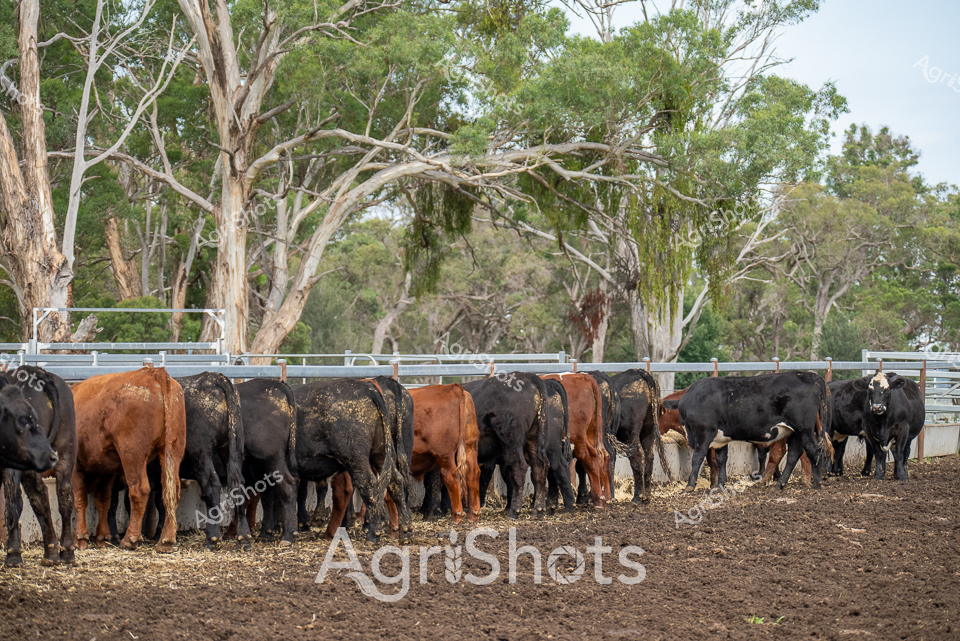
Black Angus and red-coated cattle cluster in a dusty feedlot, surrounded by towering eucalyptus trees characteristic of New England's high country in New South Wales. The late summer landscape reveals weathered white post-and-rail fencing and bare tree branches, creating a stark backdrop for the robust herd. Predominantly black cattle with a few rust-colored individuals stand closely packed on compacted earth, suggesting they are in a carefully managed feeding area. The mix of breeds indicates strategic cattle management, with the black Angus representing premium beef genetics typical of Australian agricultural practices. Soft filtered light filters through the sparse tree canopy, casting dappled shadows across the yard and highlighting the muscular forms of the livestock. The scene captures the resilience of Australian cattle farming - a delicate balance of animal husbandry, environmental adaptation, and agricultural expertise set against the rugged beauty of the rural landscape.
 Image
Image
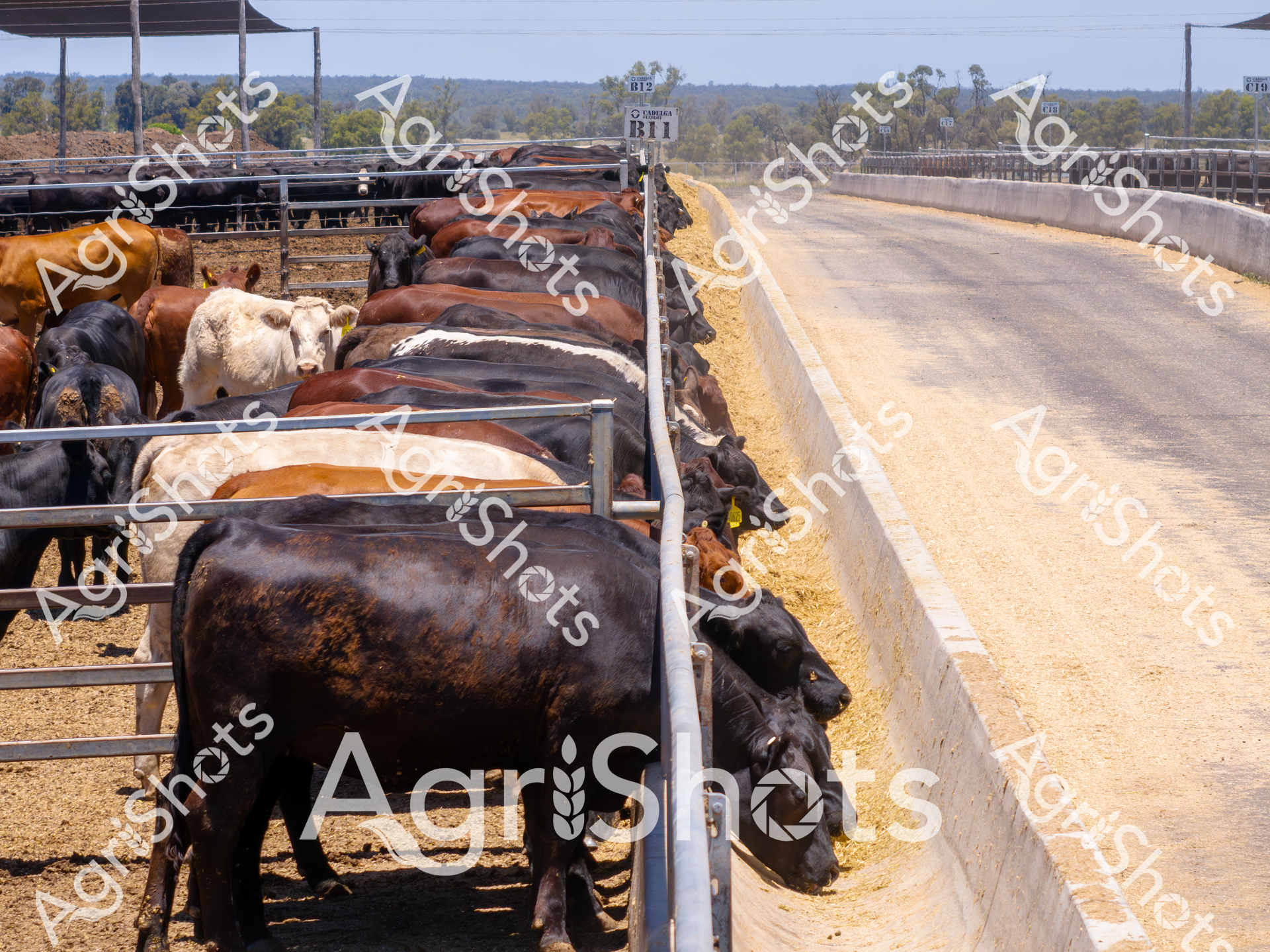
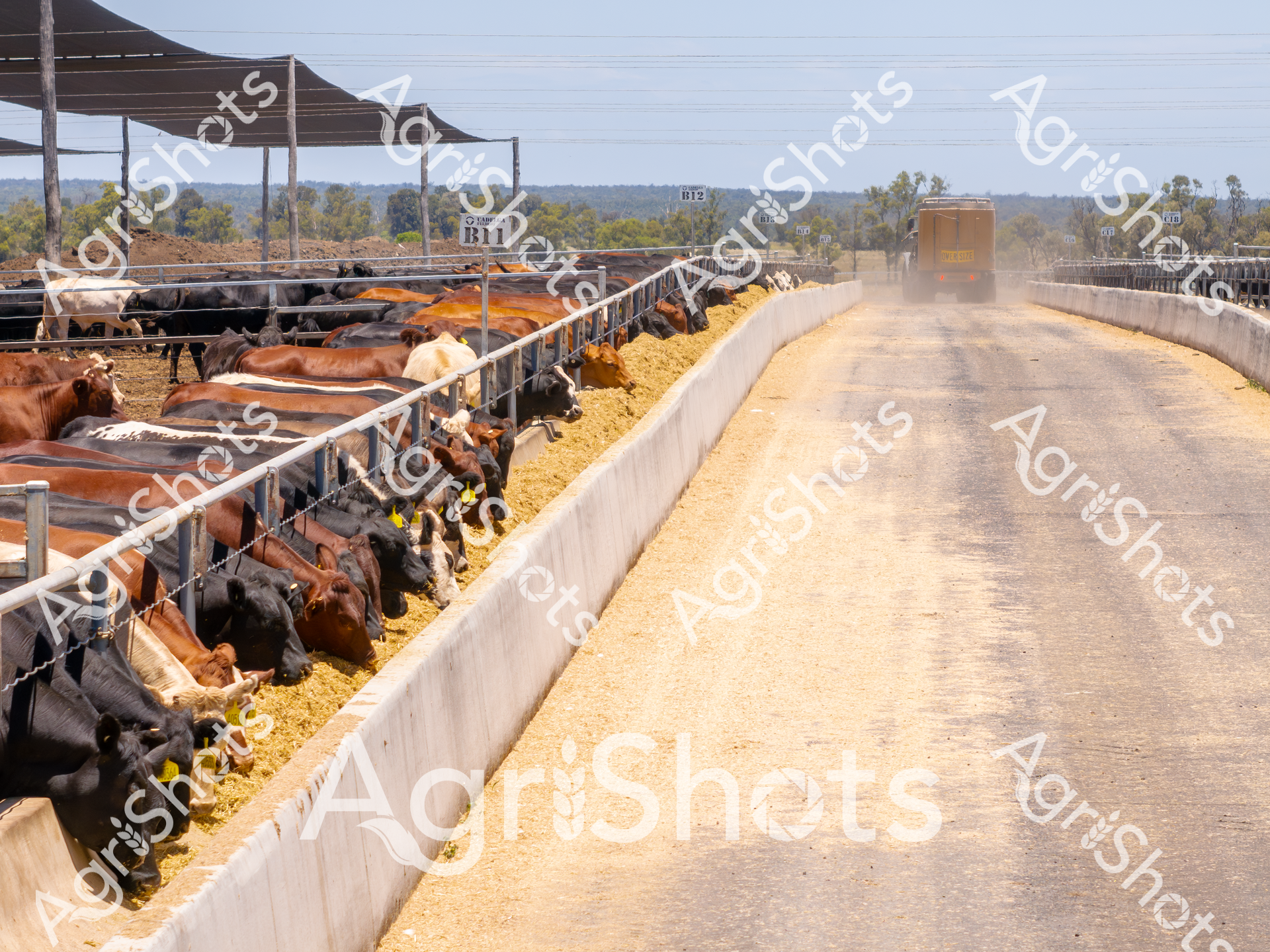
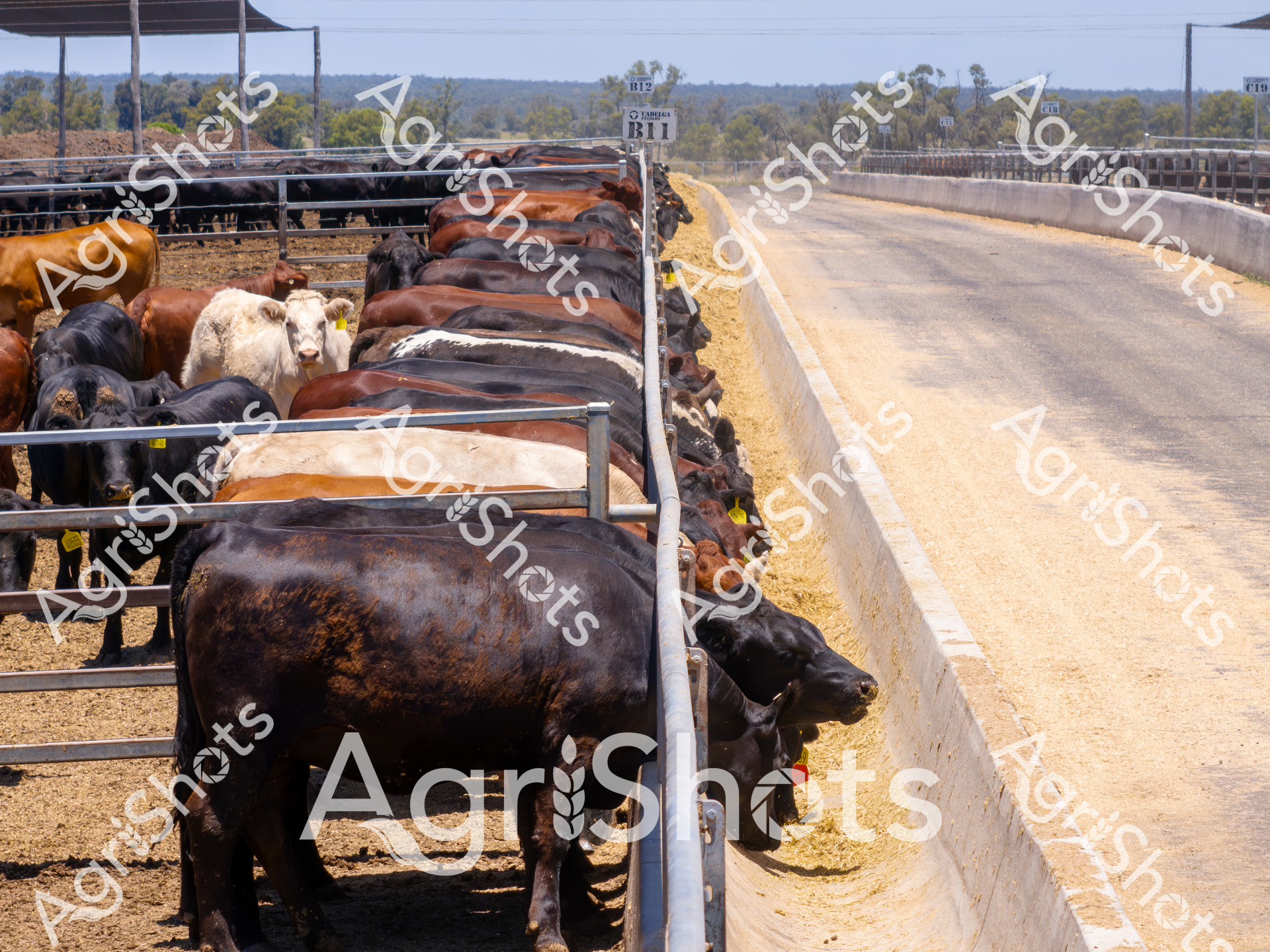
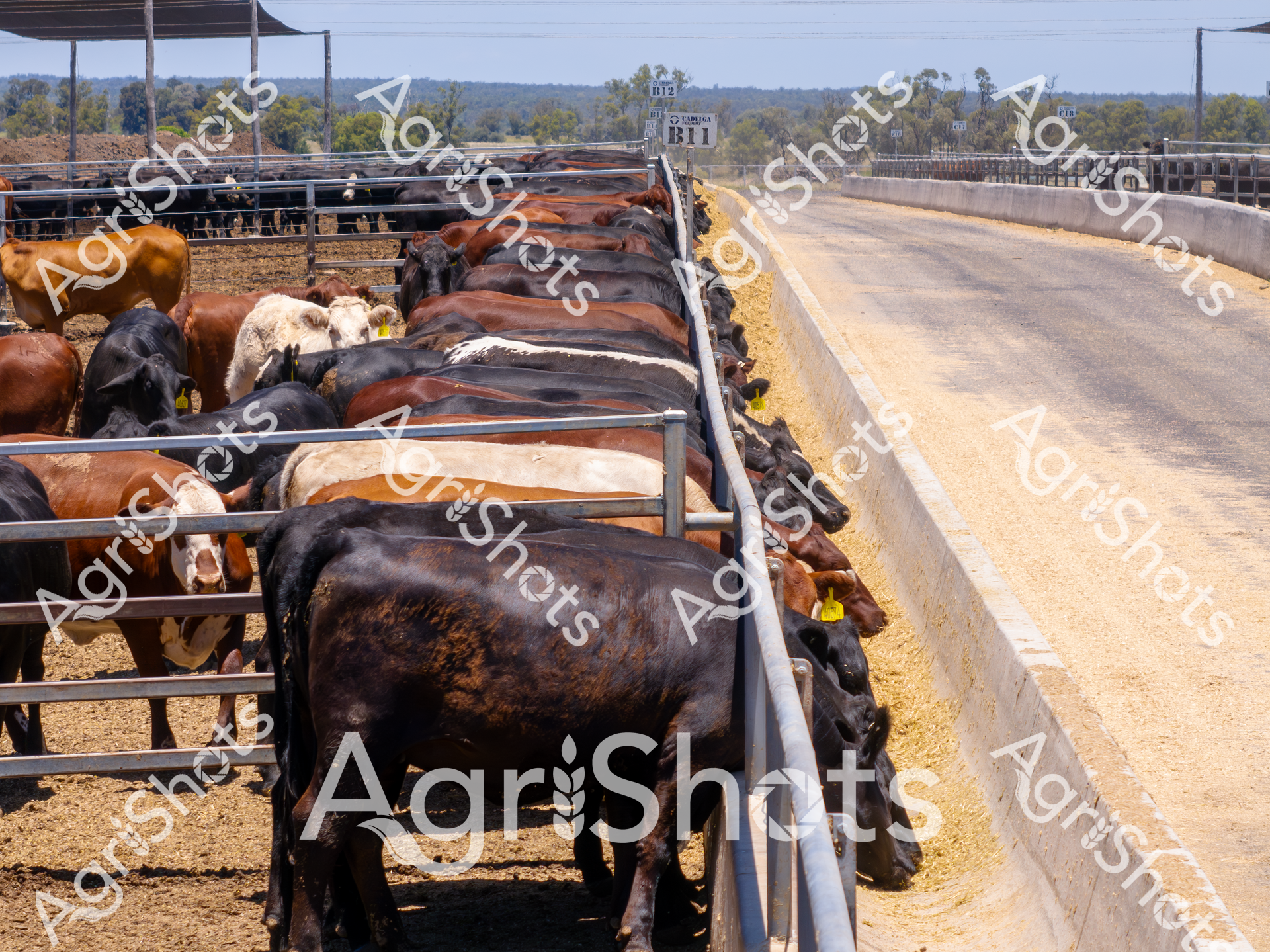
Robust beef cattle crowd a concrete feed bunker at a large Queensland feedlot, their rich palette of russet, charcoal, and cream hides gleaming under the harsh midday summer sunlight. Meticulously arranged in orderly rows beneath a slatted shade structure marked with "B11" signage, the animals lean intently into fresh golden straw feed, their muscular forms creating a living landscape of agricultural productivity. A dust-raising feed truck moves slowly along the adjacent concrete lane, suggesting an ongoing feeding operation in the Goondiwindi region's arid agricultural terrain. The structured concrete infrastructure, with its precise linear design, contrasts beautifully with the organic movement of the cattle and the distant eucalyptus-dotted horizon, embodying the calculated efficiency of modern Australian beef production. Yellowed straw, concrete gray, and the varied earth tones of the cattle create a textural composition that speaks to the precision and scale of contemporary livestock management. The scene pulses with a sense of methodical industry, capturing the strategic choreography of large-scale agricultural operations under the uncompromising Queensland sun.
 Image
Image
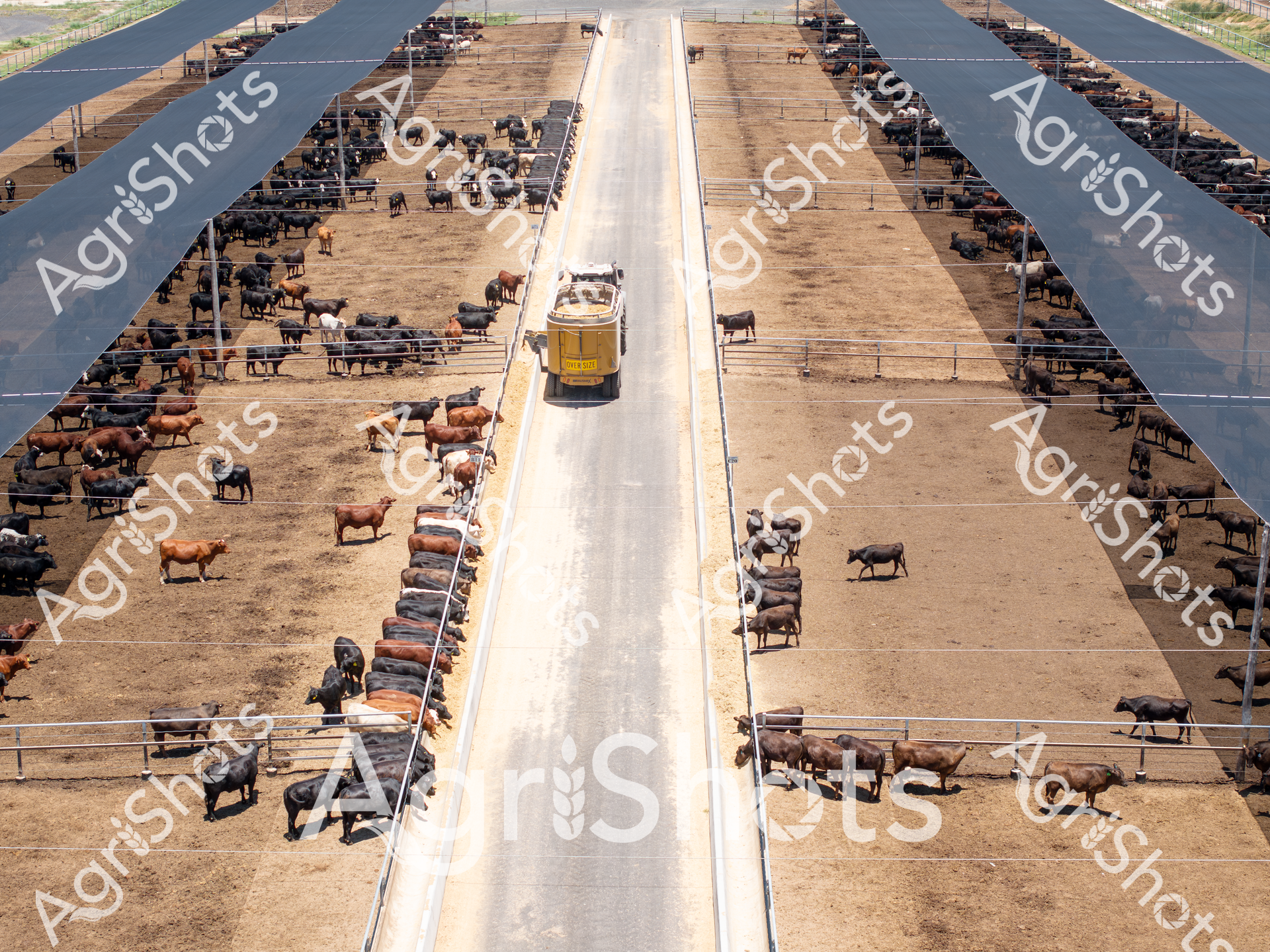
Brilliant aerial capture of a high-efficiency cattle feedlot in Queensland's agricultural heartland, showcasing precision livestock management. Rows of carefully penned cattle—a mix of black, brown, and red breeds—occupy meticulously organized dirt-floored enclosures divided by clean concrete lanes and sturdy metal fencing. A yellow feed distribution truck travels the central lane, delivering nutrition with systematic precision, while cattle cluster near feeding zones and rest areas under strategically positioned shade sails. The harsh summer landscape reveals a dusty, ochre-toned environment typical of Queensland's agricultural regions, with uniform pens demonstrating modern industrial-scale beef production techniques. Each paddock is strategically designed to optimize animal welfare, movement, and feeding efficiency, representing the sophisticated engineering behind contemporary Australian cattle farming. The overhead perspective reveals the geometric perfection of agricultural infrastructure, where every square meter is purposefully utilized to maximize livestock productivity in a challenging climate.
 Image
Image
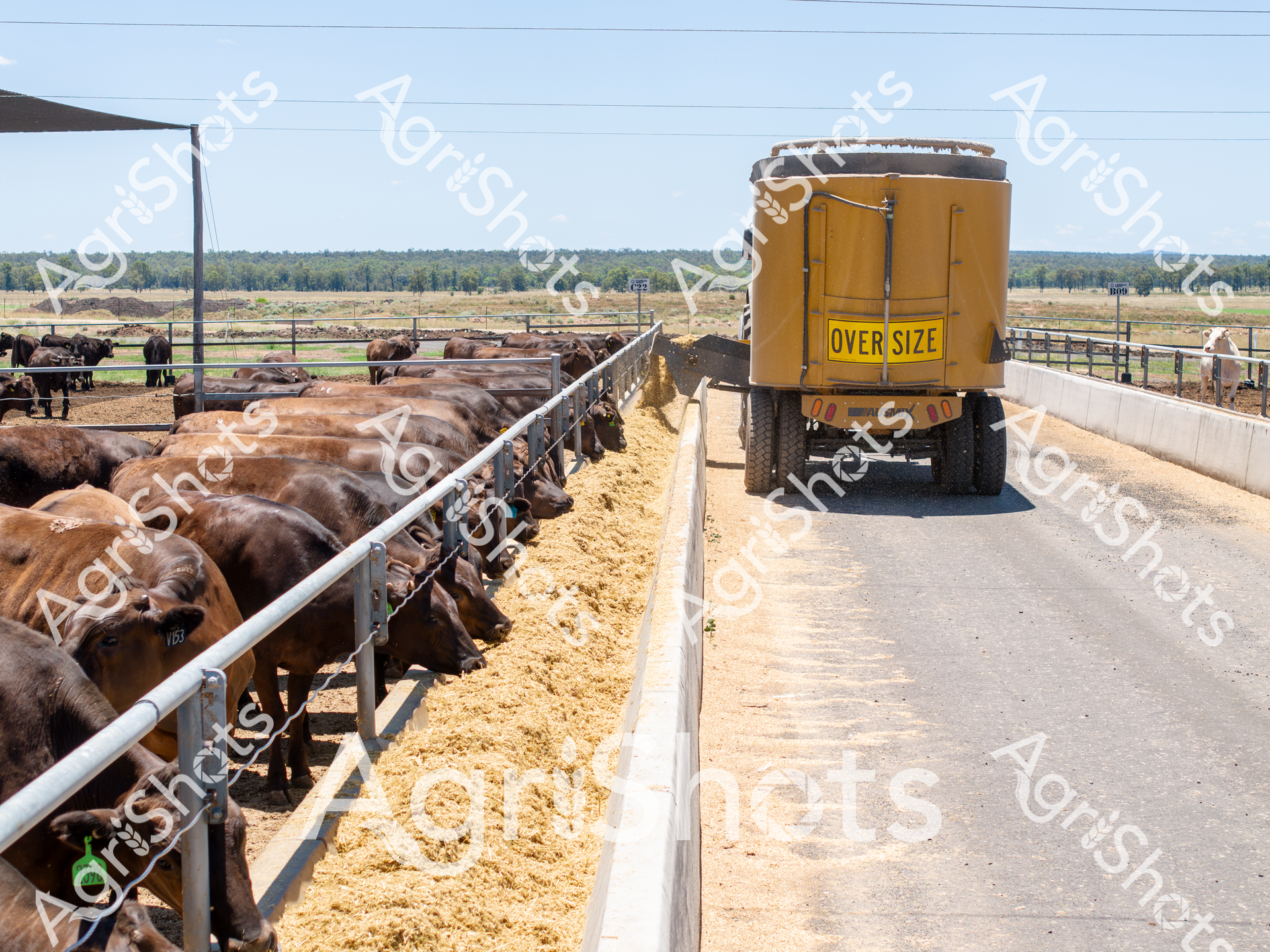
Burnished brown cattle line the gleaming concrete feed bunker, their muscular bodies pressed against steel railings under the harsh Queensland summer sun. A yellow oversized feed truck moves methodically along the bunker, distributing fresh golden straw feed in a precise line for the hungry livestock. The expansive feedlot stretches across the landscape, with neat paddocks and distant treelines creating a geometric agricultural vista typical of the Goondiwindi region. Neat metal infrastructure frames the scene - silver railings, yellow machinery, crisp white concrete - highlighting the precision of modern cattle management. The animals stand shoulder-to-shoulder, heads lowered to access the nutritious feed, representing the sophisticated beef production systems of Australian agriculture. Brilliant blue skies and the dry, dusty environment capture the challenging climatic conditions of Queensland's agricultural heartland, where advanced farming techniques transform harsh landscapes into productive livestock enterprises.
 Image
Image
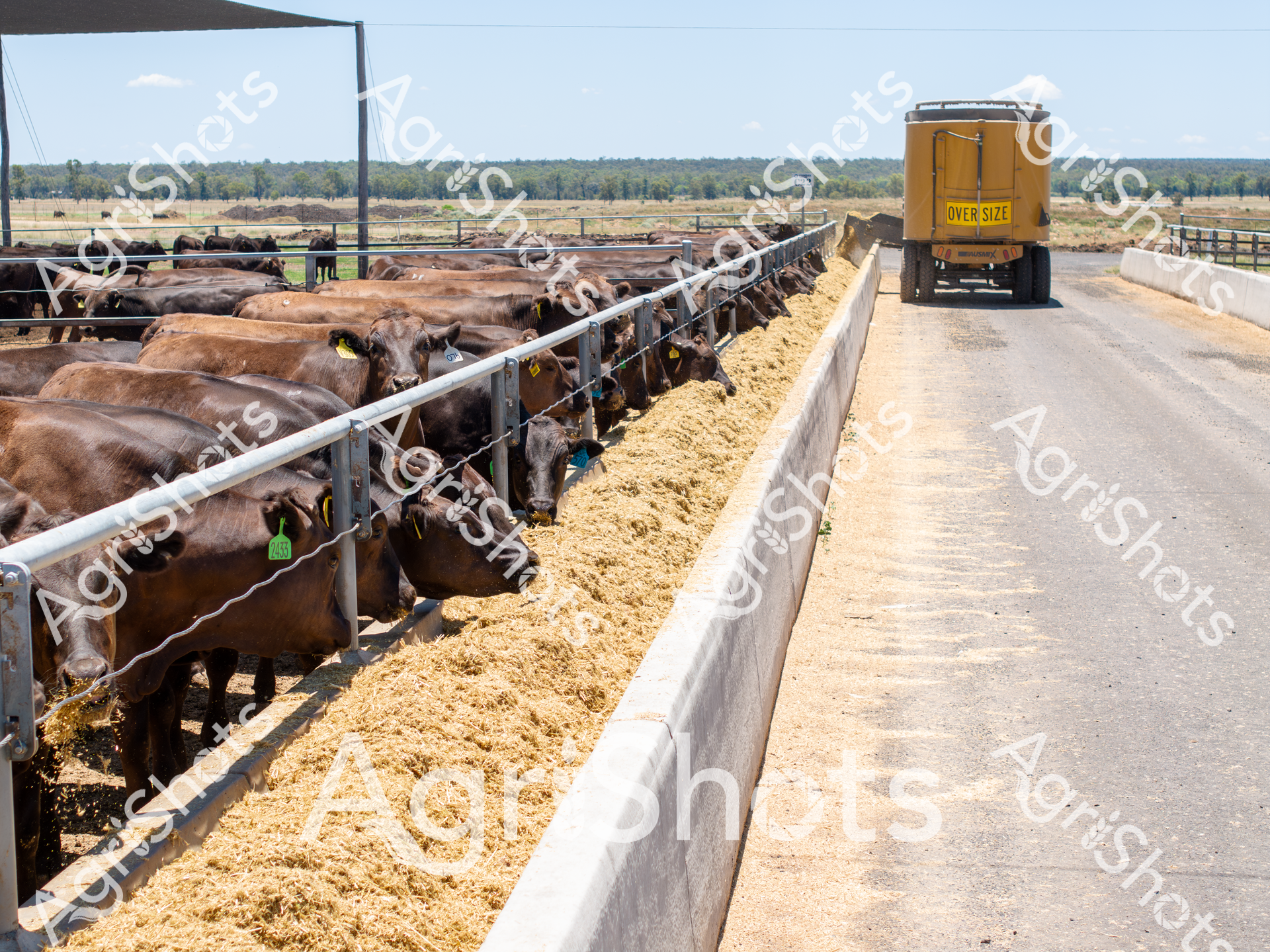
Beneath the vast Queensland sky, a meticulously managed feedlot stretches across the golden landscape near Goondiwindi. A long concrete feed bunker runs parallel to a sturdy steel feeding rail, where a line of robust beef cattle—predominantly dark brown to reddish-brown in color—stand shoulder-to-shoulder, their heads lowered to consume a fresh spread of golden hay. A yellow "OVER SIZE" transport trailer sits to the right, suggesting the ongoing logistics of cattle management and feed distribution. The cattle wear small green ear tags, indicating careful herd tracking and individual identification. In the background, a sparse woodland frames the horizon, highlighting the expansive nature of Australian cattle farming. The harsh summer sunlight casts sharp shadows, emphasizing the structured efficiency of modern agricultural practices, where precision and systematic approach define the rhythms of livestock management.
 Image
Image
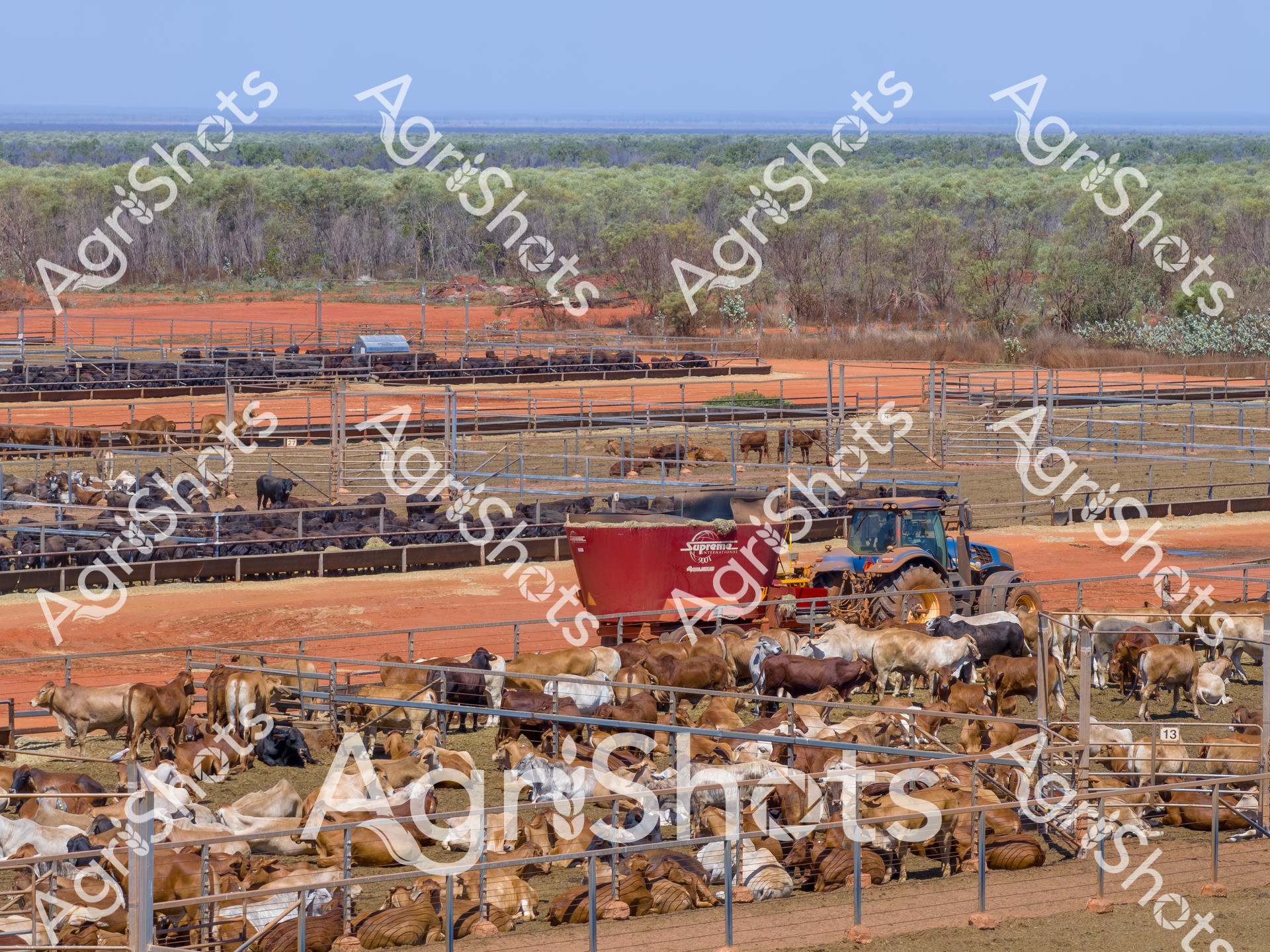
Burnished red earth and steel cattle yards stretch across the rugged Kimberley landscape, where a blue New Holland tractor with a massive red feed mixer prepares to distribute nutrition to a diverse herd of cattle. Brahman-cross and other beef breeds crowd the carefully designed export preparation paddocks, their varied coat colors ranging from rich chocolate brown to cream and black - a testament to the genetic diversity of northern Australian cattle stations. The expansive yard, with its geometric steel railings and strategic feed bunker, represents the precision of modern pastoral management against a backdrop of scrubby woodland and distant horizons. A late morning spring light bathes the scene, highlighting the dusty ochre ground and the muscular bodies of cattle clustered expectantly around the feeding zone. This snapshot of agricultural infrastructure captures the scale and sophistication of Western Australia's beef production, where decades of breeding and management expertise converge in a single, efficient moment of pastoral care.
 Image
Image
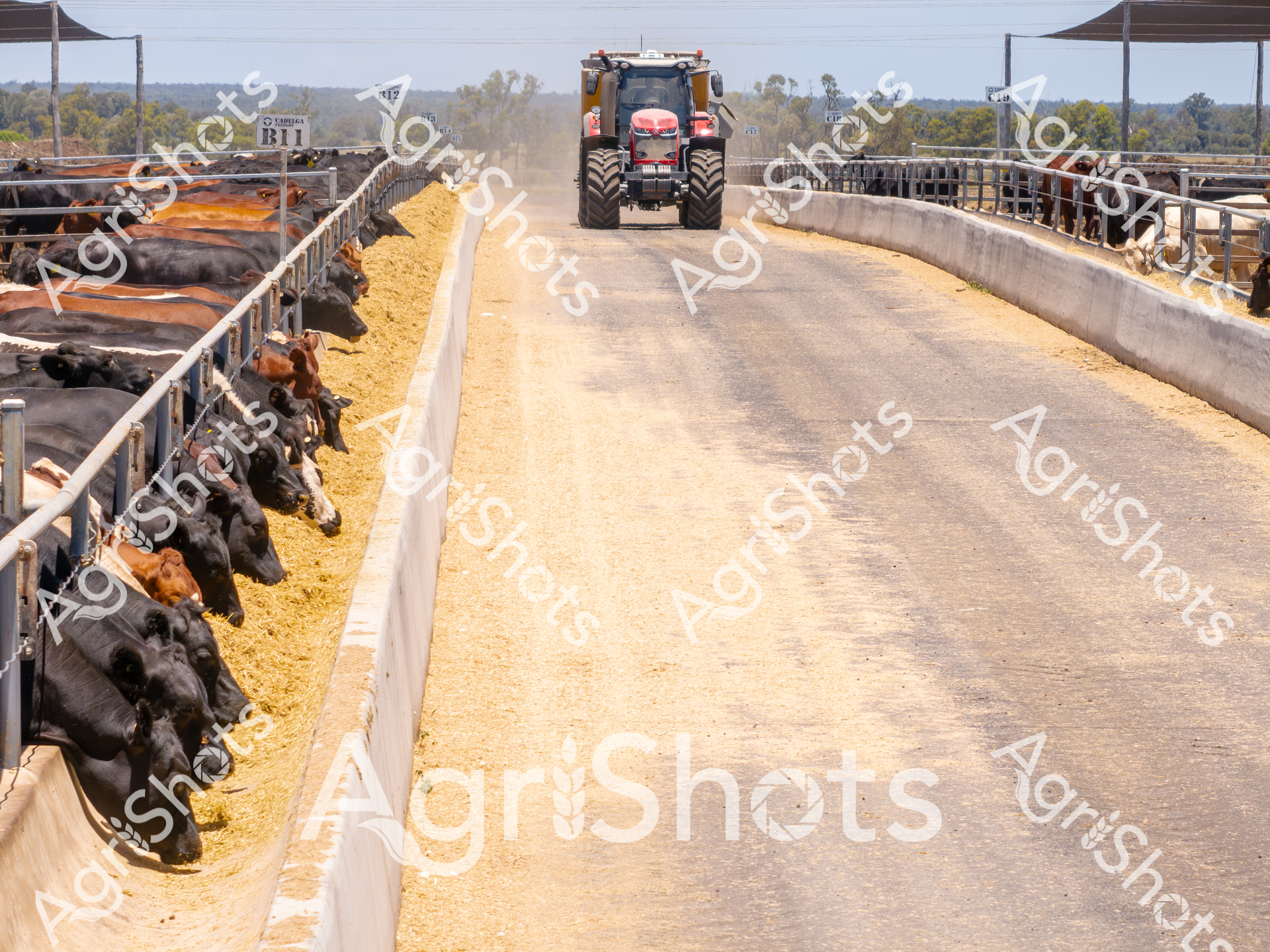
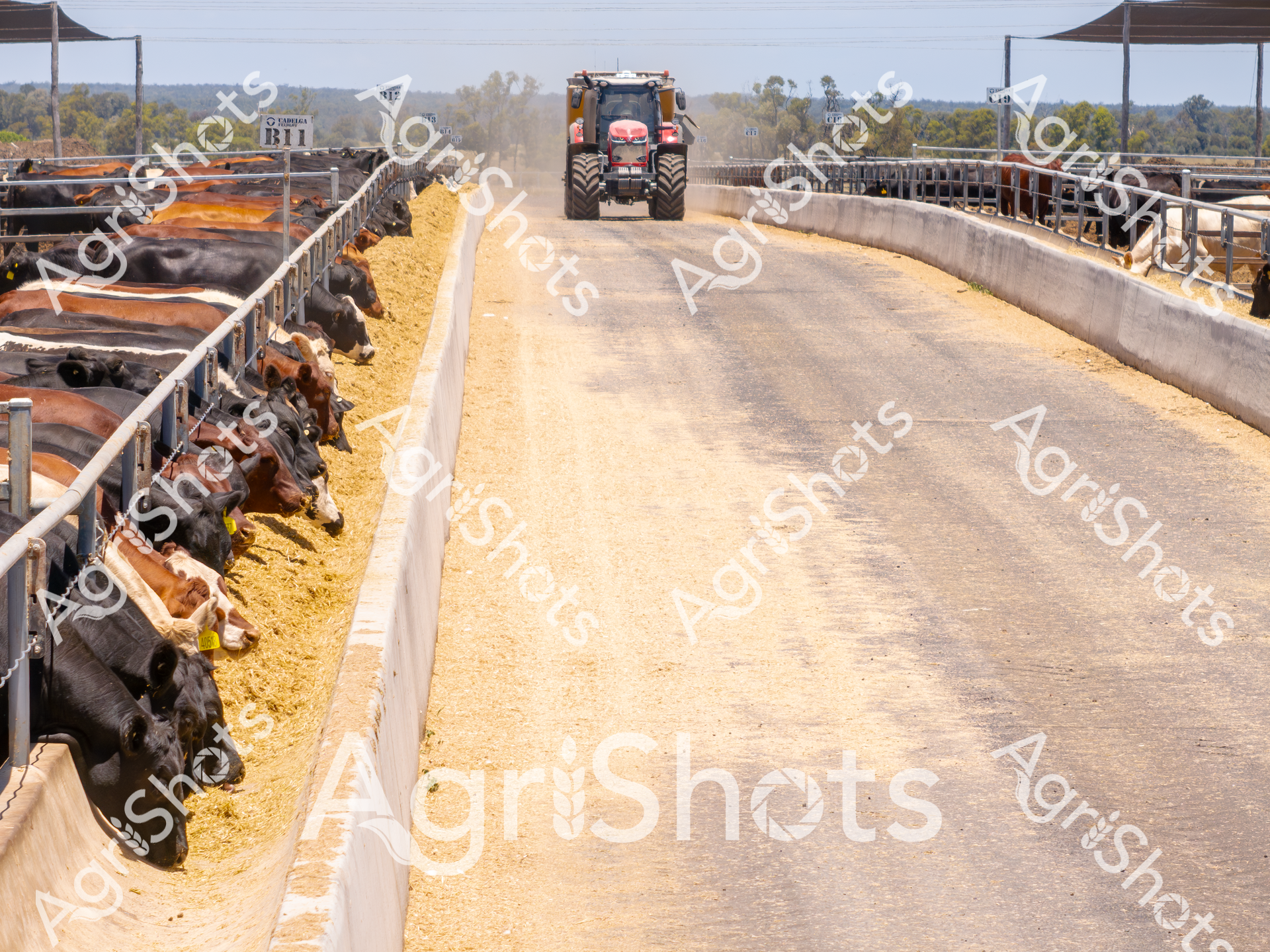
Sleek black and rich russet cattle crowd the feed bunker, their heads bowed in unison over a golden carpet of mixed grain and silage. A robust red and grey tractor traverses the central concrete lane, distributing feed with mechanical precision across the expansive feedlot. The Goondiwindi region's summer landscape stretches behind the infrastructure, with dusty trees and a washed-out horizon suggesting intense Queensland heat. Overhead shade structures provide critical respite for the livestock, their angular frames casting sharp shadows across the carefully engineered feeding system. The dense concentration of cattle reveals a professional, high-efficiency agricultural operation, where animal nutrition and management are executed with scientific methodology. Muscular cattle, predominantly black Angus with a few reddish variants, stand shoulder-to-shoulder, embodying the strategic approach of modern Australian beef production - a testament to agricultural innovation in challenging environmental conditions.
 Image
Image
Sleek black and rich brown cattle line the concrete feed bunker, their heads bowed in synchronized feeding amid a golden spread of grain. A robust red tractor moves methodically down the central concrete lane, kicking up a subtle dust trail under the harsh Queensland summer light. The expansive feedlot stretches towards a distant treeline, with shade structures offering respite from the intense heat, highlighting the precision of modern Australian cattle production. Large yellow ear tags mark each animal, signaling careful livestock management in this Goondiwindi region operation. The scene captures the disciplined rhythm of agricultural infrastructure - concrete channels, uniform feed distribution, and mechanical efficiency working in concert to support high-yield cattle farming. Dusty earth tones, the metallic red of the tractor, and the sleek black and brown of the cattle create a compelling visual narrative of contemporary agricultural practice in rural Queensland.
 Image
Image
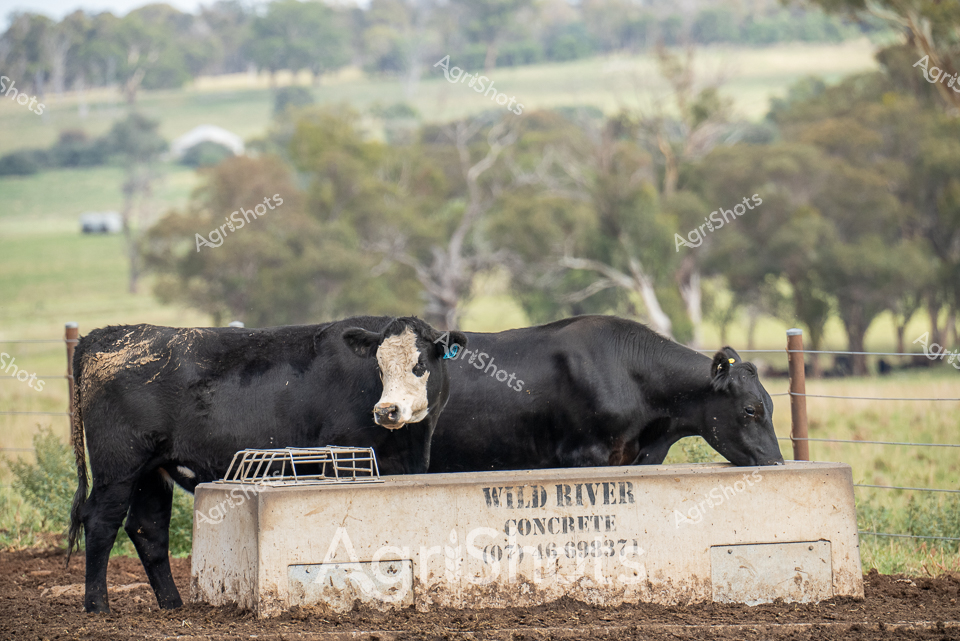
Black Angus cattle stand beside a concrete feed bunker at a Wild River Concrete installation in the lush New England region of New South Wales. Two robust bovines - one with a distinctive white-faced marking - pause near the sturdy feeding infrastructure, surrounded by the soft greens and muted earth tones of a classic Australian pastoral landscape. Mature eucalyptus trees frame the background, suggesting late summer or early autumn, with gently rolling pastures stretching toward distant treelines. The weathered concrete trough, marked with the manufacturer's details, represents the practical agricultural engineering that supports modern livestock management. The cattle appear calm and well-conditioned, their sleek black coats contrasting against the neutral concrete and verdant paddock, embodying the resilience and productivity of Australian beef production. This scene captures the quiet efficiency of rural agricultural systems, where functional design meets the natural rhythms of livestock farming.
 Image
Image
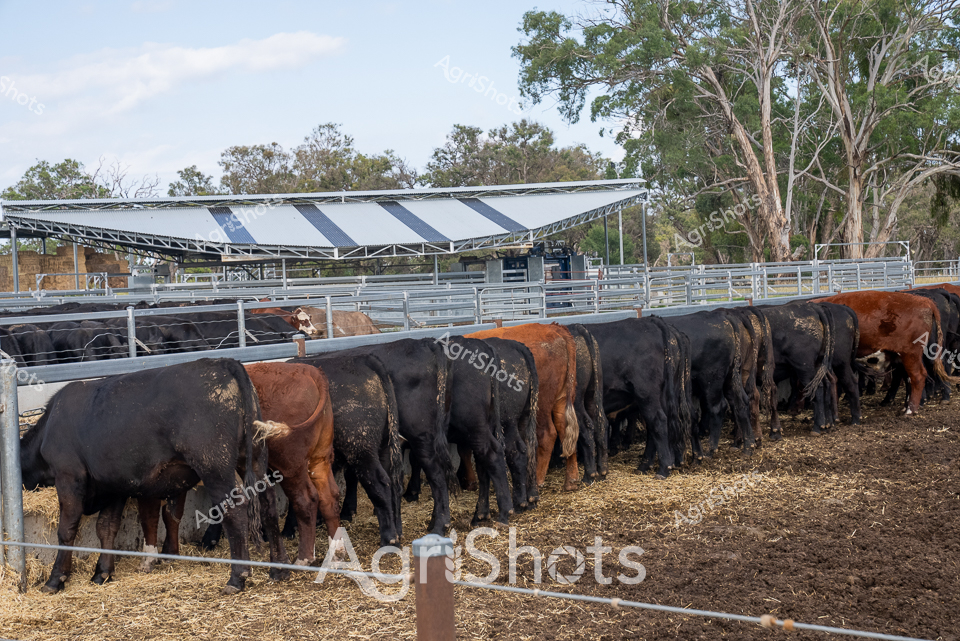
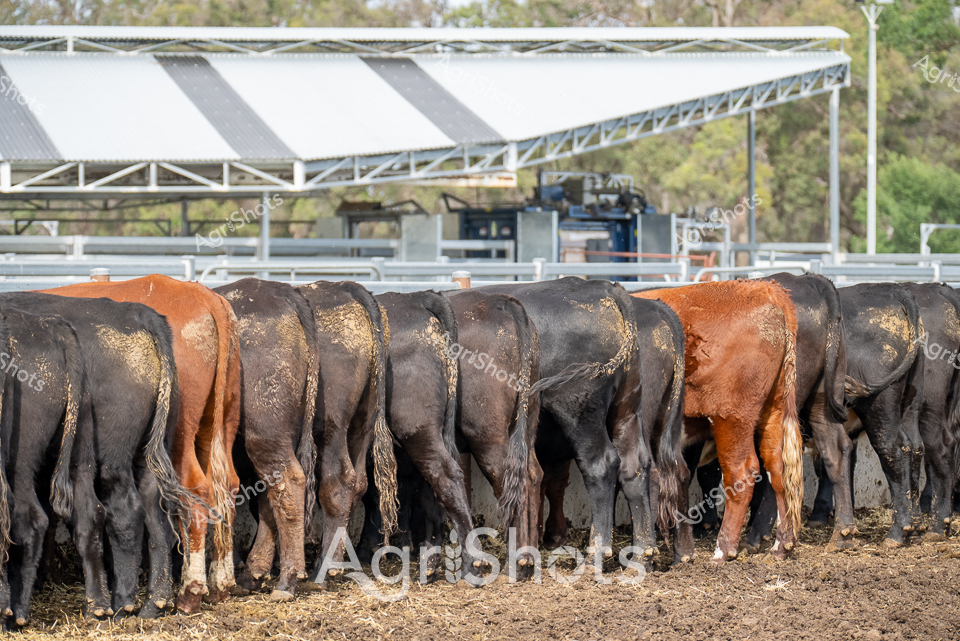
Muscled black and copper-hued cattle stand shoulder-to-shoulder at a modern steel feed bunker, their broad rumps aligned in perfect parallel. The late summer landscape of New South Wales' New England region unfolds behind them, with native trees softening the industrial agricultural backdrop. Precise metal infrastructure - an overhead shade structure with crisp white and grey paneling - provides climate protection for the livestock, reflecting sophisticated cattle management practices. Each animal's coat gleams with a subtle sheen of dust and perspiration, their powerful hindquarters suggesting premium beef genetics bred for Australian pastoral conditions. The feed bunker's clean lines and the uniform positioning of the cattle demonstrate the systematic efficiency of contemporary feedlot operations, where nutrition and animal welfare converge. Warm earth tones of russet and charcoal dominate the scene, capturing the resilient beauty of Australian agricultural production.
 Image
Image
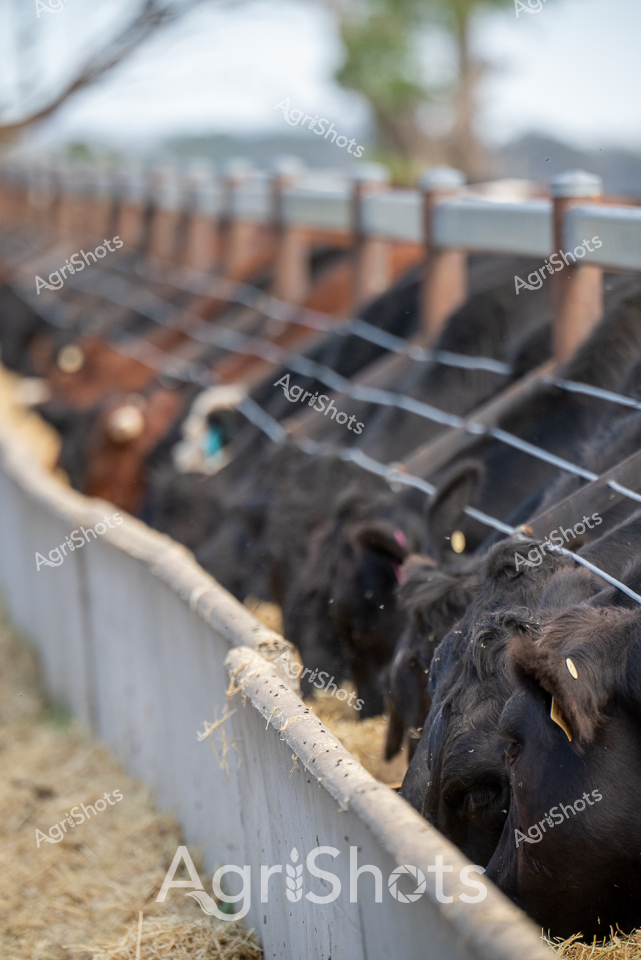
Black Angus cattle stand shoulder-to-shoulder along a pristine concrete feed bunker, their deep ebony coats gleaming in soft afternoon light. The tight row of muscular animals represents the precision of modern cattle management, with each beast fitted with a distinctive yellow ear tag for identification. Straw bedding lines the yard, providing texture and comfort beneath their hooves, while a wire fence and structural supports create geometric lines in the background. The New England region's characteristic landscape hints at the scene - rolling hills and scattered trees visible beyond the feedlot, suggesting the late summer or early autumn season when pastures transition and livestock are carefully managed for optimal nutrition. These carefully bred Angus represent the pinnacle of Australian beef production, their uniform stance and robust physiques a testament to meticulous agricultural husbandry. The crisp, ordered environment speaks to the sophisticated approach of contemporary livestock management, where animal welfare and production efficiency converge in a carefully orchestrated agricultural ballet.
 Image
Image
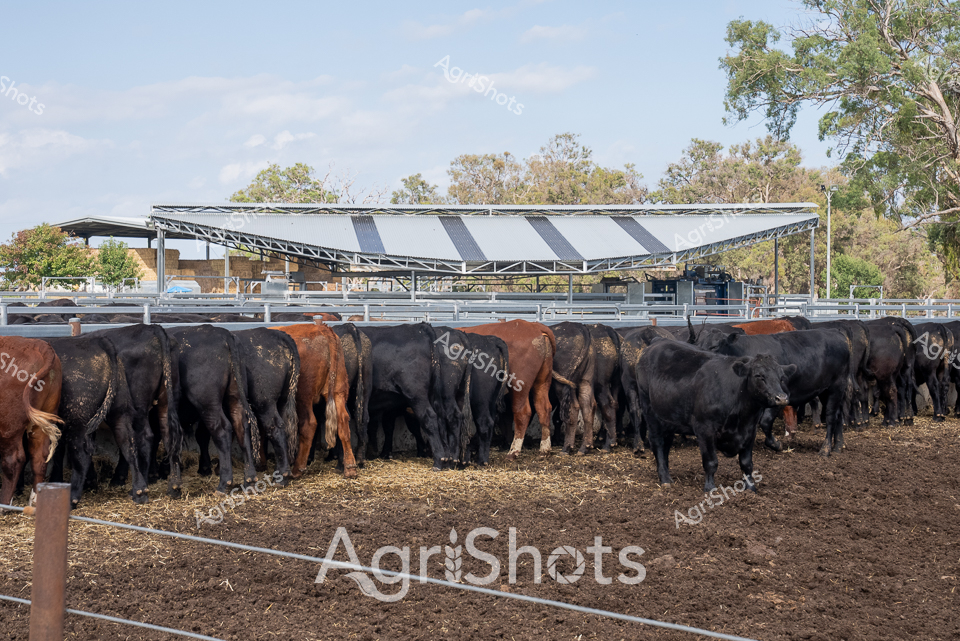
Black and roan-colored beef cattle crowd together in a meticulously designed feedlot, their muscular bodies creating a dense mosaic of agricultural productivity. The expansive metal-roofed shelter provides critical shade and protection, typical of sophisticated livestock management in New South Wales' New England region. Rich golden straw covers the ground, creating a textural contrast with the dark, well-compacted soil of the feeding area, while a sophisticated feed bunker runs along the enclosure, ensuring consistent nutrition for the herd. Mature eucalyptus trees frame the background, casting dappled light across the scene and highlighting the sophisticated infrastructure of modern Australian cattle farming. The cattle stand closely packed, their varied coat colors - deep blacks interspersed with rich mahogany browns - showcasing the genetic diversity of a carefully managed breeding program. This image captures the essence of Australian agricultural excellence: precision, scale, and sophisticated animal husbandry techniques that represent world-leading livestock production standards.
 Image
Image
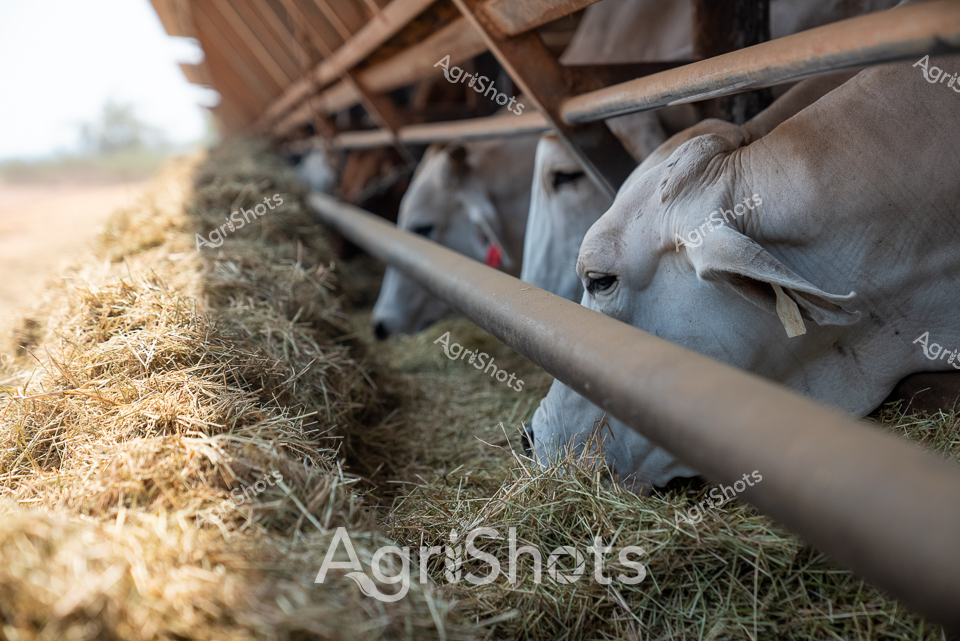
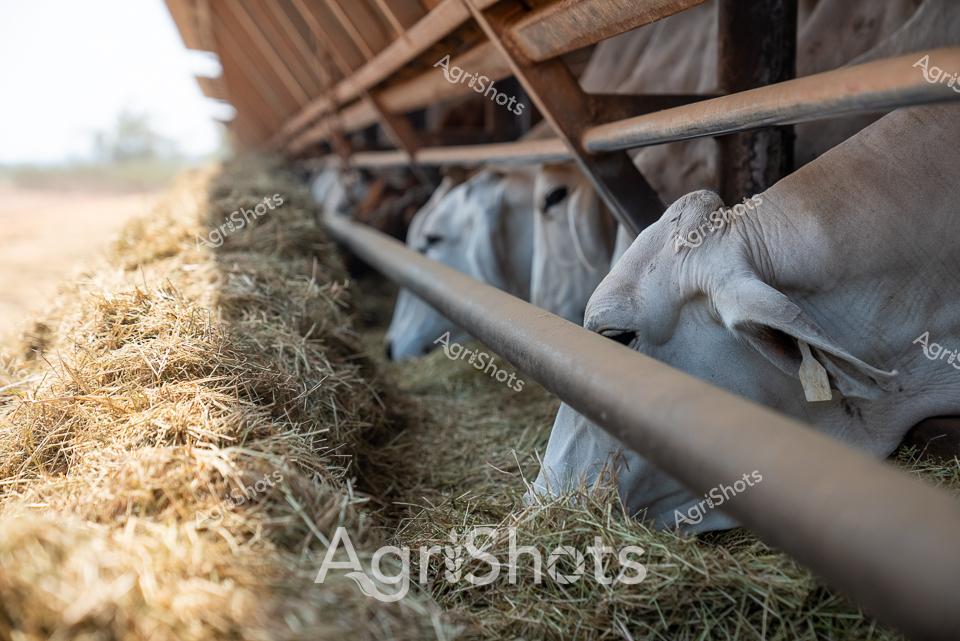
Brahman cattle stand tightly lined up along a feed bunker, their distinctive silvery-grey hides gleaming in the soft autumn light of the Northern Territory. Straw and green hay create a textured bedding beneath the animals, with a metal feeding trough running the length of their enclosure. These robust cattle, renowned for their heat tolerance and resilience, lean forward with focused intent, their muscular necks stretched toward the nutritious feed. The sturdy wooden and metal infrastructure of the feedlot frames the scene, suggesting a well-managed agricultural operation in the Adelaide River region. Pale morning light diffuses across the landscape, casting gentle shadows and highlighting the disciplined arrangement of these magnificent Brahman breed cattle. The image captures the precise, systematic nature of modern cattle farming - an intricate dance of animal husbandry, nutrition, and agricultural expertise.
 Image
Image
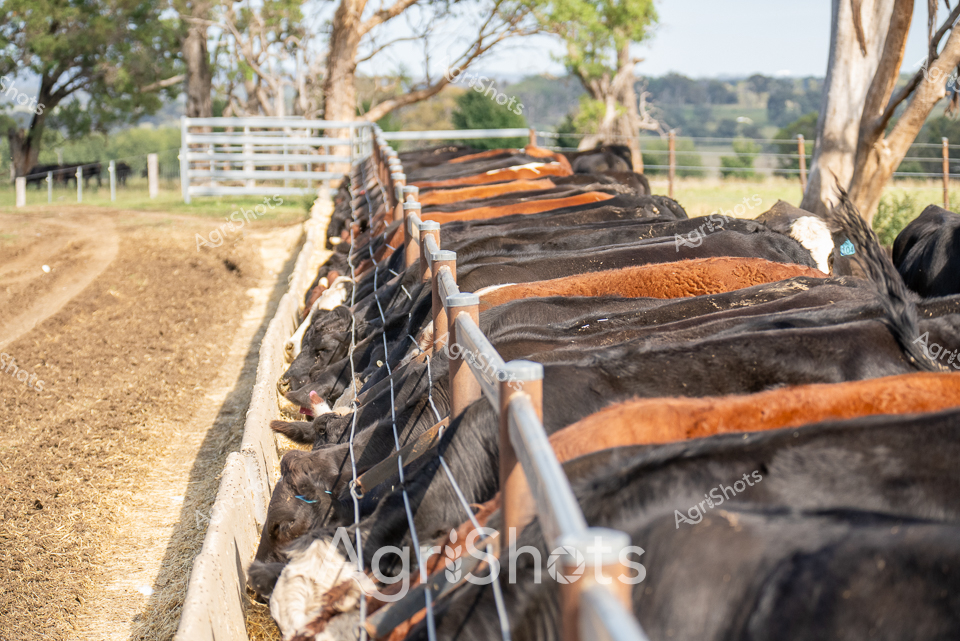
Black Angus and rich copper-toned cattle line a concrete feed bunker in a meticulously managed feedlot, their muscular bodies aligned precisely along the steel fence rails. Golden afternoon sunlight filters through eucalyptus trees, casting soft shadows across the dusty paddock and highlighting the sleek coats of these premium beef animals. The carefully arranged bovines represent modern Australian cattle production - efficient, structured, and focused on high-quality protein development in the New England region of New South Wales. Each animal stands positioned to access fresh feed, demonstrating the precision of contemporary agricultural practices where nutrition, animal welfare, and productivity intersect. The rustic rural landscape stretches beyond the feedlot, with white fence posts and distant treelines creating a quintessential Australian agricultural backdrop. This scene captures the sophisticated infrastructure of Australian beef production, where generations of farming expertise combine with advanced animal husbandry techniques to deliver world-class livestock management.
 Image
Image
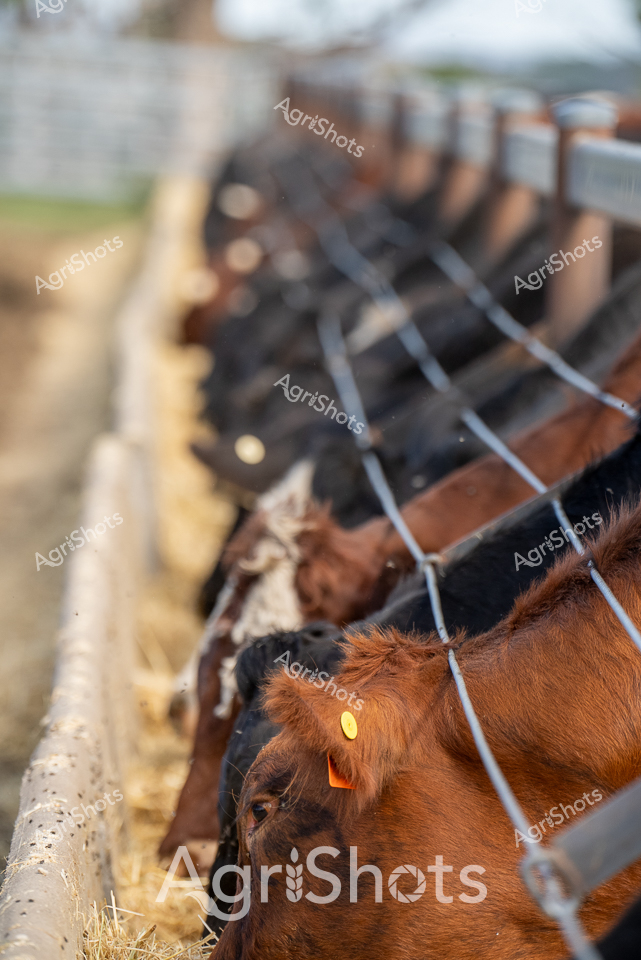
Burnished copper and deep chocolate hides of Angus and Hereford cattle line the concrete feed bunker, their heads lowered in synchronized feeding. Bright yellow ear tags punctuate their rich coats, identifying each animal in this meticulously organized feedlot. Wire mesh fencing creates sharp geometric lines against the soft russet and charcoal tones of the cattle, while straw bedding adds a golden texture to the foreground. The tight, uniform arrangement speaks to precision cattle management in the New England region of New South Wales, where summer or autumn light casts a soft, diffused glow across the feeding infrastructure. Each beast stands shoulder-to-shoulder, a testament to modern agricultural efficiency and carefully controlled nutrition strategies. The scene captures the quiet rhythm of livestock production - orderly, purposeful, and engineered for optimal growth and meat quality.
 Image
Image
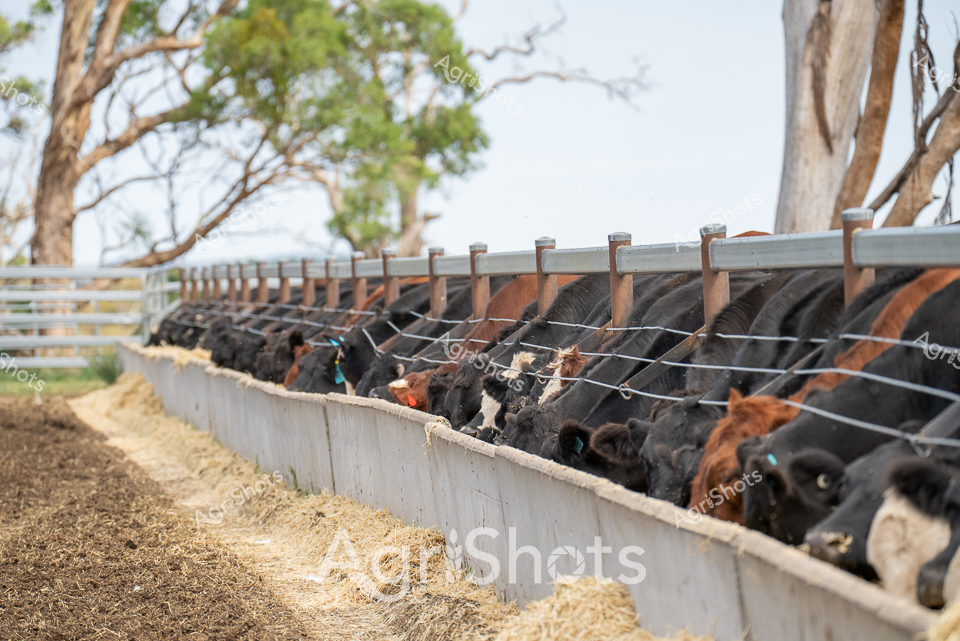
Angus and Hereford cattle line a concrete feed bunker, their sleek black and rich russet coats contrasting against the pale straw bedding and weathered gum trees. Tightly packed along the steel-railed feeding trough, the beef herd stands shoulder to shoulder, heads lowered to consume a carefully mixed total mixed ration (TMR) of silage and grain. The late summer light filters through sparse eucalyptus branches, casting soft shadows across the feedlot, highlighting the muscular frames of these prime livestock. Wire strands and vertical steel supports guide the animals' positioning, creating a regimented yet efficient feeding system typical of modern intensive cattle management in New England's agricultural landscape. Each animal bears a small ear tag, a subtle marker of careful stock management and traceability in Australian beef production. The scene epitomizes the precision and scale of contemporary pastoral agriculture - a testament to generations of breeding, nutrition science, and strategic livestock husbandry.
 Image
Image
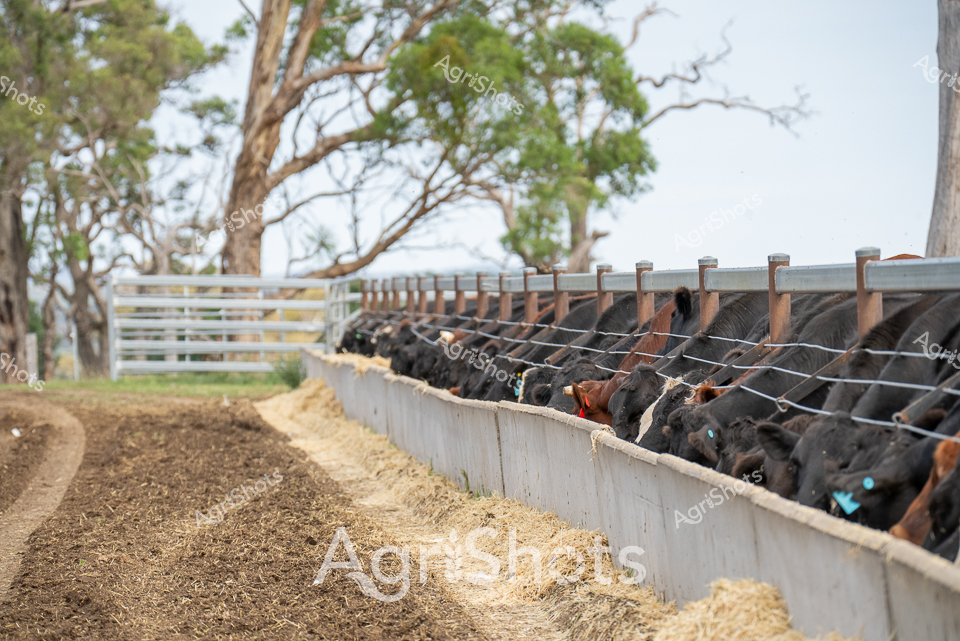
Black Angus and black baldy cattle line a concrete feed bunker in a pastoral New England landscape, their muscular frames pressed against sturdy steel railings. Crisp late summer light filters through mature eucalyptus trees, casting soft shadows across the dusty feedlot ground. Carefully arranged straw and feed create textural lines of golden yellow against the rich brown earth, while the cattle wear distinctive colored ear tags - bright blue and red markers identifying each animal in this meticulously managed agricultural setting. The cattle stand shoulder-to-shoulder, heads lowered to access their feed, representing the precision of modern beef production in rural New South Wales. Weathered gum trees in the background provide natural framing and a quintessential Australian agricultural backdrop, highlighting the intersection of natural landscape and systematic livestock management. This image captures the disciplined efficiency of contemporary cattle farming, where animal nutrition and systematic care are paramount to sustainable production.
 Image
Image
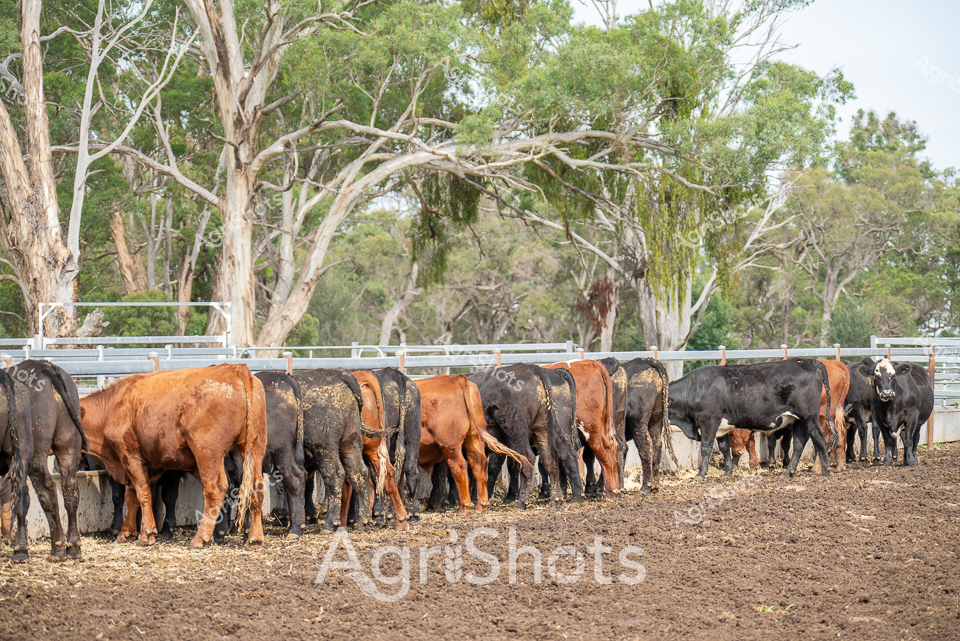
Muscled beef cattle line up at a feed bunker, their rich tapestry of colors ranging from deep charcoal to burnished copper and russet brown. Positioned in a classic New England Region feedlot, the animals stand flanked by weathered eucalyptus trees, their pale bark and twisting branches creating a quintessential Australian agricultural backdrop. The dry, packed earth beneath their hooves speaks to the summer season, with a dusty, compact surface typical of livestock management in regional New South Wales. Each animal stands purposefully, heads down at the feed barrier, showcasing the disciplined efficiency of modern cattle production. The mix of breeds - likely Angus, Hereford, and crossbred stock - demonstrates the genetic diversity of contemporary beef herds. Sturdy metal yards and feed infrastructure frame the scene, highlighting the industrial precision of contemporary agricultural practices. The soft filtered light suggests early morning, with soft shadows cast by the surrounding tree line. Hints of straw and feed mix create textural contrasts against the cattle's varied coat colors, capturing a moment of routine sustenance in the Australian cattle industry's rhythmic cycle.
 Image
Image
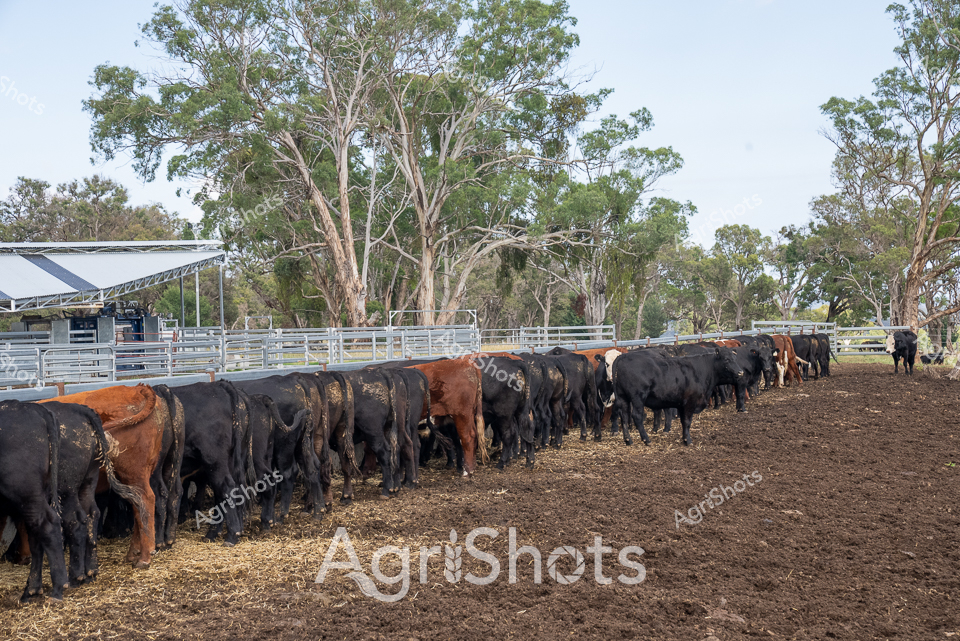
Sleek black and russet-brown beef cattle crowd together in a well-maintained feedlot nestled among silvery eucalyptus trees of the New England region in New South Wales. The hardpacked earth and straw bedding provide a structured feeding environment, with sturdy galvanized steel fencing and a sheltered feeding structure defining the precise agricultural space. Late summer or early autumn light filters through the sparse tree canopy, casting soft shadows across the carefully managed livestock paddock. Each animal stands shoulder-to-shoulder, representing a robust mix of Angus and perhaps crossbred cattle, their muscular frames and glossy coats indicating excellent nutrition and careful husbandry. The feedlot represents a pinnacle of modern agricultural management - a controlled environment where cattle are systematically prepared for market, balancing animal welfare with efficient production. The scene captures the quiet discipline of Australian cattle farming: strategic, pragmatic, and deeply connected to the landscape.
 Image
Image
In the scorching summer heat of Queensland's Goondiwindi region, a meticulously organized cattle feedlot stretches across the arid landscape. Rows of robust beef cattle - a mix of deep black, rich chocolate, and creamy white hides - stand shoulder to shoulder along a precisely engineered concrete feed bunker. Yellow ear tags punctuate the animals' coats, identifying each beast in this carefully managed agricultural operation. The cattle, predominantly dark-colored breeds suited to Australian conditions, feed methodically from a long trough of golden hay, their muscular bodies a testament to intensive livestock management. Overhead shade structures provide critical protection from the intense Queensland sun, while the surrounding landscape of muted greens and browns hints at the challenging agricultural environment. This image captures the precision and scale of modern beef production, where every element - from animal positioning to feed distribution - is calculated for maximum efficiency and livestock health.
 Image
Image
Muscled beef cattle cluster along a feed bunker, their glossy hides gleaming in rich tones of midnight black and burnished copper. The tight corral stands nestled among silvery eucalyptus trees, their twisted branches casting dappled shadows across the dusty paddock floor. Each animal stands shoulder-to-shoulder, focused intently on the scattered hay and feed, representing the robust cattle industry of New England's agricultural heartland in New South Wales. Summer's golden light filters through the sparse woodland, highlighting the powerful frames and varied coat colors of these carefully managed livestock. The steel yard fence and feed infrastructure speak to modern agricultural precision, while the surrounding landscape of weathered gums provides a quintessential Australian pastoral backdrop. These cattle - a mix of Angus and Santa Gertrudis breeds - embody the strength and productivity of regional farming, their muscular bodies a testament to careful breeding and expert nutrition management.
 Image
Image
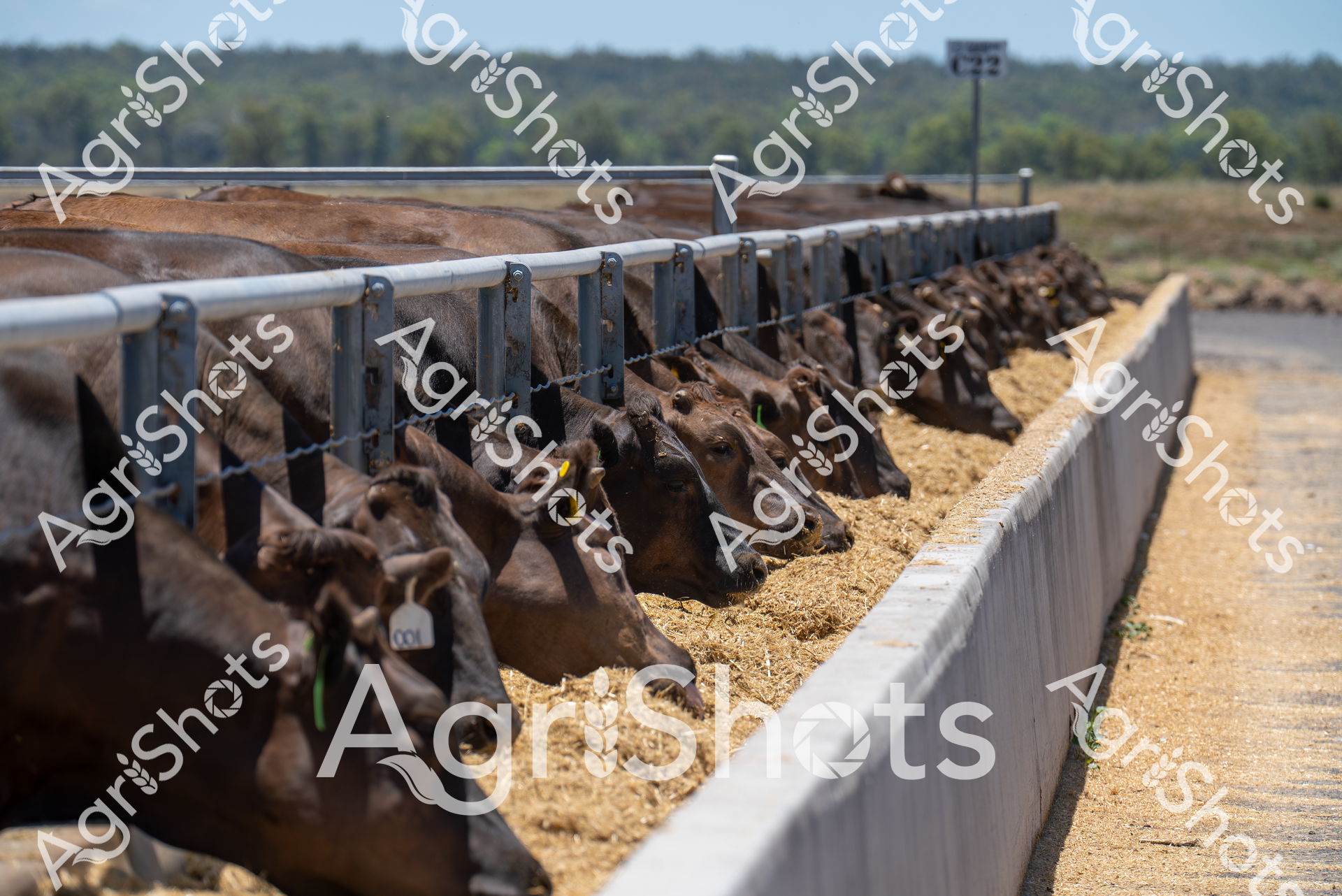
Burnished bronze bodies line the pristine concrete feed bunker, a row of premium Wagyu cattle anchored beneath gleaming steel railings. Nestled in the fertile landscapes near Goondiwindi, Queensland, this high-performance feedlot represents the pinnacle of Australian beef production during the intense summer months. Each animal sports a distinctive yellow ear tag, methodically positioned to consume a carefully formulated ration of golden straw and precision-mixed feed, their muscular frames reflecting years of strategic breeding and nutritional management. The crisp background reveals a verdant treeline, contrasting sharply with the pale concrete and sandy ground of the meticulously maintained feeding area. Overhead lighting casts clean shadows, highlighting the uniform alignment of these exceptional beef cattle and the sophisticated agricultural infrastructure that supports their growth. This image captures the intersection of modern agricultural science, animal husbandry, and the strategic approach that positions Australian beef as a global premium product.
 Image
Image
Muscular black and chestnut cattle stand tightly packed along a concrete feed bunker, their powerful frames testament to the precision of modern beef production. Stretched across a sun-drenched feedlot in Queensland's Goondiwindi region, the animals are meticulously arranged, each wearing a distinctive yellow ear tag, signaling careful herd management. The stark landscape reveals a panorama of dusty paddocks and distant eucalyptus trees, capturing the harsh beauty of Australian agricultural infrastructure. Straw-colored feed lines the concrete barrier, providing nutritional supplementation to these robust beef cattle, while overhead shade structures offer minimal respite from the intense summer heat. The systematic arrangement - with cattle lined up methodically alongside the linear feeding station - demonstrates the industrial scale and scientific approach of contemporary cattle farming. Yellow road signage in the background (marked "IB1") subtly reinforces the structured, systematic nature of this agricultural enterprise, where every element is precisely planned and executed.
 Image
Image
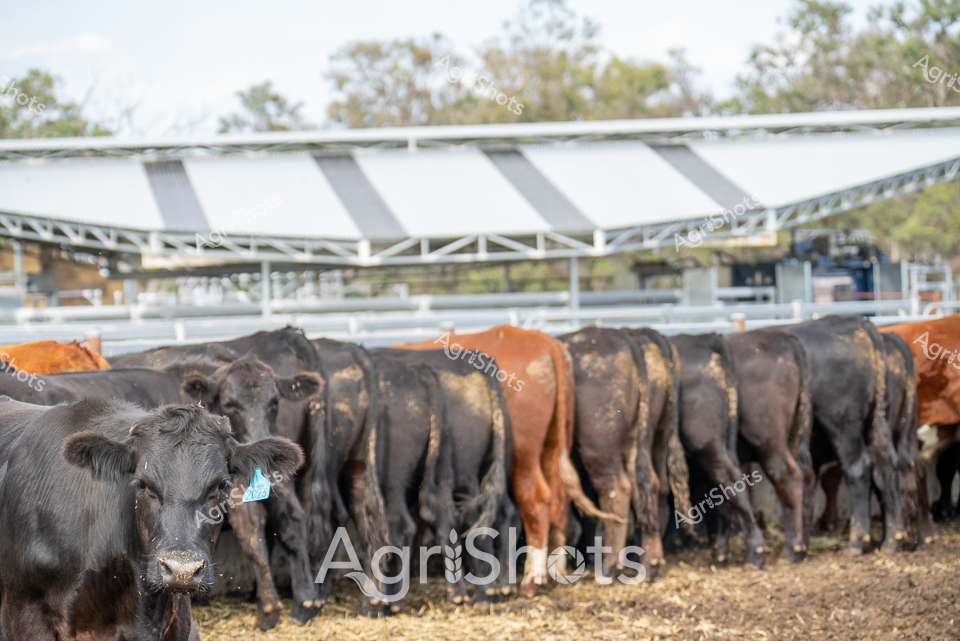
Angus and Santa Gertrudis cattle cluster tightly in a meticulously designed feedlot, their muscular frames packed closely beneath a sprawling industrial shade structure. Rich charcoal and warm russet-colored bovines stand shoulder-to-shoulder on trampled straw, representing premium beef genetics carefully managed for optimal growth and nutrition. The steel-framed shelter provides critical protection from the intense New England region summer heat, its white and grey panels casting strategic shadows across the feeding area. A striking blue ear tag adorns the nearest beast, signaling careful livestock management and individual animal tracking. The cattle's hide variations - from deep obsidian to burnished copper - reflect the genetic diversity within this professional agricultural operation. Sturdy white fencing and the precise linear architecture of the feed bunker underscore the systematic, scientific approach to modern beef production. The scene captures the intersection of agricultural engineering and animal husbandry, where precision infrastructure supports robust livestock development. Distant tree lines soften the industrial backdrop, reminding viewers of the harmonious relationship between controlled agricultural environments and natural landscapes in rural New South Wales.
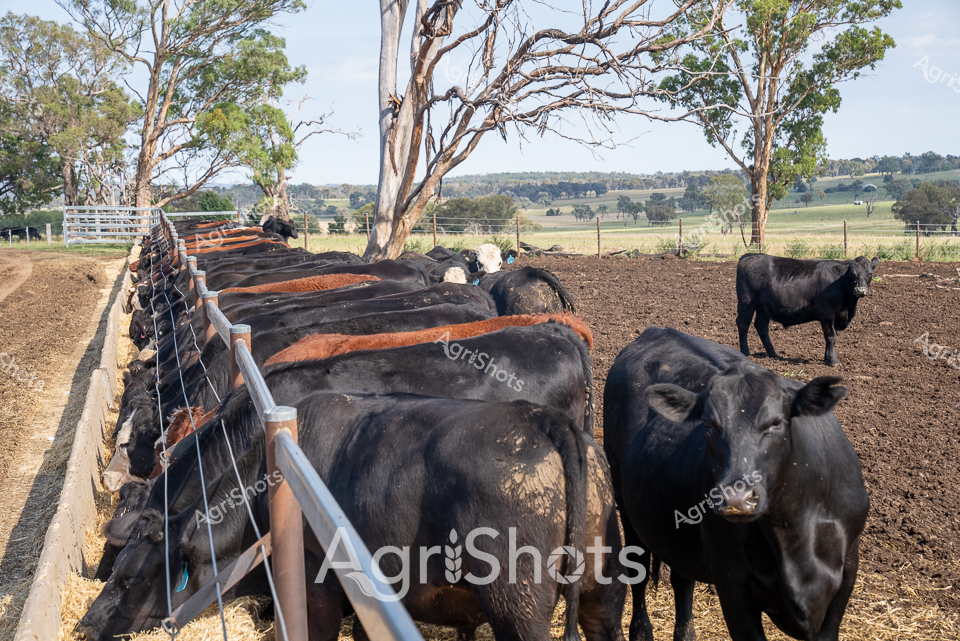 Image
Image
Black Angus cattle crowd a feed bunker in a classic New England tablelands landscape, their glossy dark coats contrasting against the rich brown earth and weathered gum trees. Lined precisely along a metal feed trough, the robust beef cattle stand shoulder-to-shoulder, their muscular frames testament to quality livestock management. Dry golden pastures and scattered eucalyptus trees stretch across the undulating background, capturing the quintessential Australian rural setting during late summer or early autumn. A single beast stands slightly apart, surveying the scene with the calm alertness typical of well-managed stock. The precise arrangement of cattle, the carefully constructed feeding infrastructure, and the carefully maintained paddock demonstrate sophisticated agricultural practices of contemporary beef production. Soft light and open horizons evoke the spaciousness of northern New South Wales grazing country, where generations of farmers have refined cattle breeding and nutrition to produce world-class beef herds.
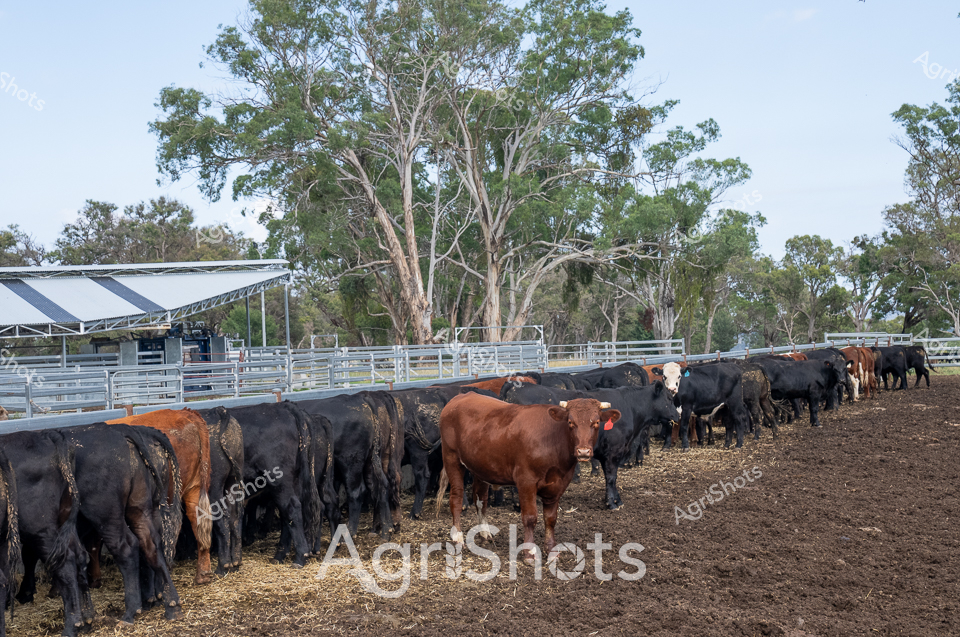 Image
Image
AgriShots Collection: Cattle Feedlot, New England Region, NSW Robust beef cattle cluster in a meticulously organized feedlot, their rich mahogany and deep black coats contrasting against the dusty paddock. Sleek, muscular bodies line the steel cattle yards, anchored by silvery galvanized fencing and a sheltered feed shed with its industrial-strength roof. Mature gum trees provide a pastoral backdrop, their weathered branches casting dappled shadows across the compact livestock operation. A standout russet-colored beast turns towards the camera, its powerful frame and alert stance embodying the resilience of Australian cattle breeding. The ground is a textured canvas of compressed earth and scattered hay, telling a story of systematic agricultural management and strategic livestock nutrition. This scene captures the precision of modern beef production - where science, infrastructure, and animal husbandry converge in the sun-drenched landscapes of New South Wales.
 Image
Image
Muscled black and chestnut beef cattle crowd a well-engineered feedlot feed bunker, their broad backs aligned parallel beneath a robust steel-framed shelter. The summer landscape of the New England region reveals sparse eucalyptus trees and pale blue skies, creating a classic Australian pastoral scene of intensive livestock management. Straw and packed earth provide a textured ground surface, while clean metal railings and infrastructure demonstrate precision agricultural engineering. These robust cattle - likely Angus and Droughtmaster crossbreeds - stand shoulder-to-shoulder, indicating optimal feeding conditions with systematic access to nutritional feed. The meticulously designed cattle yards showcase modern Australian beef production, where animal welfare and efficient feed management intersect. The scene captures the industrialized yet carefully managed approach of contemporary agricultural practices, highlighting the sophisticated systems that support Australia's significant livestock export industry.
 Image
Image
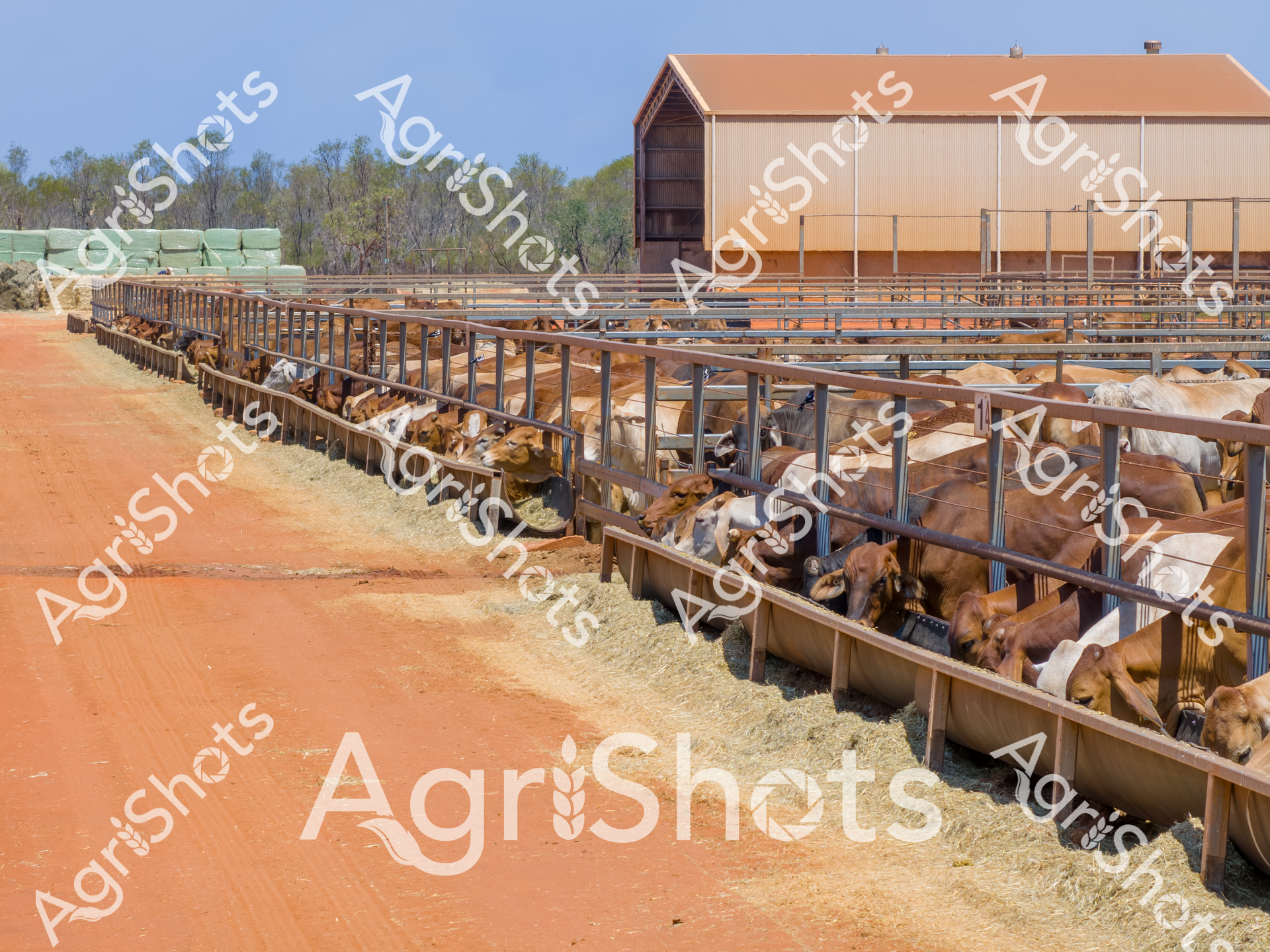
Burnished red earth stretches beneath a cloudless Kimberley sky, framing a meticulously organized cattle feedlot in Northwest Western Australia. Rows of sleek beef cattle—predominantly Brahman and Brahman-cross breeds—stand comfortably in precisely engineered feed bunkers, their tawny and cream-colored coats gleaming in the bright morning sunlight. Stainless steel railings create ordered lanes, while a substantial tan-colored shed looms in the background, offering shade and shelter for the livestock. Hay and feed are strategically placed in concrete troughs, allowing the cattle efficient access, reflecting the sophisticated agricultural management typical of modern pastoral operations in this demanding tropical landscape. Green hay bales sit neatly stacked in the periphery, suggesting abundant feed resources and careful agricultural planning. The scene epitomizes the precision and scale of contemporary Australian cattle production, where advanced infrastructure meets the robust environmental conditions of the Kimberley region.
 Image
Image
Black Angus cattle stand shoulder-to-shoulder in a meticulously organized feed bunker, their sleek dark coats contrasting against the dusty paddock and weathered gum trees of New South Wales' New England region. Golden late afternoon sunlight casts long shadows across the carefully maintained agricultural landscape, highlighting the precise linear arrangement of these robust beef cattle along the steel feeding infrastructure. A few rusty-red bodied animals intermingle with the predominant black herd, creating subtle color variations against the rich brown earth and pale dry grasslands stretching into the distant horizon. The tightly packed cattle demonstrate professional feedlot management, with each animal positioned efficiently to access supplementary feed, representing the sophisticated livestock production techniques of contemporary Australian agriculture. Bare-branched eucalyptus trees frame the scene, providing natural context to this intensively managed agricultural environment. The robust steel feeding infrastructure, immaculately arranged cattle, and expansive pastoral backdrop epitomize the precision and scale of modern beef production in regional New South Wales.
 Image
Image
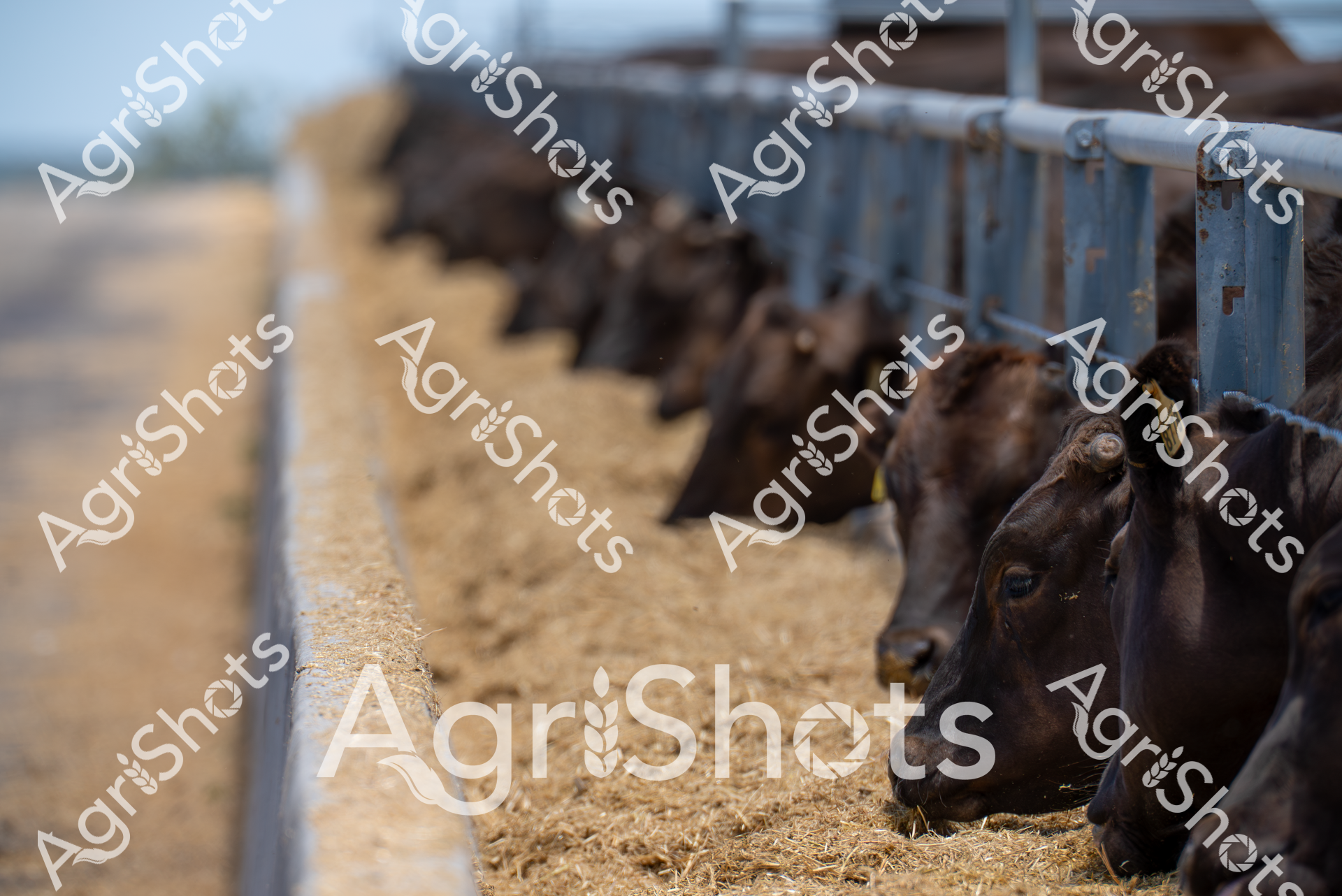
Sleek black Wagyu cattle line the pristine feed bunker, their muscular frames pressed against cool blue metal barriers under the harsh Queensland summer sun. Golden straw bedding stretches along the ground, providing a warm textural contrast to the dark, glossy coats of the cattle. Each animal stands with quiet intensity, heads positioned precisely in a disciplined row, reflecting the meticulous management of this high-performance agricultural operation in the Goondiwindi region. The precise geometric lines of the feeding infrastructure showcase modern beef production techniques, where animal welfare and systematic nutrition converge. Soft desert light bathes the scene, highlighting the rippling muscle and deep ebony sheen of these premium beef cattle, embodying the pinnacle of Australian agricultural excellence. The carefully controlled environment speaks to the sophisticated science of contemporary livestock management, where every detail is calibrated for optimal animal performance.
 Image
Image
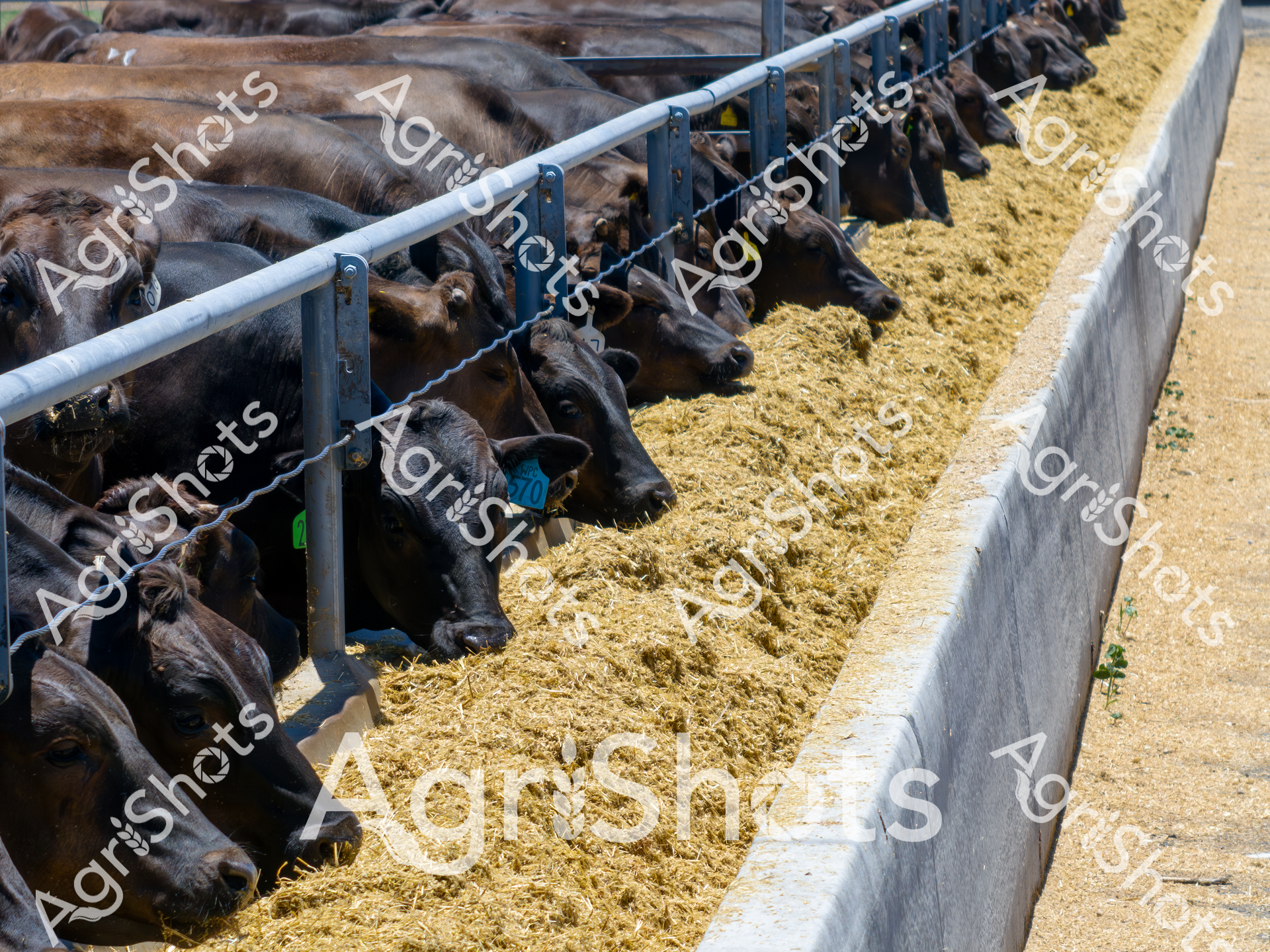
Black angus cattle stand shoulder-to-shoulder along a concrete feed bunker, their sleek dark coats contrasting against golden straw bedding in a meticulously managed feedlot. Precision metal feed barriers keep the herd aligned, each animal wearing distinctive blue and green ear tags, signaling careful livestock management. The scene captures the intense heat of a Queensland summer, with cattle densely packed and focused on their feed, representing the sophisticated beef production techniques of Australia's agricultural heartland. Concrete feed troughs and carefully distributed straw demonstrate the calculated nutrition and care invested in preparing these animals for market. The uniform posture of the cattle - heads down, methodically consuming their mixed ration - speaks to the efficiency of modern feedlot operations in the Goondiwindi region. Harsh sunlight and the uniform alignment of animals reveal a commercial beef production environment where animal welfare and productivity are paramount.
 Image
Image
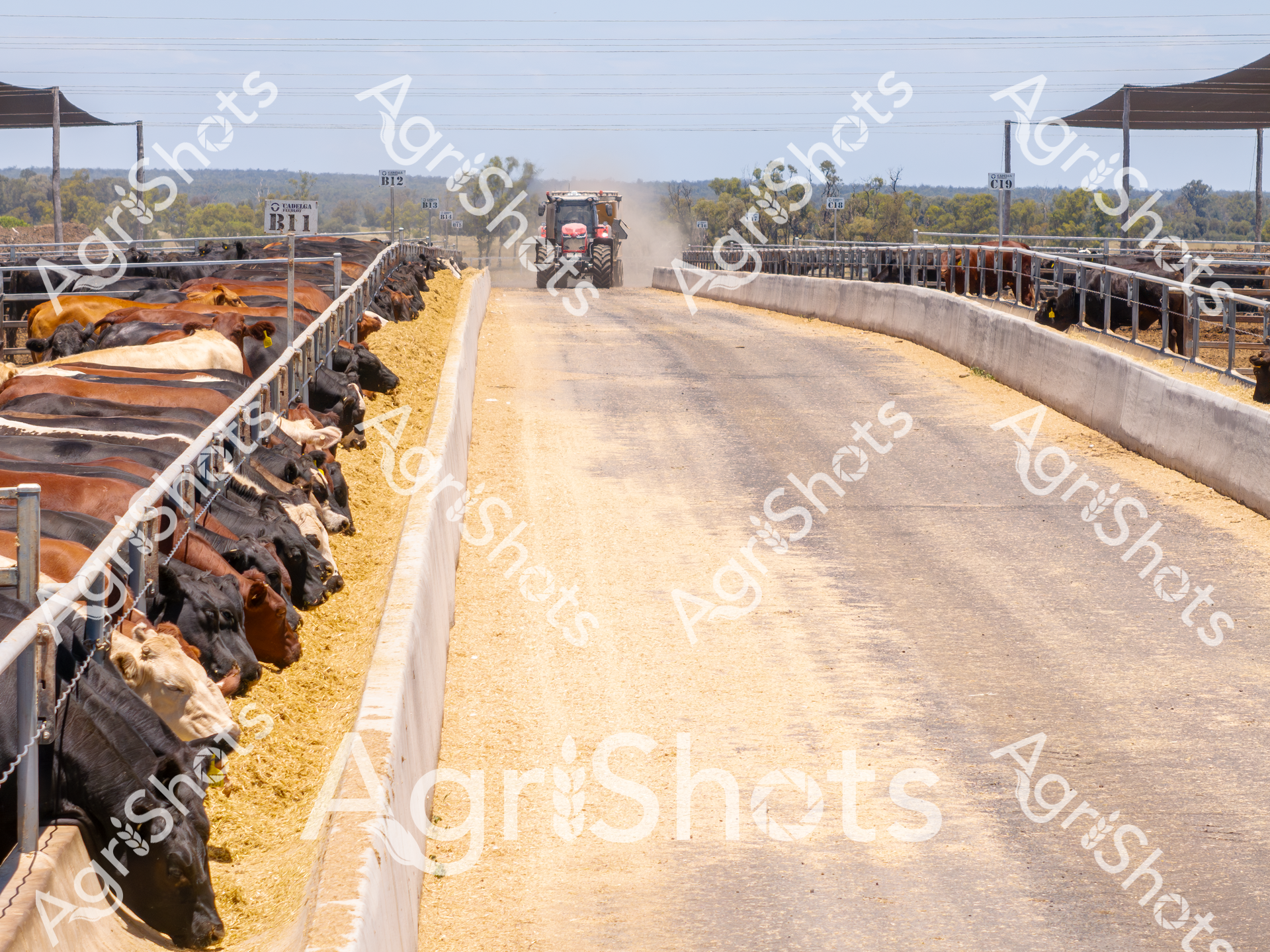
Brahman and composite beef cattle line a concrete feed bunker at a modern Queensland feedlot, their muscular frames positioned precisely along the golden straw feed. A red tractor moves deliberately down the central lane, kicking up fine dust against the bleached summer landscape of scattered eucalyptus trees. Rich chestnut, black, and cream-colored cattle lean forward, intently consuming their carefully formulated ration, their identically yellow ear tags glinting in the harsh midday sunlight. Shade structures provide relief on either side of the long feeding corridor, protecting the livestock from the intense regional heat. The precision of the agricultural operation is evident - each animal positioned systematically, the feed distributed evenly, the infrastructure designed for maximum efficiency in cattle finishing. This snapshot captures the industrial scale of contemporary beef production in Australia's agricultural heartland, where advanced feeding technologies and careful animal management converge in the pursuit of premium meat production.
 Image
Image
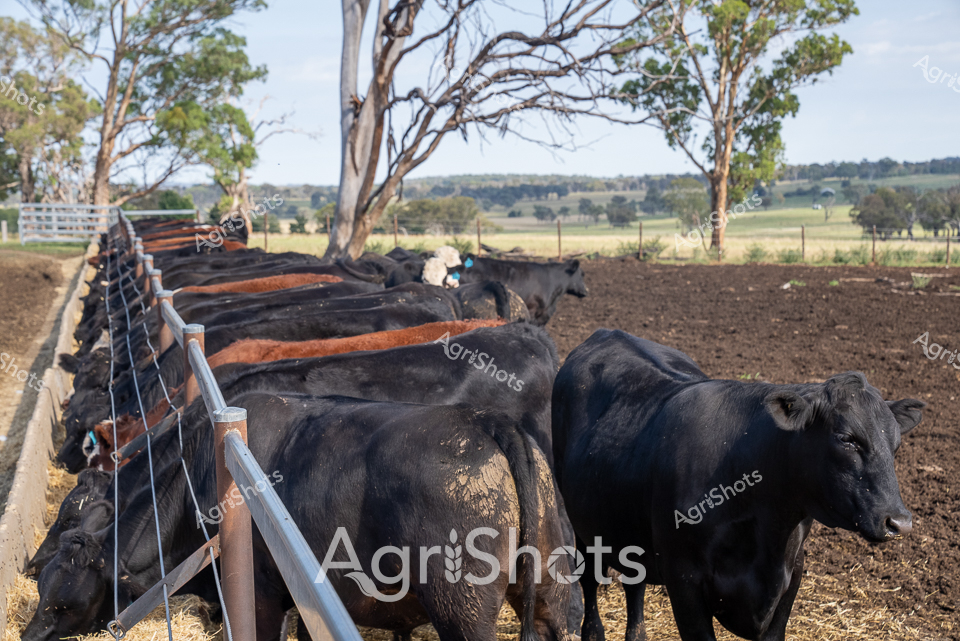
Angus and black baldy cattle line up methodically along a feed bunker in a classic New England tablelands landscape of northern New South Wales. Mature black and reddish-brown bovines stand shoulder-to-shoulder on packed dirt, surrounded by weathered gum trees and distant rolling pastures. The late afternoon sunlight casts long shadows across the feedlot, highlighting the muscular frames and sleek coats of these carefully managed beef animals. Sturdy galvanized steel rail fencing defines their feeding zone, with straw bedding providing comfort and traction. The scene captures the precision of modern cattle production - where nutrition, animal welfare, and landscape management intersect in a carefully orchestrated agricultural ballet. Sparse paddock trees and undulating grasslands in the background speak to the rich agricultural heritage of this high country region, where generations of farmers have shaped the landscape through strategic livestock management.
 Image
Image
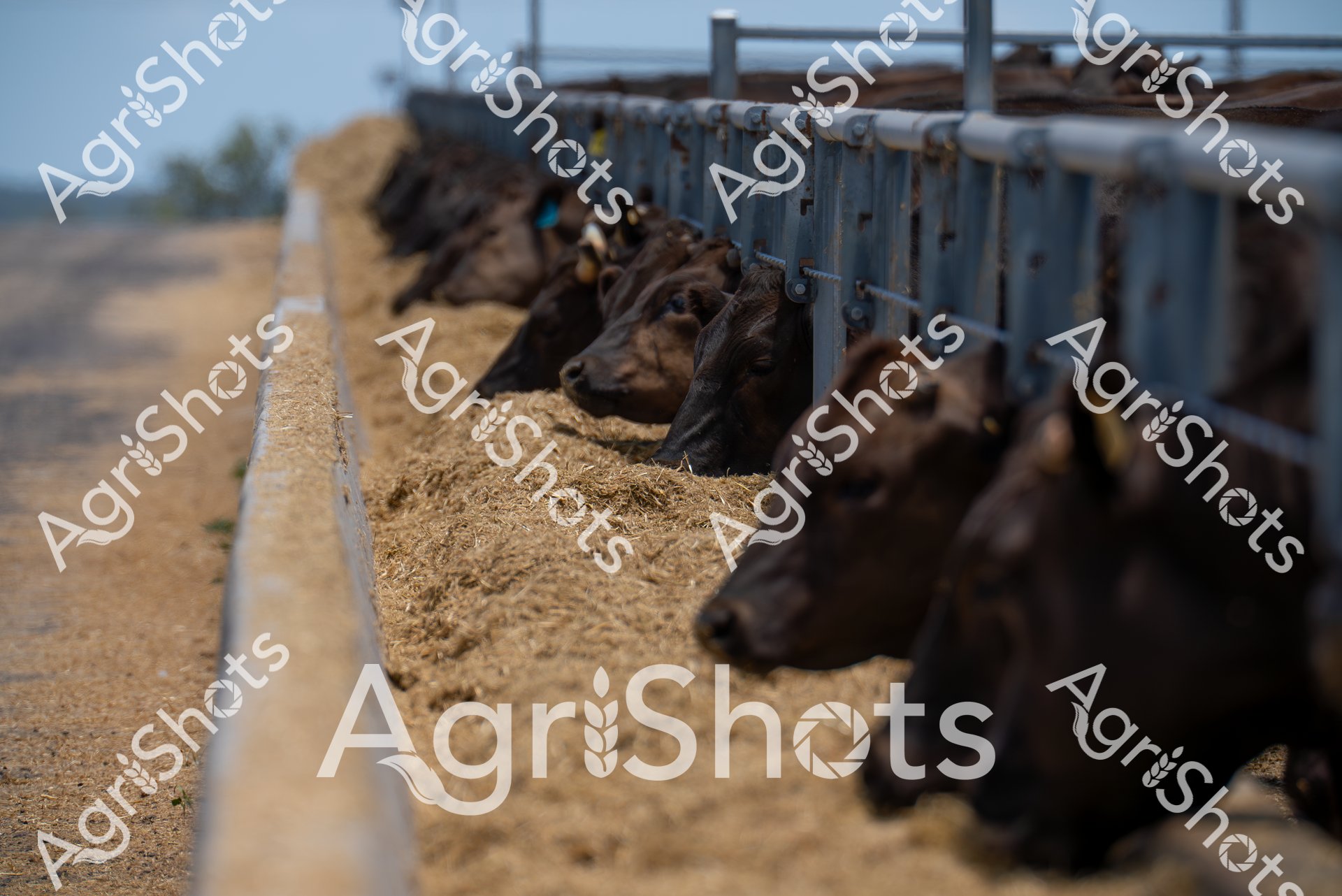
Muscular Wagyu cattle line the concrete feed bunker, their midnight-black coats gleaming under the harsh Queensland summer sunlight. Meticulously arranged in precise rows, the cattle rest alongside a golden bed of mixed feed, their broad heads resting between steel railings that guide their feeding pattern. The stark landscape of Goondiwindi's agricultural terrain stretches behind them - a dusty, bleached environment that speaks to the challenging conditions of Australian cattle production. Each animal appears calm and well-conditioned, representing the high-quality beef genetics carefully cultivated in this region. The tight architectural lines of the feed bunker contrast with the organic forms of the cattle, highlighting the precision of modern agricultural management. This scene captures the intersection of advanced livestock husbandry and the rugged Australian pastoral landscape, where sophisticated breeding techniques meet environmental resilience.
Well, you've ploughed through the whole field!
No more crops to harvest here, mate.
Try searching for something else in our library of 50,000+ royalty-free media: