 Image
Image
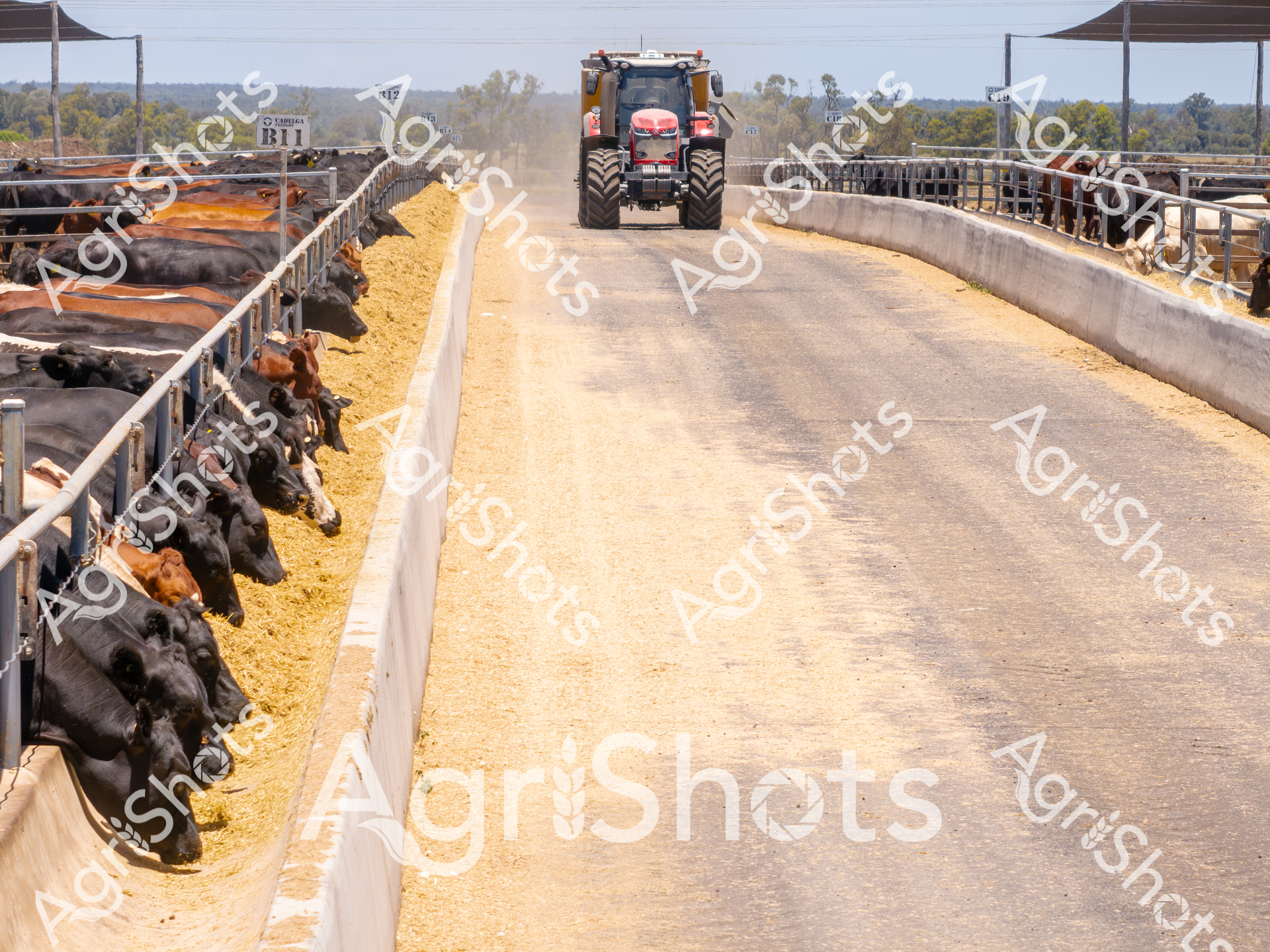
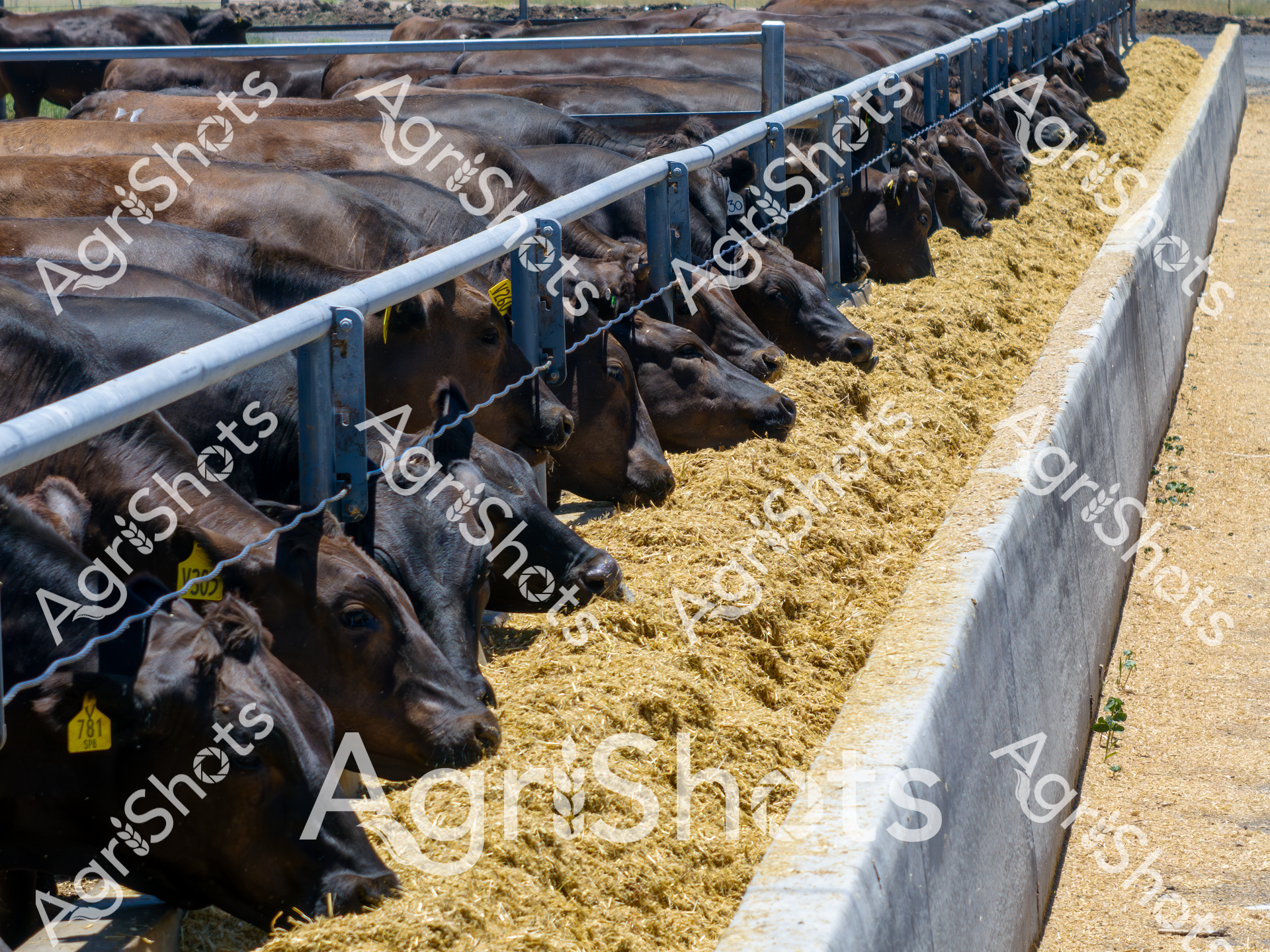
Sleek black and rich russet cattle crowd the feed bunker, their heads bowed in unison over a golden carpet of mixed grain and silage. A robust red and grey tractor traverses the central concrete lane, distributing feed with mechanical precision across the expansive feedlot. The Goondiwindi region's summer landscape stretches behind the infrastructure, with dusty trees and a washed-out horizon suggesting intense Queensland heat. Overhead shade structures provide critical respite for the livestock, their angular frames casting sharp shadows across the carefully engineered feeding system. The dense concentration of cattle reveals a professional, high-efficiency agricultural operation, where animal nutrition and management are executed with scientific methodology. Muscular cattle, predominantly black Angus with a few reddish variants, stand shoulder-to-shoulder, embodying the strategic approach of modern Australian beef production - a testament to agricultural innovation in challenging environmental conditions.
 Image
Image
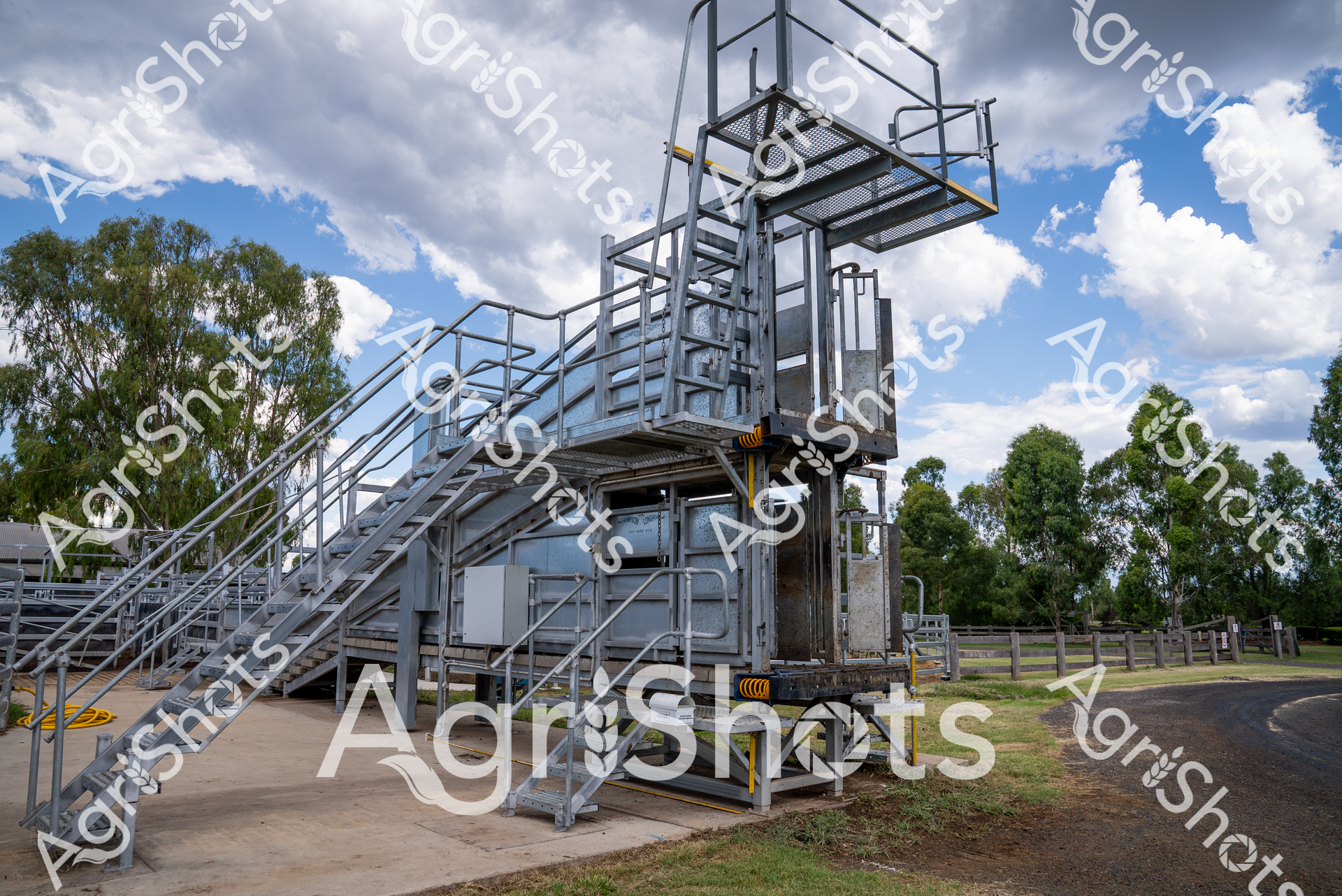
Gleaming silver and engineered for precision, this industrial-grade livestock loading ramp stands sentinel in a quintessential Queensland rural landscape. The sophisticated metal infrastructure, with its mesh walkways, sturdy staircases, and elevated platforms, represents the pinnacle of modern agricultural handling technology. Positioned against a backdrop of eucalyptus trees and dramatic cloud-filled skies, the loading ramp embodies the intersection of agricultural engineering and pastoral environment. Designed to facilitate safe and efficient cattle movement, the structure's galvanized steel construction ensures durability under the harsh Australian sun and demanding rural conditions. The carefully constructed platform allows seamless livestock transfer, minimizing stress on animals during transportation and highlighting the agricultural sector's commitment to animal welfare and operational efficiency. Set in the Goondiwindi region, this loading ramp symbolizes the sophisticated infrastructure supporting Queensland's robust cattle industry, where technical innovation meets agricultural tradition.
 Image
Image
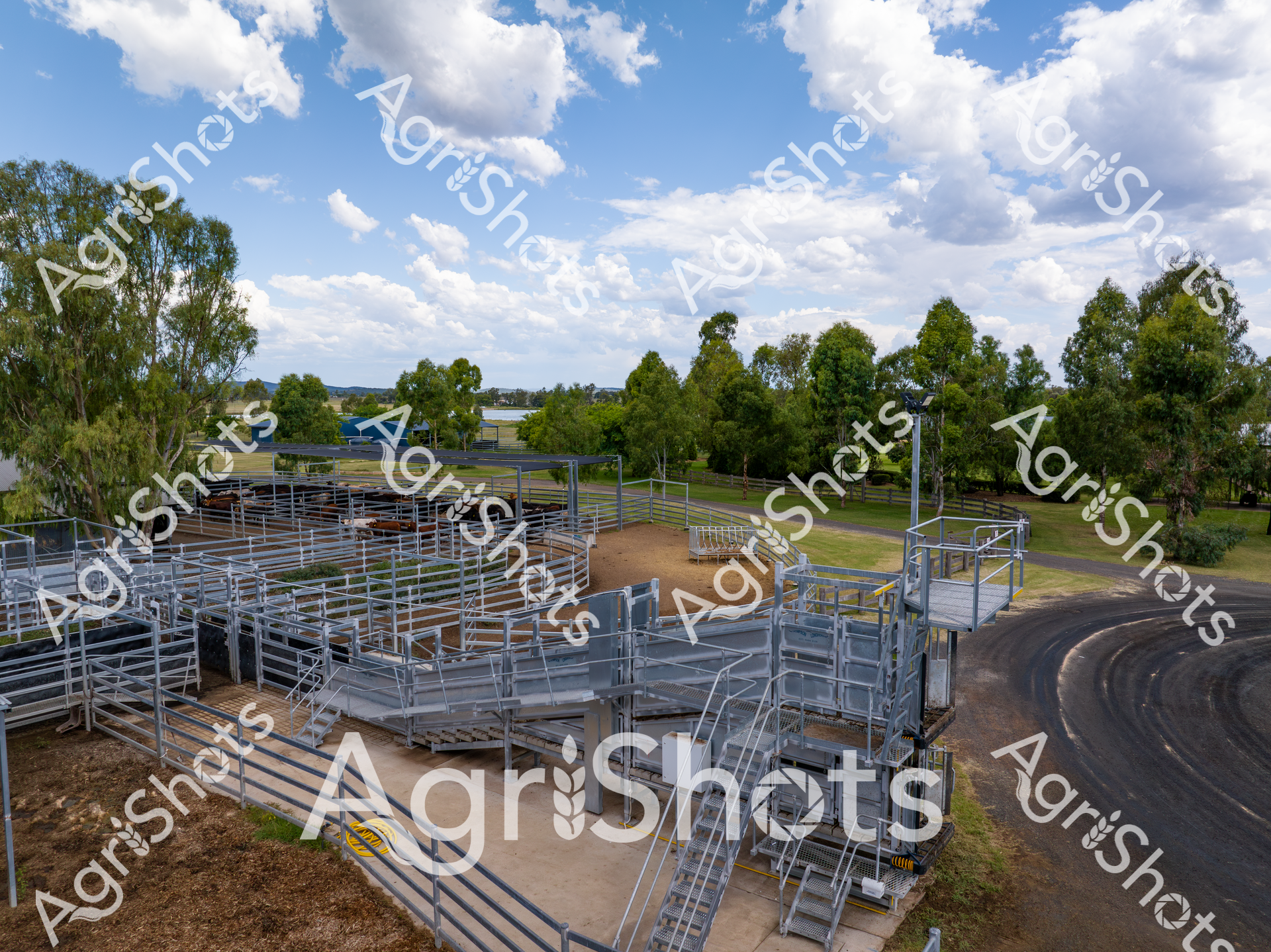
Silvery steel cattle yards stretch across a sunbaked paddock under a vast Queensland sky, where fluffy cumulus clouds drift above verdant eucalyptus trees. This meticulously engineered livestock loading facility near Goondiwindi represents the pinnacle of agricultural infrastructure, with multi-level steel walkways and precision-designed race systems that enable smooth, low-stress cattle movement. The sophisticated metallic infrastructure curves gracefully, creating a complex network of pens, gates, and elevated platforms that allow stockworkers to safely manage and direct cattle during loading, drafting, and transportation processes. Bleached earth tones contrast beautifully with the galvanized steel structures, while the surrounding landscape of green trees and distant rural horizons speaks to the expansive agricultural heartland of southern Queensland. The loading ramp's clean lines and robust construction reflect the technical innovation of modern Australian agricultural practices, designed to maximize efficiency and animal welfare during critical livestock management operations. This aerial perspective captures the harmonious intersection of engineering, landscape, and agricultural expertise characteristic of Queensland's sophisticated cattle industry.
 Image
Image
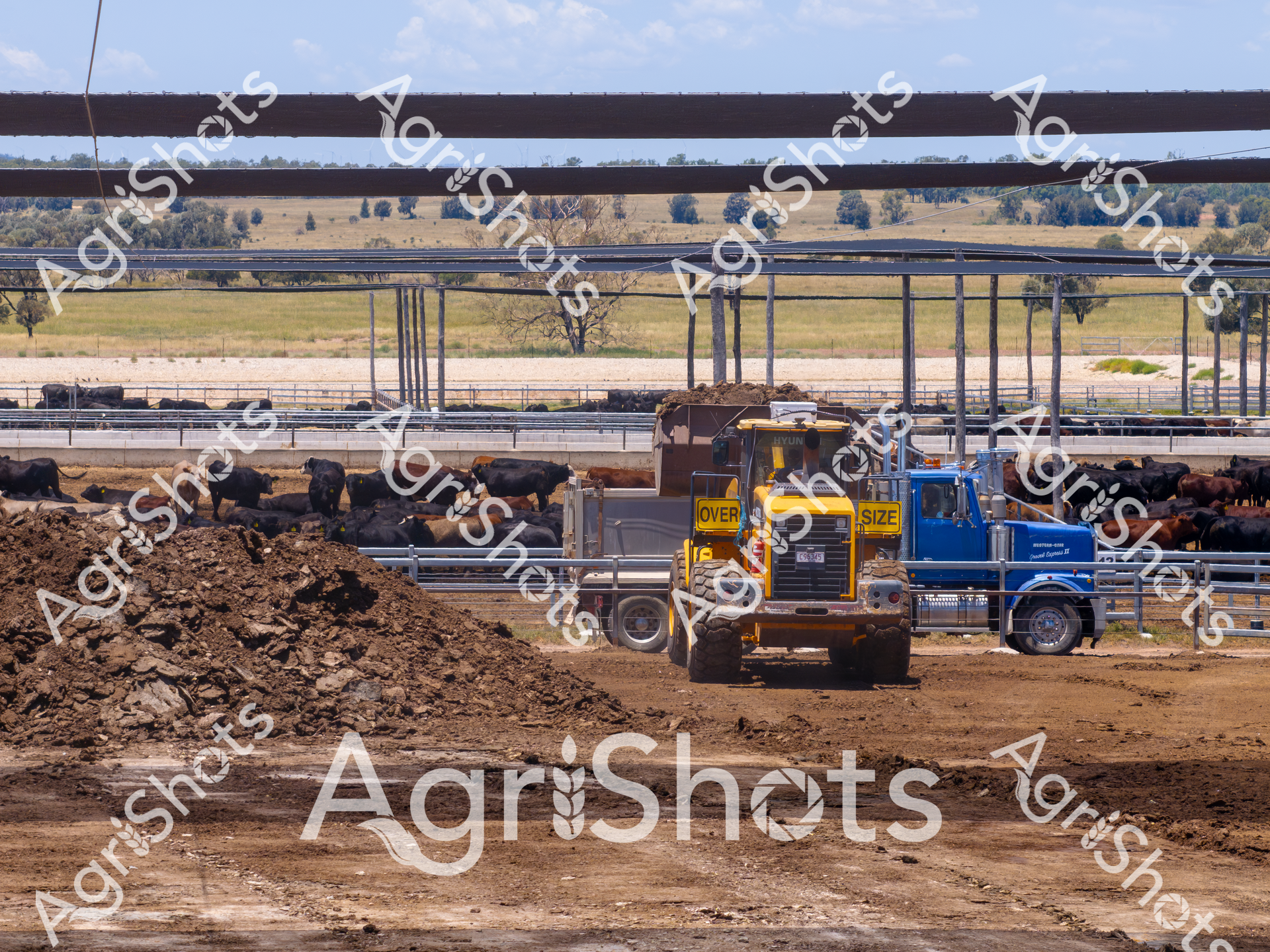
A bustling cattle feedlot in Queensland's Goondiwindi region pulses with agricultural activity during the height of summer. A yellow construction loader and blue truck navigate the densely packed cattle yards, performing critical pen maintenance and waste management operations. Rows of steel pens contain a mix of black and brown cattle, their bodies clustered under expansive shade sails that provide relief from the intense Australian sun. Mounds of rich, dark soil and manure indicate ongoing ground preparation, essential for maintaining hygiene and animal health in this intensive agricultural environment. The landscape beyond the yards reveals a classic Australian pastoral backdrop - undulating grasslands dotted with scattered eucalyptus trees, stretching toward a pale blue horizon. The scene captures the sophisticated infrastructure and meticulous management required in modern beef production, where every detail of animal care and yard maintenance is carefully orchestrated.
 Image
Image
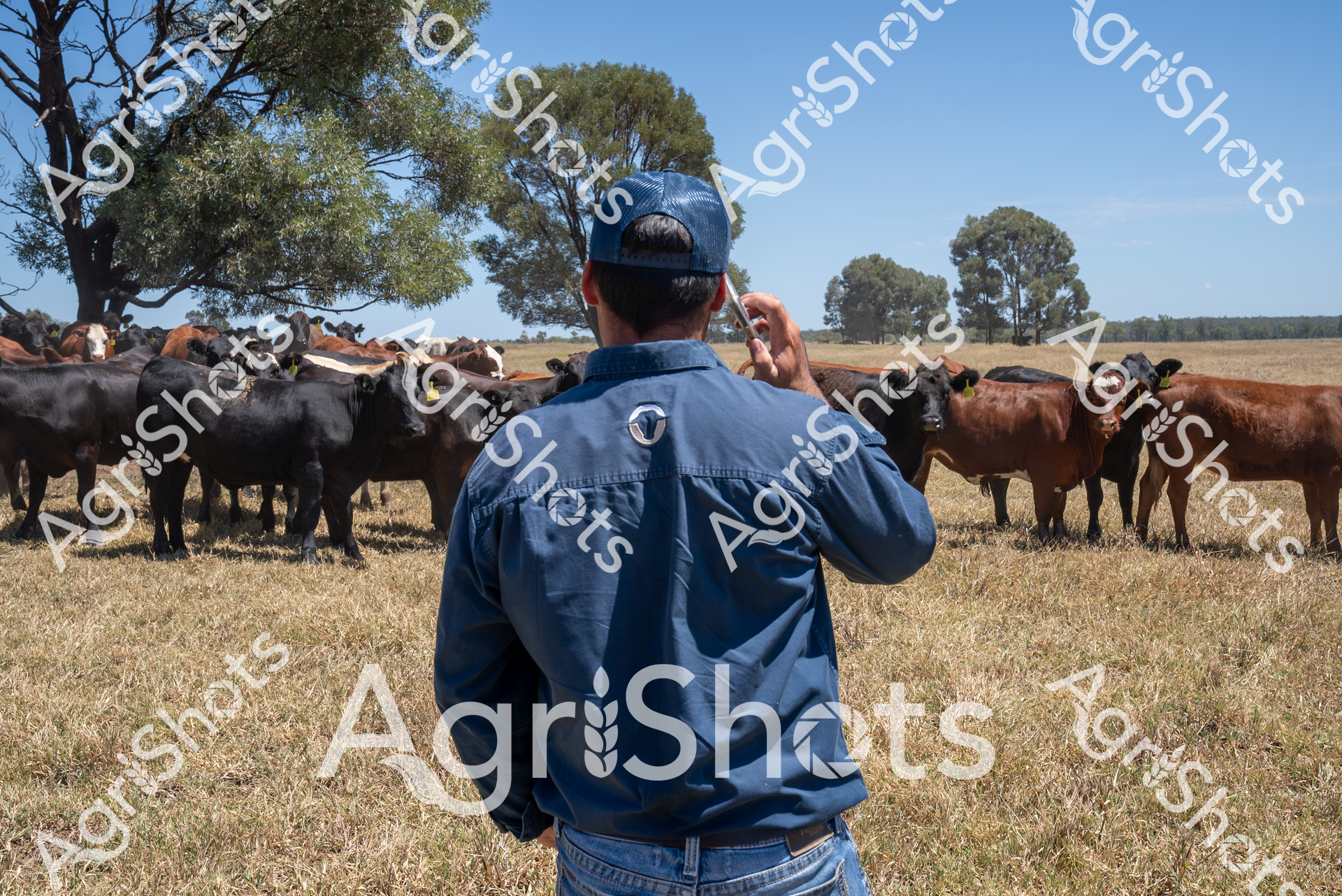
A livestock agent stands amid a herd of mixed-breed cattle on a sun-drenched paddock near Goondiwindi, Queensland. Wearing a crisp blue button-up shirt and cap, the agent surveys the carefully curated herd of black, brown, and red cattle, their coats gleaming under the intense summer sunlight. Mature gum trees provide a sparse backdrop against the golden dry grass, creating a quintessential Australian pastoral scene that speaks to the art and science of cattle management. The agent's back is turned, highlighting the professional focus and quiet concentration required in livestock assessment, with cattle clustered closely together, their varied markings and robust builds a testament to careful breeding and farm management. The landscape suggests the challenging environmental conditions of Queensland's agricultural regions, where livestock agents play a critical role in evaluating animal health, potential, and market value. This image captures the nuanced relationship between agricultural professionals and their livestock, embodying the skill, dedication, and deep understanding required in rural Australian agriculture.
 Image
Image
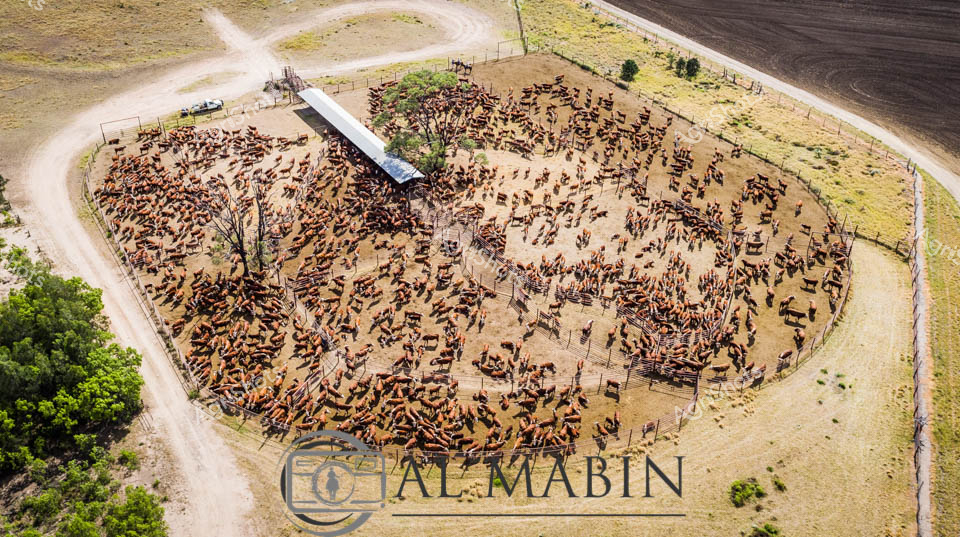
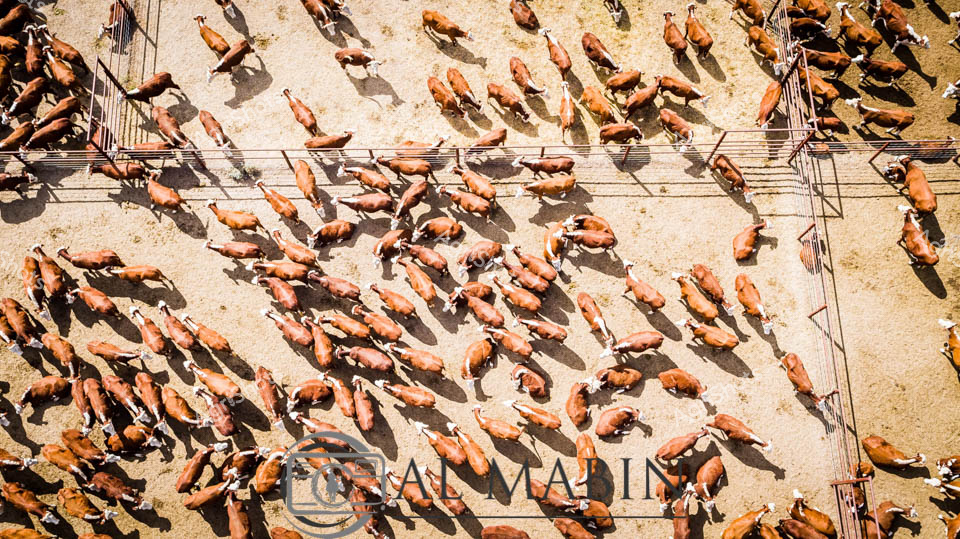
Aerial view of a bustling cattle yard at Al Mabin station, capturing the rhythmic pulse of Queensland's beef cattle industry. A dense sea of Hereford cattle fills the circular yard, their russet and white coats creating a living tapestry against the dusty, compacted earth. A long steel feeding shed bisects the yard, providing shelter and structure to the tightly packed herd. The surrounding landscape reveals the typical patchwork of Australian agricultural terrain - fenced paddocks, sparse trees, and ploughed fields stretching to the horizon, painted in sun-bleached ochres and deep green margins. The drone perspective reveals the intricate choreography of stock management, with cattle clustered tightly, reflecting the precision of modern pastoral operations. Windswept paths curve around the yard's perimeter, telling stories of mustering routes and generations of farming expertise. The Al Mabin watermark anchors the image, a proud signature of a working station that represents the backbone of Queensland's agricultural heritage. This panorama captures the raw energy of cattle farming - a testament to the scale, discipline, and natural beauty of Australian rural life, where every animal and acre plays a crucial role in the nation's agricultural ecosystem.
 Image
Image
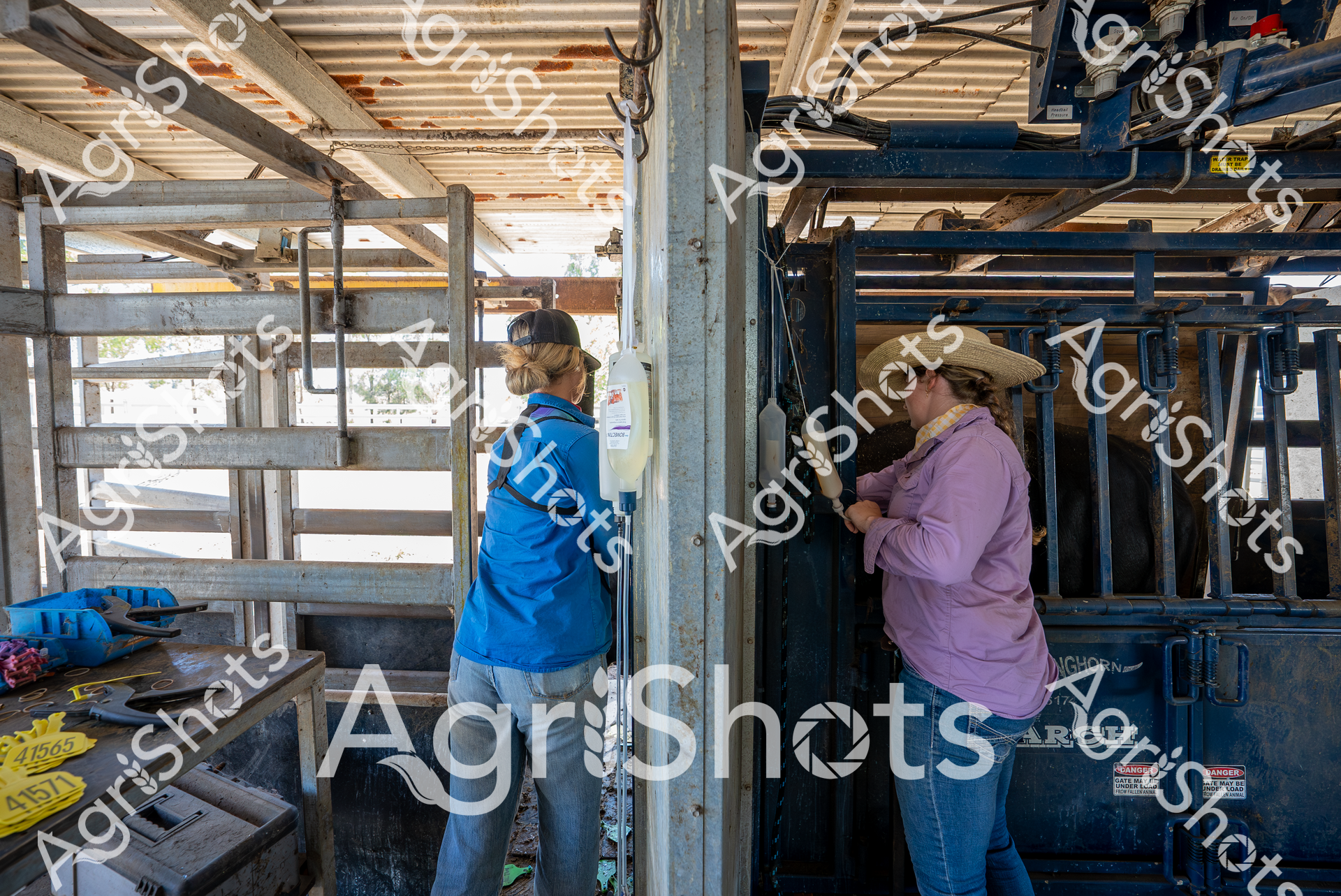
Cattle handling expertise unfolds in a weathered steel cattle yard near Goondiwindi, Queensland, where two women collaborate with practiced precision during a livestock induction process. Dressed in practical workwear - one in a vivid blue jacket, the other in a soft lavender long-sleeve - they navigate the confined metal framework of the cattle crush with confident, synchronized movements. Rusted corrugated iron overhead and sturdy metal gates frame their concentrated efforts, highlighting the robust infrastructure of modern agricultural operations. Straw hats and practical work gloves underscore the professional preparation required in livestock management, while the industrial metal structures speak to the engineered efficiency of contemporary cattle handling techniques. The scene captures a moment of quiet concentration, where generations of agricultural knowledge merge with contemporary practice, revealing the nuanced skill and teamwork essential to Australian cattle farming. Soft natural light filters through the yard, casting subtle shadows that accentuate the detailed choreography of stock management.
 Video
Video
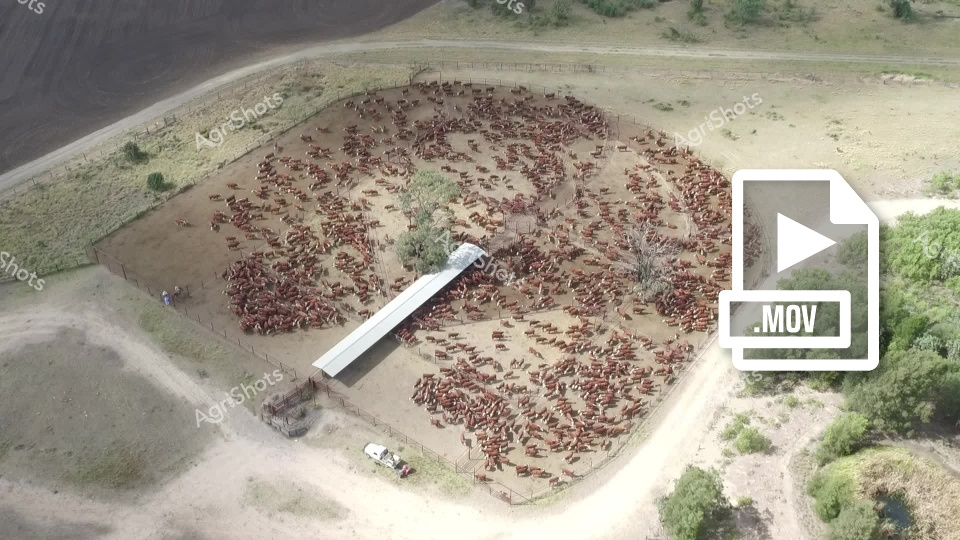
This aerial drone footage captures a dense cattle yard in what appears to be a rural Australian agricultural setting. The video shows hundreds of reddish-brown beef cattle tightly clustered within a large, dusty enclosure, surrounded by fenced paddocks and sparse vegetation. A long white feed shed runs along one side of the yard, providing shelter and feeding infrastructure for the herd. The clip reveals an expansive, arid landscape typical of inland Australian cattle stations, with a mix of bare earth, scattered trees, and grassy margins. The cattle are packed closely together, creating a textured, living carpet of rusty-colored bodies that fills the entire yard. Some vehicles and equipment can be seen parked near the perimeter, suggesting active farm management. The aerial perspective offers a striking visual of the scale of modern cattle farming, highlighting the impressive number of animals and the structured agricultural infrastructure. Shades of brown, tan, and muted green dominate the scene, reflecting the dry, rugged environment of what seems to be a beef cattle operation in one of Australia's extensive pastoral regions. The footage provides a comprehensive view of cattle yard operations, showcasing the density, movement, and management of a large beef cattle herd from an overhead vantage point.
 Image
Image
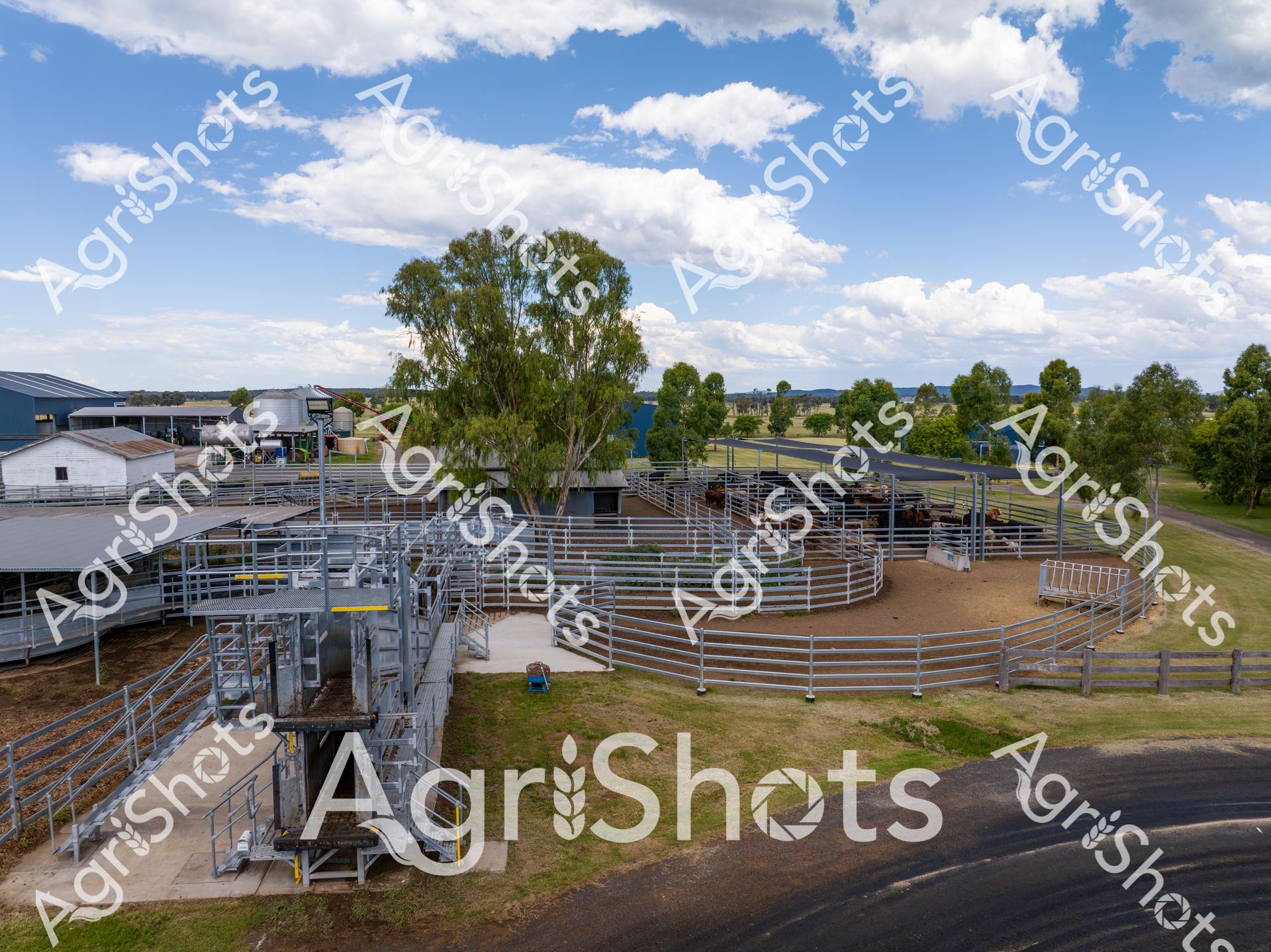
Gleaming steel cattle yards stretch across the sun-drenched landscape near Goondiwindi, a quintessential Queensland agricultural setup designed for efficient livestock management. Circular and linear steel paneled yards create a precision-engineered network of pens and loading infrastructure, surrounded by eucalyptus trees and under a brilliantly blue sky dotted with fluffy white clouds. The loading ramp stands prominently, its galvanized steel walkways and gates providing a robust system for moving cattle safely and smoothly between different holding areas. Dusty ground and carefully maintained pathways indicate this is a working agricultural facility, built to withstand the harsh Australian rural environment and support cattle handling operations. Distant paddocks and rural buildings complete the panorama, reflecting the expansive nature of cattle farming in this region. The crisp summer light highlights the metallic infrastructure, creating a striking contrast between the engineered agricultural systems and the natural landscape, embodying the sophisticated approach to modern livestock management.
 Image
Image
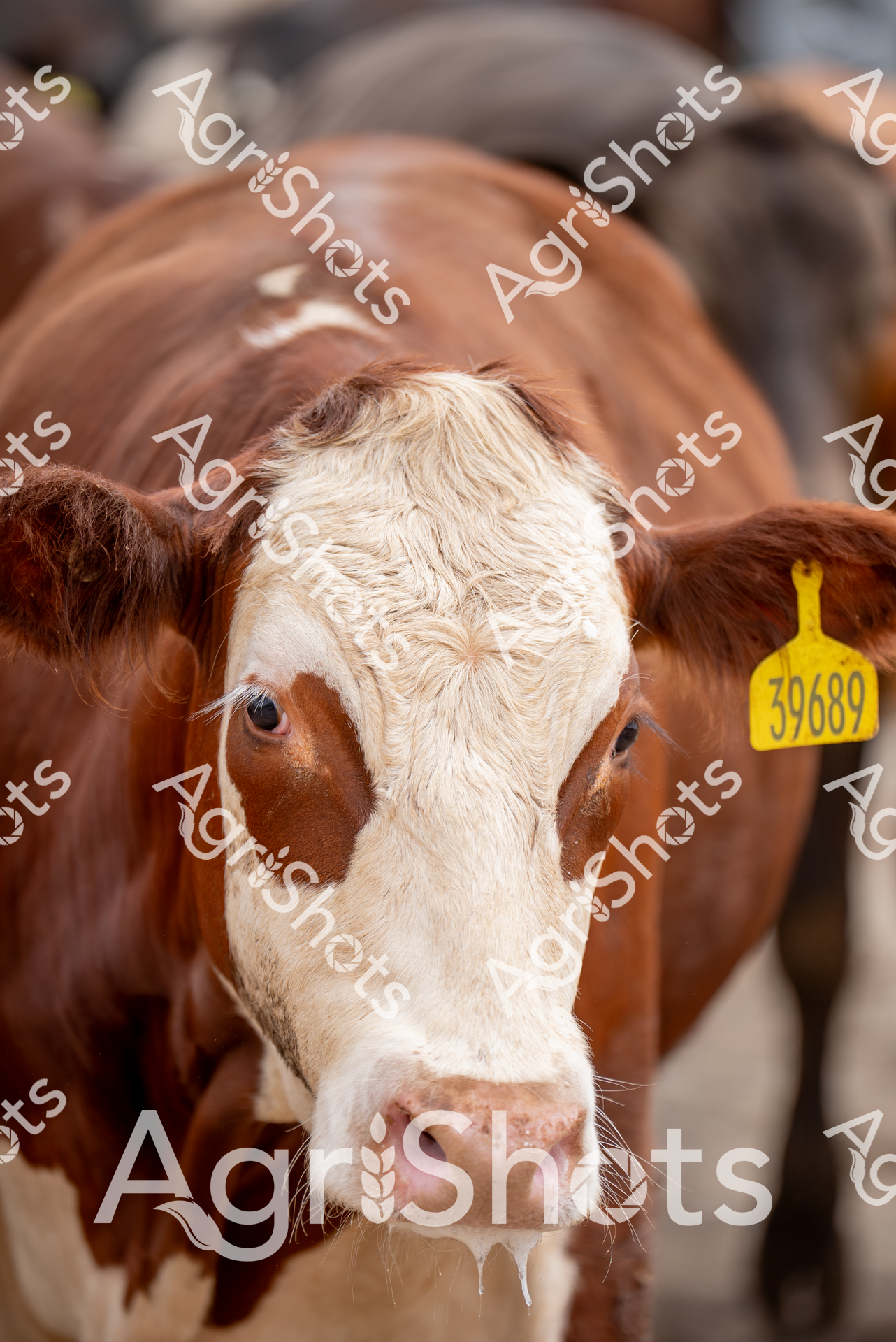
A Hereford-cross heifer stands resolute in a cattle yard, her distinctive white-faced markings contrasting against her rich russet-brown body. Her yellow ear tag - numbered 39689 - marks her place in the systematic management of a modern agricultural operation, likely in the Goondiwindi region of Queensland. The crisp summer light illuminates her fine, short hair, revealing subtle textures and the alert intelligence of her warm brown eyes. Clustered behind her, other cattle create a blurred backdrop suggesting movement and the dynamic process of yarding and processing livestock. The close-up perspective captures the animal's quiet strength and the meticulous attention to individual identification that characterizes contemporary cattle farming. Her calm, direct gaze speaks to the carefully bred temperament of contemporary beef stock, representing the intersection of agricultural science and pastoral tradition in Australian livestock management.
 Image
Image
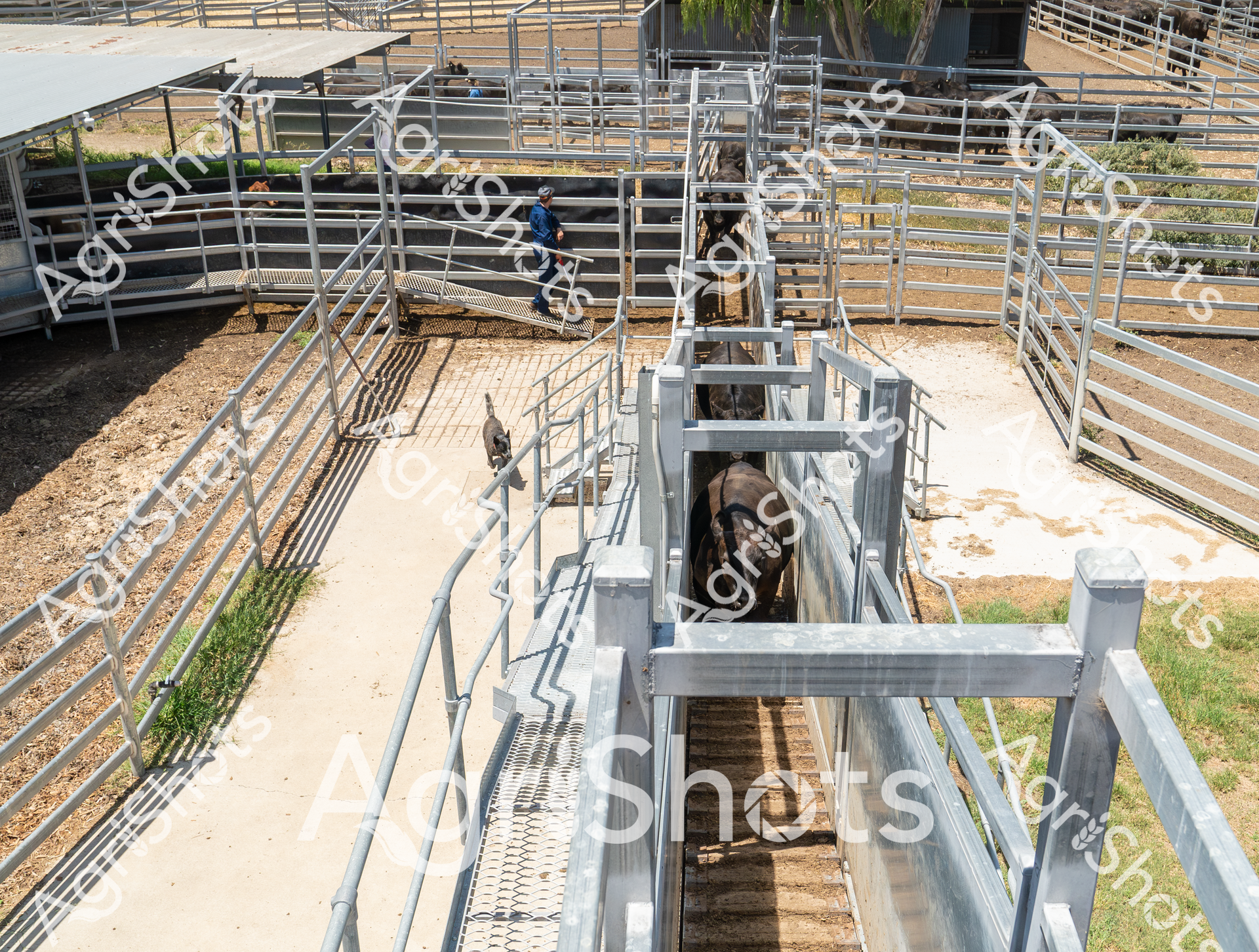
Beneath the harsh Queensland sun, a meticulously engineered livestock handling system unfolds in the rural landscape near Goondiwindi. Gleaming galvanized steel yards and loading ramps create a precise infrastructure for moving cattle, with carefully designed walkways and chutes that minimize stress during transport. A stockworker in deep blue attire navigates the metallic pathways, guiding cattle through the intricate system with practiced efficiency. Sturdy cattle pause within the narrow silver corridors, their muscular frames contrasting against the clean lines of the industrial-grade infrastructure. Sparse grasses and scattered shrubs frame the yard, suggesting the unforgiving summer heat of rural Queensland. The scene captures the sophisticated agricultural engineering that underpins modern cattle management - a testament to the technological precision behind Australia's livestock industry, where animal handling meets technical innovation.
 Image
Image
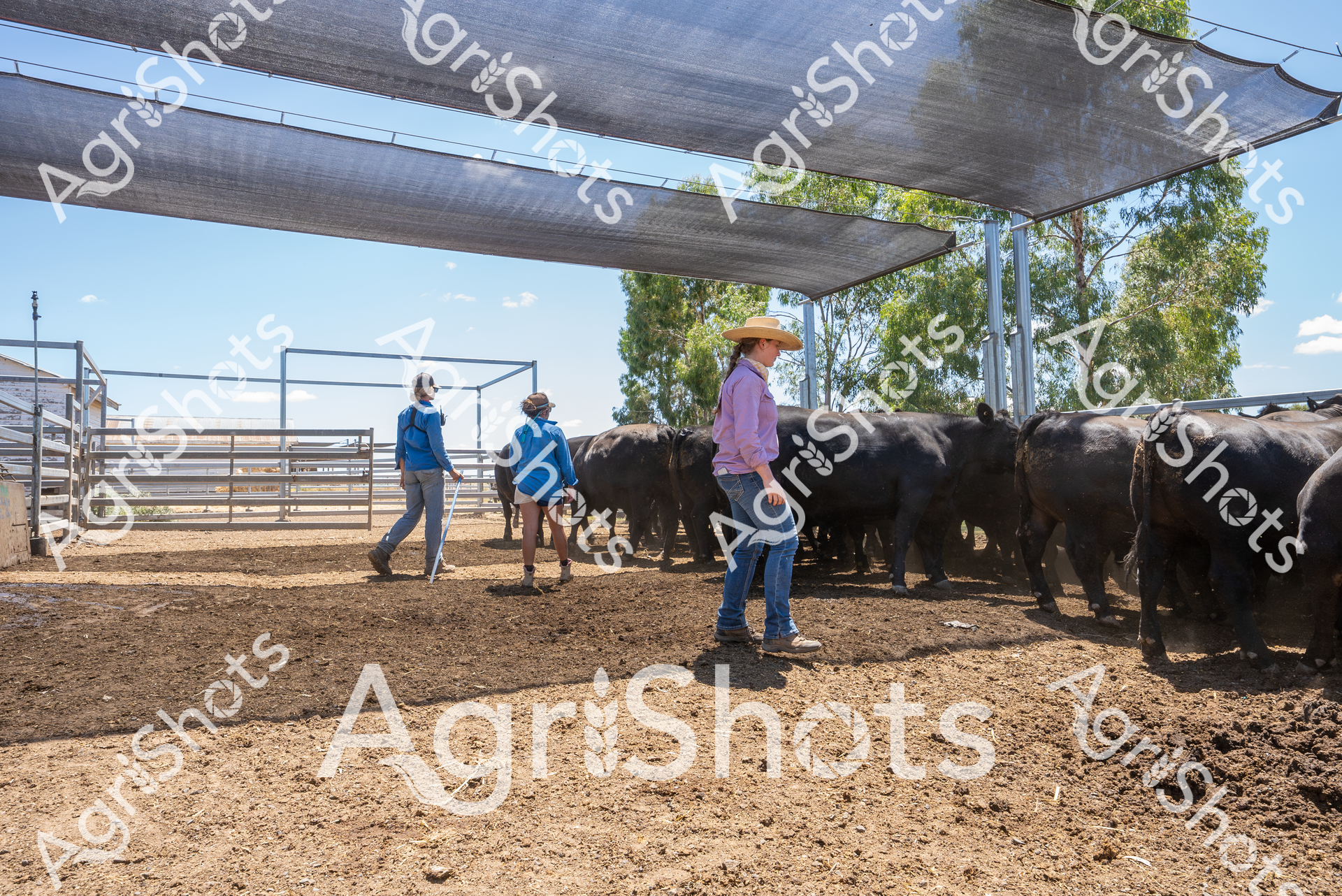
Beneath a protective shade sail structure, three agricultural workers carefully manage a group of black Angus cattle in a prepared yard near Goondiwindi, Queensland. The workers, dressed in practical farm attire - blue and pink tops, jeans, and a wide-brimmed sun hat - move with purposeful coordination, preparing the livestock for potential transport or routine management. The compact cattle yard features well-maintained metal fencing and a dirt floor, with native eucalyptus trees visible in the background against a clear, bright blue sky typical of rural Queensland. The dark, glossy cattle huddle together, their muscular bodies creating a striking contrast against the earthy brown ground and the filtered light from the shade cloth overhead. This scene captures the essence of modern Australian agricultural practice - professional, methodical, and attuned to animal welfare, with women prominently represented in key operational roles. The image speaks to the precision and care inherent in contemporary cattle management, showcasing the sophisticated approach of current agricultural professionals.
 Image
Image
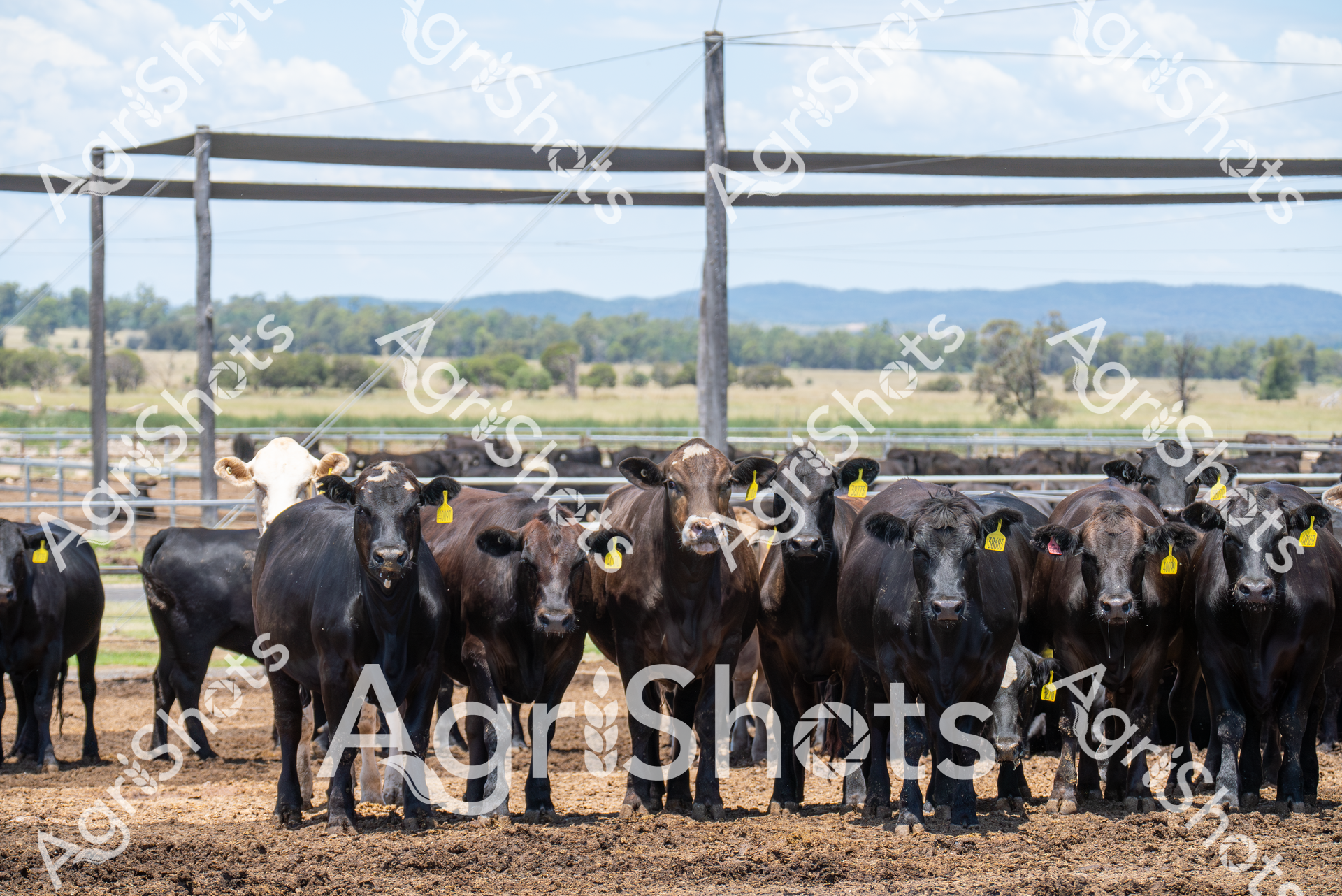
Black Angus and Angus-cross cattle cluster together in a sun-drenched feedlot near Goondiwindi, Queensland, their muscular frames casting shadows on the dry, packed earth. Uniform yellow ear tags identify each animal, marking them as part of a carefully managed herd destined for premium beef production. The rugged landscape stretches out behind them, with distant blue mountains and scattered eucalyptus trees framing the expansive paddock under a brilliant summer sky. Overhead, industrial shade sails provide critical relief from the intense Queensland heat, their geometric lines contrasting with the organic shapes of the tightly grouped cattle. The animals stand resolute, their deep black and dark brown coats gleaming with health, representing the pinnacle of Australian beef breeding and agricultural innovation. This image captures the essence of modern pastoral management - a sophisticated blend of animal husbandry, agricultural technology, and the timeless connection between land, livestock, and human enterprise.
 Image
Image
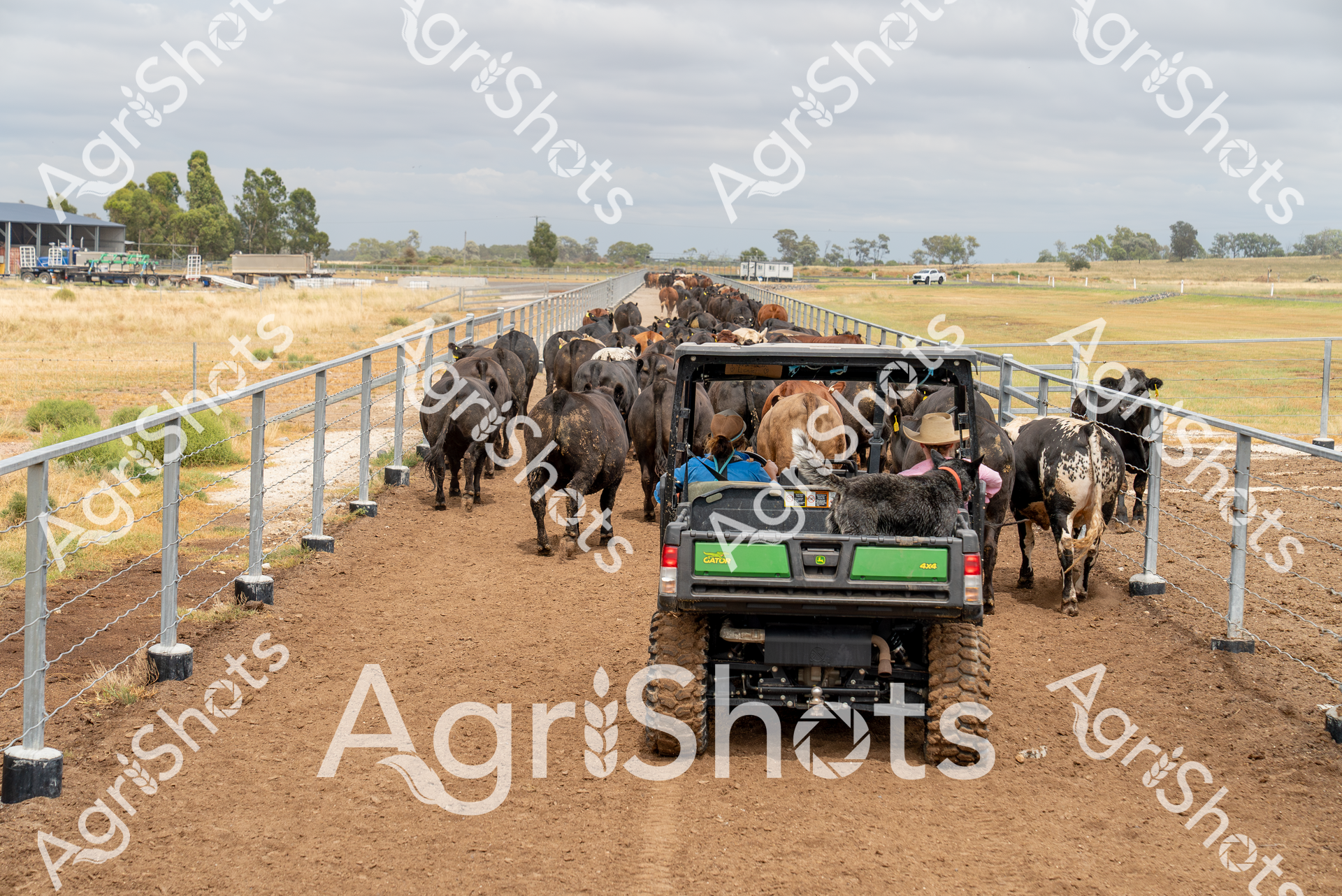
Dusty and resolute, a stockyard laneway pulses with the measured movement of a cattle herd under overcast Queensland skies. A rugged utility vehicle navigates the narrow, metal-railed pathway, carefully guiding a mixed mob of black, brown, and speckled beef cattle forward. Skilled agricultural workers, including a woman in a wide-brimmed hat, collaborate from the green utility buggy, working in concert with working dogs to control the herd's progression. The dry, compacted earth beneath the cattle's hooves speaks to the challenging climate of the Goondiwindi region, where pastoral expertise is refined through generations of agricultural practice. Eucalyptus trees punctuate the distant landscape, offering a muted green backdrop to this quintessential Australian livestock management scene. The image captures the precise choreography of stock movement - a testament to the skill, technology, and human-animal collaboration that defines modern Australian cattle farming.
 Image
Image
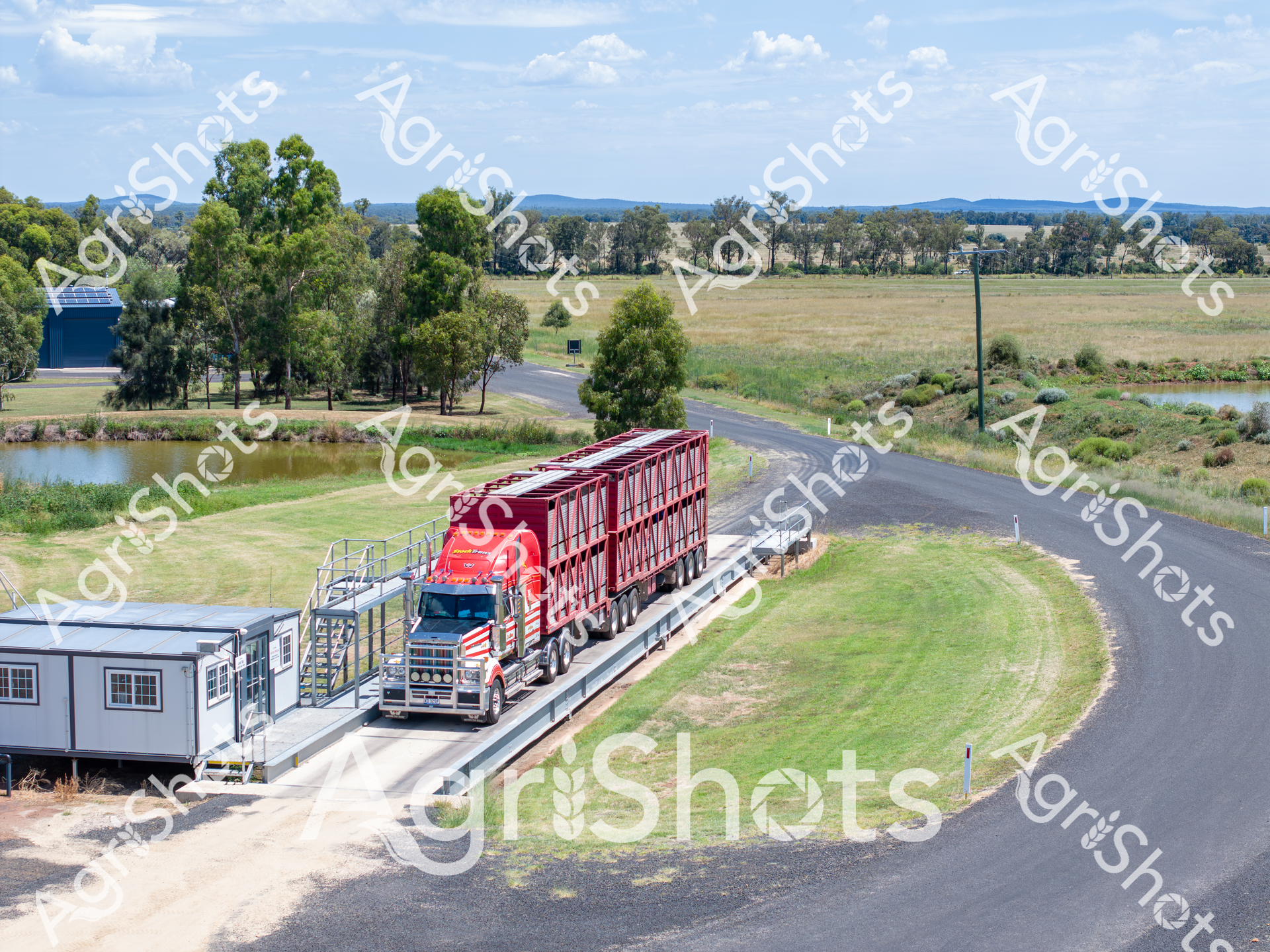
A heavyweight road train navigates the precision-engineered weighbridge at a rural logistics hub near Goondiwindi, Queensland. The crimson and silver prime mover, adorned with robust bull bars, hauls an expansive livestock trailer across the carefully calibrated weighing station, surrounded by a verdant pastoral landscape of native eucalyptus and sweeping grasslands. Portable office modules flank the curved asphalt approach, suggesting this is a critical infrastructure point for agricultural supply chain management, where every kilogram of cargo is meticulously recorded. Distant blue mountains frame the horizon under a soft, cloud-dappled sky, capturing the quintessential Australian rural infrastructure that supports the nation's agricultural productivity. The scene epitomizes the precision, scale, and technological backbone of modern rural transportation, where sophisticated logistics meet the rugged Australian landscape. Meticulously maintained grounds and infrastructure reflect the professional standards of contemporary agricultural freight operations, highlighting the critical role of transport in connecting regional producers with broader markets.
 Image
Image
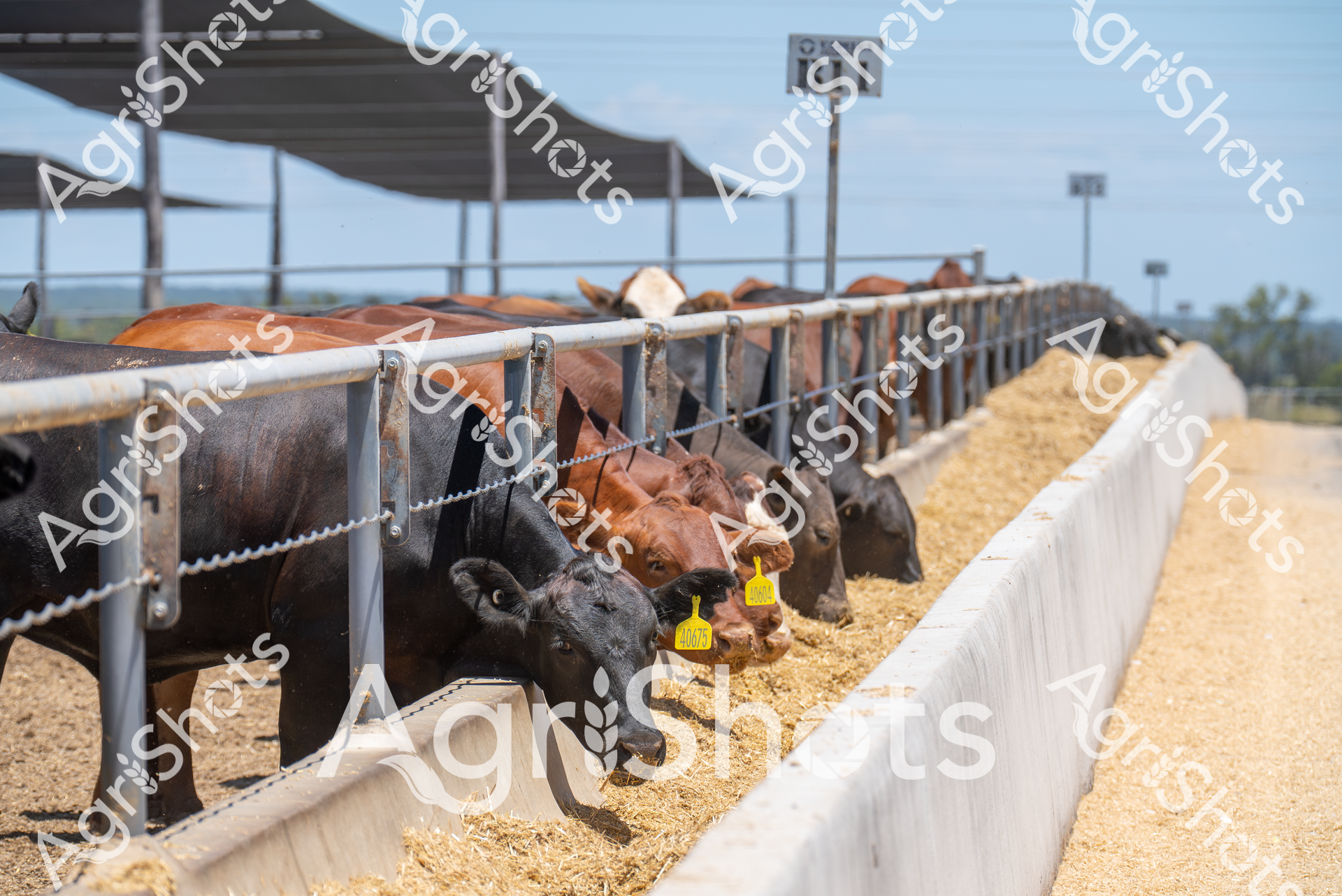
Beef cattle of varying rich brown and black coats line a pristine white concrete feed bunker, their yellow identification tags gleaming in the harsh Queensland summer light. Overhead, expansive shade sails provide critical protection from the intense heat, casting geometric shadows across the feedlot near Goondiwindi. The carefully designed feeding infrastructure allows each animal controlled access to a uniform layer of golden straw and feed, showcasing modern agricultural precision in livestock management. Sleek metal railings separate the cattle, who stand shoulder-to-shoulder with remarkable calm, their muscular frames a testament to careful breeding and nutrition strategies. The backdrop reveals an open, arid landscape typical of southern Queensland's agricultural regions, with clear blue skies extending beyond the structured feeding area. This scene captures the sophisticated balance of animal welfare, technological innovation, and large-scale beef production that defines contemporary Australian agricultural practices.
 Image
Image
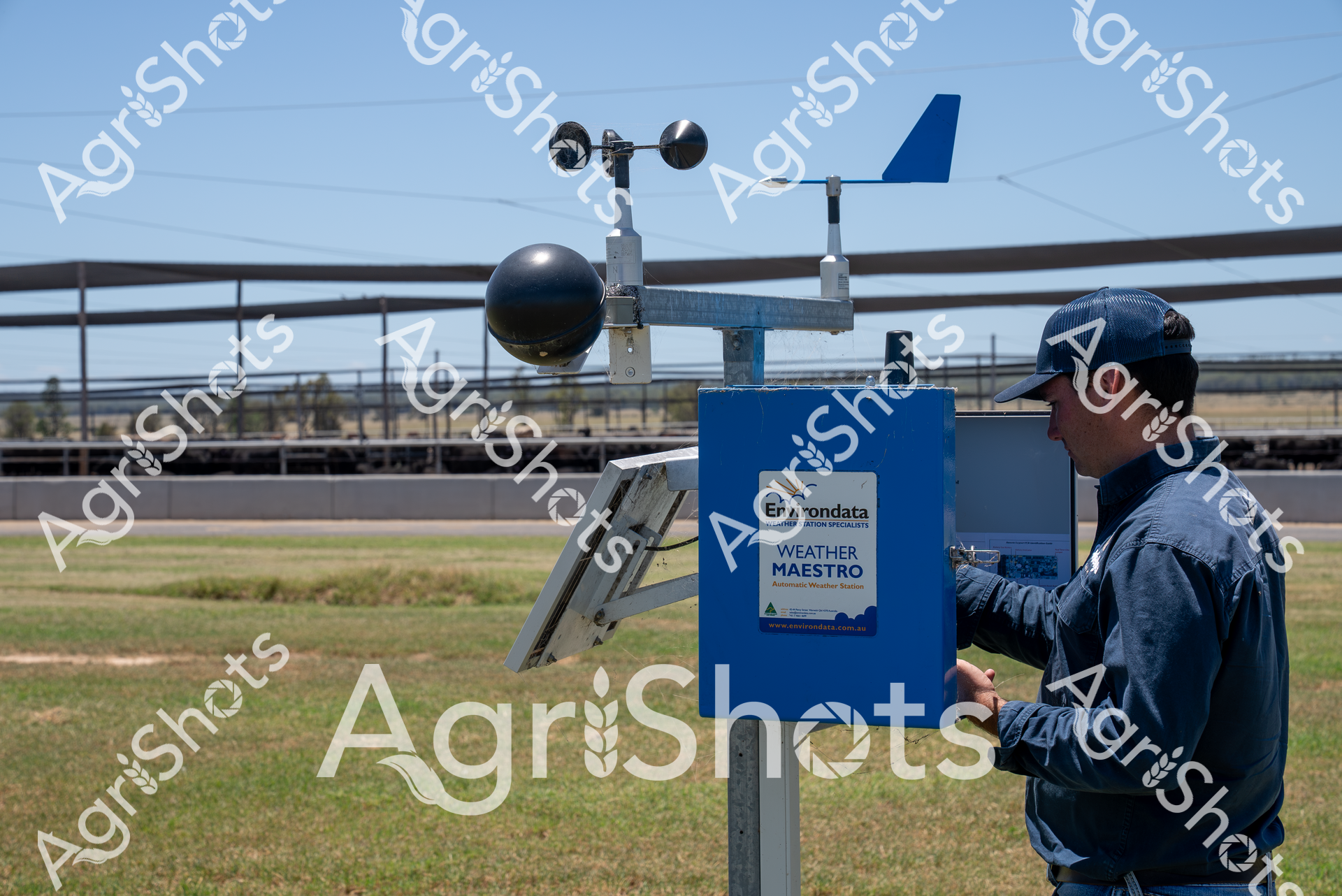
A seasoned agricultural technician in a navy blue cap and jacket stands attentively beside an Environdata Weather Maestro station, carefully monitoring critical environmental data at a modern cattle feedlot near Goondiwindi, Queensland. The robust weather monitoring equipment features a precise wind speed indicator with rotating cups, a solar radiation sensor, and a sleek blue monitoring console, strategically positioned to capture comprehensive meteorological insights across the expansive grassland and livestock infrastructure. Bright summer sunlight bathes the scene, casting sharp shadows across the meticulously maintained feedlot, with its parallel steel pens stretching into the distant landscape. The solar-powered weather station represents cutting-edge agricultural technology, enabling farmers to track precise environmental conditions that directly impact livestock management and feed production. Industrial-grade sensors capture minute atmospheric changes, from wind direction and speed to temperature and solar radiation, providing farmers with critical data to optimize animal health and operational efficiency. This sophisticated monitoring system exemplifies the sophisticated technological integration transforming modern Australian agricultural practices, bridging traditional farming knowledge with advanced environmental science.
 Image
Image
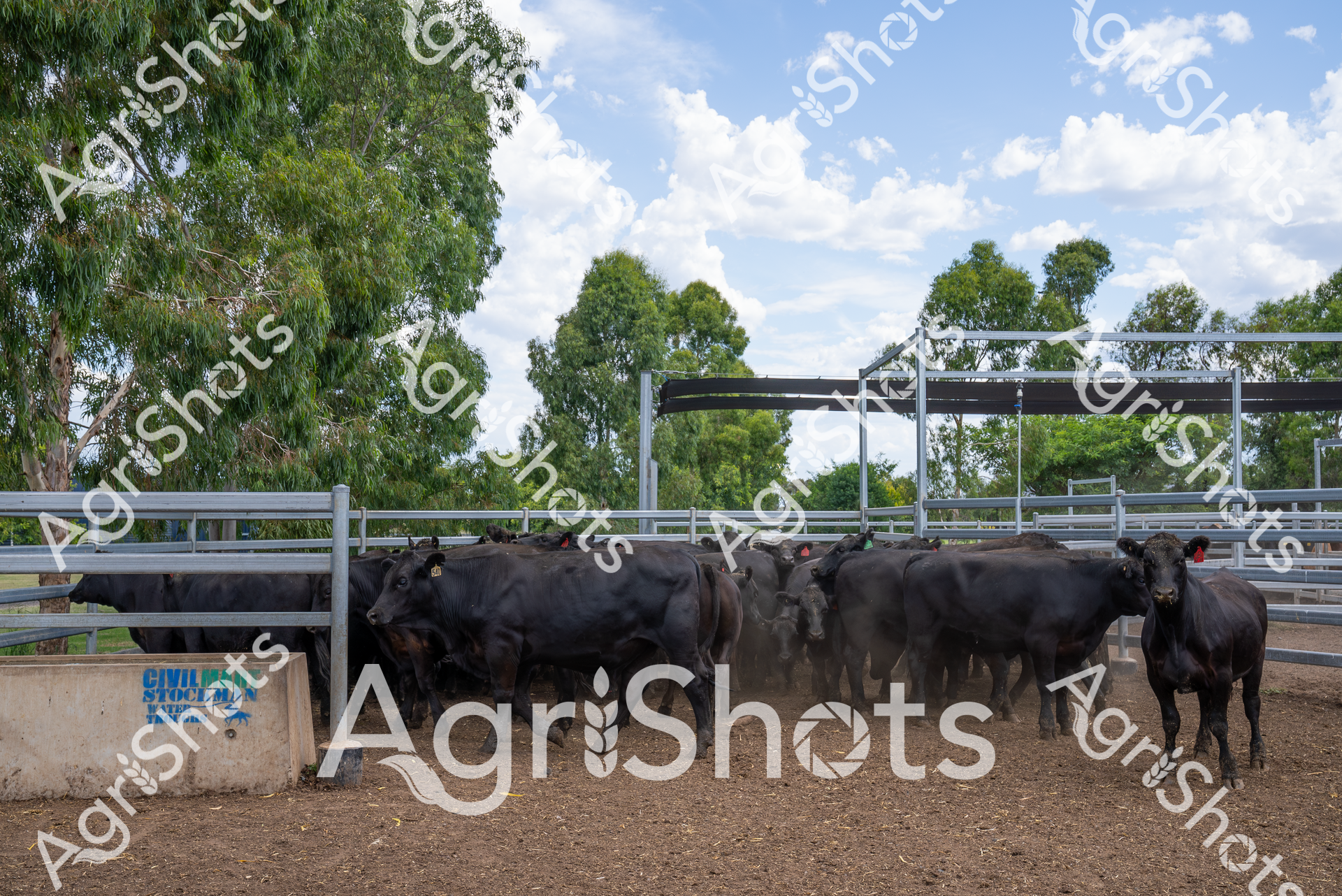
Black Angus cattle cluster in a meticulously maintained livestock holding yard, positioned against a backdrop of lush eucalyptus trees and expansive Queensland skies. The robust herd, marked with distinctive red ear tags, stands quietly on packed earthen ground within sturdy galvanized steel cattle yards. Soft cumulus clouds drift across a brilliant blue sky, casting gentle light on the sleek black coats of these premium beef animals. The concrete wall beside the yard bears a subtle "Civil" logo, suggesting professional agricultural infrastructure. These well-conditioned cattle represent the pinnacle of Australian beef production, demonstrating the sophisticated livestock management practices of the Goondiwindi region. The scene captures the essence of modern agricultural precision - where careful breeding, animal welfare, and systematic farm management converge to produce world-class livestock.
 Image
Image
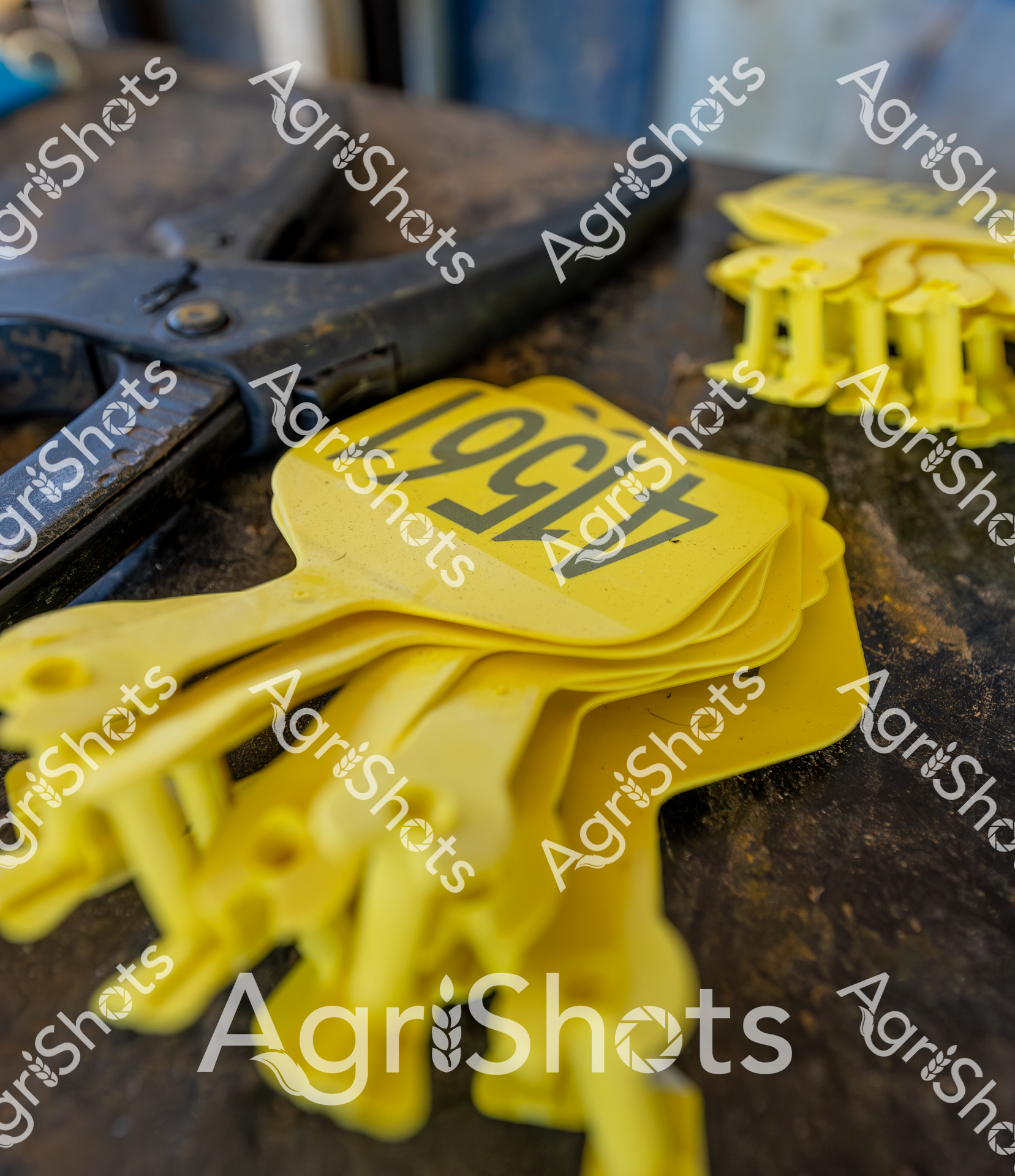
A stack of bright yellow cattle ear tags rests on a weathered, oil-stained workbench, revealing the meticulous process of livestock identification in the Goondiwindi region. The crisp, uniform tags - numbered and ready for use - speak to the precision of modern agricultural management in Queensland's cattle country. Alongside the tags, a well-worn pair of metal pliers suggests the hands-on craftsmanship of rural livestock handling, where each animal is carefully tracked and monitored. The rich textures of the workbench - a patina of grease, rust, and hard work - contrast sharply with the clean, standardized yellow of the tags, capturing the intersection of traditional farming practices and contemporary agricultural technology. These tags represent more than just a numbering system; they are a crucial link in the chain of cattle traceability, ensuring the health, provenance, and economic value of each animal in the vast pastoral landscapes of Queensland. The scene embodies the quiet efficiency of Australian agricultural practice, where every detail matters in the complex ecosystem of rural production.
 Image
Image
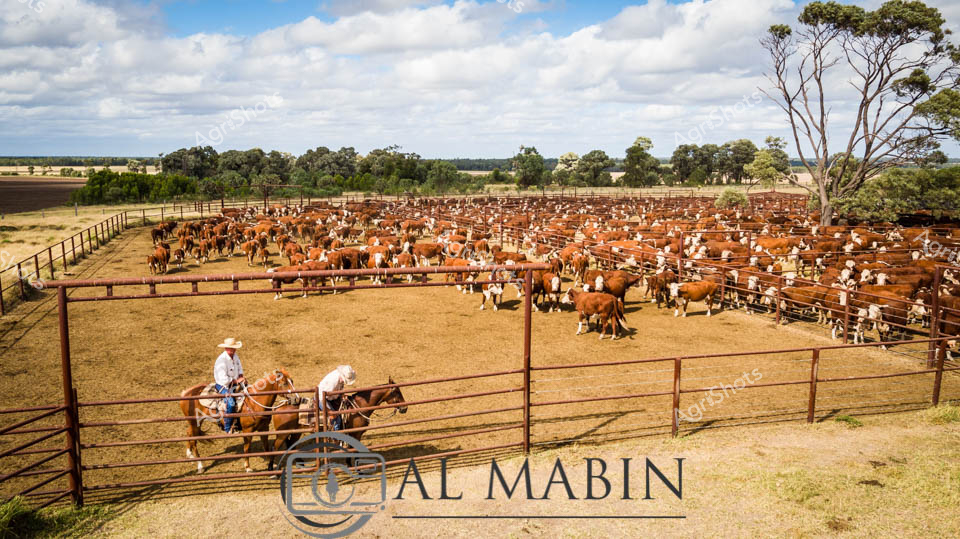
Dusty cattle yards burst with life under a sprawling Queensland sky, where dozens of russet-and-white Hereford cattle cluster within sturdy metal yards. Two stockmen on horseback maneuver carefully among the herd, their wide-brimmed akubra hats casting shadows on the sun-baked earth. The expansive pastoral landscape stretches beyond - scattered eucalyptus trees punctuating the horizon, dry grasslands transitioning into distant bushland under billowing cumulus clouds. Branded with the "AL MABIN" watermark, this image captures the quintessential rhythms of Australian cattle station work - a choreographed dance of human, horse, and livestock managing a substantial beef herd during mustering season. The rich terracotta tones of the cattle contrast against the bleached paddock, while the wooden and metal yard infrastructure speaks to generations of agricultural infrastructure designed to withstand harsh rural conditions. Every element communicates the disciplined skill and resilience inherent in Australian agricultural practice, where generations of knowledge flow as naturally as the landscape itself.
 Image
Image
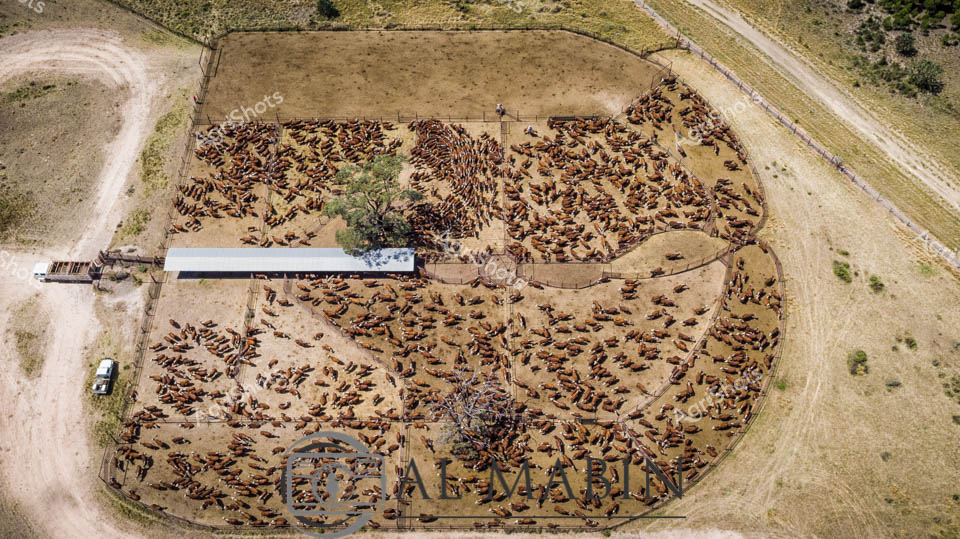
Aerial view of a bustling cattle yard near Goondiwindi, Queensland, capturing the rhythmic energy of rural livestock management. Hundreds of robust Hereford cattle cluster across the dusty, circular holding pen, their rich auburn and white coats creating a living mosaic against the sun-bleached earth. A long metal shed stretches along one edge of the enclosure, providing shade and shelter, while the surrounding landscape reveals the classic expansiveness of Queensland's agricultural terrain - dry grasslands and sparse vegetation stretching to the horizon. Curved fencing delineates the carefully designed yard, allowing strategic movement and containment of the herd during mustering operations. The overhead perspective highlights the intricate dance of cattle management, with animals clustered in tight groups, some near the water trough, others moving slowly across the packed dirt surface. This image encapsulates the precision and scale of modern Australian cattle station operations, where landscape, livestock, and human intervention merge in a complex agricultural ecosystem.
 Image
Image
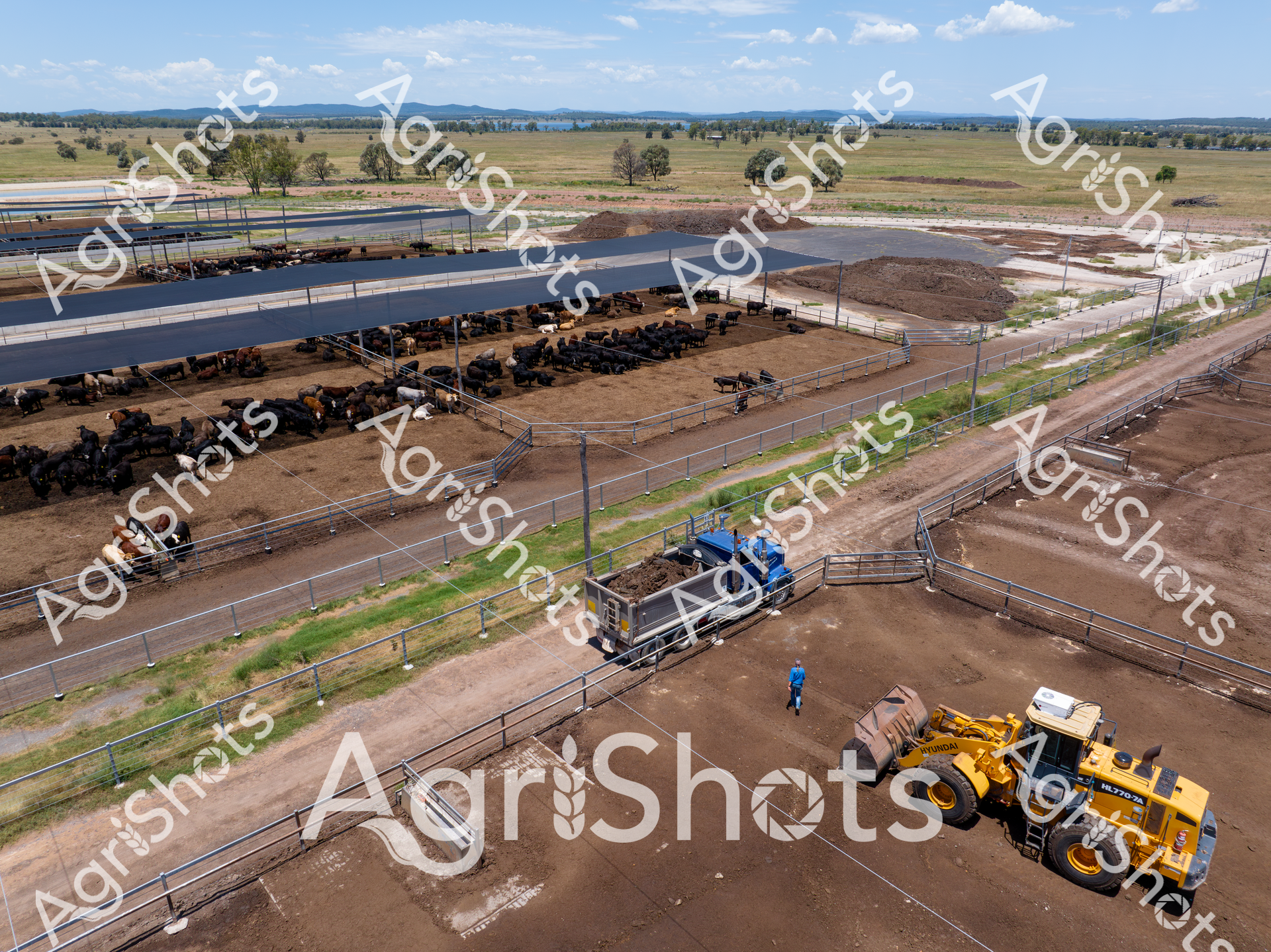
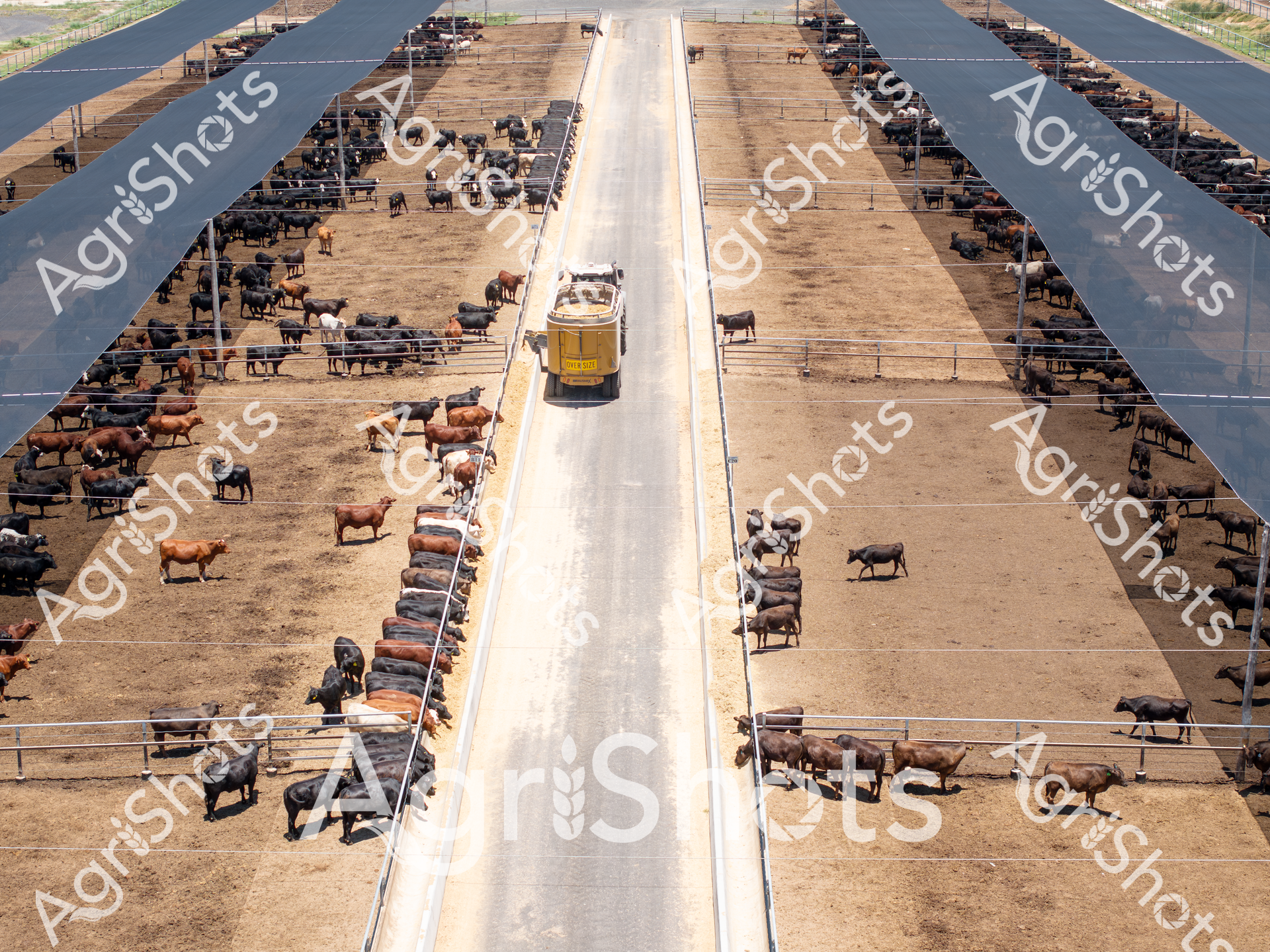
Aerial view of a sophisticated cattle feedlot in the expansive Goondiwindi region of Queensland, capturing the intricate infrastructure of modern agricultural operations. A yellow front-end loader and a blue truck navigate the carefully designed pen system, engaged in critical waste management and maintenance tasks. Rows of black and brown cattle rest under long, sheltered feeding areas, demonstrating the structured approach to livestock care in this high-efficiency agricultural environment. The surrounding landscape stretches out in a classic Australian pastoral scene, with distant mountains and scattered trees creating a golden-hued backdrop under a bright summer sky. Precise fencing and carefully graded pathways showcase the meticulous engineering behind contemporary feedlot design, where animal welfare and operational efficiency converge. The scene pulses with a sense of controlled productivity, highlighting the sophisticated systems that support Australia's vital beef production industry.
 Image
Image
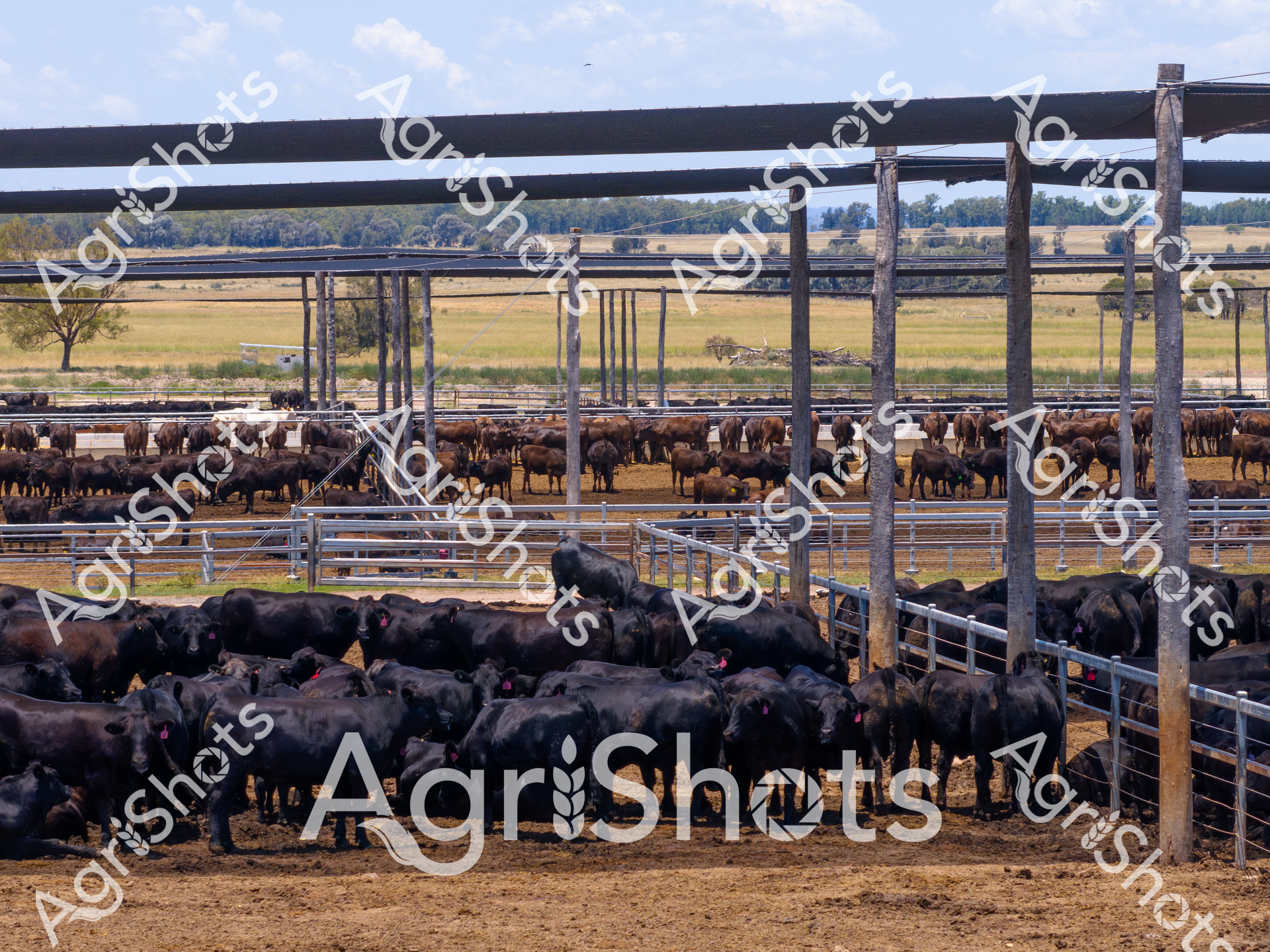
Black Angus and Wagyu cattle cluster densely in a meticulously structured feedlot near Goondiwindi, Queensland, their dark muscular bodies creating a striking contrast against the golden dry pasture and expansive blue sky. Robust timber posts and sleek metal fencing define multiple pens, with carefully engineered shade sails providing critical relief from the intense summer heat. The pristine infrastructure reflects sophisticated modern cattle management, with each pen precisely organized to optimize animal welfare and agricultural productivity. Clusters of black cattle with distinctive pink ear tags stand closely together, their glossy coats highlighting the premium genetic lines of this high-value beef production system. The landscape beyond the feedlot reveals a classic Australian rural panorama - scattered eucalyptus trees, open grasslands, and distant tree lines stretching to the horizon under a luminous cloudscape. This image captures the sophisticated agricultural engineering and careful stock management that defines contemporary Australian beef production, showcasing the intersection of animal husbandry, environmental design, and agricultural innovation.
 Image
Image
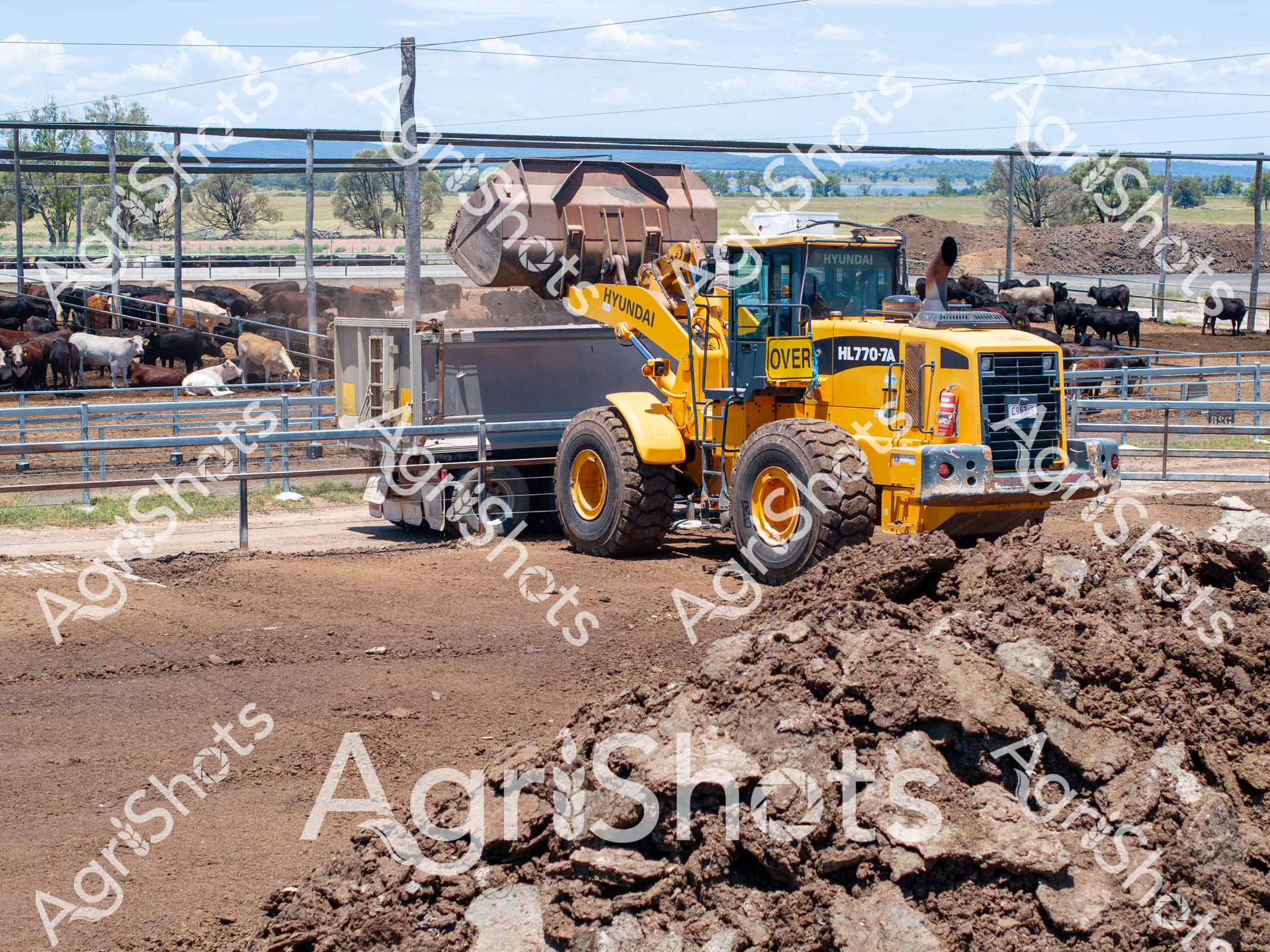
In the harsh summer heat of Queensland's Goondiwindi region, a bright yellow Hyundai HL770-7A wheel loader methodically manages waste and maintains the infrastructure of a bustling cattle feedlot. The powerful machine moves mountains of rich, dark soil and organic matter, working efficiently amidst a backdrop of corralled cattle - a mix of black, brown, and white beef breeds standing in the dusty pens. Overhead power lines and distant tree lines frame the scene, capturing the expansive agricultural landscape typical of Queensland's rural heartland. The loader's vibrant yellow contrasts sharply against the earthy browns and tans of the ground, highlighting the precision and modernity of agricultural waste management techniques. This image encapsulates the critical behind-the-scenes work of livestock facility maintenance, where cleanliness, efficiency, and animal care intersect in the demanding environment of large-scale cattle production. The scene speaks to the technological advancement and hard work that underpins Australia's robust agricultural industry, demonstrating how modern equipment transforms traditional farming practices.
 Image
Image
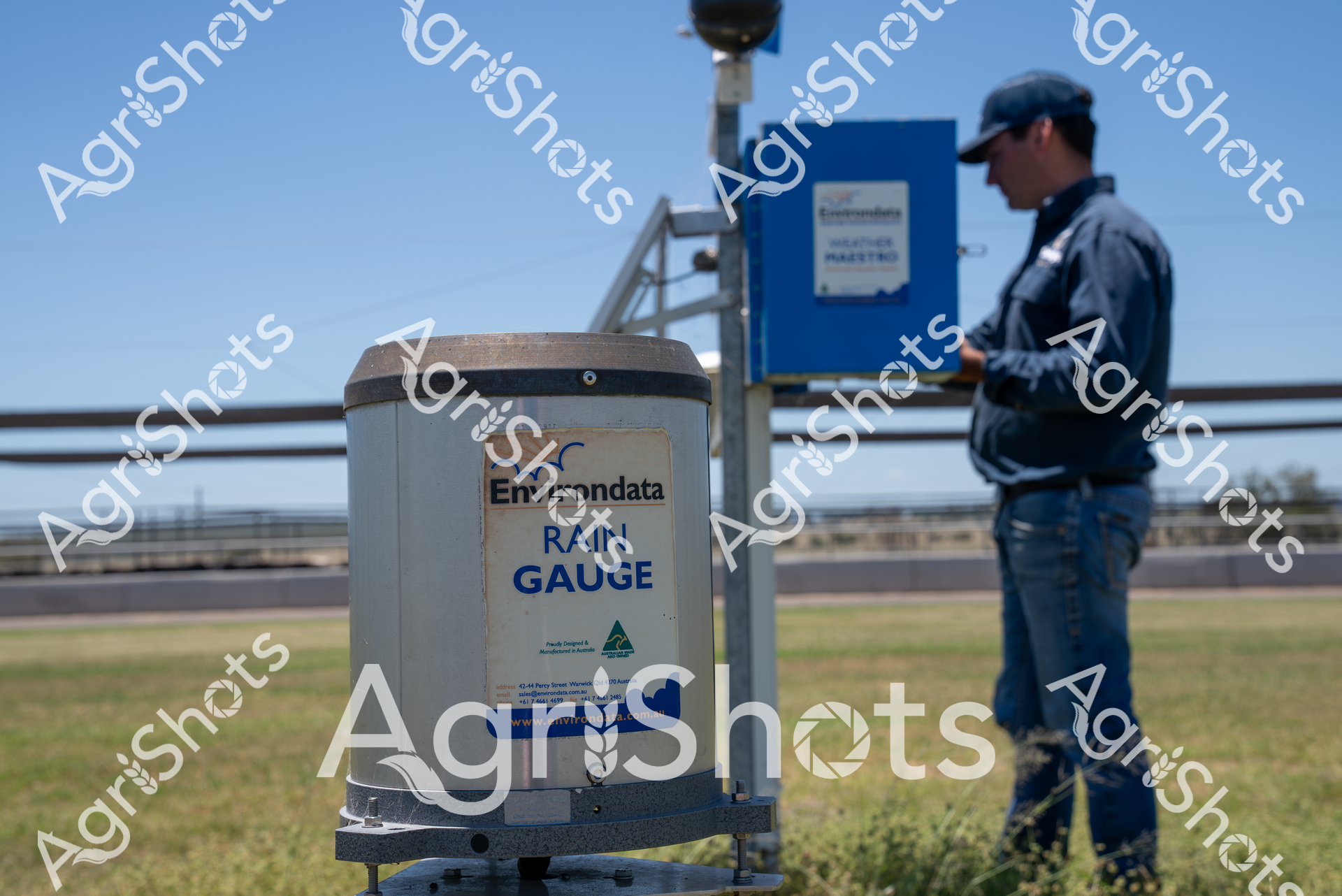
Environdata's precision weather monitoring equipment stands sentinel at a rural Queensland feedlot, capturing the intricate meteorological details of the Goondiwindi region. A robust rain gauge, emblazoned with the Environdata logo, sits prominently in the foreground, its metallic grey surface contrasting against the verdant grass and expansive blue sky. A farm worker, dressed in dark workwear and a cap, stands nearby, suggesting the critical role of accurate environmental data in modern agricultural management. The gleaming blue monitoring station in the background reflects the high-tech approach to agricultural science, tracking rainfall, temperature, and other crucial environmental parameters that inform livestock management and farm operations. The crisp summer landscape speaks to the challenging climatic conditions of Queensland's agricultural zones, where precise measurement can mean the difference between success and struggle for farmers. This image captures the intersection of technological innovation and agricultural resilience, highlighting the sophisticated tools that support Australia's primary industries.
 Image
Image
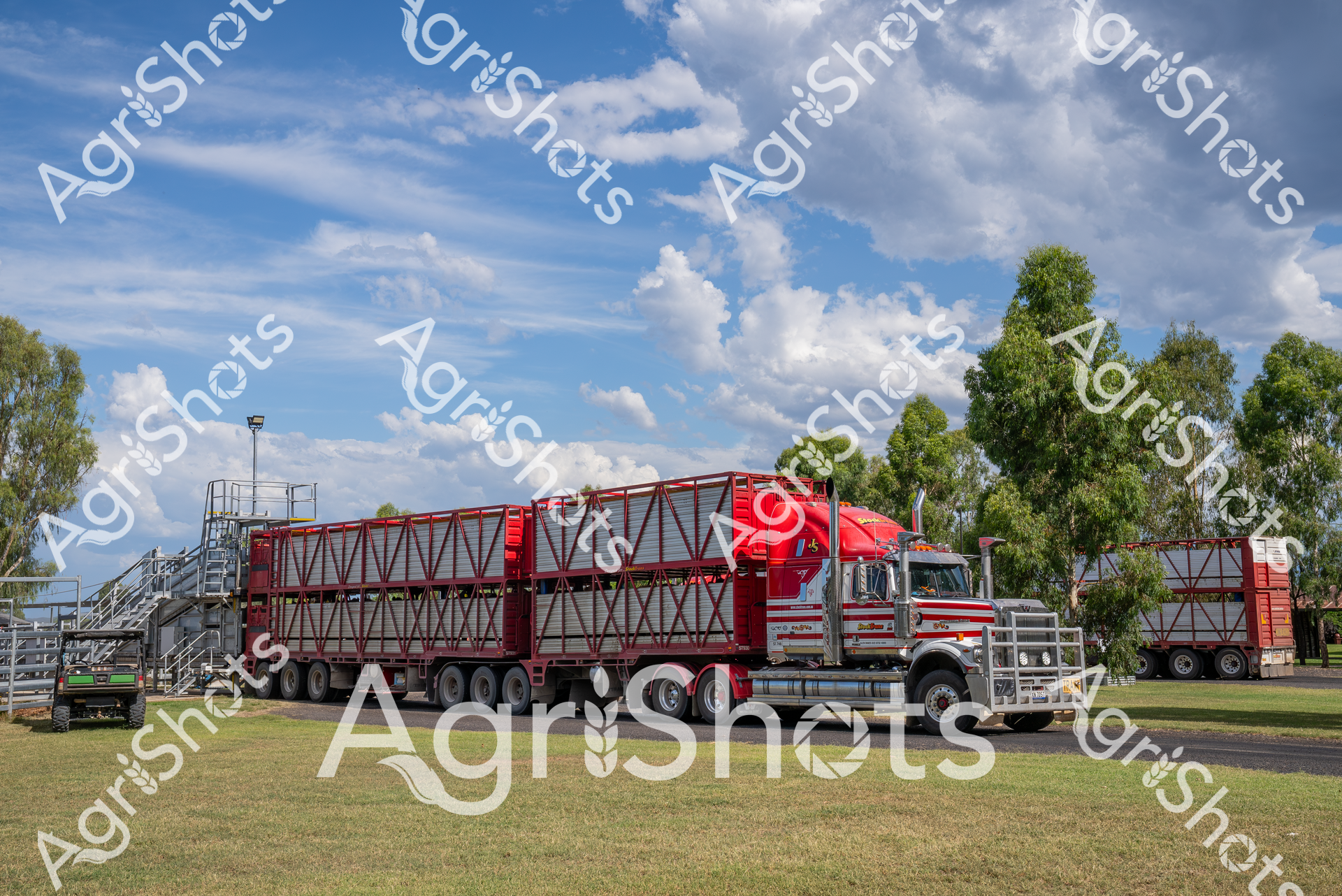
A powerful road train stands ready at a rural livestock loading facility, its gleaming red cab and multiple steel-framed cattle trailers dominating the verdant grassy paddock. The heavy-duty truck, typical of Queensland's long-haul agricultural transport fleet, sits beside a substantial metal loading ramp, representing the critical infrastructure that connects remote cattle stations with national markets. Fluffy white clouds drift across a brilliant blue sky, casting soft shadows on the surrounding eucalyptus trees, highlighting the expansive and serene rural landscape. The truck's multiple decks are meticulously designed for safe and efficient livestock transportation, with robust side panels and sophisticated structural engineering that speaks to Australia's advanced agricultural logistics. Crisp morning light illuminates the scene, revealing the immaculate condition of the vehicle and the carefully maintained rural facility. This image captures the essence of Australia's beef industry - a sophisticated, professional operation that transforms vast pastoral landscapes into a global food supply chain.
 Image
Image
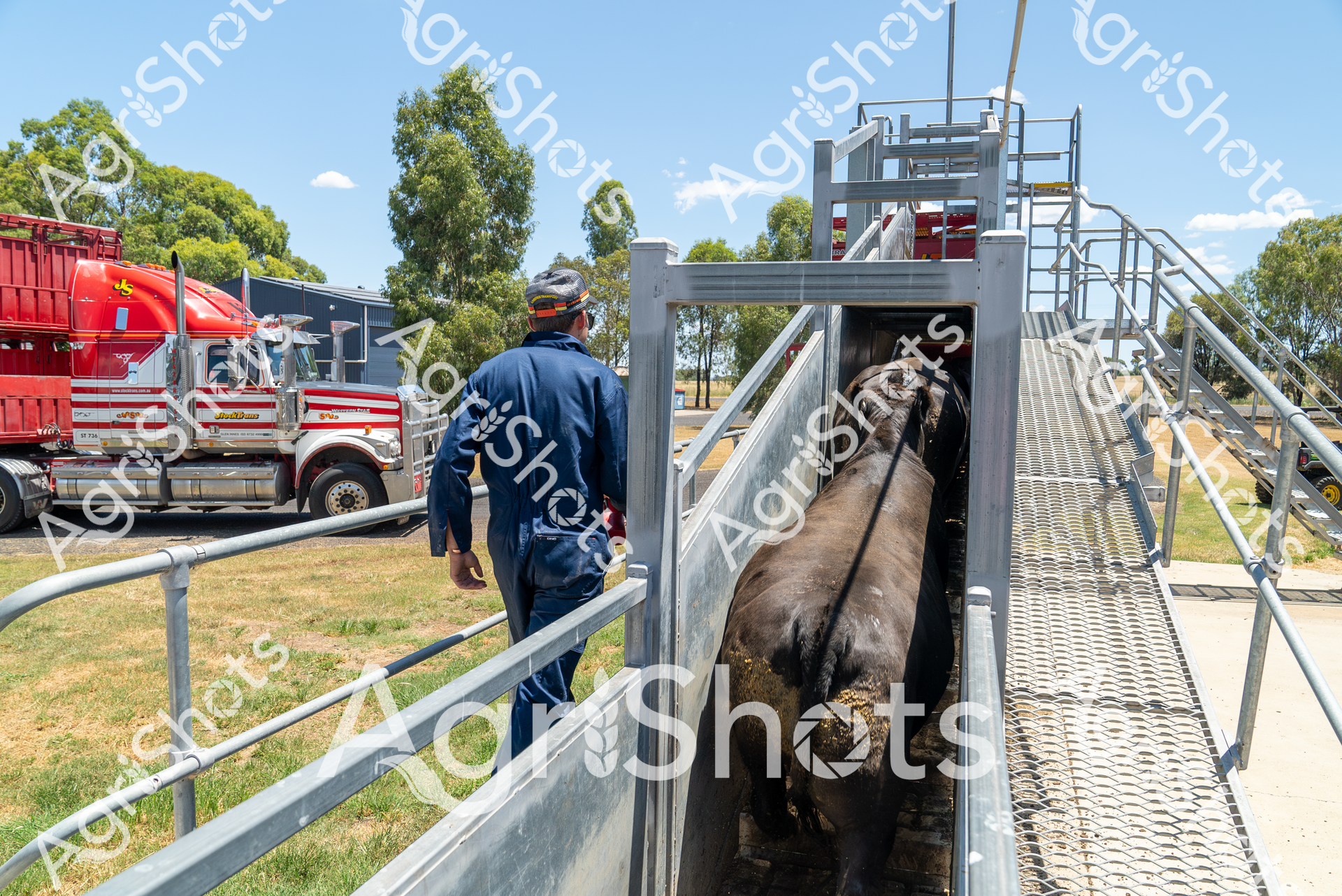
Bathed in the golden light of a Queensland summer, a seasoned livestock handler guides a robust beef cattle up the gleaming metal loading ramp at a rural transport depot. The pristine metallic walkway contrasts sharply with the rich brown hide of the animal, creating a visual narrative of agricultural precision and animal movement. A vibrant red semi-trailer from a local transport company waits in the background, framed by eucalyptus trees and under a cloudless azure sky, embodying the essence of rural Australian livestock logistics. The handler, dressed in a deep navy work uniform and safety cap, moves with practiced expertise, guiding the cattle with minimal stress and maximum efficiency. The meticulously constructed loading infrastructure - with its galvanized steel walkways and carefully designed angles - represents the sophisticated infrastructure that underpins modern Australian agricultural practices. This scene captures a moment of seamless interaction between human skill, animal husbandry, and advanced transport systems, quintessential to the cattle industry in regional Queensland.
 Image
Image
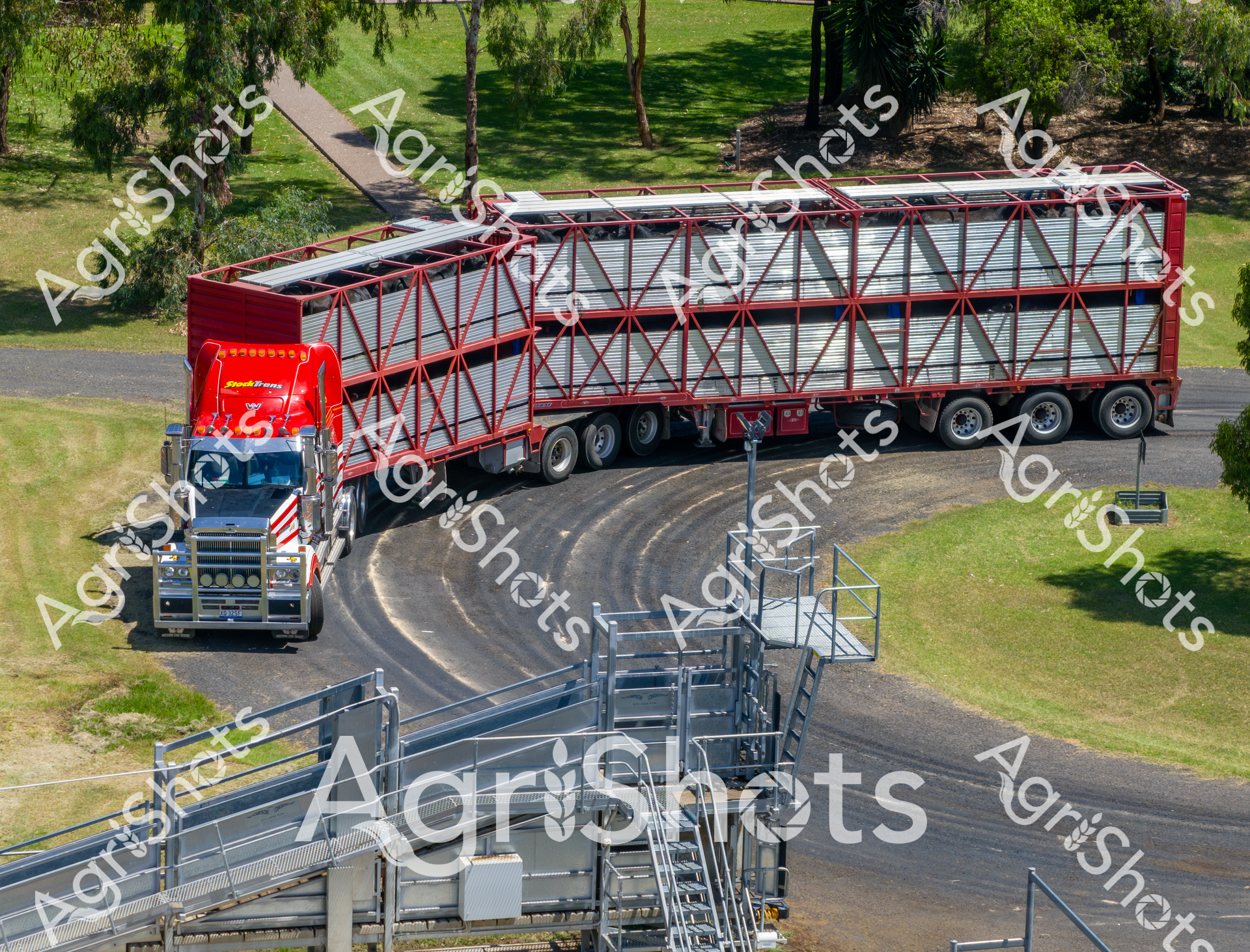
A powerful road train navigates a carefully designed agricultural loading facility, its gleaming red Kenworth prime mover and multi-tiered livestock trailer poised on a curved access road surrounded by lush green pastures and eucalyptus trees. The sophisticated steel loading ramp - a precision-engineered structure of galvanized metal platforms, walkways, and safety gates - stands ready to facilitate the efficient movement of cattle between paddock and transport. Sunlight casts crisp shadows across the immaculately maintained facility, highlighting the robust infrastructure essential to modern Australian livestock logistics. The truck's substantial bullbar and chrome detailing reflect the pride of rural transport professionals who form the critical backbone of agricultural supply chains. Carefully designed curves in both the roadway and loading infrastructure demonstrate sophisticated engineering that prioritizes animal welfare and operational efficiency. This scene encapsulates the technological sophistication of contemporary Australian agricultural transport - a seamless intersection of mechanical precision, pastoral landscape, and professional expertise.
 Image
Image
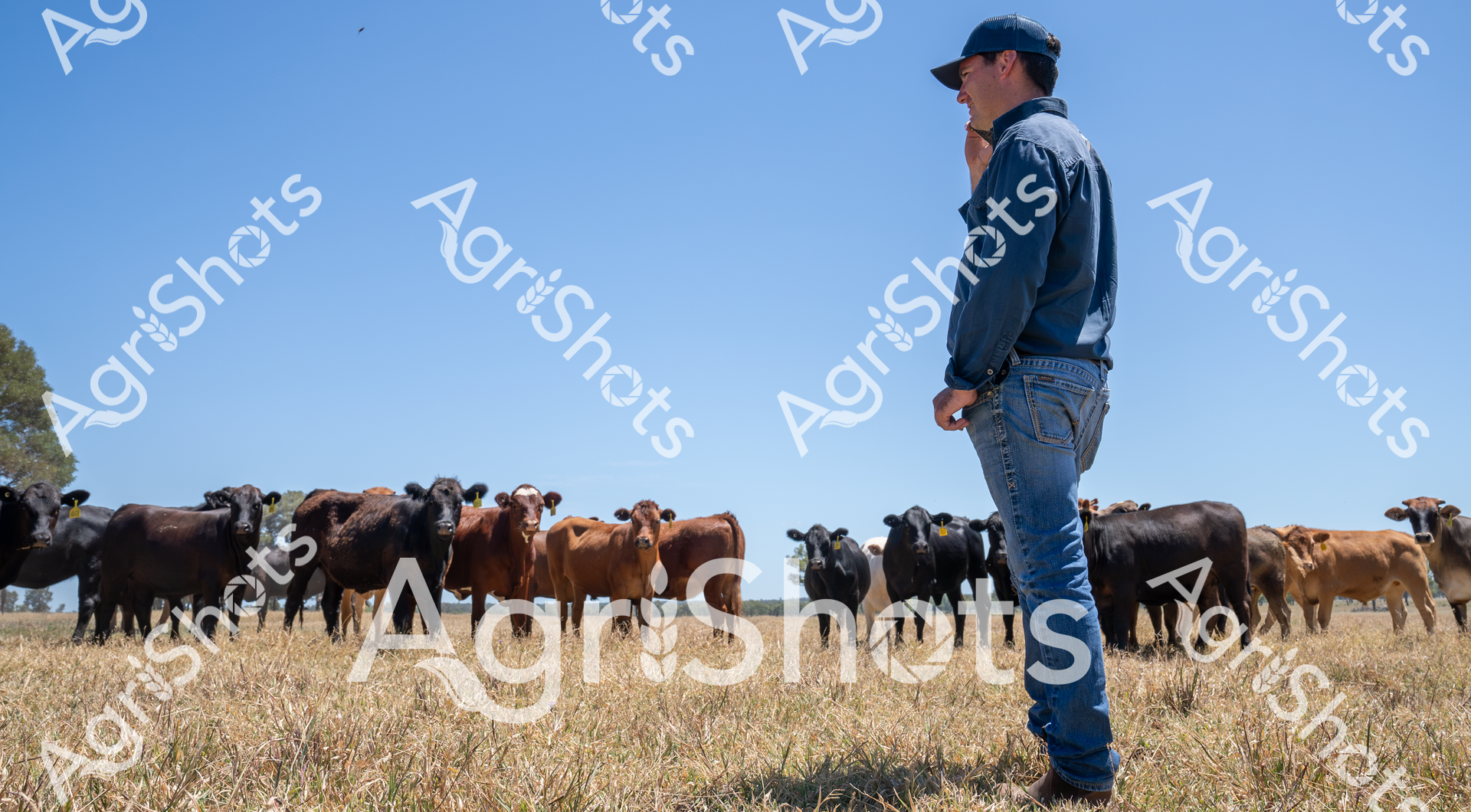
Under the vast, cloudless Queensland sky, a livestock agent surveys a diverse herd of cattle grazing on a sun-scorched paddock near Goondiwindi. Sleek black and rich russet-coloured beasts stand clustered, their muscular forms a testament to the region's robust cattle breeding traditions. The agent, dressed in classic rural workwear - dark blue jacket, well-worn jeans, and a protective cap - stands with quiet authority, his back to the camera, scanning the herd with professional concentration. Yellow ear tags glint on the cattle, marking each animal with its individual identification, a crucial detail in modern agricultural management. The dry grass beneath their hooves speaks to the challenging summer conditions of the Australian agricultural landscape, where resilience and careful stock assessment are key to survival. This image captures a quintessential moment of rural expertise - the silent communication between a skilled livestock professional and the carefully bred animals that are the lifeblood of Queensland's agricultural economy.
 Video
Video
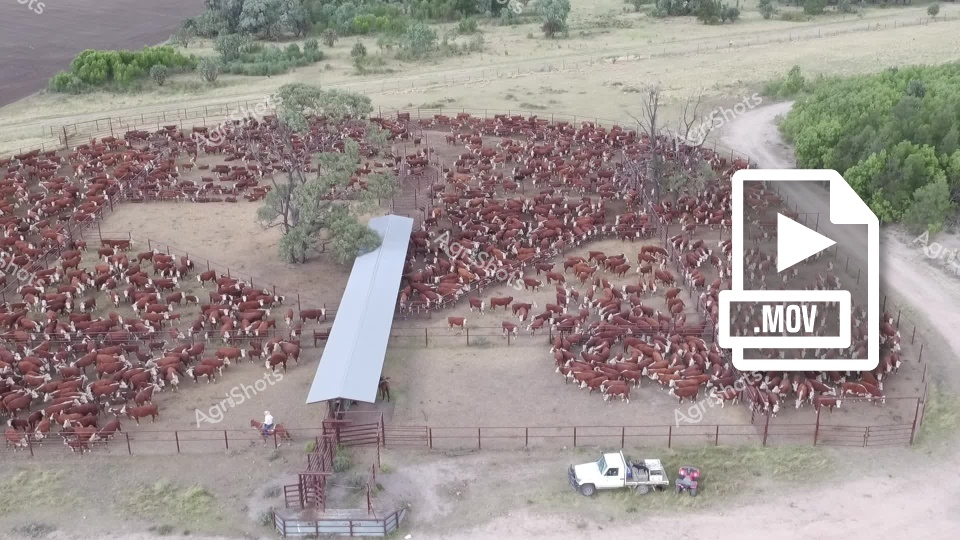
This aerial drone footage captures an expansive cattle yard in a rural Australian setting, showcasing a dense concentration of reddish-brown beef cattle densely packed within a fenced paddock. The video clip presents a striking overhead view of what appears to be a large cattle station, with hundreds of animals clustered tightly around a long metal shelter structure. The surrounding landscape features a mix of sparse trees, grassy terrain, and dusty ground, typical of an arid agricultural region. A white utility vehicle and some additional equipment can be seen parked near the cattle yard's entrance, suggesting active farm management is underway. The cattle appear to be predominantly beef breeds, likely Brahman or Hereford cross, with their uniform reddish coloration standing out against the earthy landscape. The fencing and layout of the yard indicate sophisticated livestock management practices, with carefully designed infrastructure to control and manage large herds. The aerial perspective provides a fascinating insight into the scale of modern Australian cattle farming, revealing the intricate patterns formed by the tightly grouped animals and the strategic design of rural agricultural infrastructure. The clip effectively captures the expansive nature of cattle farming in what seems to be a dry, potentially drought-affected region of rural Australia.
 Image
Image
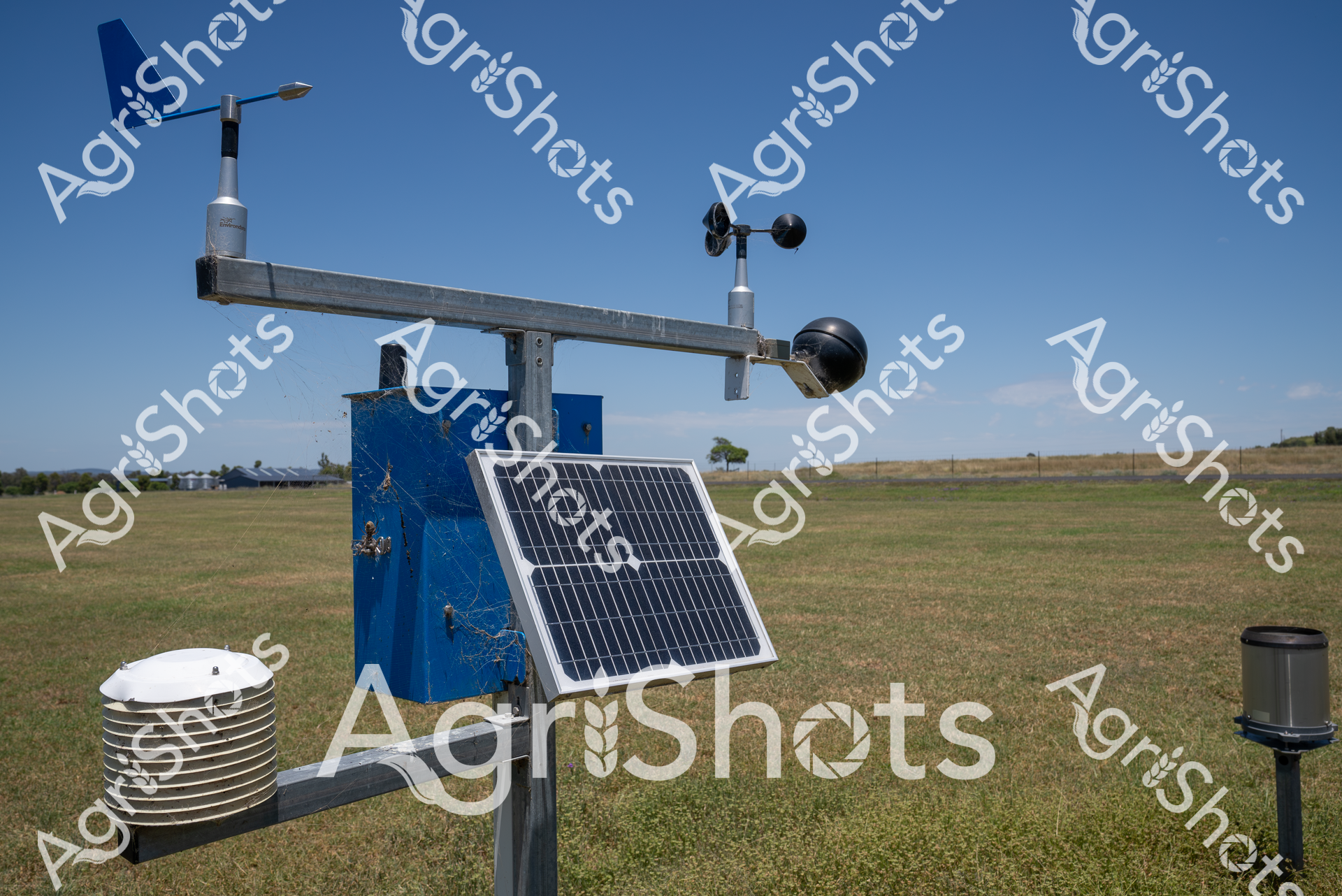
An agricultural weather station stands sentinel in a golden grassland, its sophisticated array of instruments capturing the nuanced environmental data critical to modern farming. A robust blue equipment cabinet anchors the station, housing delicate monitoring technology, while a polycrystalline solar panel provides clean, consistent power to the system. Precision sensors including an anemometer, wind vane, and radiation shield capture atmospheric conditions with scientific accuracy, essential for tracking microclimatic variations in this expansive Queensland agricultural landscape. The meticulously calibrated instruments promise farmers invaluable insights into temperature, humidity, wind speed, and rainfall - pivotal intelligence for crop management and livestock care in the challenging Goondiwindi region. Against the backdrop of a cloudless azure sky and distant solar installations, this weather station represents the sophisticated intersection of agricultural practice and environmental science. The gleaming white and metallic components contrast beautifully with the soft, sun-bleached grasslands, embodying the technological resilience at the heart of Australian agricultural innovation.
 Image
Image
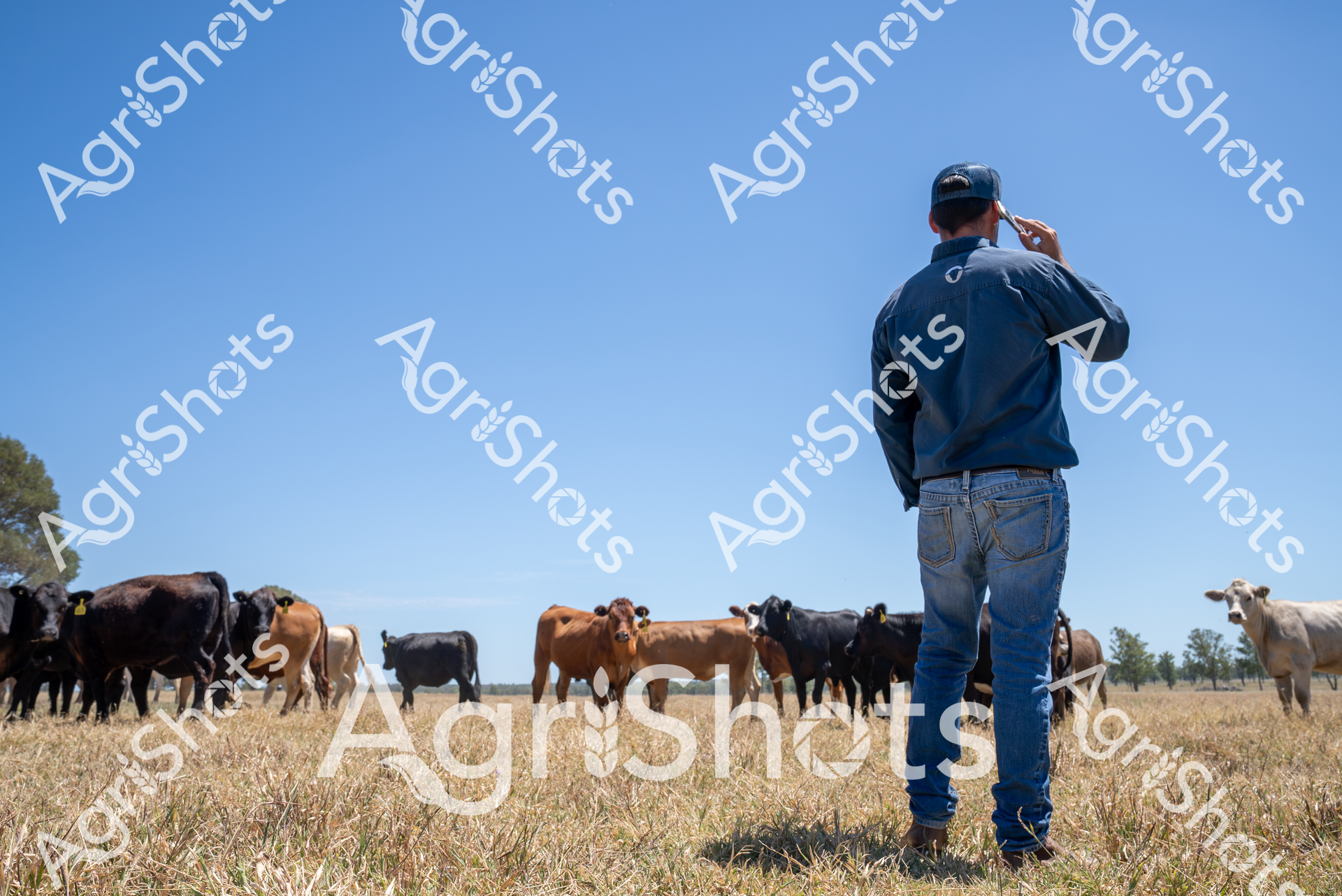
A livestock agent surveys a thriving cattle herd under the expansive Queensland summer sky, standing resolute in classic rural workwear. The paddock stretches out in golden, sun-bleached grass, providing a stark contrast to the diverse herd of black, brown, and white cattle grazing peacefully. Predominantly Angus and Brahman-cross breeds populate the landscape, representing the robust genetic diversity of Australian cattle breeding. The agent, dressed in a navy blue jacket, jeans, and a protective cap, stands with a professional's keen observation, scanning the herd for potential assessment or selection. Trees line the distant horizon, offering a subtle break in the otherwise endless blue sky and flat pastoral landscape. This image captures the essence of Australian agricultural expertise - a moment of quiet professional assessment in the heart of cattle country, where generations of agricultural knowledge are distilled into a single, purposeful glance.
 Image
Image
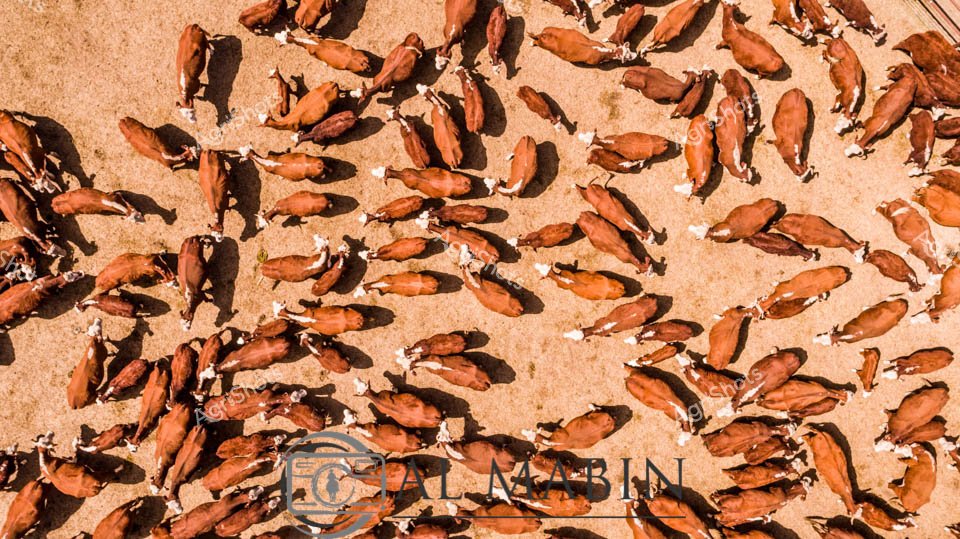
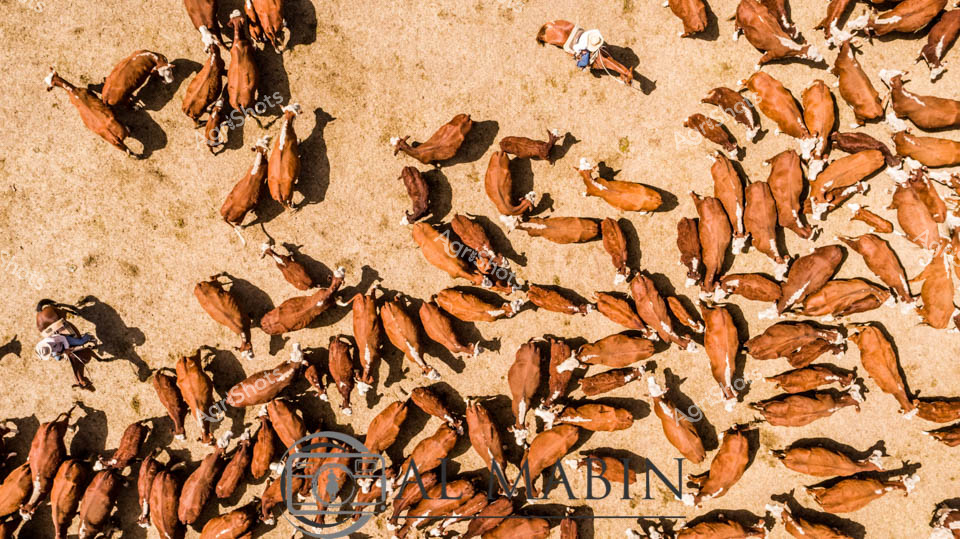
Searing midday sun beats down on a sprawling cattle yard, transforming the sandy ground into a canvas of russet-hued Hereford cattle. Tightly clustered and casting long shadows, the herd stands packed together, their rich copper-red coats gleaming against the pale, dusty terrain. This quintessential Queensland station scene captures the raw intensity of cattle mustering - a choreographed dance of livestock management that defines the heartbeat of Australian agricultural life. Each animal's muscular form reflects generations of careful breeding, their uniform coloration and sturdy frames testament to the Hereford breed's resilience in harsh inland environments. The overhead perspective reveals an intricate organic pattern, with cattle positioned in tight clusters that speak to the skill of stockmen, dogs, and horses working in unison to guide and control the movement. The watermark of Aljabin suggests this is a professional documentation of a critical moment in the cattle production cycle, likely during a muster or yard sorting process. Harsh light and dense clustering underscore the demanding nature of livestock management in Australia's challenging agricultural landscapes.
 Image
Image
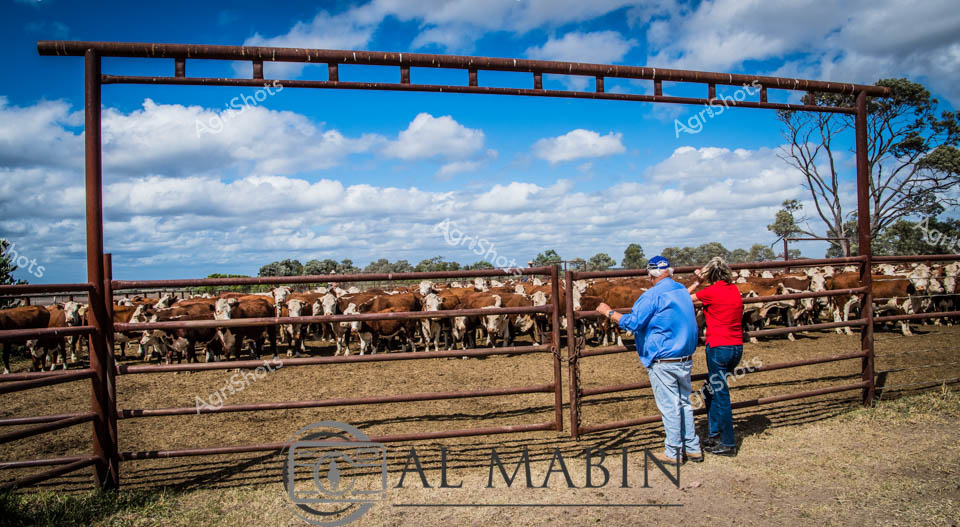
Dusty cattle yards stretch beneath an expansive blue Queensland sky, where fluffy white clouds drift over a classic rural landscape. Two station workers in vivid blue and red jackets stand at the metal yard fence, surveying a compact herd of Hereford cattle tightly grouped in the paddock. The rusty metal yard infrastructure frames the scene, with weathered wooden fence posts and steel rails creating a geometric contrast against the natural terrain of sparse grasslands and distant tree lines. These seasoned agricultural workers carefully assess the livestock, their body language suggesting years of practiced observation and intimate understanding of cattle management. The rich browns and whites of the Hereford breed stand out against the sun-bleached ground, representing the robust genetic lines that thrive in Queensland's challenging agricultural environments. This image captures the quintessential spirit of Australian cattle farming - a blend of human expertise, animal husbandry, and the enduring connection between land, livestock, and the dedicated professionals who work with them.
 Image
Image
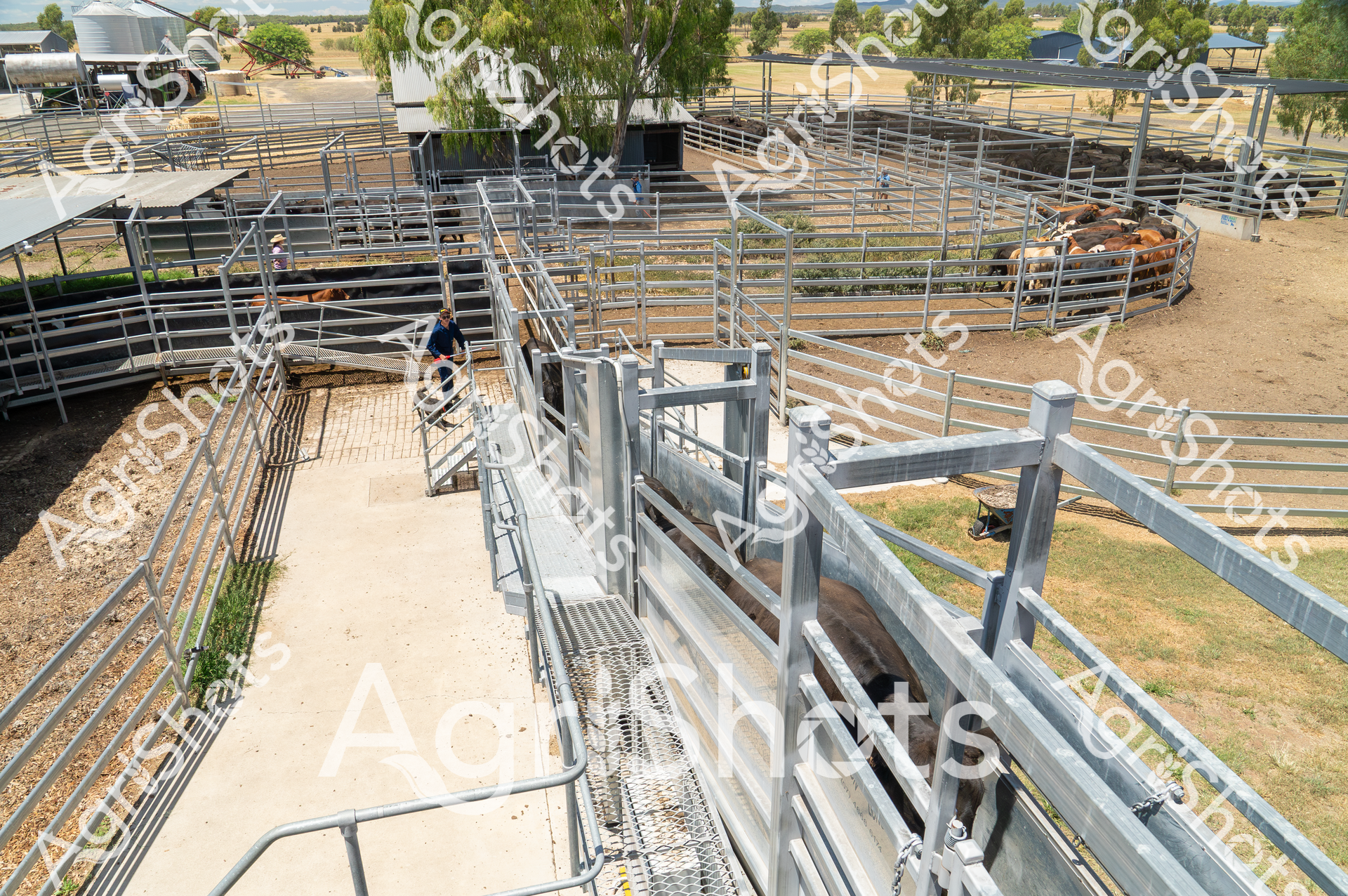
Capturing the precision of modern cattle handling, this aerial view reveals a meticulously designed steel cattle yard near Goondiwindi, Queensland. Gleaming galvanized steel walkways and pens create an intricate maze of controlled movement, allowing stockworkers to efficiently manage and direct cattle with minimal stress. Robust Brahman-cross cattle, their rich brown coats contrasting against the pale sandy ground, navigate the curved race towards a central loading ramp under the dappled shade of native eucalyptus trees. The sophisticated infrastructure reflects the high standards of Australian livestock management, with elevated walkways providing workers clear sightlines and safe access throughout the sorting and loading process. Harsh summer sunlight bathes the scene, highlighting the metallic infrastructure against a backdrop of golden paddocks and distant rural landscape, embodying the resilience and technical sophistication of contemporary Australian cattle farming. Every architectural element of these yards is engineered for animal welfare and operational efficiency, representing the cutting edge of agricultural infrastructure in Queensland's pastoral regions.
 Image
Image
Weathered stockman astride a bay horse, surveying the drought-stricken pastures of Queensland's western downs. Dressed in a classic pearl-snap shirt and well-worn cowboy hat, the experienced horseman embodies the resilience of Australia's rural workforce. His mount stands steady, bridled and ready for a day of cattle mustering across the arid landscape. Fencing and sparse grasslands stretch out behind them, telling the story of generations of agricultural persistence in challenging environmental conditions. The clouded sky hints at the unpredictable nature of outback life, where hope and hardship ride side by side. Every crease in the stockman's face speaks to years of working closely with the land, a testament to the enduring spirit of Australian agricultural communities.
 Image
Image
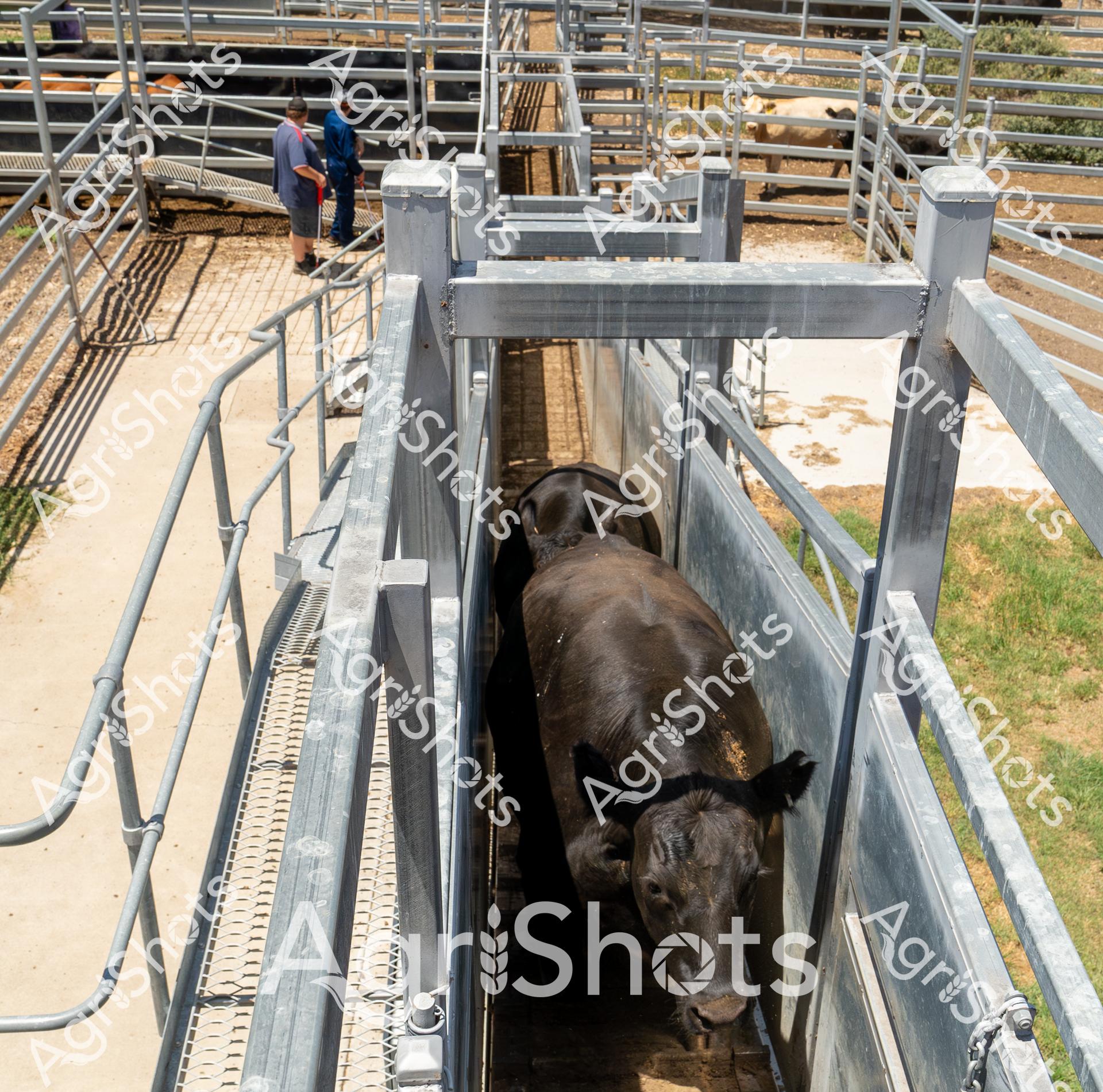
Muscled black Angus cattle navigate the gleaming galvanized steel loading ramp, their powerful frames moving deliberately through the precision-engineered livestock handling system. The meticulously designed yard infrastructure reflects cutting-edge Australian agricultural engineering, with robust metal walkways and channeled pathways engineered to minimize stress during cattle transportation. In the background, a rural worker dressed in blue and dark tones monitors the loading process, embodying the calm professionalism of modern cattle management. Harsh summer sunlight casts sharp shadows across the sandy yard, highlighting the metallic infrastructure's clean lines and the cattle's sleek, dark coats. The scene captures the intersection of animal husbandry and technological innovation, where carefully designed infrastructure supports the efficient movement of livestock in the challenging Queensland agricultural landscape. Every element - from the textured metal walkways to the controlled movement of cattle - speaks to the precision and care inherent in Australian cattle farming.
 Image
Image
Aerial panorama of a bustling cattle yard near Goondiwindi, Queensland, capturing the rhythmic movement of a large herd of burnt-orange Hereford cattle. The sun-drenched earthen ground creates a stark canvas, with metallic stock yard fencing defining geometric pathways guiding the livestock's flow. Dozens of muscular cattle cluster and disperse across the frame, their rich russet coats casting long shadows in the harsh midday light, revealing the intricate choreography of rural stock management. Silhouetted yard infrastructure and fencing create angular lines that contrast with the organic clustering of the animals, showcasing the precision of modern pastoral operations. This expansive overhead view transforms an everyday mustering scene into an almost abstract agricultural tableau, highlighting the scale and complexity of Queensland's beef production landscape. The image pulses with the energy of agricultural work - a dynamic snapshot of Australia's robust cattle industry in motion.
 Image
Image
A Cadelga-branded agricultural worker inspects raw cotton seed within a spacious farm machinery shed, surrounded by industrial agricultural equipment. The worker, dressed in a dark blue work shirt and cap, carefully handles a cluster of raw cotton seed, with subtle seed fragments falling to the concrete floor. In the background, a substantial yellow feed mixer truck sits adjacent to a large tractor, while an overhead white storage tank completes the industrial agricultural setting. Sunlight filters through the open shed doorway, casting soft shadows across the concrete floor and highlighting the textural details of the cotton seed. The scene captures a moment of quality control and agricultural expertise, with the Cadelga branding suggesting a professional approach to cotton production and processing. The color palette of navy blue, yellow, and neutral concrete tones creates a robust, functional atmosphere typical of modern Australian agricultural operations in the Goondiwindi region of Queensland.
 Image
Image
Black Angus cattle line a concrete feed bunk in a carefully managed feedlot, their sleek dark bodies creating a rhythmic pattern against the golden straw bedding. Precision agricultural practices are evident in the uniform metal feeding barriers and meticulously arranged feeding area, typical of advanced livestock management in Queensland's southern downs region. Each animal wears a bright yellow ear tag, marking them as carefully tracked livestock in a modern beef production system. The summer sunlight casts sharp shadows across the concrete and straw, highlighting the muscular frames of the cattle as they feed in unison, their heads positioned carefully between steel dividers to ensure controlled and efficient nutrition. The scene captures the industrial scale of contemporary beef production, where individual animal care meets large-scale agricultural efficiency. Yellow ear tags and the metallic blue-gray of the feeding barriers provide subtle color accents against the rich dark browns of the cattle and the warm golden tones of the feed.
 Image
Image
Aerial vista of a sprawling cattle muster across a sun-baked Queensland station landscape. Burnished copper-red Hereford cattle cluster and scatter across the dusty earthen yards, their muscular bodies casting long shadows in the harsh midday light. Stockmen and working dogs move strategically among the herd, orchestrating a precise dance of movement and control characteristic of Australian pastoral life. The rich terracotta tones of the cattle contrast dramatically against the pale, parched ground, revealing the unforgiving summer conditions of the Goondiwindi region. Each animal is precisely positioned, reflecting generations of expert mustering techniques that balance efficiency with animal welfare. The watermarked image captures the raw essence of Australian cattle farming - a ballet of human skill, animal husbandry, and landscape, where every movement is calculated and every creature plays a critical role in the agricultural ecosystem.
 Image
Image
Brilliant aerial capture of a high-efficiency cattle feedlot in Queensland's agricultural heartland, showcasing precision livestock management. Rows of carefully penned cattle—a mix of black, brown, and red breeds—occupy meticulously organized dirt-floored enclosures divided by clean concrete lanes and sturdy metal fencing. A yellow feed distribution truck travels the central lane, delivering nutrition with systematic precision, while cattle cluster near feeding zones and rest areas under strategically positioned shade sails. The harsh summer landscape reveals a dusty, ochre-toned environment typical of Queensland's agricultural regions, with uniform pens demonstrating modern industrial-scale beef production techniques. Each paddock is strategically designed to optimize animal welfare, movement, and feeding efficiency, representing the sophisticated engineering behind contemporary Australian cattle farming. The overhead perspective reveals the geometric perfection of agricultural infrastructure, where every square meter is purposefully utilized to maximize livestock productivity in a challenging climate.
 Image
Image
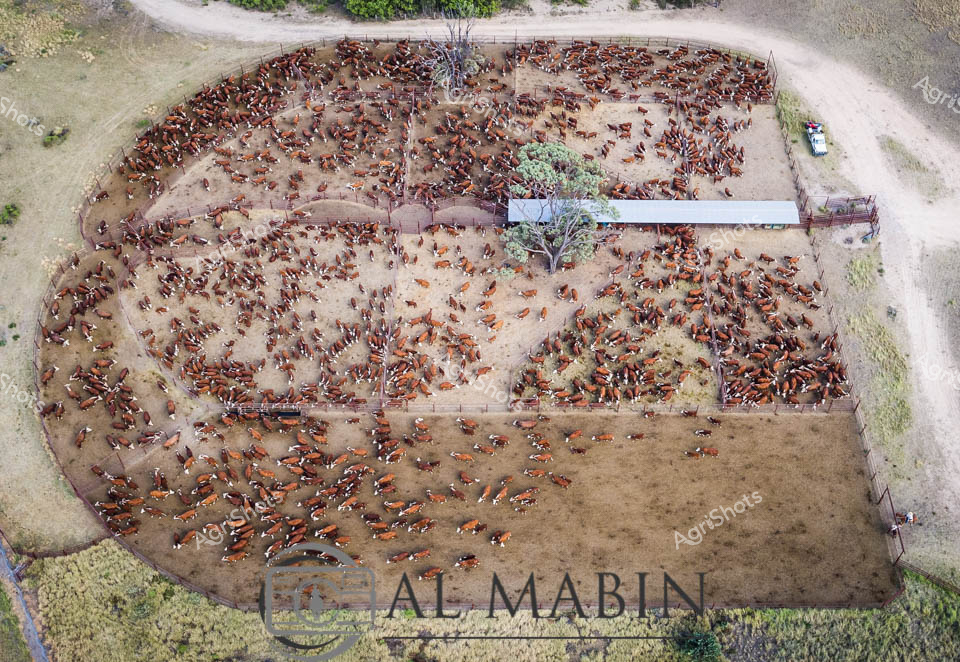
Aerial vista of Al Mabin's expansive cattle yards, a quintessential Queensland cattle station landscape captured from above. Hundreds of rich rust-red and chestnut Hereford cattle cluster within intricately designed holding pens, their bodies creating a living mosaic against the dusty earth. A central tree provides minimal shade in the harsh Australian pastoral environment, while a long steel shelter and robust fencing define the stockyard's infrastructure. The birds-eye perspective reveals the meticulous design of agricultural management, with cattle strategically grouped and controlled - a testament to generational farming expertise and the precision of modern cattle husbandry. Warm earth tones dominate the scene - browns, tans, and burnt oranges of soil and cattle hide blending seamlessly, showcasing the symbiotic relationship between land and livestock. This image encapsulates the raw beauty of Australian agricultural practice: organized, pragmatic, and deeply connected to the rugged landscape of rural Queensland.
 Image
Image
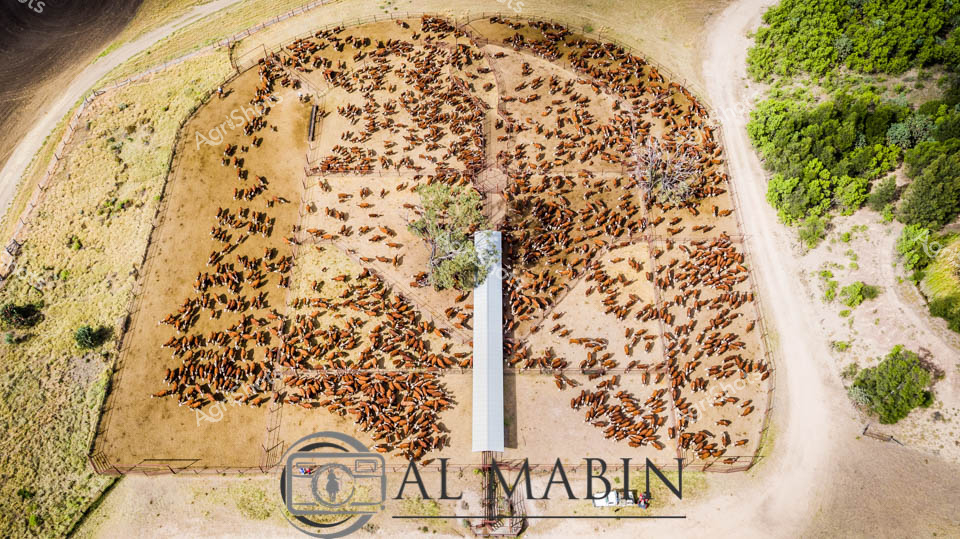
Aerial view of a vast cattle yard near Goondiwindi, Queensland, revealing a meticulously organized agricultural landscape. Hundreds of rich russet and brown Hereford cattle cluster across a symmetrical paddock divided by a central metallic laneway, their bodies creating a living tapestry against the sun-bleached earth. The precision of the yard's design speaks to generations of pastoral expertise, with carefully managed movement routes allowing for efficient stock handling and mustering. Surrounding the yard, the landscape transitions from dusty golden grasslands to verdant green woodland edges, capturing the quintessential Australian rural ecosystem. A watermark from Al Mabin's photography collection anchors the bottom left, signaling the professional documentation of this quintessential Queensland cattle station operation. The overhead perspective transforms the working infrastructure into an almost artistic composition, highlighting the intricate relationship between agricultural practice and landscape design.
 Image
Image
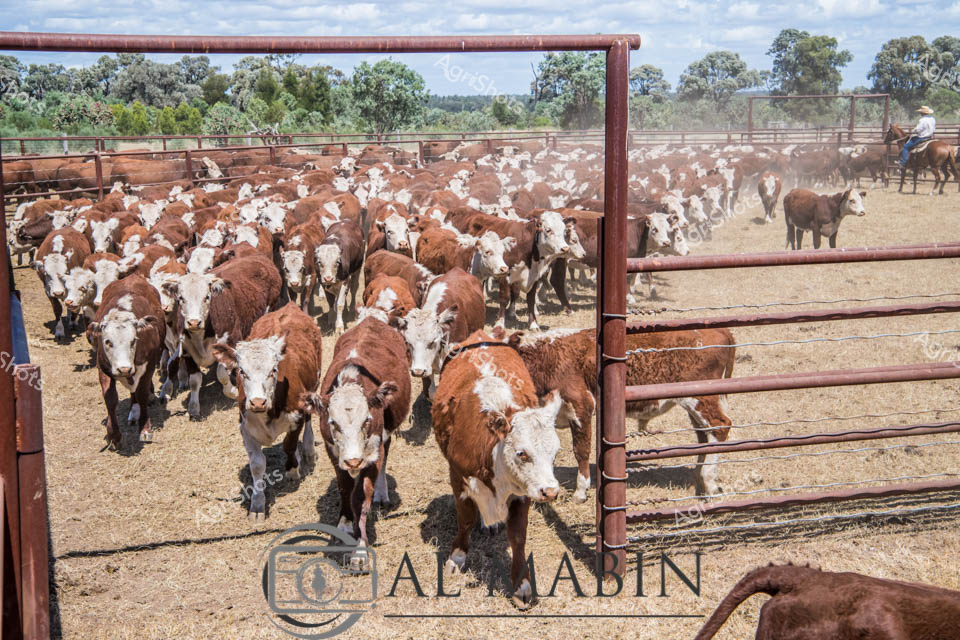
Hereford cattle cluster tightly in rusty red cattle yards, their distinctive white faces and rich reddish-brown coats gleaming under the pale Queensland sky. A dusty paddock stretches behind the herd, framed by weathered steel gates and distant eucalyptus trees, capturing the quintessential landscape of a vast Australian cattle station near Goondiwindi. A stockman on horseback oversees the mob, his silhouette a testament to the enduring traditions of rural cattle management. The animals bunch together, creating a living tapestry of muscular bodies and alert expressions, representing the robust Hereford breed prized for beef production across Australia's northern pastoral regions. Fine dust rises around their hooves, adding a sense of movement and energy to the scene, while the meticulously maintained yards speak to the professional management of this agricultural enterprise. The image radiates the quiet intensity of mustering - a critical process in maintaining and moving cattle across the expansive landscapes of rural Queensland.
 Image
Image
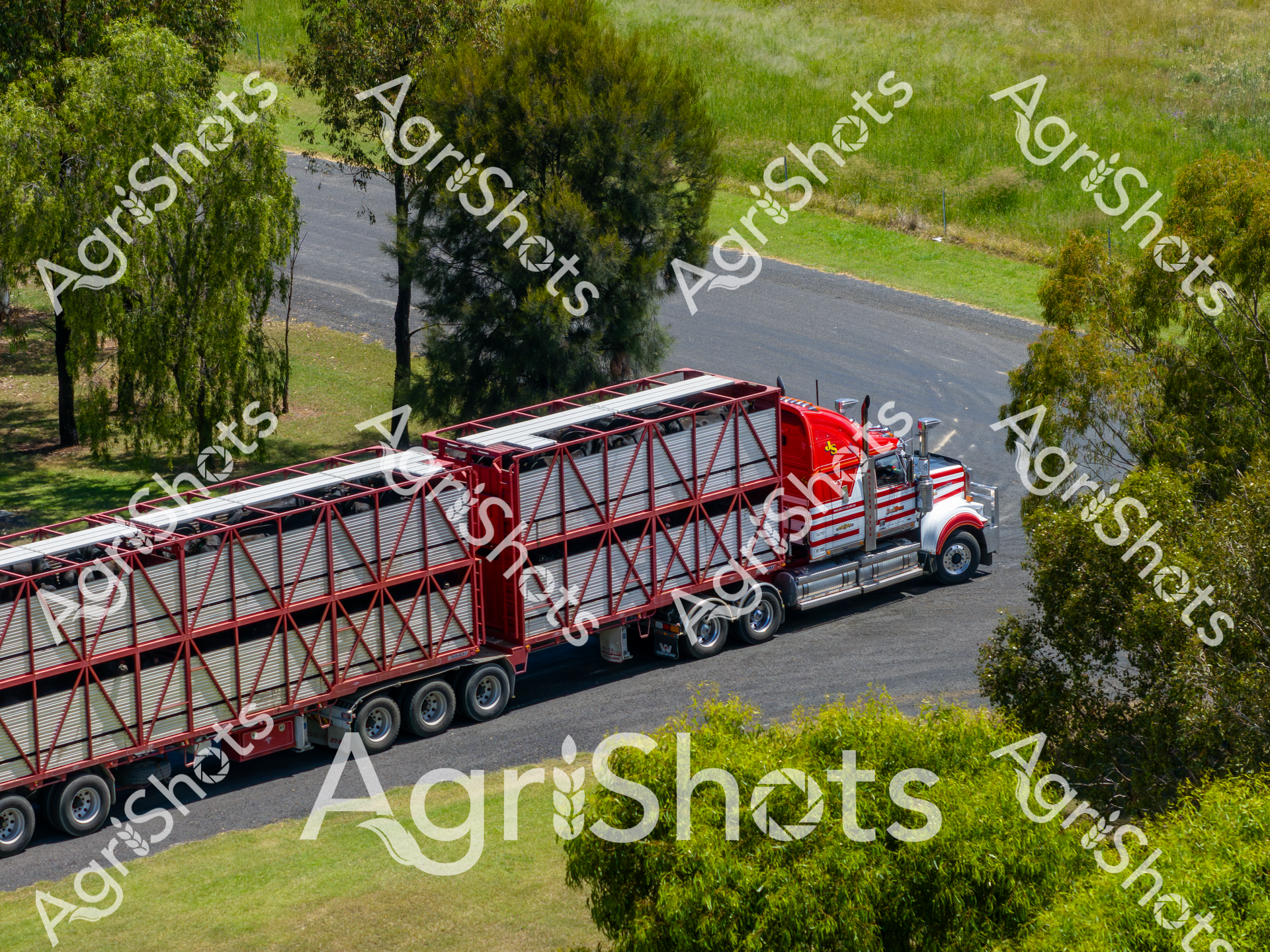
A crimson and white heavy-duty livestock transport truck navigates a sweeping rural highway in the Goondiwindi region of Queensland. The massive multi-axle road train winds through a lush pastoral landscape, framed by verdant trees and grasslands typical of southern Queensland's agricultural heartland. Its robust steel livestock trailer, with intricate red lattice framework and white panels, speaks to the sophisticated engineering required for long-distance cattle transportation across Australia's vast agricultural territories. The Kenworth prime mover, a quintessential icon of rural Australian freight logistics, gleams with polished chrome and bold stripes, representing the resilience and precision of the nation's agricultural supply chain. Sunlight cascades across the scene, highlighting the truck's metallic contours and the surrounding greenery, capturing the dynamic intersection of modern transportation infrastructure and the timeless Australian rural landscape. This image embodies the critical role of road transport in connecting remote agricultural regions, moving livestock between grazing properties, saleyards, and processing facilities.
 Image
Image
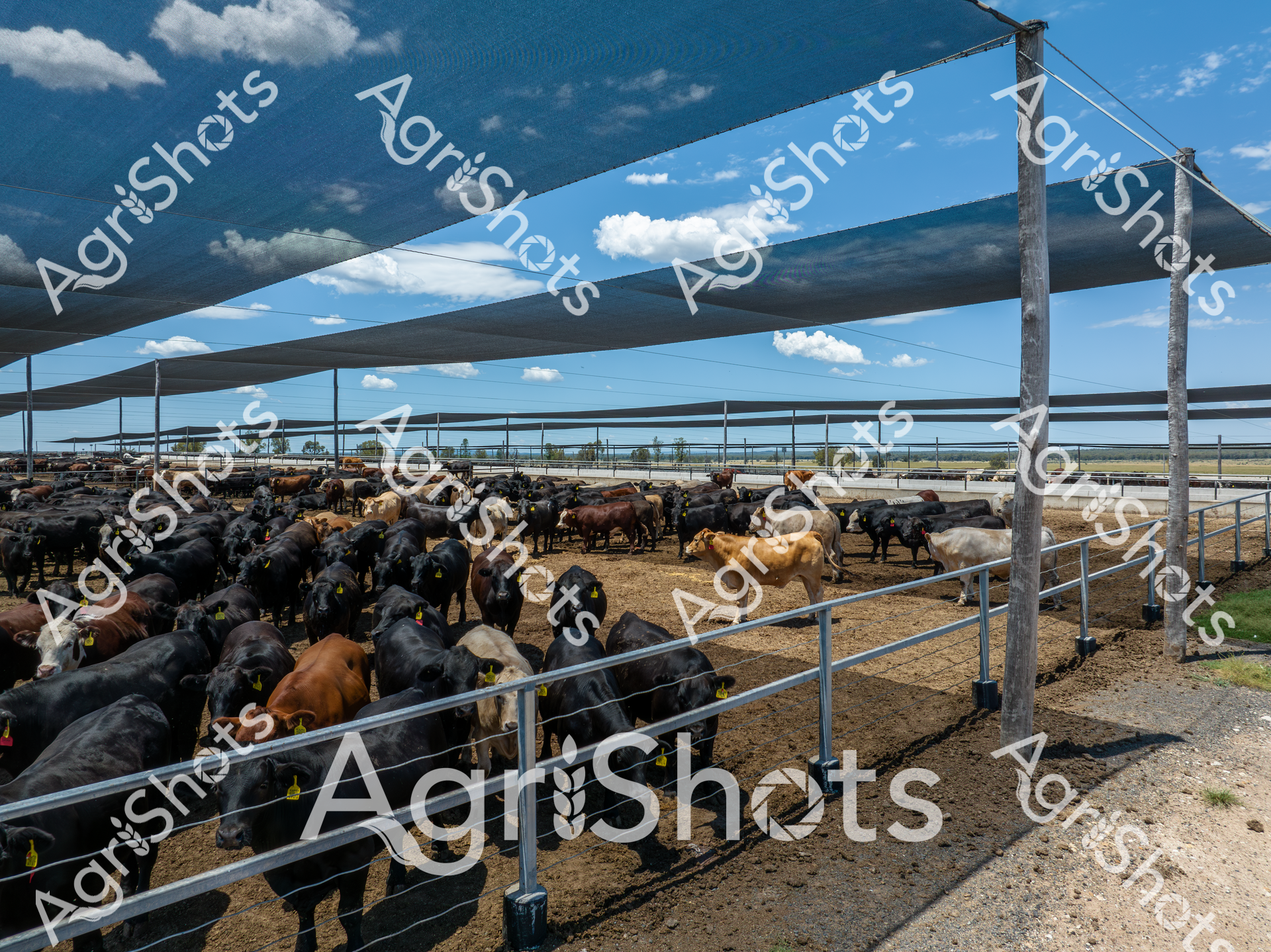
Compact and tightly grouped, a diverse herd of beef cattle cluster within a meticulously engineered feedlot near Goondiwindi, Queensland. Sleek black Angus cattle intermingle with rich russet-brown and cream-colored animals, each bearing a distinctive yellow ear tag, suggesting careful livestock management. Expansive shade sails stretch overhead, providing critical protection from the intense summer sun, their geometric lines creating a striking contrast against the brilliant blue sky dotted with pristine white clouds. The carefully constructed metal railings and packed earth paddock demonstrate sophisticated agricultural infrastructure, designed to optimize cattle weight gain and animal welfare in the challenging Queensland climate. Yellow ear tags and the uniform layout reveal a professional, data-driven approach to cattle production, where each animal represents a carefully tracked investment. The scene captures the intersection of modern agricultural science and traditional cattle farming, showcasing how Queensland's beef industry balances efficiency, animal care, and environmental adaptation.
 Image
Image
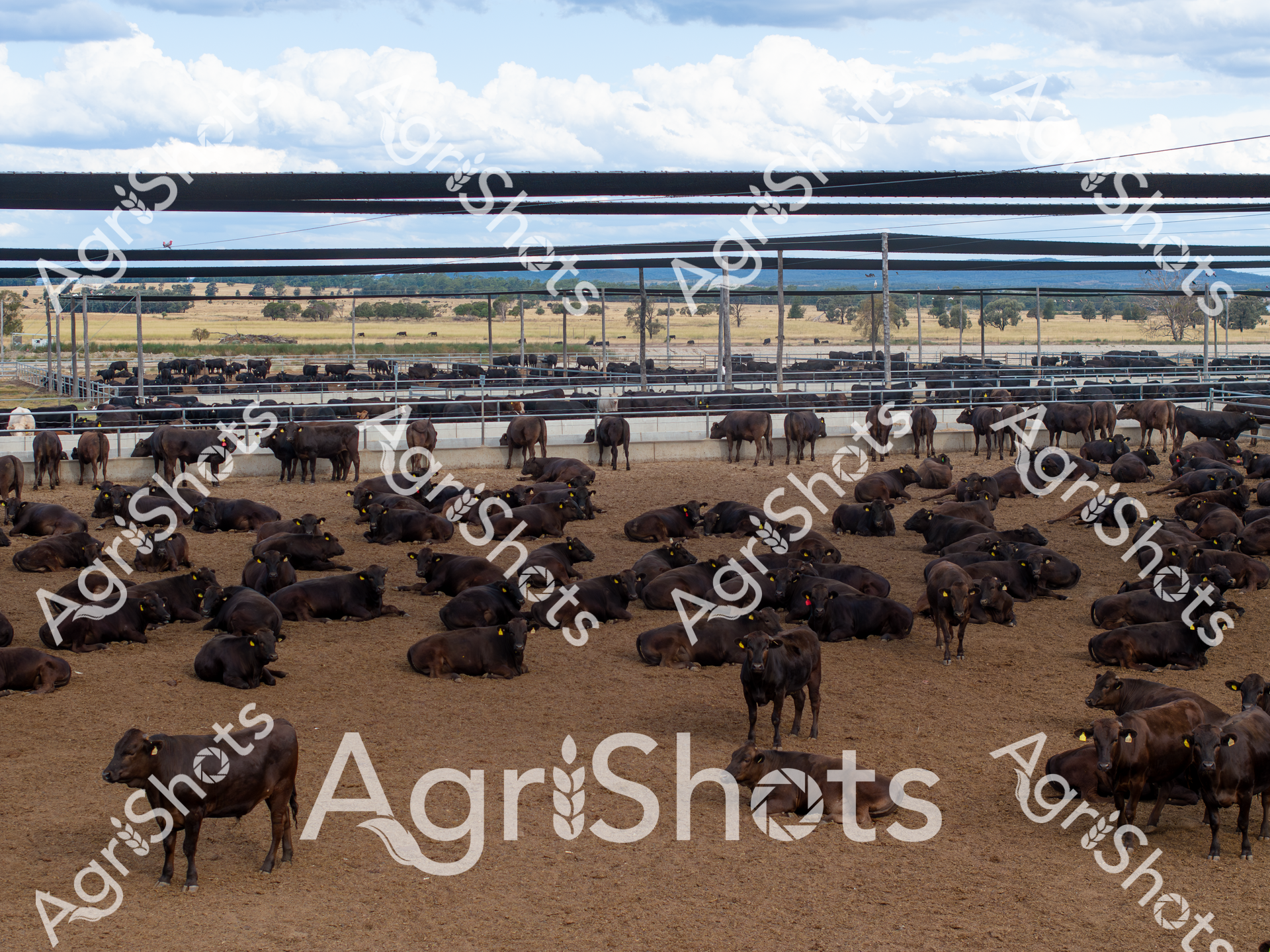
Black Angus cattle crowd a meticulously managed feedlot near Goondiwindi, Queensland, capturing the essence of modern Australian livestock production. Stretched across the dusty paddock, robust shade sails provide critical protection from the intense summer heat, allowing the herd to rest and regulate their body temperature. Yellow ear tags punctuate the sea of dark cattle, marking each animal for tracking and management, while the surrounding landscape reveals a classic southern Queensland rural vista of scattered eucalyptus trees and golden grasslands under a dramatic cloudscape. Some cattle stand alert while most are recumbent, demonstrating the calm efficiency of controlled agricultural environments. The steel feeding and holding pens create a geometric framework, highlighting the systematic approach of contemporary cattle farming. This image embodies the technological precision and animal welfare considerations of Australian beef production, where strategic infrastructure and careful herd management converge to optimize livestock health and agricultural productivity.
Well, you've ploughed through the whole field!
No more crops to harvest here, mate.
Try searching for something else in our library of 50,000+ royalty-free media: