 Video
Video
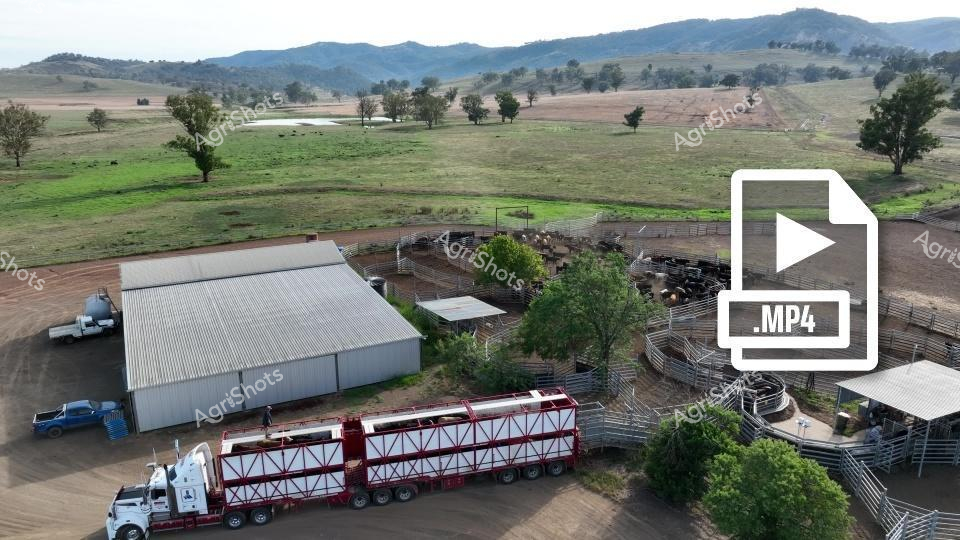
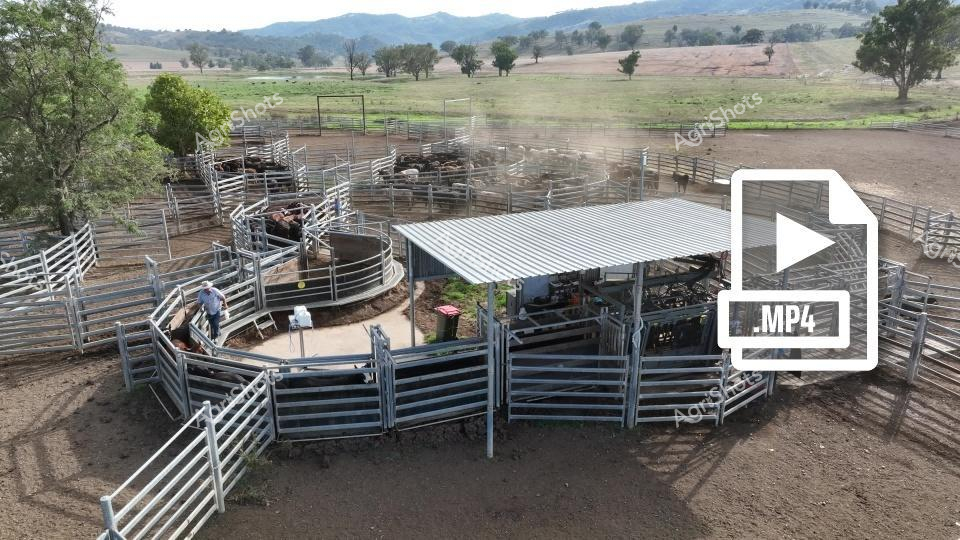
Sprawling cattle yards nestle into the undulating green and golden pastures of rural New South Wales, where rugged mountain ranges frame a quintessential Australian agricultural landscape. A gleaming white livestock transport truck sits loaded and ready, its striking red and white cattle crates signaling preparation for stock movement. Nearby, a meticulously organized livestock processing facility reveals curved metal cattle yards, a sturdy corrugated shed, and strategic handling infrastructure designed for efficient animal management. The scene captures the precision of modern agricultural operations, where carefully engineered spaces enable safe and systematic livestock handling. Mature trees provide natural shade around the facility, softening the industrial elements and highlighting the harmonious relationship between infrastructure and landscape. The aerial perspective reveals the careful planning behind contemporary cattle management - a testament to the technical expertise and thoughtful design inherent in Australian agricultural practices.
 Image
Image
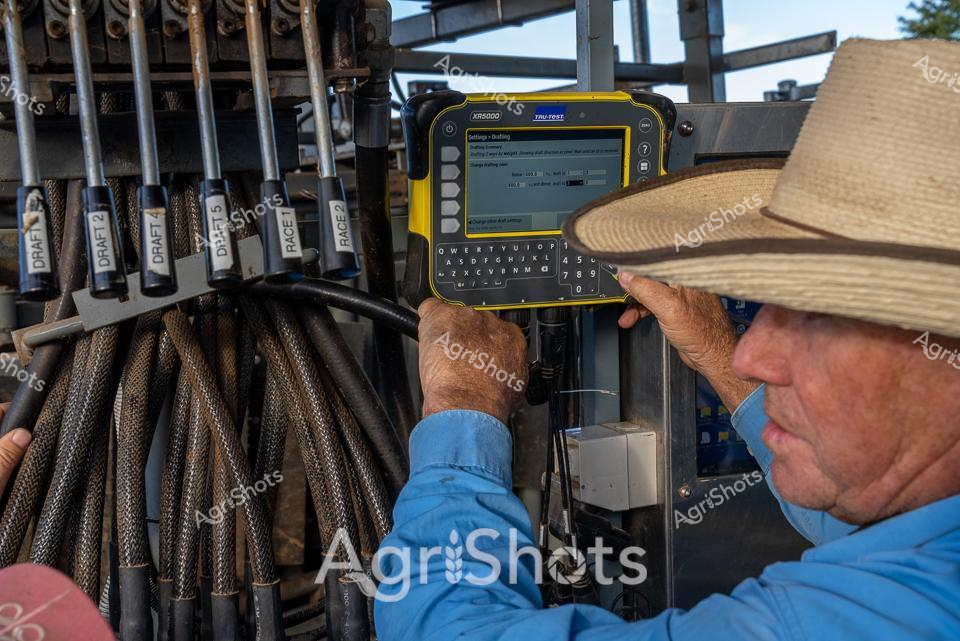
Precision agriculture unfolds in this intimate snapshot of modern cattle management. A weathered farmhand in a classic wide-brimmed straw hat and blue work shirt operates a sophisticated Catagra digital management system, carefully inputting data into a rugged yellow handheld device. Industrial cattle handling equipment surrounds him - a complex network of dark mesh-covered pipes and labeled draft gates suggesting a high-tech cattle yard in rural New South Wales. The close-up reveals the careful, methodical approach of contemporary livestock management, where technology meets traditional farming expertise. Each carefully labeled draft gate and the digital interface represent a sophisticated system of animal health tracking and management, highlighting the intricate balance between human skill and technological innovation in Australian agriculture. The muted colors - steel grays, industrial yellows, and the earthy tone of the farmhand's hat - create a sense of focused professionalism and quiet concentration in this critical moment of agricultural data collection.
 Image
Image
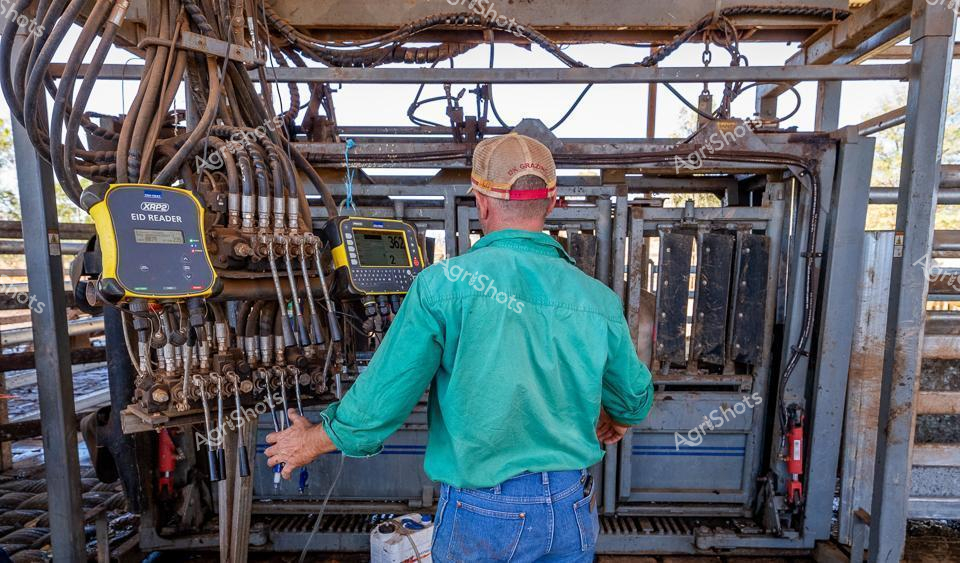
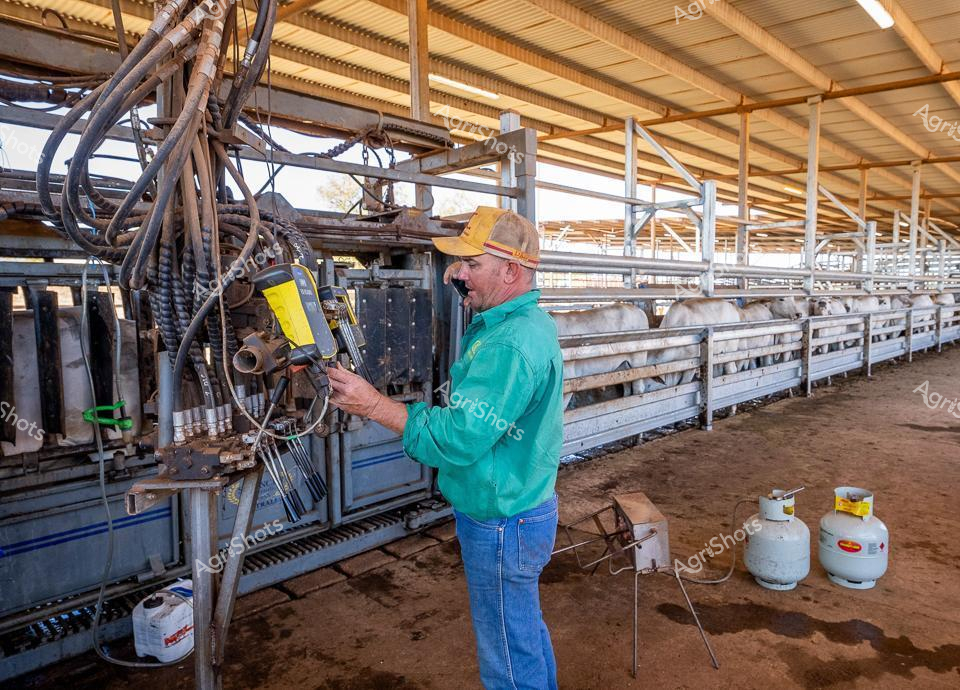
A seasoned station worker stands resolute in a robust cattle processing facility, dressed in a vivid green long-sleeved shirt and blue jeans, facing an intricate metal cattle crush equipped with advanced electronic identification technology. The E10 reader glows with digital precision, capturing critical data during livestock management operations typical of northern Australian cattle stations. Rusted hydraulic pipes and metal framework create an industrial framework around the processing area, highlighting the robust engineering required in remote agricultural environments. Overhead structural elements and a weathered infrastructure suggest this is a well-used facility on a large pastoral enterprise, likely in the Northern Territory's expansive cattle country. The worker's posture demonstrates focused concentration, representing the skilled labor essential to Australia's beef production sector. Muted earth tones of the equipment contrast sharply with the worker's bright green shirt, symbolizing the blend of human expertise and technological innovation in modern agricultural practice.
 Image
Image
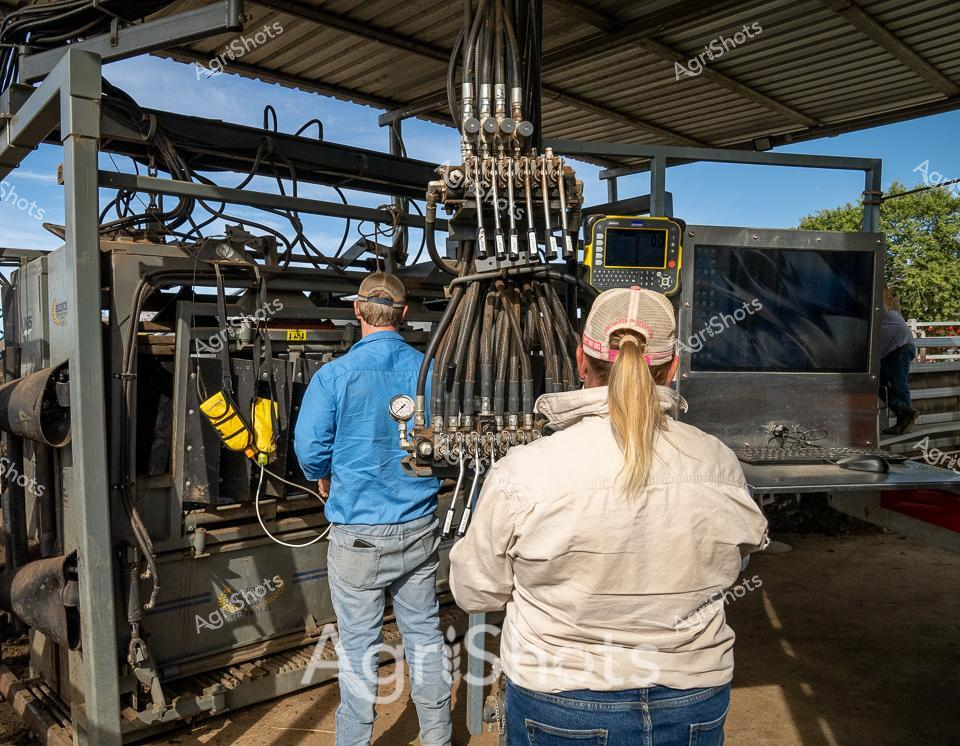
Precision and care define this pivotal moment in cattle management, capturing two agricultural professionals operating a sophisticated cattle handling system. Dressed in practical workwear - a blue button-up shirt and a light neutral jacket - they stand intently focused on the complex hydraulic cattle crush, a critical piece of technology for animal health procedures. The metallic infrastructure surrounds them, with multiple connection points, pressure gauges, and a digital control screen suggesting advanced veterinary or induction protocols. Sunlight streams through the steel-framed shelter, illuminating the industrial yet purposeful environment of a modern livestock facility. The equipment's industrial grey and chrome surfaces contrast with the soft blue sky visible through the open-sided structure, representing the intersection of technological innovation and traditional agricultural practice. Every detail speaks to the careful, methodical approach required in contemporary livestock management, where animal welfare and operational efficiency converge.
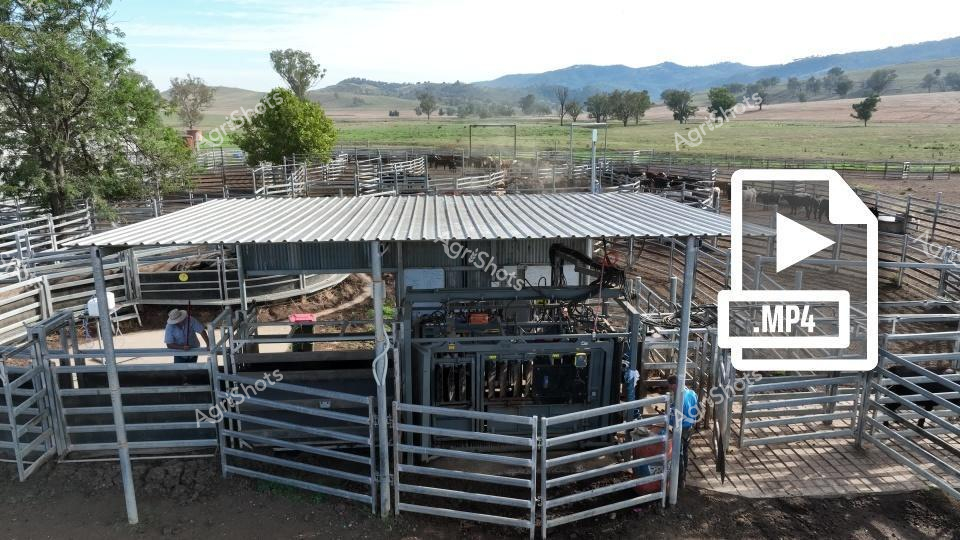 Video
Video
Cattle processing unfolds within a robust steel livestock yard under the expansive New South Wales high country. A modern cattle crush stands centrally, its galvanized steel framework gleaming in the soft morning light, surrounded by graduated metal livestock panels creating a precise handling system. Distant blue-green mountains frame the pastoral landscape, punctuated by scattered eucalyptus trees casting gentle shadows across dry golden pastures. The agricultural infrastructure reveals meticulous design - each rail and gate engineered for efficient animal movement and worker safety during critical health management procedures like vaccination and induction. Soft earth tones of weathered dirt and metallic silver-greys define the working space, suggesting generations of agricultural expertise embedded in this carefully constructed rural environment. The scene breathes quiet efficiency, representing the sophisticated animal husbandry techniques that underpin Australia's world-class cattle industry.
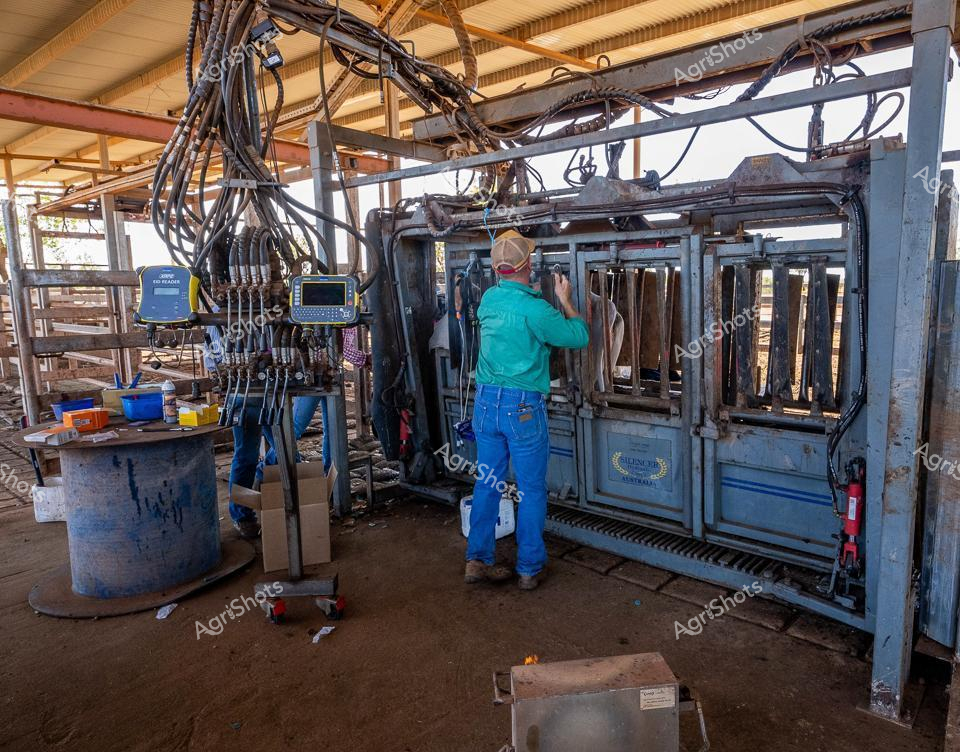 Image
Image
In the heart of Australia's Northern Territory, a seasoned livestock handler works methodically within a robust cattle processing facility. Dressed in a bright turquoise shirt and classic blue jeans, the worker operates a sophisticated Catagra cattle crush, a precision-engineered piece of equipment designed to safely manage and assess livestock during station operations. Intricate hydraulic systems and control panels surround the blue metal infrastructure, with tangled cables and mechanisms highlighting the technical complexity of modern agricultural handling. The interior of the shed reveals a weathered, functional space typical of remote cattle stations - rugged, efficient, and purpose-built to withstand harsh environmental conditions. A blue digital monitoring system stands ready, indicating the station's commitment to data-driven livestock management and animal welfare protocols. The scene captures the sophisticated intersection of traditional pastoral skills and contemporary agricultural technology, showcasing the meticulous care and technological precision required in Australia's expansive beef production industry.
 Image
Image
Brahman cattle processing unfolds in the golden light of a dry season morning at a Northern Territory cattle station. A robust hydraulic cattle crush stands at the center of a weathered steel yard, surrounded by a team of agricultural workers in a choreographed dance of animal husbandry. Worn rubber mats cushion the ground, while industrial equipment and medical supplies suggest a precise animal health intervention is underway. A pale Brahman beast waits patiently, its distinctive humped silhouette a testament to the breed's adaptability to harsh Australian landscapes. Workers dressed in practical station attire - blue shirts, jeans, and broad-brimmed hats - move with practiced efficiency, their yellow and blue safety gear highlighting the professional approach to livestock management. The scene captures the intersection of traditional pastoral skill and modern agricultural technology, where generations of cattle station expertise meet contemporary animal welfare practices under the vast, open skies of the Territory.
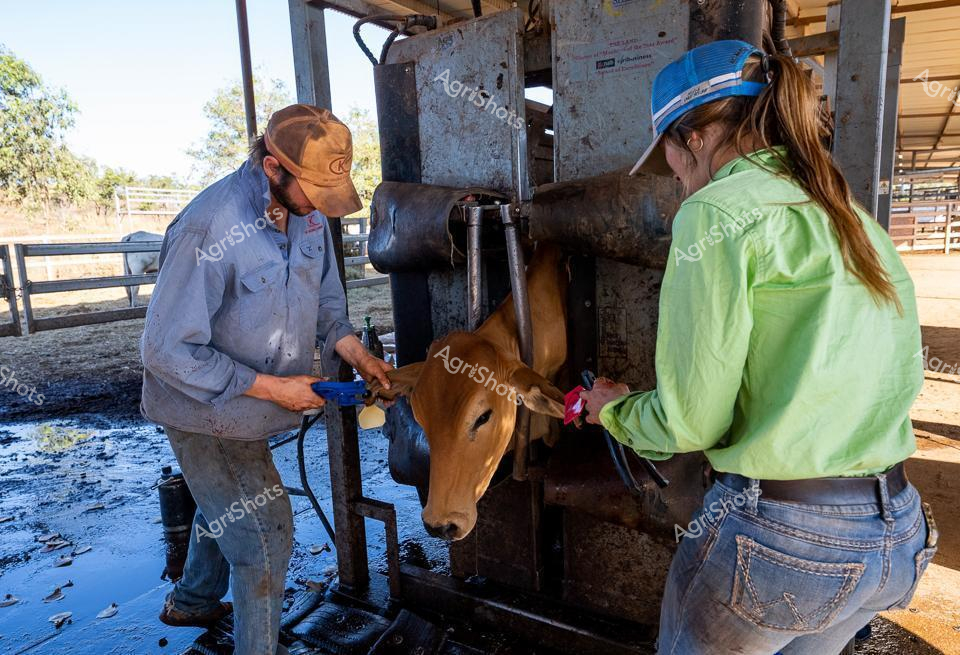 Image
Image
Brahman cattle induction unfolds in a dusty Northern Territory cattle yard, where skilled station workers carefully manage a young beast through the processing chute. A worker in a faded blue work shirt and brown cap operates the hydraulic Catagra cattle crush, while his colleague in a bright lime-green shirt and blue cap assists from the opposite side. The robust Brahman, with its distinctive loose skin and alert ears, stands calmly within the metal framework, representing the resilience of cattle bred for harsh tropical conditions. Puddles of muddy water reflect the harsh sunlight, highlighting the rugged infrastructure typical of remote Australian cattle stations. The scene captures the precision and care integral to livestock management, where animal welfare and operational efficiency intersect. Industrial metal equipment, weathered by years of use, frames the methodical process of preparing cattle for life on the station, embodying the quiet expertise of Australian agricultural workers.
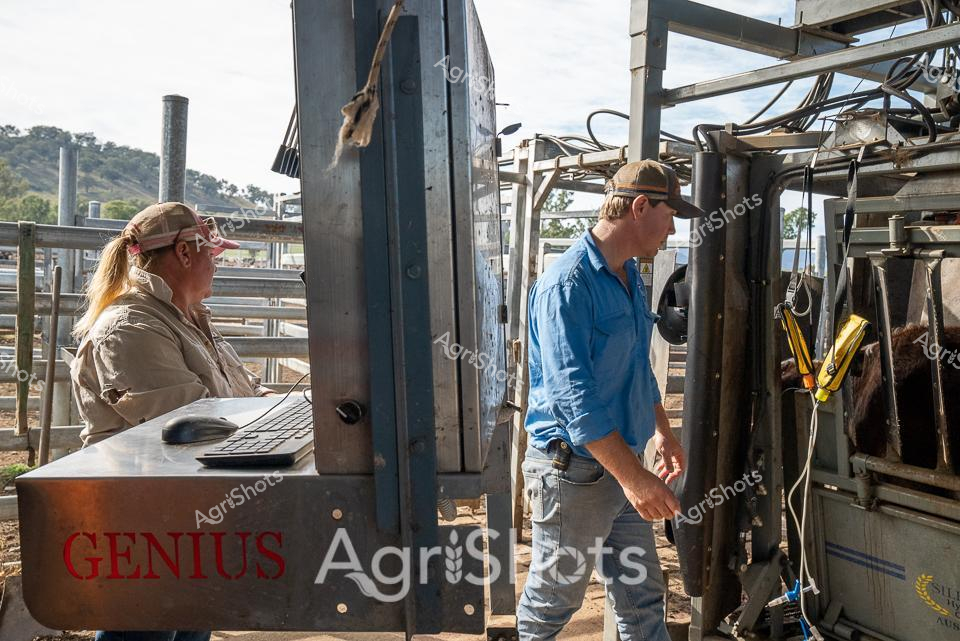 Image
Image
Cattle management technology converges with human expertise in this dynamic pastoral scene. A state-of-the-art Genius AgriShots cattle handling system stands ready, with a blue-shirted worker carefully positioning an animal in the precision-engineered Silencer crush. A colleague in khaki work attire monitors operations from the control station, laptop open and focused on animal processing procedures. The industrial metallic infrastructure of the cattle yards creates a structured backdrop, with rolling hills and rural landscape visible beyond, suggesting a typical Australian cattle station in New South Wales. Advanced animal health and safety technologies blend seamlessly with traditional livestock management techniques, capturing the modern agricultural approach to cattle handling. The scene radiates efficiency, with muted earth tones of work clothing contrasting against the robust steel infrastructure, embodying the sophisticated intersection of human skill and technological innovation in contemporary agricultural practice.
 Image
Image
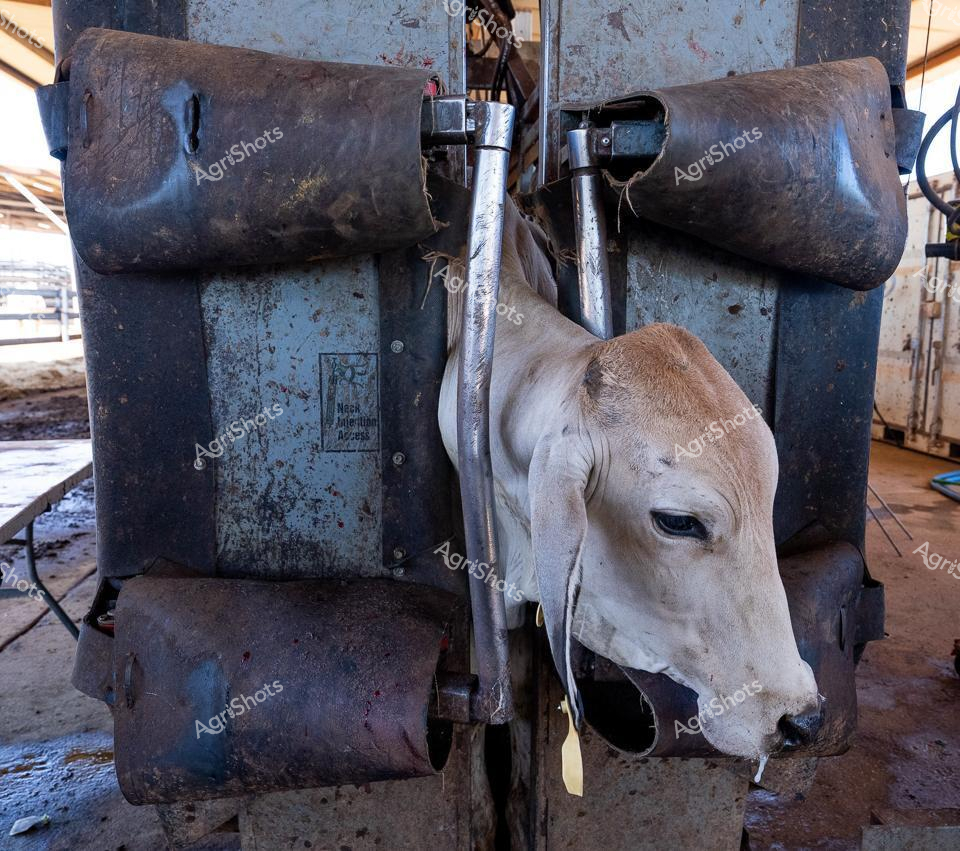
In the heart of the Northern Territory's cattle country, a pale Brahman heifer stands restrained within a robust steel cattle crush, her cream-colored hide contrasting against weathered dark metal infrastructure. The industrial-grade restraining equipment, marked with faded identification tags, represents a critical moment in station livestock management - a precise, controlled environment where animal health and safety protocols are meticulously executed. Sturdy hydraulic bars and heavy-duty steel panels enclose the animal, allowing precise handling for essential procedures like vaccination, tagging, or health inspection. The crush's utilitarian design speaks to generations of pastoral engineering, creating a secure interface between human agricultural practice and livestock welfare. Ambient dust and worn metal surfaces communicate the unrelenting environmental challenges of remote cattle station operations, where precision equipment must endure extreme temperatures and demanding conditions. This scene captures the clinical yet necessary process of animal husbandry, where each carefully managed interaction ensures the health and productivity of Australia's renowned beef herds.
 Video
Video
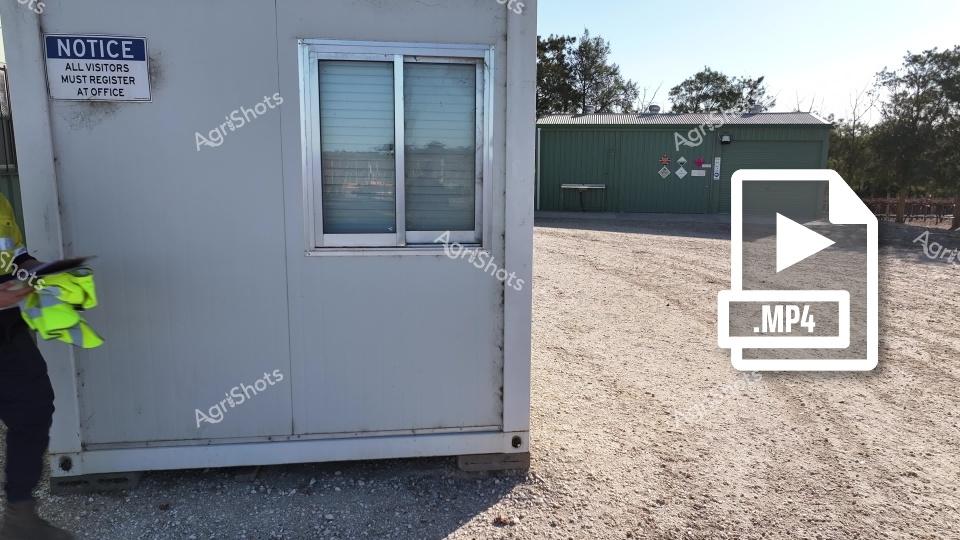
Remote agricultural site induction checkpoint, South Australian vineyard. A utilitarian portable office with a "NOTICE: ALL VISITORS MUST REGISTER AT OFFICE" sign stands against a backdrop of gravelly ground and a green maintenance shed. A section of a high-visibility safety vest is visible at the edge of the frame, suggesting active workplace safety protocols typical of modern agricultural environments. The clean, sliding-window office module represents the structured approach to workplace management in contemporary Australian agricultural settings, where safety briefings and formal registration processes are standard practice before entering work zones. The MP4 video icon overlaid hints at digital documentation and training methods now integral to industry communication and compliance. Crisp autumn light illuminates the scene, casting sharp shadows across the functional, no-nonsense workspace that epitomizes the professional, safety-conscious culture of Australian agricultural enterprises.
 Image
Image
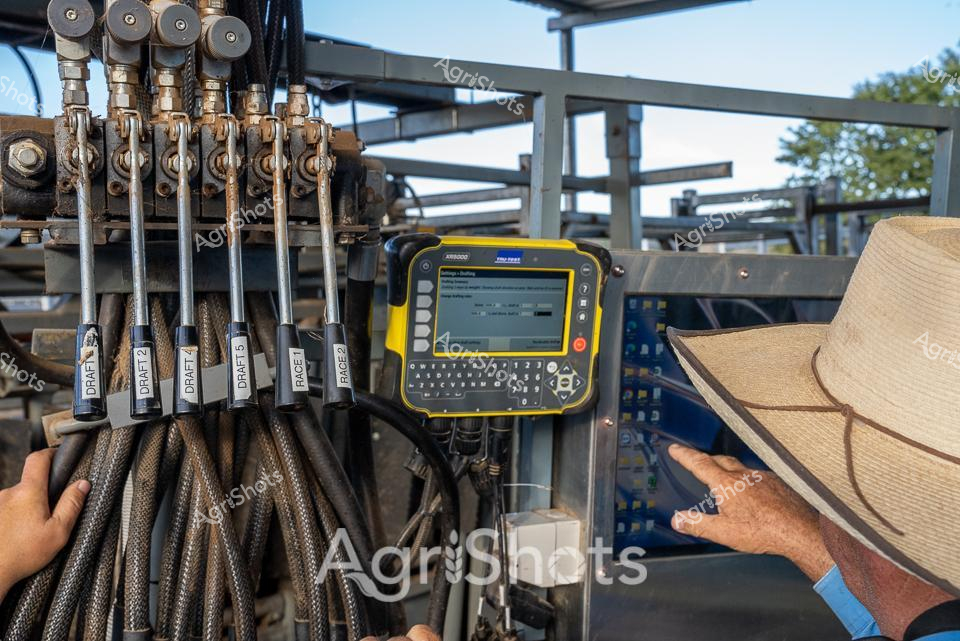
Precision and care converge in this agricultural technology scene, capturing a critical moment of livestock management. A sophisticated cattle crush system stands ready, with multiple hydraulic gates labeled meticulously, suggesting a systematic approach to animal handling. A robust yellow Catagra handheld device with a detailed screen and keyboard sits prominently, indicating advanced digital tracking and monitoring capabilities for livestock health and management. Weathered hands - one wearing a classic wide-brimmed agricultural hat - interact with the equipment, revealing the human expertise behind modern farming practices. The industrial steel framework of the cattle yards creates a structured backdrop, with glimpses of rural landscape visible beyond, highlighting the intersection of traditional agricultural skills and cutting-edge technological innovation. This image encapsulates the modern Australian farming ethos: strategic, data-driven livestock management underpinned by generations of practical agricultural knowledge.
 Image
Image
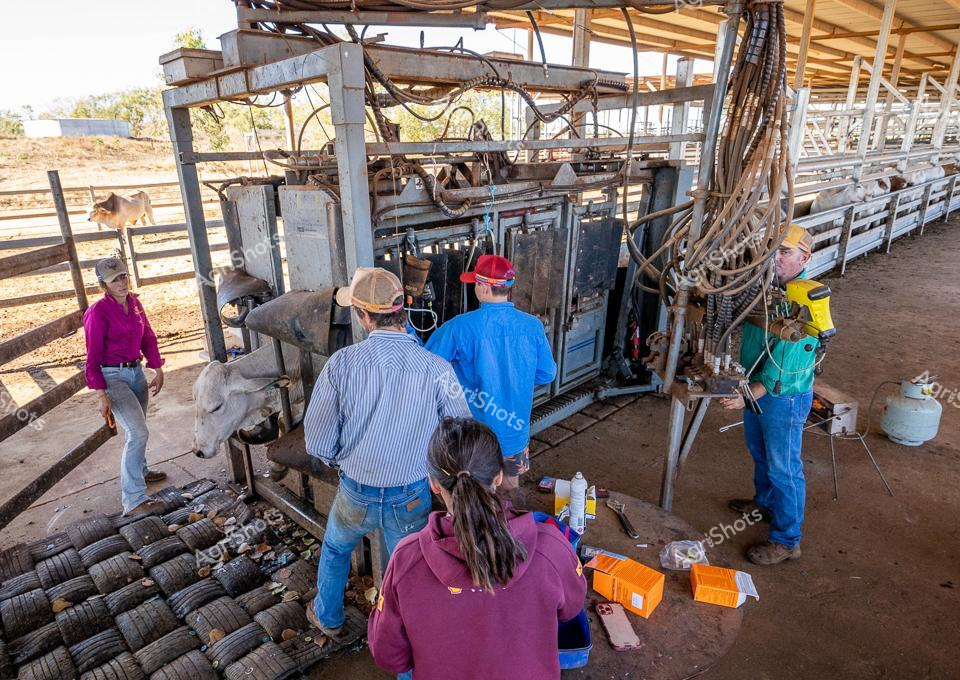
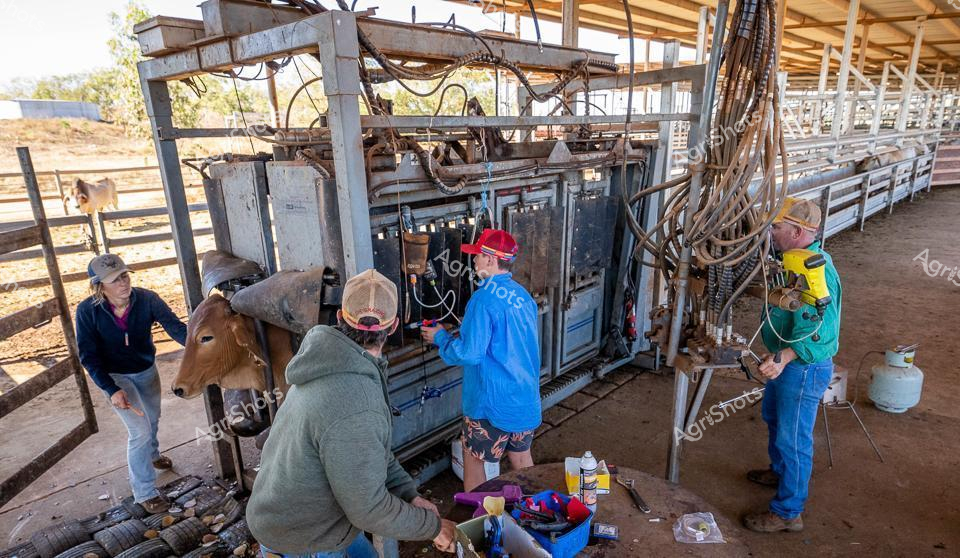
Brahman cattle gather in the weathered steel yards of a Northern Territory cattle station, awaiting their routine health checks and processing. A team of experienced stockworkers move with practiced efficiency around the robust metal cattle crush, dressed in practical workwear - blue shirts, yellow safety vests, and sturdy jeans that speak to the harsh pastoral environment. The morning light casts long shadows across the dusty ground, highlighting the intricate network of metal gates, hydraulic equipment, and well-worn rubber mats that form the backbone of modern cattle management. Propane tanks and veterinary supplies stand ready, indicating an upcoming animal health intervention, likely vaccinations or induction procedures typical of large-scale cattle operations. The workers' body language suggests a calm, methodical approach, with each team member positioned strategically around the sophisticated Catagra cattle handling equipment. In the background, the expansive cattle yards and glimpse of open landscape underscore the scale of Australian pastoral agriculture - a testament to the skill, technology, and dedication required to manage livestock in challenging tropical environments. The scene captures the intersection of animal husbandry, workplace safety, and agricultural innovation, with the distinctive pale Brahman cattle central to this quintessential Northern Territory station workflow.
 Image
Image
Brahman cattle processing unfolds with precision and care in a dusty Northern Territory cattle yard. A robust hydraulic cattle crush stands centrally, its steel framework bristling with hydraulic lines and control mechanisms, while ranch workers in a vibrant palette of blue, green, and grey work collaboratively around the robust Brahman beast. The metallic infrastructure suggests decades of agricultural engineering, with weathered wooden rails and complex mechanical systems designed to safely manage and treat livestock. Soft desert light filters across the scene, highlighting the textural contrast between the sleek machinery, rugged working attire, and the tawny hide of the bovine. One worker in a red cap operates the sophisticated equipment, while others manage supplies and provide support, embodying the coordinated teamwork essential to successful station management. The atmosphere pulses with quiet concentration - a moment of controlled intervention in the rhythmic cycles of pastoral life, where animal husbandry meets technical precision under the expansive skies of Australia's agricultural heartland.
 Video
Video
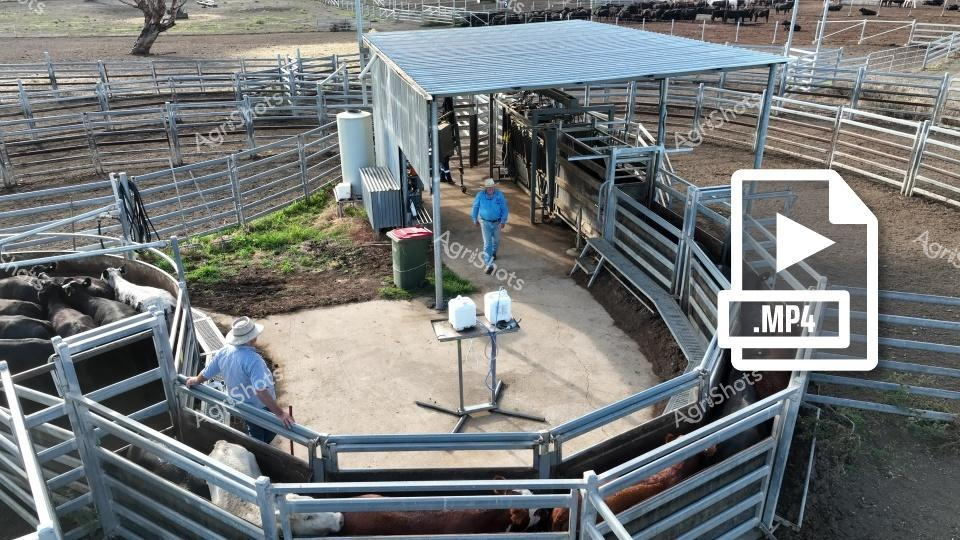
Cattle Processing at a Modern Agricultural Facility A precise agricultural workflow unfolds within a meticulously designed cattle handling system. Two workers in light blue shirts navigate the octagonal steel livestock yards, positioned near a sophisticated metal cattle crush and processing station. The sophisticated metal infrastructure, with its galvanized steel fencing and covered processing area, represents cutting-edge animal management technology typical of advanced Australian cattle operations. Surrounding paddocks display a sparse landscape with scattered trees, suggesting this is likely a property in New South Wales during a dry season. Cattle can be seen waiting patiently in adjacent holding pens, indicating an orderly and stress-minimized induction or vaccination process. The ground is a mix of packed earth and sparse grass, highlighting the functional nature of this professional agricultural environment. The scene captures the intersection of animal husbandry, technological innovation, and careful livestock management - a testament to modern Australian agricultural practices that prioritize animal welfare and operational efficiency.
 Image
Image
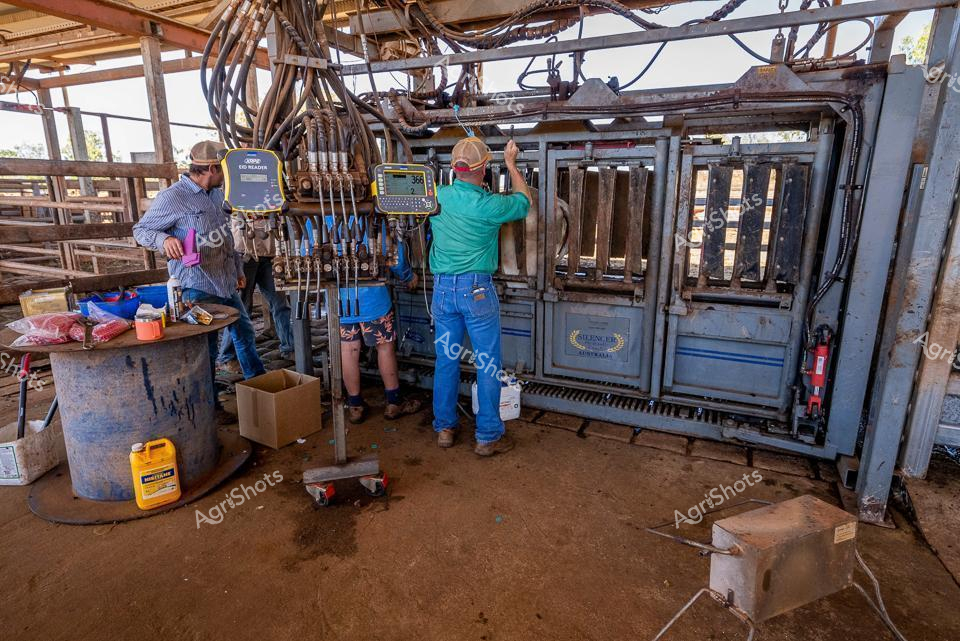
Cattle processing unfolds with precision inside a rugged Northern Territory livestock yard. Two workers maneuver around a robust blue Silencer cattle crush, their weathered clothing and purposeful movements revealing generations of pastoral expertise. A bright teal-shirted worker adjusts controls while his colleague in blue jeans and a striped shirt monitors equipment, surrounded by industrial machinery, yellow jerry cans, and scattered operational tools. The metal infrastructure tells a story of hard work - pipes, control panels, and hydraulic systems intertwined like the veins of agricultural productivity. Harsh sunlight filters through the structural timbers, casting shadows on the dirt floor and highlighting the technical choreography of modern cattle station management. This scene captures the essence of Australian beef production - a blend of technological innovation, physical skill, and the unrelenting spirit of remote agricultural workers managing livestock with efficiency and care.
 Image
Image
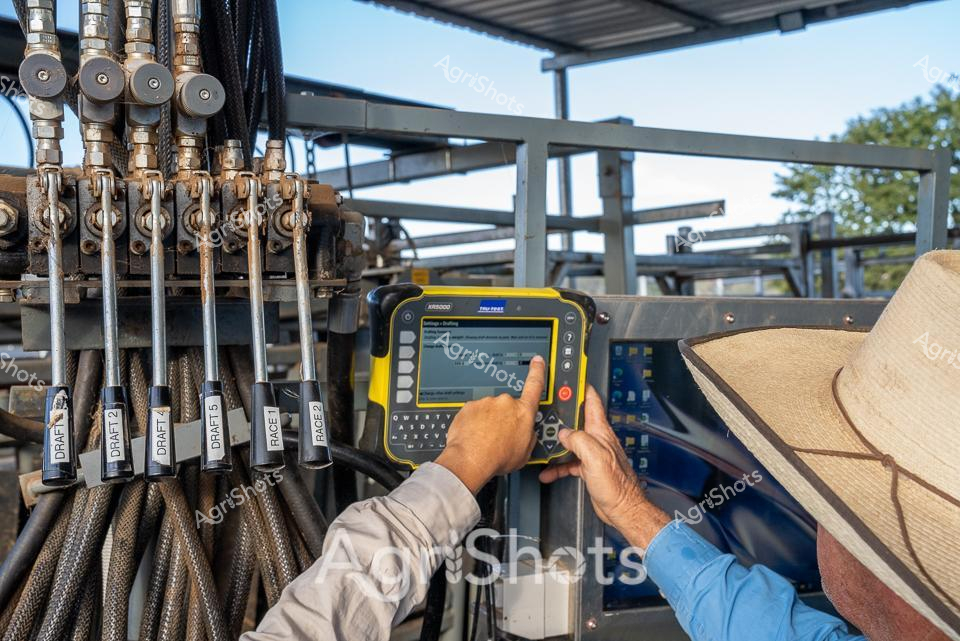
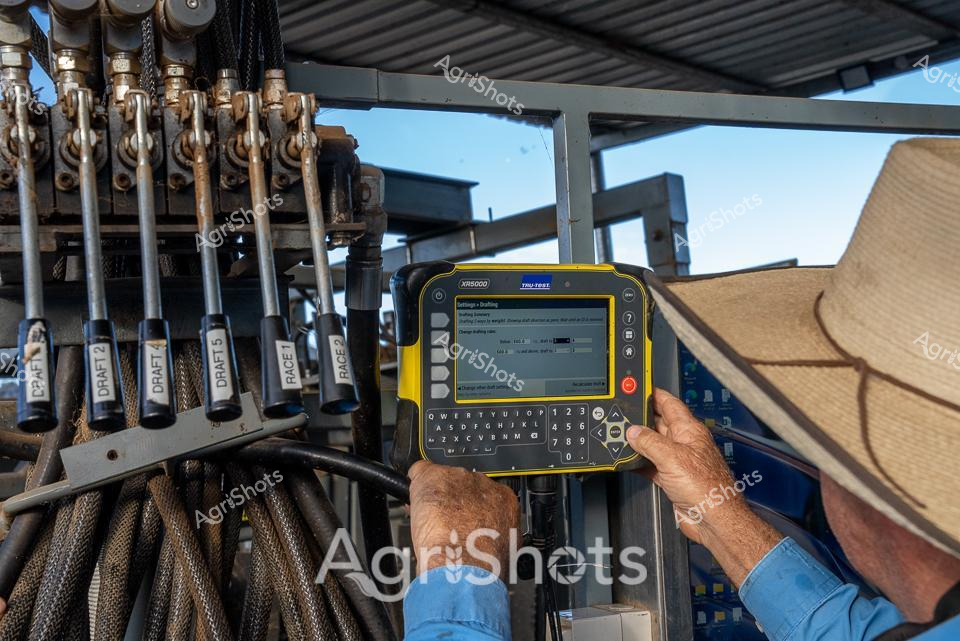
Precision technology meets traditional livestock management in this comprehensive cattle health monitoring scene. A weathered hand operates a vibrant yellow Catagra handheld device, carefully inputting data while standing within a robust steel cattle yard infrastructure. Multiple hydraulic crush gates are labeled systematically, suggesting a methodical approach to animal processing and health tracking. The industrial steel framework suggests a modern Australian cattle station, with clear blue skies visible through the open-sided structure, indicating a crisp morning in what appears to be late winter or early spring in rural New South Wales. The worker's practical attire - a light grey long-sleeved shirt and glimpse of a blue shirt - reflects the pragmatic nature of agricultural technology integration, where digital tools seamlessly complement physical livestock handling techniques. This image captures the sophisticated intersection of animal husbandry, digital record-keeping, and agricultural innovation, highlighting the technical expertise required in contemporary cattle management.
 Image
Image
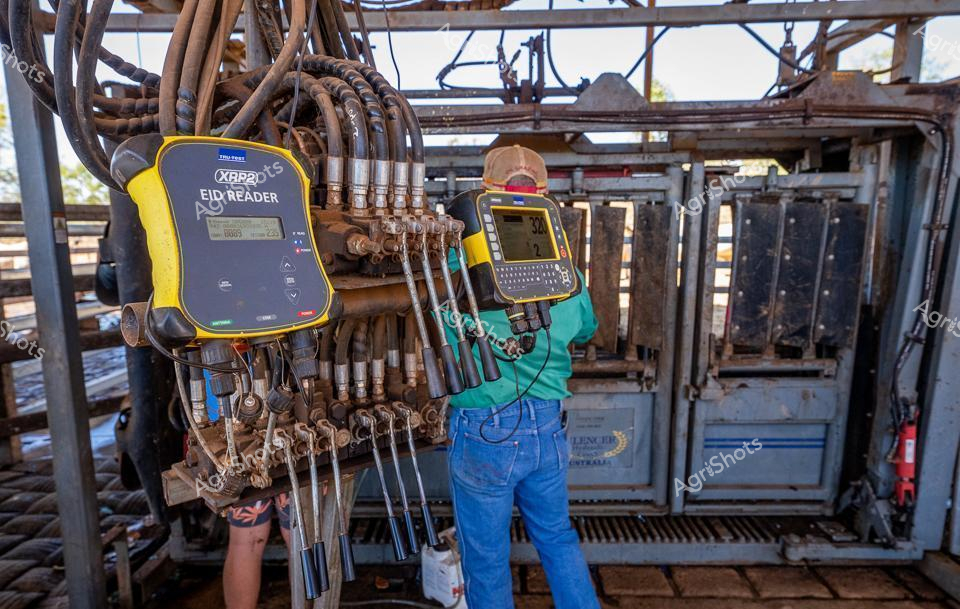
Precision agriculture technology meets livestock management in this detailed close-up of a cattle yard control station. A rugged yellow Catagra handheld device sits prominently, its digital screen displaying critical data while a worker's weathered hand operates the controls. Gleaming metal cattle crush levers stand sentinel in the background, each carefully labeled with race and draft identification codes, highlighting the meticulous approach to animal handling and health monitoring. The industrial blue-gray infrastructure of the cattle yard frames the scene, with harsh sunlight casting crisp shadows that emphasize the technical sophistication of modern livestock management. Wearing a blue work shirt, the operator demonstrates the seamless integration of technology and traditional farming practices, capturing the essence of contemporary Australian agricultural precision. This image represents the cutting-edge intersection of animal welfare, data management, and agricultural expertise in rural New South Wales.
 Image
Image
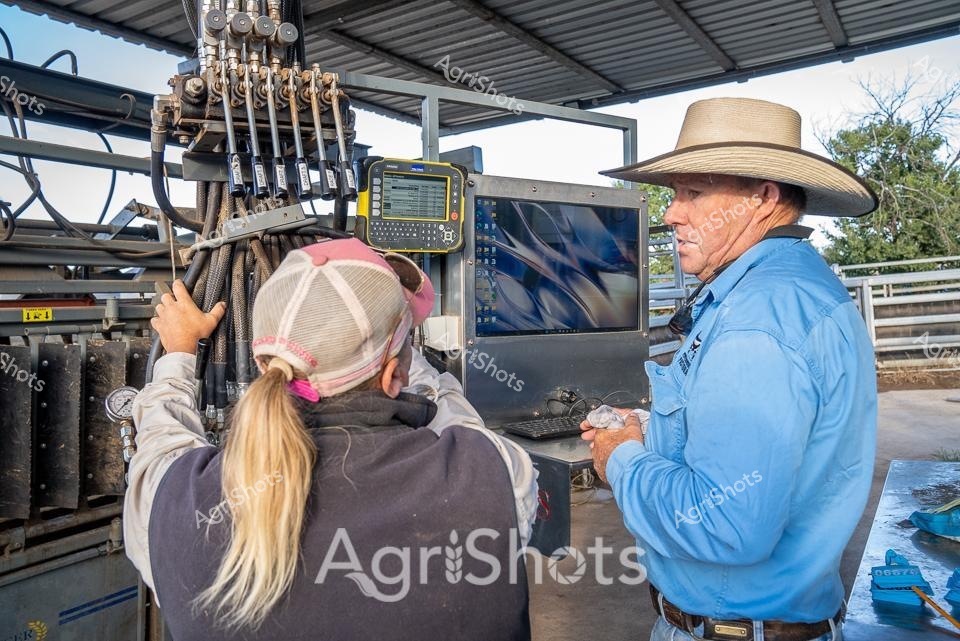
In the robust steel infrastructure of a Northern Territory cattle station, an agricultural worker operates sophisticated electronic cattle identification equipment. A yellow Xbra EID (Electronic Identification) Reader sits prominently mounted alongside complex hydraulic piping, while the worker in blue jeans and a teal shirt manages a handheld data collection device. The rugged cattle yard's metallic framework suggests decades of pastoral infrastructure, with multiple processing gates and robust steel infrastructure designed for efficiently managing Brahman cattle. Harsh sunlight filters through the industrial framework, highlighting the technical precision of modern cattle station management - where digital technology meets traditional livestock handling. The scene captures the intersection of agricultural technology and pastoral practice, revealing how contemporary stations leverage electronic tracking to improve animal welfare and operational efficiency. Weathered steel, technical equipment, and the implicit presence of robust Brahman cattle represent the technological evolution of Australia's northern pastoral industries.
 Image
Image
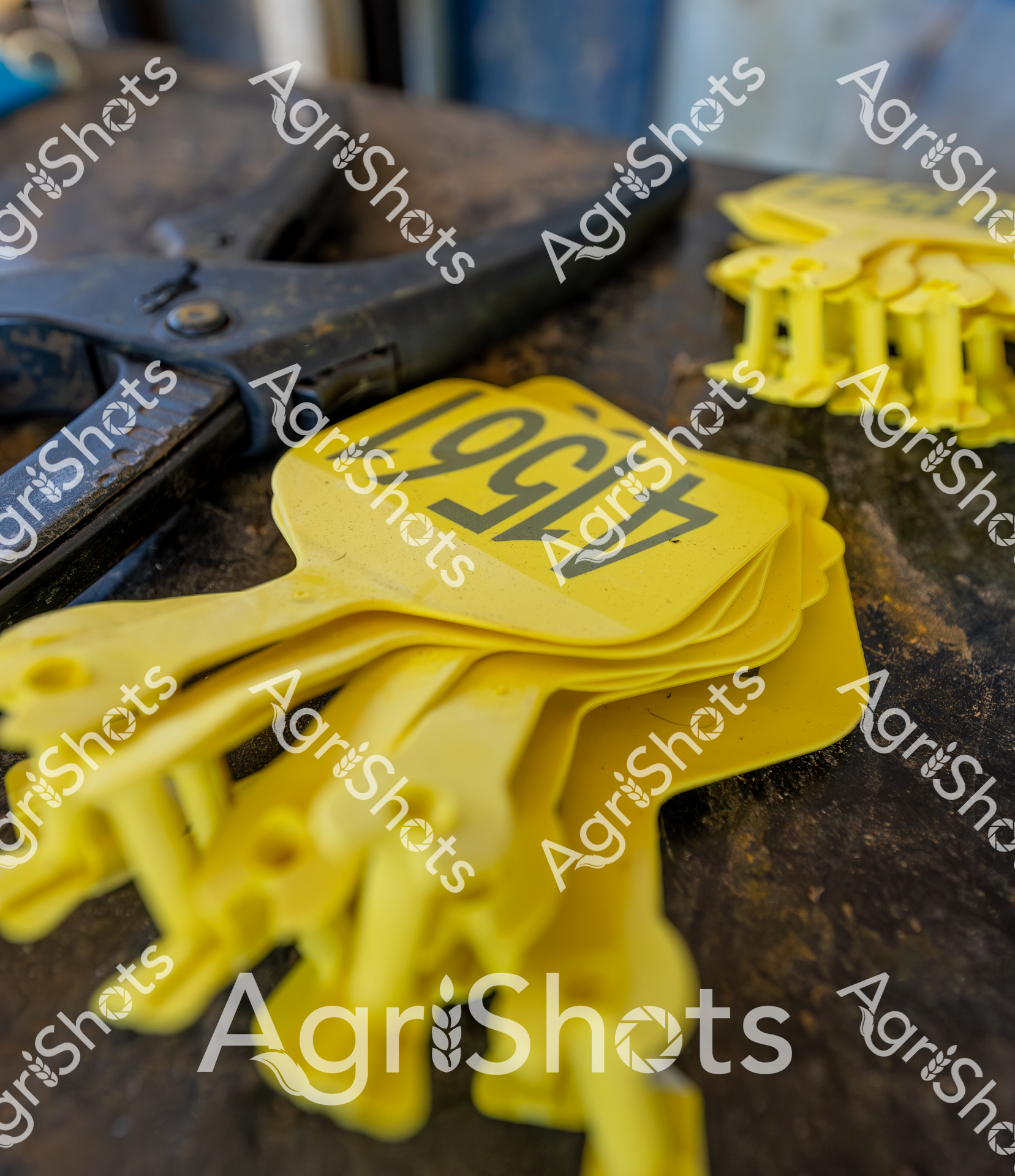
Cattle processing unfolds with precision in this high-tech rural scene. An experienced stockman in a wide-brimmed straw hat and blue long-sleeved shirt stands alongside a worker wearing a grey vest and pink-trimmed cap, operating a sophisticated digital cattle management system. The robust metal cattle crush and multiple hydraulic controls suggest advanced animal handling technology, with a rugged computer monitor displaying critical data. Gleaming metal pipework and control mechanisms frame the working area, which appears to be a covered cattle yard typical of modern Australian agricultural infrastructure. The crisp blue sky and metallic equipment suggest early morning light, capturing a moment of careful animal health management and technological integration in contemporary cattle farming. This image epitomizes the sophisticated intersection of traditional agricultural practices and cutting-edge digital tracking and management systems in the Australian beef industry.
 Image
Image
A stack of bright yellow cattle ear tags rests on a weathered, oil-stained workbench, revealing the meticulous process of livestock identification in the Goondiwindi region. The crisp, uniform tags - numbered and ready for use - speak to the precision of modern agricultural management in Queensland's cattle country. Alongside the tags, a well-worn pair of metal pliers suggests the hands-on craftsmanship of rural livestock handling, where each animal is carefully tracked and monitored. The rich textures of the workbench - a patina of grease, rust, and hard work - contrast sharply with the clean, standardized yellow of the tags, capturing the intersection of traditional farming practices and contemporary agricultural technology. These tags represent more than just a numbering system; they are a crucial link in the chain of cattle traceability, ensuring the health, provenance, and economic value of each animal in the vast pastoral landscapes of Queensland. The scene embodies the quiet efficiency of Australian agricultural practice, where every detail matters in the complex ecosystem of rural production.
 Image
Image
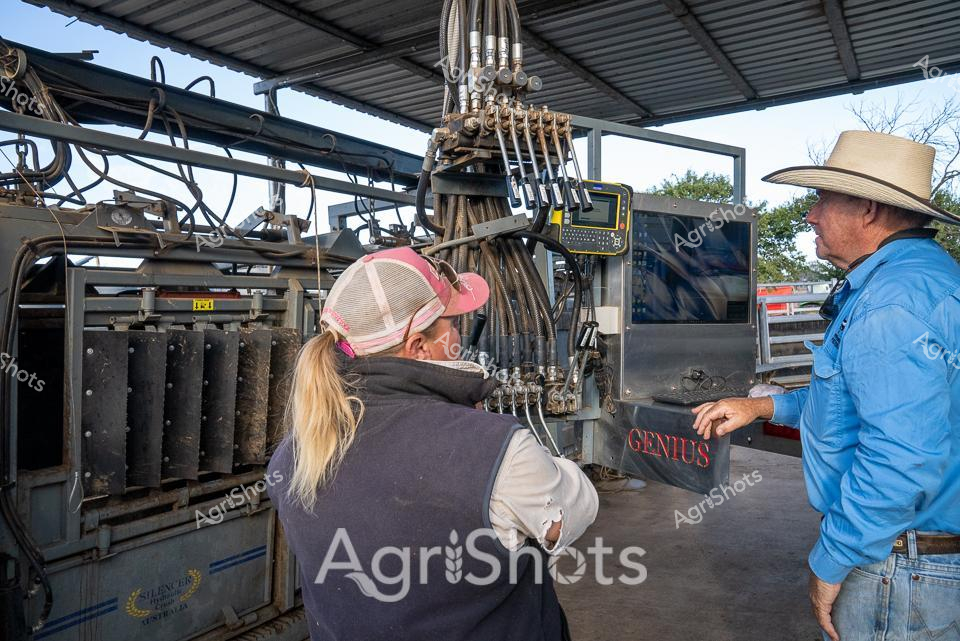
Cattle management technology unfolds within a steel-framed livestock yard, where two seasoned agricultural workers monitor a sophisticated Genius cattle crush. A person wearing a pink trucker hat and gray vest operates the advanced electronic system, carefully managing animal handling procedures. An experienced rancher in a crisp blue shirt and light straw cowboy hat stands alongside, observing the technological precision of the Silencer crush equipment. Multiple hydraulic controls and digital interfaces suggest this is a modern cattle induction station, likely located in rural New South Wales. The metallic infrastructure - with its complex piping, robust gates, and integrated computing systems - represents the intersection of traditional farming and cutting-edge agricultural technology. Soft natural light filters through the corrugated roof, highlighting the industrial gray and blue tones of the equipment and workers' clothing. This scene captures the meticulous care and technological sophistication of contemporary Australian cattle management, where animal welfare, safety, and efficiency converge through intelligent design and expert handling. The professional demeanor of the workers and the high-end equipment underscore the precision of modern agricultural practices.
 Image
Image
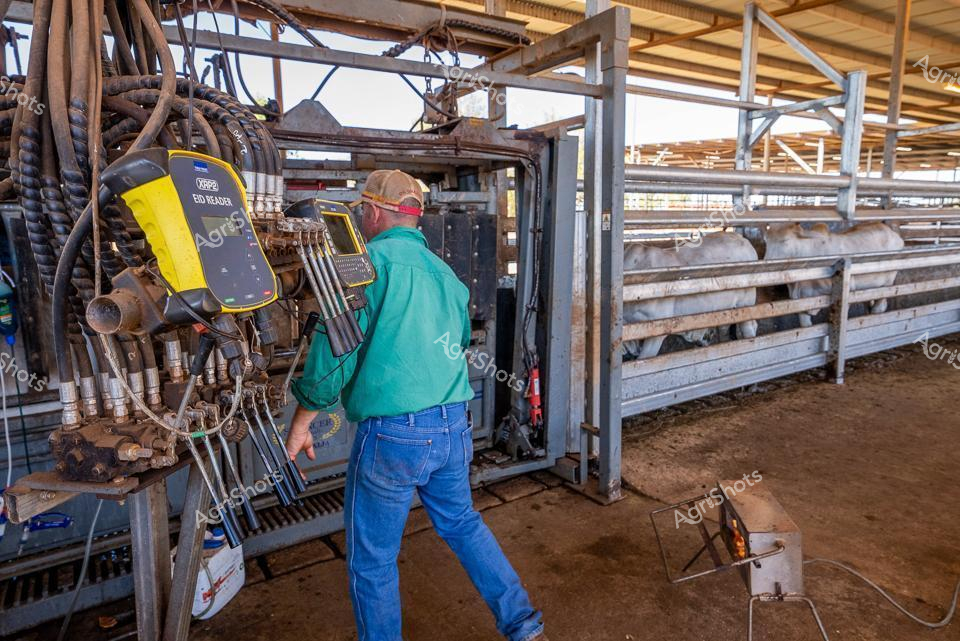
Cattle processing unfolds with precision at a Northern Territory cattle station, where advanced technology meets traditional livestock management. A worker in a bright teal shirt and blue jeans operates a sophisticated cattle crush, surrounded by complex hydraulic machinery and metal livestock handling infrastructure. The AgShots watermark hints at the professional documentation of this quintessential Australian agricultural moment. Yellow-accented digital equipment stands ready to log data and monitor the cattle's movement, reflecting the high-tech approach to modern pastoral operations. Sturdy metal pens in the background contain Brahman cattle, their pale hides visible through the robust metal framework, indicating the rugged landscape of the Northern Territory. The scene captures the intersection of animal husbandry, technological innovation, and the skilled labor that drives Australia's beef industry, with muted earth tones and industrial equipment creating a atmosphere of controlled efficiency and professional agricultural practice.
 Image
Image
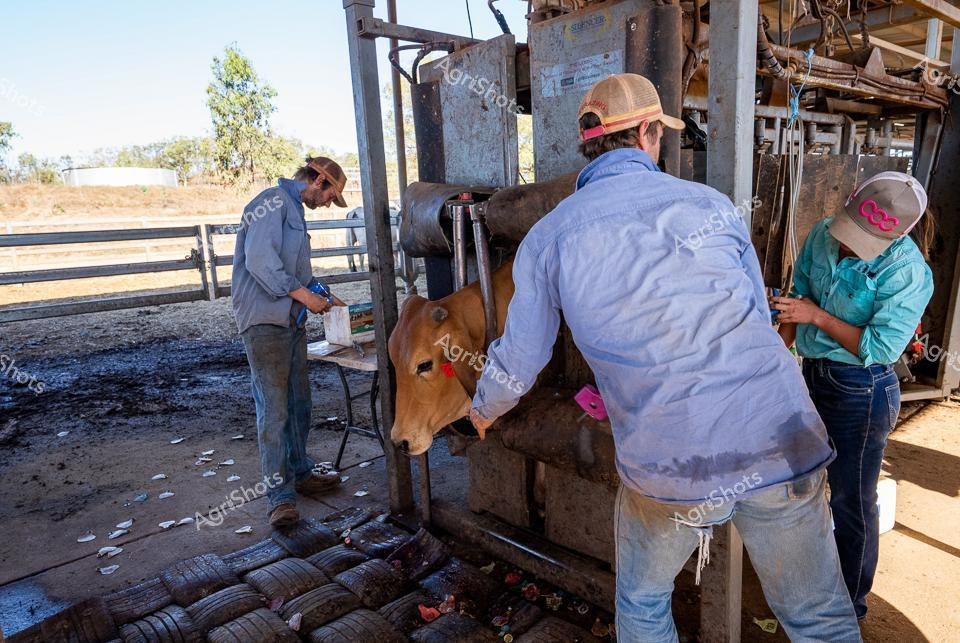
Cattle induction unfolds in the stark Northern Territory landscape, where a compact cattle yard becomes a hub of methodical rural activity. A tawny Brahman heifer stands quietly in the metal cattle crush, her distinctive pale coat marked with subtle coloration against the dusty, tire-lined processing area. Three workers in practical workwear - blue chambray shirts, sturdy jeans, and protective caps - collaborate with practiced efficiency, each managing a specific task in the livestock management process. The harsh sunlight casts sharp shadows across the compacted earth, highlighting the industrial infrastructure of gates, chutes, and processing equipment typical of large pastoral stations. One worker prepares medication or identification tools, while another carefully manages the animal's movement, demonstrating the careful balance of animal handling and agricultural technology. The scene captures the rhythmic precision of cattle station operations, where generations of knowledge merge with modern veterinary practices to maintain herd health and productivity in Australia's challenging rural environments.
 Image
Image
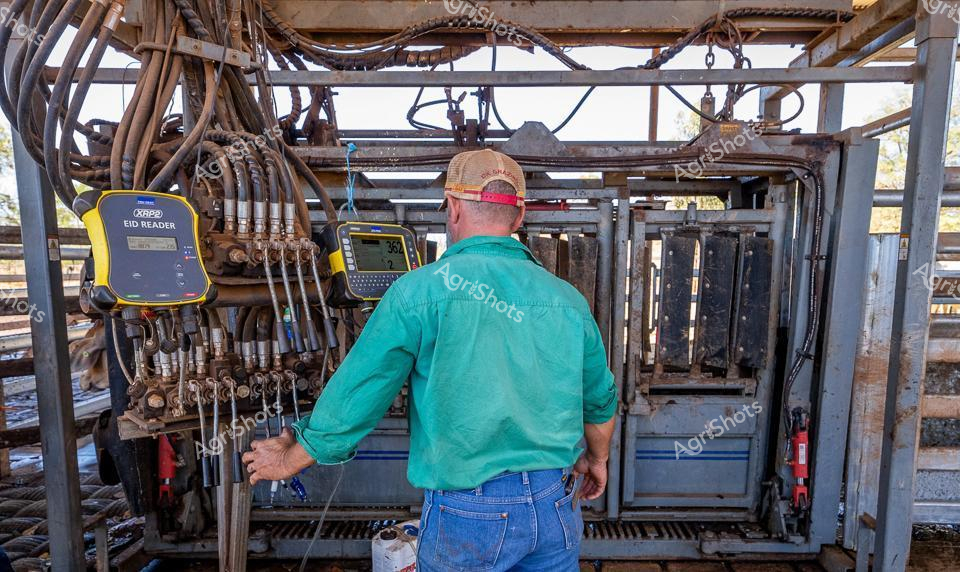
A stockworker in a vibrant teal shirt and cap operates a high-tech cattle processing station, capturing the precision of modern northern Australian agricultural practices. The robust steel cattle crush - a critical piece of livestock handling equipment - stands ready, surrounded by a complex network of hydraulic controls, digital readers, and industrial machinery. Yellow digital EID (Electronic Identification) readers and control panels suggest advanced tracking and management technology integral to contemporary cattle station operations. The weathered metal infrastructure and industrial setting evoke the rugged Northern Territory landscape, where sophisticated livestock management meets harsh environmental conditions. Every component of this scene speaks to the technical expertise and careful animal handling required in large-scale cattle production, highlighting the intersection of traditional stockmanship and cutting-edge agricultural technology. The muted industrial colors - teal, steel gray, yellow - and the worker's focused posture communicate the serious, methodical nature of cattle station work.
 Image
Image
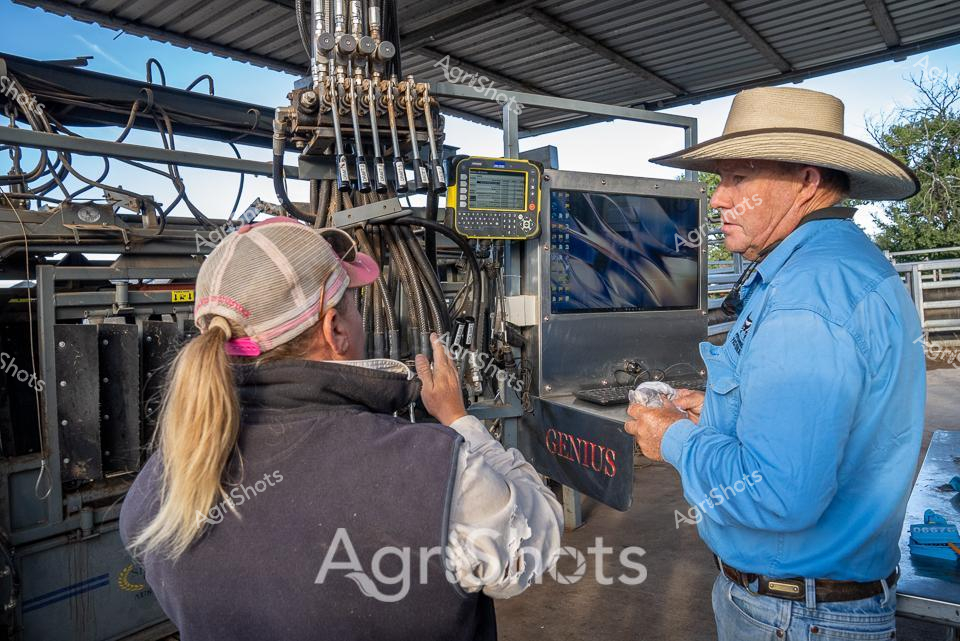
Brahman cattle undergo routine processing in a robust steel cattle yard, capturing the precision of Northern Territory livestock management. Two workers in bright safety gear - one in a green shirt and yellow cap, the other in blue - operate a sophisticated hydraulic cattle crush, a critical piece of agricultural infrastructure designed to safely restrain cattle during health checks, vaccinations, and induction procedures. Propane cylinders sit nearby, suggesting additional equipment or heating requirements in this rugged station environment. The metallic silver and blue industrial equipment contrasts with the pale white-grey hide of the Brahman cattle, whose distinctive muscular frame and calm demeanor reflect their adaptation to harsh Australian pastoral conditions. Overhead structural beams and side railings create a structured, purposeful atmosphere of controlled agricultural practice, highlighting the technological sophistication of modern cattle station operations. The concrete floor, weathered and marked from continuous use, tells its own story of countless similar processing moments in the challenging Northern Territory landscape.
 Image
Image
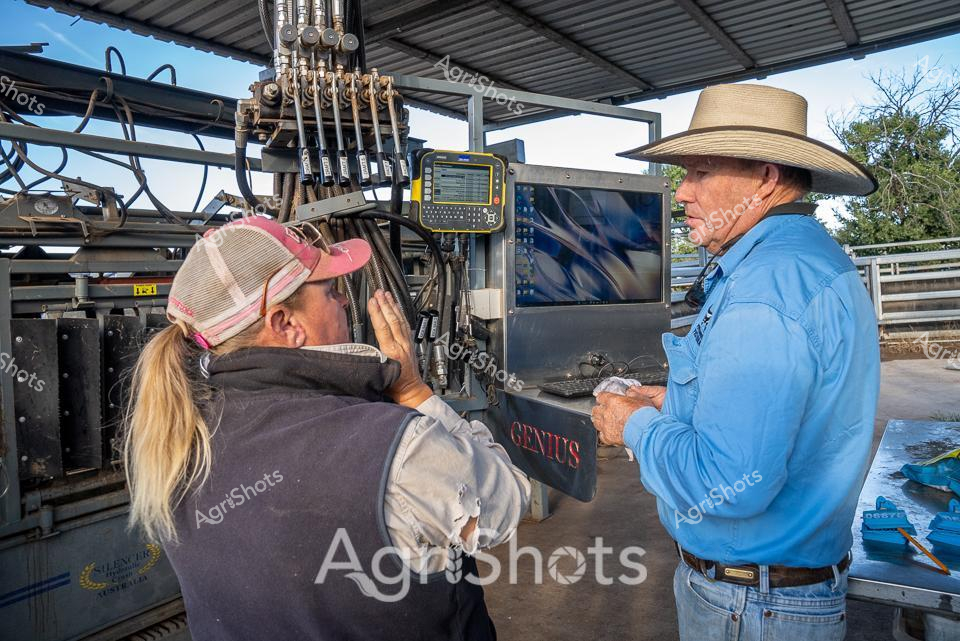
Cattle management technology converges with human expertise in this compelling AgriShots capture of livestock handling. A seasoned rancher in a classic straw hat and blue workshirt stands alongside a younger worker wearing a trucker cap, both intently focused on the sophisticated Genius cattle crush system. The industrial steel infrastructure, with its complex hydraulic controls and digital monitoring screen, represents the precision of modern agricultural practices. Soft morning light filters through the metal-roofed cattle yard, highlighting the collaborative interaction between generations of agricultural workers engaged in animal health procedures. The blue and gray color palette of their workwear blends seamlessly with the metallic equipment, symbolizing the harmony between human skill and technological innovation in contemporary cattle management. This image epitomizes the sophisticated, safety-conscious approach to livestock handling in Australian agricultural operations, where cutting-edge technology meets traditional farming wisdom.
 Image
Image
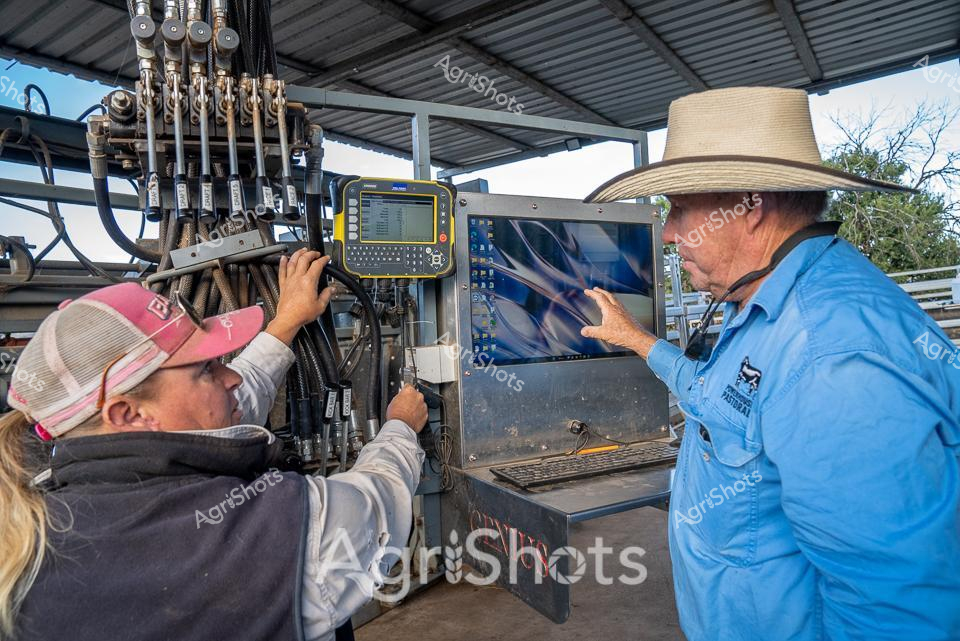
Precision and technology converge in this dynamic cattle management scene from a modern rural livestock facility. A seasoned agricultural worker wearing a classic wide-brimmed sun hat and blue technical shirt carefully examines a digital control screen, while a colleague in a pink and grey cap adjusts electronic monitoring equipment on a sophisticated cattle handling system. The robust steel infrastructure of the cattle yards provides a industrial backdrop, with sophisticated hydraulic crush equipment and computerized tracking systems highlighting the advanced technological approach to animal husbandry. Sleek metal hydraulic pipes and digital interfaces suggest a high-tech approach to livestock management, where animal welfare and data-driven decisions intersect. The muted blues, greys, and soft pink tones of the workers' attire blend harmoniously with the metallic industrial setting, reflecting the professional and methodical nature of contemporary agricultural practices. This image captures the intersection of traditional farming expertise and cutting-edge technological innovation, showcasing how modern Australian agricultural professionals maintain precision and care in livestock management.
 Video
Video
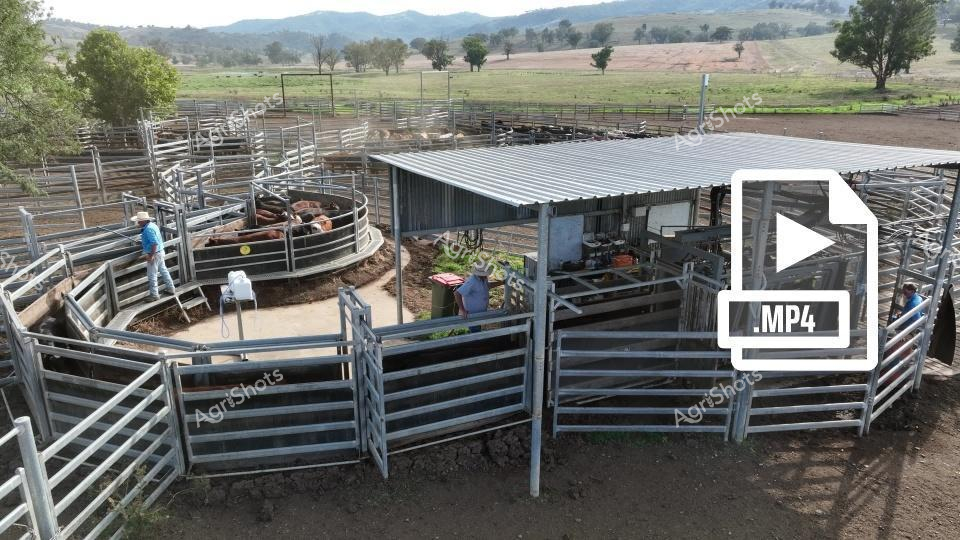
Dusty cattle yards stretch across undulating pastoral countryside, a quintessential New South Wales agricultural landscape framed by distant blue-grey mountains and scattered eucalyptus trees. A modern steel cattle handling system dominates the foreground, with circular and rectangular steel panel yards creating a precise infrastructure for livestock management. A worker in a blue shirt moves purposefully through the yards, navigating the metallic gates and processing area beside a corrugated steel shelter housing veterinary equipment and vaccination supplies. Robust beef cattle cluster in the circular holding yard, their rich brown and black coats contrasting against the pale sandy ground and steel infrastructure. The scene captures a critical moment in livestock husbandry - an animal health intervention where cattle are carefully controlled and processed using specialized equipment like the Silencer crush. Overhead, the corrugated roof provides essential shade, while the meticulously designed yards demonstrate contemporary Australian agricultural precision and animal welfare practices. The landscape speaks of generations of farming knowledge, where every gate, fence, and structural element is engineered for efficiency and animal management. Soft mountain shadows and sparse grasslands complete this authentic slice of rural Australian agricultural life, highlighting the sophisticated systems behind modern cattle production.
 Video
Video
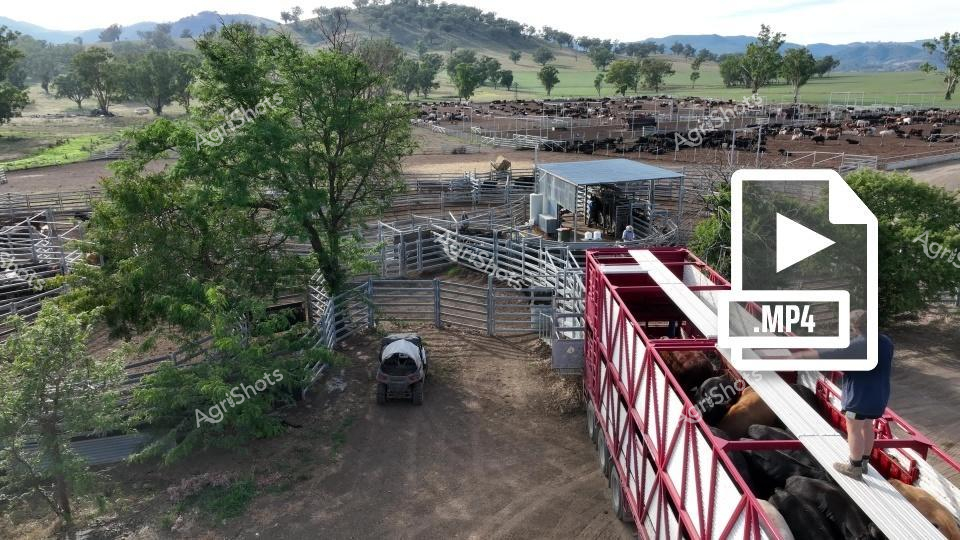
Cattle flow steadily through a sophisticated rural processing facility nestled in the undulating pastoral landscape of New South Wales. A red livestock trailer stands ready to transport animals, its robust metallic frame contrasting against the verdant green trees and golden grasslands of the surrounding hills. Precision-engineered metal cattle yards with intricate gate systems guide the animals through a carefully designed workflow, demonstrating modern agricultural infrastructure. A robust all-terrain vehicle sits parked near the processing area, highlighting the mechanized support tools essential in contemporary cattle management. The meticulously organized facility reflects a professional approach to animal handling, with multiple paddocks visible in the background populated by dark-coated cattle grazing across gently sloping terrain. The scene captures the sophisticated intersection of animal husbandry, technological innovation, and pastoral landscape - a quintessential snapshot of Australian agricultural practice where efficiency, animal welfare, and environmental stewardship converge.
 Image
Image
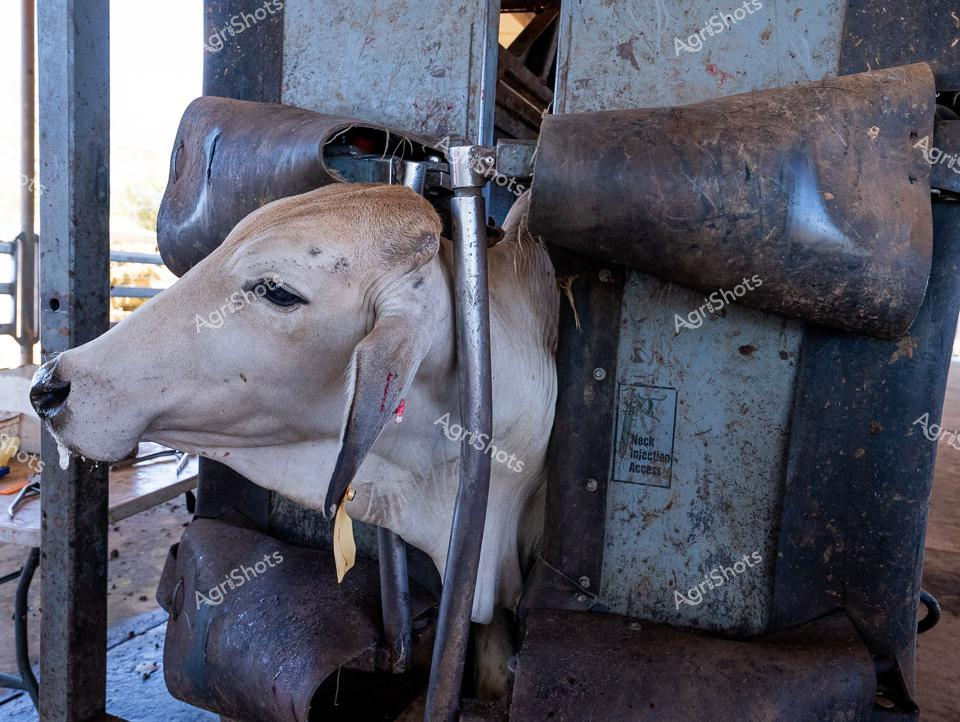
A pale Brahman cattle beast stands quietly in a robust steel cattle crush, its distinctive pale hide marked with subtle weathering. Industrial-grade blue-grey metallic restraint panels enclose the animal, with a 'Neck Injection Access' panel visible, highlighting the precision infrastructure of modern cattle processing. The crush's heavy-duty design speaks to the rugged Northern Territory cattle station environment, where efficient livestock management is critical to agricultural operations. Worn metal surfaces and strategic mechanical components reveal years of practical use, capturing the functional aesthetic of outback agricultural infrastructure. The animal appears calm and controlled, demonstrating the carefully engineered design that minimizes stress during essential veterinary and management procedures. This image epitomizes the sophisticated yet unadorned technology that underpins Australia's beef production systems, where animal welfare and operational efficiency converge in remote pastoral landscapes.
 Image
Image
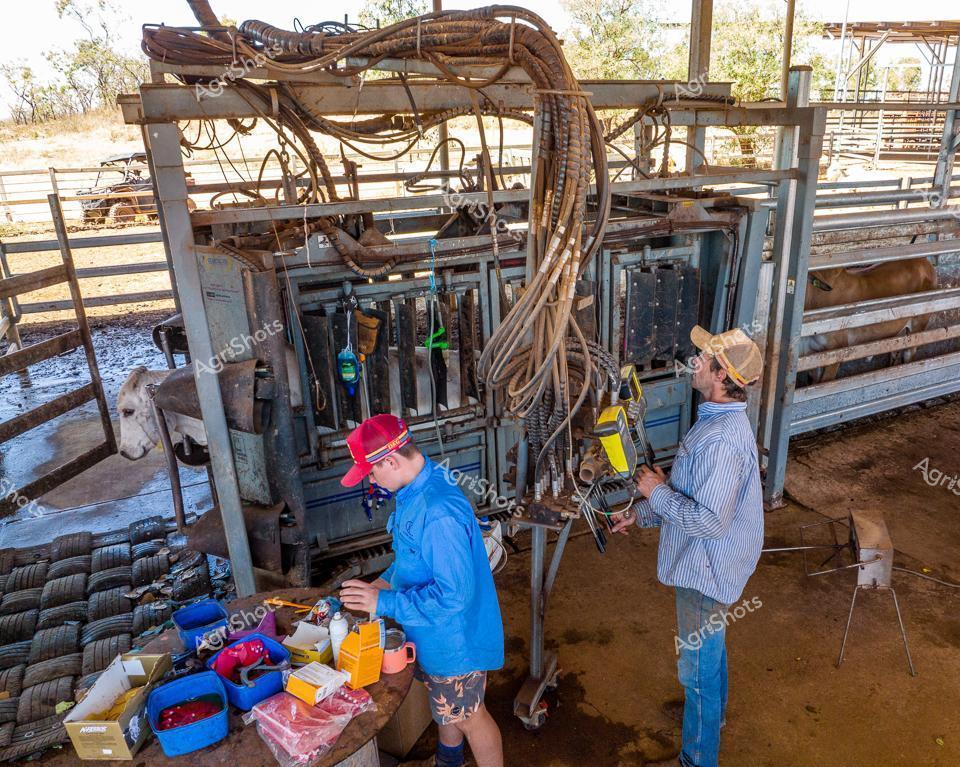
In the dusty cattle yards of the Northern Territory, two workers tend to livestock processing with practiced efficiency. A complex metal cattle crush stands as the centerpiece, its rusted hydraulic arms and tangled cables revealing years of hard service under the harsh Australian sun. A worker in a bright blue jacket and red cap carefully prepares equipment alongside another in a striped shirt and wide-brimmed hat, surrounded by colorful plastic containers of supplies and tools. A pale Brahman cattle beast waits patiently in the adjacent pen, its distinctive loose skin and heat-adapted features marking it as quintessentially suited to this challenging landscape. The scene captures the methodical rhythm of station life - a blend of technical precision and raw agricultural practicality, where animal health management meets the unforgiving beauty of the Australian outback. Utilitarian and workmanlike, every element speaks to the careful, considered approach required to manage livestock in one of the world's most demanding agricultural environments.
 Image
Image
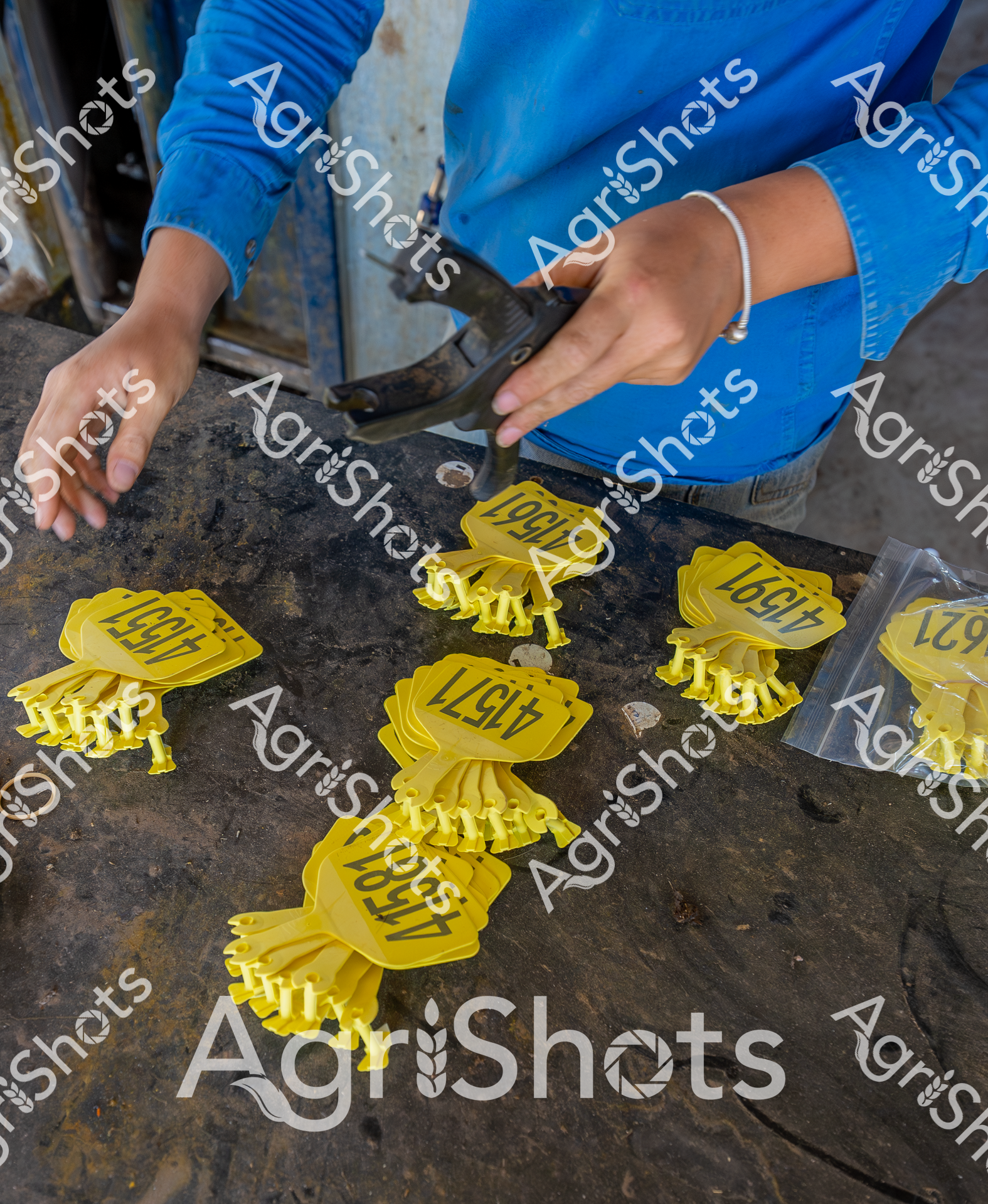
Precision and care mark this critical moment in livestock management. Bright yellow ear tags cascade across a weathered metal surface, each carefully numbered and ready for application. Hands wearing a vivid blue long-sleeved work shirt manipulate specialized tagging pliers, preparing to mark young cattle for identification and tracking. The close-up perspective reveals the methodical process of livestock induction, a fundamental practice in modern agricultural husbandry. These tags represent more than simple markers - they are essential tools for traceability, biosecurity, and herd management in the expansive cattle country of Queensland's Goondiwindi region. The industrial texture of the work surface, the crisp yellow of the tags, and the purposeful movement of skilled hands capture the meticulous attention to detail that defines contemporary Australian agricultural practices.
 Image
Image
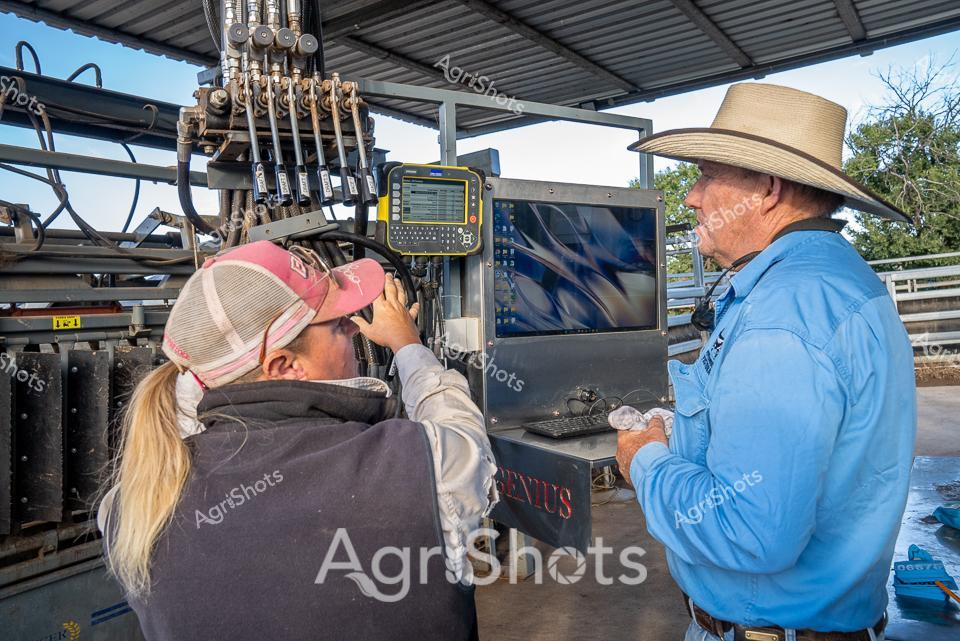
Precision and care unfold in this modern cattle management scene, where agricultural technology meets traditional livestock handling. A seasoned worker in a light blue shirt and straw hat stands alongside a younger colleague wearing a gray vest, both intently focused on the digital interface of a Catagra cattle management system. The sophisticated Silencer Crush—a state-of-the-art livestock handling equipment—provides a secure environment for animal health procedures, with multiple hydraulic controls and a digital screen displaying critical data. The setting appears to be a well-maintained covered cattle yard in regional New South Wales, with metal infrastructure and trees visible in the background. The sophisticated equipment represents the intersection of agricultural innovation and time-honored farming practices, where animal welfare and efficient management techniques converge. The soft blue sky and structured agricultural environment suggest a calm, professional approach to livestock induction and health monitoring. Detailed digital readouts and complex machinery highlight the technological sophistication of contemporary Australian cattle management, demonstrating how farmers leverage advanced systems to ensure the best care and tracking for their herds. The collaborative stance of the two workers underscores the teamwork and expertise required in modern agricultural operations.
 Image
Image
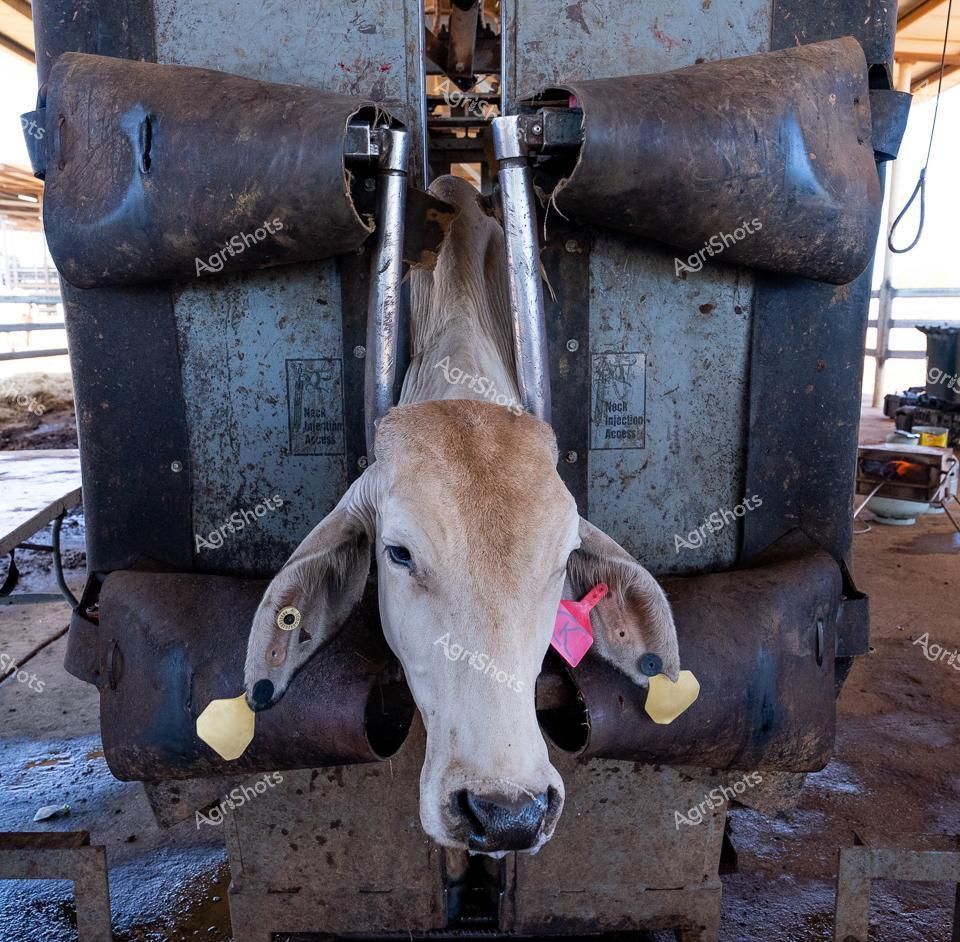
In the heart of Australia's Northern Territory, a pale Brahman heifer stands resolute within the heavy steel frames of a cattle crush at a remote station. Her cream-colored hide gleams against the weathered blue-grey metal, while yellow ear tags and a bright pink identification marker punctuate her distinctive coloration. Industrial machinery surrounds her, telling a story of careful livestock management and agricultural precision. The crush's robust mechanical components - with their industrial textures and mechanical complexity - frame the animal, suggesting a moment of controlled processing typical of modern cattle station operations. Soft morning light filters through the shed, highlighting the intricate details of the equipment and the animal's calm demeanor. This image captures the quintessential intersection of animal husbandry and agricultural technology, where safety, efficiency, and animal welfare converge in the unforgiving landscapes of northern Australian cattle country.
 Image
Image
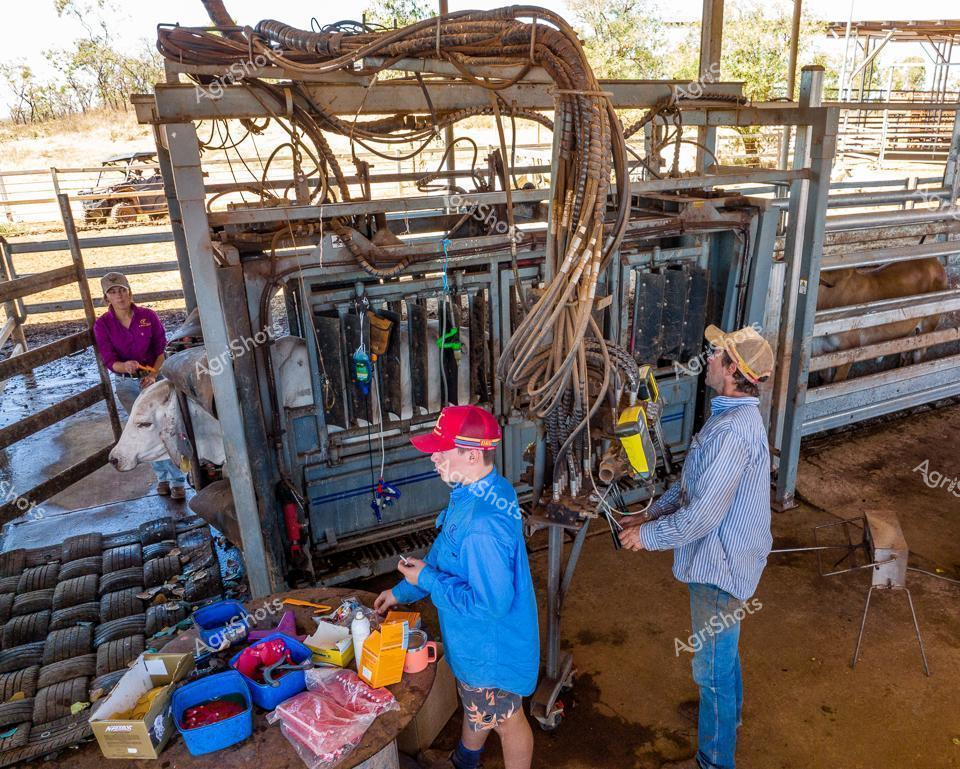
Northern Territory cattle station during mid-morning processing, with a sophisticated hydraulic cattle crush handling a pristine white Brahman breed. Three agricultural workers collaborate efficiently around the robust metal machinery, managing animal health procedures with practiced precision. A blue-shirted worker in a red cap manages equipment and supplies at the workstation, while a colleague in a striped shirt operates technical controls, and a woman in a purple shirt monitors the animal's movement. Tangled industrial cables and hydraulic lines drape across the steel frame, highlighting the complex mechanical infrastructure required for modern livestock management. Rugged outback landscape filters through the cattle yards, with dry vegetation and clear sunlight emphasizing the harsh yet systematic environment of large-scale cattle production. The scene captures the intersection of animal husbandry, technical innovation, and human expertise characteristic of Australia's northern pastoral industries.
 Image
Image
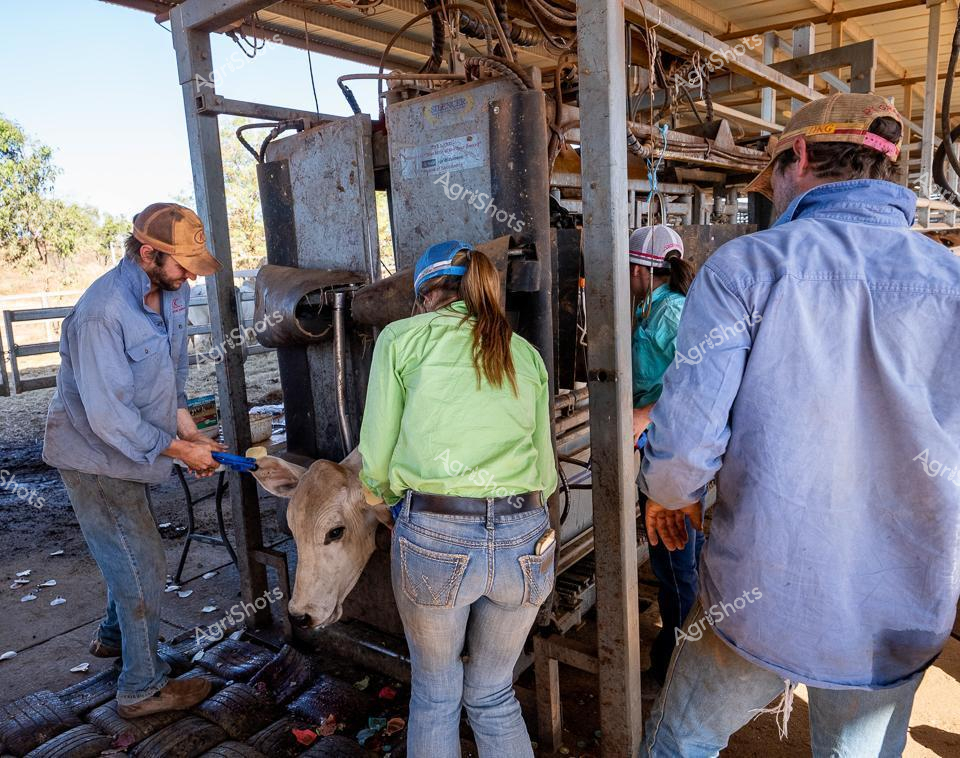
Cattle processing unfolds in a robust Northern Territory cattle station yard, where a sleek Brahman heifer stands steady in a metal cattle crush. Experienced station workers in practical workwear - blue chambray shirts, denim jeans, and protective caps - carefully manage the animal's induction process. A worker in a bright lime-green shirt administers treatment or identification, while another in a weathered cap assists from the side. The industrial metal infrastructure of the crush provides a stark mechanical contrast to the organic movement of the livestock, capturing the precision of modern agricultural practice. Harsh sunlight filters across the scene, casting sharp shadows and highlighting the textural details of worn machinery, dusty work boots, and the heifer's smooth coat. This image encapsulates the methodical, professional approach of Australian cattle station management - a blend of animal husbandry, technical skill, and rural workplace safety.
 Image
Image
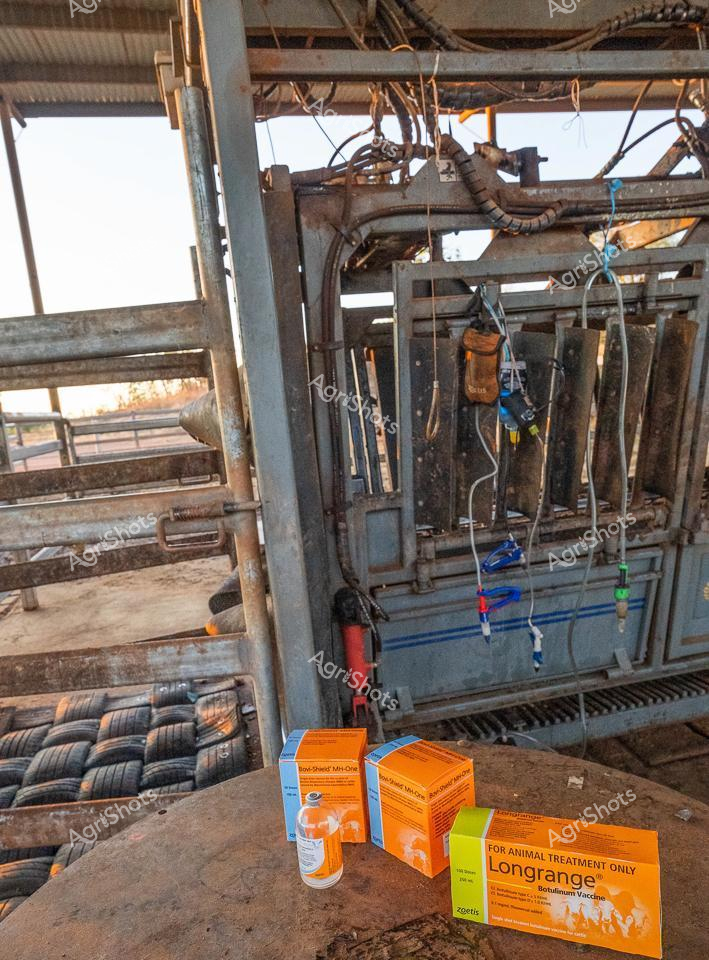
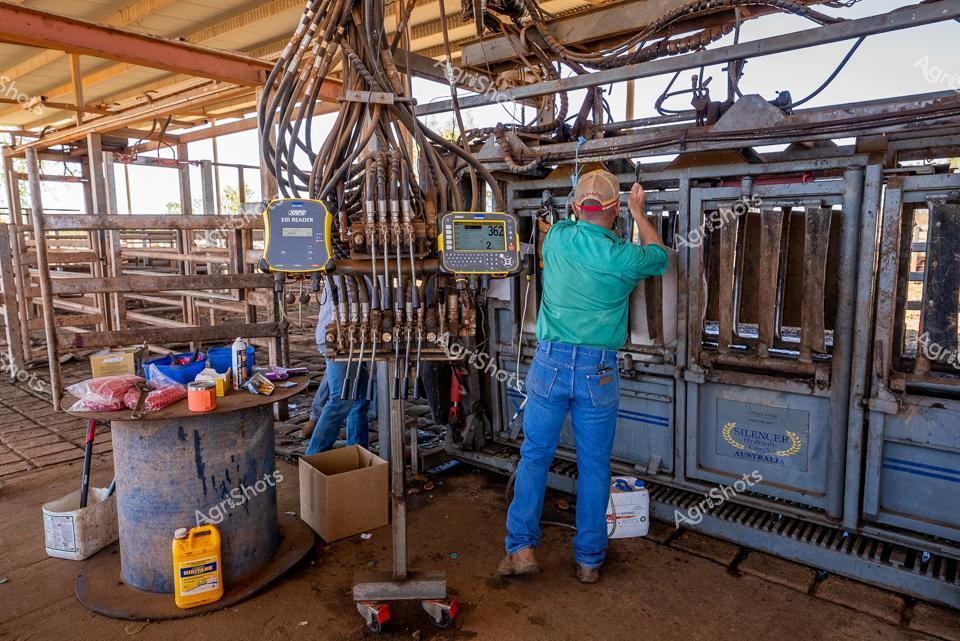
Longrange cattle treatment unfolds in a weathered Northern Territory cattle yard, where rugged metal infrastructure frames the early morning light. A robust hydraulic cattle crush stands ready, its industrial frame surrounded by stacked spare tires and an array of orange Zoetis animal health medication boxes. Blue and green treatment indicators hang from precise attachment points, revealing the methodical approach to livestock management in this remote pastoral setting. The metallic infrastructure shows years of intense use, with structural steel bearing the patina of countless livestock movements and harsh environmental conditions. Zoetis Longrange medication boxes signal a strategic approach to animal health management, suggesting preventative treatments designed for the challenging tropical rangelands. The scene captures the intersection of agricultural technology and traditional livestock management, where precision and robust equipment ensure the ongoing health and productivity of Australia's critical beef production systems.
 Image
Image
Silent witness to the rhythms of Australian cattle management, a stockman stands within a bustling cattle processing facility, surrounded by robust industrial equipment. The Silencer cattle yard infrastructure dominates the scene, with complex piping and metal gates creating an intricate mechanical landscape. Wearing a teal work shirt, blue jeans, and a cap, the worker adjusts settings on digital monitoring equipment, indicating precise technological integration in modern cattle station operations. Yellow Jerry cans and industrial containers scatter the workspace, suggesting preparedness and the practical necessities of remote agricultural environments. Multiple digital displays - including scales and monitoring units - underscore the technical sophistication of contemporary cattle handling techniques. The metallic infrastructure, with its intricate network of pipes and gates, reflects the Northern Territory's harsh yet systematically managed agricultural landscape, where technology and traditional stockmanship converge to ensure efficient livestock processing and animal welfare.
 Image
Image
Cattle processing unfolds in a robust Northern Territory livestock yard, where seasoned station workers orchestrate the intricate dance of animal husbandry. Three workers stand amid the industrial steel infrastructure of a cattle crush, their postures deliberate and focused. A green-shirted worker faces the complex machinery, while others collaborate nearby, surrounded by essential processing equipment including an electronic ID reader and yellow work containers. The industrial setting speaks of hard-won efficiency - weathered metal yards, strategic hydraulic mechanisms, and practical workwear defining the landscape of modern cattle station management. Dusty blue and khaki clothing blends with the metallic infrastructure, suggesting these workers are as much a part of this mechanical ecosystem as the equipment itself. The scene captures the precision and resilience of Australian beef production, where technology and traditional agricultural skills converge in the unforgiving environment of the Northern Territory's cattle country.
 Image
Image
A seasoned station worker in a bright turquoise shirt and yellow cap operates a sophisticated cattle processing machine within a expansive steel-framed livestock yard. The robust machinery, part of a sophisticated cattle crush system, stands ready to safely manage and treat Brahman cattle, a breed renowned for its resilience in Northern Territory conditions. Propane tanks sit nearby, suggesting the equipment requires specialized fuel or heating elements for operational procedures. Sunlight filters through the corrugated metal roof, casting warm shadows across the concrete floor and highlighting the intricate network of hydraulic pipes and mechanical components. The worker's focused posture and careful handling of the control system reflect decades of agricultural expertise, embodying the precision and care integral to modern cattle station management. This scene captures the intersection of traditional pastoral skills and advanced agricultural technology, quintessential to Australia's beef production infrastructure.
 Image
Image
Nestled in the rugged Northern Territory cattle yards, a Zoetis Bon-Shield vaccination kit stands ready for cattle processing. The industrial steel cattle crush looms in the background, a complex network of metal gates, cables, and industrial infrastructure silhouetted against filtered sunlight streaming through the structural framework. Orange and blue Bon-Shield NH-One vaccine boxes sit precisely positioned in the foreground, alongside a prepared vaccine bottle - emblematic of modern animal health management in Australia's extensive cattle production system. Weathered metal surfaces and industrial equipment tell a story of resilient agricultural infrastructure, designed to efficiently manage and protect valuable Brahman cattle herds across remote pastoral stations. The muted earth tones and robust mechanical environment capture the pragmatic, no-nonsense approach of northern Australian cattle station operations, where animal health, safety, and efficient processing are paramount to successful livestock management.
 Image
Image
Cattle handlers operate a sophisticated Genius livestock management system in a covered cattle yard, integrating cutting-edge technology with traditional agricultural practices. A rancher wearing a classic wide-brimmed straw hat and blue work shirt stands alongside a colleague with blonde hair pulled back, intently monitoring a digital screen and control panel mounted on the heavy-duty cattle crush. The metal infrastructure surrounds them - a network of hydraulic gates, metal railings, and electronic monitoring equipment designed to safely and efficiently process livestock. Soft morning light filters through the steel-framed shelter, casting subtle shadows across the industrial yet purposeful workspace. Their collaborative interaction suggests careful animal health management and precise technological intervention typical of modern Australian cattle farming. The scene represents the seamless blend of human expertise and advanced agricultural technology, highlighting the sophisticated approach to livestock handling in contemporary rural Australia.
 Video
Video
Dusty cattle yards unfold across a sweeping New South Wales pastoral landscape, revealing a meticulously engineered livestock processing facility. Curved steel cattle yards form a precise circular system around a central covered processing area, where precision animal handling equipment stands ready. A weathered worker moves deliberately through the yards, preparing for cattle health management operations like vaccination and induction. Mountain ranges softly roll in the background, framing a classic Australian agricultural scene of quiet industry and technical expertise. Silvery-grey metal gates and fencing create geometric patterns against the sun-baked earth, with corrugated iron roofing providing critical shelter from intense rural sunlight. The MP4 watermark suggests this is a raw documentation of routine but essential farm infrastructure - a testament to the sophisticated systems supporting Australia's beef production industries.
 Image
Image
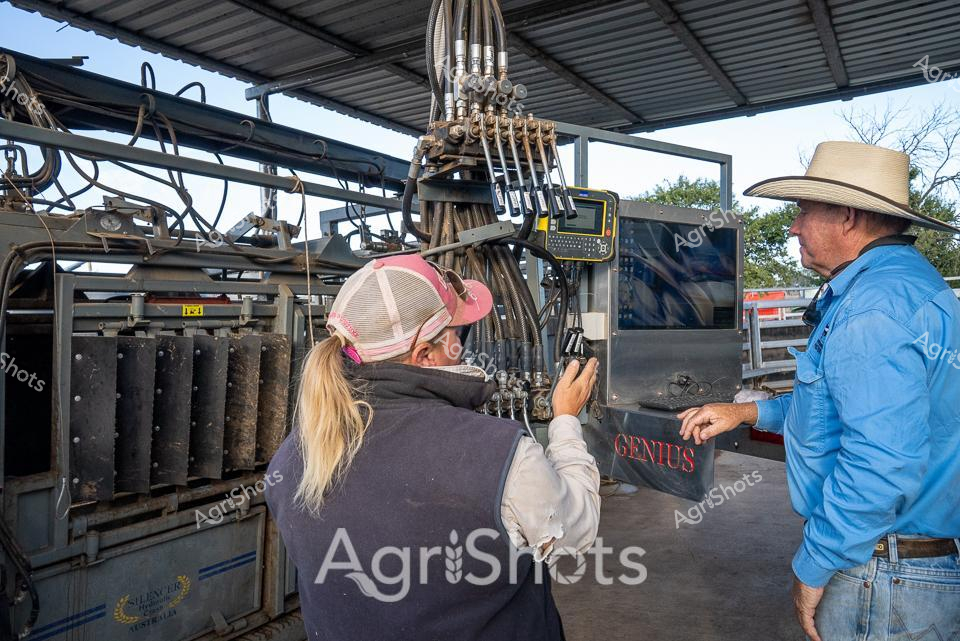
Precision meets livestock management in this modern cattle handling facility. A seasoned farmer in a blue long-sleeved shirt and wide-brimmed sun hat collaborates with a younger worker wearing a pink-and-white mesh cap, operating a sophisticated Genus cattle management system. The industrial steel-framed cattle crush, marked with advanced electronic monitoring equipment, represents cutting-edge agricultural technology designed for animal welfare and efficient farm operations. Metallic infrastructure surrounds the workers, with complex hydraulic mechanisms and digital screens indicating a high-tech approach to cattle processing. The industrial setting, with its corrugated metal roof and structured yard, suggests a professional agricultural environment typical of progressive Australian cattle stations. Their focused interaction with the control panel demonstrates the careful attention and technological expertise required in contemporary livestock management. The cool blue tones of the farmer's shirt contrast with the industrial greys and blacks of the equipment, while the soft morning light filtering through the shed suggests an early start to the day's agricultural work. This scene captures the intersection of traditional farming knowledge and modern technological innovation in Australian agricultural practice.
 Image
Image
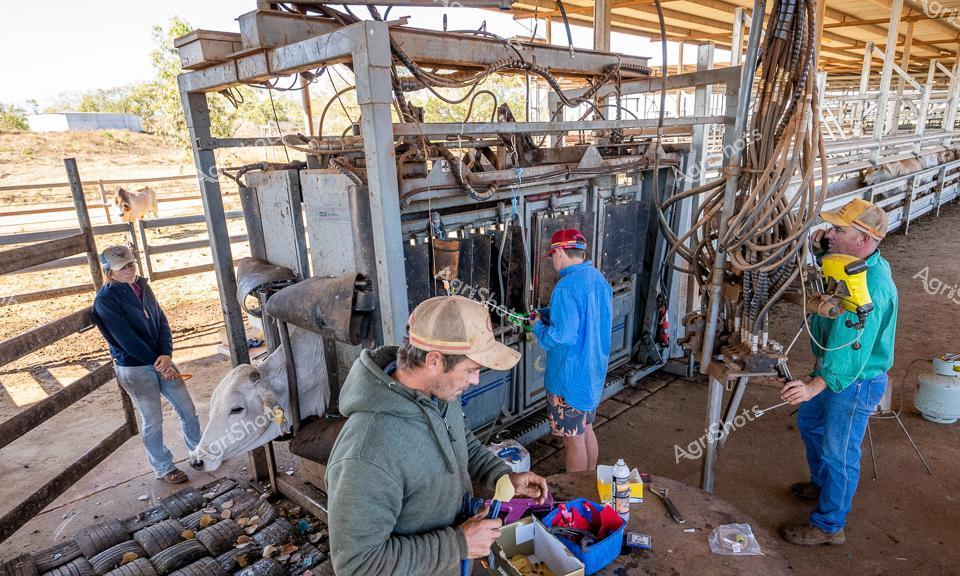
Brahman cattle undergo routine processing in a robust steel cattle yard, nestled in the rugged Northern Territory landscape. A seasoned team of stockmen collaborate efficiently around the hydraulic cattle crush, each wearing distinctive workwear - forest green, bright blue, and safety yellow jackets contrasting against the metallic industrial framework. One worker prepares medical supplies while another manages the animal's movement, demonstrating the precise choreography of cattle station operations. The steel infrastructure, worn and weathered, speaks to generations of agricultural practice, with intricate hydraulic systems and handling equipment designed to minimize stress during essential veterinary procedures. Sunlight filters across the dusty paddock, casting long shadows and highlighting the muscular white Brahman breed, renowned for their heat tolerance and importance to Australia's northern cattle industry. This scene captures the intersection of traditional pastoral skills and modern agricultural technology, where human expertise and mechanical precision ensure livestock health and station productivity.
 Video
Video
Rural cattle processing unfolds in a classic New South Wales livestock yard, where galvanized steel cattle yards create a systematic network of pens and gates. A farmer wearing a light blue shirt and wide-brimmed hat moves purposefully through the metallic infrastructure, preparing for cattle health management procedures. The surrounding landscape reveals rolling hills and scattered gum trees, typical of an Australian pastoral setting, with muted greens and browns suggesting late winter or early spring conditions. Stainless steel cattle handling equipment, including a Silencer crush, stands ready for animal health interventions like vaccination and induction. Precise engineering of the yards allows controlled movement and safe handling of livestock, demonstrating sophisticated agricultural infrastructure that minimizes stress on animals during essential management practices. The scene captures the methodical, professional approach of modern Australian agriculture - a blend of traditional farming knowledge and contemporary animal welfare techniques.
 Image
Image
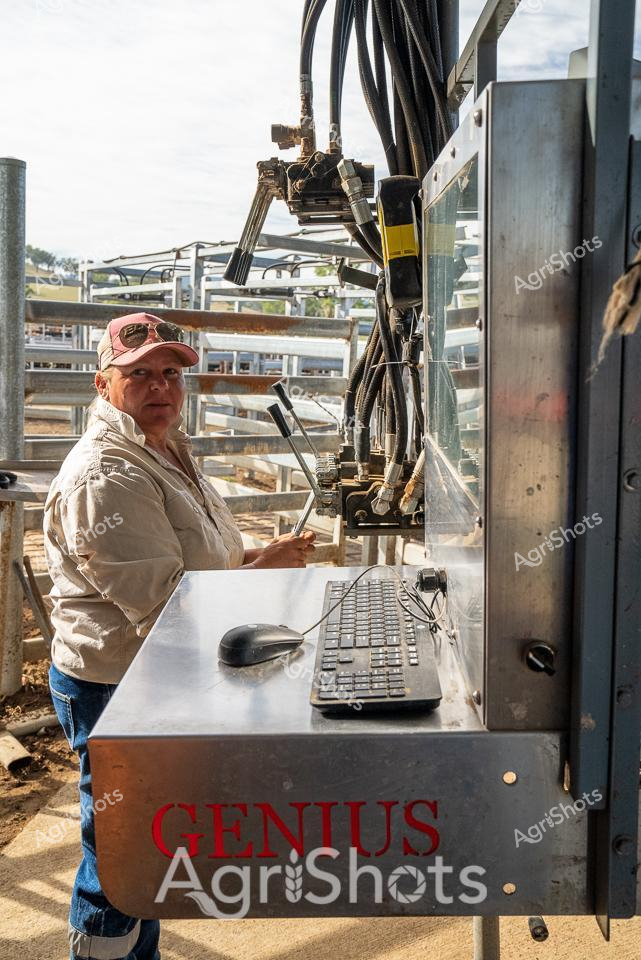
A seasoned agricultural worker stands within a high-tech cattle management system, surrounded by modern livestock infrastructure. Wearing a light beige work shirt and a pink cap, the operator manages sophisticated cattle handling equipment at a Genius AgriShots control station. Hydraulic systems and complex machinery frame the scene, with a keyboard and control interface suggesting advanced animal health monitoring and induction processes. The cattle yards in the background hint at a professional beef production setting, likely in rural New South Wales, where precision agriculture meets traditional livestock management. Sunlight streams across the metallic surfaces, highlighting the intricate technical components of the cattle crush and control systems. This image captures the intersection of human expertise and technological innovation in contemporary agricultural practices, showcasing the sophisticated approach to animal handling and welfare in modern Australian farming.
Well, you've ploughed through the whole field!
No more crops to harvest here, mate.
Try searching for something else in our library of 50,000+ royalty-free media: